
A bedroom can feel unfinished when the bed has presence but the surrounding walls and corners do little to support it. Master Bedroom Decor Ideas can help you find a focal point while making the room more useful and personal.
Try a blush upholstered bed, a slim open canopy, or tall green wall panels to give the sleeping area a clearer shape.
The roundup also looks at practical ways to use a window bay as a reading corner, add a portable bedside display, and bring pattern to a ceiling. These examples offer options for different layouts and decorating styles.
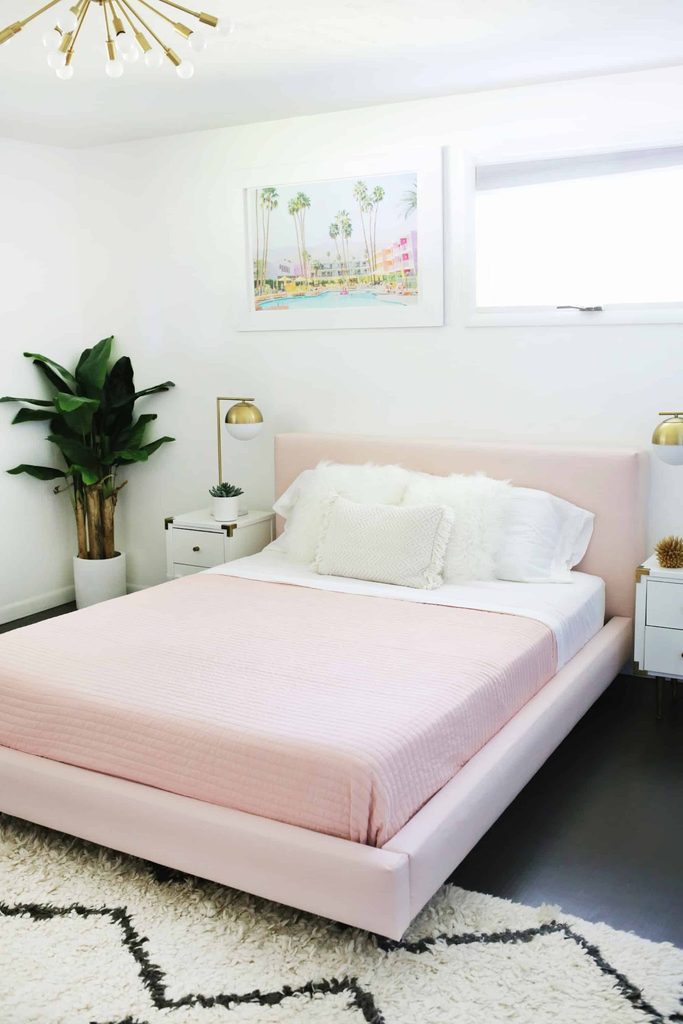
1. Refresh an Existing Bed With Blush Upholstery
Credits: Laura Gummerman / A Beautiful Mess
A muted upholstery color can change the feeling of the largest piece in your bedroom. Here, blush fabric continues from the headboard around the side rails and foot, creating a soft outline against white bedding.
A matching coverlet makes the color feel intentional without covering every surface in pink. Laura Gummerman documents recovering an existing frame, which offers a useful starting point if yours remains sturdy.
Check the frame construction and fabric requirements before attempting the project, and choose material suitable for upholstery. Keep bulky decorative pillows to a minimum so the newly covered headboard remains visible.
The white walls, small bedside cabinets, and pale rug leave enough quiet space around the bed for its gentle pink color to register.
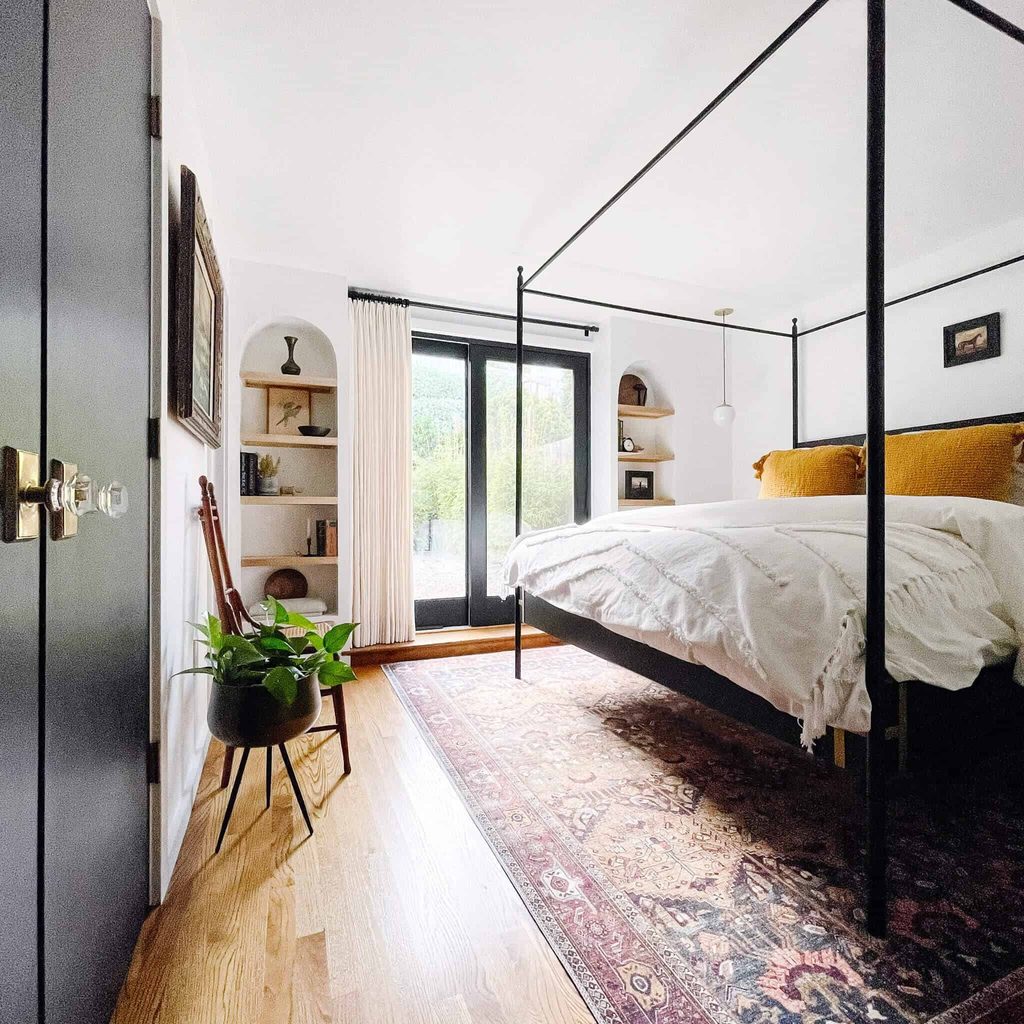
2. Frame the Bed With a Slender Open Canopy
Credits: 136home
Thin black posts give this bedroom a clear focal point while leaving its windows and surrounding shelves visible. The open canopy works like an outline around the mattress, so it supplies height without requiring curtains or a large upholstered headboard.
Warm mustard cushions and a faded patterned rug soften the metal geometry. Before choosing a canopy, measure ceiling clearance and consider how the top rails will relate to lights, fans, and window trim.
Look at the frame from the doorway as well as from beside the bed. Leaving the posts uncovered preserves this room’s airy character.
Keep access to balcony doors and storage comfortable, and use restrained bedding so the frame does not compete with several equally strong decorative features.
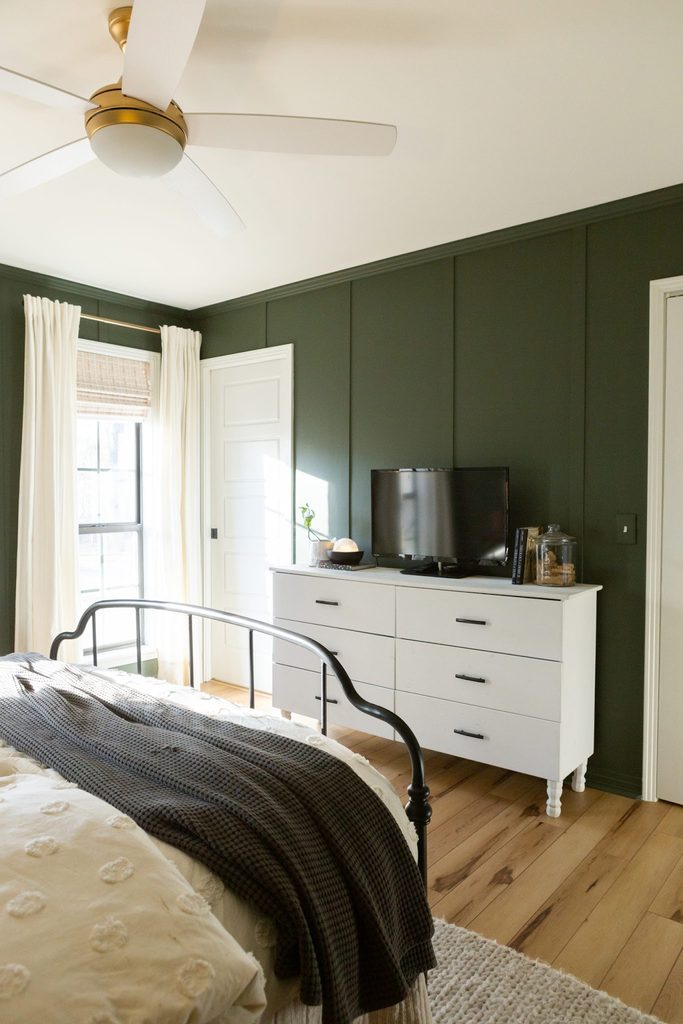
3. Give Plain Walls Structure With Tall Green Panels
Credits: Jordan Jean
Tall vertical divisions turn a painted wall into a more deliberate backdrop for everyday furniture. This green paneling continues around the room, tying the dresser wall to the window corner instead of stopping behind the bed.
White doors, curtains, and ceiling keep the dark treatment clearly defined. You can borrow the proportion without reproducing the entire renovation: first mark the proposed spacing with removable tape and view it from the bed.
Plan around outlets, door casings, and furniture heights so narrow leftover strips do not become distracting. A simple dresser looks particularly comfortable against this regular pattern.
Test the paint with your floor and textiles, because a deep green can appear cooler or warmer as daylight changes throughout the room.
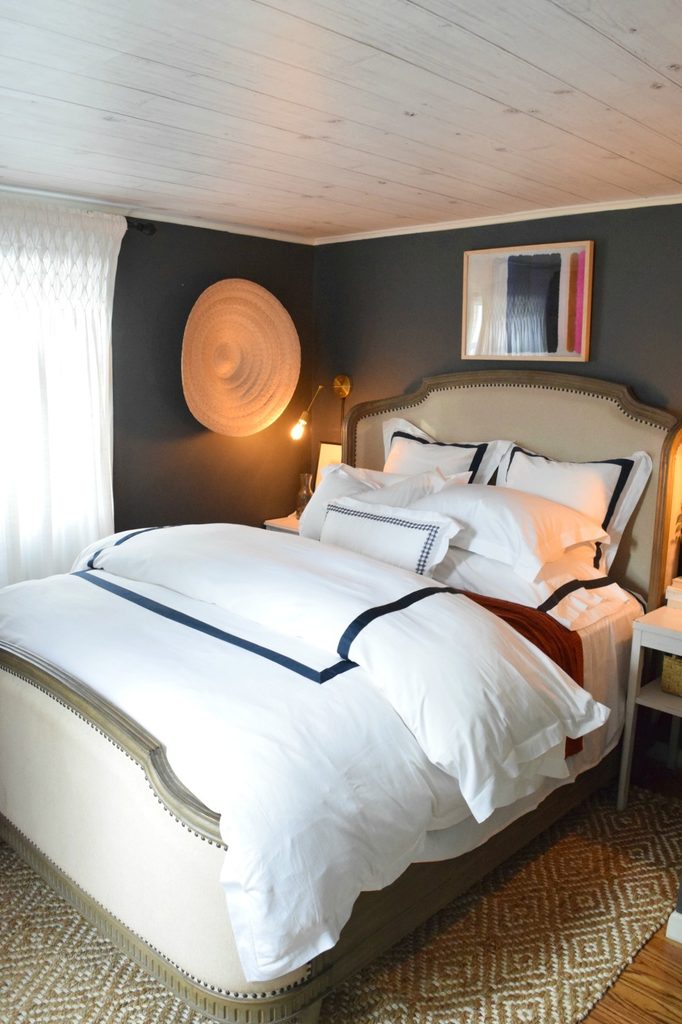
4. Add Pale Wood Pattern to the Ceiling
Credits: Brooke Christen / Nesting With Grace
Looking upward reveals the warmest surprise in this dark bedroom. Pale wood pattern runs across the ceiling, balancing charcoal walls and linking the room to its woven rug and light bed frame.
The homeowner identifies this treatment as wallpaper, rather than timber boards, which matters when considering weight and installation. Choose a subtle grain if your bedding or furniture already has decorative detail.
Study a sample overhead before committing, since the direction of light changes how its color reads. Follow the wallpaper maker’s guidance for the actual ceiling surface and preparation.
Here, the white bedding gives the eye a bright resting point below the patterned plane, while a narrow pale edge keeps the ceiling treatment neatly separated from the walls.
5. Turn a Window Bay Into a Reading Corner
Credits: Chris Loves Julia
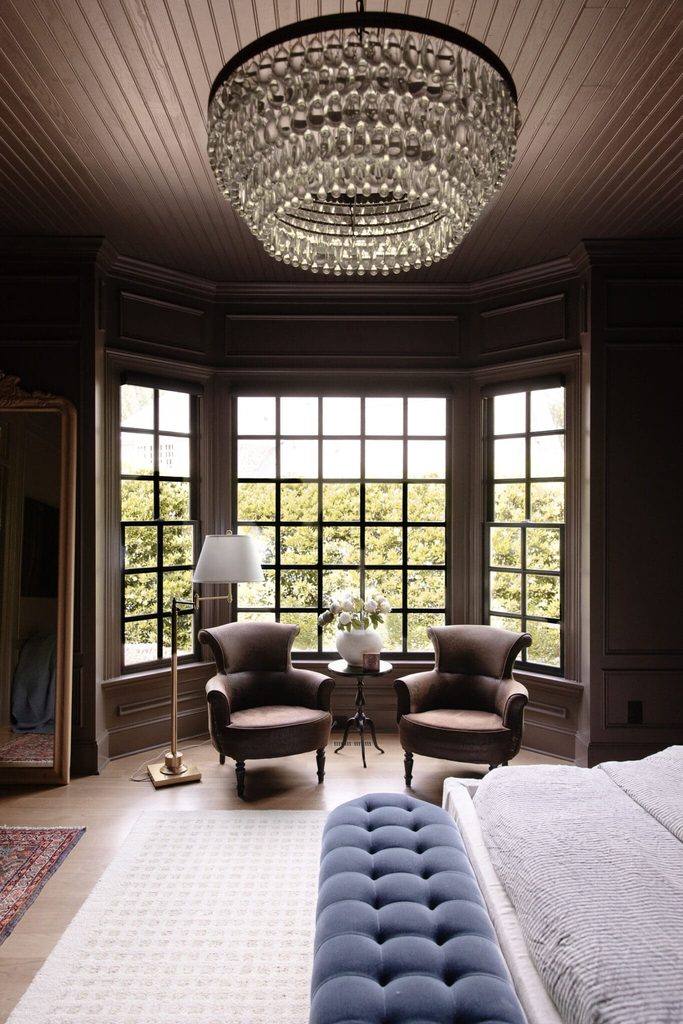
A pair of compact chairs makes this generous bedroom useful beyond sleeping and dressing. Positioned within the window bay, the chairs take advantage of the room’s shape without creating a separate enclosure.
A small table between them provides a shared surface, and a floor lamp supports the arrangement after daylight fades. Start with the activities you would genuinely enjoy here, whether that means reading alone or sharing morning coffee.
Measure chair depth and leave access to window coverings before buying a matching pair. One chair could serve a smaller space equally well.
The rounded upholstery softens the surrounding dark molding, showing how a comfortable seat can add visual contrast as well as giving an unused corner a clear everyday purpose.
6. Dress Closet Doors With Antique Mirror Effects
Credits: Lauren / Bless’er House
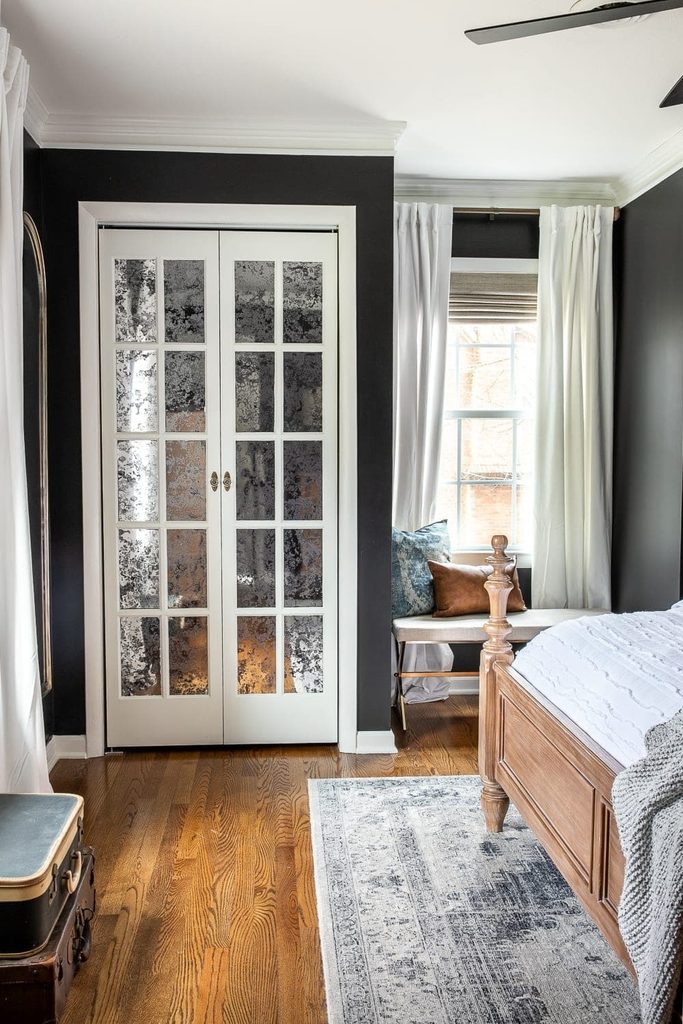
Closet doors occupy a generous amount of wall, so their finish can become part of the decorating plan. These pale doors contain panels with an antique mirror effect, adding mottled reflection beside the dark walls and warm wooden bed.
The homeowner used mirror film on the glazed sections, rather than installing antique glass. That distinction makes the linked project helpful when judging the look and materials.
Check a sample in your own light before committing to a large reflective surface. Keep the door movement, handles, and nearby furniture unobstructed.
The pattern brings interest to a practical feature while preserving its outline. A quieter rug and simple curtains allow the doors to contribute character without turning the room into a display.
7. Use a Tray to Make a Portable Bedside Display
Credits: Brittany Stager
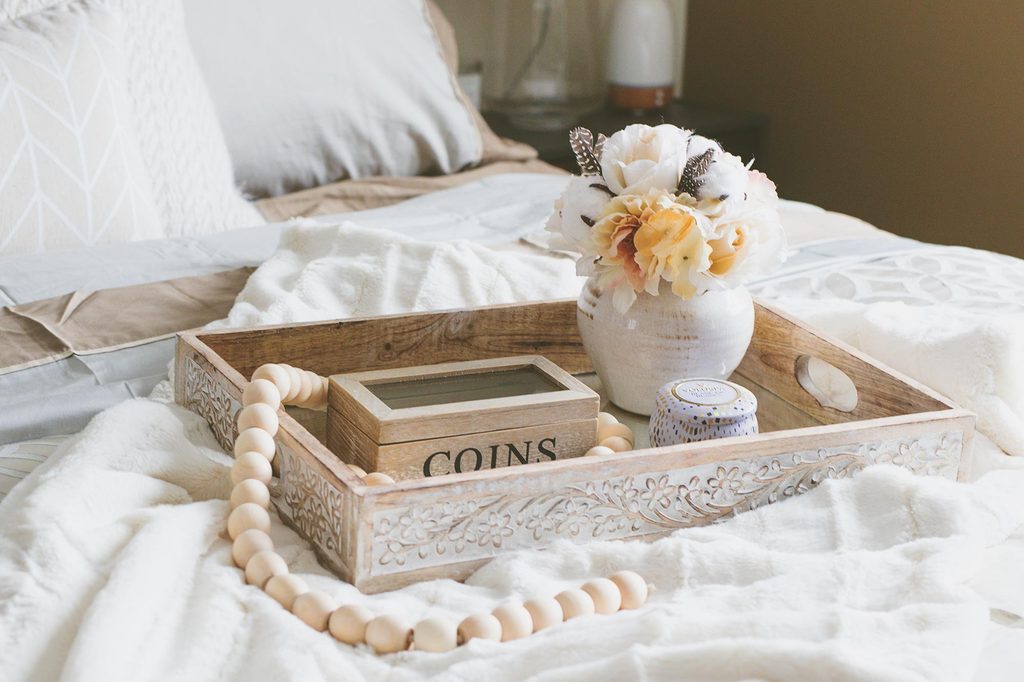
A wooden tray gathers several small accessories into one arrangement that can move together. In this bedroom, its carved rim contains a box, flowers, and a small lidded container against pale bedding.
The repeated wood tones give the grouping cohesion, even though the objects have different shapes. Use this idea for a dresser or spacious nightstand, and move the tray onto the bed only when you are using it.
A stable resting surface is more practical than leaving fragile pieces on soft covers. Choose a tray with enough room for the items you actually reach for, and avoid filling every corner.
Its usefulness comes from keeping a few essentials together while making the surrounding surface easier to clear and clean.
8. Choose Fine Grid Bedding for Quiet Pattern
Credits: Sara Ligorria-Tramp / Emily Henderson
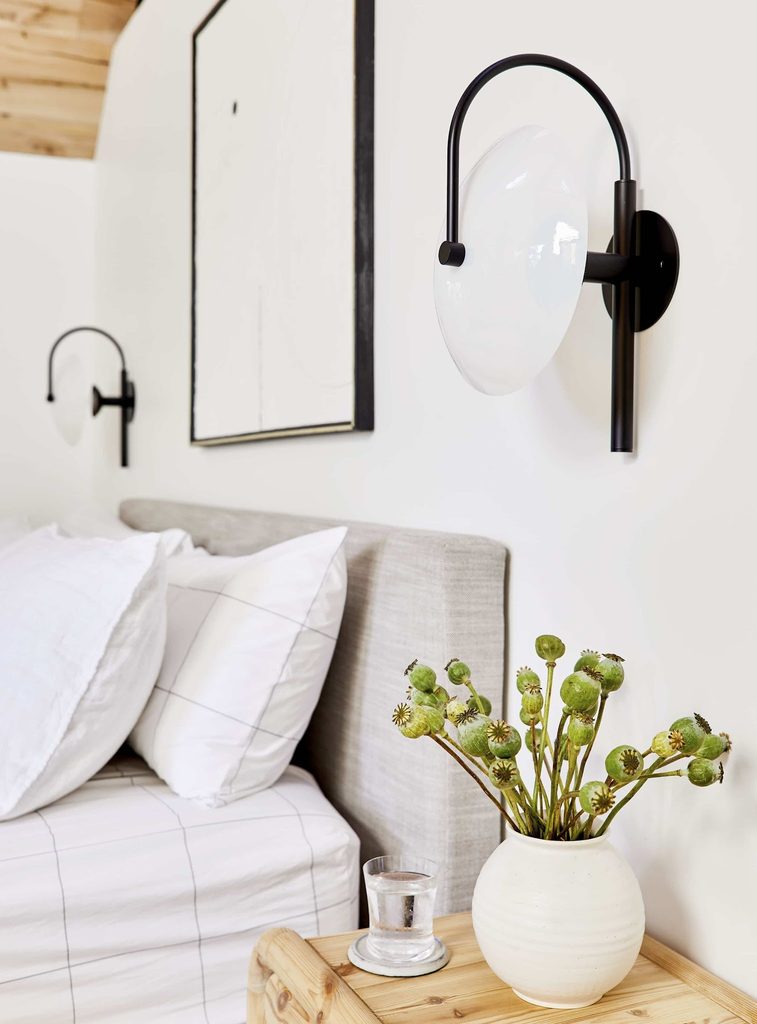
Fine gray lines introduce pattern to this white bed without making the room feel busy. The grid is easy to notice beside the plain upholstered headboard, while black wall lights echo its darker marks at a larger scale.
This is a useful approach when you want more definition than solid white bedding provides but prefer a restrained palette. Compare the spacing of the pattern with any checks, stripes, or woven textures already in the room.
One clear grid often needs only plain companion cushions. Make sure the fabric itself suits your preferred feel and washing routine.
The nearby wooden surface and simple stems add warmth, preventing the combination of crisp lines and pale textiles from feeling overly formal or impersonal.
9. Suspend a Globe Light Above the Nightstand
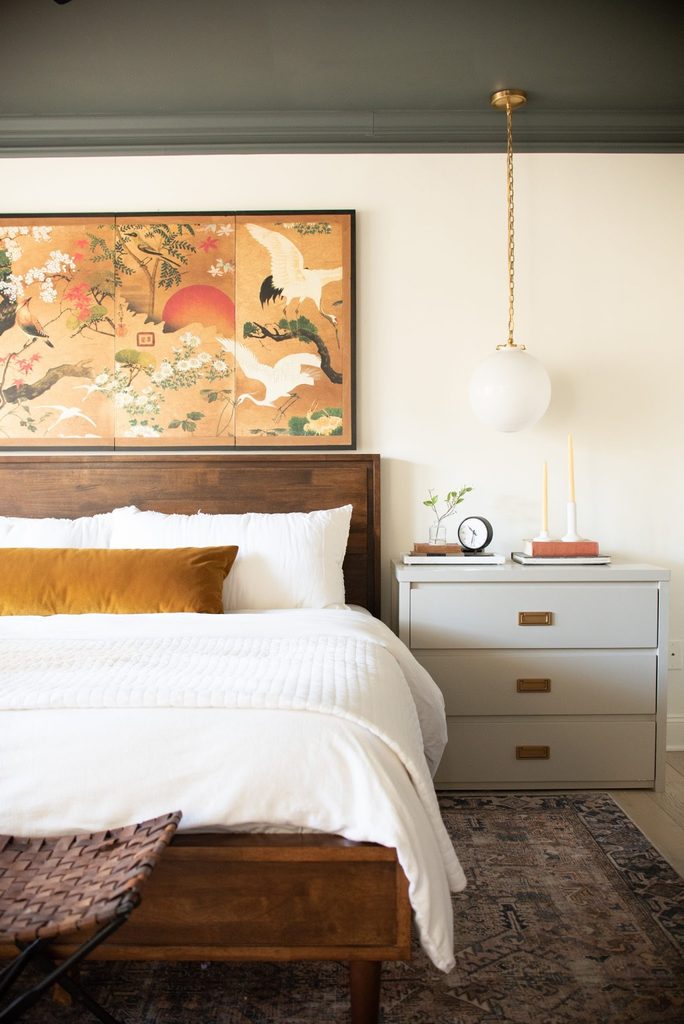
Credits: Cass / Cass Makes Home
A hanging globe gives this bedside corner a light, rounded shape without occupying the chest below. The slim chain and warm metal fittings connect with the drawer handles, while the white shade relates to the bedding.
This arrangement leaves room for small everyday objects and a clock on the tabletop. Decide the bedside furniture position before planning the pendant, and test the proposed drop from both seated and standing positions.
The shade should not obstruct normal movement or sit directly in an uncomfortable sightline. Have electrical placement checked for the particular fixture and ceiling.
A spherical form is especially useful beside detailed artwork because it adds another layer of lighting while keeping the corner easy to read as a whole.
10. Give Neutral Walls a Softly Varied Finish
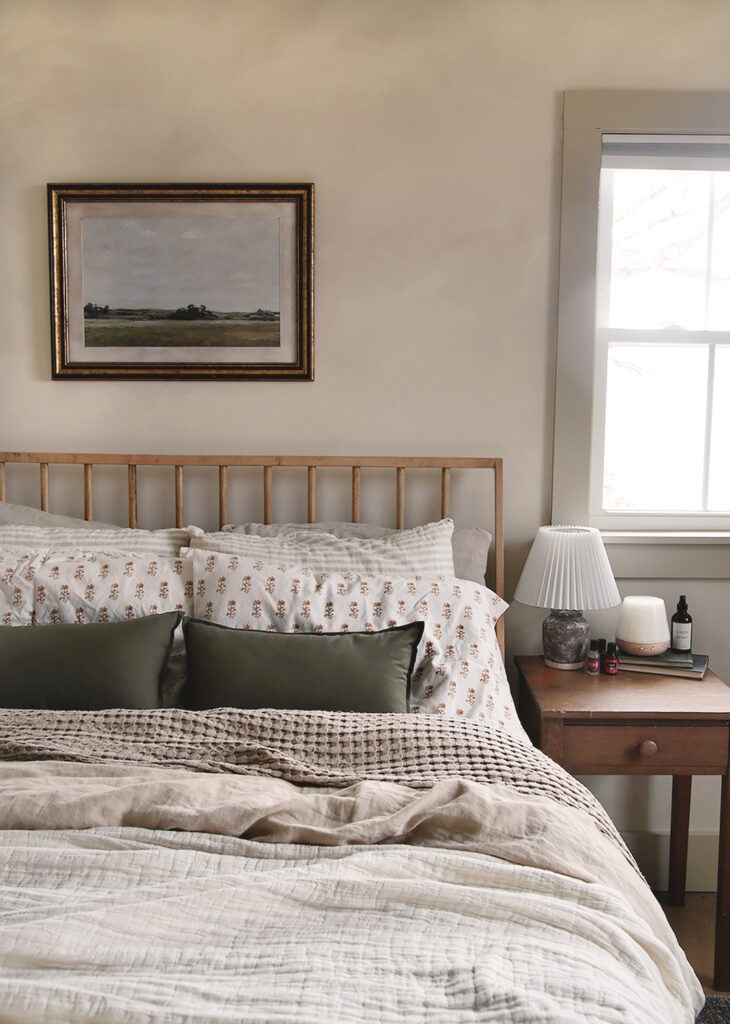
Credits: Manda / The Merrythought
Subtle variation in the beige wall brings depth to this bedroom before any extra artwork is added.
The creator describes the treatment as faux limewash, so its soft appearance comes from a decorative finish rather than a claim about traditional mineral plaster.
The gentle movement works with wrinkled bedding, a wooden spindle headboard, and an understated landscape. Try a sample board first and examine it beside the textiles you plan to keep.
Large differences between the chosen tones could produce a much busier result. Let the wall provide the broad texture, then limit the smaller patterns to a few cushions.
This is particularly helpful when you enjoy warm neutral colors but find a flat painted surface a little too plain.
11. Let a Floral Mural Set the Room Palette
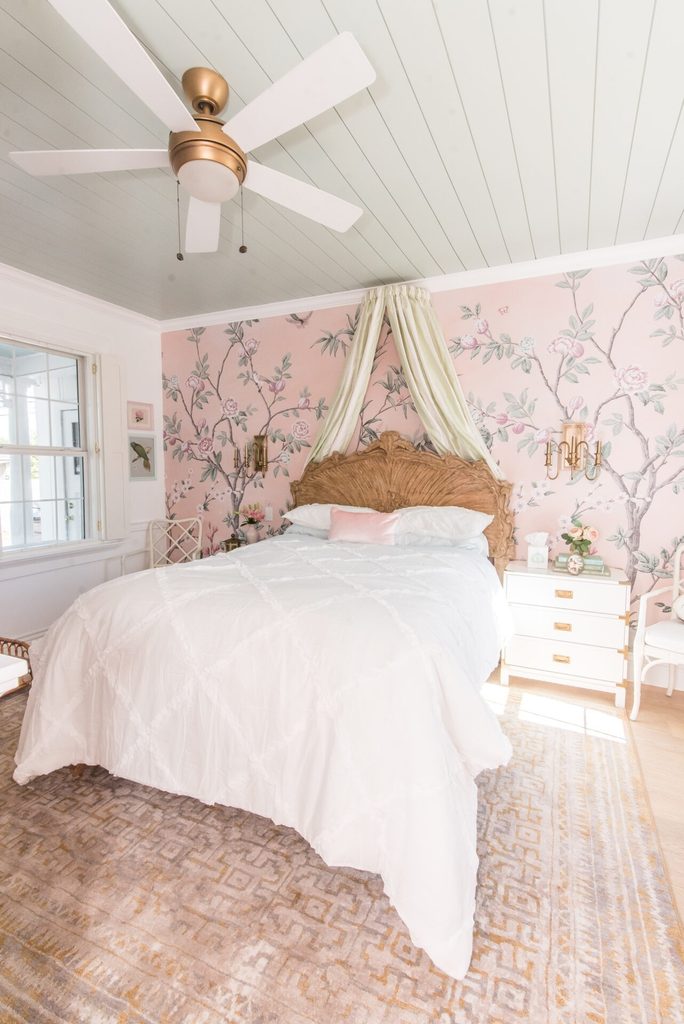
Credits: Ashley Wilson / At Home with Ashley
Delicate branches spread across the pink wall behind this carved wooden headboard, making the bed feel part of a larger composition.
White bedding gives the mural room to breathe, and pale green overhead picks up the botanical character without repeating every color literally. When choosing a mural, consider where its important motifs will fall once furniture is in place.
A beautiful bird or flower loses impact if the headboard hides it. Lay out the panel sequence and check the wall dimensions before ordering.
Keep nearby accessories comparatively simple so the pattern remains legible. You can borrow this approach with quieter botanical colors too, using the artwork as a starting point for the room rather than buying several unrelated accent pieces.
12. Extend Upholstery Beyond the Mattress Edge
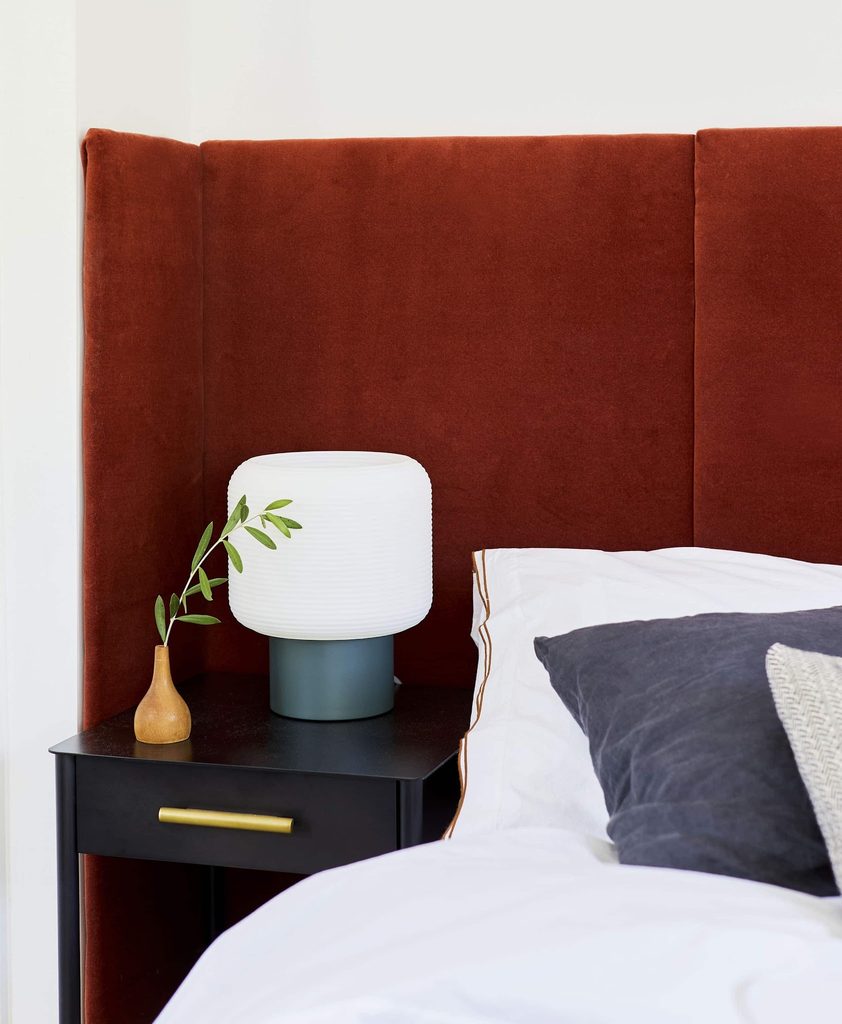
Credits: Sara Ligorria-Tramp / Emily Bowser for Emily Henderson
The rust upholstered headboard continues behind the nightstand, giving this compact bedside arrangement a generous horizontal backdrop. Its color makes the pale lamp and dark cabinet stand out without needing additional artwork in the narrow space.
This idea can help a bed and its neighboring furniture feel connected. Mark the intended width on the wall before choosing or making an extended headboard, including room for switches and outlets.
Consider how much will remain visible when pillows are stacked. A plain fabric allows the shape and color to do most of the work, while a textured weave adds quieter detail.
Keep bedside accessories small enough that the extended surface remains readable, and choose upholstery you can maintain comfortably in daily use.
13. Make One Large Landscape the Headboard Backdrop
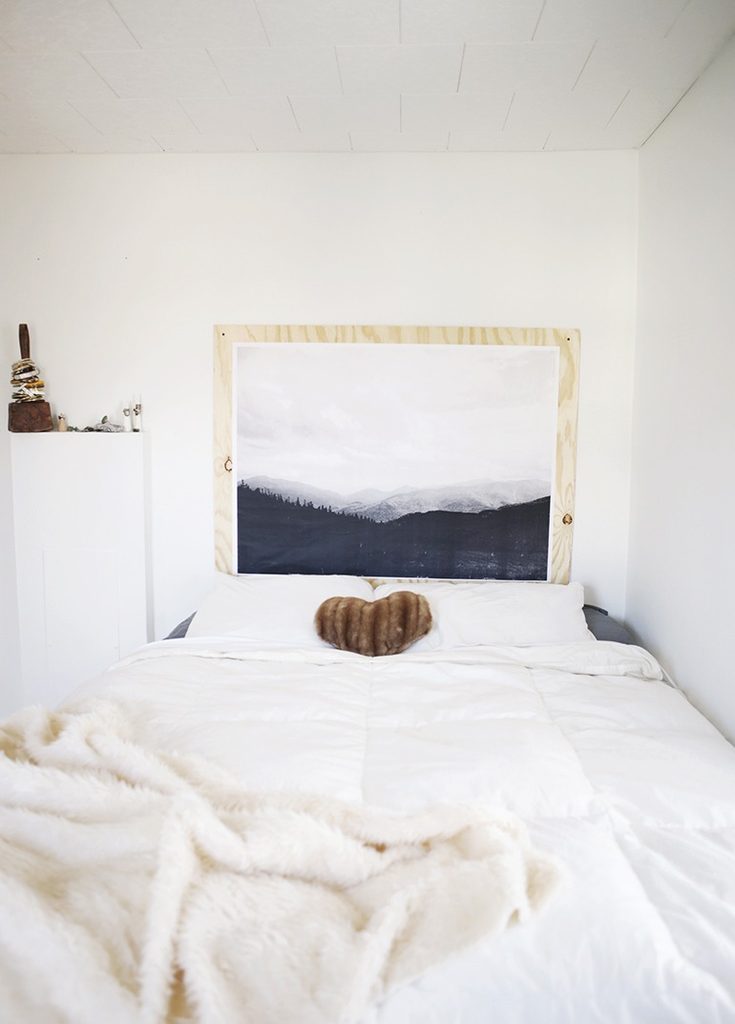
Credits: Caitlin / The Merrythought
One oversized mountain image gives this simple white bedroom a strong point of focus. The pale wooden backing adds warmth around the monochrome scene, while the bed textiles remain plain.
Using a single large picture can feel calmer than arranging many smaller frames, especially when the wall is narrow. Check the visible artwork area with your usual pillows in position, rather than measuring above an empty mattress.
The image should still make sense when its lower edge is partly obscured. Secure any piece above a bed with fittings appropriate to its construction and the wall.
Let the picture guide a limited palette elsewhere, then leave some surrounding wall clear so its scale feels intentional and the room retains breathing space.
14. Place a Shallow Upholstered Bench at the Foot
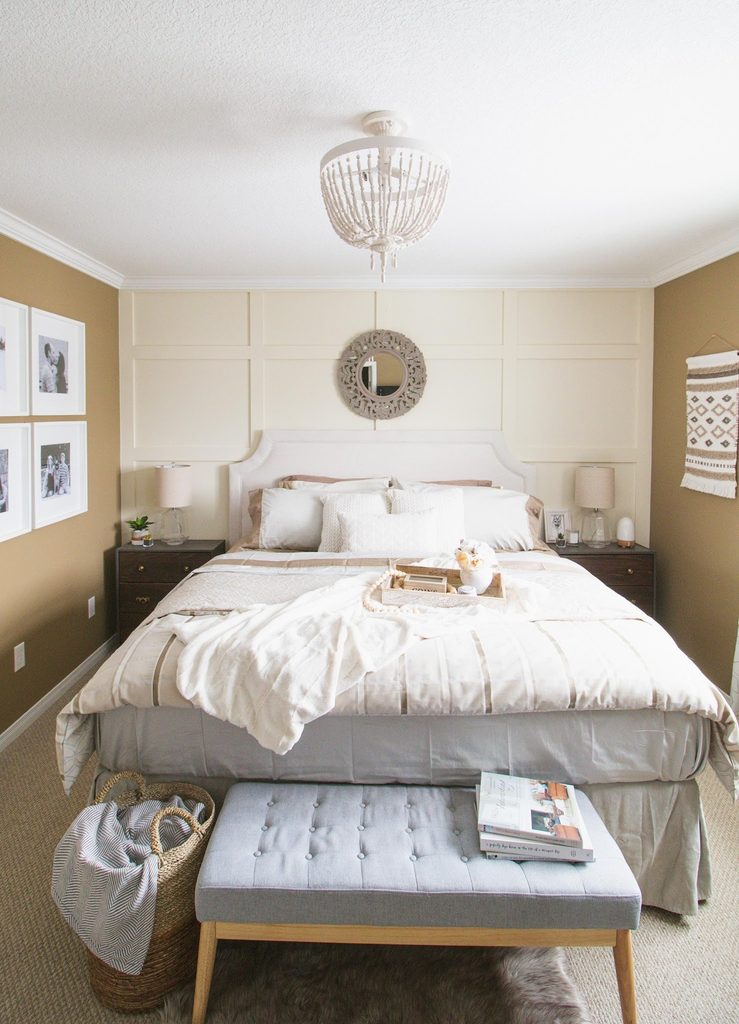
Credits: Brittany Stager
A gray upholstered bench introduces another soft surface while preserving the straight route around this bed. Its narrow seat and exposed wooden legs give it less visual weight than a bulky storage chest.
The tufting adds detail at a useful lower level, leaving the bedding and paneled wall as the main composition. Before adding a bench, mark its depth on the floor and walk the routes to wardrobes, doors, and windows.
There should still be room to sit and stand comfortably. Choose a width that relates to the mattress without extending beyond it.
Keep the seat available for dressing rather than permanently covering it with ornaments; the best decorative addition is one that earns its place in the daily routine.
15. Frame Corner Windows With Dark Sheer Curtains
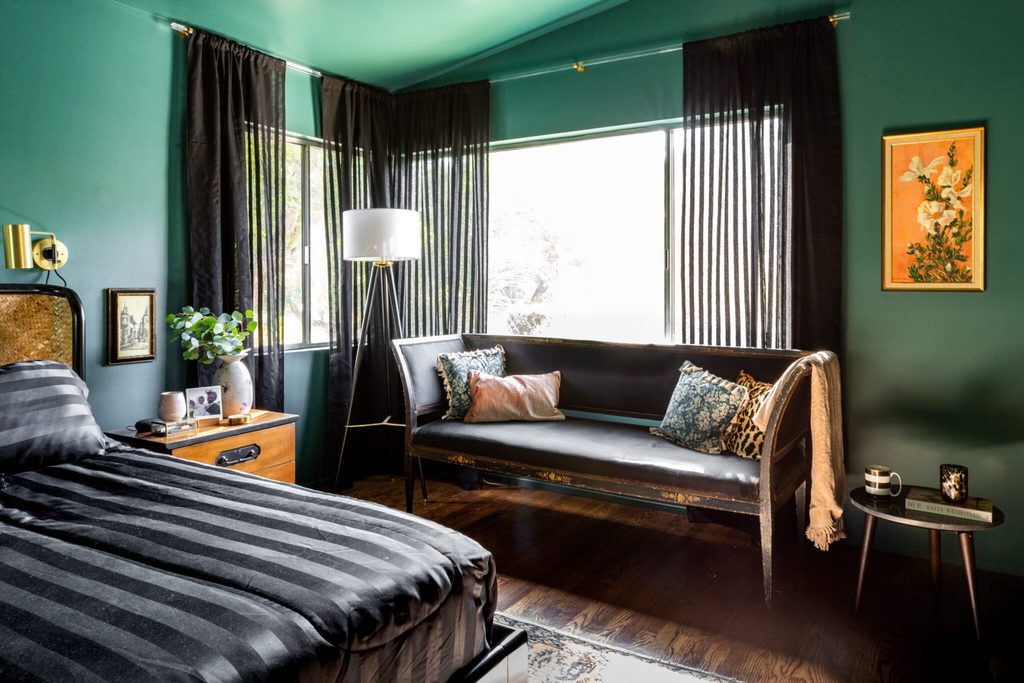
Credits: Annette / A Vintage Splendor
Dark sheer panels give these adjoining windows a softer outline while allowing daylight to pass through the fabric. Their tone relates to the bed and settee, helping the glazed corner feel connected to the rest of the green room.
Hanging the panels high emphasizes the full wall height. Consider both daytime privacy and nighttime needs before relying on a sheer alone; its appearance changes when the room is lit from inside.
Add a separate appropriate shade if stronger screening is necessary. Leave enough room for the fabric to stack without blocking too much glass.
The light filtering effect shown here works especially well with furniture placed nearby, creating a gentler backdrop for a reading seat without hiding the window arrangement.
16. Repeat a Favorite Color in the Lampshade
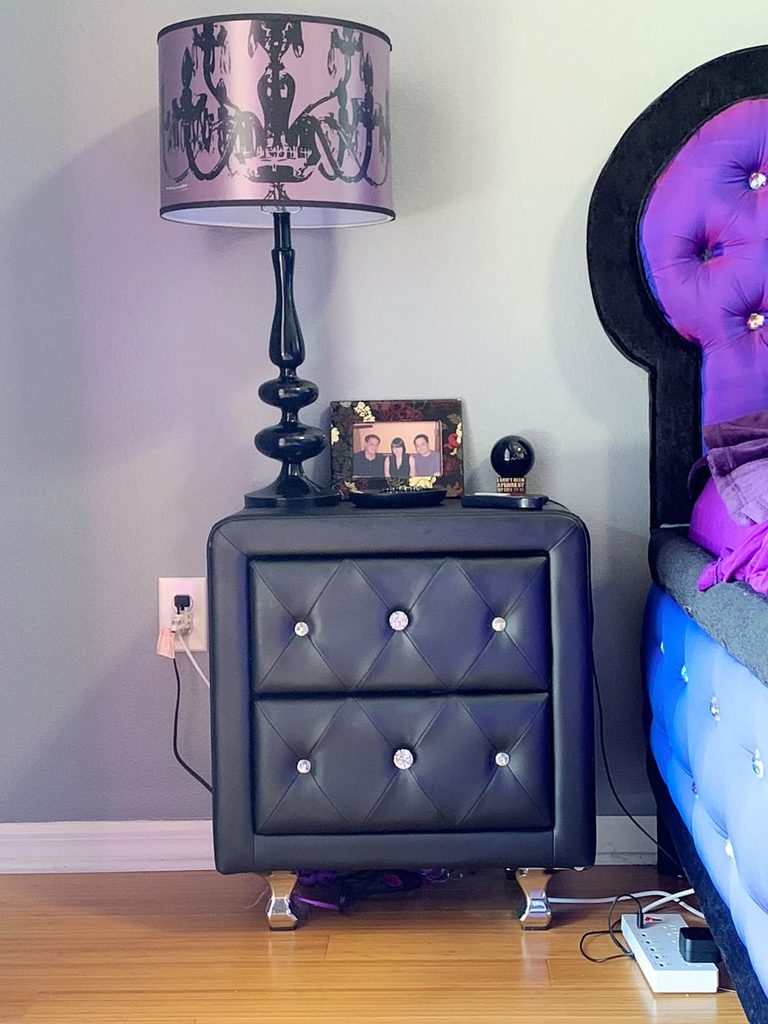
Credits: Cordelia / Phyrra
A purple patterned lampshade carries the bed’s vivid color onto the nightstand at a smaller scale. Its dark chandelier motif relates to the black lamp base and upholstered cabinet, creating a deliberate connection between pieces with different shapes.
A shade can be an approachable place to introduce personality when you do not want another large furniture purchase. Check its fitting, proportions, and the lamp maker’s bulb guidance before swapping it.
Look at the fabric both unlit and illuminated, because the color and pattern can change. Keep the tabletop arrangement modest so the shade remains the main decorative detail.
A small personal photograph is enough beside this example, leaving useful space and preventing the corner from becoming crowded with competing accessories.
17. Hide Small Essentials in a Decorative Lidded Box
Credits: Emily Schmidt / Gathered Living
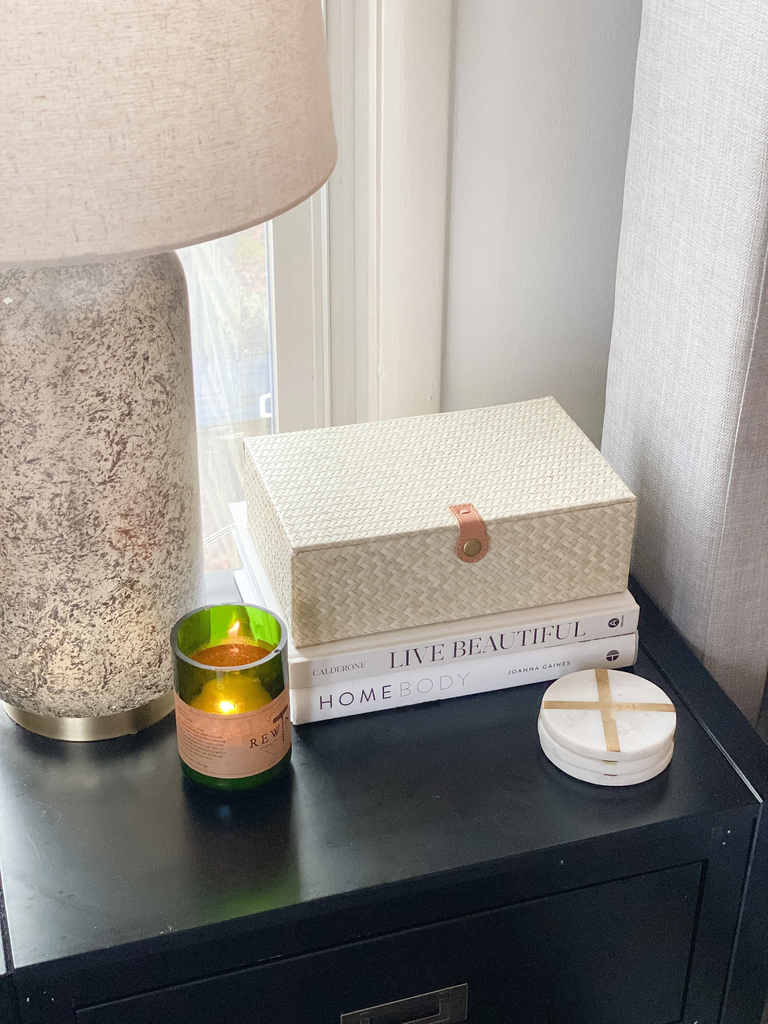
A pale woven box gives this dark nightstand a place to conceal everyday items while contributing texture. Resting on two books, it creates a clear group beside the lamp, with a coaster stack kept separately within reach.
The contrast between the woven surface and smooth tabletop supplies interest without needing another color. Choose the box around what you intend to store, and make sure the lid opens comfortably in its planned position.
A decorative container becomes less useful if you must move several objects every time you need something. Leave enough free space for a drink and other nightly essentials.
If displaying a candle, keep it unlit near curtains and bedding; the vessel alone can provide the same warm accent.
18. Balance the Bed With Matching Table Lamps
Credits: Sara Tramp / Emily Henderson
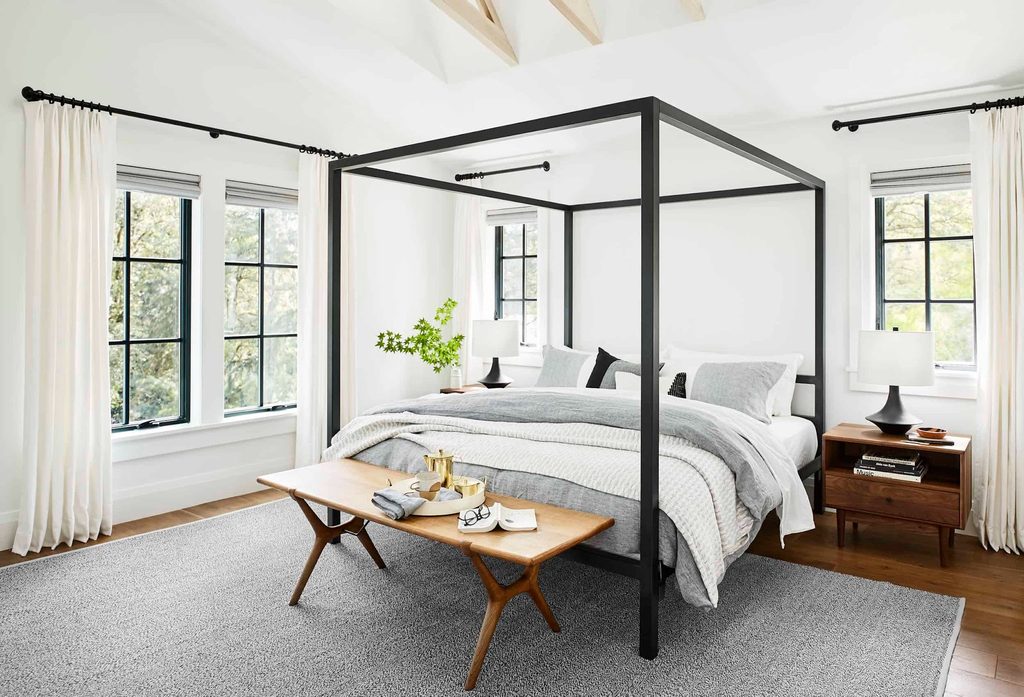
Matching lamps give the two sides of this bed a shared visual rhythm. Their white shades and dark bases connect with the pale bedding and black canopy, while the wooden nightstands introduce a warmer material below.
Symmetry is useful when a large bed needs to feel settled within an open room. The smaller accessories do not have to match: one side can hold branches and the other a bowl or books, depending on each person’s routine.
Compare shade height from the mattress and check that both lamps are easy to reach. Choose light output for your evening activities, rather than appearance alone.
Keeping the pair consistent creates enough order that the rest of the room can remain relaxed and personal.
19. Give a Bedroom Television an Artful Frame
Credits: Chris Loves Julia
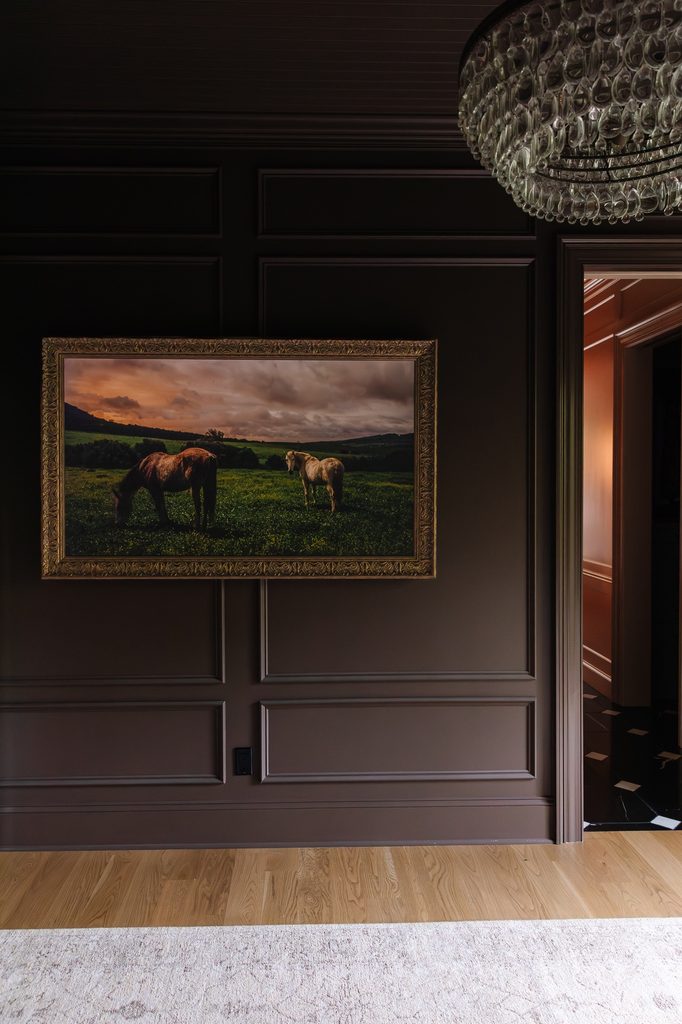
A gilded frame and landscape image help this wall mounted television sit comfortably among traditional molding and dark paint.
The screen takes on the proportions of a framed picture when displaying artwork, so it feels considered even when entertainment is not the room’s focus.
This approach suits a bedroom where a television is wanted and there is a clear viewing position. Check the chosen screen’s mounting, ventilation, and frame compatibility before treating it like a picture.
Plan for accessible controls and a tidy cable route at the same time. The surrounding wall stays mostly clear, allowing the detailed frame to stand alone.
A landscape or quiet artwork can then relate to the room without requiring another decorative arrangement beneath it.
20. Let a Wooden Bed Bring Warmth to White Walls
Credits: Henry / Plank and Pillow
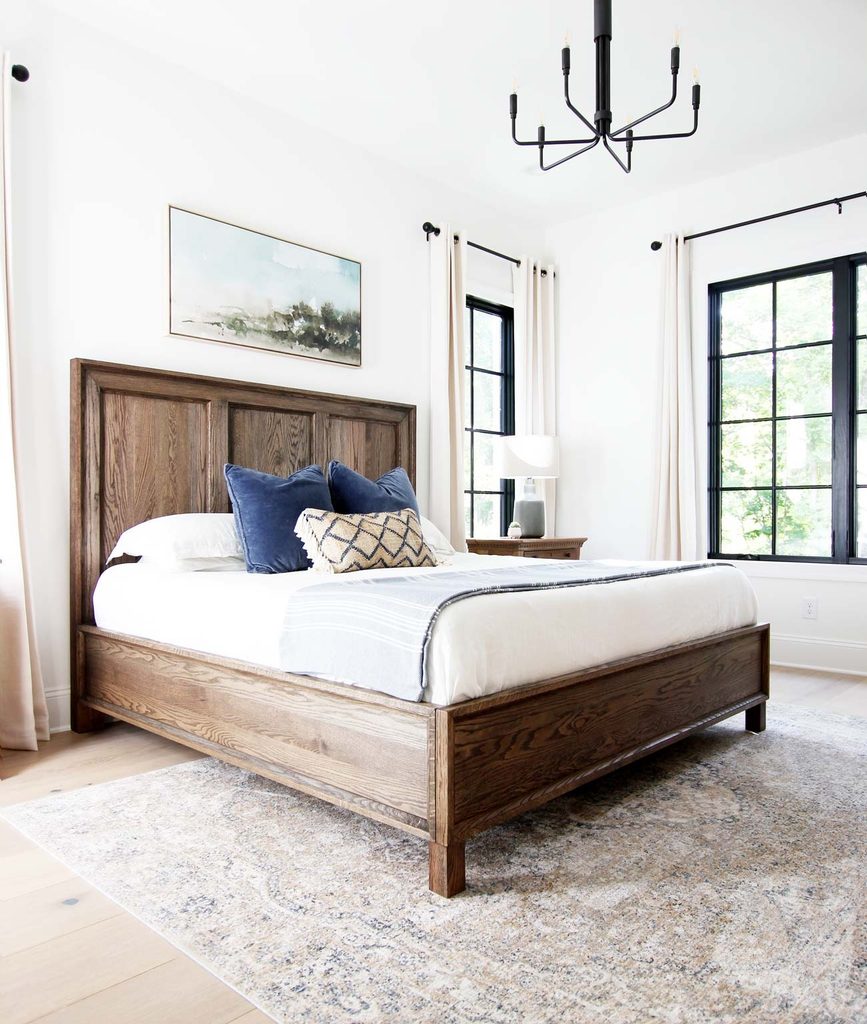
Visible wood grain gives this white bedroom a substantial focal point without introducing a strong painted color. The paneled headboard and footboard show the same warm material, while simple white bedding leaves their construction visible.
Dark blue cushions provide a modest accent that does not compete with the timber. If you are choosing a wooden bed, compare the finish with your floor and existing furniture in the room’s actual light.
They can relate without matching exactly. Consider the height of the footboard as well as the headboard, especially if the bedroom is short.
A pale patterned rug softens the area around the frame. Keeping the remaining furnishings simple lets the natural variation of the wood provide much of the decoration.