
Pink works best in a bedroom when it has a clear role, whether that means warming a white backdrop or setting the mood across every wall.
These Pink Bedroom Ideas show how to balance its softer and bolder sides with touches like black iron, coral textiles, or a woodland mural behind an upholstered bed.
You’ll also find ways to bring in color without repainting the whole room, from blush curtains to a muted pink cabinet. Small choices in pattern, contrast, and placement can help the shade feel considered rather than sugary.
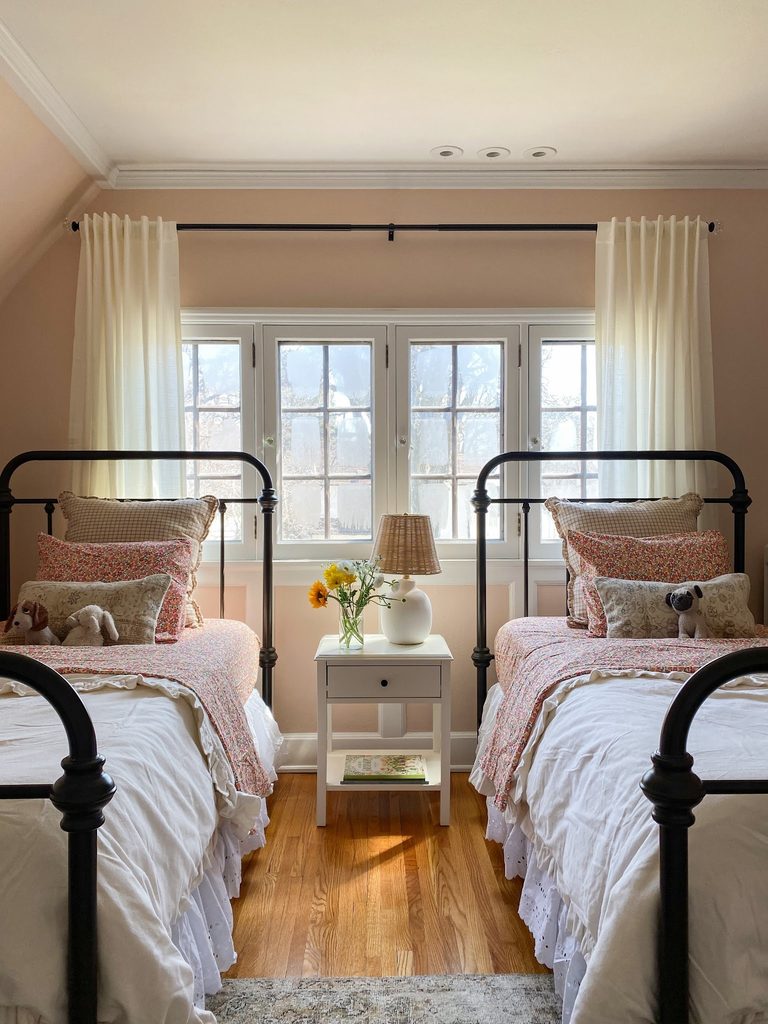
1. Give Pale Pink Walls a Black Iron Outline
Credits: Patti Wagner / Patticake Wagner
Slim black bed frames keep this pale pink shared bedroom from becoming visually sugary. Their open rails make a crisp outline while allowing the wall color and daylight to remain visible between them.
White bedding, a light rug, and a small shared nightstand prevent the darker furniture from taking over. Try this pairing when you want pink to feel gentle but still clearly defined.
An existing black metal bed can become the starting point, so replacing every piece is unnecessary. Keep the largest surrounding surfaces light, then repeat black sparingly in a curtain rod or picture frame.
For two beds, leave a comfortable central route and enough bedside space for both sleepers to reach a book or glass of water.
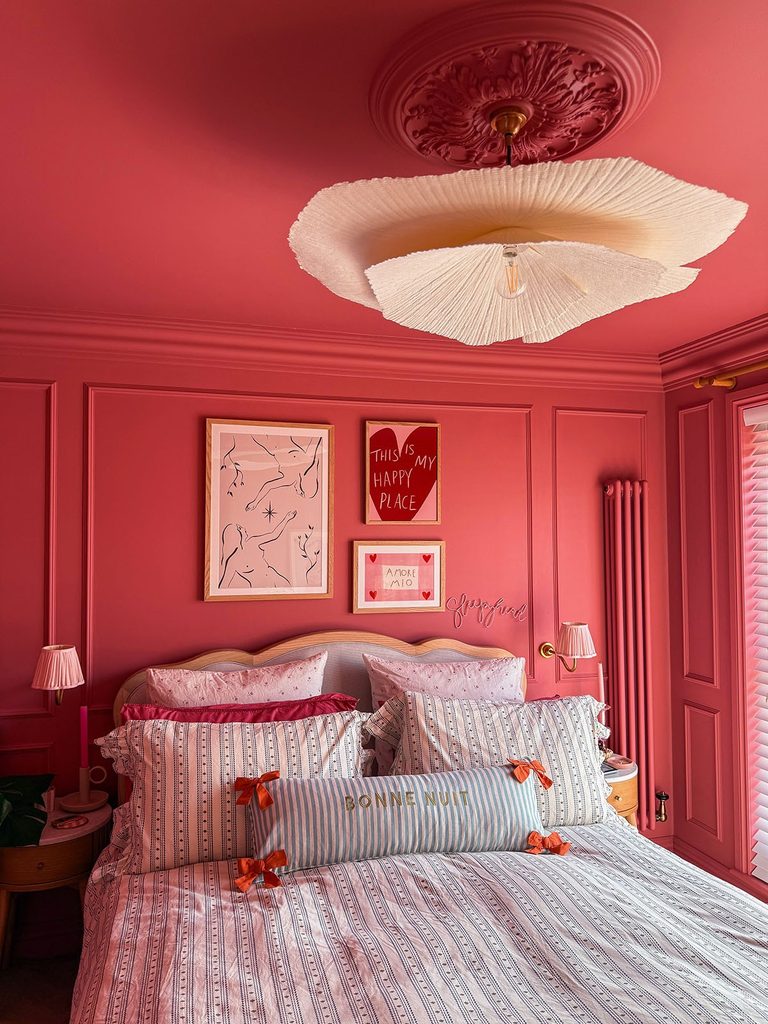
2. Wrap the Room in Rich Berry Pink
Credits: Gemma Louise
Pink can feel immersive when it continues above the walls and across the ceiling. Here, the deep berry shade also covers moldings, giving their shadows more importance than their outlines.
Pale bedding and a sculptural cream light stand out against the saturated envelope. Before trying this approach, paint large movable samples and inspect them on both horizontal and vertical surfaces.
A color that looks muted beside a window may appear stronger overhead or after sunset. Decide which objects should remain lighter so the room has readable focal points.
The bed, curtains, and ceiling light are useful places to introduce relief. Choose the finish for each surface according to its use rather than assuming one paint product suits the entire room.
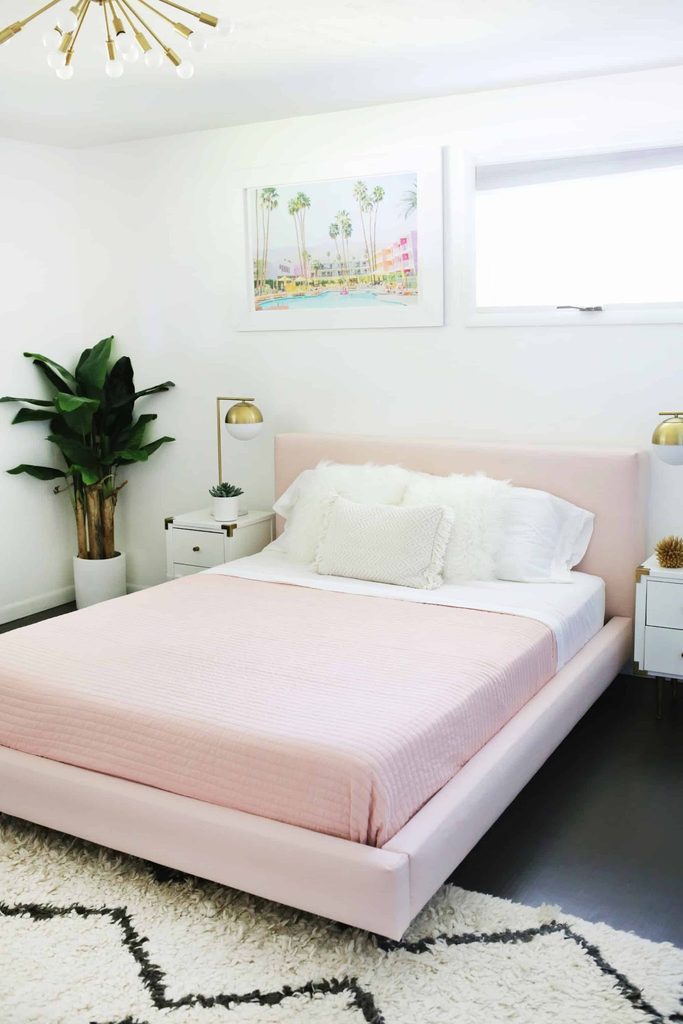
3. Let Blush Upholstery Lead a White Bedroom
Credits: Laura Gummerman / A Beautiful Mess
A blush bed gives this mostly white room its central color without requiring painted walls. The fabric continues around the headboard and base, making the bed read as one soft shape above the dark floor.
Pale pink bedding reinforces the effect while a patterned rug provides contrast underneath. This works particularly well when you want to introduce pink gradually or keep the surrounding room adaptable.
Bring upholstery samples home before committing, and compare them with sheets you already own. Look at texture as carefully as color, since a smooth weave and a plush pile can read differently in the same shade.
Keep enough of the side rails uncovered for the upholstery to remain an intentional part of the finished arrangement.
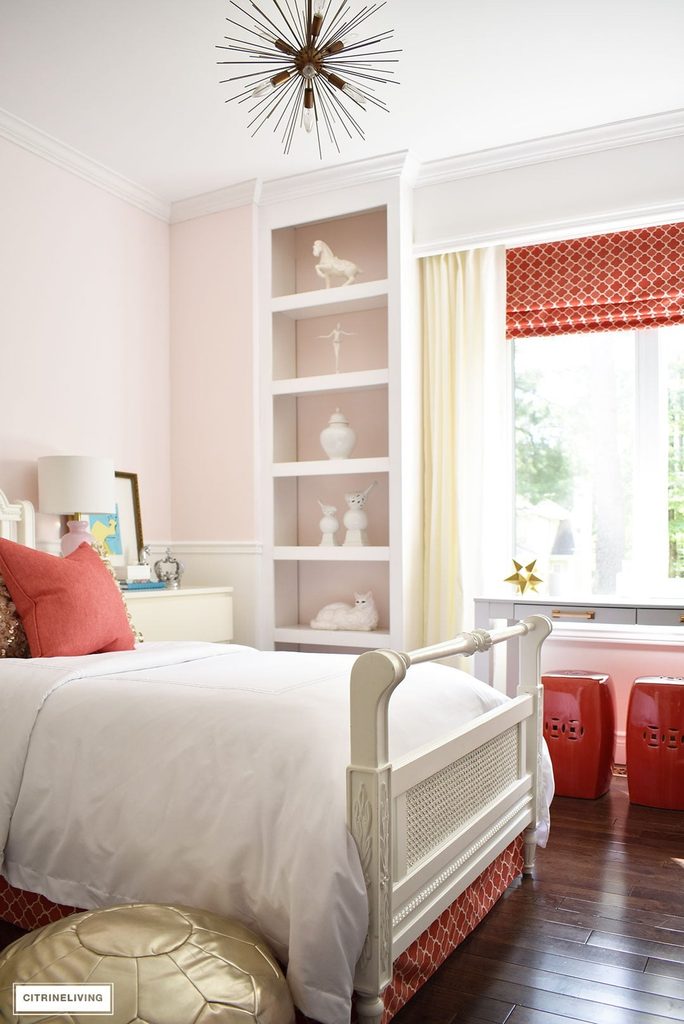
4. Repeat Coral Against a Blush Background
Credits: Tamara Anka / CitrineLiving.com
A coral window shade and matching bed skirt give these blush walls a stronger companion. White curtains and bedding separate the two pink families, so their differences feel deliberate rather than mismatched.
Brass accents add warmth without introducing another large block of color. To adapt the pairing, choose the quieter pink for the largest fixed surface and the more energetic shade for replaceable textiles.
Lay the fabrics together before buying and check that their undertones feel related in natural light. You do not need identical patterns at the window and bed; repeating the color is enough.
Leave a few broad white areas between the accents. That breathing room keeps coral lively while preserving the softer atmosphere established by the walls.
5. Soften a Woodland Mural With a Pink Bed
Credits: Kimberly Duran / Swoon Worthy
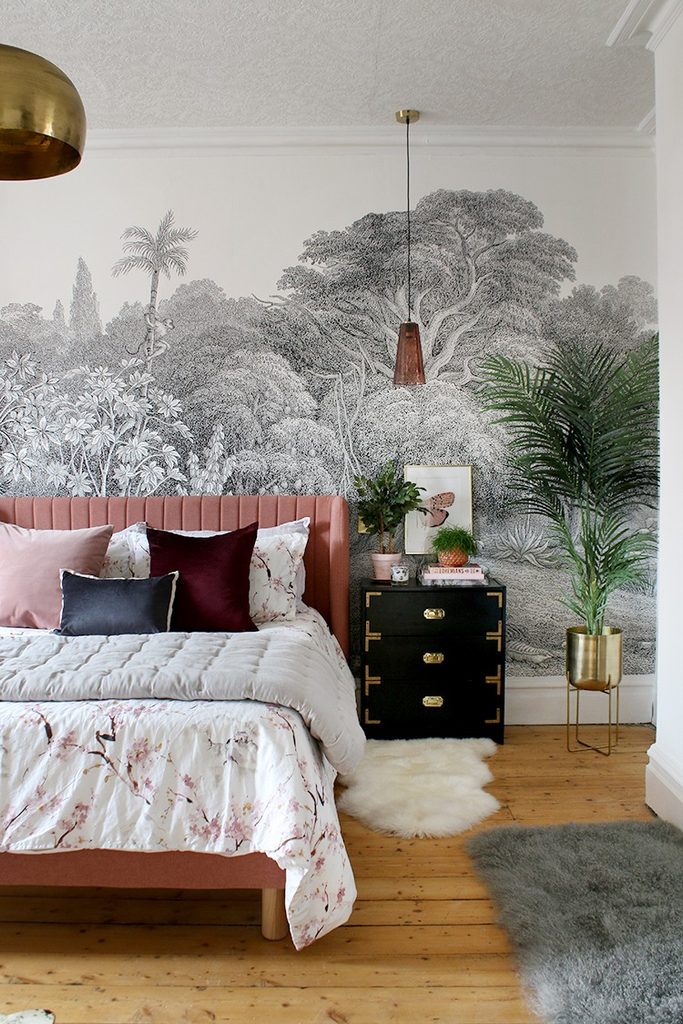
A pink upholstered bed supplies warmth beneath a detailed gray woodland scene. The trees bring depth and movement, while burgundy cushions give the pale upholstery a richer neighbor.
Because the mural already contains so much information, the bed needs little extra decoration around its outline. Start with the artwork or mural when developing a similar palette, then choose a pink that sits comfortably beside its background tone.
A cool gray scene may need a different blush from a warm sepia landscape. Order a sample large enough to see the pattern clearly, and check where trunks or branches will fall behind the headboard.
Keep smaller bedside pieces simple so the central relationship between the soft pink bed and scenery remains legible.
6. Paint Paired Battens a Soft Pink
Credits: Kaylee / Sprucing Up Mamahood
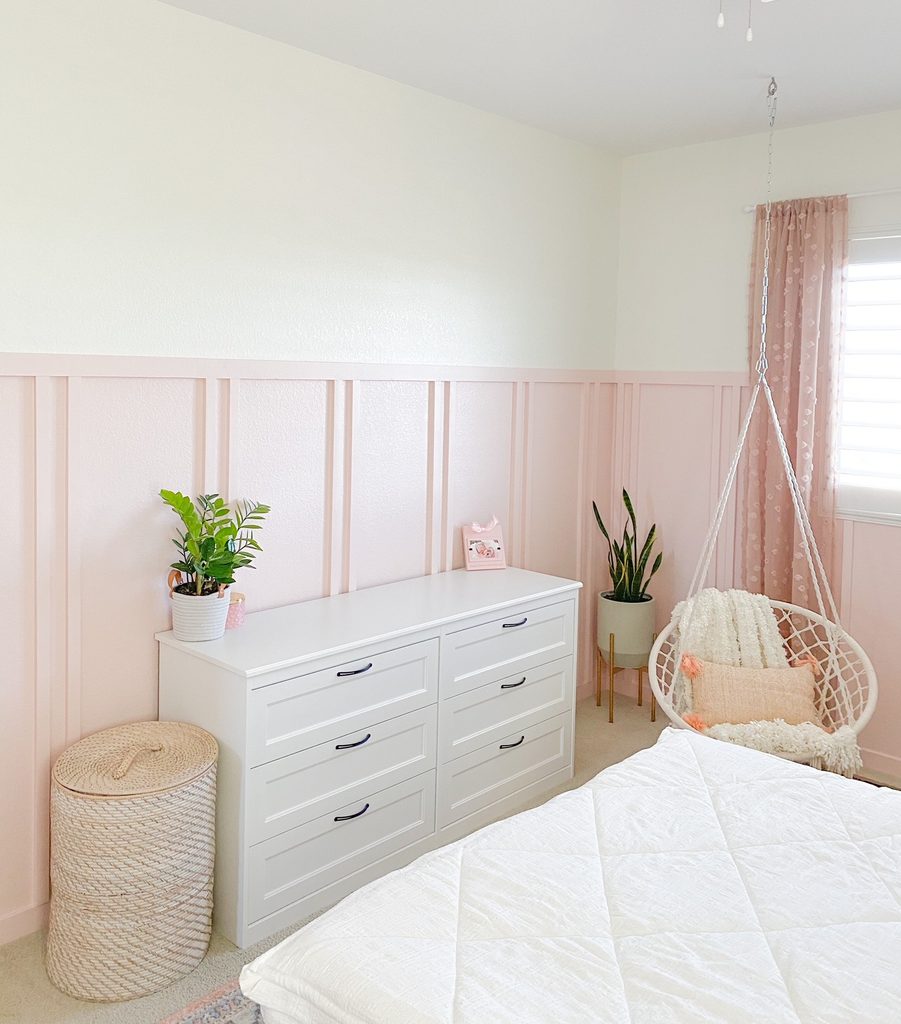
Closely spaced pairs of vertical battens give this pink lower wall a finer rhythm than a single wide board would create. The white upper wall keeps the treatment light, and the dresser blends into that quieter portion of the palette.
Use a drawn elevation to decide where each pair begins and ends before buying trim. Windows, corners, switches, and furniture should influence the spacing rather than interrupting it accidentally.
A sample section can help you judge both the width of the boards and the gaps between them. Painting the background and trim together allows shadows to supply the pattern.
Finish exposed edges carefully, and choose a wall height that relates to the furniture you plan to keep in the room.
7. Use a Pink Botanical Mural as the Main Pattern
Credits: Ashley Wilson / At Home with Ashley
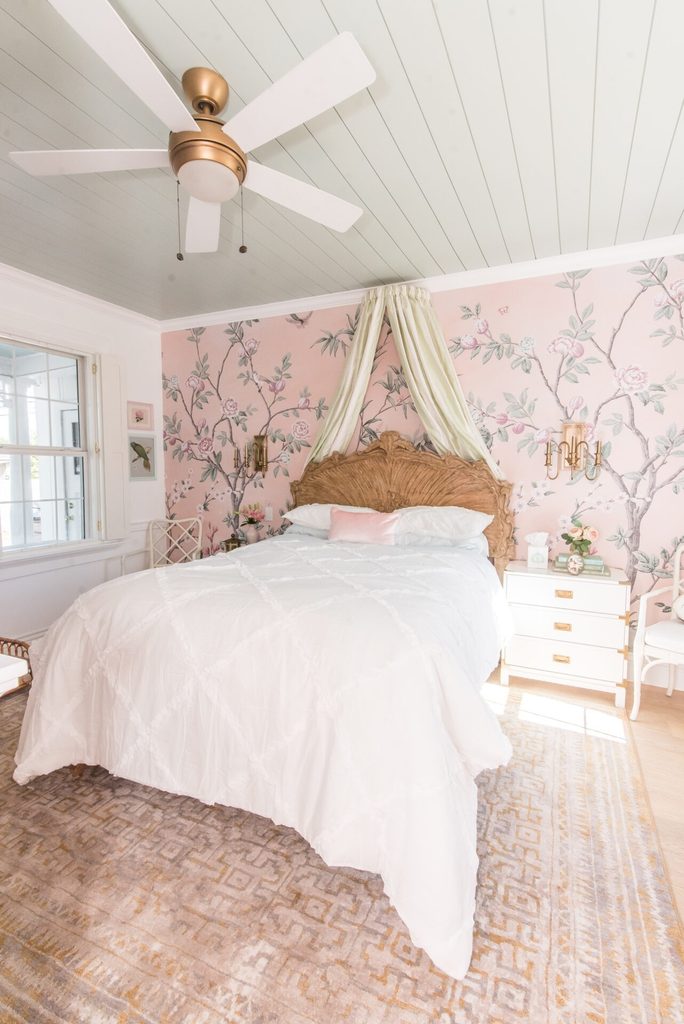
A pale pink botanical mural turns the wall behind this bed into the room’s main decorative feature. Fine branches and flowers spread around the carved headboard, while white bedding gives the detailed background space to show.
This is an approachable way to use a pink pattern without covering every surface in matching prints. Decide which wall deserves attention and measure its full width, including areas behind furniture.
Ask how the mural panels align and where the most important motifs will land. Bring the pattern’s quieter colors into one or two small details elsewhere, keeping larger textiles relatively plain.
If the headboard is ornate, compare its curves with the printed branches before ordering so both features can remain easy to appreciate.
8. Put a Bright Pink Accent on the Ceiling
Credits: Heather Thibodeau / heatherednest.com
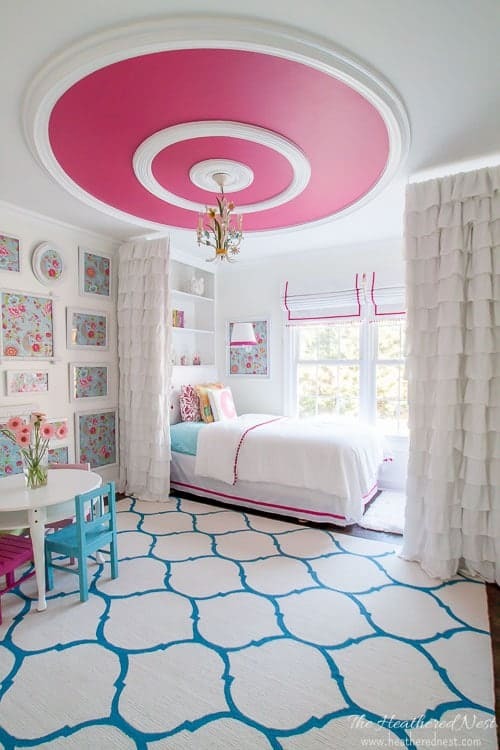
Concentric white moldings surround a vivid pink ceiling field in this bedroom, turning an overlooked surface into the focal point. The rest of the room stays predominantly white, with smaller pink details carrying the overhead color downward.
You can borrow the idea at a simpler scale by defining one clear ceiling shape around an existing light. Sketch its proportions from several viewpoints, especially the doorway and bed, before marking anything overhead.
A bright sample should be tested under the room’s evening lighting as well as daylight. Keep the number of competing ceiling details low.
If decorative trim or a light fitting is involved, use suitable installation guidance and get qualified help where electrical work or substantial overhead fixing requires it.
9. Frame the Window With Quiet Pink Curtains
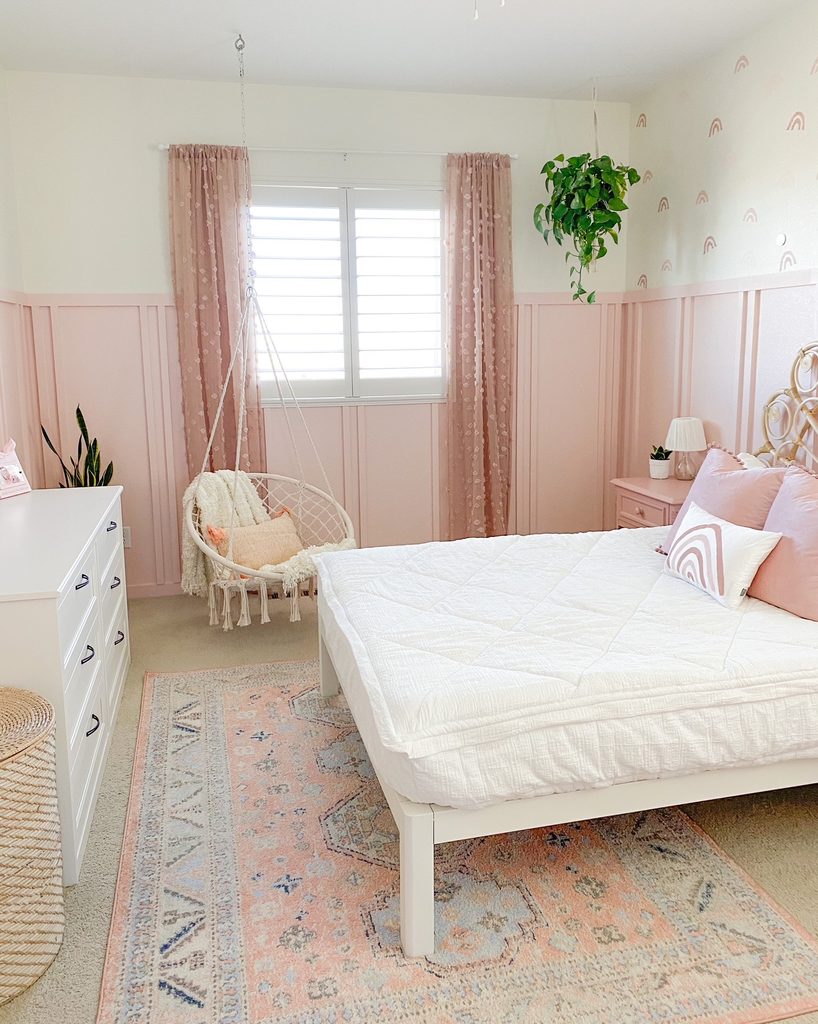
Credits: Kaylee / Sprucing Up Mamahood
Pink curtains bring color to the window while leaving this bedroom’s white upper walls calm. Their narrow hanging folds add a different texture beside the smooth painted panels, and the fabric connects naturally with the cushions on the bed.
Window treatments are useful when you want a larger pink element that can be changed without repainting. Choose the lining for the privacy and darkness you need, then check how it changes the fabric’s appearance when sunlight passes through.
Hang the panels where they can open clear of useful glass and move freely beside furniture. A restrained pattern or plain weave is easy to combine with decorative headboards.
Measure the final drop carefully so the hems look considered rather than accidental.
10. Layer Small Florals With Larger Checks
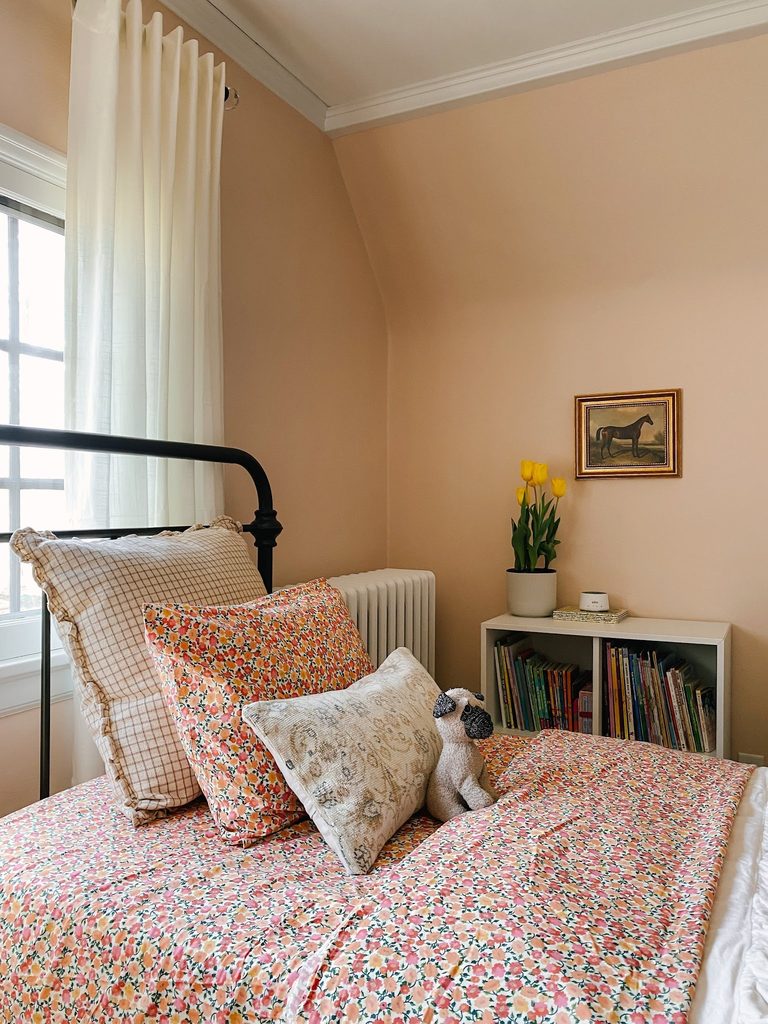
Credits: Patti Wagner / Patticake Wagner
Tiny flowers, a larger check, and a soft decorative cushion make this pink bed feel collected rather than bought as one set. The patterns share warm, muted colors, but their different scales keep them readable beside one another.
Start with the largest textile, usually a quilt or duvet, and pull one pink from its pattern for another piece. Then add a simpler geometric print instead of a second floral with the same scale.
Spread the fabrics out together before making the bed so you can judge their proportions. A plain sheet or pillowcase can create a useful pause between busy layers.
Keep the number of decorative cushions practical, leaving enough room to sleep comfortably without removing an elaborate nightly display.
11. Give Pink Bedding a Contrasting Ribbon Detail
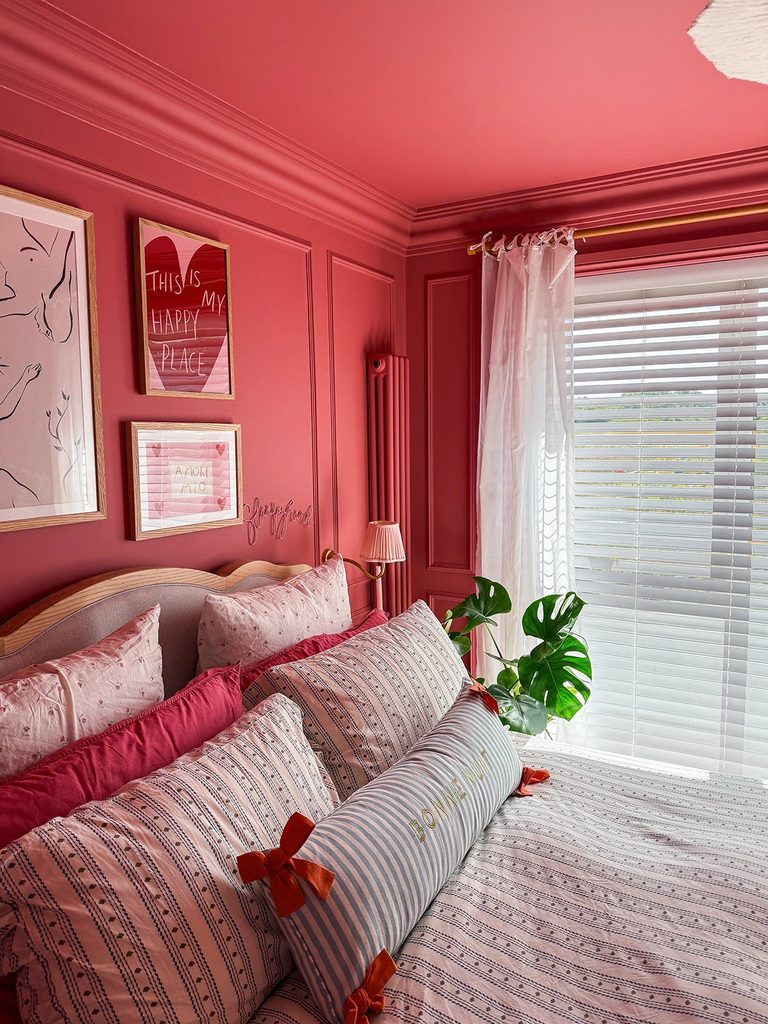
Credits: Gemma Louise
Small red bows give the striped bolster on this pink bed a crisp finishing detail. They repeat the warmth of the walls without blending into the paler pillowcases behind them.
A little contrasting trim can provide definition when several soft pink fabrics sit together. Try a cushion with finished ties, piping, or a narrow border before adding more patterned layers.
Choose an accent color already present in artwork or another textile so the detail feels connected. The trim should remain proportionate to the cushion, with enough plain fabric around it to show its shape.
Keep everyday comfort in mind when selecting decorative bedding. One carefully chosen piece can add character without making the whole bed difficult to arrange each morning.
12. Paint an Interior Door in Pale Pink
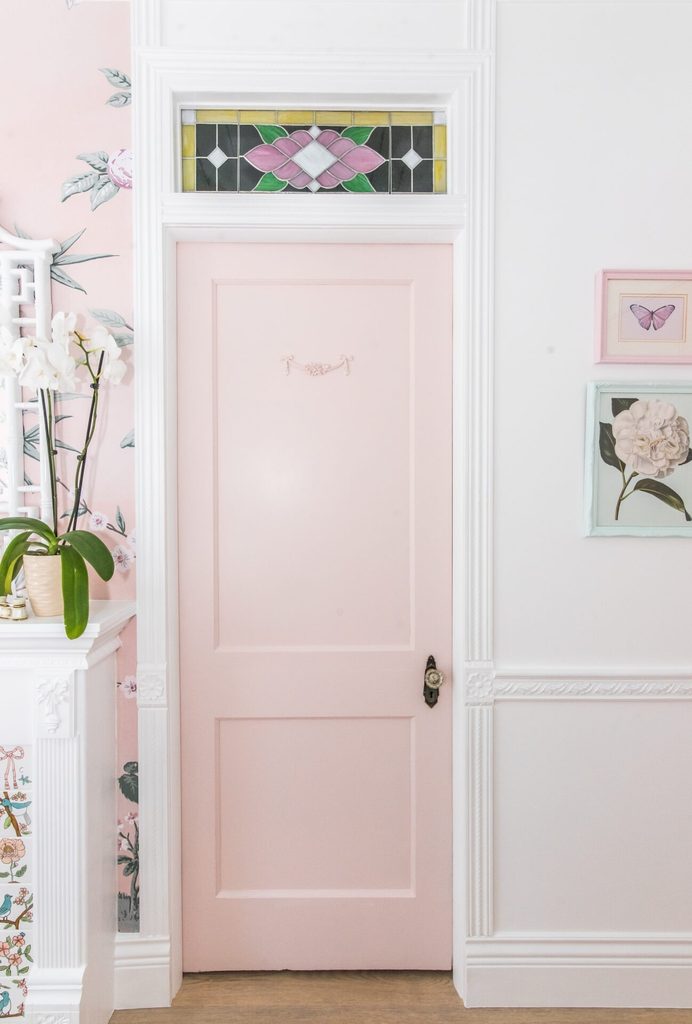
Credits: Ashley Wilson / At Home with Ashley
A pale pink door becomes a decorative surface inside this white bedroom. The surrounding trim stays white, so the door’s panels are easy to see, while the colored glass above creates a small connection to the pink elsewhere.
Painting one door can introduce a clear accent without taking over an entire wall. Compare samples against the existing trim and floor before choosing the shade.
Prepare the surface properly and select a finish intended for doors, where hands and regular movement create wear. Consider the view from both connected rooms, since the color will appear differently when the door is open.
Keep hardware visible and functional rather than painting over every detail. The result can feel personal while remaining architecturally simple.
13. Combine Blush Pink With Oversized White Daisies
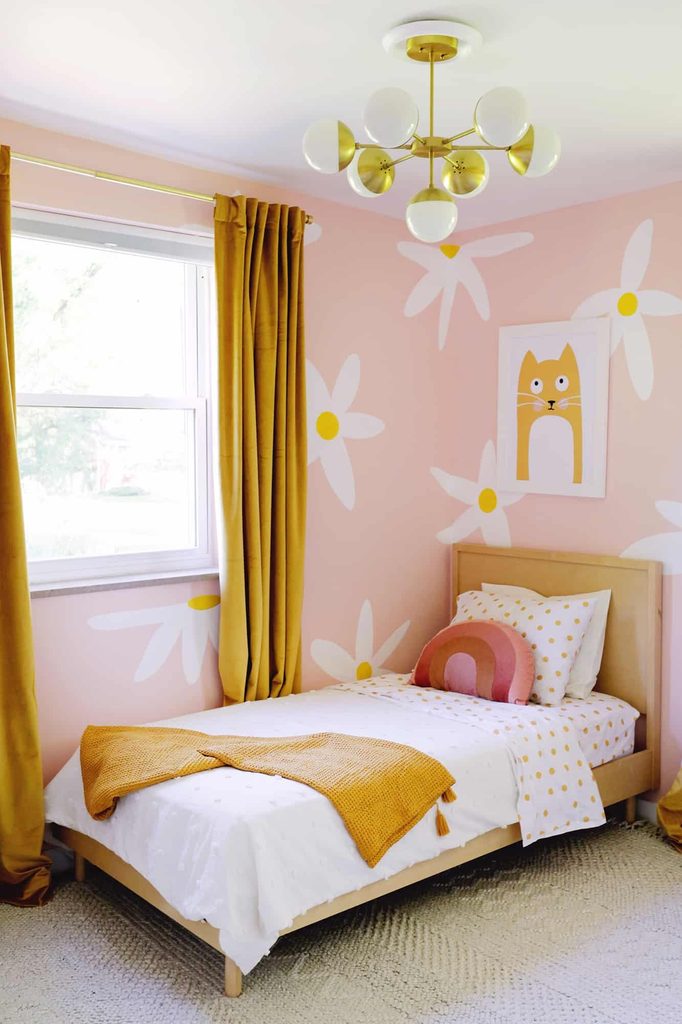
Credits: Laura Gummerman / A Beautiful Mess
Large white daisies and golden yellow accents make this blush bedroom cheerful without filling it with tiny competing prints. The broad petals are easy to read from the doorway, and their centers connect with the curtains and folded throw.
For a similar treatment, decide on the flower size before choosing the spacing. Paper shapes temporarily fixed to the wall can help you see how the repeat interacts with the bed, window, and corners.
Leave enough pink background between flowers for the color to remain part of the design. A simple wooden bed and mostly white bedding give the pattern room to work.
Introduce yellow through a few useful textiles instead of scattering many small decorative objects across the entire bedroom.
14. Deepen Pink Neutrals With Burgundy Window Frames
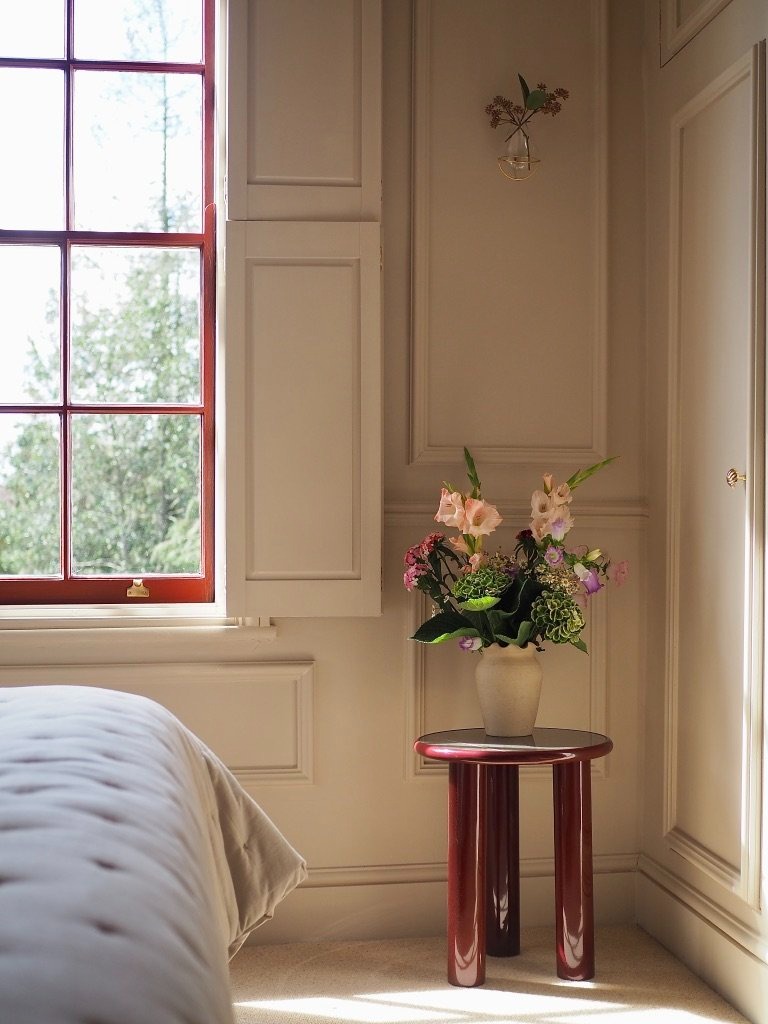
Credits: Melanie Lissack Interiors
Reddish window frames give this pale, pink toned bedroom a strong architectural accent. The deeper shade repeats in a small round table, while the surrounding moldings stay quiet and flowers soften the corner.
Consider this combination when an almost neutral pink feels pleasant but slightly flat. A darker related color can define one feature without turning every edge into a border.
Test the accent directly beside the proposed wall shade, and look at the pair in both bright and shaded parts of the room. Keep the first application limited to a feature you genuinely want to emphasize.
Window finishes need to suit the existing surface and its condition. A small painted furniture piece can provide a simpler starting point instead.
15. Make a Muted Pink Dressing Cabinet the Accent
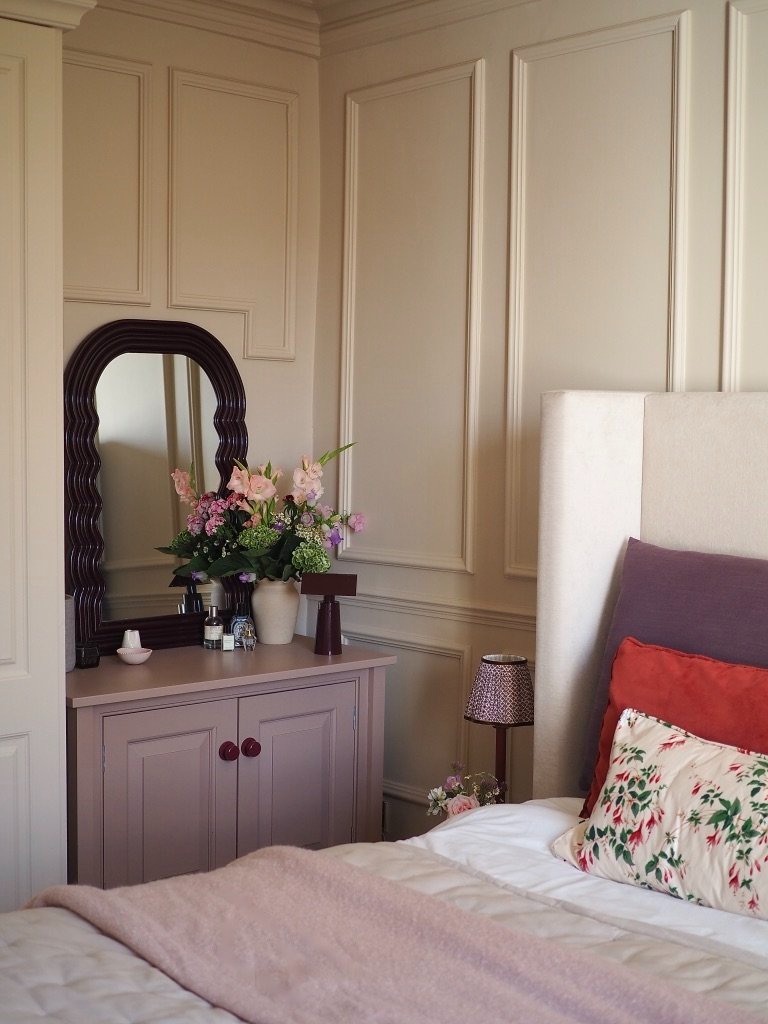
Credits: Melanie Lissack Interiors
A muted pink cabinet turns a bedroom corner into a modest dressing area. Its paneled doors echo the wall molding, while the dark mirror gives the pale furniture a clear outline.
The color is gentle enough to sit beside neutral walls without disappearing into them. Choose a cabinet for its useful storage first, then consider whether its proportions suit the available corner.
A shallow piece can hold everyday items without narrowing the route around the bed. Keep the top organized with only the objects needed for getting ready, and position the mirror where lighting is helpful.
If repainting existing furniture, sample the pink on a removable board beside the room’s fabrics. Its undertone matters more than matching every accessory exactly.
16. Echo Pink Walls With One Sculptural Vase
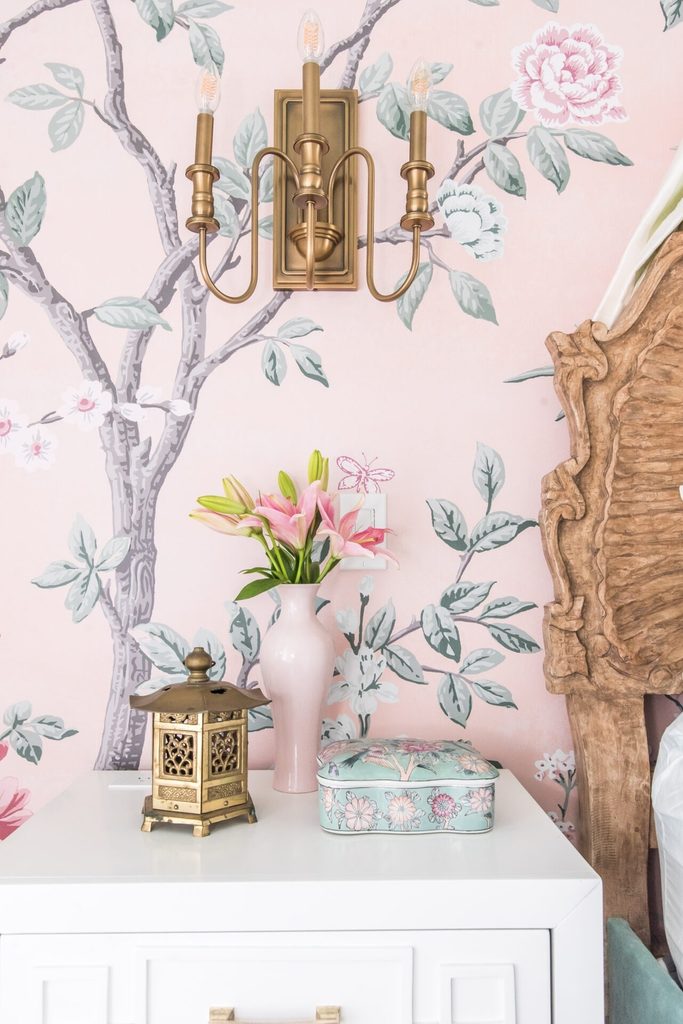
Credits: Ashley Wilson / At Home with Ashley
A plain pink vase adds a solid shape against this intricate floral wall. The flowers extend its color upward, while the white tabletop and patterned box keep the small arrangement connected to the bedroom around it.
This is a useful finishing move when pink already appears on a large surface and needs one quieter repetition nearby.
Choose the vase for its outline as well as its color; a simple rounded or tapered form will read clearly beside busy wallpaper. Keep the arrangement short enough to leave bedside lighting and switches accessible.
Protect the surface from moisture, and use blooms suitable for your household. The aim is a visual connection, so filling every remaining space with matching pink objects is unnecessary.
17. Layer Pink Drapery Around a Bed Crown
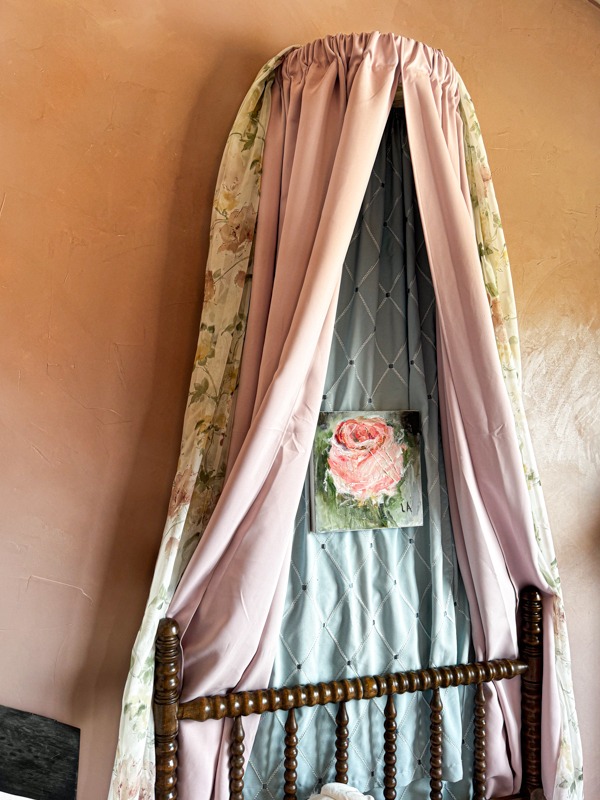
Credits: The Morris Mansion
Pink curtains frame a blue patterned backing beneath this small bed crown, creating a layered backdrop without a full four poster frame.
A floral outer layer brings the colors together, and the rose artwork reinforces the pink running through the fabric. The combination works because each layer has a different role: plain pink borders, a cooler center, and a softer patterned edge.
Gather fabric samples before planning a similar arrangement, checking both their weight and how they hang together. Measure from the proposed crown position to the intended hem rather than relying on curtain labels alone.
Keep fabric clear of lamps, heaters, and daily walking routes. Any overhead support should be suitable for the complete fabric weight and wall construction.
18. Set a Green Mirror Against Deep Pink Walls
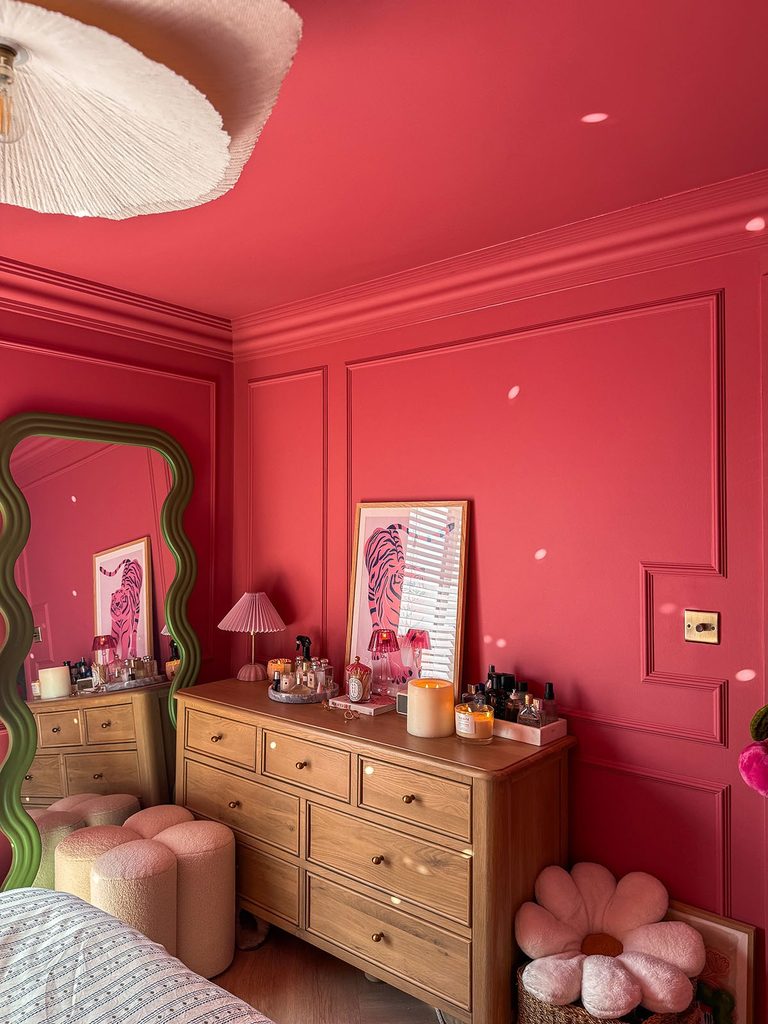
Credits: Gemma Louise
A wavy green mirror provides a cool outline against this saturated pink bedroom. The wooden dresser adds a quieter natural surface beneath it, while the mirror reflects the room’s pink details back into the corner.
This pairing is useful when an enveloping pink scheme needs one contrasting feature. Choose a green with enough difference in depth to remain visible, and compare it beside the actual wall paint before buying.
The mirror’s shape can supply the playful element, allowing nearby storage to stay straightforward. Position it for a useful reflection rather than simply filling an empty wall.
Secure it according to its weight and the manufacturer’s instructions. Keep daily essentials organized, and use flameless candles near perfume bottles and paper artwork.
19. Add a Rose Velvet Bench to a Green Bedroom
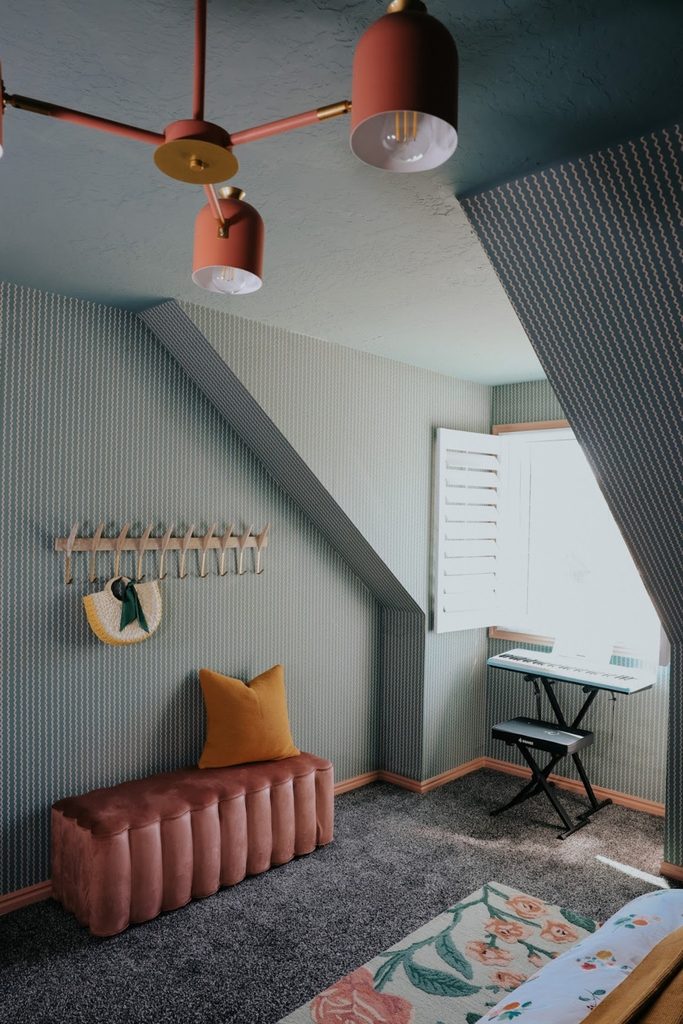
Credits: Brooke Christen / Nesting With Grace
A rose colored bench offers a compact pink accent beneath the wall hooks in this green dormer bedroom. Its rounded vertical sections contrast with the fine lines on the surrounding walls, bringing softness to an otherwise angular corner.
An upholstered seat is a useful way to try pink when the main furniture and paint already work well. Measure the depth carefully so sitting down does not obstruct the route to the bed or window.
Choose a fabric that suits everyday contact and can be maintained without complicated cleaning. If the seat will hold clothes temporarily, leave nearby storage available so it remains usable.
Repeating pink once more in a light or cushion can connect the bench with the broader scheme.
20. Stamp Small Pink Rainbows Above the Bed
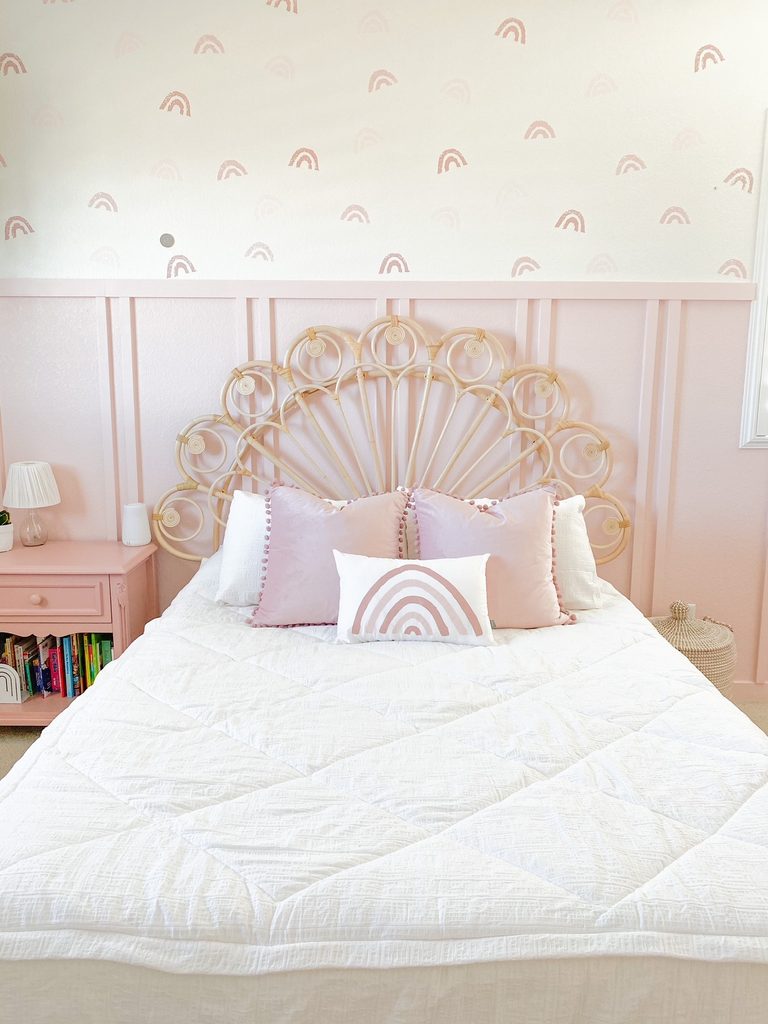
Credits: Kaylee / Sprucing Up Mamahood
Small pink rainbow shapes give the white wall above this bed a light, playful pattern. Their generous spacing lets the background remain bright, while the lower pink paneling provides a more continuous block of color.
The idea can be adapted with simple painted motifs rather than a detailed mural. Make a full size paper layout first, then test your chosen pinks on a sample board.
Similar shades can look faint against white, especially across a large room. Keep the spacing consistent enough to feel intentional while allowing the pattern to end naturally at corners and windows.
A plain quilt helps the motifs stay visible. Coordinate one cushion with the wall colors instead of repeating rainbow shapes on every bedroom accessory.