
Gray can make a bedroom feel calm, but too much of one shade may leave it looking flat or dim.
Grey Bedroom Ideas can help you find balance through contrast, texture, and carefully placed color rather than relying on a single paint choice.
Consider carrying blue gray onto a tray ceiling, pairing charcoal walls with a pale wood-effect ceiling, or adding a pale trellis pattern to gray walls.
The examples also show how light textiles, warm brass, blush accents, and floral lampshades can bring interest to a subdued palette.
1. Carry Blue Gray Around a Patterned Tray Ceiling
Credits: Casey Finn / The DIY Playbook
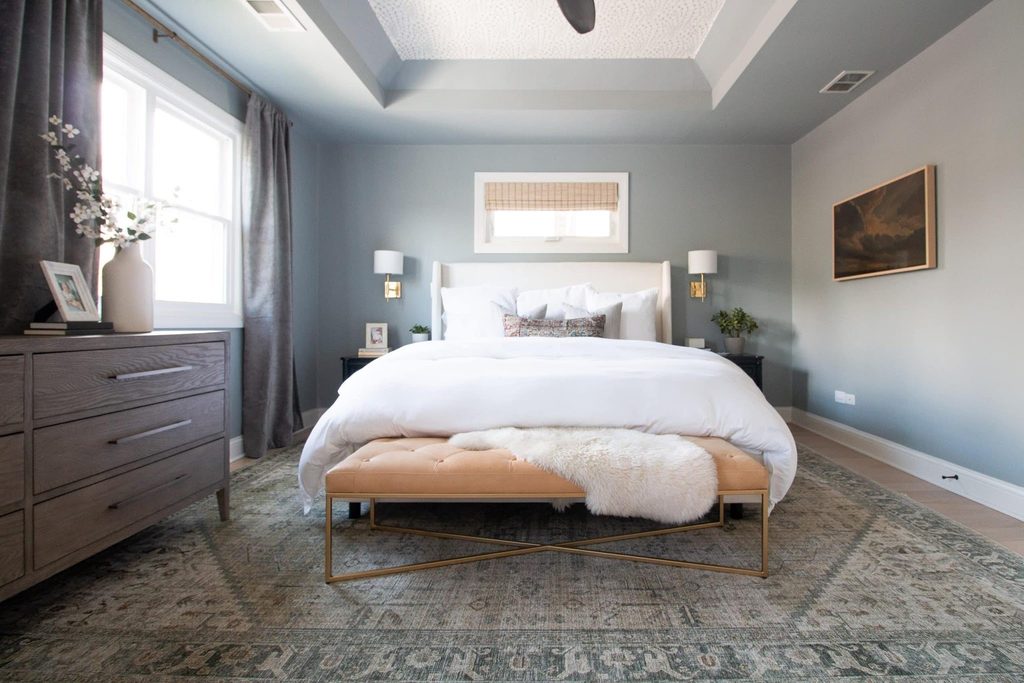
Blue gray paint gives this bedroom a soft boundary, continuing around the tray ceiling while a pale patterned inset adds interest overhead. White bedding and window trim keep the color from feeling heavy.
This approach works when you want more atmosphere than white walls provide but still enjoy a bright sleeping space. Treat the ceiling edge as part of the paint scheme, checking samples on both horizontal and vertical surfaces.
Their colors can shift noticeably as daylight moves. Choose a restrained overhead pattern so it remains restful when viewed from the pillows.
Warm metal sconces and a tan bench introduce small contrasts. The large rug carries muted gray tones across the floor, connecting the room without matching every fabric exactly.
2. Balance Charcoal Walls With a Pale Wood Effect Ceiling
Credits: Brooke Christen / Nesting With Grace
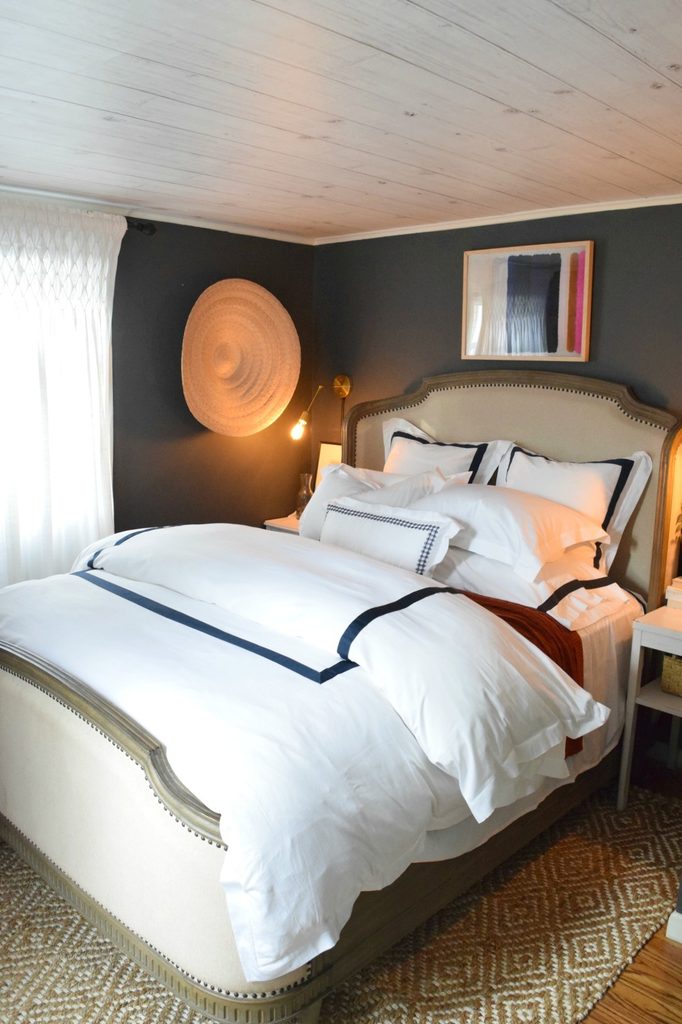
A pale wood effect ceiling lifts the eye above the charcoal walls in this compact bedroom. The homeowner used wallpaper to create the plank appearance, offering a different option from installing real boards overhead.
Cream upholstery and white bedding repeat that lighter tone below. If you like dark gray paint but worry about an enclosed feeling, consider how much brightness the ceiling, curtains, and bed can contribute together.
Keep the overhead grain quiet rather than choosing a strongly contrasting pattern. Test a wallpaper sample beside the paint under evening lighting before committing.
Narrow borders on the pillows and duvet echo the deeper walls. The small abstract artwork introduces color without interrupting the restful balance between dark paint and pale fabric.
3. Stencil a Pale Trellis Across Gray Walls
Credits: Natalie Gallagher / Refined Rooms
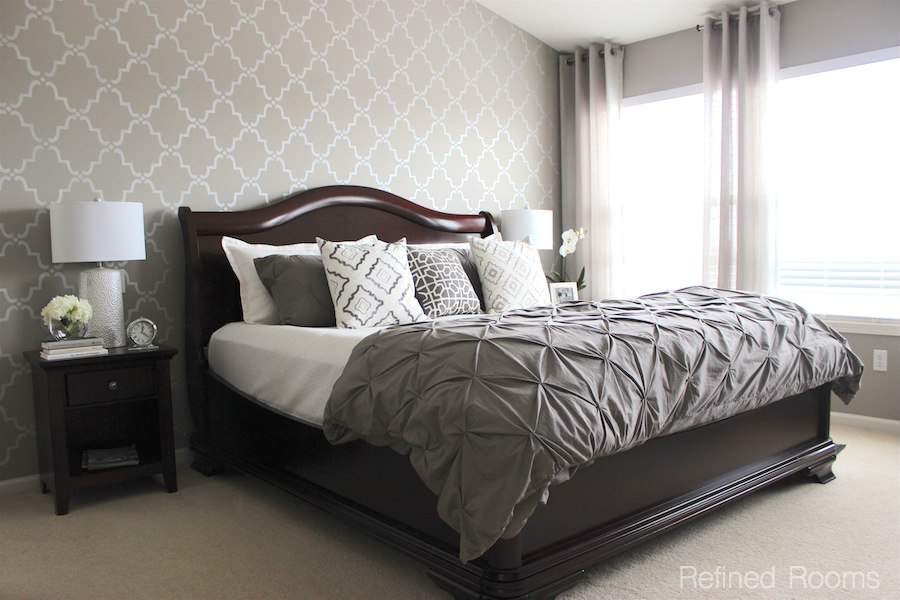
A repeating pale trellis gives this gray wall a decorative finish while keeping the bedroom within a restrained palette. The homeowner created the pattern with a stencil, so the photograph offers a painting idea rather than an example of wallpaper.
Its continuous repeat contrasts with the curved dark headboard below. Begin by testing the motif on a sample board, then hold it behind your bed to judge the scale.
A pattern that looks delicate close up may disappear from the doorway. Leave enough plain fabric around the pillows to separate the wall design from the bedding.
Here, gathered gray fabric adds depth without another color. Matching lamps make the bedside arrangement feel settled beneath the more intricate surface behind it.
4. Follow a Vaulted Wall With Slate Gray Paneling
Credits: Sam Raimondi / DIY Huntress
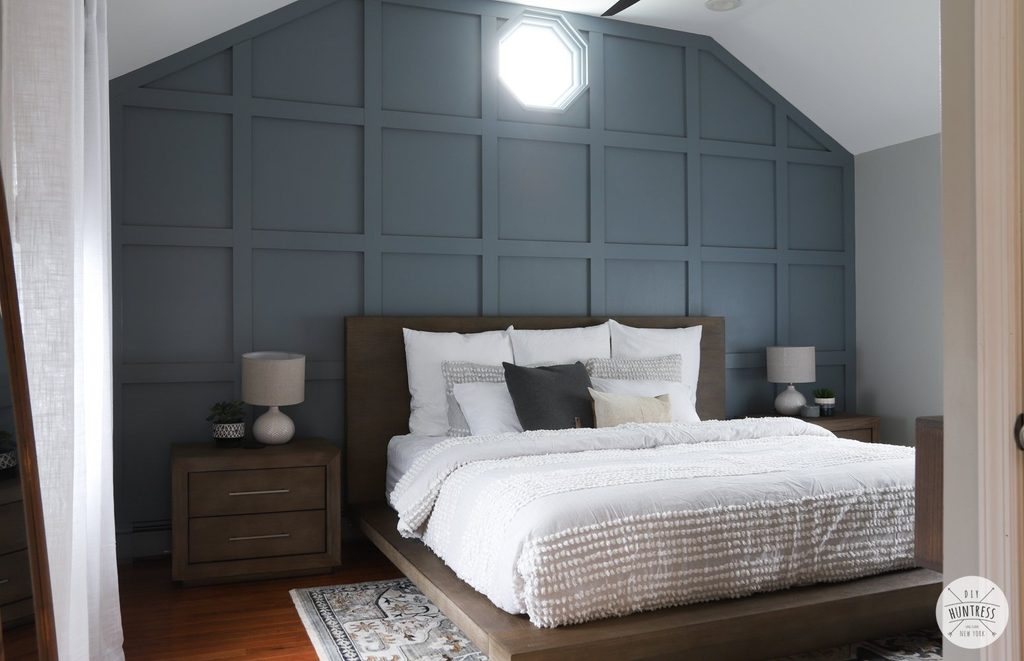
Slate gray paneling gives this tall bedroom wall a clear structure without flattening its unusual outline. The grid continues toward the sloping ceiling and frames the small upper window, making the architecture part of the composition.
White textured bedding stands out against the deeper paint, while wooden furniture brings warmth close to the floor. Plan a similar grid from the full wall dimensions before cutting individual strips.
Window trim, outlets, and the headboard should influence where the divisions fall. Equal spacing may need adjustment around an existing opening.
Paint sample pieces as well as the wall because their shadows affect the finished appearance. The single charcoal cushion repeats the backdrop without requiring every soft furnishing to share its exact shade.
5. Layer Light Gray Textiles Against Dark Herringbone Wood
Credits: Kristi Murphy
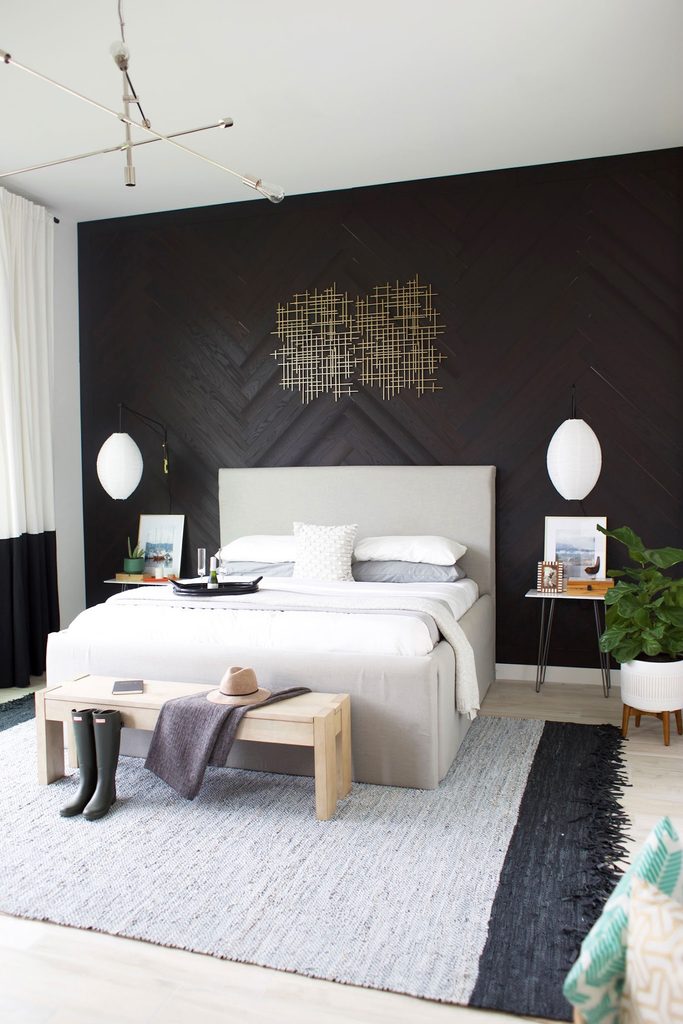
Light gray bedding and a broad woven rug soften the dramatic herringbone wall behind this bed. The dark timber pattern remains visible through shifts in grain and light, so the room gains detail without relying on bright color.
Pale upholstery provides another gentle transition between the wall and white sheets. When borrowing this combination, compare your gray textiles directly with the wood finish; some will read blue, others warmer or slightly purple.
Use those differences deliberately rather than expecting a perfect match. A simple light wooden bench keeps the foreground open.
The darker rug border provides definition where the bed meets the floor. Keep additional patterns limited so the diagonal wall and woven surfaces remain the main sources of interest.
6. Add Floral Lampshades Beside Gray Bedding
Credits: Aniko / Place Of My Taste
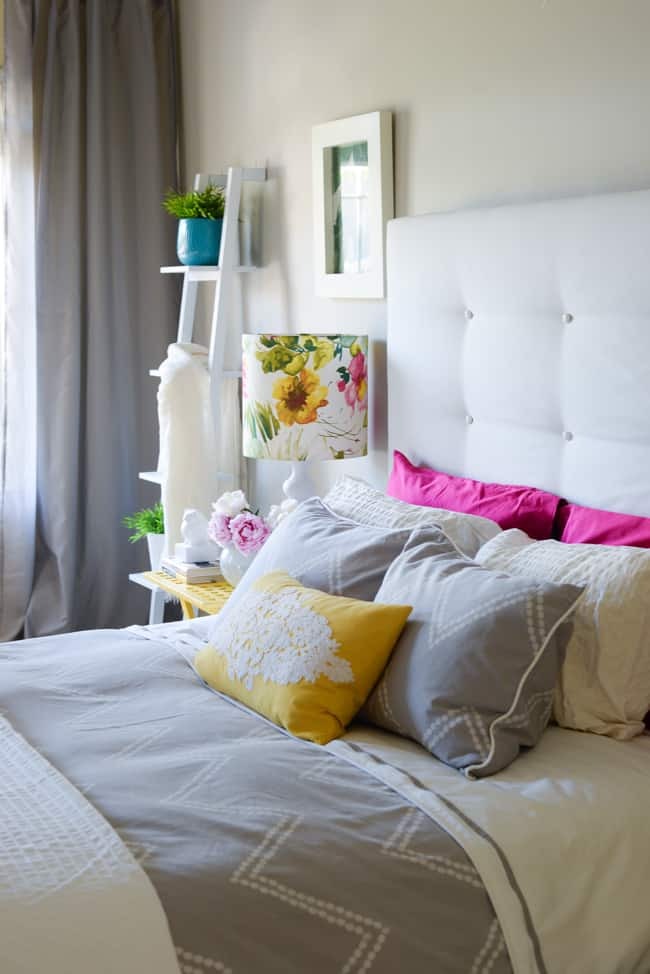
Floral lampshades add a playful note beside the restrained gray bedding in this bedroom. Their pink, yellow, and green details connect the brighter cushions with the otherwise quiet bed, making a small accessory work hard.
White lamp bases and a pale upholstered headboard keep the arrangement light. This idea suits a gray room that needs personality but does not need new paint or large furniture.
Choose a fabric pattern whose colors already appear somewhere nearby, then check it with the lamp both switched on and off. Use a lampshade product designed for the fixture and follow its heat and bulb guidance.
Leave gray visible across the larger bedding surfaces so the floral print remains an accent rather than taking over.
7. Brighten Gray Upholstery With a White Campaign Nightstand
Credits: Casey Finn / The DIY Playbook
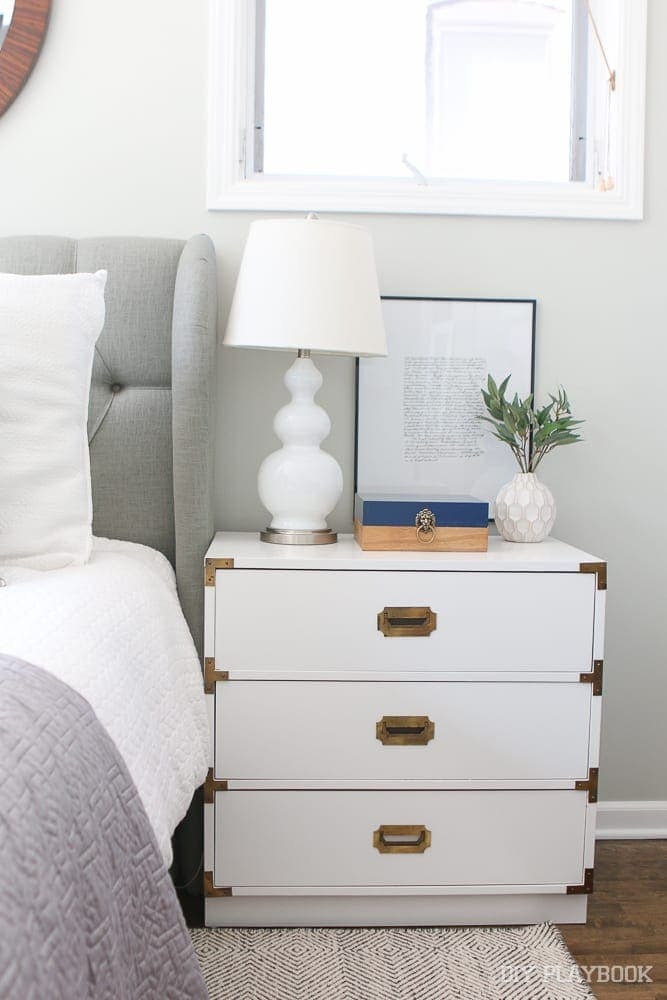
White bedside furniture gives this pale gray upholstered bed a crisp companion. Brass corner pieces and drawer pulls define the campaign style nightstand, while the rounded lamp softens its boxy outline.
Because the headboard, wall, and blanket sit close in tone, the brighter drawers prevent that corner from becoming visually flat. Consider this pairing when you like gray but want a bedside area that feels fresh in daylight.
Match the furniture height to your mattress so its surface stays easy to reach. A framed letter, small vase, and lidded box add personal detail without covering the whole top.
Leave a practical landing space for nightly essentials. The light rug beneath connects the white cabinet with the softer upholstery beside it.
8. Layered Botanical and Geometric Gray Cushions
Credits: Instagram
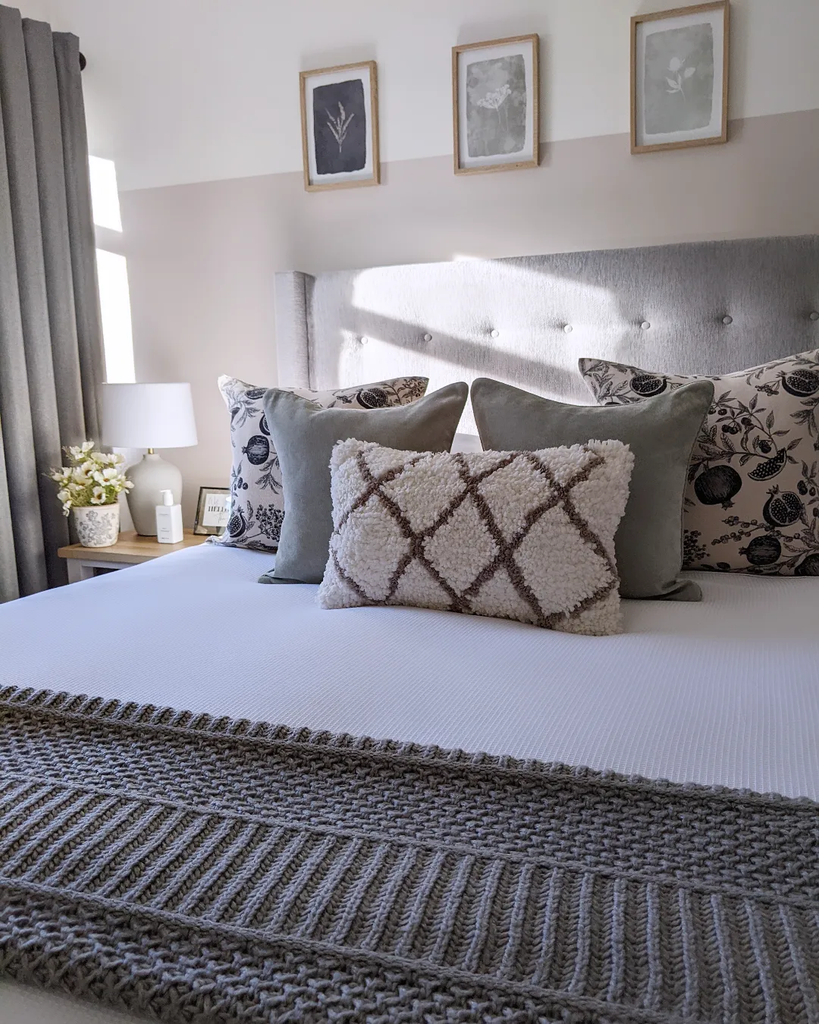
Small patterns become easier to combine when their scale varies. The gray bedroom cushions here mix botanical designs, plain covers, and a larger diamond motif, with a ribbed blanket adding another texture below.
The headboard and curtains remain quieter, giving the patterned pieces a clear setting. Start with one print you enjoy, then choose supporting cushions that share a tone without copying its exact design.
A larger repeat can sit beside finer detail more comfortably than several similarly busy patterns. Consider how many pillows you want to move at bedtime before filling the bed.
Keeping the main cover simple leaves room for variation in those smaller pieces. The resulting look can change seasonally without replacing furniture or repainting the walls.
9. Bring Warm Brass Light Into a Charcoal Corner
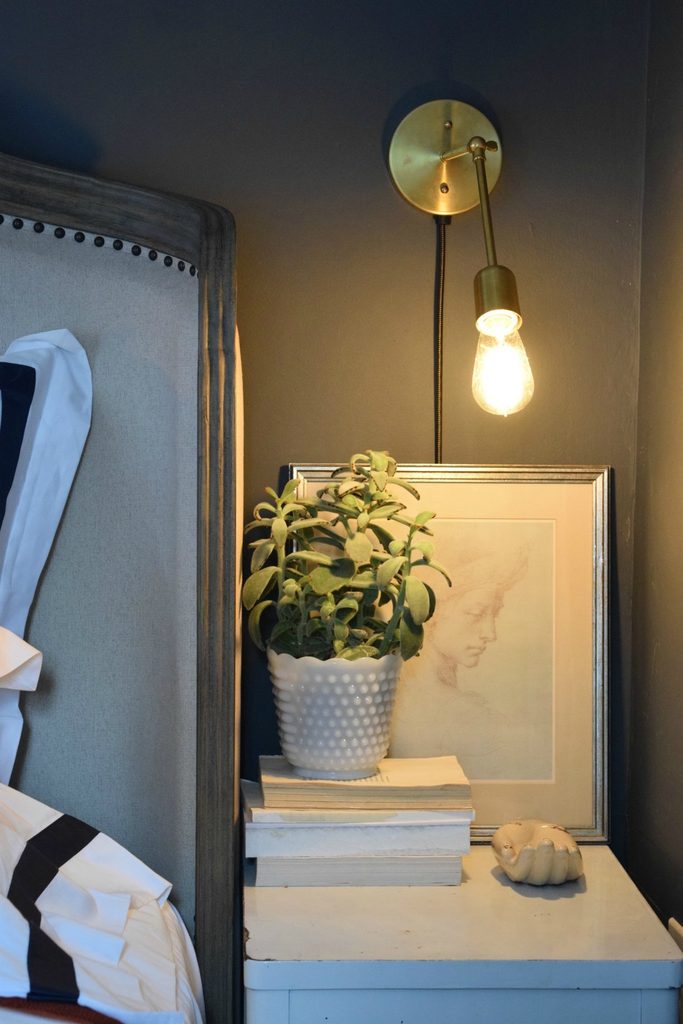
Credits: Brooke Christen / Nesting With Grace
Warm light changes how a charcoal bedside wall feels after sunset. Here, a brass sconce creates a soft pool above a white nightstand, illuminating a framed drawing and a small plant.
Its slender arm leaves more of the dark wall visible than a large table lamp would. If your gray bedroom feels cool at night, review the bulbs and fixture placement before replacing furniture or repainting.
Compare lighting options from the bed as well as the doorway, checking for uncomfortable glare. A shaded fixture may suit sensitive eyes better than the exposed bulb shown.
Keep cords tidy and use appropriate professional help for electrical changes. Pale books and the textured white pot give the small arrangement definition against the paint.
10. Build a Gray Bed Scheme Inside White Wall Moldings
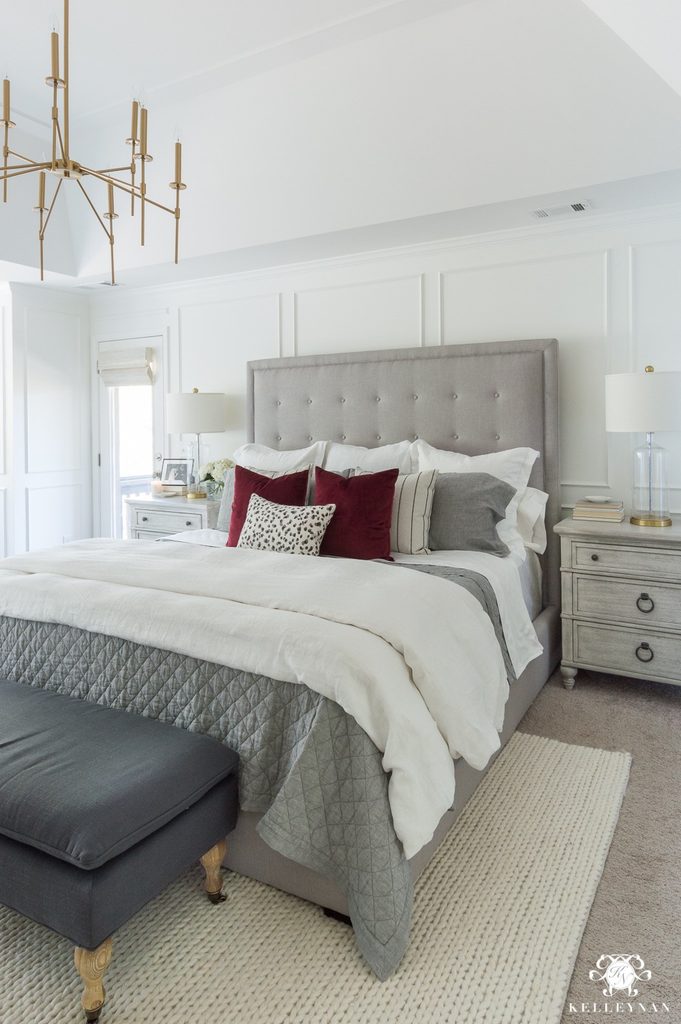
Credits: Kelley Nan
A gray upholstered headboard and quilt give this white bedroom its main band of color. The wall moldings remain pale, allowing their shadows to supply architectural detail without another strong shade.
A deeper gray bench extends the palette toward the foot of the bed. You can build a similar scheme around one substantial textile rather than repainting the room.
Compare fabric samples together, looking for compatible undertones even when their depths differ. White sheets and a folded duvet create clear breaks between the gray layers.
The lightly finished nightstands keep the arrangement bright beside the broader headboard. Choose simple bedding textures when surrounding moldings already contribute lines.
Small accent cushions can then change the mood without replacing the larger pieces.
11. Frame Wide Bedroom Windows With High Silver Gray Curtains
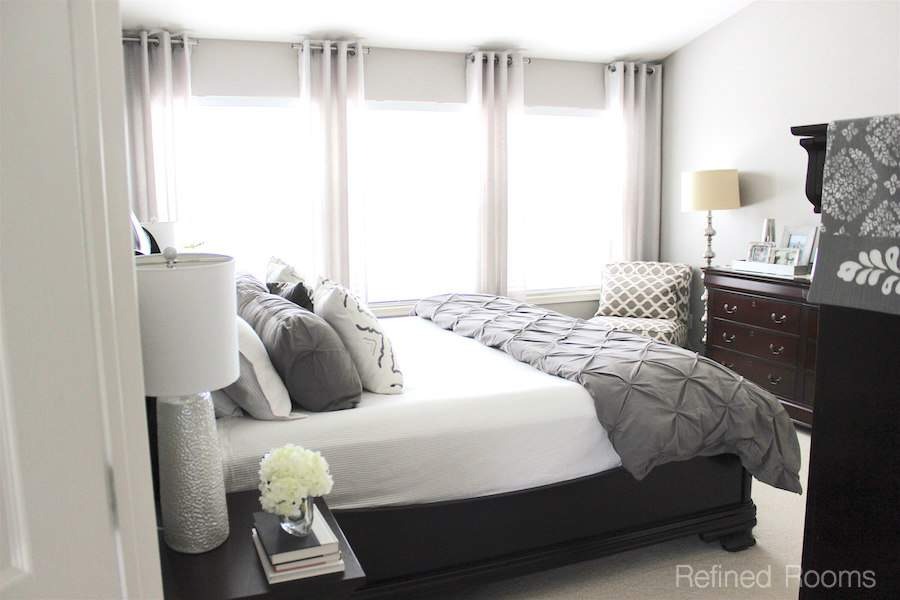
Credits: Natalie Gallagher / Refined Rooms
Silver gray curtains soften the wide bank of windows in this bedroom while echoing the folded gray bedding. Their high placement gives the fabric a long vertical line, balancing the broad horizontal spread of glass.
The panels divide the windows into manageable sections instead of covering the whole wall with one heavy surface. Before choosing a similar arrangement, measure where each panel will rest when open and how much light you want to retain.
Check that curtain hardware suits the wall and the weight of the fabric. Add separate light control if panels cannot close completely.
Keeping the curtains close to the wall color makes the windows feel integrated. Dark furniture below anchors the bright area without interrupting its rhythm.
12. Give Soft Gray Bedding a Black Canopy Outline
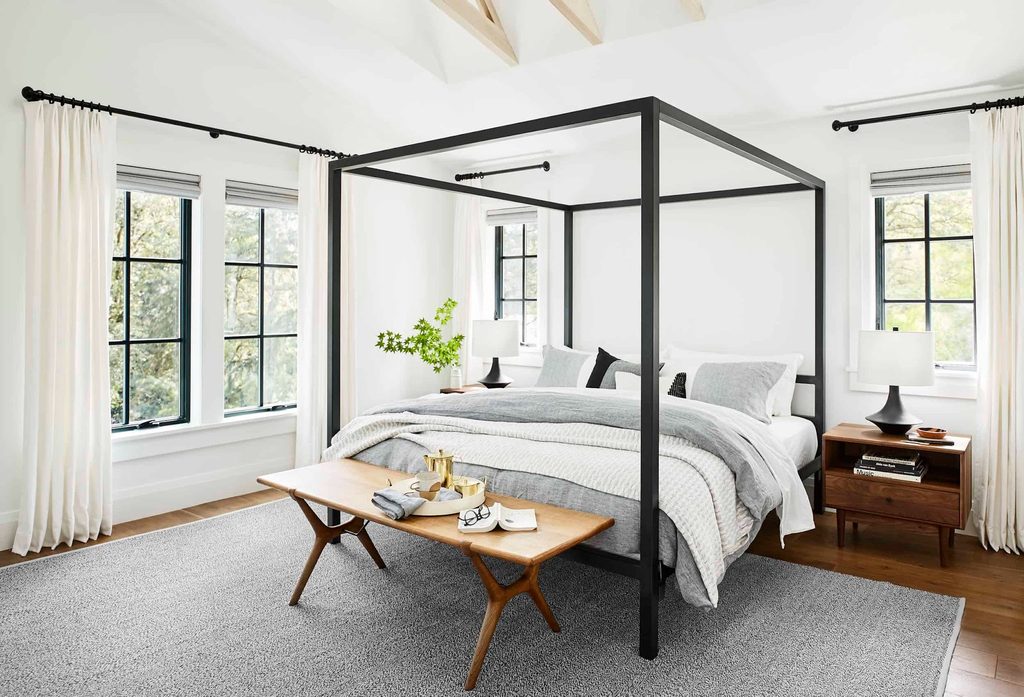
Credits: Sara Tramp / Emily Henderson
A slim black canopy sharpens the outline of the softly layered gray bed in this bright room. Its open top preserves views of the ceiling, while matching dark window frames connect the furniture to the architecture.
White blankets separate the gray cover from the pale walls, giving each layer room to show. This combination suits someone who likes gray textiles but wants stronger structure around them.
Measure canopy height carefully, including clearance from lights and fans, before choosing a frame. Keep additional draping minimal when the room already has full curtains.
Wooden bedside tables and a warm bench prevent the scheme from feeling chilly. The broad gray rug carries the bedding palette outward, making the sleeping area feel deliberately placed.
13. Warm a Minimal Gray Bed With Tan Leather Cushions
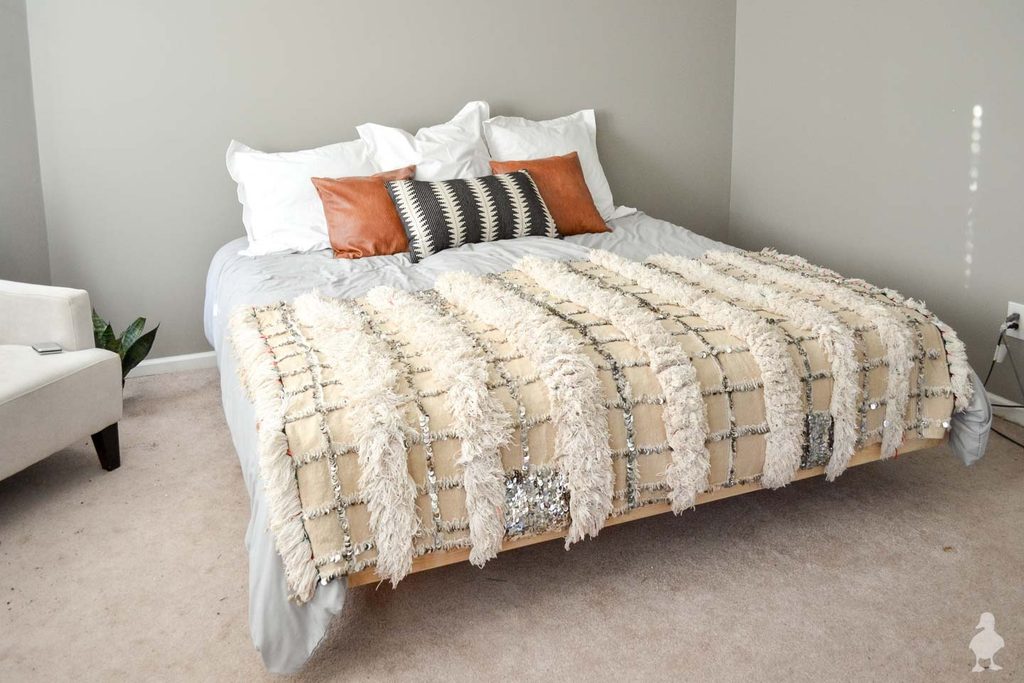
Credits: Sarah / Ugly Duckling House
Tan leather cushions bring a concentrated warm accent to this gray bed. The pale walls and bedding create a quiet background, while a cream fringed blanket supplies the texture that a larger headboard might otherwise provide.
A patterned lumbar cushion joins the darker and lighter notes at the center. This is an approachable change when your room already has gray paint and you want more warmth through removable pieces.
Choose a tan that complements any wood already present, then test it beside your bedding in daylight. Keep the remaining cushions uncomplicated so the material difference stays visible.
A low bed preserves open wall space above. Let the blanket stop clear of walking routes rather than gathering loosely on the floor.
14. Channel Tufted Gray Bed With Blush Accents
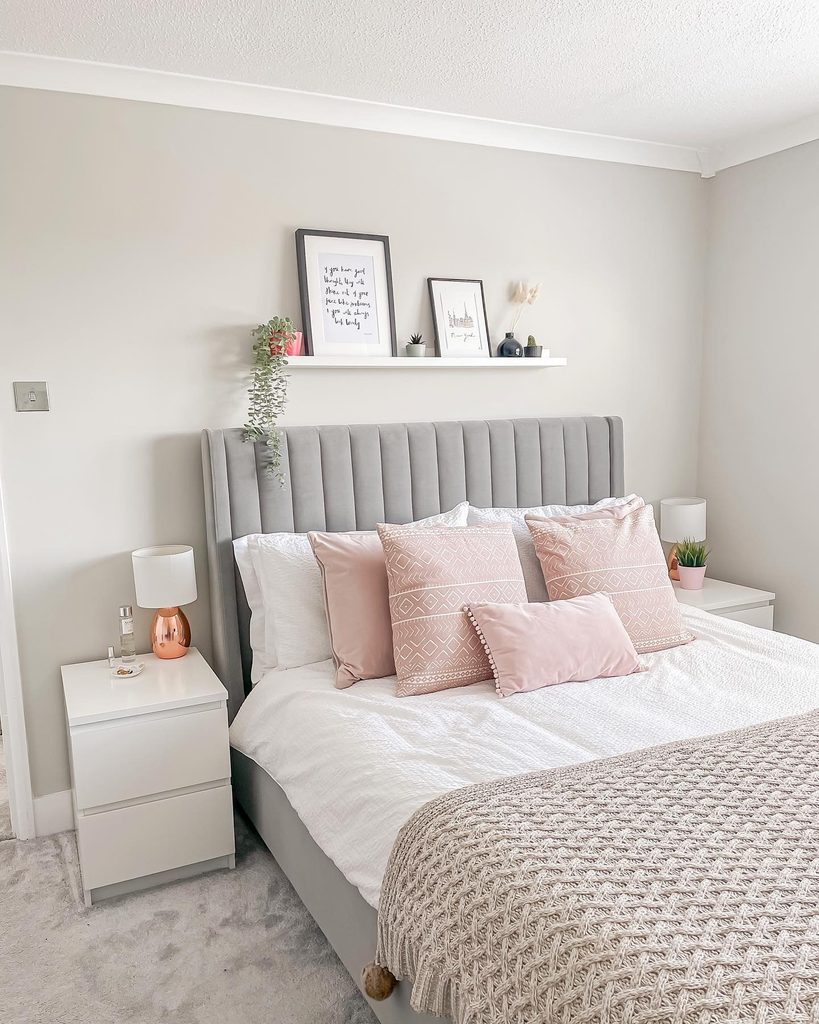
Credits: Instagram
Blush accents can warm a gray bed without turning the room into a predominantly pink scheme. Here, the vertically channeled headboard remains the largest colored furniture piece, supported by pale walls, white nightstands, and small copper toned lamps.
Patterned pink cushions introduce a softer note at the center. The picture ledge above gives artwork and a trailing plant one defined place.
For a similar balance, keep the accent color concentrated in a few movable objects rather than distributing it everywhere. That makes later changes straightforward.
Check the ledge’s fixings and prevent items from falling toward the bed. A headboard with visible vertical divisions already supplies structure, so additional wall molding is unnecessary unless it serves a clearly different purpose elsewhere.
15. Add a Tufted Gray Bench to a Warm Neutral Bedroom
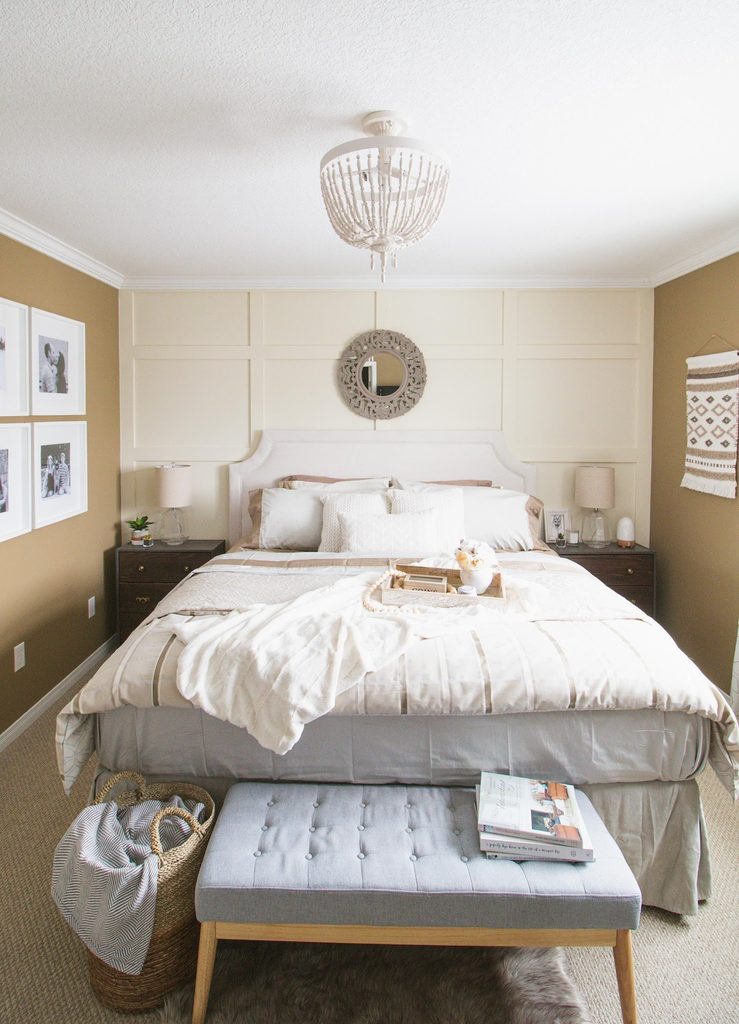
Credits: Brittany Stager
A tufted gray bench introduces a cool note at the foot of this warmly colored bedroom. Its wooden legs connect with the surrounding natural finishes, while the gray upholstery repeats the quieter fabric visible along the bed base.
This is a gentle way to add gray without committing to full walls or a new bed. Start by measuring the space beyond the mattress, allowing comfortable movement around the bench and access to nearby drawers.
A narrower piece can still provide a useful place for getting dressed. Choose fabric that suits daily contact rather than appearance alone.
The buttoned surface adds detail beside smoother bedding. Keep the seat mostly clear so it remains furniture you use, rather than another display surface.
16. Place a Gray Wood Dresser Beneath Paired Windows
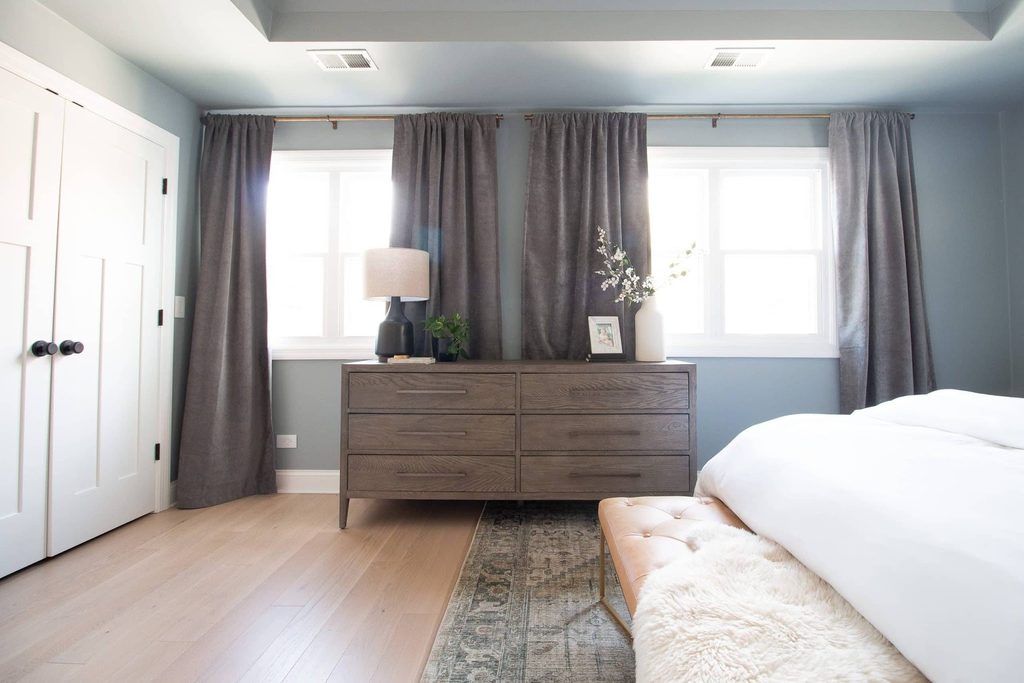
Credits: Casey Finn / The DIY Playbook
A wide gray wood dresser gives this bedroom’s window wall a useful center. Deep gray curtains sit behind it, and the blue gray paint links the separate windows into one continuous background.
The visible wood grain prevents the large cabinet from reading as a flat block. Try this arrangement when storage crowds the bed wall and a lower piece could fit elsewhere.
Measure the sill height and leave windows accessible for ventilation, cleaning, and any required emergency escape. Make sure the drawers can open beyond the bed.
Simple objects grouped at either end leave the dresser’s long surface readable. A dark lamp and pale vase create balance through contrasting shapes, while the restrained palette keeps attention on the room’s proportions.
17. Lift Gray Quilting With Wine Velvet Cushions
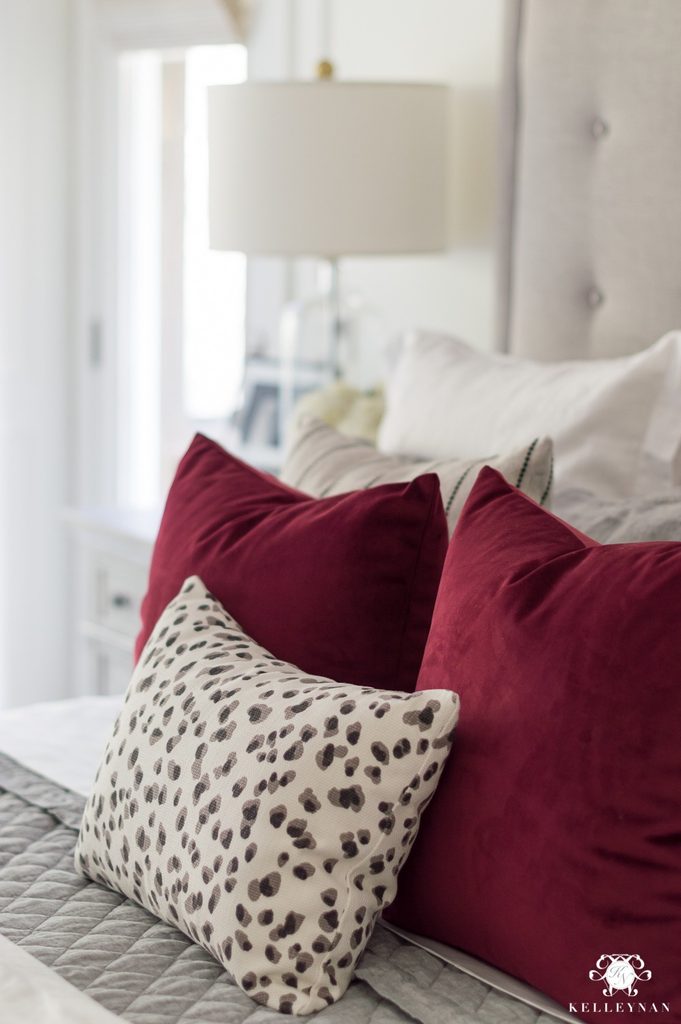
Credits: Kelley Nan
Wine colored velvet gives this gray quilt a rich focal point without changing the bed’s neutral foundation. Two generous cushions create one concentrated accent, while a smaller spotted pillow adds pattern in softer tones.
The gray headboard remains visible behind the white sleeping pillows, keeping the scheme connected to its original palette.
For a similar update, bring home a fabric sample before ordering several covers; burgundy can lean red, purple, or brown under different lighting. Keep the accent mainly on the bed if you want it to feel easy to change later.
A textured quilt offers enough detail beneath smooth velvet. Use only the number of cushions you can comfortably store at night, preserving the convenience of your everyday routine.
18. Mustard Textiles Against Half Height Gray Walls
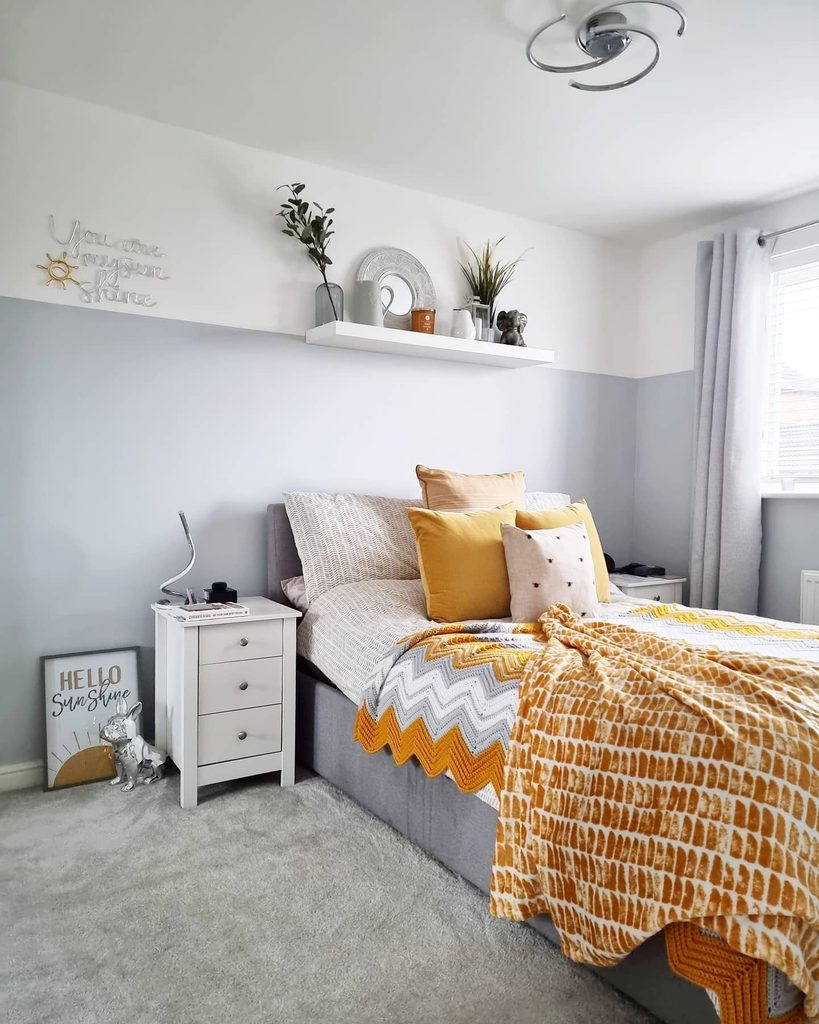
Credits: Instagram
Yellow textiles give a cool gray room a clear point of contrast. The lower walls and curtains establish the neutral background here, while mustard cushions and patterned bedding make the bed more prominent.
A white upper wall prevents the color combination from feeling enclosed. This is a straightforward option if your room already has gray paint and you want a change through washable, movable pieces.
Choose one yellow tone to repeat across the larger textiles, then allow their patterns to vary. A plain pillow or sheet can separate busier prints.
Check colors together in the room’s actual light before ordering a full set. The warm accent works most clearly when the remaining furniture stays simple and the gray remains visible.
19. Charcoal Walls Framing a Black Metal Bed
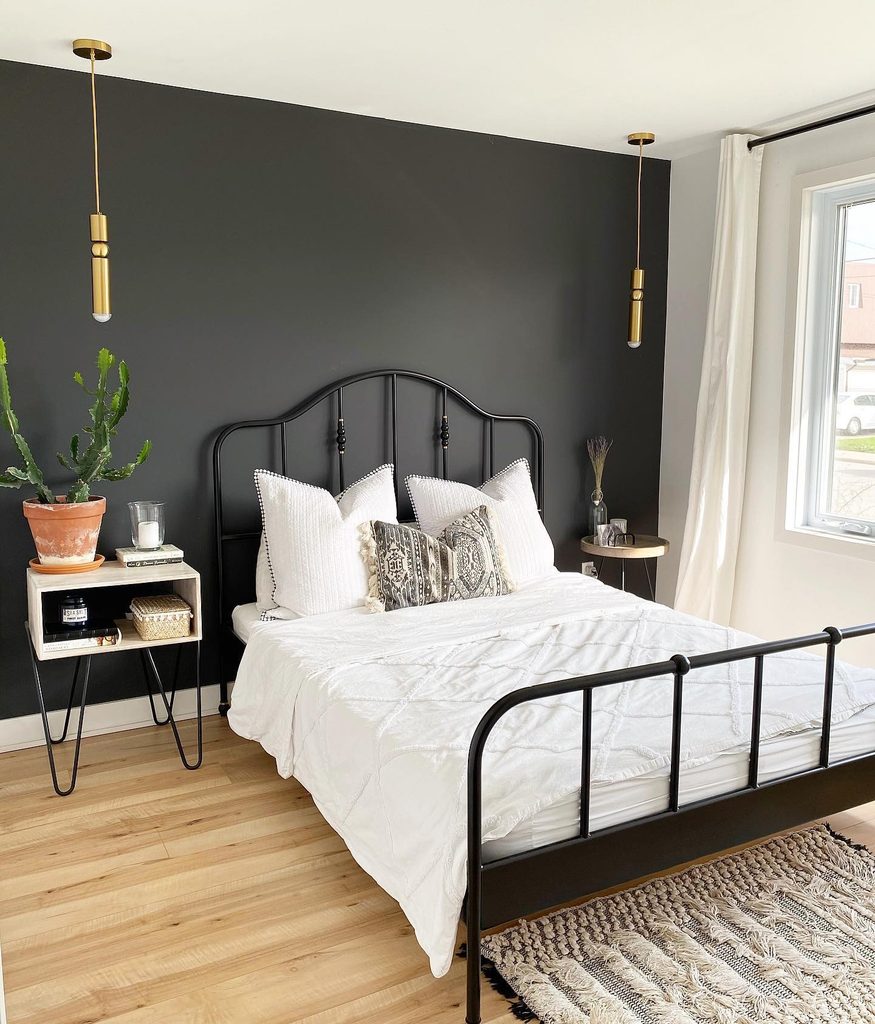
Credits: Instagram
Narrow metal bedframes can keep a dark feature wall from feeling too visually blocked. Its curved black outline sits against charcoal paint in this bedroom, with white bedding creating the largest light surface.
Two narrow brass toned pendants replace bulky table lamps, while different nightstands keep the arrangement from feeling rigid. The idea is especially useful where every inch beside the bed matters.
Plan lighting positions around the mattress and useful bedside surfaces, not just the wall’s center. Electrical work and secure fixture mounting need appropriate professional attention.
A plant introduces another shape, but place prickly varieties away from regular movement and bedding. The uncluttered backdrop allows these few distinct silhouettes to contribute more than a crowded collection of accessories.
20. Create a Reading Corner With Patterned Gray Upholstery
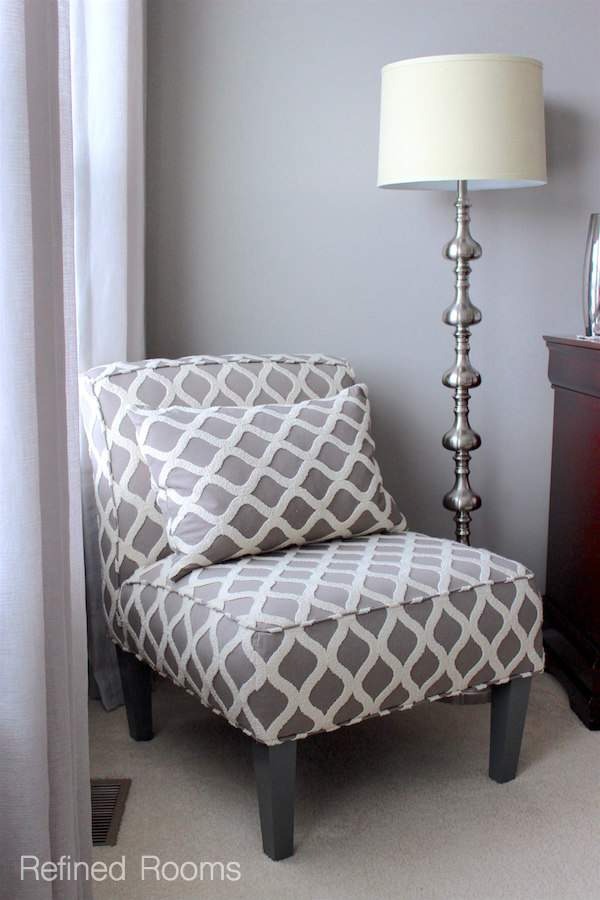
Credits: Natalie Gallagher / Refined Rooms
A small upholstered chair extends the gray palette beyond the bed and gives an unused corner a purpose. Its pale looping pattern stands out against the quieter wall, while a slender metallic floor lamp adds height beside the low seat.
The homeowner refreshed an existing chair, showing how older furniture can contribute to a new color scheme. Before reupholstering, assess its condition and compare the work involved with your budget.
Choose a pattern whose scale suits the chair’s shape, especially across the seat and back. Position the lamp where it lights a book without shining directly into your eyes.
Leave curtains and nearby storage easy to use. A comfortable corner needs enough clear space to sit down and move naturally.