
An all-white bedroom can feel crisp and calm, but without contrast, its surfaces may blur together. White Bedroom Ideas can help you keep that airy backdrop while adding texture, warmth, and definition where it matters.
Painted brick lets an existing wall’s character show through, while pale blue patterns bring a gentle note to white shiplap.
Natural woven pieces or a brown faux fur throw can warm up white bedding, and a wall-mounted light frees space on a small nightstand.
These approaches make it easier to choose a few details that give a pale palette a more personal feel.
1. Let White Paint Reveal a Brick Wall’s Texture
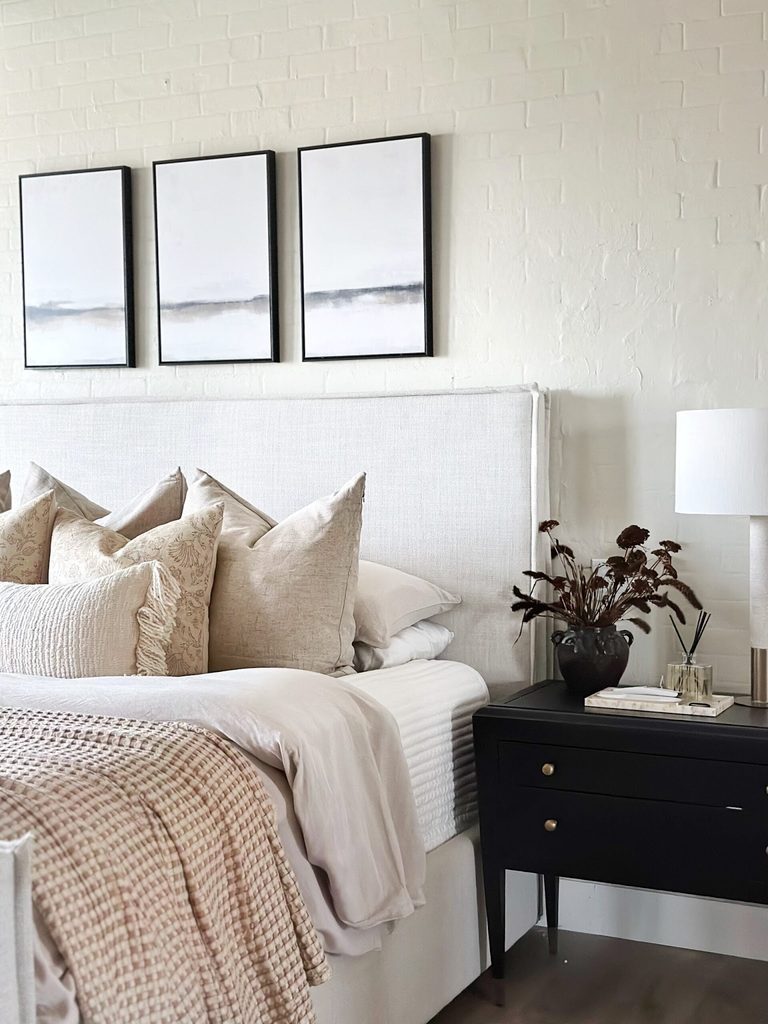
Credits: Jordyn / Our PNW Home
White paint lets the uneven surface of this brick wall become the bedroom’s main texture. Pale bedding and a light upholstered headboard continue the soft background, while three slim black frames add structure above the pillows.
A dark bedside chest makes the white wall look brighter without introducing another strong color. If your bedroom already has brick, consider whether a painted finish suits its condition and the character you want to preserve.
Test the color alongside your bedding before covering a large area, and choose preparation appropriate to the masonry. Keep artwork simple so the brick remains visible around it.
A few oatmeal textiles bring warmth to the bed while allowing the painted surface to carry the room’s quiet character.
2. Pair White Bedding With Pale Wood Look Ceiling Paper
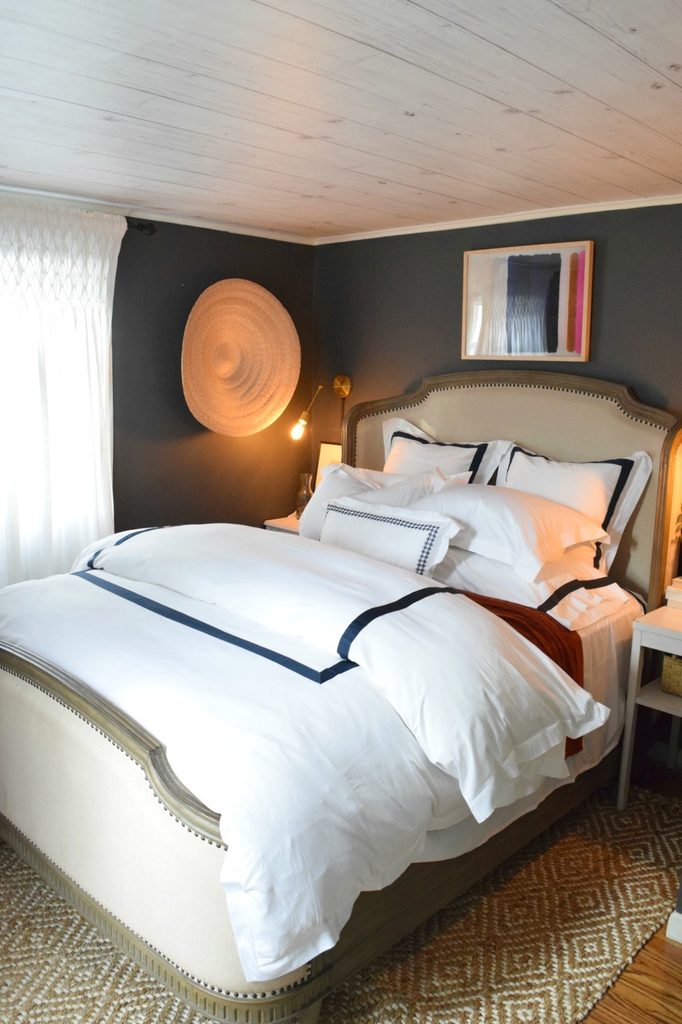
Credits: Brooke Christen / Nesting With Grace
Wood look wallpaper gives this bedroom a pale, patterned ceiling above its generous white bedding. The printed plank lines add direction and visible grain effects without introducing a dark overhead surface.
Brooke Christen’s project uses wallpaper for this finish, so the apparent boards are a decorative pattern rather than timber cladding. Charcoal walls help the white duvet and pillows stand out, while the light upholstered bed softens their contrast.
Try a large sample overhead before choosing a similar paper; both the pattern scale and color will change with daylight. Check the ceiling condition and follow the manufacturer’s preparation and adhesive instructions, or use a professional installer.
Keep the bedding simple enough that the ceiling pattern can remain an intentional feature.
3. Bring Pale Blue Pattern Into White Shiplap
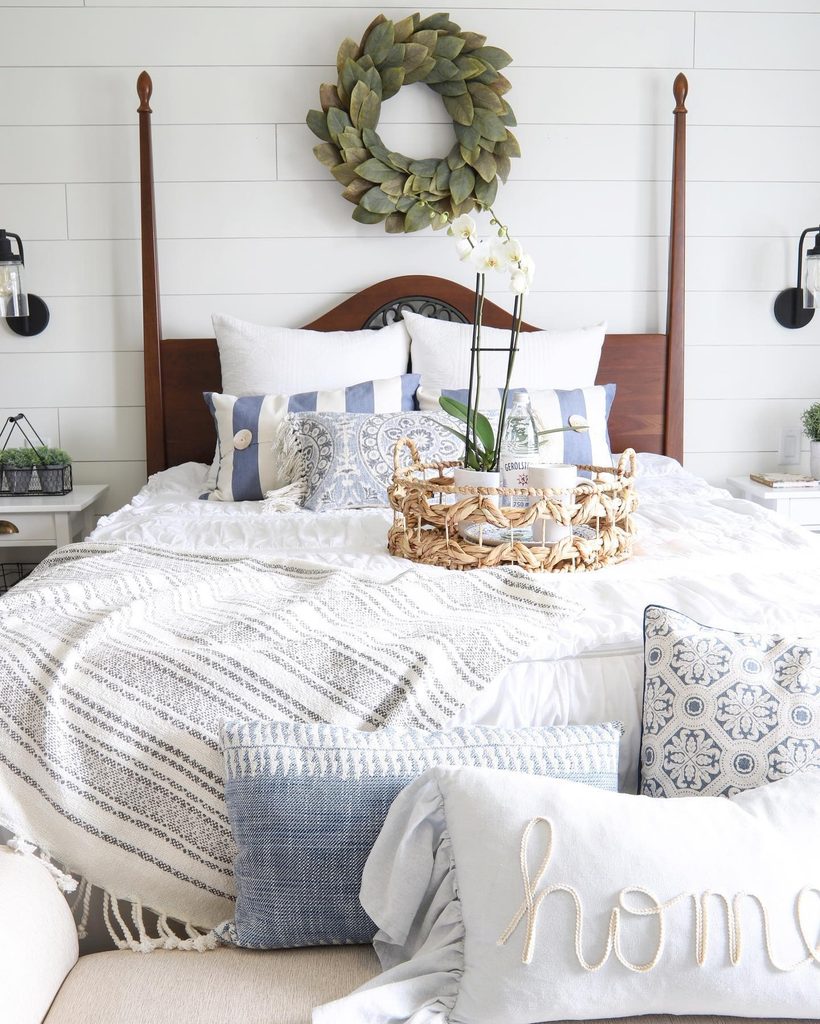
Credits: Instagram
Gentle blue prints make a white bed feel considered without taking over the room. In this bedroom, patterned pillows sit against a dark wood headboard, with white shiplap providing a clean horizontal backdrop.
A leafy wreath adds a rounded shape above the bed, and a woven tray brings natural texture onto the covers. The white bench continues the pale color toward the foot, balancing the darker posts.
To borrow the idea, select patterns with plenty of white showing between their blue details. Vary their scale rather than introducing several unrelated colors.
Keep the largest bedding layer plain so the pillow arrangement stays easy to read. A little greenery can connect the crisp walls and warm wood in a relaxed way.
4. Add Crystal Sparkle Close to a White Ceiling
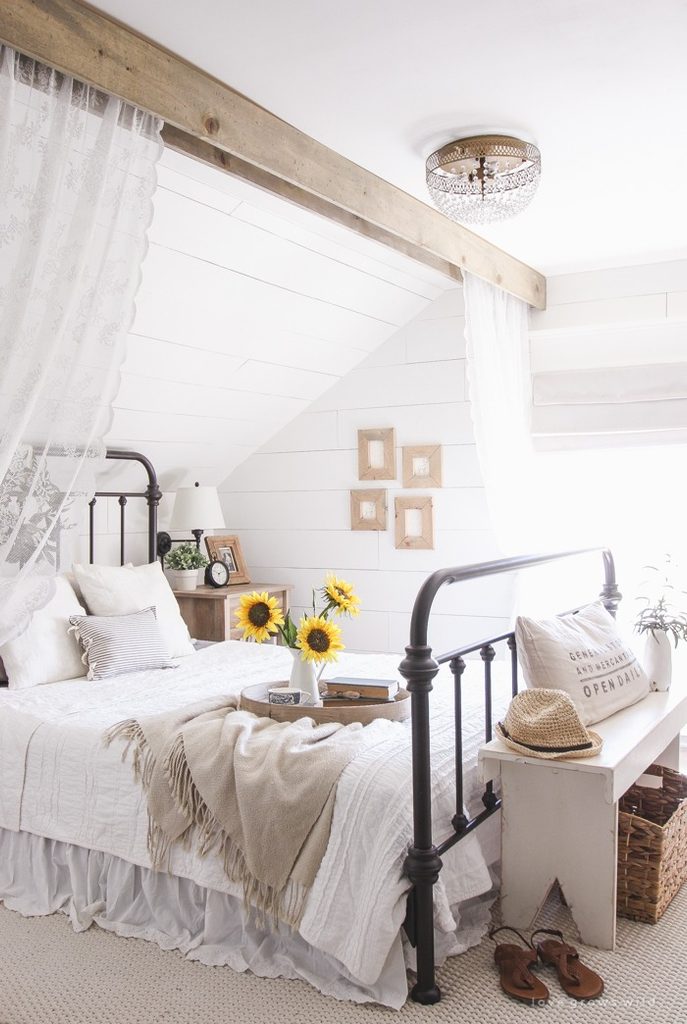
Credits: Liz Fourez / Love Grows Wild
A crystal ceiling light adds sparkle to this bedroom without interrupting its white surfaces with a hanging fixture. The shallow round shape sits close to the ceiling, leaving the timber beam and airy curtains clearly visible.
Below, white bedding and pale walls keep the room bright while the dark metal bed supplies definition. Consider this approach when you want decorative lighting but a long chandelier would feel crowded.
Measure the fixture against ceiling height, door swings, and surrounding architectural features before choosing it. A qualified electrician can advise on installation and suitable controls.
Keep nearby finishes simple enough for the glass detail to register. Here, the woven rug and natural timber make the polished accent feel comfortable rather than formal.
5. Warm White Bedding With a Brown Faux Fur Throw
Credits: Brittany Stager
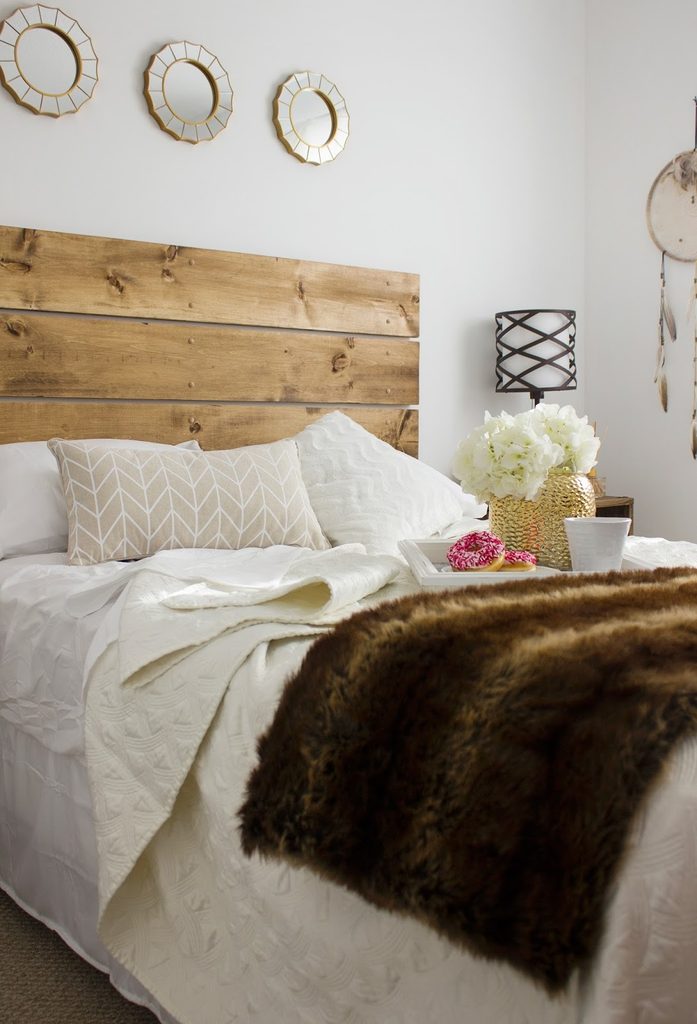
A brown faux fur throw gives this white bed a deep, tactile accent without changing the walls or main linens. Its thick pile contrasts with the stitched coverlet and pale geometric cushion, making each fabric easier to notice.
The warm wood headboard repeats the throw’s brown tones, while small gold mirrors keep the wall arrangement light. Borrow this idea when an entirely white bed feels visually flat or needs a seasonal layer.
Compare the throw with existing wood finishes and choose a size that leaves plenty of white bedding visible. Check the care label before buying, especially if the bed is used daily.
Folding the throw across the lower portion keeps its weight balanced and leaves the pillows feeling fresh.
6. Free a White Nightstand With a Wall Mounted Light
Credits: Brooke Christen / Nesting With Grace
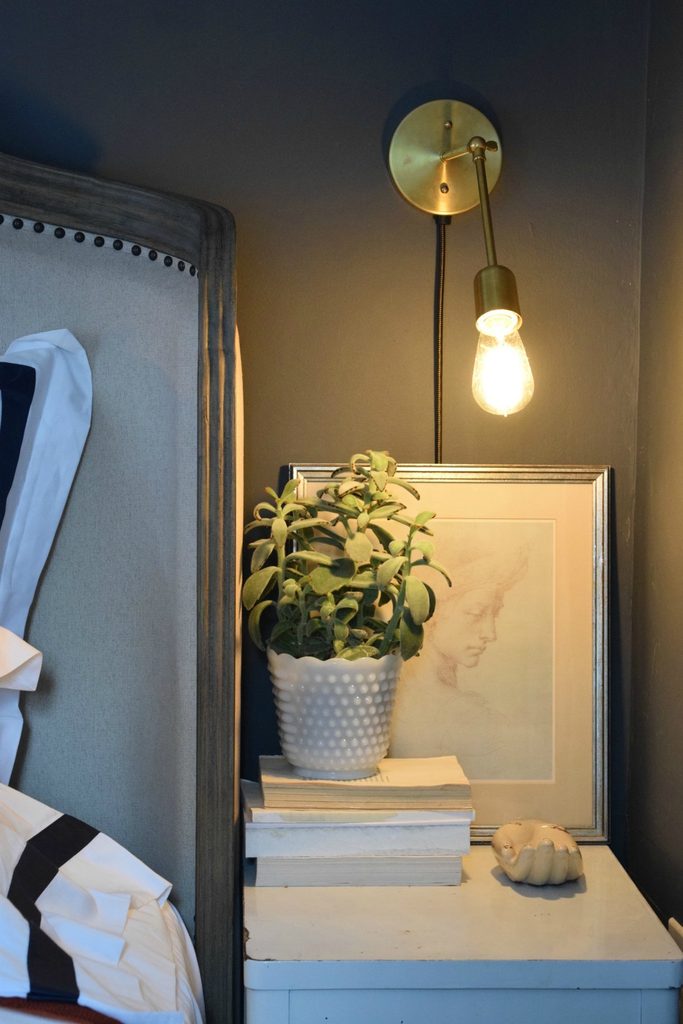
A wall mounted brass light leaves this small white bedside table free for books and a few personal objects.
Its narrow arm and exposed bulb occupy little space beside the upholstered headboard, while the pale tabletop stands clearly against the charcoal wall. White bedding connects the bedside corner to the rest of the bed.
This is a practical option when a conventional lamp base would crowd a narrow nightstand. Check the light’s reach from your normal reading position and choose a bulb that feels comfortable without glare.
Keep cords tidy and follow the fitting’s installation guidance; use an electrician where required. A small plant and framed picture add interest, but leave enough clear surface for the things you actually need.
7. Break Up a White Wall With Gentle Dots
Credits: Instagram
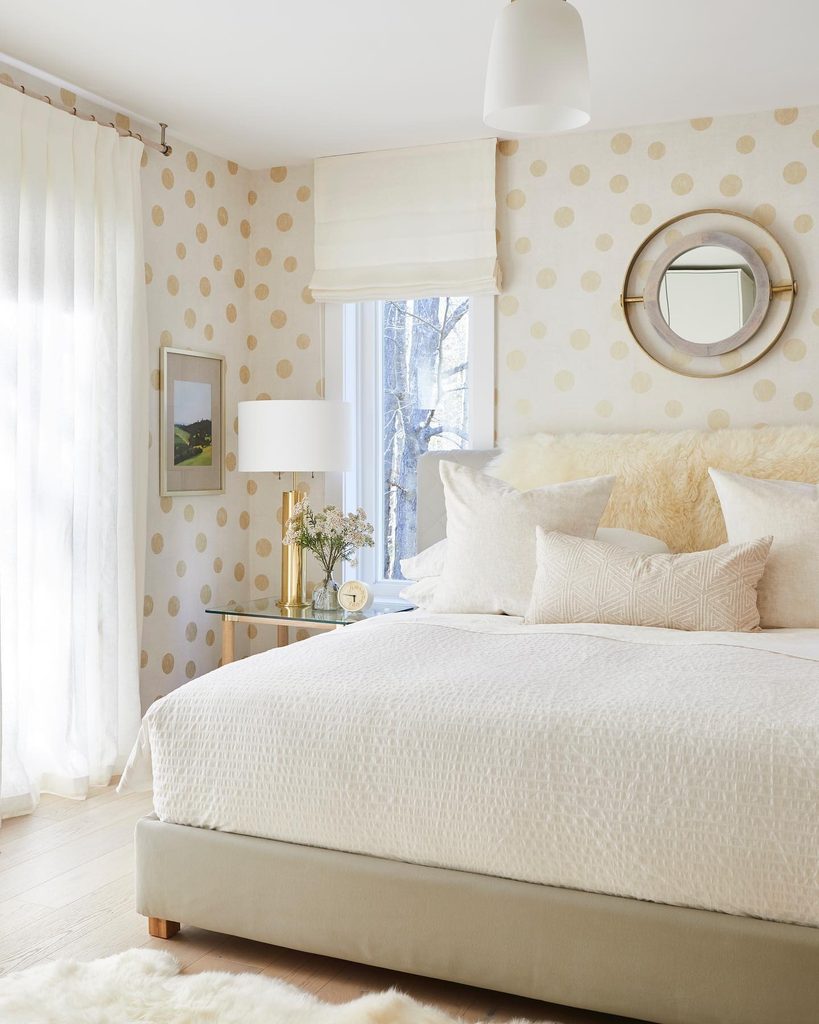
Soft golden dots interrupt the white background in this bedroom without making the walls feel dark. Their rounded shapes add a playful rhythm behind the plain bedding, while a white shade and pale curtains preserve the room’s light base.
Because the marks are separated by generous space, the pattern remains easy to understand. Try a sample near your bedding before committing to a similar wall treatment, checking both daylight and evening light.
A quiet print can still feel busy if repeated across every surface. Keep most pillows and larger furniture plain so the wall has room to work.
Warm metal details can echo the dots in small amounts, but an exact metallic match is not necessary for the whole room.
8. Let White Sheers Soften a Broad Bedroom Window
Credits: Instagram
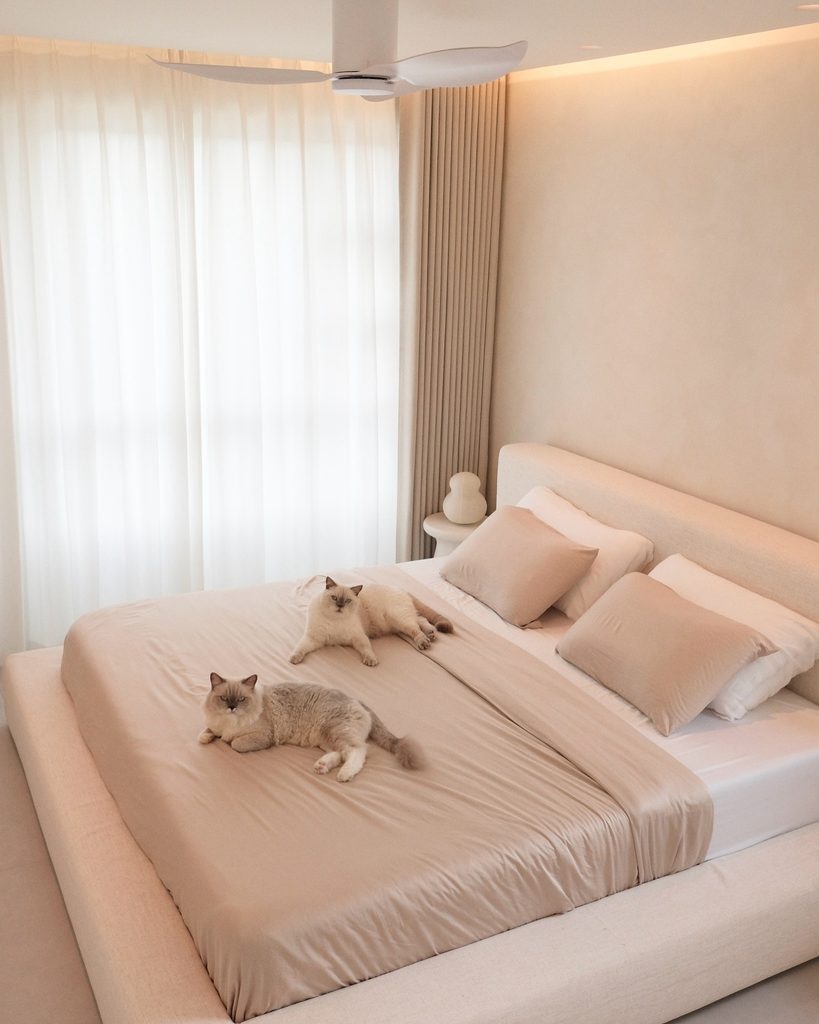
White sheers form a broad, light backdrop beside the low upholstered bed in this room. Warmer outer drapes gather at the edge, while the inner fabric keeps the window from reading as one empty opening.
The layered treatment adds softness without bringing another print into the bedroom. Choose the sheer by holding a sample against your bedding and wall paint, since different whites can look cooler or creamier in daylight.
Decide separately how much privacy and darkness you need; a light inner curtain may need a more opaque partner. Allow enough width for gentle folds rather than stretching the fabric flat.
Keeping the surrounding furniture simple lets the window treatment contribute texture while the bed remains the main restful shape.
9. Warm Plain White Walls With Natural Woven Pieces
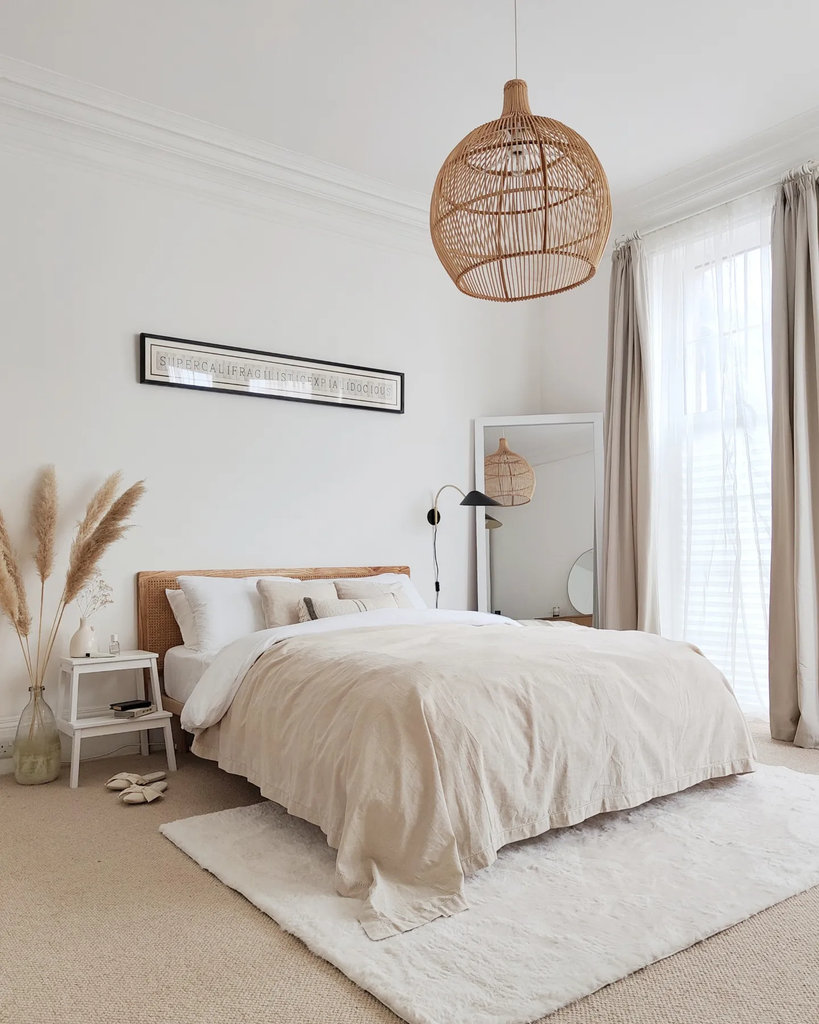
Credits: Instagram
A woven pendant and natural wooden headboard bring warmth to the white walls around this bed. The pale cover stays quiet, allowing the open weave overhead to become the room’s clearest texture.
This is a useful way to make a white bedroom feel less bare without repainting or introducing several accent colors. Compare the tones of the wood and woven materials with the flooring so they feel related.
They do not need to match exactly. Keep larger bedding layers plain and leave some wall visible around the headboard.
One or two natural pieces can be enough; repeating baskets on every surface may dilute the effect. The white background gives each material space to show its own grain and woven structure.
10. Give Pale Walls Definition With Narrow Molding
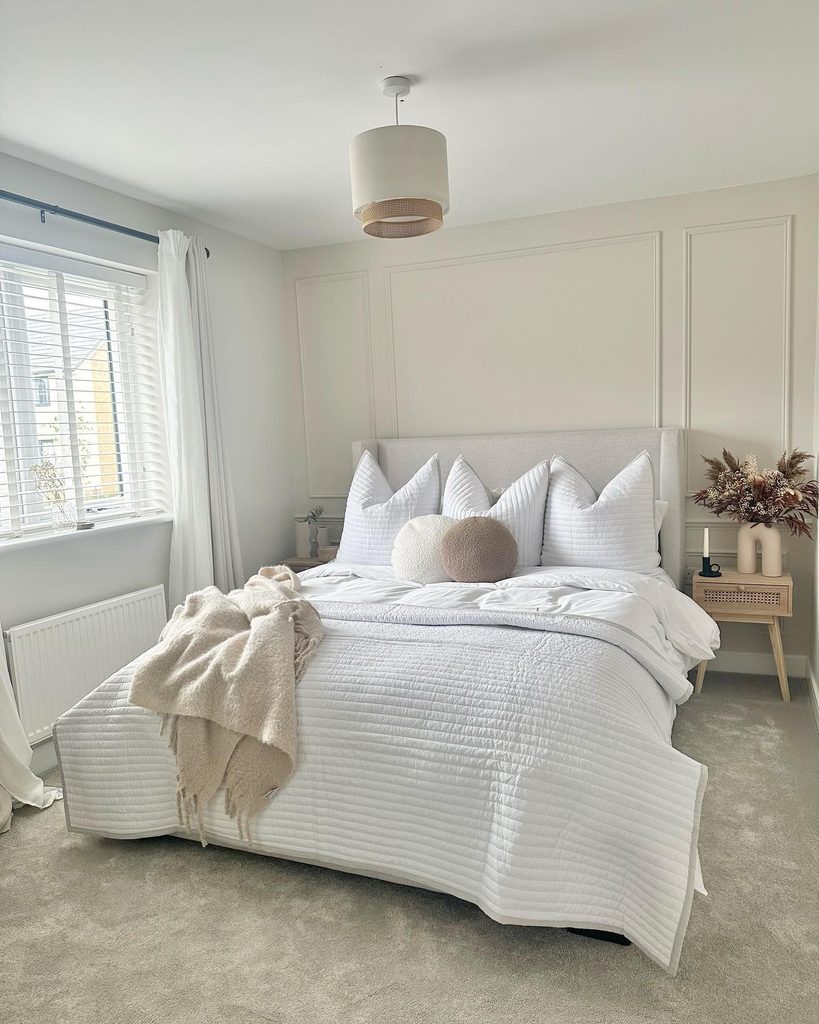
Credits: Instagram
Thin rectangular molding adds structure to the wall behind this white bed. Because the trim stays close to the wall color, the lines appear through light and shadow rather than a strong contrast.
Quilted bedding supplies smaller repeated lines below, while the plain headboard keeps the two textures separate. Before planning a similar treatment, mark the proposed rectangles around the bed and nearby window.
Their proportions should relate to the furniture rather than dividing the wall into equal boxes. Test the paint together with your existing whites in the room.
Keep artwork limited if the molding already provides the composition you want. A restrained architectural detail can make a pale bedroom feel considered while leaving the textiles comfortable and uncomplicated.
11. Choose a Sculptural White Upholstered Headboard
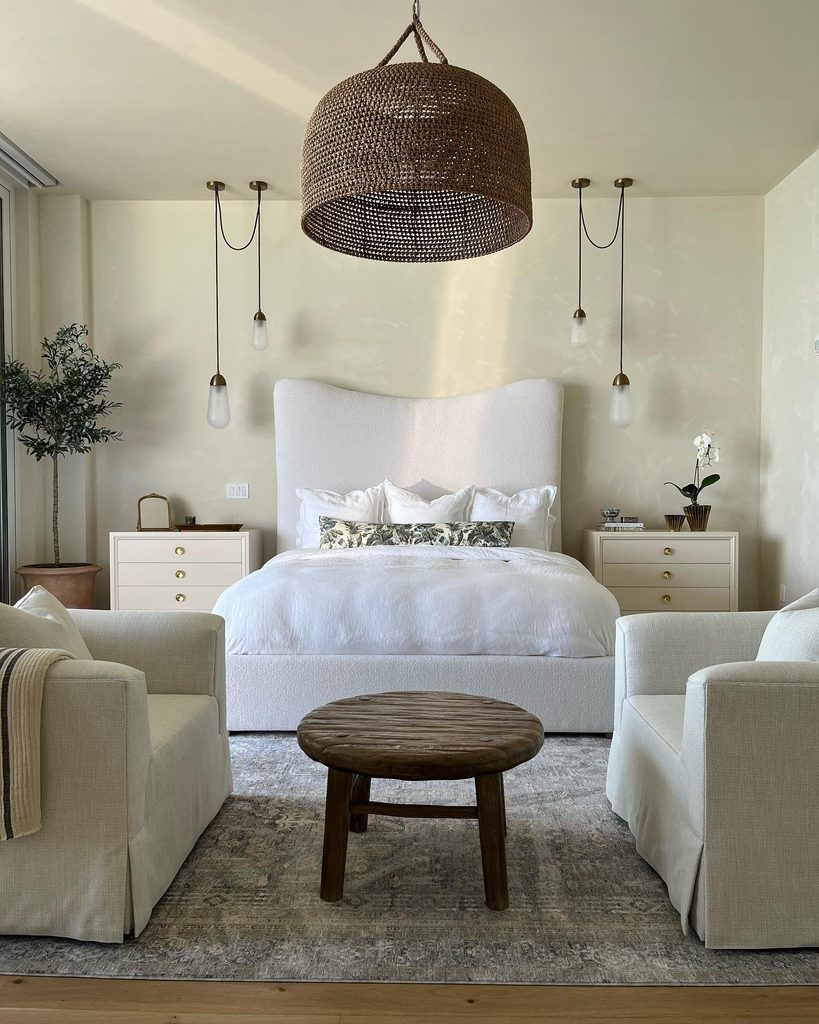
Credits: Instagram
The shallow curve along this tall white headboard gives the bed a distinct silhouette against the warmer wall. Its textured upholstery catches the light differently from the smooth bedding, creating contrast without another color.
Paired pale drawers and simple hanging bedside lights reinforce the balanced arrangement. When choosing a similar bed, study the headboard’s width and height from the doorway as well as beside the mattress.
Leave clear wall around the upper curve so the shape remains visible. Plain pillows are useful when the outline already supplies interest.
A dark woven pendant can add a separate accent overhead, but the bed does not need it to work. The main idea is to let shape distinguish one white surface from another.
12. Use White Floorboards to Connect Layered Textiles
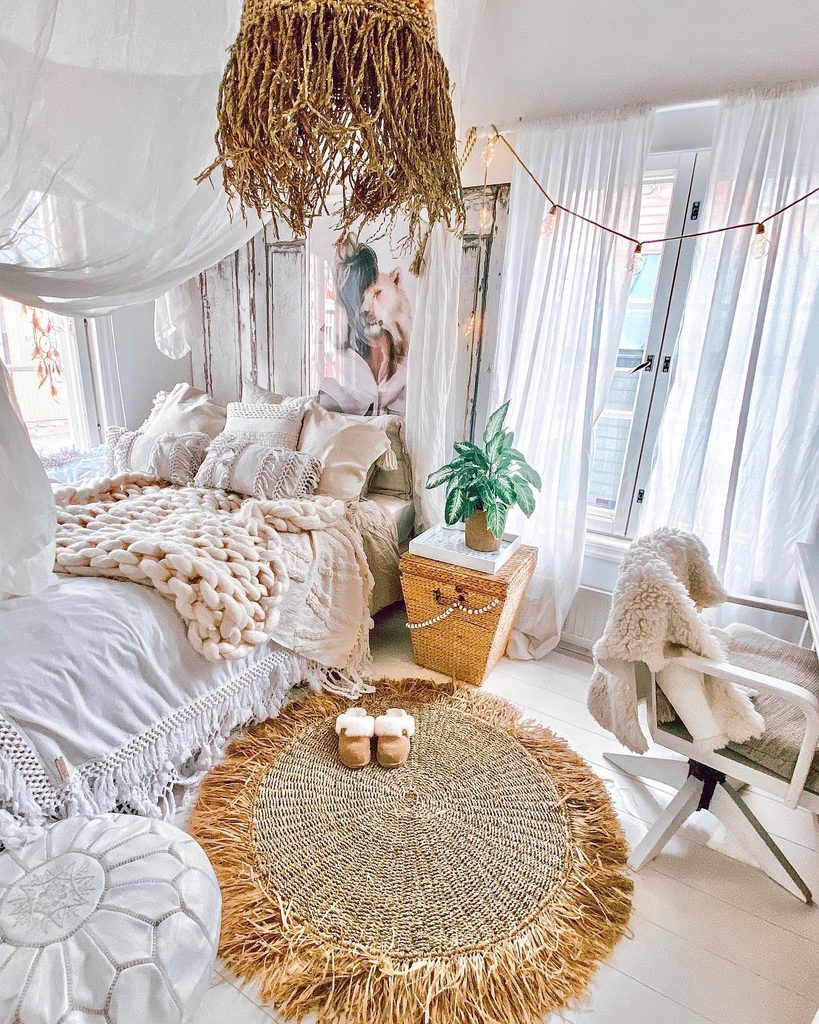
Credits: Instagram
White floorboards provide a continuous light base beneath the bed, chair and woven rug in this bedroom. Their simple horizontal lines balance the chunky blanket, fringed cushions and loosely draped fabric above.
The floor keeps those different textures connected without repeating every material. If you already have suitable painted boards, leave a visible border around the rug so the pale surface remains part of the room.
Check the finish and maintenance requirements before changing an existing floor. A natural woven rug introduces warmth where you step, while white bedding continues the light palette upward.
You do not need as many accessories as this room to use the idea. Start with the floor, one rug and a few contrasting fabric textures.
13. Extend the White Palette Into a Bedroom Sitting Corner
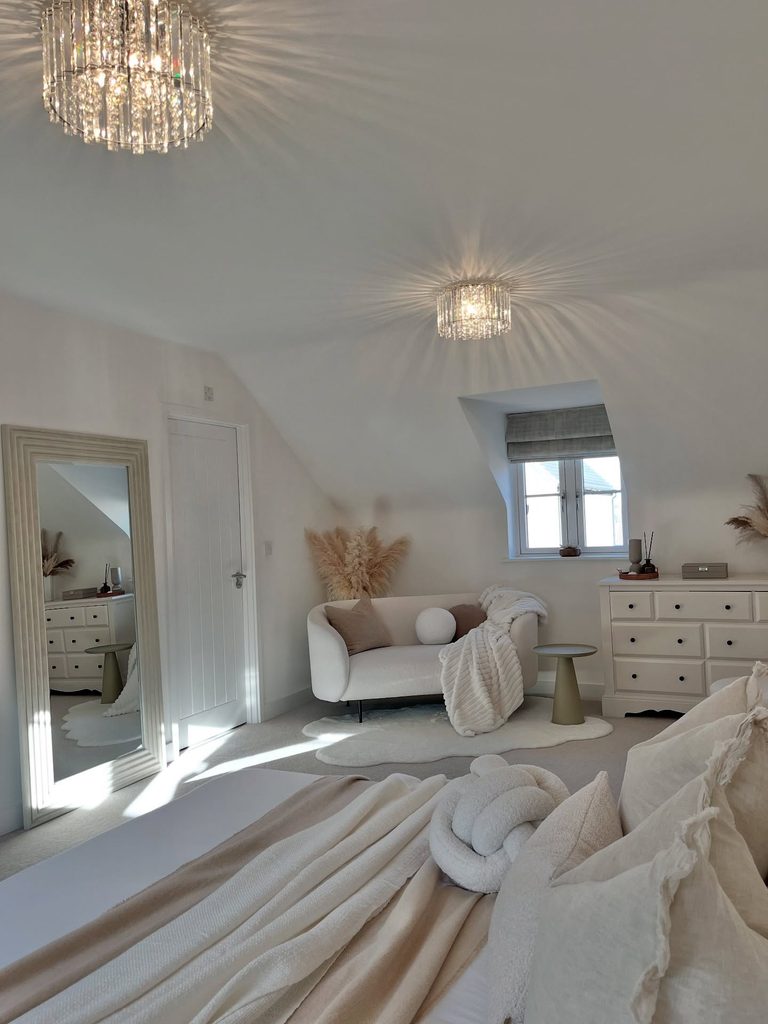
Credits: Instagram
A small curved sofa continues the pale palette across the room from the bed.
Its rounded shape creates a separate place to sit without introducing a large dark block, while warm cushions and a textured throw distinguish it from the nearby white walls.
The arrangement works because the seating remains visually connected to the sleeping area. Measure the space left for walking and opening drawers before adding a sofa to your own bedroom.
A compact chair may provide the same benefit where floor space is limited. Repeat one textile tone from the bed, then vary the shape or texture instead of matching every piece.
Keep the seat usable by limiting decorative cushions and providing a convenient surface for everyday essentials.
14. Match a Hanging Plant to Abstract Art
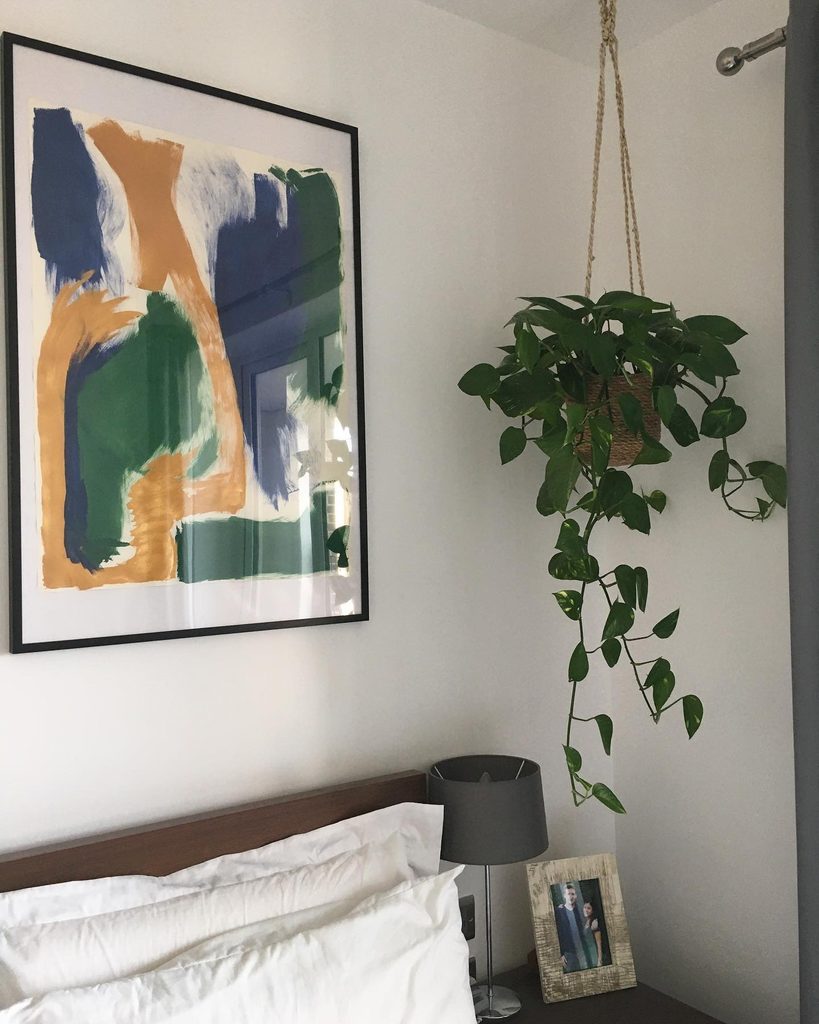
Credits: Instagram
Green leaves give the abstract artwork in this white bedside corner a living counterpart. The print combines broad green, navy, and ochre marks inside a dark frame, while a trailing plant hangs beside it from a rope holder.
White pillows and walls give these details room to stand out. A dark headboard and bedside lamp reinforce the frame without introducing another competing finish.
For a similar arrangement, choose art you enjoy first, then repeat one of its colors through a plant or textile. Position the planter where watering is manageable and its support is secure.
Keep trailing stems away from lamps and bedding. The link between painted color and natural foliage can make a small corner feel complete without clutter.
15. Reflect White Shutters in an Arched Mirror
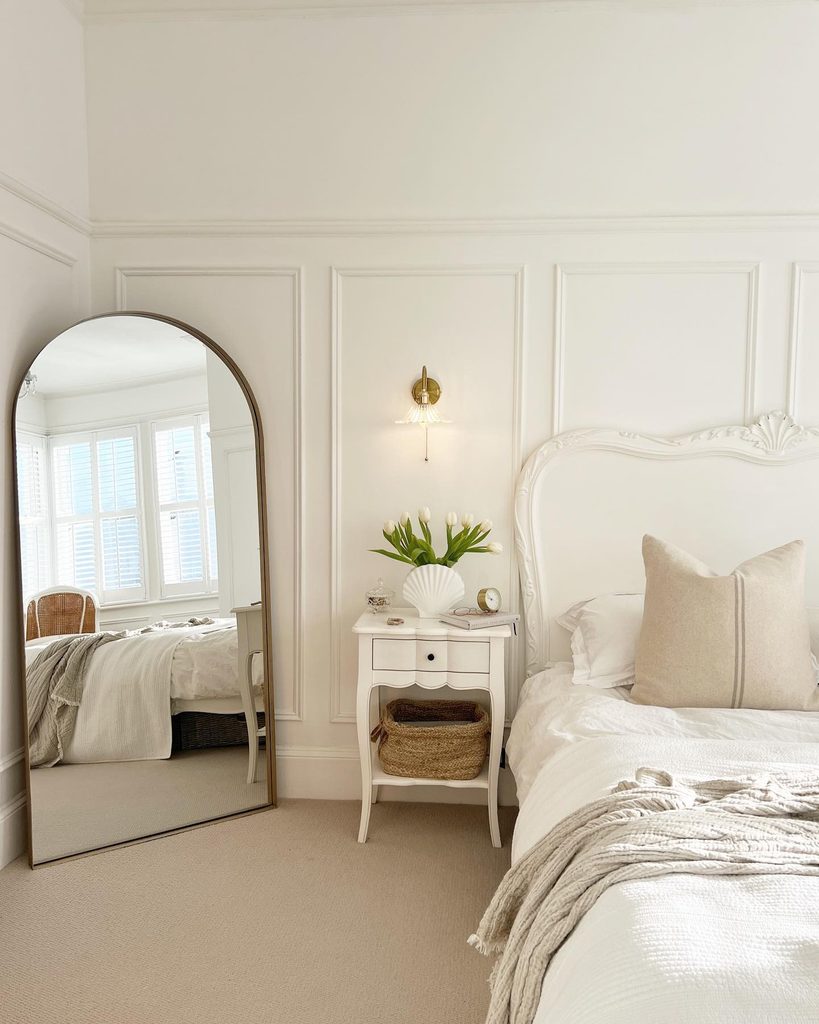
Credits: Instagram
Sunshine gives this mostly white bedroom extra dimension as it bounces between shutters and a tall arched mirror. The mirror’s slim warm metal edge offers a gentle contrast beside the carved white headboard and pale bedside table.
Wall molding, tulips, and a small basket add detail without competing with the reflection. The arrangement is particularly useful when you want to emphasize existing daylight rather than introduce more color.
Try different mirror positions before fixing one in place, checking what it reflects from the doorway and bed. Secure a large floor mirror according to its mounting instructions.
Leave its surroundings uncluttered so the arch stays visible and the reflected shutters become part of the room’s composition instead of a distracting duplicate.
16. Top White Paneling With Pale Botanical Wallpaper
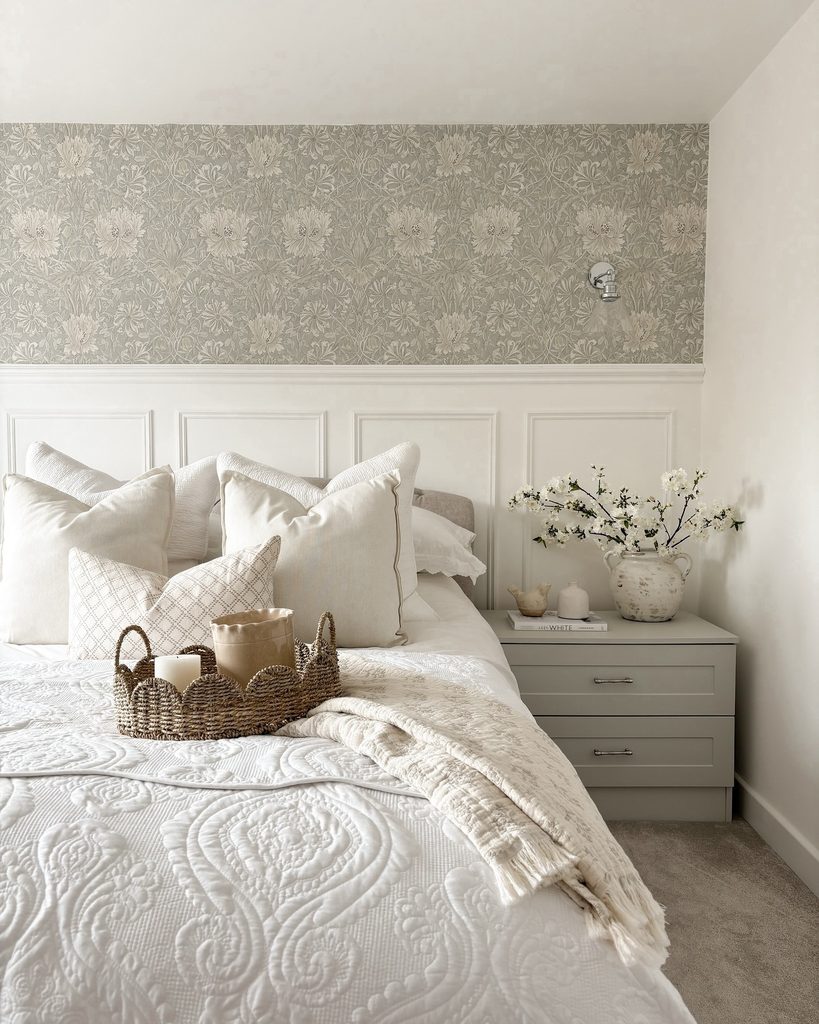
Credits: Instagram
Instead of covering the entire wall, botanical wallpaper forms a gentle band above white paneling in this bedroom. Its muted green gray leaves introduce pattern at eye level while the lower wall remains bright and orderly.
Raised detailing on the white quilt supplies a second texture, supported by pale pillows and a small woven tray. This division helps a patterned room still feel predominantly white.
Select paper with a light background and compare its undertone with the paneling paint before ordering. Plan the rail height around the headboard and any nearby windows so the transition feels deliberate.
Plain bedding lets the wallpaper remain easy to appreciate, while one blossom arrangement can quietly repeat its natural subject without reproducing the pattern.
17. Open a White Loft Bedroom to Skylight Views
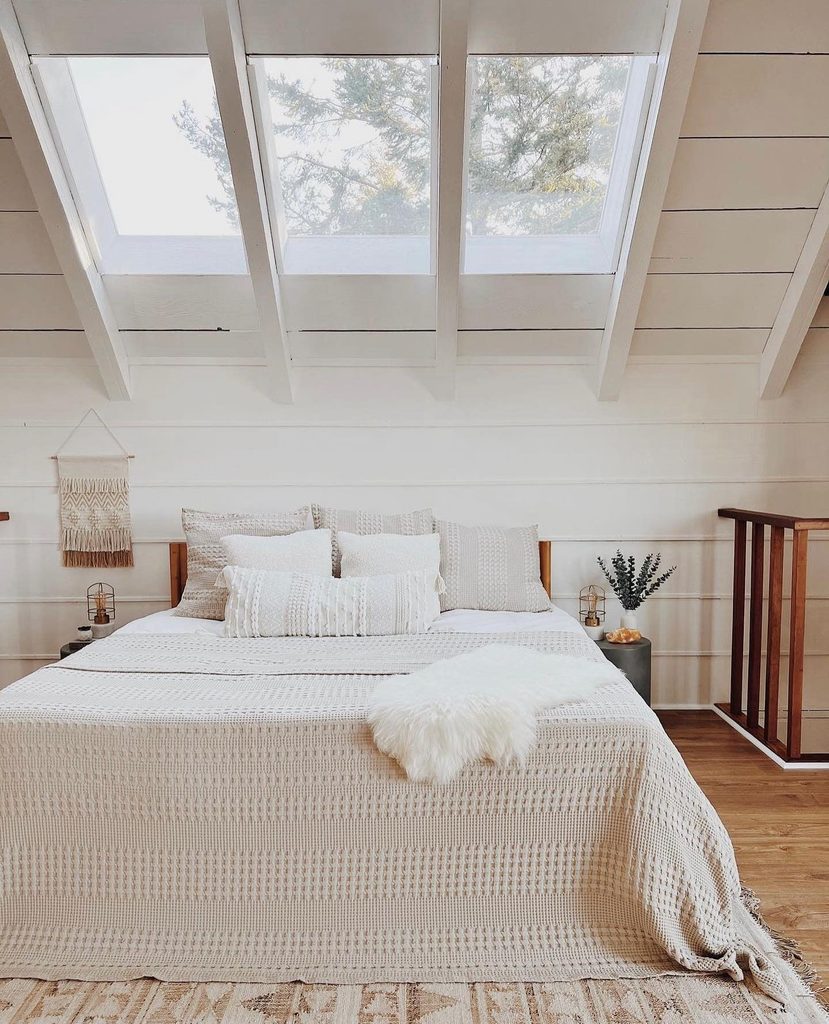
Credits: Instagram
Daylight enters directly above this loft bed through a broad sequence of skylights. White roof planks and rafters keep the structural framework visually light, while a natural wood bed and railing bring warmth beneath it.
An open weave bedspread and white furry throw add softness without covering the room’s architectural character. The lesson is to treat the roof plane as part of the bedroom experience, especially where regular wall space is limited.
If skylights are already present, keep the framing simple and avoid blocking their light with tall furniture. For new roof openings, consult appropriate professionals about structure, weatherproofing, ventilation, and shading.
A restrained palette below allows the changing sky to provide the room’s strongest visual interest throughout the day.
18. Let Carved Pale Wood Stand Above White Pillows
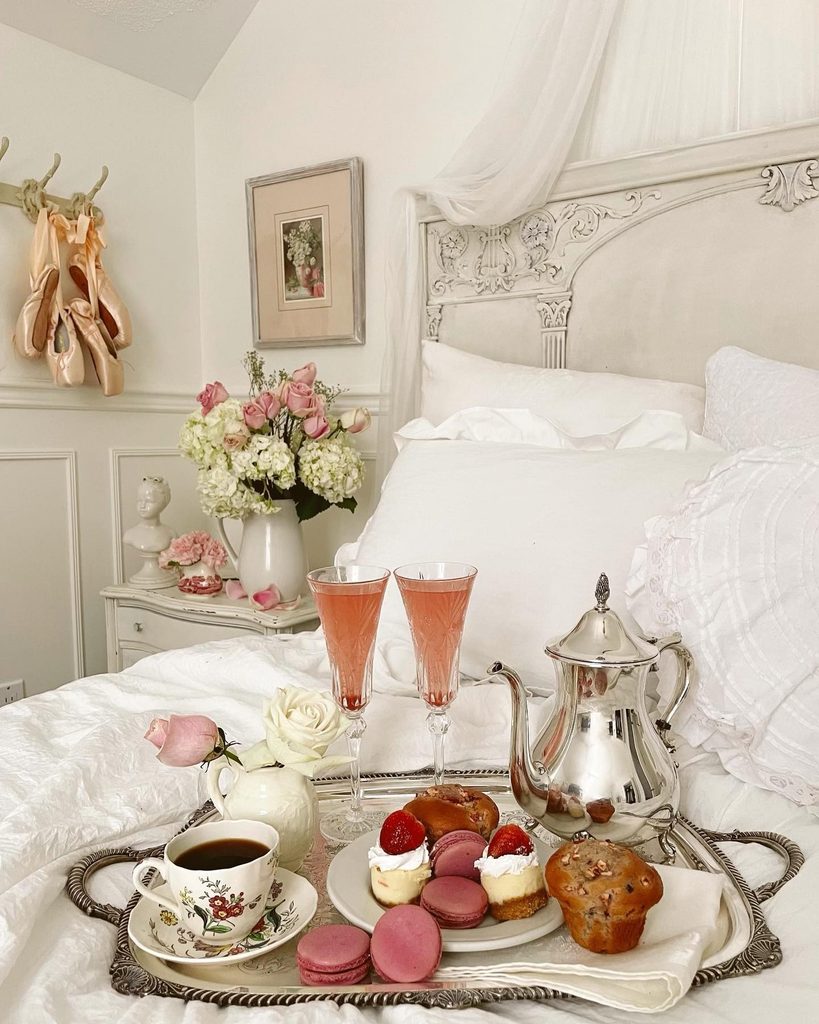
Credits: Instagram
Carved detailing across this pale headboard gives the white bed a decorative edge without needing a patterned wall. The raised motifs remain visible above the pillows, while plain cushions keep the woodwork from disappearing into several competing prints.
Soft pink flowers add a small accent beside the bed, but the furniture supplies the main character. For a similar approach, compare the carving’s scale with the room and leave enough height above the pillow arrangement to appreciate it.
Use simpler bedding if your chosen headboard is intricate. A light finish can connect old furniture with fresh white linens without making both surfaces identical.
You can enjoy the decorative contrast without recreating the elaborate tray or every accessory shown in the photograph.
19. Keep Bedroom Shutters Crisp White
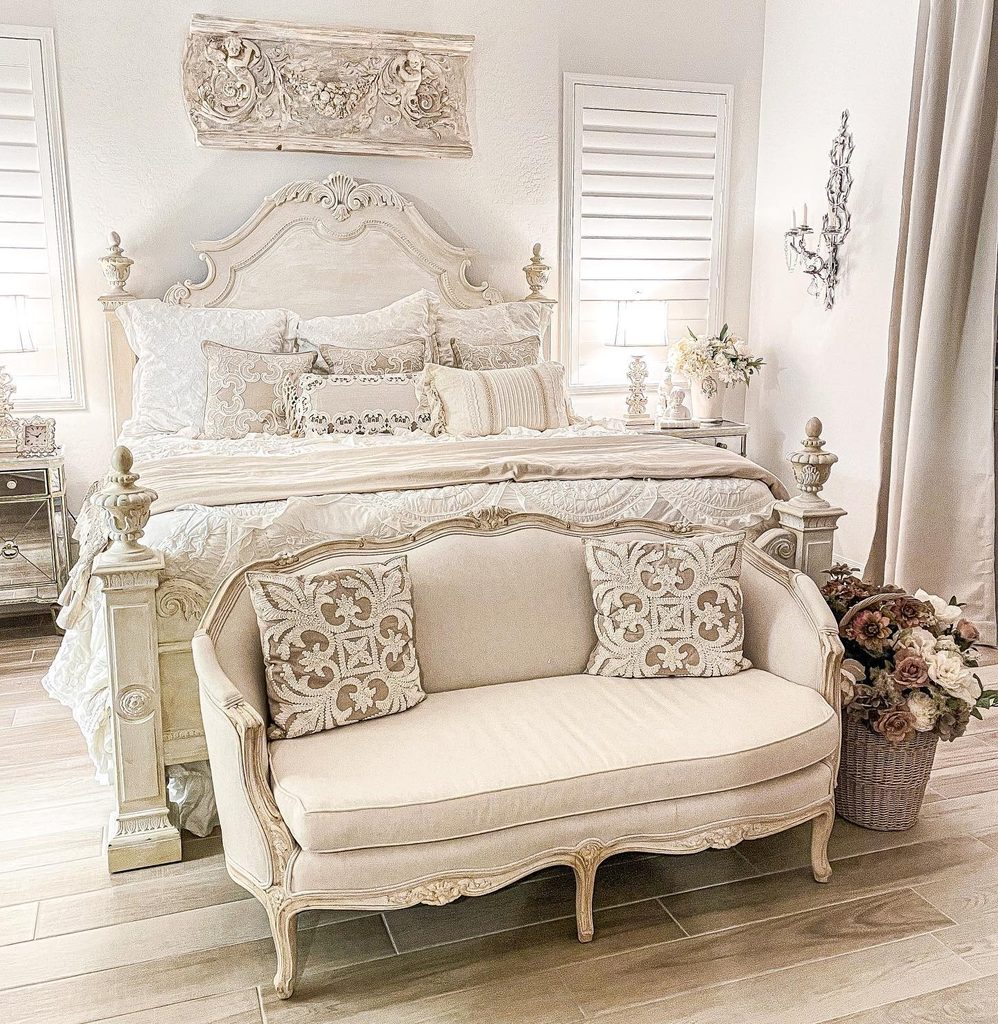
Credits: Instagram
White shutters create vertical boundaries on either side of this ornate bed. Their regular horizontal slats contrast with the carved furniture and patterned cushions, giving the room a simpler element beside its decorative center.
The pale finish keeps the windows connected with the bedding rather than outlining them in another color. If shutters suit your windows, compare samples with the wall paint and check how the panels open around nearby furniture.
Practical access and light control matter as much as appearance. You can borrow the clean white framing even with a much simpler bed.
Leave the surrounding window trim uncluttered so the slats remain easy to read. The balance comes from pairing a regular window treatment with softer bedroom layers.
20. Define White Bedding With Delicate Decorative Edges
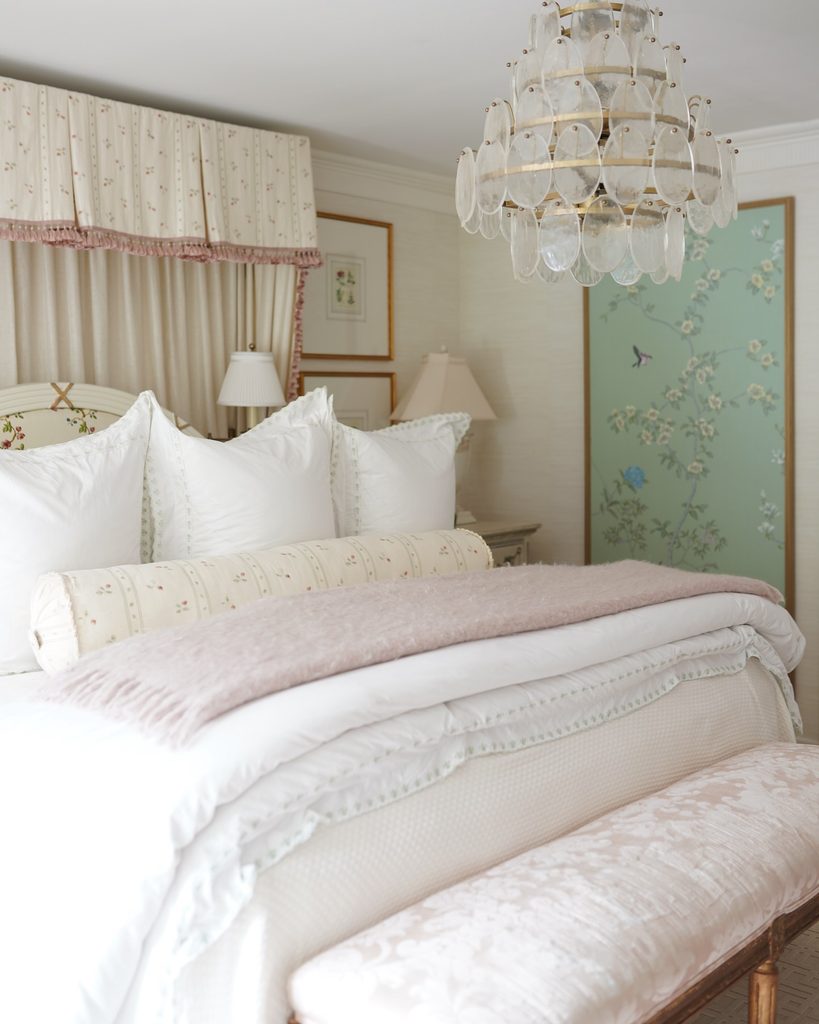
Credits: Instagram
Narrow decorative borders give the white pillows and folded bedding a visible edge in this bedroom. The detailing separates similar pale layers without turning the whole bed into a large print. A floral bolster and a soft pink throw add smaller accents, while the broad white surfaces remain dominant. This is useful when an existing white bedding set feels flat but you do not want to replace everything. Start with one edged pillowcase or a cover with a subtle trim, then compare its scale with your other textiles. Keep enough plain fabric between the details for the borders to remain readable. The effect comes from a few considered outlines rather Let White Paint Reveal a Brick Wall’s Texture