
A brown bedroom can feel warm without turning into one uninterrupted dark surface. Brown Bedroom Ideas work best when color is balanced with lighter bedding, varied textures, or a contrasting finish.
Try stopping slatted wood paneling below a pale upper wall, mixing brown checks with brick and exposed timber, or warming cool gray bedding with a cognac leather bench.
These examples show how brown can come from paint, wood, textiles, or a single piece of furniture. The key is to repeat related tones while leaving enough contrast for each material to stand out.
1. Layer Natural Frames Against a Soft Brown Wall
Credits: Instagram
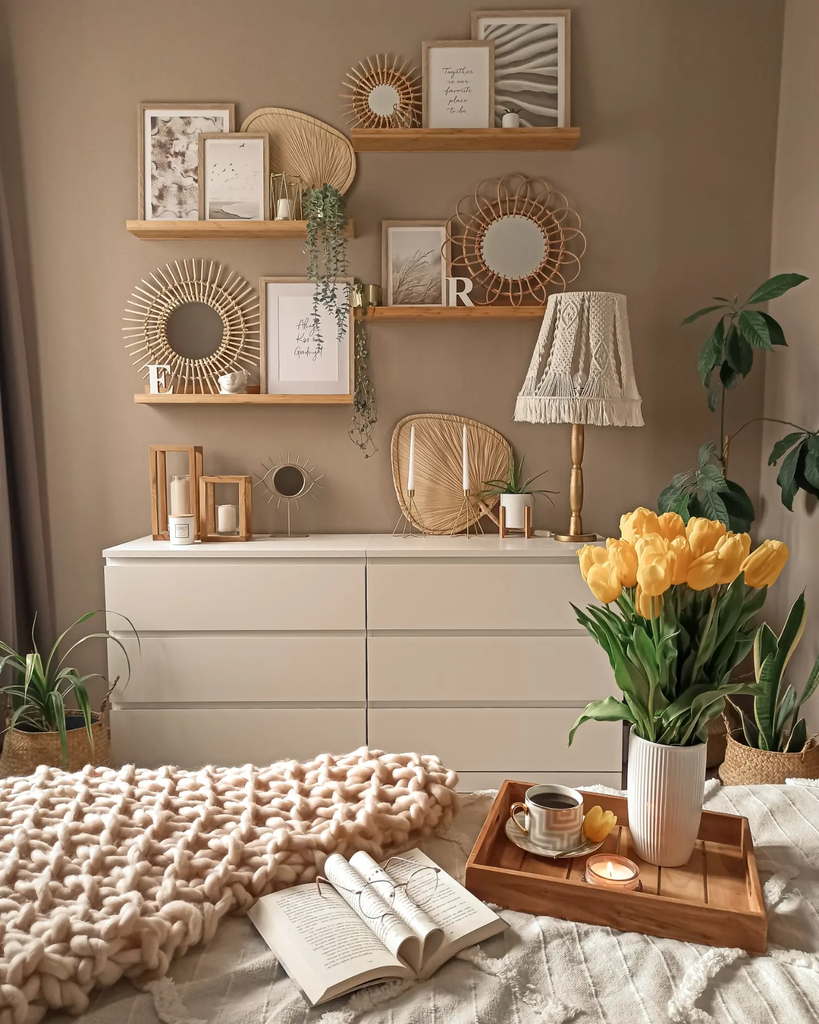
A brown wall can connect a varied collection of natural materials. Above this dresser, wooden picture ledges hold pale prints and woven mirrors, with their warm frames standing out gently against the backdrop.
Cream furniture and a chunky bed throw keep the arrangement from becoming uniformly dark. The useful idea is a shared palette rather than a perfectly symmetrical gallery.
Lay out your pieces together before deciding where the ledges should sit, allowing each grouping some breathing room. Choose supports suited to the displayed objects and the wall construction.
Keep the dresser useful instead of covering every surface. Brown supplies a calm background for the different textures, making collected pieces feel related without requiring them to match in every detail.
2. Stop Brown Slatted Paneling Below a Pale Upper Wall
Credits: Instagram
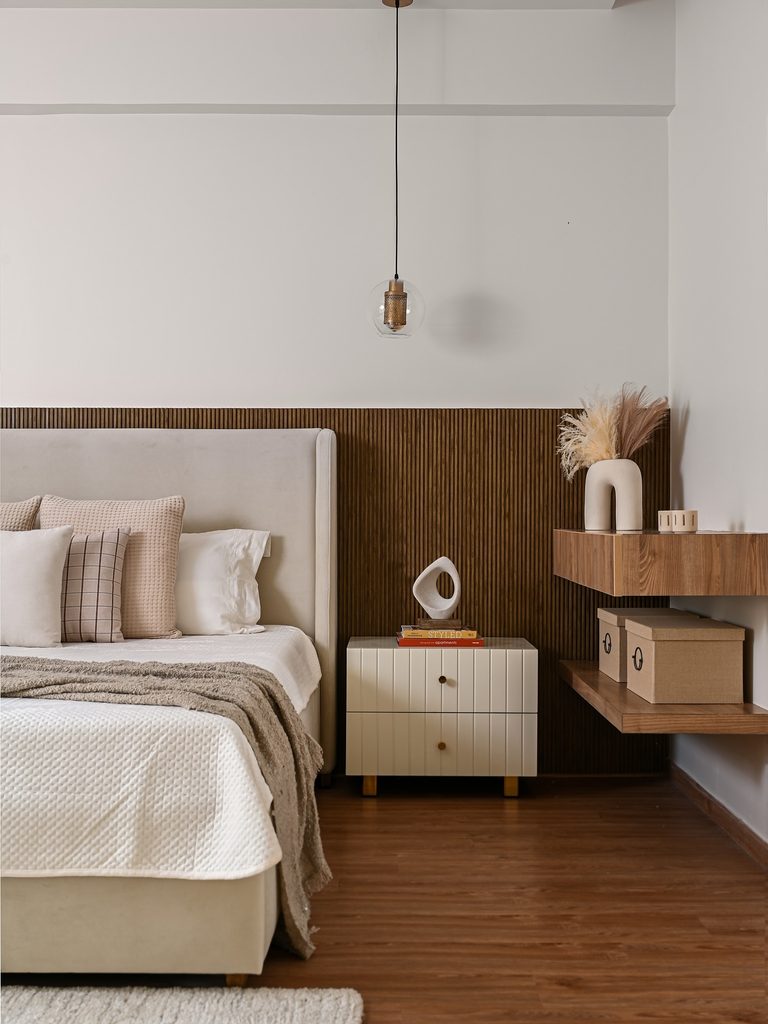
Fine vertical slats introduce brown through texture as well as color. In this bedroom, the wood toned paneling stops behind the pale headboard, leaving a broad white upper wall.
Floating wooden storage and a small cream bedside chest connect the darker background with the lighter furniture. The horizontal stopping line prevents the repeated slats from dominating the room.
Plan the panel height around the bed and any adjacent furniture before choosing materials. Keep outlets accessible and consider how the edges will finish at corners.
A similar brown tone can unify different wooden elements without making every grain identical. Pale bedding creates a clear foreground.
This approach concentrates warmth around the sleeping area while retaining a lighter impression above the furniture.
3. Mix Brown Checks With a Rustic Bedroom Backdrop
Credits: Instagram
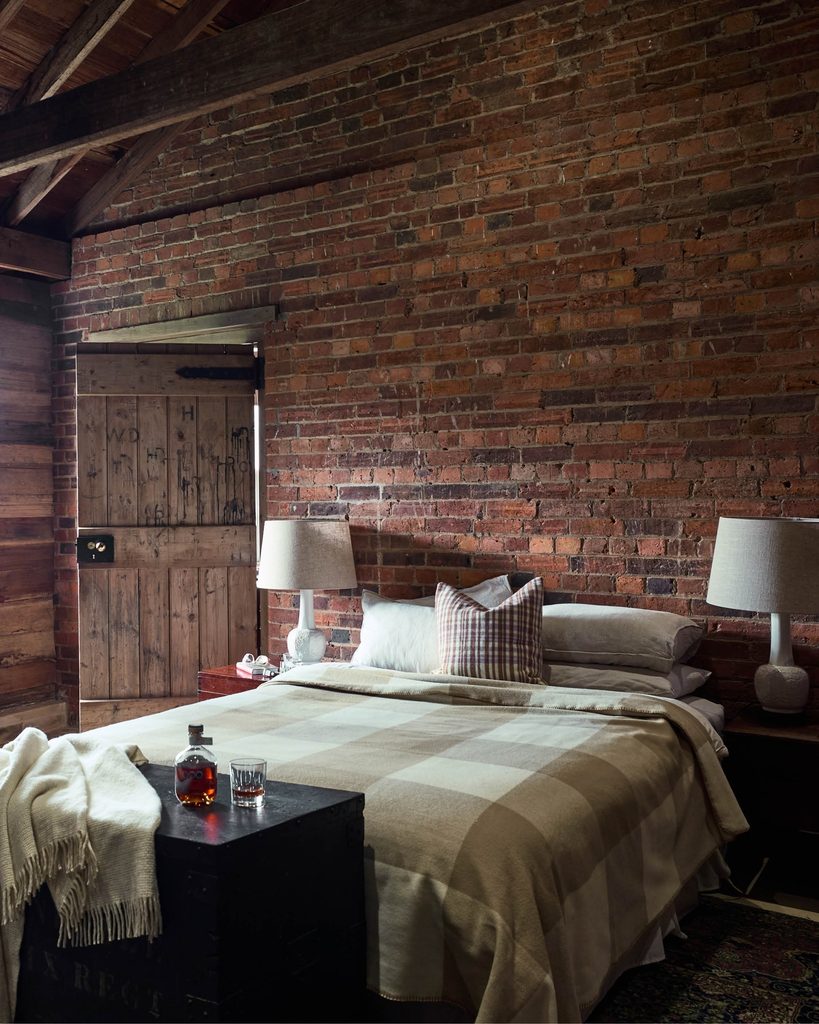
Checks can bring order to a bedroom filled with irregular natural surfaces. Here, a brown and cream checked cover sits beneath a brick wall and exposed timber, while a smaller checked cushion repeats the rhythm near the pillows.
The plain linens between them keep the patterns distinct. Choose two different check scales if you want a similar layered effect, rather than combining prints that are nearly the same size.
Brown can relate to existing wood or brick without matching every variation in those materials. Keep additional cushions restrained so the checks remain readable.
A simple folded throw can add texture where more pattern is unnecessary. The result connects the bed with a rustic setting while maintaining a comfortable sleeping surface.
4. Anchor Cool Bedding With a Cognac Leather Bench
Credits: Instagram
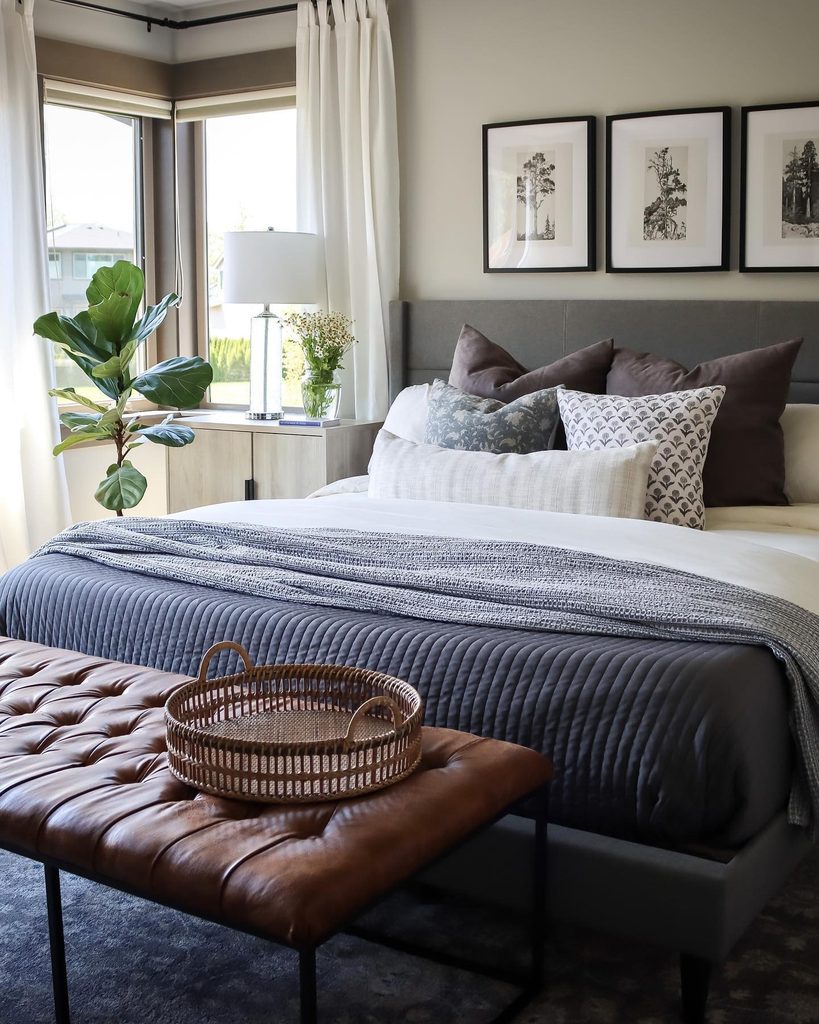
Brown can warm a bedroom even when most of its fabrics remain cool. This tufted cognac bench sits at the foot of a gray bed, bringing a smooth reflective surface beside the softer quilt and patterned cushions.
A woven tray adds another brown texture without hiding the upholstery. The contrast works because the bench is substantial enough to register but low enough to leave the bed visible.
Measure the walking route before adding seating, including clearance around its corners and nearby drawers. Choose upholstery that suits your care routine and a height comfortable for dressing.
Keep the top available for actual use. One warm brown piece can balance gray textiles without requiring the walls or existing bed frame to change.
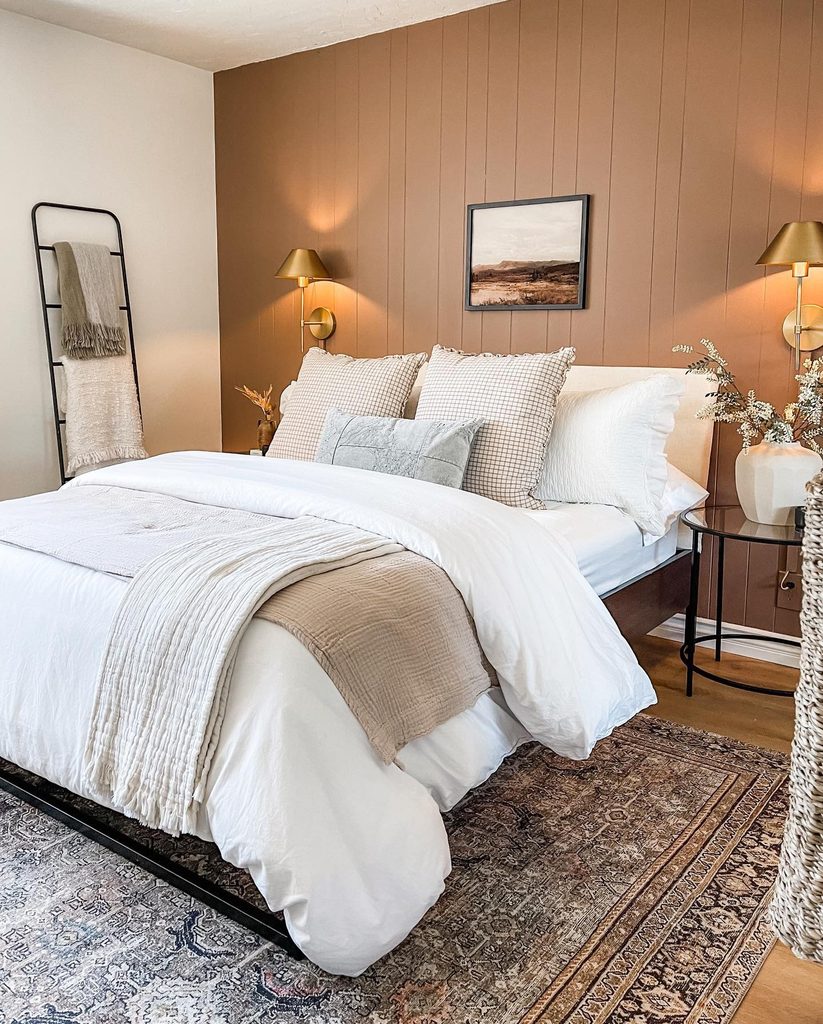
5. Pair Tan Walls With Warm Brass Reading Lights
Credits: Instagram
A tan backdrop can make small metallic accents feel especially deliberate. In this bedroom, paired brass reading lights cast gentle pools across the brown painted wall, with pale bedding keeping the sleeping area bright.
Narrow vertical lines give the wall quiet structure, and the landscape artwork repeats earthy tones without becoming another large pattern. Compare a brown paint sample beside your existing light fittings before choosing the finish.
Its appearance may shift between daylight and the bulbs used at night. Place reading lights around a comfortable seated position, checking glare and reach rather than symmetry alone.
Appropriate electrical installation matters as much as the look. A restrained mix of tan, brass, and cream can feel warm without becoming visually heavy.
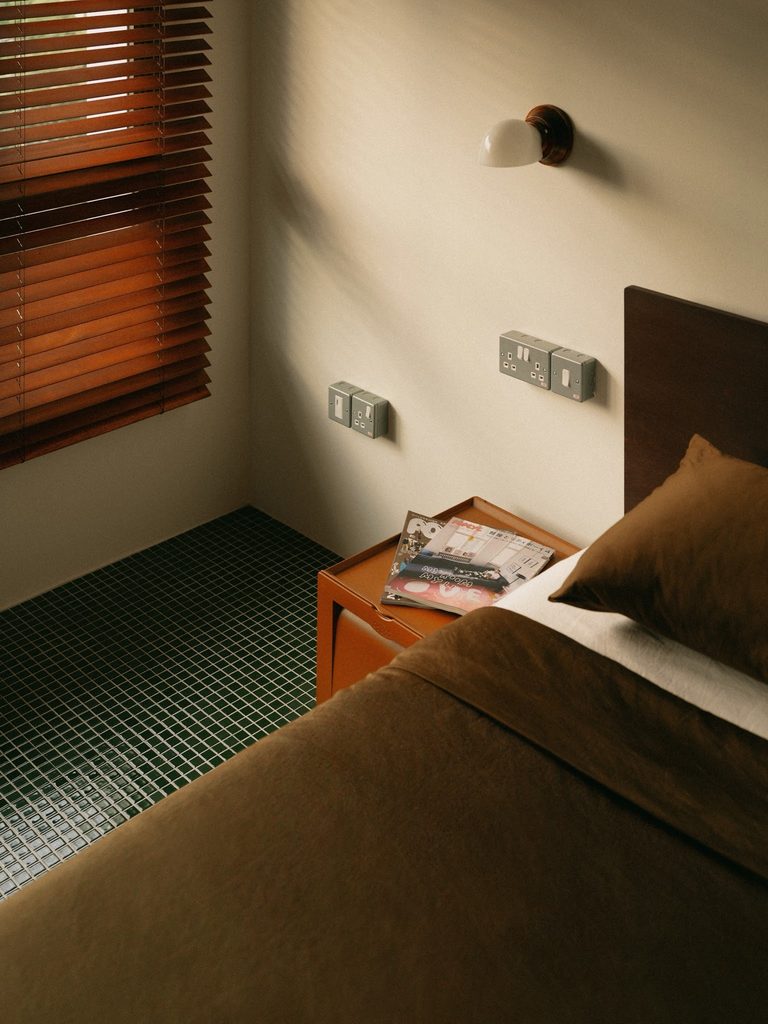
6. Repeat Brown Window Blinds in the Bedding
Credits: Instagram
Window coverings can carry a generous amount of brown without changing the walls. Here, wooden slatted blinds relate to a dark headboard and cocoa colored bedding, while a warmer bedside table adds another variation.
The pale wall keeps these deeper surfaces distinct. Think about how the window treatment functions before choosing it solely for color.
Check the available light, privacy needs, and safe operation, then compare its finish with the textiles already in the room. The brown shades can differ if their warmth feels compatible.
Leave some lighter bedding visible between the darker layers. Repeating color across the window and bed makes the arrangement feel connected, giving a compact bedside corner a consistent identity without filling it with extra decoration.
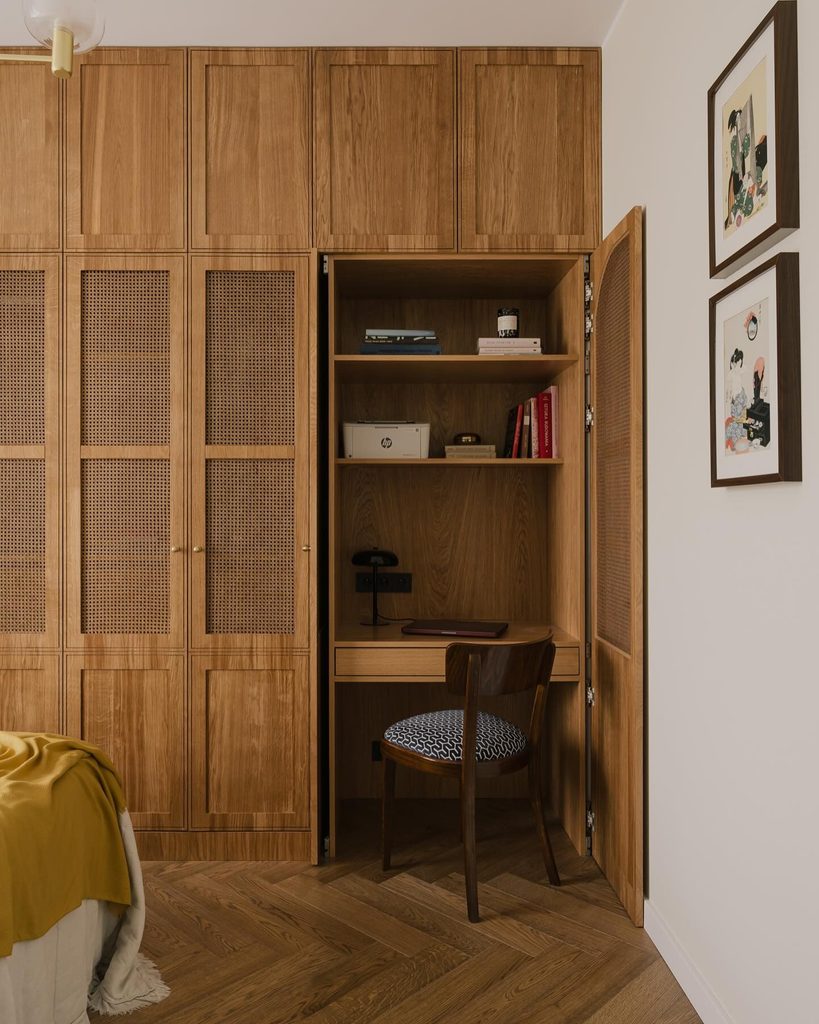
7. Give a Brown Storage Wall a Concealed Work Nook
Credits: Instagram
A wall of brown cabinetry can do more than provide clothes storage. This bedroom integrates a desk and shelves within a timber cabinet run, with woven door panels adding texture to the larger wood surfaces.
Opening one section reveals the work area while the remaining fronts keep storage visually orderly. Plan the desk around comfortable sitting depth, legroom, lighting, and access to power rather than treating it as leftover cabinet space.
Doors must open without blocking the chair or route around the bed. Use the same finish to connect the work nook with surrounding cupboards, allowing the grain to supply variation.
Brown becomes part of a useful architectural feature, bringing warmth to a room that needs several functions to coexist.
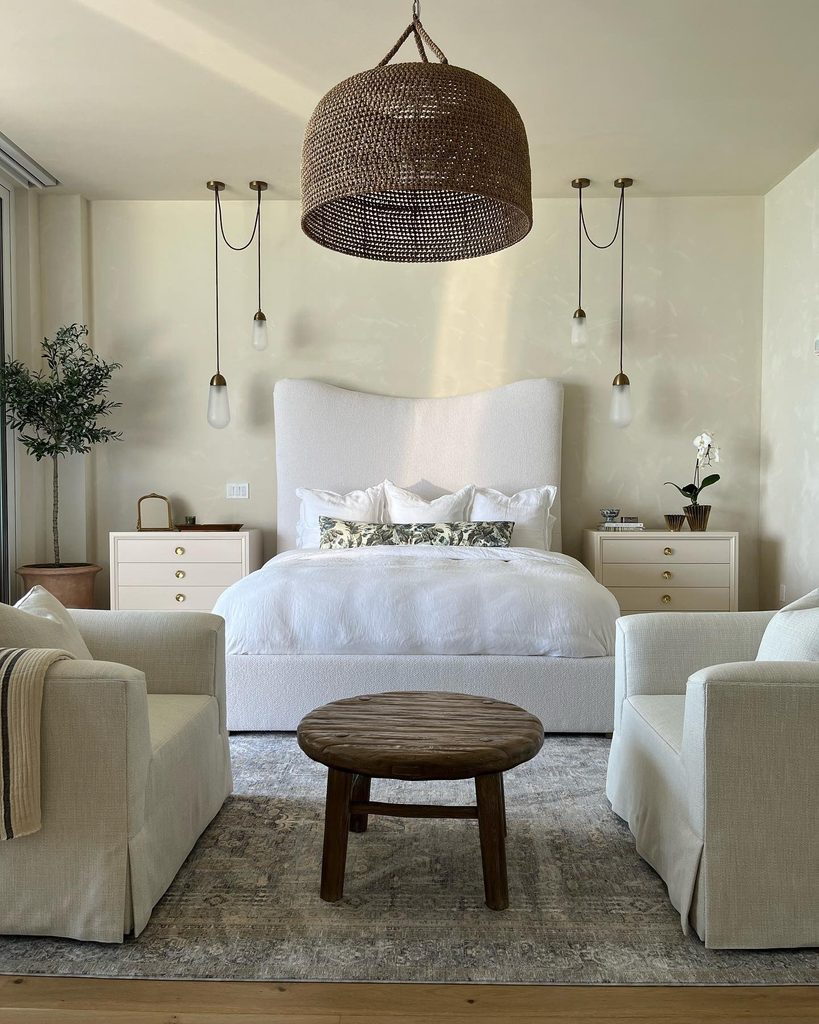
8. Let a Brown Woven Pendant Balance a Pale Bed
Credits: Instagram
A large woven pendant can bring brown into the upper part of a bedroom. Its rounded shade stands out against the pale ceiling here, with a low wooden table repeating the warmth below.
Cream upholstery and white bedding leave the darker weave easy to appreciate. The effect relies on proportion more than on adding many matching accessories.
Check the shade’s dimensions from the doorway and beside the bed, allowing suitable clearance for movement and neighboring fixtures. Use a compatible fitting and follow its installation guidance.
A second brown element lower in the room can connect the overhead feature to the furniture. Keeping the rest of the palette light allows a relatively small amount of brown to make a clear statement.
9. Let Brown Brick Supply the Bedroom’s Texture
Credits: Instagram
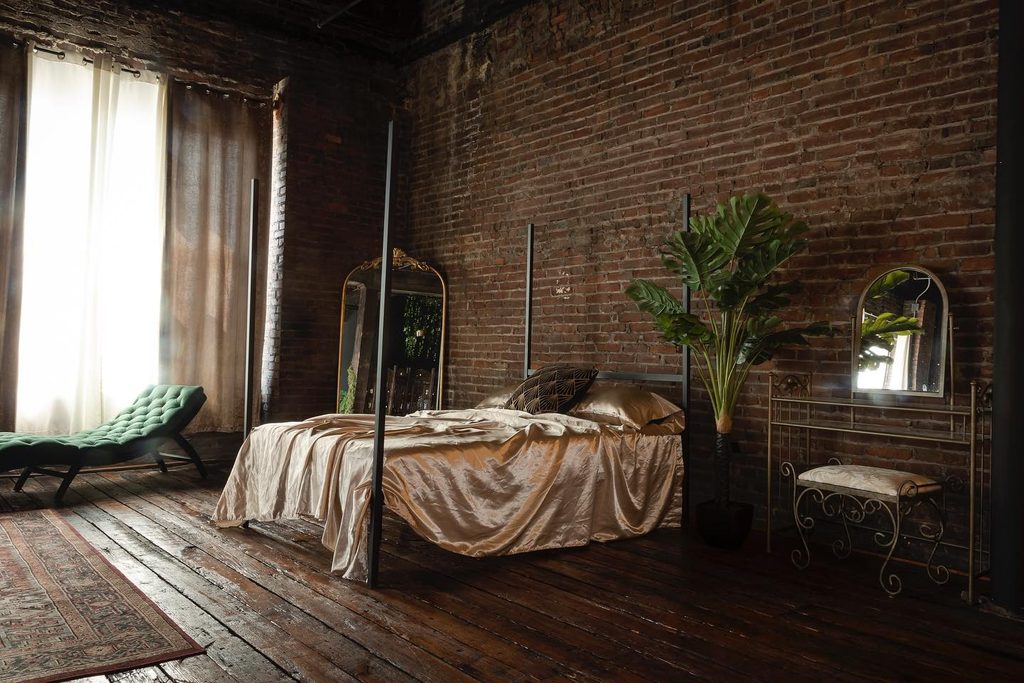
Existing brick can provide a range of brown tones without added pattern. In this bedroom, its uneven surface forms a rich backdrop for a slender metal bed and softly reflective bedding.
Dark timber flooring continues the warmth, while pale curtains give the window a lighter edge. If your room already has exposed masonry, consider its condition and maintenance needs before deciding how to decorate around it.
The photograph is styling inspiration rather than evidence that every wall should be stripped. Choose textiles that contrast with the rough surface, and leave enough plain fabric visible for the bed to remain clear.
A restrained furniture outline lets the material carry the character. Brown feels layered because the existing finishes are naturally varied.
10. Place a Caramel Sofa at the Foot of the Bed
Credits: Instagram
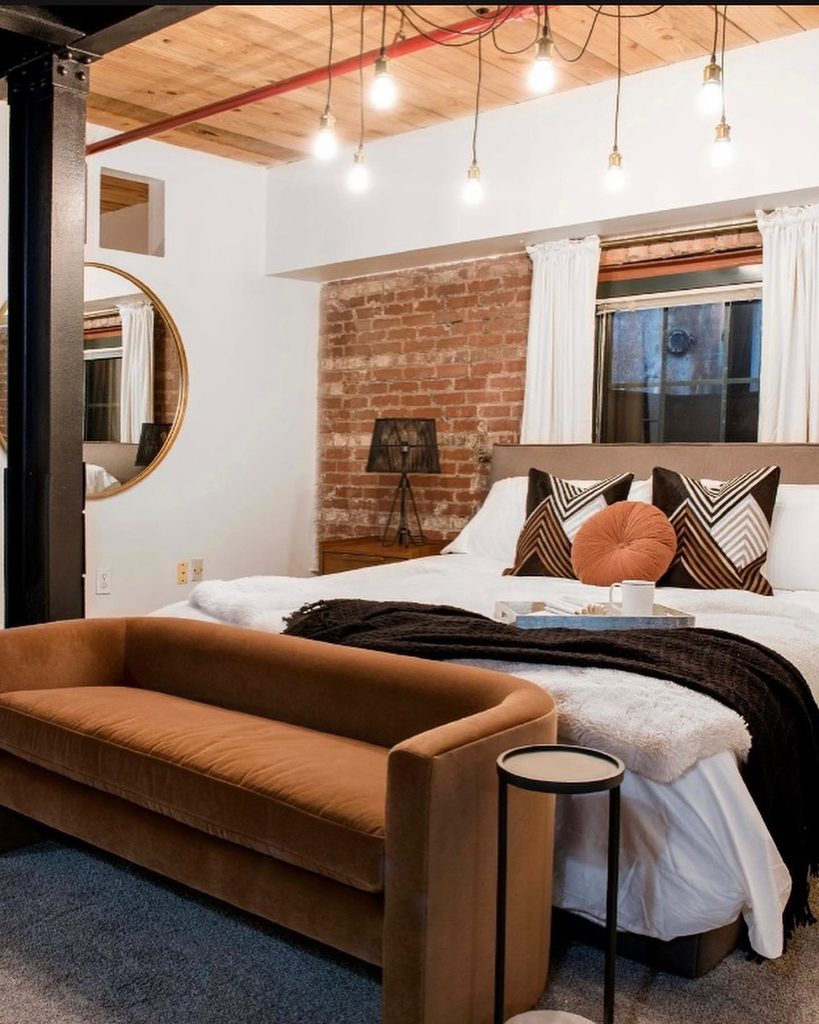
A bedroom seating area can introduce brown through one piece. This caramel sofa sits across the foot of the bed, with rounded arms softening the brick and exposed structure behind it.
Dark pillows and a chocolate throw repeat the warmer palette in smaller amounts, while white bedding provides contrast. Start with the room’s circulation before choosing a sofa of similar scale.
Leave enough space to pass its ends and use any nearby doors or drawers comfortably. A compact chair may suit a smaller room better while preserving the same color relationship.
Keep the upholstery practical for daily use and avoid filling the seat with display objects. Brown then contributes a useful place to pause as well as a focal point.
11. Soften Brown Cane Furniture With Dusty Rose Textiles
Credits: Instagram
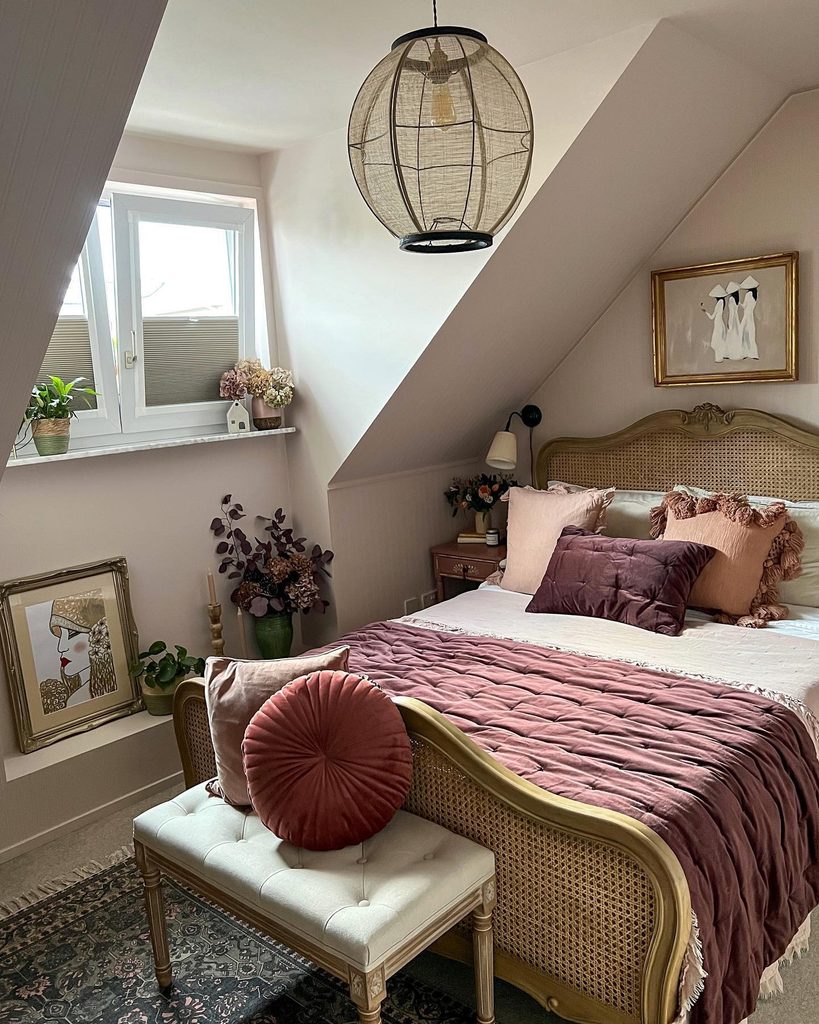
Woven cane gives brown furniture detail without relying on a solid heavy surface. This bedroom shows the material at both ends of the bed, with curved wooden frames keeping the weave visible around soft rose and plum bedding.
Pale walls follow the attic shape, allowing the warmer furniture to remain distinct. Consider how much of a woven footboard will show beneath your usual duvet before selecting a similar frame.
A cover that overwhelms it can hide the feature you enjoyed in the first place. Keep surrounding fabrics softer in tone so the cane’s texture remains noticeable.
The pink layers do not need to match each other exactly. Their shared softness creates a useful counterpoint to the brown frame’s structured outline.
12. Set a Dark Brown Nightstand Beside Olive Upholstery
Credits: Instagram
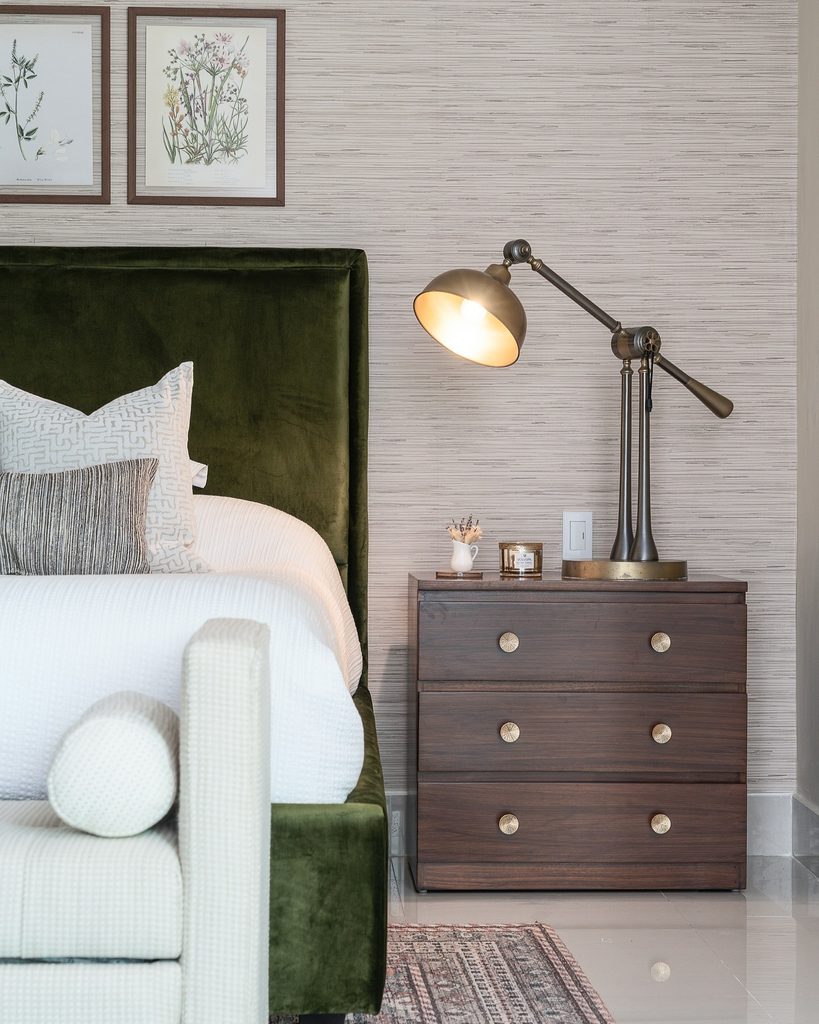
A bedside chest can give brown a practical role within an earthy palette. Here, dark wood drawers sit beside an olive upholstered bed, with brass knobs and an adjustable metallic lamp adding restrained highlights.
Pale wallpaper and bedding keep the corner from feeling too dense. Choose the chest around what you need to store and the height of the mattress before comparing decorative finishes.
Its drawers should open easily without interrupting the walking route. Brown wood can sit comfortably with green fabric when their depths provide enough contrast.
A few pale objects on the top keep everyday essentials visible. The arrangement works through useful storage and material contrast, rather than requiring every piece of furniture to share the same finish.
13. Bring Brown Branch Shapes Onto a Plain Bed Wall
Credits: Instagram
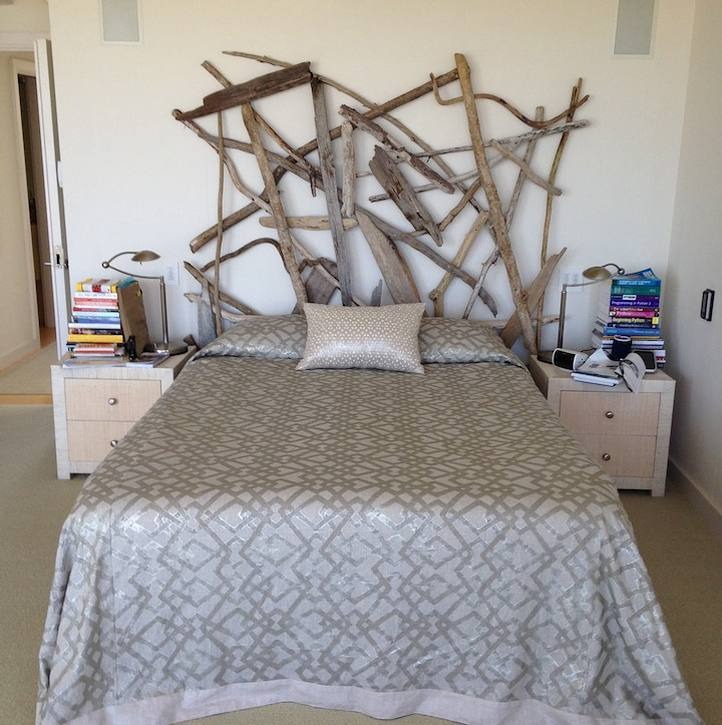
Wood can appear in a bedroom as sculpture rather than another furniture surface. This arrangement spreads branching forms above the bed, their varied brown tones and irregular angles standing out against a plain pale wall.
Matching bedside chests and simple bedding give the composition an orderly base. Treat the image as inspiration for an artwork, not a construction plan for attaching found branches above pillows.
Materials need suitable preparation and secure supports chosen for their weight and the wall. Plan the overall silhouette before deciding how many pieces to include.
Keeping the surrounding palette restrained allows the wood’s shape to remain the main feature. Brown gains an expressive role here through texture and line instead of a large painted area.
14. Make a Fluted Brown Four Poster the Focal Point
Credits: Instagram
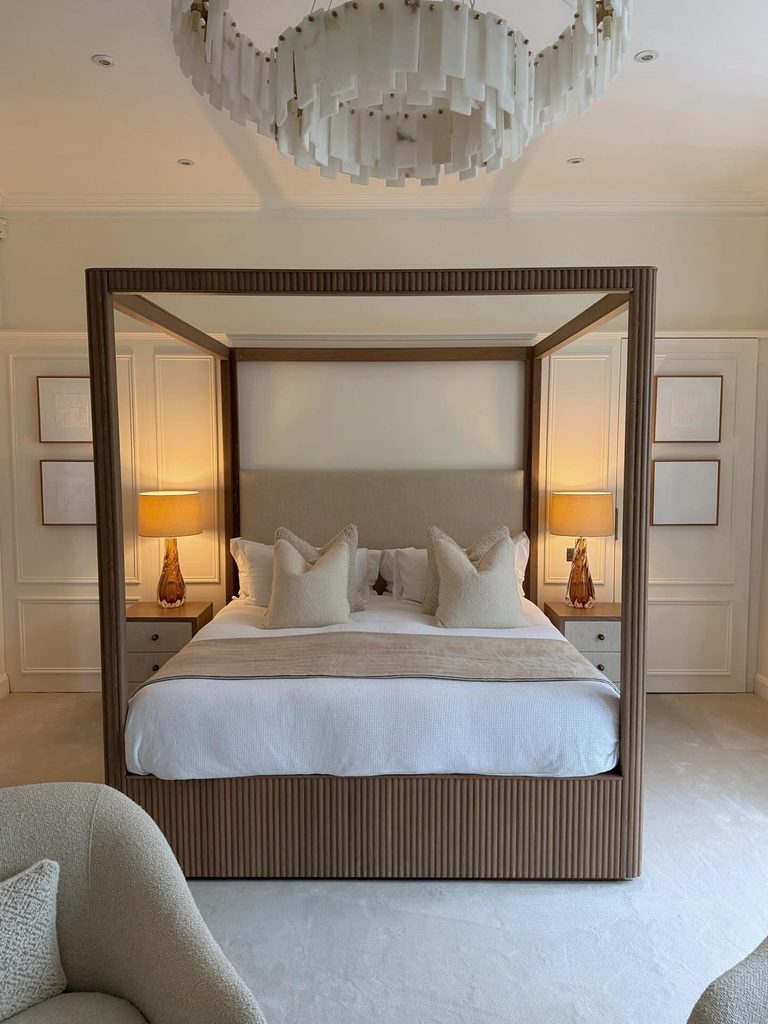
Timber gives this four poster bed its presence, while fine fluting prevents the substantial brown frame from feeling plain. Pale upholstery, crisp white linens, and a narrow taupe runner keep the sleeping surface lighter than the surrounding structure.
Amber lamps echo the wood’s warmth, and the light walls leave its outline clearly visible. The useful lesson is to let a distinctive frame do most of the decorating.
Before choosing a similar bed, compare its height and width with the room, chandelier, doors, and curtains. Keep textiles relatively restrained so the fluted rails are not hidden.
You can repeat brown elsewhere in smaller amounts, but matching every piece of furniture is unnecessary when the bed already provides such a clear center.
15. Add a Woven Brown Chair to an Olive Bedroom
Credits: Instagram
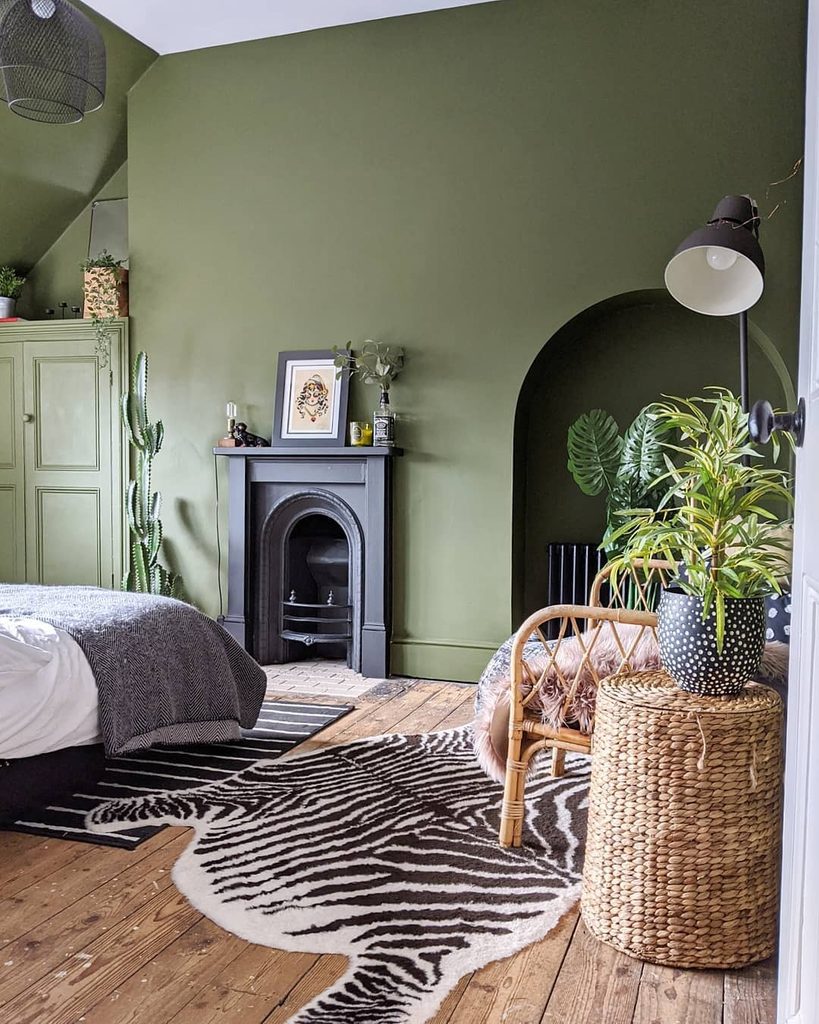
A woven chair can bring a lighter version of brown into a colored bedroom. In this corner, its open frame sits beside a textured woven stand, with warm timber flooring connecting the pieces beneath olive walls.
The bed remains nearby, so the seating reads as part of the room rather than a separate display. Choose a chair that fits the available corner while leaving access to windows, storage, and the bed.
A comfortable cushion can soften the weave without covering its outline. The stand needs to be stable and appropriate for anything placed on it.
Brown looks varied here because smooth wood and woven fibers respond differently to light. A small seating group can add warmth without another large cabinet.
16. Ground Pale Bedroom Joinery With Warm Brown Flooring
Credits: Instagram
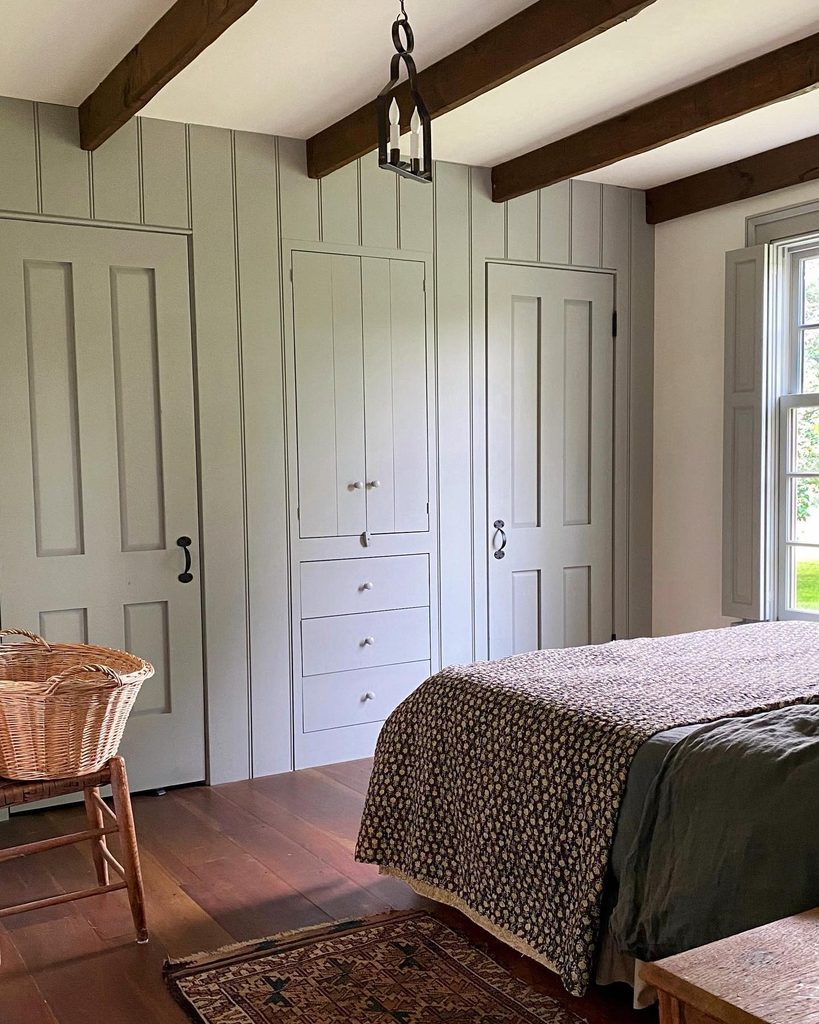
The floor can provide most of a bedroom’s brown while larger storage stays pale. This room pairs wide warm boards with light painted closet fronts and a patterned bedcover, letting the timber run visibly through the walking area.
Dark ceiling beams repeat the warmth overhead without matching the floor exactly. Consider existing flooring as part of the palette before deciding that every new item must introduce another brown.
Keep enough of its surface visible to show the direction and grain, using rugs where they improve comfort rather than hiding the entire room. Protect the finish appropriately and follow its care guidance.
Pale joinery can help the brown base feel intentional, while textiles supply smaller variations around the bed’s central position.
17. Keep a Brown Timber Ceiling Visible Above Pale Walls
Credits: Instagram
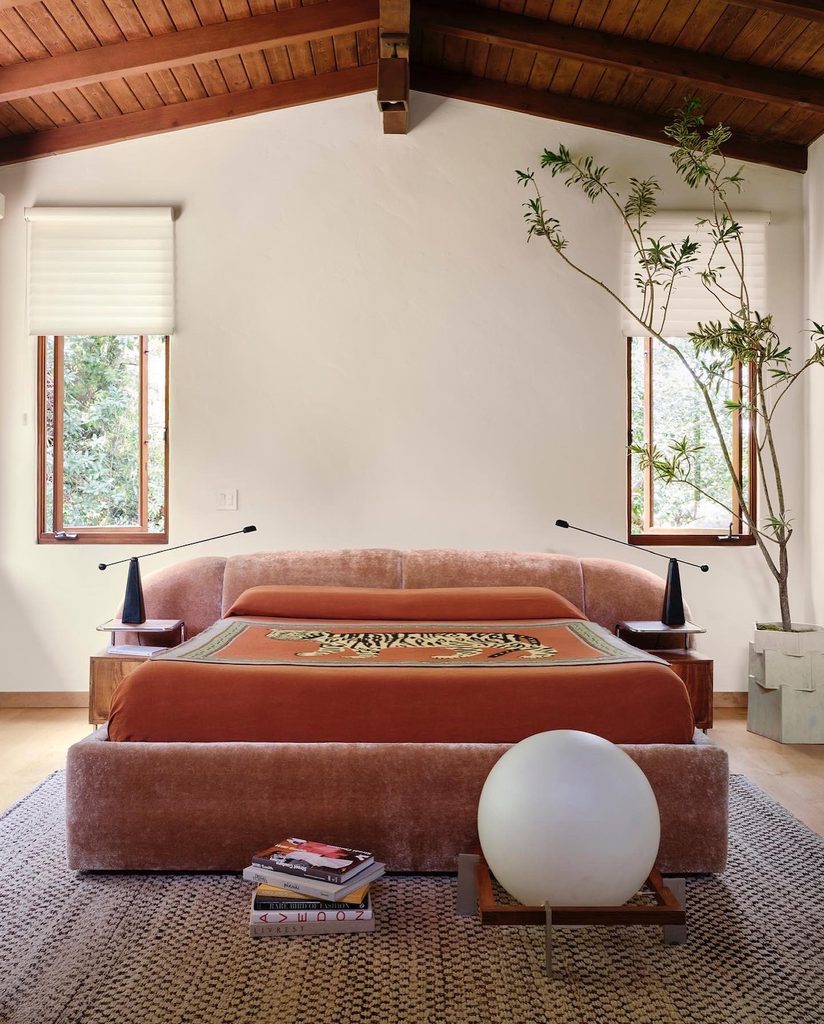
A timber ceiling can establish a brown bedroom palette before any textiles are chosen. Here, wooden boards and beams span the pitched roof above pale walls, with warm bedding and bedside pieces relating to the overhead color.
The lighter wall surfaces keep the structure’s outline clear. If your room already has attractive timber, consider preserving its visual role rather than covering it with competing decorative features.
Check its condition and seek appropriate advice before altering any structural or historic elements. Choose bedding with a related warm tone without trying to match every variation in the wood.
Simple window treatments leave the ceiling as the strongest architectural detail. Brown feels integral to the space because it belongs to the room itself.
18. Contrast a Brown Leather Headboard With Gray Texture
Credits: Instagram
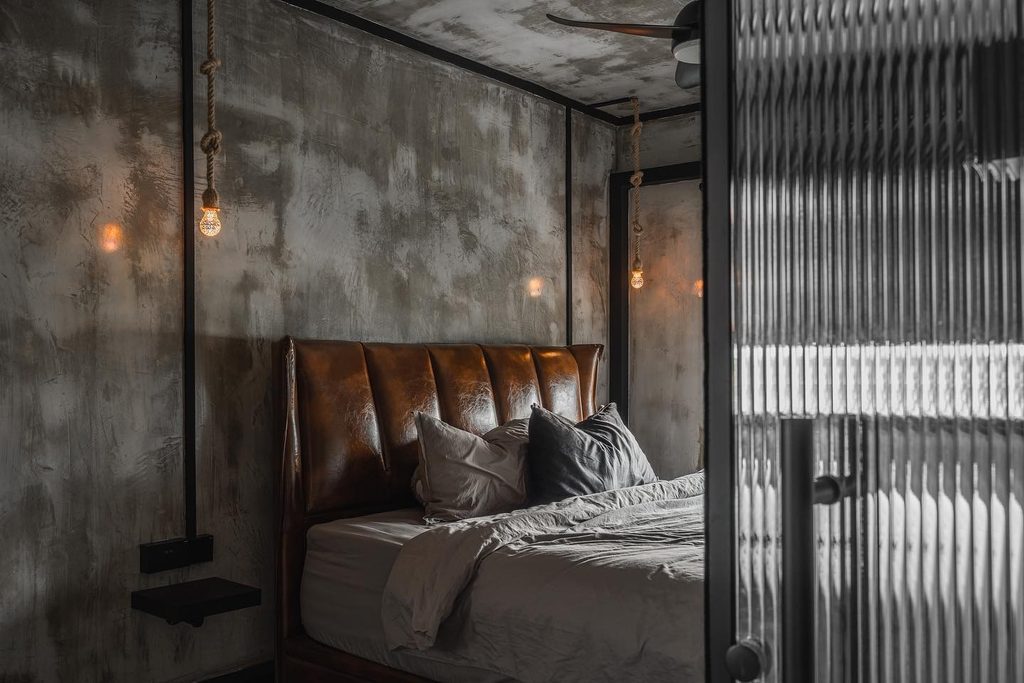
Brown leather can bring warmth to a bedroom with a cool industrial palette. This padded headboard stands against mottled gray walls, its smooth surface catching light differently from the rougher background.
Gray bedding keeps the emphasis on that contrast, while warm pendant bulbs reinforce the leather’s color. A similar effect does not require recreating the entire room’s finishes.
Compare an upholstered headboard sample with your existing wall and bedding in several lighting conditions. Choose a material and care routine suited to everyday contact, and check the bed’s attachment requirements.
Leave enough of the headboard visible above the pillows for its shape to register. One brown upholstered surface can soften a gray scheme without adding unrelated colors or elaborate decorative accessories.
19. Mix Brown Planks Across One Accent Wall
Credits: Instagram
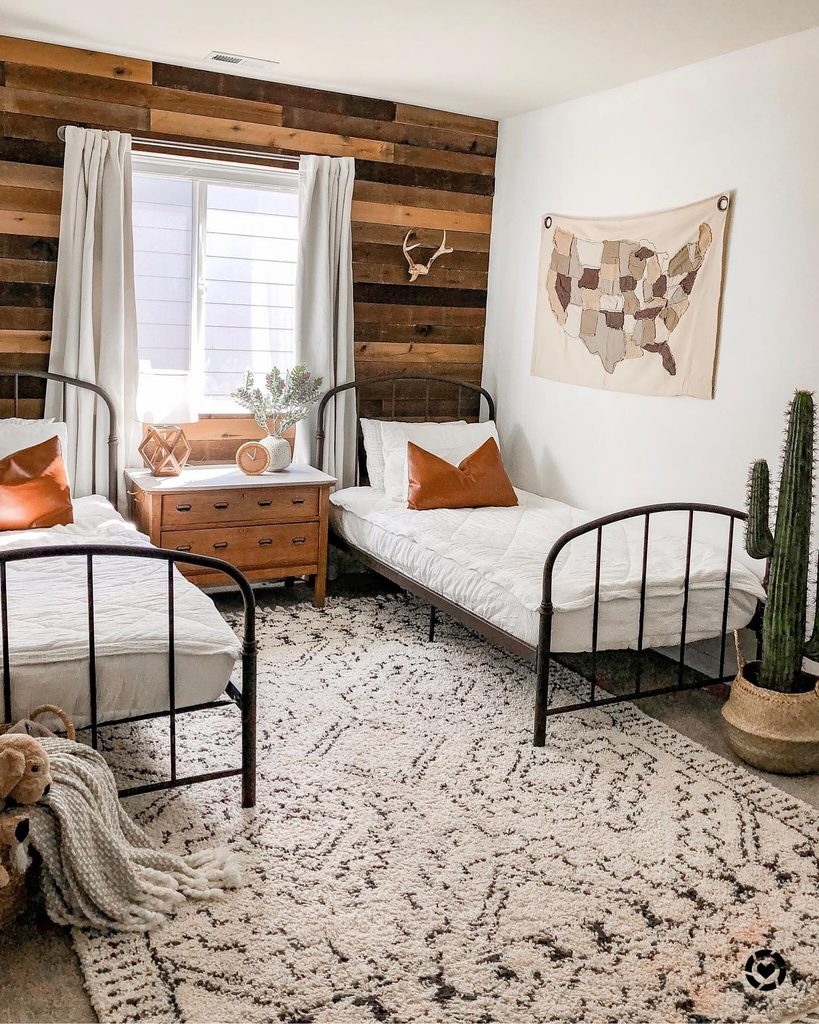
Variegated boards turn this bedroom wall into a collection of warm browns, from honey to nearly black. Their horizontal arrangement crosses behind two narrow metal beds and wraps around the central window.
Caramel cushions and a wooden chest repeat the palette, while white bedding and adjacent walls keep the composition easy to read. The appeal comes from variation rather than a perfectly matched finish.
For a similar effect, arrange samples together before installation and distribute darker pieces across the wall. Avoid clustering every deep tone in one corner.
Simple bed frames leave more of the surface visible, and plain curtains interrupt the pattern around the window. Let that one textured plane carry the room instead of covering every nearby surface.
20. Combine Soft Brown Bedding With Blush and Florals
Credits: Instagram
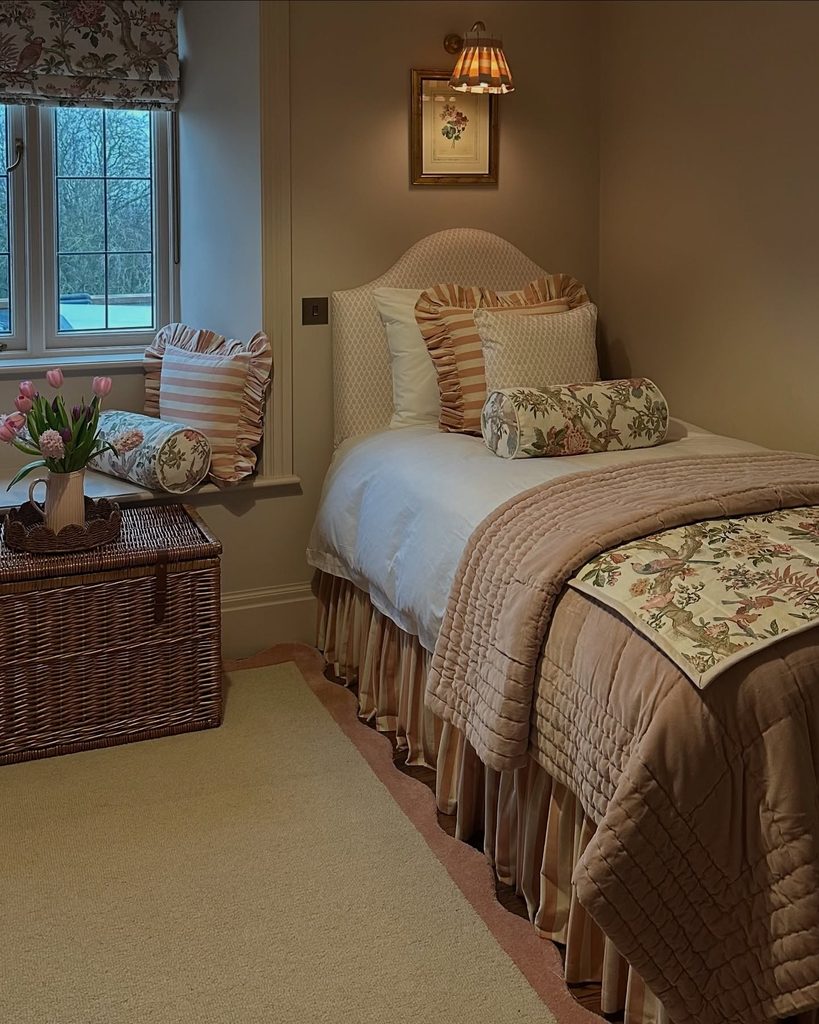
Brown can feel gentle when it appears in lighter textiles beside pink. This bedroom layers a soft brown quilt over pale bedding, with striped blush cushions and floral fabric adding changes in pattern.
A dark woven bedside chest supplies another brown surface with a different texture. Start with the quilt’s tone, then choose one quieter warm accent rather than adding several equally strong colors.
Leave a plain layer visible between the prints so each remains readable. The mix works especially well when furniture and walls do not compete with the bedding.
Compare fabrics together in the bedroom before committing to a full set. A restrained combination of brown, blush, and cream can create warmth while keeping the sleeping area light.