
A beige bedroom can feel washed out when every surface has the same softness and tone. Beige Bedroom Ideas work best when the palette has a little contrast and texture to give the eye somewhere to land.
Try pairing warm beige paneling with cool gray upholstery, outlining pale linens with a black wall lamp, or adding a ribbed four-poster bed against light walls.
The article also shows how layered curtains, woven details, and a pale wooden bench can bring warmth and structure without crowding a calm, neutral scheme.
1. Layer Beige Drapes Beside White Sheers
Credits: Instagram
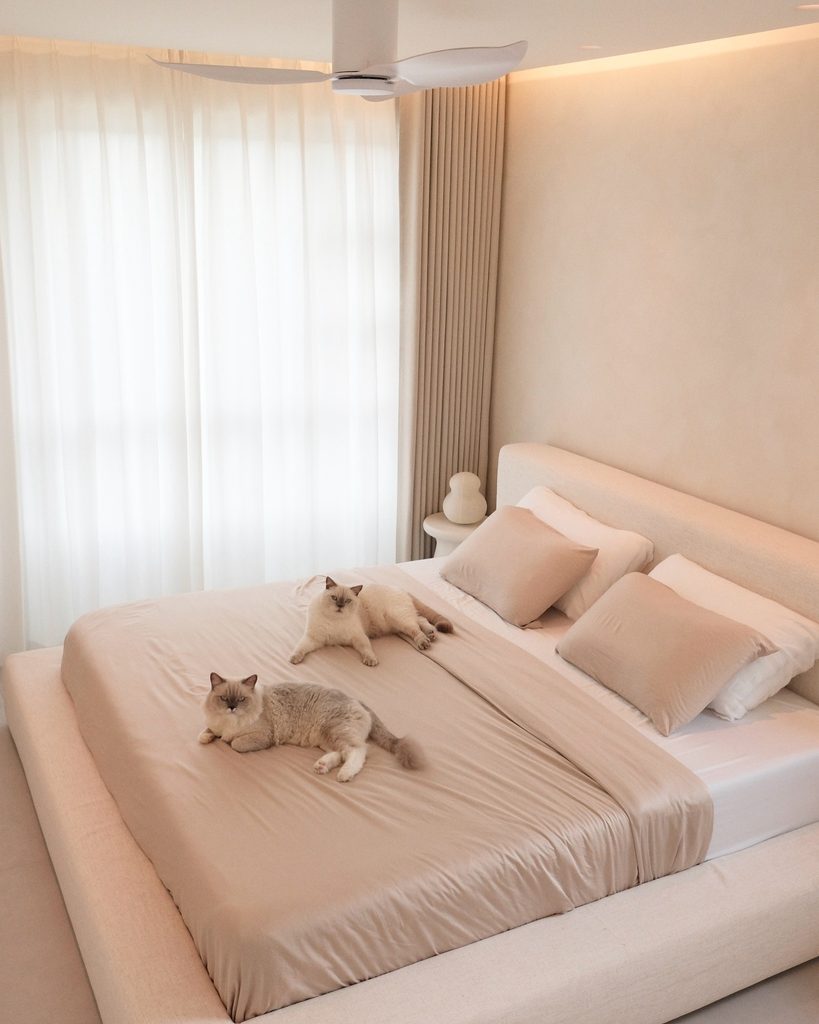
Beige drapes gather beside a broad layer of white sheers in this softly colored bedroom. Their deeper folds connect with the sandy bedding, while the lighter fabric keeps the window from becoming one solid block.
The upholstered frame continues the quiet palette without requiring another pattern. This is useful when you want a beige room to feel layered even with simple furniture.
Compare both curtain fabrics beside your duvet and wall color before choosing them. Their undertones should work together in daylight and under the lamps you normally use.
Decide separately how much privacy or darkness the window needs. Sheers and heavier curtains can serve different purposes, allowing the warm outer panels to provide color without handling every lighting condition.
2. Define Pale Beige Walls With an Open Metal Bed
Credits: Instagram
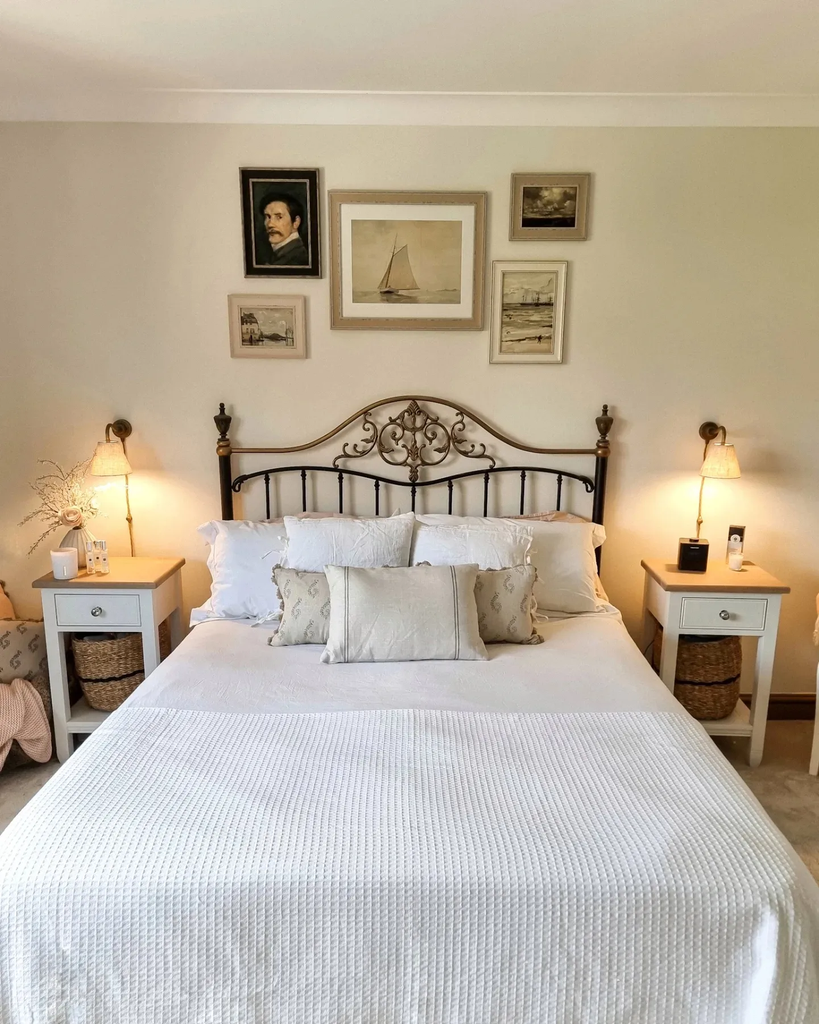
An open metal headboard gives the pale beige wall behind this bed a precise outline. Its dark rails and warmer curved top remain visible above white pillows, adding structure without covering the backdrop.
Light bedside furniture and restrained pictures keep the arrangement balanced. This is a option when an all neutral bedroom feels too soft and needs a clearer shape.
Compare the frame’s finish with existing hardware, then keep most larger textiles pale. A beige cushion or natural basket can connect the darker outline with the rest of the room.
Avoid filling every gap between the rails with pillows. The wall showing through the headboard is part of the effect, helping the bed feel defined while the room stays light.
3. Balance Beige Paneling With Cool Gray Upholstery
Credits: Instagram
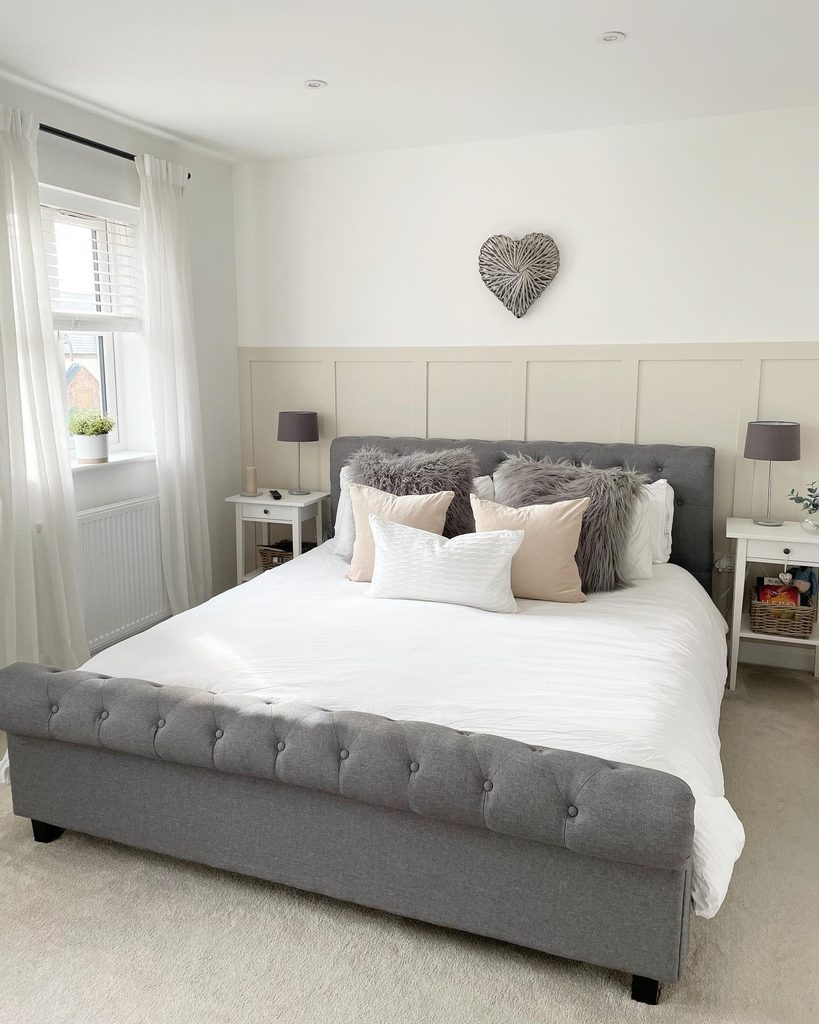
Warm beige paneling sits behind a cool gray upholstered bed in this light bedroom. The different undertones give the neutral palette depth, while white bedding separates the frame from the wall.
Small beige cushions repeat the painted backdrop in a softer material. You can use the same relationship without matching every neutral perfectly.
Compare your proposed beige with the gray furniture in the actual room, since some combinations look harmonious and others emphasize unwanted pink or yellow tones.
Keep the upper wall and curtains quieter if the paneling already supplies structure. The contrast between warm paint and cooler fabric can make both easier to appreciate.
A few repeated beige accents are enough to connect them without covering the entire bed.
4. Reflect Warm Beige Layers in an Arched Mirror
Credits: Instagram
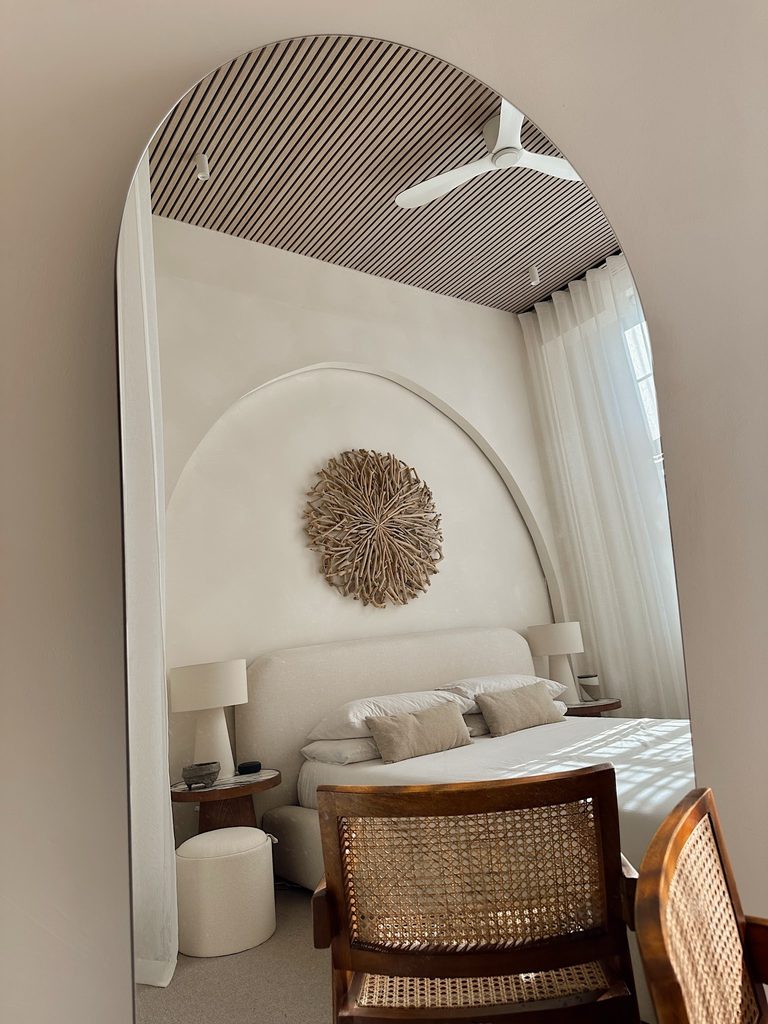
An arched mirror brings the bedroom’s pale beige layers into the dressing area through reflection. The rounded headboard, light bedding, and curved wall detail appear within its outline, while a wooden cane chair adds a warmer foreground texture.
This keeps the mirror connected to the room rather than treating it as an isolated accessory. Before choosing its position, check the reflection from the doorway and from where you will use it.
A calm view of the bed can be more useful than a reflection of busy storage. Secure the mirror appropriately and leave comfortable space around the chair.
Warm neutrals do not need to match exactly; related undertones help the reflected textiles and wooden furniture belong within one gentle scheme.
5. Outline Beige Linens With One Black Wall Lamp
Credits: Instagram
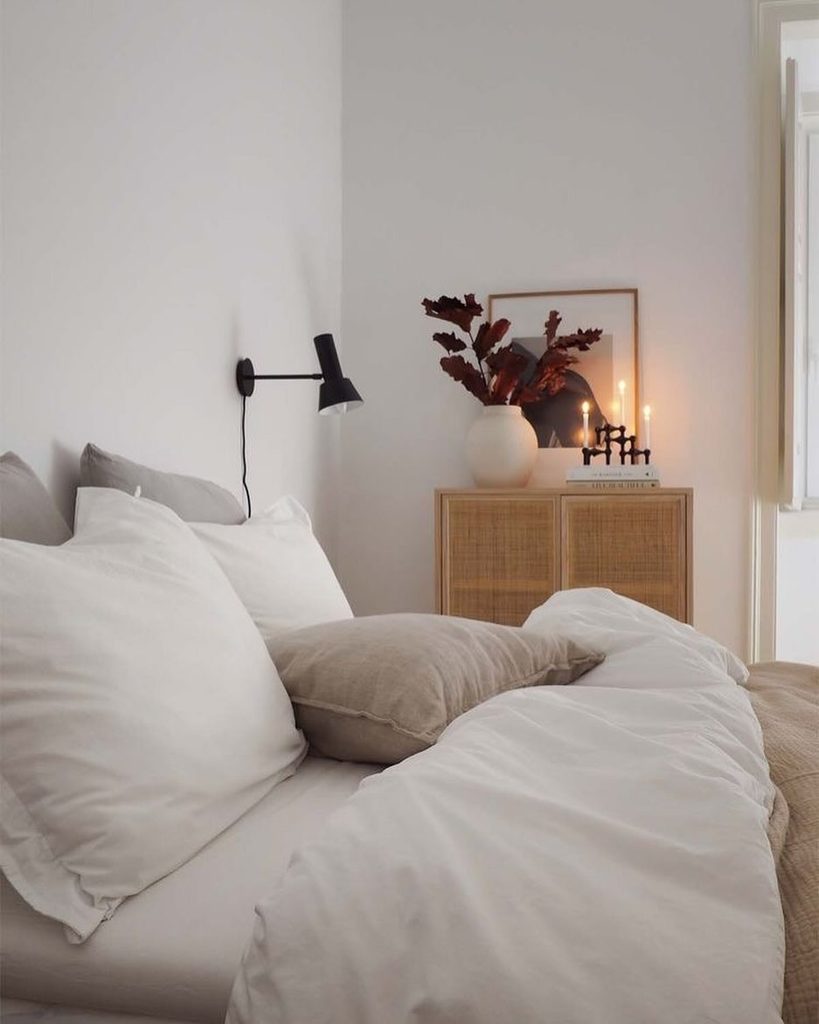
A black wall lamp gives the pale beige and white bedding a small, practical point of contrast. Its slim arm stays visually separate from the pillows, while the warm wooden cabinet across the corner continues the room’s neutral palette.
The dark outline adds definition without requiring patterned fabric or a new wall color. This is worth considering when your beige bedroom needs sharper edges but little extra decoration.
Check the fixture’s position from the pillow and keep its switch convenient to reach. Follow installation requirements and use qualified help where electrical work is needed.
A clear bedside surface remains important even with wall lighting. Let the lamp perform an task while its shape provides the contrast the room was missing.
6. Extend Beige Bedding With a Pale Wooden Bench
Credits: Instagram
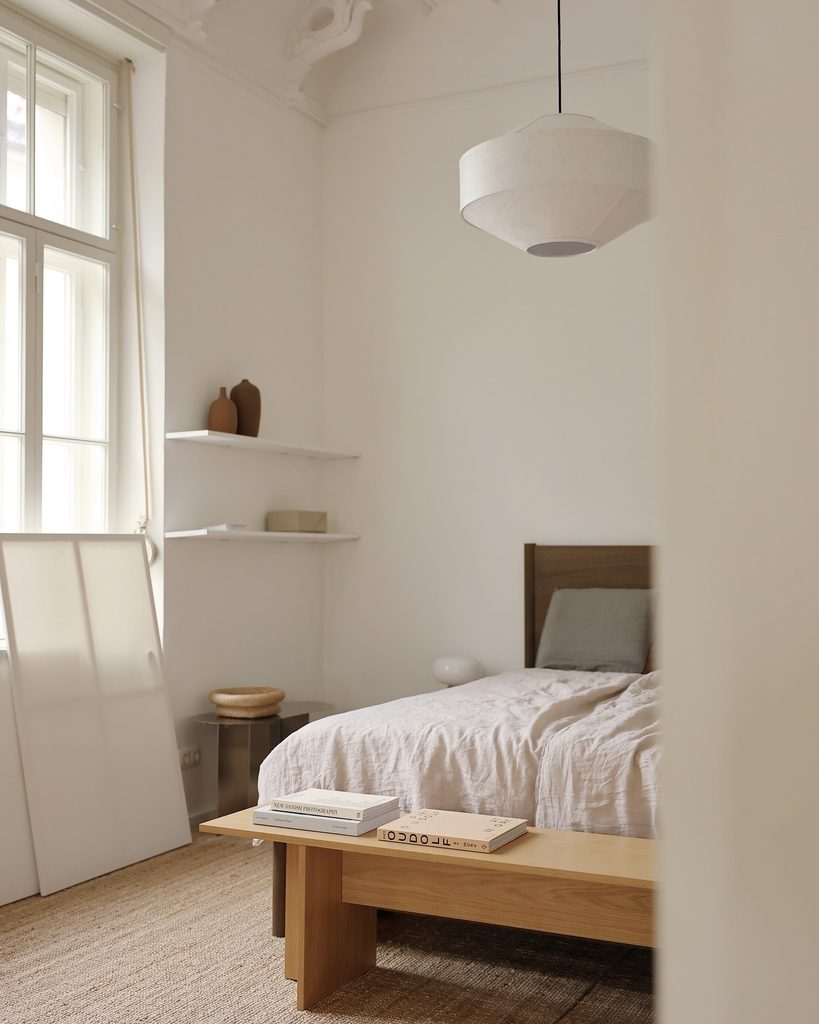
A pale wooden bench carries the warmth of this bedroom’s beige linens beyond the mattress. Its simple legs leave the floor visible underneath, making the furniture feel lighter than a large upholstered base would.
The nearby woven rug supplies another quiet texture without a strong new color. A similar bench can be useful for getting dressed or setting down a folded blanket, provided there is enough room to walk past comfortably.
Measure the clearance with nearby doors and drawers open before choosing its length. Leave part of the wooden surface visible so it contributes to the palette.
The most useful neutral combinations allow each material to look like itself, rather than trying to make timber, fabric, and flooring match exactly.
7. Anchor Pale Beige Walls With a Ribbed Four Poster
Credits: Instagram
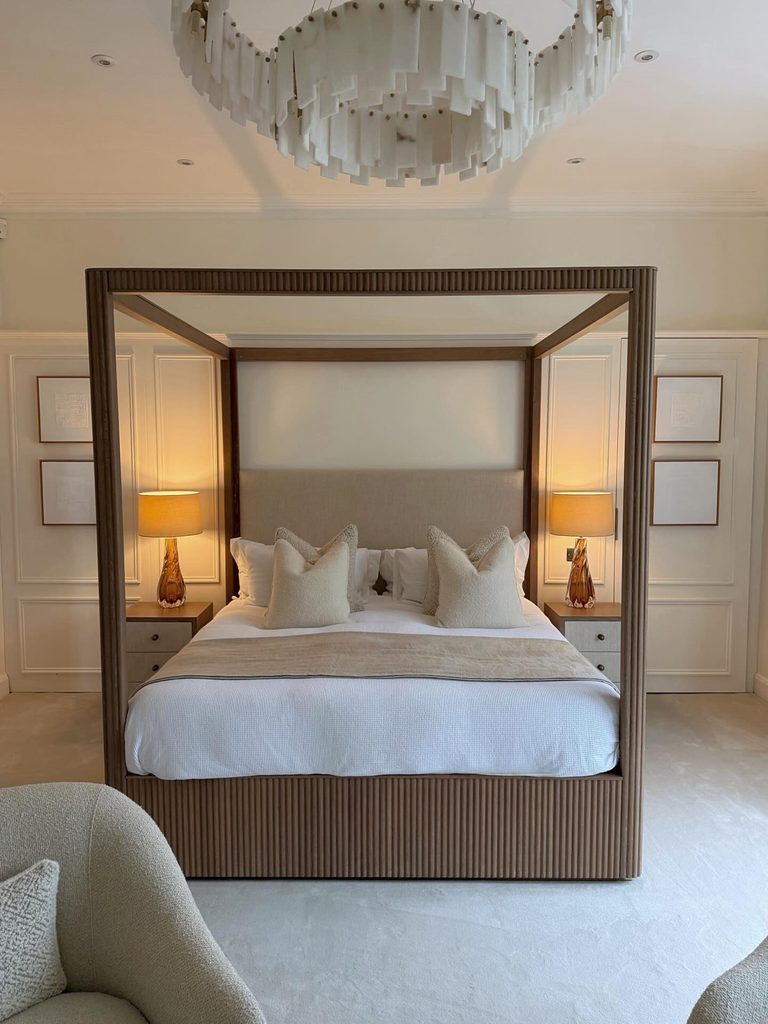
Dark wood outlines the bed within an otherwise pale beige room. The four-poster frame gives the eye a strong structure to follow, and its ribbed footboard brings texture close to floor level.
Behind it, quiet wall molding and cream upholstery prevent the frame from feeling isolated. Matching bedside lamps create a balanced arrangement on either side.
This is a useful direction if you want beige bedroom ideas with architectural presence. Let one furniture piece carry the darker tone, then keep the larger textiles light.
Check how the bedposts relate to any ceiling fixture and decorative molding before committing to the frame. A generous room can support this layered outline, but the surrounding pathways still need to feel easy and comfortable.
8. Carry Beige Cushions Into a Bedroom Sitting Corner
Credits: Instagram
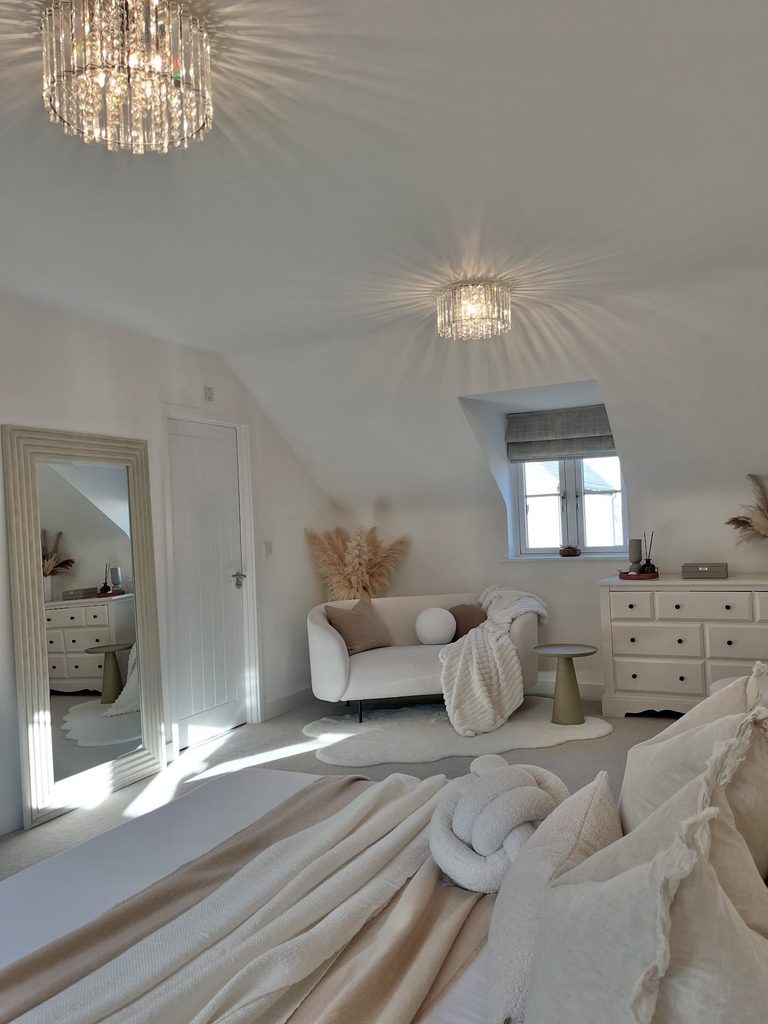
Beige cushions connect the bed in the foreground with the small curved sofa across this bedroom. The sofa itself stays pale, allowing the warmer pillows and textured throw to provide the link.
A light rug and restrained side table keep the sitting corner from feeling like a separate decorating scheme. This is a useful approach when you want a second place to relax without buying a matching furniture set.
Repeat one textile tone already on the bed and vary the shapes around it. Check that the seat remains accessible and that its depth suits the room.
A modest number of cushions is usually more useful than a large display. Leave space to sit comfortably and keep everyday belongings within reach.
9. Give Sandy Walls Depth With a Cane Headboard
Credits: Instagram
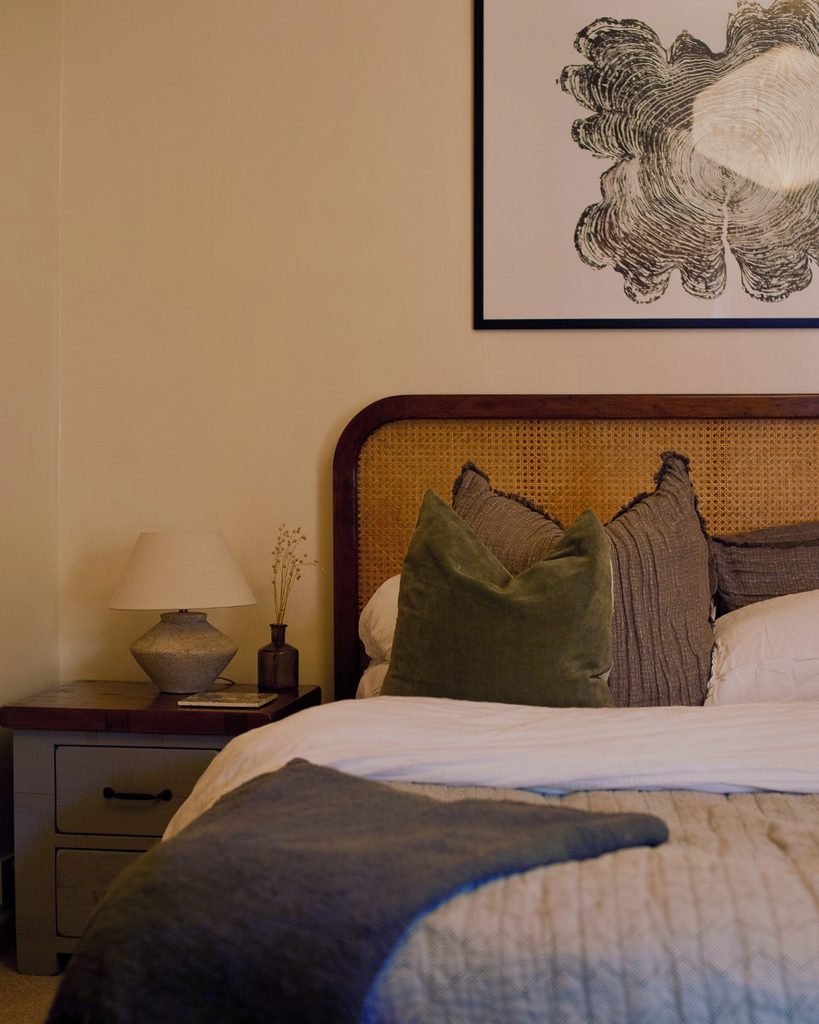
The woven surface of this cane headboard adds depth against a sandy bedroom wall. A darker wooden border defines its curve, while muted pillows and a pale lampshade keep the surrounding palette quiet.
An olive cushion introduces one deeper natural tone without replacing the warm neutral foundation. The useful lesson is the contrast between an open weave and a broad surface.
If you choose a similar headboard, compare its warmth with the wall and floor before adding more wood furniture. Leave enough of the cane visible above the pillows to appreciate its texture.
A small number of related colors can keep the room cohesive while allowing different materials to remain distinct. There is no need to repeat the weave everywhere.
10. Pair Sandy Walls With Quiet Checked Bedding
Credits: Instagram
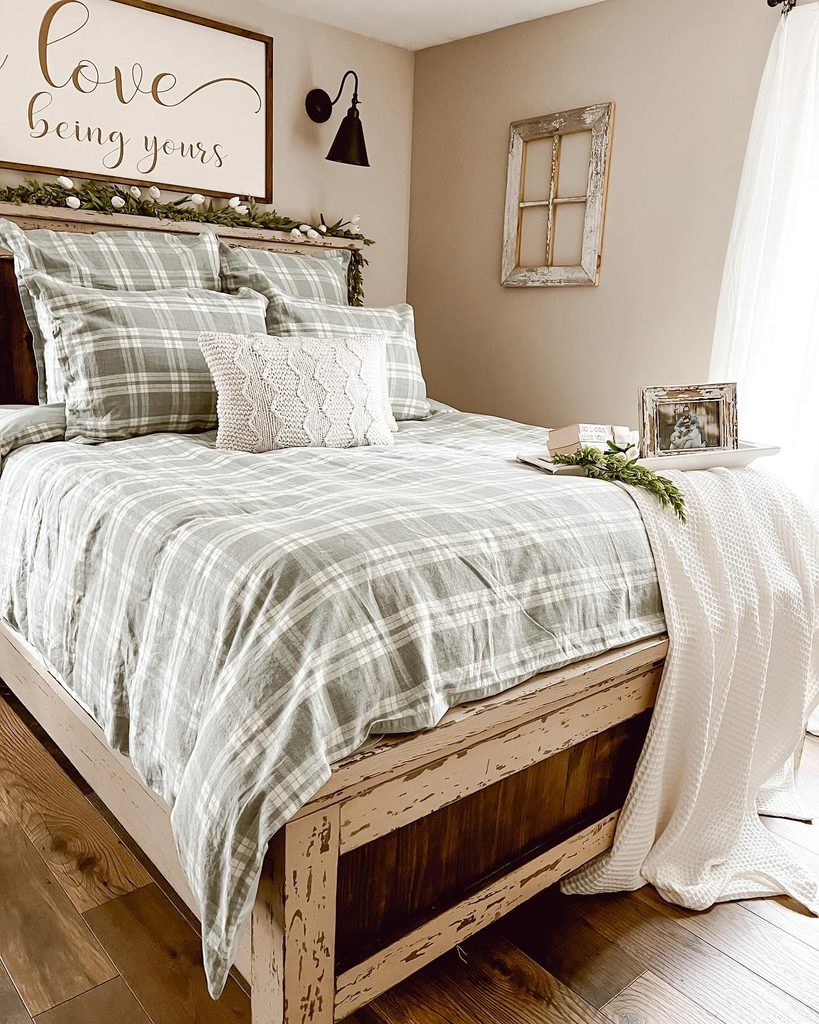
Gray and white checks add an orderly pattern to this bedroom’s sandy walls and weathered wooden bed.
The contrast is restrained enough that the beige backdrop still provides warmth, while a cream knitted cushion brings a different texture to the center. This is a useful alternative to filling a beige bedroom with only solid fabrics.
Choose one checked textile for the largest bedding surface and keep nearby layers simpler. Compare its cool or warm undertone with the wall before committing.
The pattern does not need to contain a beige match to belong in the room. A pale throw can provide a visual pause at the foot, leaving the checks clear and the surrounding wood free to show its own character.
11. Add Raised Rug Texture Beneath Beige Bedding
Credits: Instagram
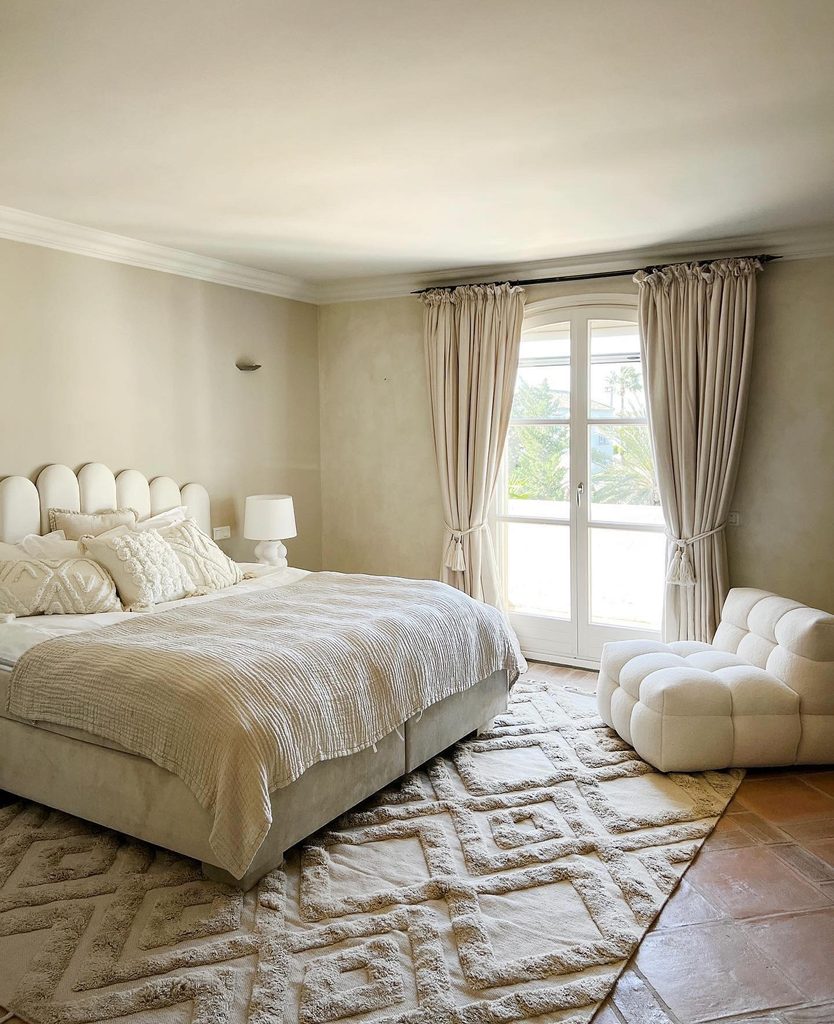
Raised geometric lines give this pale rug a clear pattern beneath the beige bed. The design stays close in color to its background, so the floor gains detail without introducing a contrasting print.
A rounded chair and softly folded curtains continue the room’s warm, tactile character. For a similar bedroom, measure the areas around the mattress where the rug will remain visible and useful.
A textured design loses much of its effect if furniture covers nearly all of it. Check how the surface feels underfoot and choose a suitable underlay when needed.
Keeping bedding relatively plain makes the floor pattern easier to appreciate. The result can feel varied even when most of the room stays within a narrow neutral palette.
12. Float a White Paper Globe Above Beige Linens
Credits: Instagram
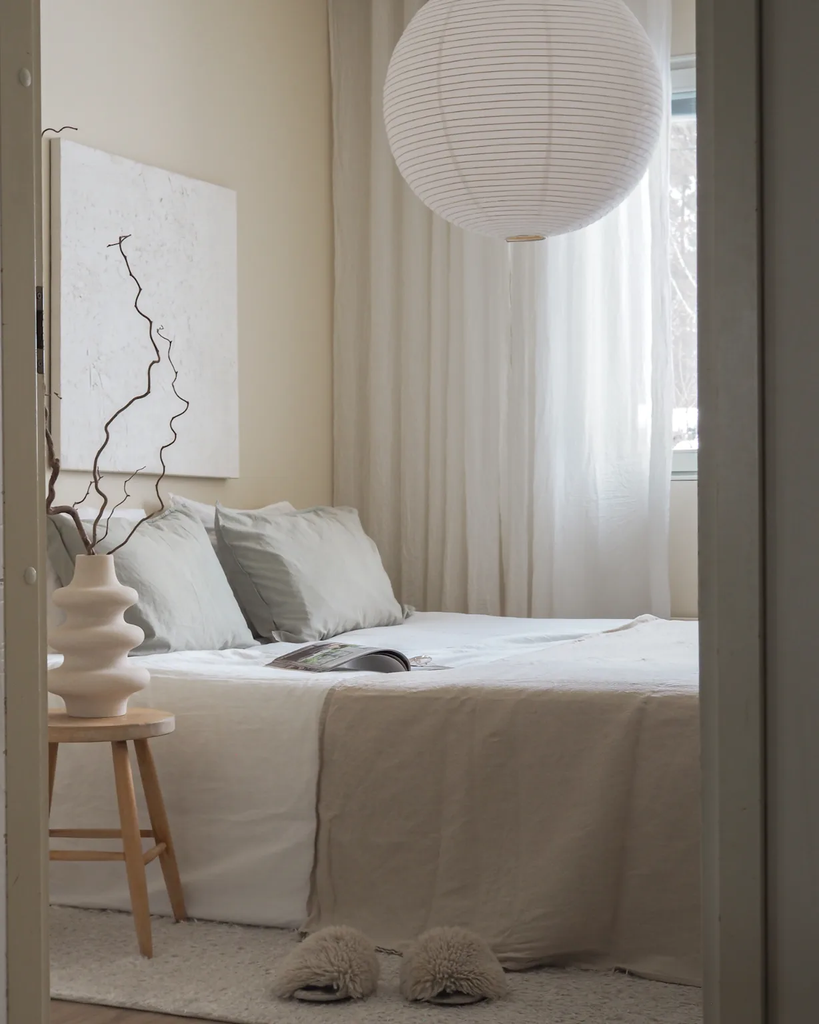
A white paper globe introduces a rounded shape above this bedroom’s beige linens and pale walls. Its fine horizontal ribs contrast with the loose fabric below, while the small wooden stool keeps the bedside arrangement simple.
The pendant looks distinct without requiring a stronger color. This is useful when you want a neutral bedroom to have an overhead focal point that still feels visually light.
Check the shade’s dimensions against ceiling height and the space needed for movement. Follow the fixture’s bulb and clearance requirements rather than choosing by appearance alone.
Keep a practical reading light available if the central pendant cannot provide it. A few shapes can make beige layers feel intentional without adding numerous objects around the bed.
13. Repeat Fine Lines Across Beige Bedside Storage
Credits: Instagram
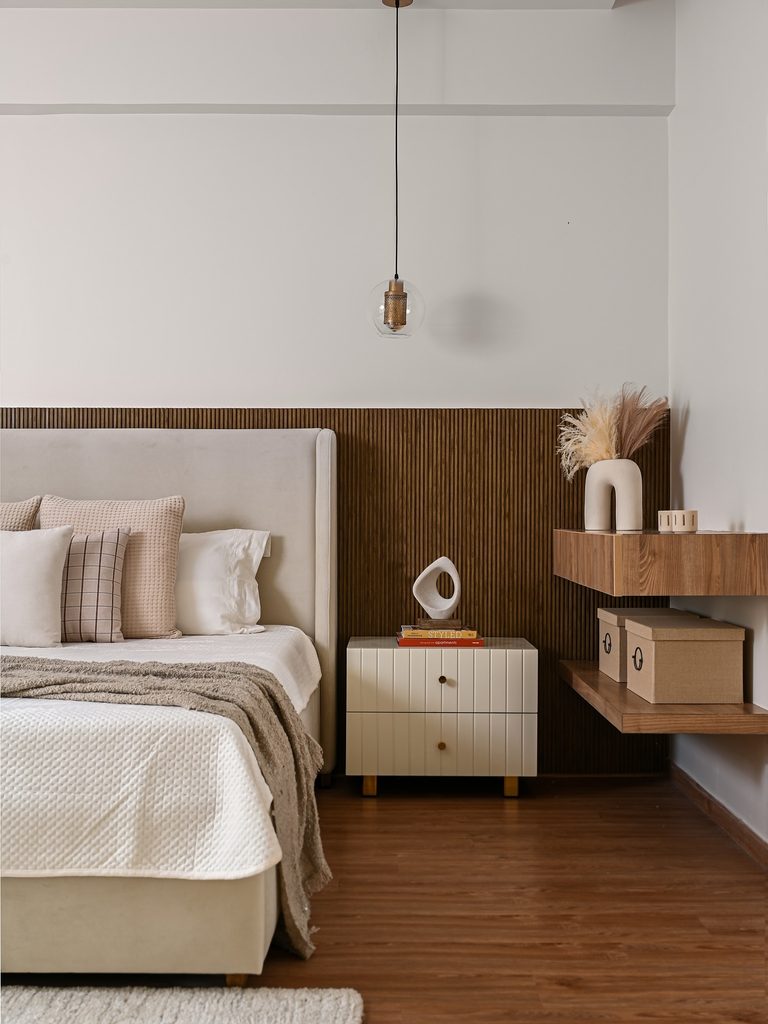
Fine vertical grooves appear on the pale bedside cabinet and the darker wooden wall behind it. The repetition connects the storage with the bed, while beige cushions and a soft throw provide a less rigid layer in front.
Different depths of neutral color keep the lines from merging into one surface. This is a useful way to add detail when you prefer a beige bedroom without busy prints.
Choose one repeated direction and vary the materials instead of using identical finishes everywhere. Keep the bedside cabinet’s size practical for the mattress height and your belongings.
A small amount of open display can balance closed drawers. Let the repeated texture provide decoration while the surfaces remain useful for ordinary daily routines.
14. Let Beige Botanical Wallpaper Supply the Pattern
Credits: Instagram
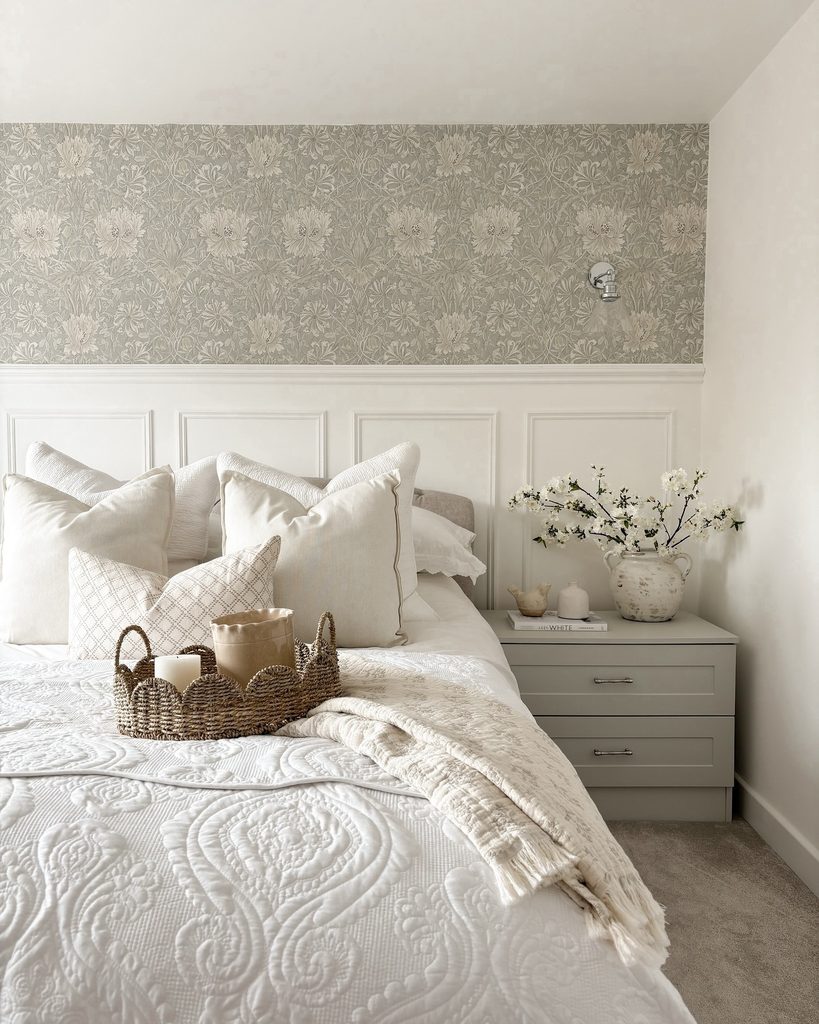
A restrained botanical wallpaper adds movement above the pale paneling in this bedroom. Its beige and taupe tones relate to the cushions and fringed throw, while the white quilt keeps the center of the bed brighter.
The leafy pattern is noticeable without becoming a strong new color. If you want a similar result, view a sample beside your bedding rather than relying on a small printed swatch.
The full repeat will show how dense the design feels across a wall. Keep most nearby fabrics simpler so the leaves remain easy to distinguish.
Texture can supply the remaining variety through stitching, fringe, or a woven basket. Shared undertones will connect those pieces without requiring every surface to carry the same motif.
15. Echo Beige Bedding in a Simple Abstract Picture
Credits: Instagram
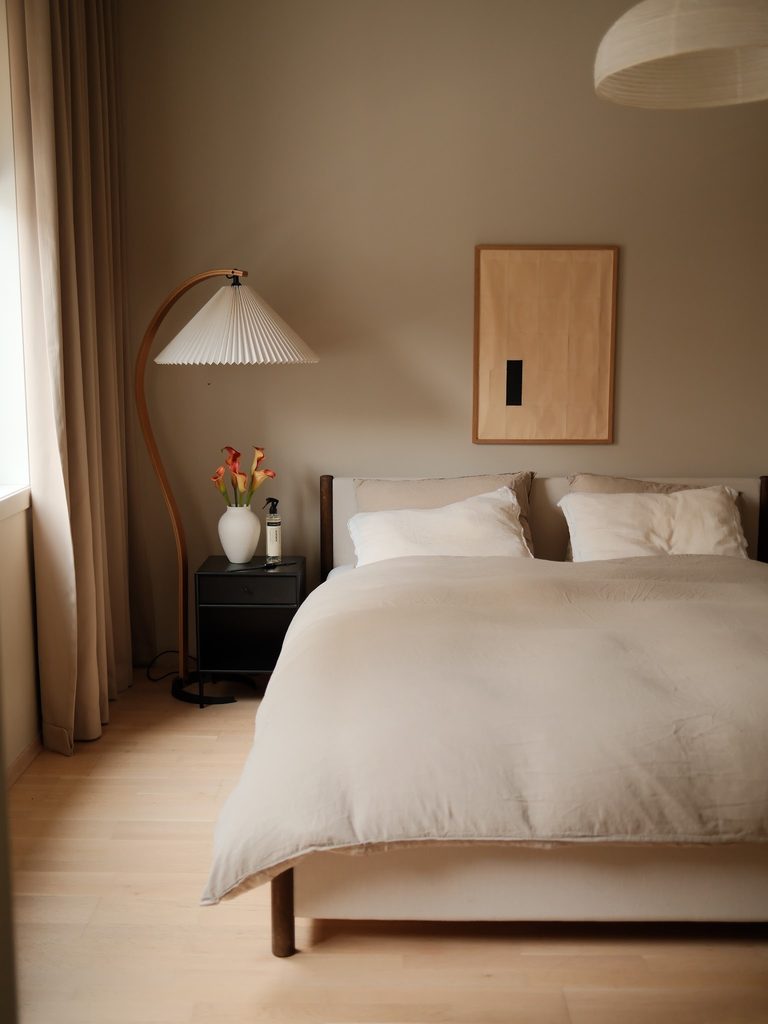
An abstract picture repeats the sandy tones of this bedroom’s walls and bedding. Its small black shape adds enough contrast to remain visible without becoming a loud focal point.
The wooden frame and curved floor lamp supply warmer lines around the otherwise plain sleeping area. This is useful when you want artwork that belongs to a beige palette but still has a clear composition.
Compare the picture’s undertones with the wall and duvet before deciding on its position. Check its scale from the doorway, not only while standing beside the bed.
One considered piece can be enough when the room already has several material textures. Leave open wall around it so both the artwork and the neutral backdrop remain readable.
16. Dress Up Warm Neutrals With a Glass Chandelier
Credits: Instagram
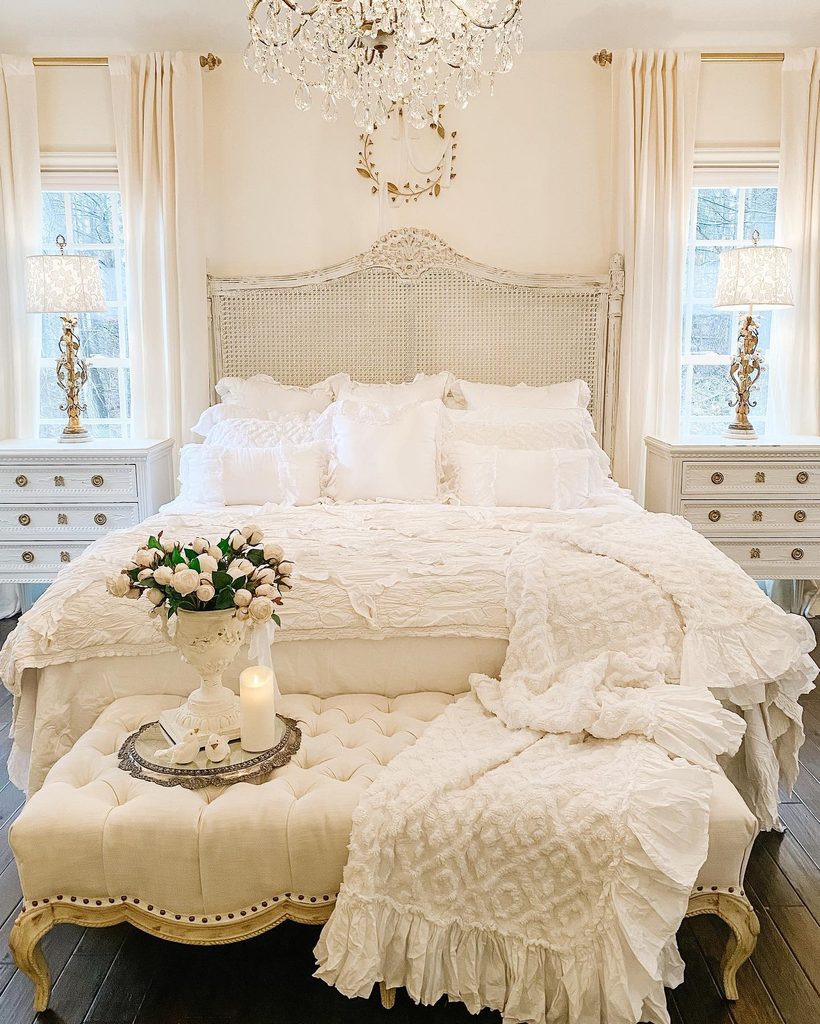
A glass chandelier adds a sparkling upper layer to this bedroom’s warm cream and beige palette. Its branching outline contrasts with the broad bed and tufted bench, while gold toned details connect it with decorative finishes around the room.
Pale bedding leaves a quiet area beneath the elaborate fixture. This can be useful when a neutral bedroom needs one dressier element rather than more patterned textiles.
Check the chandelier’s drop and width against the bed, ceiling height, and walking routes before choosing it. Use suitable bulbs and installation support for the fixture.
Keeping nearby lighting shapes simpler helps the overhead piece remain distinctive. The contrast between reflective glass and soft fabric can provide variety without bringing in a different color.
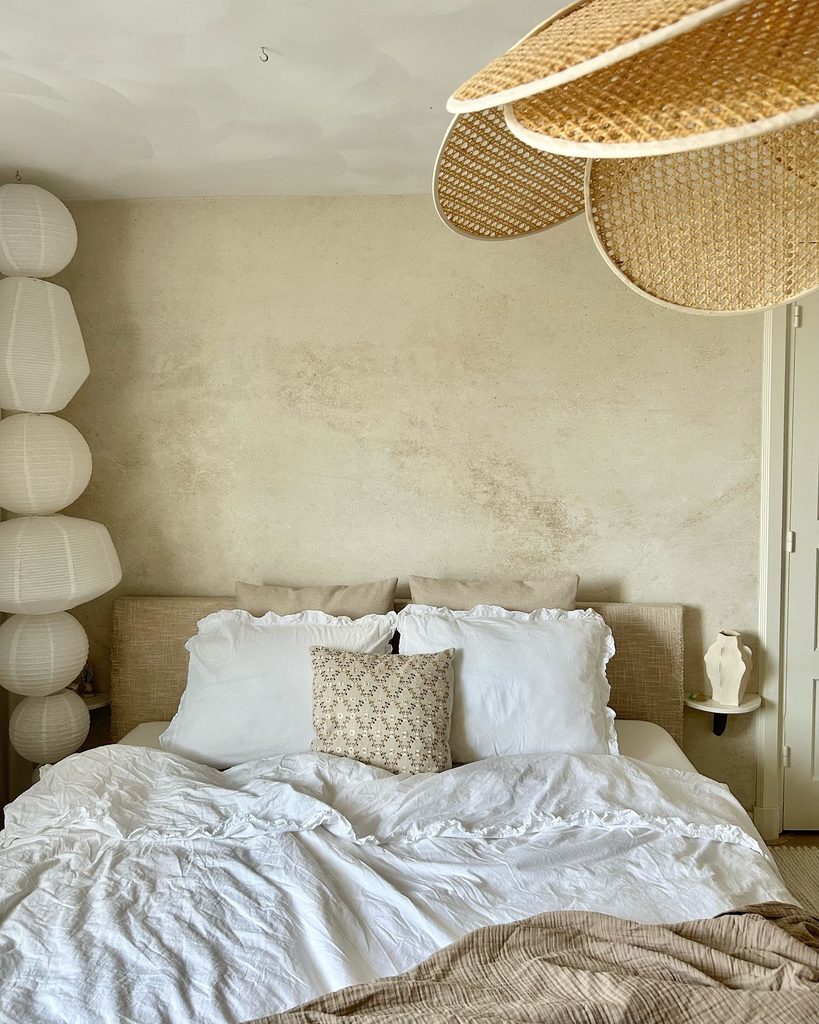
17. Leave a Textured Beige Wall Open Above the Bed
Credits: Instagram
Subtle variations in this beige wall finish remain visible because the area above the bed is undecorated. White pillows and a sandy headboard provide quieter horizontal layers below, while woven and paper lighting add different shapes at the edges.
The wall itself contributes texture without needing another collection of pictures. If your bedroom has a finish you enjoy, give it some space before deciding what to hang.
Observe how daylight moves across it and compare that effect with the evening lamps switched on. Bedding with restrained color allows those changes to register.
You can add one modest cushion for pattern without filling the wall. A neutral room often benefits from leaving some surfaces simple enough to show their material character.
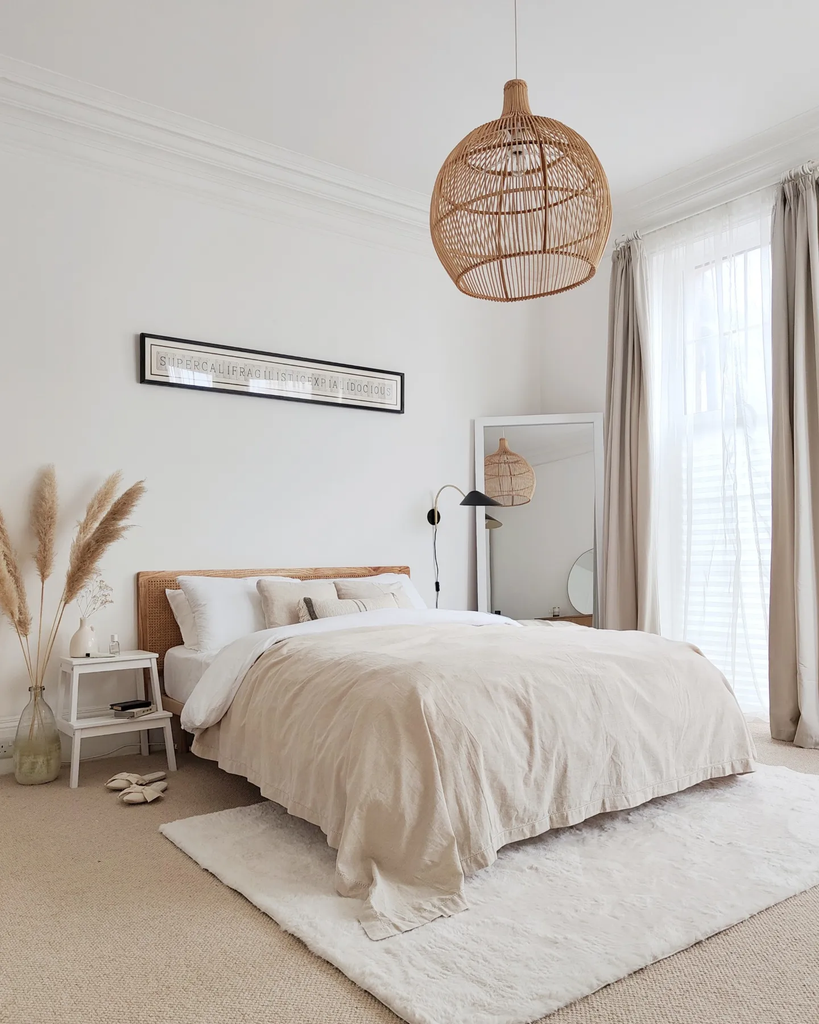
18. Give Plain Beige Bedding a Crisp White Setting
Credits: Instagram
Plain beige bedding stands out gently against the white walls and pillows in this bedroom. A light wooden headboard and woven pendant add related natural tones without making the textile disappear into the background.
The scheme relies on a clear difference between warmer beige fabric and brighter surrounding surfaces. This is useful if you want a neutral bedroom that still has visible layers.
Compare your duvet with white sheets before choosing additional accessories. A beige that looks subtle alone can appear warmer beside a crisp white.
Keep the larger bedding pieces plain if the room already has woven textures. One small striped cushion can supply detail, leaving the broad beige cover to establish the sleeping area’s calm and uncomplicated color.
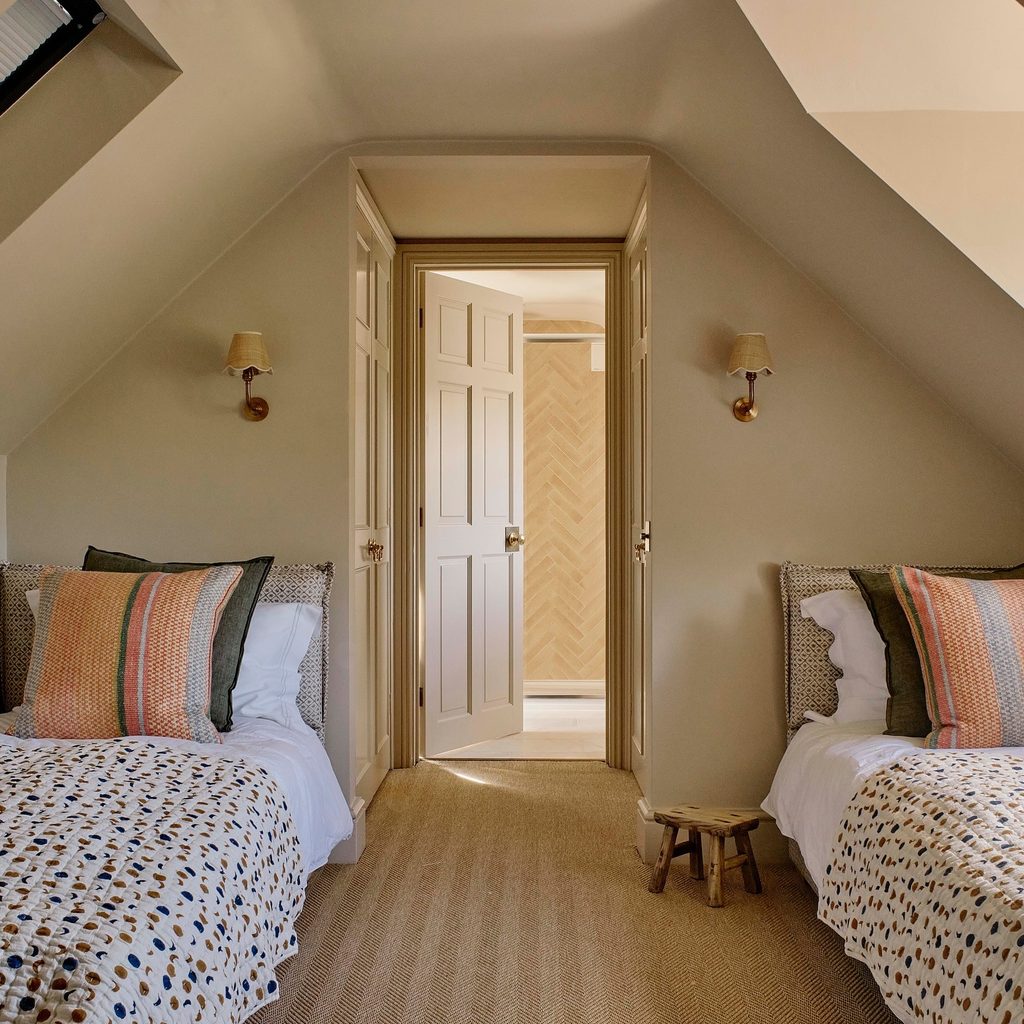
19. Carry Beige Across an Attic Room’s Angles
Credits: Instagram
Beige continues across the angled walls around these beds, giving the attic a warm envelope. Pale bedding and small patterned headboards keep the sleeping areas distinct from the surrounding surfaces.
The narrow central route remains clear, while matching wall lights reinforce the room’s balanced arrangement. You can borrow the color continuity without copying the furniture layout.
In a sloping bedroom, test samples on more than one plane because changing light can make the same paint appear different. Plan bed placement around usable headroom before choosing decorative details.
A related carpet tone can connect the lower part of the room with its walls. Keeping bedding lighter helps the beds remain visible within an otherwise closely coordinated collection of warm neutral surfaces.
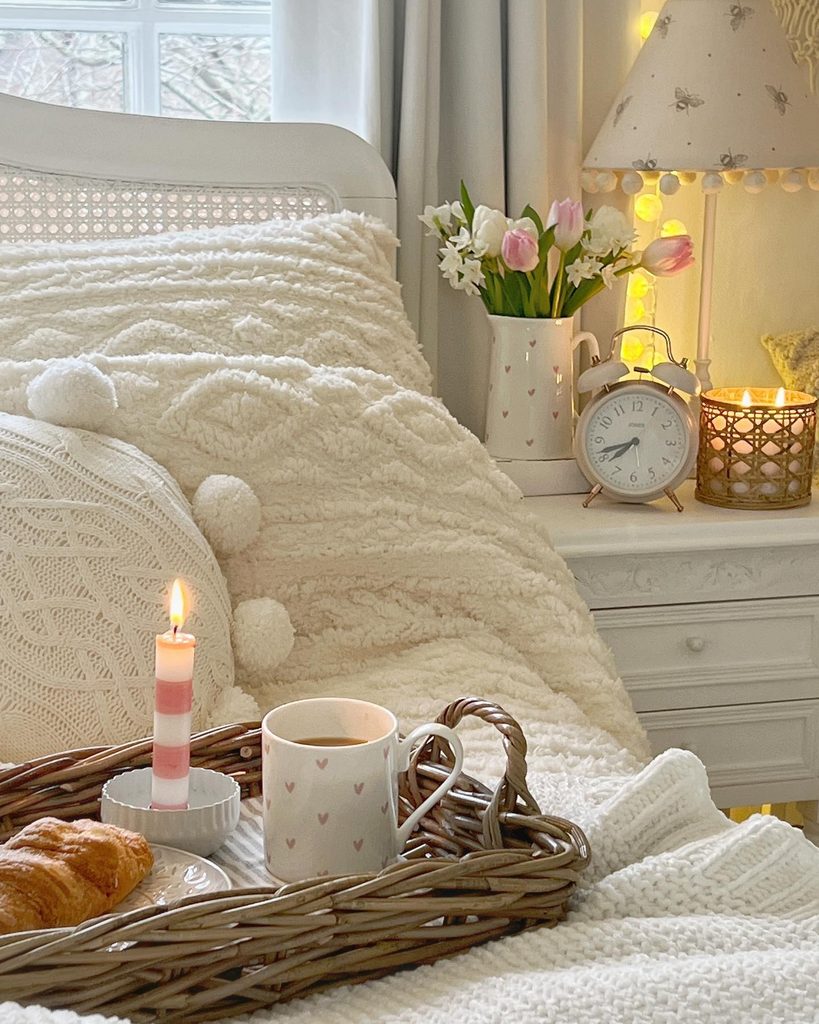
20. Try a Small Print on a Beige Lampshade
Credits: Instagram
A small repeating motif gives the pale beige lampshade a decorative role beside the textured pillows in this bedroom. Its quiet pattern adds detail without competing with the larger stitched and knitted surfaces on the bed.
The light background keeps the shade connected with the surrounding neutral furniture. This is a modest update when your room needs a little pattern but you prefer plain bedding.
Compare the shade with nearby fabrics while the lamp is both on and off, and check that it fits the base and bulb requirements. Leave space on the bedside table.
Do not copy the lit candles close to textiles in the photograph; the printed shade alone provides the useful decorating idea without introducing open flames.