
A bedroom can feel warmer without adding bold color or filling every surface with accessories. Cozy Bedroom Ideas often work best when a few thoughtful changes bring in softness, texture, or a gentle pool of light.
Try a fringed throw over a patterned quilt, muted green around pale upholstery, or a short strand of warm lights for a subtle shift in mood.
Other approaches make use of what the room already offers, from quiet wallpaper on attic slopes to a ladder that keeps an extra blanket close at hand.
These details can help a bedroom feel inviting while staying practical and personal.
1. Bring Quiet Wood Texture to a Pale Bedroom
Credits: Instagram
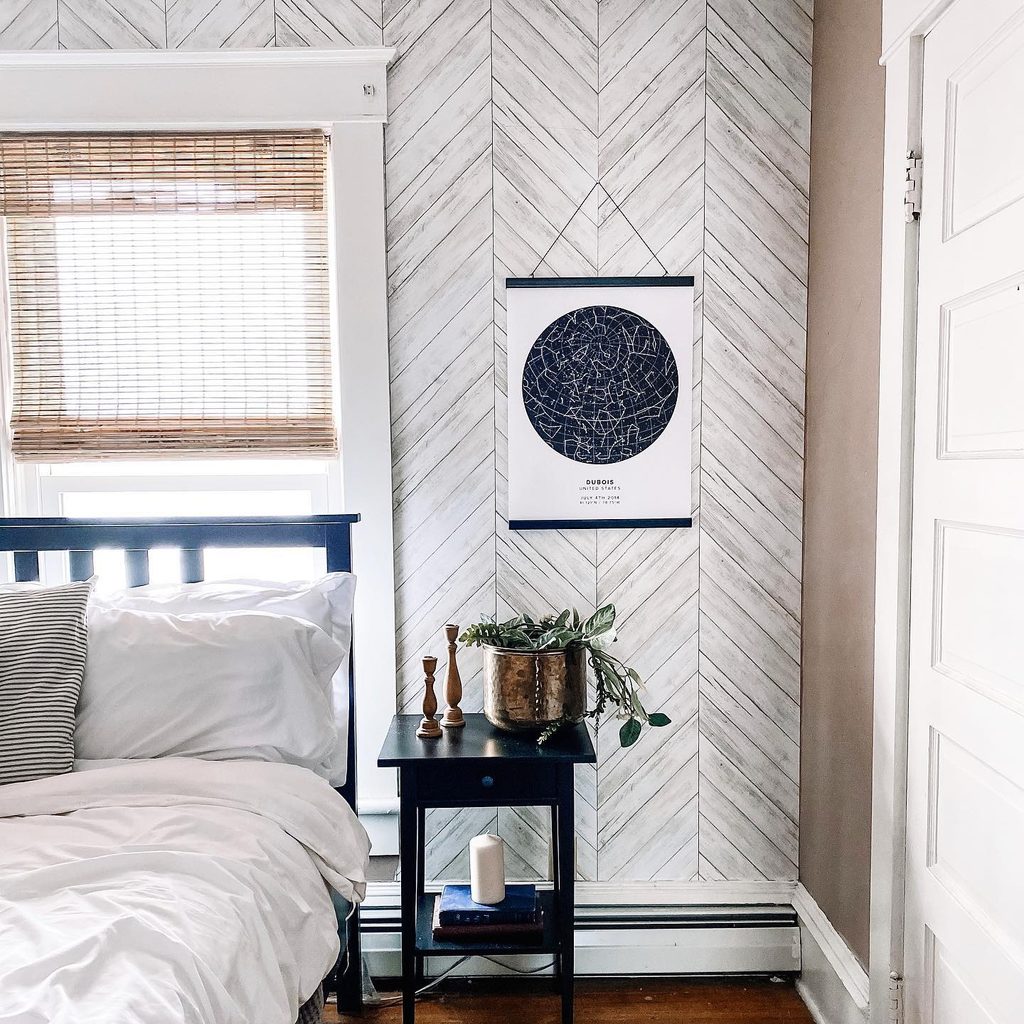
Whitewashed chevrons give this bedroom a textured backdrop without making the sleeping area dark. The narrow diagonal lines remain visible behind simple white pillows, a dark bed frame, and a compact nightstand.
A woven window shade adds a warmer brown note beside the pale wall. This is a cozy bedroom idea for someone who likes natural looking variation but prefers restrained color.
Begin with one surface rather than repeating a strong wood pattern throughout the room. Compare a large sample with your floor and existing furniture, since several competing grain directions can feel busy.
Keep the bedding relatively plain so the wall has room to show. A few dark outlines can provide definition while the surrounding surfaces remain comfortably light.
2. Enclose a Botanical Bed With Airy Canopy Fabric
Credits: Instagram
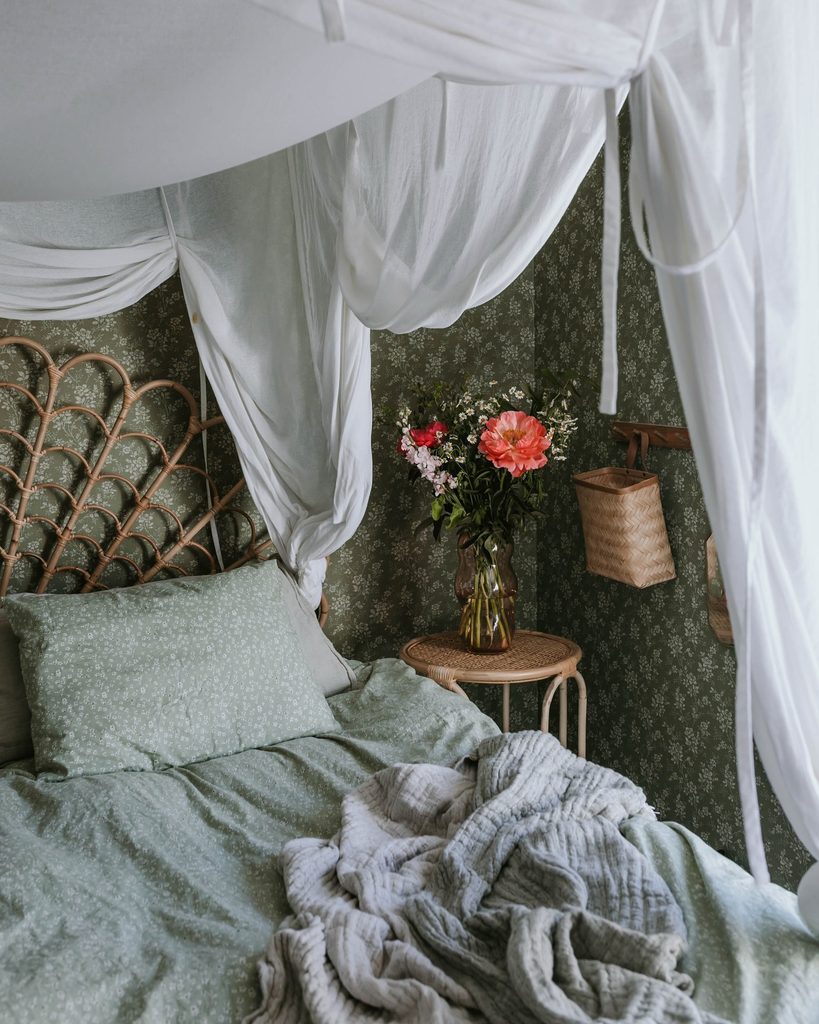
White canopy fabric gathers around this bed in loose, translucent folds, softening the green botanical wallpaper behind it. A curved rattan headboard and small round bedside table keep the enclosure light rather than heavy.
The pale green bedding repeats the room’s delicate floral scale. You can borrow the sheltered feeling without filling the canopy with thick fabric.
Consider the view from the pillow, how easily you can get into bed, and the space needed to change the sheets. Use secure supports suited to the installation and keep every drape clear of lights, heaters, and moving parts.
A quiet fabric color lets the surrounding pattern remain visible. The effect comes from a gentle frame around the sleeping area, not complete concealment.
3. Surround Pale Upholstery With Muted Green
Credits: Instagram
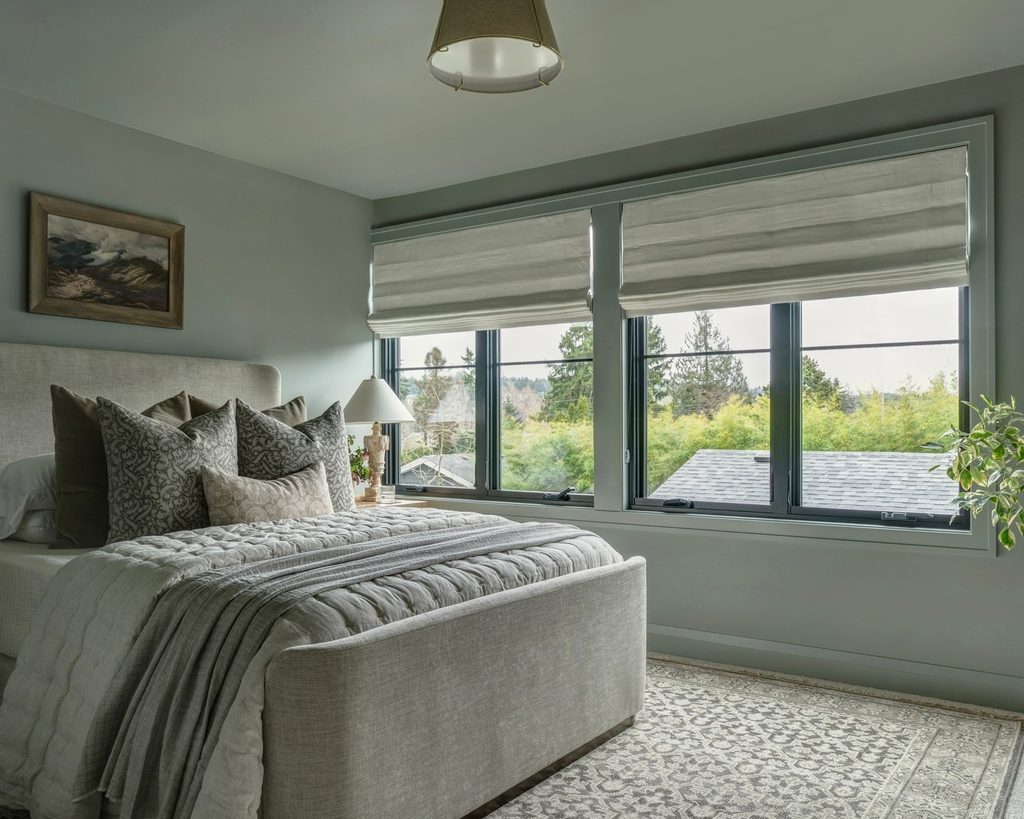
Muted green walls create a calm enclosure around this pale gray upholstered bed. The green continues across the window surround, while cream Roman shades soften the broad panes without introducing a strong new color.
Layered bedding and patterned cushions provide smaller changes in texture. This is a useful way to make a bright bedroom feel settled while keeping the furniture light.
Compare paint samples with your upholstery and flooring before choosing the final shade. Look at them in daylight and with the bedside lamp switched on, because undertones can shift noticeably.
Let one broad wall color do most of the work. Keeping the curtains, bedding, and rug within a restrained family leaves the green free to supply the room’s depth.
4. Quiet Wallpaper Across Attic Slopes
Credits: Instagram
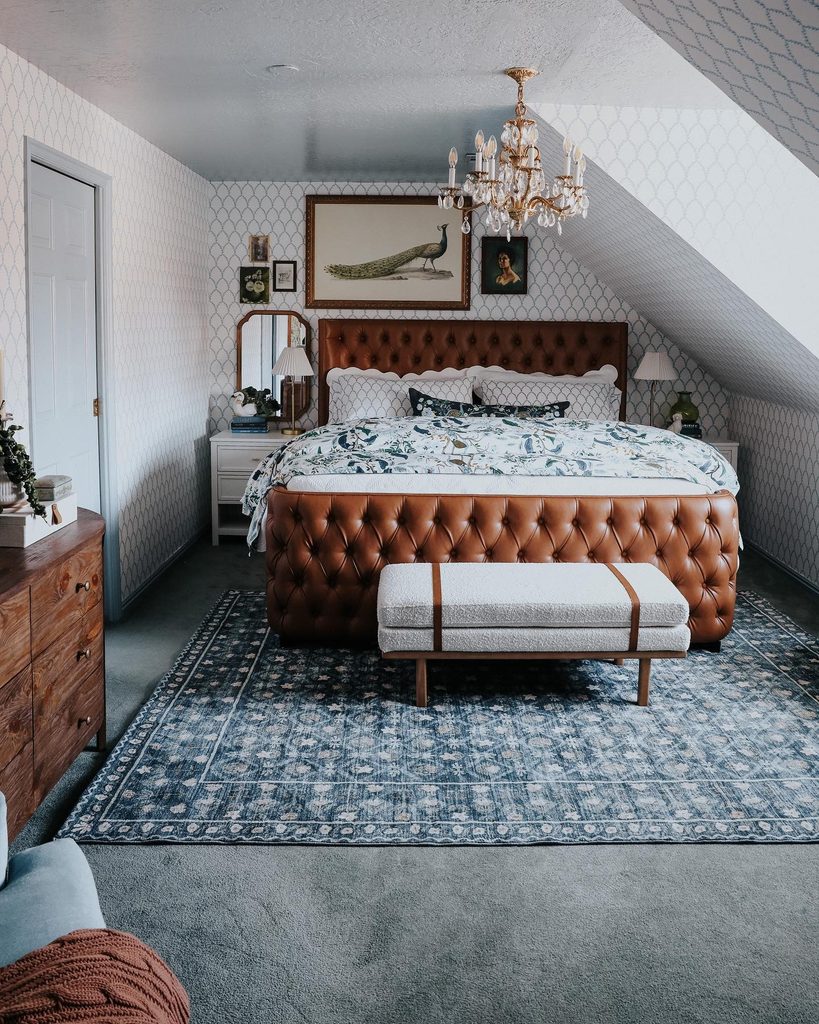
Awkward roof angles become part of the charm when a pale geometric pattern continues across the wall and ceiling slopes.
Here, the wallpaper surrounds a tan tufted bed, with floral bedding and a traditional rug bringing softer, less regular patterns into the mix. Blue carpet remains visible, giving the attic bedroom a distinct color foundation.
Rather than treating a sloping room as a collection of separate surfaces, this photograph suggests reading it as one continuous enclosure. If you try that approach, study a large wallpaper sample against the existing floor before ordering.
Keep pattern scale in mind wherever angled surfaces meet. Bedding can then supply a looser motif, giving the room variety without requiring another strong statement on every plane.
5. Add a Fringed Throw Over a Patterned White Quilt
Credits: Instagram
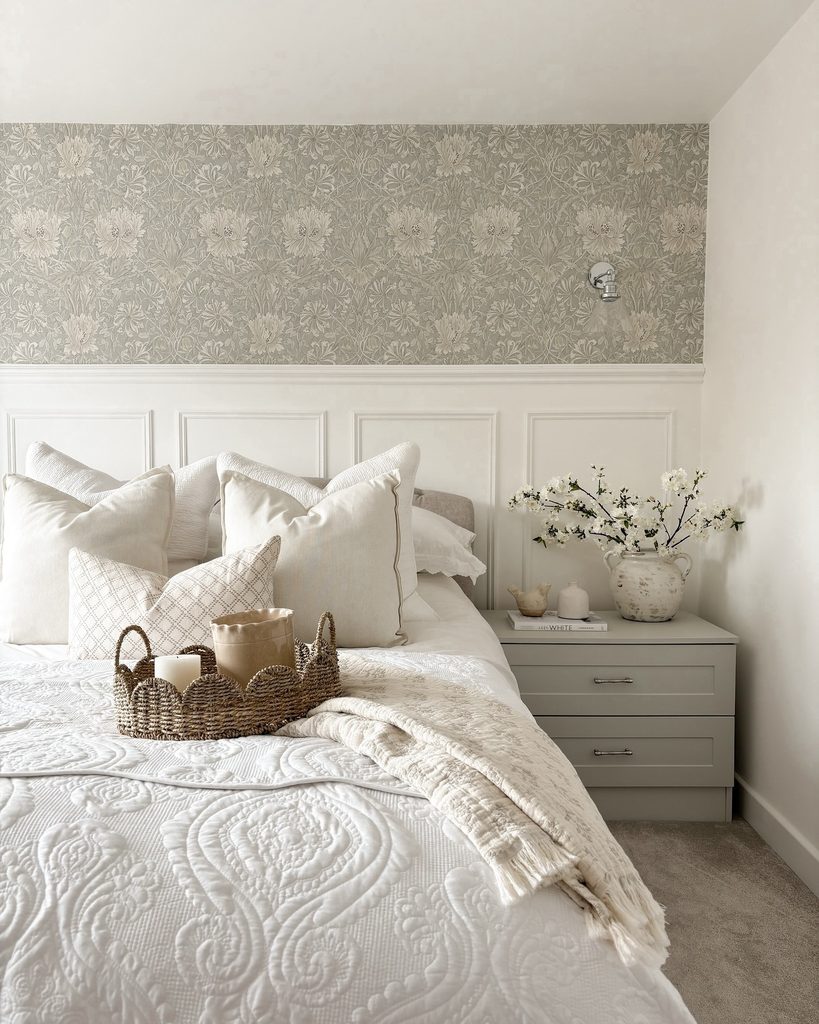
A cream throw introduces a loose fringed edge across the more structured stitching of this white quilt. The difference is subtle in color but clear in texture, giving the bed a layered appearance without a stack of competing patterns.
Pale cushions and restrained floral wallpaper continue the quiet palette around it. For a similar cozy bedroom update, choose one blanket that feels noticeably different from your everyday coverlet.
Fold it across part of the mattress so both surfaces remain visible. Consider its weight, washing instructions, and where it will go when you do not need it.
The photograph’s appeal does not depend on perfectly arranged folds. A comfortable, usable layer can make a neutral bed feel inviting throughout ordinary routines.
6. Extend the Bed With a Tufted Sitting Bench
Credits: Instagram
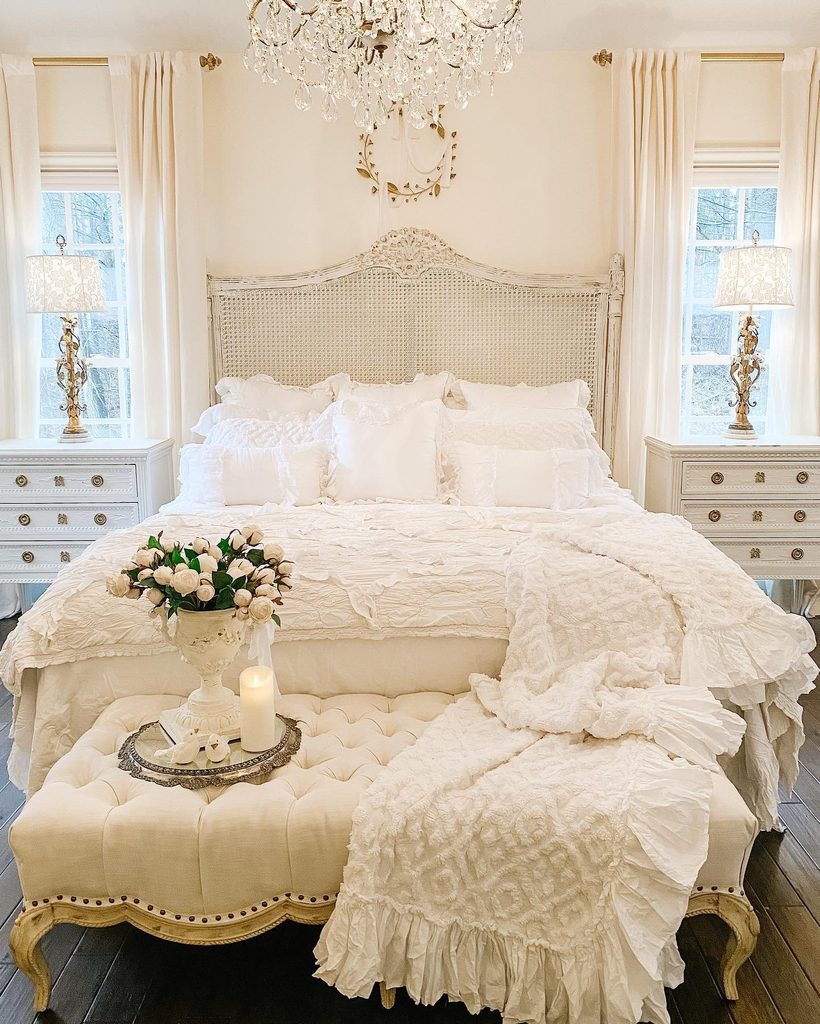
A tufted cream bench introduces a separate padded perch at the foot of this layered white bed. Its curved lower edge and decorative legs relate to the ornate headboard without disappearing into the bedding.
The dark floor makes the upholstered shape easier to distinguish. This arrangement works as a cozy bedroom idea when there is enough space to sit comfortably and walk past.
Measure the route around the bed before choosing a bench, including the clearance needed by drawers and doors. Keep its surface available for getting dressed rather than permanently covering it with display pieces.
A similar fabric color can connect the furniture, while a different outline gives the bench its own role within a soft and welcoming room.
7. Add a Short Strand of Warm Bedroom Lights
Credits: Instagram
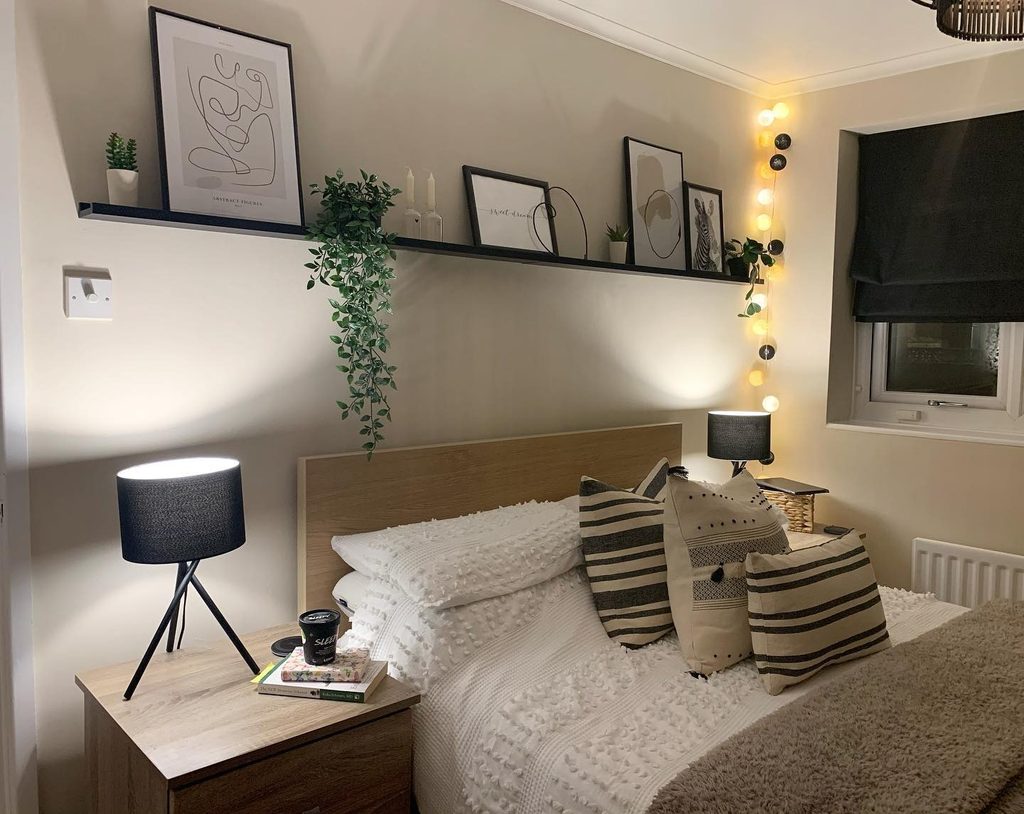
A short strand of glowing round lights brightens the corner beside this bed, creating a softer evening accent alongside the two table lamps. The little spheres are easy to notice against the pale walls and dark window blind.
Their limited placement keeps the room from feeling wrapped in decoration. You can try a similar extra lighting layer without changing your main fixtures.
Choose indoor lights suitable for the intended arrangement and follow the manufacturer’s placement instructions. Keep cables away from walking routes and bedding, and make switches convenient to reach.
The decorative strand should supplement useful everyday lighting rather than replace it. Check the brightness from your pillow so the added glow feels comfortable when you actually settle into bed.
8. Soften the Wall With a Small Textile Hanging
Credits: Instagram
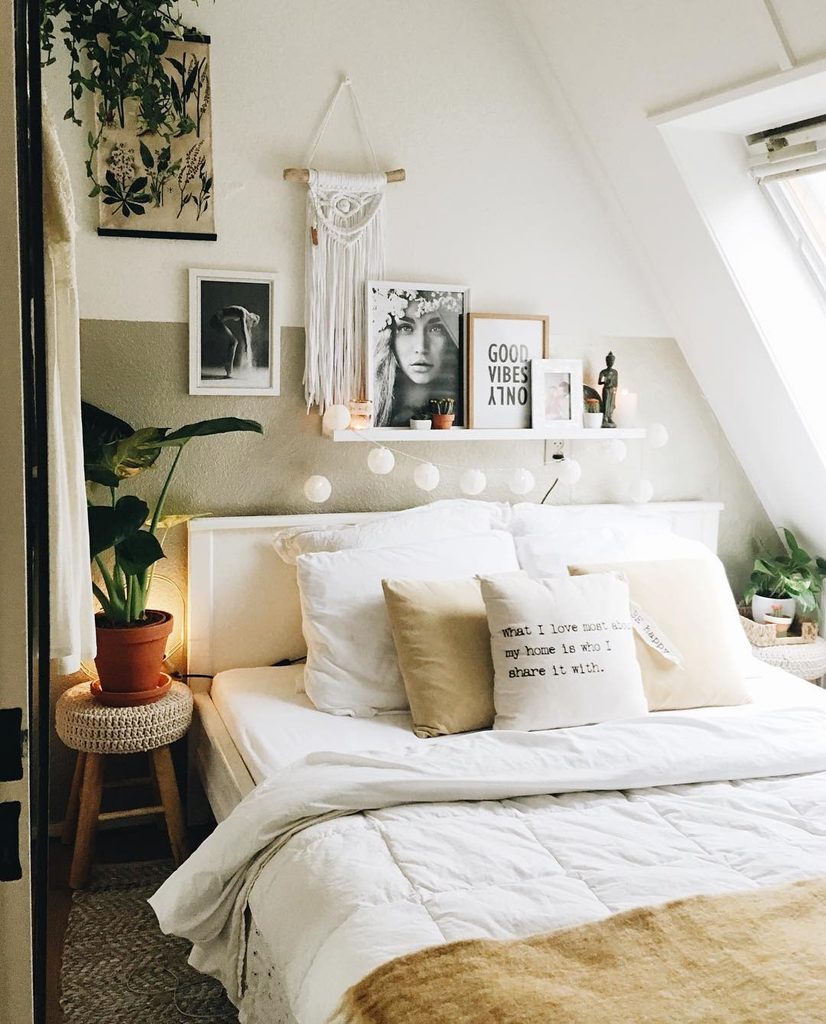
A narrow white textile hanging brings a soft vertical detail to the wall above this bedroom’s picture ledge. Its long fringe contrasts with the rectangular frames nearby and repeats the pale bedding below.
The piece stays modest enough to share space with plants and personal artwork. This is a cozy alternative when another framed print would make the wall feel too rigid.
Choose a hanging whose scale relates to the headboard and leave some clear wall around its edges. Check that its mounting suits the wall and that loose strands stay away from lamps or other heat sources.
One tactile accent can be enough. Let it add variety to the room rather than requiring matching woven objects on every surface.
9. Keep an Extra Blanket on a Bedroom Ladder
Credits: Instagram
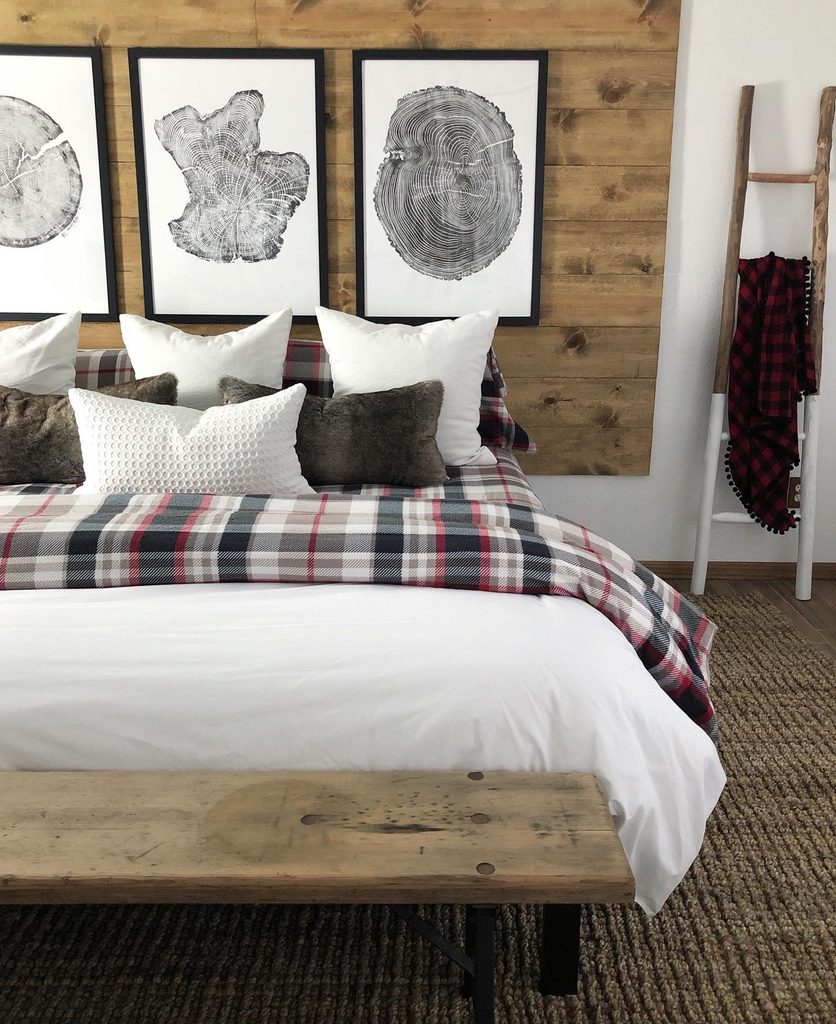
A wooden ladder beside this bed holds a red checked blanket where it is easy to see and retrieve. The simple rungs give the textile a place away from the mattress, while its color connects with the plaid bedding.
Timber behind the bed and framed tree ring prints reinforce the warm, relaxed setting. This idea is most useful when an extra blanket genuinely belongs in your nightly routine.
Choose a rack intended for storage rather than climbing, and secure or position it according to its instructions. Keep it outside the route around the bed.
Leave room for the blanket to hang freely instead of filling every rung. Practical storage can contribute to a cozy bedroom while keeping spare layers orderly.
10. Give the Bed a Gently Curved Upholstered Back
Credits: Instagram
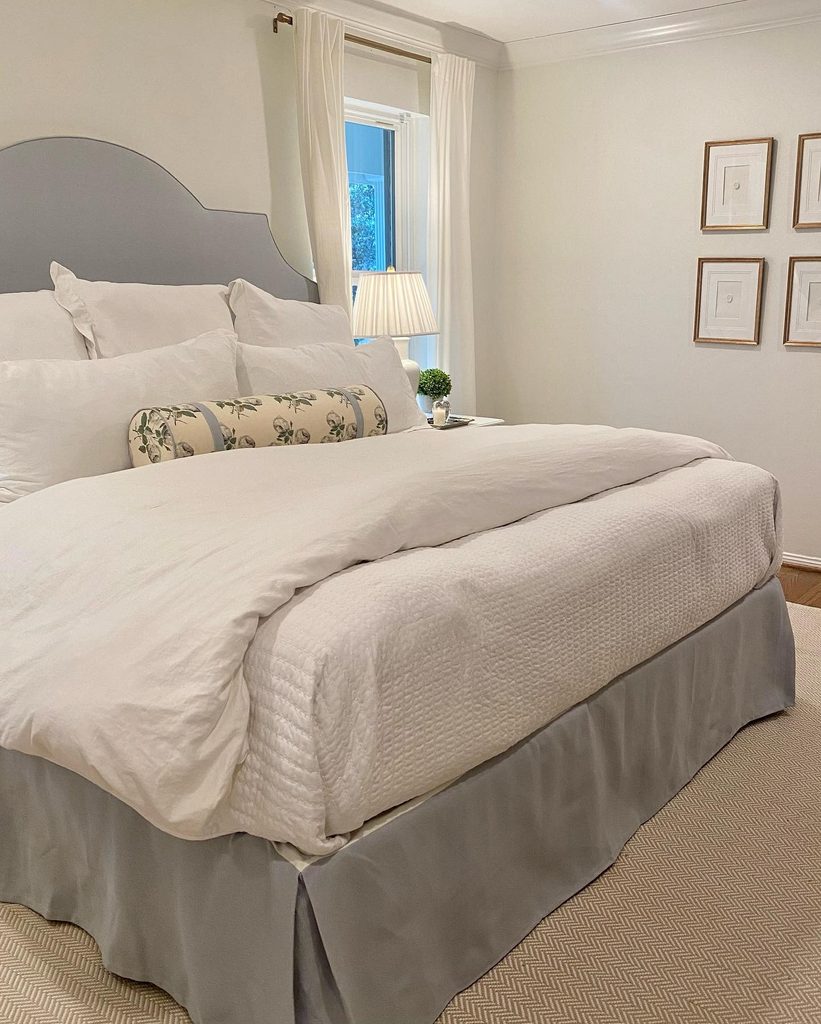
A broad gray headboard rises in a gentle curve above this bed’s white pillows. Narrow piping makes the outline easy to read against the pale wall, while a floral bolster introduces a smaller rounded shape below.
The upholstery supplies softness without needing deep tufting or an elaborate pattern. If you enjoy sitting up in bed, consider the headboard’s practical support as carefully as its silhouette.
Test a comparable shape with pillows arranged the way you normally use them. Check the fabric’s care requirements and whether its color works with your existing linens.
A quiet headboard can stay useful as other decorations change. Let the curved top remain visible so the bed’s main shape continues to give the room its character.
11. Let Trailing Greenery Soften the Window Area
Credits: Instagram
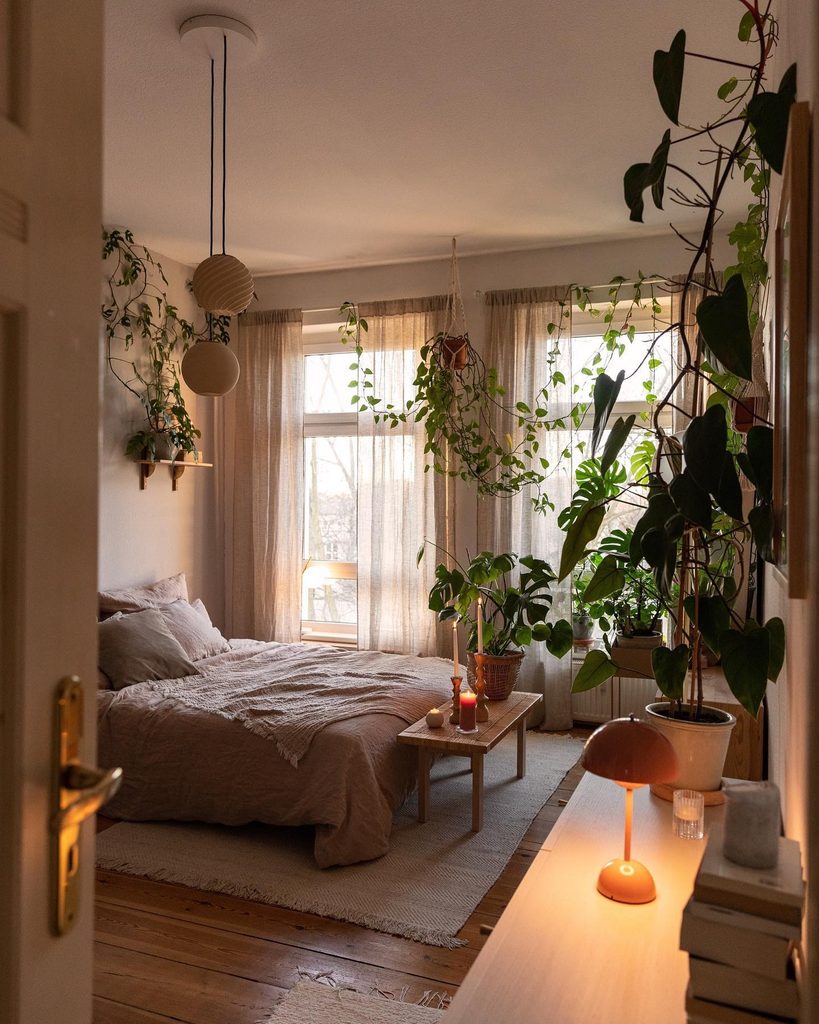
Trailing plants stretch around the windows in this warm bedroom, adding irregular outlines beside long, light curtains. A suspended pot brings greenery into the upper part of the view without another cabinet or tall floor stand.
The loose bedding and simple wooden bench keep the rest of the room relaxed. You can borrow the softness with far fewer plants than the photograph shows.
Choose varieties suited to your actual light, care routine, and household, then leave room for their mature growth. Check hanging supports and protect nearby surfaces from watering.
Keep vines clear of lamps, window hardware, and everyday movement. A manageable plant arrangement will feel more comfortable than an elaborate display that makes opening the curtains or cleaning difficult.
12. Create a Textured Landing Around the Bed

Credits: Instagram
The raised geometric pattern of this pale rug makes the floor around the bed feel deliberately included in the room’s soft layers. Its border extends beyond the mattress and reaches toward the rounded chair, connecting sleeping and sitting areas.
Because the colors stay close, texture carries the pattern without dominating the bedroom. When choosing a rug, begin with the places your feet actually land each morning.
Measure beyond the bed rather than relying only on mattress dimensions. Check door clearance and use a suitable underlay where needed.
A pattern with visible relief can add interest to a neutral scheme, but it should still feel comfortable underfoot. Leave enough of the rug exposed to appreciate its design and use it easily.
13. Give Each Bedside a Warm Pool of Light
Credits: Instagram
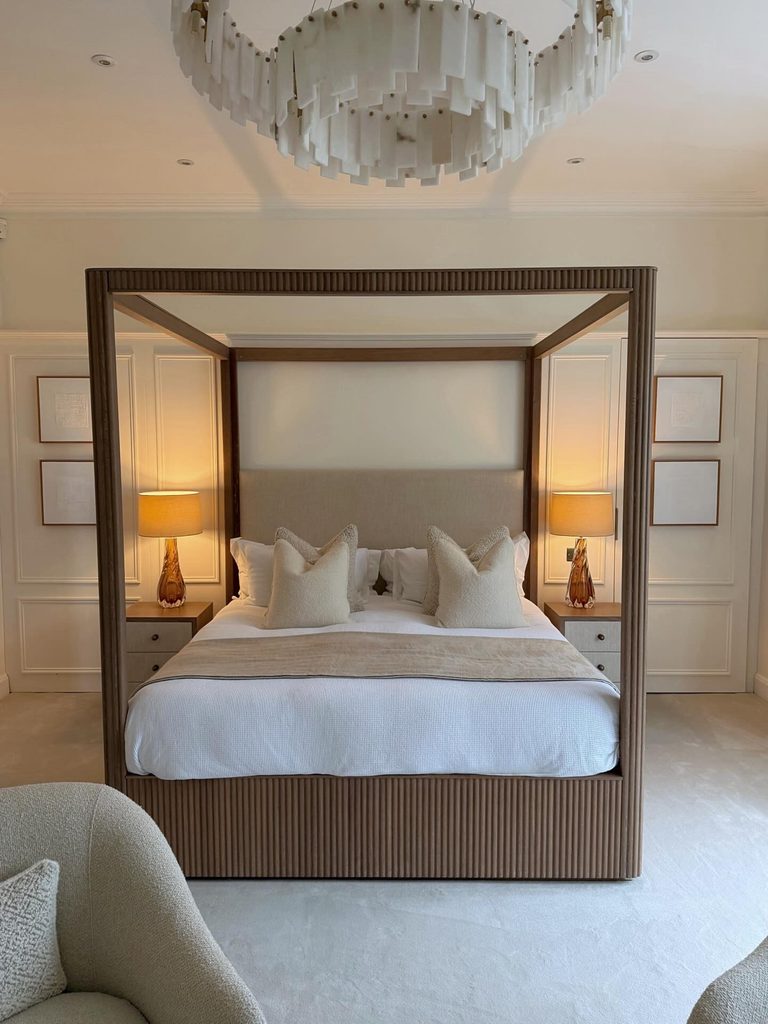
Two amber toned lamps cast warm pools of light beside this cream bed. Their matching shades balance the broad wooden frame, while the illuminated wall panels make the room feel softer than the ceiling fixture alone would suggest.
Pale bedding keeps the center of the composition quiet. For your own cozy bedroom, compare bedside lighting from a lying position as well as while standing.
The bulb and shade should provide comfortable brightness without exposing a glaring point of light. Keep switches accessible and leave a useful patch of table surface for everyday essentials.
Matching lamps can simplify a symmetrical arrangement, although your sides do not need identical furniture. Prioritize a pleasant evening setting that still supports the way you read.
14. Blend Long Curtains Into the Bedroom Walls
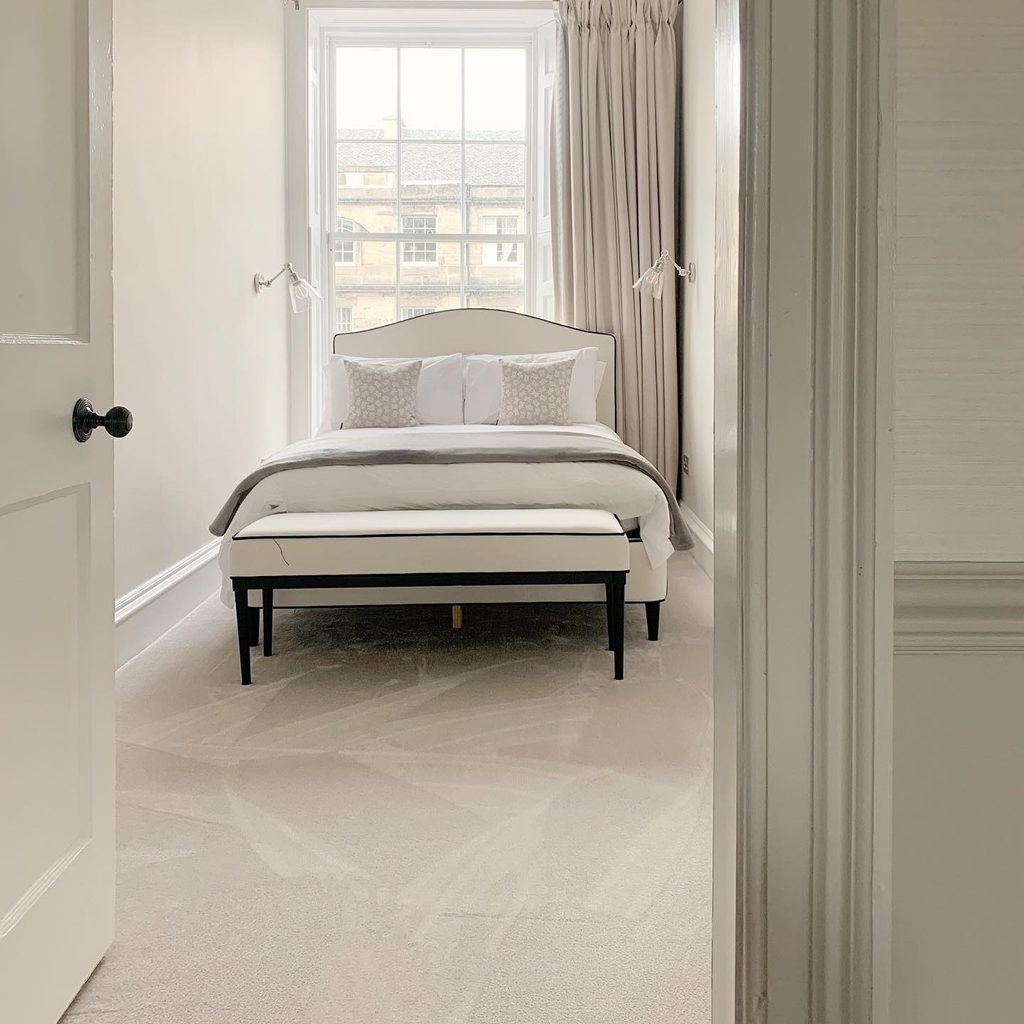
Credits: Instagram
Long pale curtains follow the tall window beside this bed, keeping the narrow room’s edges soft and visually quiet. Their color sits close to the walls and bedding, so the fabric adds folds without a strong contrasting stripe.
Dark furniture outlines provide just enough definition. This approach is useful when a small bedroom feels full and you want comfort without another prominent pattern.
Compare curtain samples directly against the wall in changing daylight. Consider how the fabric will stack when open and whether you need a lining for privacy or darkness.
Keep the window and nearby heating equipment usable. A simple color relationship can make generous curtains feel integrated rather than bulky, even when the room has limited spare space.
15. Low Platform With Open Bedside Cubbies
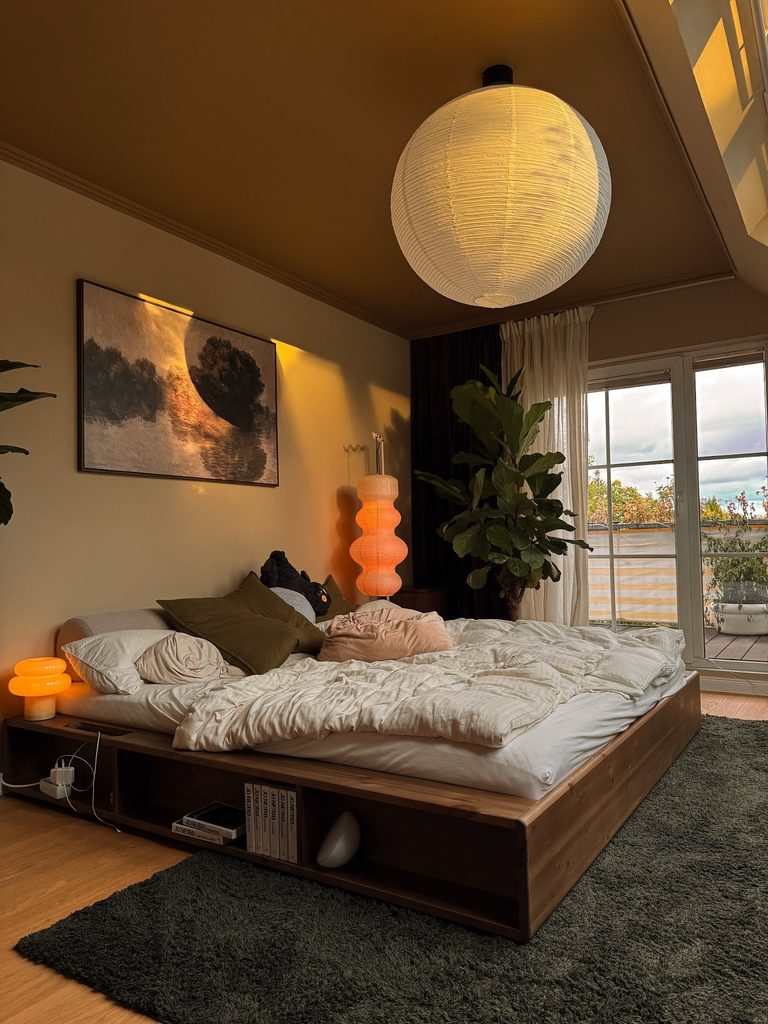
Credits: Instagram
Closer to the floor, this wooden platform gives the bed a grounded presence beneath a paper globe light. Loose cream bedding drapes over its warm frame, and open cubbies keep nearby storage integrated with the sleeping area.
A dark green shag rug and amber lamps bring richer color and texture around the restrained bed. The layout suggests a cozy room that does not depend on a towering headboard.
Before choosing a low frame, try sitting down and standing up from a comparable height. Ease of movement matters more than matching the photograph.
Consider how the cubbies would work with your everyday belongings, too. A few accessible essentials can suit open storage; a crowded row may make the bedroom feel restless.
16. Gather Favorite Pictures on One Bedroom Ledge
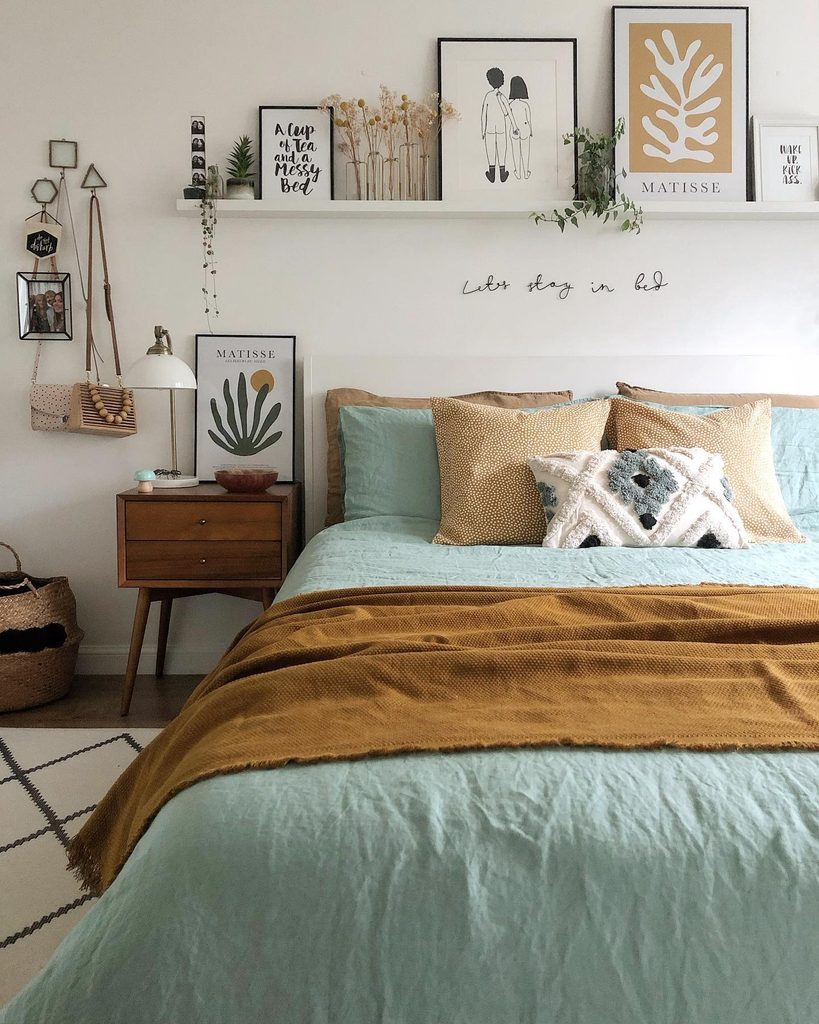
Credits: Instagram
A white ledge gathers framed prints, small plants, and slim flower vessels above this bed. Different frame heights keep the display informal, while the shared support gives the collection a clear horizontal boundary.
The mix feels personal without needing objects scattered across every bedside surface. Start with a few pictures you genuinely enjoy seeing and arrange them together before deciding on shelf placement.
Leave gaps so individual outlines remain readable. Secure both the ledge and any displayed objects appropriately, especially above a sleeping area, and avoid heavy or fragile pieces where they could fall.
The cozy effect comes from familiar details rather than sheer quantity. Editing the group occasionally can keep the bedroom feeling collected, useful, and easy to maintain.
17. Add a Small Upholstered Chair Beside the Bed
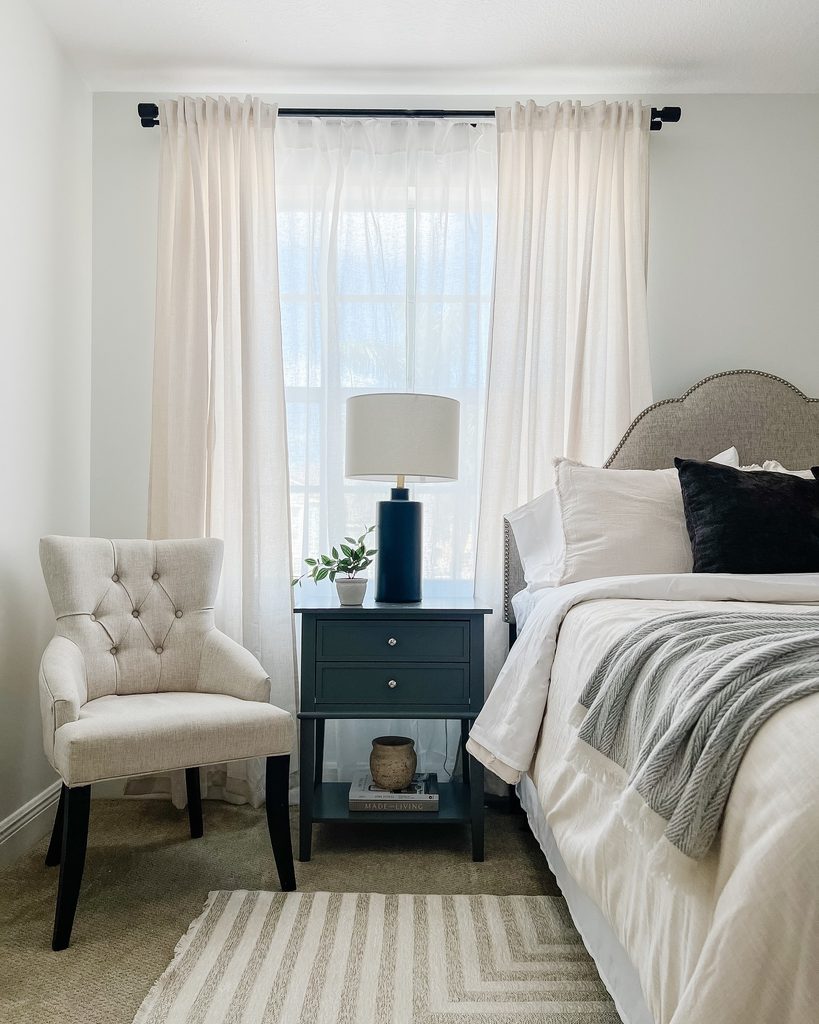
Credits: Instagram
A compact cream chair occupies the corner beside this bed, offering a separate place to sit without a large lounge arrangement. Its tufted back relates to the upholstered headboard, while dark legs connect it with the nightstand.
Pale curtains keep the surrounding area light. This can make a bedroom feel more comfortable when you want somewhere to pause, put on shoes, or lay out tomorrow’s outfit.
Check the chair’s seat height and depth rather than choosing by appearance alone. Leave enough room to move it slightly and reach the window or bedside drawers.
A useful chair should remain available for sitting. Keeping only an occasional cushion on it helps prevent this quiet corner from becoming permanent storage for unworn clothes.
18. Raised-Rim Tray for a Slow Morning
Credits: Instagram
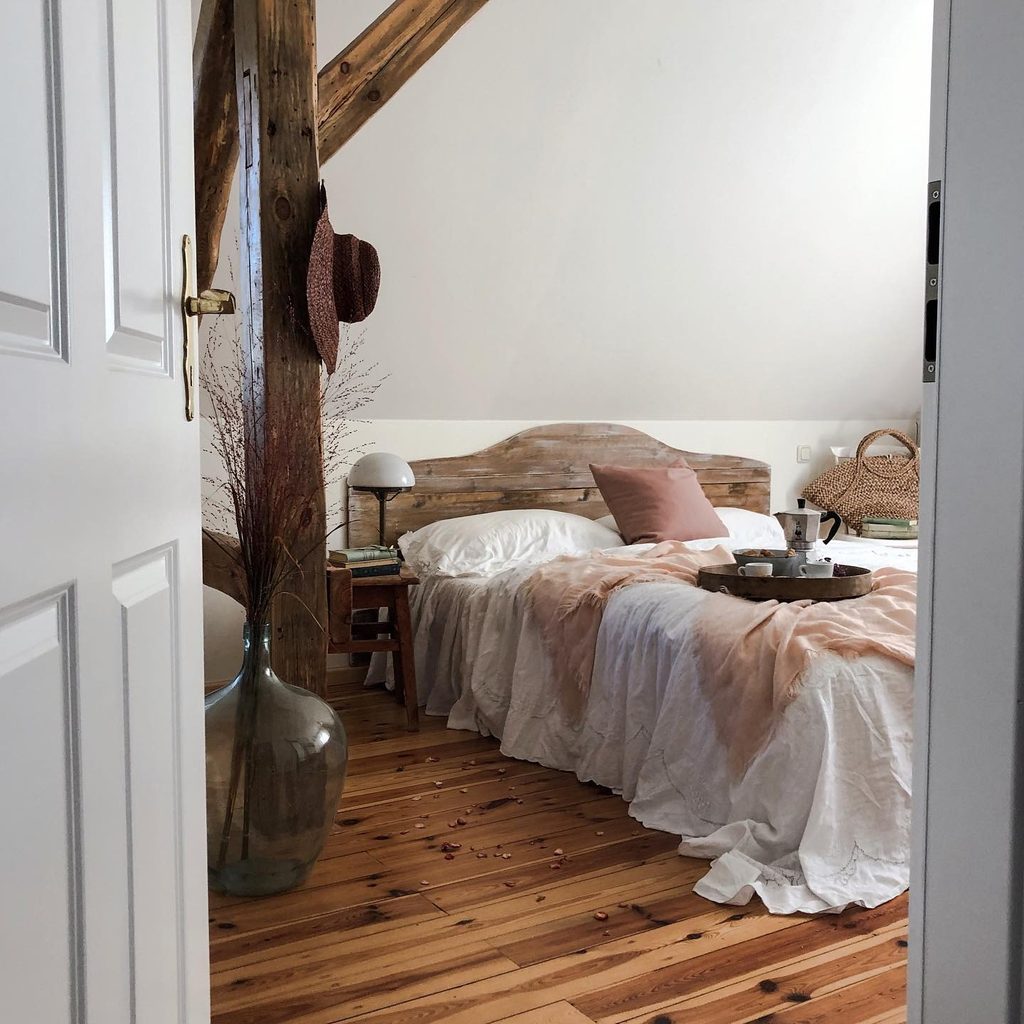
Slow mornings get a dedicated resting place in this photograph, where a large dark round tray holds a mug and small items on loosely arranged bedding.
Its raised edge and strong outline stand out against the white and blush textiles. An exposed timber brace, wooden floor, and weathered headboard give the room a relaxed backdrop.
The idea translates most comfortably when the tray supports a real habit, such as keeping a book and glasses together while you settle in.
Choose a stable tray with an easy grip, and keep hot drinks on a firm bedside surface whenever the bed could shift.
Put the tray away afterward so the sleeping space stays comfortable rather than becoming another permanent surface for clutter.
19. Wall Sconces That Free the Nightstands
Credits: Instagram
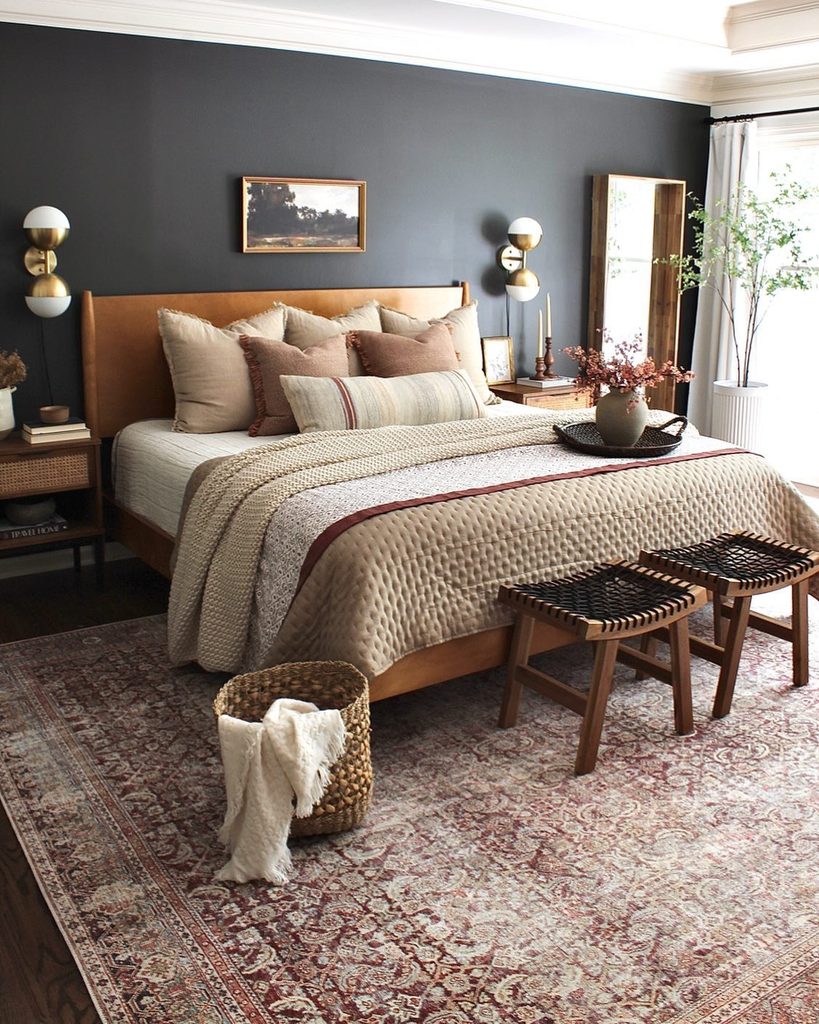
Freeing space beside the mattress can start with moving the lighting onto the wall. Here, vertical sconces with paired globes flank a tan upholstered bed against a charcoal backdrop.
Their brass-toned finish supplies a warm highlight, and the nightstand tops remain mostly clear for books or smaller belongings. The balanced arrangement gives this cozy bedroom a composed feeling without relying on numerous accessories.
If you are considering wall lights, work out their position from both a seated and lying position before installation. Check the fixture’s requirements and use an appropriately qualified professional when electrical work is needed.
Keep switches convenient to reach. Clearer nightstands are useful only if the new lighting arrangement remains comfortable for the person using the bed.
20. Finish Plain Bedding With a Delicate Decorative Edge
Credits: Instagram
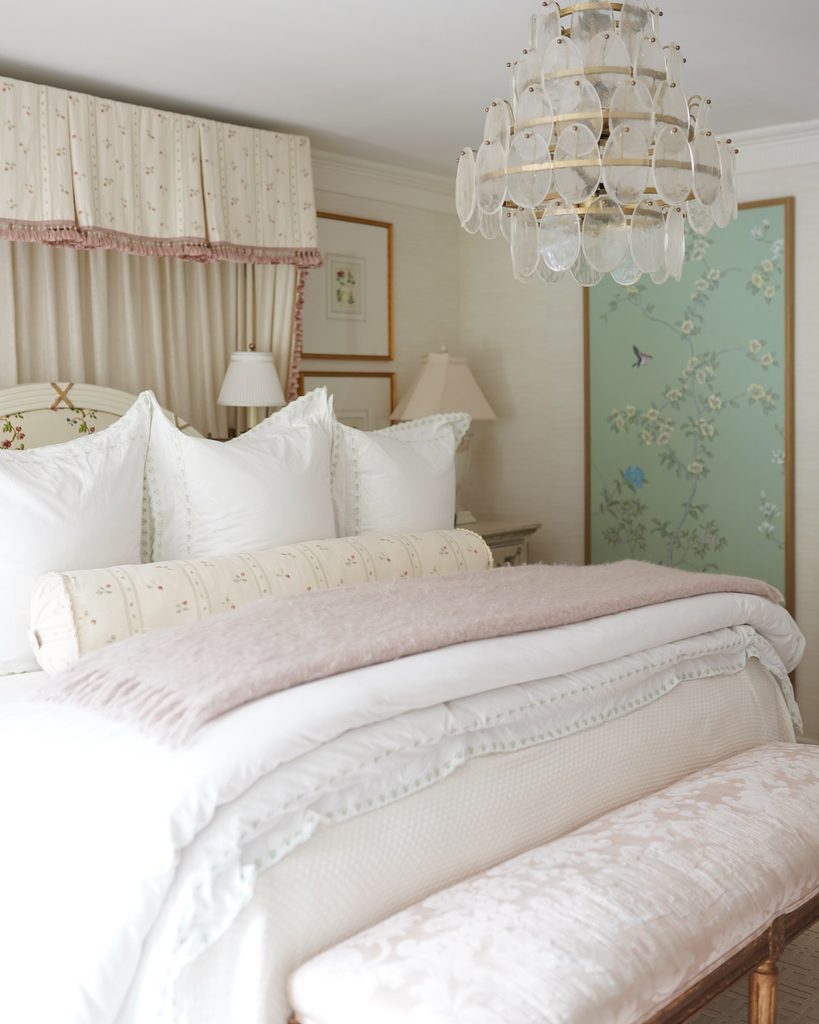
A fine green patterned edge gives the white pillows and folded bedding a little definition in this softly decorated room.
The detail stays close to the pale palette, working with a floral bolster and blush throw rather than competing with them. Small scallops create a gentler outline than a broad dark border would.
This is a cozy bedding update that can begin with one pair of pillowcases instead of a new set. Compare the trim with the colors already in your room and keep nearby patterns at a compatible scale.
Check laundering instructions so the decorative finish remains practical. Leaving some plain fabric visible makes the edging easier to appreciate and keeps the arrangement from feeling overly dressed for display.