
- Recess the Bed Into a Dedicated Sleeping Alcove
Credits: Instagram
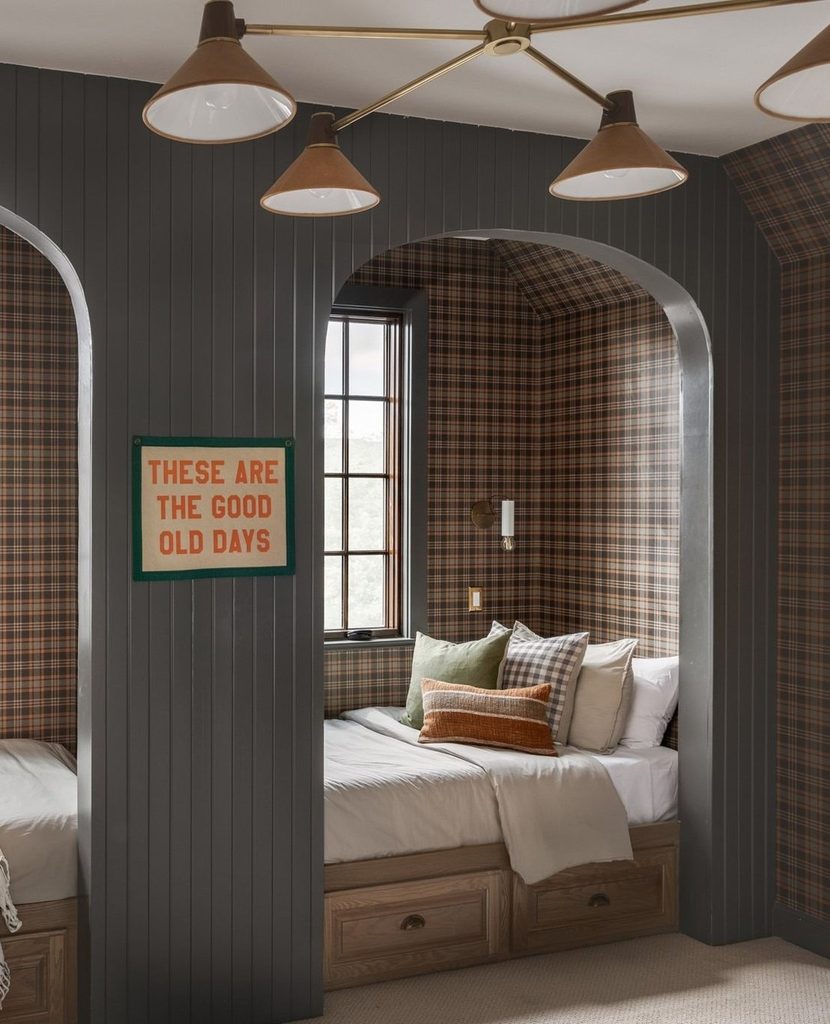
An awkward recess can become the most useful part of a bedroom when the mattress fits comfortably inside it. These paneled sleeping alcoves give each bed a defined footprint, with drawers underneath and a reading light within reach.
The arched openings add height without requiring extra furniture around the beds. Before commissioning anything similar, measure the mattress, bedding clearance, and space needed to sit upright.
Leave enough access to change sheets and open drawers without moving another piece. A window inside the recess keeps the sleeping area connected to daylight, while patterned walls make the enclosure feel intentional.
This approach works especially well when an existing niche can hold the bed and release more usable floor space beyond its opening.
- Unify a Bed, Wardrobe, and Dresser With Fitted Cabinetry
Credits: Instagram
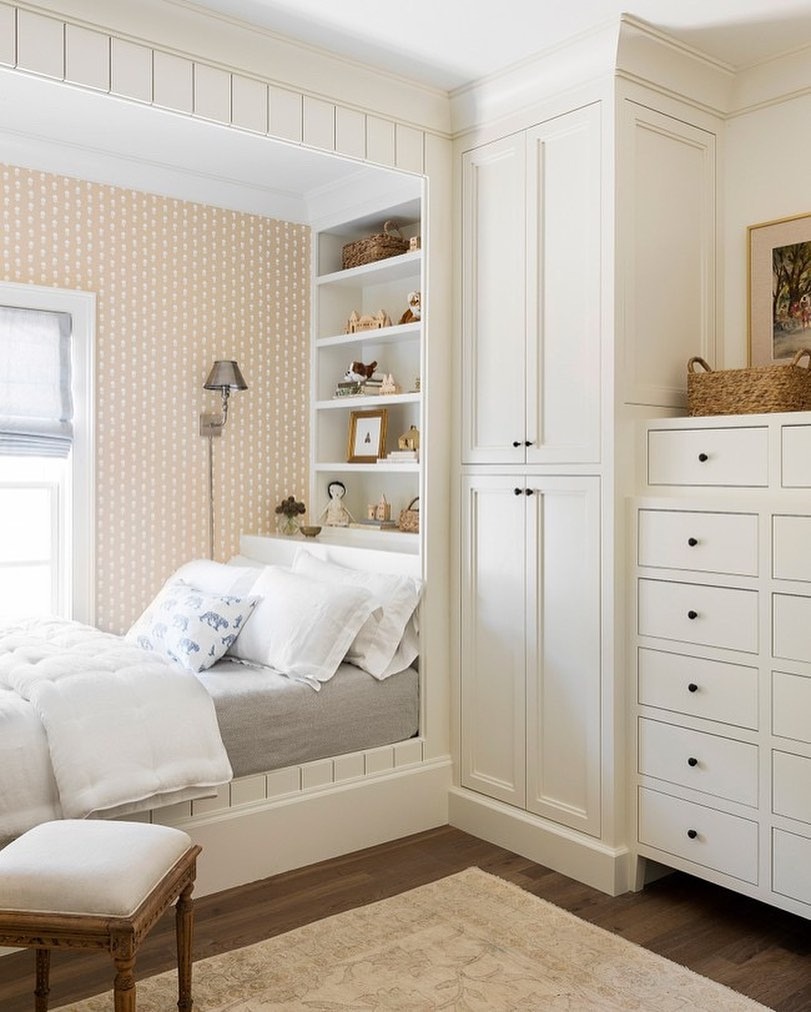
Several separate storage pieces can make a compact room feel more crowded than one carefully planned arrangement. Here, a bed recess, tall cupboard, open shelves, and adjacent dresser share the same white finish and paneled details.
Their visual continuity makes the wall read as architecture while giving different belongings appropriate places. Start by deciding what needs hanging space, drawers, or easy access from bed.
Then allocate those functions before choosing decorative trim. Keep frequently used shelves near the pillow and reserve higher cupboards for less regular needs.
Matching cabinetry to surrounding woodwork helps soften its bulk, but depth still matters. A shallow unit that meets your storage needs preserves more circulation than an oversized cabinet built simply to fill space.
- Put Everyday Clothing Drawers Beneath a Raised Single Bed
Credits: Instagram
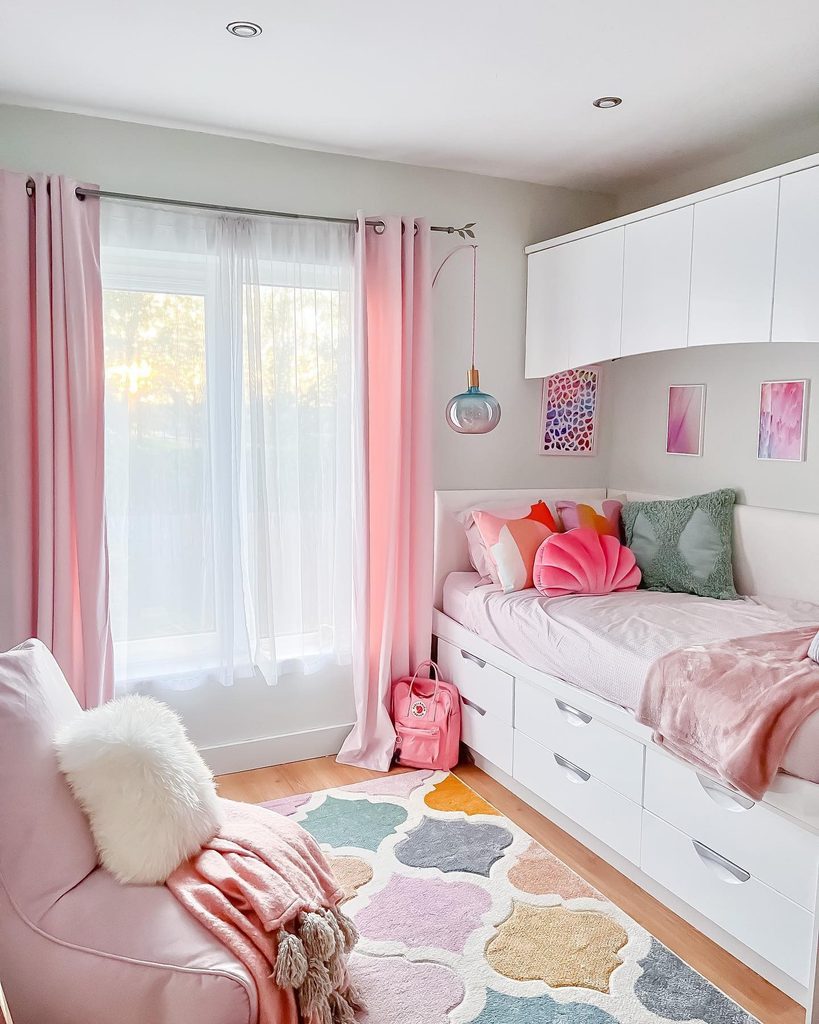
Every inch beneath a mattress is valuable when a separate dresser would crowd the room. This fitted single bed uses its base for multiple drawers, leaving the center of the bedroom available for a rug and a small seat.
The white fronts help the storage blend with the rest of the furniture instead of looking like boxes added afterward. Plan the drawer arrangement around what you actually store: folded clothing, bedding, and larger items need different depths.
Check the full opening distance against chairs, doors, and any furniture opposite. A raised mattress also changes how you get into bed, so test a comfortable height first.
Useful storage should make the daily routine easier while keeping the room pleasant to navigate.
- Concentrate Display on a Shallow Picture Ledge
Credits: Instagram
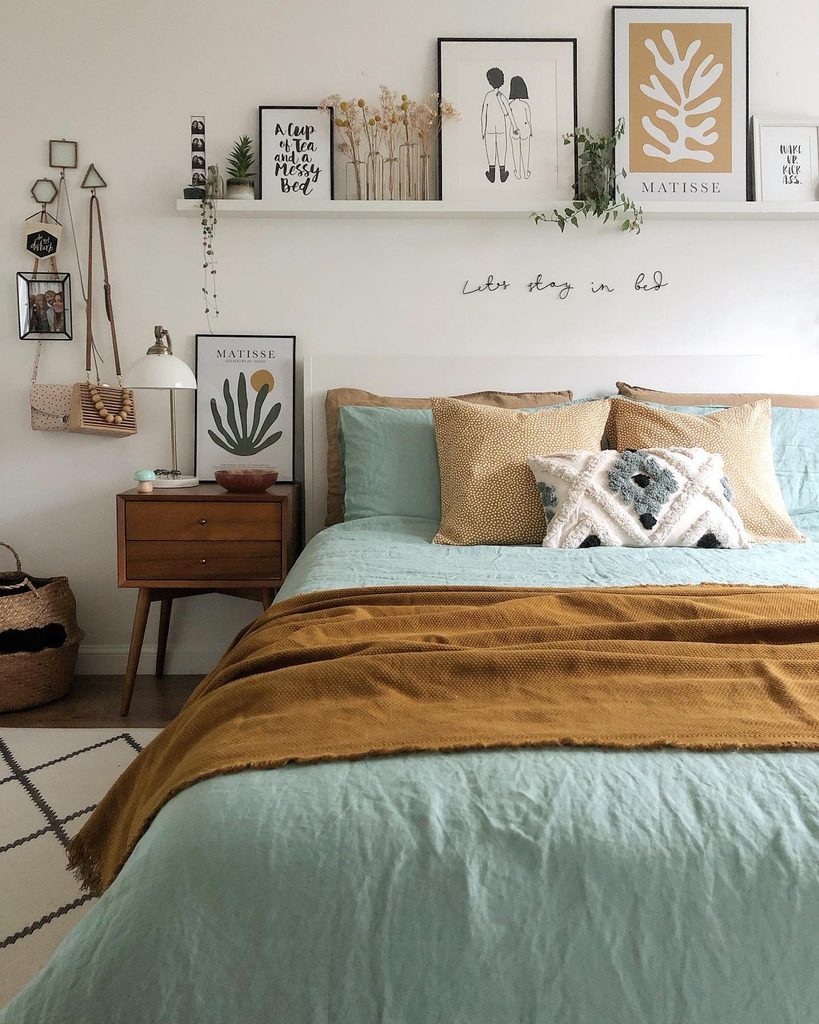
Favorite artwork does not need a dresser or bookcase beneath it to earn a place in the room. A shallow white ledge gathers framed prints and small plants above this bed, concentrating decoration on one horizontal surface.
That leaves the bedside chest available for practical items and keeps extra display furniture off the floor. Choose a ledge depth suited to the frames you own, and check its position from both the doorway and the pillow.
Secure the shelf and its contents appropriately, especially above a sleeping area. A little empty space between objects prevents the arrangement from feeling crowded.
Repeating a few frame colors can create order while still allowing different pictures, and changing the display requires very little effort.
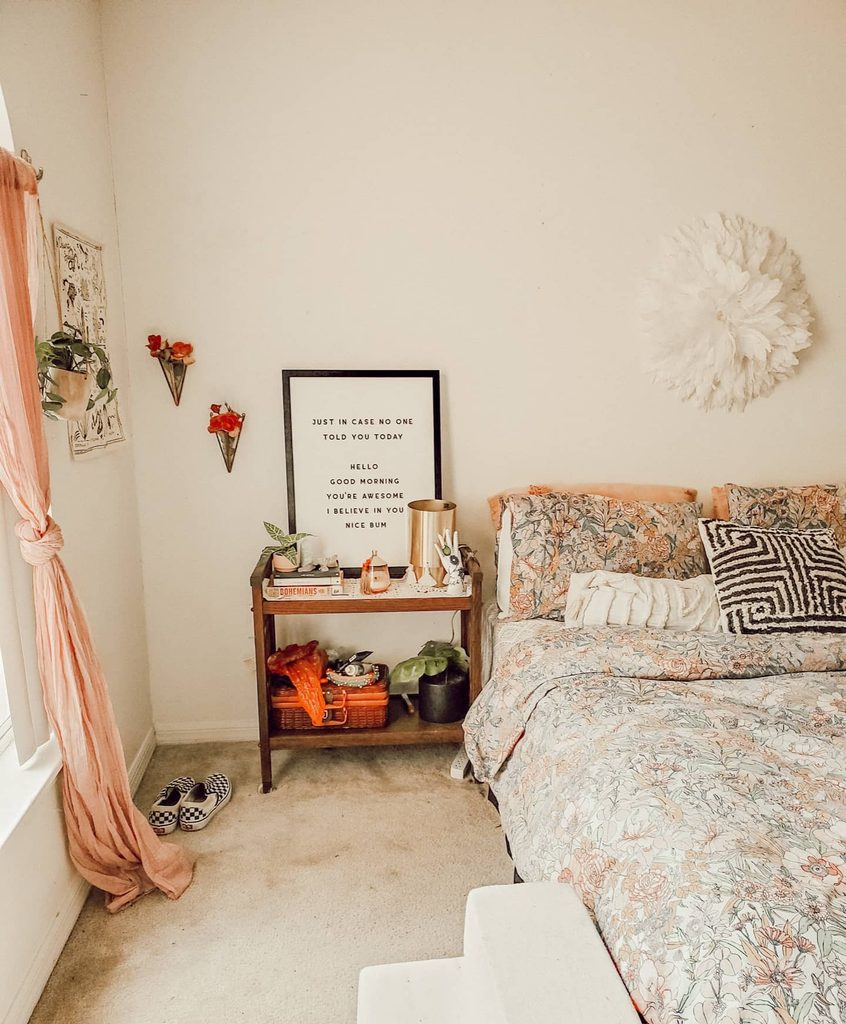
- Match Bedside Furniture Height to the Mattress
Credits: Instagram
Reaching for a book feels easier when the surface beside you sits near the mattress. This low wooden shelf keeps its upper tier accessible from bed, with a basket and other belongings below.
Its open sides and slender legs also preserve a clear view of the floor, which helps a narrow bedside area feel less packed. Measure from the floor to the top of your mattress before selecting a replacement table.
Then consider whether your everyday items need an enclosed drawer or whether a simple shelf will do. Keep the upper surface edited so there is room for a drink without shifting decorations.
Furniture chosen around the bed’s actual height often works better than a matching piece selected for appearance.
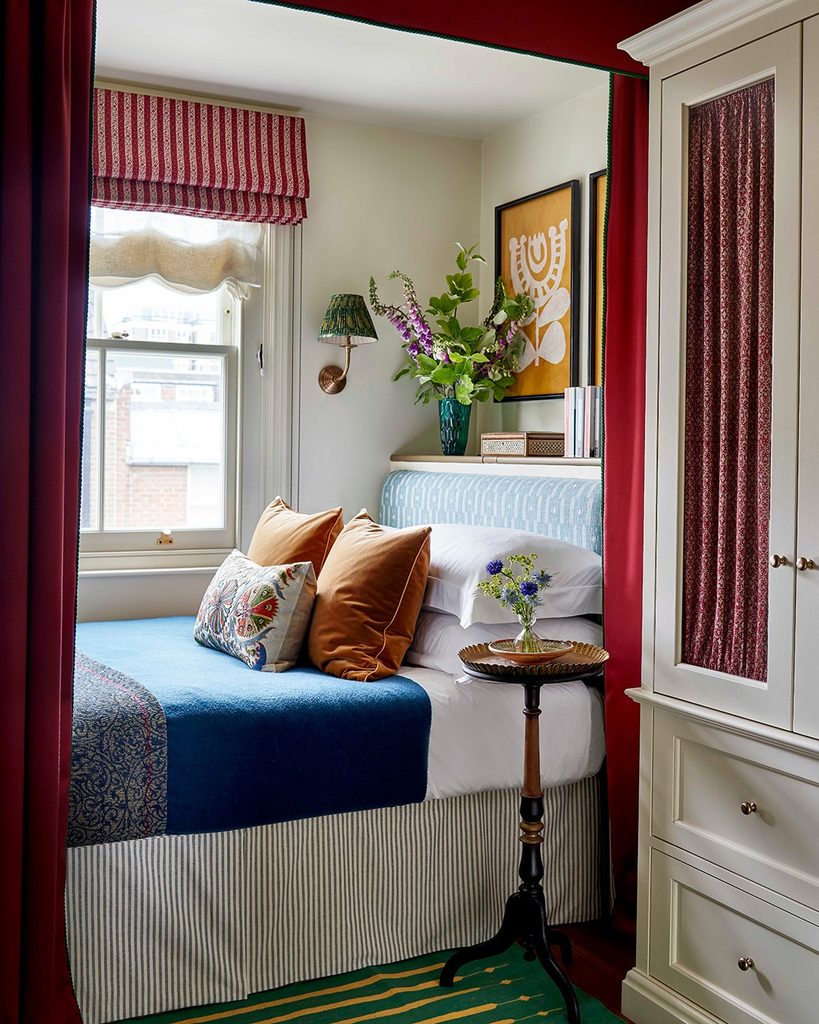
- Build a Slim Ledge Into the Headboard Wall
Credits: Instagram
A narrow bedroom can run out of bedside space long before it runs out of wall space.
The shelf behind this upholstered headboard creates a useful landing area within the bed nook, while a small pedestal table handles items needed closer to hand.
A wall light keeps another bulky object off both surfaces. If you are renovating, plan the ledge depth around books, glasses, or a phone rather than making it a general display shelf.
Account for pillows and comfortable head clearance, and position outlets where cords can stay tidy. In a finished room, a securely installed shallow shelf can suggest the same idea.
Keep its finish coordinated with the headboard wall so the extra function feels like one composition.
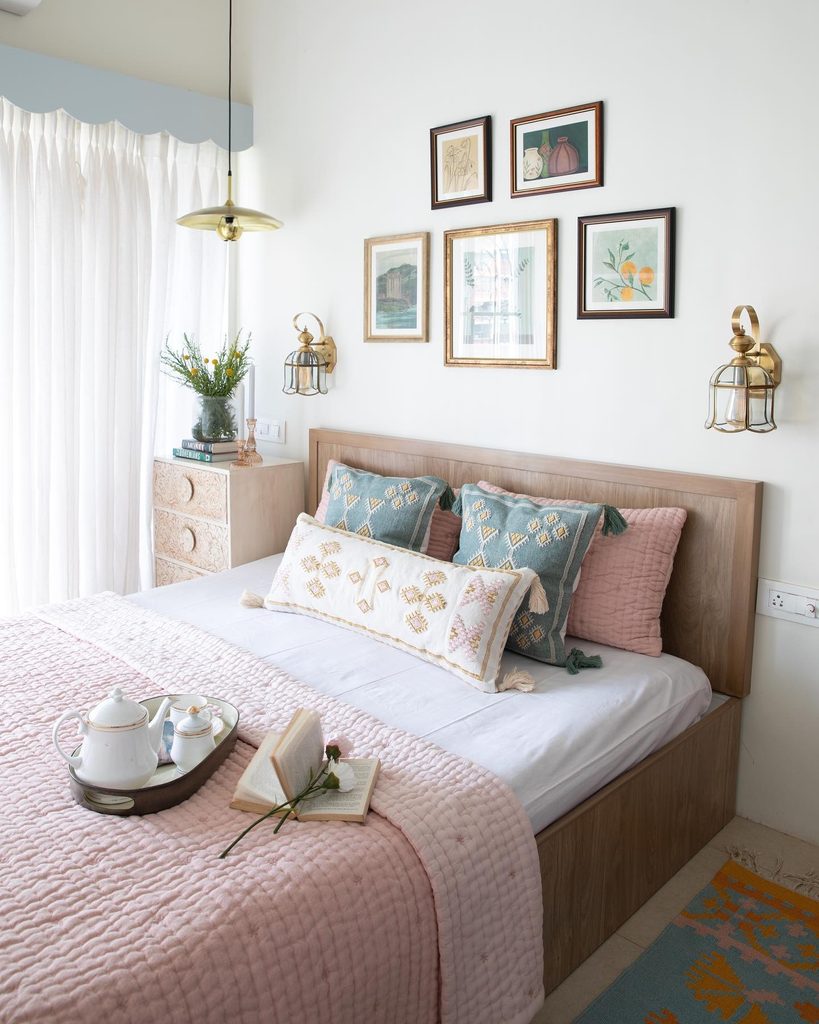
- Let the Two Sides of the Bed Serve Different Needs
Credits: Instagram
Matching nightstands are optional when the room gives each side of the bed a different amount of space. In this pastel bedroom, a narrow drawer chest sits near the window while the other side stays visually lighter.
Paired wall lights provide a shared rhythm, so the furniture does not have to be identical. Begin with the side that has the tightest passage, then choose the smallest useful surface for that position.
The more generous side can accommodate drawers or another daily function. Repeat a color, finish, or lighting detail to keep the arrangement coherent.
This is particularly helpful when a window, doorway, or wardrobe interrupts the usual symmetrical layout. Comfort and easy movement should guide the plan before matching furniture.
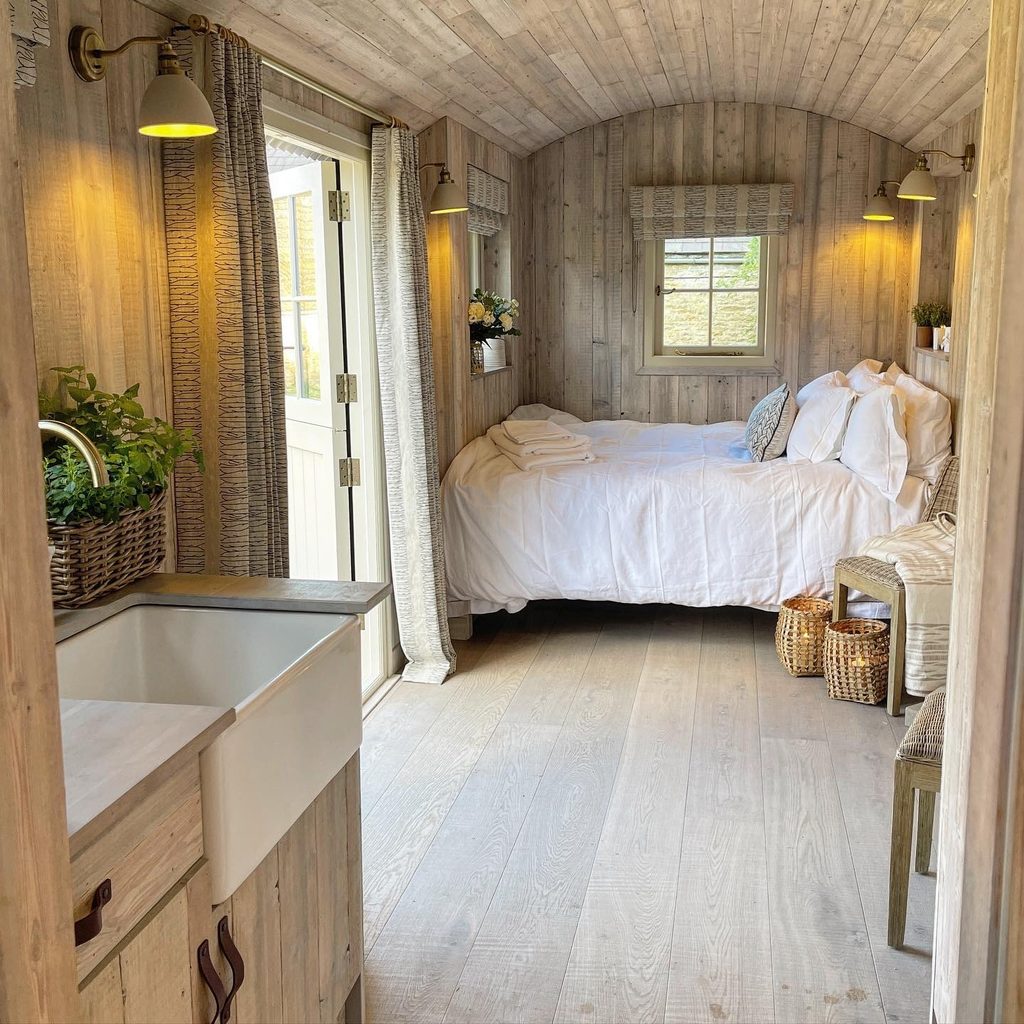
- Place the Bed Across the End of a Narrow Space
Credits: Instagram
Turning a bed across the far end of a narrow space can preserve one clear route through the rest of it.
Bee Osborn’s shepherd’s hut uses this arrangement to separate the sleeping zone from the entrance and kitchenette without adding a partition. Pale timber surfaces and several small windows keep the compact interior visually connected.
In a similarly shaped bedroom, compare this orientation with placing the bed lengthwise before committing. Check mattress access, room to change bedding, and whether both sleepers can get out comfortably.
Wall lighting reduces the need for lamps along the passage. The lesson is to organize around the route you use most, then fit the bed where its footprint leaves the remaining floor useful and accessible.
- Suspend Bedside Lights to Free the Tabletop
Credits: Instagram
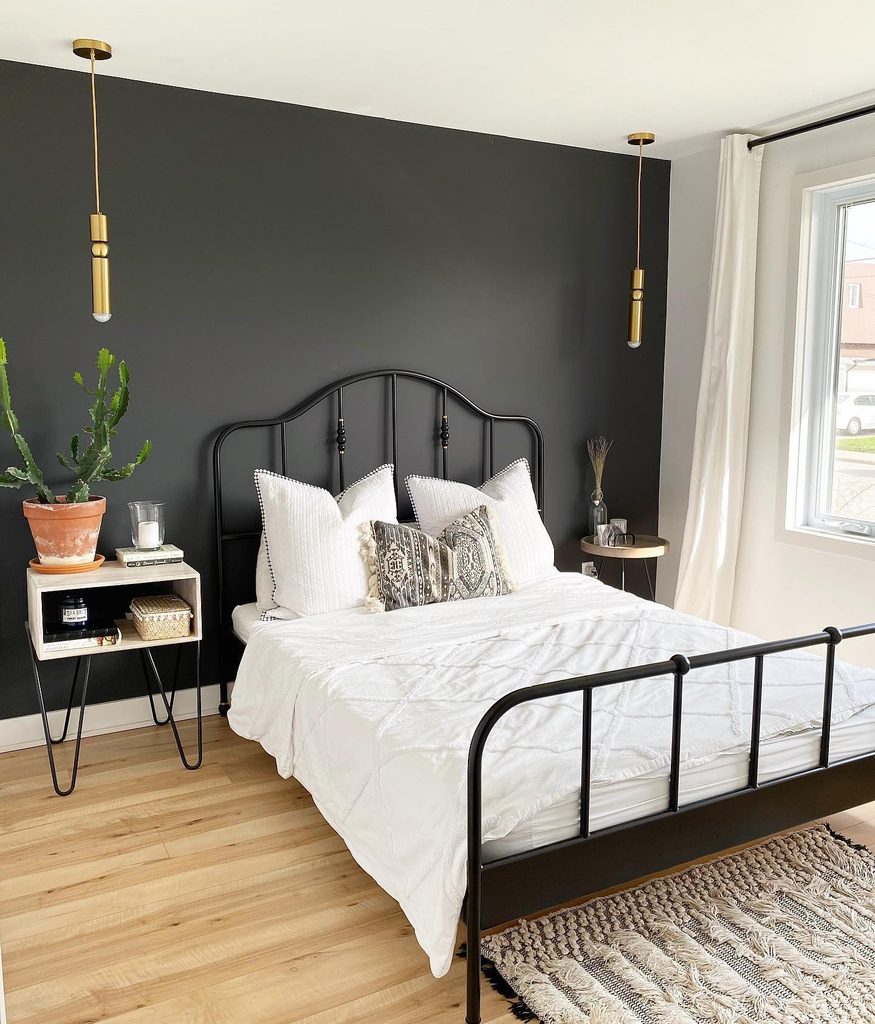
Useful illumination can come from above when small tables have little room to spare. These slender pendants frame the bed against a dark wall while leaving the surfaces below available for everyday essentials.
Their narrow outlines keep the arrangement light, even with a strong wall color and metal bed frame. Position each fixture for the person using it, considering glare, reading comfort, and the height of the mattress.
Switching should be convenient from bed, and installation belongs in the room’s electrical plan. Pendants work particularly well when the furniture beneath them is deliberately compact.
If ceiling wiring is impractical, a suitable wall light can offer a similar benefit. The useful goal is to separate illumination from the limited tabletop area.
- Combine a Low Bed With an Adjacent Desk
Credits: Instagram
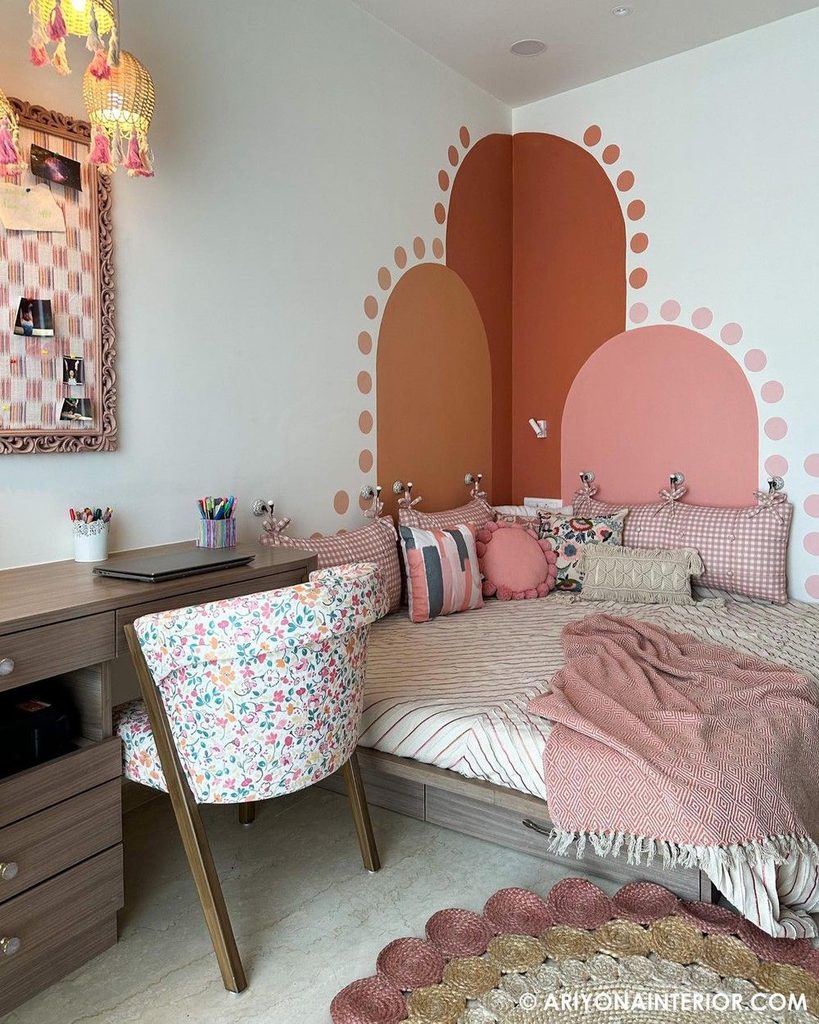
A corner layout becomes more convincing when the furniture is designed around how the room will be used. Here, a low bed sits beside a desk, with cushions hung on the walls to provide a soft backrest.
Painted arches draw attention upward while the sleeping surface stays close to the floor. That contrast gives the compact room character without a large conventional headboard.
Consider this arrangement when one person needs both study space and a comfortable bed in a limited footprint. Check that the chair can pull out and that bedding will not catch against the desk.
A lower bed should still be comfortable to enter and maintain. The best adaptation balances the user’s daily movements with the available space.
- Fit a Work Nook Into the Wardrobe Run
Credits: Instagram
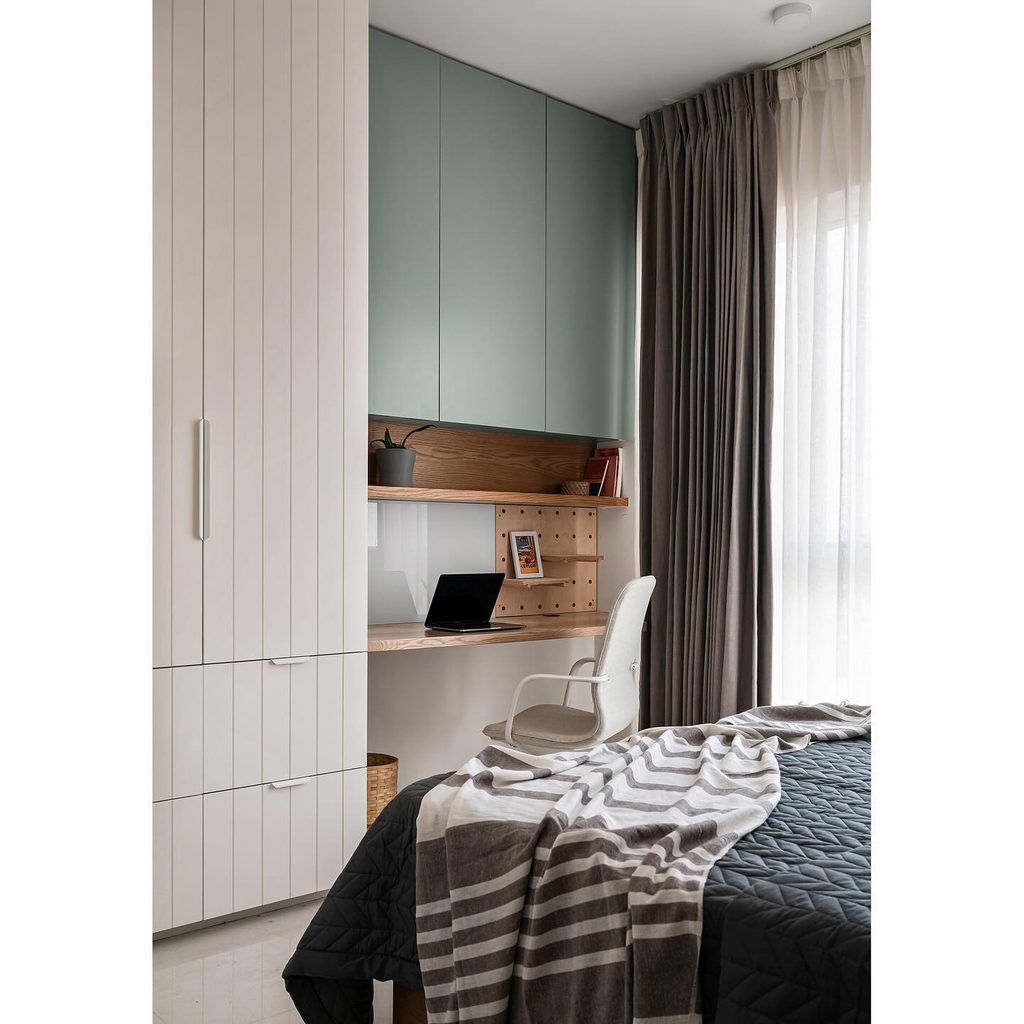
Office equipment is easier to contain when the desk belongs to a defined part of the room. This study nook sits within a fitted storage wall, using the space beside a wardrobe and beneath overhead cupboards.
A shelf and pegboard provide accessible organization without adding another freestanding unit. The bed remains nearby, but the work surface has a clear boundary.
Plan the desk around your actual tasks, allowing sufficient depth for equipment and comfortable legroom. Make sure the chair can tuck in fully when work ends.
Lighting and outlet positions deserve attention before the cabinetry is finalized. Keeping the desktop within the same furniture run makes a small bedroom feel more orderly, especially when closed cupboards can hide supplies afterward.
- Recess Narrow Shelves Beside a Floating Bedside Drawer
Credits: Instagram
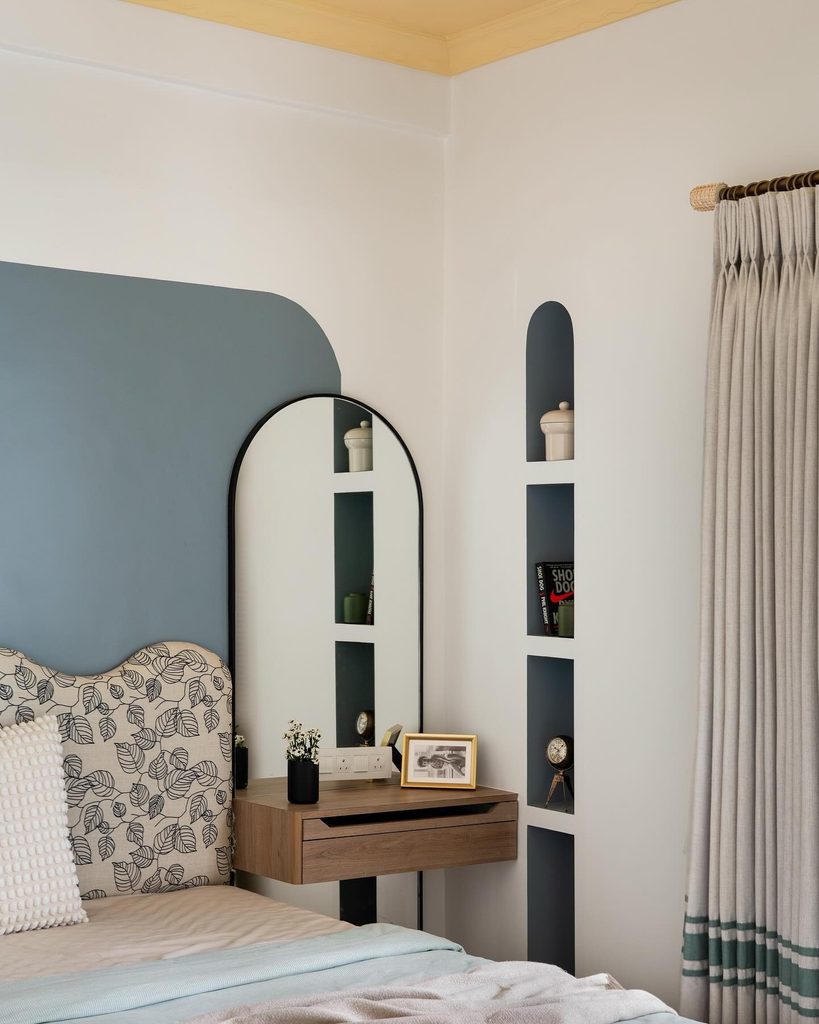
Sometimes the most useful storage is a narrow strip that would otherwise go unnoticed. This bedside niche stacks small shelves vertically beside a floating drawer, putting books and small objects within reach without widening the furniture footprint.
The mirror reflects the recess and gives the compact corner another layer of depth. A recessed design needs careful planning around the wall’s construction, so involve an appropriate professional before altering it.
Where recessing is impossible, a shallow wall unit may provide a similar function. Size shelves for the items you use instead of filling every opening with decoration.
Leaving the floor beneath the drawer visible helps the bedside zone feel lighter and makes cleaning easier, which matters in a tightly arranged bedroom.
- Carry a Light Upper Wall Color Onto the Ceiling
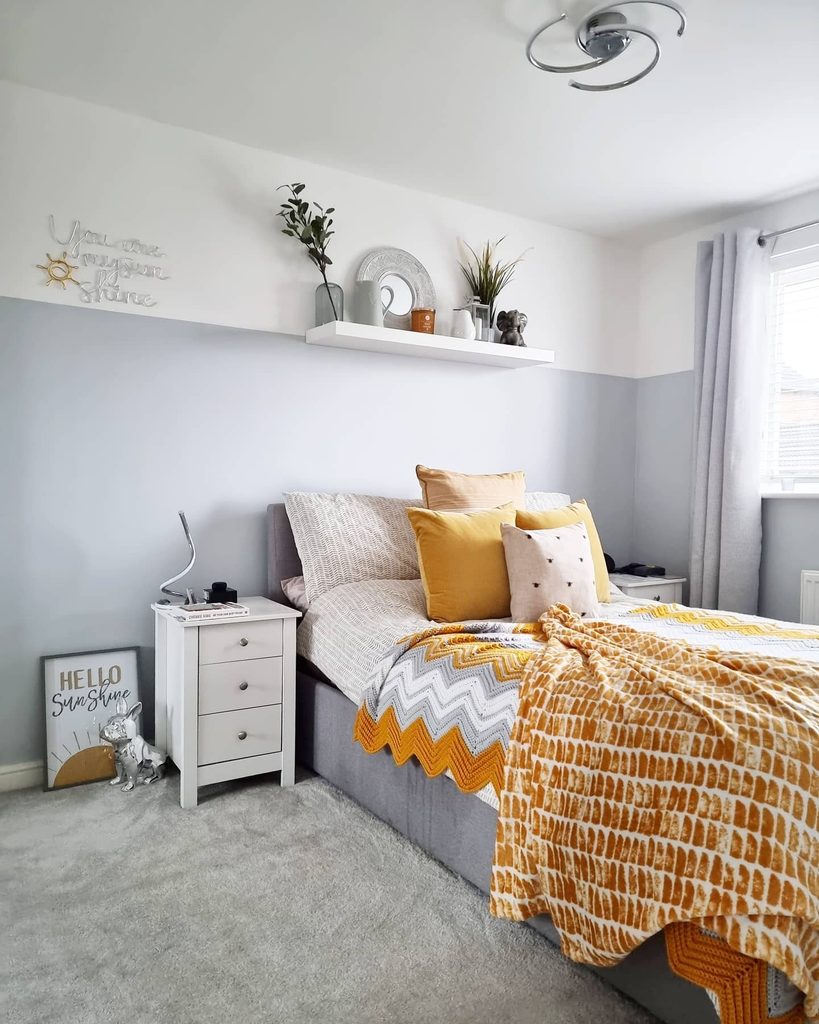
Credits: Instagram
The line where a wall meets the ceiling can change how enclosed a small bedroom feels. Here, gray paint stops below a broad white upper section that continues into the ceiling.
The lighter area keeps the top of the room visually quiet, while the lower color gives the bed a defined backdrop. Carrying the division around adjacent walls helps it feel deliberate rather than like an isolated stripe.
Test the height with removable tape before painting, and look at it from the doorway as well as from bed. Consider shelves, curtains, and furniture when choosing where the line falls.
This simple design decision introduces contrast without requiring bulky trim or another object in a room where every inch already counts.
- Soften Daylight With Sheer Panels Beside the Bed
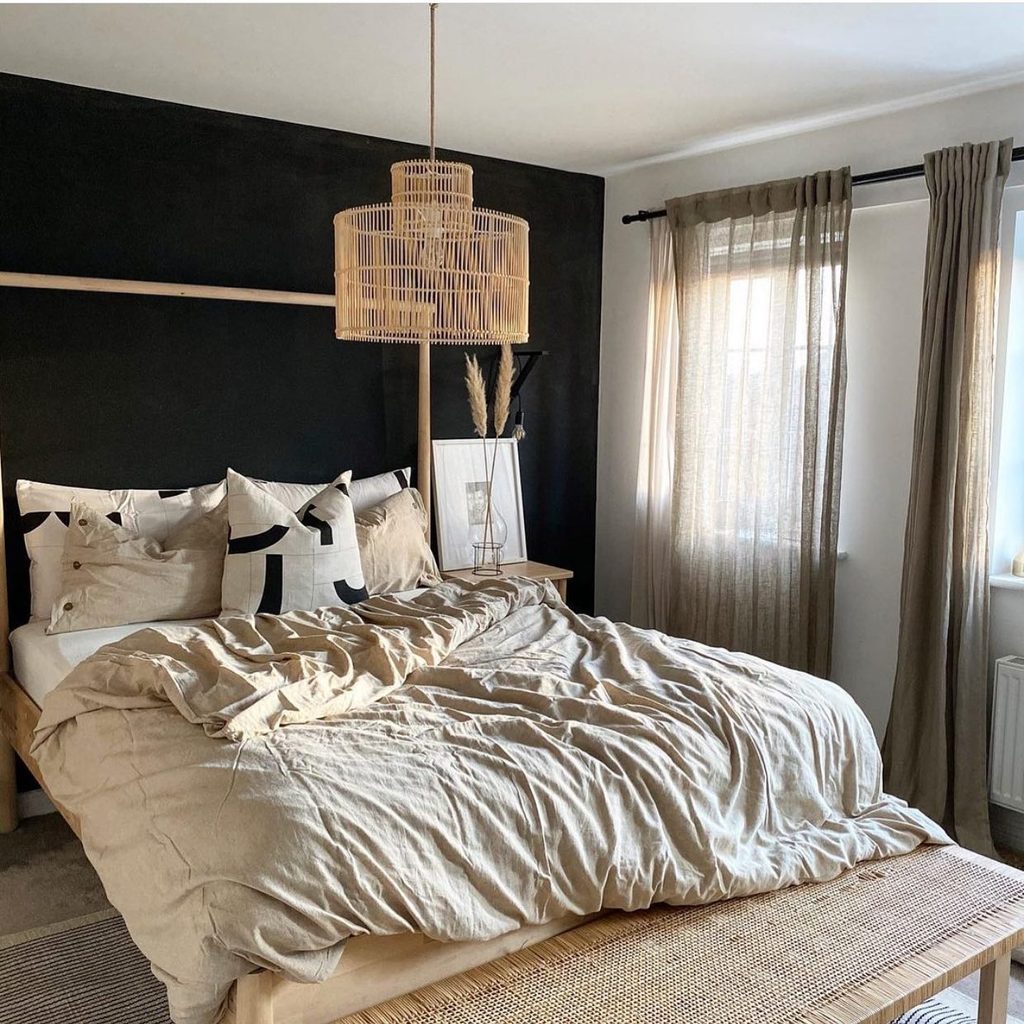
Credits: Instagram
Filtered light softens a compact bedroom even when the bed sits close to the window. These gauzy curtains filter brightness while keeping the window wall lighter than heavy opaque panels would appear during the day.
Their neutral tone connects with the bedding, allowing the dark wall behind the bed to remain the main contrast. Choose a curtain arrangement that stacks neatly clear of the opening when needed.
If nighttime privacy or darkness matters, combine the sheer layer with a suitable separate covering. Keep fabric clear of heaters and ensure the window remains easy to operate.
The aim is a flexible window treatment that supports different times of day while preserving the light that makes the bedroom feel comfortable and open.
- Use the Space Beneath a Lofted Bed for a Study Area
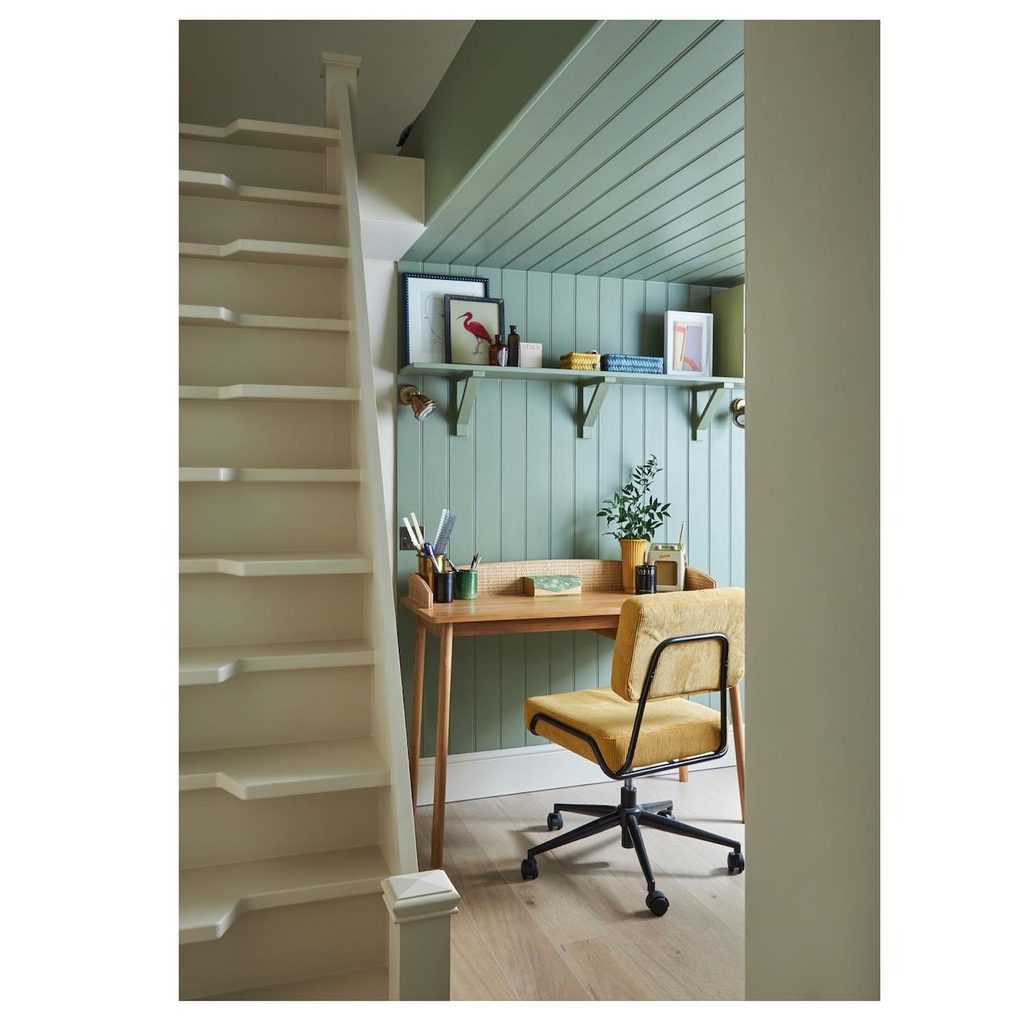
Credits: Instagram
When a room must accommodate both a bed and a desk, its height may offer another planning option. Laura Stephens designed this compact study beneath an elevated double bed, with access steps beside it and storage incorporated below the steps.
The photograph focuses on the workspace, showing how the paneled underside becomes its ceiling. This is a substantial architectural solution that needs professional design, suitable structure, safe access, and adequate headroom at both levels.
Start with those requirements before considering finishes. A dedicated task light and nearby shelf help the lower area function independently.
Where the room supports it, separating activities vertically can provide a usable work zone without making the sleeping surface compete with the desk for floor space.
- Choose a Bed Frame That Closely Follows the Mattress
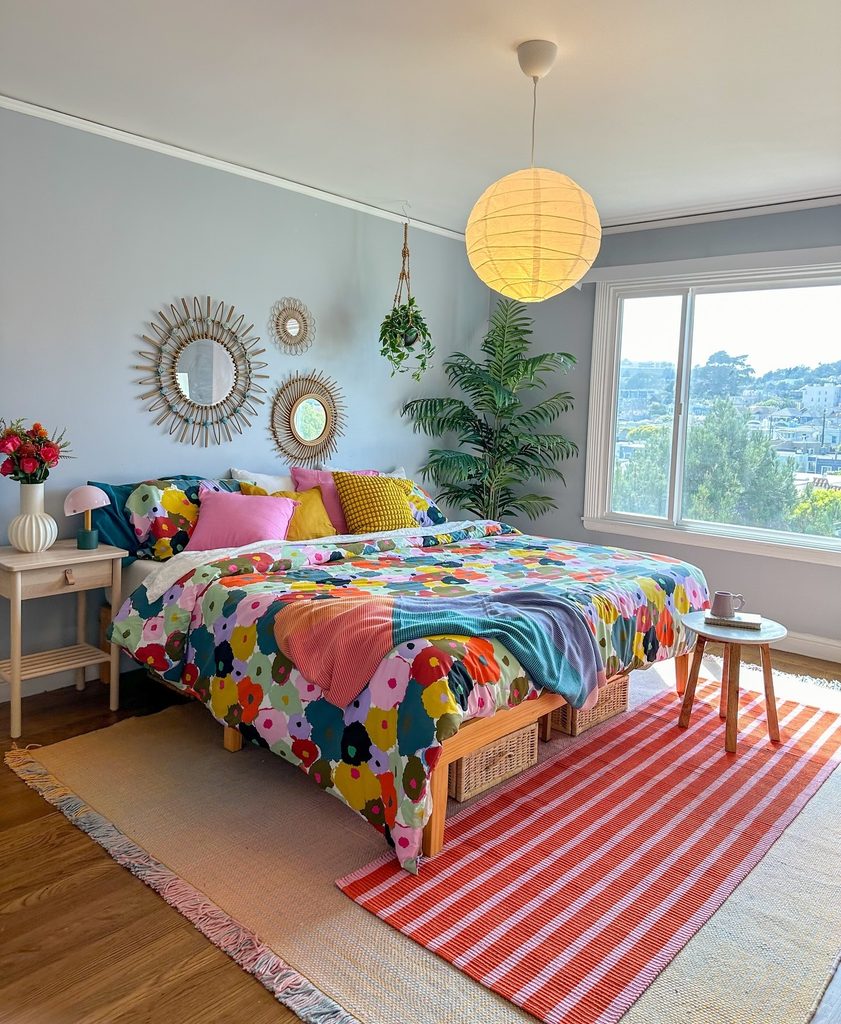
Credits: Instagram
The outside dimensions of a bed frame matter just as much as the mattress size. This simple wooden frame stays close to the bedding, with no bulky upholstered surround or tall footboard extending into the room.
Baskets underneath make use of the open base, while a small stool offers a movable surface nearby. When comparing beds, measure the complete footprint and mark it on the floor before buying.
Check the routes to the window, closet, and doorway with that outline in place. A compact frame can preserve useful inches without reducing the mattress you prefer.
Keep surrounding pieces similarly purposeful so the gain remains noticeable. The result should be a room that feels easier to move through and maintain daily.
- Use a Tall Mirror to Open a Tight Bedside View
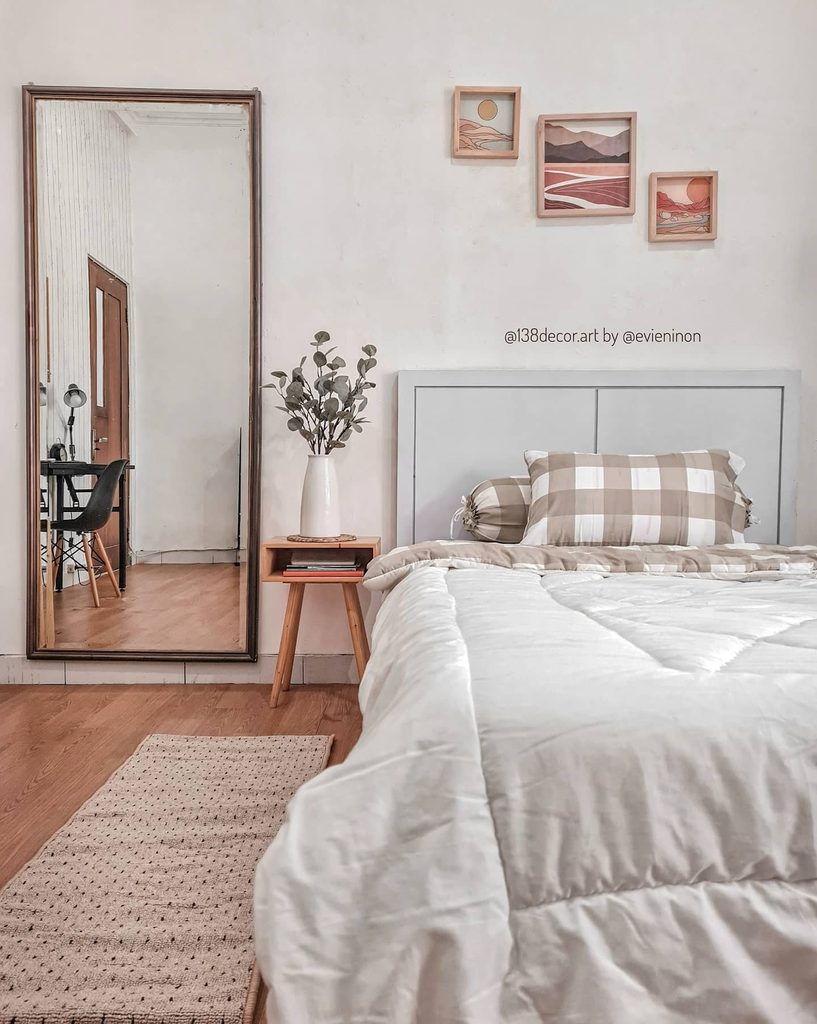
Credits: Instagram
Reflections can give a tight bedside area a longer view without changing its physical dimensions. This tall mirror shows the opposite desk and doorway, adding depth beside a small table and a simply dressed bed.
Its narrow frame keeps the emphasis on the reflected space. Before choosing a position, move a smaller mirror around to see what each angle captures.
A calm wall or window often makes a better view than an overflowing shelf. Secure a full-length mirror according to its design and the wall construction, rather than relying on a casual lean.
Leave enough access to use it for dressing without blocking the main passage. A mirror works best when it serves an everyday purpose as well as appearance.
- Blend Storage Into the Wall Color
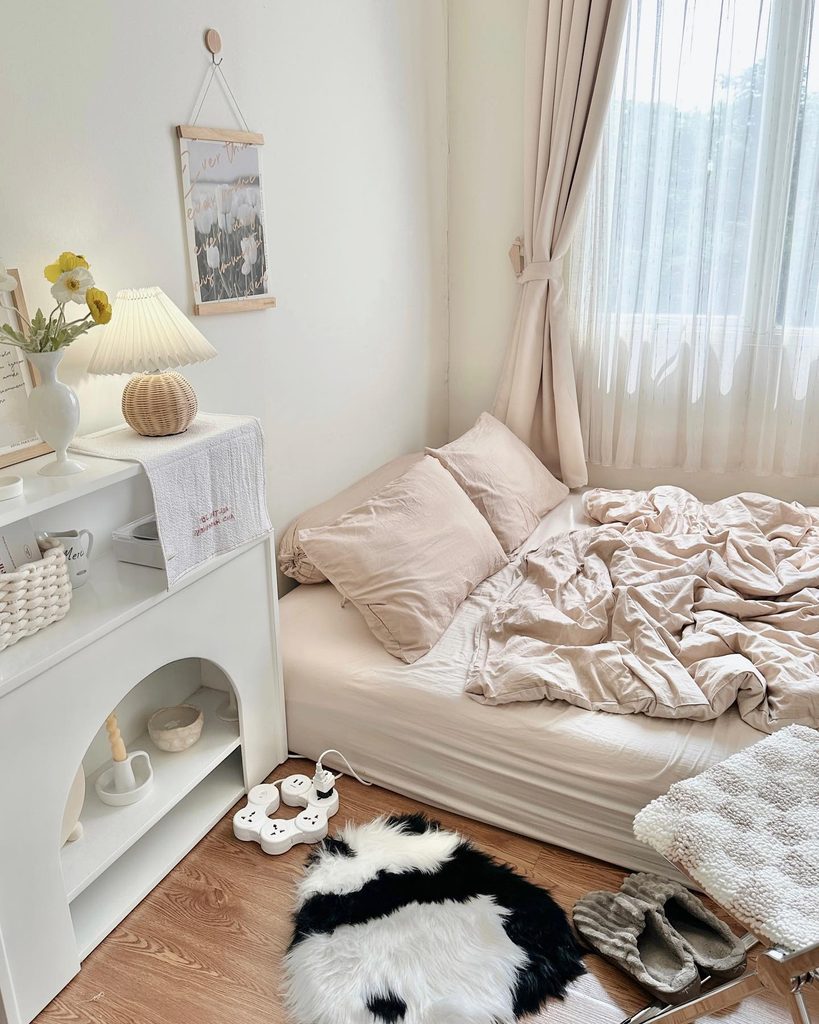
Credits: Instagram
Visual contrasts between furniture and walls can make each piece stand out in a crowded room. The white storage cabinet in this bedroom sits close to the pale wall, creating a quieter background beside the cream bedding.
Its shelves still provide useful places for belongings, but the cabinet does not dominate the limited floor area. Try matching an existing storage piece to the surrounding paint or choosing a closely related shade when replacing it.
Texture and small details can provide interest without strong contrast everywhere. Keep the most visible shelves lightly filled, especially at eye level.
This approach is useful when furniture must remain close together, because it reduces visual competition while preserving the practical storage a small bedroom needs.
- Keep the View Through the Headboard Open
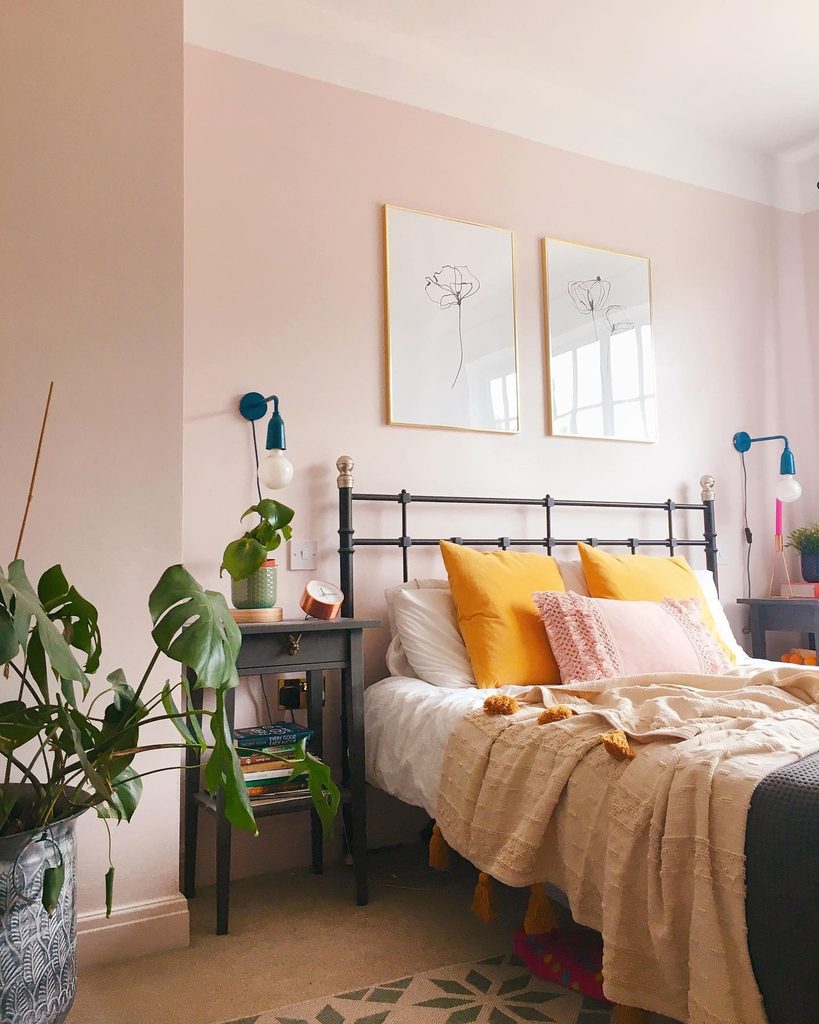
Credits: Instagram
Seeing the wall through a headboard can make the bed feel less visually heavy in a compact room. This metal frame uses thin rails, allowing the pale pink backdrop to remain visible between them.
Slender bedside tables and small wall lights reinforce that openness around the sleeping area. An open frame does not reduce the mattress footprint, but it changes how much solid furniture the eye encounters.
Compare its outline with the room’s existing architectural features, including projecting walls or narrow recesses. Keep pillows and bedding comfortable without piling them so high that the frame disappears.
If you prefer an upholstered headboard, a slim profile in a wall-related color can offer another route to a quieter, less crowded bedroom composition.
- Plan Removable Storage Around the Bed Base
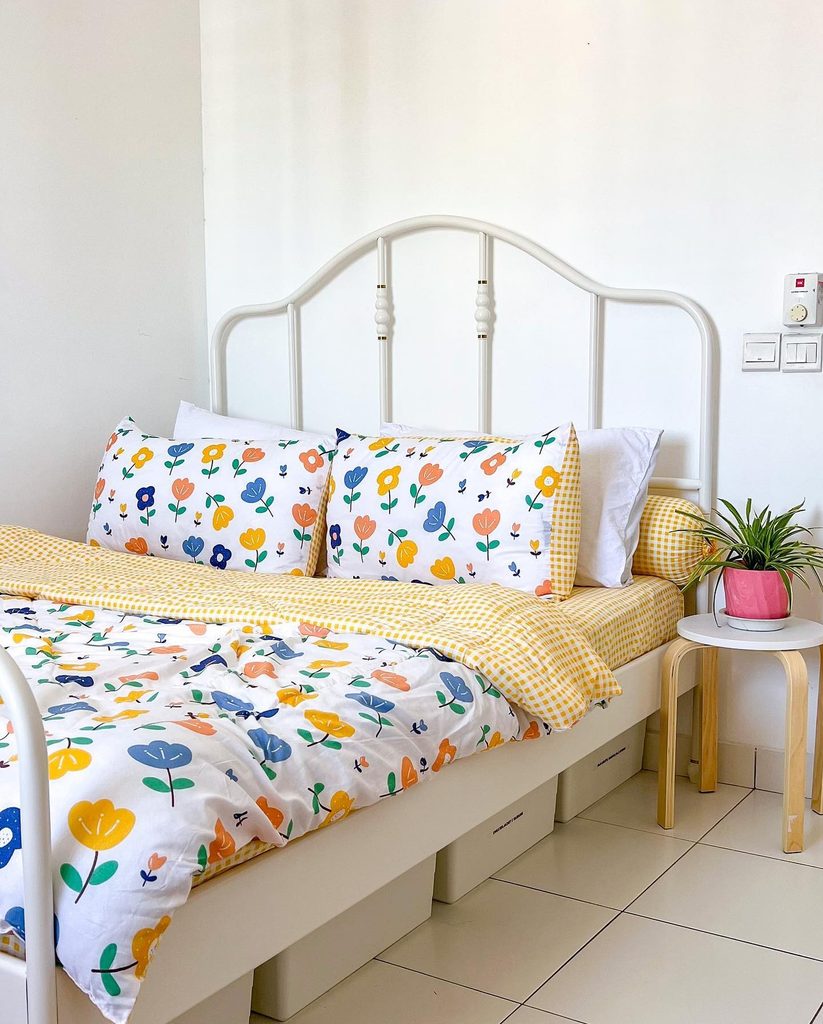
Credits: Instagram
A useful storage plan can begin with the bed you already own. Shallow lidded boxes fit beneath this white metal frame, using existing clearance for clothing; infrequently needed items could work well here.
Because the containers are removable, the arrangement can change when your belongings or room layout change. Measure the available height, including any supports underneath, and check how far each box must travel to open comfortably.
Keep frequently needed items near the accessible edge and group seasonal pieces together. Matching containers create a tidier appearance than a mix of unrelated bags.
This approach suits renters or anyone avoiding fitted furniture, provided the boxes slide out easily and the surrounding passage remains clear enough for ordinary movement and cleaning.