
A bedroom can feel cramped when the bed, storage, and a place to sit all compete for the same floor space.
Best Korean Bedroom Ideas often make the most of a low bed, thoughtful furniture placement, and a restrained mix of colors and textures.
Wall-mounted shelves can keep books and personal items close without crowding the floor, while closed storage offers a quieter way to tuck belongings away.
Soft green sheets beneath cream bedding add a subtle color shift, and transparent seating can keep a bedside corner feeling visually open. These practical details help a room feel personal without making it feel busy.
Wall-Mounted Shelves Beside a Low Bed
Credits: Instagram
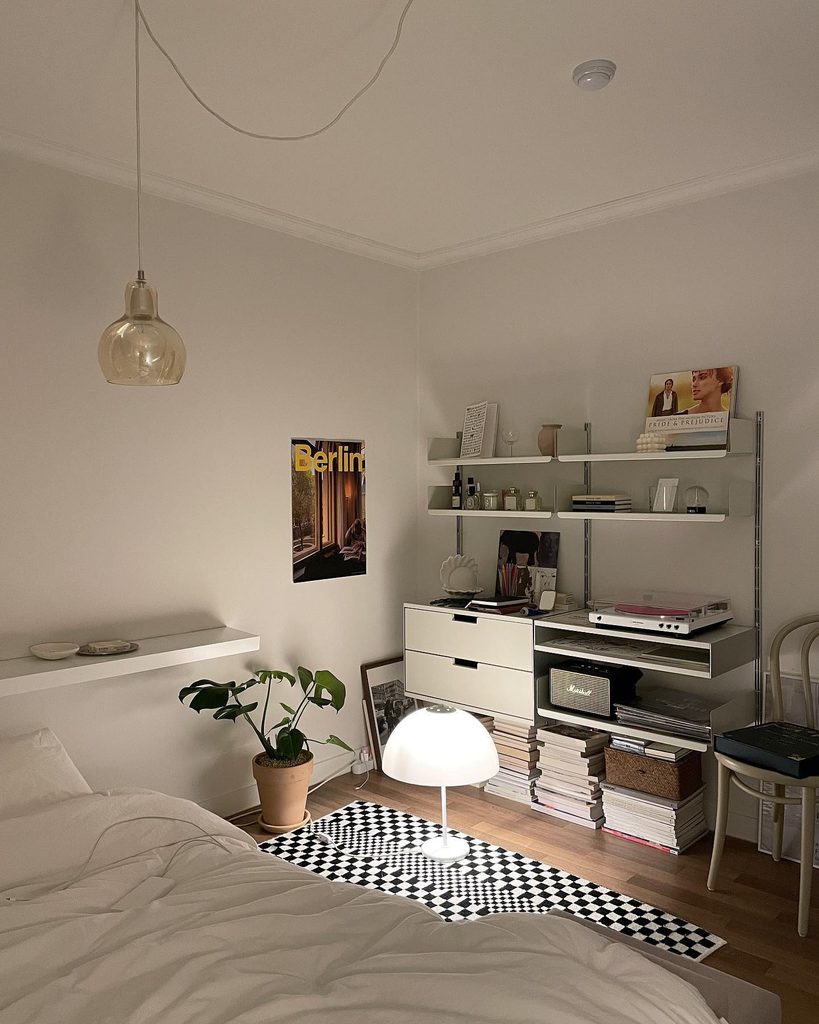
Music and books become part of the bedroom when their storage has a clear place. Suya’s wall-mounted shelving holds a record player, small objects, and white drawers beside a low bed.
A checkerboard runner supplies a stronger pattern beneath the otherwise quiet arrangement. This Korean-style bedroom idea is useful when you want personal belongings on display without filling the floor with separate cabinets.
Decide which objects deserve open shelves and which need enclosed storage before selecting a system. Leave enough space to operate equipment and route its cords neatly.
Check the wall construction and mounting requirements for the intended load. Placing the shelving beside the bed makes its contents accessible and leaves the sleeping area framed by a quieter wall.
Soft Green Sheets Beneath Cream Bedding
Credits: Instagram
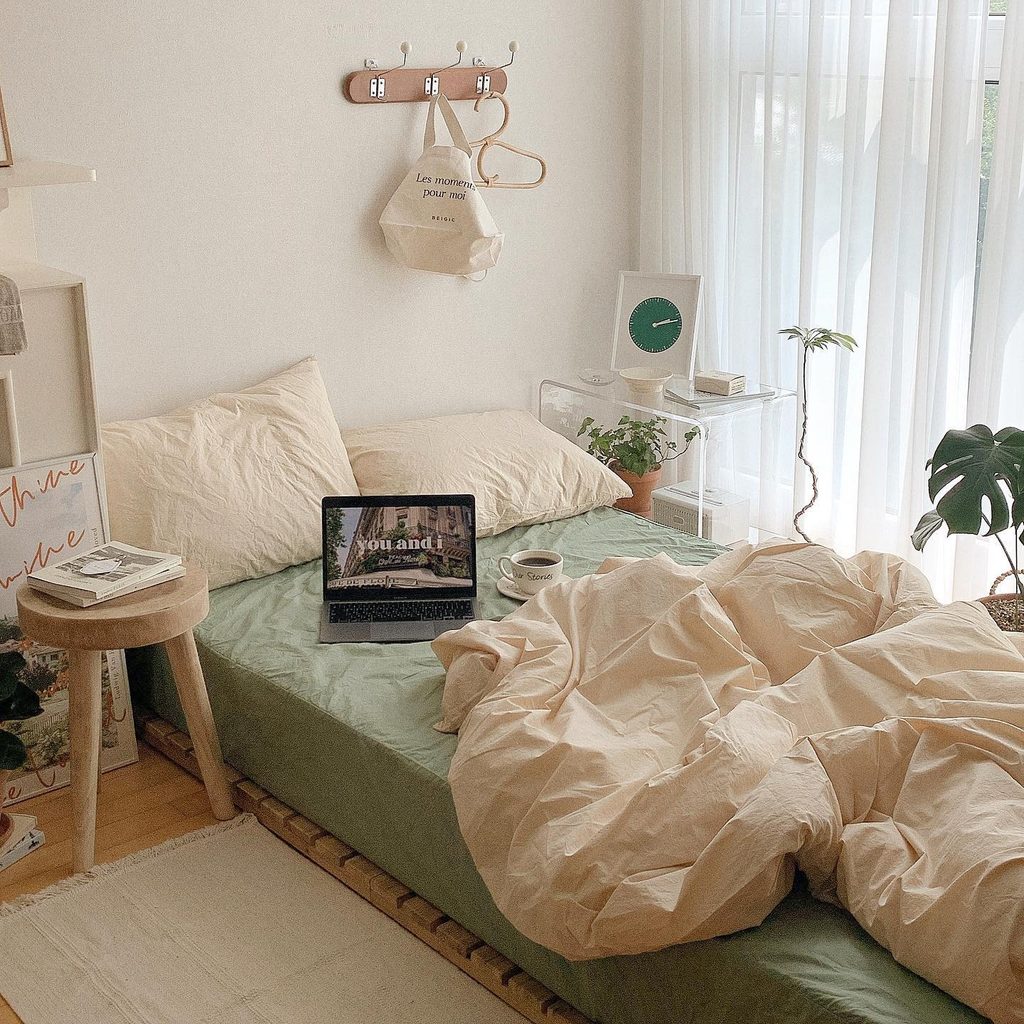
A glimpse of muted green gives this cream bedroom a gentle change of mood. Gowoonal leaves the fitted sheet visible beneath the folded duvet, so the color looks integrated instead of appearing only in decorative cushions.
A low wooden base, small stool, and light curtains keep the surroundings understated. You can try this approach without replacing your main bedding set.
Choose a sheet that complements the duvet you already own, then fold the cover back far enough to reveal it. Compare the combination in daylight before adding accessories.
A small green plant can repeat the color elsewhere, but exact matches are unnecessary. Keep the number of accent shades limited so the bed remains restful to look at throughout the day.
Transparent Seating Keeps Bedside Corners Light
Credits: Instagram
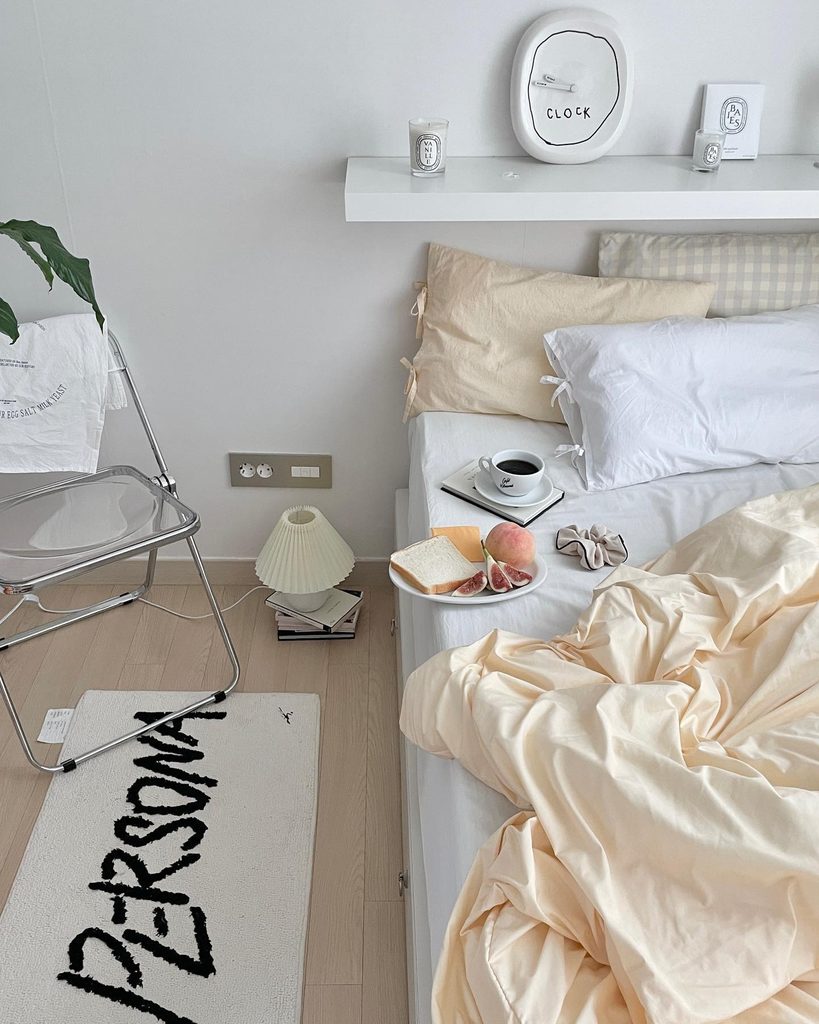
Seeing through a chair changes how much space it seems to occupy. Jinmilloo uses a transparent seat and back beside pale bedding, allowing the floor and neighboring furniture to remain visible.
The slim frame supplies seating without adding another solid block to this compact room. This is a useful option when you occasionally need a place to sit but have little room for an upholstered armchair.
Check the chair’s actual dimensions and comfort rather than choosing it solely for appearance. Leave enough clearance to sit down without bumping the bed.
If you choose a folding design, identify where it will go when stored. A quieter furniture outline also lets a playful rug or small decorative lamp provide the room’s character.
Compact Café Table Beside the Bed
Credits: Instagram
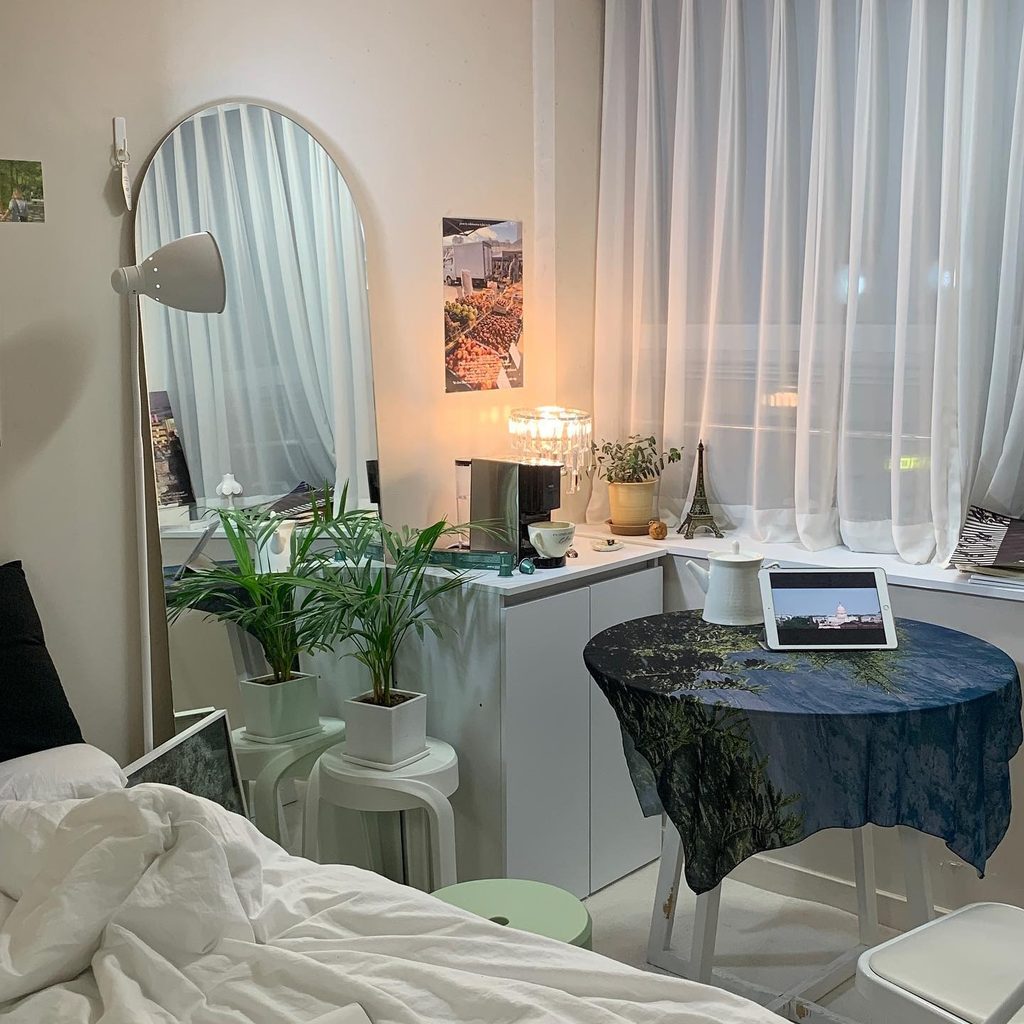
Even a modest bedroom can include somewhere to enjoy a drink away from the pillows. In Amourming’s room, a small round table and white chair sit beside the bed, with soft fabric draped over the tabletop.
A lamp, curtains, and nearby plants make this corner feel connected to the sleeping area. Before borrowing the arrangement, measure the space required to pull out a chair and walk past it.
A round edge can be helpful, but the table still needs to fit your daily movements. Use a washable covering if drinks or snacks will sit there.
Keep the surface available for its purpose instead of treating it only as a display. One comfortable corner can make a studio feel more versatile.
Closed Storage Balances a Low Bed
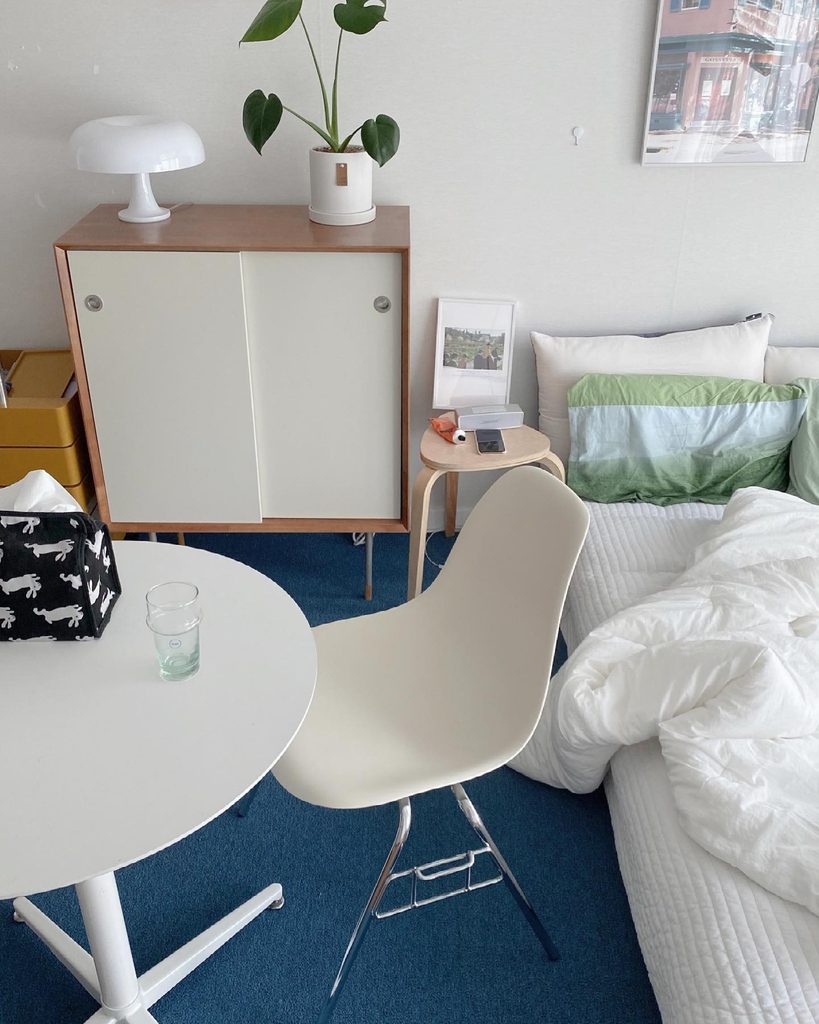
Credits: Instagram
Doors make a difference when everyday belongings share space with a bed. Mongha’s cabinet combines pale fronts with a wooden outline, offering a visually quiet surface beside white bedding and a blue rug.
A lamp and plant on top add interest without exposing everything stored inside. Consider this balance if open shelving makes your bedroom feel busy.
Choose a cabinet that suits what you actually need to put away, checking shelf spacing and door clearance before buying. Keep its top from becoming the default landing place for every loose item.
Repeating a pale finish from the bedding can connect storage with the rest of the room. A little visible wood then provides warmth without requiring an entirely matching furniture set.
Window-Side Bed Opens the Center
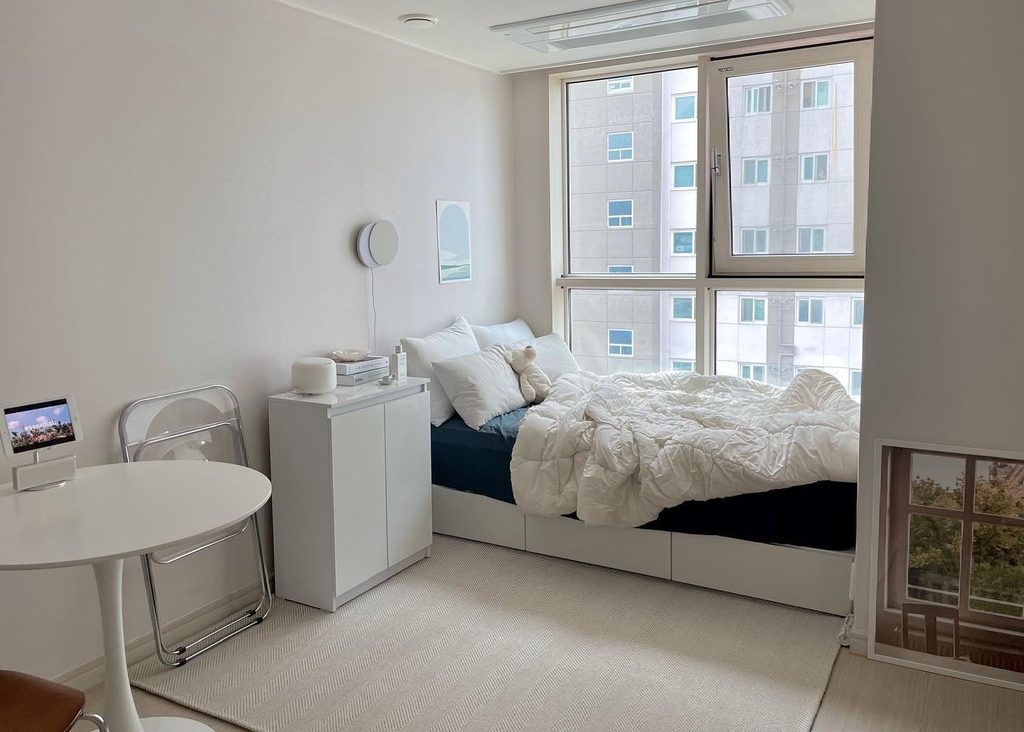
Credits: Instagram
Moving the sleeping area toward one end can clarify a studio’s layout. La Brunne places the bed beside broad windows, leaving a central rug and small table within the remaining open space.
A low white cabinet marks the transition without blocking the view across the space. The arrangement makes each area easy to recognize while keeping the overall palette simple.
Try sketching your room with the bed in several positions before moving heavy furniture. Check window access, ventilation, and the route around the bed in each version.
Avoid squeezing furniture so tightly that curtains or handles become difficult to use. Once the layout works, pale bedding and coordinated storage can help the different zones feel like parts of one room.
A Dedicated Desk Along One Wall
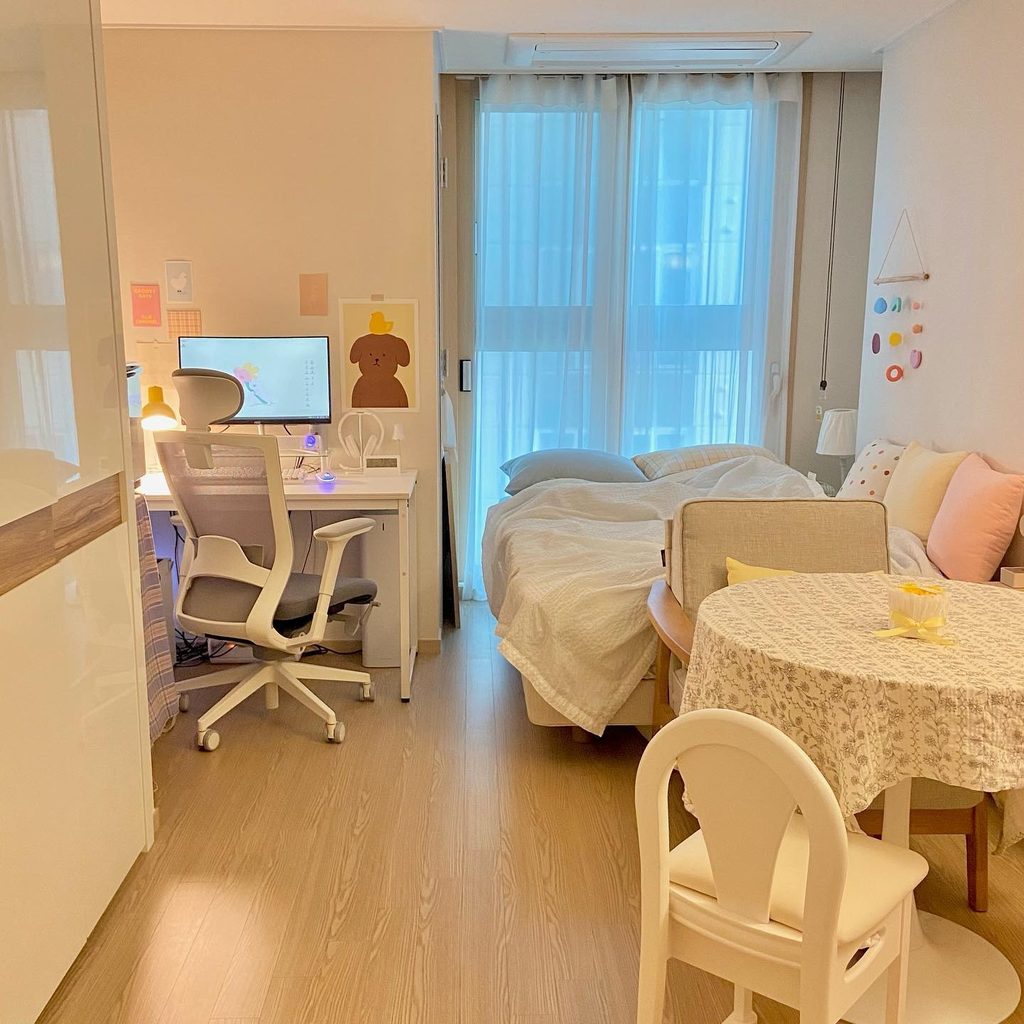
Credits: Instagram
Work equipment feels more organized when it has a dedicated wall. Uue Home positions a white desk and office chair opposite the bed, keeping its lamp and the small wall pictures together.
The narrow room still includes a clear route toward the window. This arrangement offers a practical starting point for a bedroom that also serves as a workspace.
Measure the space behind your chair when it is pulled out, not just when tucked underneath. Place frequently used supplies within reach and reserve the bed for a different activity.
A focused lamp can support desk tasks without making the whole room equally bright. Keep wall decorations concentrated around the work surface so the remaining walls feel quieter around your bed.
Neutral Gingham With a Textured Rug
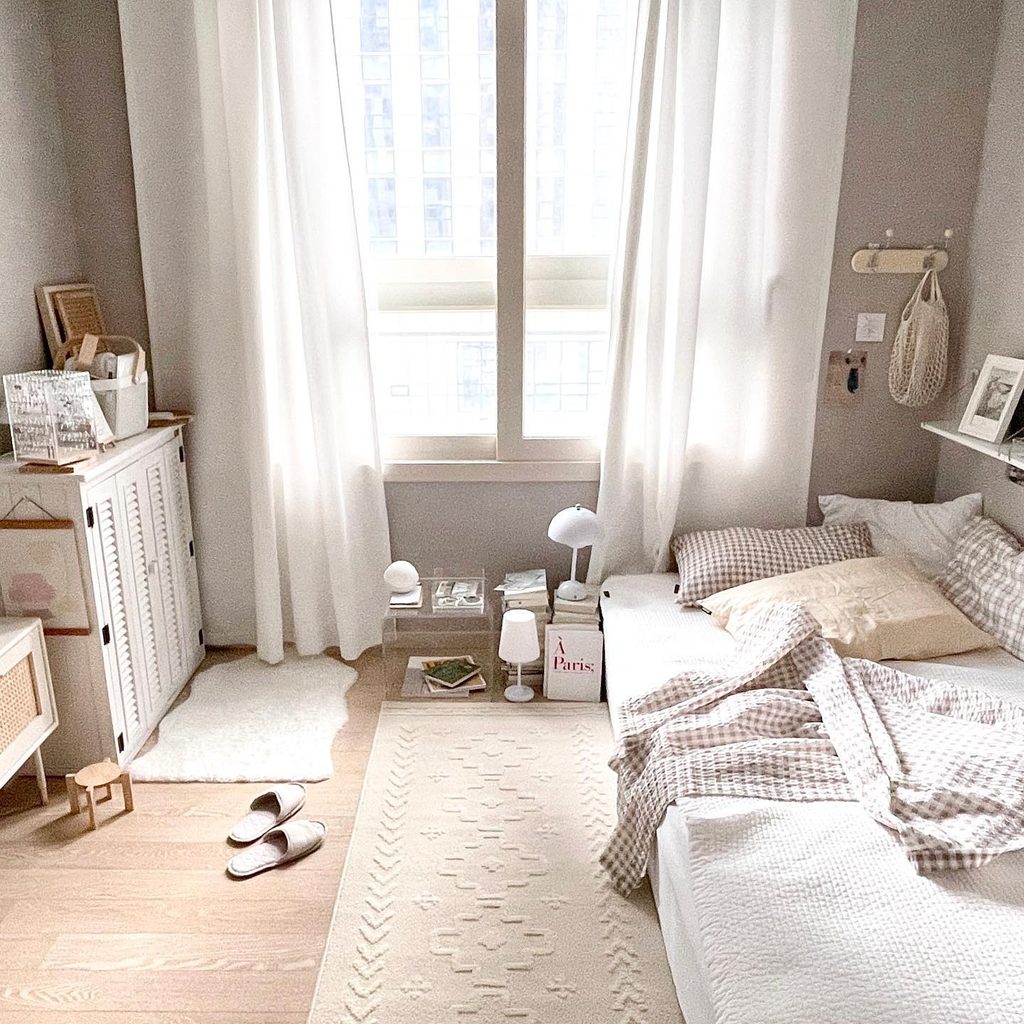
Credits: Instagram
Small repeats introduce pattern without overwhelming Johee’s neutral room. Beige and gray gingham appears on the pillows and loose cover, while a raised design on the cream rug supplies a different kind of detail.
The low bed and sheer curtains leave those textures easy to appreciate. To adapt this combination, keep the printed fabric within a narrow color range and vary its surroundings through texture instead of additional motifs.
Compare the scale of a check with the size of your pillows before ordering. Larger checks can read very differently across a small surface.
Choose a rug that fits the walking area beside your bed and can be cleaned conveniently. Plain bedding between patterned pieces prevents the arrangement from becoming crowded.
A White Vanity Creates Dressing Space
Credits: Instagram
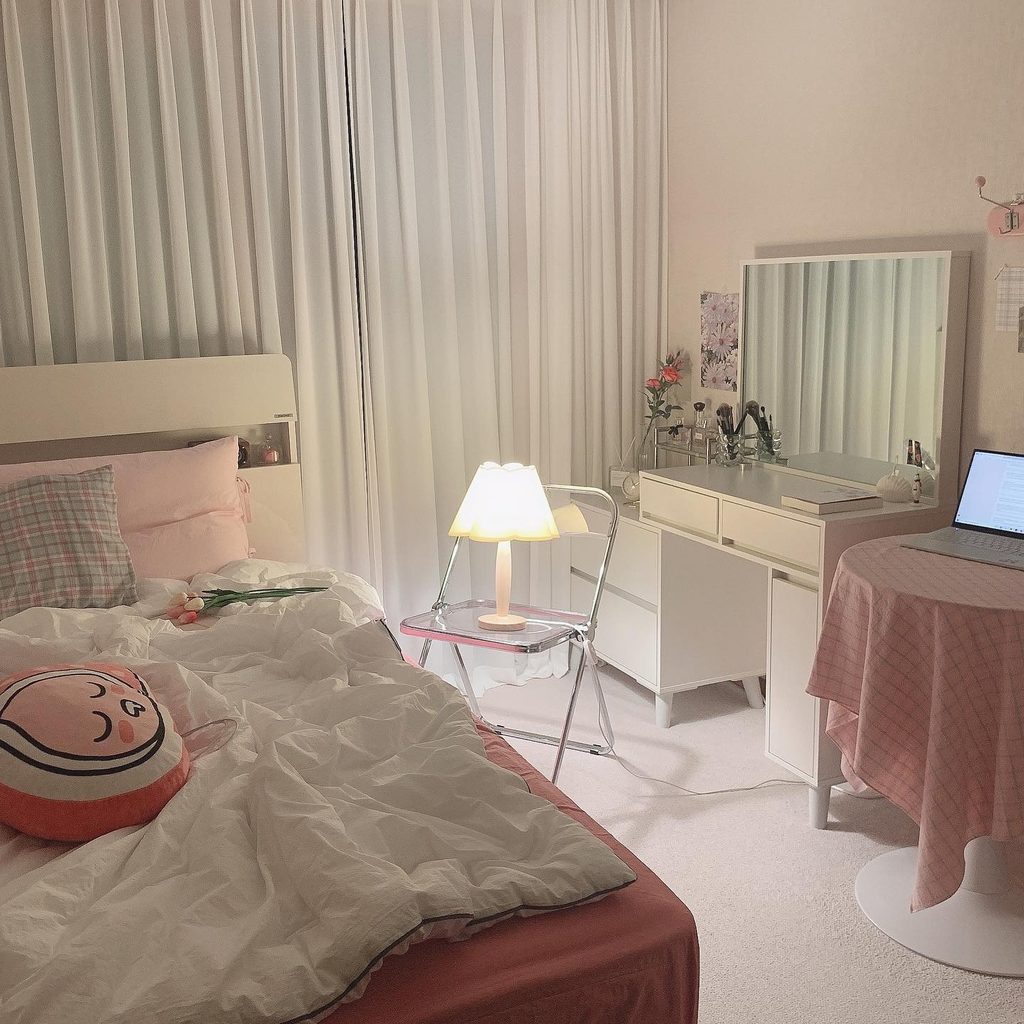
Getting ready becomes easier when the necessary items have their own place. Nahyeon’s white dressing table sits beside the bed, with a rectangular mirror, drawers, and a stool that fits underneath.
Pink bedding gives the room color while the pale furniture keeps the corner connected to its surroundings. Consider a compact vanity if makeup, hair accessories, or jewelry otherwise spread across your bedside surface.
Check that its depth leaves a usable passage and that the stool can move comfortably. Position lighting to illuminate your face rather than relying entirely on a lamp elsewhere.
Divide the drawers according to your routine, and leave the top mostly available. The useful detail is a clear dressing area that returns to order after use.
Hanging Greenery Above a Wooden Headboard
Credits: Instagram
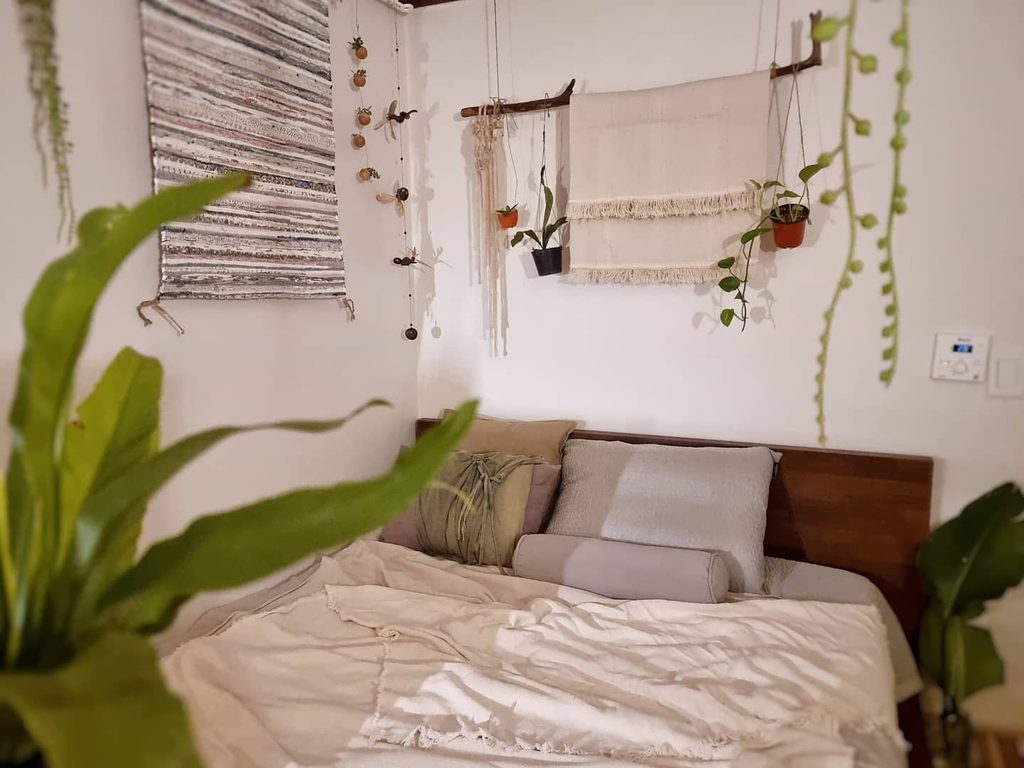
Life at several heights gives Rira’s bedroom its layered appearance. Trailing plants hang near woven wall pieces, while leaves frame the low bed and wooden headboard.
Plain bedding keeps the collection from competing with a busy textile pattern. This approach can work in a Korean-inspired room when greenery is treated as part of the composition, rather than scattered wherever space remains.
Start with the light conditions you actually have and choose suitable plants. Keep watering and maintenance accessible, especially for anything suspended.
Position hanging pots where they will not interfere with sleeping or movement, and use appropriate supports. A few varied leaf shapes can create interest without requiring many plants. Leave some wall visible so each element has breathing room.
Round Pendant Paired With Bedside Globes
Credits: Instagram
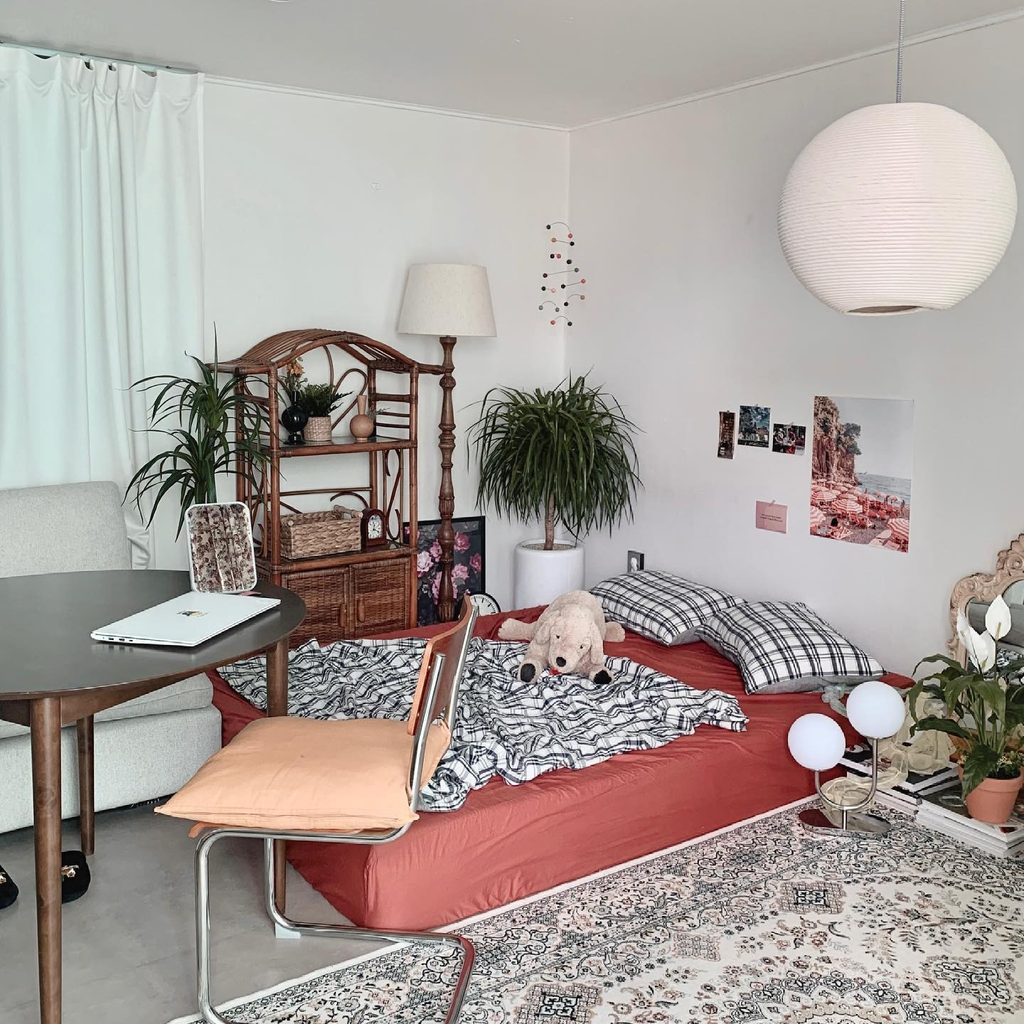
Circles connect the different light sources in Dalsom’s room. A large ribbed white pendant hangs overhead, while smaller globe lights sit beside the low bed.
Rust-colored bedding and darker furniture give the pale shades a clear setting. The photograph suggests a useful way to coordinate lighting without buying an identical matching set.
Repeat a simple shape, then vary the size and position according to the task. Consider how much light you need for reading, dressing, and moving around the room before choosing fixtures.
A decorative glow alone may not cover every activity. Check pendant placement against the bed and walking routes, and arrange convenient controls.
Similar silhouettes can make several practical lights feel like a considered part of the decor.
An Open Nightstand With Two Levels
Credits: Instagram
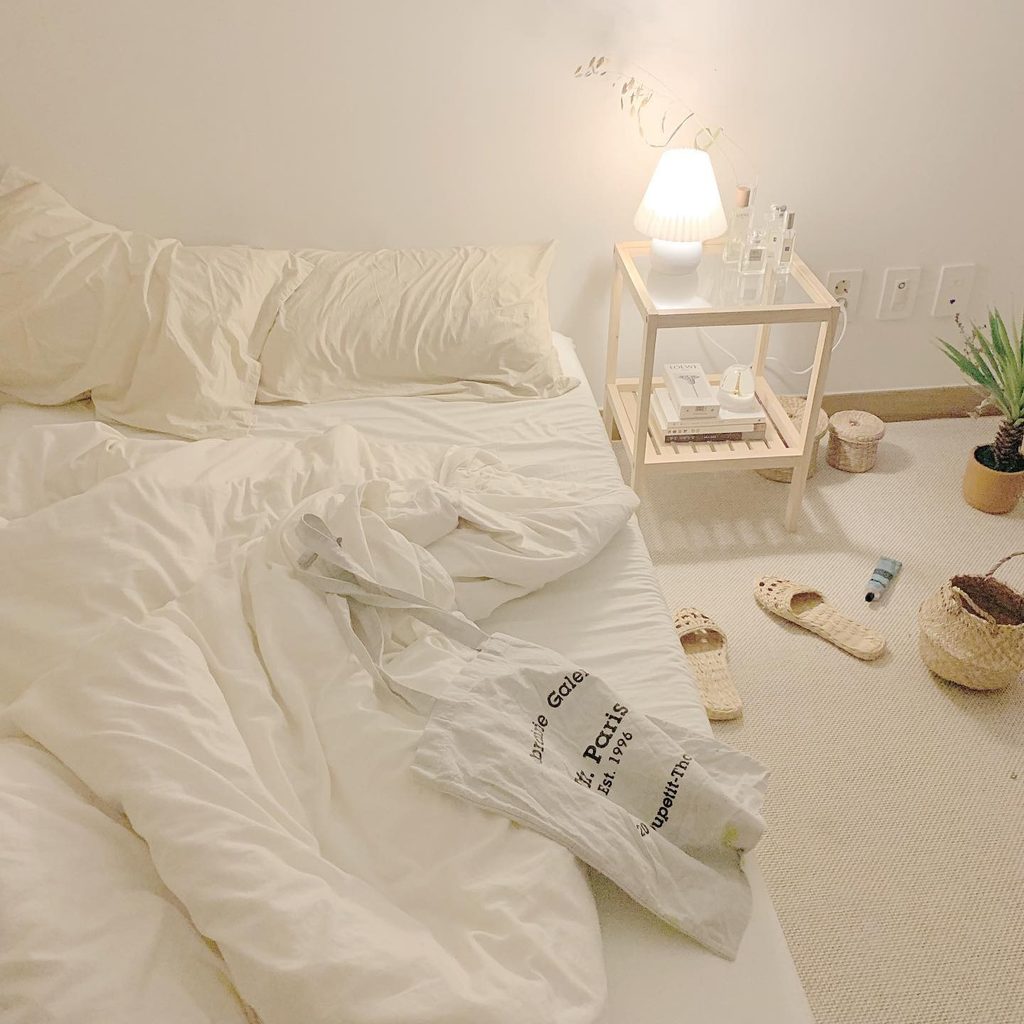
Daily essentials can stay close without sharing one crowded tabletop. In this room, an open bedside table provides an upper level for the lamp and objects, with books and other items arranged below.
Its light frame sits comfortably beside loose white bedding. The idea works well when a drawer is unnecessary but a single surface feels too limited.
Assign the lower shelf a specific purpose so it does not become a collection of miscellaneous clutter. Check that the tabletop height is comfortable to reach from your mattress.
Leave room for whatever you use each night, rather than copying every accessory in the photograph. An open design remains visually light when its contents are edited and the surrounding floor stays clear.
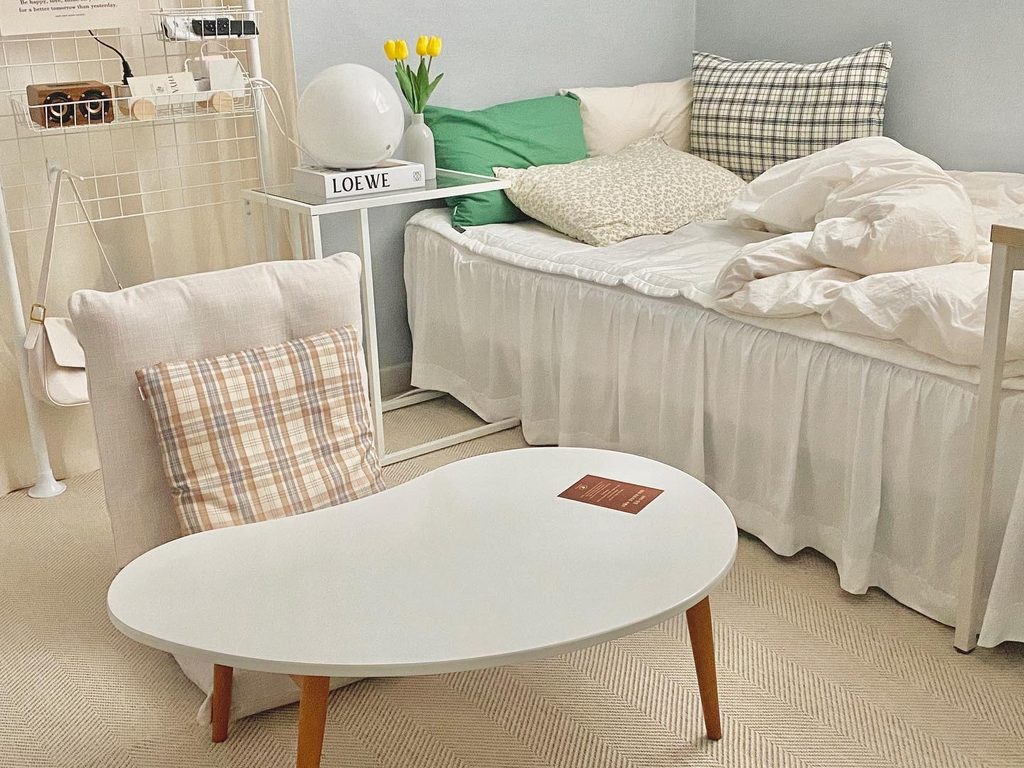
Floor Seating Around a Curved Table
Credits: Instagram
Sitting closer to the floor creates a different kind of bedroom retreat. Kyongii replaced her sofa with a padded floor chair and low curved table, placing them beside a bed dressed in white.
A checked cushion and green pillow add small areas of color. This layout can suit reading, a short coffee break, or another quiet activity when a full sofa would occupy too much room.
Try the seating height before committing, since getting up comfortably matters as much as appearance. Allow space for your legs beneath the table and keep the route to the bed open.
Select a surface that fits the activity you want to enjoy. The combination gives a compact room another useful destination beyond the mattress.
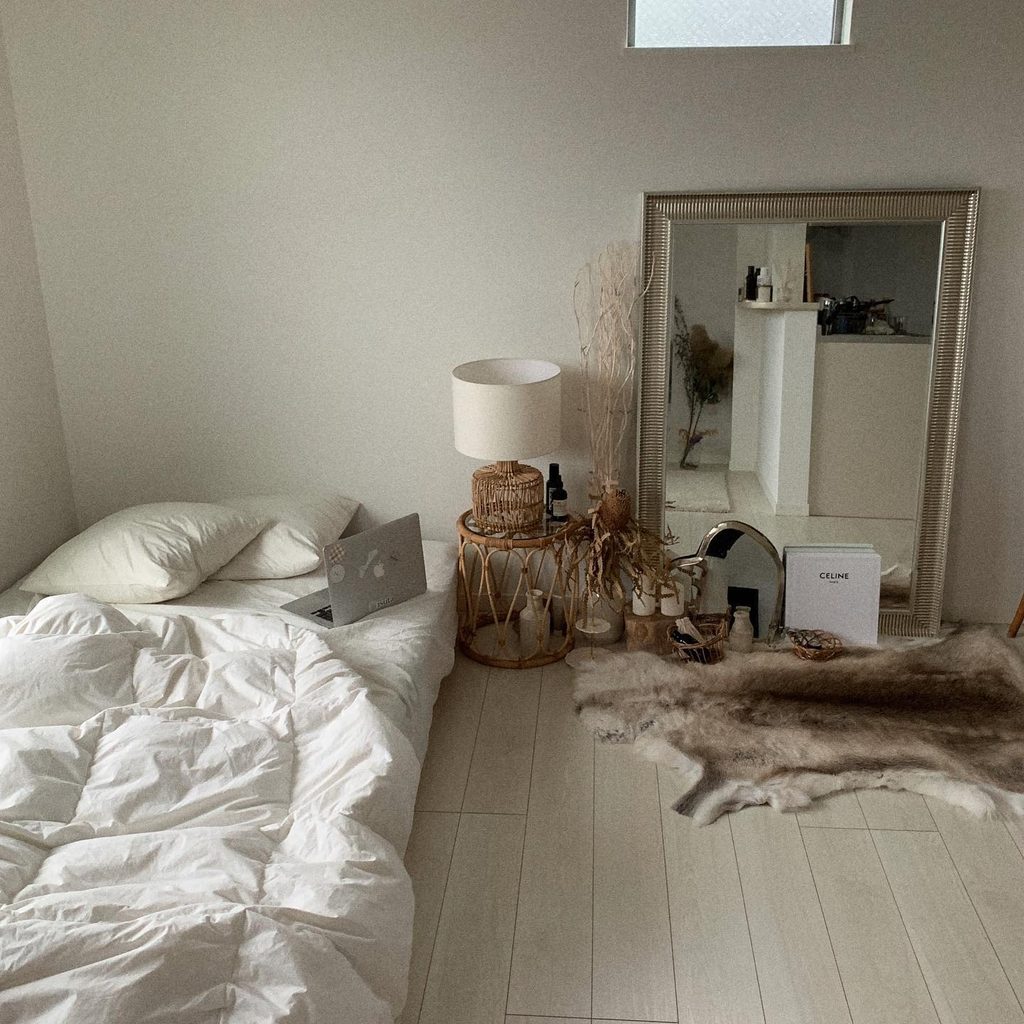
A Tall Mirror Completes the Corner
Credits: Instagram
Reflections give a simple dressing corner another layer of depth. Sayako places a tall rectangular mirror beside a low bed, with a small lamp and woven furniture nearby.
Its frame helps the mirror read as part of the decor rather than an isolated practical object. Borrow the idea by checking what a mirror will reflect before choosing its position.
A clear view across the room is usually more helpful than a reflection of crowded storage. Use mounting or securing hardware appropriate to the mirror and wall, even when you prefer a relaxed floor-level appearance.
Leave enough standing space for everyday use. Keeping neighboring accessories low allows the mirror’s shape to remain visible and gives the corner a more deliberate arrangement.
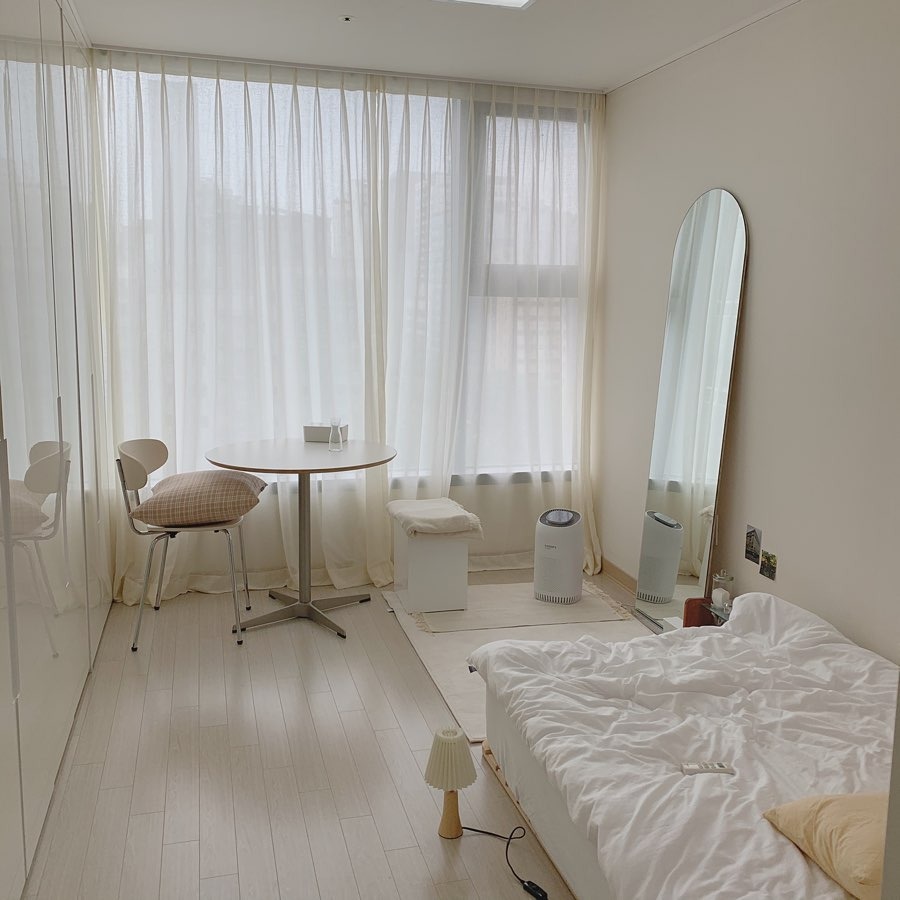
A Low Platform Preserves Vertical Space
Credits: Instagram
Keeping the sleeping surface low leaves more wall visible above it. Lazy Mansion’s mattress rests on a simple wooden base, with pale bedding and a small lamp close to floor level.
The room’s tall curtains and narrow mirror emphasize the difference between low furniture and vertical surfaces. This is a recognizable Korean-style bedroom approach, but comfort should guide the final height.
Consider how easily you can sit down, stand up, and make the bed. Choose support suitable for your mattress and follow its care requirements rather than placing it on an improvised surface.
Keep surrounding furniture proportionate so essentials remain reachable. A restrained arrangement works best when the bed’s low profile supports everyday use as well as the room’s appearance.
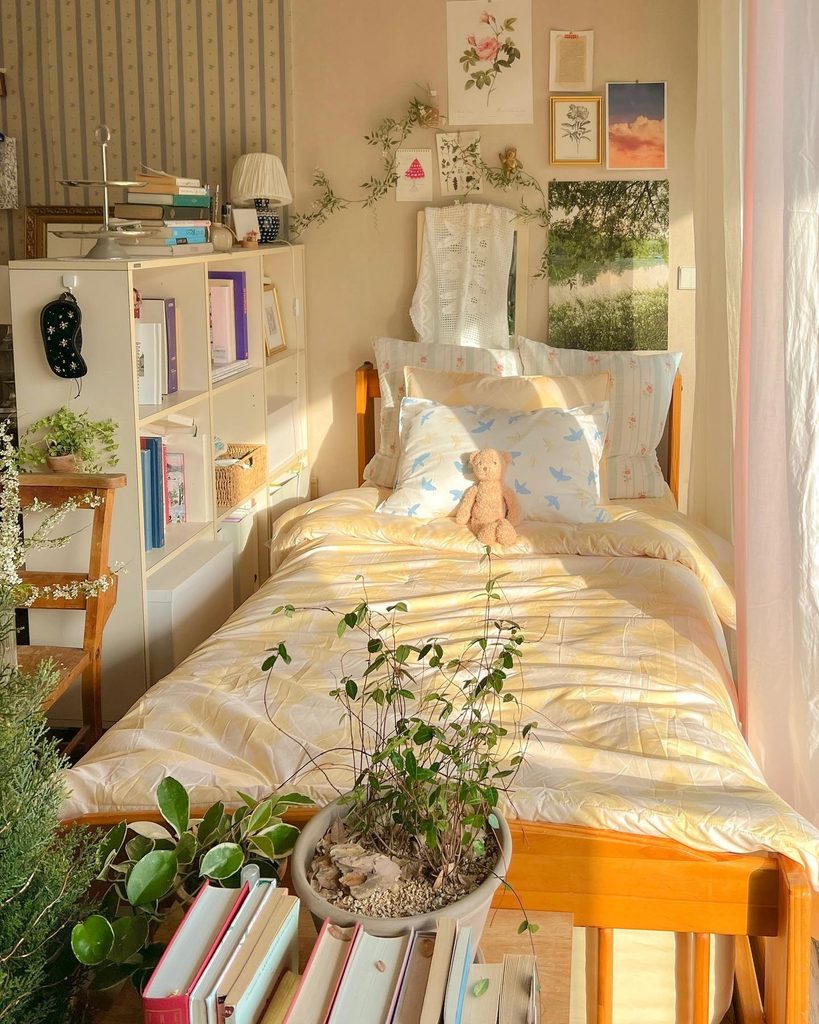
Small Art Gallery Above the Bed
Credits: Instagram
Pictures become a focal point when they share a clear area of wall. Ena gathers small landscapes, flowers, and paper pieces above a wooden single bed, mixing framed and unframed works.
The nearby books and yellow bedding reinforce the room’s collected feeling. You can create a similar gallery with images that matter to you instead of purchasing a coordinated set.
Lay the arrangement out first and check its overall width against the bed. Keep gaps intentional, even if individual frames differ.
Use suitable hanging methods and place heavier pieces thoughtfully. Repeating one or two colors from the bedding can connect the display to the room.
Leaving the surrounding wall quieter allows a modest collection to feel complete without expanding endlessly.
A Geometric Rug Defines Open Floor
Credits: Instagram
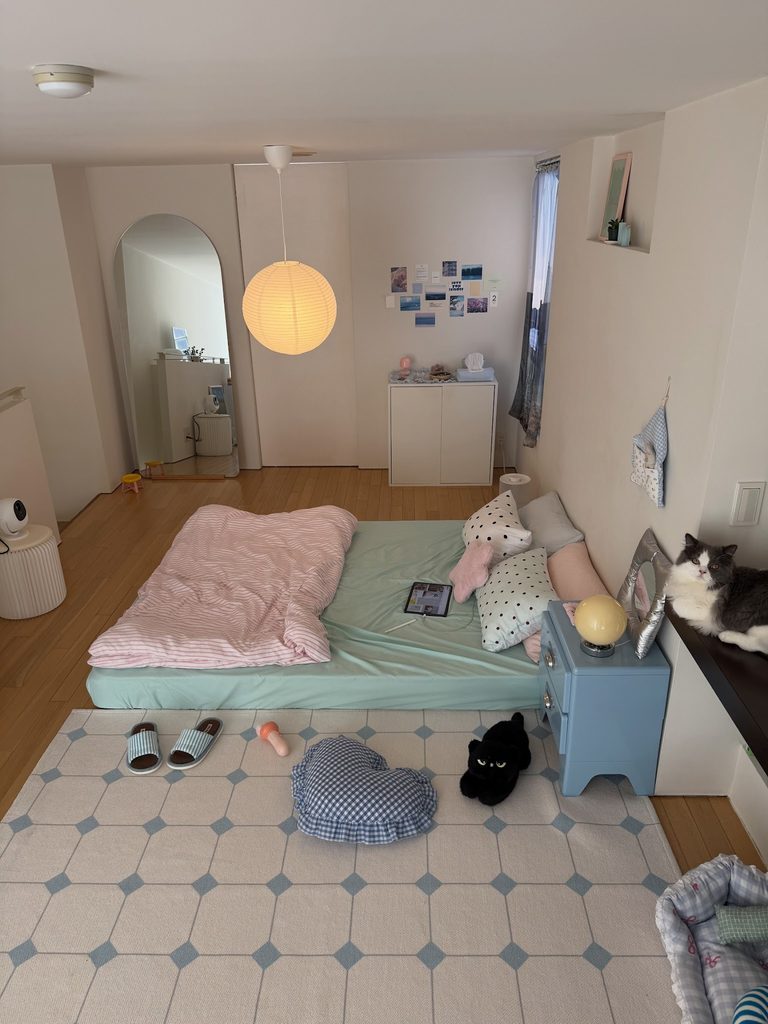
Blue outlines make the open floor in Saki’s bedroom feel purposeful. A large geometric rug sits beside the low mint and pink bed, with a small floor cushion resting within its pattern.
The blue bedside cabinet repeats the rug’s accent color, helping the room feel connected. This is useful inspiration when a studio has an open area that seems unfinished between furniture pieces.
Choose a rug for the space you want to use, checking door swings and walking routes before selecting its size. A repeated geometric motif provides structure without another piece of furniture.
Keep nearby fabrics simpler if the pattern is prominent. The rug can define a place to stretch, sit, or get dressed while leaving the layout flexible.
Slatted Blinds Keep the Window Clear
Credits: Instagram
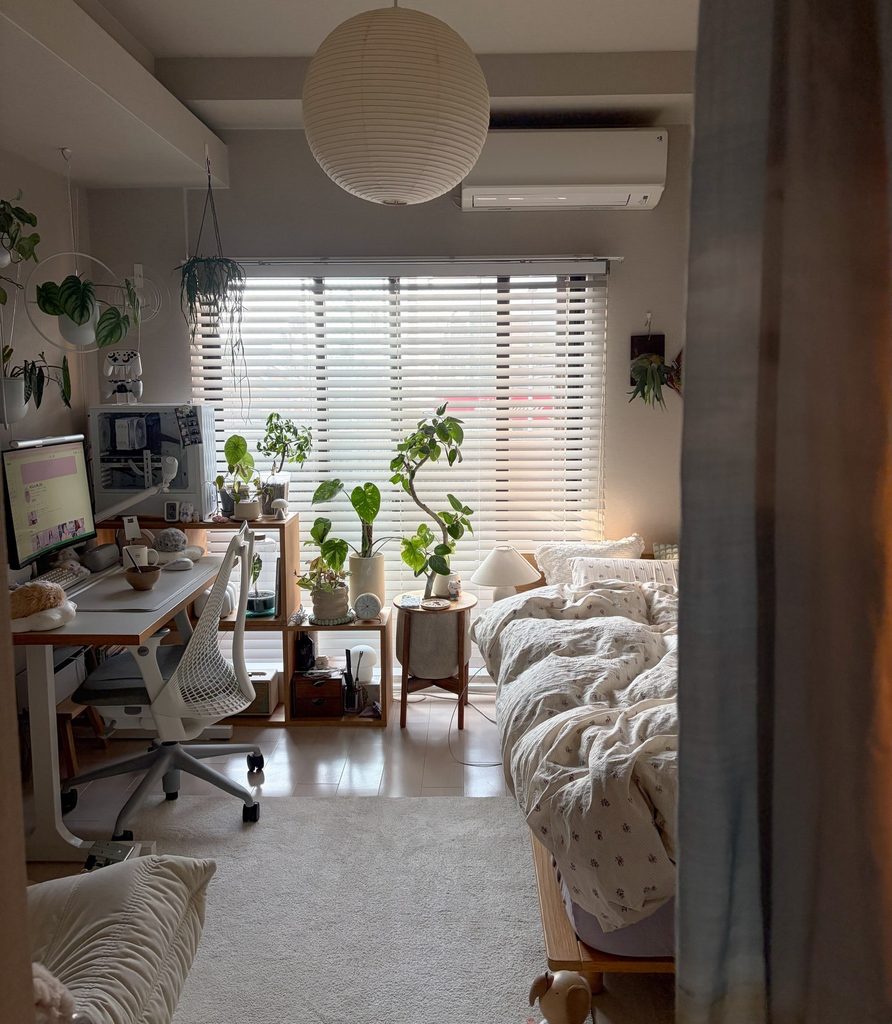
Adjustable slats offer a simple way to dress a bedroom window. Luna uses pale horizontal blinds above a compact arrangement of plants, a desk, and the bed.
Their repeated lines give the window structure while leaving the surrounding floor free of trailing curtains. This option can be helpful where furniture sits close to the glazing.
Compare how different slat positions affect daylight and privacy from your actual viewpoint. Check that the blind can operate without catching on nearby objects, and follow its installation requirements.
If darkness matters for sleep, assess the specific product rather than assuming every blind blocks light equally. Pale finishes can keep the treatment quiet, allowing patterned bedding and personal objects to supply the softer decorative layers.
A Blank Wall Becomes Movie Space
Credits: Instagram
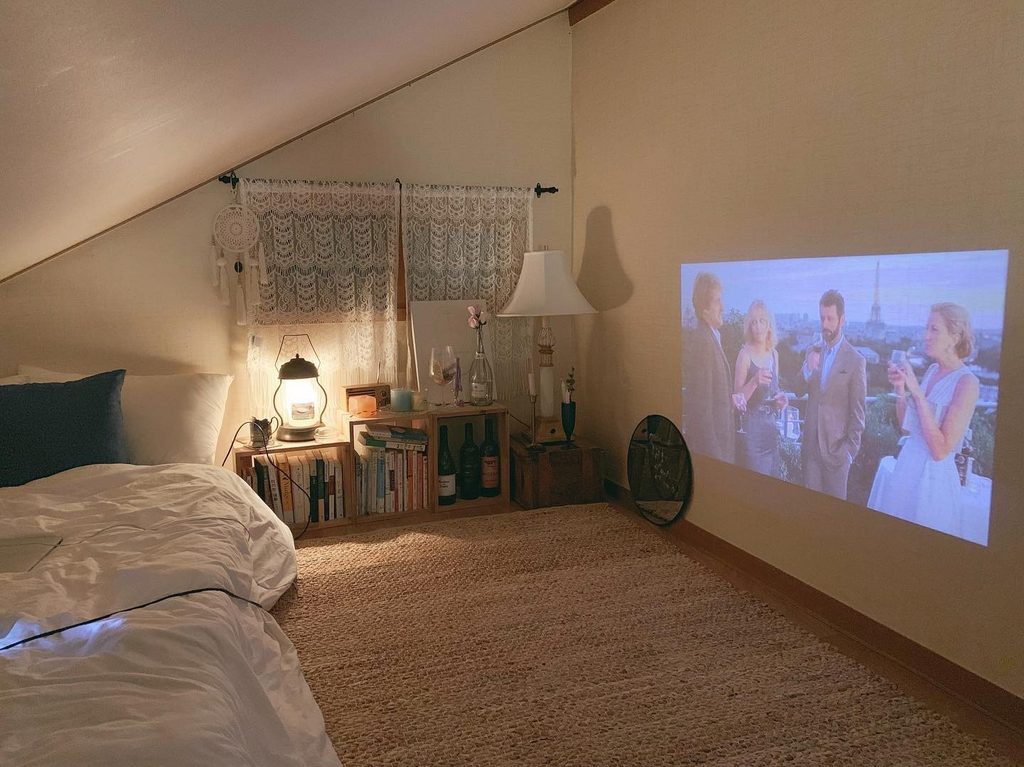
An empty wall can make room for evening entertainment. Hattu leaves a plain wall opposite the bed available for projected movies, with low book storage and warm lighting nearby.
The sloped ceiling makes the arrangement feel enclosed, while the clear projection area keeps the image easy to see. Before trying this idea, check the projector’s placement requirements against the distance available in your room.
Consider power access, cable routes, and where the equipment will rest securely. Test the picture under the lighting you expect to use, rather than judging it only in complete darkness.
Keep the wall free of competing decorations within the viewing area. When the film ends, that same uncluttered surface can help the bedroom return to calm.
Dark Printed Bedding With Warm Wood
Credits: Instagram
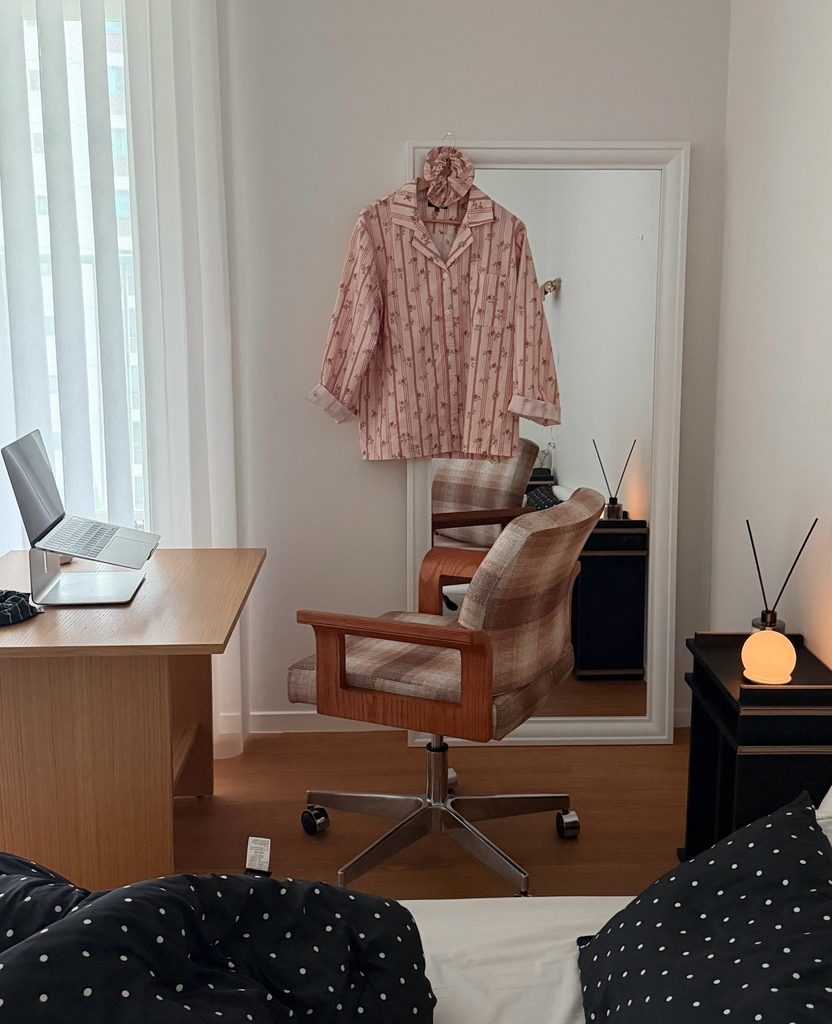
Contrast feels warmer when dark textiles sit beside visible wood tones. This bedroom combines black bedding with small white motifs, a wooden desk and chair, and dark bedside furniture.
A glowing lamp softens the corner without changing its restrained palette. This is a useful alternative for readers who like Korean-style interiors but prefer stronger definition to an entirely pale room.
Begin with one dark textile and compare it with the wood already present. Repeat a little black in another practical item so the bedding feels connected.
Leave lighter walls or curtains visible to balance the larger dark area. Choose a pattern that reads clearly from the doorway, and keep additional prints selective so the contrast remains intentional rather than busy.