
- A Pedestal Table Beside a Narrow Bed
Credits: Instagram
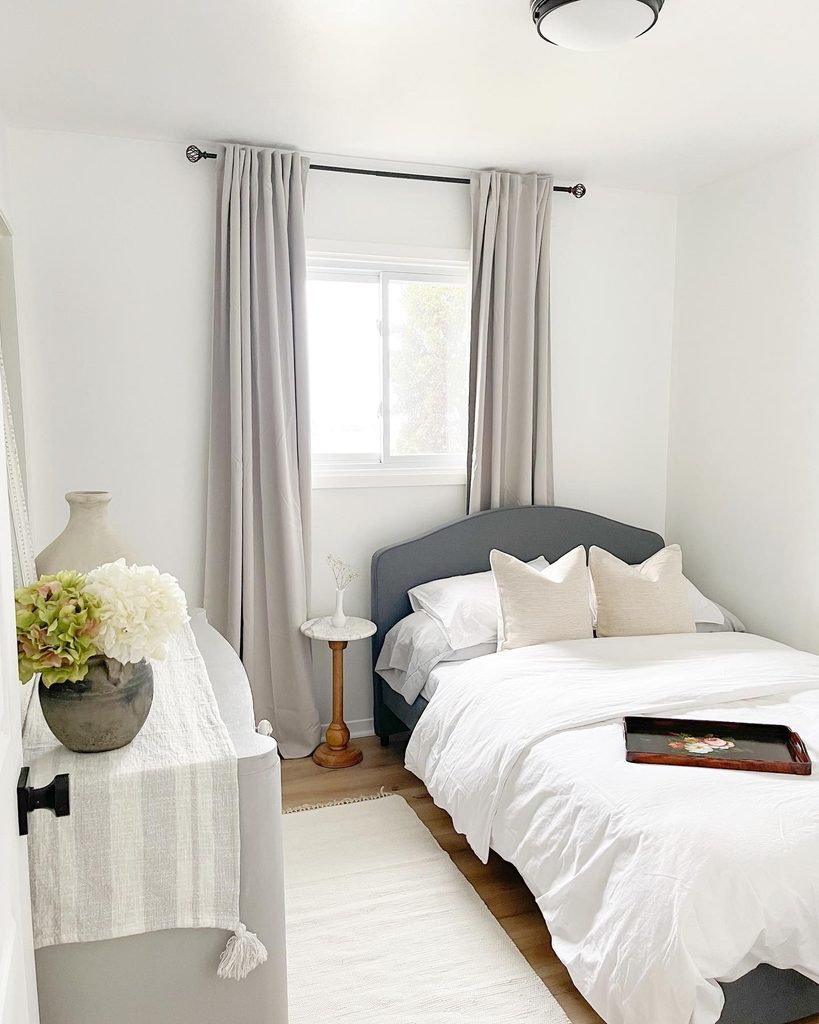
Sometimes the gap beside a mattress needs only enough furniture to hold a glass and a phone. Monica Ramos uses a small pedestal table in this white guest room, leaving more of the floor visible between the bed and dresser.
Its rounded top softens the tight arrangement, while the wooden base gives the pale room a warmer note. Before choosing a similar piece, measure the available gap at both mattress and floor level.
A broad base can still catch a foot even when the tabletop fits. Keep the surface mostly empty for your visitor, and position it where someone lying down can reach comfortably.
This modest swap works particularly well when a conventional rectangular nightstand would crowd the walking route.
- Wall Sconces That Free the Bedside Surface
Credits: Instagram
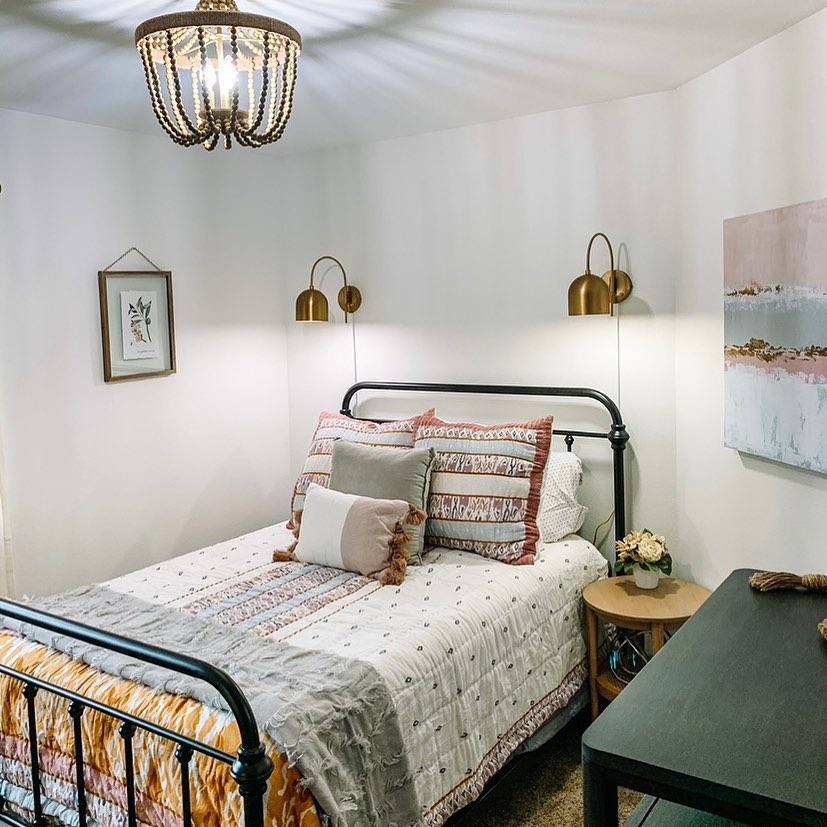
Bedtime reading should not require a lamp that occupies most of a tiny table. In this MC Interiors guest room, two curved wall sconces flank a black metal headboard, leaving the small bedside surface available for guests’ personal belongings.
The warm metallic finish also connects with the decorative ceiling fixture, so the practical lighting feels integrated.
Plan placement with the bed and pillows in position; a light that looks balanced on an empty wall may sit awkwardly behind someone reading. For an adaptation, consider reachable switches and shades that direct light away from a companion.
Route visible cords neatly along the wall. A compact guest bedroom benefits most when its lighting is comfortable to operate from bed, not merely attractive.
- A Sliding Door to Preserve Floor Clearance
Credits: Instagram
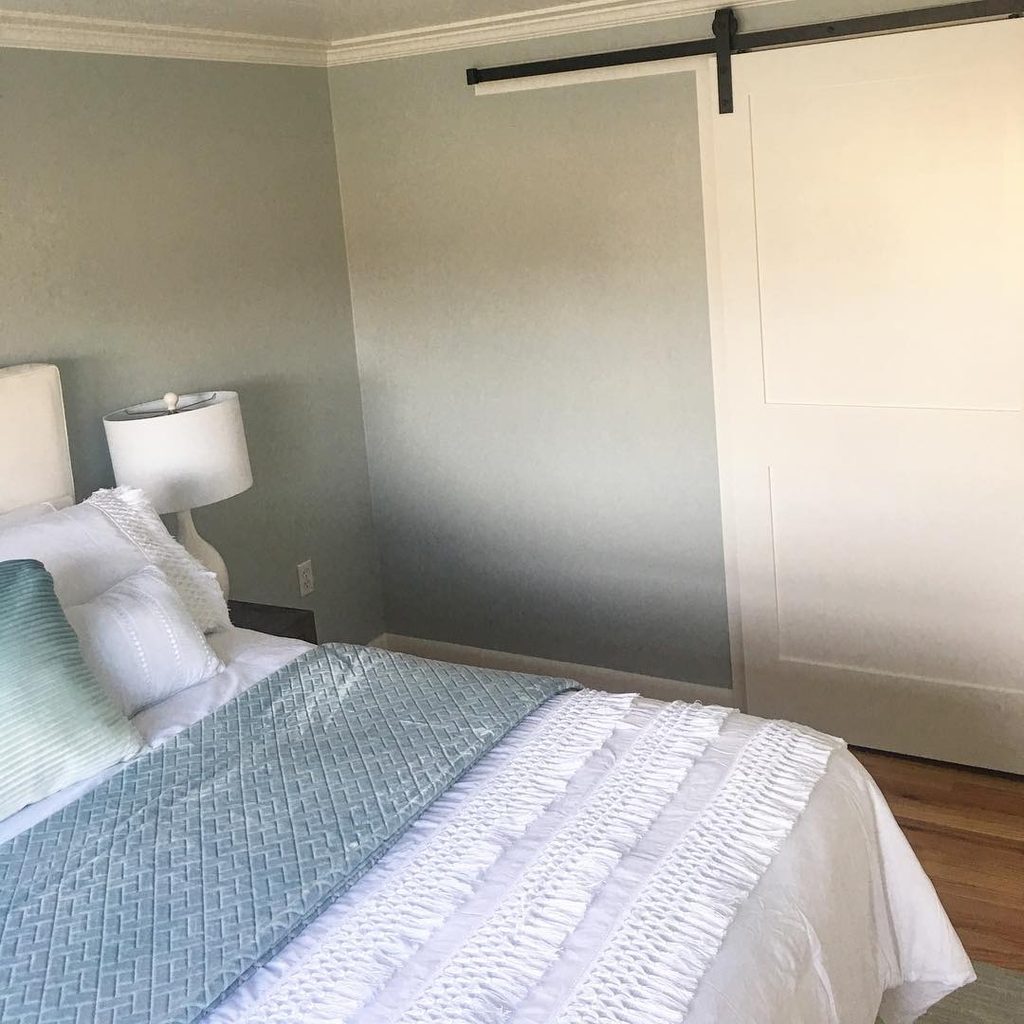
Every door swing claims a patch of floor that furniture cannot comfortably occupy. Roberta Jones sidesteps that conflict with a white sliding door on a dark exposed track beside this guest bed.
The restrained panel design blends with the pale bedding, while the black hardware supplies a clear architectural detail.
If you are considering the same approach, first identify an uninterrupted stretch of wall long enough for the door to slide fully open. Switches, artwork, outlets, and nearby furniture all need checking.
A surface sliding door also deserves a privacy assessment, since its edges may transmit more sound than a conventional closed door. Used in the right location, it can remove an awkward obstacle without changing the room’s overall footprint.
- Two Small Stools Instead of a Long Bench
Credits: Instagram
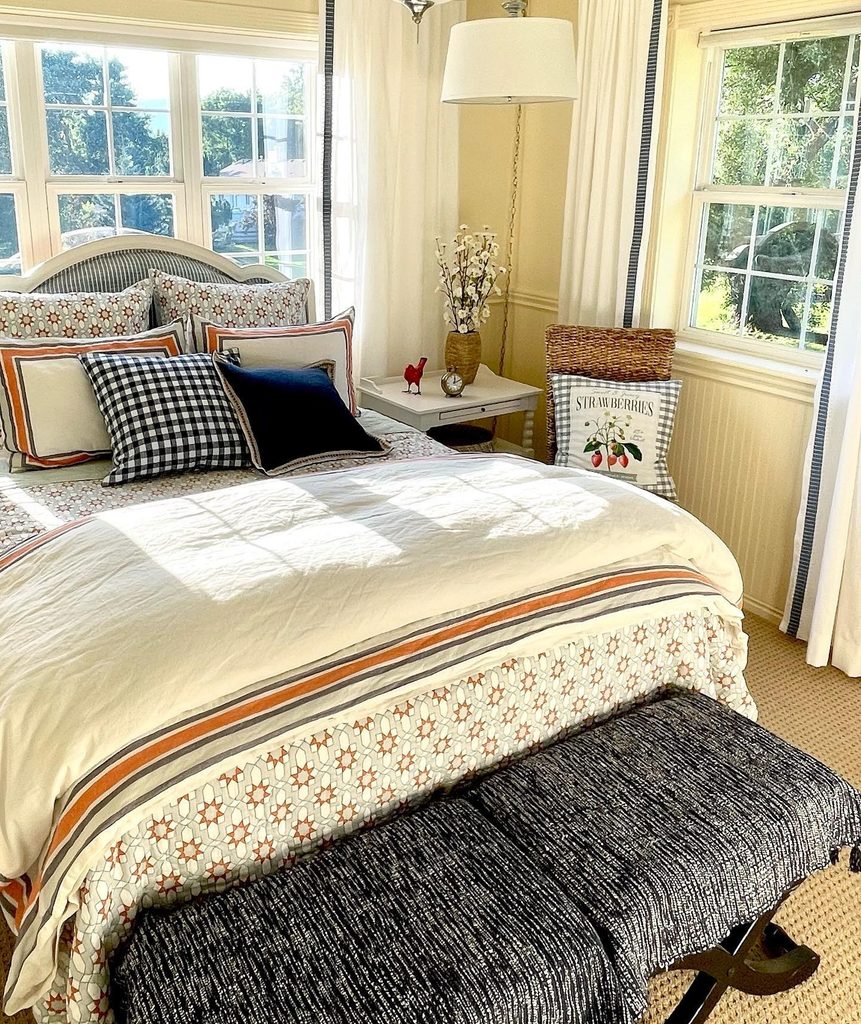
A place to sit need not stretch across the entire foot of the bed. Michelle groups two small upholstered stools here, creating a flexible alternative to a single long bench.
Their dark textured tops ground the patterned bedding, and each piece can move independently when the room needs a different arrangement.
That flexibility is useful for visitors traveling together: one person can use a stool while the other clears space beside a suitcase. When adapting the idea, choose sturdy seating with proportions that leave a comfortable route around the bed.
Avoid assuming every decorative ottoman is suitable for sitting. Two coordinated pieces can look intentional together while remaining easier to reposition than one large item in a compact guest bedroom.
- A Guest Nightstand With Clear Space and Easy Charging
Credits: Instagram
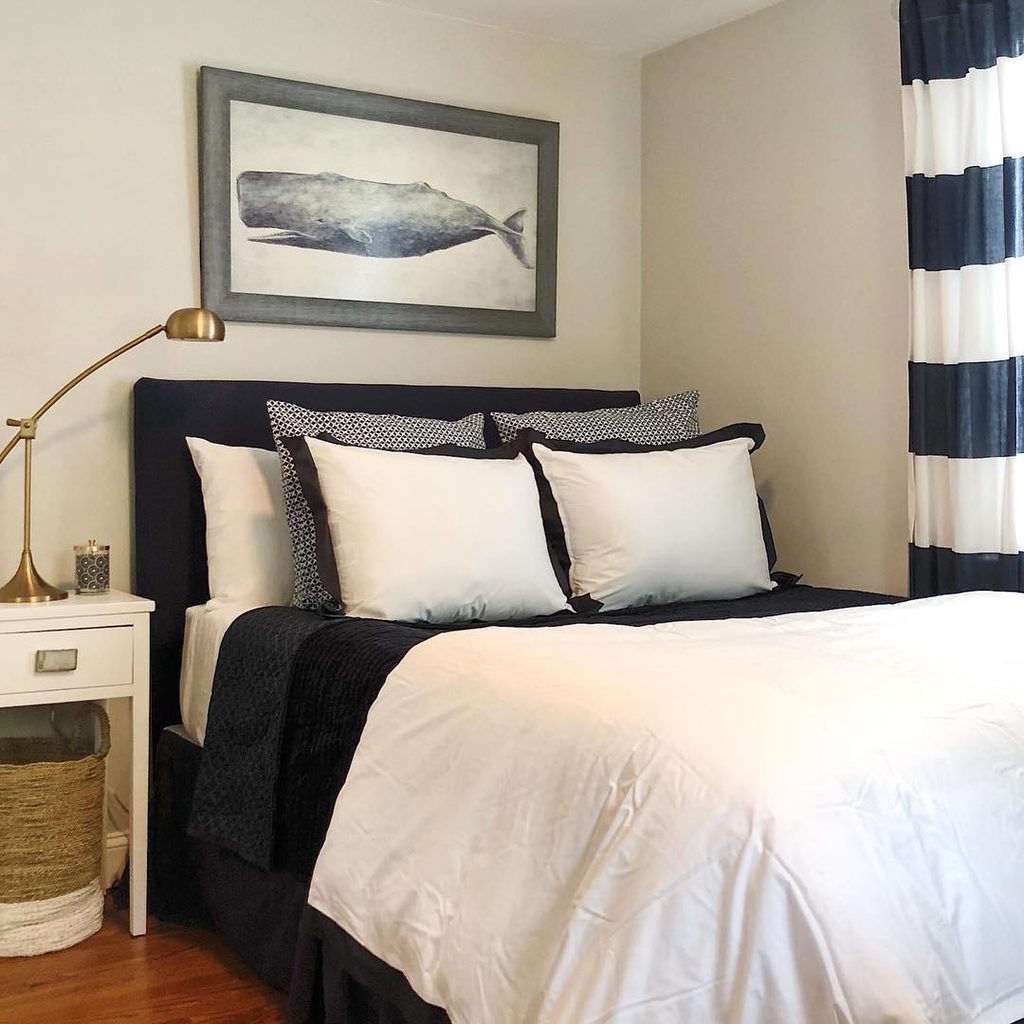
Visitors arrive with the small things that rarely appear in styled room photographs: charging cables, glasses, keys, and yesterday’s paperback. Shoshana Gosselin leaves room for them around a simple adjustable lamp on this white nightstand.
A basket occupies the open space underneath, adding another useful layer without introducing a separate floor container. The designer also describes making bedside power accessible in this small guest room.
At home, check outlet access before finalizing the furniture arrangement, then provide an appropriate charging connection with cables kept clear of the walking route. Leave the drawer available rather than filling it with household overflow.
A practical nightstand earns its place through what a guest can comfortably use, including the empty space on its top.
- A Dresser Top Stocked With Guest Towels
Credits: Instagram
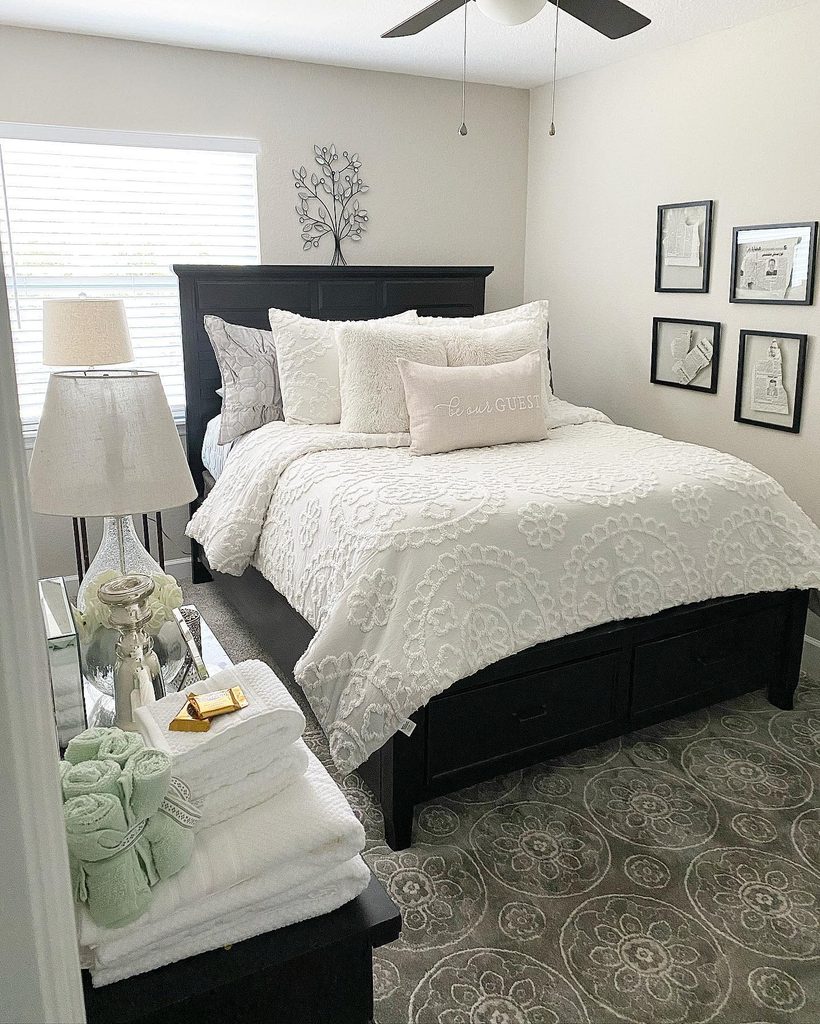
Fresh towels are easier to find when they are waiting in plain sight. Chima arranges freshly folded white towels and rolled pale green washcloths on the dresser in this compact bedroom, making existing furniture serve as a welcome station.
The pale stack fits naturally with the textured white bedding, so the useful supplies also contribute to the room’s calm appearance. Recreate the principle with a clear corner rather than adding another cabinet or cart.
Set out what each visitor needs, leave the rest stored nearby, and reserve enough surface for their own toiletry bag. If you include small essentials, group them in a washable container.
After each stay, restock the station and clear anything that has become decorative clutter instead.
- A Compact Clothes Rail for Overnight Visitors
Credits: Instagram
For a short visit, a few empty hangers can be more useful than a wardrobe filled with the host’s belongings.
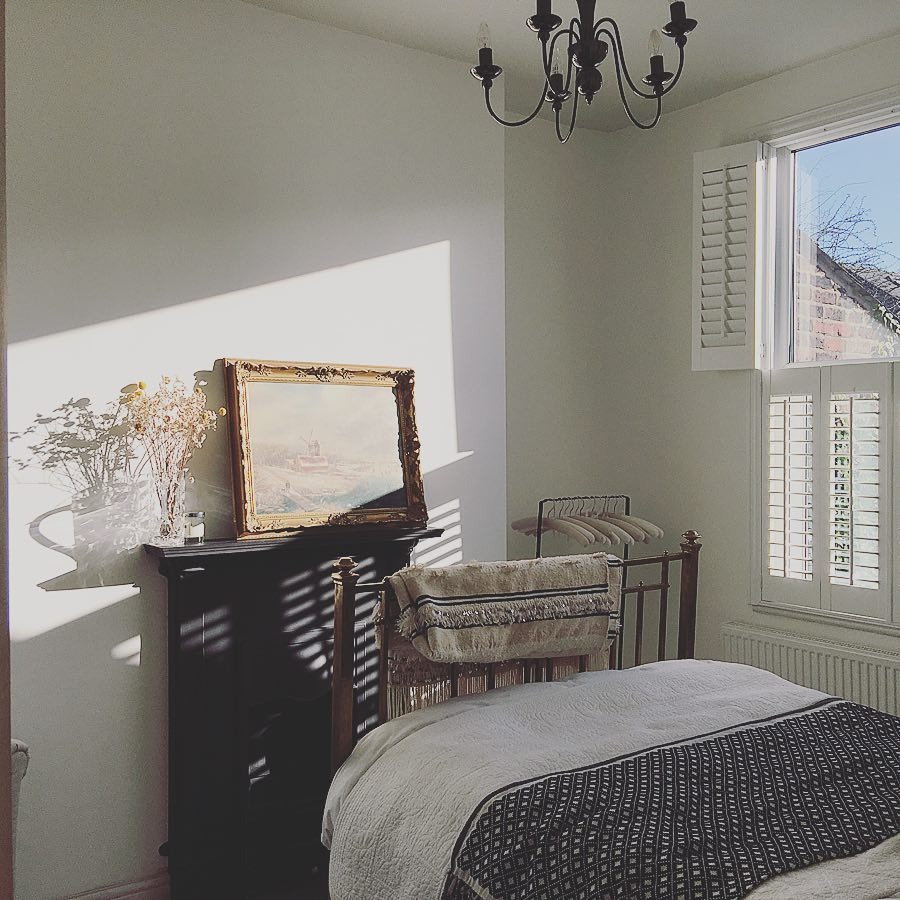
Hannah Beaumont-Laurencia places a compact clothes rail in the corner of her guest bedroom, tucked between the fireplace and shuttered window.
The narrow profile offers visible hanging space while letting the room retain its vintage furniture and open metal bed frame. Choose a rail that fits the available corner without extending into the path around the mattress.
Check the height against the garments guests are likely to bring, especially coats or dresses. Keep the number of hangers modest and leave them ready to use.
The goal is an obvious place to unpack, rather than an extra rack for household overflow.
- Tall Open Shelves for a Narrow Spare Wall
Credits: Instagram
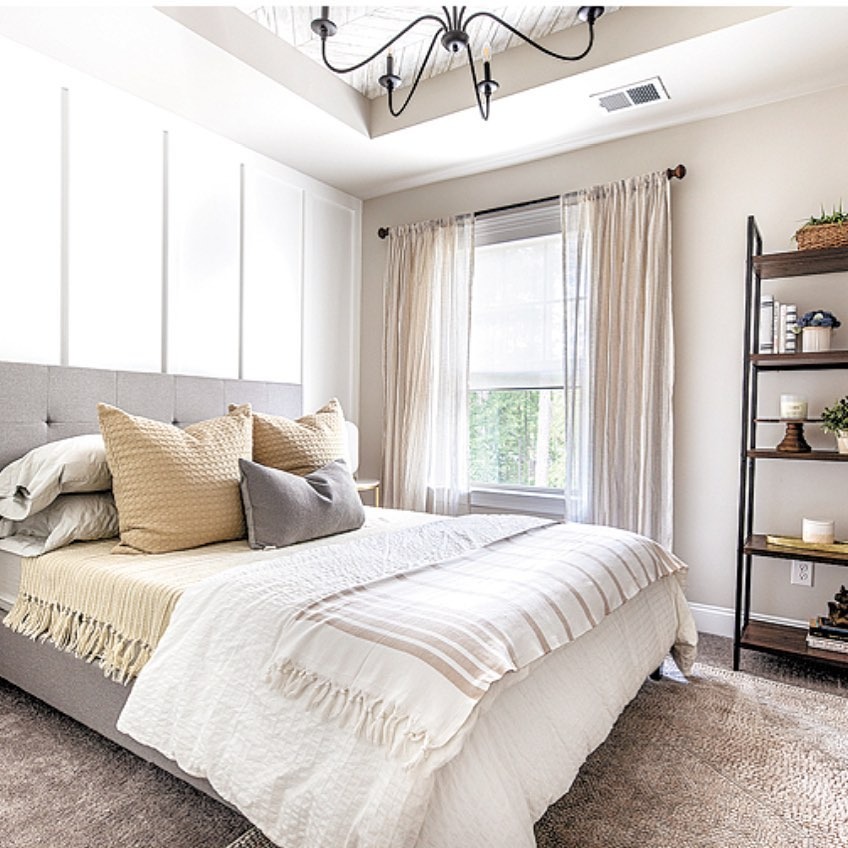
An unused strip of wall can hold more than a single decorative print. This guest room places a tall, narrow open shelving unit beside the window, using height for books and small objects while leaving the bed area relatively simple.
Its dark frame gives definition to the soft bedding and bright paneled wall. For a similar arrangement, choose a unit whose depth respects the walking route, and secure it according to its installation instructions.
Leave at least one accessible shelf open for visitors rather than styling every level completely. A small basket could hold spare chargers or folded linens if the shelf accommodates it.
Reserve higher levels for occasional items, keeping everyday guest essentials where they are easy to reach.
- Window Shutters Behind a Low Headboard
Credits: Instagram
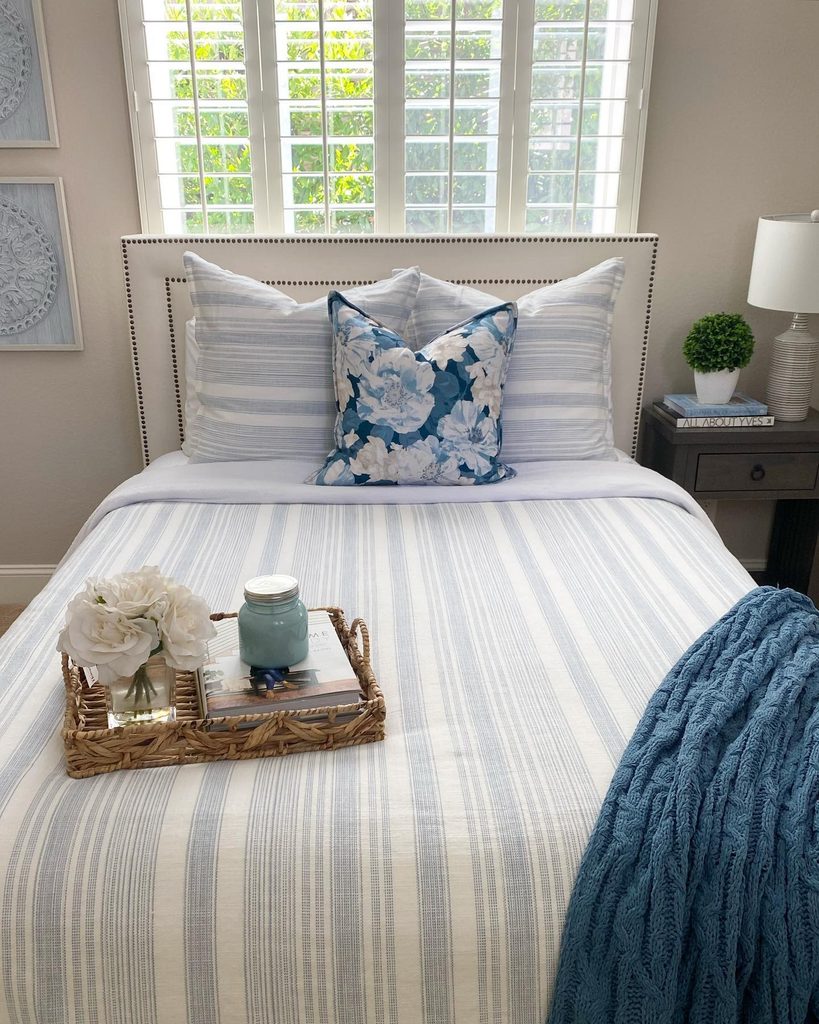
When the only sensible bed position is beneath a window, bulky drapery can complicate an already tight layout. Donna Shamieh uses white shutters above a low upholstered headboard in this small guest bedroom.
The treatment stays within the window area, while the headboard’s straight outline and blue striped bedding keep the composition orderly. Before copying the placement, check that the window can still open and that any required exit remains accessible.
Compare the headboard height with the sill instead of choosing by appearance alone. Shutters offer adjustable light and privacy, but their panels also need room to operate.
If your window configuration differs, a neatly fitted shade can follow the same compact principle without requiring fabric to gather beside furniture.
- Textured Walls Without Extra Furniture
Credits: Instagram
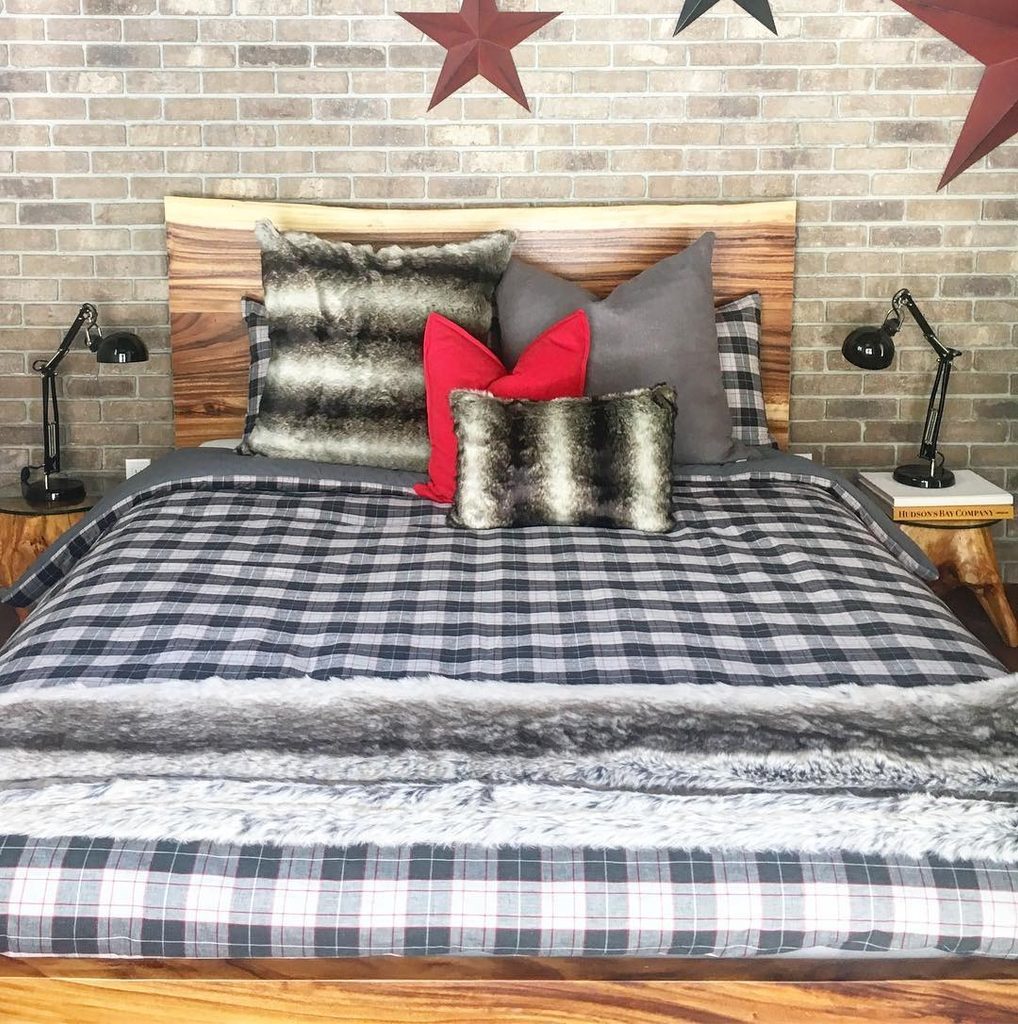
Character does not have to come from more objects on the floor. Colin and Justin give this compact guest room depth through a brick veneer wall, a wooden headboard, checked bedding, and contrasting soft textures.
The strong surface treatment makes the bed area feel considered even though the bedside furniture stays small. Take the underlying idea rather than copying every decorative layer: choose one textured backdrop, then keep the remaining finishes relatively controlled.
In a very tight room, a textured wallcovering may offer a less involved alternative to masonry details. Test a sample beside the bedding and under evening light before committing.
Your visitors still need clear surfaces and an uncomplicated route to bed, however rich the surrounding materials look.
- Layered Lighting for a Low Guestroom Ceiling
Credits: Instagram
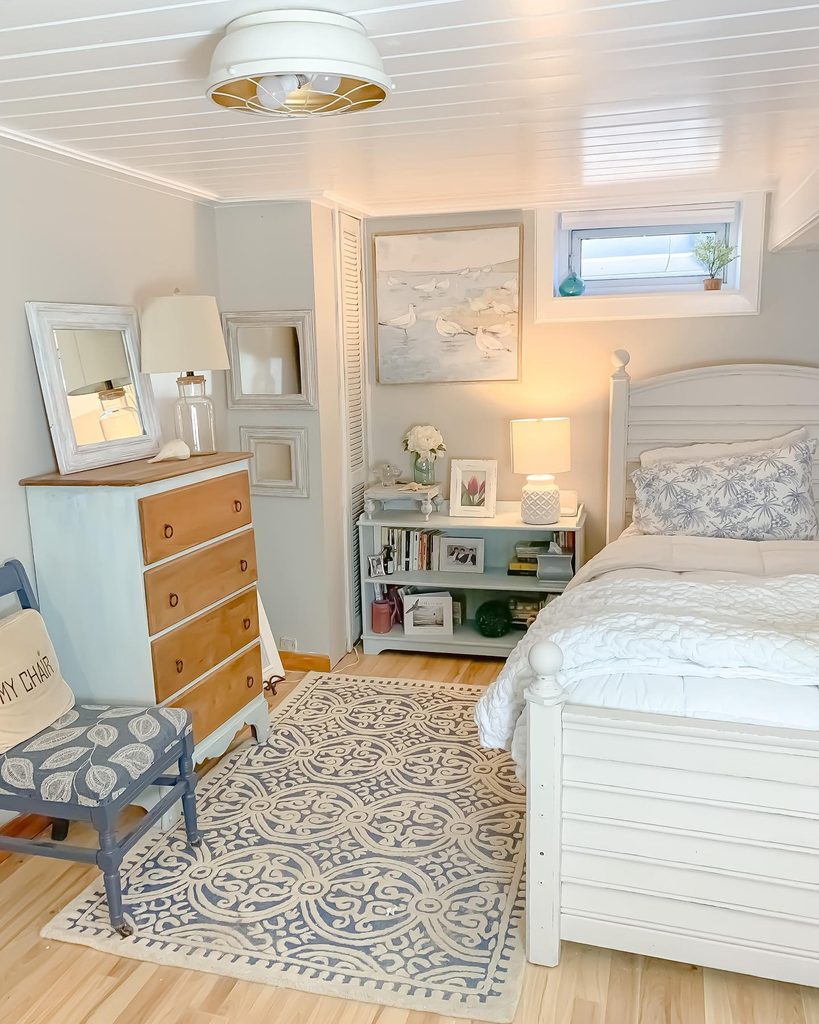
Rooms with low ceilings often feel better when their lighting comes from several directions. Rebecca Sheerin combines a close-fitting ceiling fixture with separate dresser and bedside lamps in this pale guest bedroom.
The arrangement provides general illumination without a low pendant, then brings softer light down to the places people actually use. Consider how a visitor enters the room, unpacks, reads, and gets ready for sleep.
Each activity benefits from a convenient source of light rather than one bright overhead bulb doing everything. Keep lamp bases proportionate to their surfaces and make the controls easy to locate.
Matching every fixture is unnecessary; here, the pale finishes and gentle palette make the different lights feel related without making the room repetitive.
- An Upright Chair in the Bedside Corner
Credits: Instagram
Putting on shoes is more comfortable with a proper seat than with a balancing act beside the bed.
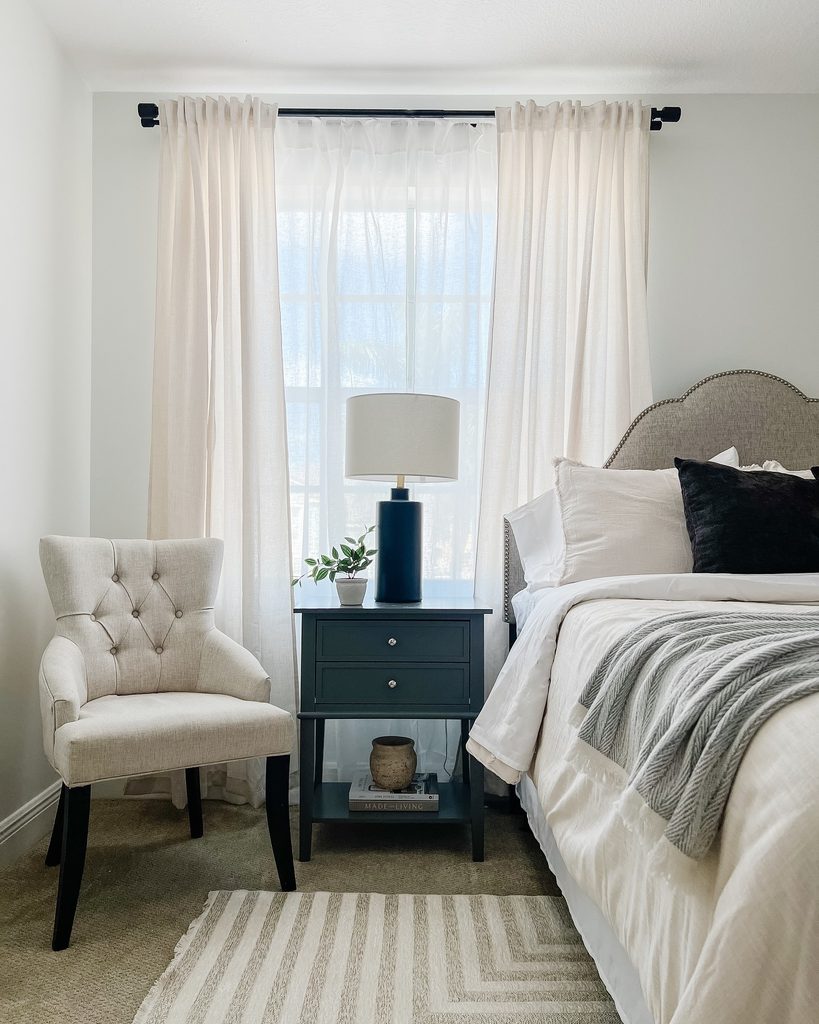
Carolina Nielsen fits an upright upholstered chair into the corner next to a nightstand, creating a useful perch without the depth of a lounge chair.
Its slim legs and pale fabric help it sit quietly within the neutral room. The important measurement is the space required to approach and use the chair, not simply its width against the wall.
Leave enough clearance for knees and feet, and keep the seat free of spare pillows when guests arrive.
A chair like this can also give someone a place to read briefly or set out clothing, provided it remains comfortable and stable for them.
- A Twin Bed That Leaves Room for the Essentials
Credits: Instagram
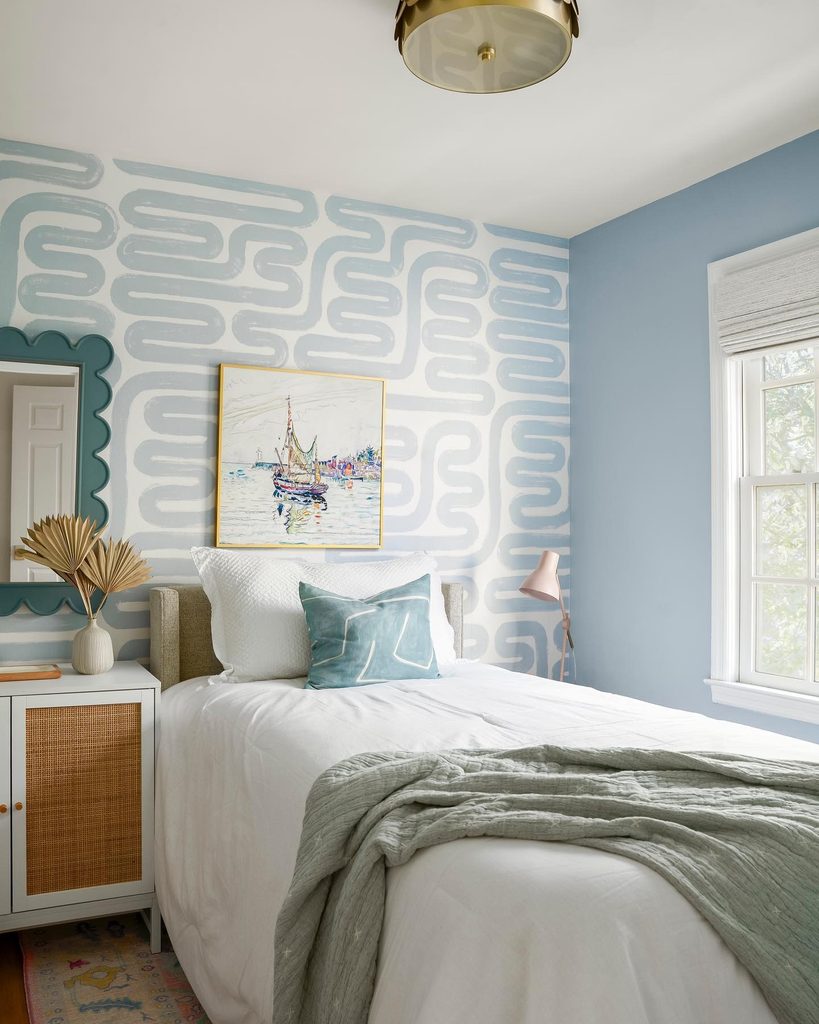
One comfortable sleeping place can be a better solution than a larger mattress squeezed into every available inch. Paige Designs uses a twin bed in this tiny room, preserving space for a bedside cabinet and a usable window area.
White bedding, blue wallpaper, and a small reading light give the arrangement personality without relying on extra furniture. Start with the number of people you expect to host, then compare bed options against the full room plan.
Remember that guests need to open doors, reach their belongings, and move around after the bed is made. A single bed can be an intentional choice for an individual visitor.
Give it the same linens and lighting you would provide around any larger bed.
- A Movable Rug for a Guestroom That Does Double Duty
Credits: Instagram
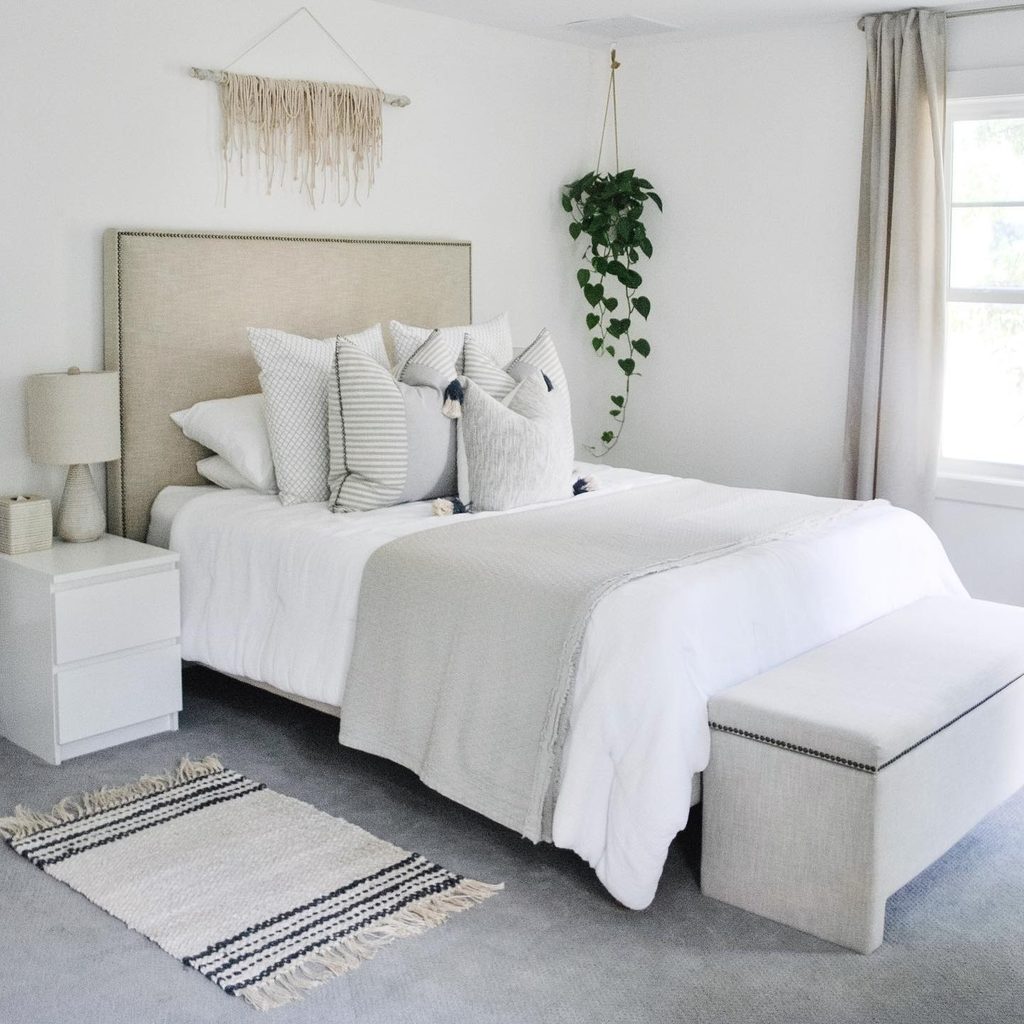
Between overnight visits, a spare bedroom may need to support a completely different routine. Danielle chooses a small movable rug beside her bed because she also uses the room for workouts.
The striped piece brings texture to the wall-to-wall carpeting while remaining easy to clear away when the floor is needed. This is a useful reminder to plan accessories around the room’s everyday purpose, not just its guest-ready photograph.
If your spare room doubles as a stretching area or hobby space, avoid an arrangement that requires moving several heavy pieces first. Choose a rug suited to the flooring beneath it and check that the edges stay flat.
Before visitors arrive, return it to position and restore a straightforward walking route.
- An Open Metal Bed Frame for Clear Sightlines
Credits: Instagram
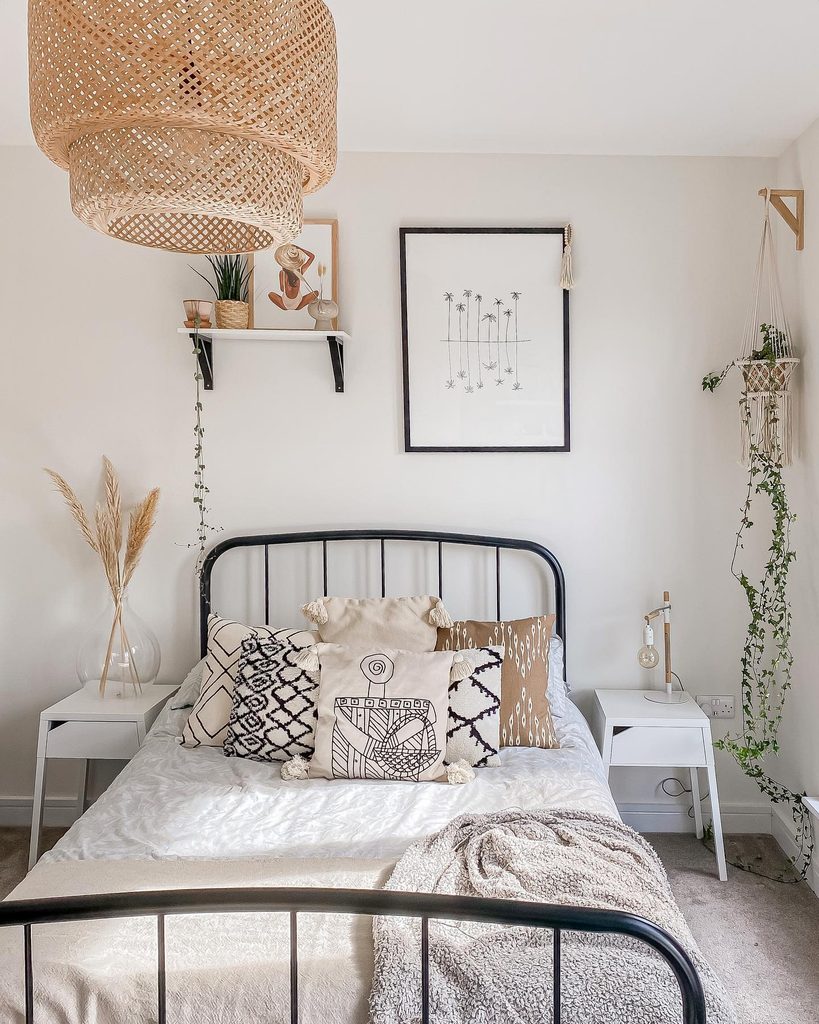
Seeing through furniture can make a tight arrangement feel less crowded. Lexi’s spare bedroom uses an open metal headboard and footboard, allowing the pale walls and bedding to remain visible between the slender bars.
Small white nightstands continue that light appearance, while patterned pillows and a woven pendant supply texture.
This approach changes the visual weight of a bed, so it is especially helpful when a solid frame would dominate the view from the doorway.
It does not reduce the mattress footprint. Measure the whole frame, including projecting corners, before buying.
If the foot of the bed sits close to a doorway, compare an open footboard with a model that has none and choose the arrangement that preserves comfortable movement.
- A Daybed Along the Wall for Daytime Lounging
Credits: Instagram
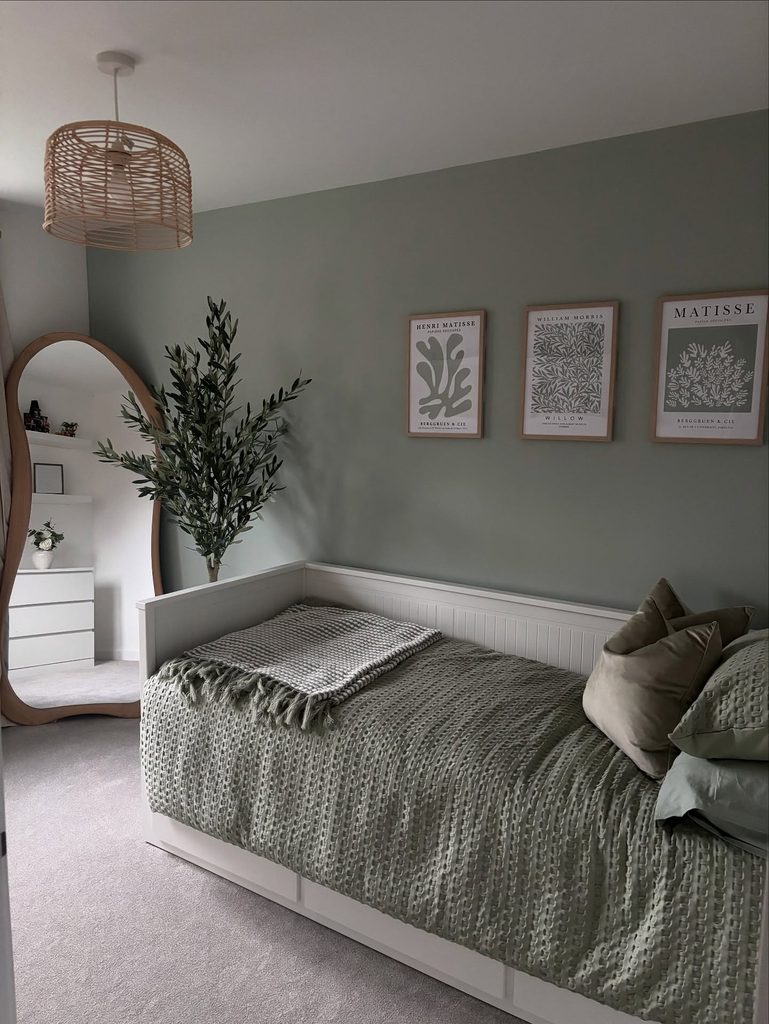
Flexible furniture can offer somewhere to relax before it becomes somewhere to sleep. Lauren positions a white daybed along the wall of her sage guest room, dressing it with a textured cover and cushions.
The low back makes the long edge feel more like seating, and the adjacent strip of carpet remains open. To adapt this arrangement, think about how someone will sit as well as lie down.
A few supportive cushions against the back are more useful than a deep stack of decorative pillows that must move every night. Keep a reachable surface nearby for a drink or book.
Do not assume a daybed expands or includes storage; choose those features deliberately if your hosting plans actually require them.
- A Window Nook That Adds a Place to Perch
Credits: Instagram
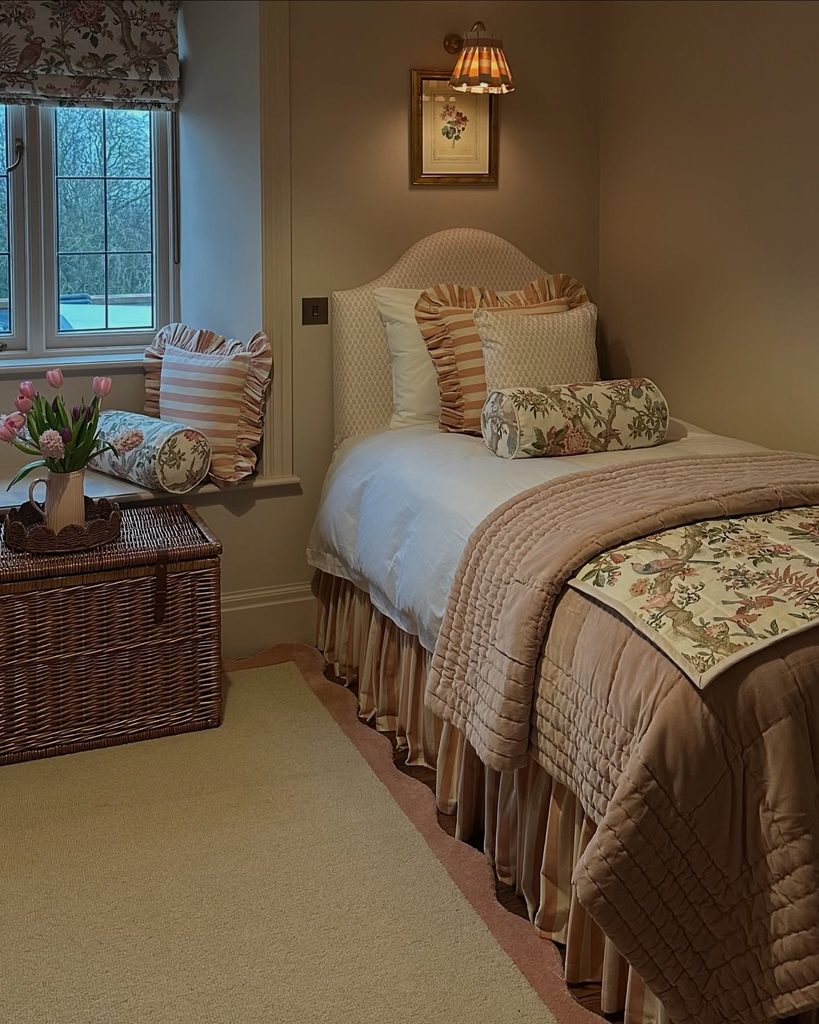
Look at the recesses your room already has before introducing another chair. Mandy’s narrow guest bedroom pairs a single bed with a window nook softened by striped and floral cushions.
The small perch makes use of the room’s architecture, while a woven trunk nearby contributes a separate storage element. A similar nook can give visitors a place to pause without filling the central floor.
Only treat a ledge as seating when its structure and dimensions are suitable; an ordinary windowsill is not automatically a bench. Keep the window hardware accessible and avoid piling cushions so high that they obstruct it.
A simple, removable seat cushion is often enough to make a properly supported recess feel welcoming and easy to maintain.
- A Wall Bed That Makes Room for Everyday Work
Credits: Instagram
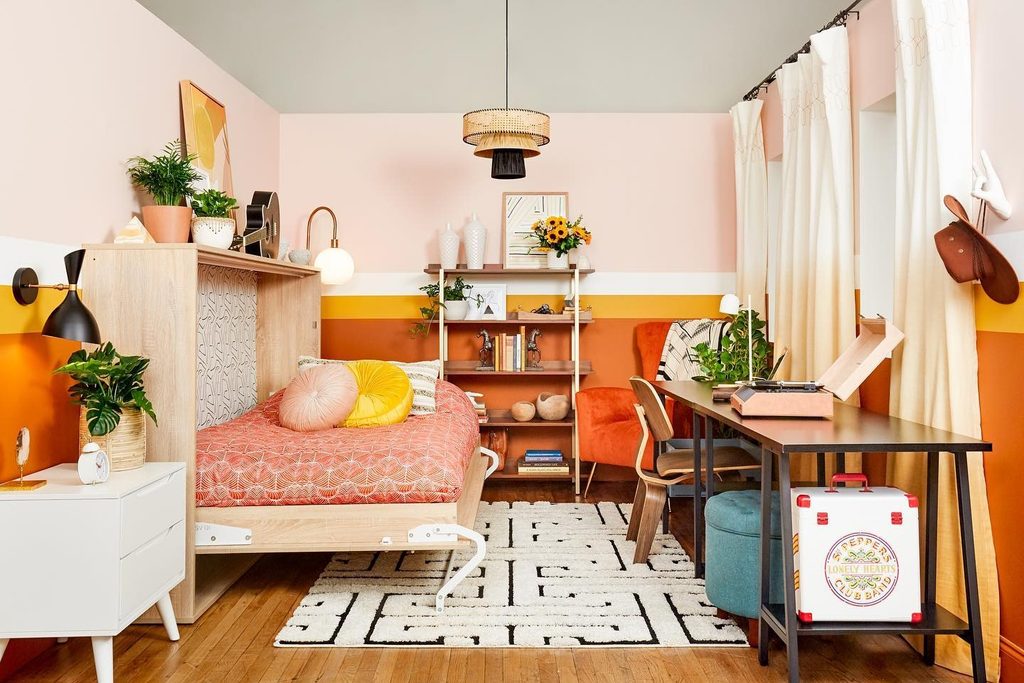
Occasional hosting does not always justify keeping a mattress out every day. Natalie Papier’s photographed Small/Cool design installation demonstrates how a wall bed can share a compact room with a desk, shelves, and a reading chair.
When open, the bed has a defined place opposite the workspace; between visits, a folding design can return that area to everyday use. Treat the mechanism and installation as central choices, not finishing details.
Check the manufacturer’s requirements for wall anchoring, mattress compatibility, and clearance in both positions, using qualified installation where needed. Plan where movable furniture and bedding will go during the changeover.
The colorful example shows that a practical folding bed can belong to a lively room rather than dictate its personality.
- A Desk That Doubles as the Nightstand
Credits: Instagram
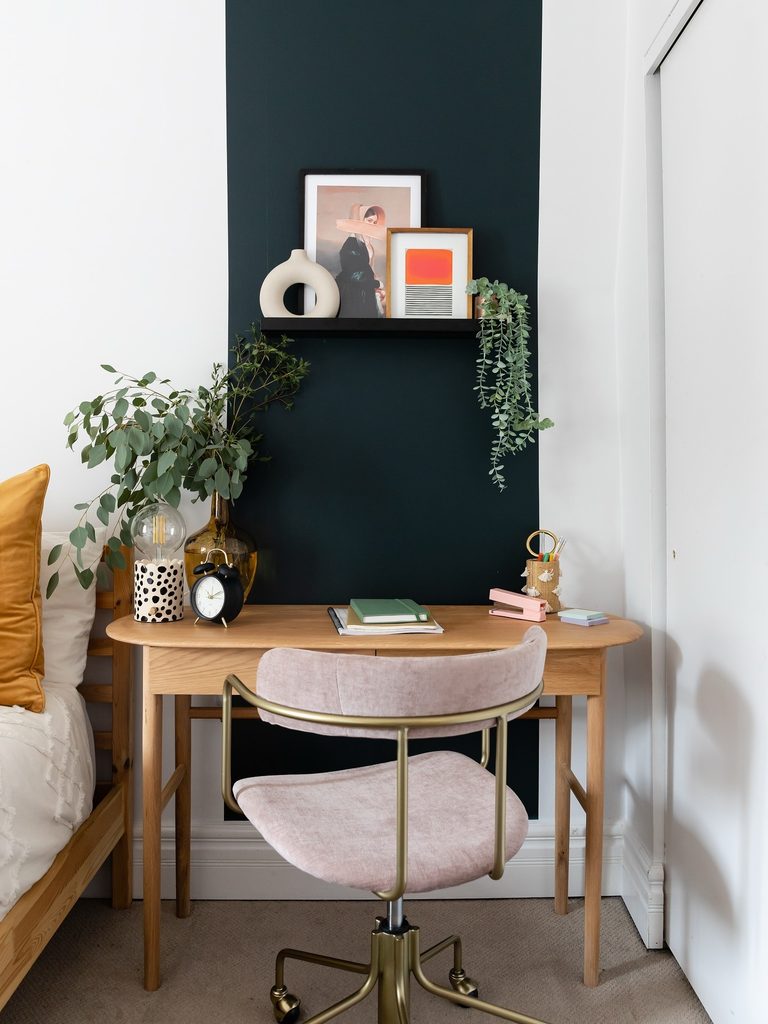
Combining two furniture roles can be more effective than buying two smaller pieces. Alexandra Gater places a compact desk directly beside a bed, where it also serves as the bedside surface.
A dark green paint block and a shallow shelf identify the work area without adding a divider. For a small guest bedroom, the same arrangement can provide somewhere to write, open a laptop, or get ready in the morning.
Choose a desk height that remains comfortable to reach from the mattress, and a chair that tucks underneath. Clear work materials before guests arrive and leave a practical amount of desktop empty.
The painted backdrop is optional; the essential move is making one surface support both daytime and bedtime needs.
- Twin Beds With One Shared Nightstand
Credits: Instagram
Separate sleeping places make hosting friends or relatives easier when sharing a mattress would be awkward.
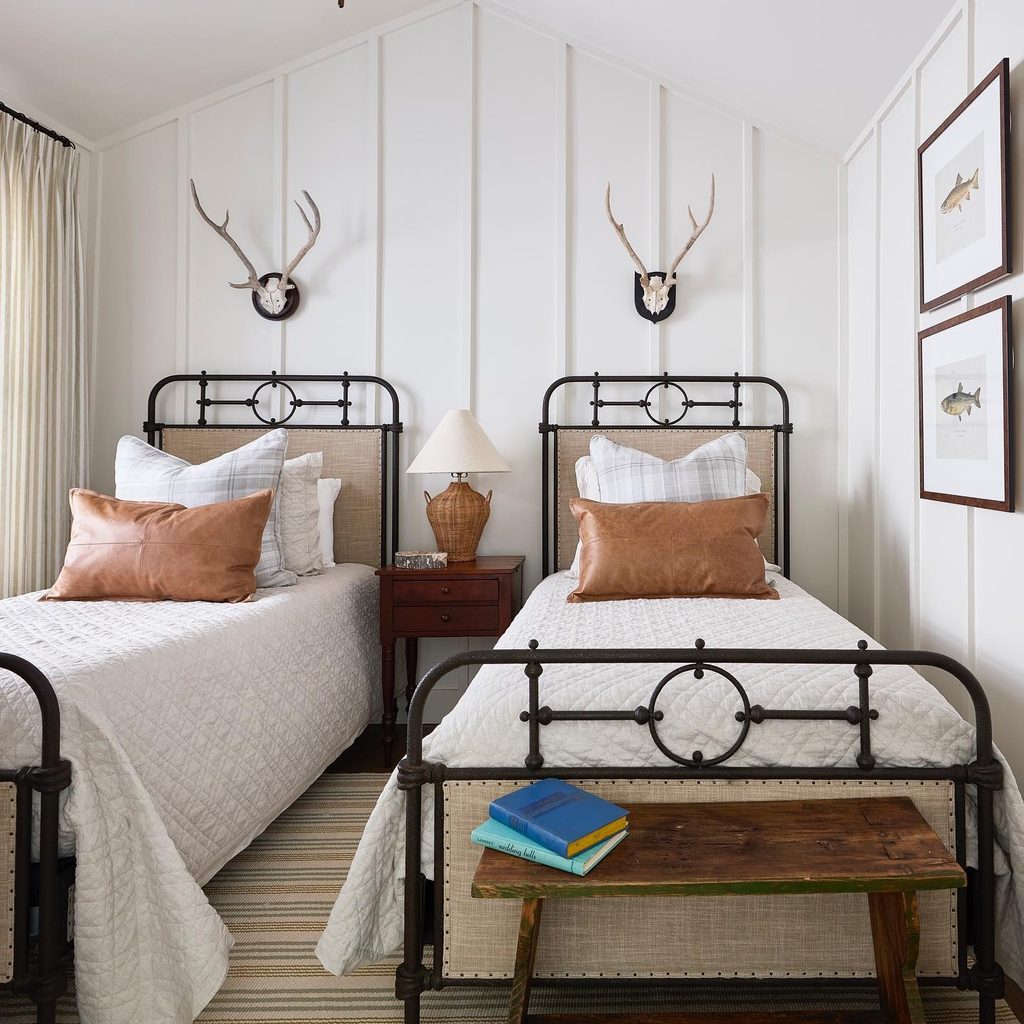
Grace Brackman’s twin room uses one nightstand between the beds, giving both sleepers access to a central lamp without adding cabinets along the outer walls.
Matching bedding and slender frames keep the close arrangement organized. Before choosing twins for your own spare room, draw the complete layout, including access to each bed and any door swings.
Two mattresses do not automatically use less space than one larger bed. Their advantage is flexibility for different visitors.
Keep the middle surface clear enough for two people, and consider individual reading lights if their routines differ. Consistent linens can make the practical setup feel calm and welcoming.