
Cluttered basements often become catch-all storage zones, making it difficult to locate seasonal décor, tools, or household supplies. Strategic basement storage solutions improve organization, protect belongings from moisture, and maximize usable square footage.
Smart systems such as heavy-duty shelving, labeled storage bins, overhead racks, wall-mounted pegboards, and modular cabinets create structured zones for efficient access.
Proper planning also supports better ventilation and long-term durability in lower-level spaces. This guide outlines practical, space-saving ideas that enhance functionality, reduce mess, and help homeowners convert underutilized basements into organized, manageable storage areas.
Ceiling-Height Clear Bin Gridwall System
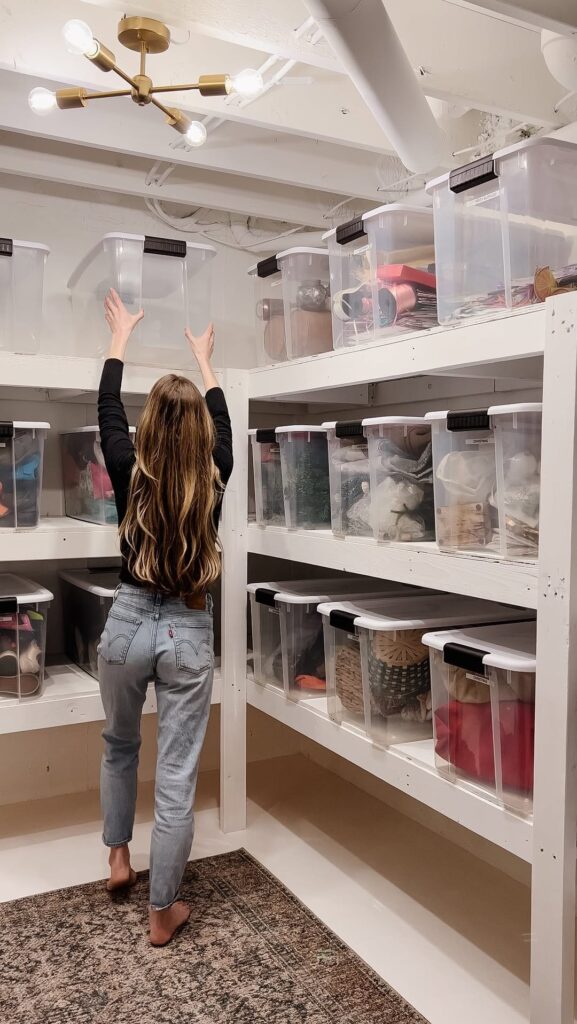
Floor space disappears quickly in a busy basement, especially when seasonal décor, tools, and household overflow compete for room. A ceiling-height clear bin gridwall system maximizes vertical storage by turning an entire wall into a structured, easy-access organization zone.
Metal grid panels anchored securely into studs support labeled transparent bins, allowing you to see contents instantly without constant rummaging. This setup works well for holiday decorations, hardware supplies, craft materials, and emergency backups.
Clear containers reduce visual clutter while keeping inventory visible for quick retrieval. Pair with adjustable hooks and wire baskets for flexible storage as needs change.
Proper weight distribution and moisture-resistant materials ensure durability in unfinished basements, creating a practical, long-term storage solution.
Craft-Ready Open Joist Storage Wall
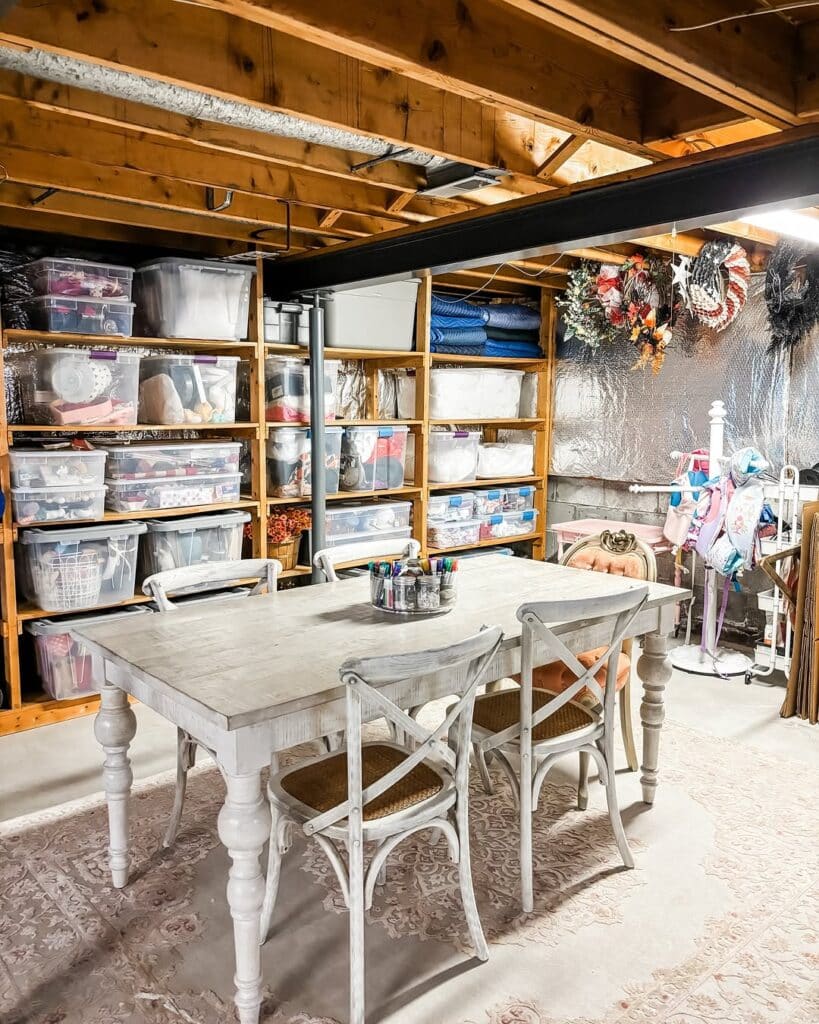
Exposed framing in unfinished basements offers untapped organization potential when used strategically. Open joists can support mounted shelving, pegboards, and hanging organizers designed specifically for craft supplies and DIY tools.
By installing sturdy brackets between studs, you create structured storage without sacrificing valuable square footage. This layout keeps paint, fabric rolls, cutting mats, and small hardware visible yet neatly arranged.
Proper lighting above the work zone improves usability and safety during projects. Moisture-resistant bins and sealed wood shelving help protect materials from basement humidity.
A thoughtfully planned joist storage wall transforms underutilized structural elements into a functional craft station, delivering efficient organization while maintaining accessibility and long-term durability.
Industrial Pipe-Rack Closet Conversion
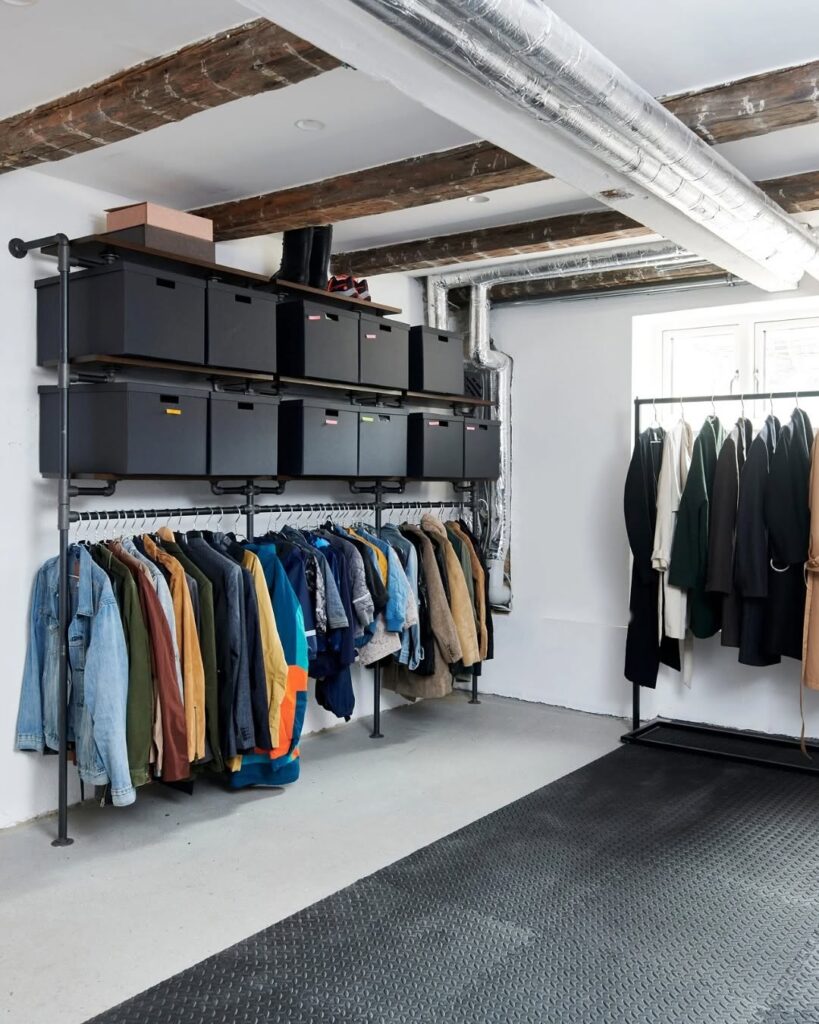
Unused corners often become dumping grounds for boxes and random household items. Converting a basement nook into an industrial pipe-rack closet introduces durable vertical storage with a modern utility aesthetic.
Galvanized steel pipes mounted securely into wall studs create sturdy clothing rods and open shelving for coats, sports gear, and extra linens. Wire baskets or labeled fabric bins keep smaller accessories organized while maintaining airflow.
This solution works particularly well in basements used as laundry areas or guest overflow closets. Selecting rust-resistant hardware ensures longevity in slightly humid environments.
The open design allows quick visibility and access, helping maintain order while turning an overlooked area into a structured, functional storage extension.
Narrow Holiday & Luggage Rack Corridor
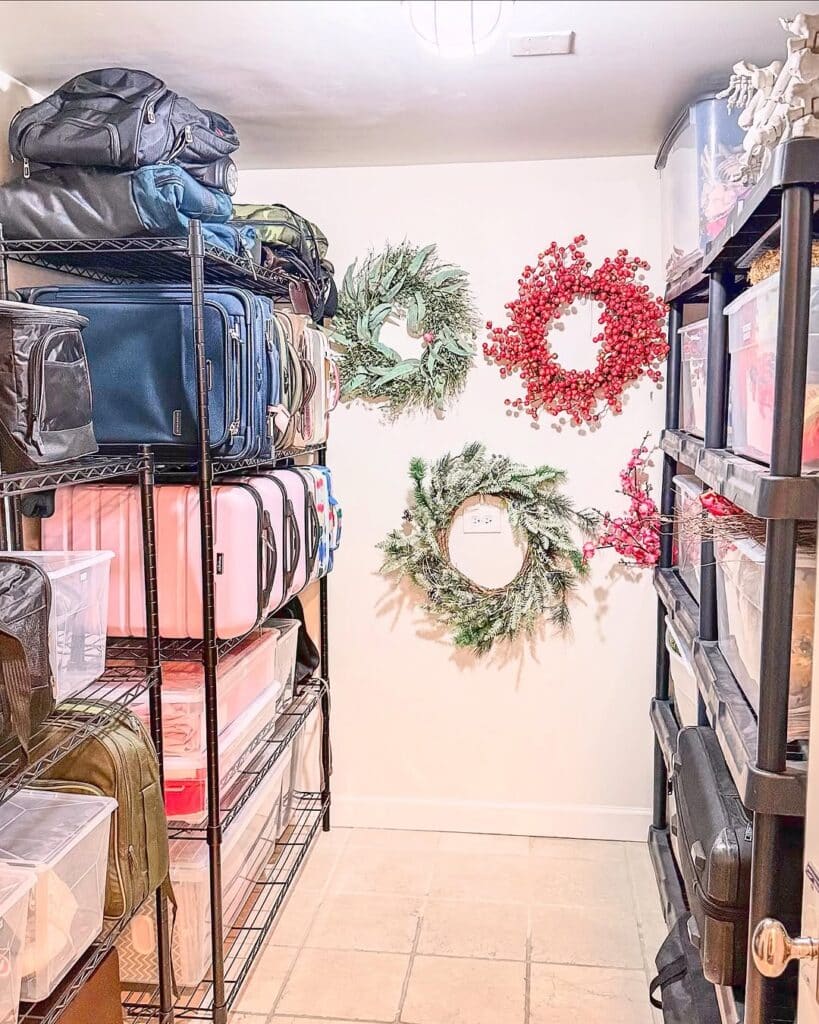
Long, tight basement corridors frequently go unused or become cluttered with bulky items. Installing slim-profile wall-mounted racks transforms this overlooked pathway into a practical storage zone for luggage, storage totes, and seasonal décor bins.
Heavy-duty brackets anchored into studs provide stable support while maintaining walking clearance. Vertical stacking combined with clearly labeled containers ensures easy identification during busy holiday transitions.
Overhead lighting improves visibility and safety, particularly in windowless spaces. Choose durable metal shelving designed to withstand basement moisture fluctuations.
By organizing suitcases and rarely used décor along corridor walls, you preserve central basement space while maintaining convenient, year-round access to infrequently needed belongings.
Finished Basement Playroom Storage Zone
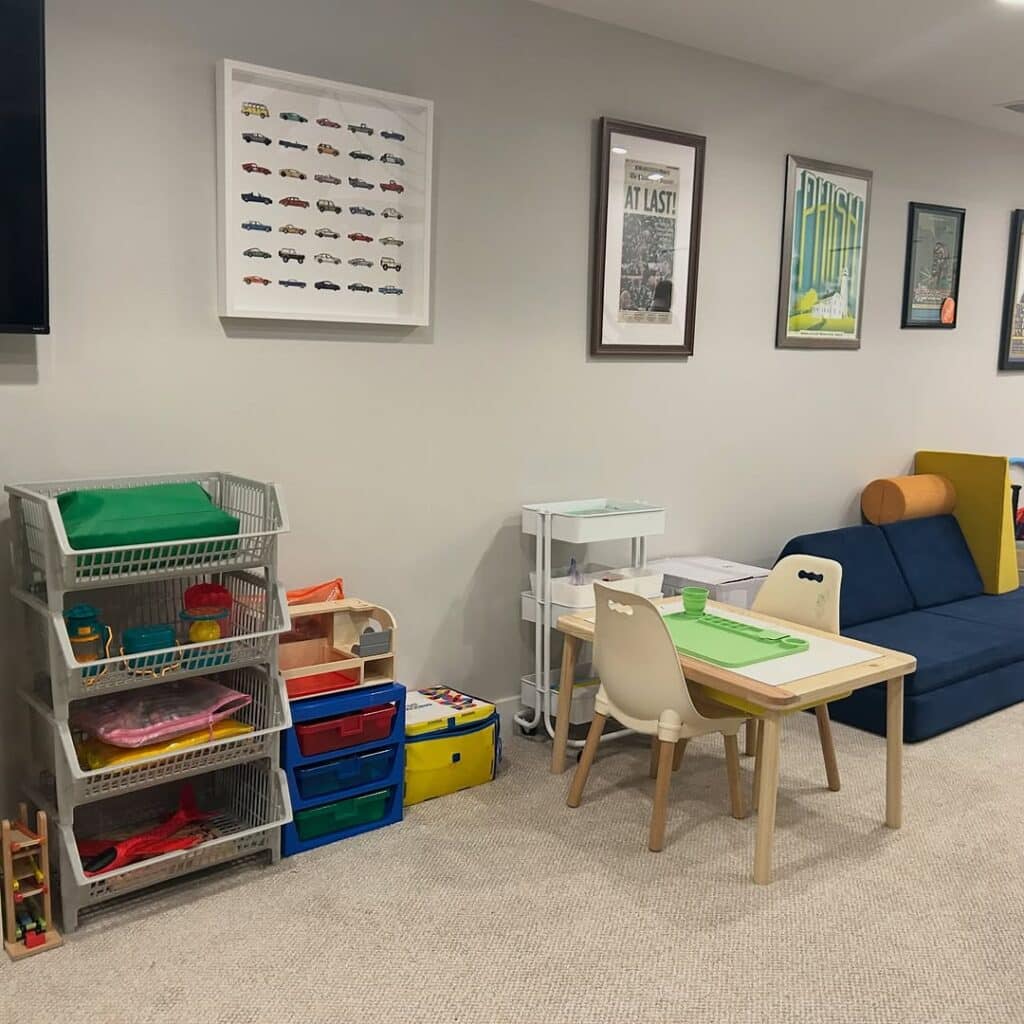
Family basements that double as playrooms require structured organization to prevent constant mess. Designing a dedicated storage zone with built-in cabinets, low cubbies, and labeled bins creates order without sacrificing comfort.
Soft-close drawers and child-friendly shelving keep toys, board games, and art supplies accessible yet contained. Closed cabinetry hides visual clutter while open cubbies encourage independent cleanup habits.
Durable, easy-to-clean surfaces protect against spills and heavy use. Integrating bench seating with hidden storage maximizes functionality in smaller finished basements.
Clear zoning between recreation and storage areas supports better traffic flow and long-term organization. This approach maintains a tidy environment while allowing the space to remain inviting and family-focused.
Compact Basement Craft Nook Station
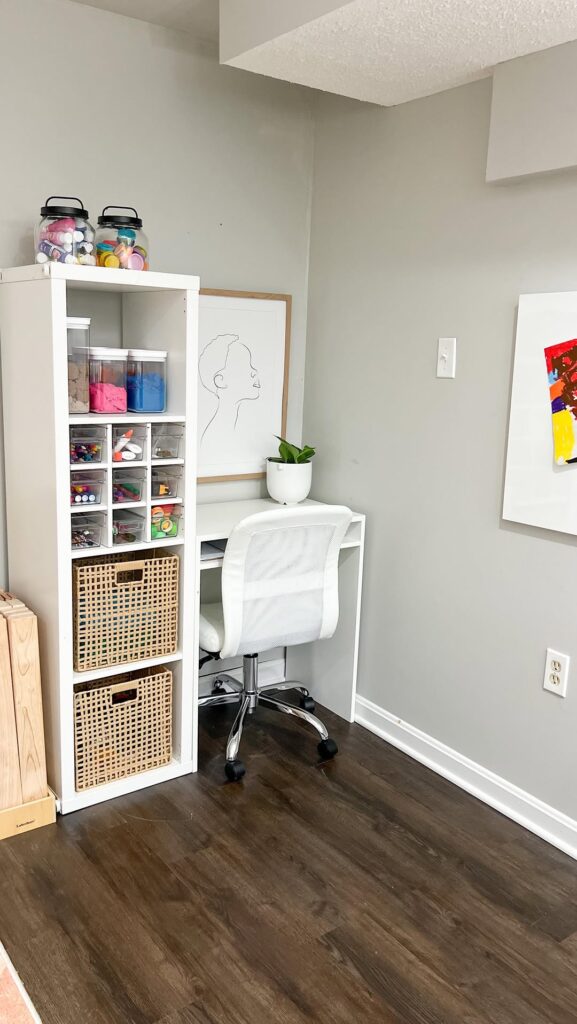
Limited square footage doesn’t have to restrict creativity when storage is planned with intention. A compact basement craft nook station can fit neatly along one wall using floating shelves, a fold-down worktable, and stackable clear bins.
This layout keeps art supplies, sewing tools, scrapbooking paper, and DIY materials visible yet organized. Wall-mounted organizers free up floor space, while labeled containers prevent clutter from building up over time.
Good task lighting and moisture-resistant storage solutions protect delicate materials in basement environments. Installing a small peg rail for scissors and rulers ensures quick access during projects.
With smart vertical storage and efficient zoning, even a tight basement corner can function as a productive, well-structured craft area.
Modular Labeled Toy Wall System
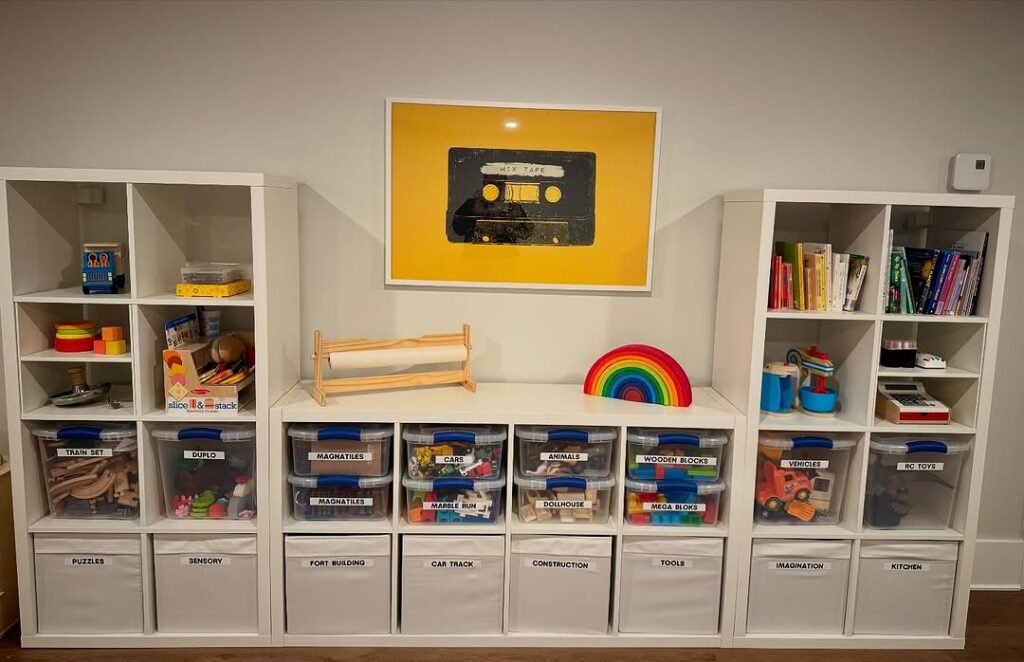
Play areas in basements can quickly become chaotic without defined storage boundaries. A modular labeled toy wall system introduces structure through adjustable shelving units, durable bins, and clear category labels.
Group toys by type—building blocks, puzzles, board games, and art kits—to simplify cleanup routines and improve organization habits. Stackable containers maximize vertical storage while maintaining easy reach for children.
Closed cabinets can hide bulkier items, reducing visual clutter in shared family spaces. Anchoring shelves securely into studs ensures long-term safety and stability.
This flexible design adapts as children grow and toy collections change, offering a scalable basement storage solution that keeps the play zone functional and consistently organized.
Custom Corner Cabinet Utility Wall
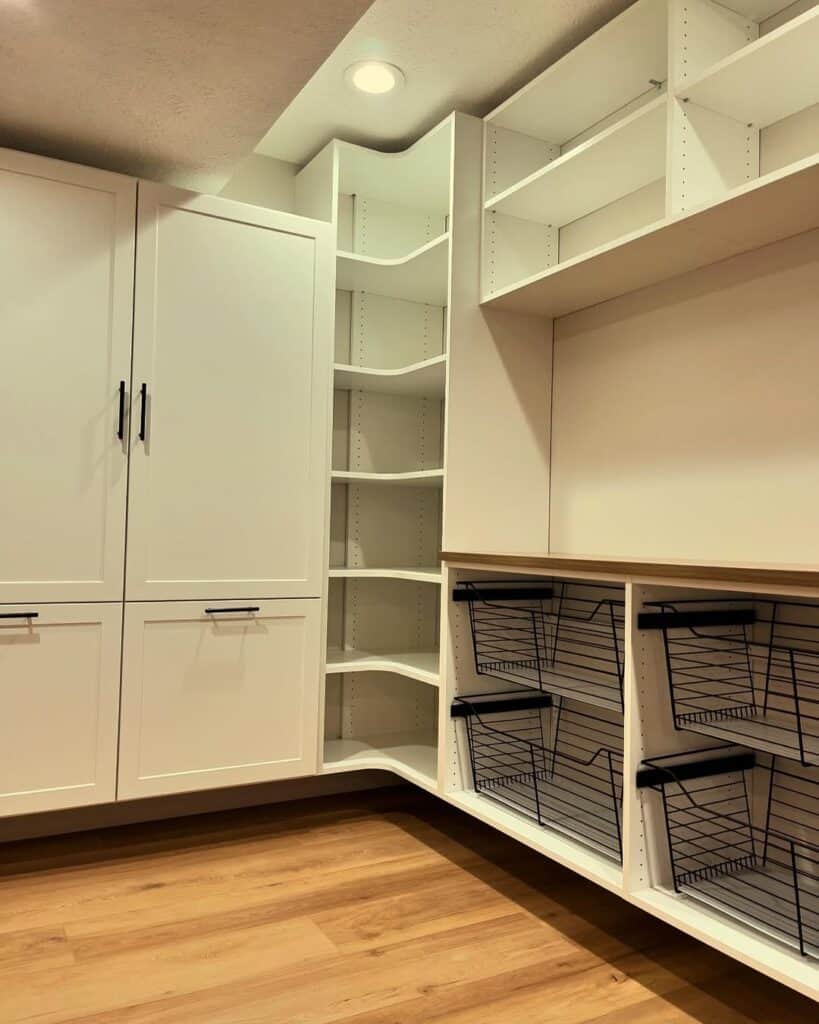
Awkward basement corners often remain underutilized, yet they offer prime storage potential when fitted with custom cabinetry. A corner cabinet utility wall can house cleaning supplies, tools, paint cans, and household overflow without disrupting the main basement layout.
Floor-to-ceiling cabinets increase storage capacity while maintaining a streamlined appearance. Adjustable interior shelving allows for flexible organization of bulky or irregular items.
Moisture-resistant materials and proper ventilation protect stored goods in humid conditions. Soft-close hinges and concealed hardware enhance durability and safety.
By converting unused corners into structured storage hubs, you create a practical system that reduces clutter, improves accessibility, and maximizes every square foot of basement space.
Pegboard Workshop Bench Storage Hub
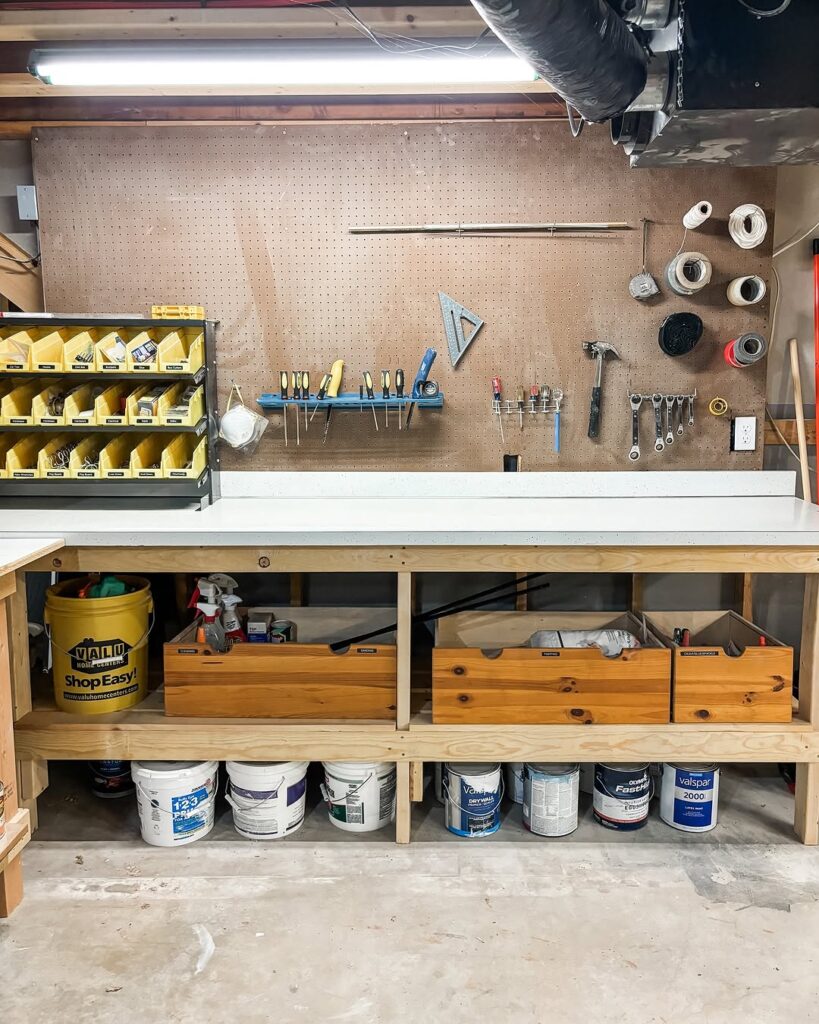
Serious DIY projects demand organized tool access rather than scattered hardware across shelves. A pegboard workshop bench storage hub keeps frequently used tools visible and within arm’s reach.
Mount heavy-duty pegboard panels above a sturdy workbench and arrange hooks, brackets, and small bins for screwdrivers, drills, measuring tapes, and fasteners.
Clearly defined tool zones improve workflow efficiency and reduce setup time for repairs or woodworking tasks. Magnetic strips can hold metal tools securely, while labeled jars store nails and screws neatly. Proper anchoring into studs ensures stability and safety.
This structured system transforms a basement workshop into a streamlined, productive environment designed for both quick fixes and larger home improvement projects.
Unfinished Basement Zonal Storage Layout
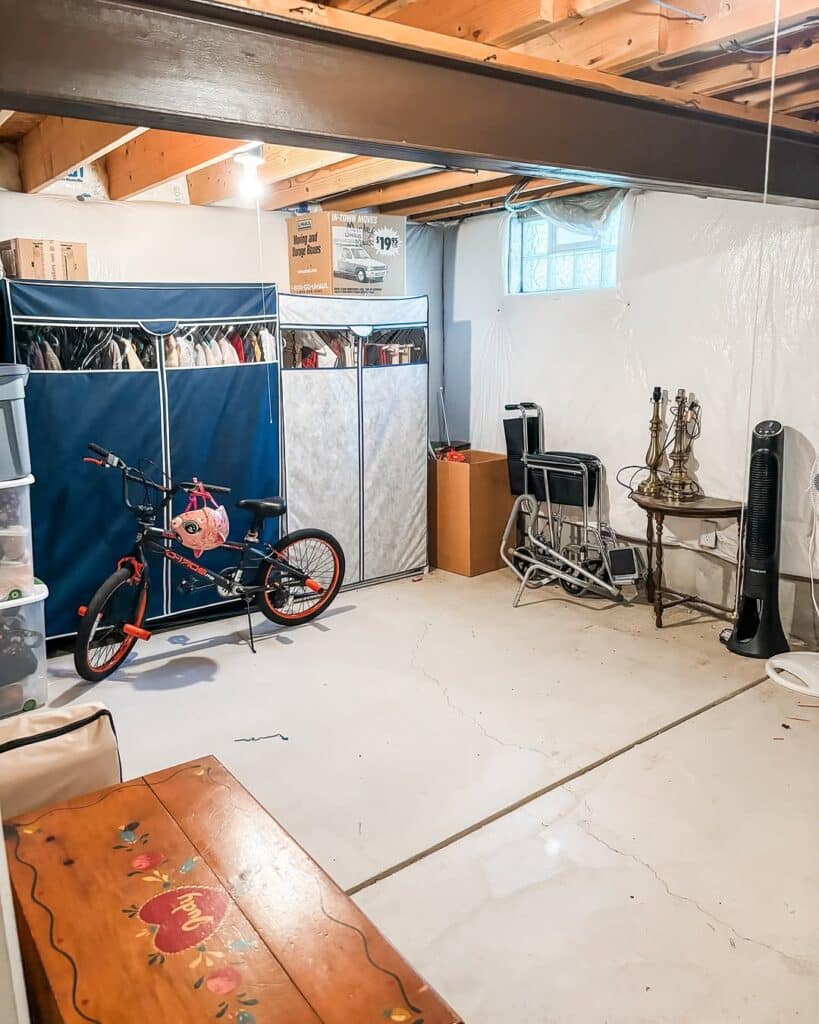
Raw concrete floors and exposed framing often create visual disorder without a clear organizational plan. An unfinished basement zonal storage layout divides the space into defined areas for seasonal décor, sports equipment, tools, and emergency supplies.
Use industrial shelving units, heavy-duty plastic bins, and waterproof labels to create structure. Keep heavier items on lower shelves for safety and stability. Clear pathways between zones improve accessibility and reduce tripping hazards.
Installing dehumidifiers and moisture-resistant materials helps protect stored belongings long term. By assigning specific categories to designated sections, you prevent random pileups and maintain consistent organization.
Structured zoning turns an unfinished basement into an efficient, easy-to-manage storage system.
Color-Coded Pegboard Craft Command Wall
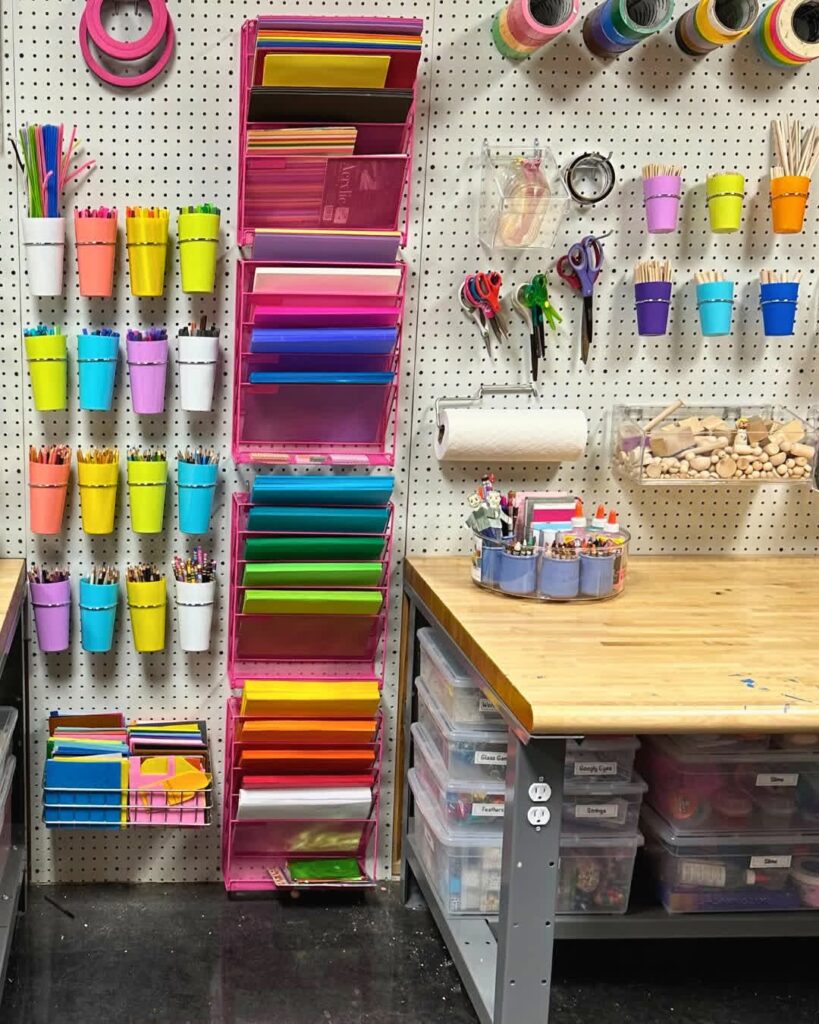
Creative projects stay manageable when supplies are organized with visual clarity and structured placement. A color-coded pegboard craft command wall turns an ordinary basement wall into a highly efficient storage system.
Assign specific colors to tool categories such as cutting tools, adhesives, brushes, and measuring instruments to simplify access and cleanup.
Durable pegboard panels mounted securely into studs support hooks, mini shelves, and hanging bins for thread spools, scissors, and paint supplies.
Clear labeling improves workflow and reduces time spent searching for essentials. Moisture-resistant finishes protect materials in basement environments.
By keeping frequently used craft tools visible and grouped logically, this storage solution promotes efficiency, maintains order, and supports long-term organization for hobbyists and DIY enthusiasts.
Built-In Shiplap Playroom Storage Wall
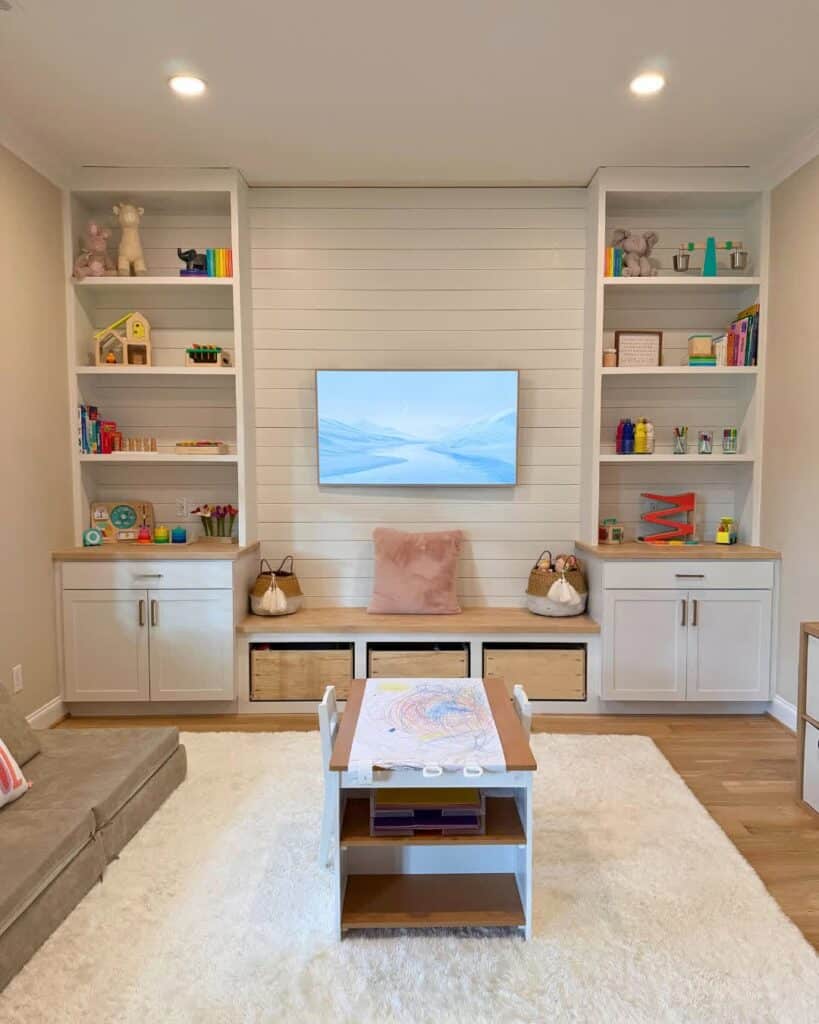
Children’s basement playrooms benefit from structured storage that blends durability with style. A built-in shiplap playroom storage wall provides vertical organization through integrated cabinets, open cubbies, and pull-out bins.
The shiplap backdrop adds texture while concealing structural imperfections often found in basements. Low-level cubbies allow children to access toys independently, encouraging responsibility and easier cleanup routines.
Closed cabinetry hides bulky board games and seasonal items, reducing visual clutter. Reinforced shelving secured into wall studs ensures safety and stability. Easy-to-clean surfaces handle spills and daily wear effectively.
Thoughtful compartmentalization keeps art supplies, books, and activity kits neatly arranged, creating a tidy, functional play space that supports both organization and family comfort.
Shiplap Basement Laundry Storage Wall
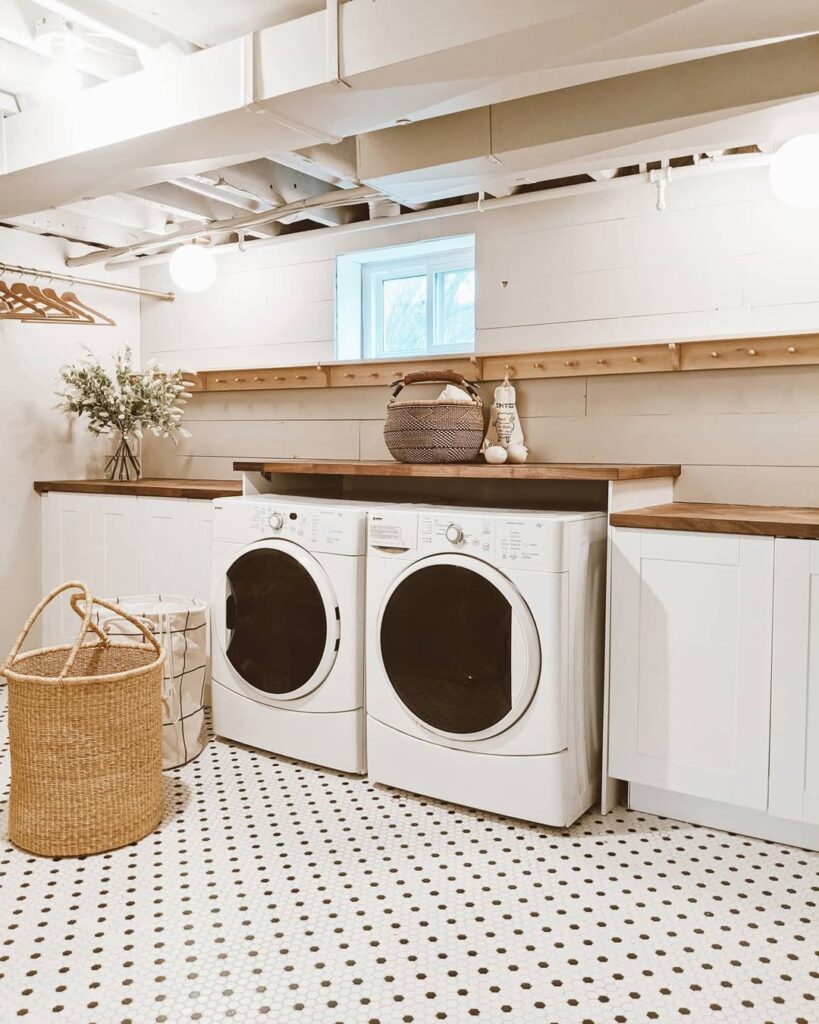
Laundry zones in basements often lack proper organization, leading to crowded countertops and misplaced supplies. A shiplap basement laundry storage wall creates a cohesive backdrop while supporting upper cabinets, floating shelves, and utility hooks.
Wall-mounted cabinetry stores detergent, fabric softener, and cleaning products safely out of reach. Open shelving provides quick access to baskets, folded linens, and stain-removal essentials.
Installing a hanging rod beneath cabinets allows air-drying delicate garments without occupying floor space. Moisture-resistant paint and sealed wood materials help withstand humidity fluctuations common in basements.
Strategic vertical storage maximizes limited square footage while maintaining clear work surfaces. This structured approach keeps laundry routines efficient, organized, and visually streamlined.
Basement Gym Mirror Equipment Wall
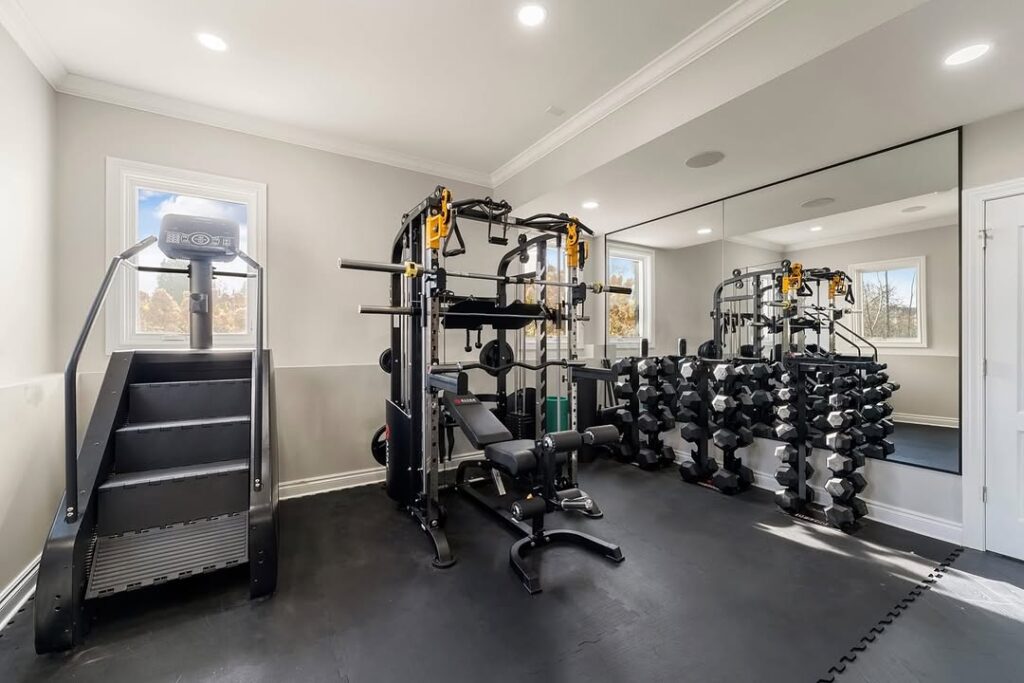
Home fitness areas require accessible equipment storage without overcrowding valuable workout space. A basement gym mirror equipment wall combines reflective panels with structured wall-mounted racks to enhance both functionality and visual openness.
Secure brackets hold resistance bands, yoga mats, jump ropes, and lightweight dumbbells within easy reach. Installing vertical weight racks and sturdy hooks prevents clutter on the floor, improving safety during exercise sessions.
Large mirrors mounted properly into studs support posture correction and form monitoring. Durable, moisture-resistant materials withstand sweat and temperature changes.
Clear zoning between cardio, strength training, and stretching gear ensures efficient organization. This system creates a streamlined workout environment that feels spacious, safe, and professionally arranged.
Modern Basement Bar Cabinet System
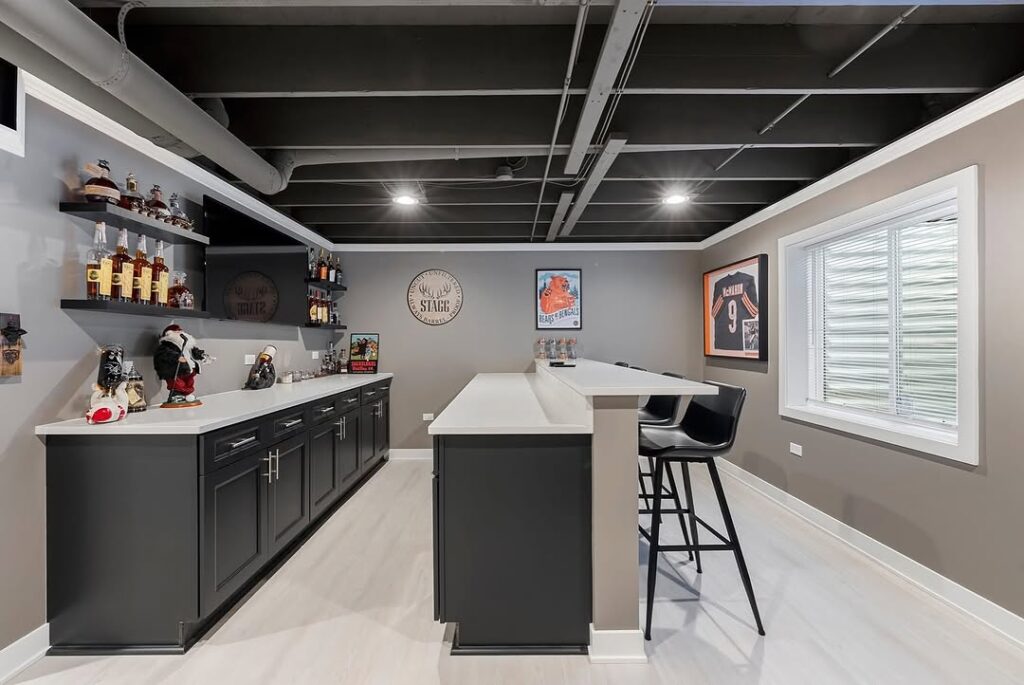
Entertainment-ready basements benefit from organized storage that keeps glassware and supplies neatly contained. A modern basement bar cabinet system integrates built-in shelving, closed cabinetry, and dedicated wine racks for efficient beverage organization.
Adjustable shelves accommodate bottles of varying heights, while soft-close drawers store bar tools, coasters, and accessories discreetly. Under-cabinet lighting improves visibility and enhances ambiance without overwhelming the space.
Anchoring cabinets securely into studs ensures durability, particularly when storing heavier glassware. Moisture-resistant finishes protect wood surfaces from basement humidity.
Thoughtful layout planning separates preparation areas from storage compartments, maintaining clear countertops. This structured approach transforms a basement bar into a functional, clutter-free entertainment zone designed for long-term use.
Basement Library Feature Storage Wall
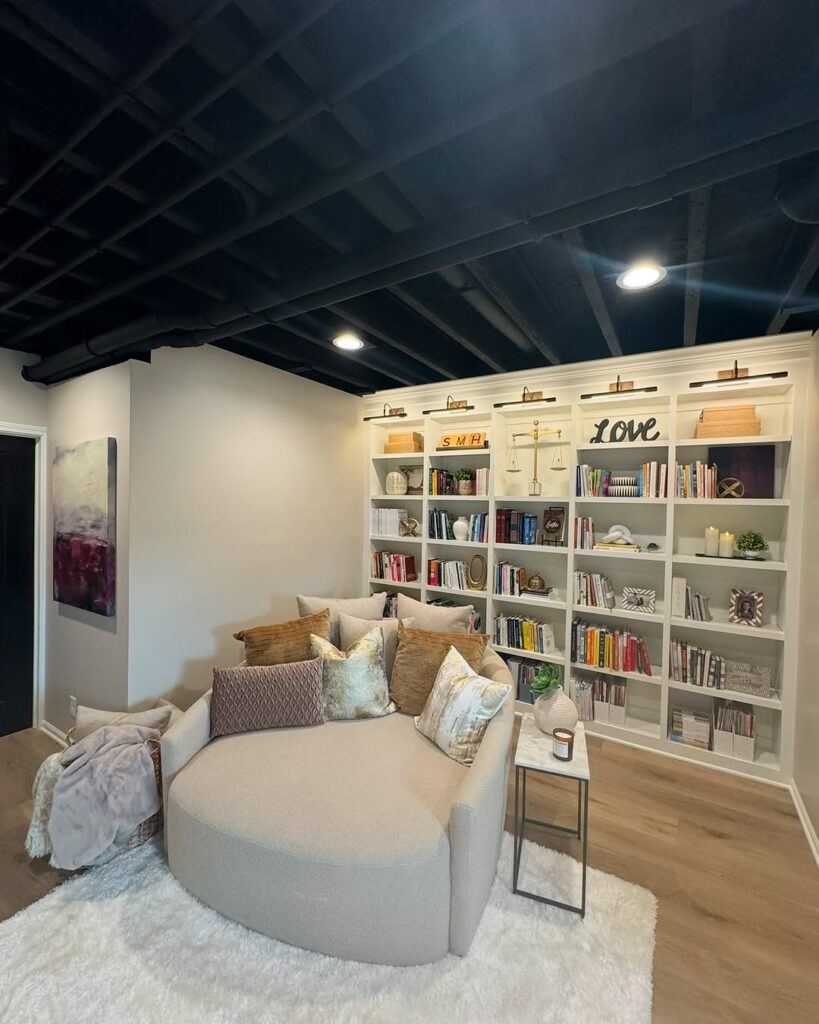
Quiet corners in a lower level can become a refined reading retreat when organized with intention. A basement library feature storage wall combines floor-to-ceiling bookshelves with closed cabinetry to balance display and concealed storage.
Adjustable shelving accommodates novels, reference books, storage baskets, and decorative accents without wasted vertical space. Securing units directly into wall studs ensures stability, especially for heavier hardcovers.
Integrated lighting improves visibility in typically low-light basement environments while highlighting book collections. Lower cabinets store documents, board games, or media equipment neatly out of sight.
Proper airflow and moisture control protect paper materials from humidity damage. This structured approach transforms unused basement space into an organized, functional home library with lasting durability.
DIY Sloped-Ceiling Storage Rack System
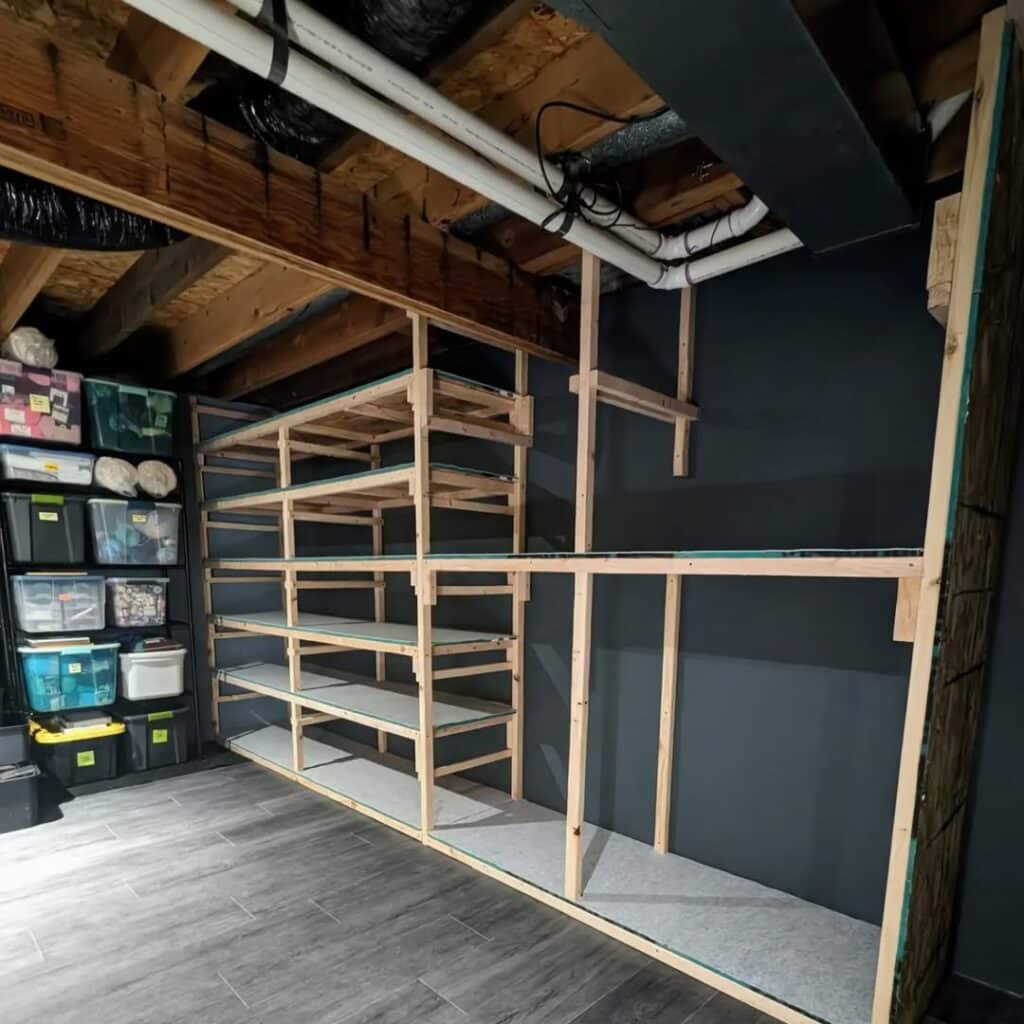
Awkward rooflines often create unusable pockets in basements with angled ceilings. A DIY sloped-ceiling storage rack system turns those tight spaces into purposeful organization zones by installing custom-fitted shelving that follows the ceiling pitch.
Measuring carefully ensures shelves align with structural framing while maximizing vertical clearance. Shorter bins placed along the lowest edge hold seasonal décor, luggage, or archived documents without blocking access.
Reinforced brackets and moisture-resistant materials provide long-term stability in basement conditions. Labeling containers clearly simplifies retrieval during busy transitions.
By adapting shelving depth to ceiling angles, you eliminate dead space and create practical storage that blends seamlessly into the room’s architectural constraints while maintaining accessibility.
Multi-Tier Utility Bin Aisle System
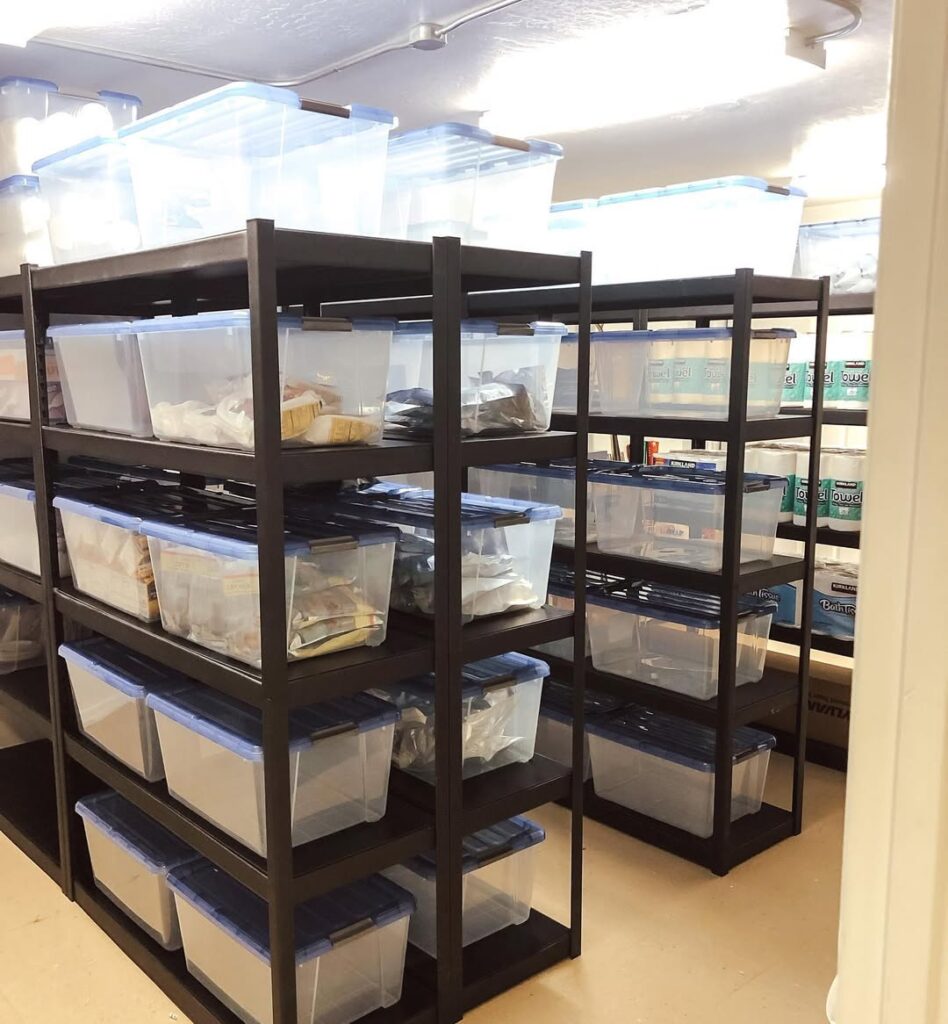
Cluttered basements often stem from scattered boxes with no defined layout. A multi-tier utility bin aisle system establishes order by arranging heavy-duty shelving units in parallel rows, creating clear walkways between storage sections.
Stackable, labeled plastic bins keep tools, holiday decorations, emergency supplies, and household backups categorized efficiently. Position heavier items on lower shelves to improve stability and safety.
Open aisles allow easy access to every container without moving multiple boxes. Anchoring shelves into studs prevents tipping and enhances durability.
Waterproof labels and moisture-resistant bins protect contents from humidity. Structured tiered organization not only maximizes square footage but also simplifies inventory tracking, turning a chaotic basement into a streamlined storage environment.