
A room can feel luxurious without relying on a matched set or a grand gesture; often, one strong design choice gives everything else direction.
Luxury Living Room Ideas here range from letting a sculptural chandelier lead to keeping seating low enough to preserve a skyline view.
Other examples show how layered patterns can add depth around a pale sofa, or how meaningful art can guide a room’s palette.
The common thread is thoughtful balance: expressive color and standout shapes feel more welcoming when quieter pieces give them space. These approaches offer practical ways to create a living room that feels polished and personal.
1. Let a Sculptural Chandelier Lead
Credits: Instagram
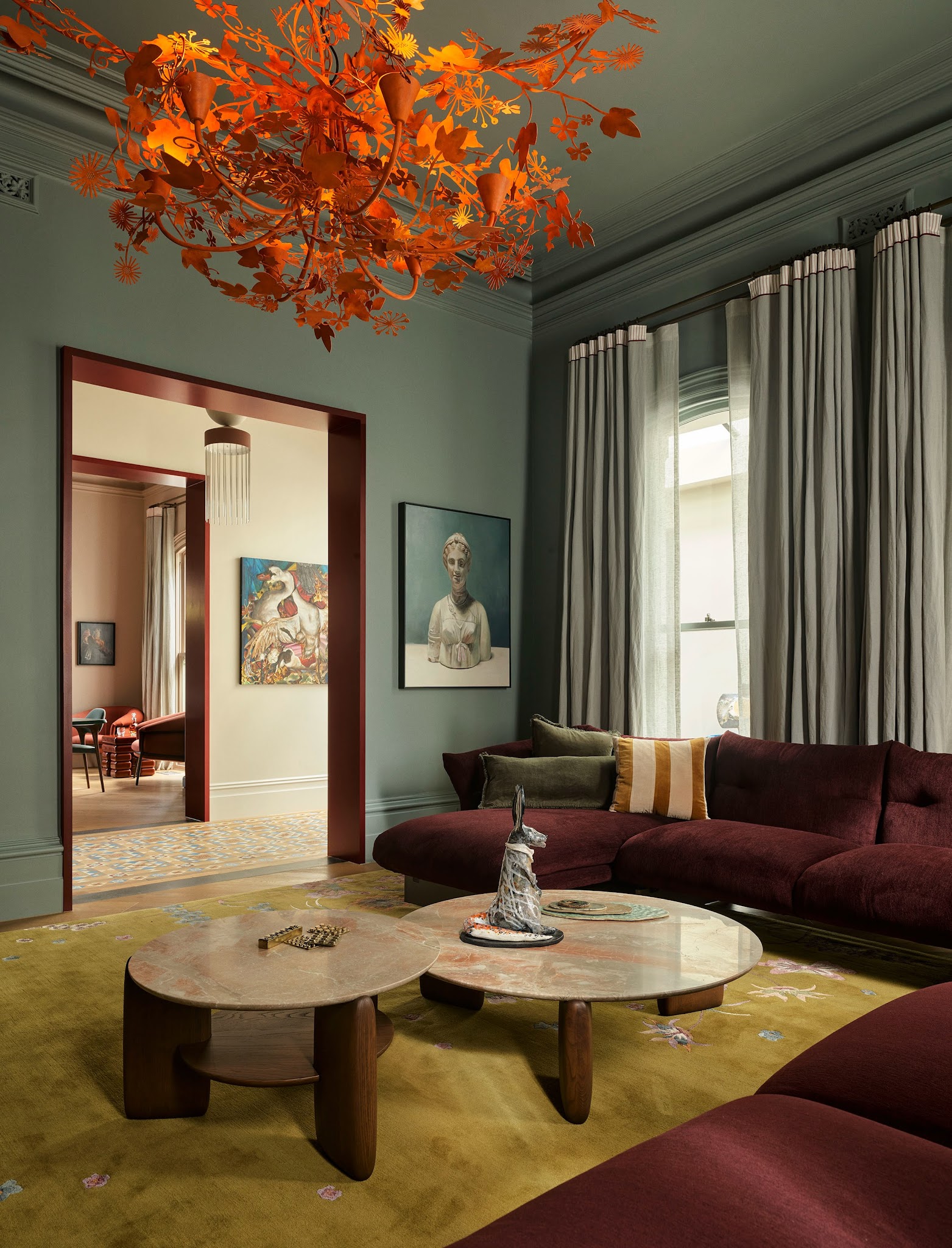
An orange chandelier turns the ceiling into the most expressive surface in this living room. Its branching silhouette plays against quiet green walls, while burgundy seating and a yellow rug give the space a rich, confident palette.
Two overlapping round tables soften the arrangement and keep the center from feeling rigid. For a similar effect, choose one light fixture with enough presence to anchor the room, then repeat its warmth in smaller accents.
Full curtains add another generous layer without competing with the ceiling. Notice how the red doorway frames the adjoining room like a picture.
Carrying an accent color through an architectural opening can make a luxurious scheme feel connected, even when neighboring spaces use different colors and furniture.
2. Layer Quiet Patterns Around a Pale Sofa
Credits: Instagram
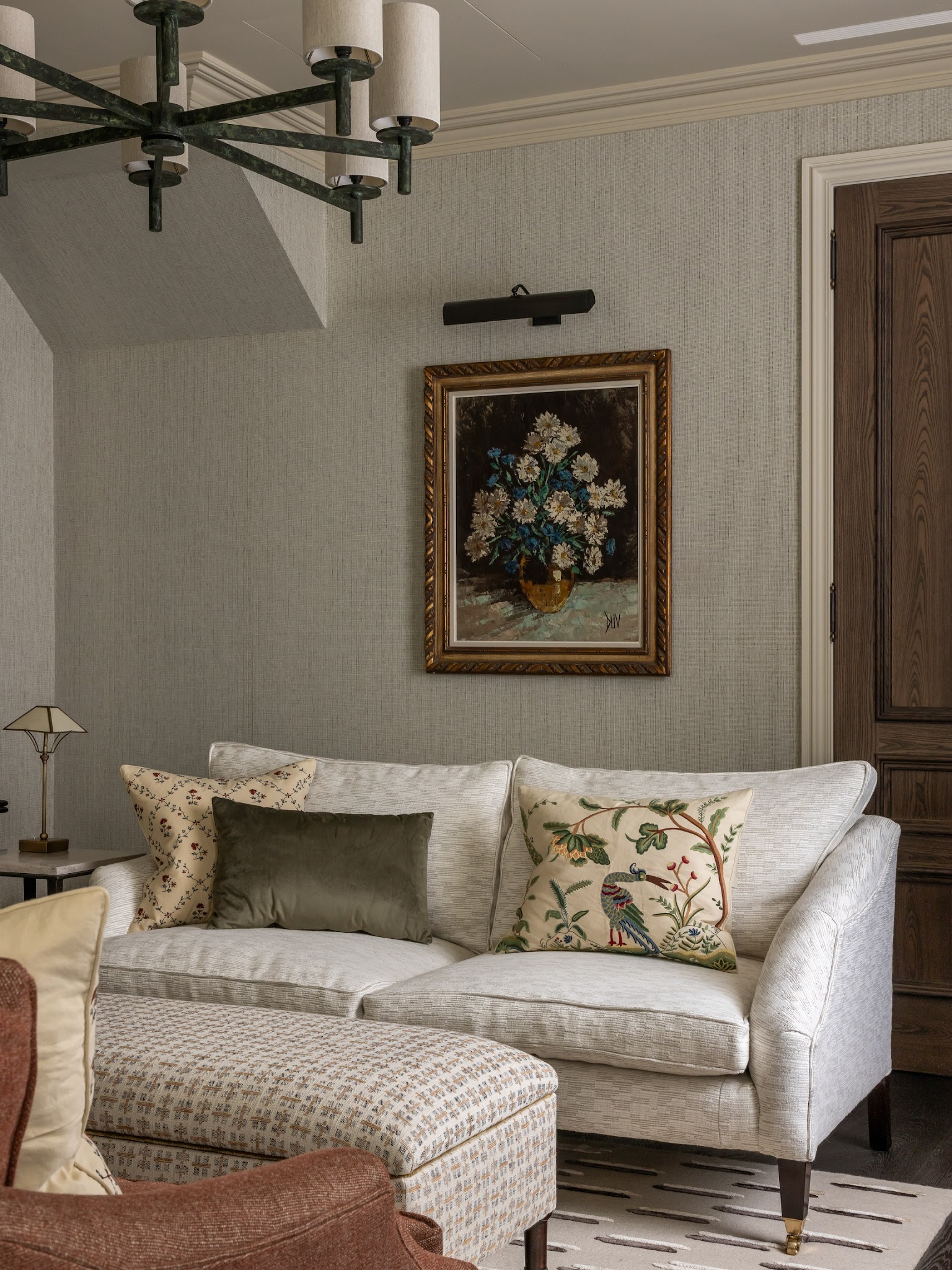
Luxury can come from the details you notice after sitting down. Here, a pale sofa combines with patterned pillows, a subtly checked ottoman, and finely textured walls.
The colors stay close enough that the room feels settled, while each surface brings something different to the composition. A floral painting and its dedicated picture light create an intimate focal point above the seating.
The dark chandelier introduces a stronger outline overhead, balancing the lighter upholstery below. Try this approach when you want an elegant room that still feels comfortable for everyday use.
Keep the largest pieces restrained, vary the scale of smaller patterns, and include a few dark accents. Matching everything would lose the depth that makes this understated arrangement work.
3. Pair Sculptural Chairs With Saturated Green
Credits: Instagram
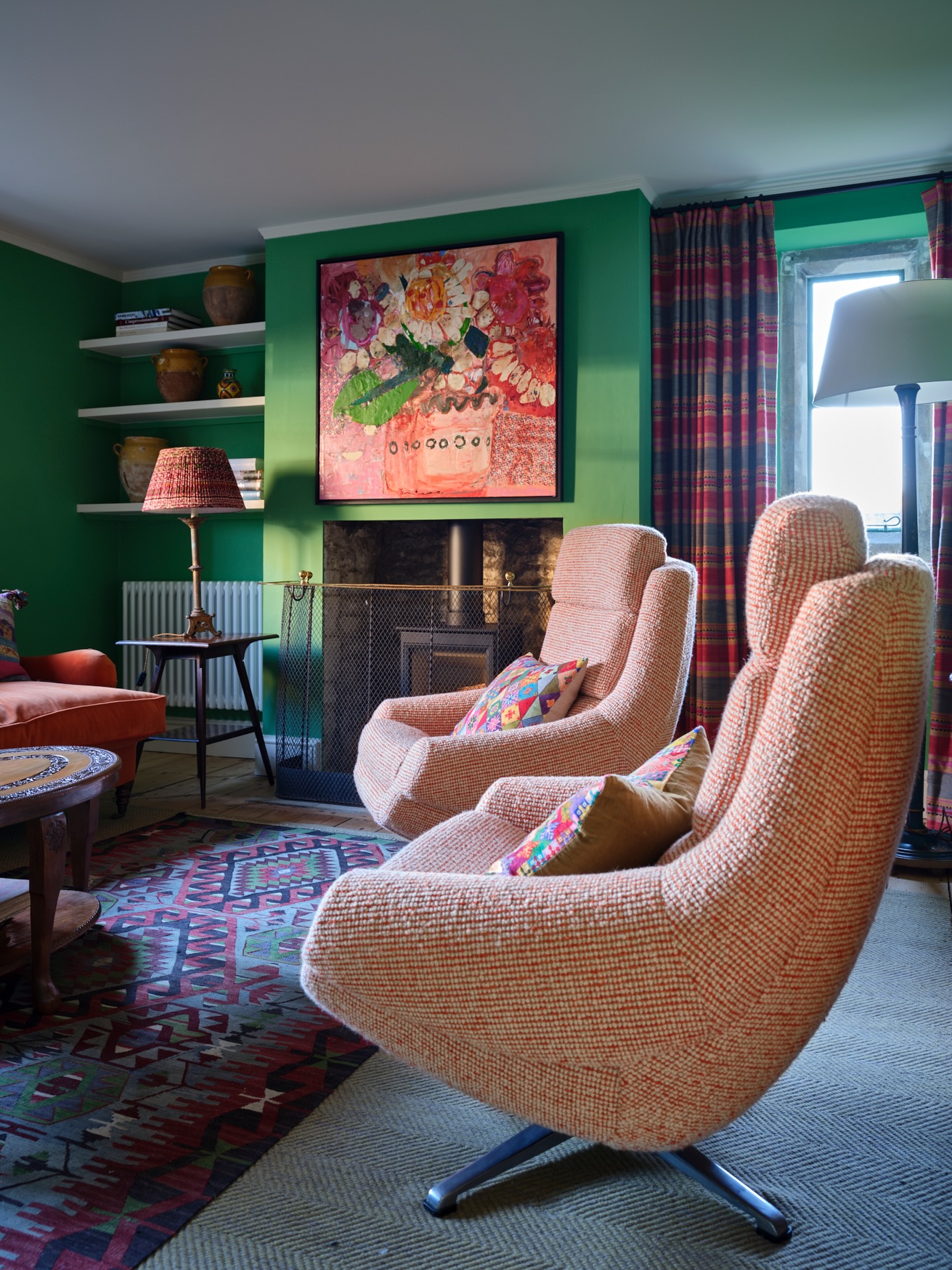
Two rounded lounge chairs give this green living room an unmistakable sense of comfort. Their pale pink upholstery stands out against the walls, while a colorful rug and striped curtains build a layered setting around them.
The fireplace remains visible between the seats, and a large floral painting connects the pinks, reds, and greens across the room.
This is a useful way to make strong color feel welcoming: put softness and generous proportions at the center of the plan.
Keep side tables close enough to serve each chair, then mix lighting heights so the arrangement works after sunset. Open shelves provide space for books and pottery without overwhelming the fireplace. The result feels collected, personal, and ready for lingering conversations.
4. Give Full Curtains a Decorative Border
Credits: Instagram
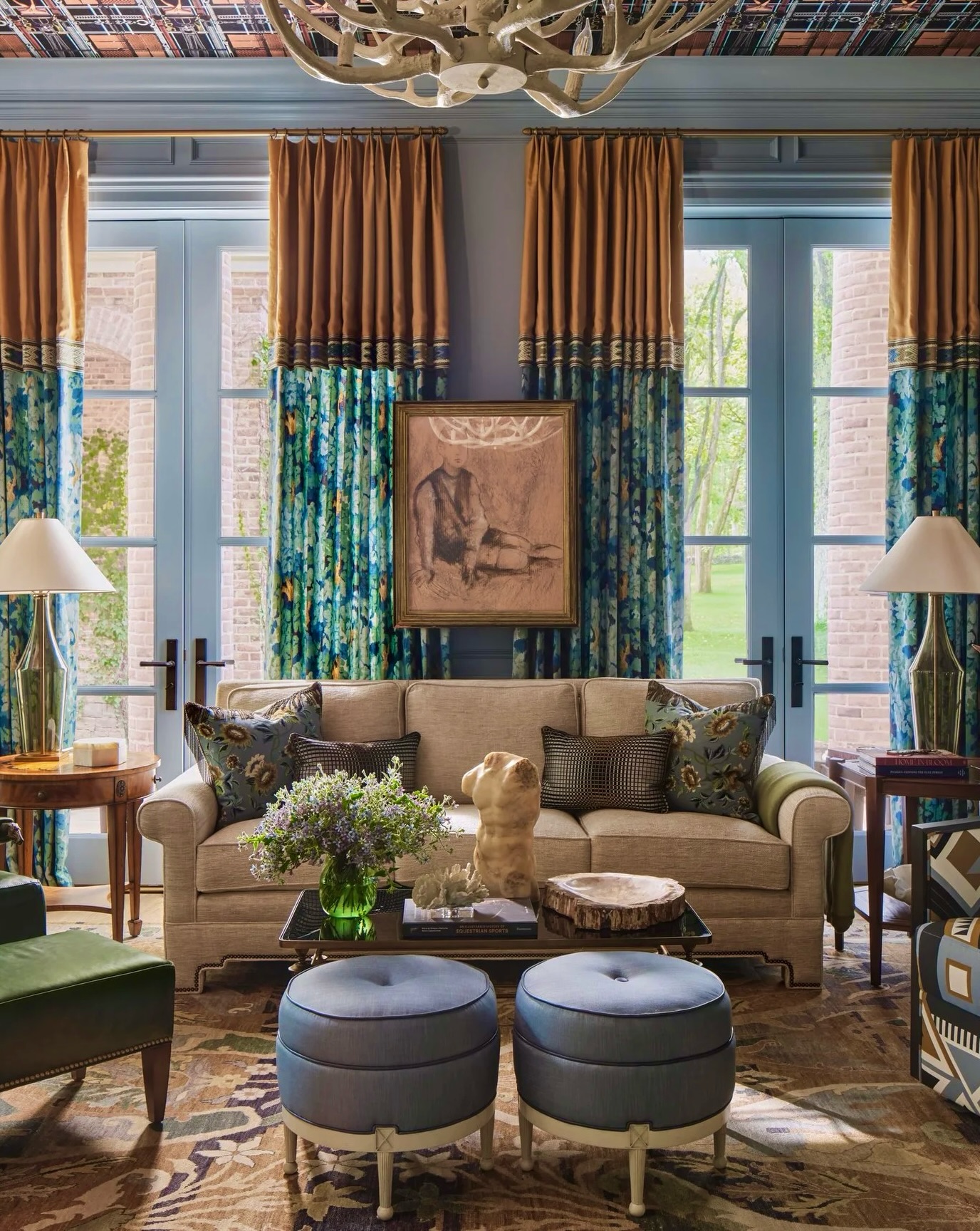
Tall curtains make a dramatic backdrop for this carefully balanced seating group. Their warm upper panels meet a blue and green pattern below, creating a horizontal division that draws attention to the room's generous height.
Blue trim connects the windows, doors, and ceiling edge, while a neutral sofa keeps the center calm. Two small round stools bring additional seating without blocking the view of the coffee table.
The symmetry feels composed, but varied pillows, artwork, and contrasting chairs prevent it from becoming stiff. Borrow the idea by treating window coverings as a major design element.
Choose colors that already appear elsewhere in the room, and leave enough plain upholstery nearby to give the pattern breathing room. Scale makes the difference.
5. Frame the Fireplace With Reflective Detail
Credits: Instagram
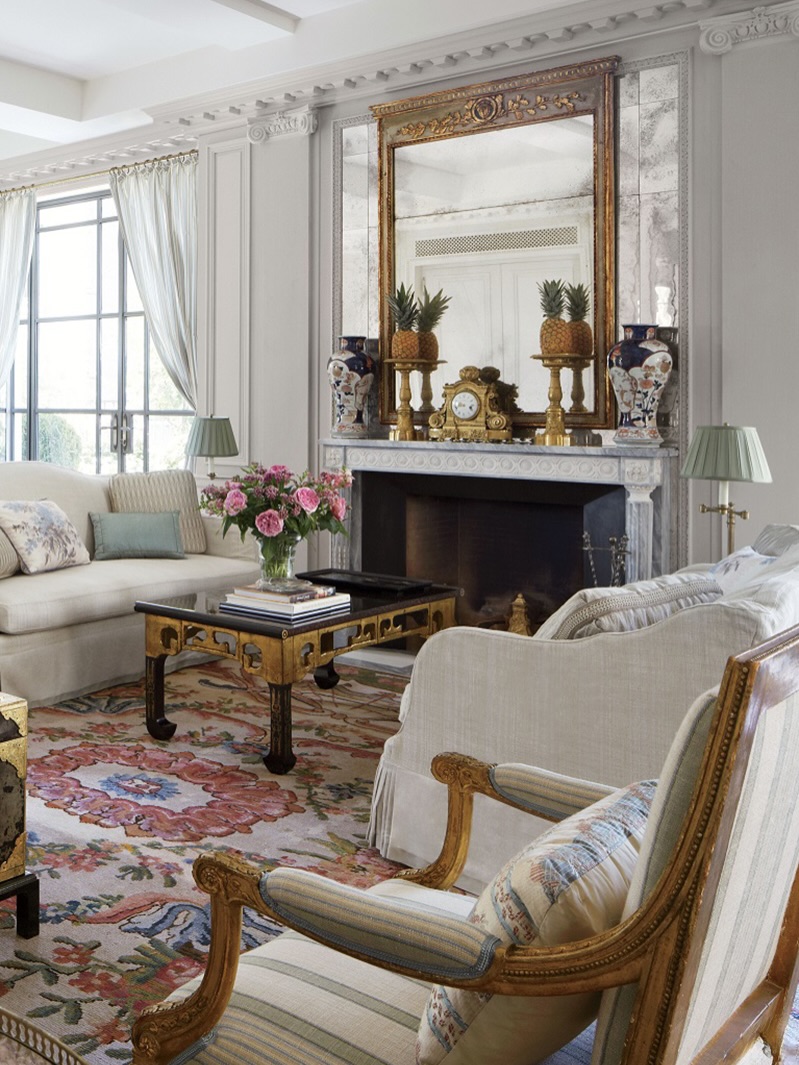
An ornate mirror above the fireplace gives this pale living room a luminous focal point. Narrow reflective panels extend the effect beside it, while carved trim adds depth to the surrounding wall.
Cream seating keeps attention on those details and on the colorful rug spreading beneath the furniture. A dark coffee table provides a clear center, and smaller green lamps introduce a soft note of color at the edges.
To adapt the look, build the composition around one mirror and keep the furniture grouping close enough for conversation. Repeat a warm metallic finish selectively in frames or table details.
The room's richness comes from the relationship between light, reflection, pattern, and shape, with each element contributing at a different scale.
6. Keep the Skyline Above Low Seating
Credits: Instagram
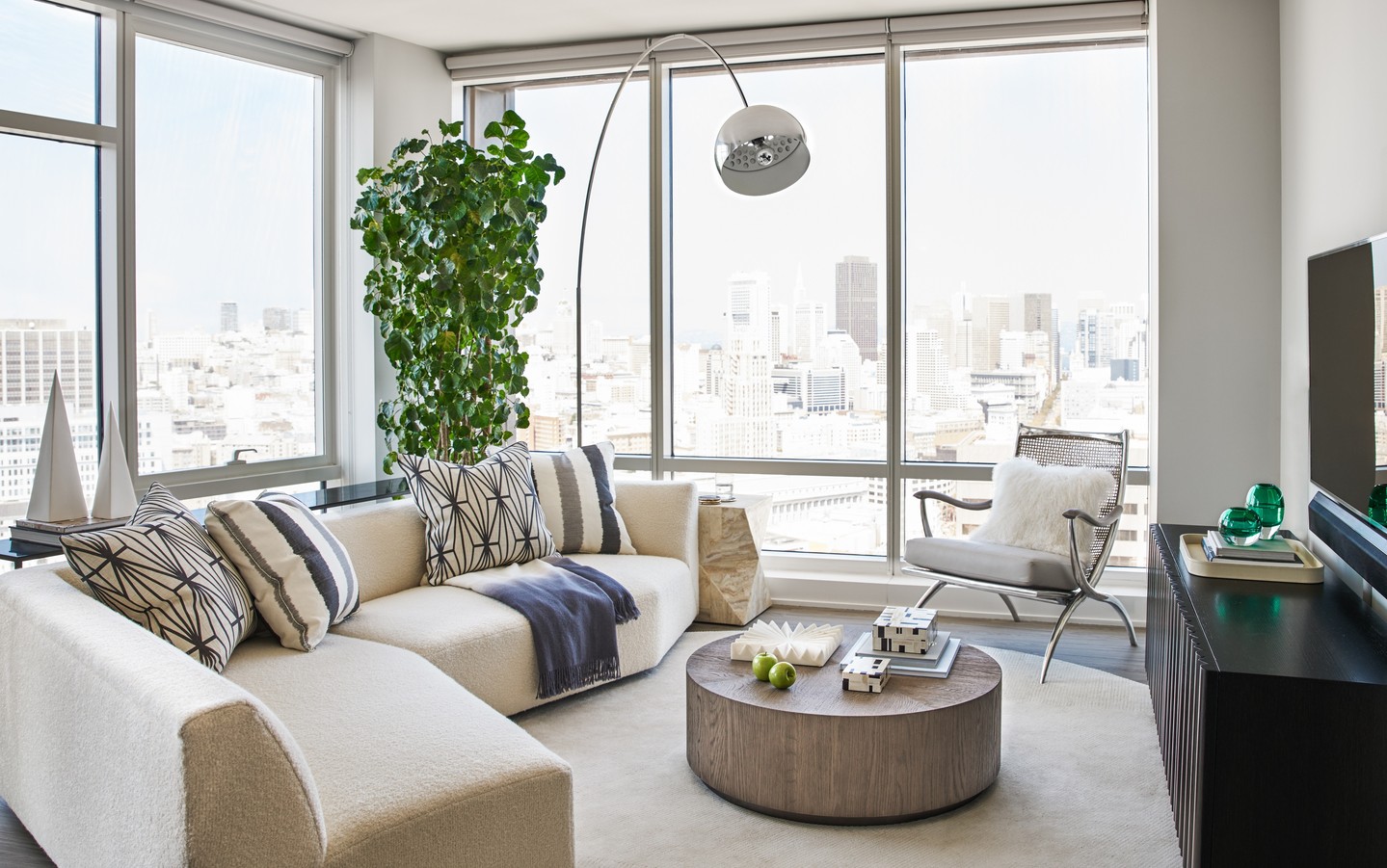
Expansive windows supply the drama in this bright living room, so the furniture stays low and visually quiet. A cream sectional wraps around a round coffee table without interrupting the city view.
A slim framed chair adds another seat, while an arched floor lamp reaches over the arrangement without requiring a ceiling fixture. The dark cabinet gives the opposite wall definition, and a tall plant softens the corner where the windows meet.
Use this approach when an outlook deserves the spotlight. Choose broad, comfortable seating with a modest back height, then limit tall objects to the perimeter.
Patterned pillows and a dark throw provide enough contrast to keep the pale upholstery interesting. The open sightlines make the room feel generous.
7. Choose One Exceptional Coffee Table
Credits: Instagram
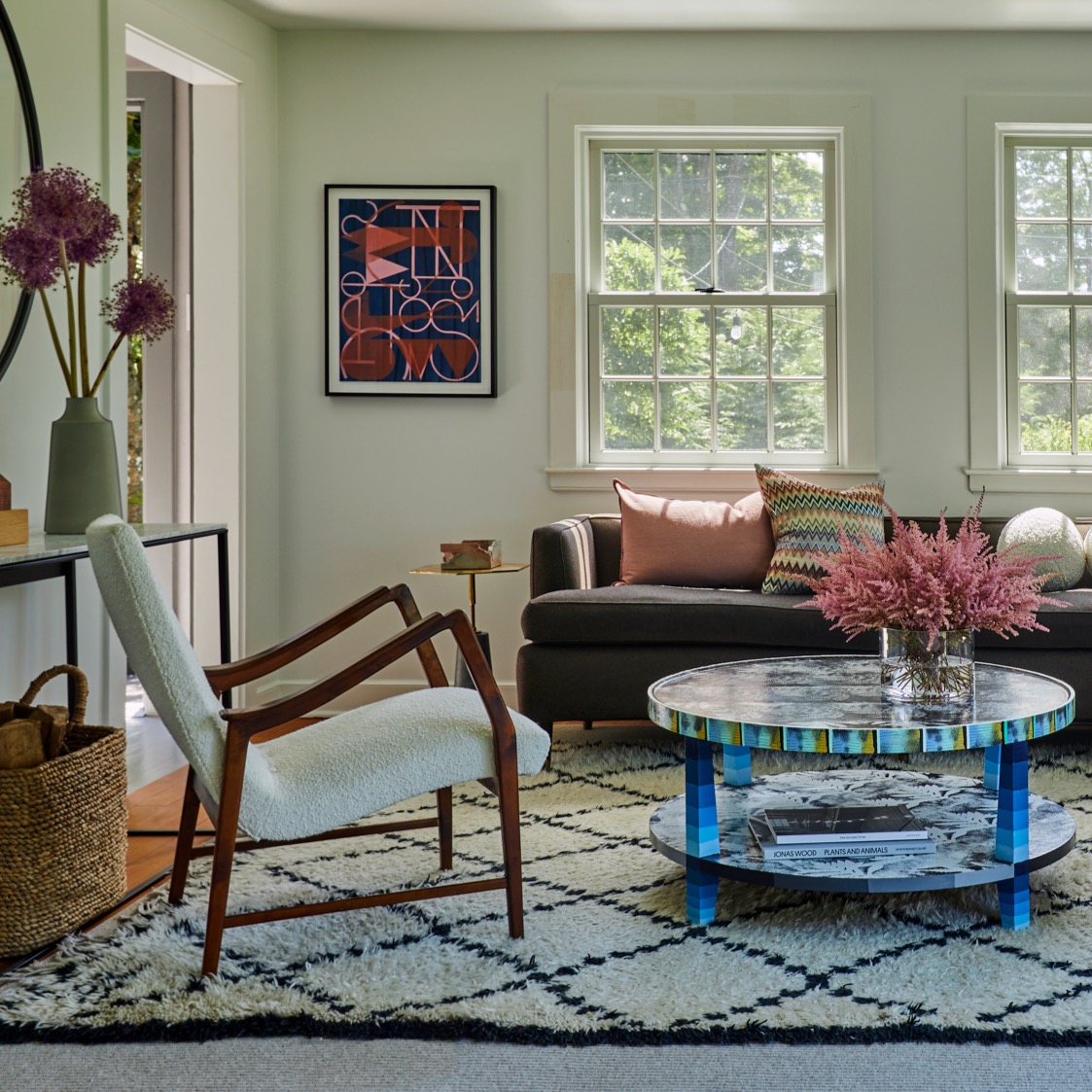
A vivid blue coffee table brings an unexpected focal point to this otherwise gentle living room. Its circular shelves and patterned edges stand out against a dark sofa, pale walls, and a graphic rug.
The surrounding pieces have enough character to feel considered, but their restrained shapes leave the table room to shine. A chair with exposed arms adds an open silhouette, and pink flowers echo a pillow on the sofa.
This is an approachable route to a distinctive luxury interior: invest visual attention in one unusual piece, then support it with comfortable, quieter furnishings.
Repeat a little of its color or energy elsewhere, without turning the entire room into a matching set. Personal artwork completes the relaxed, expressive setting.
8. Make the Fireplace a Sculptural Feature
Credits: Instagram
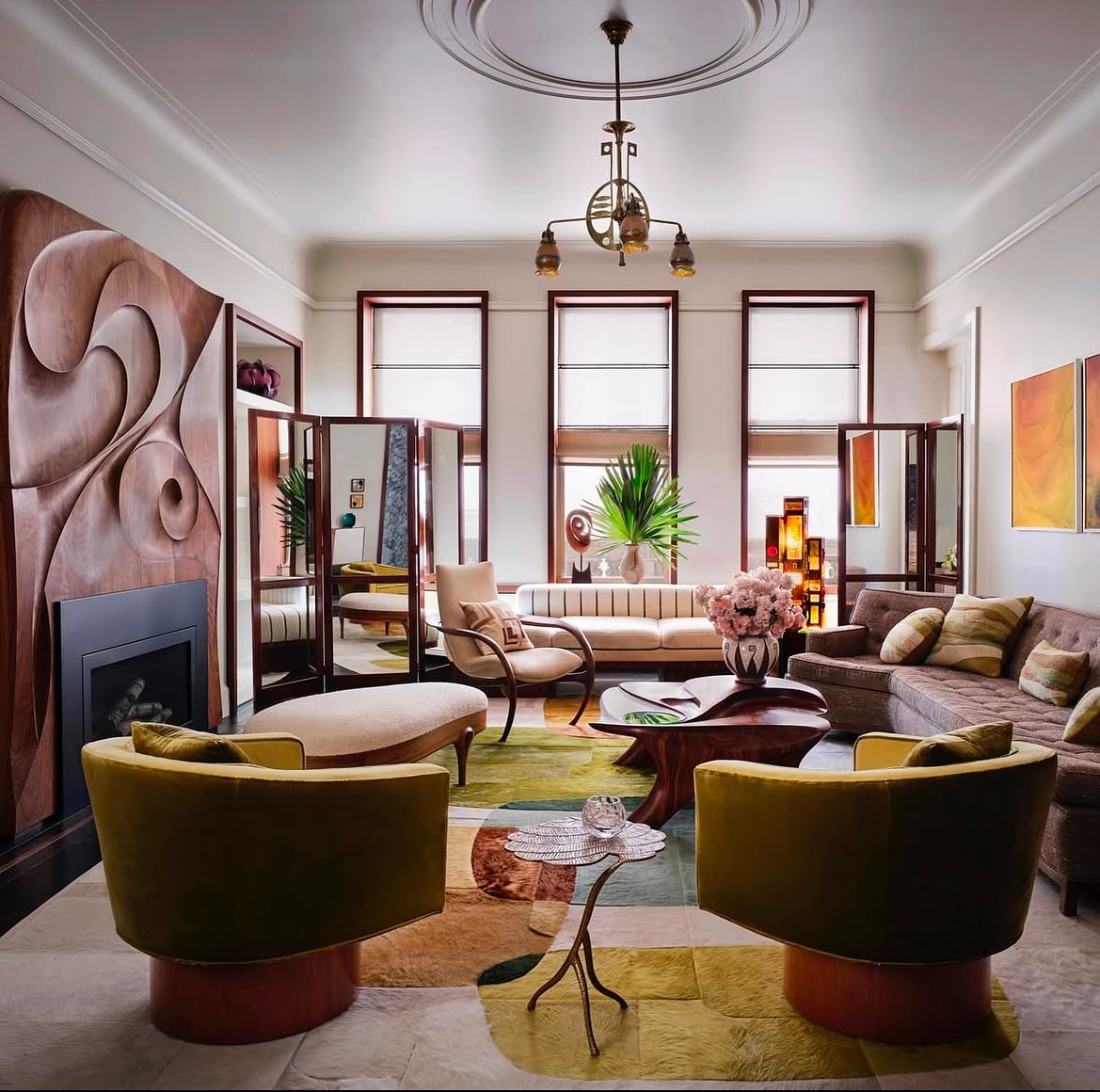
Sweeping curves around the fireplace give this living room the presence of a gallery. The same sense of movement continues through the coffee table, rounded chairs, and flowing patches of color in the rug.
Tall windows and pale walls keep that abundance of form from feeling heavy. Rather than adding many unrelated decorative objects, the room lets its major pieces carry the visual interest.
Try choosing one sculptural architectural feature, then echo its lines in two or three furnishings. The paired green chairs bring order to the foreground, while varied seating beyond creates a more relaxed composition.
Mirrored screens extend the sense of depth. Warm browns and muted greens help the different shapes feel part of one carefully considered whole.
9. Compose a Living Room Around Music
Credits: Instagram
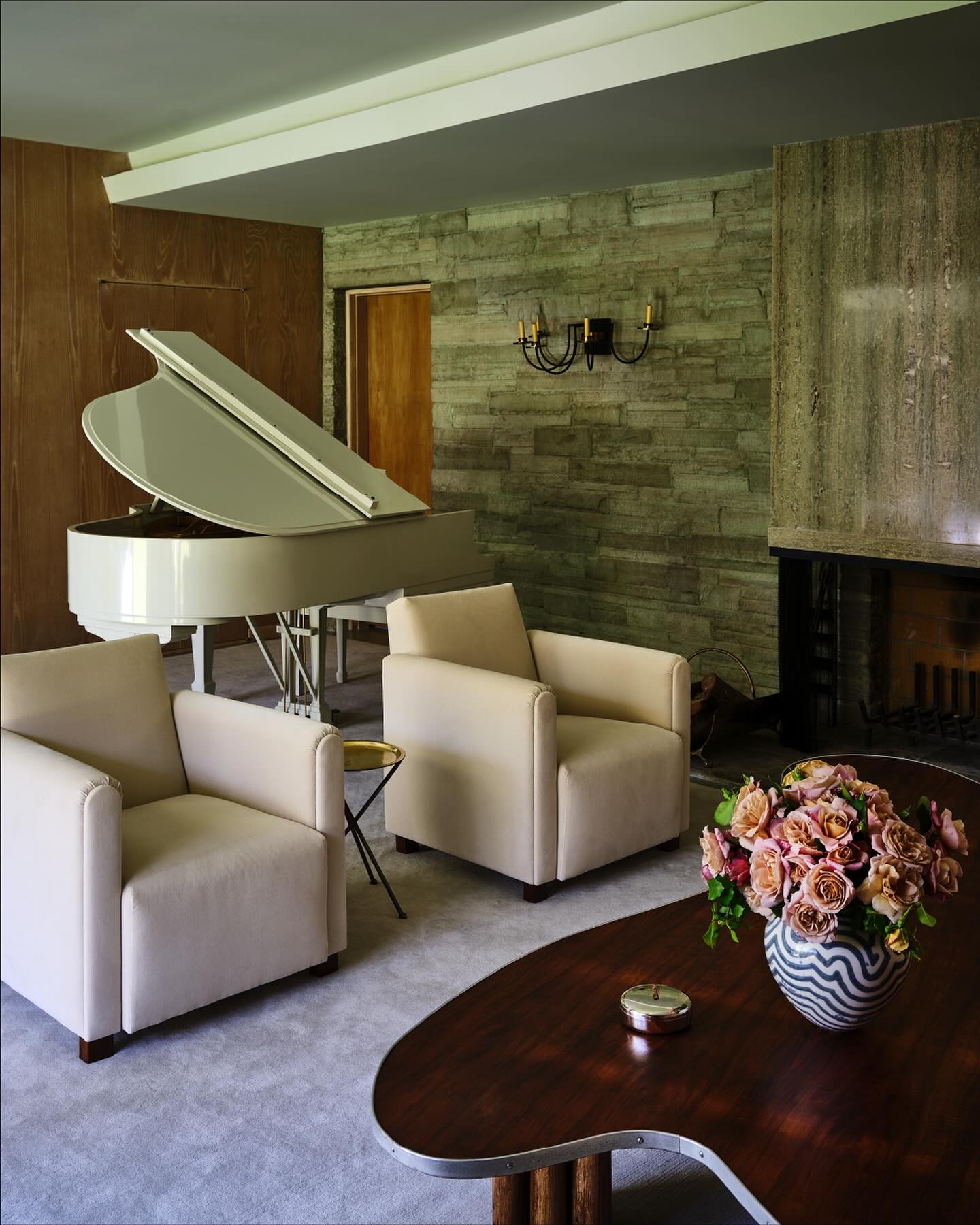
A white grand piano gives this living room a distinctive purpose and a striking silhouette. Two pale armchairs sit nearby, forming a comfortable place to listen or talk beside the fireplace.
The surrounding stone and wood surfaces add depth, while the curved coffee table keeps the furniture arrangement from feeling too angular. A small metallic side table fits neatly between the chairs, leaving the floor plan open.
If music is part of your daily life, give the instrument a deliberate place in the design. Coordinate its color with nearby seating, then use contrasting wall finishes to make both stand out.
The room feels luxurious because every major element has presence, yet the seating still reads as approachable and comfortably arranged.
10. Anchor an Airy Room With a Dark Rug
Credits: Instagram
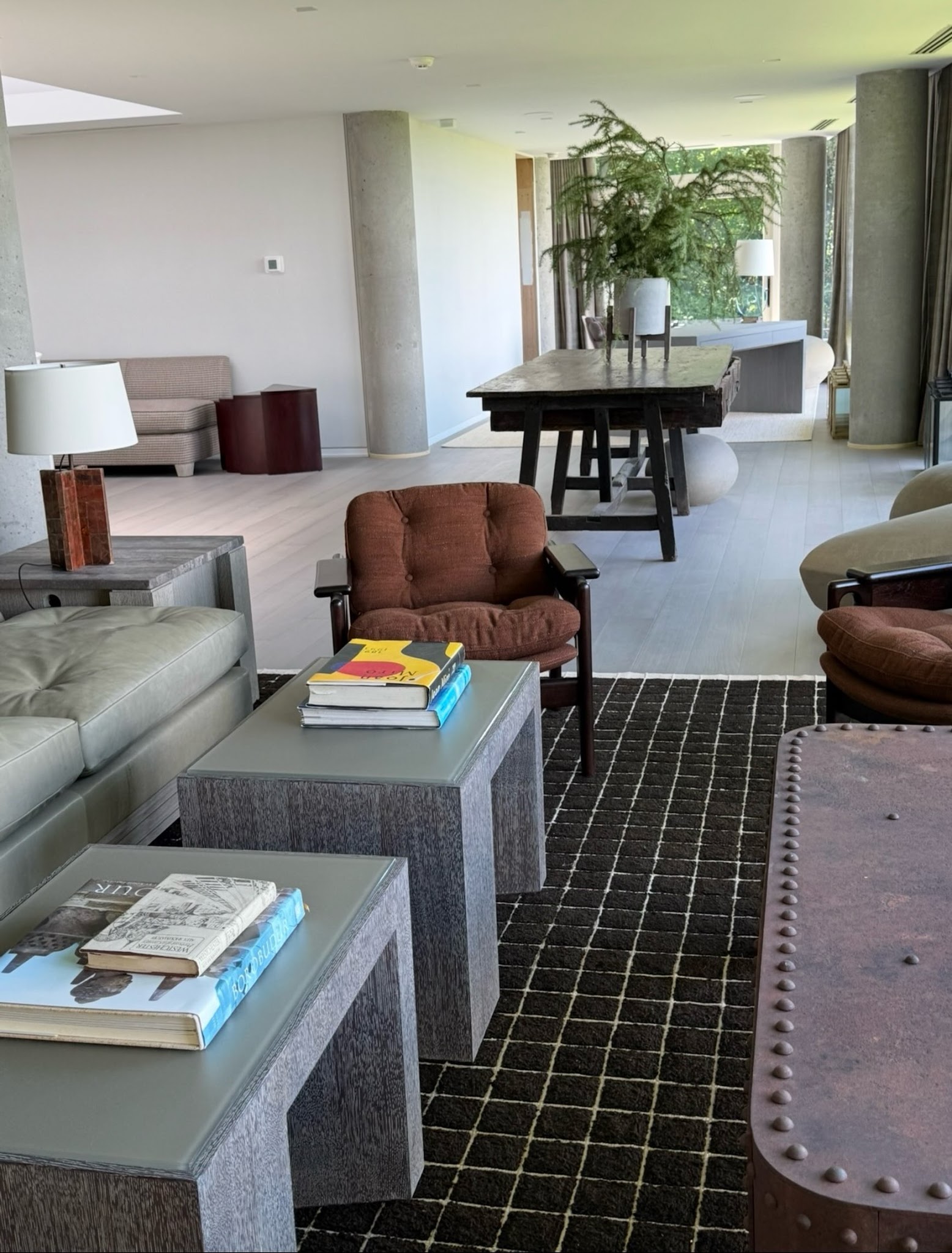
A dark grid rug gives this expansive living room a clear center without interrupting its open architecture. Pale seating, brown lounge chairs, and substantial rectangular tables gather around it, creating a grounded conversation area within the larger space.
Round columns and tall windows remain visible beyond the furniture, while a long central table holds a generous arrangement of branches. The palette is restrained, but the mix of tufting, smooth tops, and textured surfaces supplies plenty of detail.
Use a dark rug to define a seating group when pale floors and walls make furniture feel scattered. Keep the surrounding walkways open, and repeat one or two colors across different pieces. The contrast creates intimacy while preserving the room's sense of scale.
11. Soften a Formal Fireplace With Pastel Chairs
Credits: Instagram
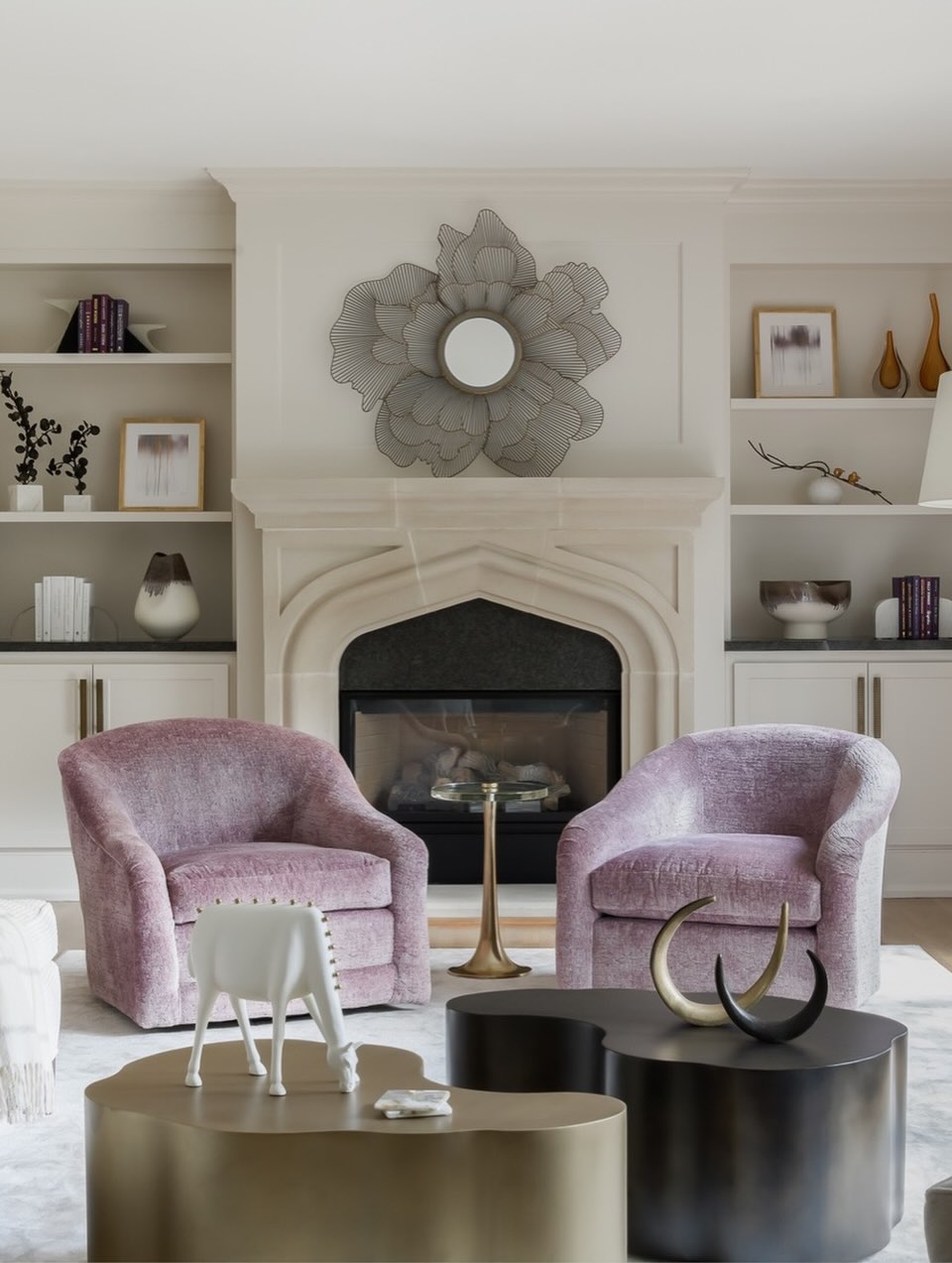
A pair of lavender chairs makes this formal fireplace arrangement feel unexpectedly inviting. Their rounded backs and generous seats contrast with the carved surround, while a delicate flowerlike mirror adds another soft shape above the mantel.
The pale built-ins keep the background orderly, and two sculptural coffee tables introduce darker, more substantial forms in the foreground. This balance is useful when traditional architecture risks feeling too serious.
Choose seating in a gentle color, keep its silhouette comfortable, and let the architectural details remain visible around it. Small metallic touches add brightness without taking over.
The shelves also leave plenty of empty space between objects, allowing each piece to register. The result is polished, but the atmosphere stays relaxed and welcoming.
12. Build the Palette Around Meaningful Art
Credits: Instagram
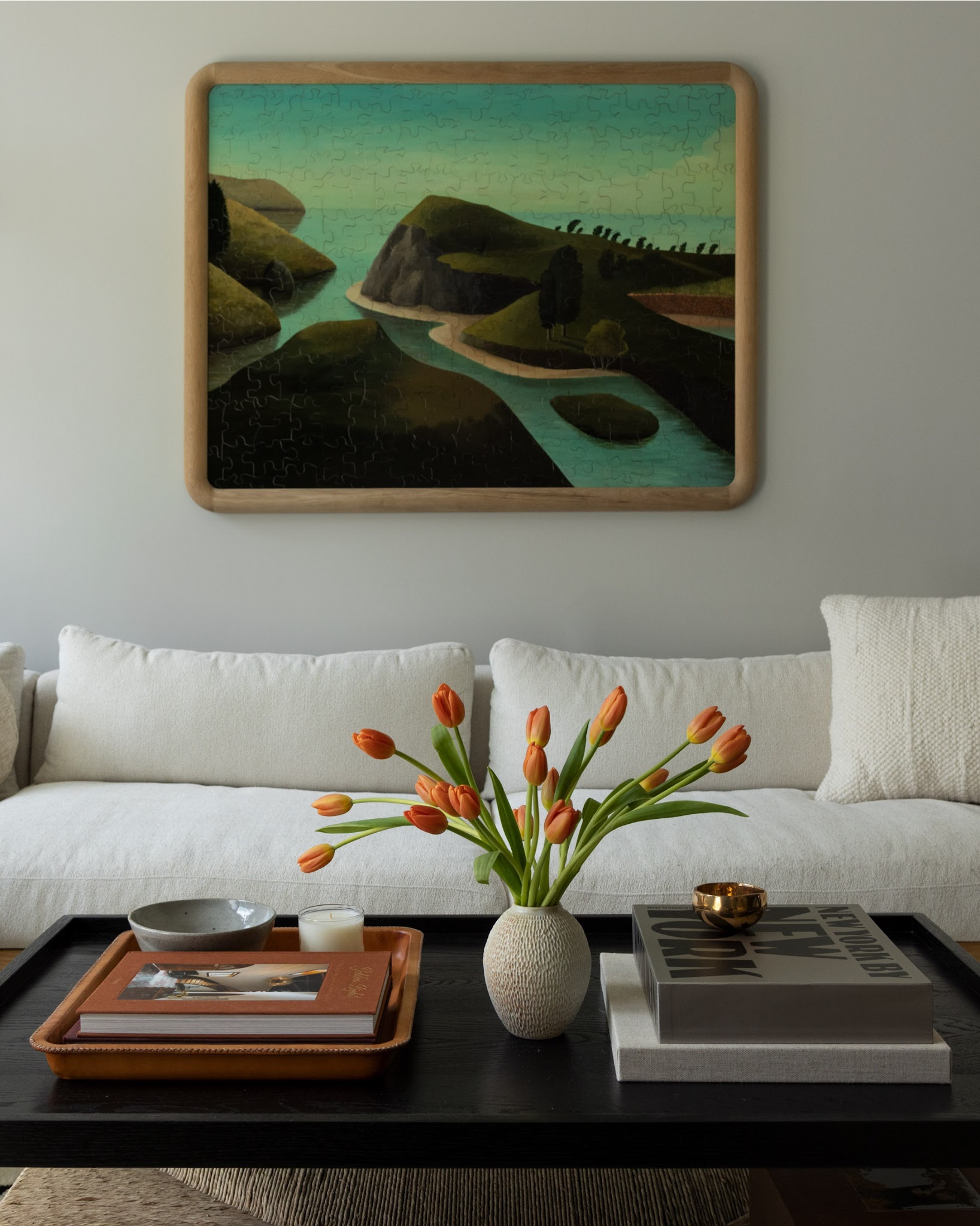
A landscape artwork gives this restrained seating area its identity. Soft green walls echo the picture, while a pale sofa and dark coffee table create a simple foundation beneath it.
Orange tulips provide a lively accent that feels especially clear against the muted background. The tabletop arrangement is useful as well as decorative: books, a tray, a bowl, and a candle sit in distinct groups with open space between them.
Start with a piece of art you want to live with, then draw a small palette from it. Keep the largest furniture forms calm so the artwork can hold attention.
A few tactile pillows and thoughtfully chosen objects add the richness that makes a simple room feel finished and personal.
13. Integrate the Screen Into Custom Storage
Credits: Instagram
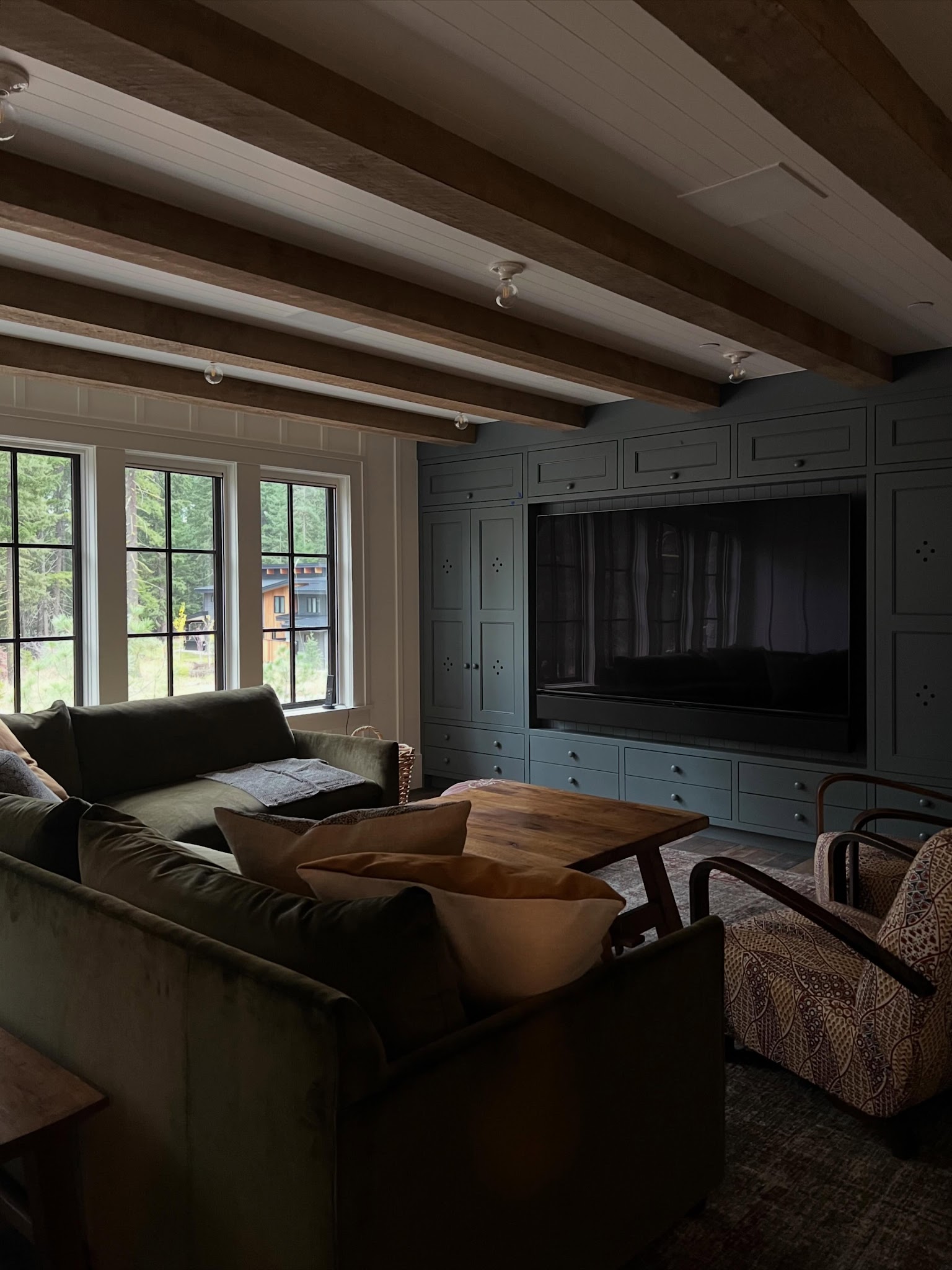
A large screen becomes part of the architecture when it is framed by a wall of cabinetry. Here, blue-gray doors and drawers surround the television, giving the media wall an organized, deliberate appearance.
Exposed ceiling beams and a broad wooden table bring warmth to the room, while deep green seating creates a comfortable place to settle in. The tall windows keep the darker palette connected to the surrounding trees.
Use this approach when entertainment is central to the living room. Plan storage around the equipment, allow room for everyday essentials, and repeat the cabinet color in smaller accents.
Comfortable seating should face the screen without closing off circulation. The combination feels tailored because the practical elements belong to one composition.
14. Mix Patterns Within a Gentle Green Palette
Credits: Instagram
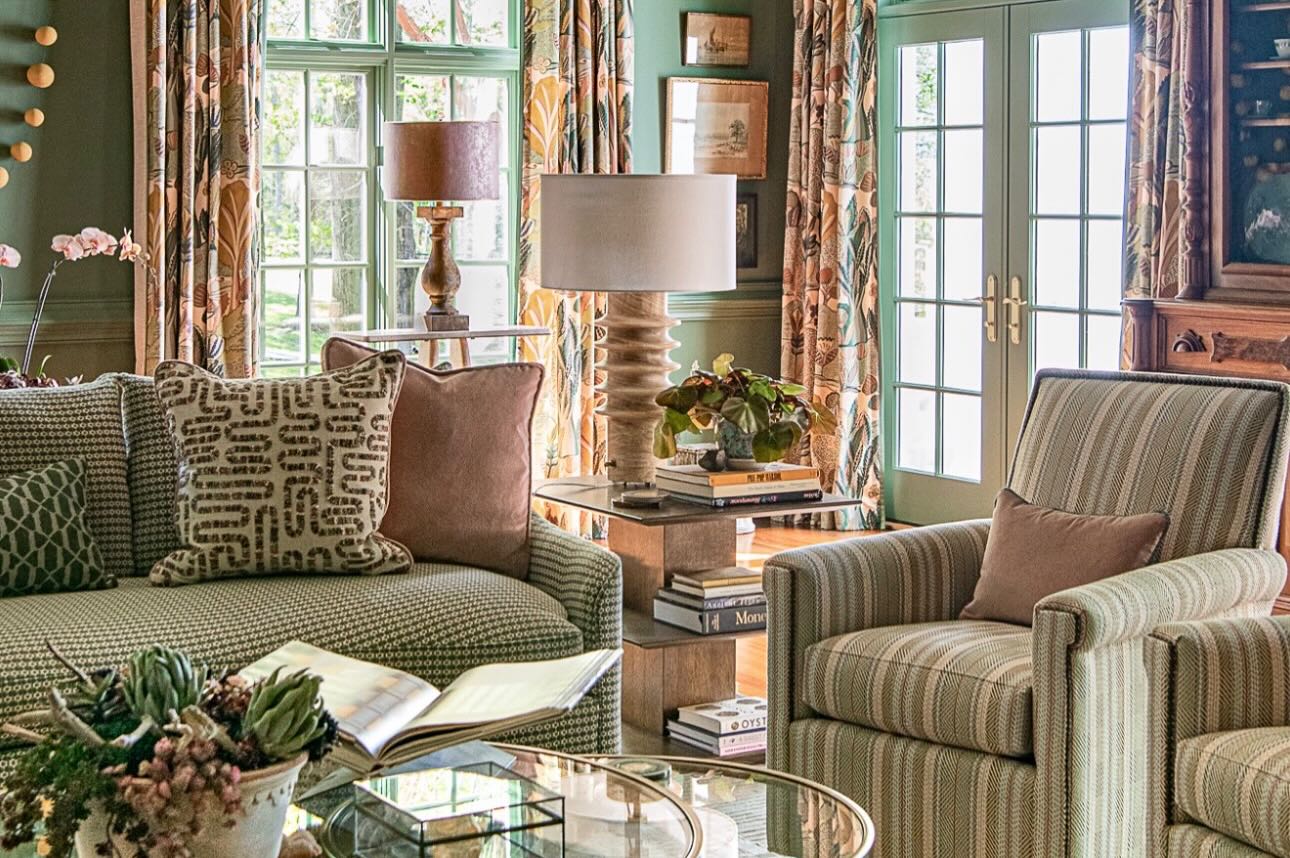
Green walls and painted window trim tie together the many patterns in this living room.
A finely patterned sofa, striped armchair, decorative pillows, and expressive curtains each have a different scale, giving the arrangement depth without losing its sense of order.
Warm pink accents soften the greens, while glass tabletops let light move through the crowded composition. The generous lamps are especially useful: their pale shades give the eye a quiet place to rest between busier surfaces.
To borrow the look, settle on a small color family before mixing prints. Vary their size and direction, and include several plain pieces to hold the scheme together.
A room can feel richly layered while still offering a comfortable, coherent place to relax.
15. Give a Generous Sofa the Richest Color
Credits: Instagram
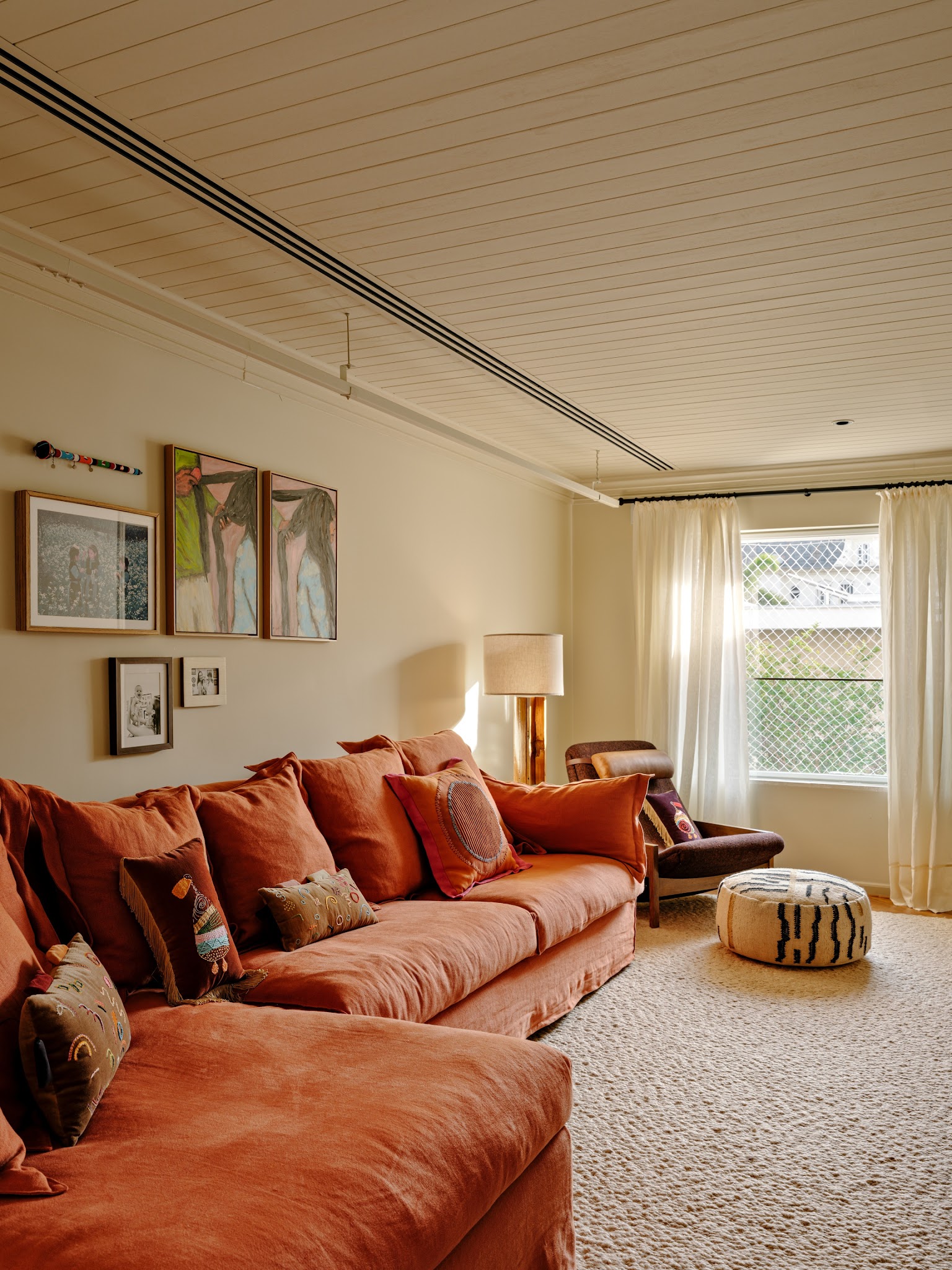
A rust-colored sofa brings warmth and presence to this otherwise pale living room. Its deep cushions and extended shape make comfort the central feature, while a loose grouping of framed artwork adds personality above.
Light curtains soften the window, and a thick textured rug continues the relaxed feeling underfoot. A round ottoman introduces pattern without interrupting the open floor area.
This is a strong approach when you want luxury to feel easy to live with. Choose a substantial sofa in a color you love, then keep the surrounding walls and floor coverings quieter.
Mix pillow sizes instead of arranging a rigid matching set. A nearby lamp and an additional chair make the corner useful for reading as well as conversation.
16. Highlight Ornate Trim With Warm Yellow
Credits: Instagram
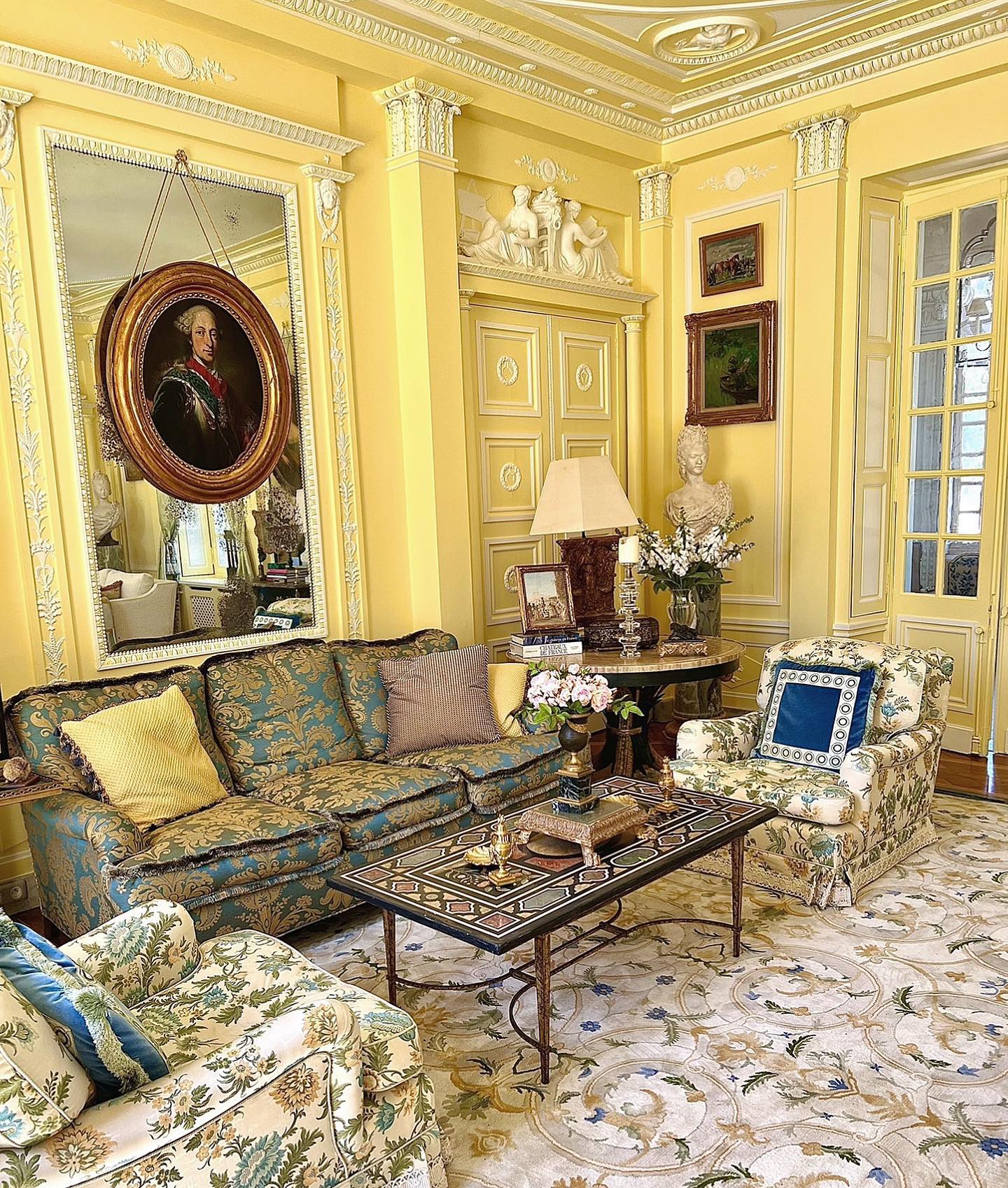
Warm yellow walls make the elaborate trim in this living room feel bright and welcoming. Pale relief details, door panels, and ceiling ornament remain defined, while patterned seating adds another layer of richness below.
A large mirror reflects the room and carries an oval portrait, creating a focal point that feels both architectural and personal. Blue and green accents in the upholstery keep the yellow from dominating every surface.
The idea translates beyond grand rooms: use a confident wall color to emphasize molding, then introduce a cooler accent through furniture or pillows. Try paint samples at different times of day before committing.
A carefully chosen color can bring decorative architecture into focus while giving the room a more cheerful mood.
17. Create a Deeply Comfortable Media Lounge
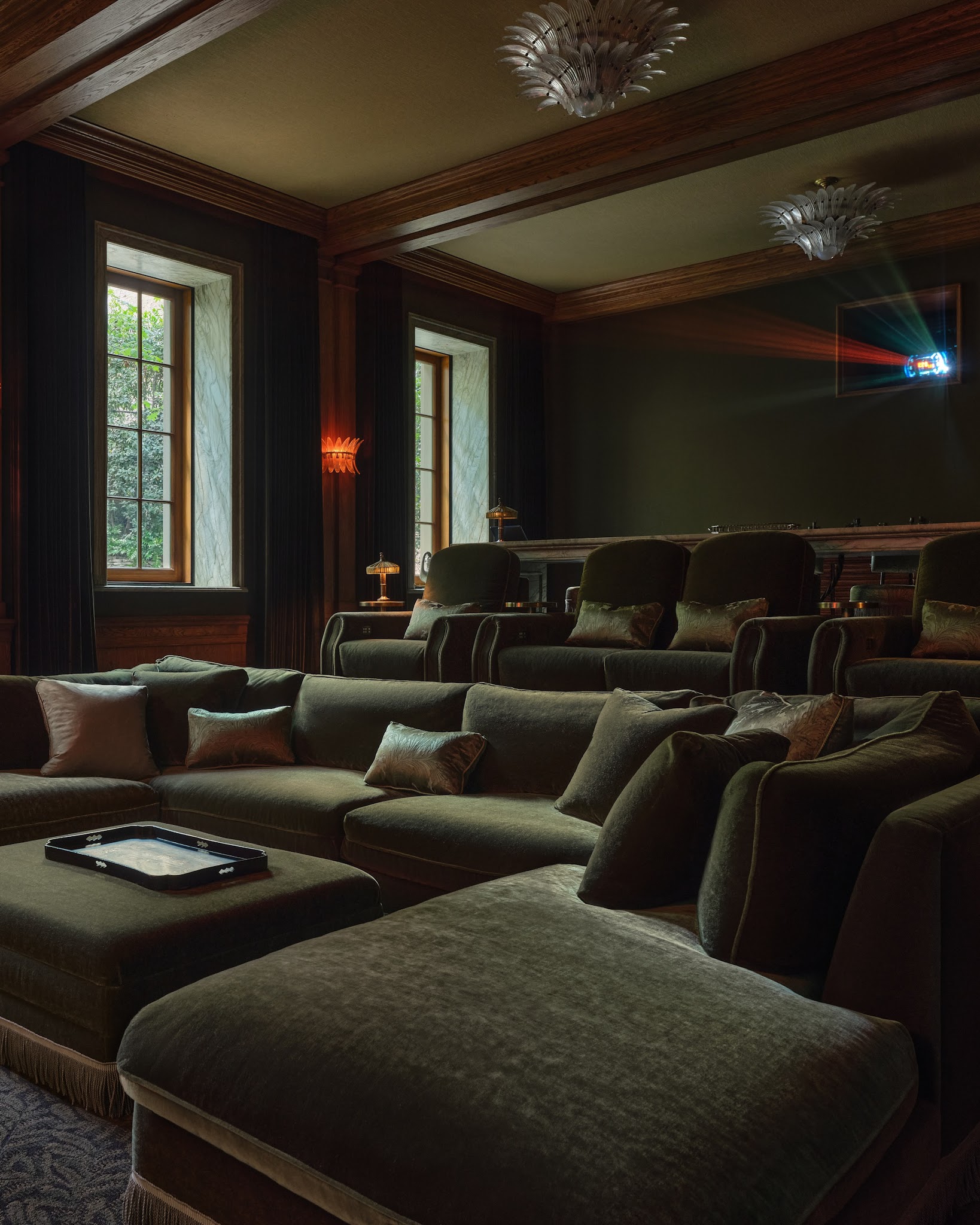
Credits: Instagram
A green sectional and matching ottoman make this media lounge feel like a destination. The seating is generous enough to stretch out, while taller chairs behind it provide another viewing position.
Dark walls, substantial ceiling beams, and heavy curtains create an enclosed, intimate atmosphere despite the tall windows. Small lamps and decorative fixtures add points of warmth around the room.
For a similar effect, build the plan around comfort before adding accessories. Choose seating depths that suit how you relax, and keep a tray nearby so an upholstered ottoman can hold drinks or books.
Repeating one deep color across several large surfaces makes the space feel cohesive. The visible projector reinforces that this luxurious room is meant to be used.
18. Add a Comfortable Perch Beside the Bar
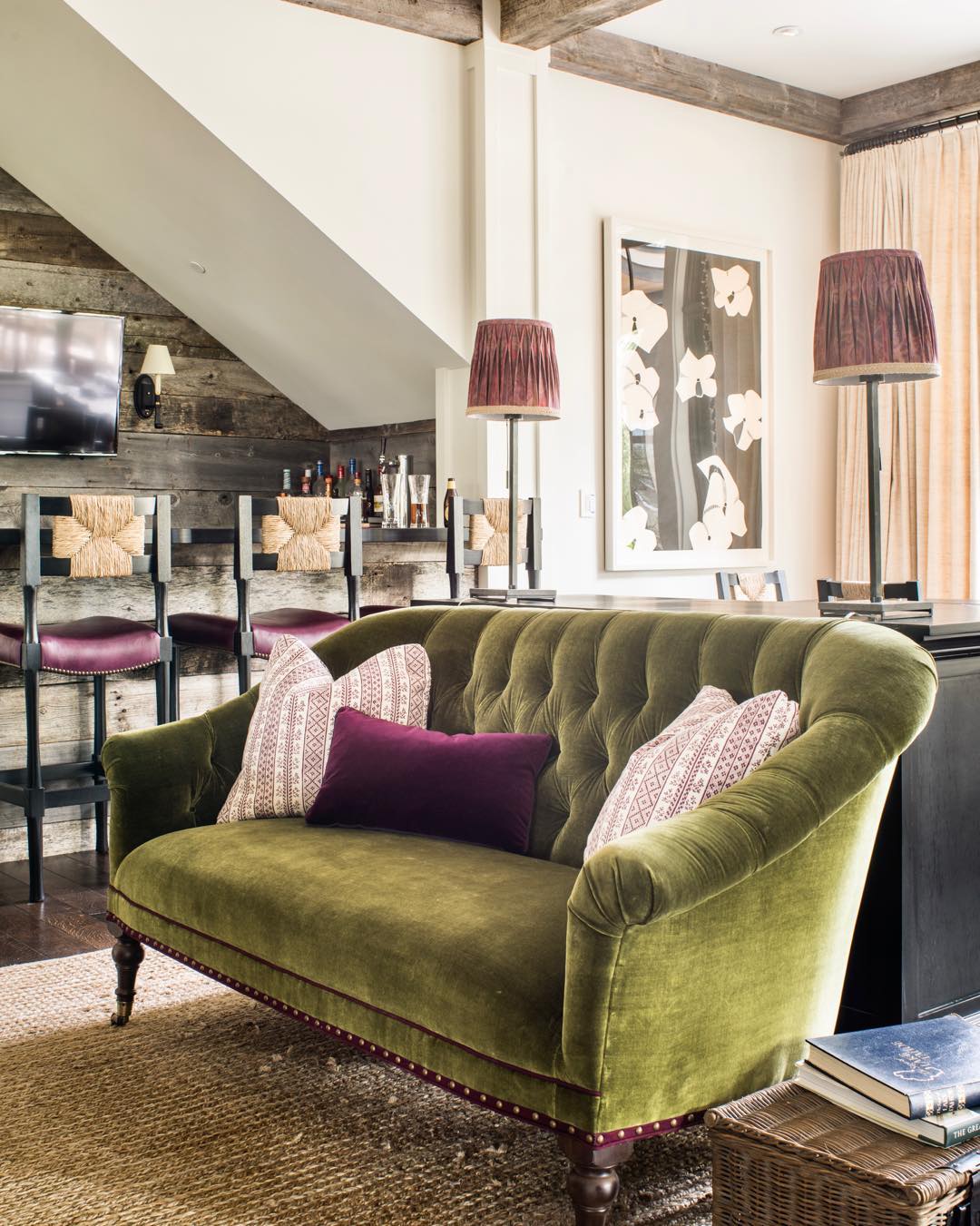
Credits: Instagram
A curved green sofa creates a comfortable stopping point beside this living room's bar. Its tufted back and rounded arms add softness to the surrounding beams, dark cabinetry, and tall stools.
Plum pillows repeat the color of the stool seats and lampshades, giving the seating area a clear relationship to the bar behind it. The woven rug and nearby basket table add a more relaxed note.
When a room serves both lounging and entertaining, include a seat that invites people to linger away from the counter. Keep its scale compact enough to preserve circulation, then connect the two areas through repeated colors.
This transition makes the bar feel integrated into the room instead of standing apart as a separate feature.
19. Arrange Curved Seating Around a Round Table
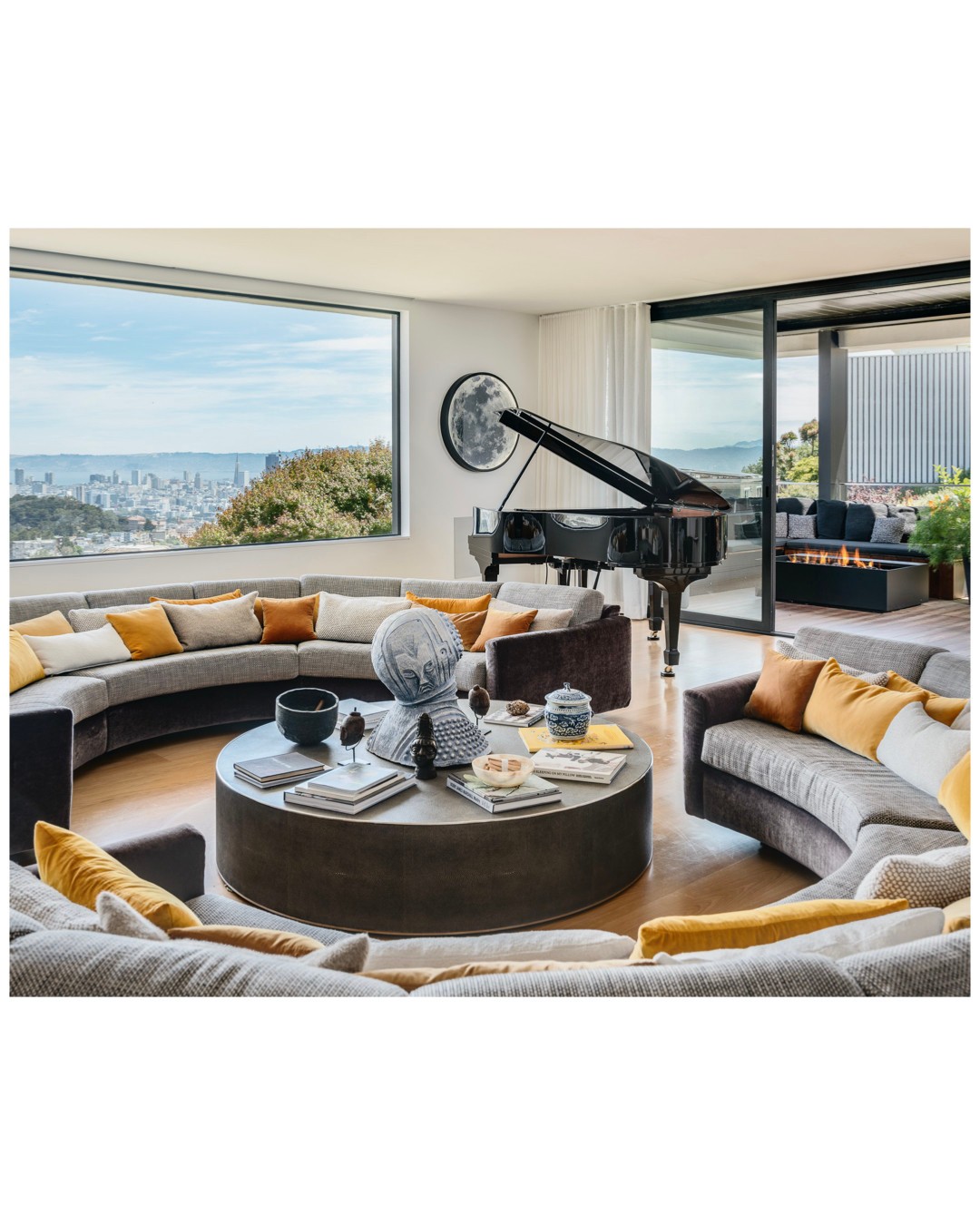
Credits: Instagram
Curved sofas wrap around a substantial round coffee table, turning this panoramic living room into a conversation circle. The arrangement keeps people facing one another while leaving the city view visible beyond their seats.
Gray upholstery provides a quiet base, and warm yellow pillows add a consistent accent around the room. A black grand piano gives the far corner presence without requiring another seating group.
To adapt this layout, start with the table's diameter and allow comfortable passage around each sofa. Repeat the curves through the furniture arrangement, but keep nearby architectural lines simple.
Low backs help protect the outlook. The result feels expansive and sociable, with a strong center that holds the room together even beside such large windows.
20. Use Rich Materials to Frame the Media Wall
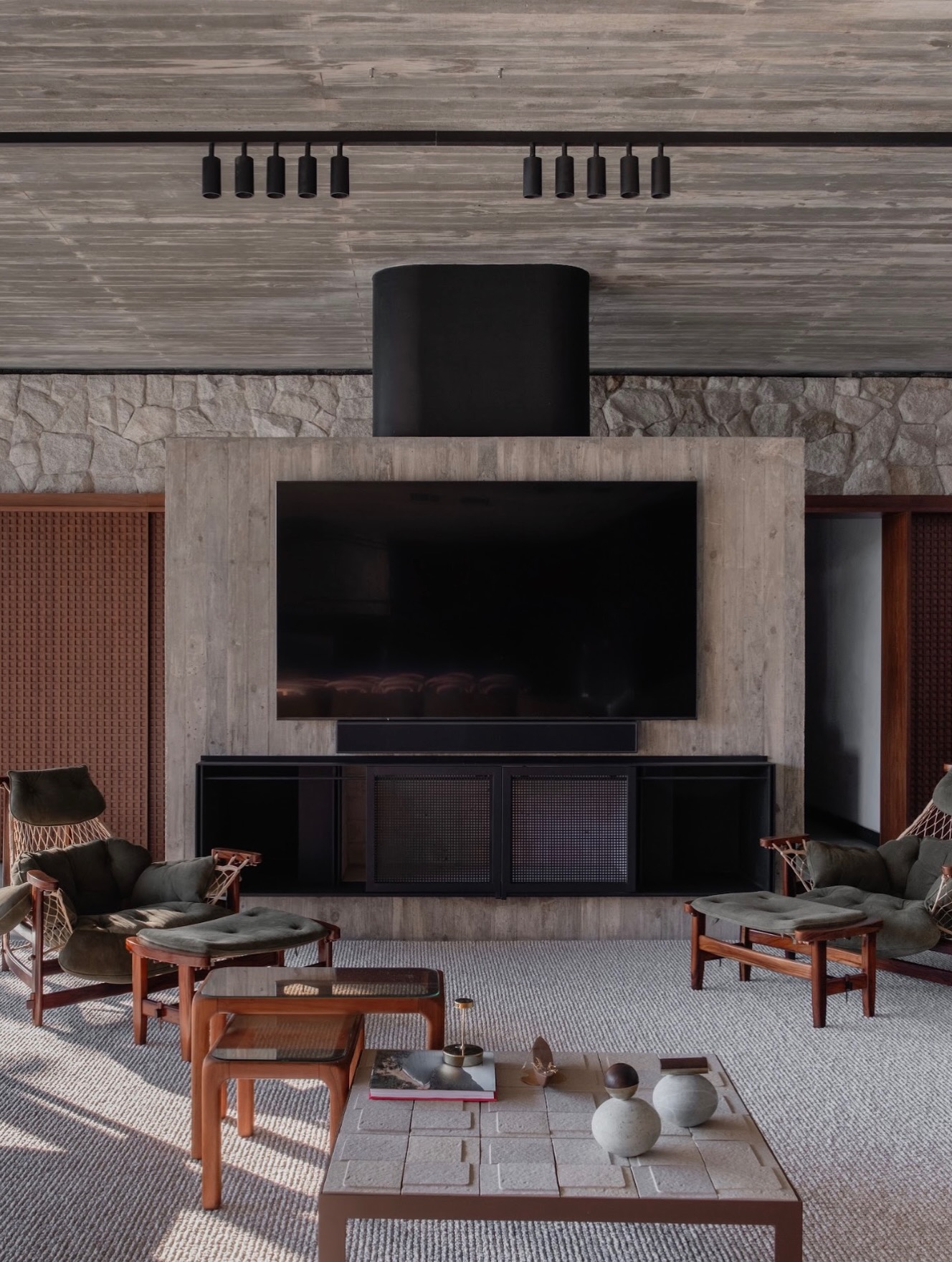
Credits: Instagram
A broad stone surround gives the television and fireplace a substantial architectural frame in this living room.
Rough stone above and a textured concrete ceiling extend the material story, while warm wooden chairs and their matching ottomans soften the darker center. The open frames of the seating keep the arrangement from feeling heavy.
A low table repeats the room's stone and wood combination on a smaller scale. To borrow the idea, limit the palette and vary the surface textures instead of adding more colors.
Let one wall carry the strongest visual weight, then choose furniture that provides breathing room around it. Repeated black details in the lighting and fireplace help the practical equipment feel integrated into the room's overall design.