
A living room office works best when the desk feels intentional without taking over the space.
These Office-Living Room Combo Ideas show how to fit a work zone around the furniture you already use, whether that means building a desk into shelving or placing a compact writing desk in a corner.
Other layouts use a desk behind a sofa, a glass top to keep the room visually open, or a shared long work surface. Together, these approaches offer practical ways to balance work, storage, and comfortable seating in one room.
1. Build a Desk Into the Living Room Shelving
Credits: Instagram
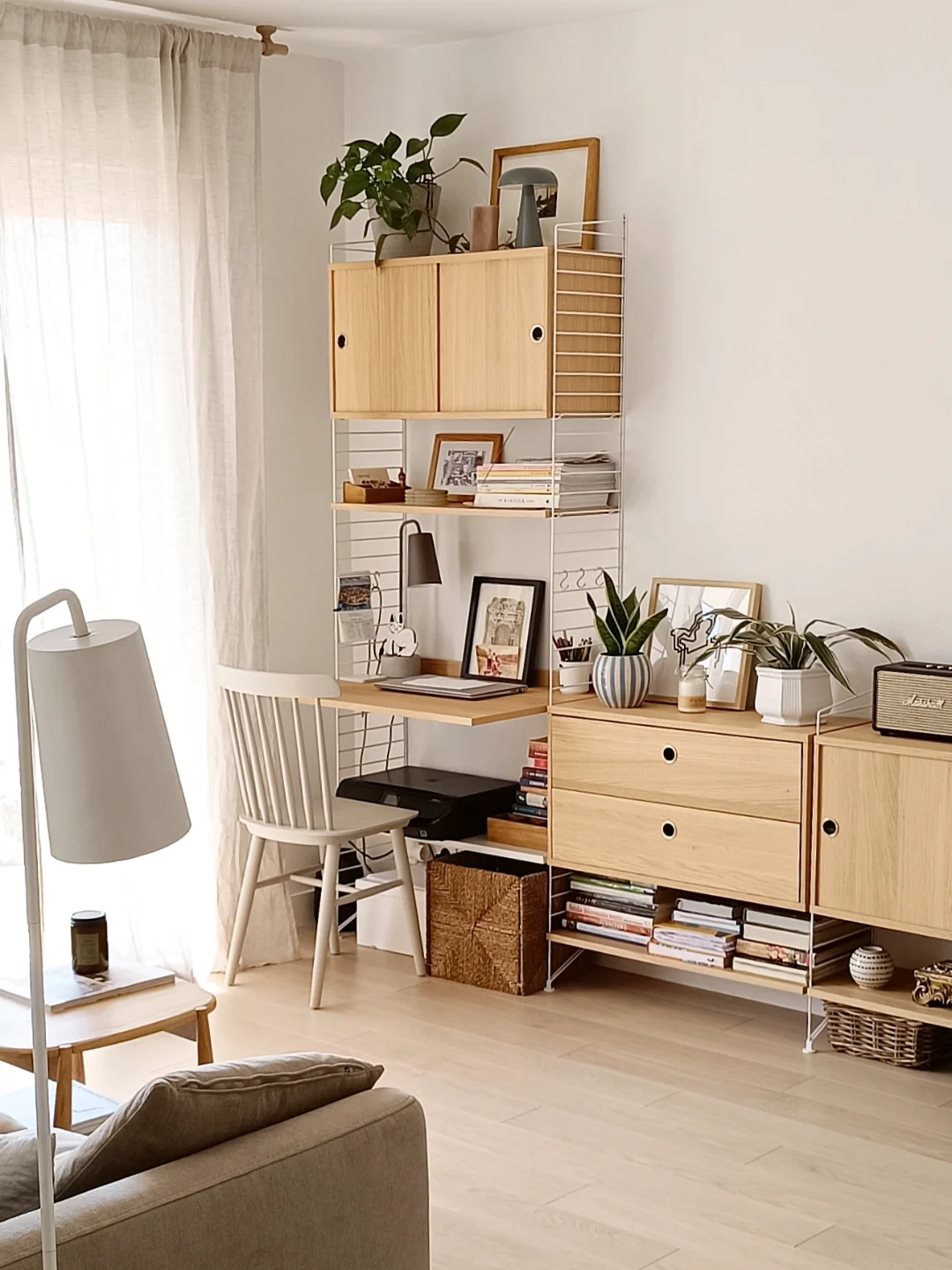
A wall of storage can make a small desk feel like part of the living room furniture. Here, a pale work surface slots into the shelving beside drawers and cabinets, while a white chair keeps the arrangement visually light.
The sofa remains close enough to show how little floor area the work zone needs. Notice the balance of closed storage and open display: books, framed pictures, and plants sit alongside places to tuck supplies away.
Use this idea when a separate desk would interrupt an otherwise useful storage wall. Keep the section above your chair relatively simple, and reserve a clear patch of desktop for daily work.
Repeating the same finish across the pieces helps the entire wall feel coordinated.
2. Run the Workstation Along the Back Wall
Credits: Instagram
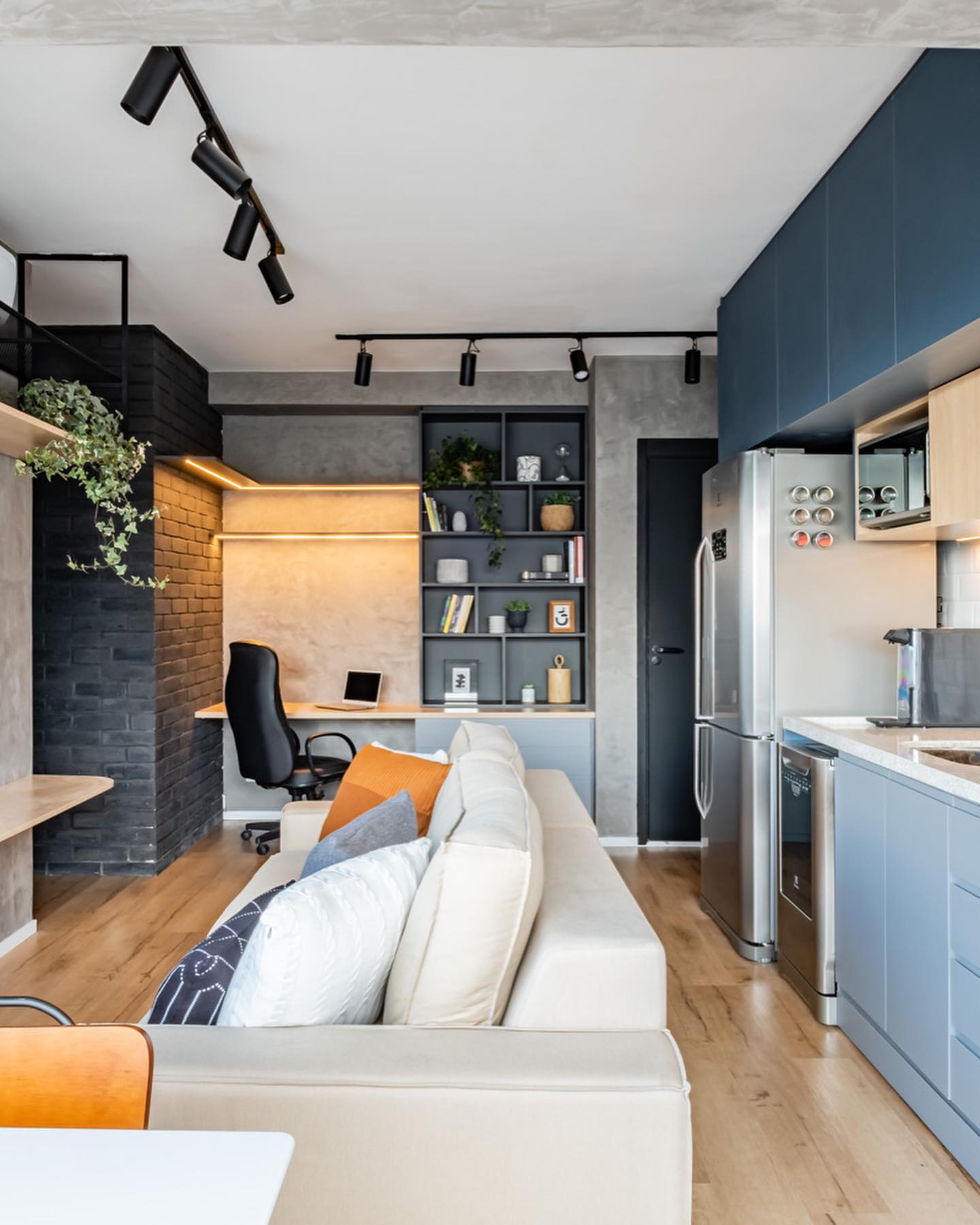
This compact apartment gives the office a full wall while keeping the sofa at the center of everyday life. Blue cabinetry connects the long desk with nearby storage, and the darker wall beside it provides a clear edge.
Open shelves rise above drawers, so the workstation has both display space and places to put things away. The pale sofa faces the living area, leaving the desk behind the seating rather than beside the coffee table.
Borrow that arrangement when one long room must handle several activities. Start by mapping the sofa and walking route, then fit the workstation into the remaining wall.
A consistent cabinet color helps the office read as part of the apartment's overall design from every angle.
3. Give a Living Room Corner a Traditional Writing Desk
Credits: Instagram
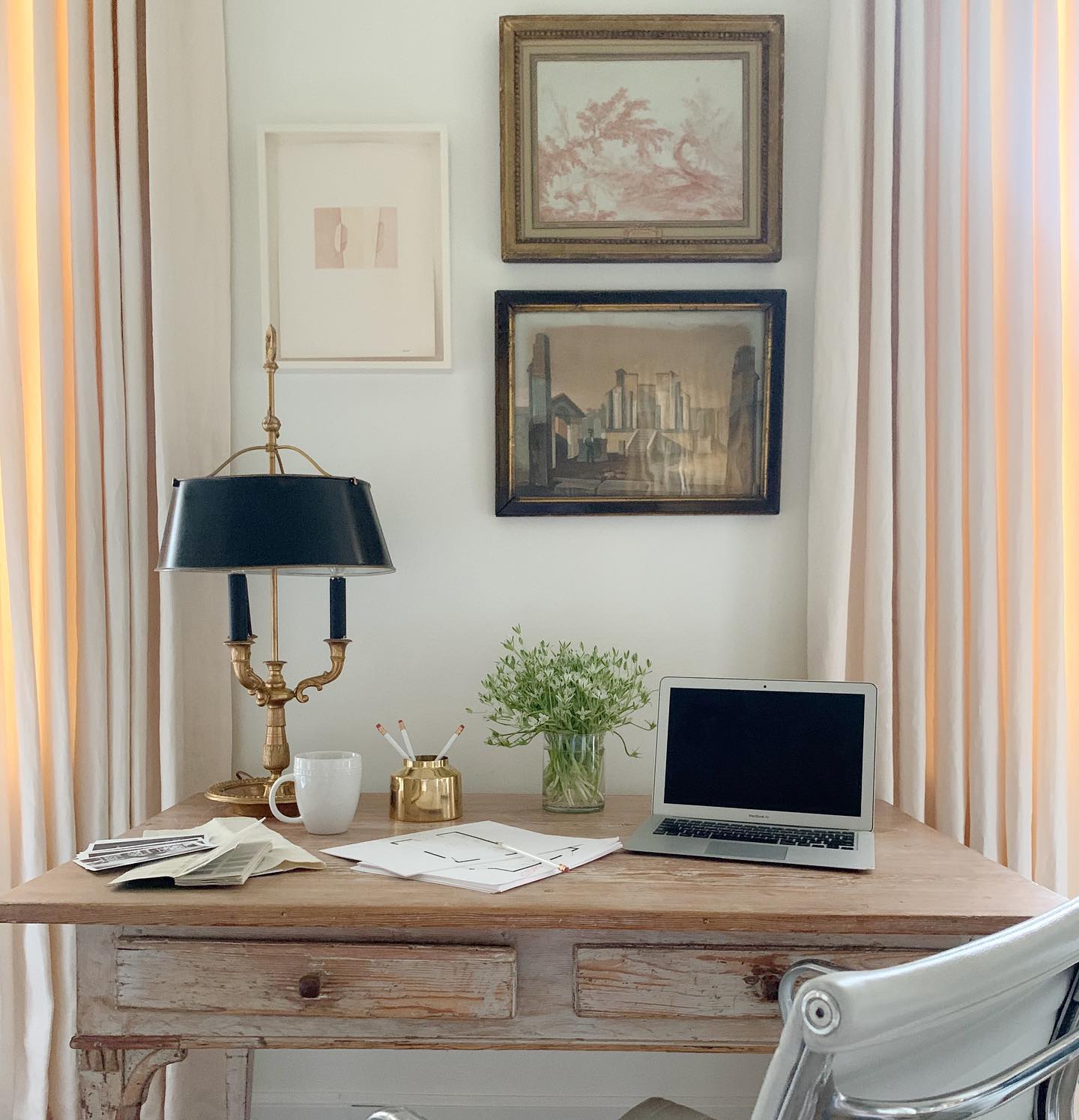
A work corner can borrow the same decorative language as the rest of a living room. In this example, a small desk sits between long curtains beneath a group of framed pictures.
A dark shaded lamp, pale chair, and simple flower arrangement make the setting feel settled, while the laptop and papers show its working role. The shallow drawers offer a place for small supplies without requiring another cabinet.
To adapt the idea, choose a desk whose proportions fit the available wall rather than filling the entire corner. Keep one side of the surface open for equipment and use the other for a lamp.
Existing artwork can stay in place, helping a new office corner feel connected to familiar surroundings.
4. Use a Glass Desk to Keep Two Zones Connected
Credits: Instagram
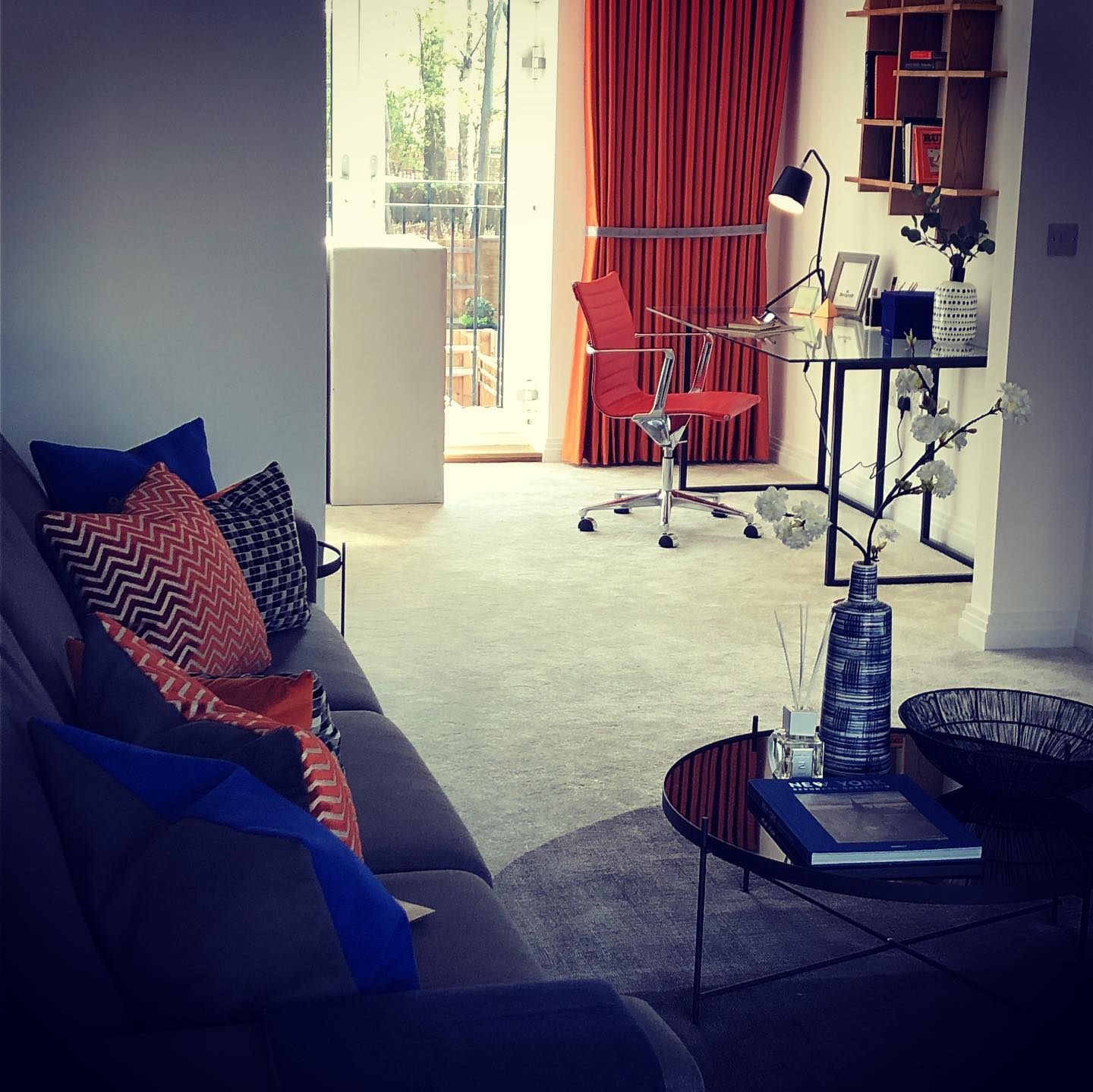
The desk occupies the bright end of this room, with a sofa and round coffee table forming the lounge area in front. A transparent desktop and narrow frame allow the background to remain visible through the workstation.
Red curtains and a matching desk chair connect with the warm patterned pillows near the sofa, giving both zones a shared color story.
This layout works as inspiration for a long room where the office can sit beyond the main seating group. Keep the route between the areas open and use nearby wall shelving for books or smaller supplies.
The useful lesson is the combination of a distinct position and repeated color: the desk has its own place without feeling visually disconnected overall.
5. Choose a Sofa With a Work Counter Behind It
Credits: Instagram
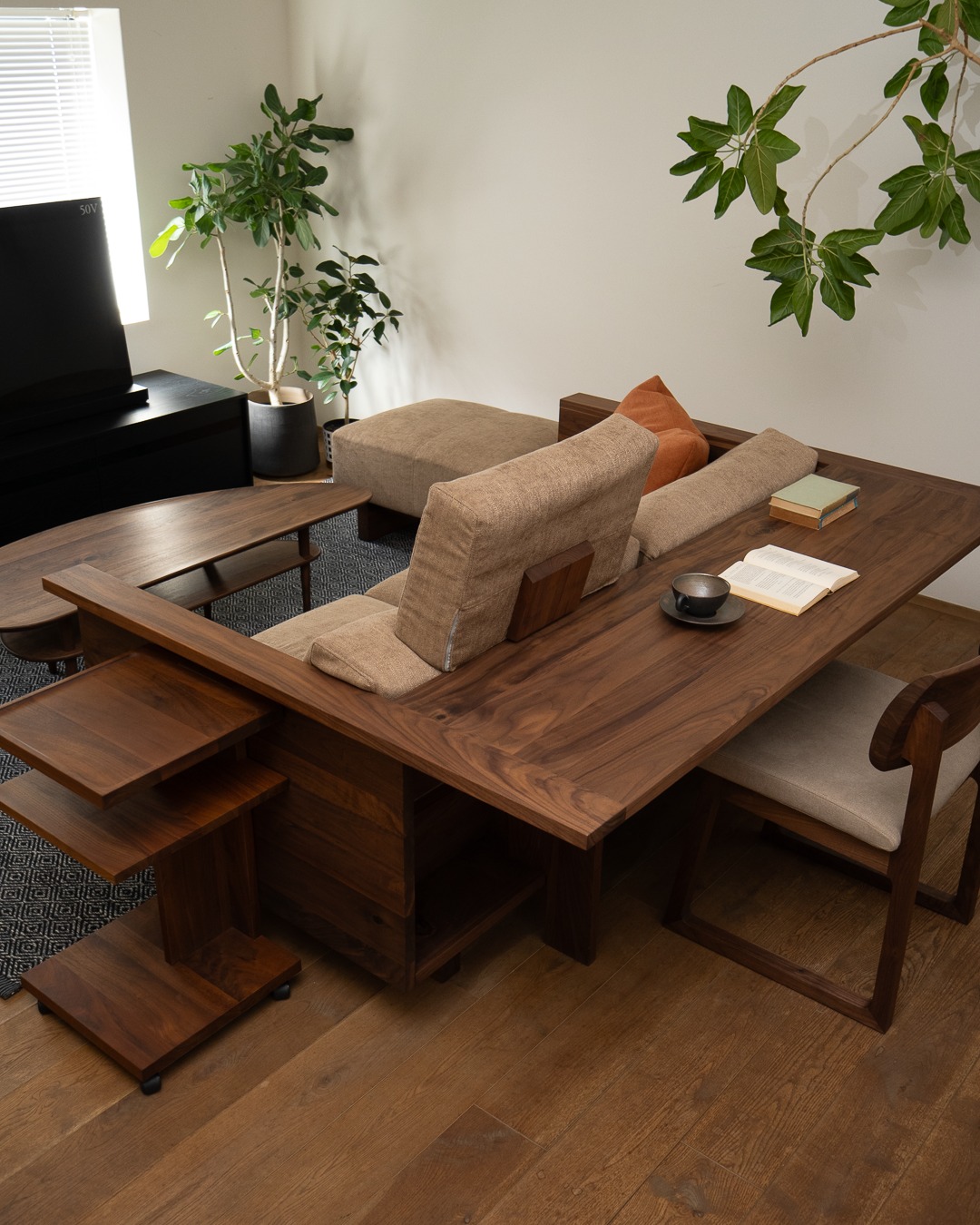
This sofa arrangement combines lounging and working within one coordinated piece of furniture. A broad counter wraps around the back of the cushions, with a chair tucked beneath one side and an open book on top.
From the other direction, the same structure frames the seating and provides nearby storage. The repeated brown finish ties the counter to the surrounding tables, keeping the room's furniture language consistent.
Consider this approach when a floating sofa already divides an open space. Before choosing a similar arrangement, check the chair opening and usable counter depth against the tasks you do.
Leave part of the top clear so it remains a practical work surface. A few books can provide decoration without consuming the workspace.
6. Float a Compact Desk Facing Into the Room
Credits: Instagram
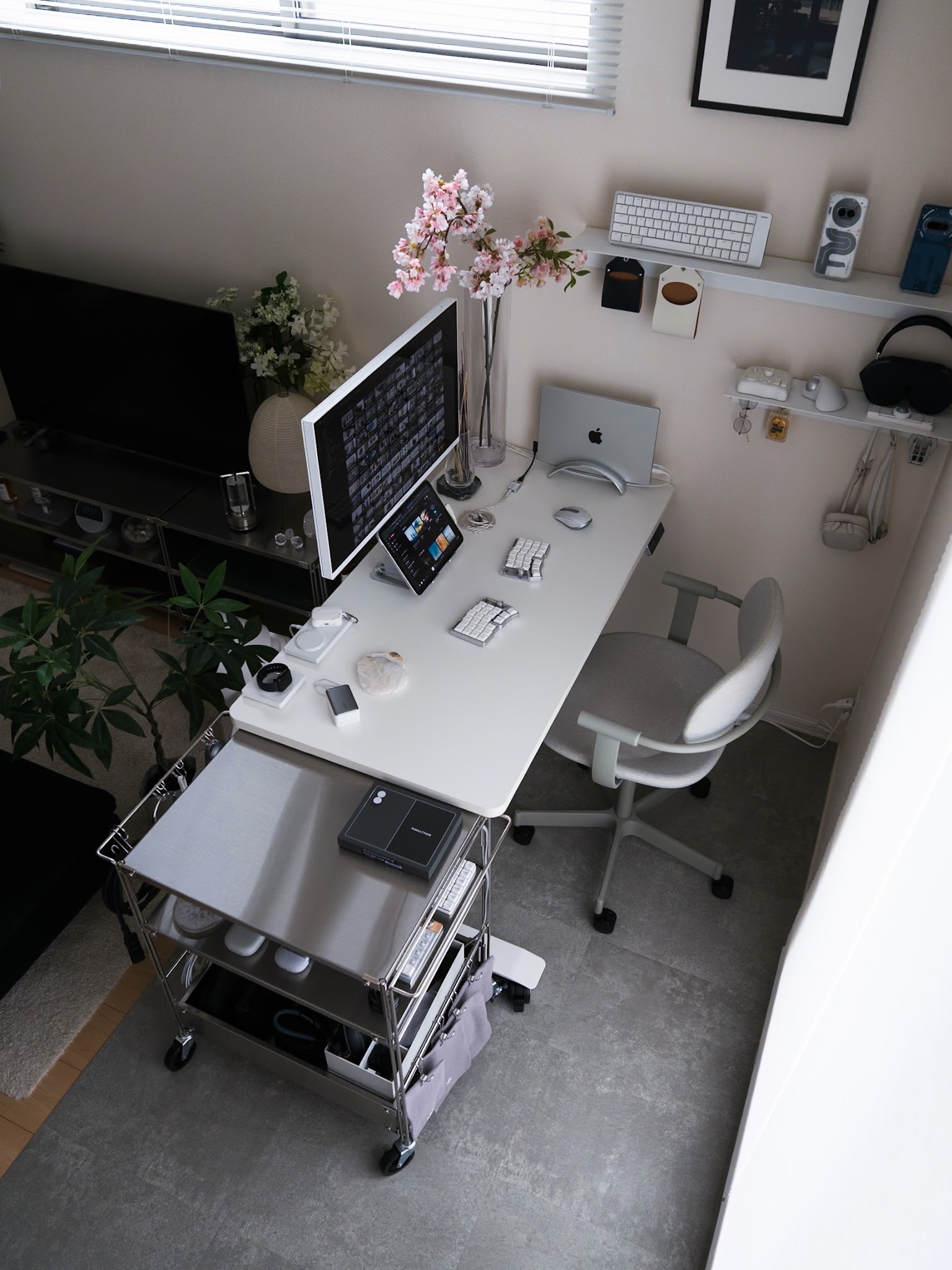
Facing a desk into the living room can create a useful boundary without adding another wall. Here, the chair sits against the perimeter while the computer faces the seated user, leaving the back of the monitor toward the lounge.
A narrow cart extends the storage beside the work surface, and wall shelves keep accessories above the desk. The television remains separate at the left, making the two functions easy to recognize.
Try this arrangement when the available corner has enough depth for the chair and a clear route beside it. A compact desktop keeps the setup contained, while coordinated pale pieces reduce visual clutter.
Group tools close to the workstation so they do not spread across the neighboring living area.
7. Let a Writing Desk Share a Comfortable Sitting Room
Credits: Instagram
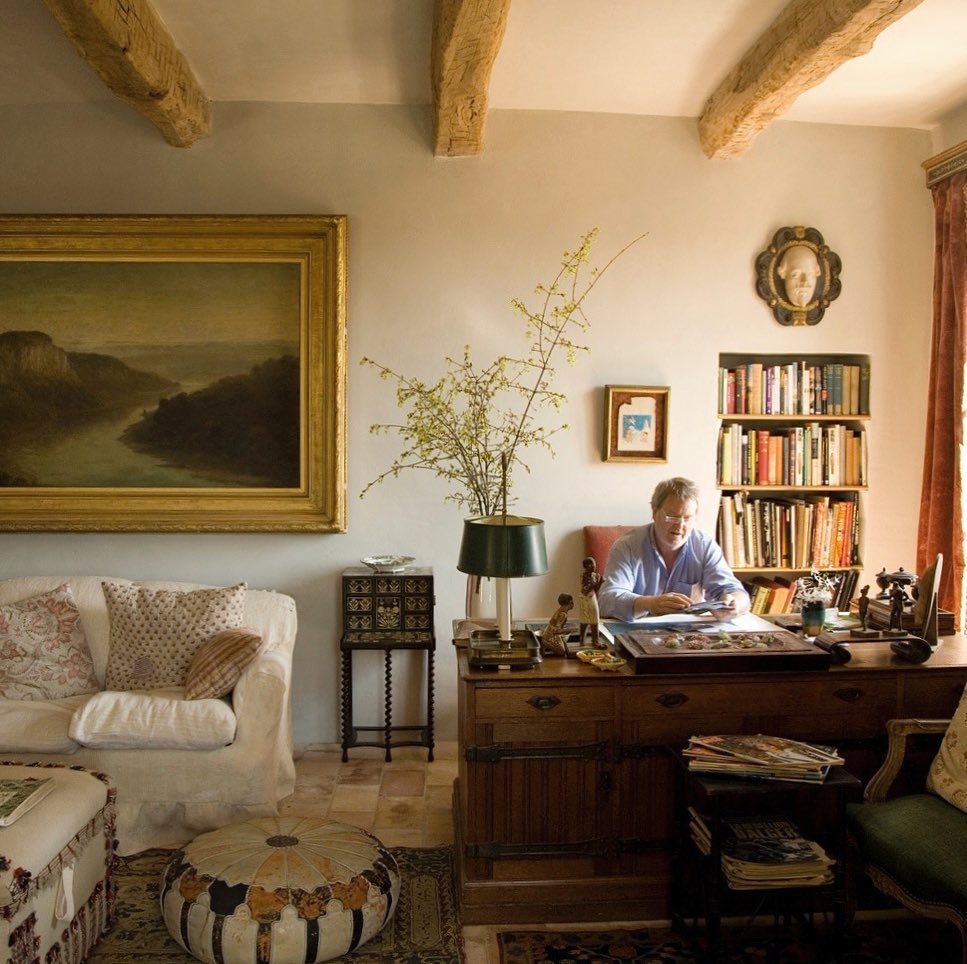
A substantial desk can belong in a sitting room when the surrounding furniture remains welcoming. This space pairs a working desk with a pale sofa, an upholstered chair, and a round patterned ottoman.
Books, framed artwork, and a shaded lamp connect the office area with the room's collected character. The desk faces outward, allowing its occupant to look across the seating instead of toward a blank wall.
Take the layout as a starting point for a larger room with space to circulate between furniture groups. Keep the sofa area distinct with its own small table or ottoman, then place work supplies near the desk.
Repeated warm tones and familiar decorative pieces help both activities feel comfortable within the same room.
8. Put a Shared Work Zone Behind the Sofa
Credits: Instagram
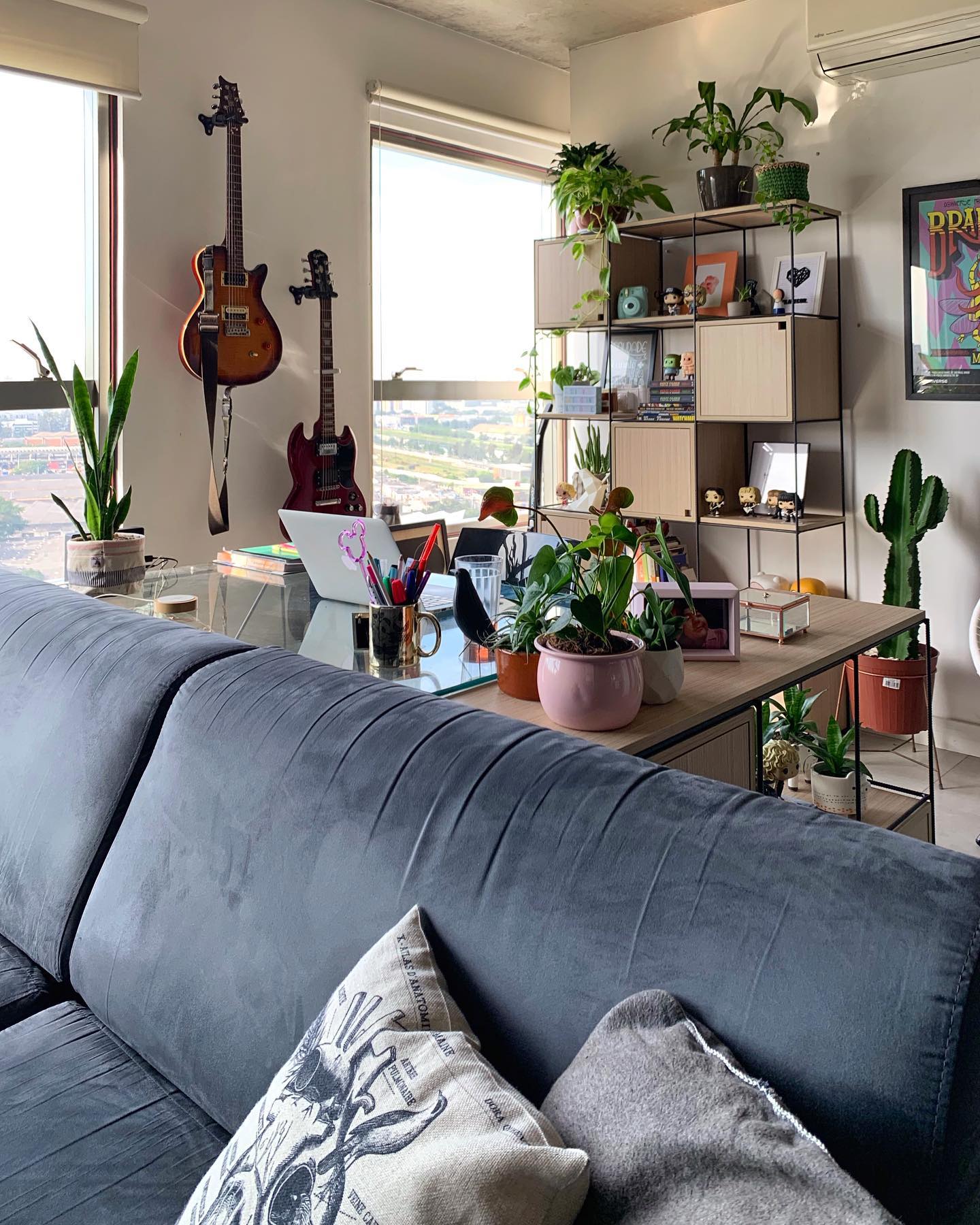
The back of a sofa provides a clear boundary for this lively work area. Two adjoining work surfaces sit beyond the blue seating, with a laptop, supplies, and plants making their purpose apparent.
Tall shelving mixes open compartments with closed cabinets, keeping storage concentrated on one wall. Guitars and greenery give the room personality that extends beyond office hours.
To borrow the arrangement, place your desk where the sofa already creates a natural edge, then check that each chair has room to move. Keep frequently used supplies on the office side of that boundary.
A few repeated plants can connect the zones, while a taller shelving unit prevents the desk from becoming the only available place to store everyday belongings.
9. Pair a Built-In Workstation With Conversation Chairs
Credits: Instagram
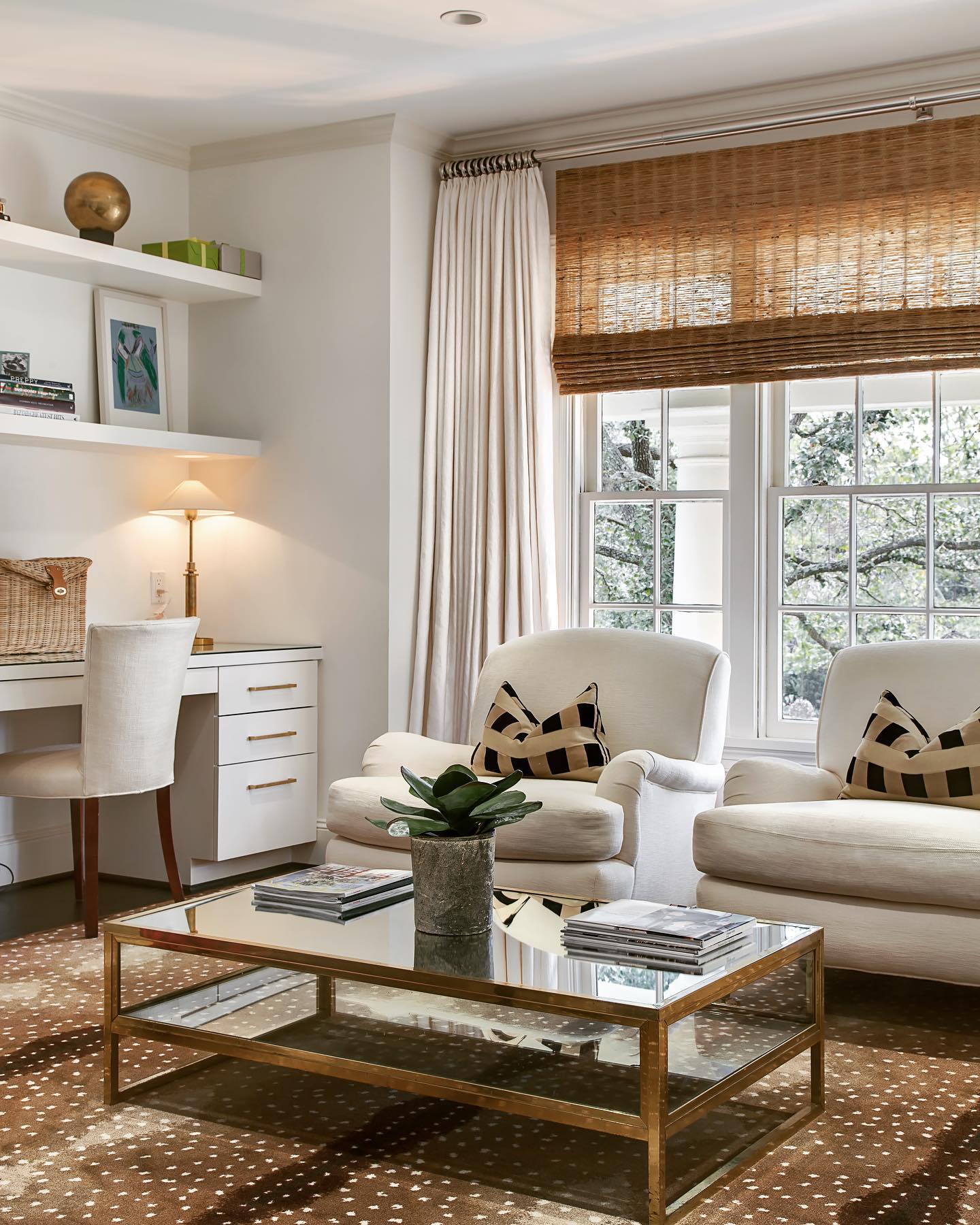
Two comfortable chairs and a coffee table give this workspace a separate place to sit and relax. The desk stays against the left wall, where drawers and floating shelves form a compact office arrangement.
Pale upholstery links the task chair with the lounge seating, while a patterned rug extends beneath the furniture. This is a useful model for a small room that needs both a proper work surface and a welcoming sitting area.
Place the desk along one edge rather than letting it occupy the center. Then arrange lounge chairs around a table so they function as their own group.
Coordinated colors help the two areas relate, even when one is used for paperwork and the other for quiet conversation.
10. Set a Trestle Desk Behind a Floating Sofa
Credits: Instagram
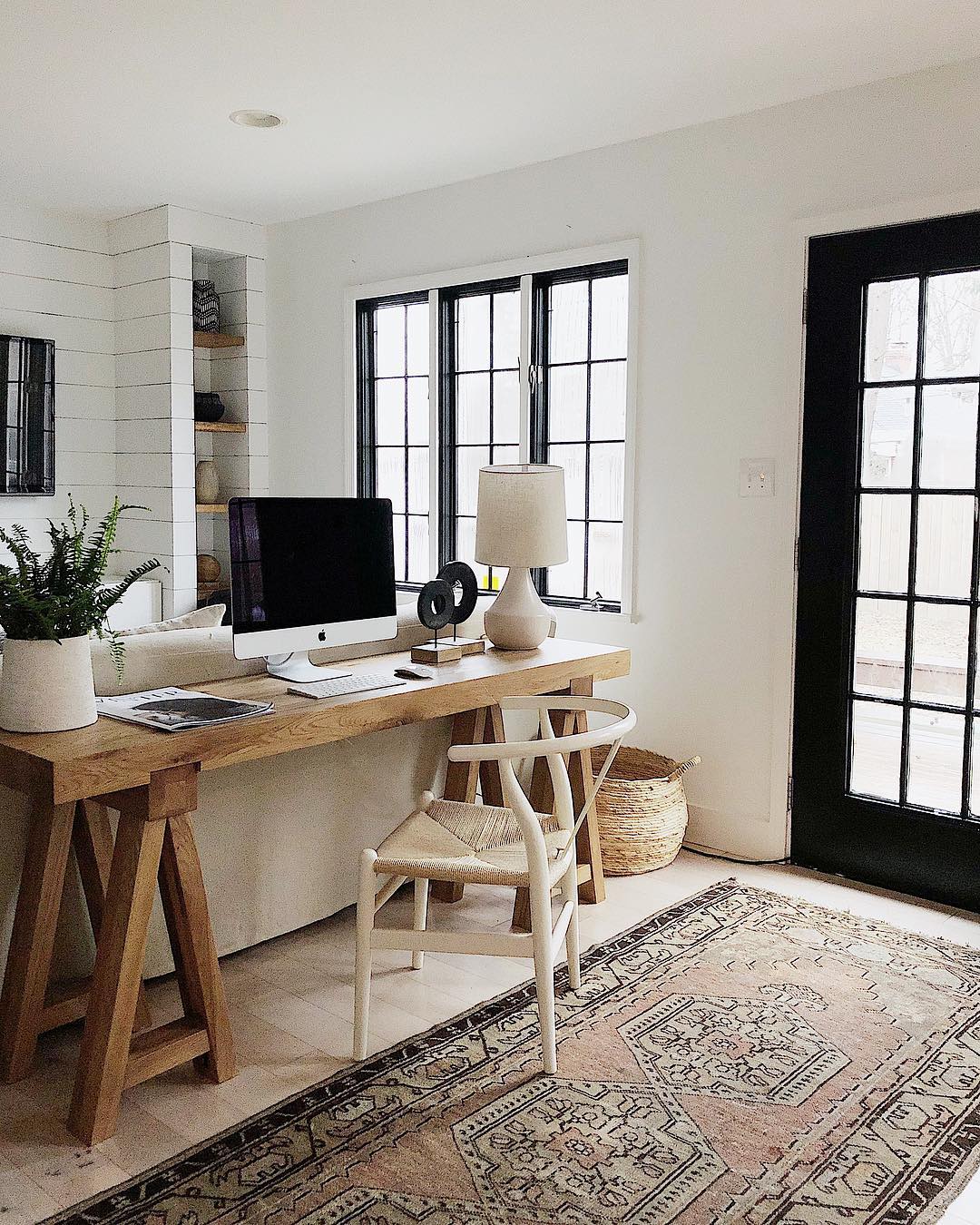
A trestle desk behind the sofa makes the work area feel like another layer of living room furniture. The computer faces into the room, and a pale chair relates to the light upholstery just beyond the desktop.
Black window frames give the otherwise quiet setting a clear outline, while the patterned rug marks the floor beneath the chair. This arrangement is especially useful when the sofa already sits away from the wall.
Choose a desk with an open base so the chair can tuck in, and keep enough space behind it for movement. A table lamp and a plant soften the equipment without hiding its purpose.
The open desktop leaves room to work while maintaining a connection with the seating.
11. Reserve a Desk Opening in a Wall of Bookshelves
Credits: Instagram
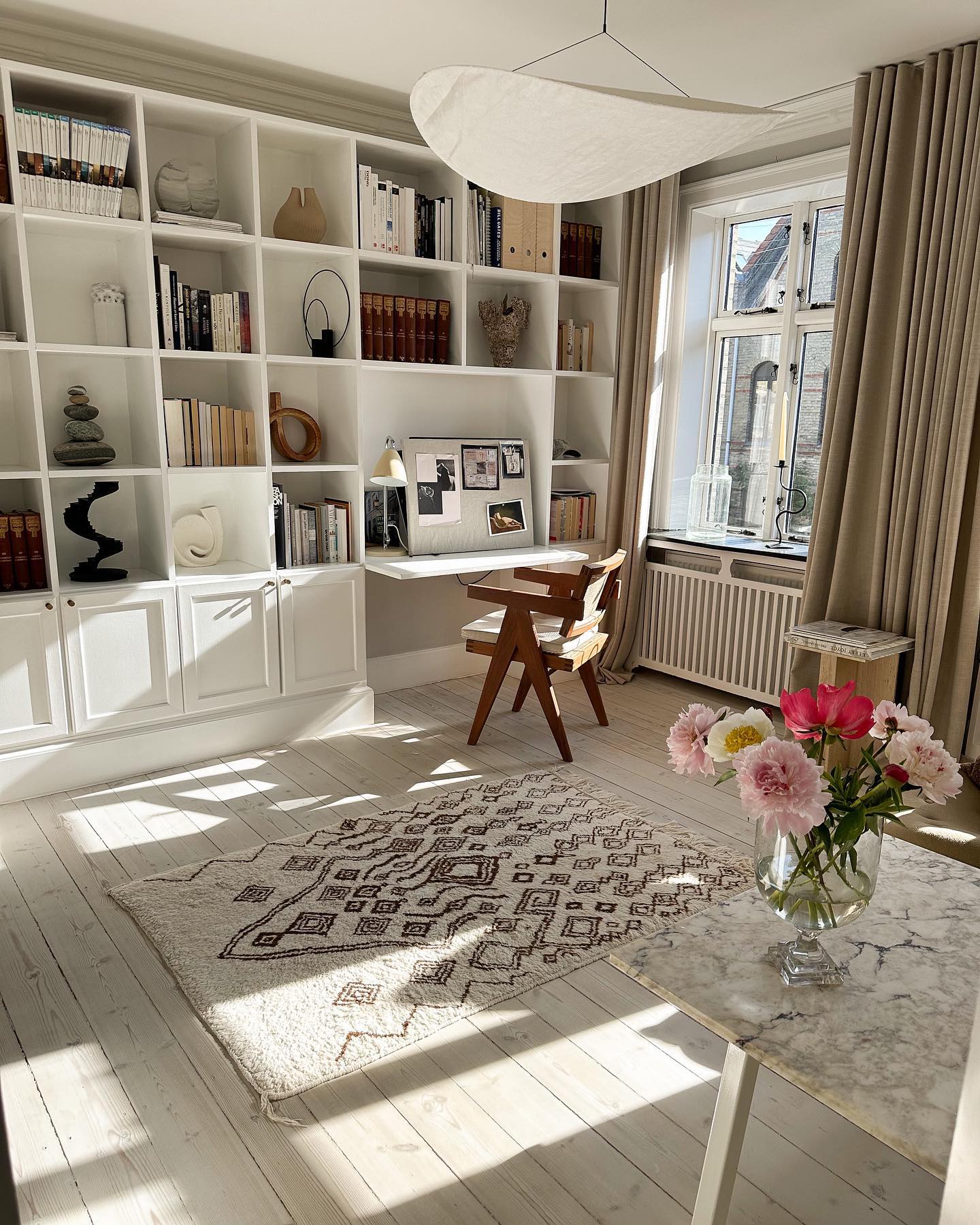
A floor of pale boards and a patterned rug keep this library corner connected to the sitting area. The work surface occupies one opening in a broad wall of bookshelves, with a chair tucked close to the window.
Closed cabinets run beneath the other shelves, so the desk does not need to carry every storage task. The coffee table in the foreground makes the relationship between work and lounging easy to understand.
Consider reserving a single lower bay for a desk when planning a large bookcase arrangement. Keep its chair opening clear, then use neighboring cabinets for supplies.
A shared pale finish lets the work surface blend into the shelving, leaving books, art, and flowers to provide the visual variety.
12. Fit a Small Desk Beside the Fireplace
Credits: Instagram
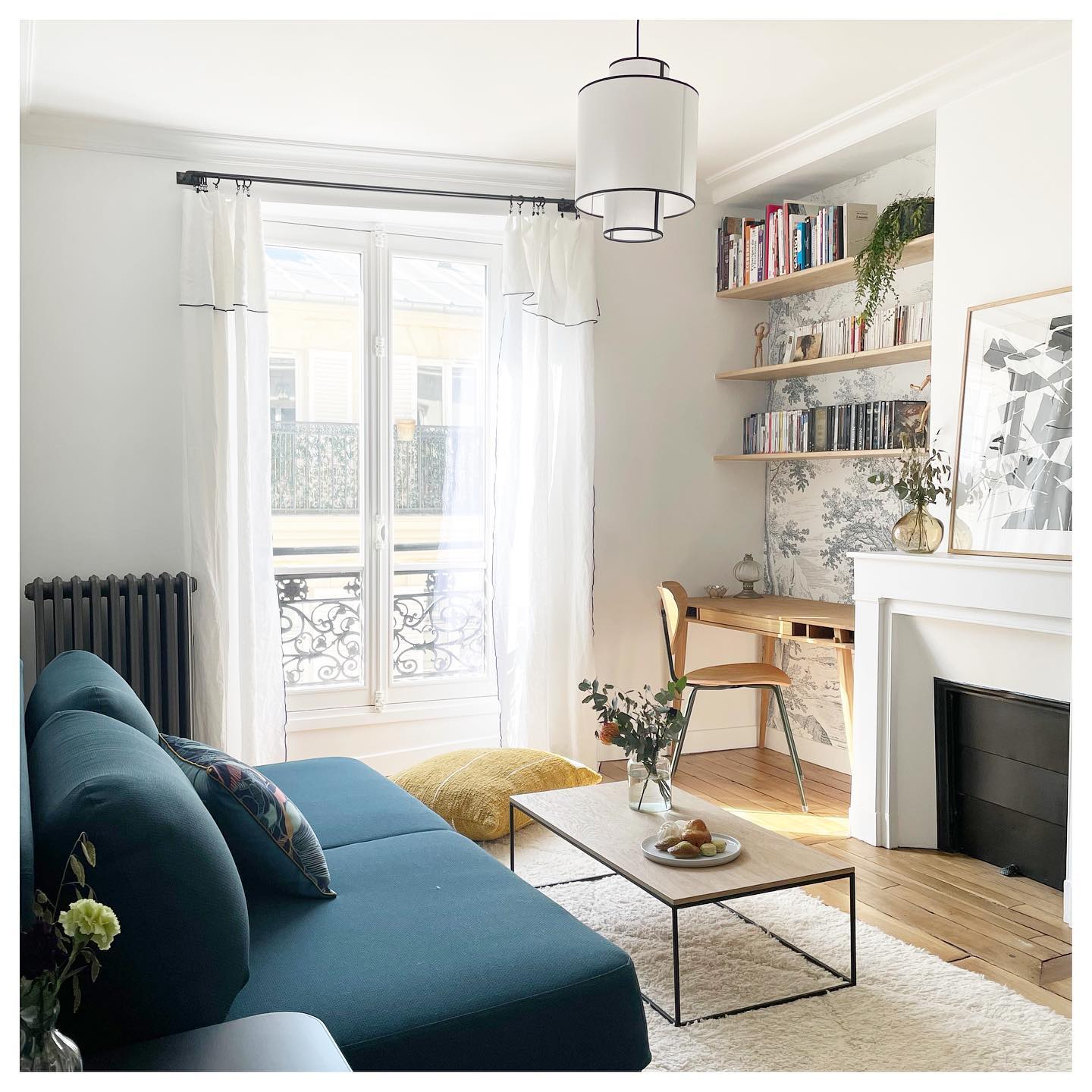
The fireplace remains the focal point of this compact living room, while a desk occupies the niche beside it. Open shelves extend upward, and a patterned backdrop gives the little work area its own identity.
Across the room, a blue sofa and slim coffee table preserve a clear place to relax. This layout shows how an architectural recess can hold a useful extra function without changing the main furniture arrangement.
Start by measuring the niche and choosing a desk that leaves space for a chair. Keep the shelving visually light so the corner does not compete with the fireplace.
Repeating pale finishes across the walls and shelves helps the work area sit comfortably within the rest of the living room.
13. Combine a Built-In Bench With a Floating Desk
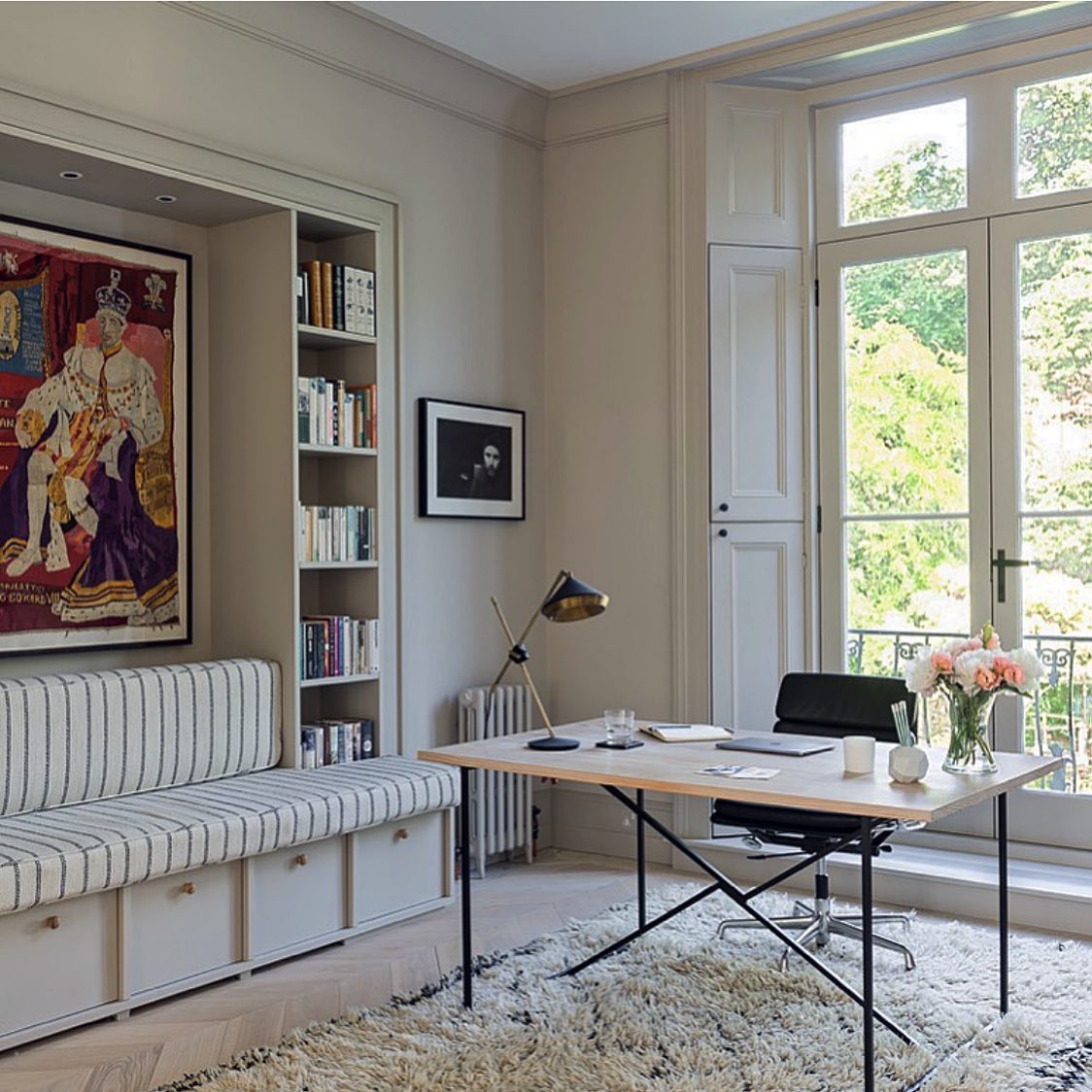
Credits: Instagram
A long cushioned bench gives this room a place to read or pause beside the workstation. Drawers beneath the seat and tall shelves at its end concentrate storage along the wall, leaving the desk free to stand near the window.
The desk's slim dark frame echoes the task chair, while a pale top and textured rug soften the arrangement. Consider this combination when a conventional sofa would take up too much depth.
Keep the bench separate from the desk chair's movement so someone can use either area independently. Storage beneath the seating is especially useful for materials that do not need to stay on display.
The result makes room for focused work and relaxed sitting within one carefully arranged corner.
14. Share One Long Work Surface
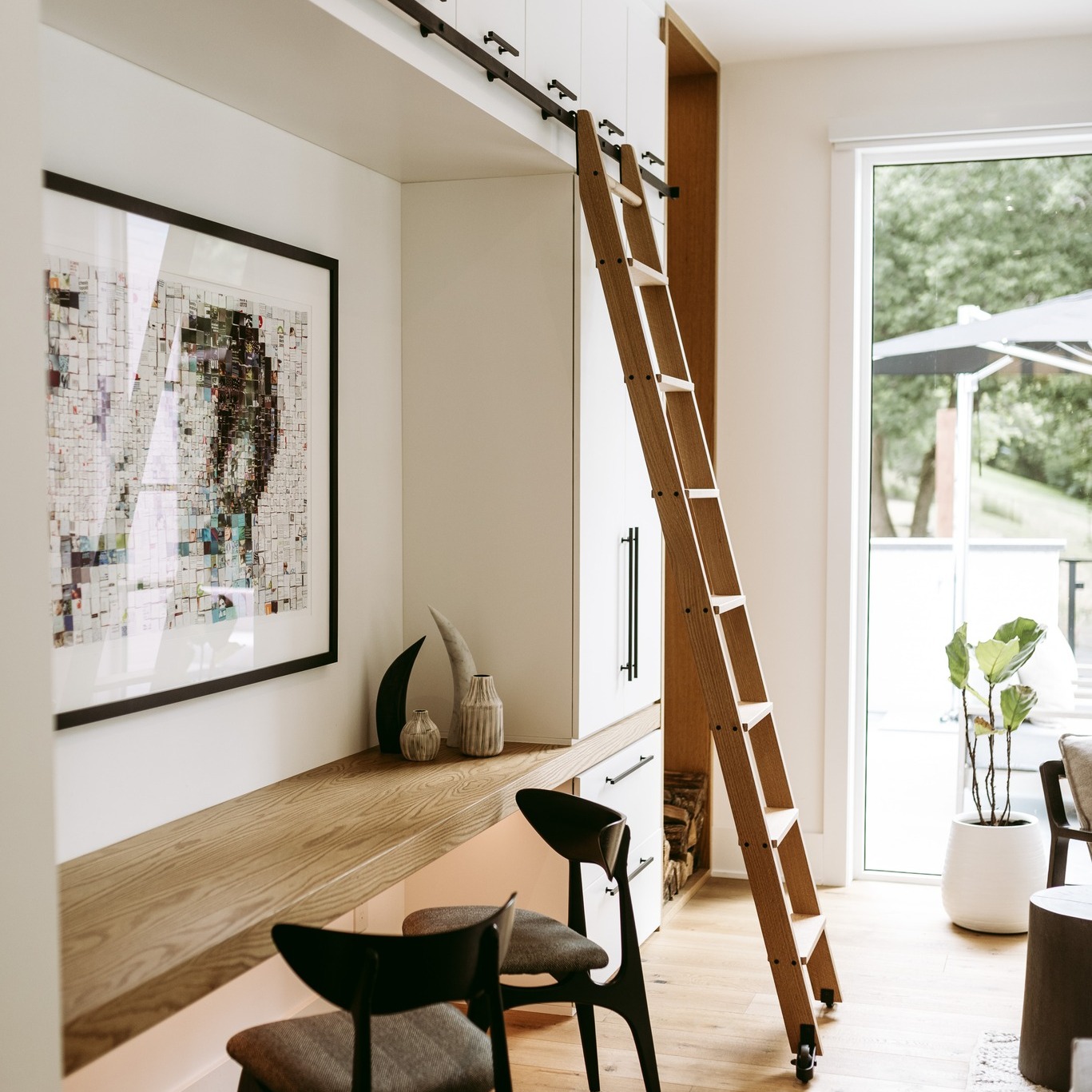
Credits: Instagram
Two chairs turn this long built-in counter into a shared work area along the living room wall.
White cabinets climb toward the ceiling, while a tall ladder and its dark rail make the storage arrangement a visible part of the design.
A framed artwork fills the open wall above the desk, giving the workspace a familiar living room detail.
For a similar layout, start with the number of people who need to sit together and allow each person a clear section of desktop. Place everyday supplies in the lower drawers, keeping occasional items higher up.
Repeat the cabinet color on nearby walls to reduce visual breaks. A continuous counter can organize several activities without scattering separate desks throughout the room.
15. Give a Window Desk Some Vintage Character
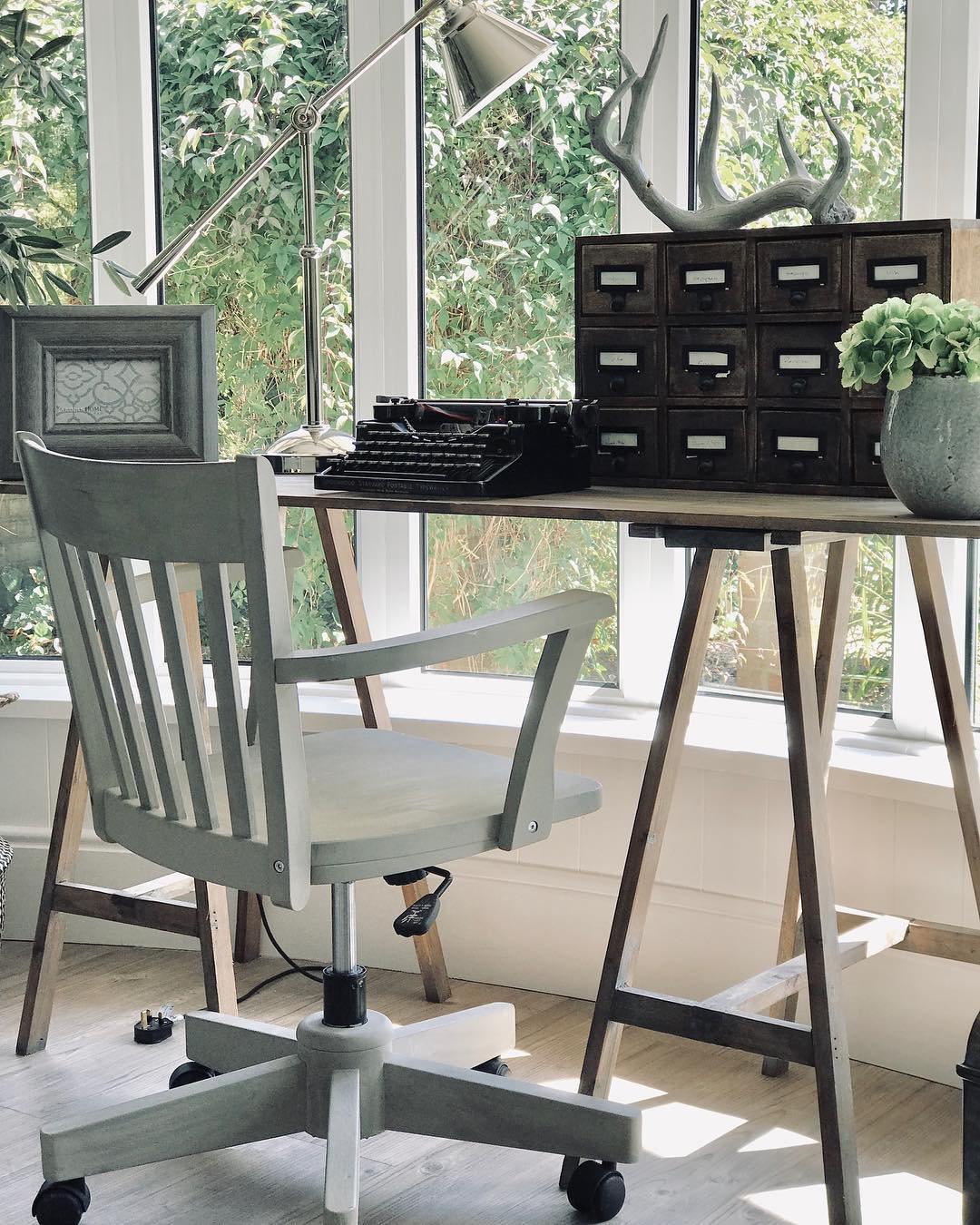
Credits: Instagram
A trestle desk sits against tall windows behind this homeowner's sofa, creating a work corner within the larger living room.
The close view shows a pale adjustable swivel chair, an adjustable lamp, a typewriter, and a small cabinet with labeled drawers. These familiar pieces give the desk the character of collected furniture.
If your living room has a similar window strip, check the space available behind the sofa before choosing a desk. Leave enough room to pull the chair back and walk through comfortably.
Small drawers can gather loose supplies while keeping the surface visually organized. Use just a few decorative objects so the desktop still has room for writing, sorting mail, or another occasional task when you need it.
16. Face the Living Area From Your Desk
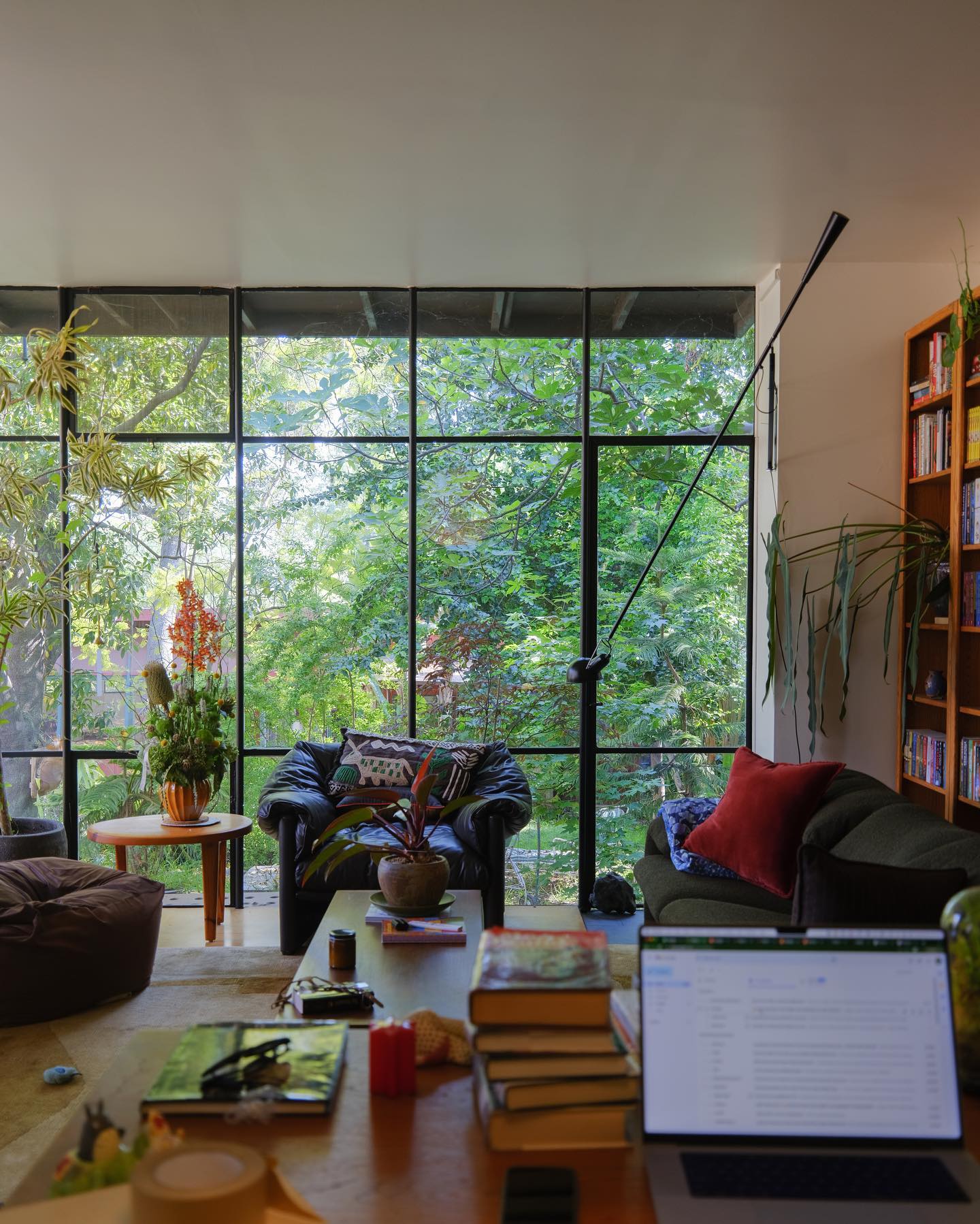
Credits: Instagram
From this desk, the view takes in a sofa, an armchair, and a tall window filled with greenery.
A laptop and stacked books in the foreground make the workspace unmistakable, while the seating beyond remains arranged around its own low table. The two activities share the room without needing a partition.
Consider facing your desk toward the sitting area when a blank wall feels too confining. Keep tall storage to the side, as the bookcase does here, so it does not interrupt the view across the room.
Plants and books repeated in both areas help the arrangement feel connected. Before settling on this orientation, check where the chair will pull out and preserve an easy route around the entire desk.
17. Use a Short Wall Between Living and Dining
Credits: Instagram
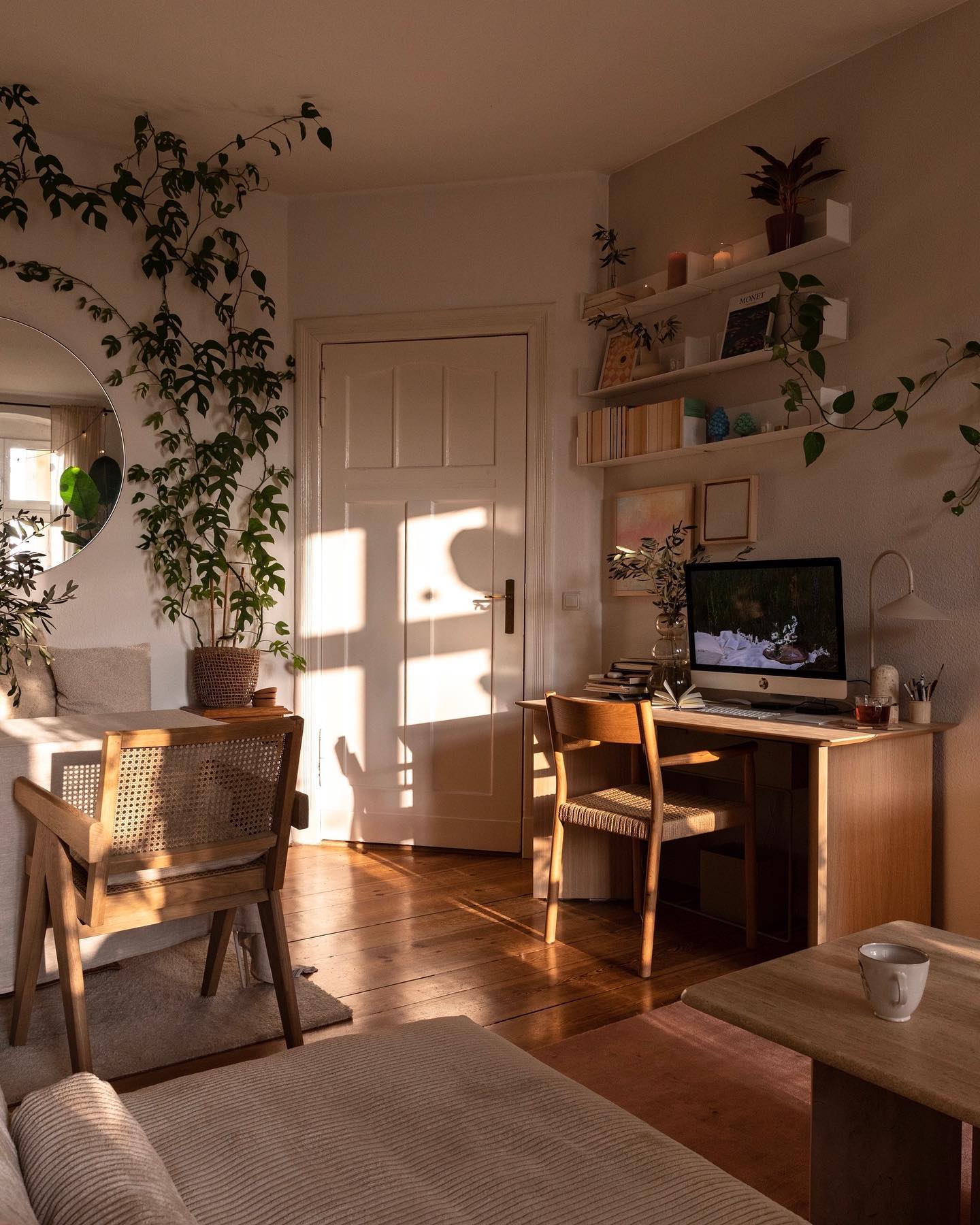
The desk occupies a short wall beside the door, sharing this apartment room with a sofa and dining furniture. Its warm finish relates to the neighboring chairs and floorboards, while pale picture ledges continue upward without adding another bulky cabinet.
Books, framed prints, and trailing plants give the computer area the same collected character as the rest of the space. This is a useful approach when one room needs to support several daily activities.
Choose a desk whose scale fits the available wall and keep its chair close enough to tuck beneath the top. Use shelves above for lighter objects, leaving frequently needed supplies within reach.
Repeating colors across the work and seating areas helps everything belong in one room.
18. Mark a Relaxing Corner With a Patterned Rug
Credits: Instagram
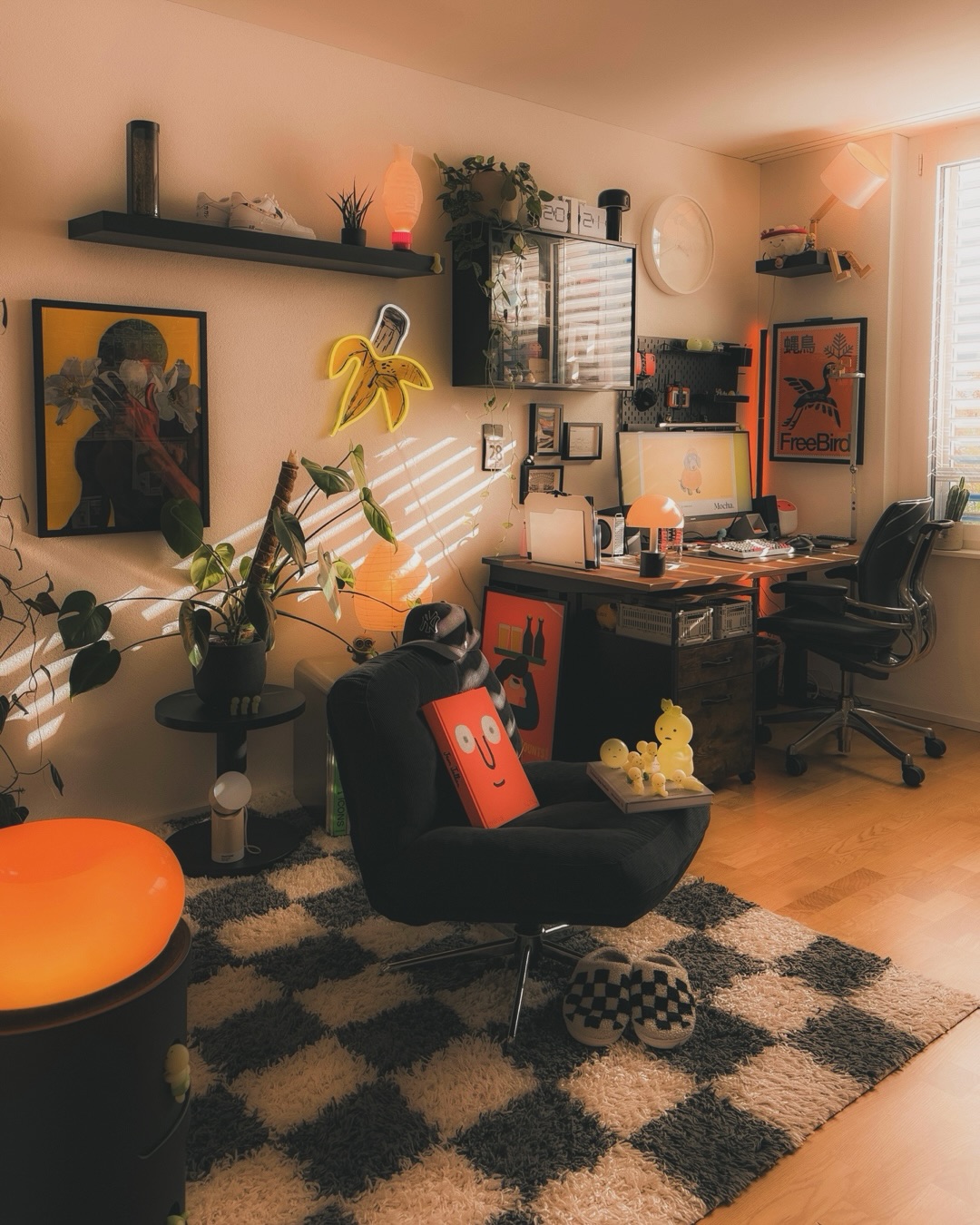
A checkerboard rug and a cushioned swivel chair create a small lounging spot beside the computer desk. Round side tables serve the chair, while the workstation keeps its own task seat near the window.
Dark shelving, framed prints, plants, and warm orange accents connect the two areas without making their furniture identical.
This compact arrangement offers an idea for a room that needs a place to work and a place to step away from the screen.
Give the lounge chair a defined patch of floor rather than squeezing it into the desk's circulation space. Repeat one accent color across lamps or artwork to join the areas visually.
Keep shelves above the workstation so useful storage does not consume the corner.
19. Pair a Petite Writing Table With a Chaise
Credits: Instagram
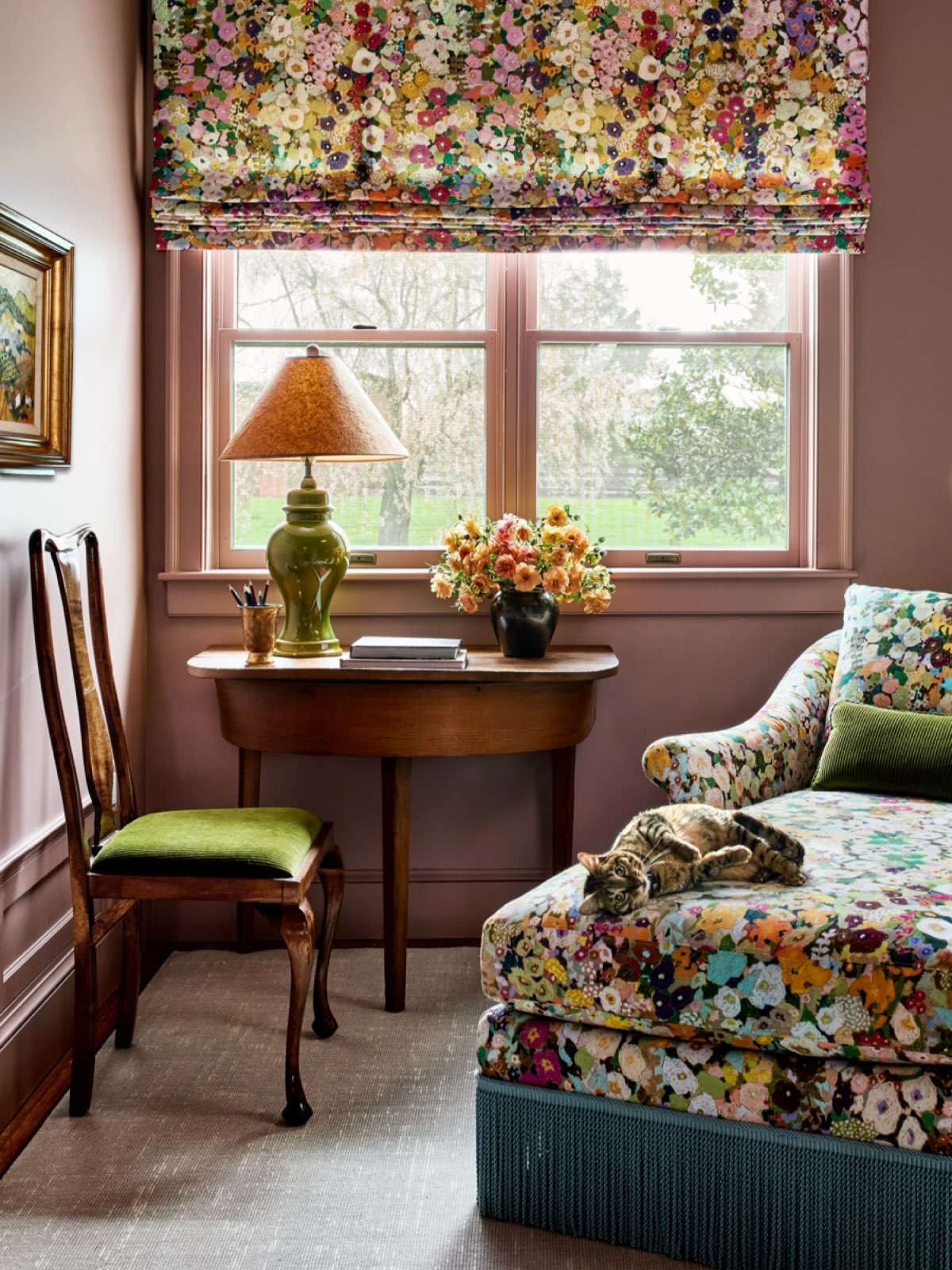
A petite table and straight-backed chair sit beside a floral chaise, creating an intimate corner for writing and relaxing. The table holds books, a small pencil cup, a lamp, and flowers, while the patterned shade repeats the chaise's colorful fabric.
Pink walls and green accents tie the little arrangement together. This example suits occasional handwritten work or correspondence more naturally than a large computer setup.
Start with a table that leaves room for your chair and keeps the nearby lounge seat usable. Keep decorative pieces to the sides when you need to open a notebook.
Repeating a pattern between window treatments and seating helps a small work surface feel at home, even when the furniture pieces come from different styles.
20. Turn a Spare Living Room Corner Into a Mini Office
Credits: Instagram
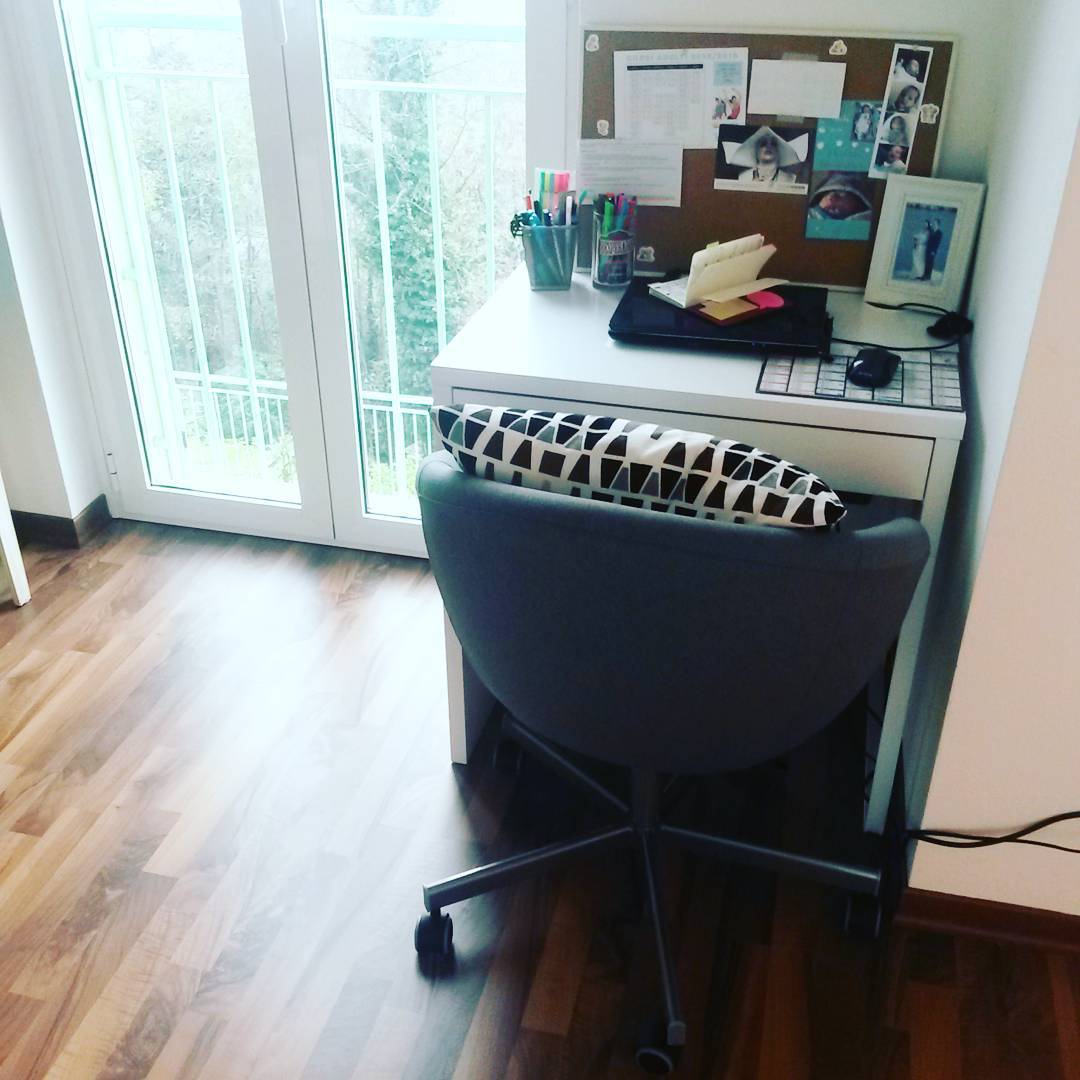
This homeowner turned a living room corner intended for a large plant into a compact office beside the balcony doors. A small white desk fits against the short wall, with a cushioned swivel chair pulled close to its front.
The pinboard gathers notes and photographs vertically, while cups keep pens together on the desktop. It is a straightforward example of using a little leftover space for everyday tasks.
Look for a desk that fits the wall without obstructing the nearby door, and test the chair's movement before committing to the arrangement. Keep supplies within the desk's footprint so they do not spread into the sitting area.
A cushion adds color and helps the chair relate to a furnished living space.