
Spring tables feel most inviting when seasonal details leave plenty of room for plates, glasses, and conversation.
These Spring Table Decor Ideas show how a few repeated colors and natural textures can bring the setting together without making it feel crowded.
Try echoing flower colors in stemware, keeping a tulip centerpiece contained in a shallow tray, or pairing gingham with woven textures. Other ideas use simple place-setting accents, botanical patterns, and clear serving space to suit different gatherings.
Small, thoughtful choices can make the table feel fresh while keeping it practical for a meal.
1. Colored Stemware That Echoes the Flowers
Credits: Instagram
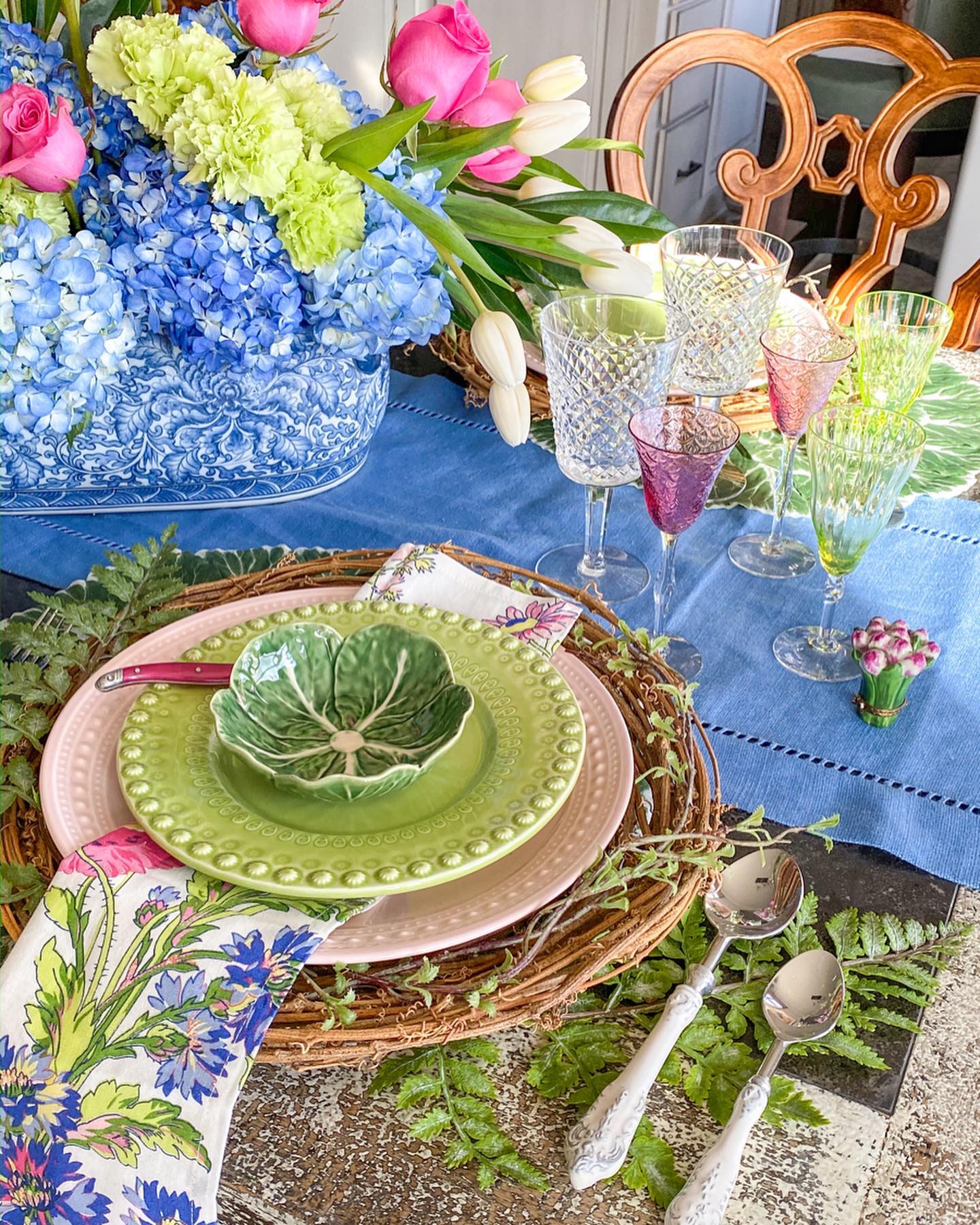
Let your drinking glasses participate in the spring palette. This place setting pairs pink and bright green stemware with a blue runner, a green plate, and a pink charger.
The same colors appear in the generous flower arrangement, so the mix feels connected. Start with two glass colors already present in your centerpiece, then repeat them around the table.
A clear glass can join the group and keep it from feeling overly coordinated. The botanical napkin adds another layer without introducing an unrelated color scheme.
Leave enough room between the glasses for guests to reach each one comfortably. Even a small collection can create this effect when the colors appear deliberately across dishes, flowers, and linens throughout the table setting.
2. Pale Sculptural Accents on a Bare Wood Table
Credits: Instagram
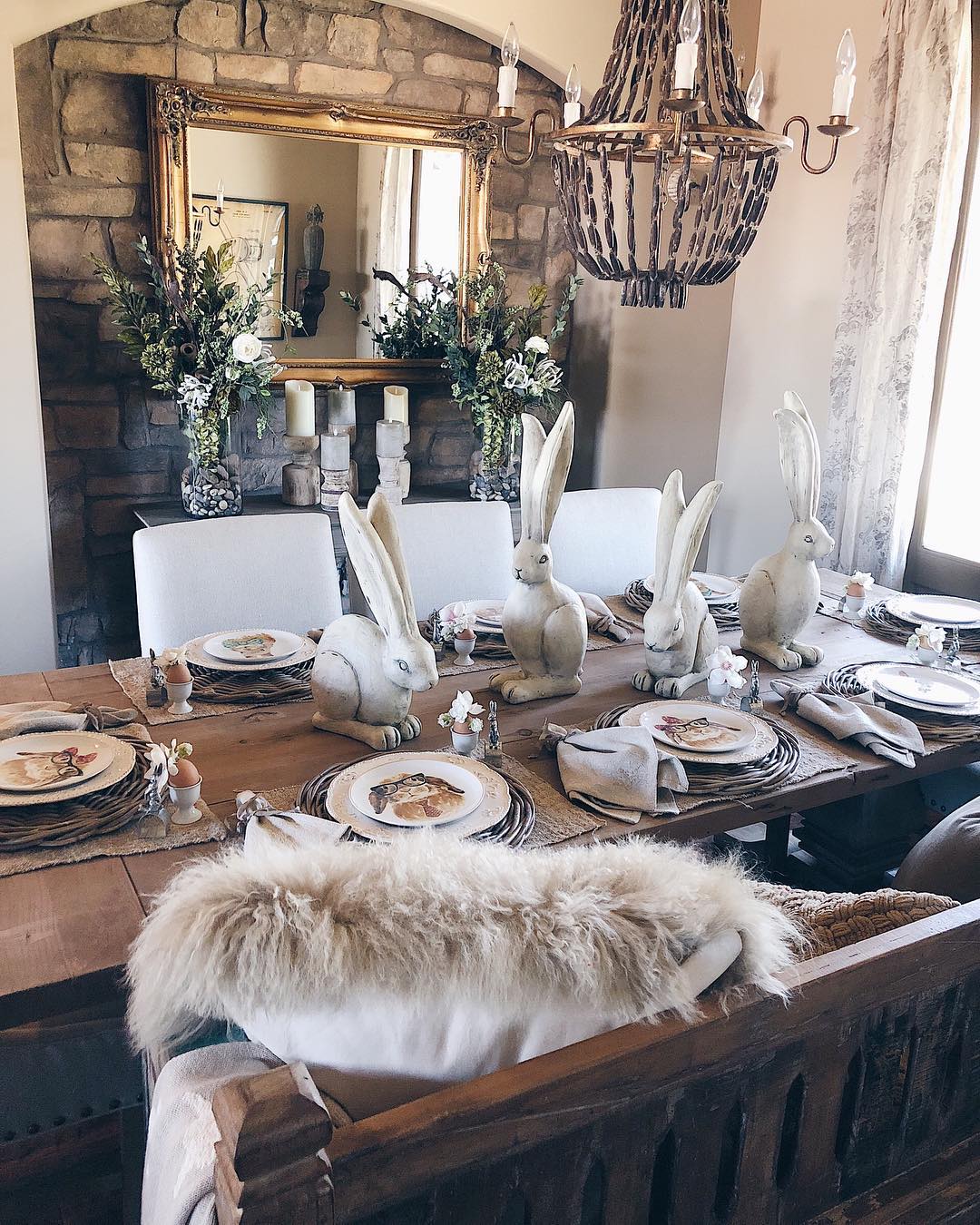
A bare wood tabletop gives this spring setting a warm foundation, while a group of pale rabbit figures supplies the seasonal focus. Woven chargers define the individual settings, and layered dishes keep the table looking ready for a meal.
The restrained colors allow the sculptural shapes to stand out against the darker surface. Choose a small group of decorations with related finishes, then vary their heights and positions down the center.
Keep their bases close together so the arrangement reads as one display. Pale dishes and small ornaments repeat the lighter tones without competing with the centerpiece.
This approach works particularly well when you want seasonal character while still showing the grain, color, and substantial presence of your dining table.
3. A Tulip Pitcher Inside a Shallow Tray
Credits: Instagram
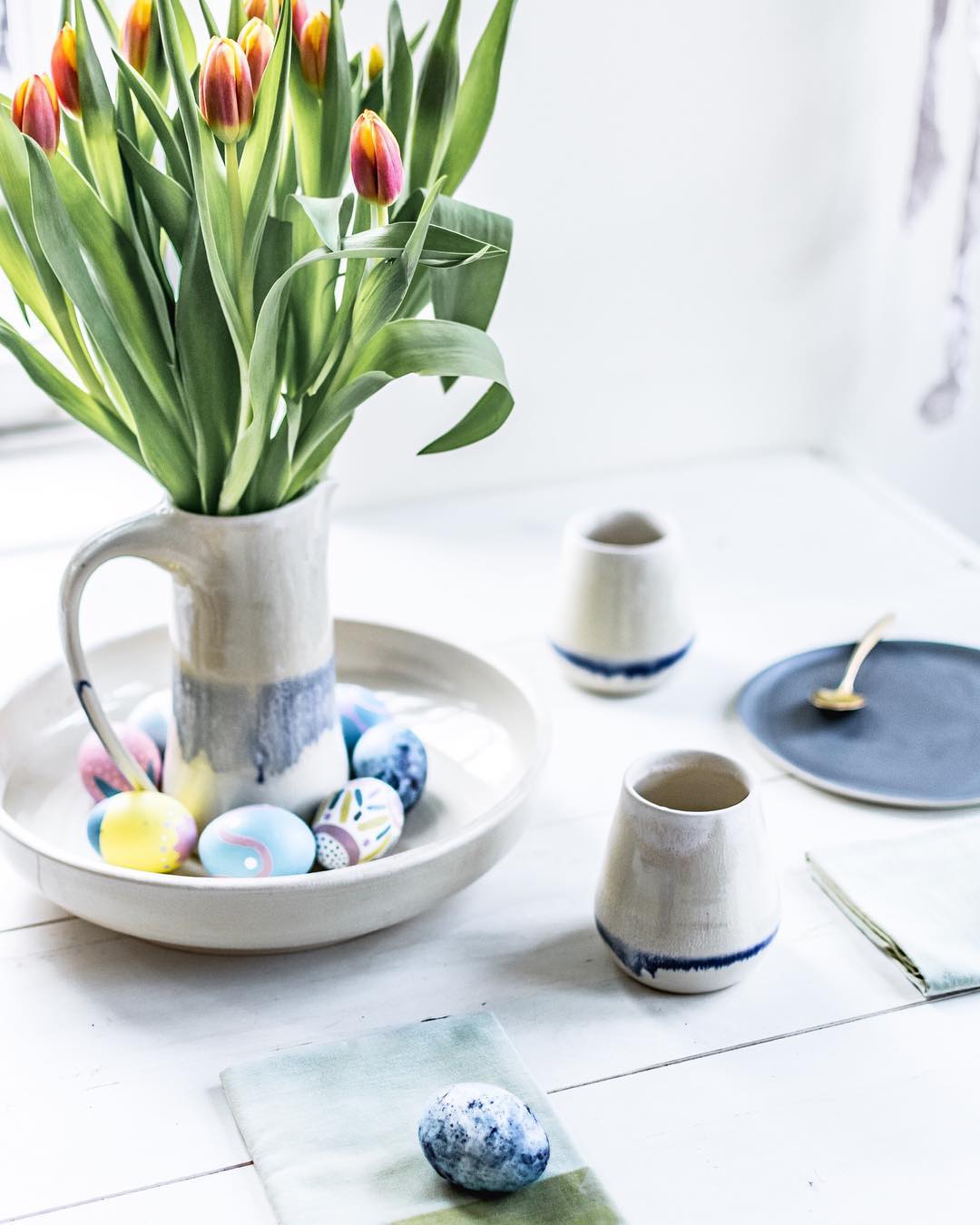
Give a simple flower pitcher a more finished setting by placing it inside a shallow round tray. Here, upright tulips create height while small pastel eggs collect around the base.
The arrangement feels contained, leaving the surrounding white tabletop open. Blue details on the pitcher and cups link the centerpiece to the place settings, while a folded napkin introduces a softer green note.
Use the tray as a boundary for a few seasonal accents instead of scattering them everywhere. The flowers already provide movement and color, so the other pieces can stay quiet.
For a smaller table, choose a pitcher with a narrow footprint and leave the tray spacious enough that each decorative egg remains visible around its lower edge.
4. Yellow and Purple Flowers Along a Striped Runner
Credits: Instagram
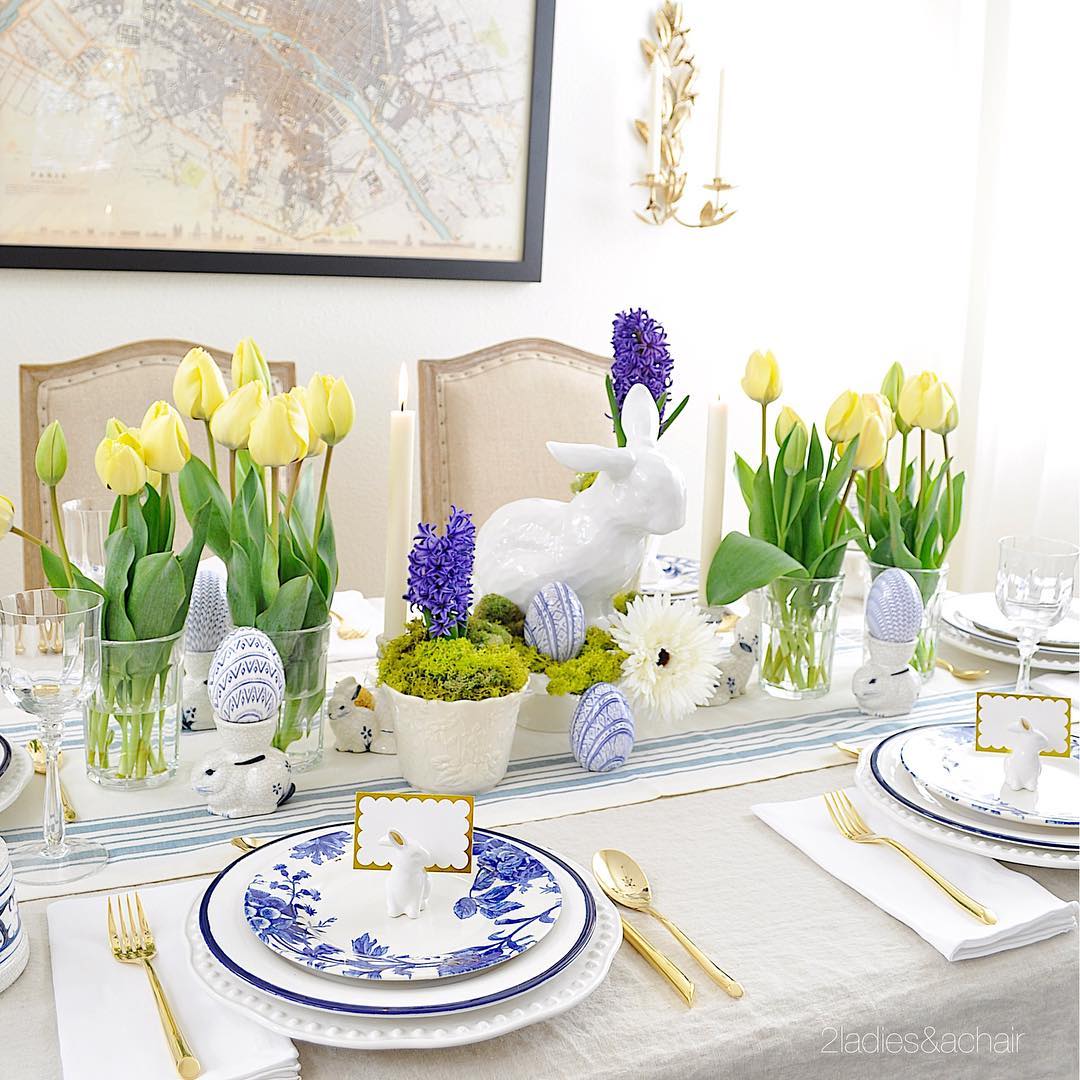
Repeat a flower color along the center of the table for a spring arrangement that feels generous. Yellow tulips appear in separate clear vases here, with purple flower spikes and small white blooms filling the spaces between them.
A striped runner ties the grouping together, while blue patterned plates echo the cooler tones. Keeping most containers pale or transparent lets the flowers carry the color.
Arrange the tallest stems where they will not interrupt conversation, then tuck shorter accents between the larger vessels. The small decorations remain concentrated on the runner rather than spreading into the place settings.
Gold colored flatware adds another warm note, and the mostly white dishes give the eye a restful pause around each guest's seat.
5. Oversized Eggs as Individual Place Markers
Credits: Instagram
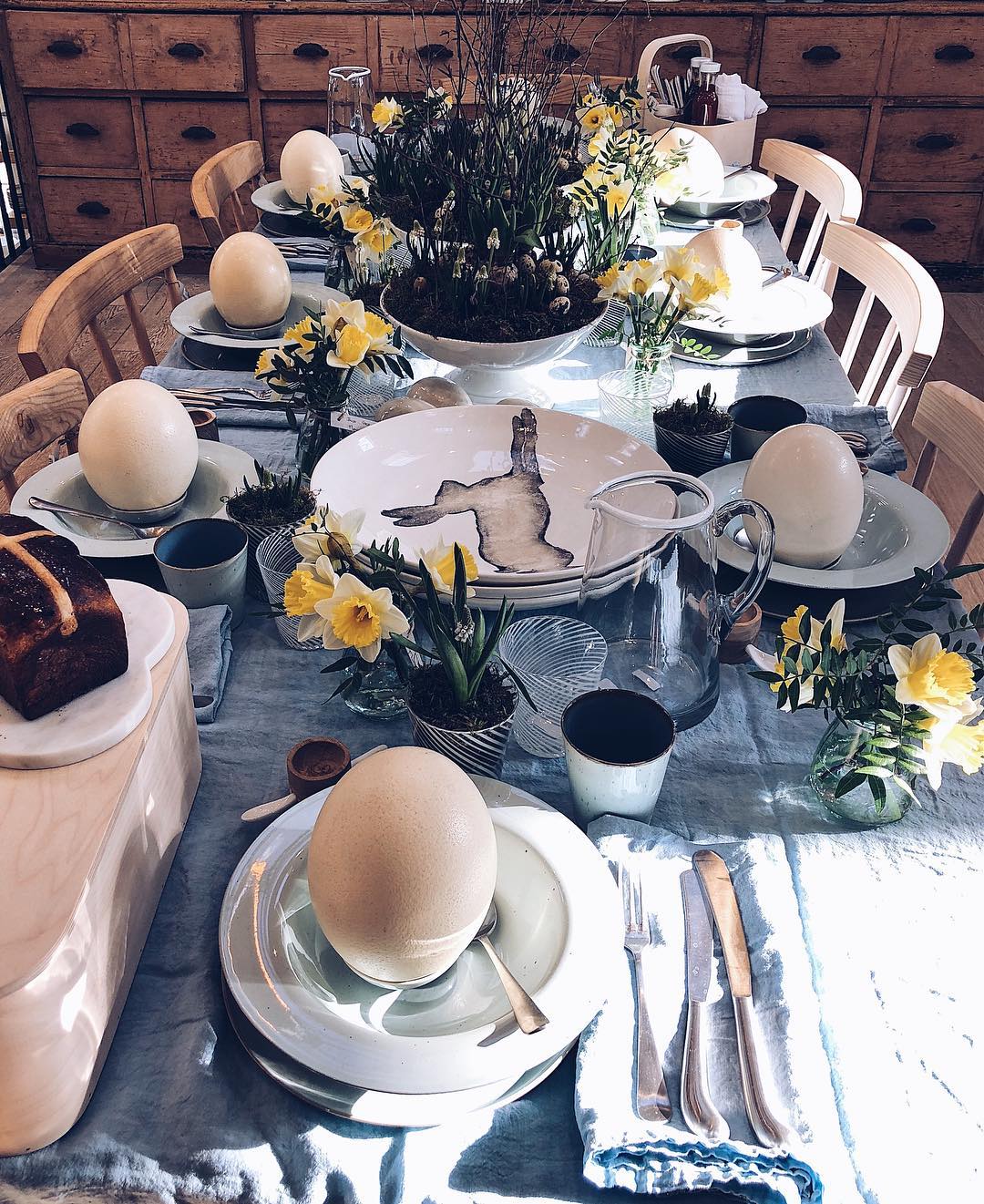
An oversized decorative egg at each setting turns repetition into the main spring detail. The pale eggs stand above stacked dishes in this arrangement, creating a rhythm along the table.
Small bunches of yellow flowers bring the color down to a friendlier scale, while blue cups and linens keep the palette grounded. Try one substantial accent per person rather than several tiny objects competing on every plate.
The matching shapes make the table feel organized even when the center contains several different pieces. A large illustrated platter supplies a playful focal point among the flowers.
Before serving, move the eggs to a nearby display so guests can use their dishes easily while the spring theme remains visible throughout the meal.
6. A Bunny Napkin with a Tiny Floral Tie
Credits: Instagram
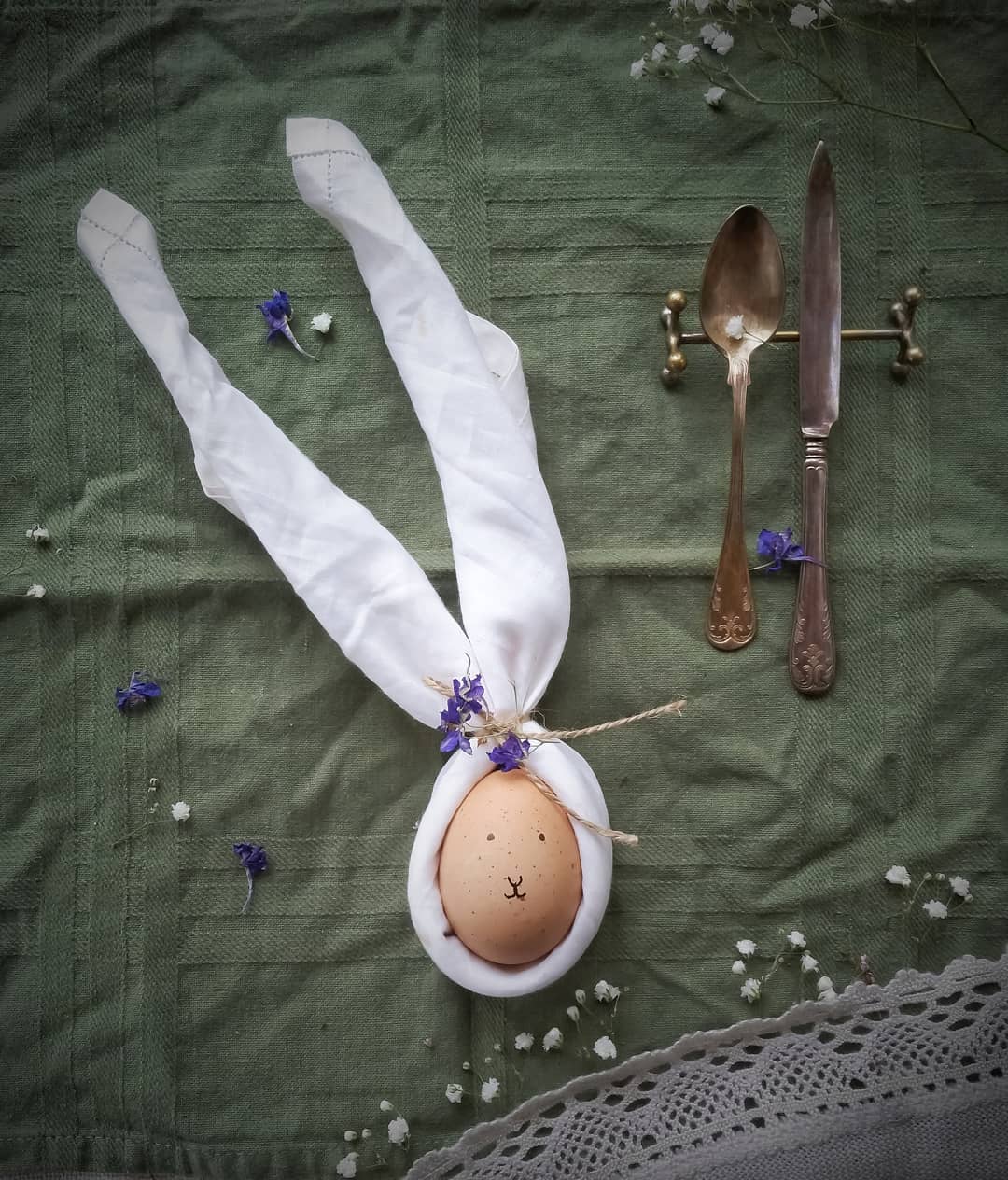
A white napkin folded around an egg creates an appealing little rabbit without filling the table with decorations. The long ends become ears, while a small drawn face makes the egg feel expressive.
A tiny purple flower at the tie adds the spring color. Set the finished fold against a deeper green cloth, as shown here, so the white outline stays clear.
Keep the surrounding place setting simple and let this detail hold the attention. The few scattered blossoms reinforce the garden mood without making the surface look crowded.
For your own version, tie the napkin loosely enough that guests can undo it easily, and place the egg securely so it does not roll when someone sits at the table.
7. Gingham with Woven Centerpiece Textures
Credits: Instagram
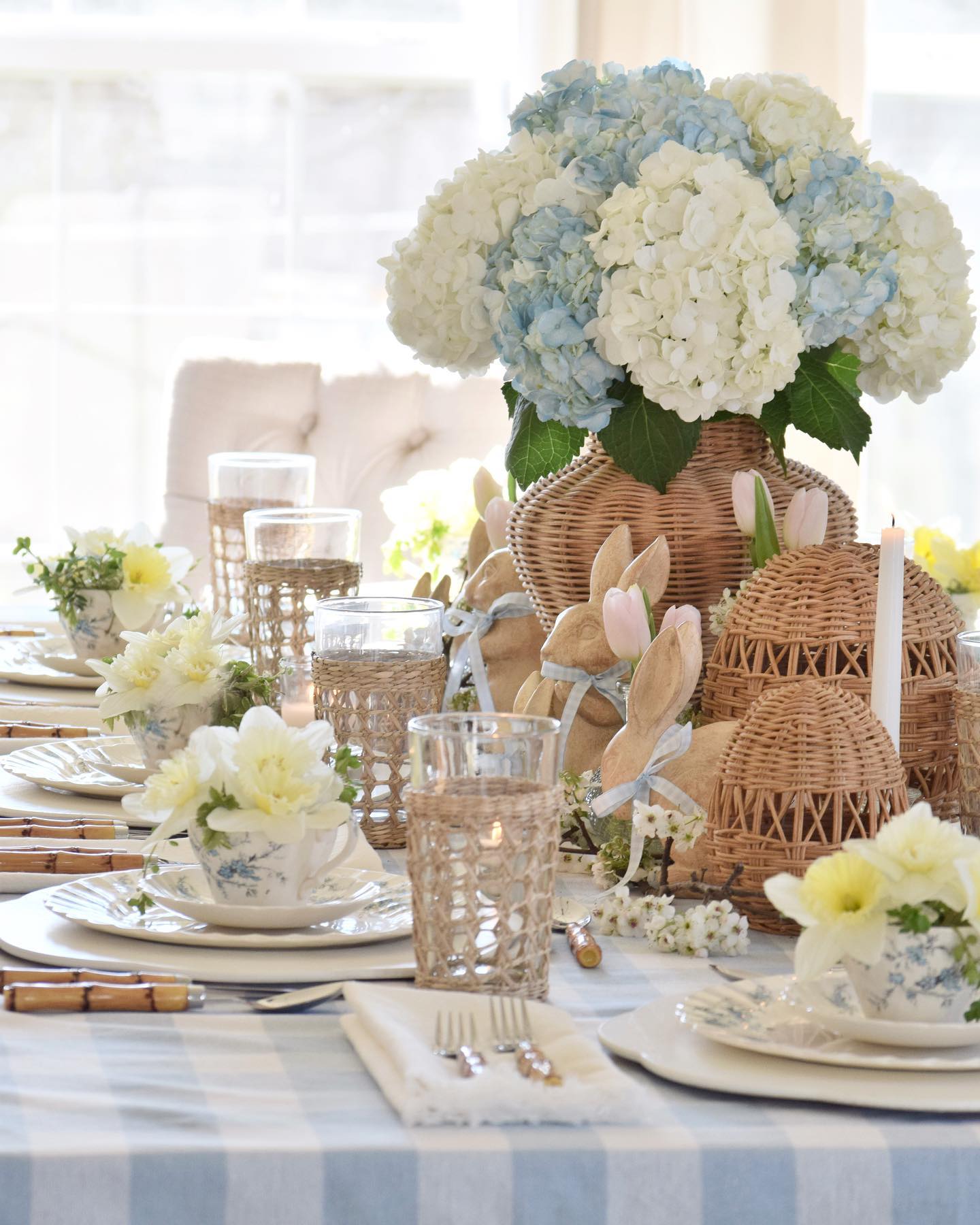
Light blue gingham sets a cheerful foundation for this layered spring table. Woven forms in the center add warm texture, while pale blue and white flowers repeat the tablecloth's colors above them.
Clear patterned glasses keep the place settings bright, and flower arrangements add detail close to each plate. Use a checked cloth as the organizing pattern, then repeat only a few of its colors through the rest of the display.
Rounded shapes help soften the grid and prevent the setting from feeling rigid. Keep the largest centerpiece grouped toward the middle, with lower accents extending outward.
The result can feel abundant without losing its structure, especially when dishes and napkins remain in a quiet white palette around the edges.
8. Blush Napkins Against Layered White Plates
Credits: Instagram
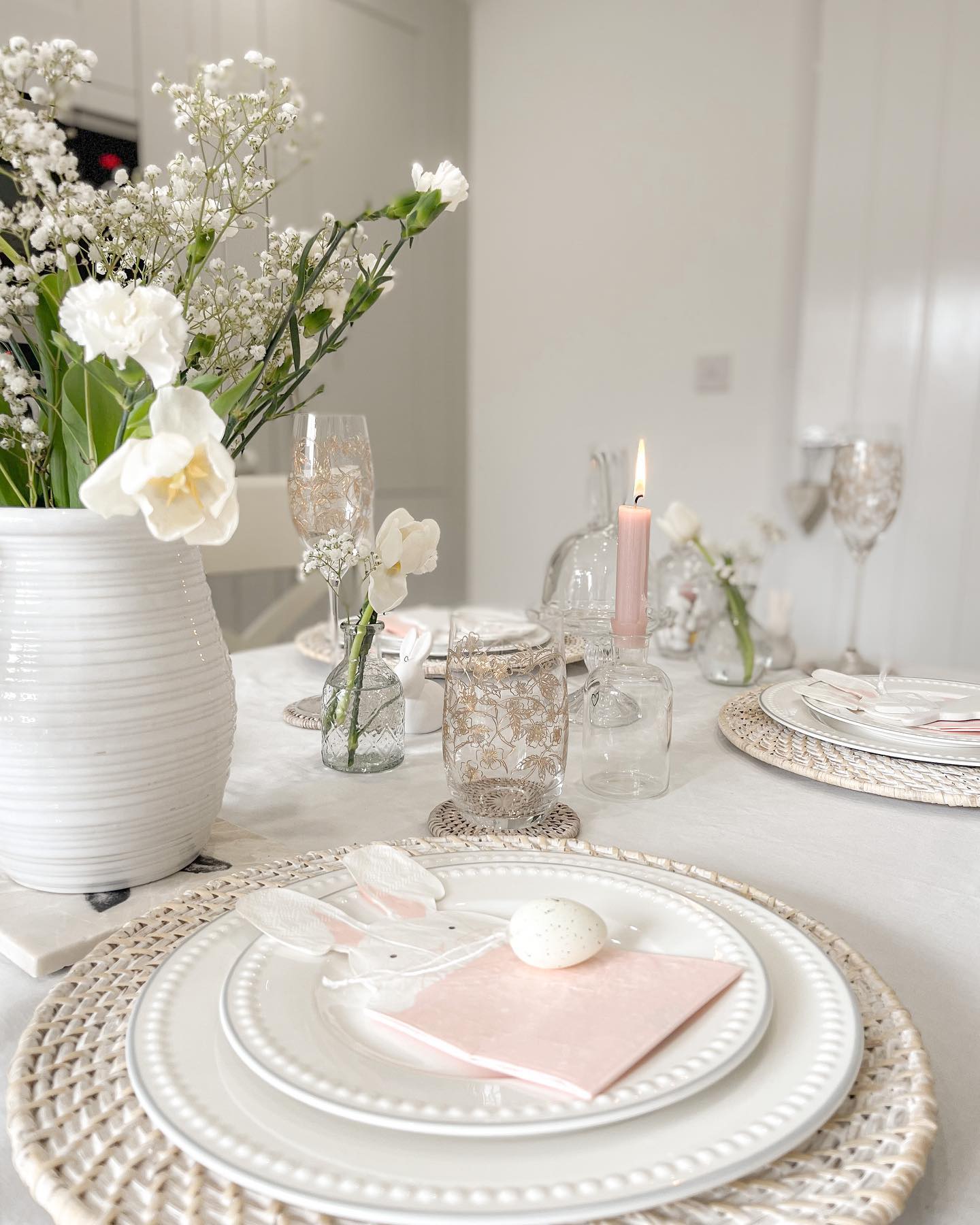
A little pink can refresh an otherwise white place setting. Here, a folded blush napkin rests on beaded dishes, with a small pale egg accent placed on top.
The light woven placemat introduces texture underneath without adding a strong competing color. Nearby, white flowers and clear glass vessels keep the arrangement airy, while a pink taper repeats the napkin's soft shade.
Build the setting from the bottom up, checking that each plate leaves a visible rim beneath the next. Fold the napkin into a simple shape so the dishes' decorative edges stay readable.
This restrained palette is useful when you want to reuse everyday white tableware and add just enough seasonal color for a spring lunch or relaxed Easter gathering.
9. Striped Plates over Green Leaf Shapes
Credits: Instagram
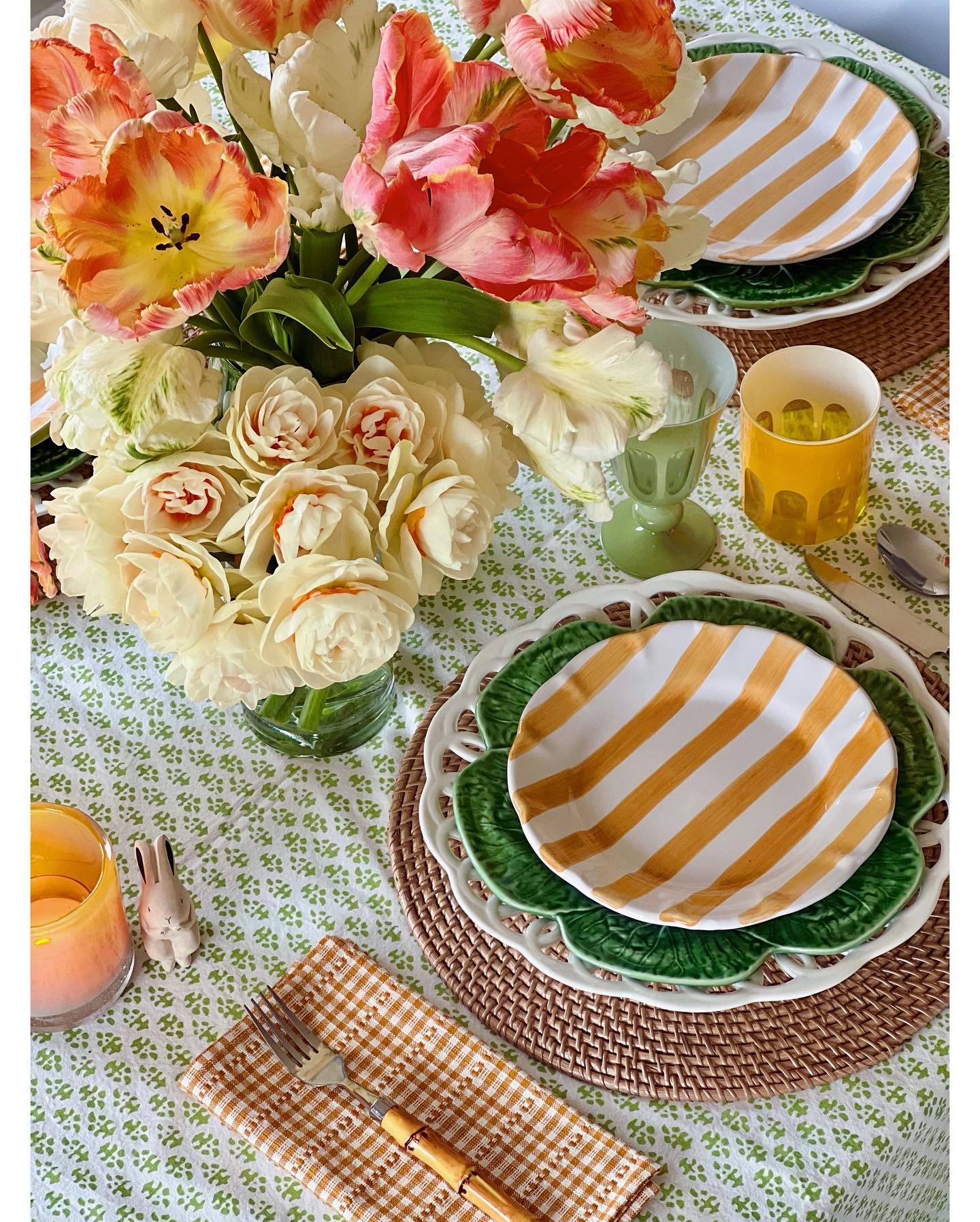
Mix patterns by changing their scale and giving them shared colors. Bold yellow stripes on these small plates stand out against the green leaf shaped dishes beneath them.
A finer green print covers the table, while checked napkins add another small pattern beside the settings. The woven placemats create a quiet border that separates the layered dishes from the busy cloth.
Repeat yellow in a tumbler or flowers to make the striped plates feel intentional. The central bouquet brings warmer peach and orange tones into the combination without overpowering the green foundation.
Keep flatware simple and align it consistently. That small bit of order helps several decorative patterns coexist, leaving the table lively, readable, and welcoming for a spring meal.
10. Pink Linens with Botanical Dinnerware
Credits: Instagram
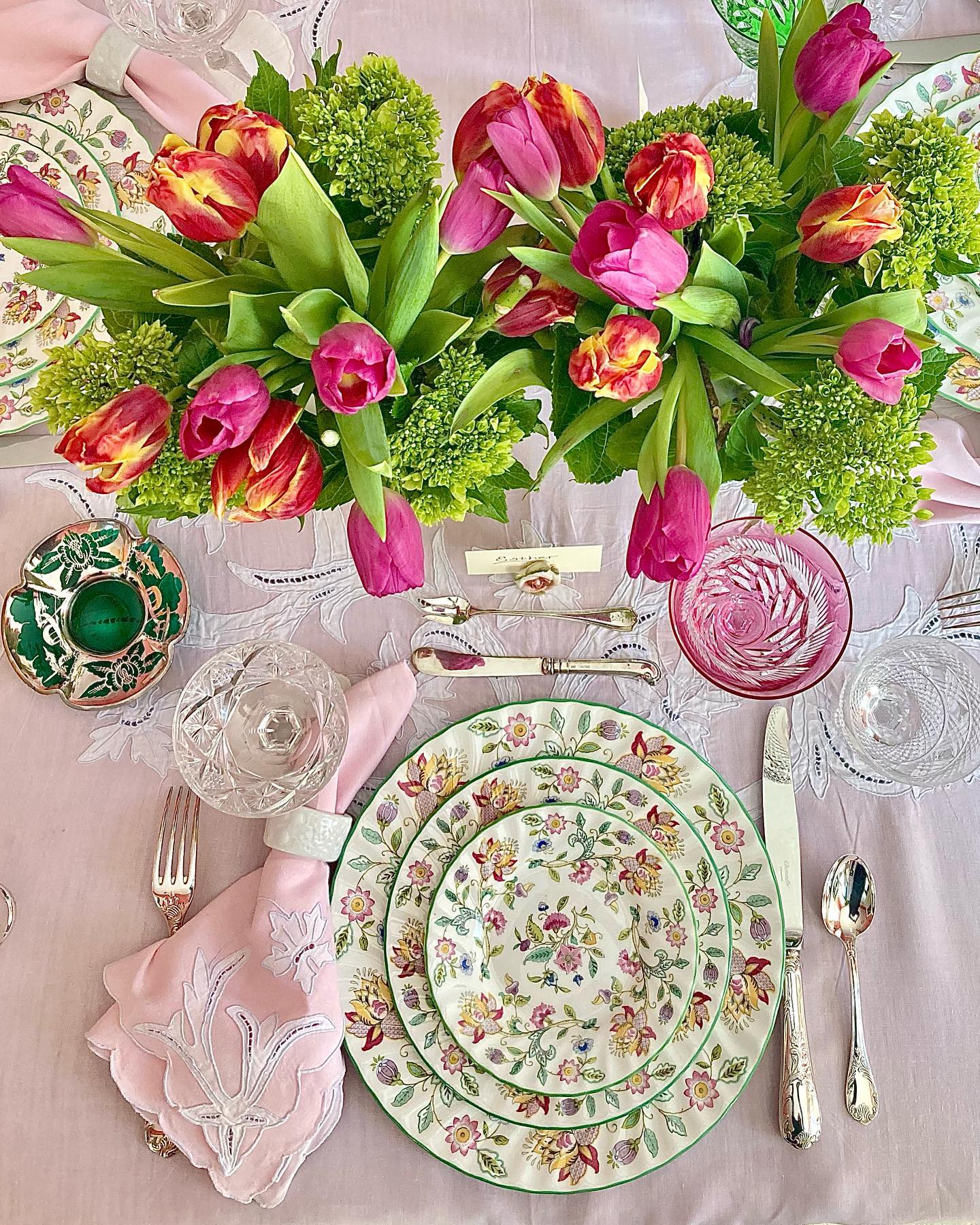
Let patterned dishes suggest the rest of your spring palette. These stacked botanical plates sit on a soft pink cloth, with pink napkins and tinted glasses repeating the flowers' warmer tones.
Green cups and a generous arrangement of tulips bring contrast to the pastel background. The setting feels layered because the colors repeat in different forms rather than appearing only once.
Start with the dinnerware, choose one background color for the linens, and carry a second color into glasses or small serving pieces. Keep the flatware arranged neatly around each stack so the many details still have a clear structure.
A floral centerpiece can be exuberant when the surrounding palette remains this consistent from one place setting to the next.
11. A Simple Spring Buffet with Clear Serving Space
Credits: Instagram
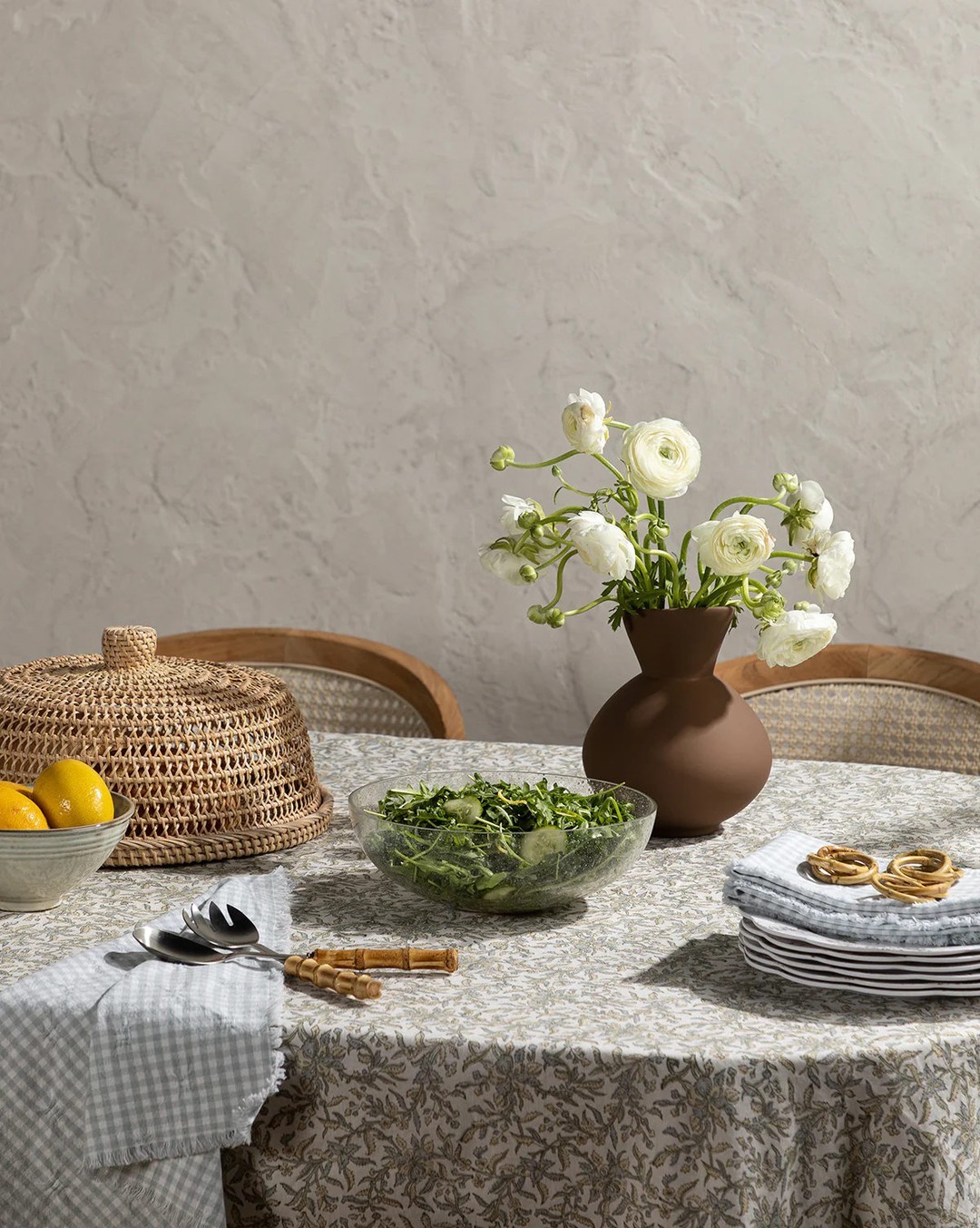
Let the food share the decorating work on a spring buffet. This round table holds a bowl of greens, a bowl of lemons, stacked plates, and a covered serving piece, with white flowers rising from a brown vase behind them.
A small printed cloth connects the arrangement without demanding extra accessories. Keep plates in one easy to reach stack and place serving utensils beside the dish they belong with.
The flowers can sit farther back, where their height adds interest without blocking access to the meal. A checked napkin introduces another quiet pattern at the table's edge.
Leaving open cloth between the pieces makes the spread feel considered and gives guests room to serve themselves comfortably without rearranging the decorations.
12. Botanical Napkins for an Outdoor Lunch
Credits: Instagram
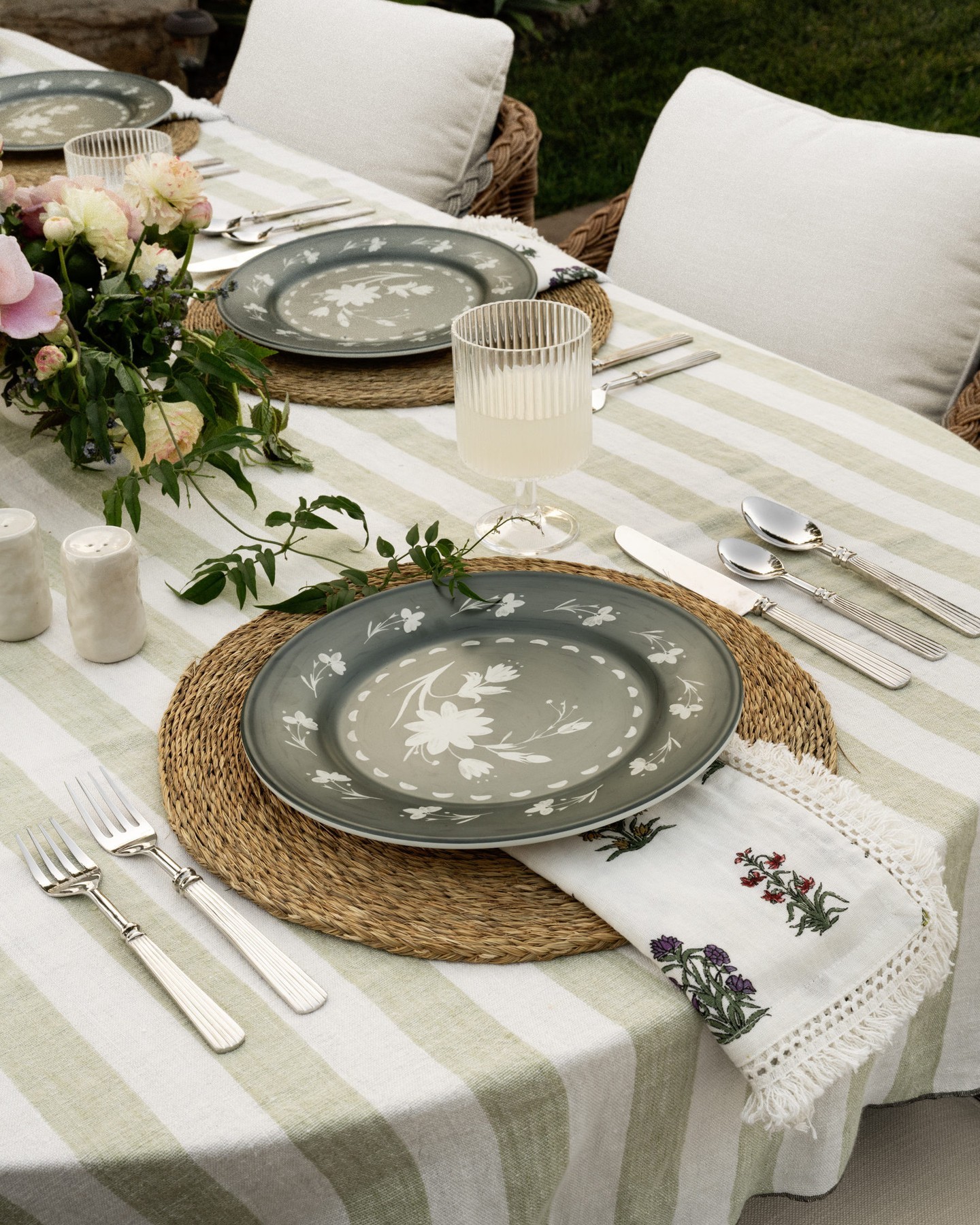
Bring a garden feeling directly to each place setting with floral napkins. Here, small botanical motifs decorate white cloth that extends beneath green patterned plates.
Round woven placemats add a warm border, while the broad stripes of the tablecloth give the arrangement a relaxed outdoor character. The combination works because the patterns have different scales and share green tones.
Fold each napkin so its decorative edge remains visible beyond the plate rather than hiding the detail under the stack. Keep glasses and flatware simple to balance the patterned pieces.
A low flower arrangement continues the garden theme down the center, leaving the place settings clear. This is an inviting approach for a spring lunch on a patio or garden terrace.
13. A Clear Pitcher with Fresh Citrus Slices
Credits: Instagram
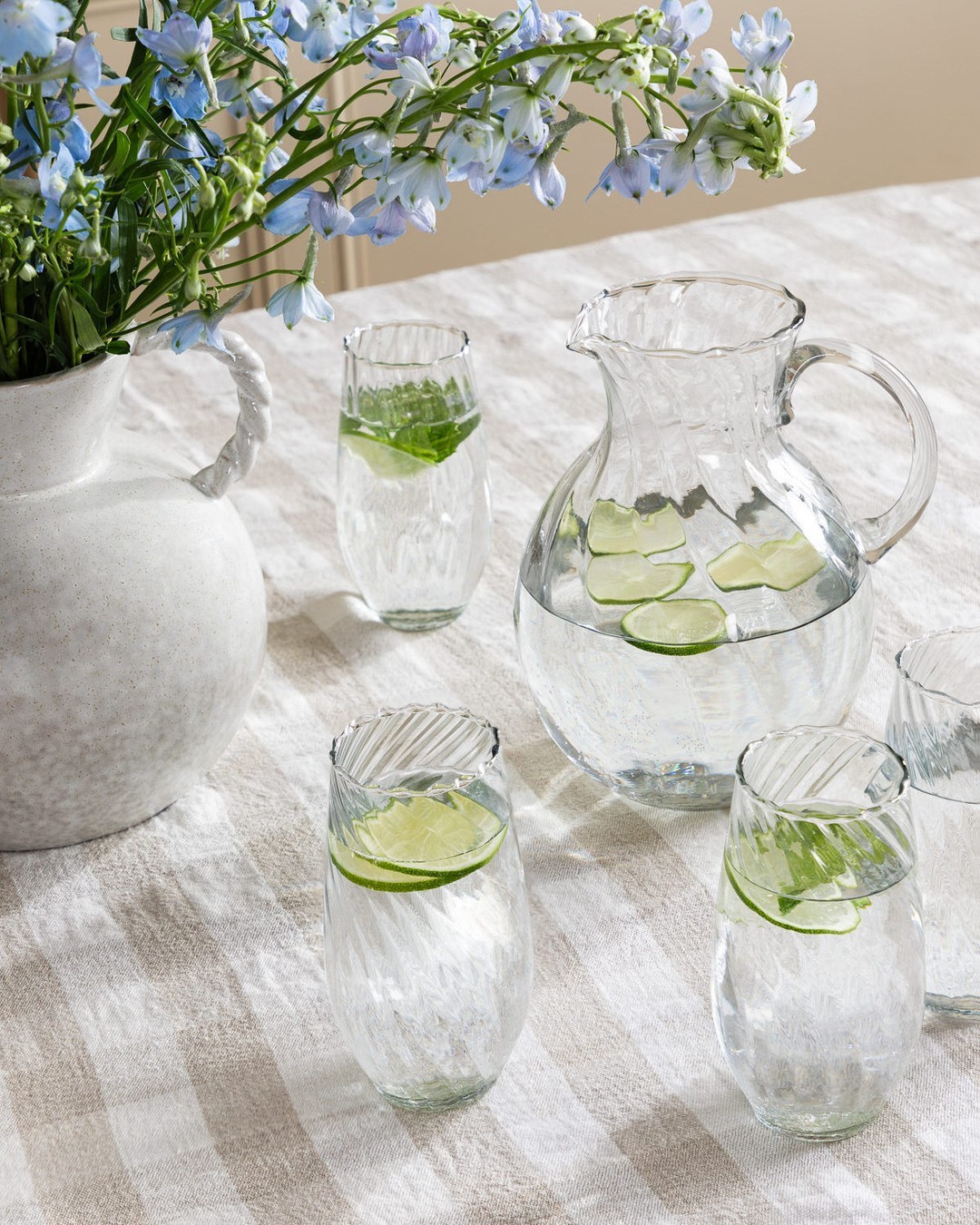
Make the water service part of your table decoration. Thin green citrus slices float inside this clear pitcher and matching glasses, adding a crisp color accent to the pale checked tablecloth.
The transparent pieces catch the light without competing with the blue flowers nearby. Set out the pitcher with enough glasses for the gathering, then repeat a few fruit slices in each serving.
The shared detail makes an everyday necessity feel deliberately arranged. Keep the grouping within easy reach, especially if the table also holds several serving dishes.
There is no need for a separate decorative object in every gap. A handsome pitcher, visible fruit, and neatly grouped glasses can provide a practical spring accent that guests will actually use.
14. Scalloped Napkins against a Floral Tablecloth
Credits: Instagram
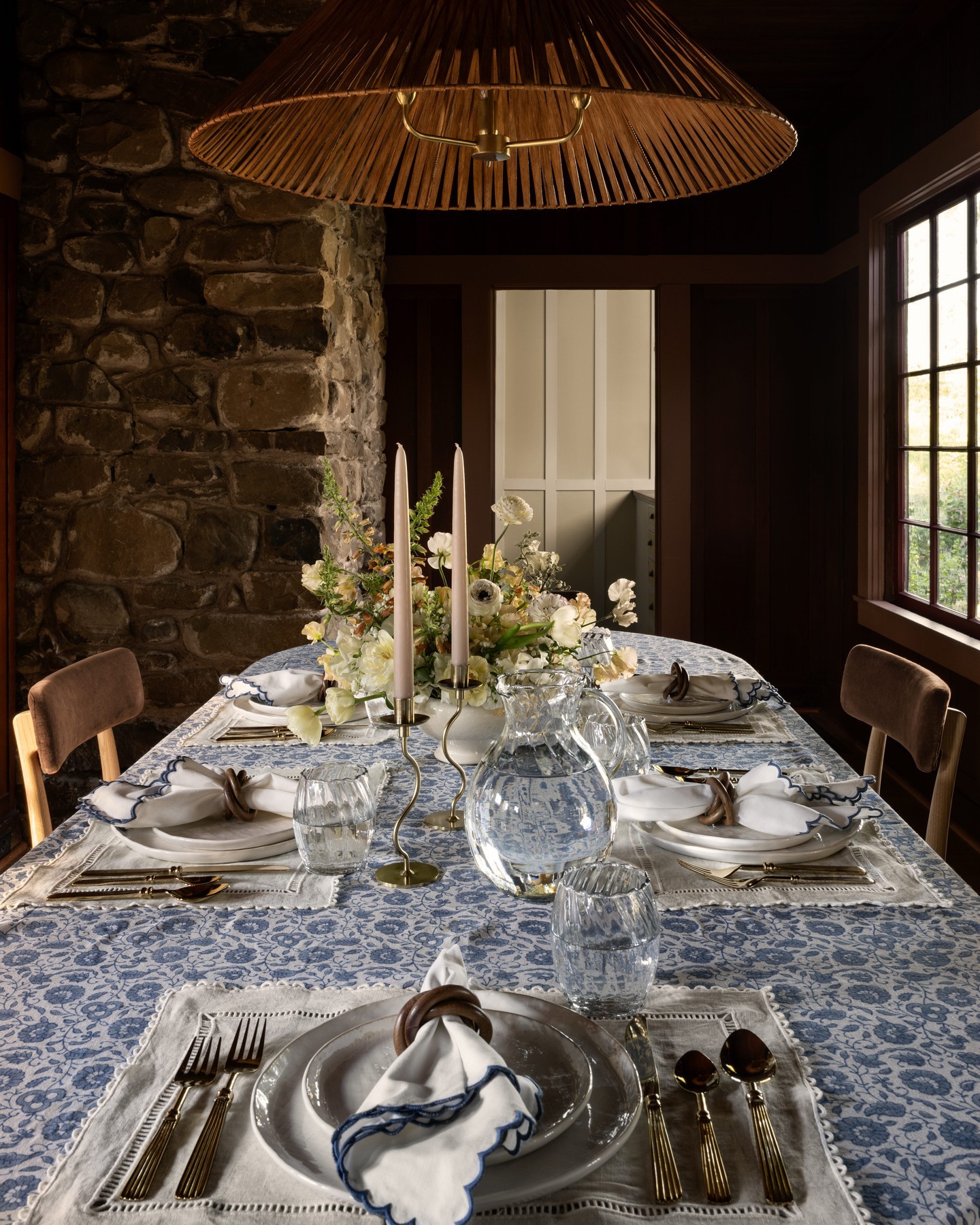
A contrasting border helps a white napkin stand out on a patterned table. These napkins have dark blue scalloped edges that echo the blue floral cloth underneath.
Folded through rings, they rest on simple dishes and become a distinct detail at each seat. Rectangular placemats provide another clear layer between the plates and the busy print.
Use this combination when you want a coordinated table without matching every piece exactly. Repeat the border color in the cloth, then keep the dishes and glasses relatively quiet.
Pale flowers and slim candles continue the lighter tones through the middle. The result feels dressed for an occasion, while each element remains easy to recognize and the individual place settings retain their tidy boundaries.
15. Mixed Floral Teacups for an Afternoon Gathering
Credits: Instagram
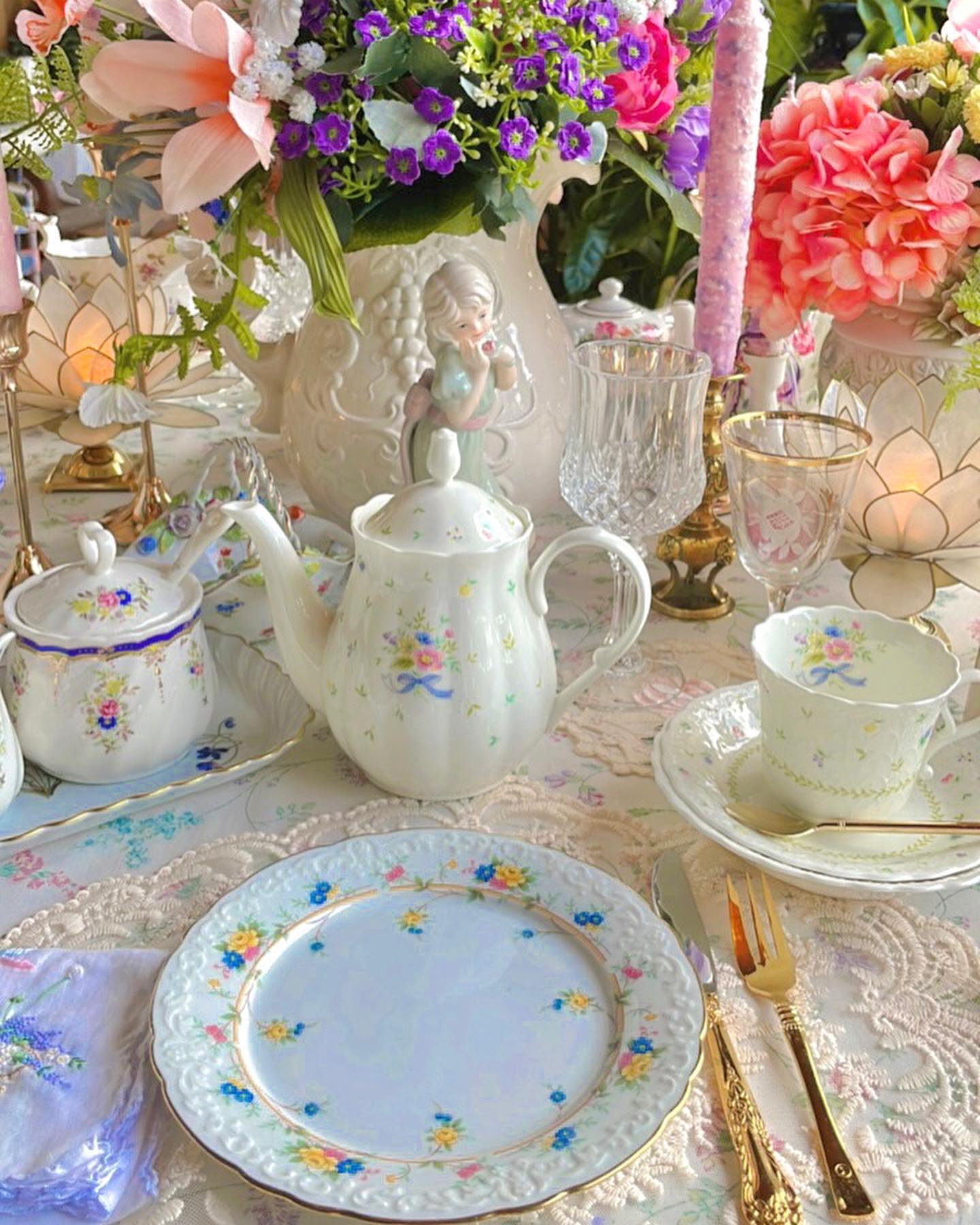
A spring tea table can feel collected rather than perfectly matched. This setting brings together a pale floral teapot, decorated cups, a blue plate, and a covered vessel with a different border.
Their light backgrounds and delicate flower motifs make the assortment feel connected. Start with a common color family, then vary the shapes and patterns within it.
Put the cup and saucer where each guest can reach them comfortably, and keep the teapot on a clear part of the table for pouring.
A folded napkin gives the smaller dishes their own defined space. The surrounding flowers repeat pink, yellow, and purple notes from the tableware, allowing the pieces to mingle naturally without requiring an identical service for every guest.
16. Low Greenery and Candlelight for a Spring Dinner
Credits: Instagram
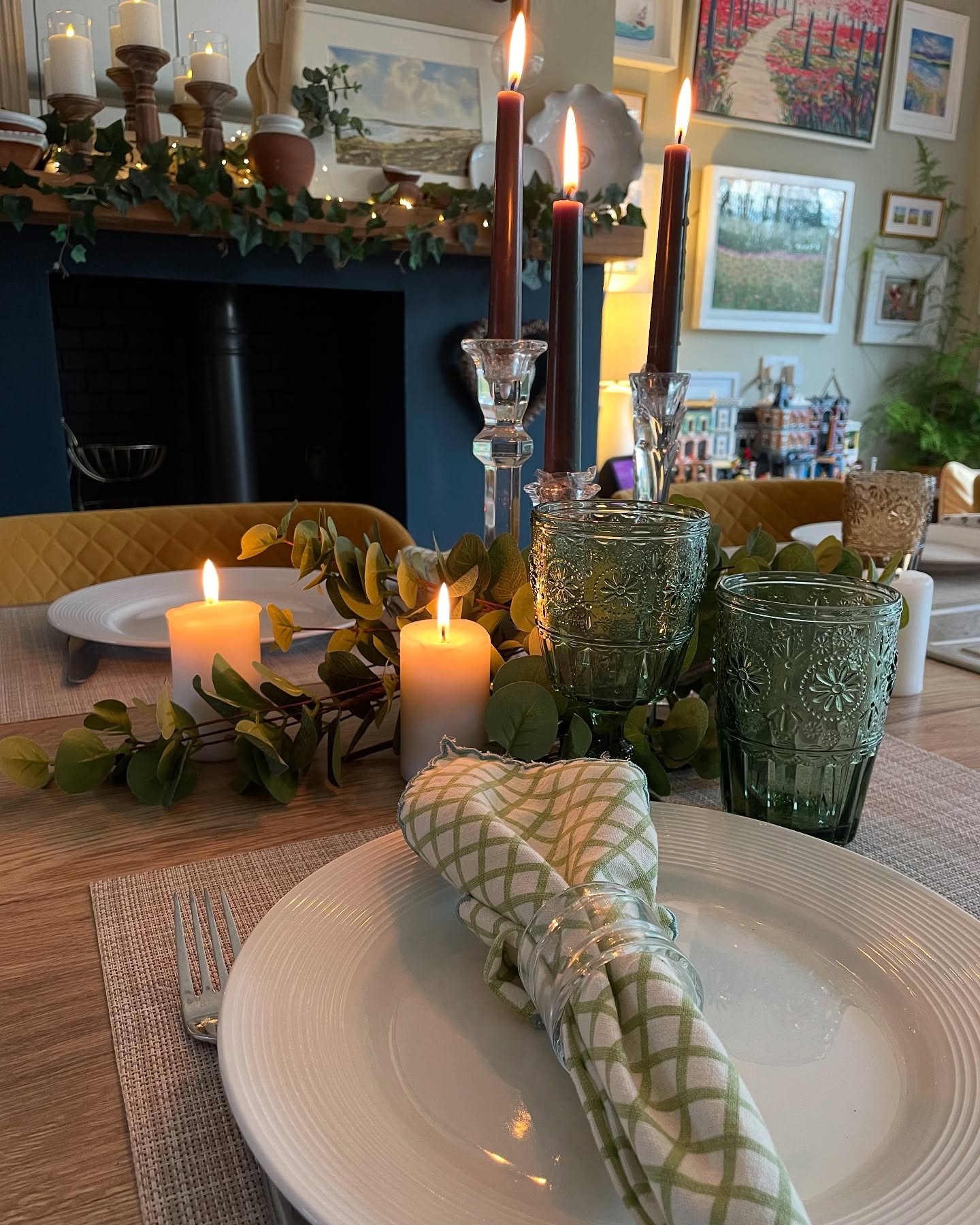
Spring tables do not have to rely on a large bouquet. This arrangement combines low greenery with candles of different heights, leaving the color story mostly green, white, and warm wood.
Textured green glasses repeat the leaves, while a patterned napkin softens the plain white plate. The mix feels welcoming in evening light because the candles create several points of brightness.
Gather the greenery loosely through the center and leave generous gaps around stable candleholders. Keep leaves and fabric clear of every flame.
Taller tapers can provide height while shorter candles make the middle feel full. With the color palette this focused, the everyday dishes remain useful, and the table still looks seasonal before any food has been brought out.
17. A Greenery Garland along a Garden Table
Credits: Instagram
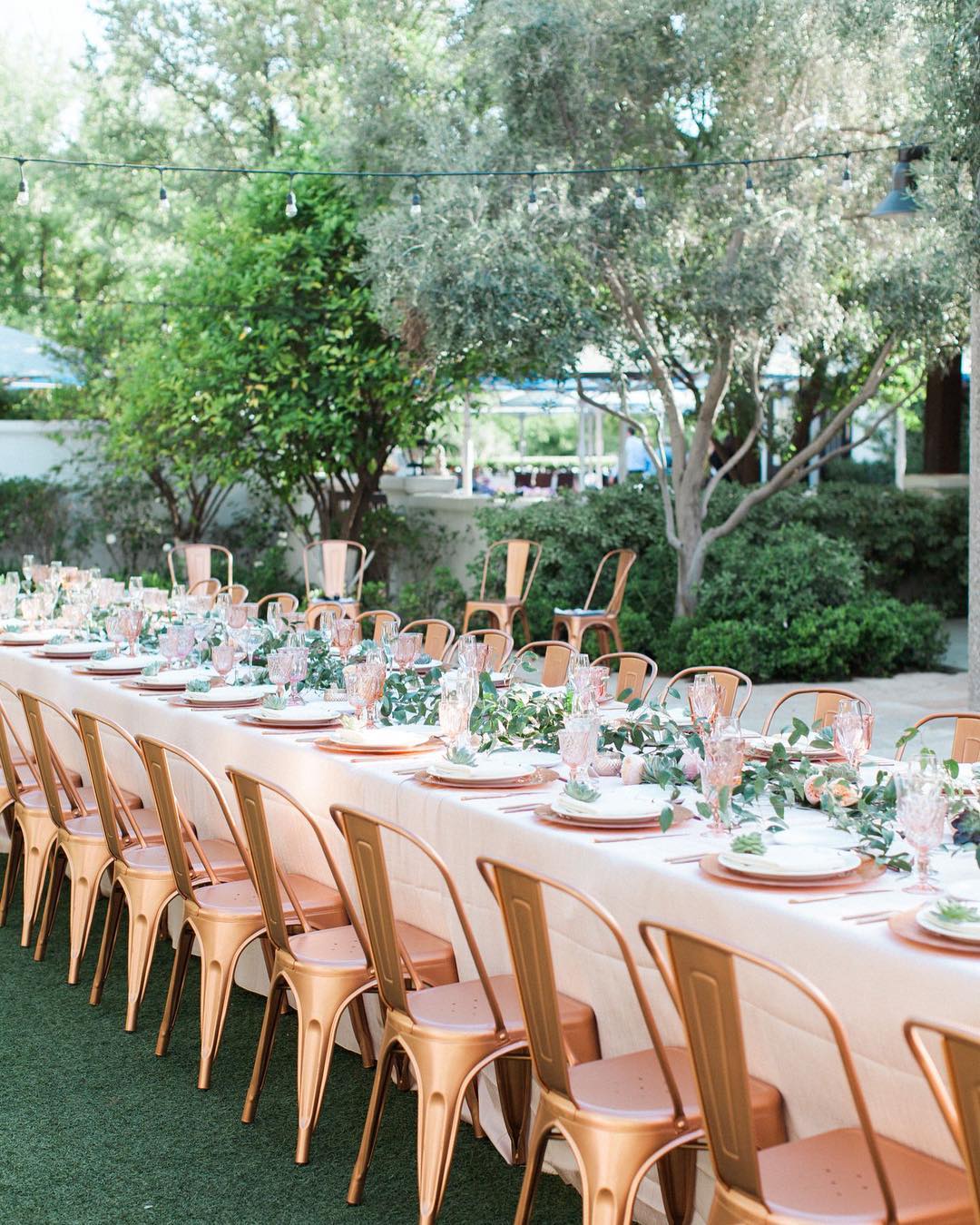
For a longer outdoor table, a loose line of greenery can connect every place setting. In this garden arrangement, leafy stems weave between the glasses, with pale flowers and small plants punctuating the center.
The soft pink tablecloth adds warmth beneath the green details and surrounding trees. Keep the greenery low so guests can talk across the table without leaning around a centerpiece.
Leave breaks for serving dishes and water pitchers rather than covering every inch. You can adapt the same idea to a shorter family table with a few sections of foliage.
Repeat the dishes and glasses consistently, then let the leaves provide the variation that makes an outdoor spring gathering feel relaxed and connected from end to end.
18. A Printed Runner beneath Airy Spring Flowers
Credits: Instagram
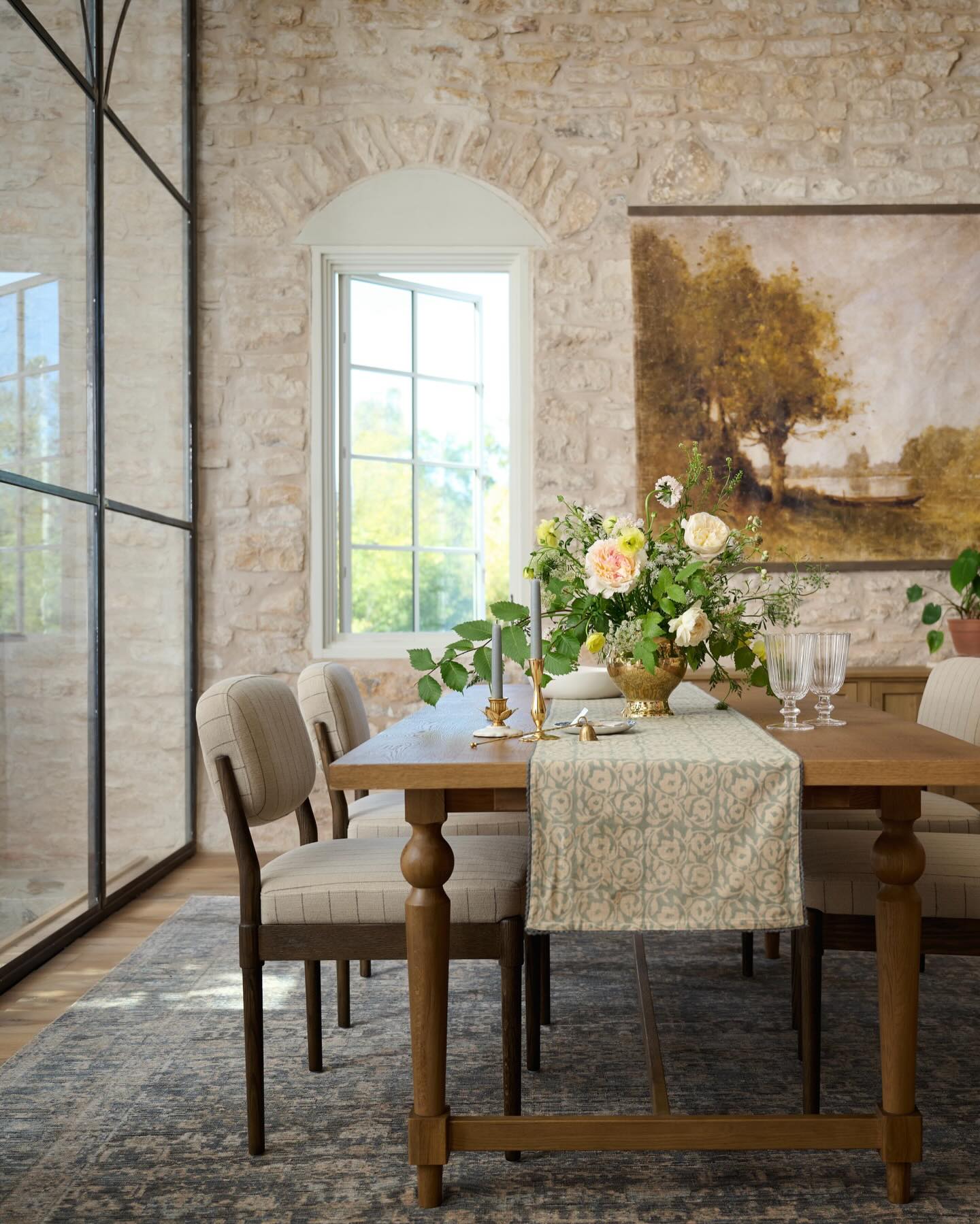
A runner can give a spring arrangement a clear home while leaving much of the wood table visible. Here, a softly colored botanical print runs beneath a loose bouquet of pale flowers and green stems.
The arrangement spreads outward naturally, with a pair of slim candles balancing its height on one side. Clear goblets add detail without introducing another strong color.
Center the runner first, then position the flowers slightly off the midpoint if you want a more relaxed composition. Keep the supporting pieces few so the floral shapes have room to breathe.
This approach also works between meals, when the table needs a decorative focus without a full set of plates, napkins, and serving dishes covering the available surface.
19. Scalloped Placemats for an Outdoor Table
Credits: Instagram
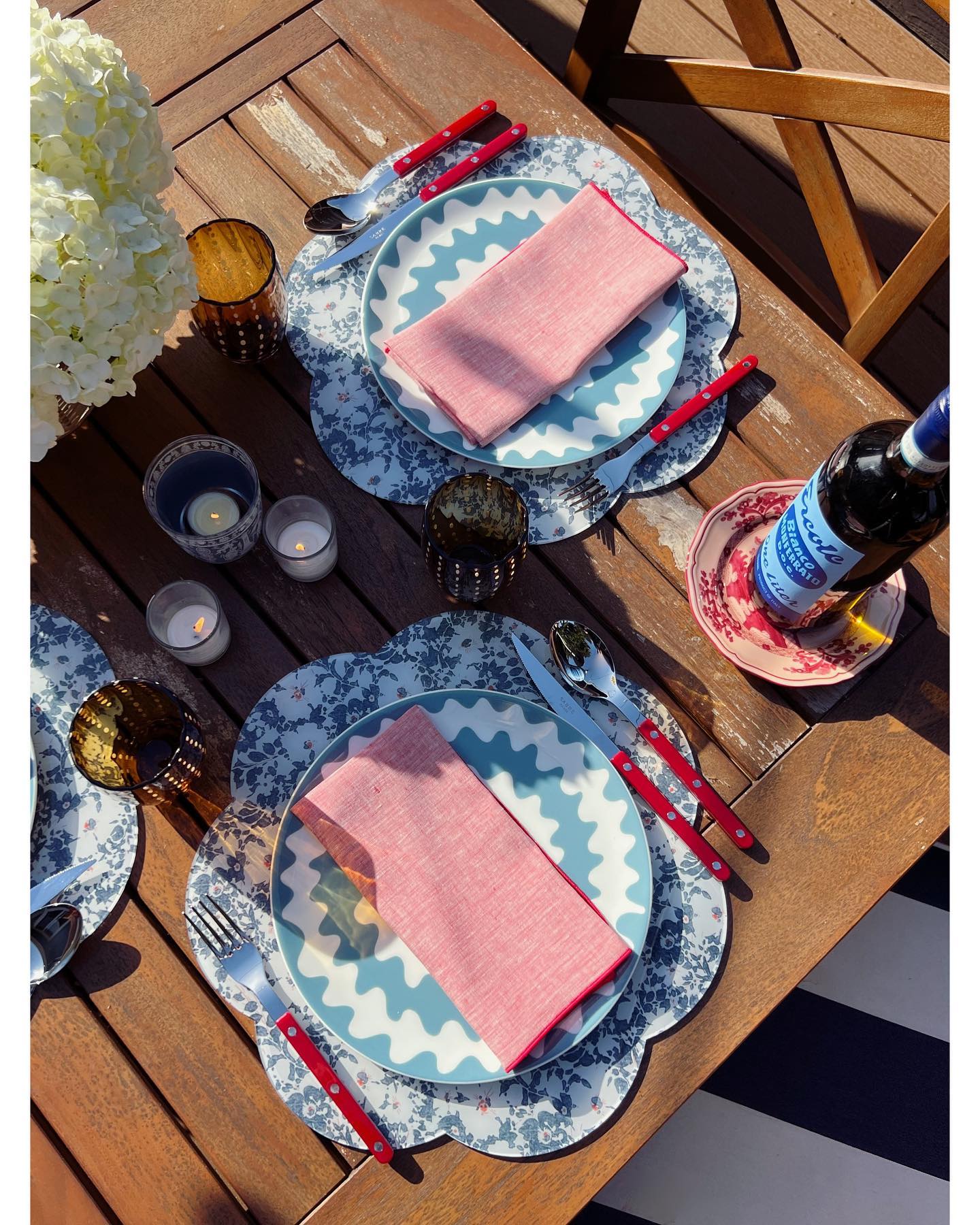
Decorative placemats can supply the pattern when you want to leave an outdoor tabletop uncovered. These blue floral mats have scalloped outlines that remain visible around the plates.
The wavy blue pattern on the dishes repeats the rounded shapes, while folded coral napkins bring a warmer color into the setting. Set the plates slightly inside the placemat borders so their edges do not disappear.
Simple folded napkins are enough when the layers underneath already have plenty of detail. The bare wood between settings keeps the overall arrangement relaxed and makes each place feel separate.
A small central group of flowers and candles finishes the table, with enough open space left to add drinks and share food during a spring lunch.
20. Bright Flatware That Picks Up the Tulips
Credits: Instagram
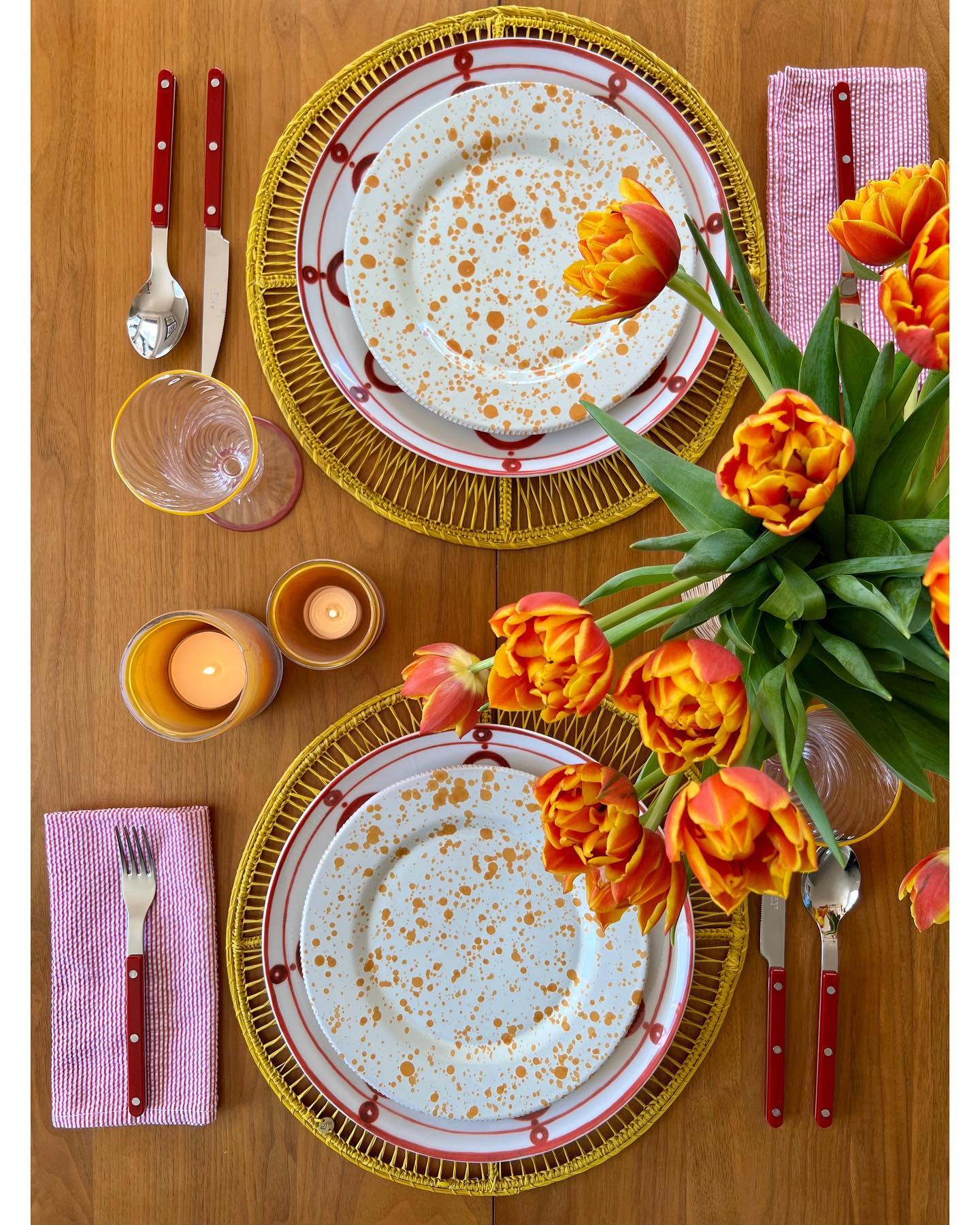
Colored flatware offers a compact way to strengthen a spring palette. Red handles frame the patterned plates here, picking up warm accents in the dishes and the orange tulips beside them.
Striped pink napkins soften the stronger colors, while round woven chargers separate the plates from the wood tabletop. Choose one handle color that already appears elsewhere in the setting and repeat it at every seat.
The consistent placement creates order around the more expressive flower arrangement. A couple of small candles add another rounded shape without filling the available space.
This approach suits a table for two particularly well: a few repeated details can make the meal feel arranged, even without a tablecloth or a large collection of decorations.