
A television can feel visually stark when it sits alone on a broad wall, but texture and contrast help it belong to the room.
These Accent Wall Behind TV Ideas show how a focused feature can connect the screen with a fireplace, shelves, or built-in displays.
Look for warm wood slats paired with dark finishes, pale stone set against charcoal alcoves, or a panel shaped to follow a sloped ceiling.
The examples also show how restrained colors and open space around accessories keep a layered wall from feeling crowded.
1. Warm Slats in a Recessed Bay
Credits: Instagram
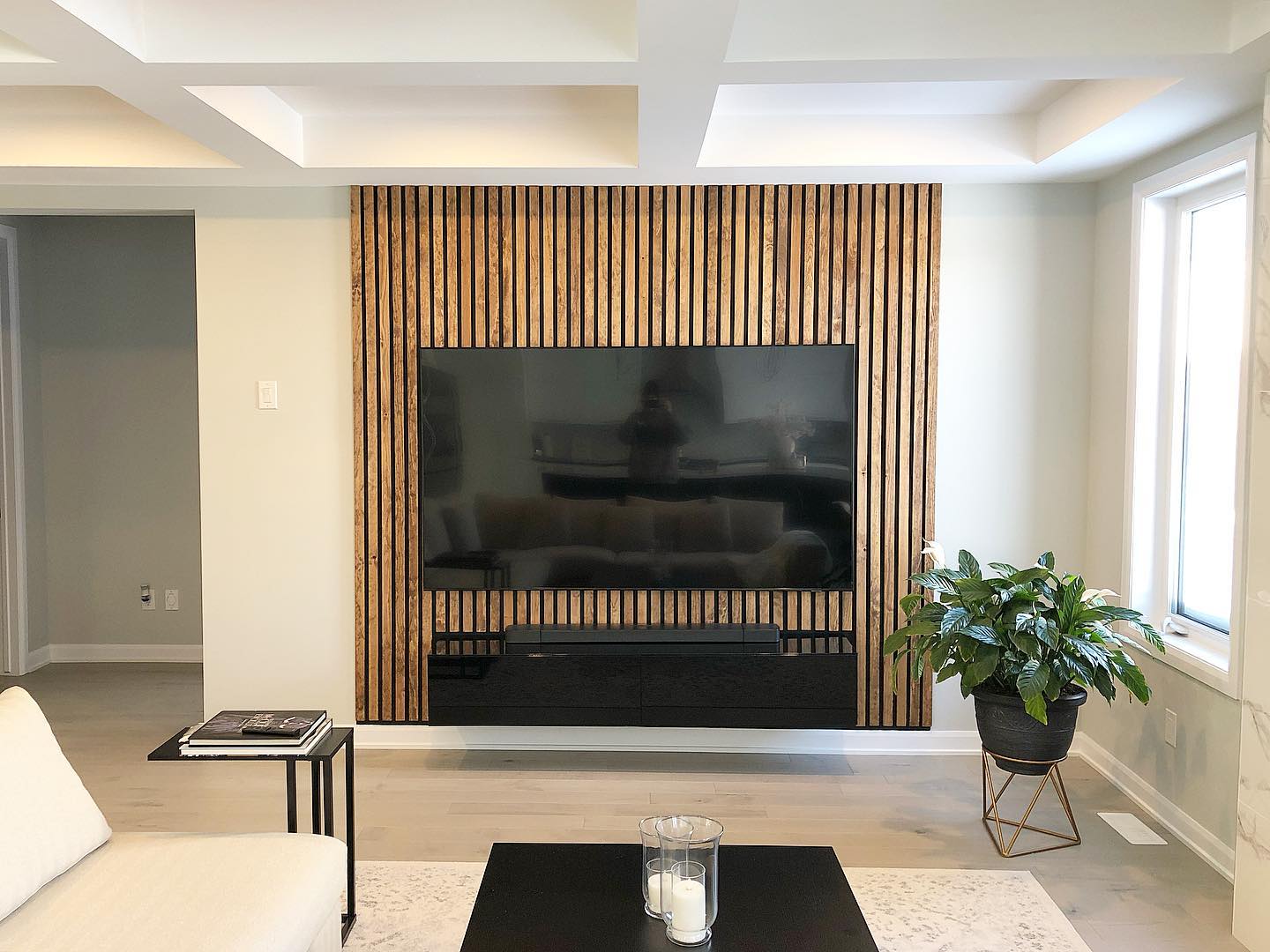
A band of vertical wood slats gives this television a backdrop that feels connected to the room's architecture. The panel fits neatly beneath the coffered ceiling, while pale walls and a white sofa leave its warm grain in focus.
A slim black fireplace repeats the screen's horizontal shape without spreading across the entire wall. Notice how the dark coffee table and slender side table echo those black rectangles at seating height.
For a similar effect, define the accent area's width before choosing the television placement. Keep adjacent paint quiet, then bring in one leafy plant to soften the straight lines.
This arrangement shows how a single textured section can establish a focal point in an otherwise quietly understated living room.
2. Pale Stone Against Charcoal Alcoves
Credits: Instagram
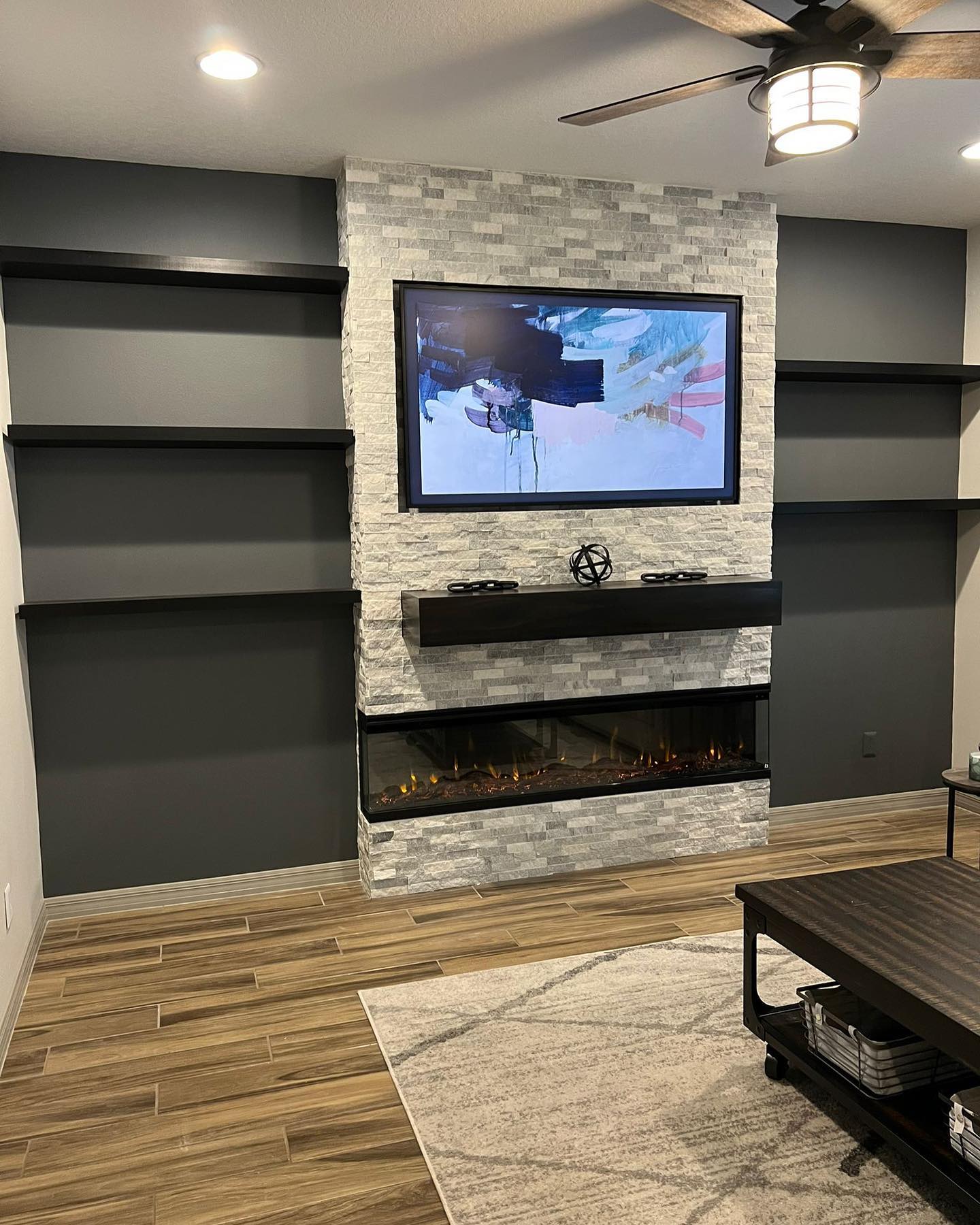
Pale stacked stone makes the central television wall stand out against deep charcoal paint on either side. Its varied texture breaks up the large screen, while long black shelves extend the composition across the room.
A thick dark mantel and recessed fireplace give the center additional weight. The wood-look floor and simple coffee table keep the scheme from feeling cold, and the light rug creates a softer pause beneath the furniture.
Borrow the contrast rather than filling every shelf: the open horizontal lines already contribute plenty of structure. Choose a stone tone that relates to your flooring, then repeat the darker wall color in a few nearby pieces.
Leaving space around accessories will help the textured center remain visually clear.
3. A Dark Center With Glowing Displays
Credits: Instagram
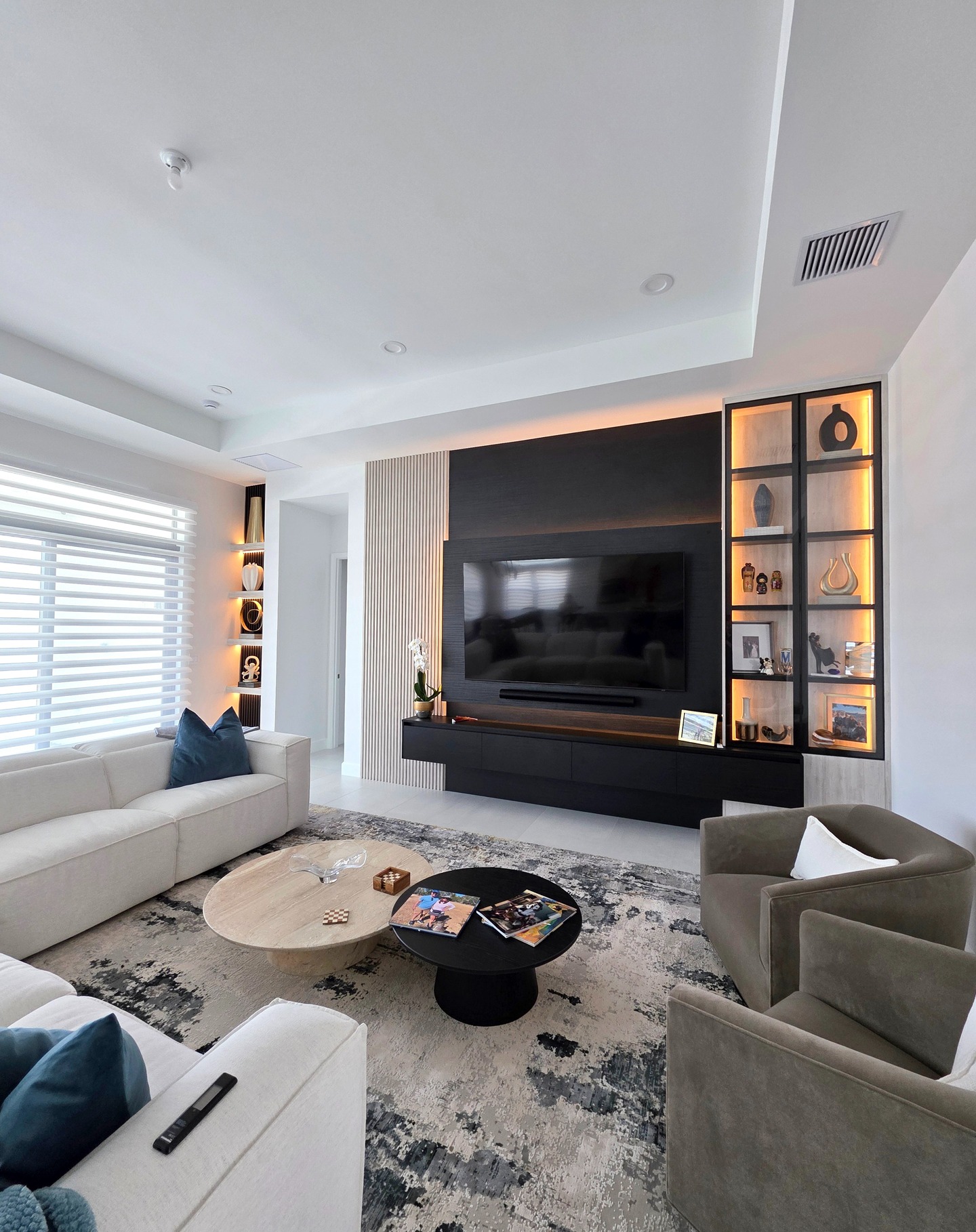
This media wall combines a broad dark center with pale vertical texture and narrow illuminated display cabinets. The television sits within the darker section, so its black outline becomes part of a larger composition.
Warm shelves frame objects and photographs, adding smaller points of interest beside the screen. Below, a floating cabinet keeps the floor visible and balances the tall details above.
White sofas, gray armchairs, and overlapping round tables soften the wall's precise geometry. To adapt the idea, choose one dominant dark finish and use lighter panels to mark its boundaries.
Reserve the brightest lighting for the display sections, where it can reveal objects without overwhelming the television. A restrained seating palette gives the materials room to stand out.
4. Black Paneling With Warm Wood Breaks
Credits: Instagram
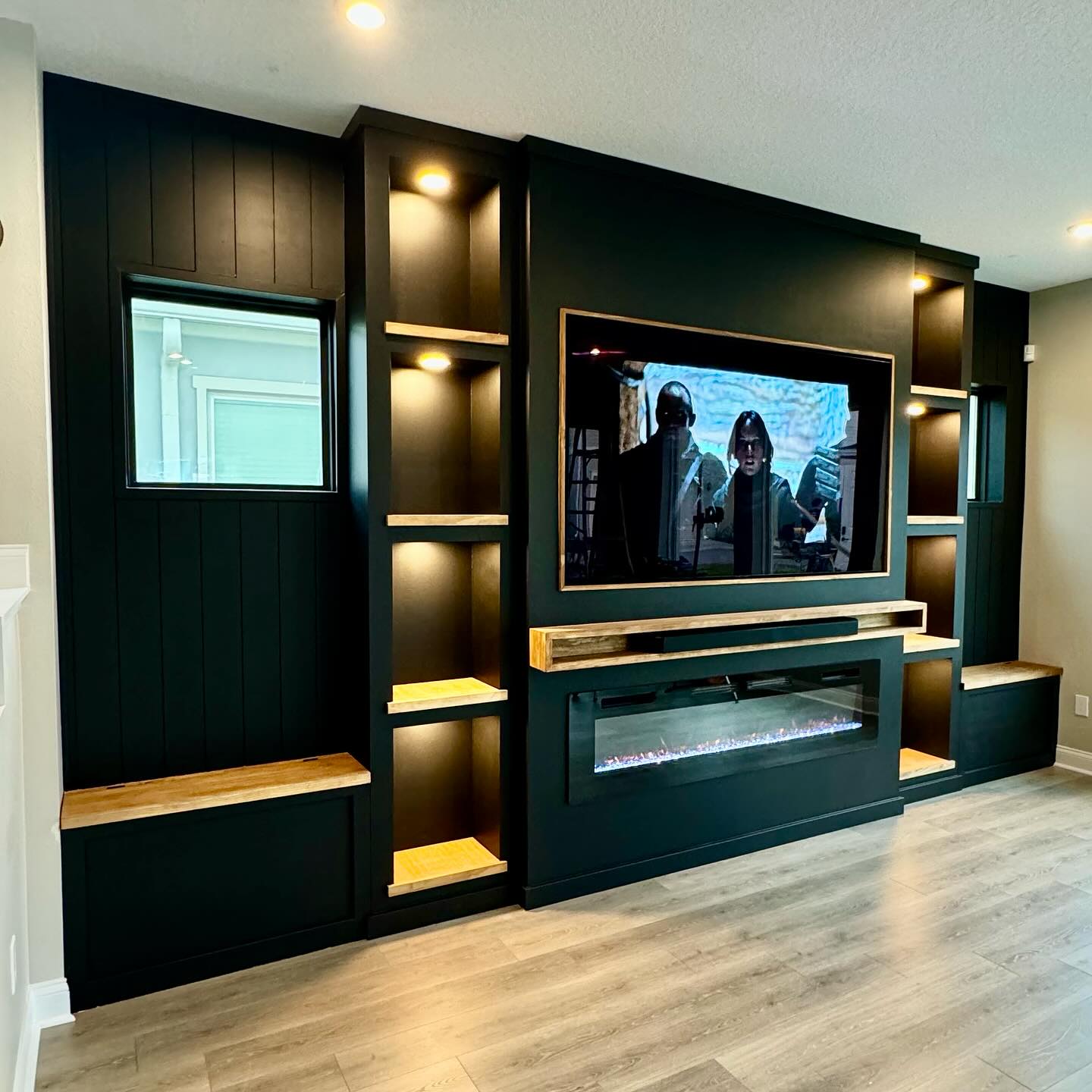
Black paneling connects the television, fireplace, shelving towers, and window surrounds into one substantial feature wall. Warm wood shelves and a matching mantel interrupt the dark finish, giving the room a welcoming rhythm.
Small lights inside the narrow towers emphasize their depth, while the windows retain clear openings through the larger composition. The pale floor provides useful contrast beneath all that black.
This is a strong approach when several wall elements need to feel related. Repeat the same finish across built sections, then limit the contrasting material to a few horizontal surfaces.
Keep the mantel and shelf thicknesses visually consistent. Even before decorative objects are added, the alternating dark planes and warm edges make the wall feel considered and complete.
5. A Slatted Chimney With Balanced Shelves
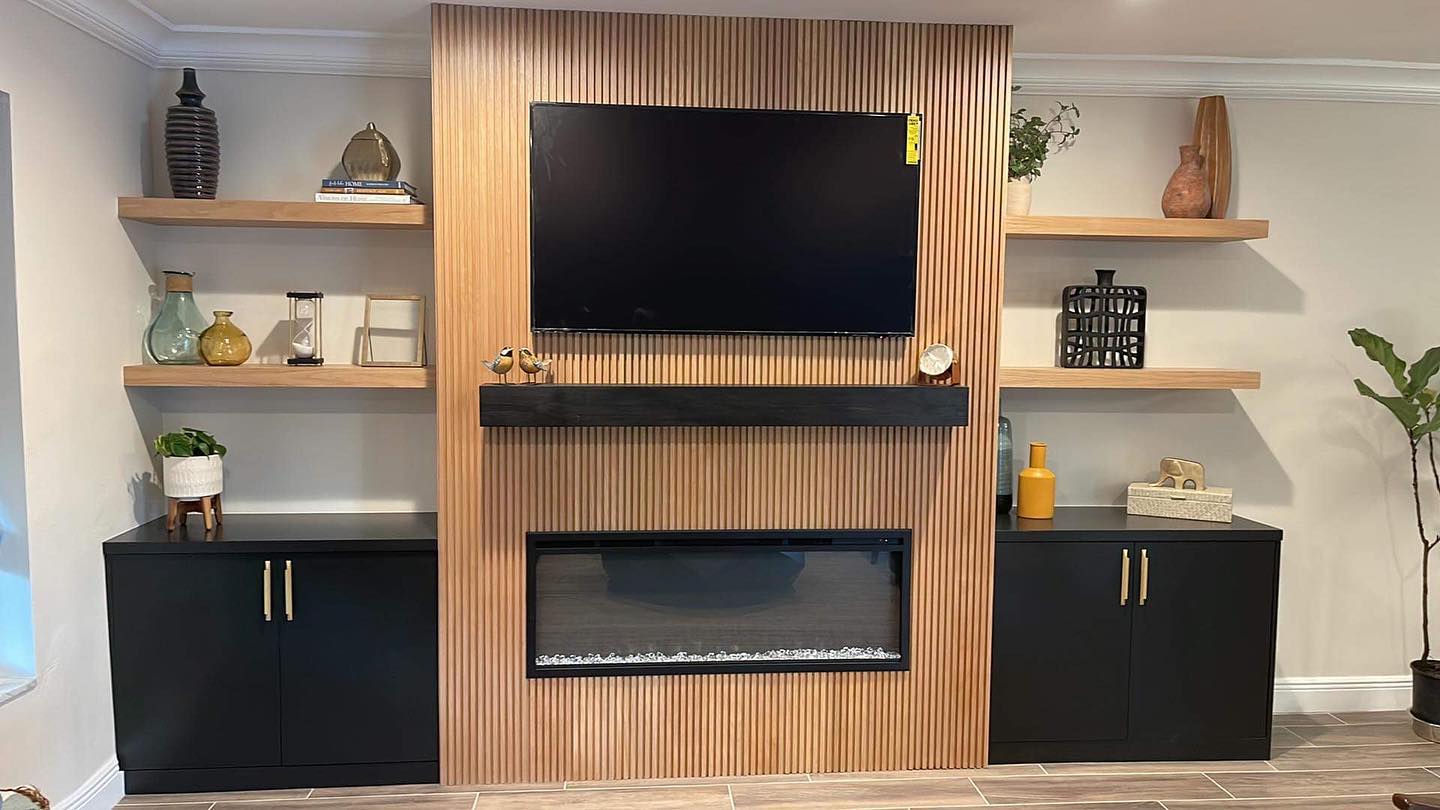
Credits: Instagram
A narrow wood slat section stretches from floor to ceiling behind this television and electric fireplace. Black cabinets sit on both sides, while simple wood shelves extend the warm material outward.
The arrangement is symmetrical enough to feel orderly, yet the different vases, plants, and small objects keep it relaxed. A black mantel creates a clear break between the two central rectangles.
For a similar wall, establish the center first and let the surrounding storage support it. Use cabinet fronts with minimal detail so the slat pattern remains the main texture.
Pair a few taller objects with smaller grouped pieces on the shelves, allowing the pale wall to show between them. The result brings warmth to an everyday entertainment area.
6. Follow the Roofline With Dark Geometry
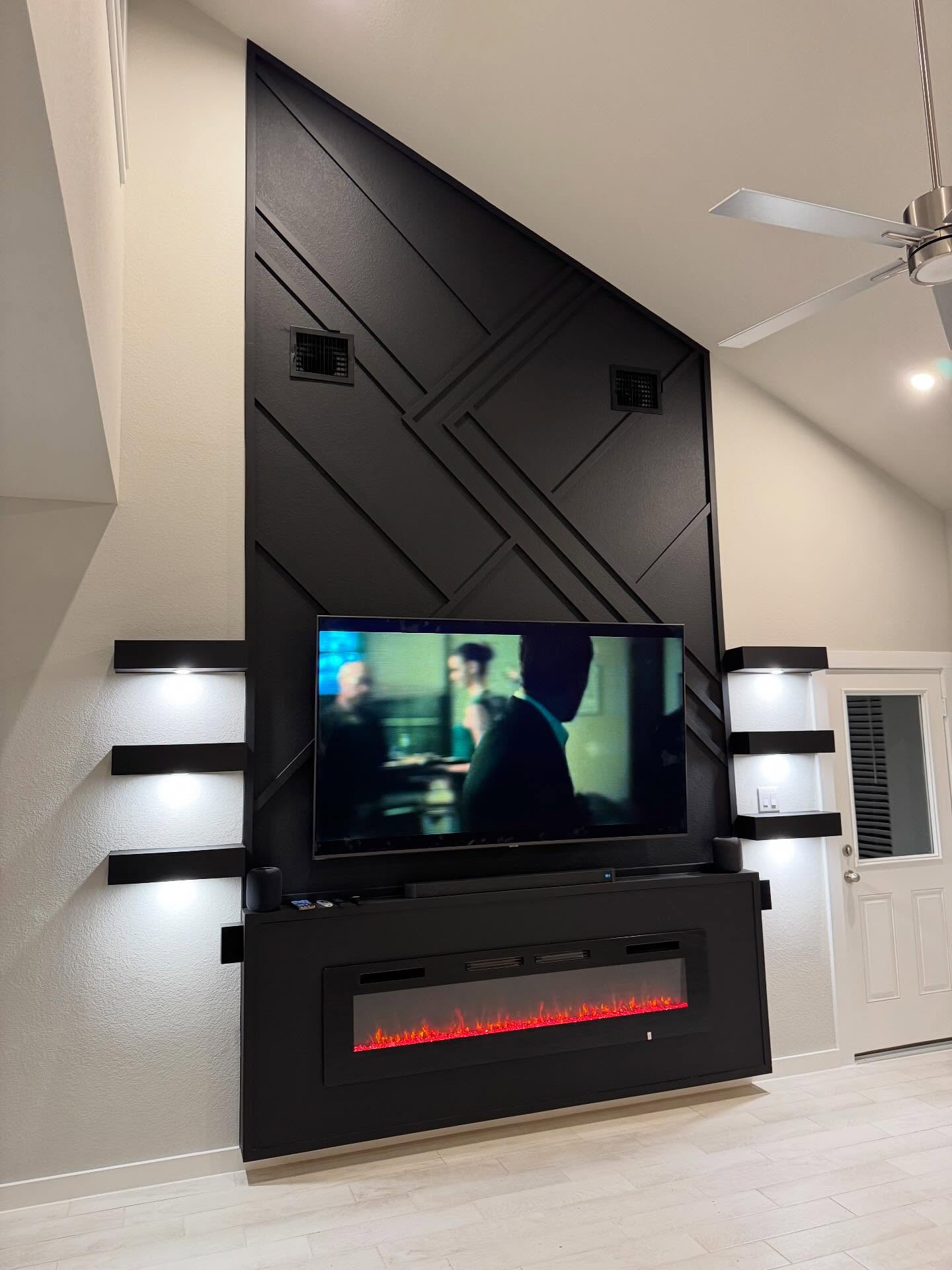
Credits: Instagram
The sloped ceiling becomes an advantage in this living room, where a tall black accent panel follows the roofline. Diagonal trim creates a geometric pattern above the television, giving the otherwise empty upper wall a clear purpose.
A projecting fireplace section grounds the screen, and short floating shelves spread outward on both sides. Their bright undersides make a sharp contrast with the dark center.
Pale surrounding walls and flooring keep the overall effect readable. If your room has an uneven ceiling height, consider letting the accent shape respond to it rather than imposing a standard rectangle.
Keep the strongest pattern above the viewing area, and repeat the same dark color across the central sections for a connected, architectural finish throughout.
7. Tall Tonal Panels Beside a Fireplace
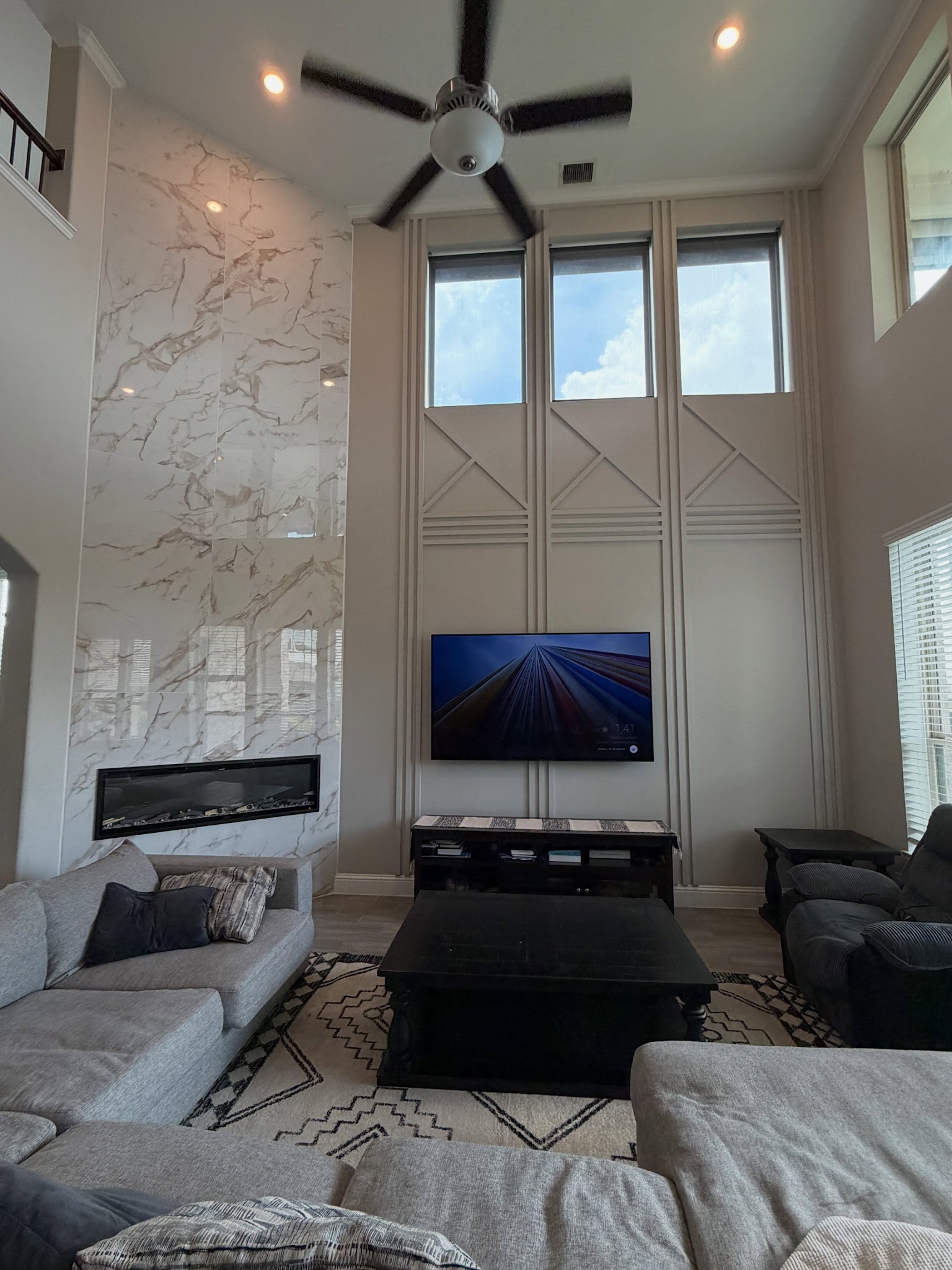
Credits: Instagram
This double height living room gives the television its own paneled backdrop beside a tall, veined fireplace wall. Slim vertical borders and angled details draw the eye upward toward the high windows.
Because the trim and wall share a muted neutral color, the pattern adds structure without competing with the neighboring surface. Gray seating and a dark coffee table establish a comfortable gathering area below.
The television remains a clear black rectangle within the lighter composition. To translate the idea, use tone on tone molding when the room already includes a dramatic material nearby.
Carry a few panel lines upward to acknowledge the ceiling height, then leave the lower viewing zone relatively calm. The contrast comes from depth and proportion.
8. Dark Slats Around a Pale Fireplace
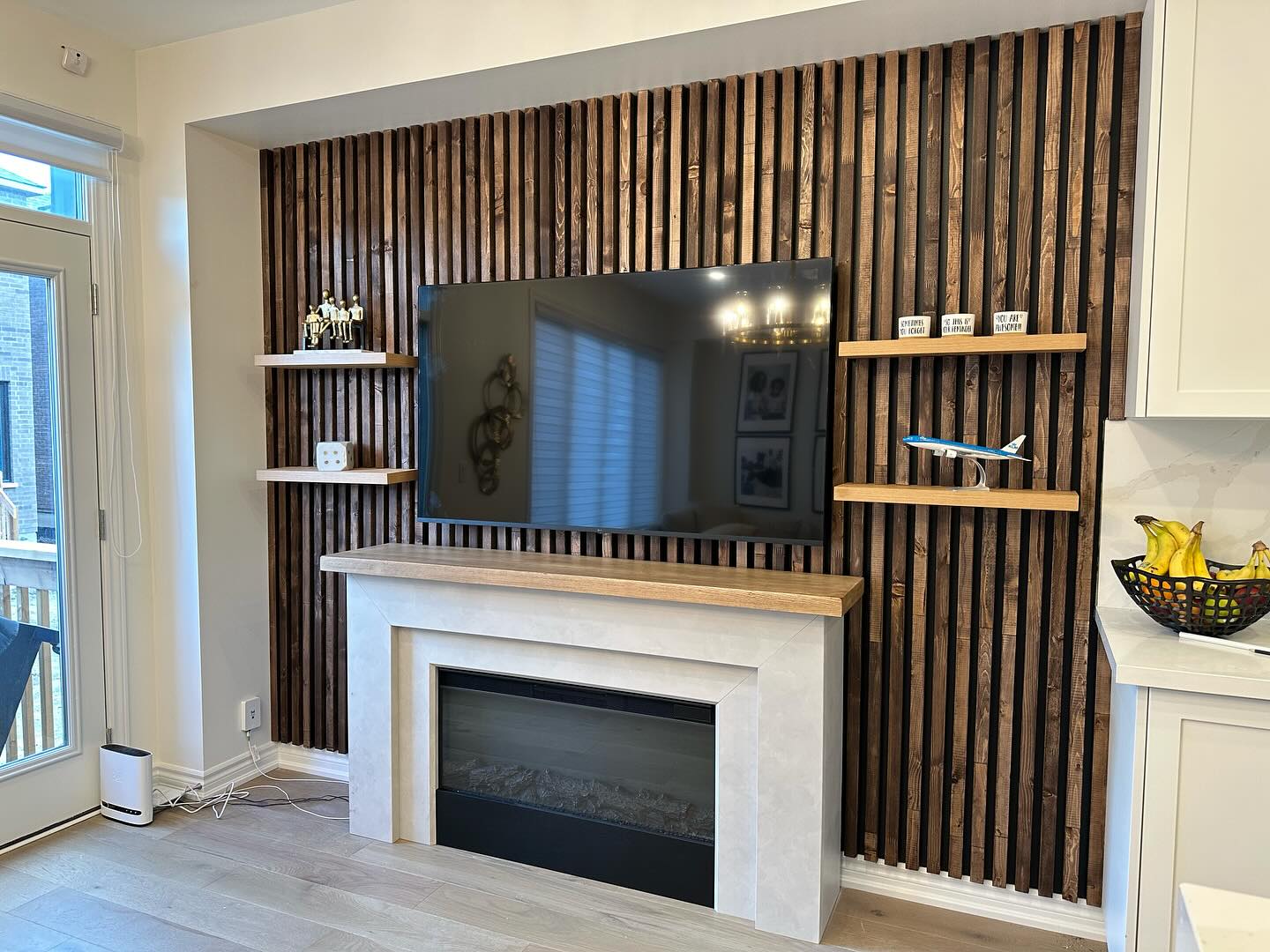
Credits: Instagram
Vertical wood strips on a dark backing turn this television wall into a richly textured focal point. The pale fireplace surround stands forward, with a warm wood mantel linking it to the slats behind.
Short shelves on either side of the screen hold small objects without covering much of the pattern. A glass door brings daylight across the finish, revealing the alternating light and dark lines.
This combination works especially well when an existing light fireplace needs a stronger setting. Keep the surround simple, repeat the mantel's wood tone in the shelves, and let the backing color supply contrast.
The television then shares the wall with several related elements instead of appearing as a lone rectangle above the fireplace opening.
9. Light Cabinets With Slatted Display Niches
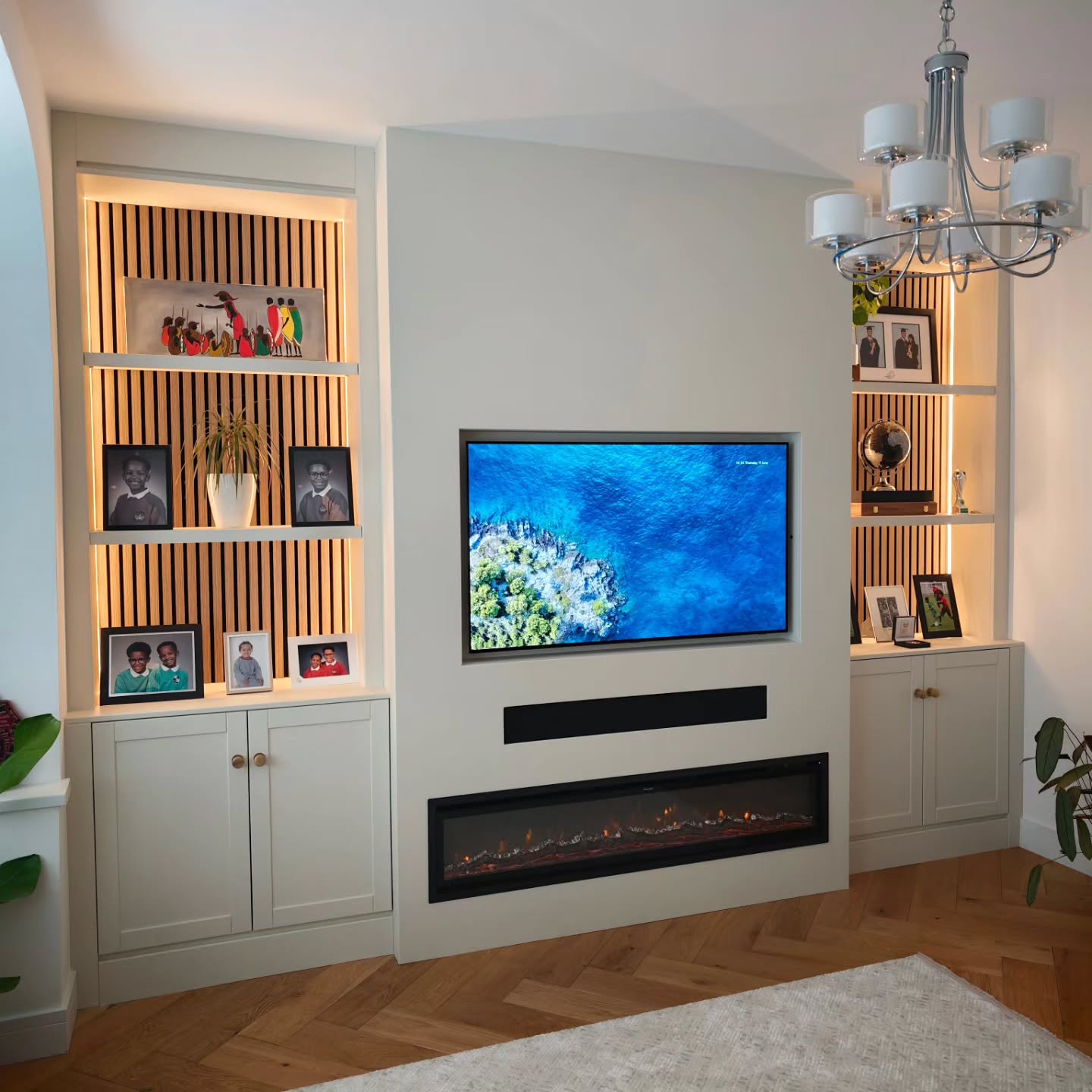
Credits: Instagram
Two tall display niches bring warm wood texture and gentle lighting to this pale media wall. The television sits on a smooth central section above a slim soundbar and long fireplace, giving each feature a distinct place.
Lower cabinets keep the composition grounded, while family photographs make the side shelves feel personal. The herringbone floor adds another warm pattern without repeating the vertical lines exactly.
Try this balance if you like wood slats but prefer a lighter overall room. Confine the texture to the shelving backs, use a quiet cabinet color, and space photographs so each remains visible.
Keeping the center comparatively plain lets the screen function comfortably while the illuminated niches provide interest when the television is switched off.
10. Turn the Whole Wall Into a Frame
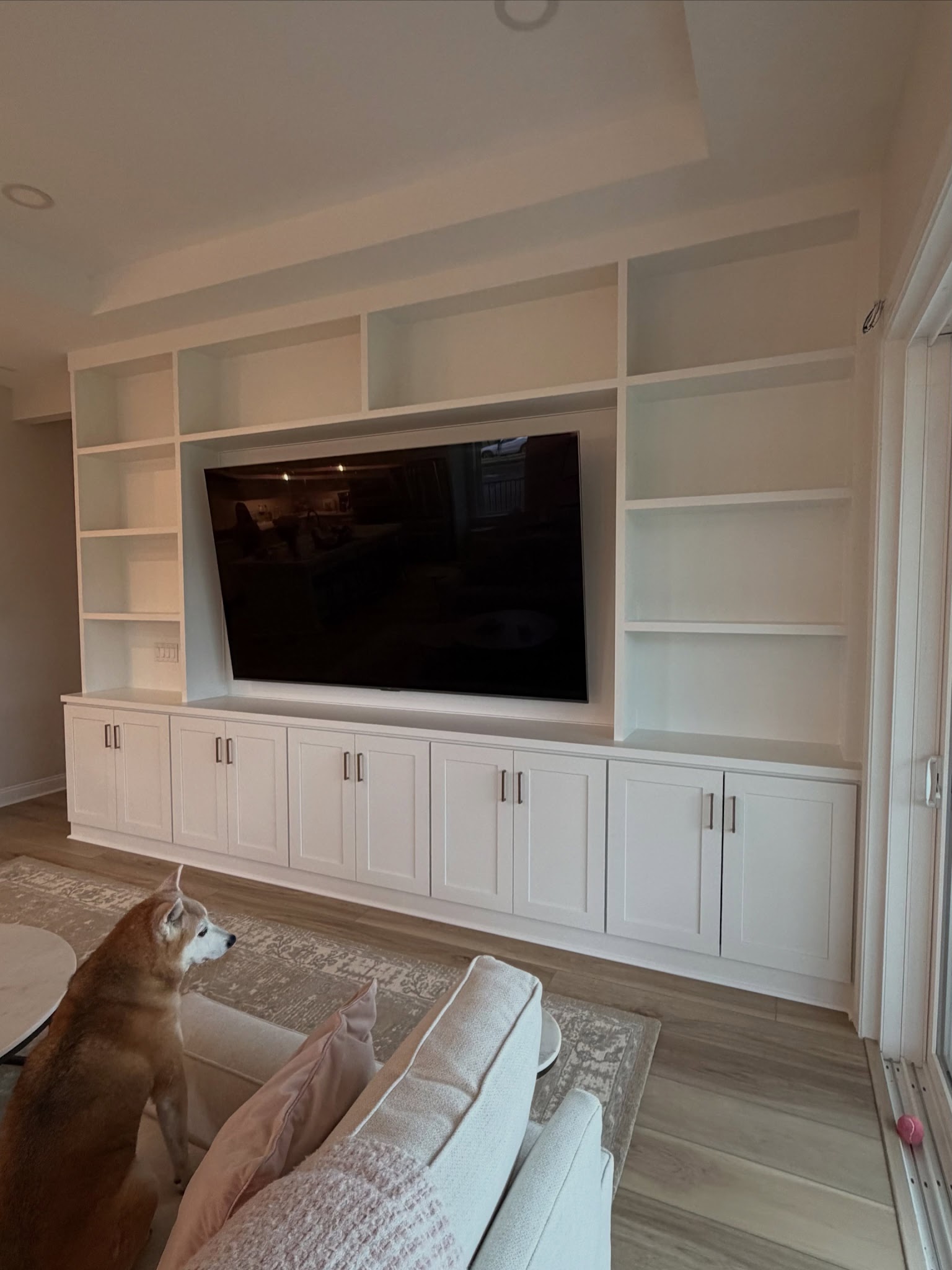
Credits: Instagram
A broad white built-in gives this large television a place within the room's architecture. Open shelves surround the screen, and a continuous row of paneled cabinets supplies a solid base.
The pale finish relates closely to the adjacent walls, so the accent comes from depth, repetition, and careful framing rather than a strong color change.
Light seating and a patterned rug keep the foreground soft. This approach suits a room where the television needs generous storage around it.
Start with the screen opening, then work outward with balanced shelf widths and a consistent cabinet line. Leave some compartments empty as you begin styling.
The structure already creates a complete composition, and a few well-spaced objects will preserve its calm character.
11. Olive Shiplap Between Bright Windows
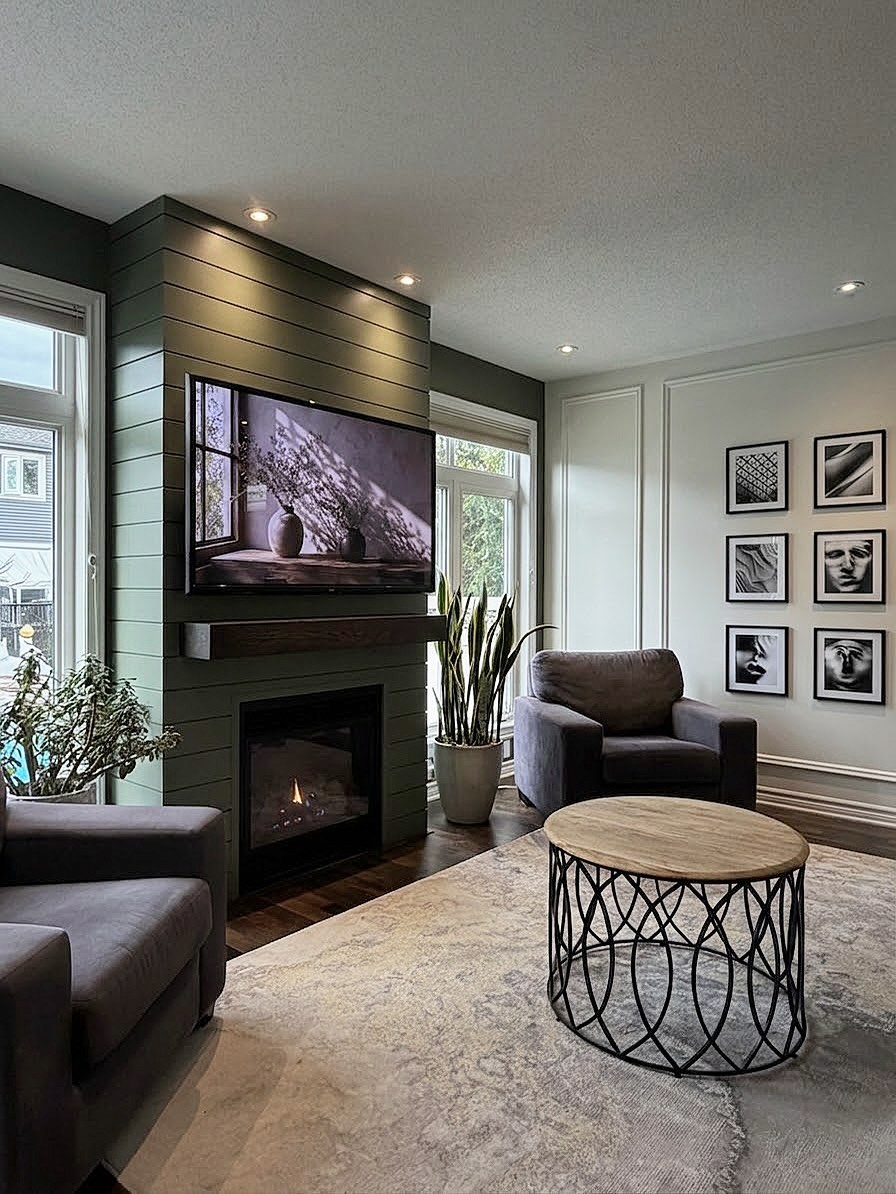
Credits: Instagram
Deep olive shiplap gives this television a defined home between two tall windows. Horizontal boards wrap the projecting fireplace wall, while a dark mantel adds another quiet line beneath the screen.
The green continues above the windows, connecting the accent to the room without covering every surface. Pale picture frame molding on the adjoining wall supplies a lighter counterpoint.
Notice how the gray chairs and round coffee table keep the seating area soft beside those straight architectural edges.
To borrow this approach, concentrate your strongest color on the chimney section and carry a small amount into nearby trim or wall bands.
Let daylight reveal the texture, and keep accessories low enough that the television remains the clear central design feature.
12. Warm Slats With Golden Shelf Frames
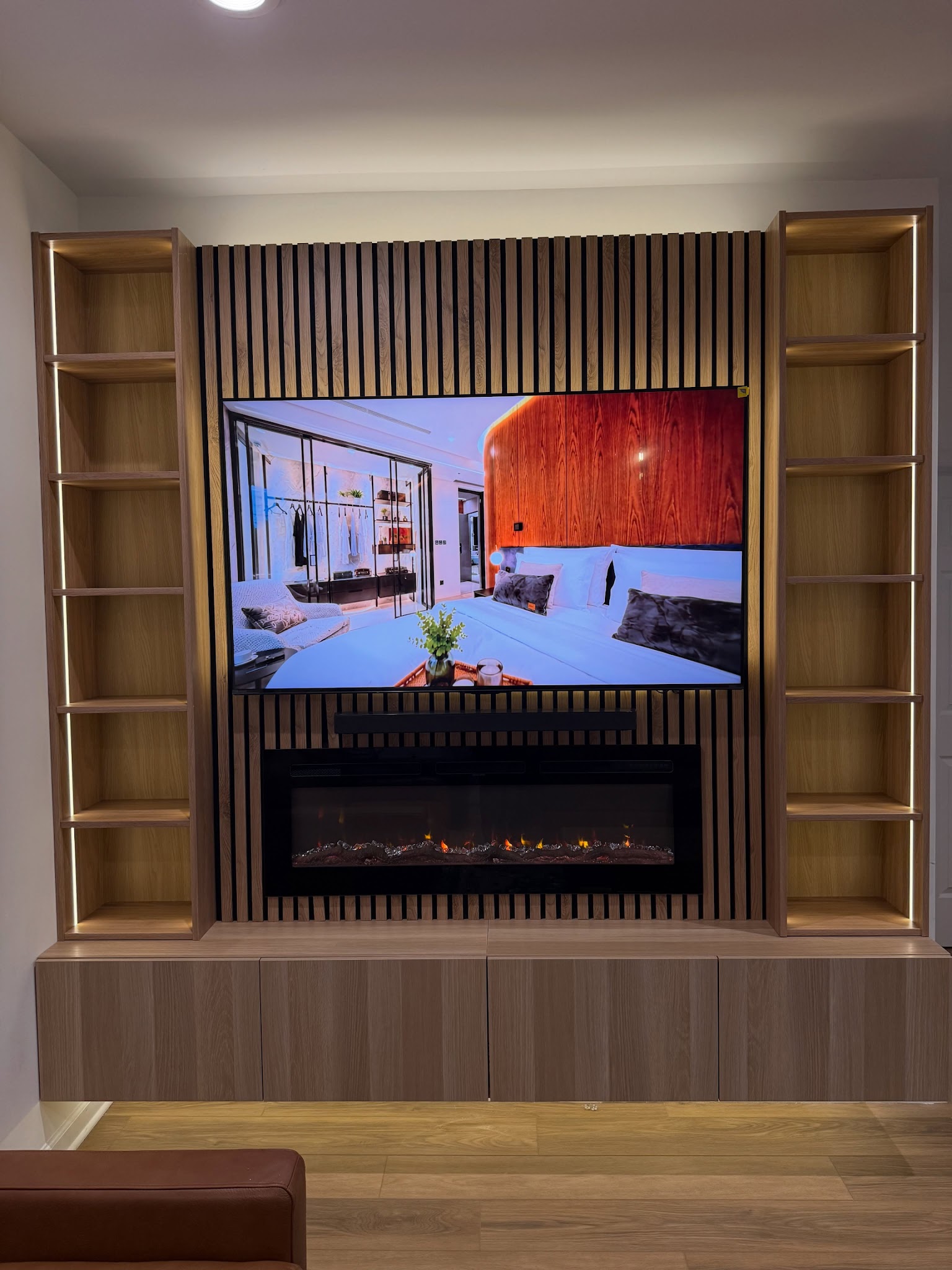
Credits: Instagram
Slim golden frames give this wood toned television wall a different kind of definition. They outline two tall shelving columns, adding a precise edge beside the closely spaced vertical slats.
The screen and fireplace occupy the center, while the long cabinet below repeats the warm brown palette. A glow beneath the cabinetry separates its solid front from the floor.
This arrangement works as an idea for a wall that needs both texture and a little shine. Keep the metallic detail narrow so it supports the larger surfaces.
Use shelves with generous open areas, then choose a few objects with simple silhouettes. Repeating the same vertical rhythm across the center and lower cabinet helps the different elements feel connected and cohesive.
13. Add Blue Light to a White Grid
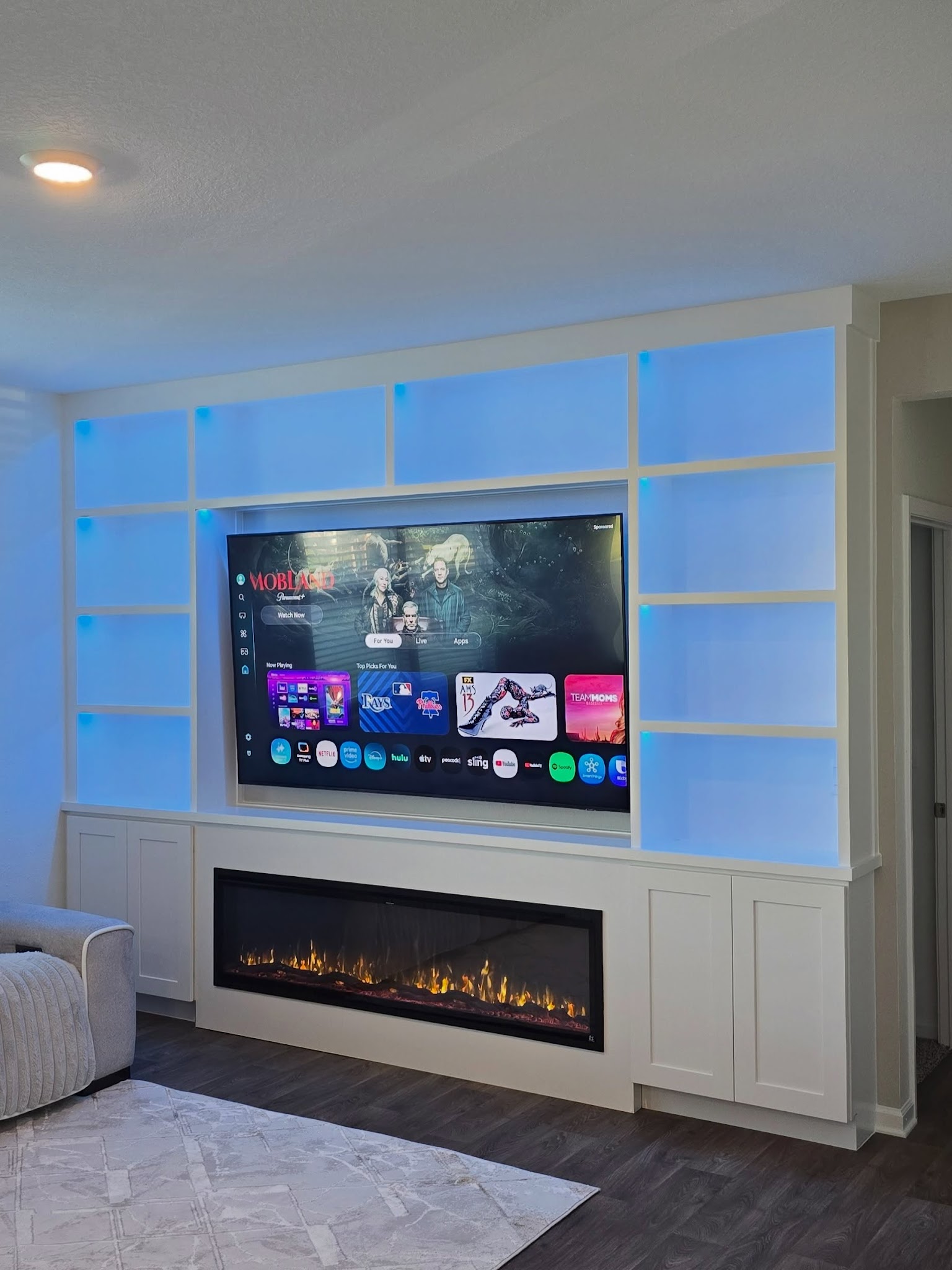
Credits: Instagram
Blue light turns the open shelves around this television into the accent itself. The white framework stays simple, creating a grid of rectangular compartments above matching lower cabinets.
At the center, a black screen and narrow fireplace give the pale wall two strong horizontal anchors. The color appears inside the shelving rather than across every surface, so the structure remains easy to read.
Borrow the idea when you want a neutral media wall with a more playful evening setting. Start with consistent shelf spacing and a restrained cabinet design.
Keep decorative objects sparse enough for the illuminated background to show. A light sofa and patterned rug soften the crisp lines, making the finished wall feel part of a comfortable room.
14. Ground a Gray Feature With a Wood Ledge
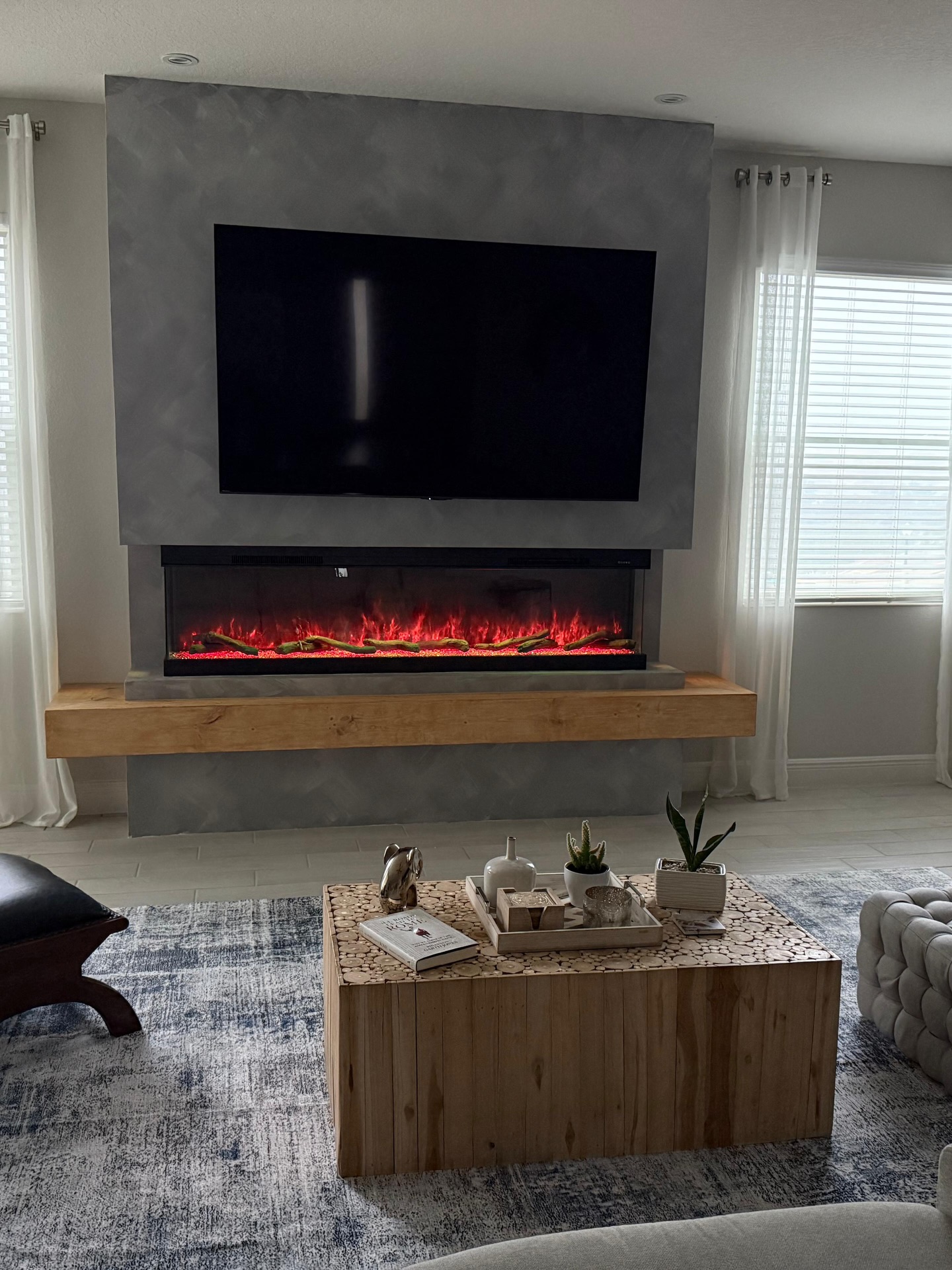
Credits: Instagram
A broad wood toned ledge brings warmth to this gray television wall. The projecting center has a softly mottled finish, creating interest without a busy pattern behind the screen.
Below the television, the long glass fireplace sits above that substantial horizontal shelf. Pale curtains and nearby windows keep the darker center from feeling isolated.
The wood coffee table repeats the ledge's tone at seating height, creating a useful connection across the room. For a similar composition, choose one textured wall finish and give it a clear, simple outline.
Let the lowest horizontal element extend slightly beyond the center to establish balance. A few small accessories on the coffee table are enough when the wall already supplies texture, contrast, and warmth.
15. Frame the Screen With Textured Light Niches
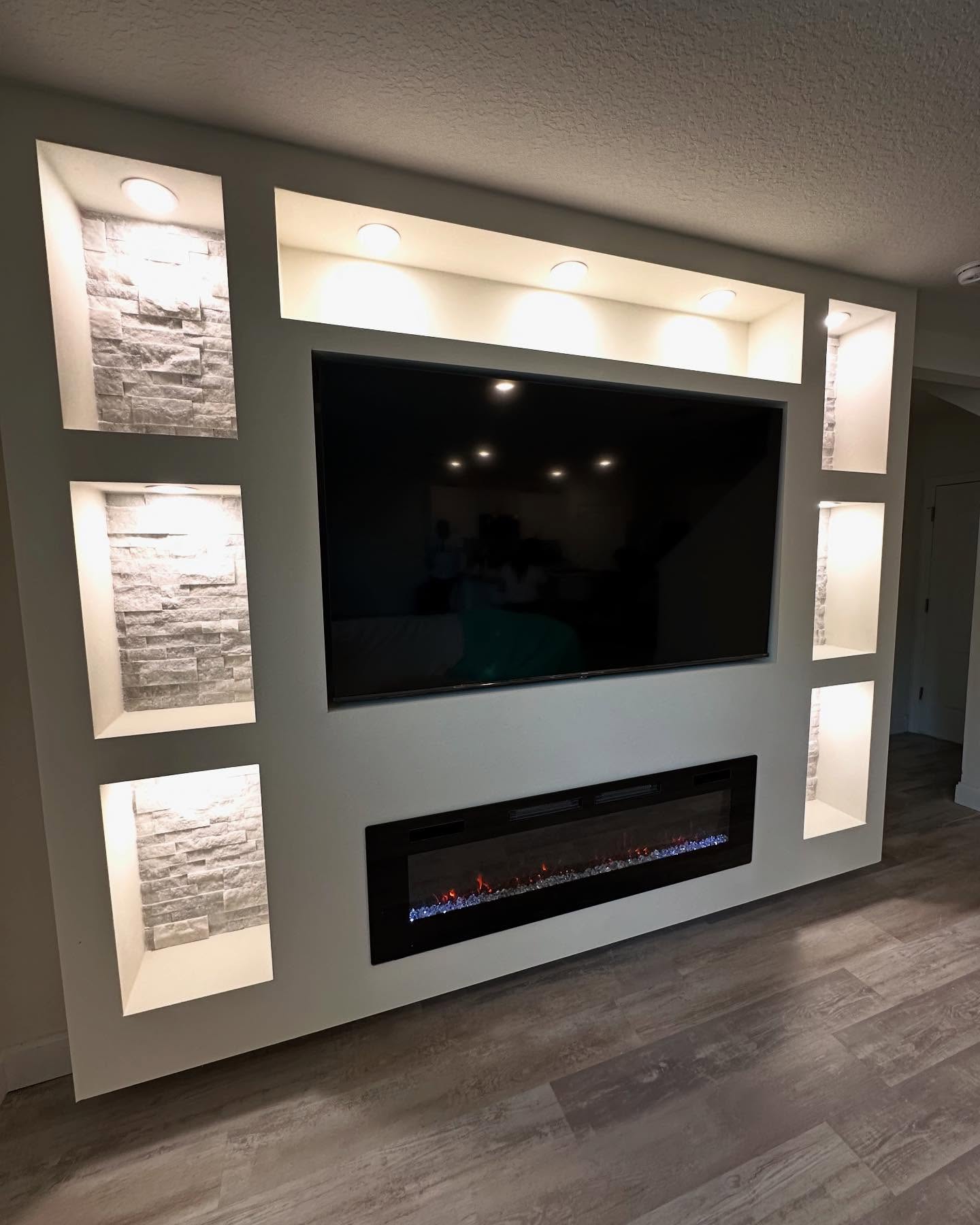
Credits: Instagram
Instead of covering the entire wall in one texture, this design places pale stacked surfaces inside a series of illuminated niches. Three narrow openings rise on each side of the television, while a wider recess stretches across the top.
Smooth gray borders give the composition a strong outline and keep the textured sections contained. The dark television and fireplace remain the central pair.
This is a useful direction when you want depth around a screen without filling shelves with accessories. Treat the empty recesses as part of the design, allowing light and surface variation to do the decorating.
Keep the surrounding floor and walls relatively quiet. Repeating the niche widths and spacing gives this dramatic feature its sense of order.
16. Balance One Shelf Tower With Dark Slats
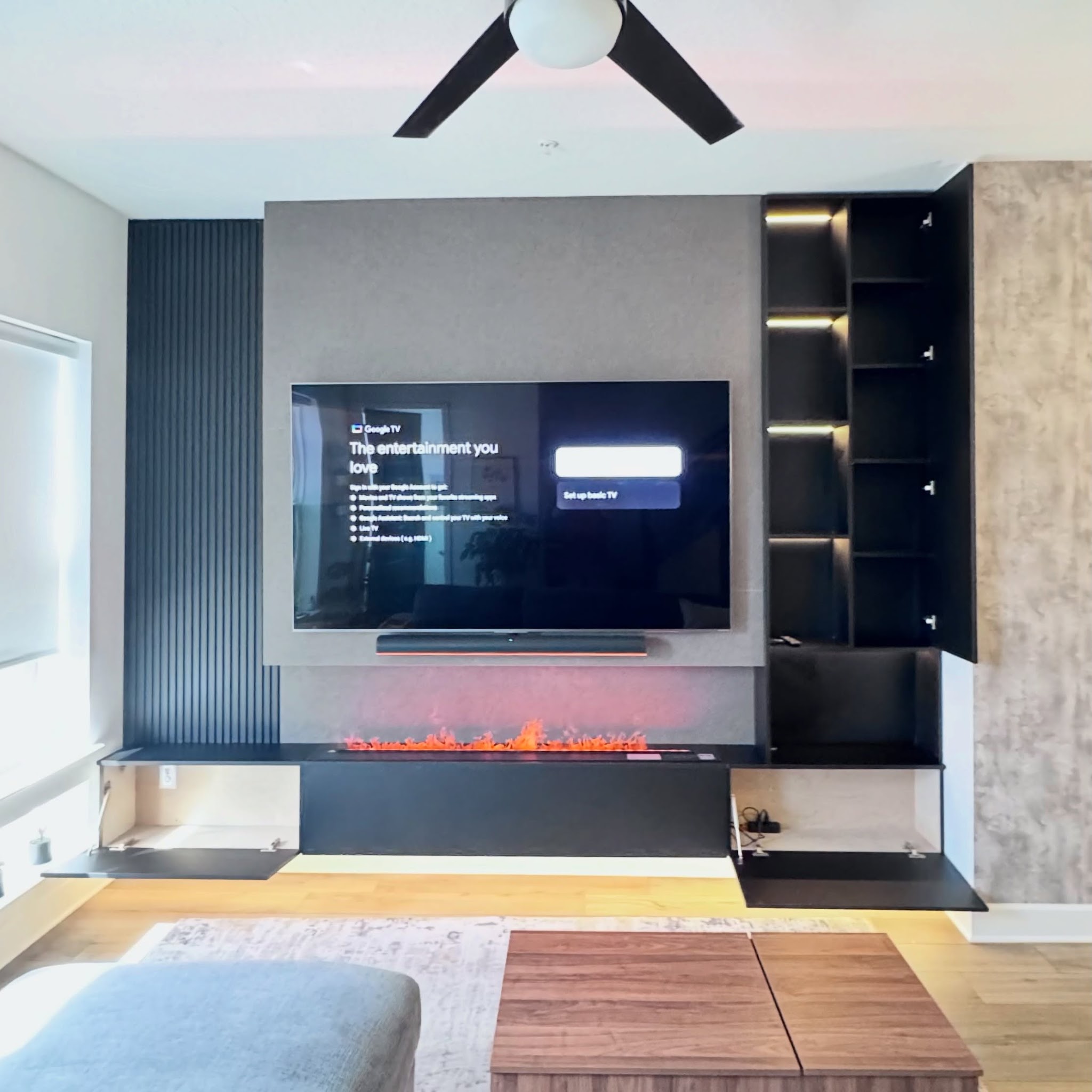
Credits: Instagram
An off-center shelf tower gives this media wall its distinctive balance. A broad gray panel holds the television, with black vertical slats on one side and illuminated dark shelves on the other.
The fireplace runs underneath, while the low cabinet stretches across the full arrangement. Open areas at the bottom and a warm glow beneath the center keep the substantial wall from appearing completely solid.
For a similar effect, think about visual weight rather than matching both sides. Let a narrow display tower counter a wider textured panel.
Repeat the darkest finish along the base to connect them. The wood coffee table, pale seating, and clear floor area provide a calmer foreground for the layered shapes across the feature wall.
17. Stretch a Low Ledge Across the Wall
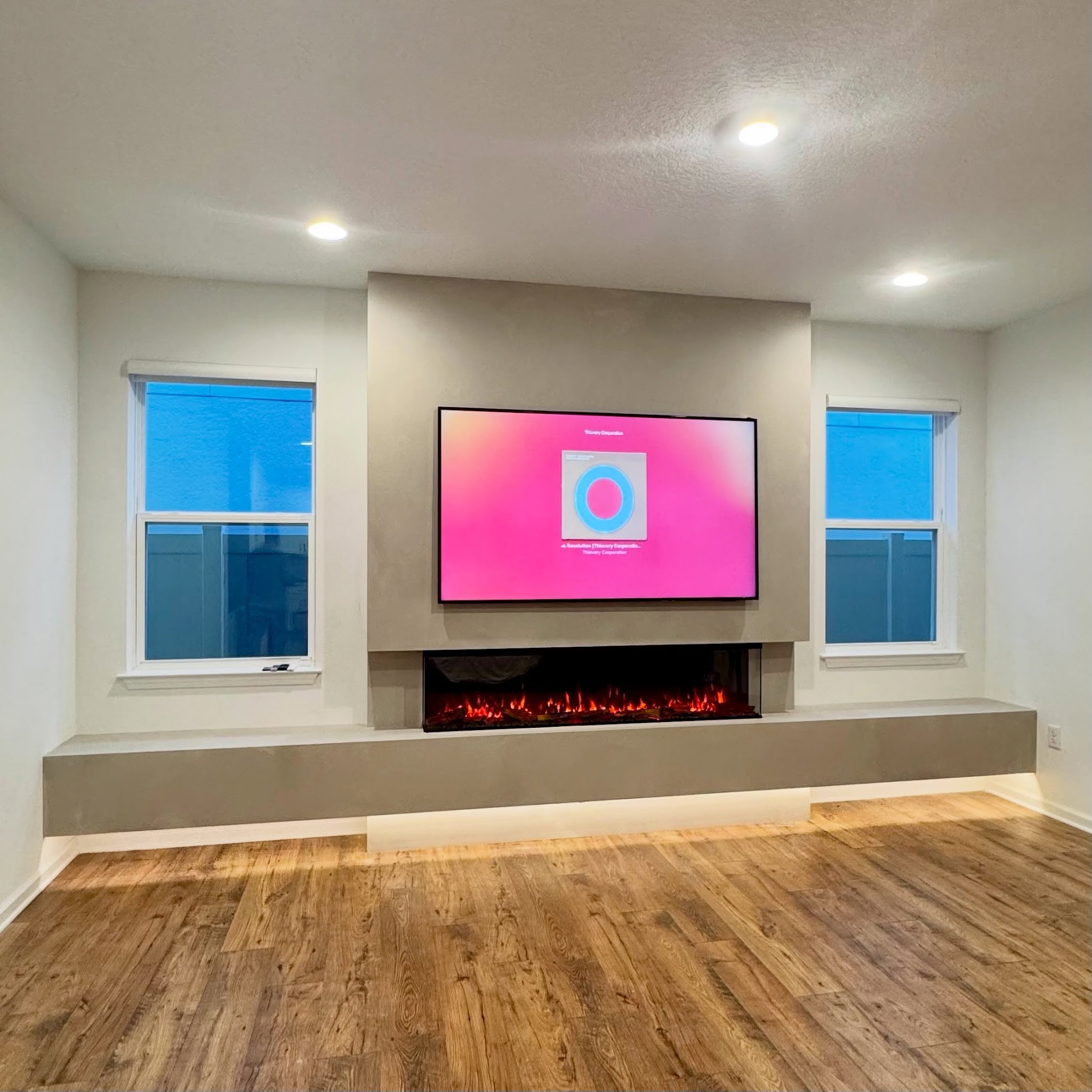
Credits: Instagram
A long, low ledge changes the proportions of this simple television wall. It runs beneath both windows and the central fireplace, connecting the whole elevation with one horizontal line.
Above it, a projecting panel frames the screen in a soft neutral finish. The owner identifies that surface as limewash, and its subtle variation gives the otherwise minimal arrangement a little movement.
Warm lighting beneath the ledge lifts its visual weight from the wood toned floor. To adapt this idea, keep the center quiet and let the extended base establish the width.
Avoid adding several competing shelves above it. With the windows left clear and the main shapes carefully aligned, a restrained material palette can still create a substantial focal point.
18. Set a Charcoal Inset Inside Olive Cabinetry
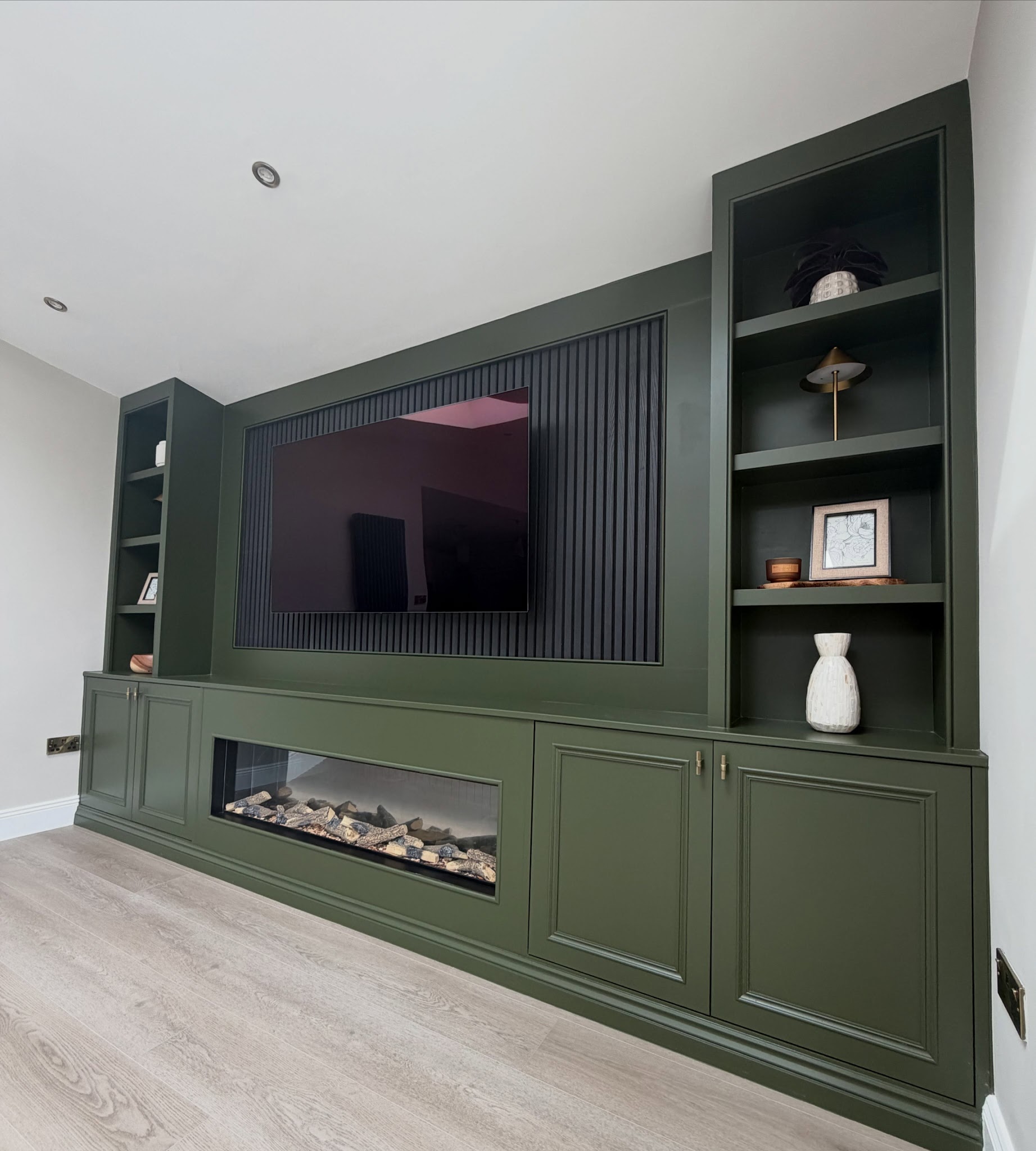
Credits: Instagram
Olive cabinetry surrounds a charcoal slatted inset in this television wall, creating contrast without leaving an earthy palette. The darker rectangle gives the screen a clear setting, while slim shelving towers provide a softer transition toward the room's edges.
Below, paneled doors frame a long fireplace with visible logs. A small brass toned lamp and pale vase add variety without crowding the shelves.
The idea to borrow is the combination of two related dark finishes: one smooth and one finely ribbed. Use the textured surface only behind the television so it remains a deliberate accent.
Keep the outer cabinetry simple, then repeat a few warm metallic details in handles or lighting to bring the layered green and charcoal scheme together.
19. Contrast Cream Built-Ins With Muted Teal
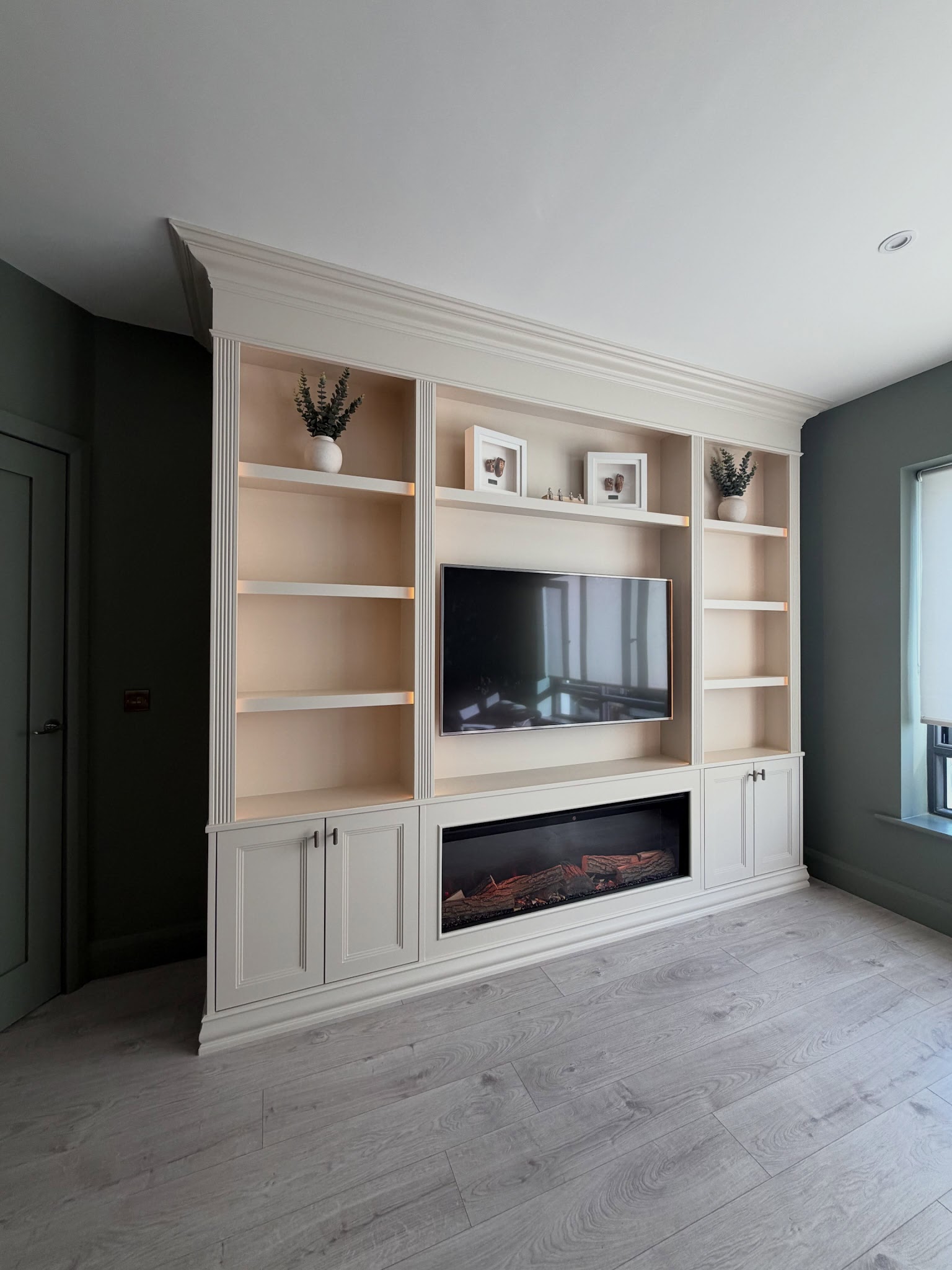
Credits: Instagram
Cream shelving stands out against muted teal walls in this carefully framed media area. Fluted vertical borders and a substantial top molding give the built-in unit an architectural presence, while warm shelf lighting brings gentle depth to its pale interior.
The television and fireplace form a dark central stack between the open display sections. Nearby wall molding echoes the cabinet doors, tying the accent into the rest of the room.
To use this idea, choose contrasting colors that still feel soft together. Keep the strongest detail at the outer edges of the unit, then leave the shelves relatively open.
A few framed photographs and two pale vases provide enough personality while allowing the cream structure to remain the main feature.
20. Give White Shiplap a Warm Screen Halo
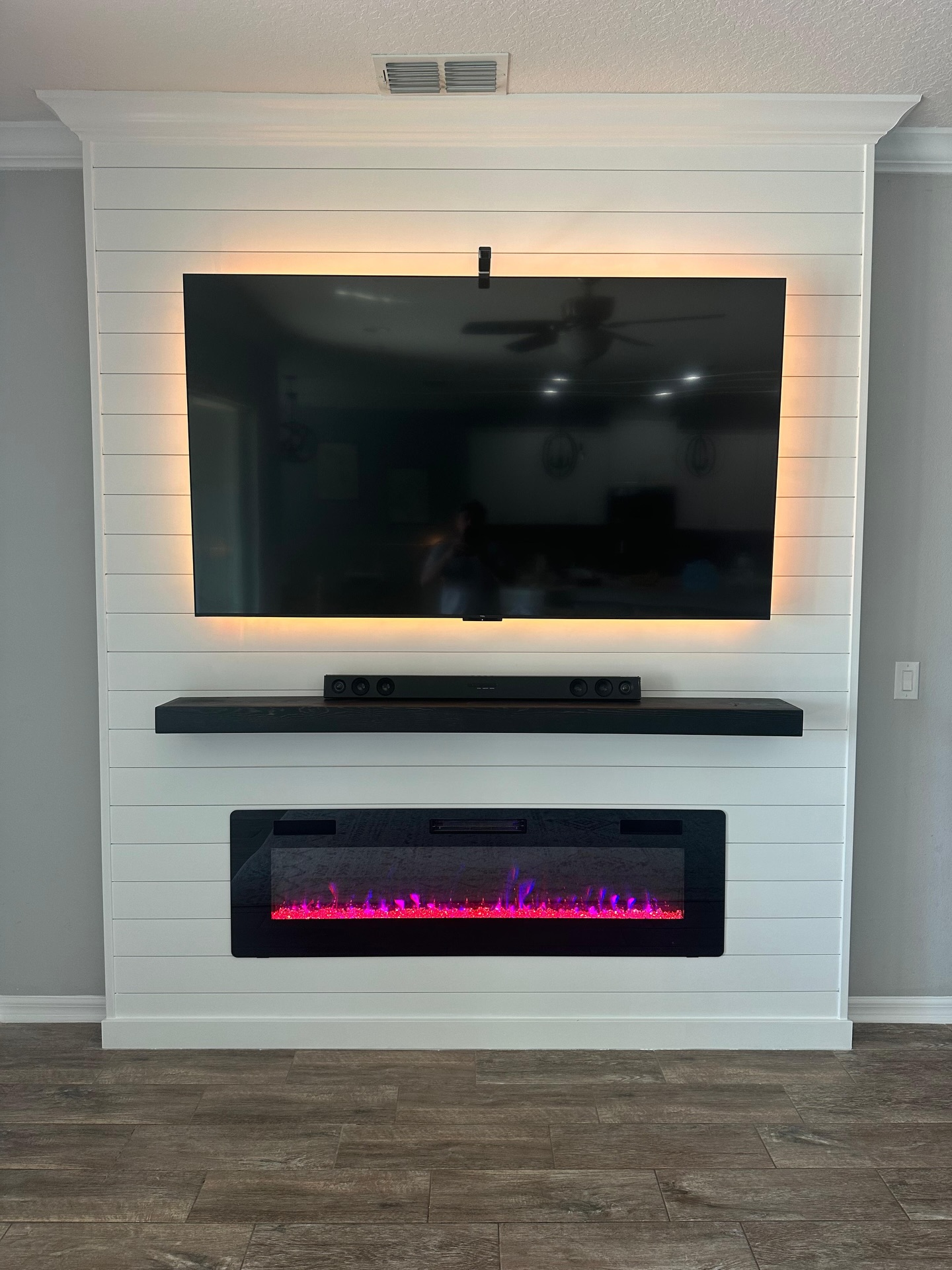
Credits: Instagram
A warm halo behind the television turns this white shiplap feature into a clear focal point. Horizontal boards provide a quiet pattern, while the glow traces the screen's edges and separates its black surface from the pale wall.
A slim dark shelf sits below, repeating the width of the television without adding much visual weight. The linear fireplace adds another dark rectangle near the base.
To borrow this arrangement, keep the wall treatment simple and let the lighting create the contrast. Match the shelf to the darker elements so the shapes feel related.
The projecting section and top molding give the feature a finished outline, while the surrounding gray walls allow its white finish and warm light to stand out.