
A coffee table has to do more than fill the space between the sofa and chairs: it should leave room for daily use while helping the seating area feel connected.
These Coffee Table Ideas show how shape, material, and a few well-chosen objects can make that balance easier to find.
See how a round table can soften a close seating group, a lower shelf can display books, or a colored top can add playfulness without competing with the rest of the room.
Some looks keep the surface mostly clear, while others build interest through texture, reflective finishes, or patterned accessories.
1. Let a Large Wood Top Breathe
Credits: Instagram
A generous wood coffee table can make a living room feel settled without demanding a crowded display.
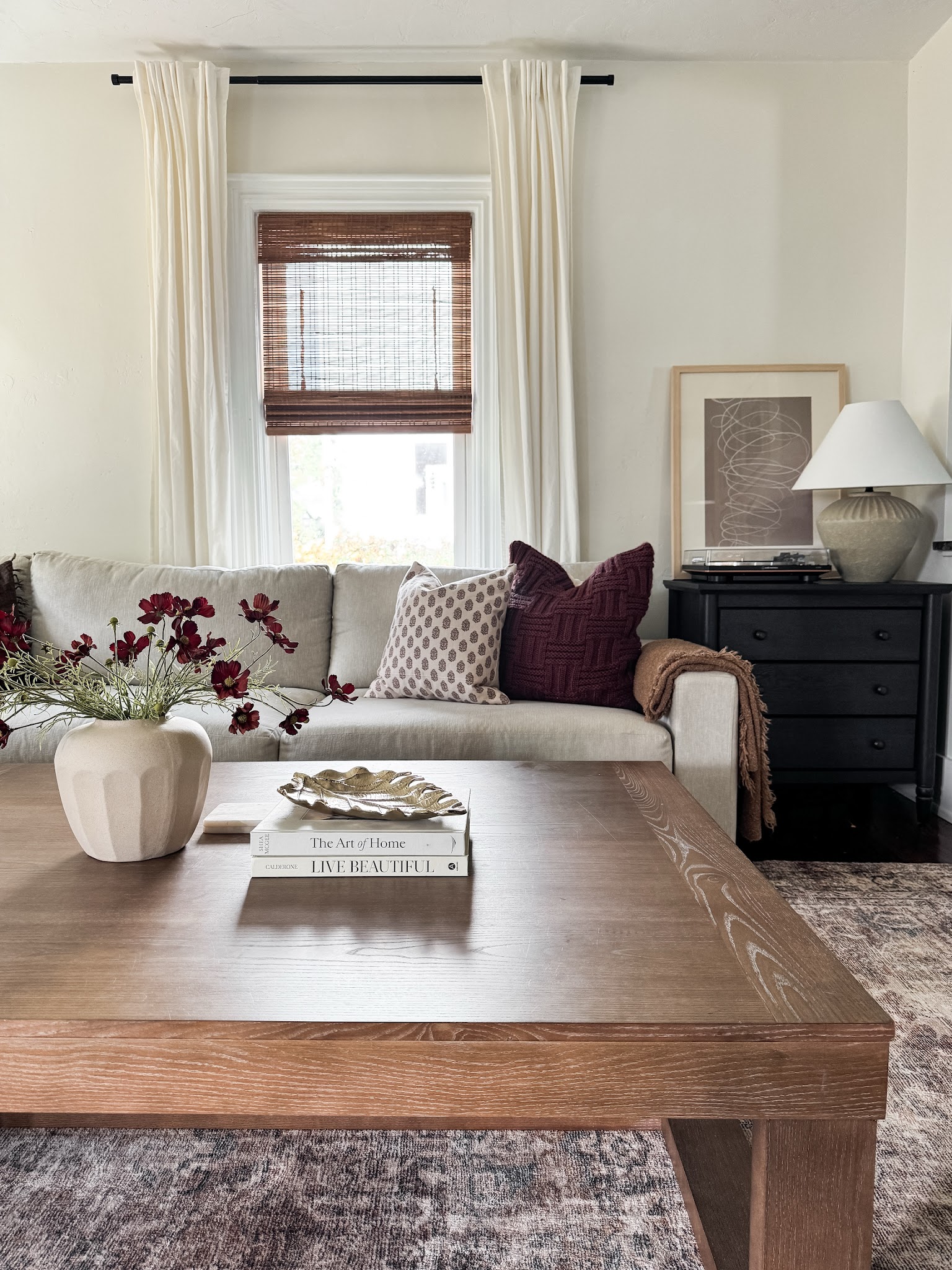
Here, the broad rectangular top sits in front of a cream sectional, with a pale vase and a short stack of books gathered near the middle.
Burgundy flowers echo the darker pillows behind them, bringing the table into the room's quiet fall palette. The wide border of exposed wood is just as important as the objects.
It gives the grain room to show and keeps the arrangement easy to read. Try this approach with a substantial table: choose one vase, add a low companion, and stop while plenty of tabletop remains available. The result feels warm, useful, and unfinished rather than overly arranged.
2. Round Out a Close Seating Group
Credits: Instagram
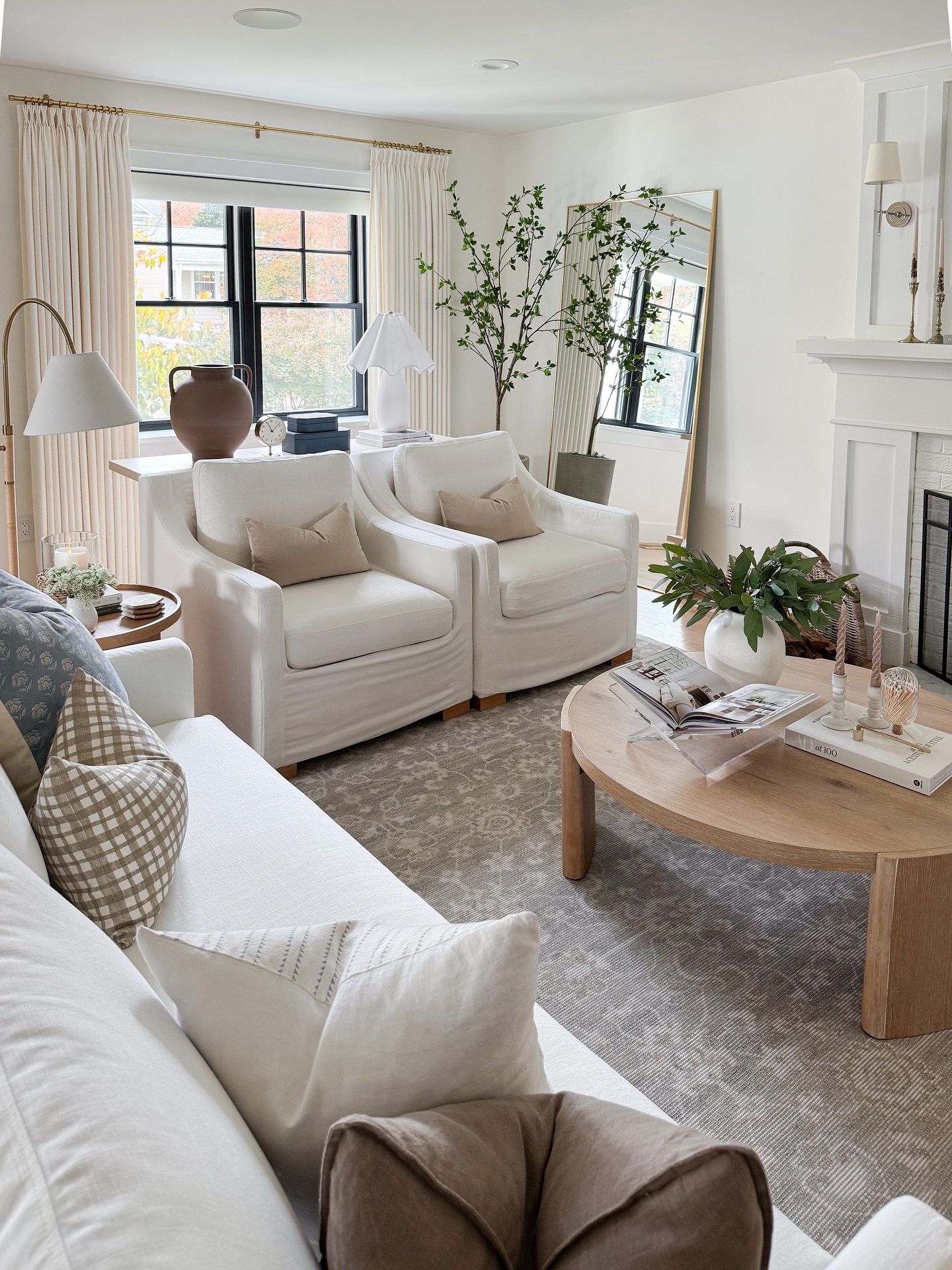
A round coffee table softens the meeting point between a sofa and a pair of armchairs.
In this bright room, the light wood finish adds warmth to white upholstery, while the curved edge breaks up the straight lines of the windows and fireplace.
Books, twisted candles, and a vase of greenery spread across the top without creating a tall barrier between seats. The table feels substantial enough to belong with the upholstered pieces, yet its shape keeps the center calm.
Borrow the balance by pairing a pale round table with a restrained group of accessories. Leave visible gaps between the objects, and repeat a wood tone elsewhere so the table feels connected to the whole room rather than floating alone.
3. Choose a Colored Top for a Playful Room
Credits: Instagram
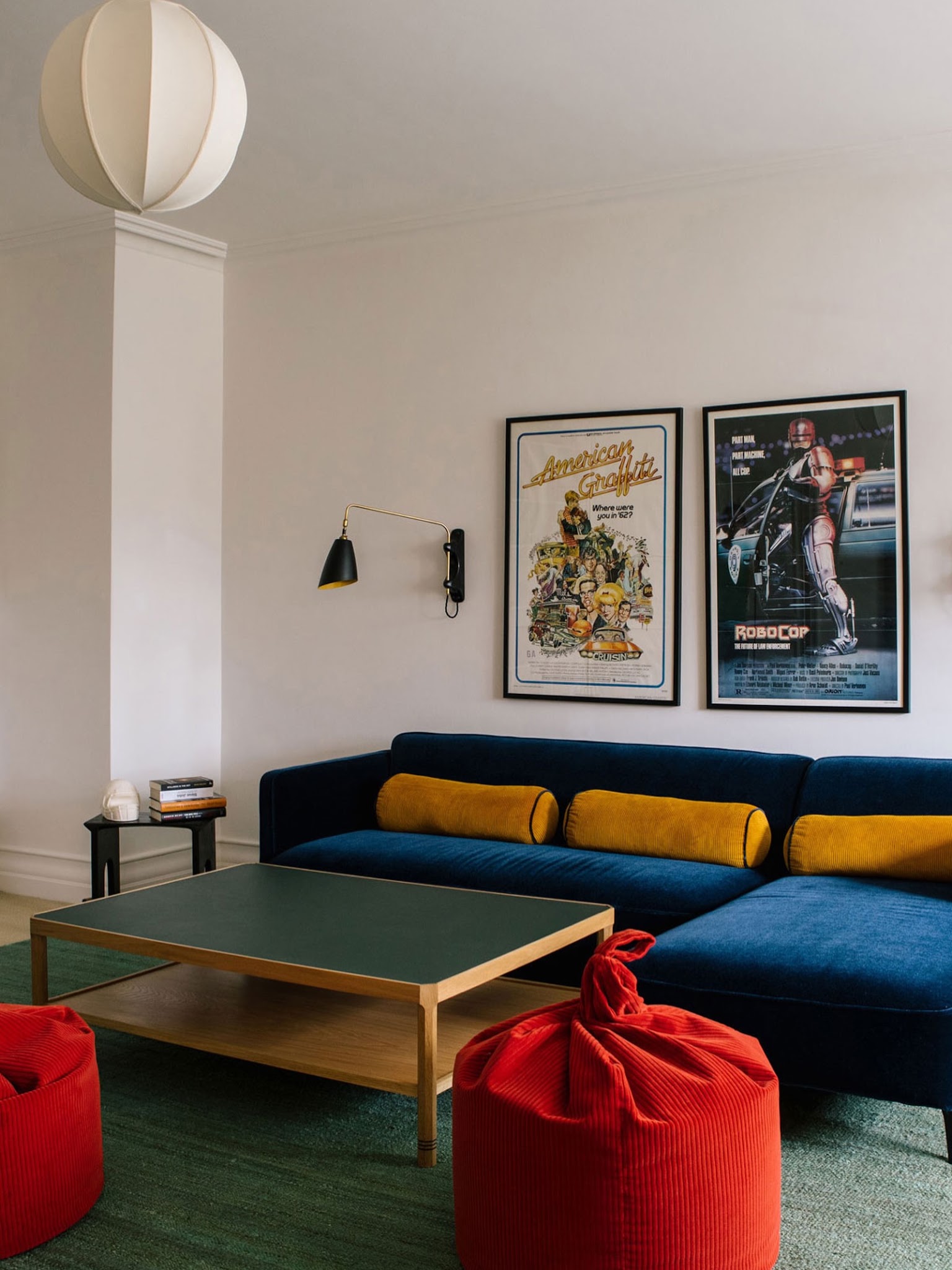
The dark green tabletop gives this simple wood coffee table a clear place in the room's colorful palette. It sits beside a deep blue sectional with mustard cushions, while bright red poufs bring another strong color down to floor level.
A lower wood shelf keeps the table's outline open and adds a second useful surface. The top is left clear, allowing its color and clean rectangular shape to carry the design.
This is a helpful idea when surrounding furniture already has plenty of personality. Choose a table with one distinctive feature, then resist covering it with accessories.
Repeating the green in the rug makes the combination feel deliberate, while the natural wood edge provides a quieter transition between saturated colors.
4. Turn a Lower Shelf into a Book Display
Credits: Instagram
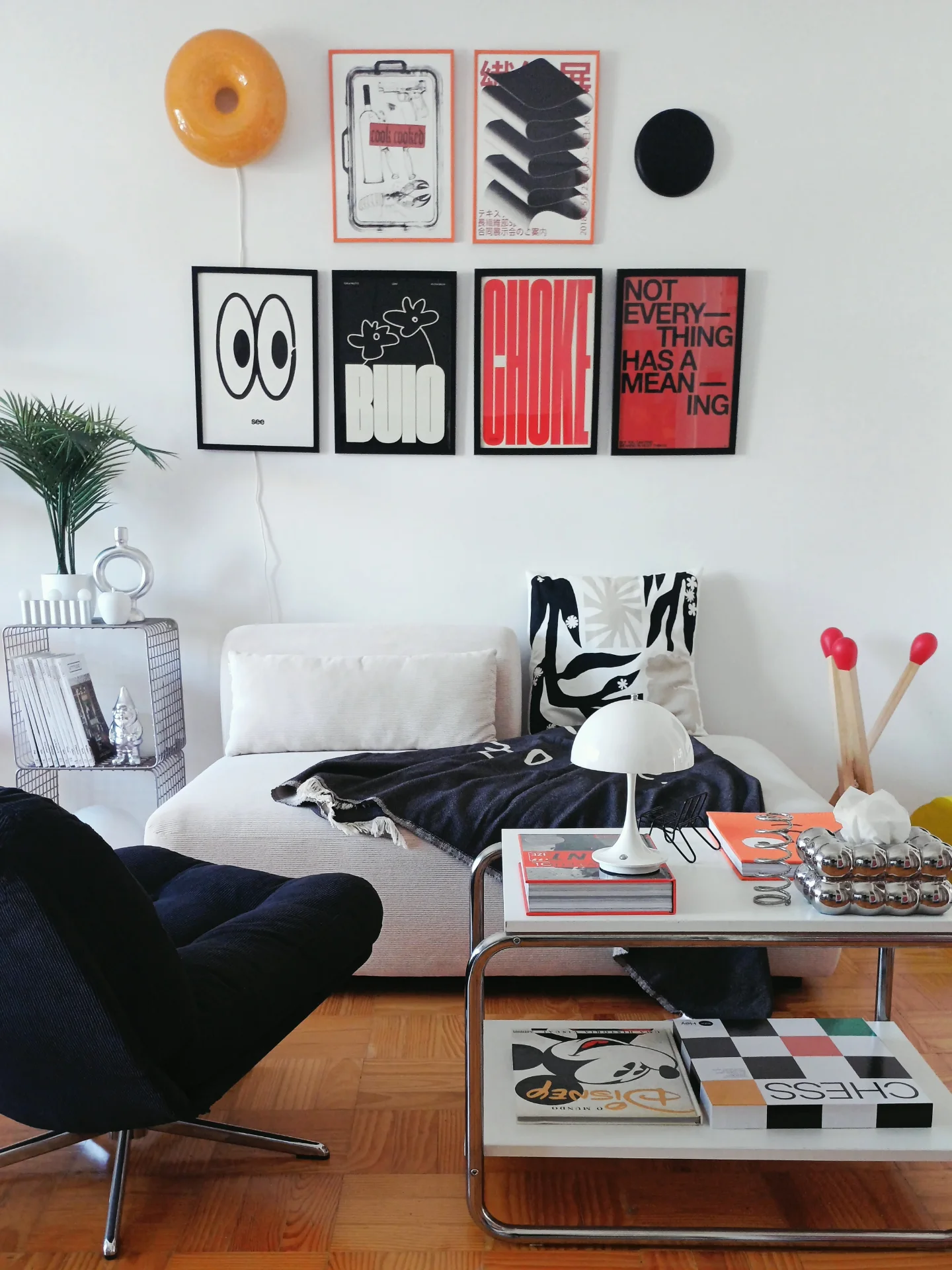
A second shelf gives this slim coffee table more ways to hold a collection. Books and graphic covers fill the lower level, while the upper surface carries smaller stacks, a compact white lamp, and a few decorative pieces.
The rounded metal frame keeps the silhouette light against the wood floor, and the open sides let the display remain visible from nearby seating. Black, white, and red accents connect the table to the gallery wall and cushions behind it.
Try dividing a collection by height: broader books below, shorter objects above. Keeping the frame exposed helps the two levels read clearly.
The table becomes part storage, part display, with each shelf contributing to the room's personality without hiding its simple outline.
5. Build Color Around a Stack of Books
Credits: Instagram
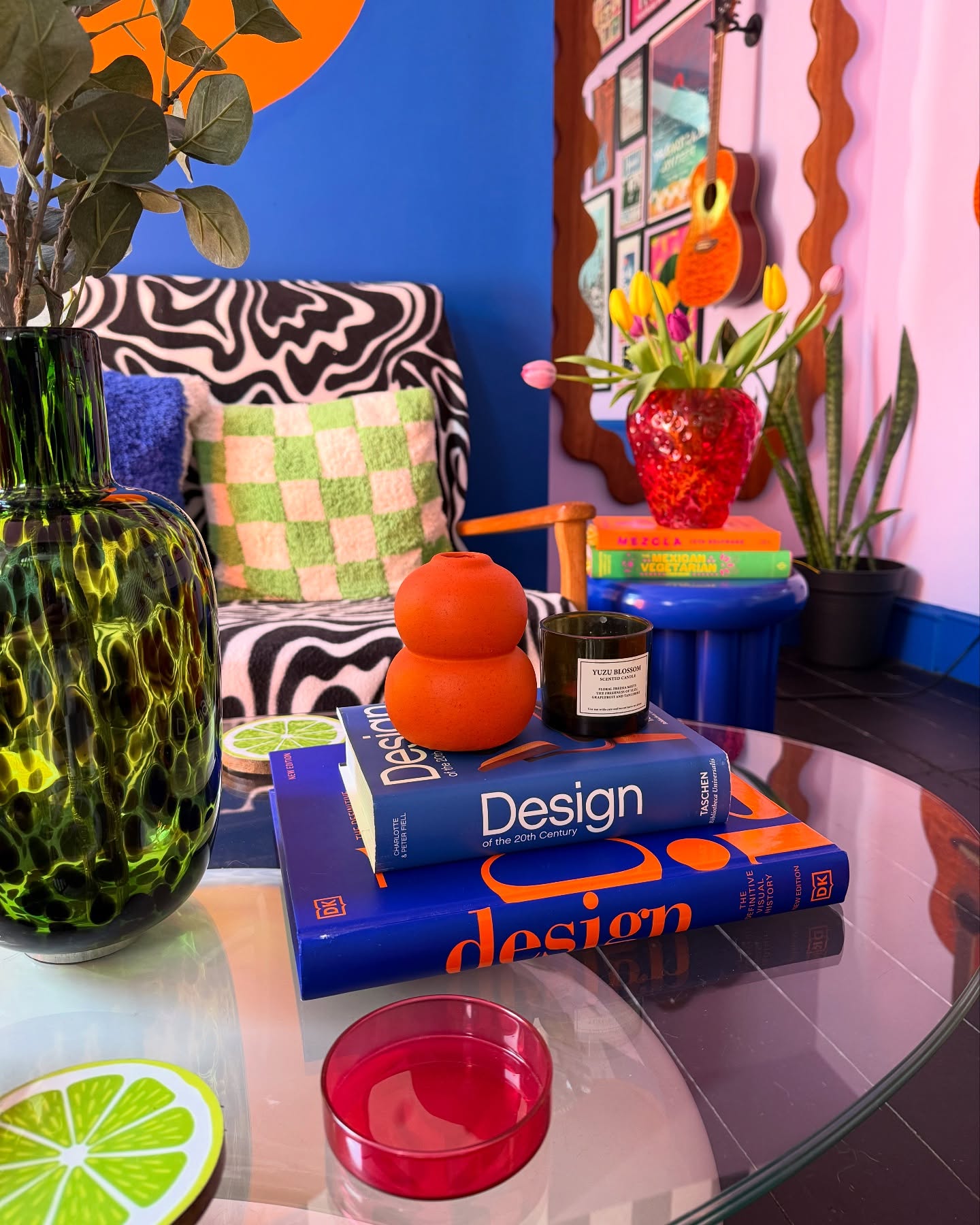
Coffee table books can do more than fill an empty corner. Here, blue covers form a little platform for an orange sculptural object, while a dark candle adds a quieter note beside them.
The glass tabletop allows the surrounding pinks, greens, and blues to remain part of the composition. A red dish and a playful citrus coaster spread the color without requiring another large object.
Behind the table, patterned upholstery and a checkerboard pillow carry the same upbeat spirit. Start with two books in colors you already love, then add one rounded piece on top.
Varying the shapes keeps the stack from feeling rigid. Leave a clear patch of glass so the arrangement retains some breathing room among the patterns.
6. Let a Reflective Shape Carry the Styling
Credits: Instagram
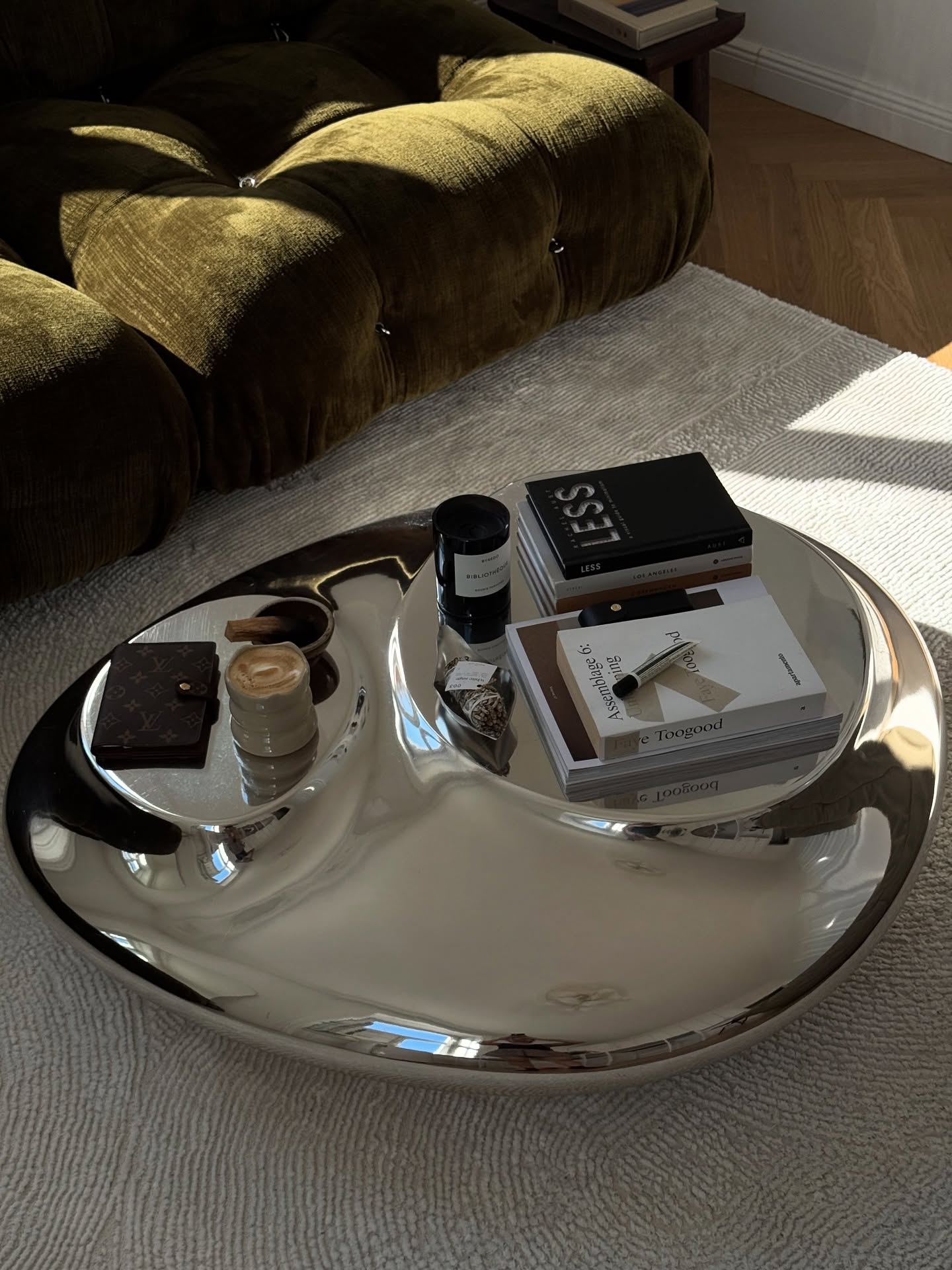
An irregular, polished tabletop can become the main decorative feature all by itself. In this room, the low silver toned coffee table reflects light and nearby objects, creating a fluid outline against the pale rug.
Two compact groups of books and vessels leave much of that reflective surface uncovered. The olive sofa provides a soft, textured backdrop, making the table's smooth finish feel especially noticeable.
This combination works through differences in shape and texture rather than lots of color. To borrow it, keep accessories low and place them in a few distinct clusters.
Choose pieces that look interesting from above, since their silhouettes become part of the reflection. A broad empty section allows the table's unusual curves to remain visible.
7. Set a Sculptural Table in a Traditional Room
Credits: Instagram
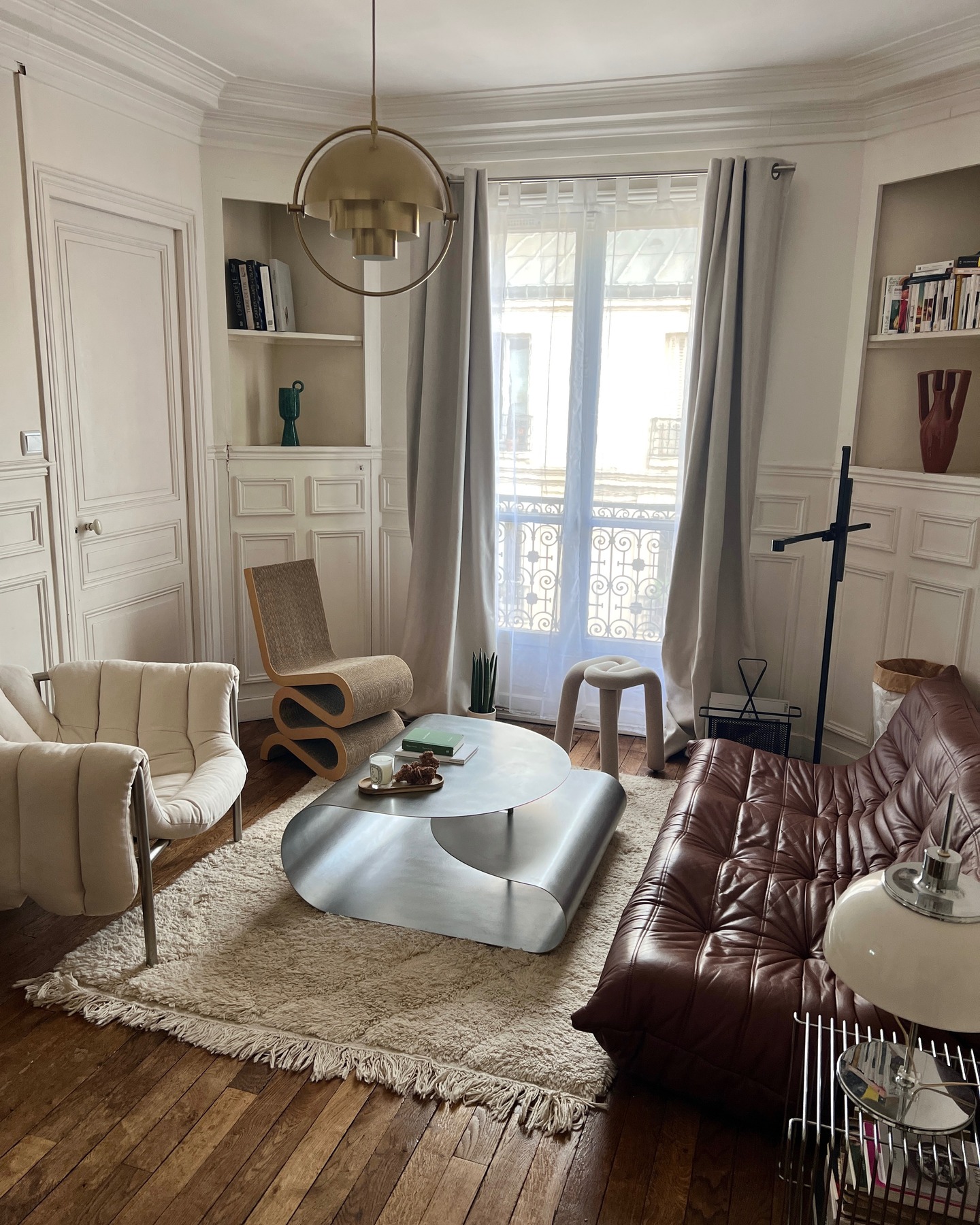
A sculptural coffee table can bring a fresh direction to a room with classic architectural details. This flowing silver design sits between a brown leather sofa and light upholstered chairs, its oval top resting above a broad and curling base.
The surrounding wall moldings and tall curtains supply straight vertical lines, so the table's softer silhouette stands out. A few small objects occupy the center while the edges remain visible.
The shaggy rug adds another layer of texture beneath the smooth form. Consider this approach when you want one distinctive piece to change a familiar seating arrangement.
Keep the surrounding colors related and the tabletop display modest. That gives the unusual shape space to feel intentional within the existing room.
8. Repeat Warm Metal Around a Glass Table
Credits: Instagram
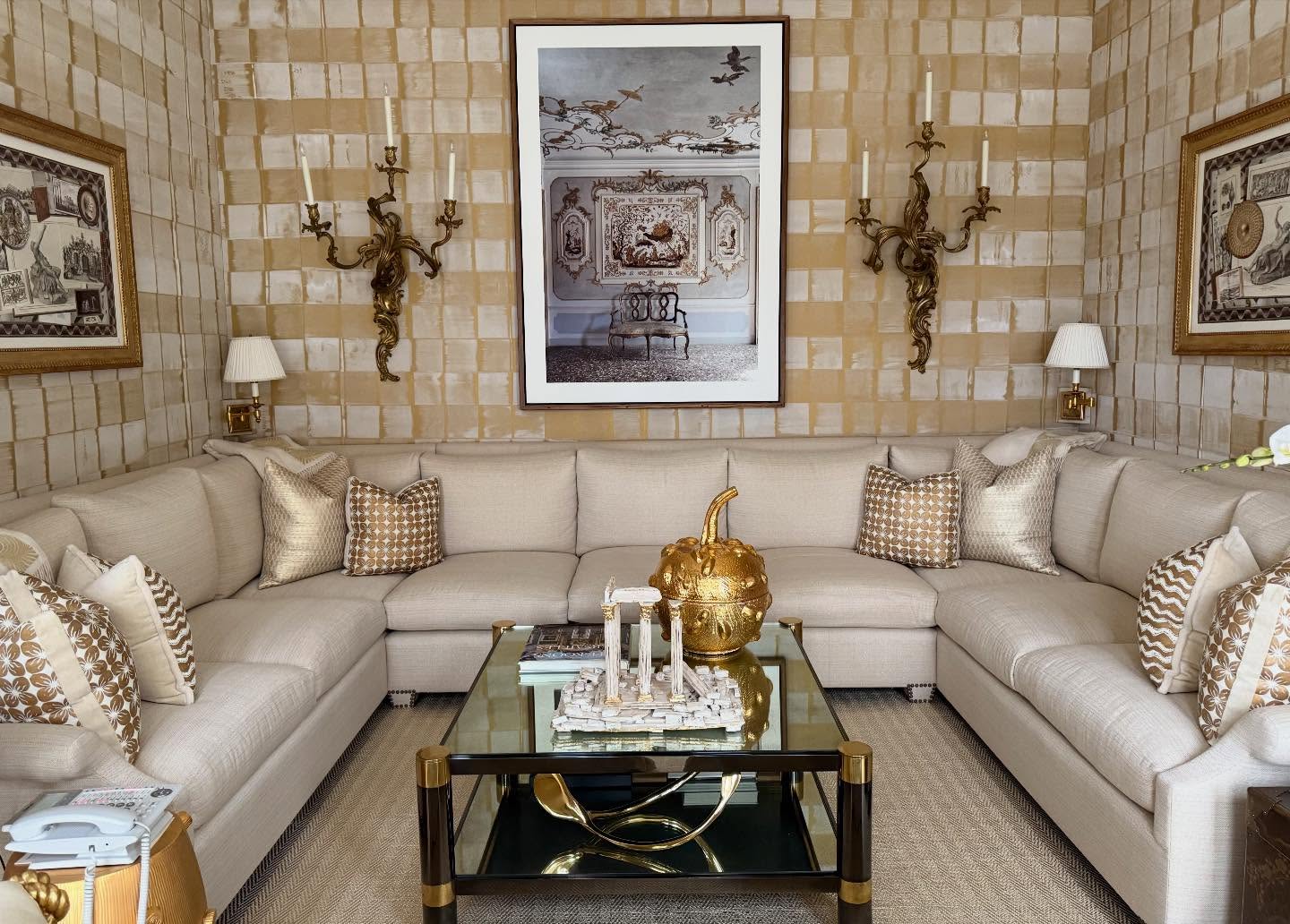
The glass coffee table in this sitting room combines a dark frame with warm metallic details, making it feel crisp and decorative.
Its transparent top reveals a curved sculpture on the lower shelf, while a gold toned vessel and a miniature architectural model create a focused display above.
The surrounding sectional forms a generous U, giving the table a central position. Warm wall tones, sconces, and framed artwork repeat the metallic accents without relying on identical pieces.
Use this idea when a glass table feels too quiet on its own. Add one substantial decorative object and a smaller coordinated grouping, then echo the finish elsewhere in the room.
Keeping the glass partly open preserves the table's layers and visual lightness.
9. Combine a Wood Top with Open Storage
Credits: Instagram
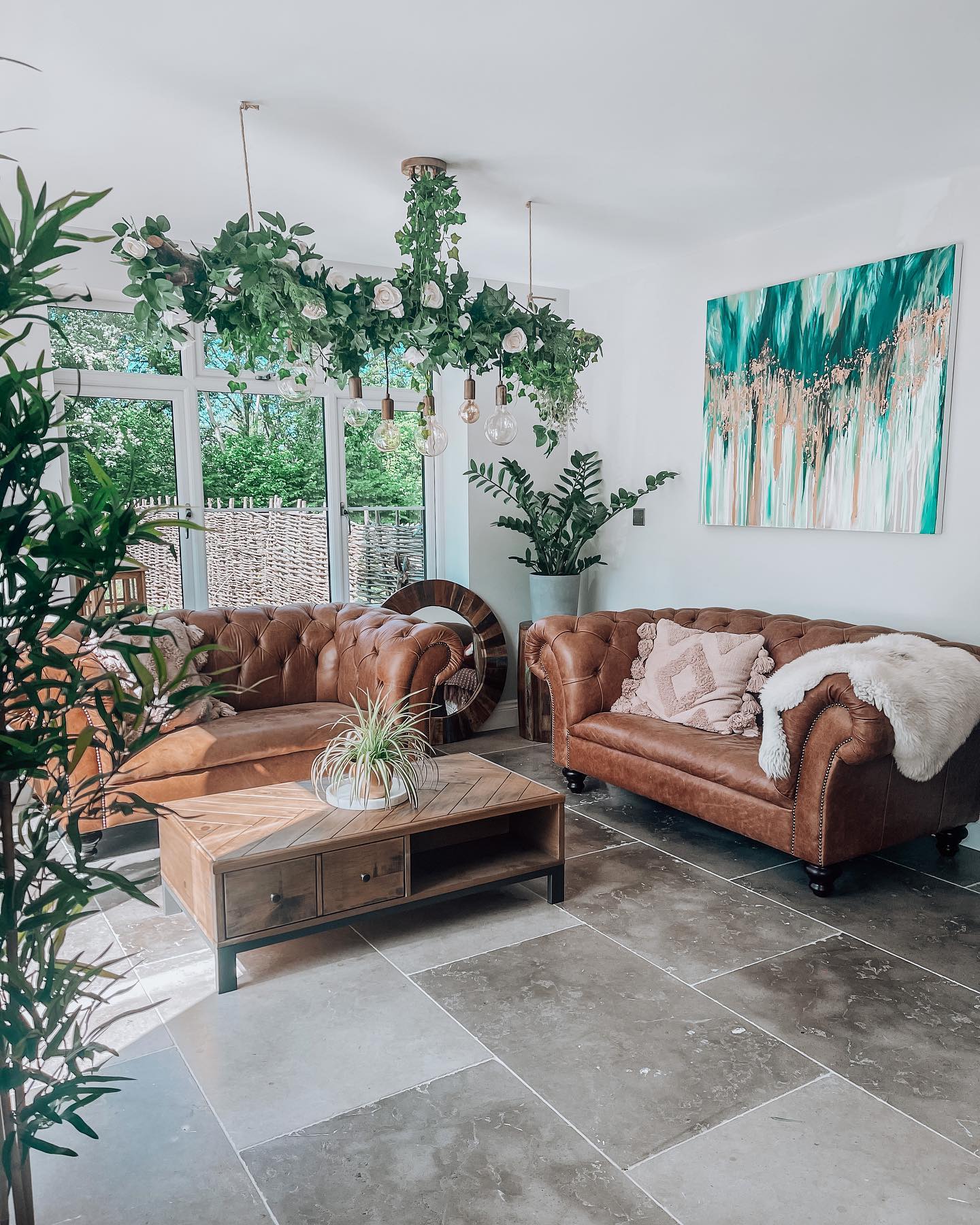
A low rectangular coffee table gives this plant filled room a practical center. The wood top relates to the warm brown sofas, while the dark frame connects with smaller dark details around the seating area.
Below, an open compartment and a closed section introduce storage without making the table look like a solid block. A potted plant with arching leaves keeps the surface simple and repeats the abundant greenery overhead and beside the windows.
This is an easy arrangement to adapt when the room already has strong textures. Let the furniture provide the structure and choose one centerpiece.
A table with mixed open and closed storage can hold everyday items while still leaving a little visible space beneath the top.
10. Mix Small Objects by Texture
Credits: Instagram
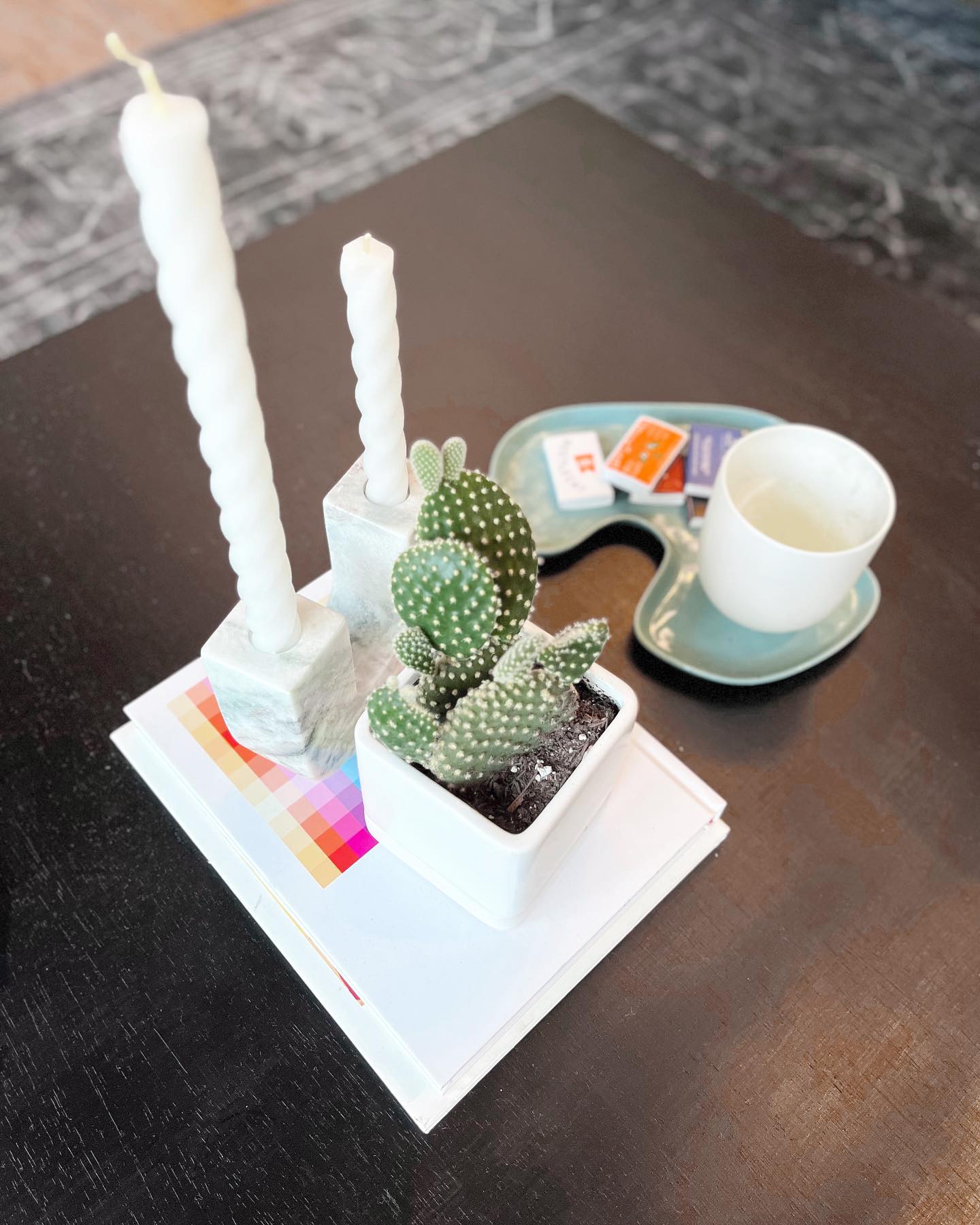
A dark coffee table makes a useful backdrop for a collection of pale accessories. This arrangement pairs twisted candles with angular holders, a rounded cup and tray, and a cactus in a square white planter.
A short stack of books creates a shared base for several pieces, helping the display feel gathered. The contrast comes from spiky and smooth shapes, glossy and matte surfaces, and upright objects beside low ones.
You can borrow that variety without filling the entire table. Start with a book or two, then select objects that differ in profile while sharing a limited color palette.
Keep the cup within easy reach and leave a clear section around the arrangement so the table remains useful every day.
11. Soften a Neutral Room with an Organic Outline
Credits: Instagram
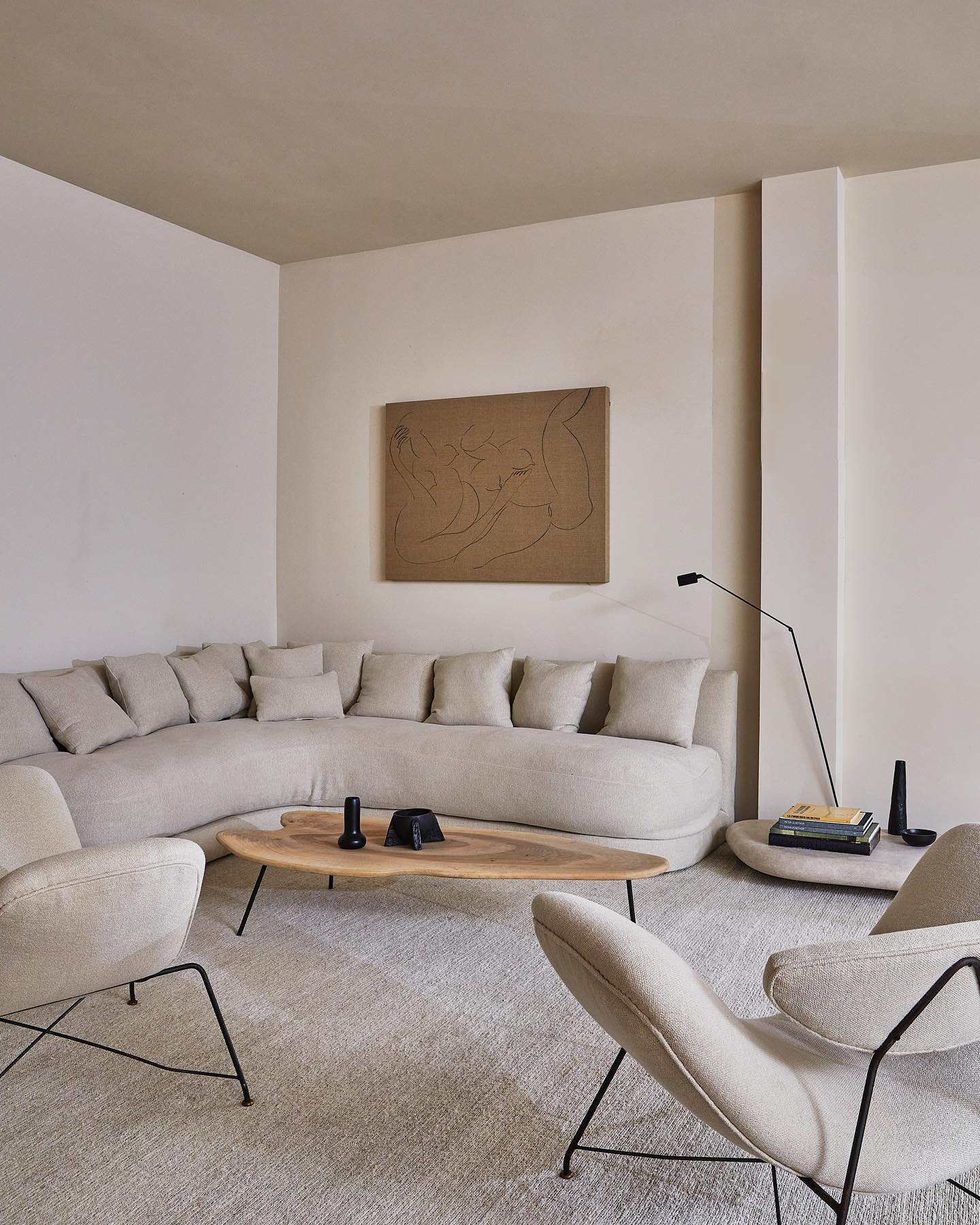
An irregular wood top gives this quiet seating area a focal point. Its long, flowing outline follows the curved sofa, while thin dark legs repeat the fine lines of the lounge chairs and floor lamp.
Two small black vessels sit near the center, leaving the wood grain and unusual edges easy to see. The room stays within a narrow range of cream and beige, so shape does much of the decorative work.
Try this approach when a rectangular table feels too rigid beside rounded seating. Choose an elongated organic form that relates to the sofa's curve, then keep the accessories compact.
Repeating one darker accent in the legs and tabletop objects adds definition without interrupting the room's soft, continuous palette.
12. Give a Soft Surface a Firm Styling Base
Credits: Instagram
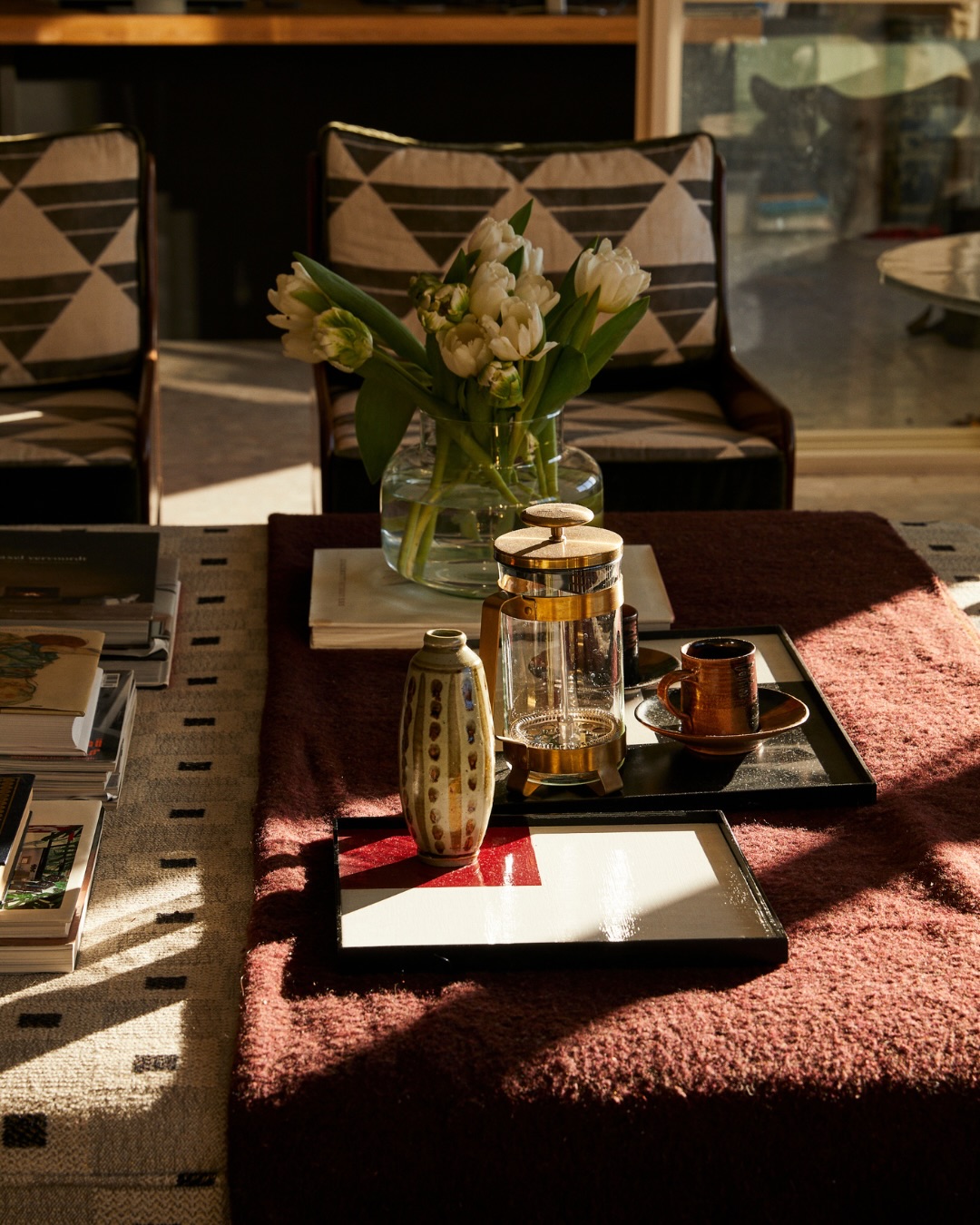
Trays make a soft coffee table surface easier to organize. Here, dark rectangular trays sit on a richly textured burgundy surface, holding a glass coffee press, a cup, and a small patterned vessel.
A clear vase of white tulips rests on books farther back, adding height without obscuring the chairs beyond. The contrasting tray borders give each group a readable outline against the fabric.
Use this idea to bring structure to an upholstered or fabric covered centerpiece. Choose a tray large enough for the items you actually use, and leave some of the soft surface exposed.
A second smaller tray can hold one decorative piece, creating variety while keeping the arrangement connected through similar edges, colors, and simple rectangular shapes.
13. Anchor Patterned Seating with a Round Tray
Credits: Instagram
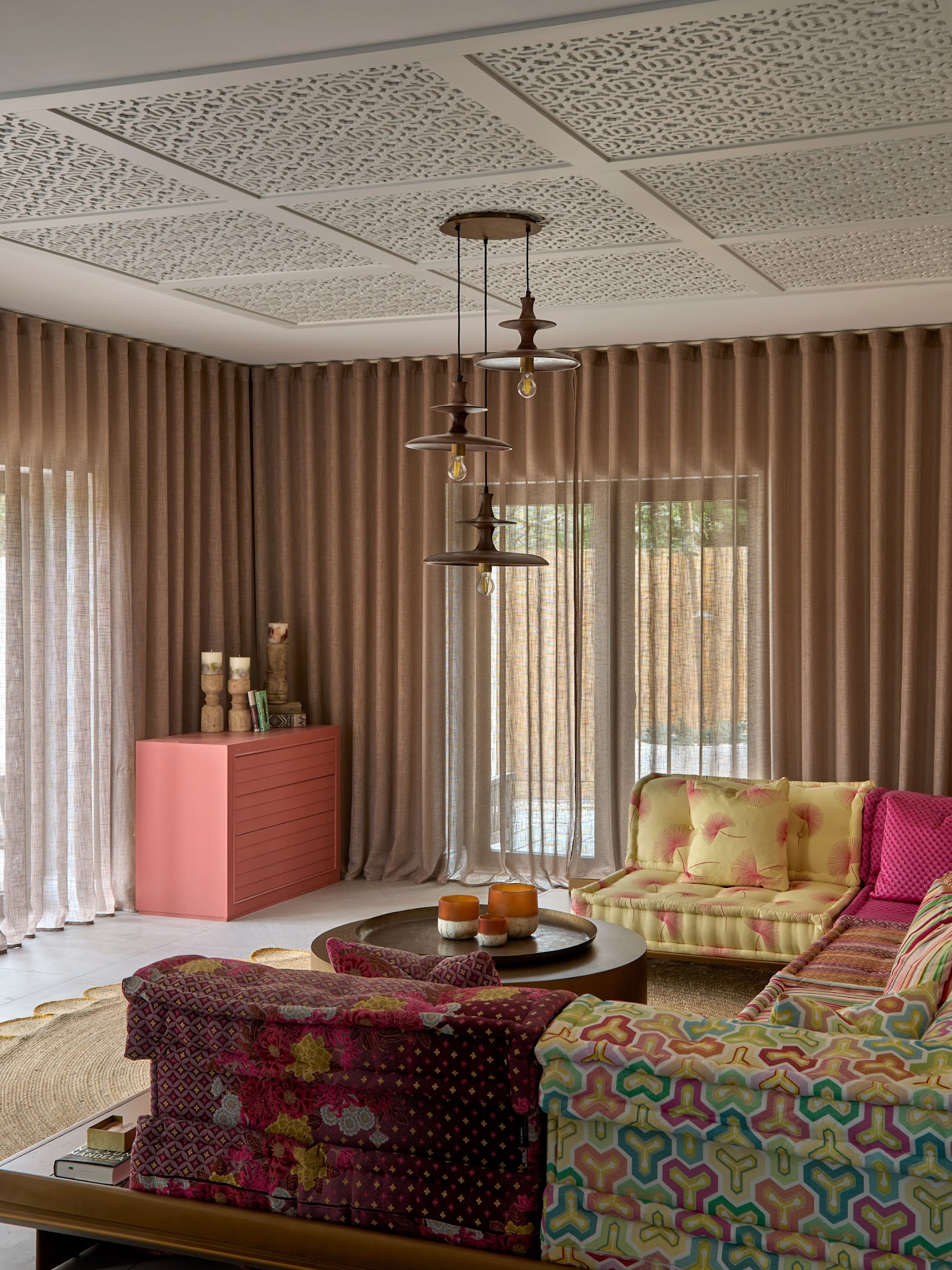
When the seating carries several patterns, a simple coffee table can give the eye somewhere to rest. This round dark table sits inside a colorful garden room arrangement, with a broad circular tray gathering three warm toned vessels.
Their rounded forms repeat the table's outline, while different heights prevent the group from looking flat. Hanging lights draw attention toward the same central spot.
The surrounding pinks, greens, and patterned fabrics supply the energy; the table supplies a quieter shape. Try keeping your tabletop palette smaller than the room's overall palette.
One tray and a few related pieces can be enough. The repetition of circles makes the centerpiece feel organized, even when the furniture around it celebrates a mix of patterns.
14. Let Marble Veining Become the Pattern
Credits: Instagram
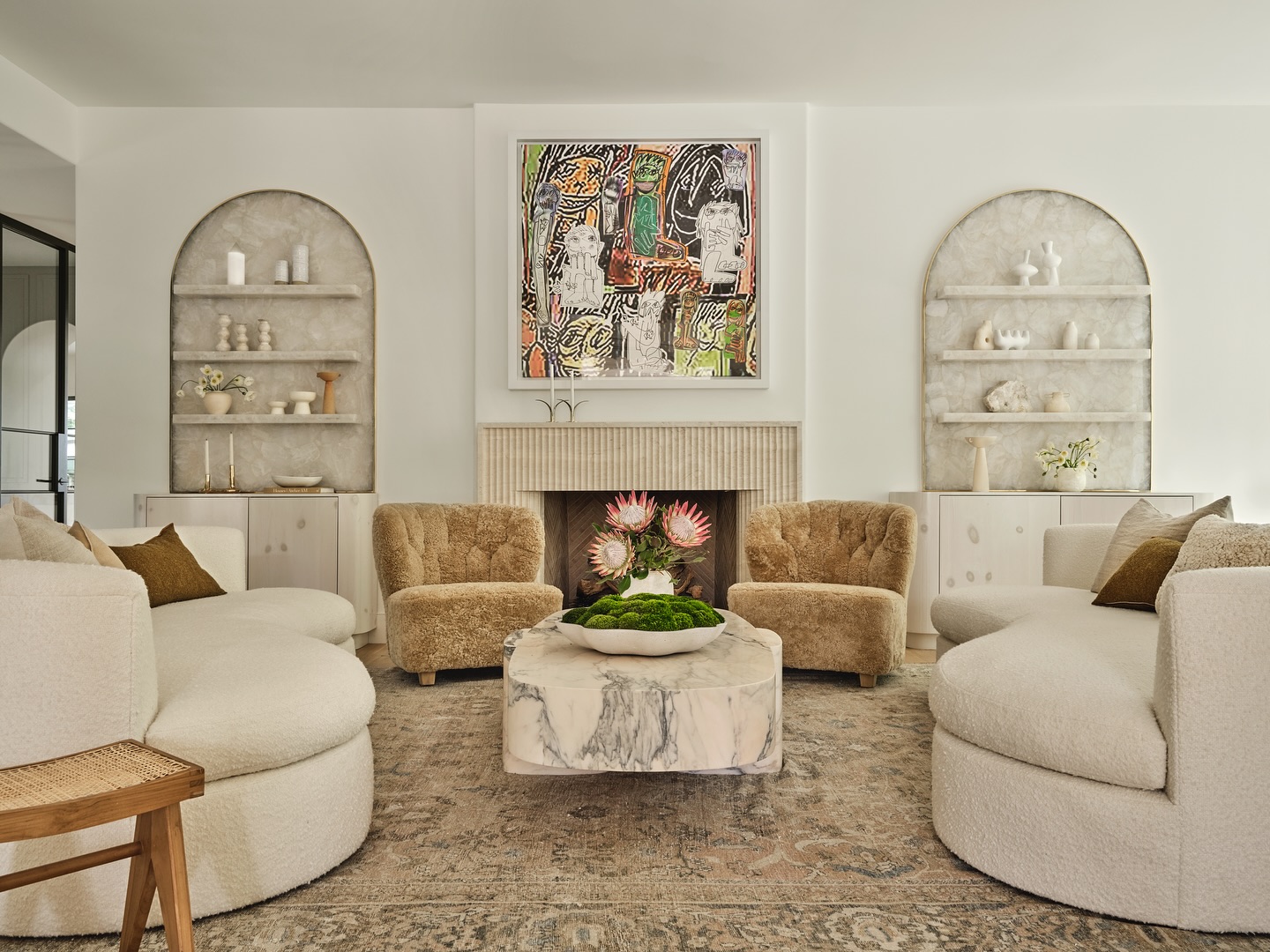
A marble coffee table can supply pattern without introducing another fabric or color. Here, gray veining moves across a thick pale top and down its rounded sides, making the table read as one sculptural volume.
Curved cream sofas and textured tan chairs surround it, reinforcing the softer shapes. A shallow bowl of green moss and pink flowers add a concentrated natural accent above the stone.
The arrangement stays low enough for the fireplace wall and paired shelves to remain part of the view. If your seating is neutral, consider a table with visible veining and a simple outline.
Keep the accessories fewer and broader so they complement the stone's movement. The material becomes the feature, supported by calm furniture nearby.
15. Pair Burl Wood with a Single Textured Vessel
Credits: Instagram
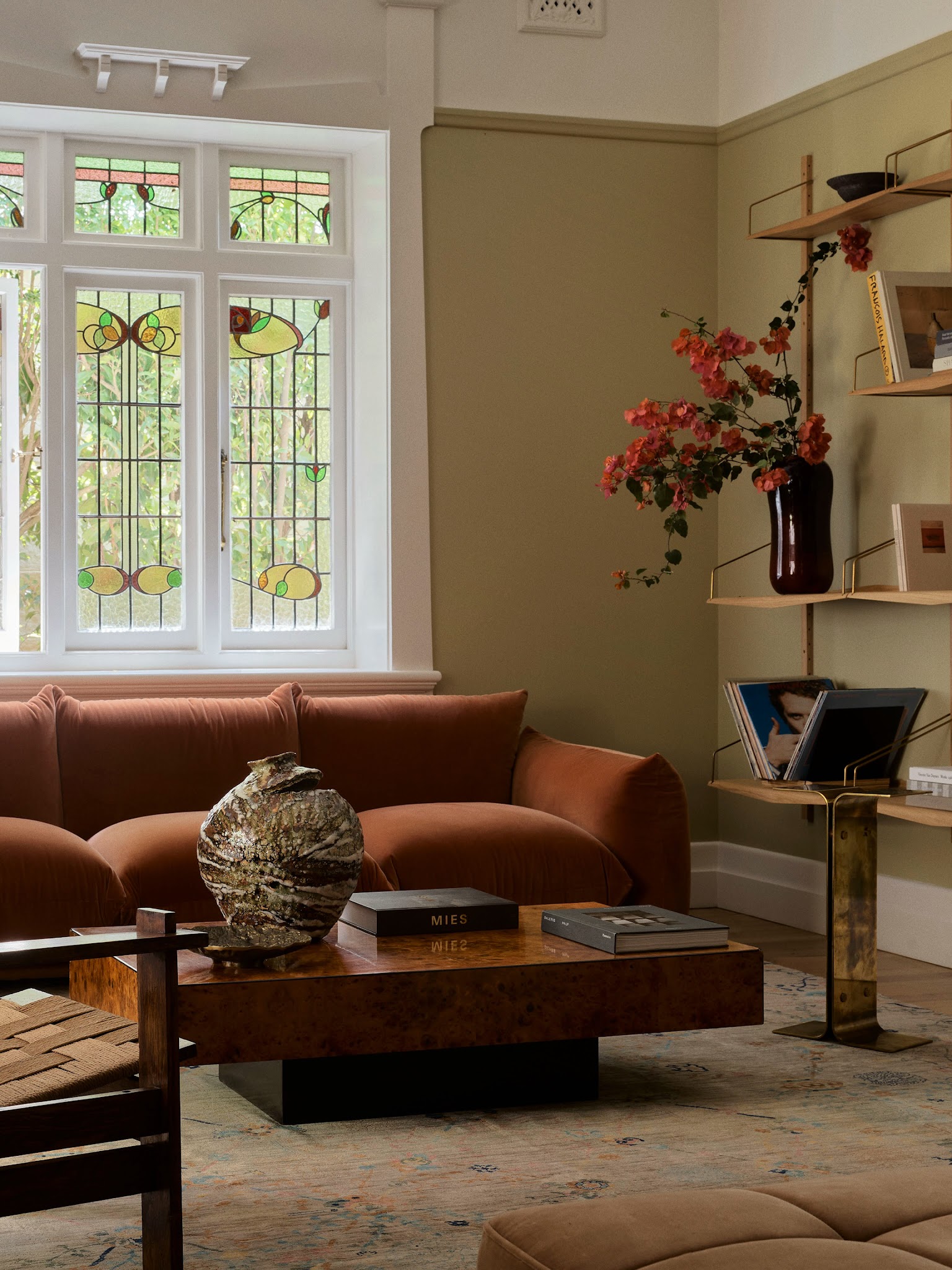
The rich pattern of this burl wood coffee table gives a compact seating area depth. Its thick rectangular top rests on a dark recessed base, creating a strong horizontal shape in front of the rounded rust sofa.
A large textured vessel and two low books leave much of the glossy surface visible. The table's warm tones connect with the upholstery, while the vessel introduces a rougher finish for contrast.
This is a useful approach when a wood table already has plenty of character. Let its grain carry most of the decoration, then choose one object with a different surface.
Keeping the remaining items flat preserves the tabletop's broad outline and allows the surrounding stained glass and shelving to hold attention.
16. Balance a Shaped Stone Top with a Solid Base
Credits: Instagram
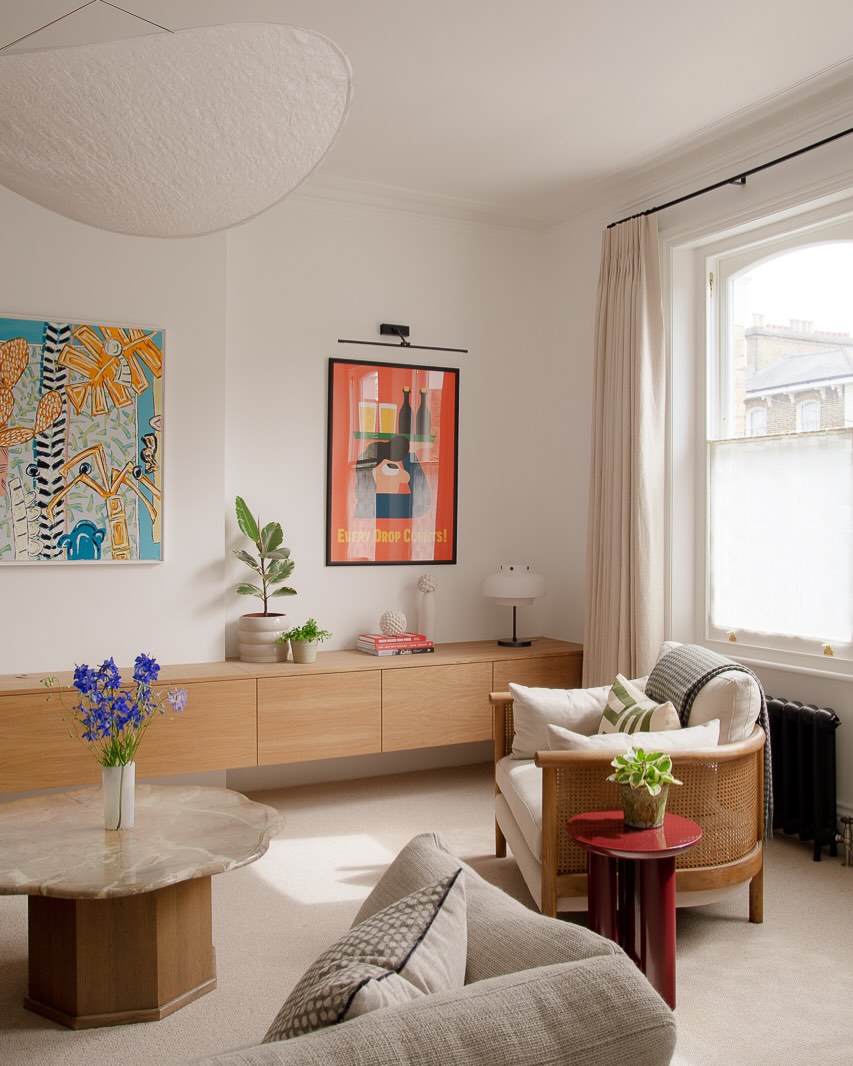
A softly scalloped stone top brings a decorative edge to this restrained coffee table. The faceted wood pedestal below gives it a grounded center, while the pale surface connects with the carpet and light walls.
A slim vase of blue flowers is the only visible tabletop accent, allowing the shape and veining to stand out. Nearby, a red side table and colorful artwork provide stronger notes of color without crowding the centerpiece.
Try this combination when you want an interesting table that still feels quiet. Pair a shaped top with a simple base, then choose one narrow arrangement.
Repeating the wood tone in a cabinet or chair helps the table belong to the room while its outline adds something unexpected.
17. Layer Collected Objects on a Glass Top
Credits: Instagram
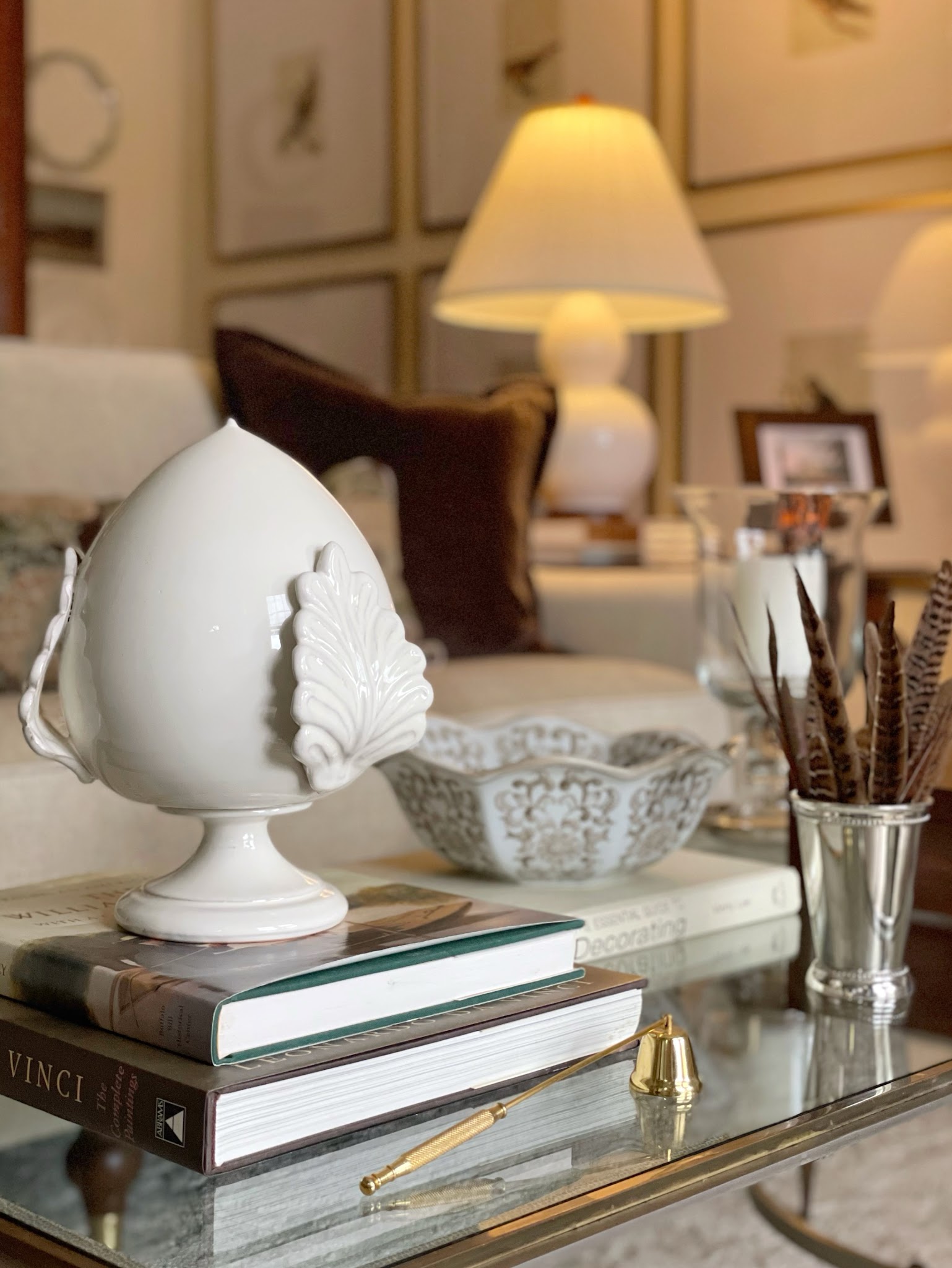
A glass coffee table can hold a collected display while keeping the furniture's outline visually light. Here, art books support a large white decorative object, with a patterned bowl and a silver toned cup of feathers nearby.
The warm metallic edge frames the arrangement, and the transparent surface reveals the pale rug beneath. Different heights make the grouping interesting from the sofa without requiring everything to match.
Borrow the method by using books as small platforms for favorite pieces. Choose a few related colors, then vary the shapes and finishes.
Leaving space around the stacks keeps each object recognizable and gives the glass a chance to contribute its openness. The result feels personal, layered, and connected to the traditional furniture.
18. Use Repeated Lines to Connect the Table
Credits: Instagram
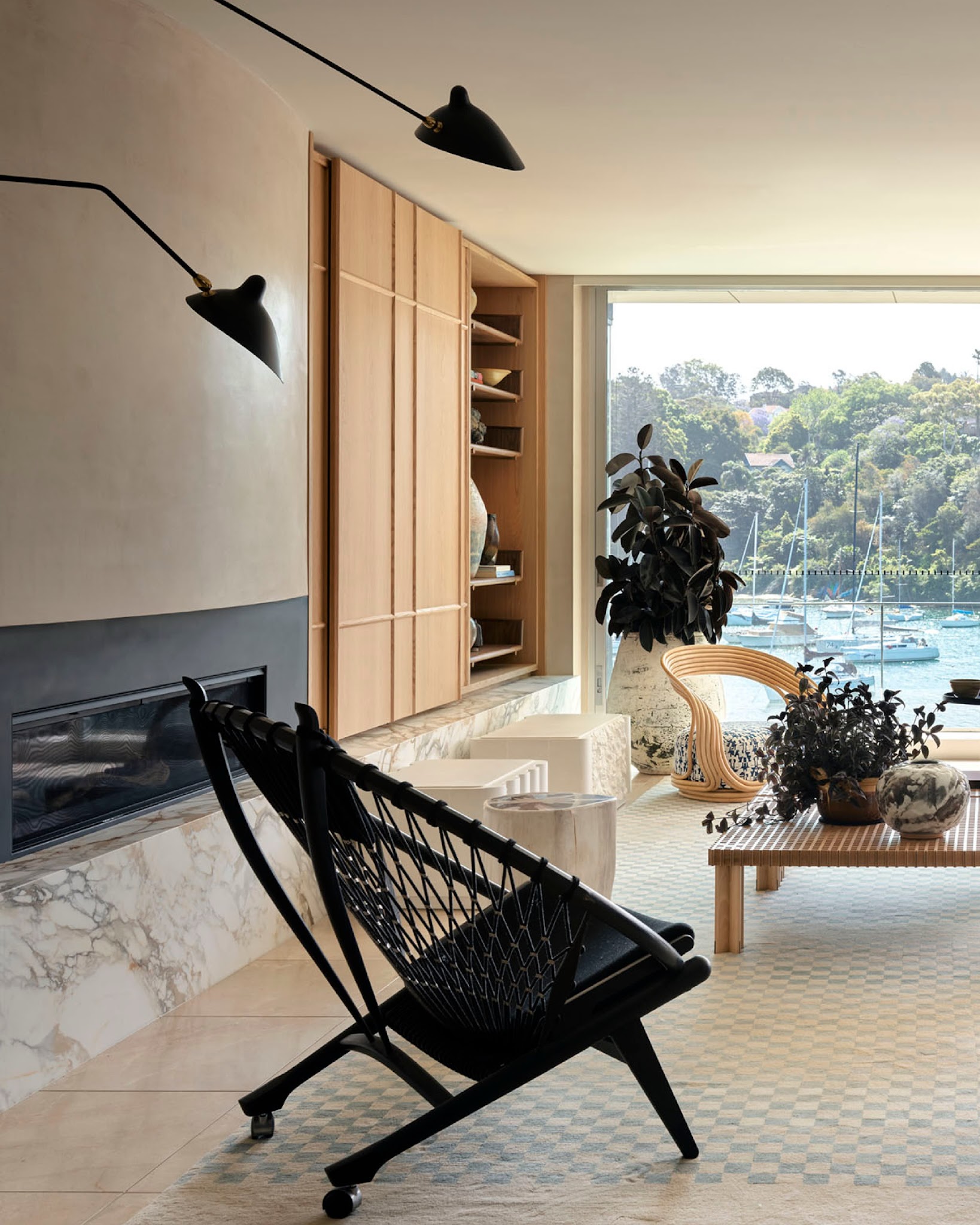
The low coffee table in this waterside room brings a measured rhythm to the seating area.
Narrow strips across its top echo the fine structure of the nearby woven chair, while its light wood color relates to the tall cabinet and rounded chair beyond.
Dark foliage and a rounded patterned vessel add softer shapes above the linear surface. The pale checked rug introduces another small repeated pattern without making the room feel busy.
Use this idea when you want texture from the furniture itself. A table with visible slats or repeated strips can provide detail even with few accessories.
Keep the objects more organic than the table, and repeat its wood tone nearby to tie the composition together with ease.
19. Brighten Dark Seating with a Pale Sculptural Table
Credits: Instagram
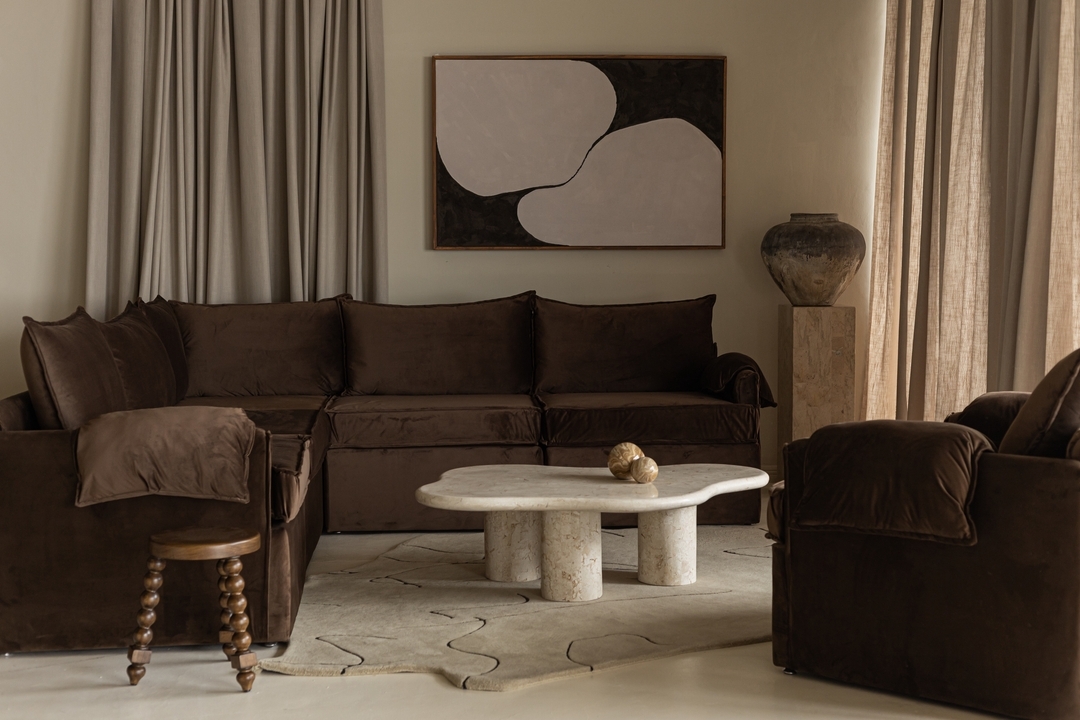
A pale coffee table can bring lightness to a group of dark upholstered pieces. In this room, the softly lobed top and thick cylindrical supports create a sculptural center against chocolate brown seating.
A small metallic object is the only tabletop decoration, leaving the outline easy to appreciate. The light rug and curtains connect with the table, while abstract artwork repeats the contrast between rounded pale shapes and a dark background.
Try this balance when a sofa arrangement feels visually heavy. Choose a light table with a strong silhouette, then let a limited display keep the center clear.
Repeating its color in larger surrounding surfaces helps the contrast feel integrated, while the rounded form adds movement to the room's arrangement.
20. Pair Two Square Tables for a Longer Centerpiece
Credits: Instagram
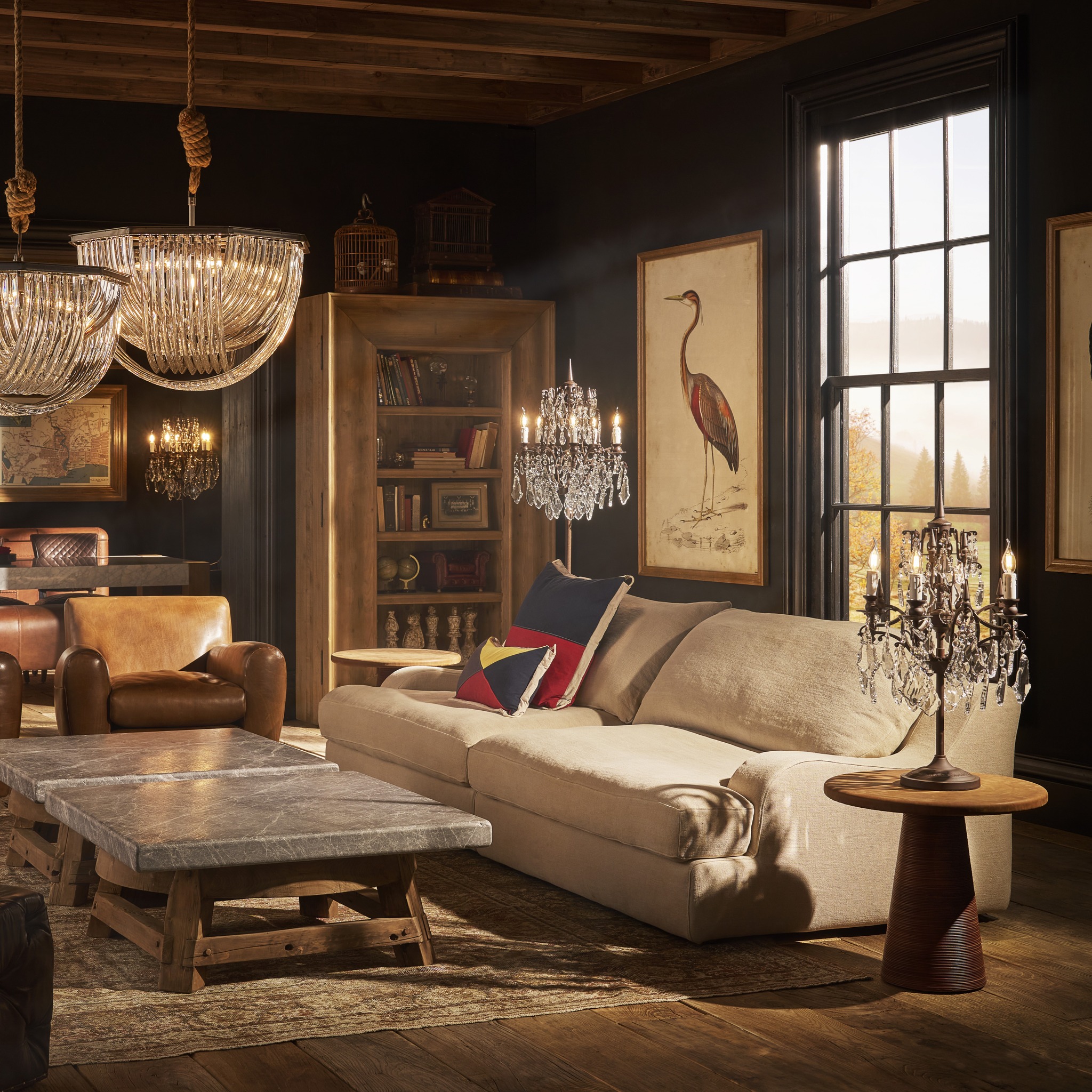
Two square coffee tables create a generous shared surface in front of this relaxed sofa. Their veined stone tops bring variation, while the substantial wood bases connect with the floor, ceiling beams, and nearby cabinet.
Leaving the tops clear allows the materials and paired arrangement to do the decorating. The repeated shapes feel especially grounded beside the soft upholstery and sparkling lights.
This idea can work when one small table looks lost in a seating area, but a single oversized piece feels cumbersome. Consider two matching tables placed closely together, then check how the combined footprint relates to the sofa and chairs.
Keeping their styling simple emphasizes the useful expanse of surface and lets the room's other details remain visible.