
A fireplace can feel disconnected from the room when its colors, materials, or furniture arrangement don’t relate to what’s around it.
These Living Room Fireplace Ideas show how small decorating choices can bring the hearth into the larger composition, whether it’s softened with dusty rose, balanced with simple cabinets beside rough stone, or made the focus of a seating group.
You’ll also find ways to use a portrait above a dark mantel and let patterned fireplace details guide the room’s palette. The common thread is thoughtful repetition: a few connected colors and textures help the fireplace feel at home.
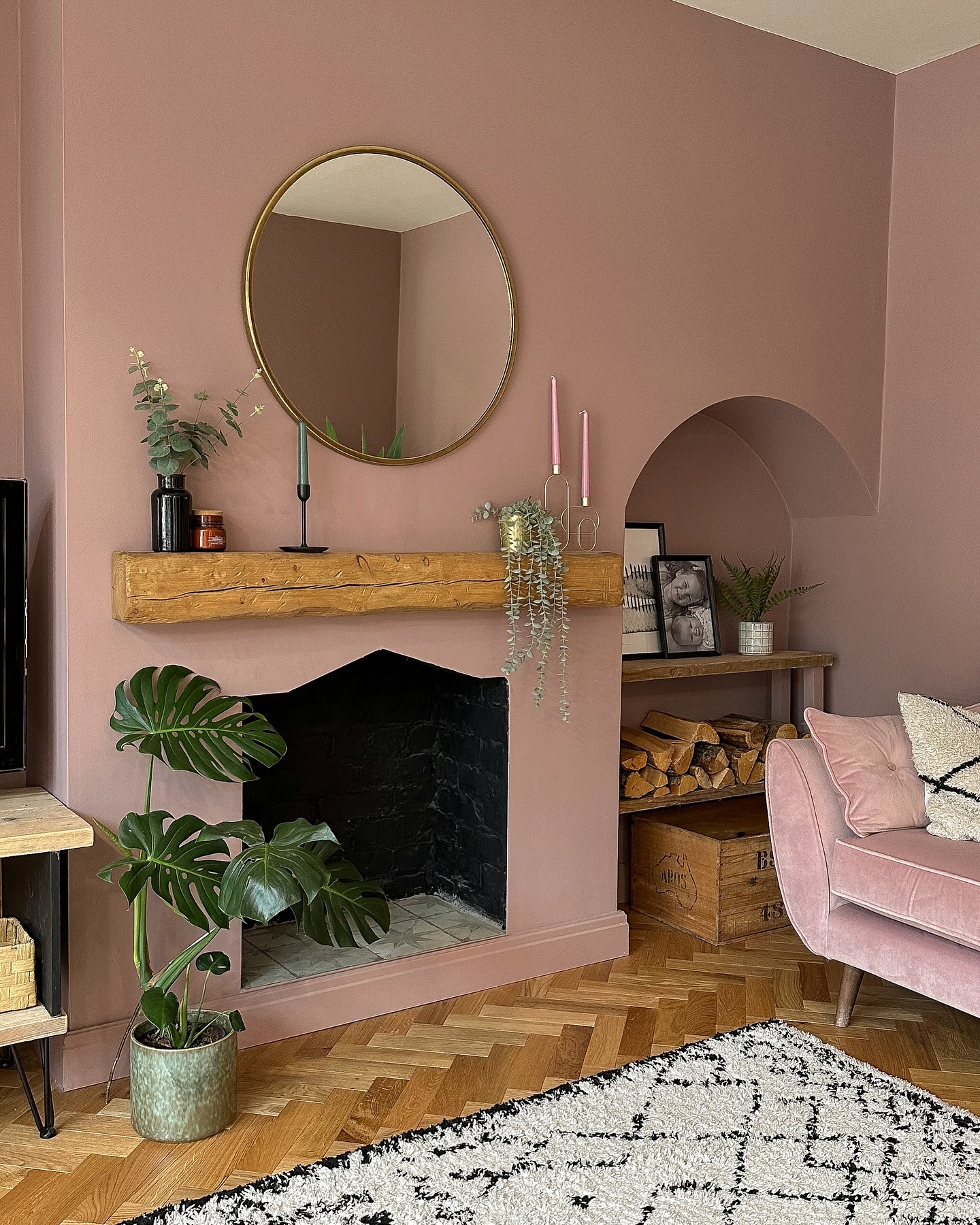
1. Soften a Fireplace Wall With Dusty Rose
Credits: Instagram
Dusty rose wraps the chimney breast and neighboring alcove, giving this fireplace corner a gentle, continuous backdrop. The chunky wood mantel introduces a warmer note, while a round mirror breaks up the straight edges.
Notice how the black opening connects with the patterned rug and small dark accessories. That repetition gives the soft palette some definition.
A pink chair picks up the wall color without matching it exactly, and leafy plants add another layer of contrast.
For a similar decorating approach, choose one muted wall color, repeat it in a nearby seat, and limit mantel accessories to a few different heights.
The arched alcove provides a separate spot for framed pictures, keeping the mantel arrangement pleasantly loose and uncomplicated overall.
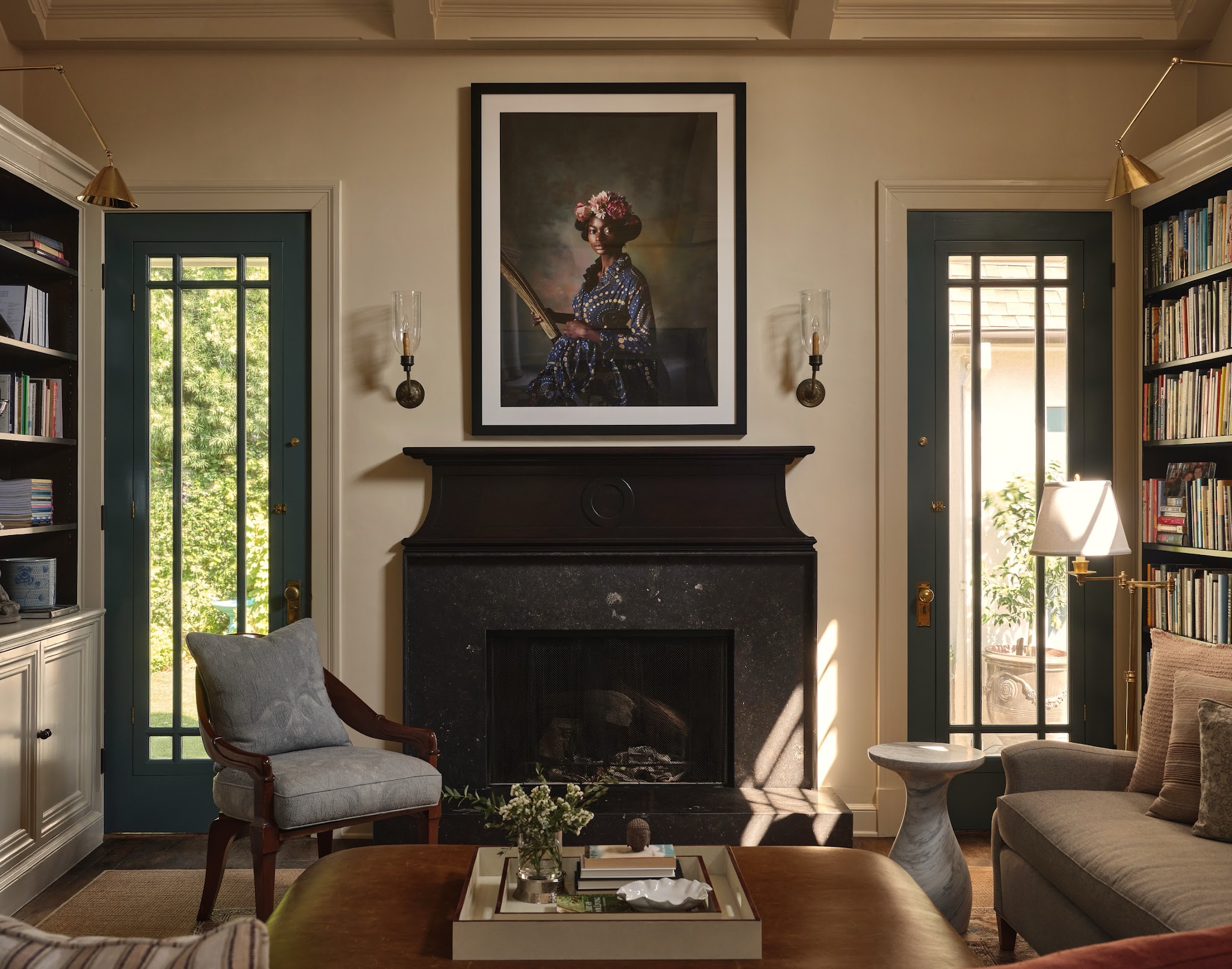
2. Give a Dark Mantel a Portrait Above
Credits: Instagram
A substantial dark mantel becomes the anchor of this booklined living room, with a large portrait strengthening its vertical presence. Pale walls make the surround stand out, while deep green doors bring color to either side.
The arrangement feels balanced because the sconces echo each other without competing with the artwork. Bookshelves extend the room's layered character, and gray seating keeps the middle of the space quieter.
Try this visual formula with one generously sized picture over the fireplace and smaller lighting accents alongside it. Repeat a dark tone elsewhere so the surround feels connected to the room.
A low coffee table arrangement leaves the portrait visible from the sofa and gives the whole seating group a clear focal point.
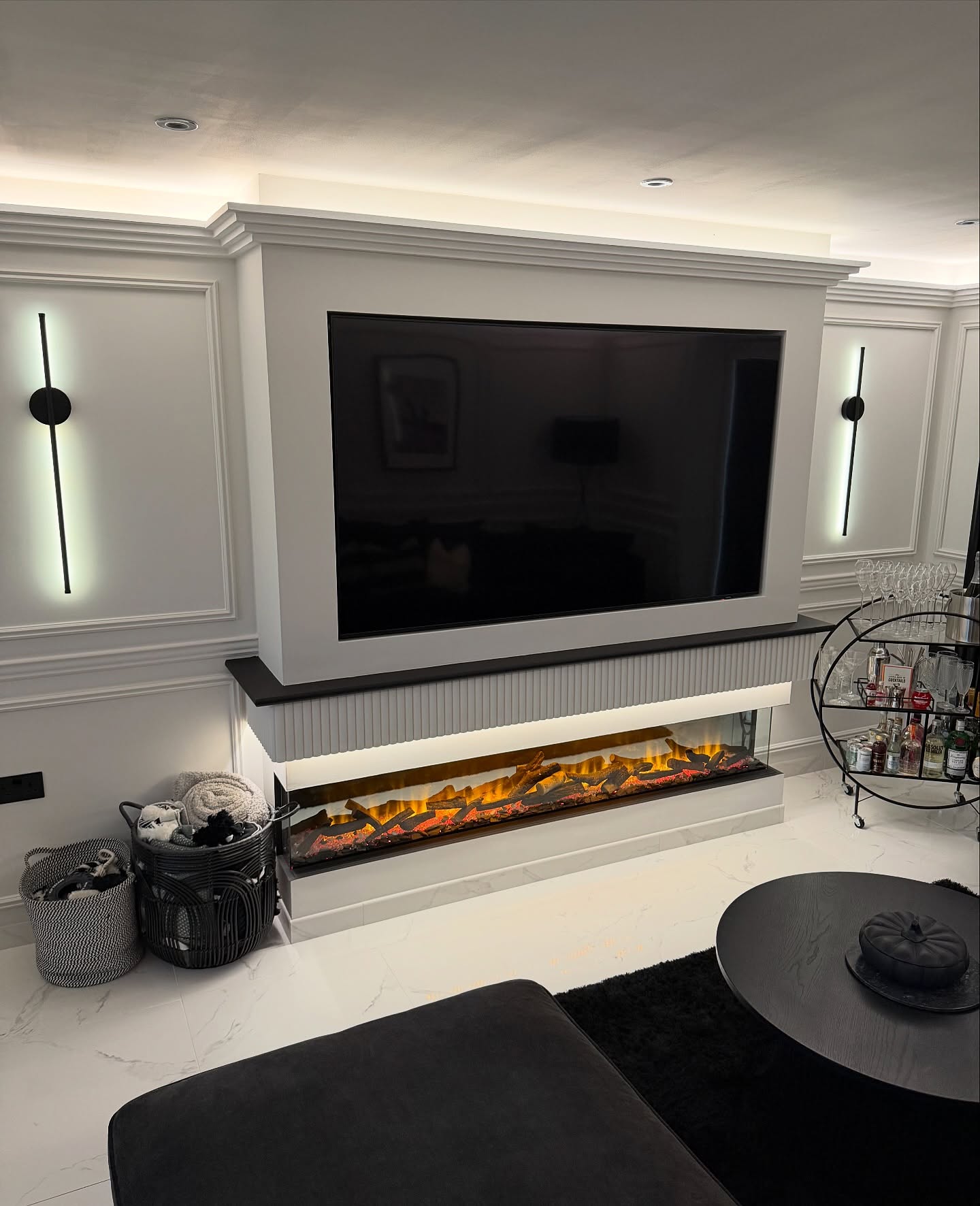
3. Frame a Linear Fireplace With Wall Molding
Credits: Instagram
This media wall combines a long fireplace opening with a large screen, then uses pale molding to bring both into a single composition. The narrow dark shelf creates a clear horizontal break between the two rectangles.
Slim black sconces repeat that contrast on the surrounding walls, while the fluted band adds texture beneath the screen. The color scheme stays simple enough for these details to register.
When planning the appearance of a similar wall, consider how each rectangle relates to the others before adding accessories. Here, black seating and a round coffee table carry the darker color into the foreground.
Baskets soften the crisp lines, and the restrained palette lets the warm glow become the room's strongest accent after dark.
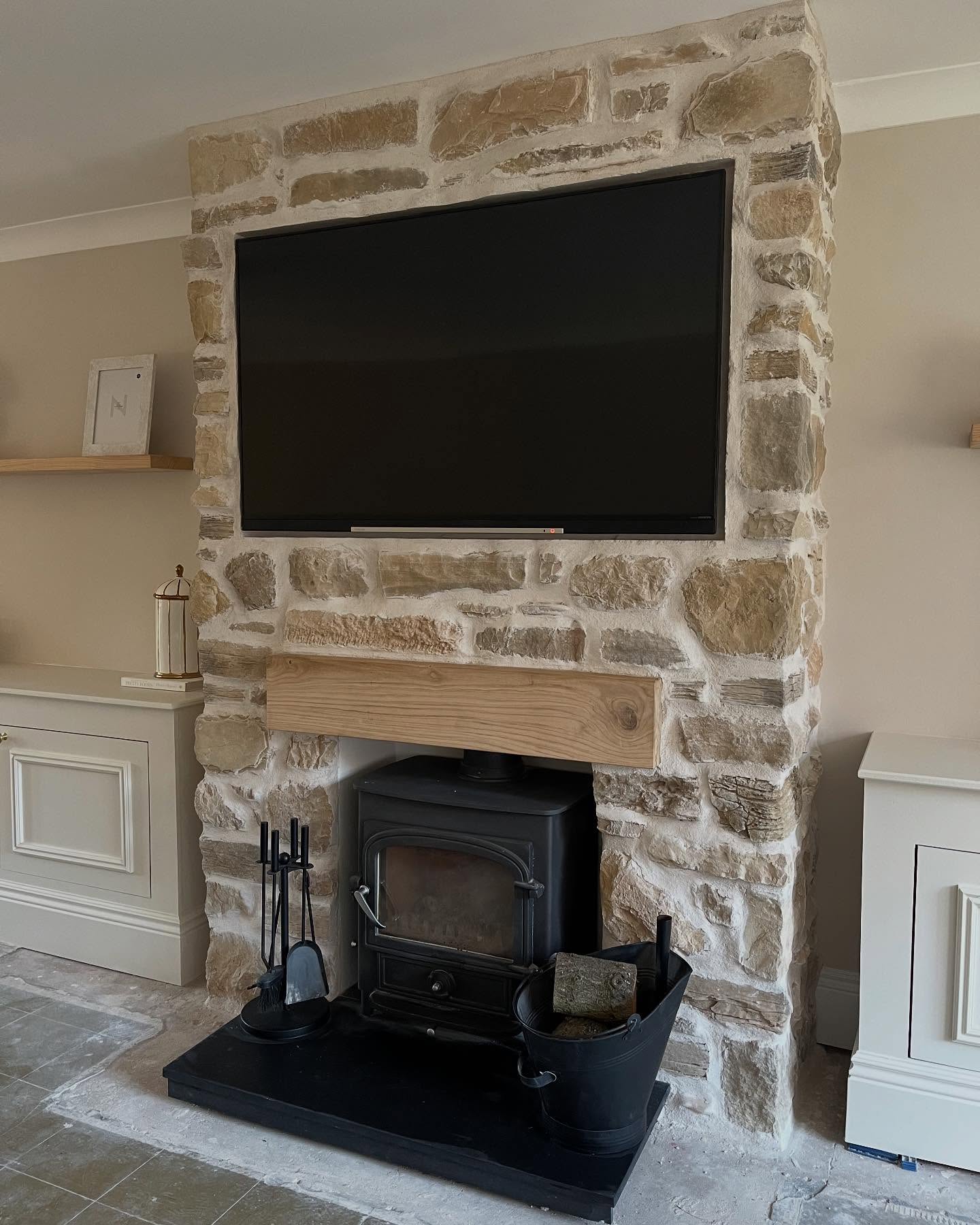
4. Balance Rough Stone With Simple Side Cabinets
Credits: Instagram
Varied stone shapes give this chimney breast its character, while the neighboring pale cabinets keep the composition orderly. A broad wood beam supplies a warmer horizontal line above the black stove.
The television repeats the dark tone higher on the wall, creating two clear focal areas within the textured surface. What makes the decorative balance work is the restraint around it.
The floating shelf holds only a small framed piece, and the cabinet top carries a lantern with room around it. Borrow that approach when a fireplace already has strong texture: choose quieter furniture fronts and fewer accessories nearby.
Cream, gray, and wood tones connect the surrounding pieces with the stone's visible colors, giving the wall a calm, cohesive appearance.
5. Turn the Seating Group Toward a Corner Hearth
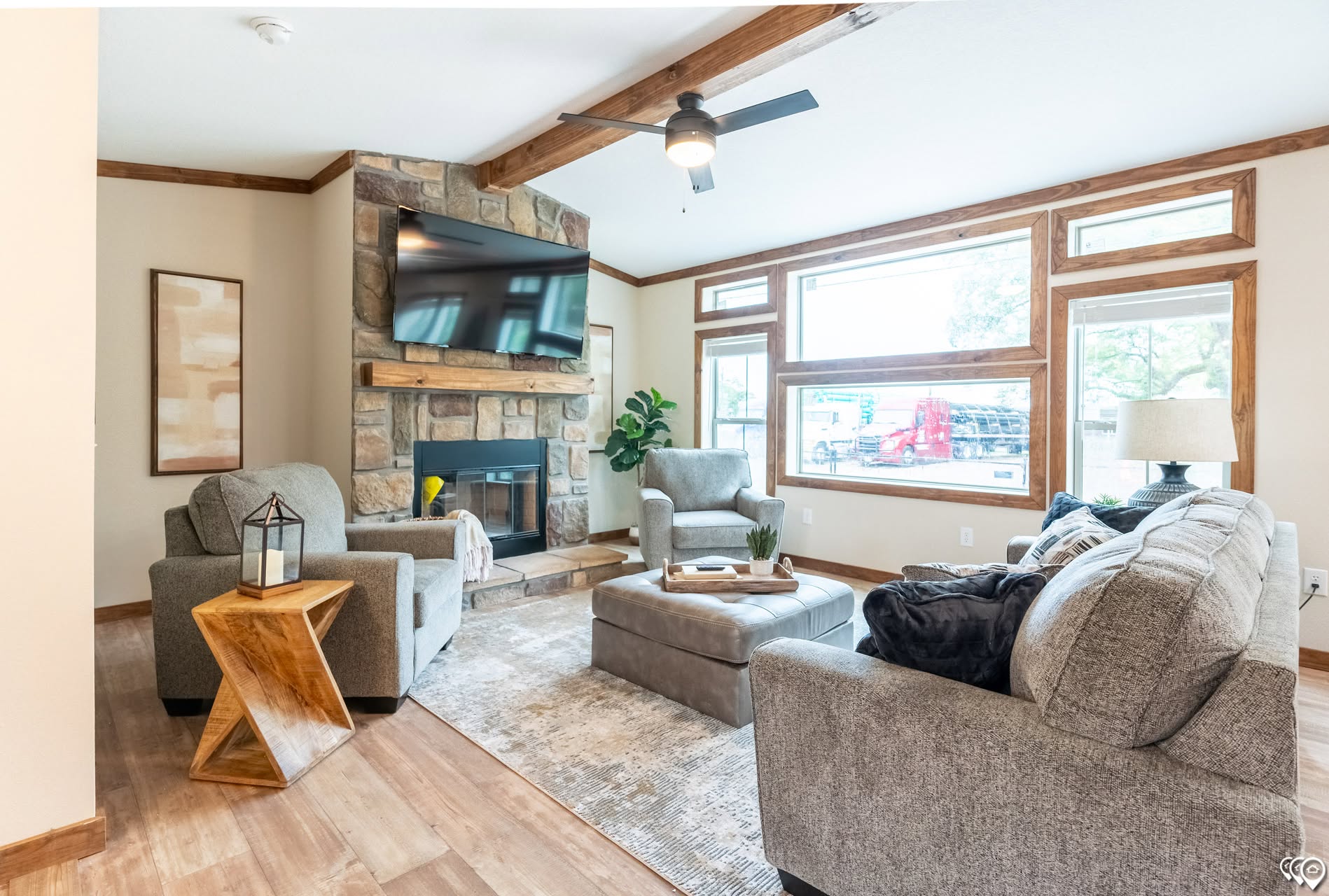
Credits: Instagram
The fireplace occupies one end of this bright living room, and the furniture makes its position feel intentional. A broad gray sofa faces inward toward two chairs, with an upholstered ottoman connecting the seating.
Stone around the hearth brings varied color to the mostly neutral scheme, while wood trim ties the windows to the ceiling details. The angled wood side table adds a small sculptural moment without interrupting the view across the room.
For a comparable layout, think about the conversation area as well as the fireplace wall. Use a rug to visually gather the seats, then repeat one or two tones from the surround in smaller furnishings.
The result can feel comfortable and connected even with an off-center fireplace.
6. Let Fireplace Pattern Guide the Room Palette
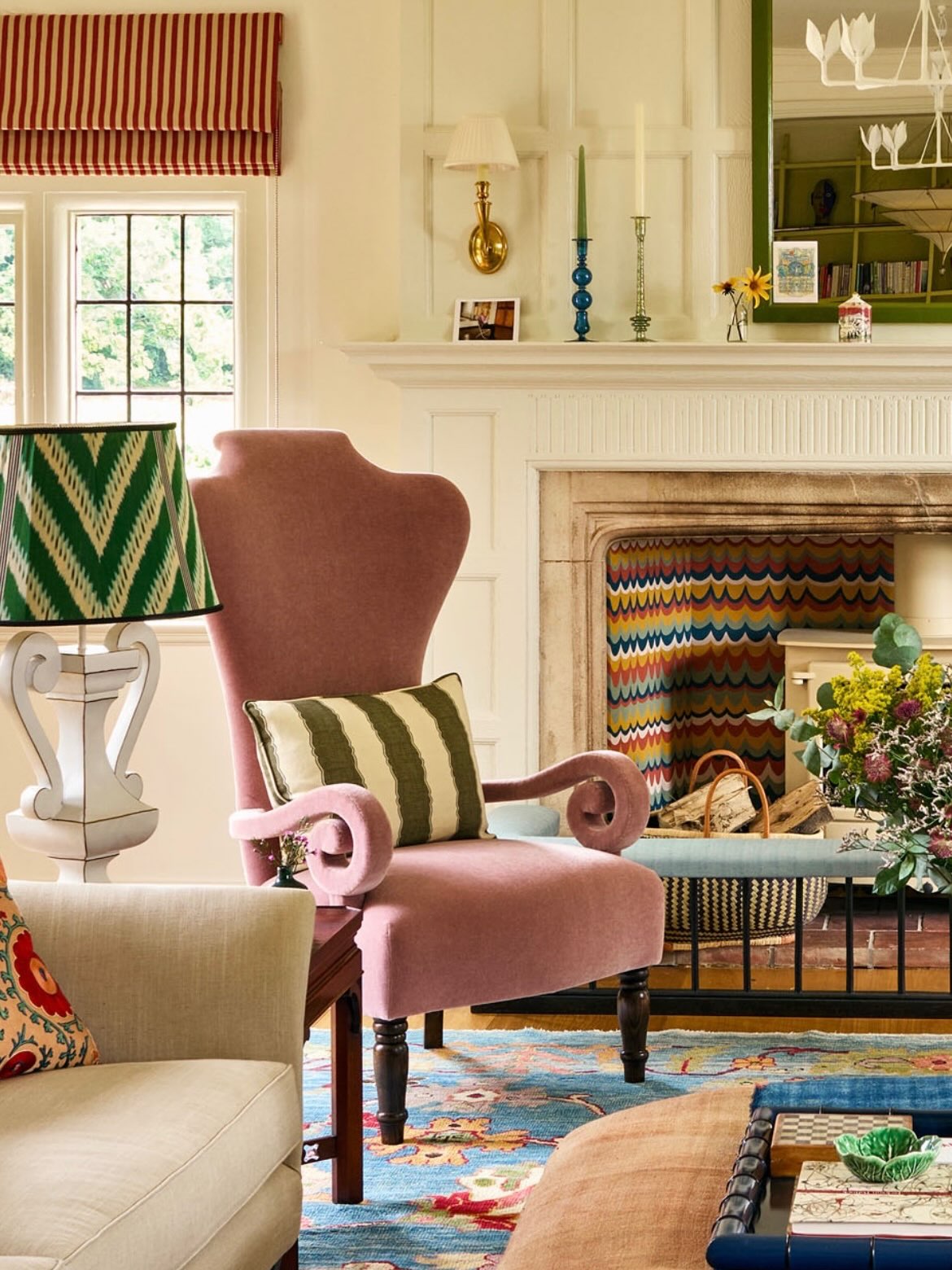
Credits: Instagram
Colorful waves inside this decorative fireplace opening offer a useful starting point for the room's lively palette. Pink upholstery, green stripes, blue in the rug, and mixed candlesticks all find a relationship with that patterned area.
The pale mantel and paneled wall give the eye somewhere quieter to rest. Rather than repeating every color everywhere, the room spreads individual accents among different objects.
You can borrow that decorating principle from existing fireplace tile or another patterned detail: choose several colors and assign each to a separate element.
Here, the large green mirror frame and patterned lampshade provide stronger notes, while the cream sofa keeps the composition grounded. The fireplace remains part of the conversation without needing an oversized surrounding display.
7. Keep a Tall Modern Fireplace Wall Quiet
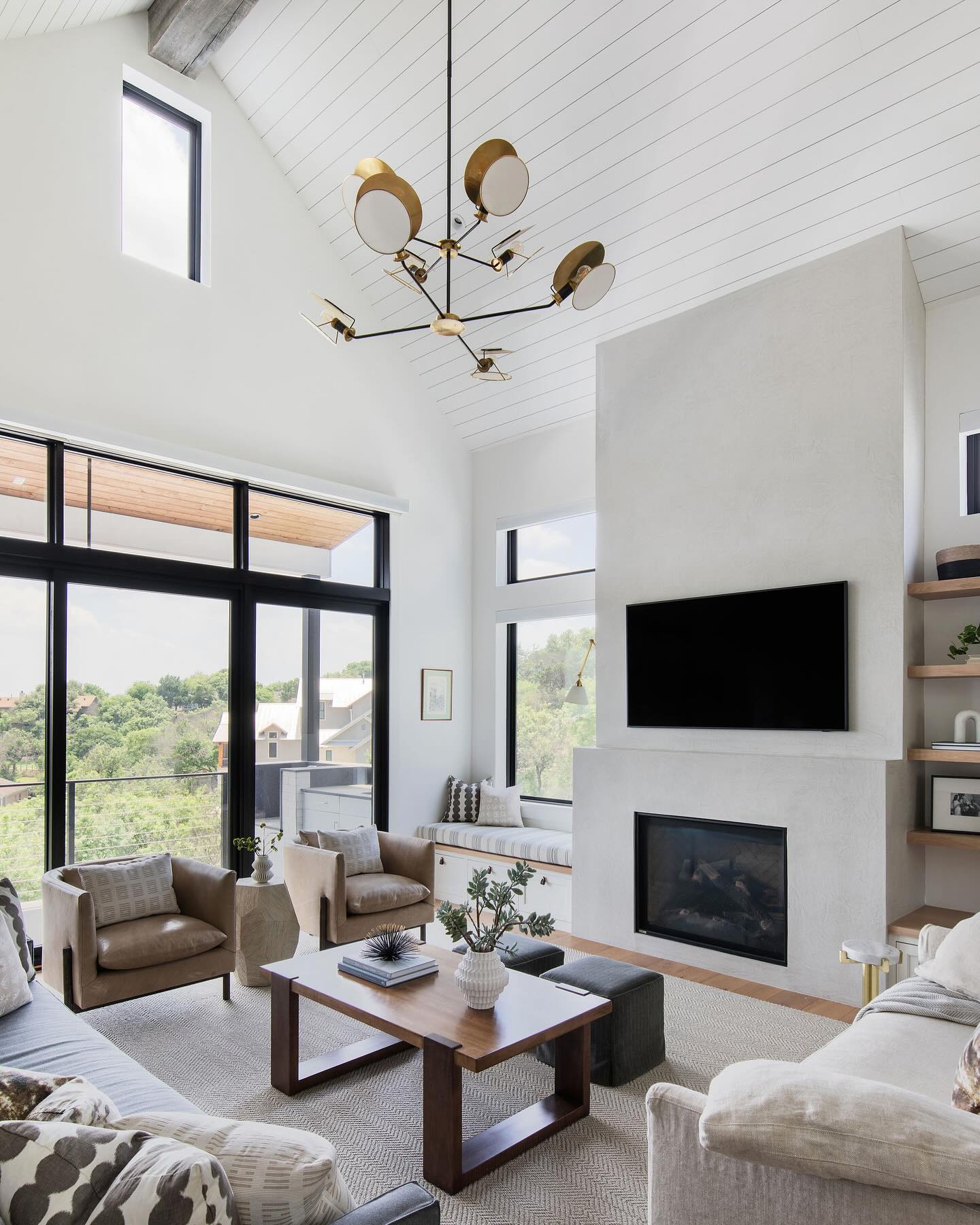
Credits: Instagram
A simple pale fireplace wall gives this tall living room a composed center. Its dark rectangular opening sits below the television, while the nearby windows and shelves add smaller divisions around it.
The vaulted ceiling and branching light fixture already provide plenty of movement, so a restrained wall treatment lets the room breathe. Neutral armchairs, a light sofa, and a square coffee table continue that uncomplicated approach at seating height.
If your living room has strong ceiling lines or expansive glazing, consider keeping the fireplace's visual treatment equally clear. A limited palette can connect several architectural elements without making them compete.
Here, warm wood at the table and bench adds enough contrast to keep the pale surfaces from feeling flat.
8. Use Matching Sofas to Emphasize the Fireplace
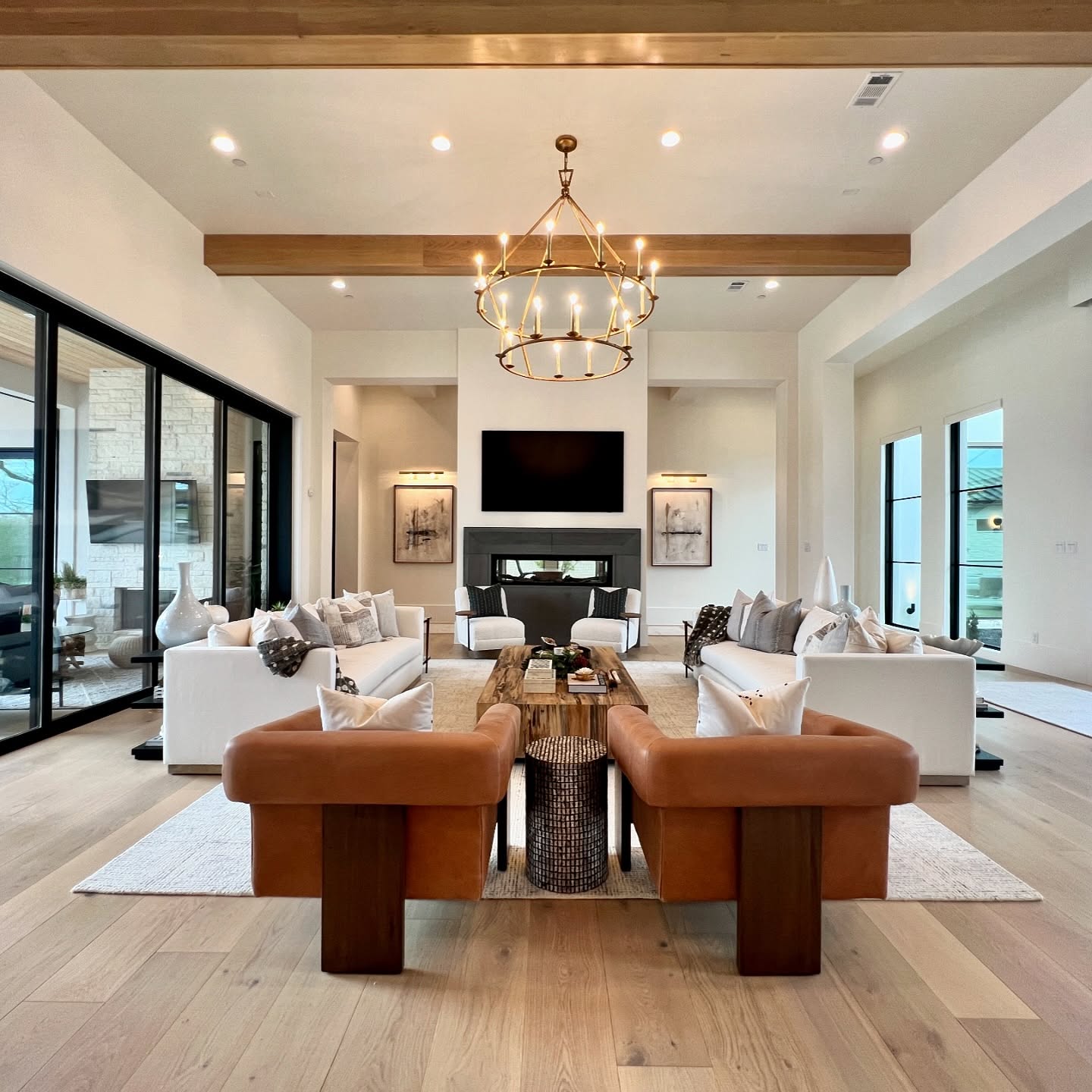
Credits: Instagram
Two pale sofas face each other across the center of this spacious room, making the fireplace wall the natural destination for the eye. Matching rust-colored seats at the near end complete the arrangement and introduce a warmer accent.
Overhead beams reinforce the long room's direction, while a generous rug gathers the furniture into one area. The fireplace itself stays relatively simple, with small framed pieces and wall lights providing a measured amount of detail.
This is a useful composition to study when a living room feels large but disconnected. Repeat substantial furniture forms and leave the central sightline clear.
The matching pairs create order, while variations in upholstery, wood tones, and smaller objects keep the seating group from feeling formal.
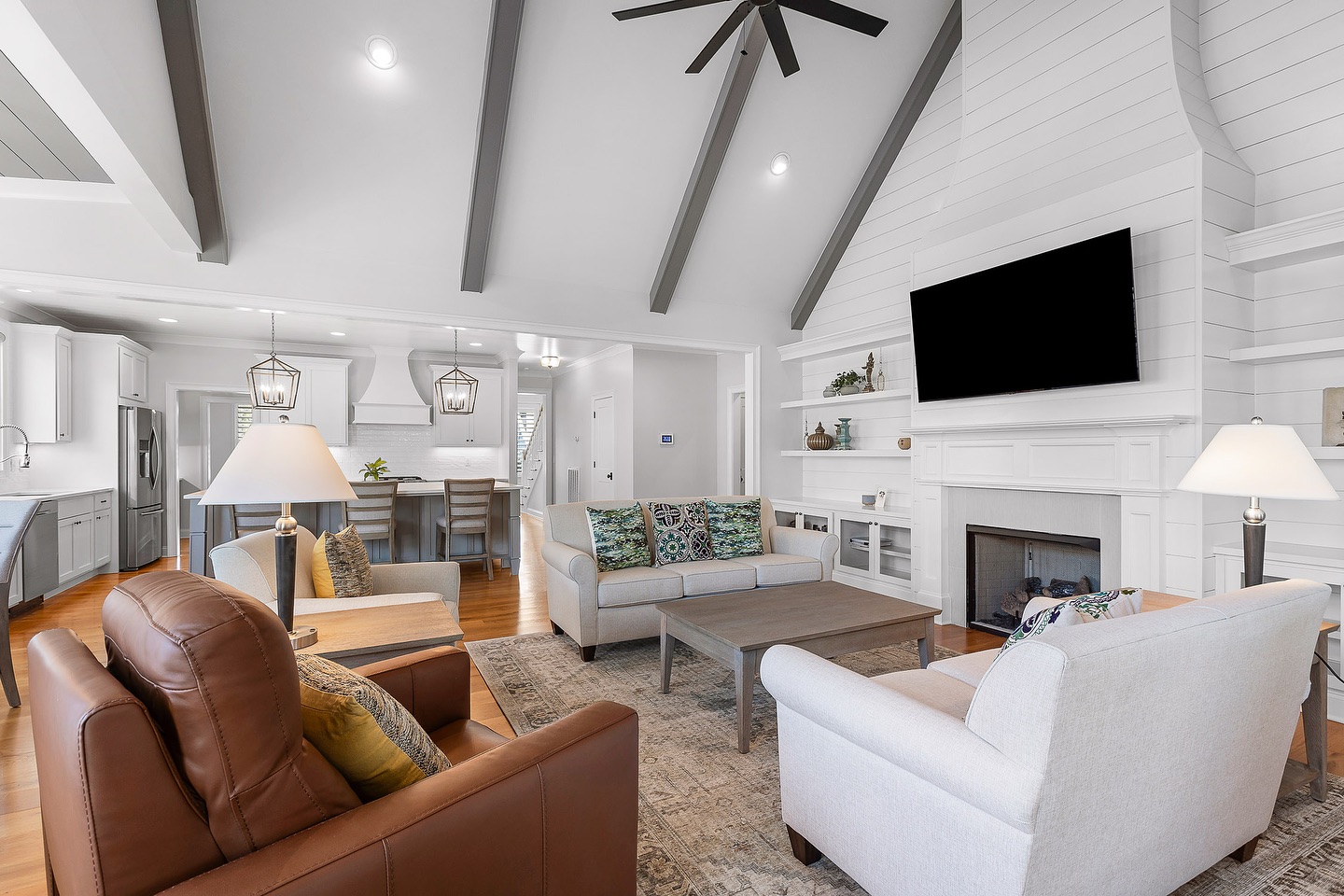
9. Carry White From the Mantel Into Built-Ins
Credits: Instagram
White connects the fireplace surround, adjacent shelving, and horizontal wall boards in this airy living room. That continuous color gives the hearth a place within the larger wall instead of making every element stand apart.
Dark ceiling beams and the television provide contrast, while a brown armchair adds warmth among the pale seats. The shelves remain lightly arranged, allowing their shape to contribute as much as the objects they hold.
Take the same approach when several features share a fireplace wall: repeat the main finish, then choose a few contrasting accents. The rug and coffee table define the conversation area below the tall ceiling.
Matching lamps at seating height bring the focus back down to the places where people gather.
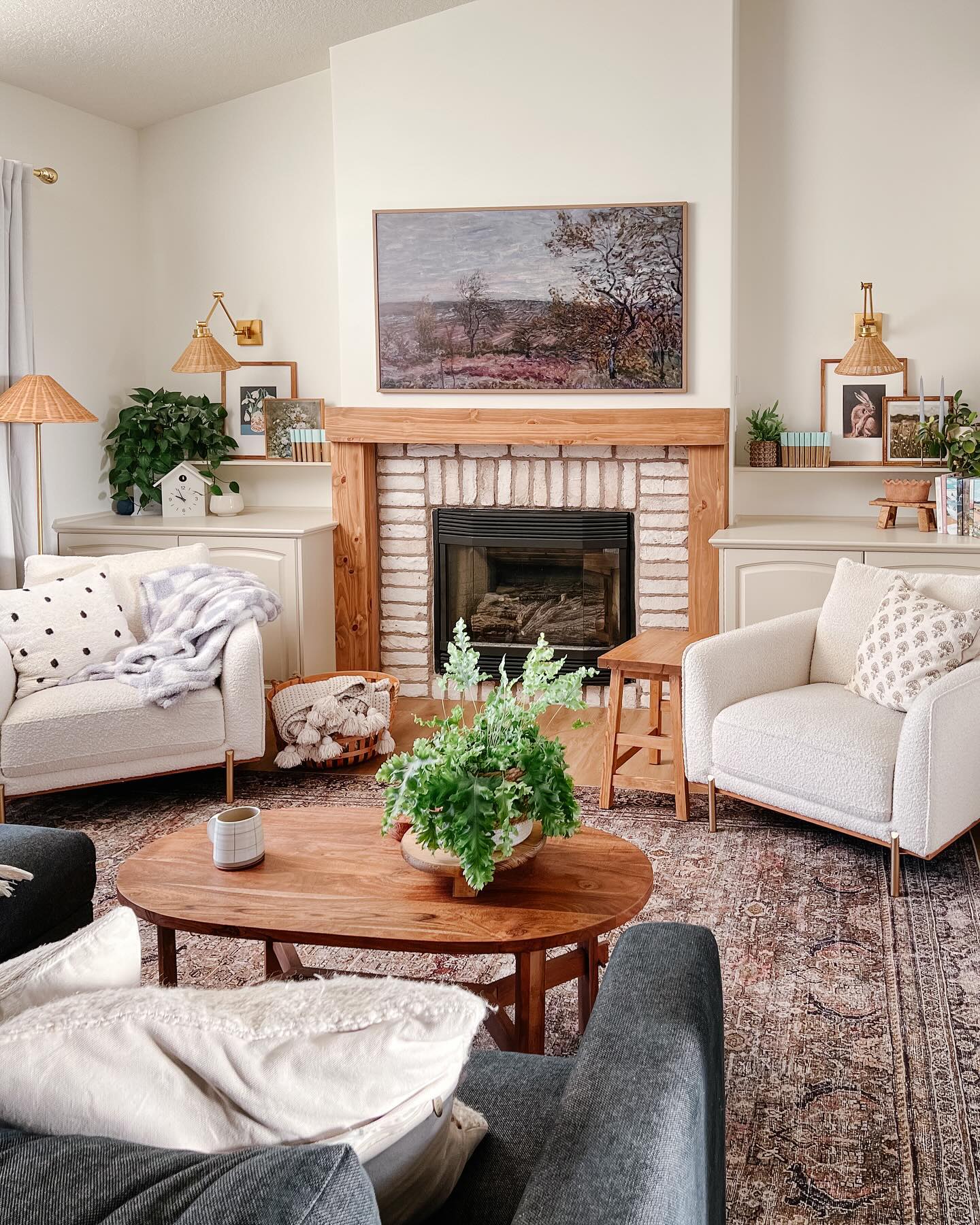
10. Warm a White Room With a Wood Mantel
Credits: Instagram
A wood mantel gives this light living room a warm center, with pale brick around the opening adding smaller lines and texture. Low cabinets on either side keep the fireplace prominent without making the whole wall feel heavy.
The artwork above it repeats the room's earthy colors, while small lamps and leafy plants create a relaxed arrangement across the wider wall. Notice how the rounded coffee table echoes the mantel's warm tone without copying its shape.
To borrow the look, connect the fireplace to one other substantial wood piece and let upholstery stay light. Patterned pillows and a faded rug supply detail at a softer scale.
The mix makes the hearth feel familiar and collected within a straightforward room layout.
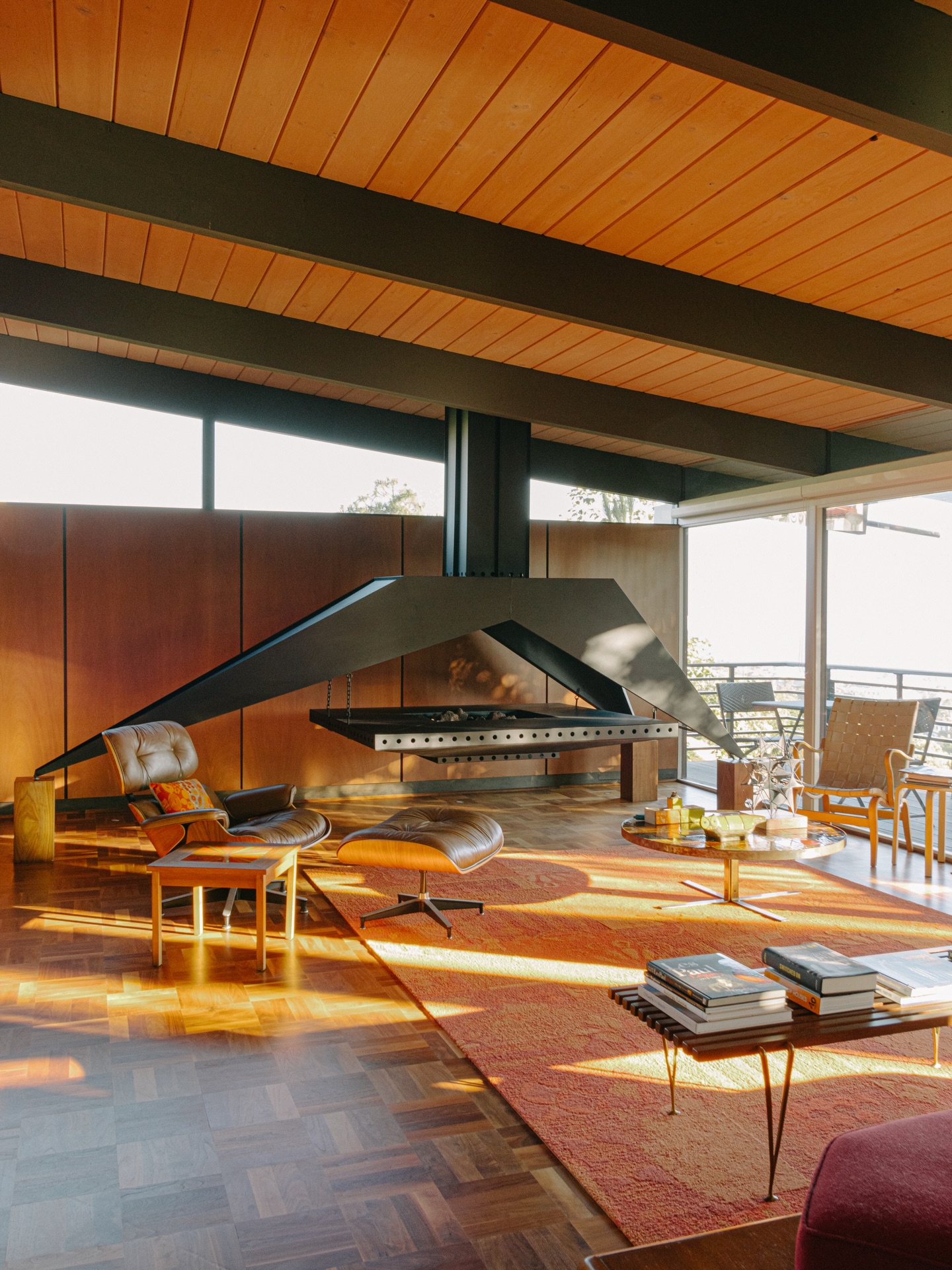
11. Let a Sculptural Fireplace Set the Mood
Credits: Instagram
The angular black fireplace hood is the strongest shape in this sunlit room, stretching widely beneath a ceiling of warm wood boards.
Low furniture leaves its outline visible, while an orange rug gives the seating area a generous field of color. A lounge chair and ottoman introduce curves that contrast with the hood's sharp edges.
The lesson here is about proportion: when the fireplace already looks sculptural, surrounding furniture can sit lower and feel visually lighter. Slim tables and open chair frames continue that effect.
Repeating the dark tone in the ceiling beams links the statement feature to the architecture. Warm brown upholstery, wood finishes, and rust tones make the dramatic centerpiece feel comfortable within a relaxed, lived-in gathering space.
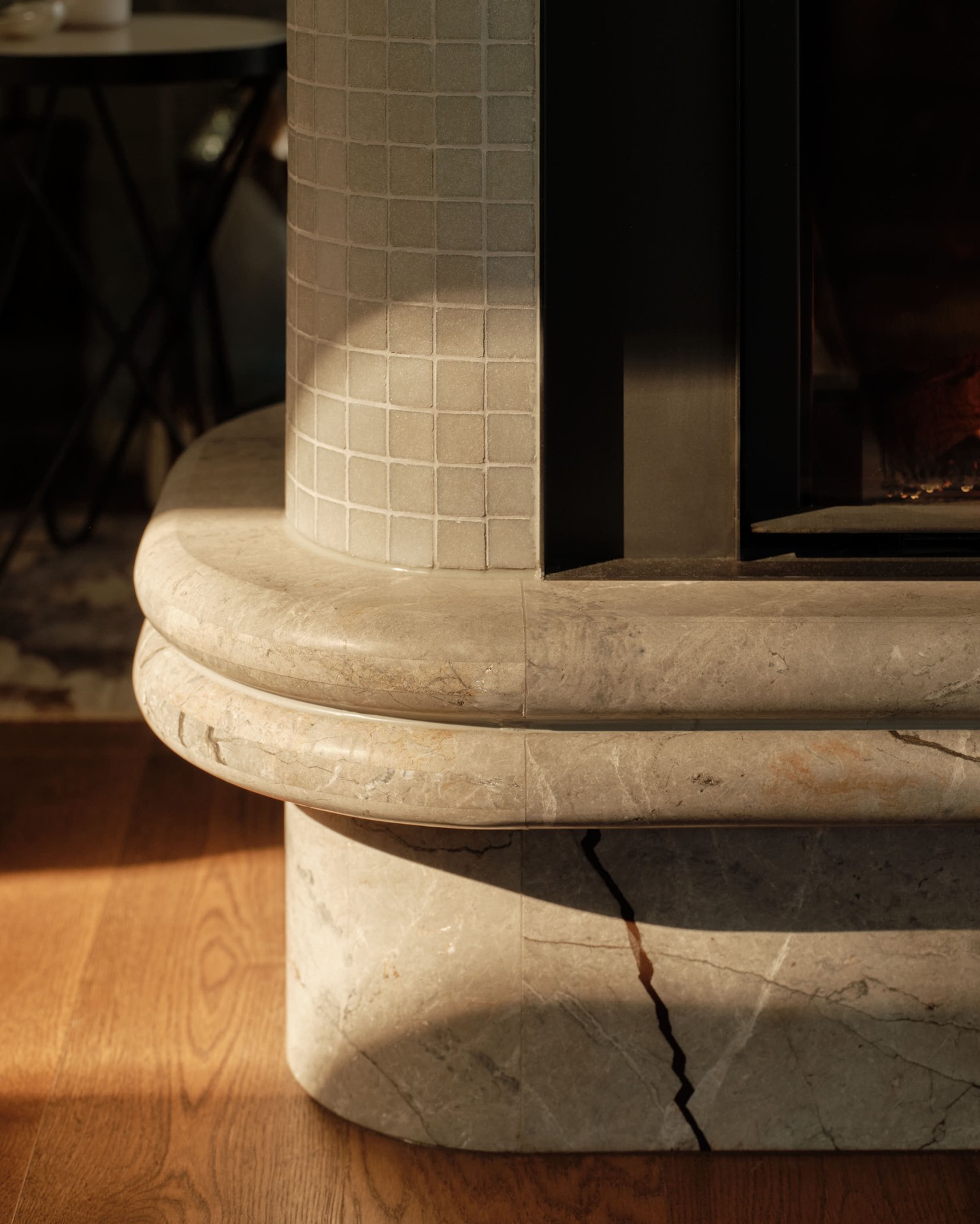
12. Soften Fireplace Lines With Rounded Edges
Credits: Instagram
Rounded edges turn this fireplace detail into a study in shape and texture. Two curved bands wrap the pale hearth, while small square tiles trace the surface above it.
Their fine grid contrasts with the broader veining below, giving the neutral palette plenty to look at. The black opening adds a crisp boundary, and sunlight brings out the changes in depth along the curved profile.
This close view shows why a fireplace can feel distinctive without elaborate decoration. If you are gathering design references, compare the proportions of the edges as carefully as the overall silhouette.
Here, repeated curves connect the separate surfaces, while their different patterns keep them legible. The warm wood floor supplies another contrast at the base.
13. Pair a Tall Dark Panel With Natural Texture
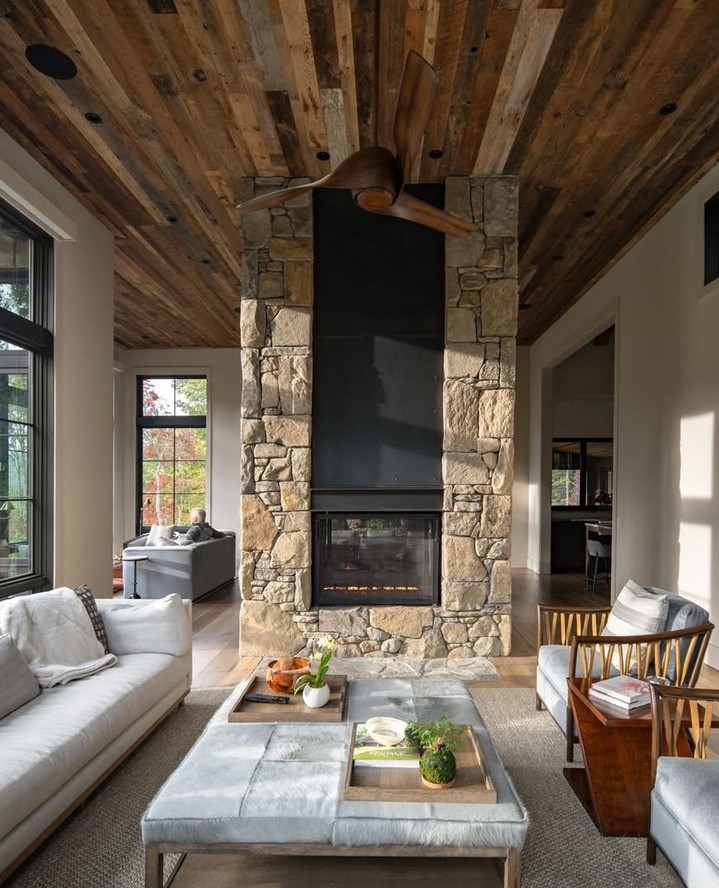
Credits: Instagram
A tall dark panel rises through the center of this stone fireplace, giving the textured surround a strong vertical line. Its clean surface contrasts with the irregular stone and the richly varied boards overhead.
Gray seating keeps the foreground understated, allowing those architectural textures to hold attention. The broad upholstered table introduces another soft surface, with trays organizing books and small objects.
To borrow the visual balance, repeat your fireplace's darker tone in window frames or a few small details, then keep larger upholstery pieces quieter. Here, the wood chair and side table bridge the warm ceiling and cooler seating.
The result shows how a dramatic fireplace can share a room with several textures without requiring much additional decorative layering.
14. Unify the Mantel and Shelves With Sage Green
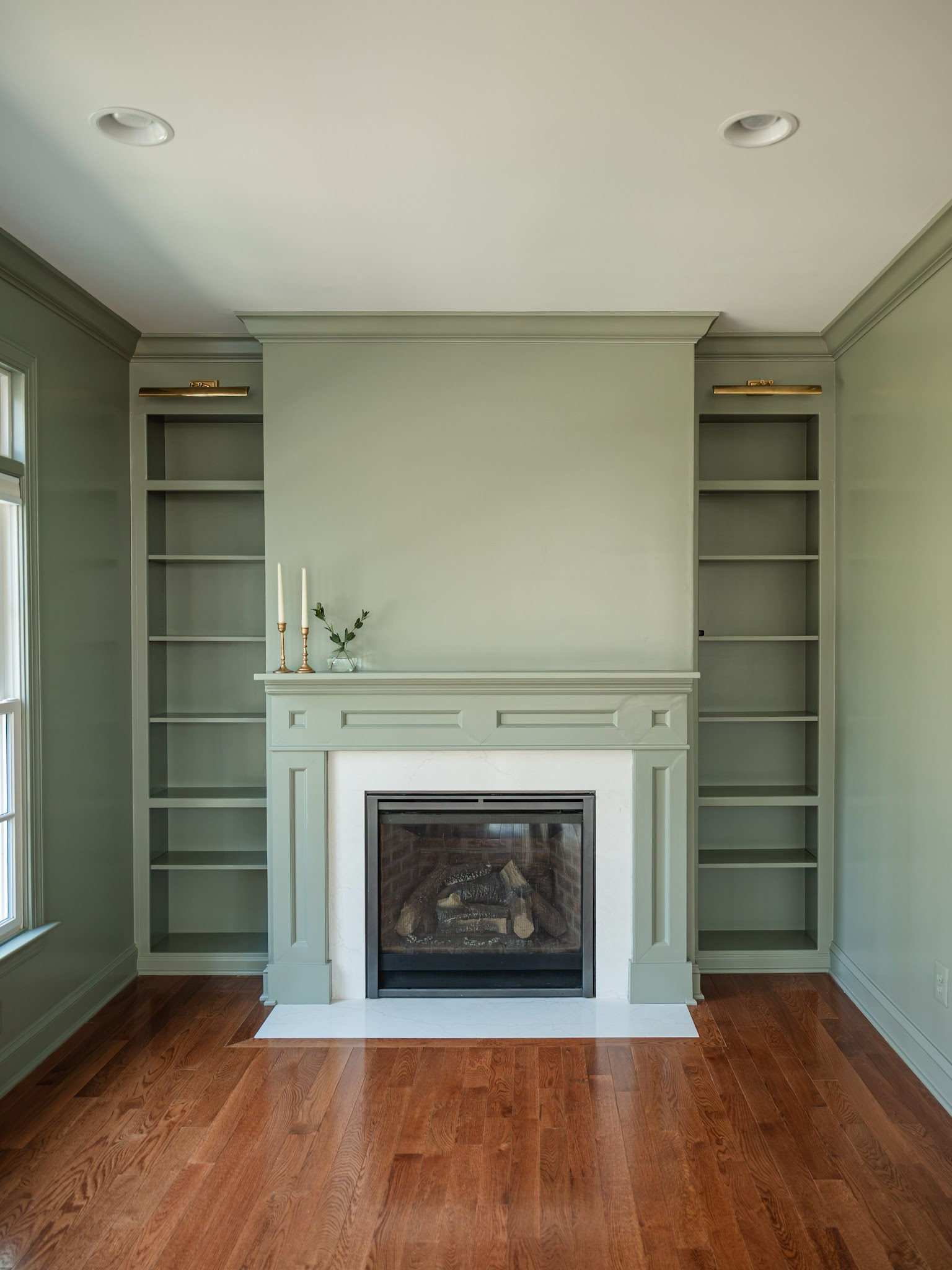
Credits: Instagram
Soft sage green connects the mantel, chimney breast, side shelves, and surrounding walls in this updated room. Using one color across those separate elements makes the whole elevation feel composed.
The pale inner surround remains a crisp accent, drawing attention to the opening without breaking the gentle palette. Small gold-toned picture lights above the shelves add another restrained detail.
This view is especially useful before furniture enters the picture because the proportions are easy to read. Consider how a shared color could connect existing shelves and a traditional mantel in your own room.
Here, the simple arrangement of two candlesticks and a small vase gives the architecture space. Warm wood flooring supplies contrast and prevents the green from feeling chilly.
15. Build a Cabin Palette Around Collected Objects
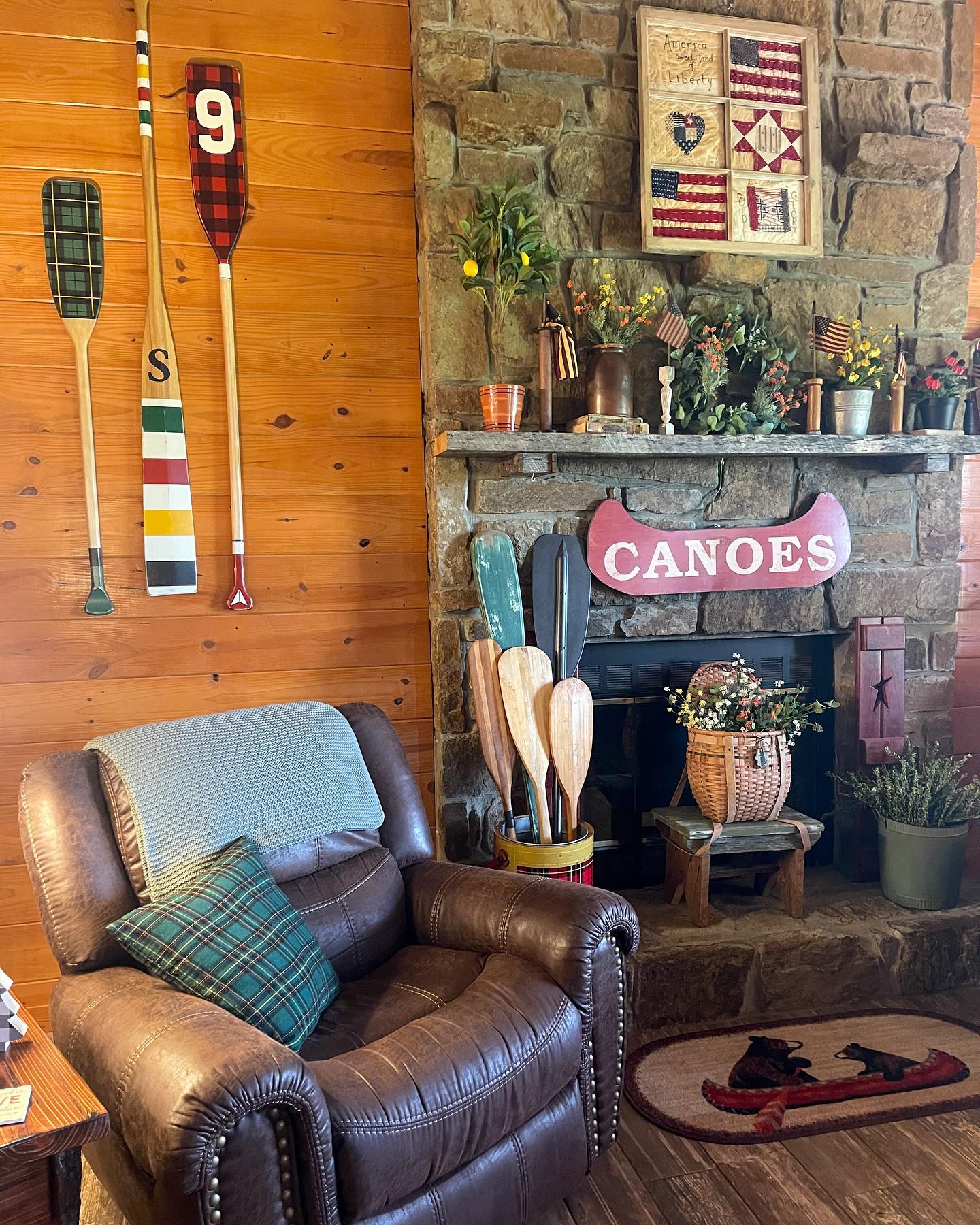
Credits: Instagram
Painted paddles, a canoe sign, and plaid details give this cabin fireplace corner a clear personality. The stone surround and wood wall provide a textured backdrop, while a brown armchair creates a comfortable visual anchor beside them.
Green and blue accents appear in the pillow, throw, and decorative pieces, connecting the collection without making everything match. This summer arrangement treats the fireplace as part of a broader display.
The useful idea is to choose a theme that reflects something you enjoy, then repeat its colors and shapes in several places around the room.
Mixing larger objects with smaller finds keeps the composition varied. Here, the narrow paddles contrast with the substantial chair, balancing the heavier materials with slender vertical lines.
16. Give White Brick a Weathered Wood Accent
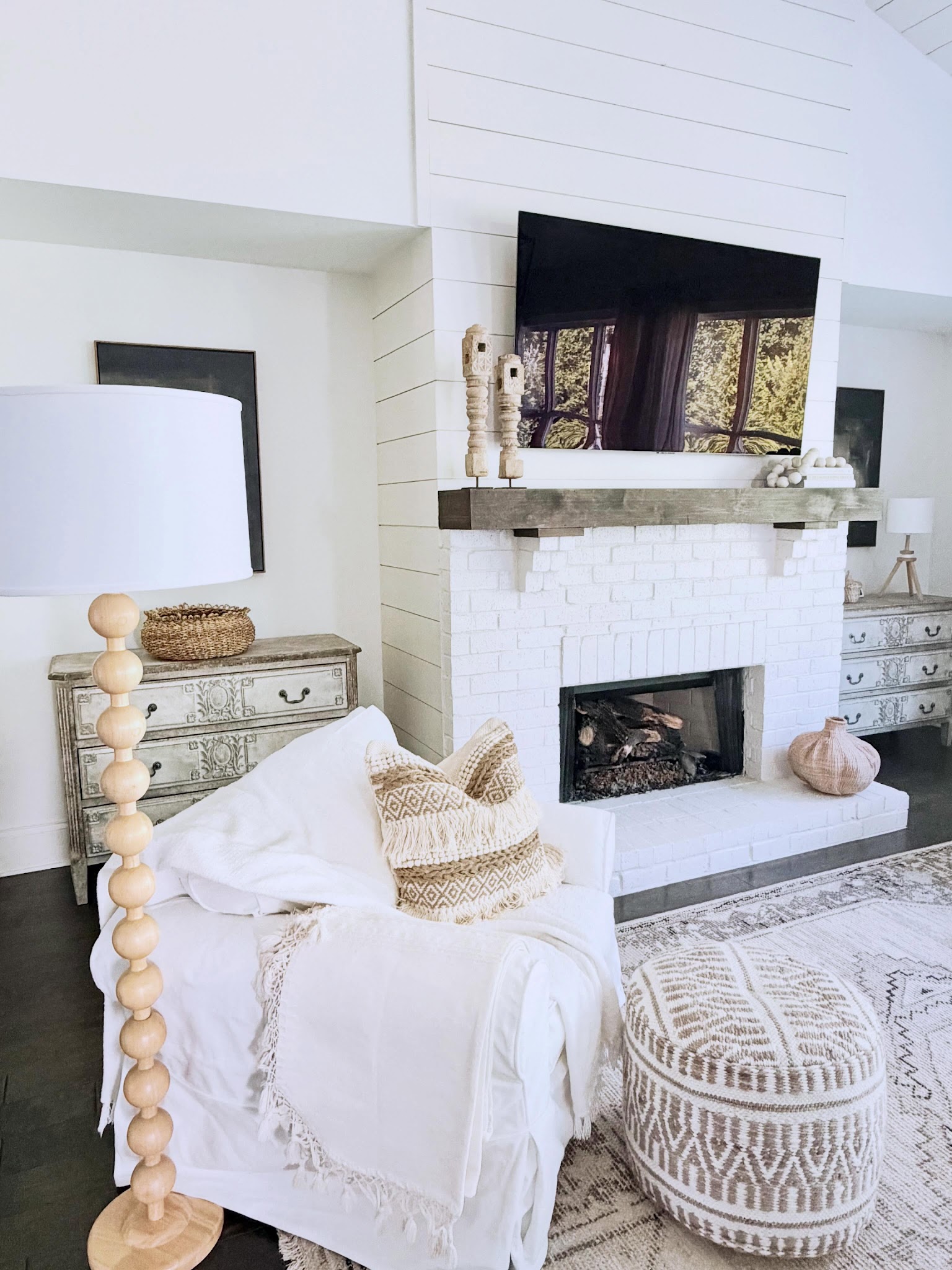
Credits: Instagram
White brick and horizontal wall boards make a light backdrop for this fireplace, while the weathered mantel gives the center a more substantial line. A pair of carved wood pieces adds height beside the screen without filling the entire shelf.
Nearby, patterned upholstery, a woven basket, and a rounded pouf bring texture into the mostly white scheme. The pale distressed cabinets repeat the mantel's worn character at either side.
If you like a soft neutral room, focus on differences in surface and shape instead of adding many colors. The turned floor lamp, fringed pillow, and patterned rug each contribute something distinct.
A few darker outlines around the screen and opening give the composition enough definition to keep the white interesting.
17. Frame Mantel Artwork With Tall Decorative Trees
Credits: Instagram
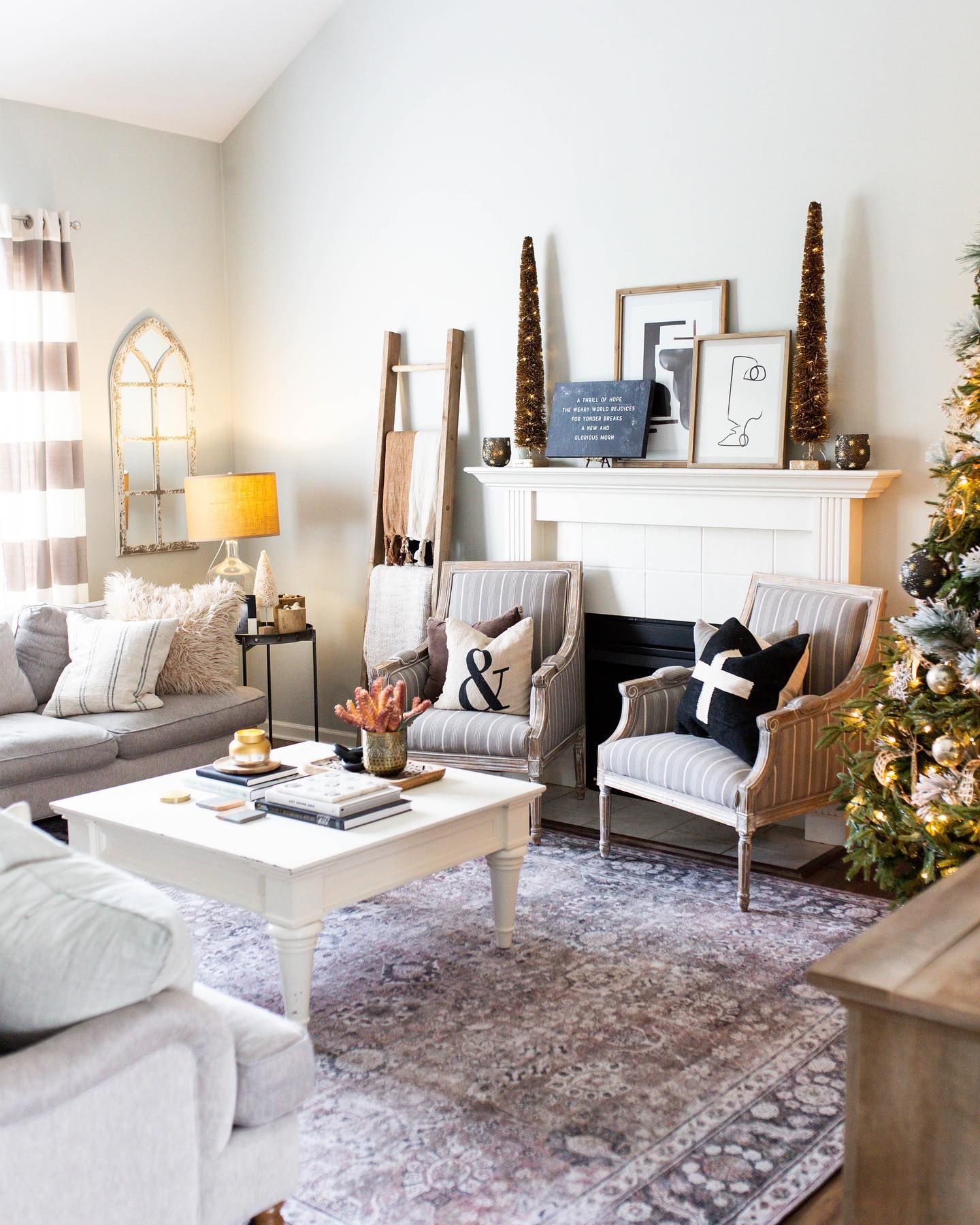
Two tall decorative trees bring height to this seasonal mantel without obscuring the pale wall above it. Framed artwork overlaps between them, creating a casual arrangement that feels connected to the room's black and white accents.
The fireplace surround stays simple, allowing the collection above to provide the detail. Below, two striped chairs repeat each other, while their graphic pillows add a different kind of pattern.
You can adapt the composition beyond the holidays by choosing two slender objects to frame an artwork grouping. Keep the middle arrangement lower so each shape remains visible.
Here, the white coffee table and light upholstery reinforce the fireplace's pale finish, while the muted rug brings a softer, less structured pattern into the room.
18. Connect a Dark Mantel With Rich Red Accents
Credits: Instagram
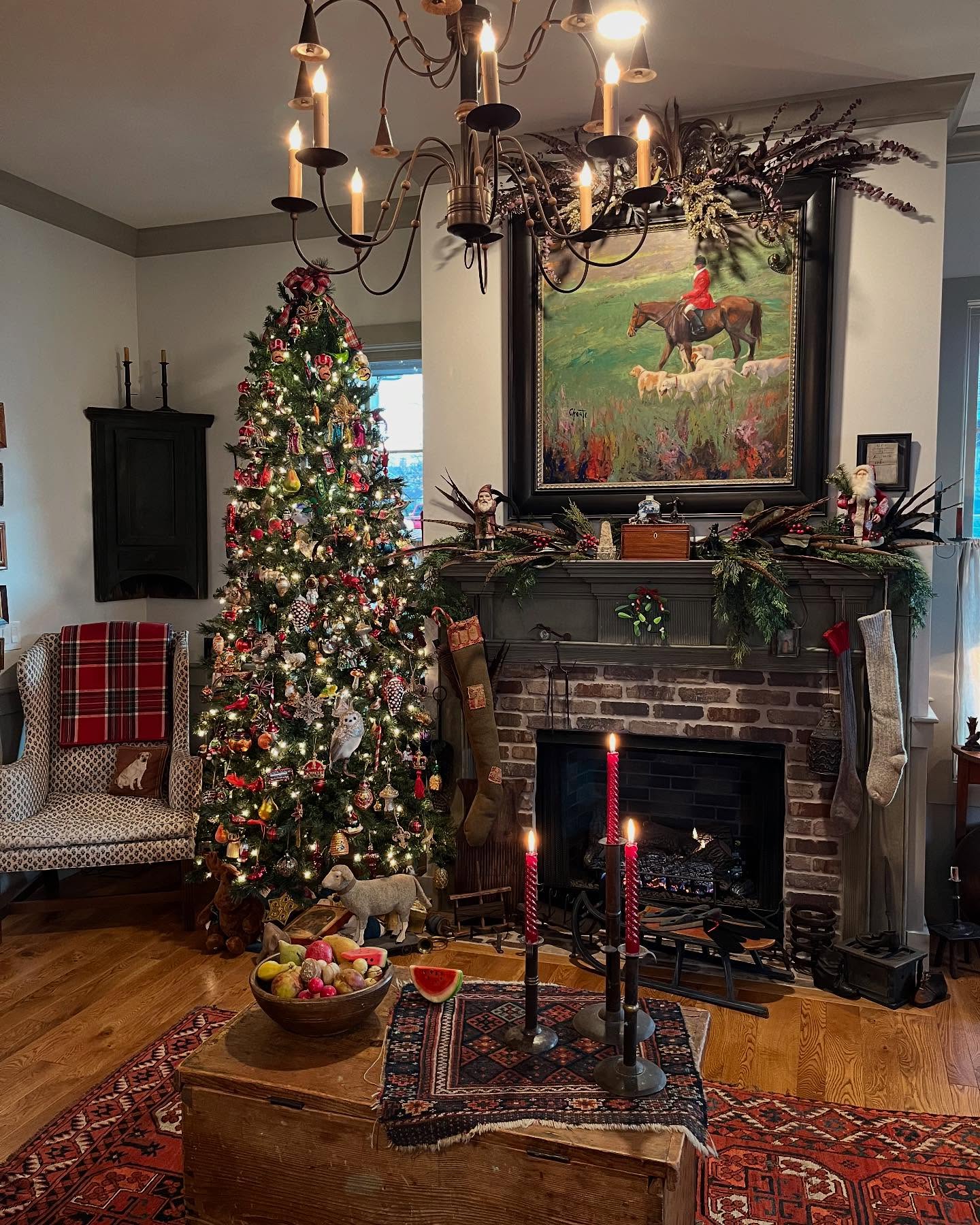
A dark traditional mantel gives this festive living room an outline, with exposed brick adding texture around the opening. The large equestrian painting above it introduces green and red tones that reappear throughout the room.
Red in the plaid throw, patterned rugs, and holiday ornaments creates a visual thread through an abundant collection of objects. The dark picture frame also relates to the mantel and nearby wall cabinet.
For a similarly layered room, start with one artwork and use its colors to guide textiles and seasonal details. Keeping larger architectural surfaces quieter helps those accents read clearly.
Here, the wood floor and chest provide a warm base, while the tall tree balances the painting's scale at the fireplace's left side.
19. Set a Black Mantel Against Muted Green
Credits: Instagram
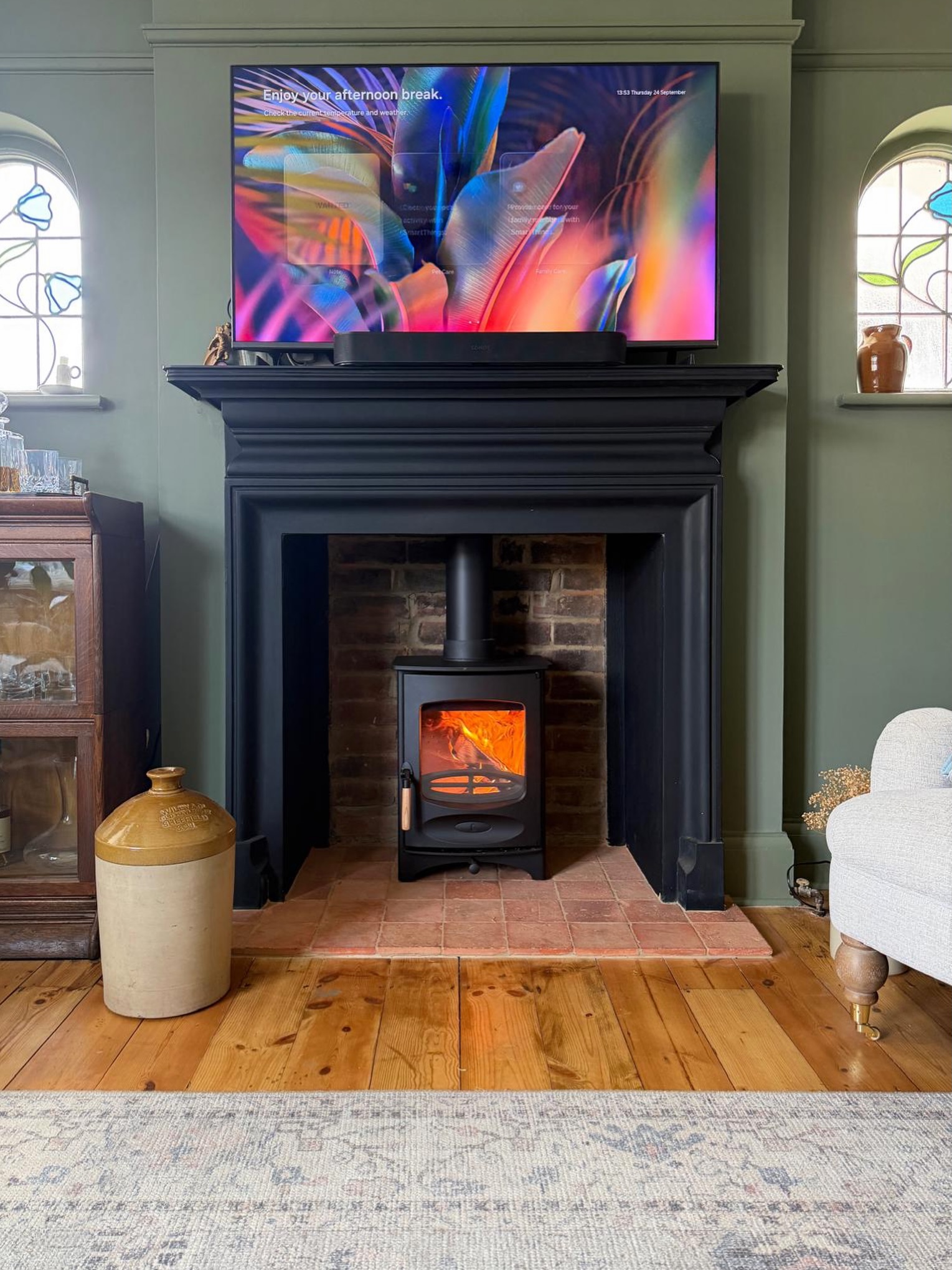
Muted green walls make this black fireplace surround feel rich without overwhelming the room. The dark mantel's layered molding provides definition, while the warm tiled hearth introduces a different color at floor level.
Brick within the opening adds texture between those two finishes. The arched windows and pale chair soften the stronger central shape, making the arrangement feel balanced.
Borrow the color relationship by pairing a dark focal piece with a subdued wall shade and warm accents nearby. Here, the wood floor, cabinet, and two-tone vessel support that palette.
The rug brings in a softer pattern across the foreground. Even with a television above the mantel, the fireplace keeps its identity through its distinctive outline and the contrasts around it.
20. Echo Fireplace Veining in Art and Accessories
Credits: Instagram
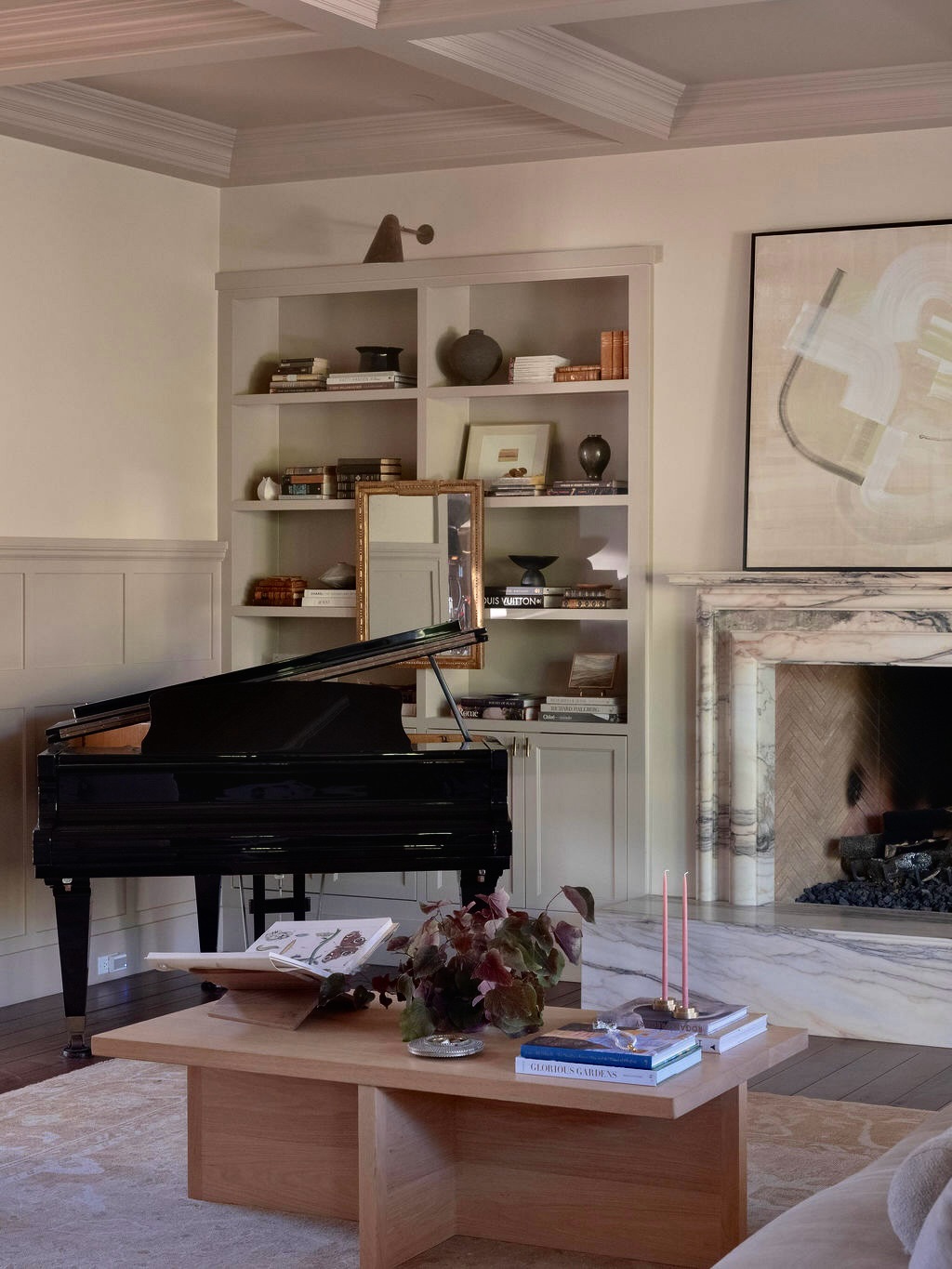
Soft pink and gray veining gives this marble fireplace a decorative presence without a bright color scheme. The pale artwork above it picks up those subtle tones, while darker details in the room provide contrast.
Nearby shelves hold books, bowls, and a leaning mirror in an arrangement that feels collected. The wood coffee table adds a warmer surface among the paler finishes, and the black piano brings a dark shape into the composition.
When a fireplace has an expressive pattern, use its quieter colors as a guide for surrounding pieces. That can connect the room without requiring an exact match.
Here, a few pink accents and leafy branches continue the palette at table height, keeping the effect gentle and layered.