
A spring wreath can feel full of flowers without forming a perfectly even circle. Spring Floral Wreath Ideas range from lush tulips and garden blooms to airy open hoops, pastel crescents, and a simple green base dotted with daffodils.
The arrangements also show how a striped bow, bright ribbon, or a sweep of lavender can give a wreath its own character.
Whether you prefer fresh flowers or dried stems, these examples offer practical ways to balance color, greenery, and open space while keeping the design easy to read.
1. Layer Blush and Plum Tulips With Textured Greenery
Credits: Instagram
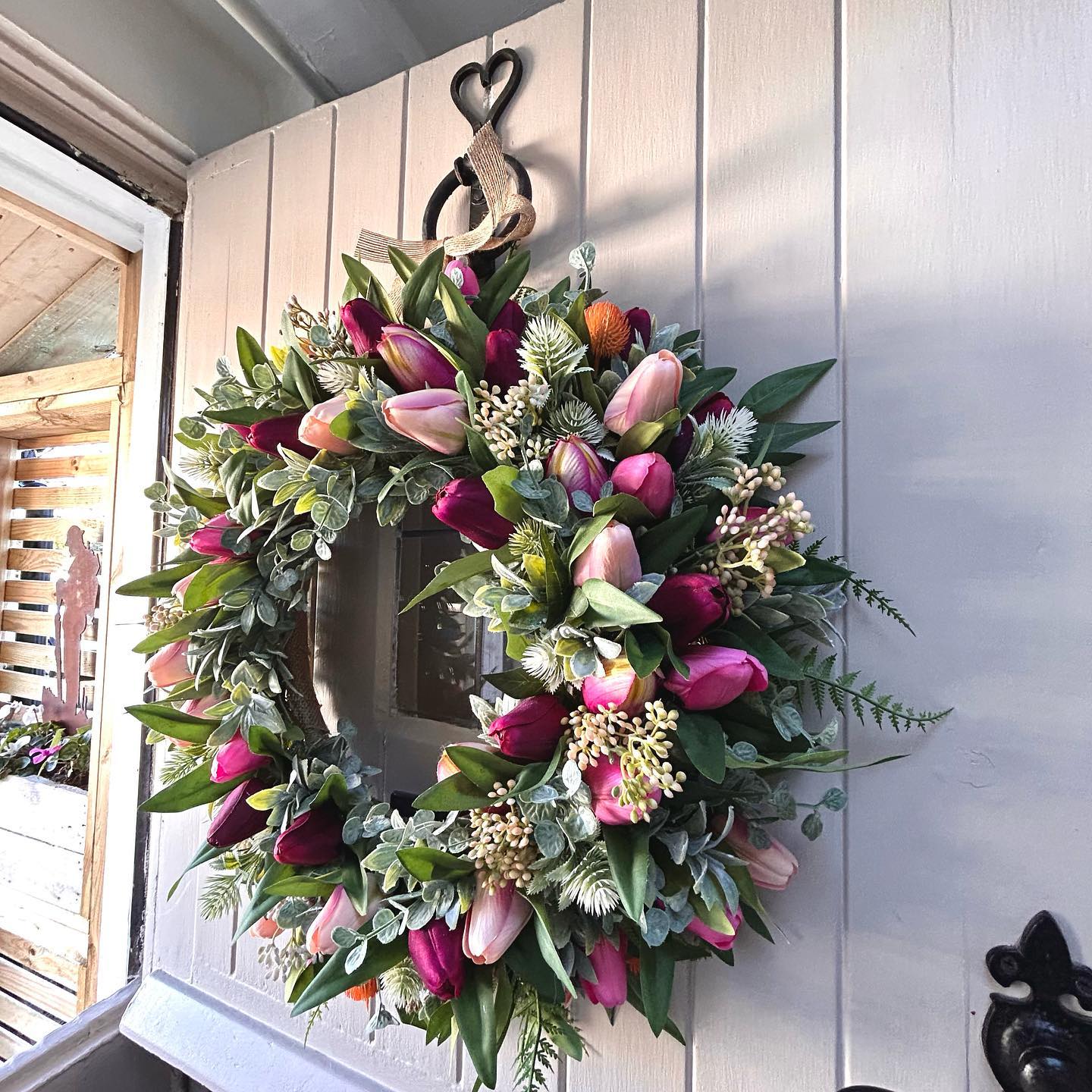
Pink and plum tulips give this wreath a rich spring palette without making it feel heavy. Small cream buds, pale spiky accents, and several leaf shapes add texture between the smooth flower heads.
Borrow the arrangement by spacing your darkest tulips around the ring, then filling the gaps with softer pinks. Let a few leaves project beyond the flowers to soften the circular outline.
The narrow hanging loop keeps the focus on the full wreath and leaves the decorative black hardware visible above it. On a pale door, these deeper colors provide especially clear contrast.
Step back as you arrange each section, checking that the center stays open and that the tulips face several directions rather than forming identical rows.
2. Contrast White Tulips With a Striped Bow
Credits: Instagram
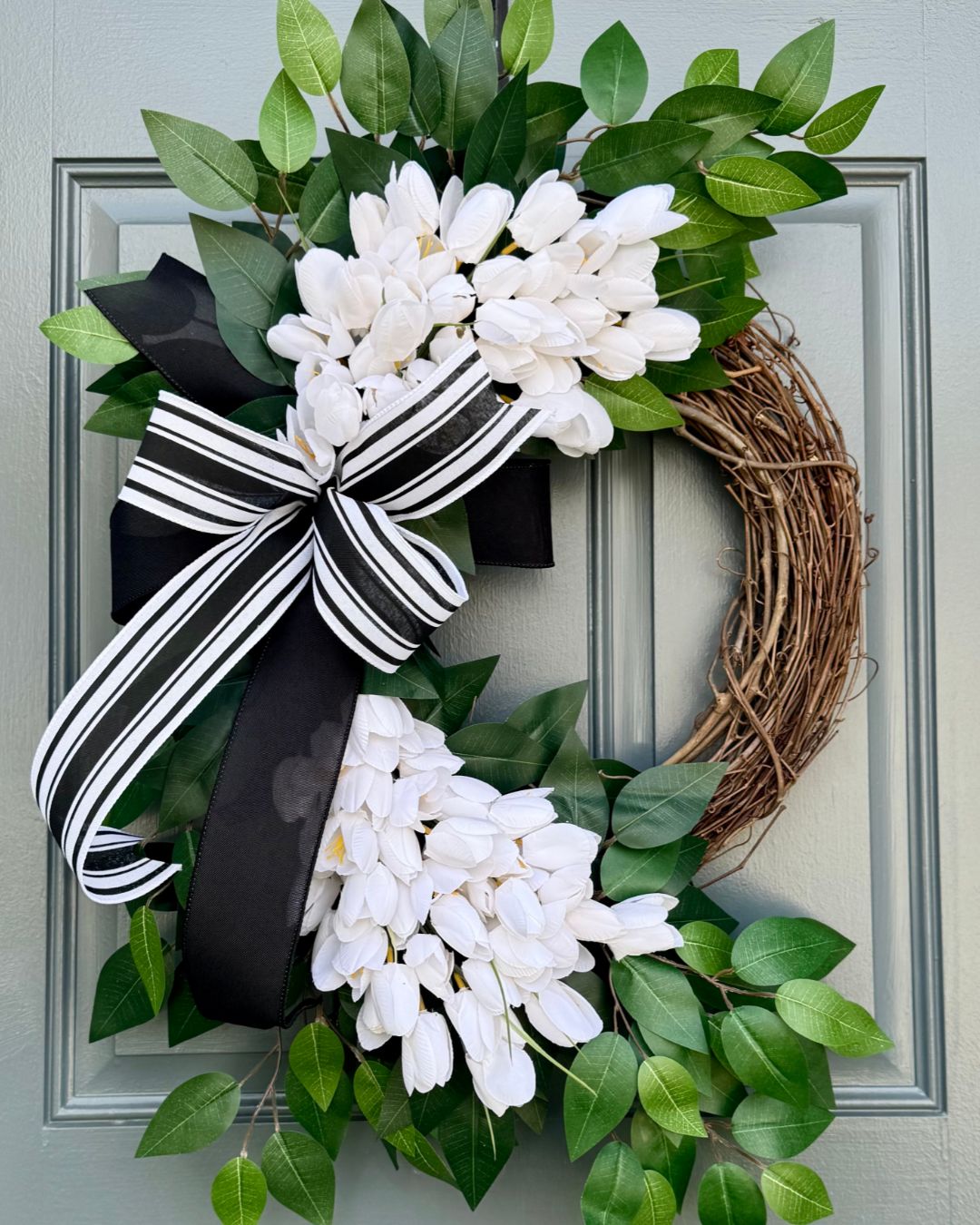
Two generous clusters of white tulips brighten this grapevine wreath, while a black and white bow gives the design a crisp finishing touch. The exposed brown curve on the right prevents the arrangement from feeling crowded.
To borrow the look, place one floral bundle above the bow and another below it, with their stems following the ring. Add broad green leaves behind the flowers for a clean outline against a painted door.
Choose ribbon with enough structure to hold its loops, and let the tails fall through the open center. Keep the white flowers prominent by limiting additional colors.
Before hanging, turn the wreath slightly until the two clusters feel balanced and the bare grapevine arc remains easy to see.
3. Leave a Gold Hoop Open Above Dried Flowers
Credits: Instagram
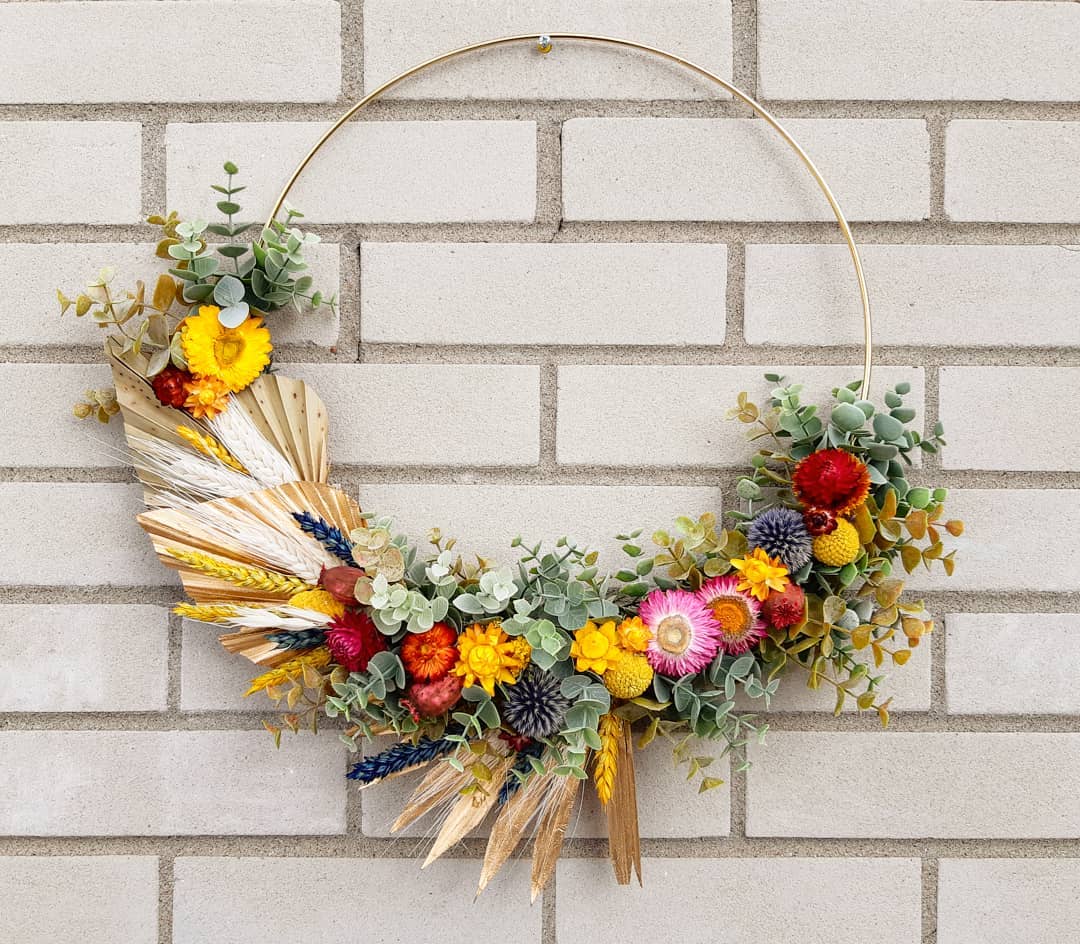
A thin gold hoop gives this colorful dried flower wreath a light, modern shape. Most of the flowers sit along its lower curve, with yellow, pink, and red blooms standing out among muted green leaves.
Pale fanlike pieces and slender stems extend beyond the ring to add movement. Start with an attractive hoop because the upper half will remain visible.
Arrange a small group on one side and a fuller sweep across the bottom, leaving an intentional gap above. Repeating yellow in several places helps connect the mixed colors.
Use a plain wall or door so the fine outline stays readable. For a similar dried arrangement, choose a sheltered indoor spot and handle brittle stems carefully when moving or storing.
4. Gather a Loose Ring of Spring Garden Flowers
Credits: Instagram
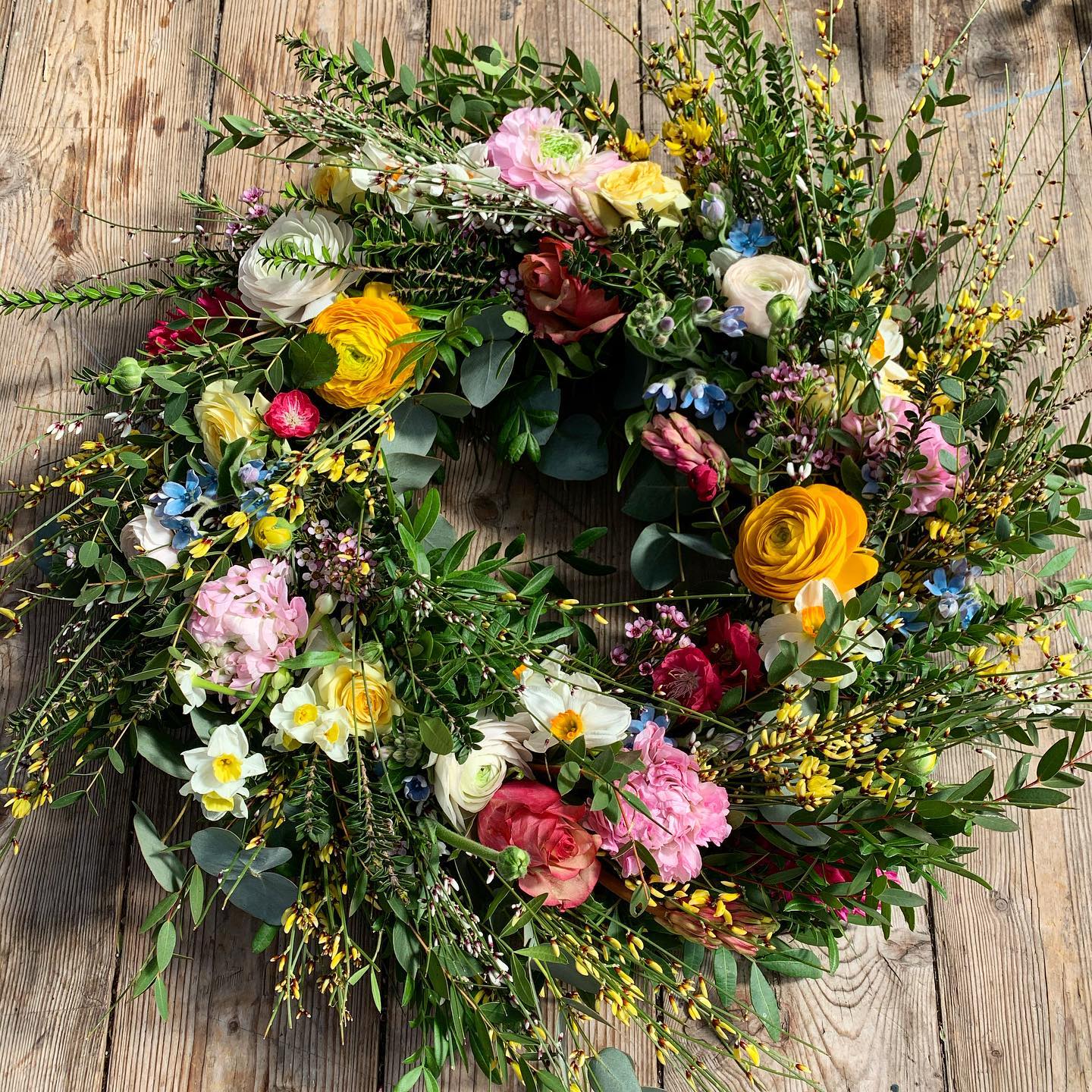
This wreath mixes pink, yellow, white, and blue flowers with long branching stems for a gathered spring look. Large layered blooms provide focal points, while tiny blossoms and abundant greenery keep the arrangement lively.
Build a similar composition by choosing a few larger flowers first, then surrounding them with smaller accents in related colors. Allow slender stems to extend unevenly beyond the ring instead of trimming everything into a perfect circle.
A visible center keeps the generous mix recognizable as a wreath. The weathered wood background emphasizes the garden character and makes the bright petals stand out.
If using fresh flowers, select a wreath method that supplies moisture and place the finished arrangement somewhere cool, sheltered, and away from heat.
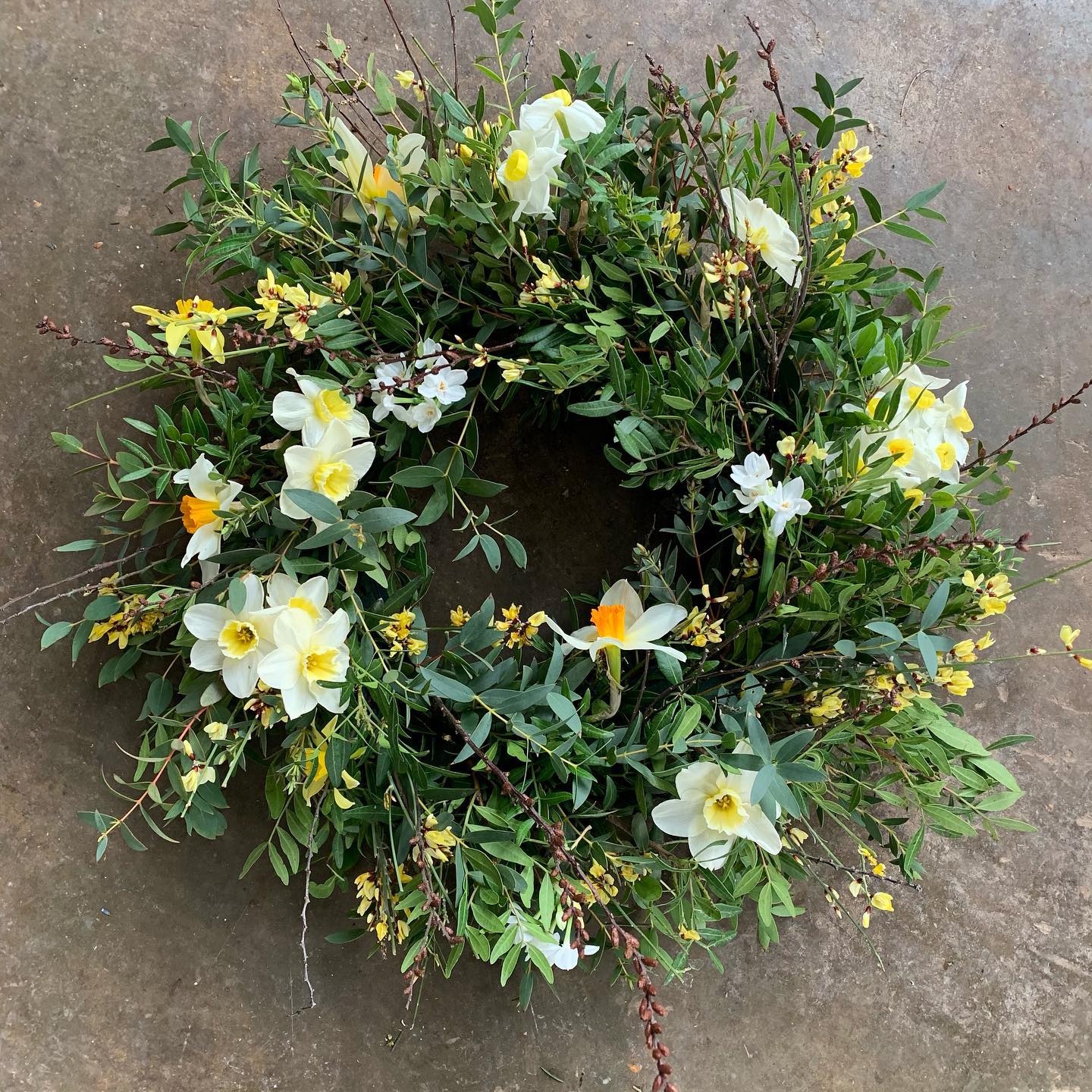
5. Make Daffodils the Focus of a Green Wreath
Credits: Instagram
White daffodils with yellow centers bring an unmistakable spring feeling to this leafy wreath. Small yellow flowers and bare budding twigs repeat the seasonal theme without overwhelming the main blooms.
Use plenty of greenery as the foundation, then space the daffodils loosely around the ring. Turn some outward and others slightly sideways to keep the arrangement natural.
The contrast between slender twigs and broad leaves gives the simple palette enough variety. A neutral background lets the pale petals remain the brightest feature.
For your own fresh version, choose a suitable water retaining wreath base and keep it away from afternoon sun. Check the flowers regularly, replacing tired stems as needed so the display continues to look fresh throughout its life.
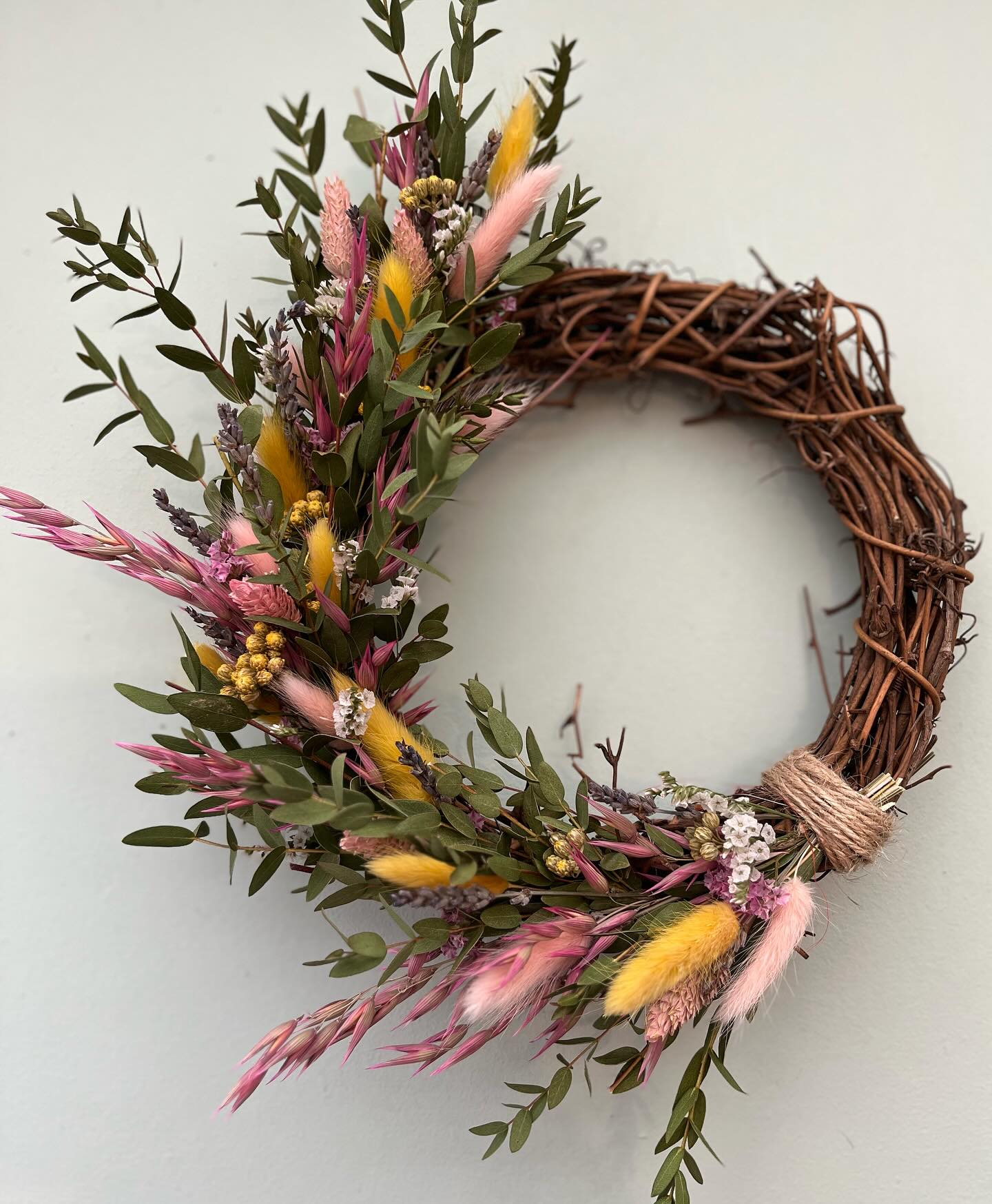
6. Shape Dried Flowers Into a Pastel Crescent
Credits: Instagram
Pink and yellow dried accents follow the left side of this grapevine wreath, leaving a section of brown vine exposed. Small white flowers and narrow green leaves make the colorful grasses feel connected to a spring garden palette.
Start with a compact base and arrange your longest stems first to establish the sweeping crescent. Layer shorter pieces over their attachment points, keeping the open center clear.
A visible wrap of natural twine adds a simple finishing detail at the lower end. Let the upper stems rise freely rather than forcing them into the ring.
This lightweight style works well indoors, where delicate dried materials stay protected. Hang it against a quiet background that shows the fine textures and pale colors.
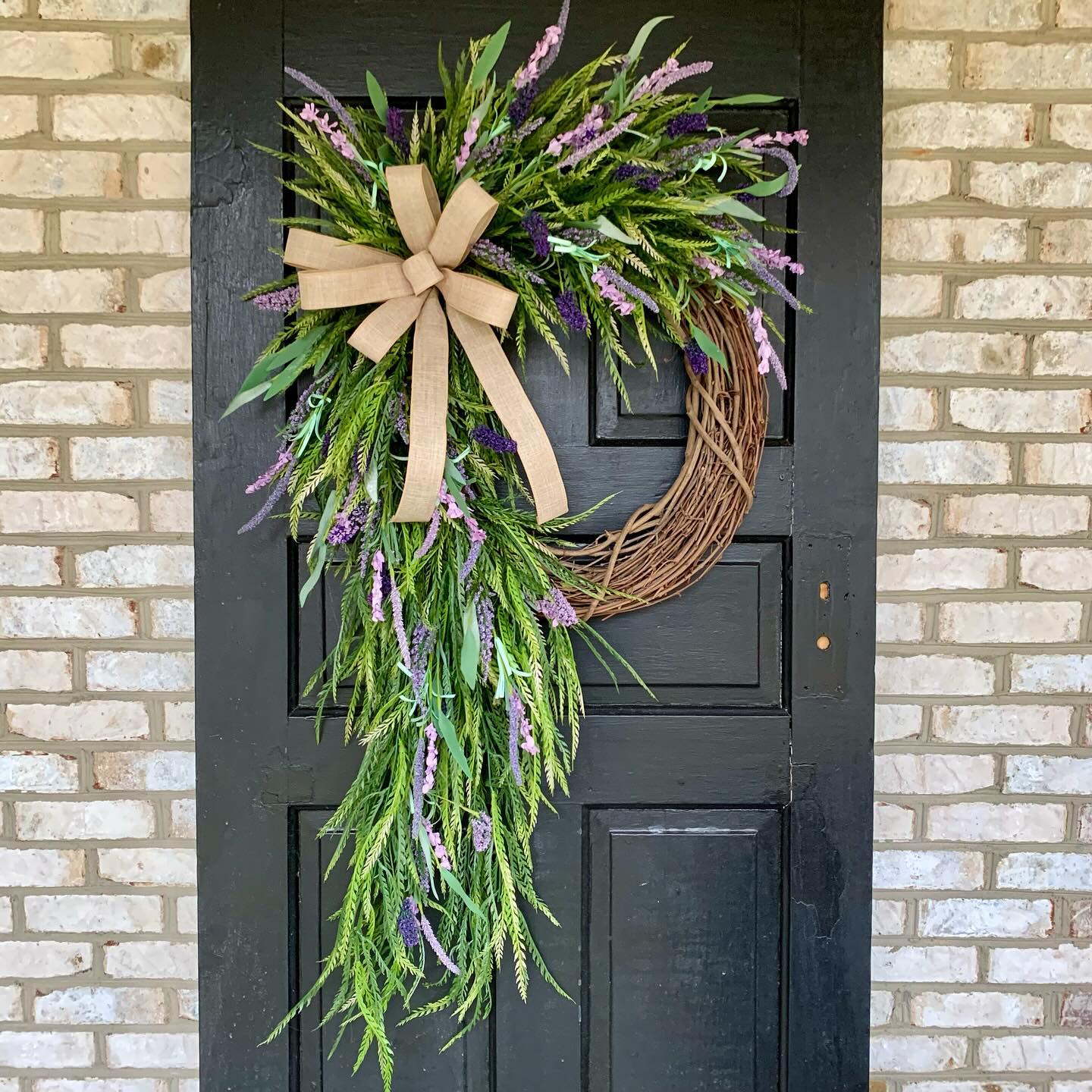
7. Let Lavender Cascade Down One Side
Credits: Instagram
Long lavender sprigs transform this grapevine wreath into a flowing spring door decoration. The flowers fan across the top and trail well below the ring, while a natural colored bow anchors the arrangement on the left.
Keep the opposite side of the vine base exposed so its circular shape remains clear. When arranging a similar design, establish the longest downward stems first, then layer shorter sprigs around the bow.
Mix pale and deep purple flowers for depth without expanding the color palette. A dark door makes the green foliage and lavender noticeable.
Measure the finished drop before hanging, and keep trailing pieces clear of the handle, lock, and threshold. Choose a secure hanger that can support the wreath's uneven weight.
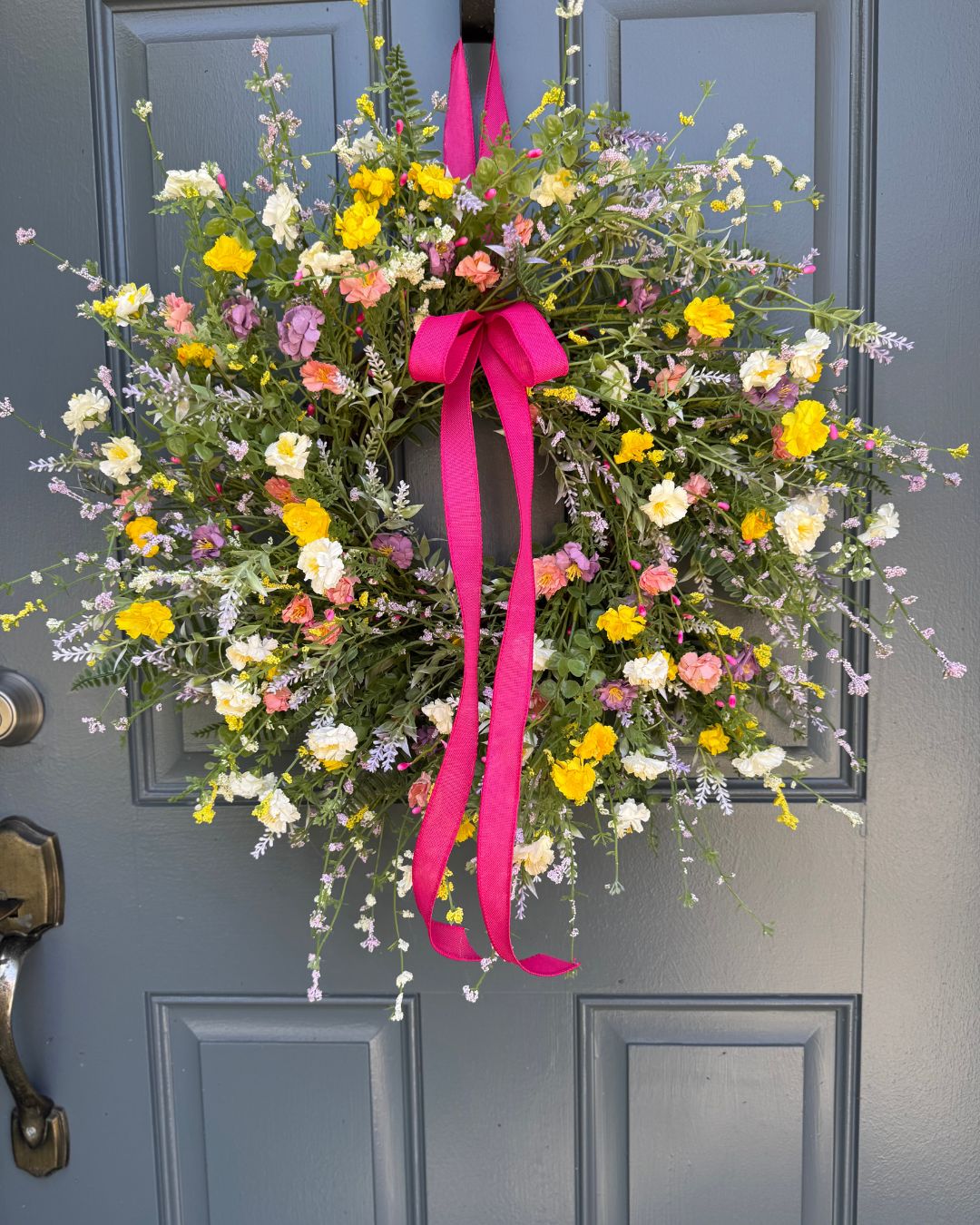
8. Tie a Bright Pink Ribbon Through Wildflowers
Credits: Instagram
A vivid pink ribbon gives this airy wildflower wreath a strong focal point. Yellow, cream, peach, and lavender flowers spread loosely around the ring, with delicate stems reaching beyond the main outline.
The long ribbon tails connect the top bow to the lower flowers and add height without more foliage. To recreate the effect, choose smaller blooms in several spring colors and repeat each color around the wreath.
Avoid packing every gap; little openings help preserve the meadow feeling. Use one bold ribbon color that already appears among the flowers.
Against a gray door, the pink looks clear. Adjust the tail lengths after hanging, allowing them to move freely while keeping them away from the handle and nearby door hardware.
9. Add Deep Purple Blooms to a Pale Spring Mix
Credits: Instagram
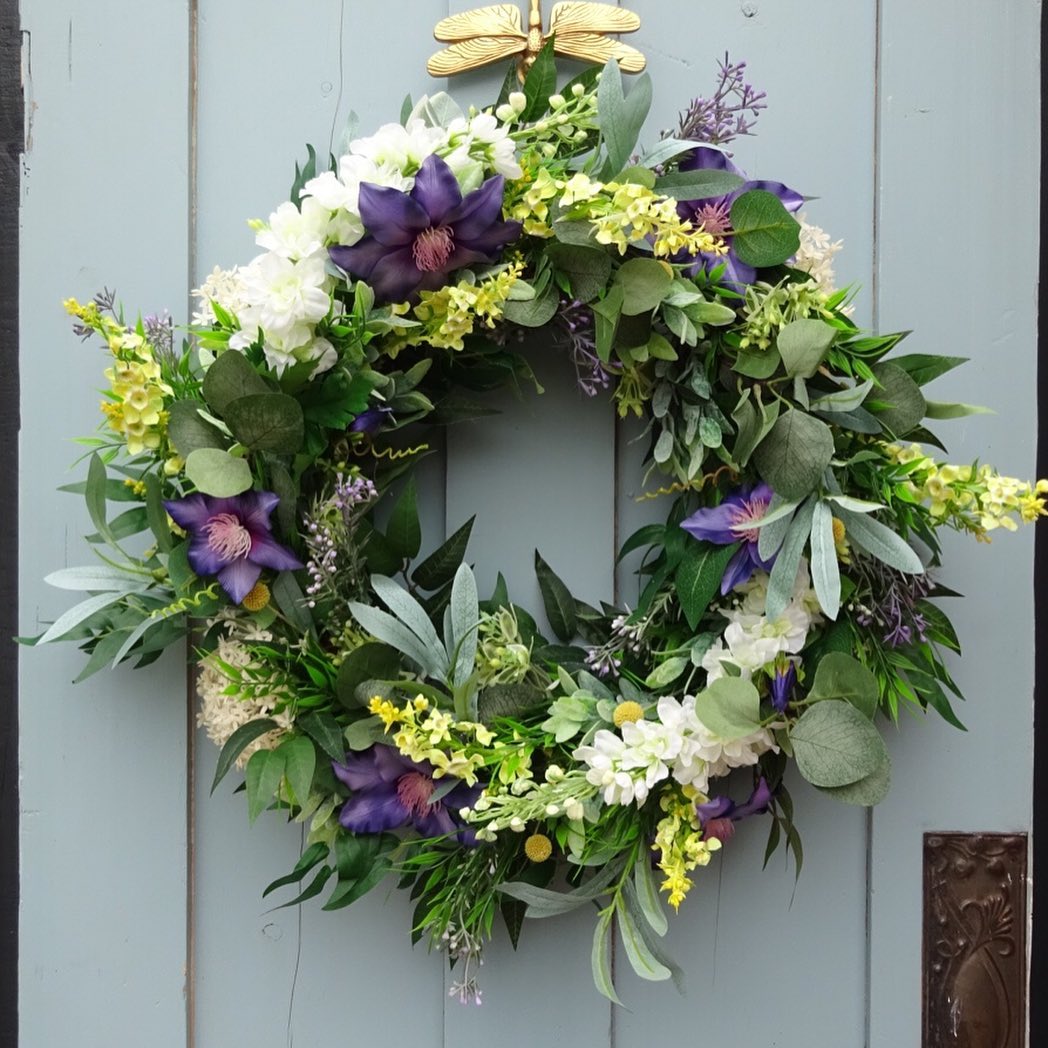
Dark purple flowers give this wreath definition among white blossoms, pale yellow sprays, and silvery green leaves. Their broad petals become easy focal points, while finer stems soften the spaces between them.
For a similar arrangement, spread the purple blooms around the ring before adding the lighter flowers. Vary their heights so some sit forward and others nestle into the greenery.
Keep the yellow accents delicate to preserve the calm color balance. The pale blue door complements the cool foliage, and the gold dragonfly above adds a small decorative detail.
Leave the center open enough to reveal the door behind it. This combination suits a spring entrance when you want a colorful wreath with a restrained palette and layered texture.
10. Build a Bright Floral Cluster Along the Bottom
Credits: Instagram
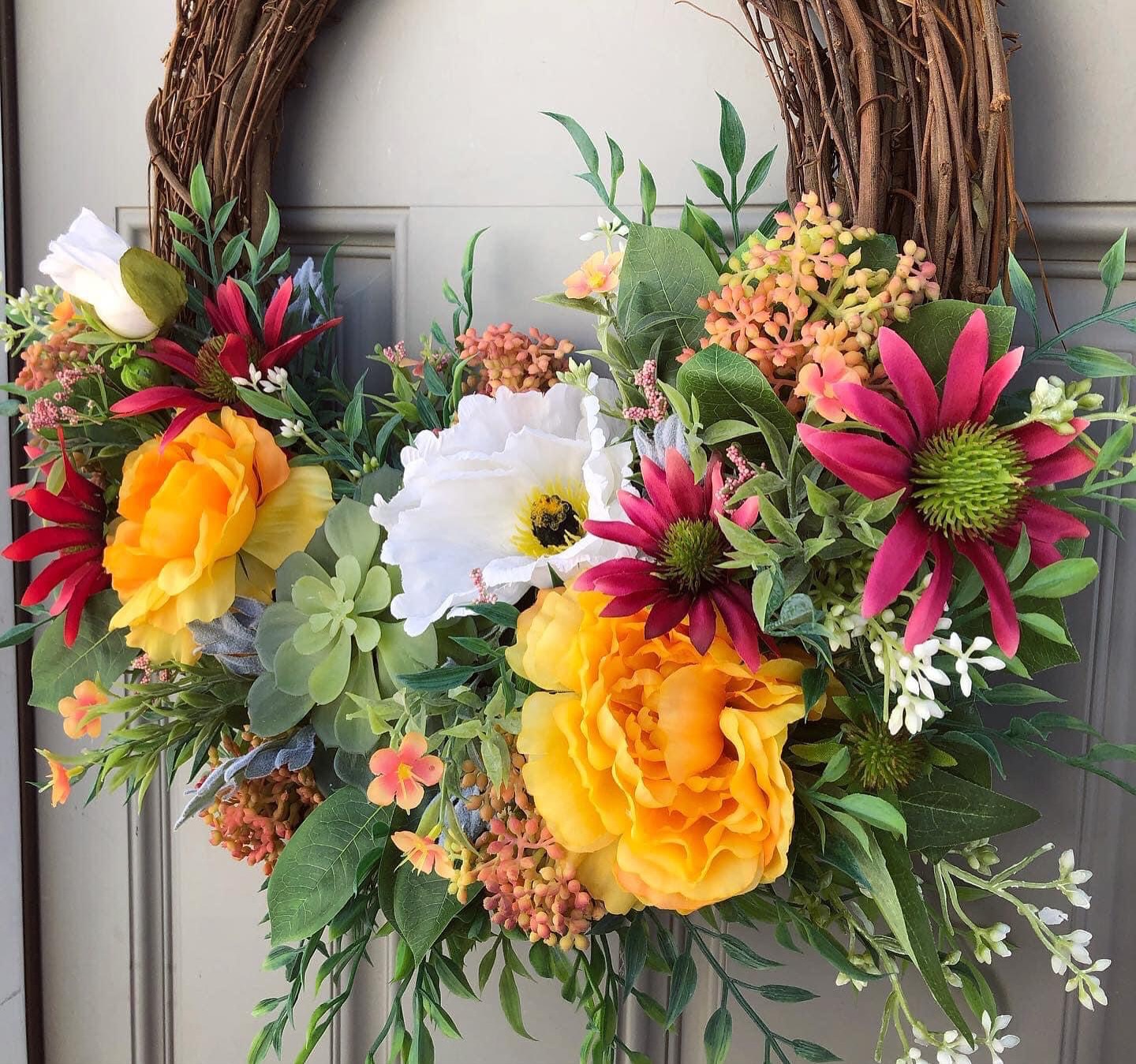
Large golden flowers and vivid pink daisylike blooms make the lower half of this grapevine wreath feel full and cheerful. A white flower near the center offers a lighter resting point, while small peach accents connect the stronger colors.
Borrow the composition by placing your largest blooms along the bottom curve and letting greenery rise at each side. Keep a generous stretch of vine visible above the flowers.
Mixing rounded petals with narrow pointed ones creates contrast even before you add more colors. Tuck smaller blooms into gaps rather than lining them up at the front.
This close view shows how layered leaves can conceal attachments and create depth. Choose a simple background so the bright floral cluster remains prominent.
11. Keep Blue and White Flowers Airy
Credits: Instagram
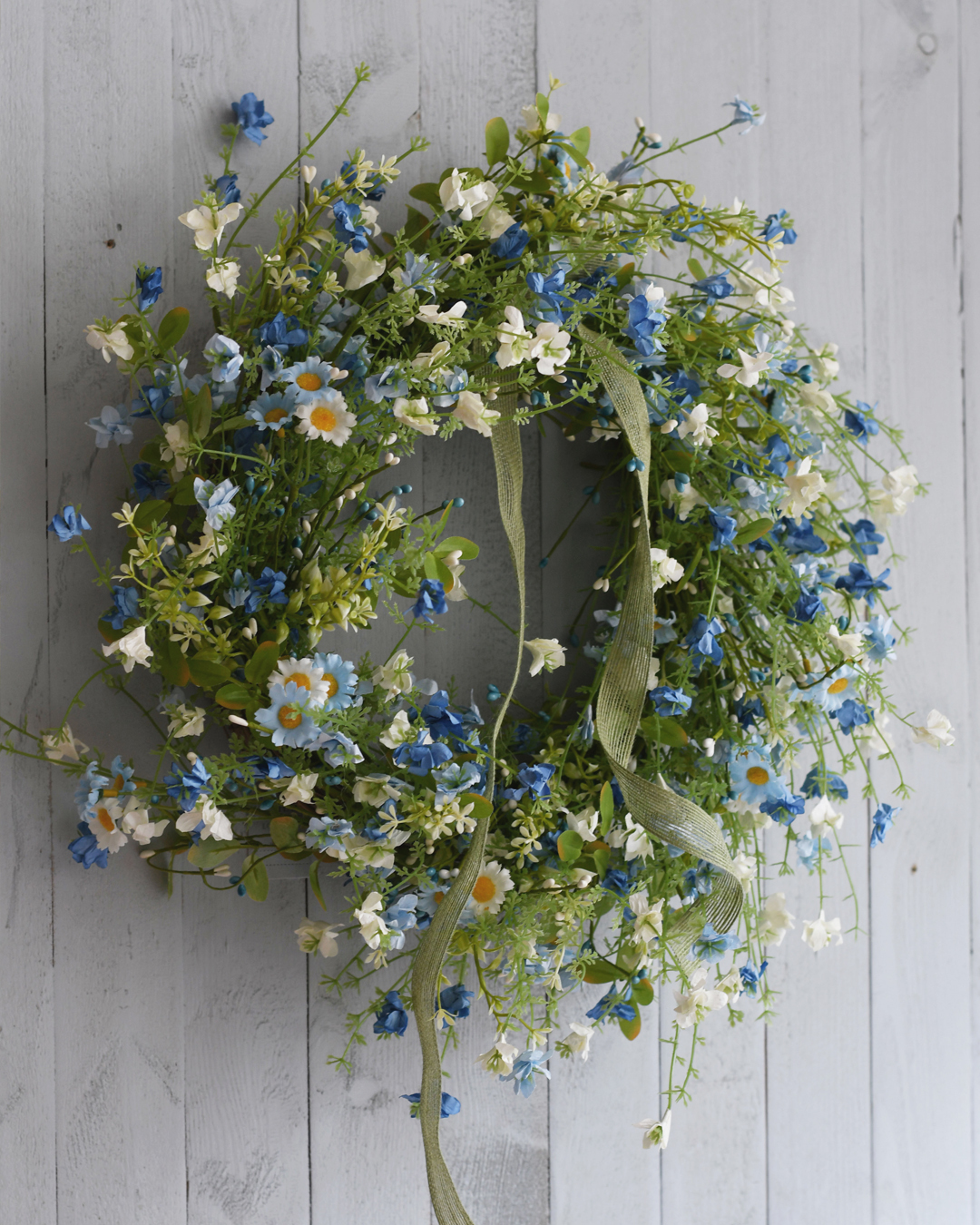
Small blue and white flowers make this wreath feel light, even though greenery fills the entire ring. Pale daisylike blooms add yellow centers, and narrow green ribbon tails disappear naturally into the foliage.
Choose several flower shapes within the limited palette for a similar effect. Let individual stems reach outward so the edge stays loose rather than tightly clipped.
An open center helps the delicate flowers read clearly against the pale wood behind them. Keep the ribbon understated when the blossoms already provide enough detail.
This approach works well for a spring wall display or a sheltered door. Before hanging, separate any tangled stems and turn a few flower heads forward so their colors remain visible from across the room.
12. Warm White Spring Flowers With Coral Accents
Credits: Instagram
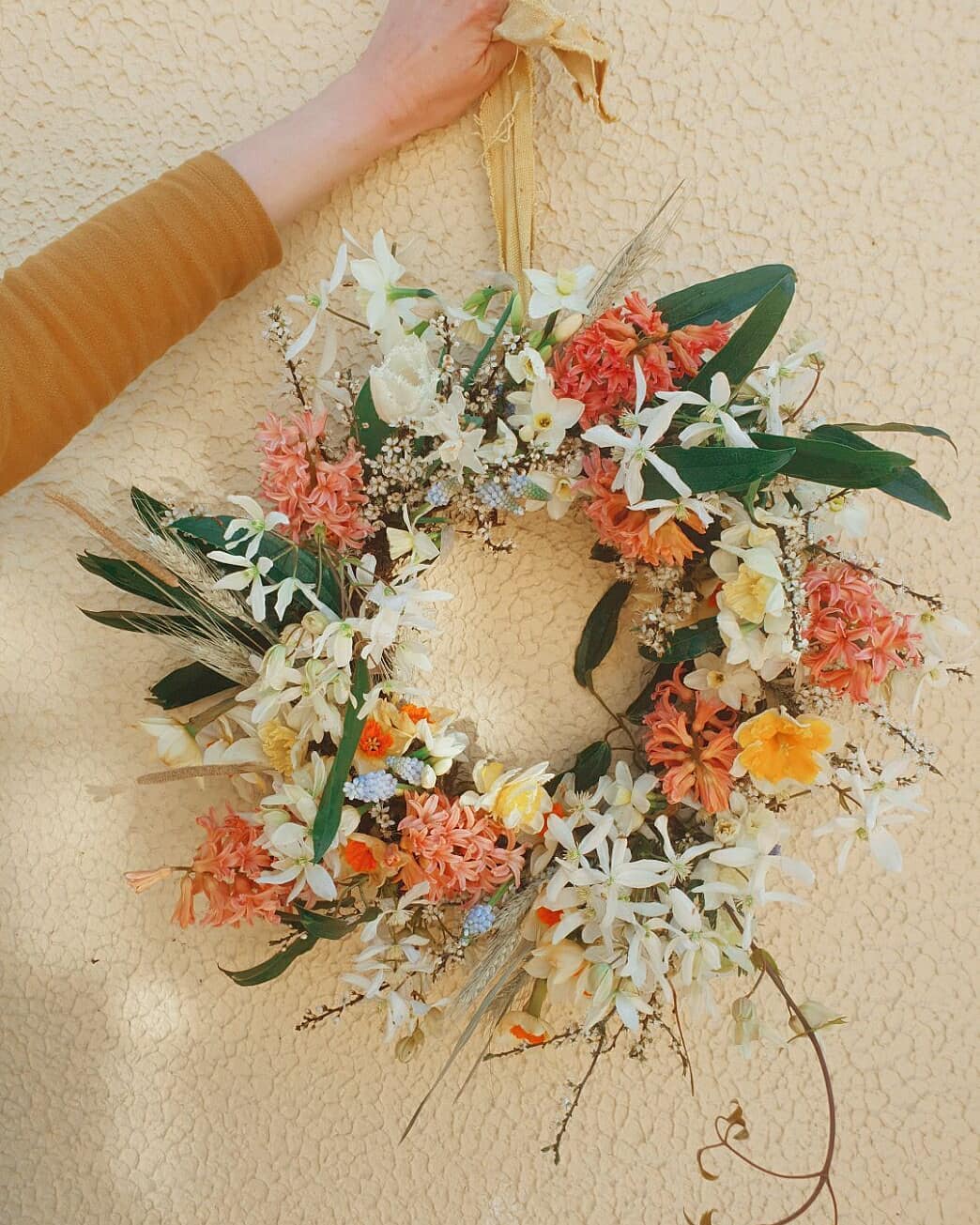
Coral flower clusters warm this wreath of white and cream spring blooms. Yellow centers, tiny blue accents, and broad green leaves give the arrangement variety while preserving its soft overall feeling.
The maker identifies these as early flowers from her farm, which makes the mix a useful reminder to work with what your garden offers. Choose one warm accent color and repeat it around the ring.
Let delicate branches extend beyond the flowers for a gathered finish. A narrow hanging ribbon keeps the shape visible without introducing a large bow.
For a fresh version, plan how each stem will receive moisture before assembling. Display it out of direct heat, and replace individual flowers when they begin to fade or wilt.
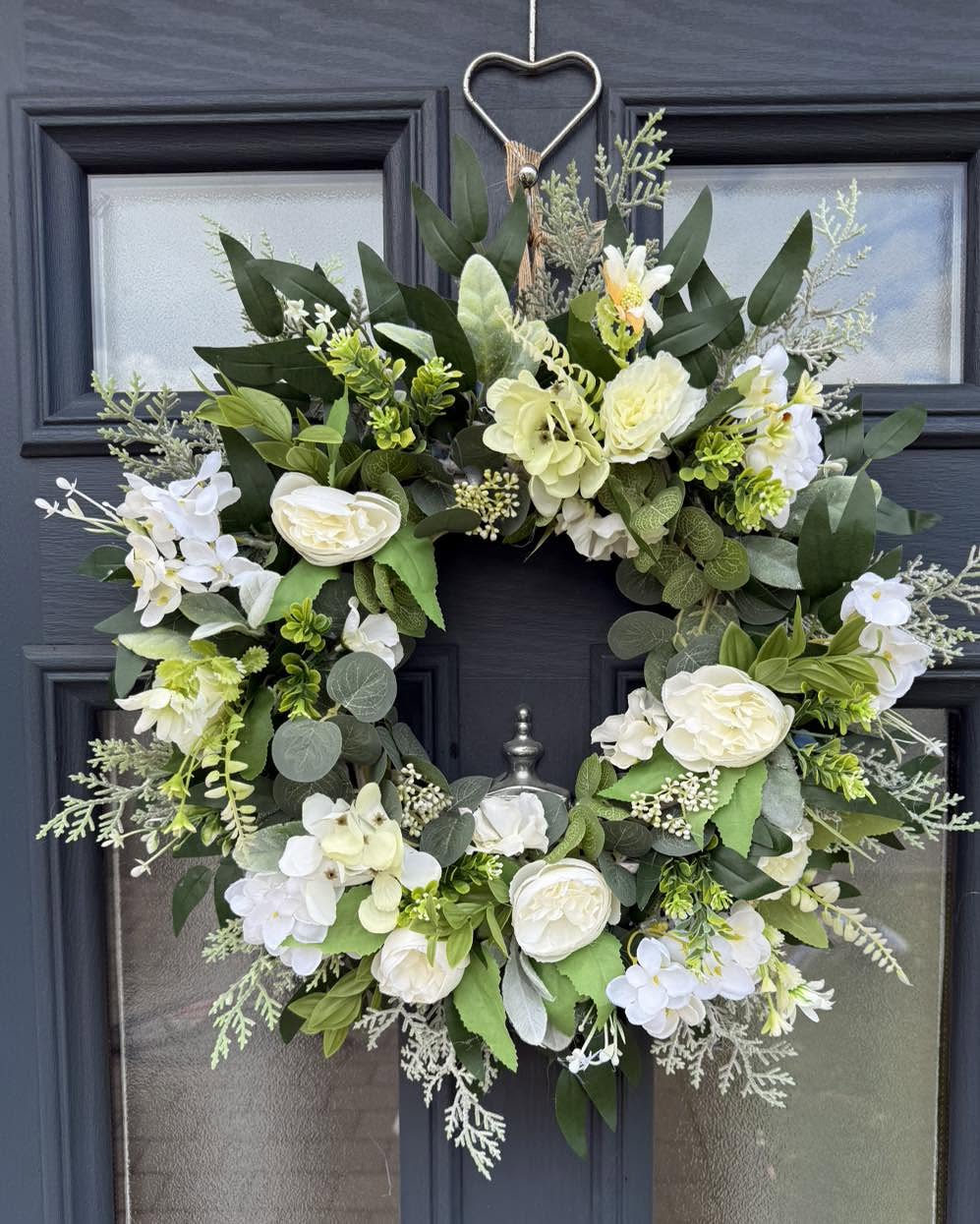
13. Layer Cream Flowers With Several Shades of Green
Credits: Instagram
Cream roses and pale floral clusters give this wreath a soft spring look, while varied greens keep the neutral palette interesting. Rounded gray green leaves sit beside pointed dark foliage and bright yellow green accents.
Build a similar arrangement by mixing leaf shapes before adding flowers, then distribute the larger cream blooms around the ring. Small white buds can fill narrow gaps without creating bulky clusters.
Let a few pale branching stems extend beyond the edge for a lighter outline. The dark door makes both flowers and greenery easy to distinguish.
Keep the center generous enough to frame any existing knocker. This quiet combination can carry your entrance through spring and into summer with a change of nearby seasonal accessories.
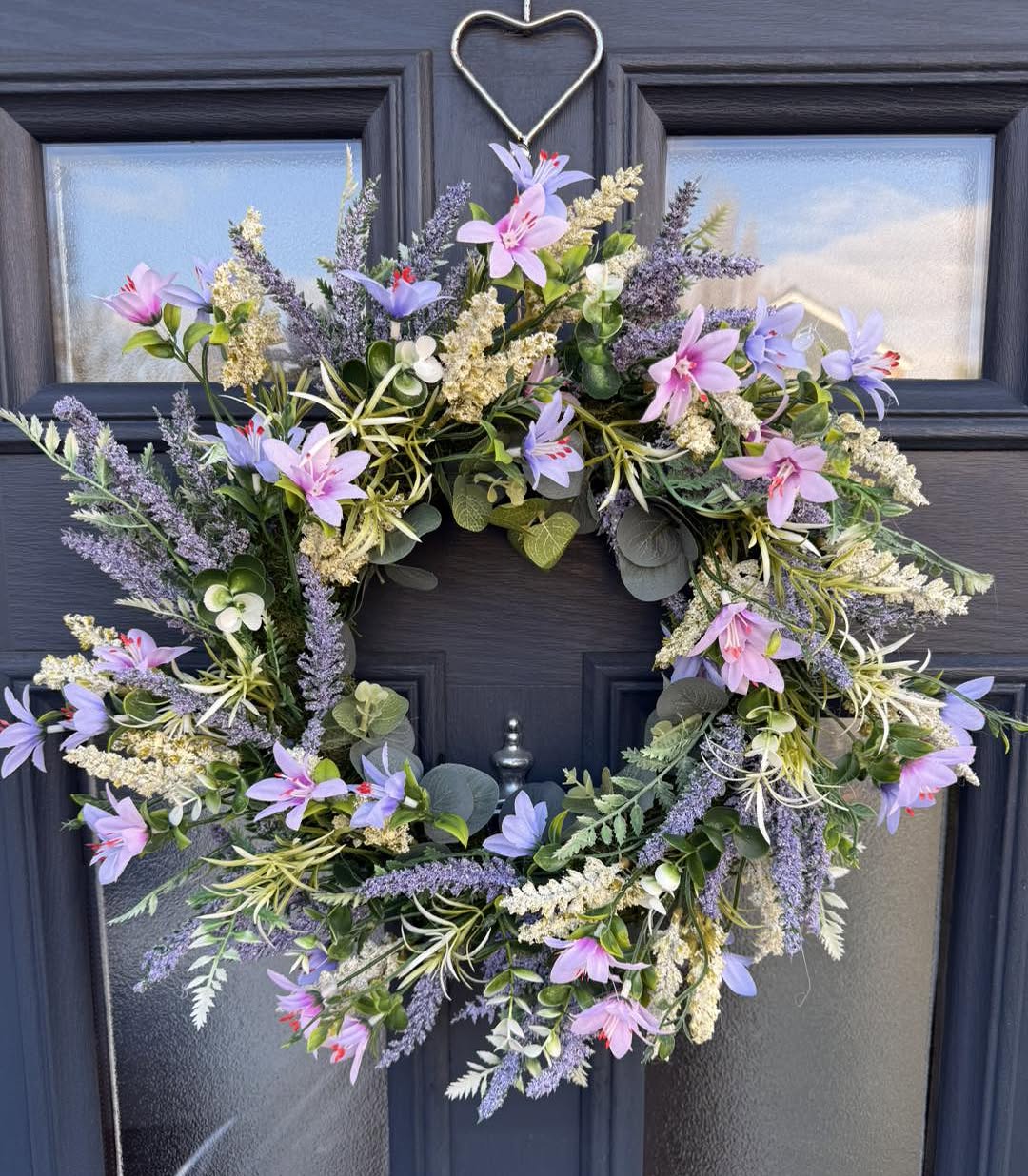
14. Repeat Lavender Flowers Around an Open Ring
Credits: Instagram
Lavender and pink flowers circle this wreath in a loose rhythm, with pale sprays and curling stems adding movement between the blooms. The open center leaves the silver door knocker visible, making the hardware part of the display.
For your own version, alternate broad flowers with finer textured sprigs instead of placing similar shapes together. Repeat the purple shades evenly so the wreath feels balanced from a distance.
Gray green leaves soften the brighter petals and connect the design to the dark painted door. Keep projecting stems short enough to avoid the surrounding trim.
Hang the wreath before making adjustments, since the angle can change how individual flowers face. A simple heart shaped hanger adds a detail above the arrangement.
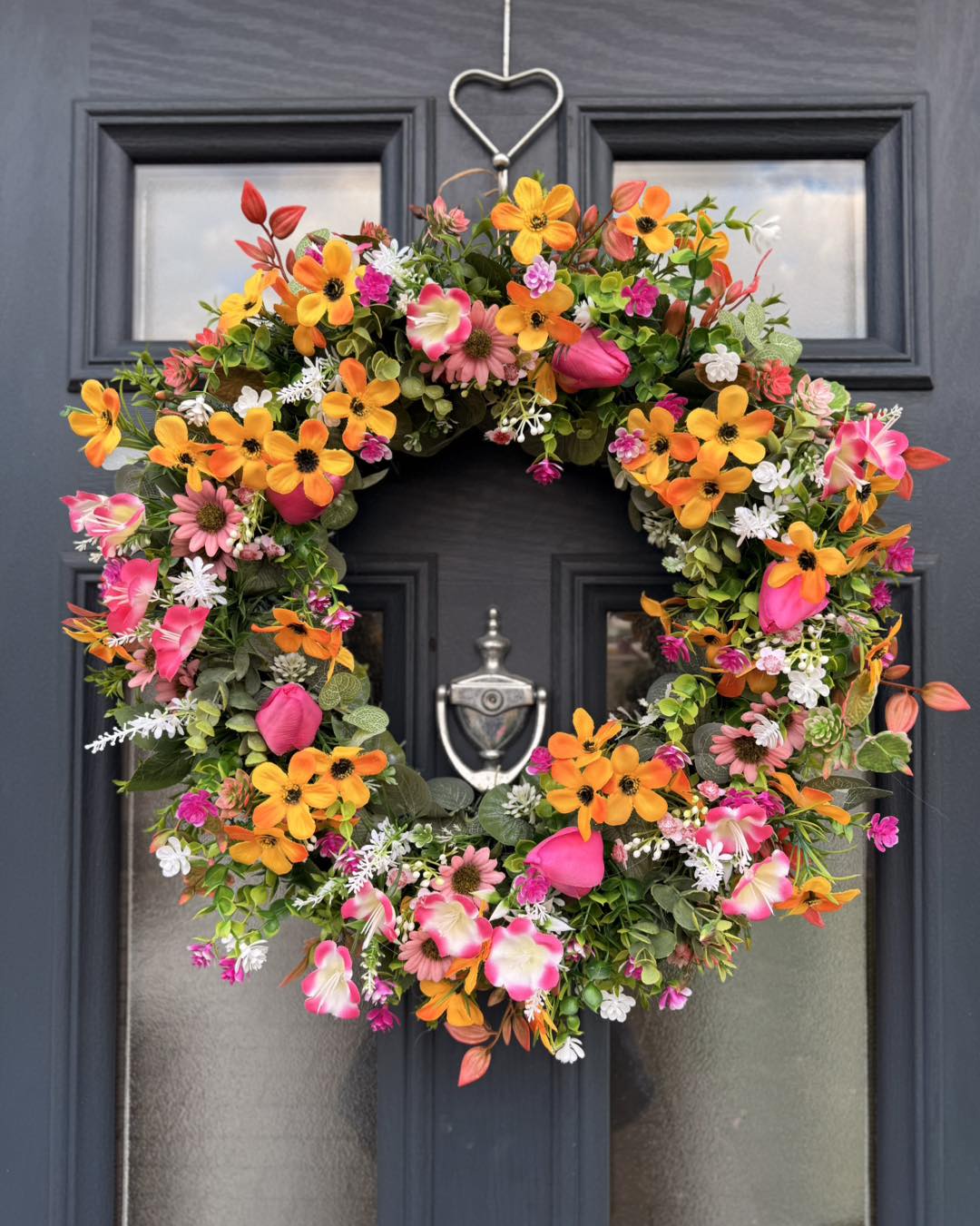
15. Mix Orange Flowers With Hot Pink Tulips
Credits: Instagram
Orange flowers and hot pink tulips turn this wreath into a cheerful burst of spring color. Smaller white blossoms create breaks between the stronger hues, while green leaves give the arrangement a consistent background.
Use a similar pairing when soft pastels feel too quiet for your entrance. Position the orange flowers around the full circle first, then tuck pink tulips into the spaces between them.
Vary the size of the surrounding blooms to keep the surface lively. The dark door strengthens the color contrast and allows the open center to remain clear.
Keep additional ribbon or signs minimal because the flowers already make a statement. Check the outer width before hanging so every projecting stem has room beside the trim.
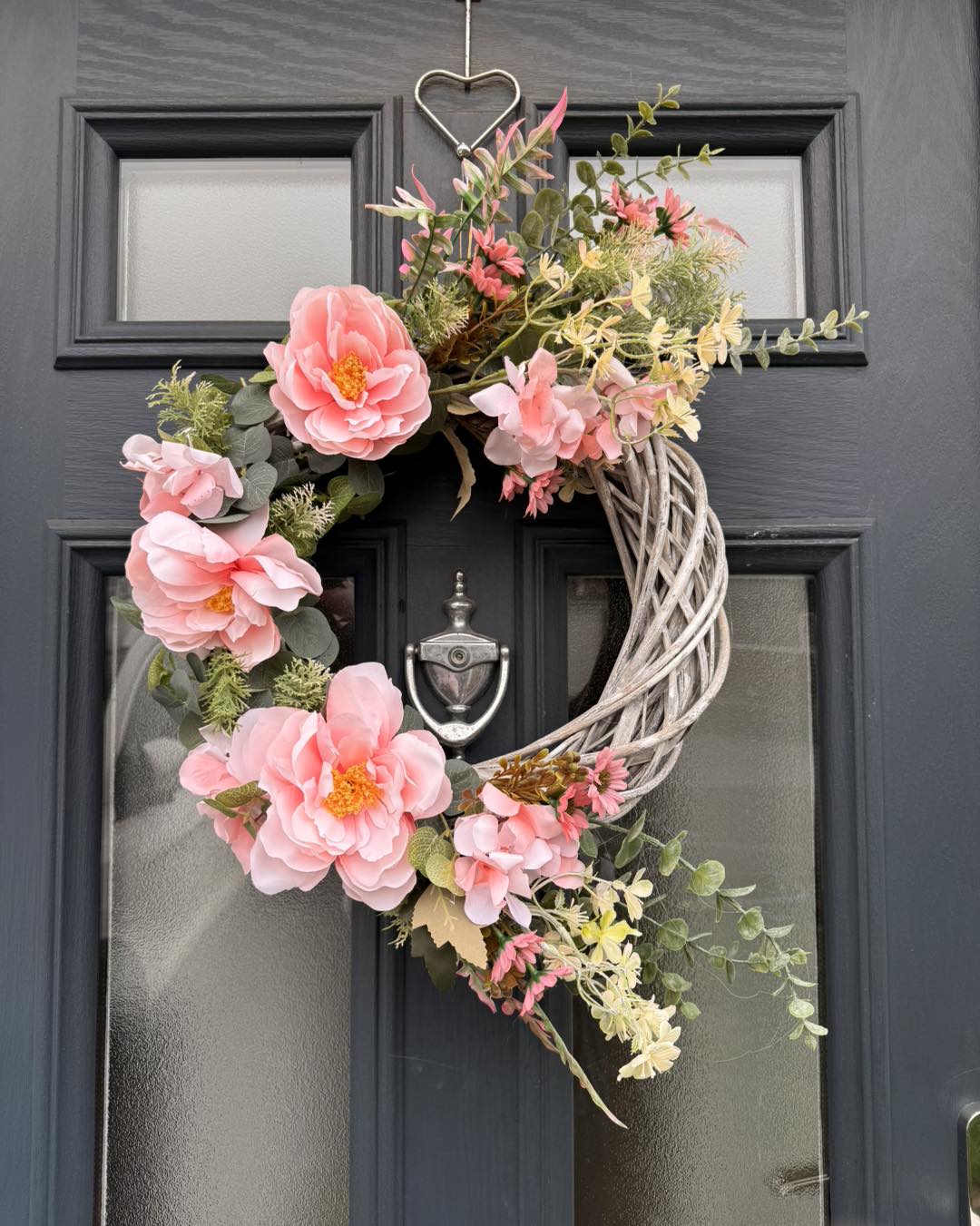
16. Place Three Pink Blooms on a Pale Vine Ring
Credits: Instagram
Three large pink flowers give this pale woven wreath a clear focal path down the left side. Smaller blossoms and fine greenery extend above and below, while the right curve stays bare.
The light frame stands out beautifully against the dark door without needing dense coverage. Begin with the largest flowers and place them at different heights, then add smaller pieces to connect the gaps.
Keep the upper spray lighter than the lower cluster so the design feels balanced. Pale yellow stems brighten the pink without introducing a competing strong color.
This is a useful approach when you want a floral wreath with fewer large blooms. Leave the center open, and position the hanger so the decorated side sits securely.
17. Nestle Pastel Eggs Among Spring Tulips
Credits: Instagram
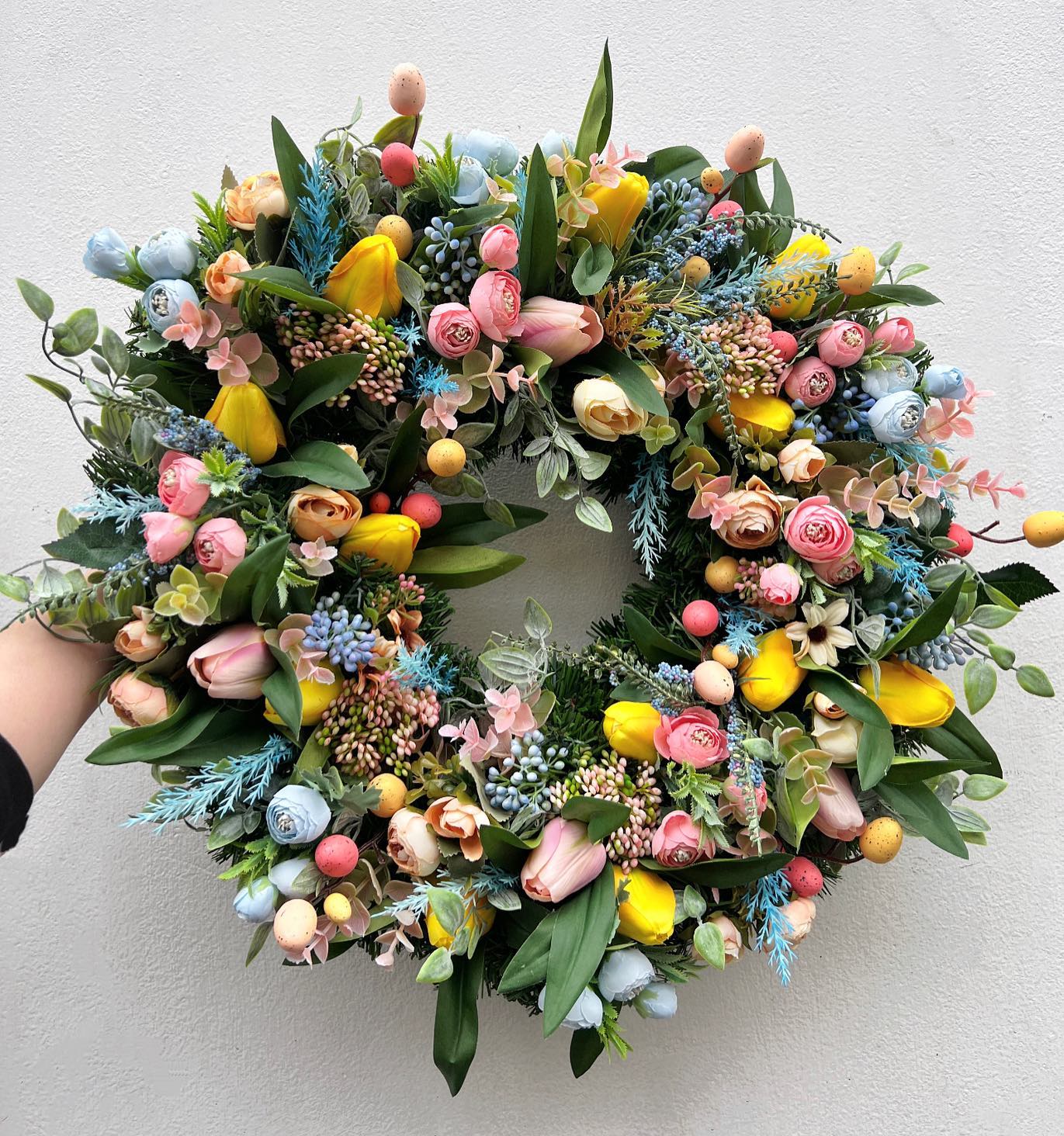
Yellow and blush tulips share this full wreath with little blue flowers, pink buds, and pastel eggs. The eggs sit among the stems rather than forming a separate border, allowing the floral arrangement to remain the main feature.
Start with a balanced ring of greenery and distribute your tulips before adding smaller accents. Repeat blue and pink across several flower shapes to tie the palette together.
A few bright yellow blooms keep the pastel mix from looking flat. Nestle lightweight eggs at different depths, leaving their colors visible without covering the petals.
This idea bridges general spring decorating and Easter. Use removable attachments for the eggs if you would like to enjoy the flower wreath after the holiday has passed.
18. Combine Rounded Flowers With Spiky Spring Accents
Credits: Instagram
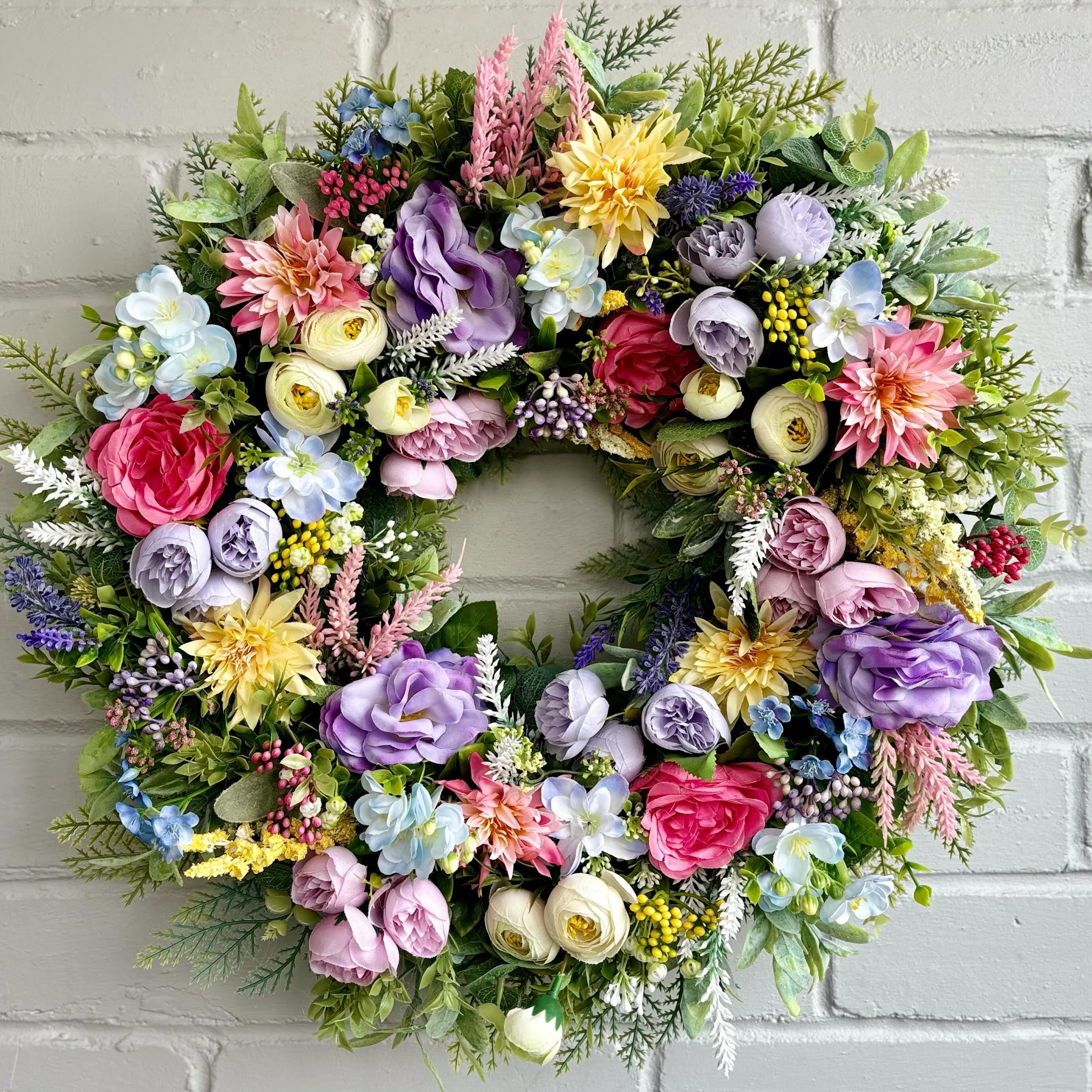
This abundant wreath pairs rounded roses and tightly layered blooms with pointed pink and yellow flowers. Upright sprays and tiny berry shapes add another layer of texture between the petals.
The combination feels colorful but connected because lavender, pink, yellow, and blue repeat throughout. Arrange a similar wreath by placing larger rounded flowers first, then adding the sharper shapes where the outline needs energy.
Keep several small patches of greenery visible to separate neighboring colors. Pale blue flowers offer cool breaks between the warmer accents.
The white brick background gives the rich floral ring a clear silhouette. When using realistic crafted flowers, gently turn the stems until each bloom faces outward and the arrangement looks full from several viewing angles.
19. Sweep Pink Tulips Around a Blue Door
Credits: Instagram
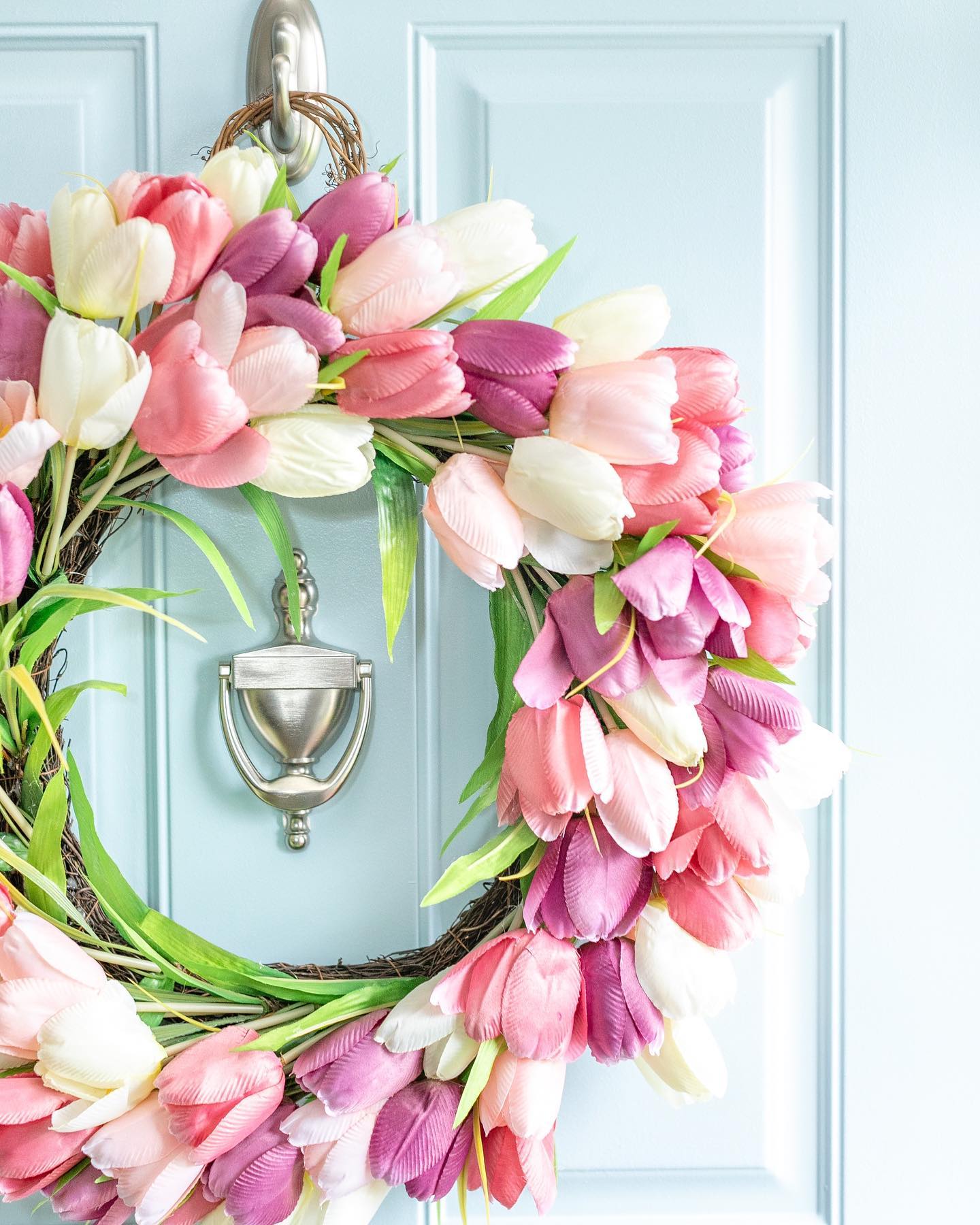
Pink, plum, and ivory tulips wrap around this wreath in a continuous sweep, with slim green leaves following the same direction.
The pale blue door gives the warm pinks a fresh backdrop and leaves the silver knocker visible through the center. To borrow the look, choose one flower type in several related shades instead of mixing many varieties.
Arrange small bunches around the base, overlapping their stems and keeping the bloom heads angled consistently. Let occasional leaves cross the inner edge to soften the circle.
The close photograph shows that a simple tulip design can have plenty of texture. Check the wreath opening against your door hardware before attaching it, and leave enough room for the knocker to move freely.
20. Give Peach Roses Room Among Rounded Leaves
Credits: Instagram
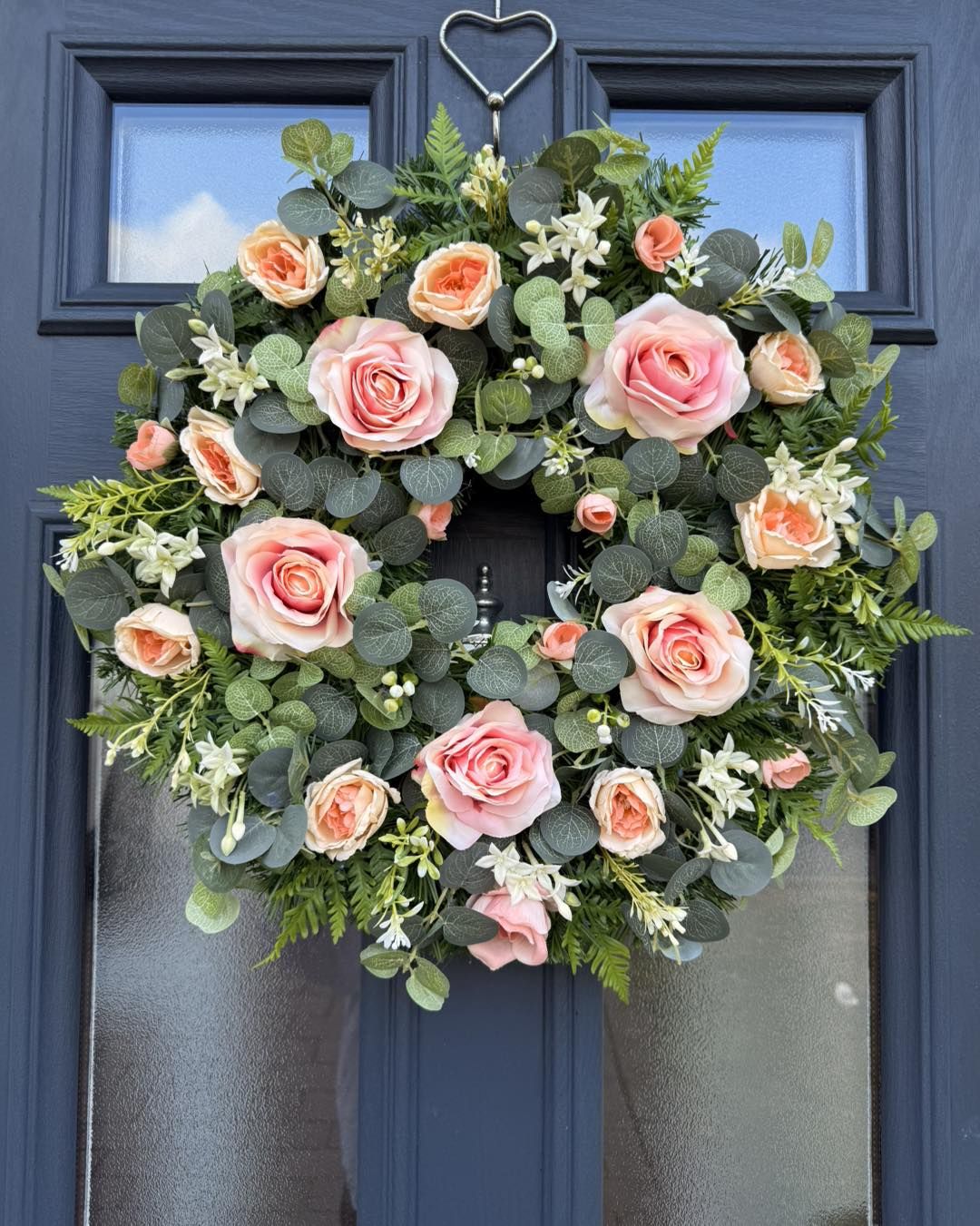
Peach and blush roses sit among rounded green leaves in this soft wreath. Small white flowers and pointed fernlike sprigs lighten the spaces between the larger blooms.
The greenery gives each rose room to stand out, making this a useful option for a calm spring palette. Place the largest roses at intervals around the ring, then add smaller buds to connect their colors.
Vary the leaf direction so the surface looks layered rather than flat. Keep the center open and allow a few stems to cross its edge.
A dark door strengthens the gentle pink tones without needing a bow. This balanced floral design can remain in place as spring moves into summer, especially when made with realistic crafted flowers.