
A room can feel distinctly Art Deco without relying on bold color everywhere; shape, symmetry, and a few reflective details can do much of the work.
Art Deco Living Room Ideas in this roundup show how to build balance around one bold artwork, soften sharp angles with curved furniture, and let warm wood bring character to a seating area.
Other approaches use jewel-toned chairs or patterned shelving as focused accents. Together, these ideas offer practical ways to bring geometric detail and vintage-inspired style into a living room while keeping the overall arrangement comfortable and composed.
1. Build Symmetry Around One Bold Artwork
Credits: Instagram
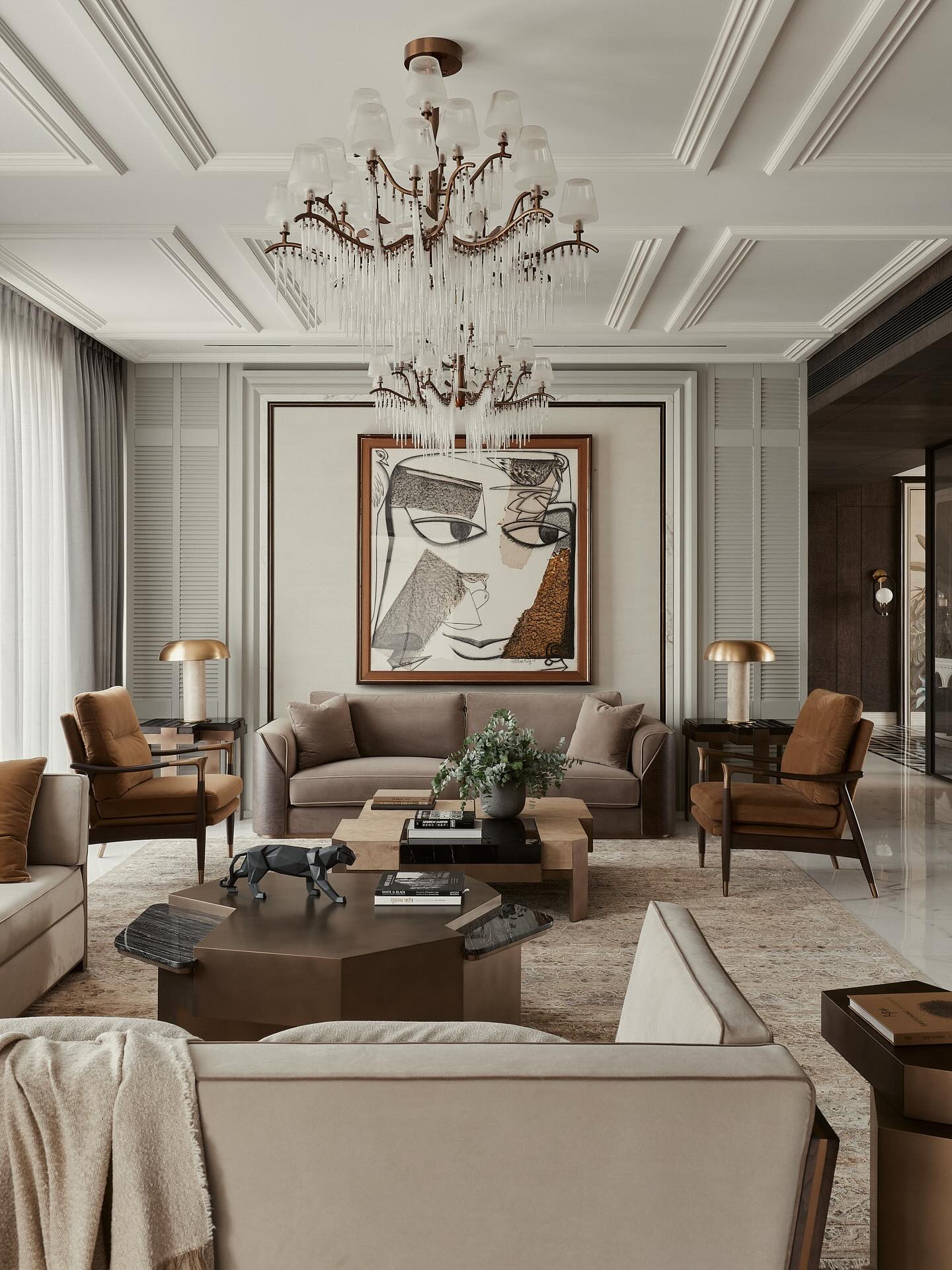
Strong geometry gives this neutral room its Art Deco direction. The large portrait sits inside a dark outlined rectangular wall panel, while matching metallic dome lamps and brown chairs establish balance on either side of the sofa.
Overhead, repeated rectangular ceiling panels continue that sense of order. You can borrow the arrangement without copying every detail: center one substantial artwork above your main seat, then repeat a lamp shape or chair silhouette across the room.
Keep the upholstery close in color so the outlines remain easy to read. Here, angular coffee tables add another layer of geometry, and their darker surfaces prevent the pale seating from disappearing.
A few low accessories leave the room’s carefully arranged shapes in clear view.
2. Give the Ceiling a Geometric Pattern
Credits: Instagram
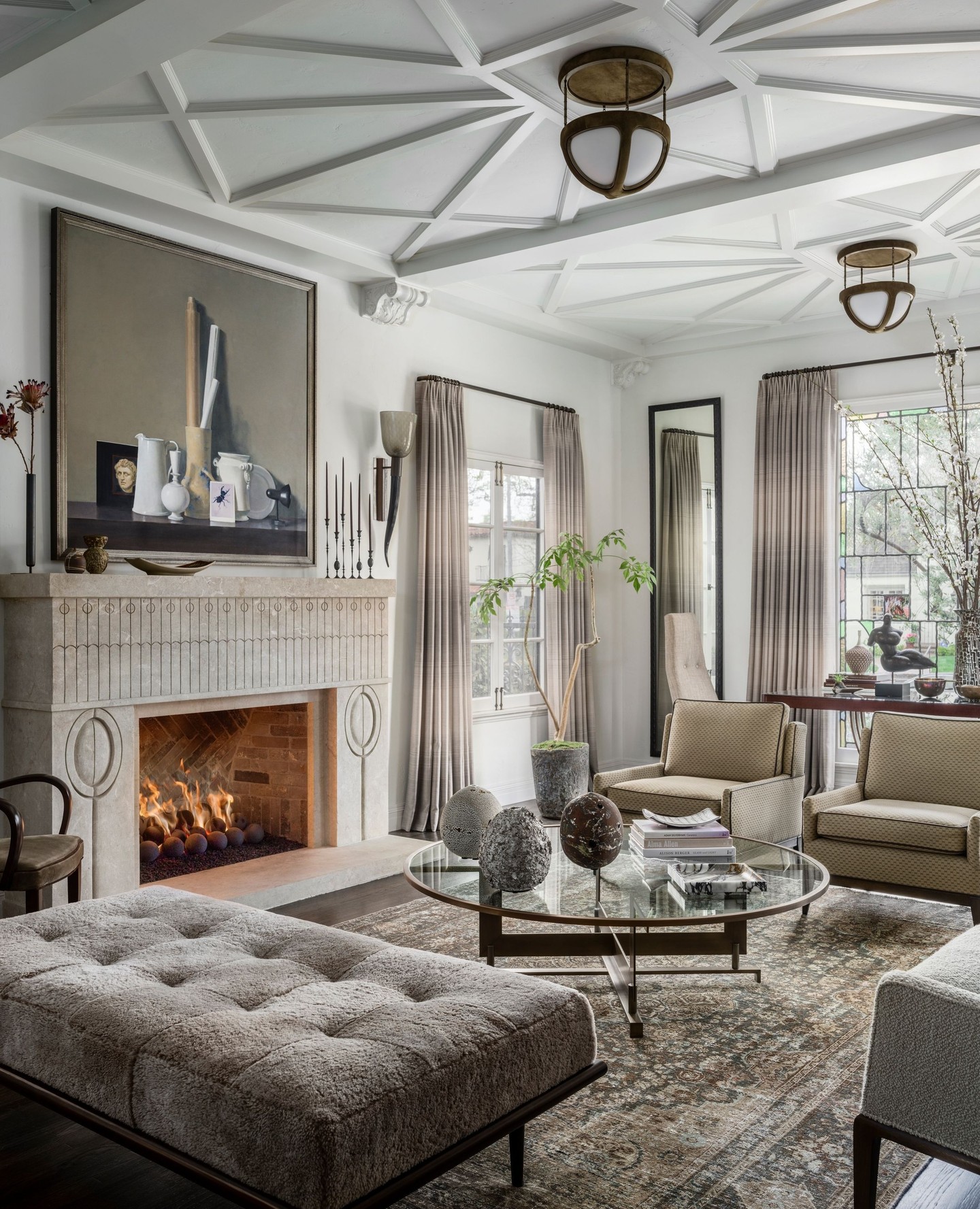
The ceiling turns this quiet living room into something memorable. Raised lines form a crisp pattern overhead, while the fireplace repeats circles and slender vertical details below.
Together, those architectural features bring an Art Deco feeling without demanding bright colors. The furniture stays comfortable and simple: low upholstered seating, a tufted bench, and a round glass coffee table.
If you want a similar effect, choose one surface for decorative geometry and keep nearby finishes restrained. Paint the ceiling pattern the same color as its background for depth that changes gently with the light.
Matching ceiling fixtures help organize the long room. Tall curtains soften its edges, while a large painting gives the fireplace enough visual weight beneath the detailed ceiling.
3. Balance Sharp Angles With Broad Curves
Credits: Instagram
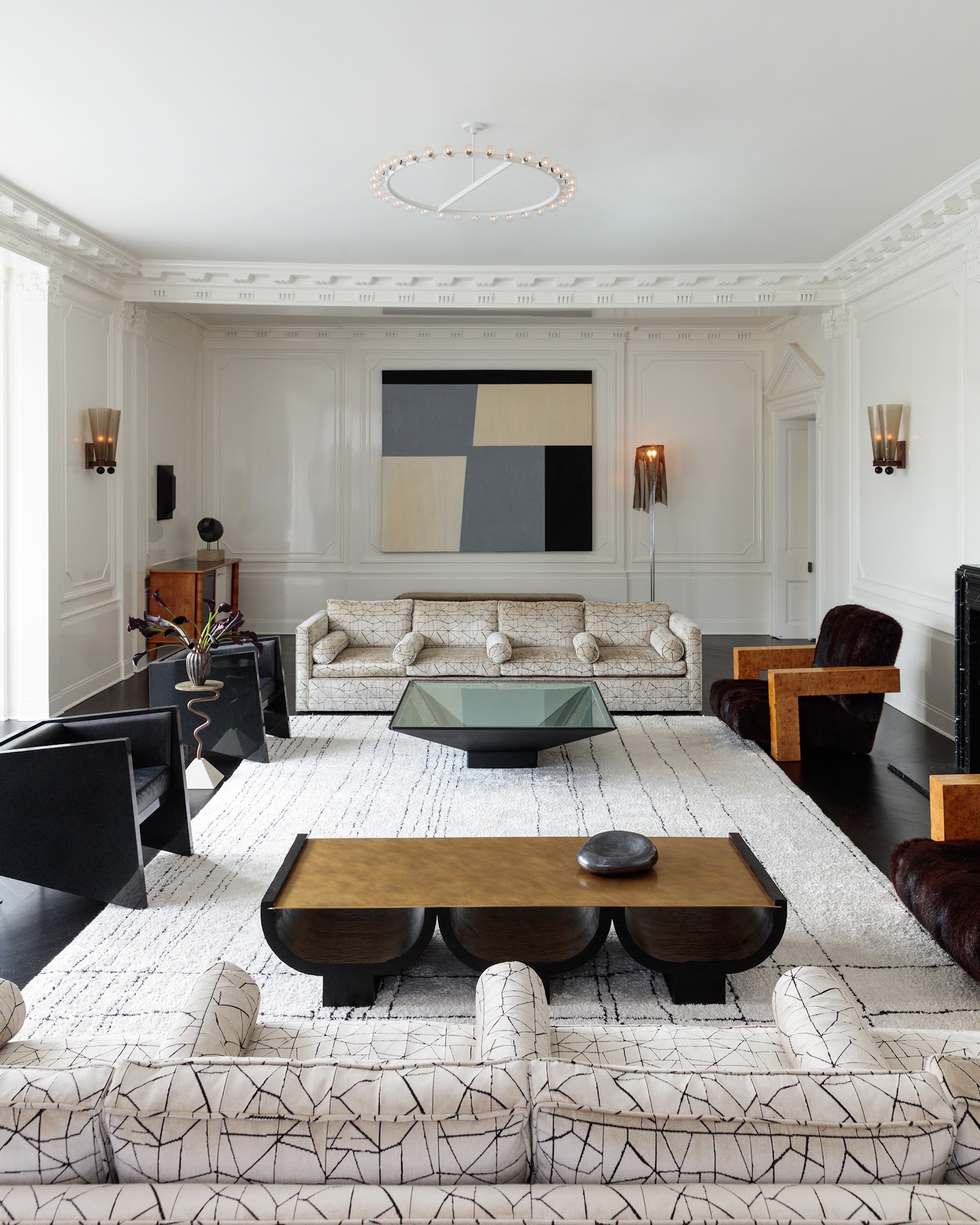
Art Deco can feel calm when its strongest shapes share a restrained palette. This room combines angular black chairs, a faceted glass table, and upholstery covered in fine geometric lines.
The broad curved forms beneath the foreground table soften the arrangement, while warm brown chair frames keep the black and white scheme from feeling chilly.
Try pairing one sharply outlined piece with another that has a rounded silhouette. Repeat black in small details so the contrast feels connected across the room.
The large abstract painting echoes the furniture’s clear blocks of color, and the pale rug gives every shape breathing room. A circular ceiling light provides one final curve without competing with the sculptural furniture or the generous wall molding.
4. Let Warm Wood Carry the Deco Character
Credits: Instagram
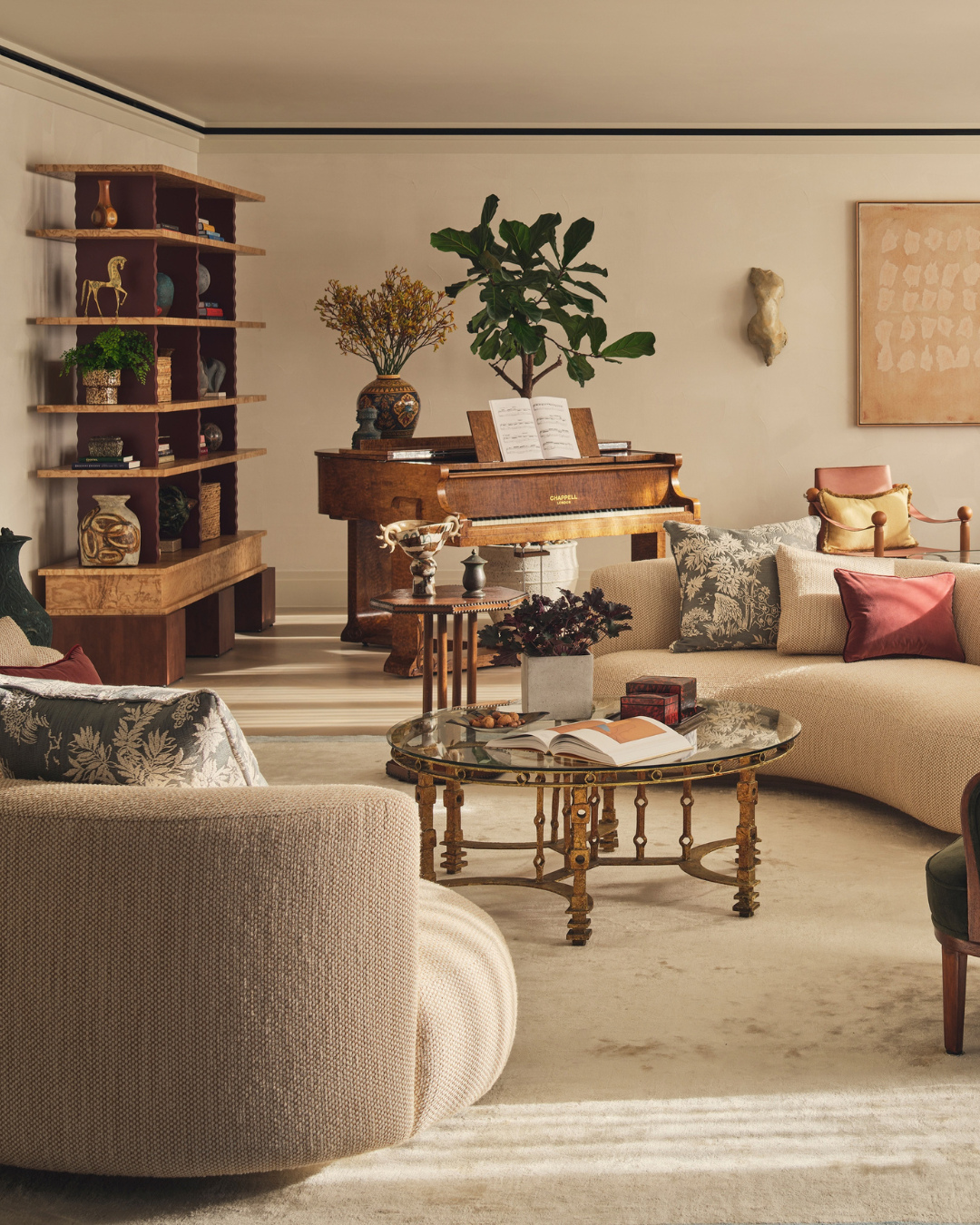
A distinctive wooden piece can give an Art Deco living room more personality than a collection of small shiny accessories.
Here, the piano’s rounded details and richly patterned surface create a focal point beside tall open shelving with gently shaped dividers. Curved pale seating carries those softer lines into the center of the room.
To use the idea at home, give a favorite cabinet, desk, or instrument enough wall space to show its outline. Keep nearby upholstery quiet and repeat a warm color through a pillow or small chair.
The glass coffee table adds reflection without hiding the rug below. Books, ceramics, and leafy branches make the arrangement feel lived in while leaving the main furniture shapes easy to appreciate.
5. Use Jewel Tones on a Pair of Curved Chairs
Credits: Instagram
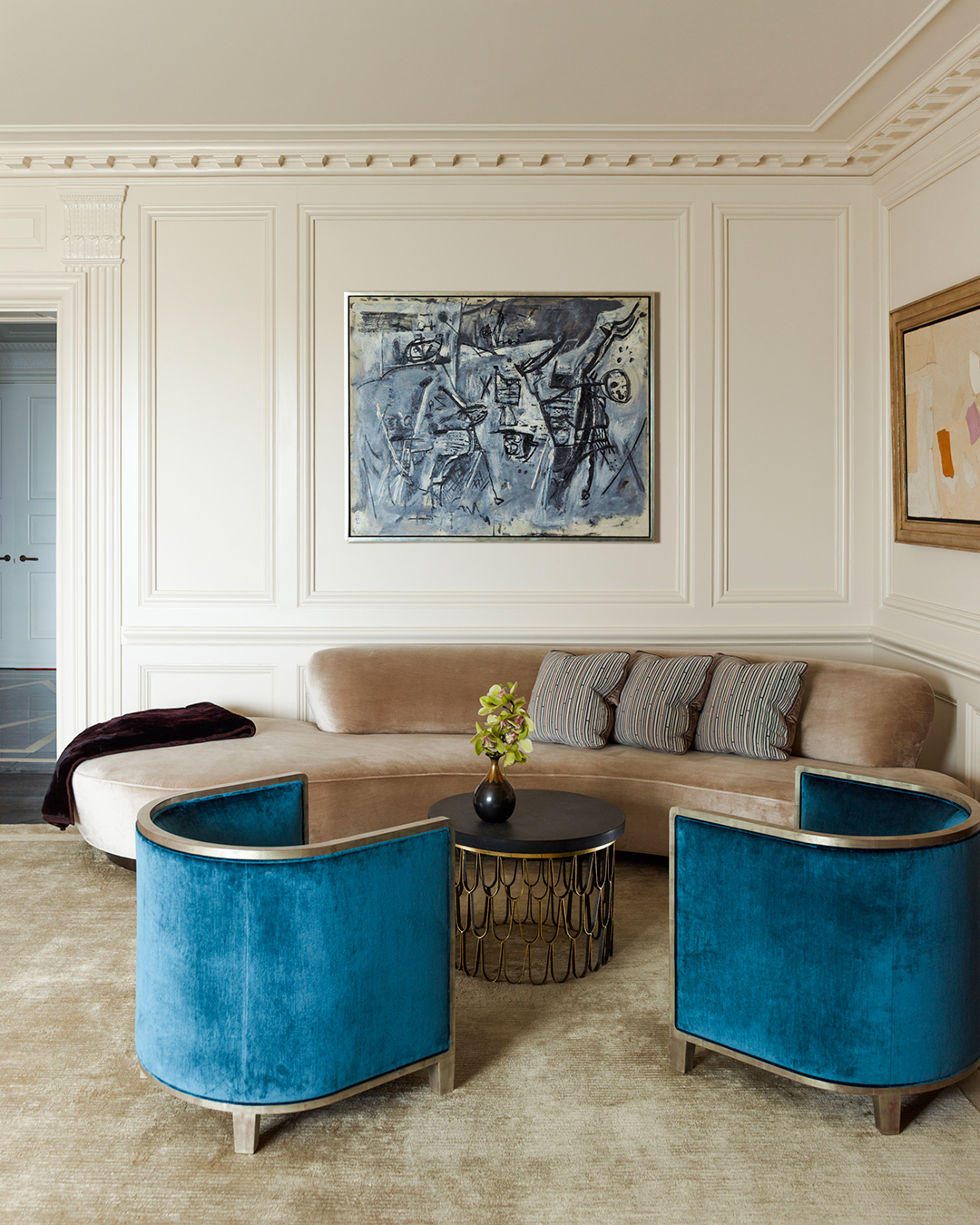
Two blue barrel chairs bring a concentrated dose of Art Deco character to this otherwise pale seating group. Their curved backs, metallic outlines, and compact proportions create a strong pair without overwhelming the room.
The rounded sofa and circular coffee table continue the same gentle geometry. You can borrow this approach by keeping the largest upholstered piece neutral, then using a richer color on smaller seats.
Position the chairs so they face both the sofa and each other, making conversation feel natural. A table with an open decorative base adds another layer of pattern while preserving an airy view across the rug.
The artwork repeats the blue at a softer intensity, connecting the seating to the wall above the sofa.
6. Make Shelving a Patterned Focal Point
Credits: Instagram
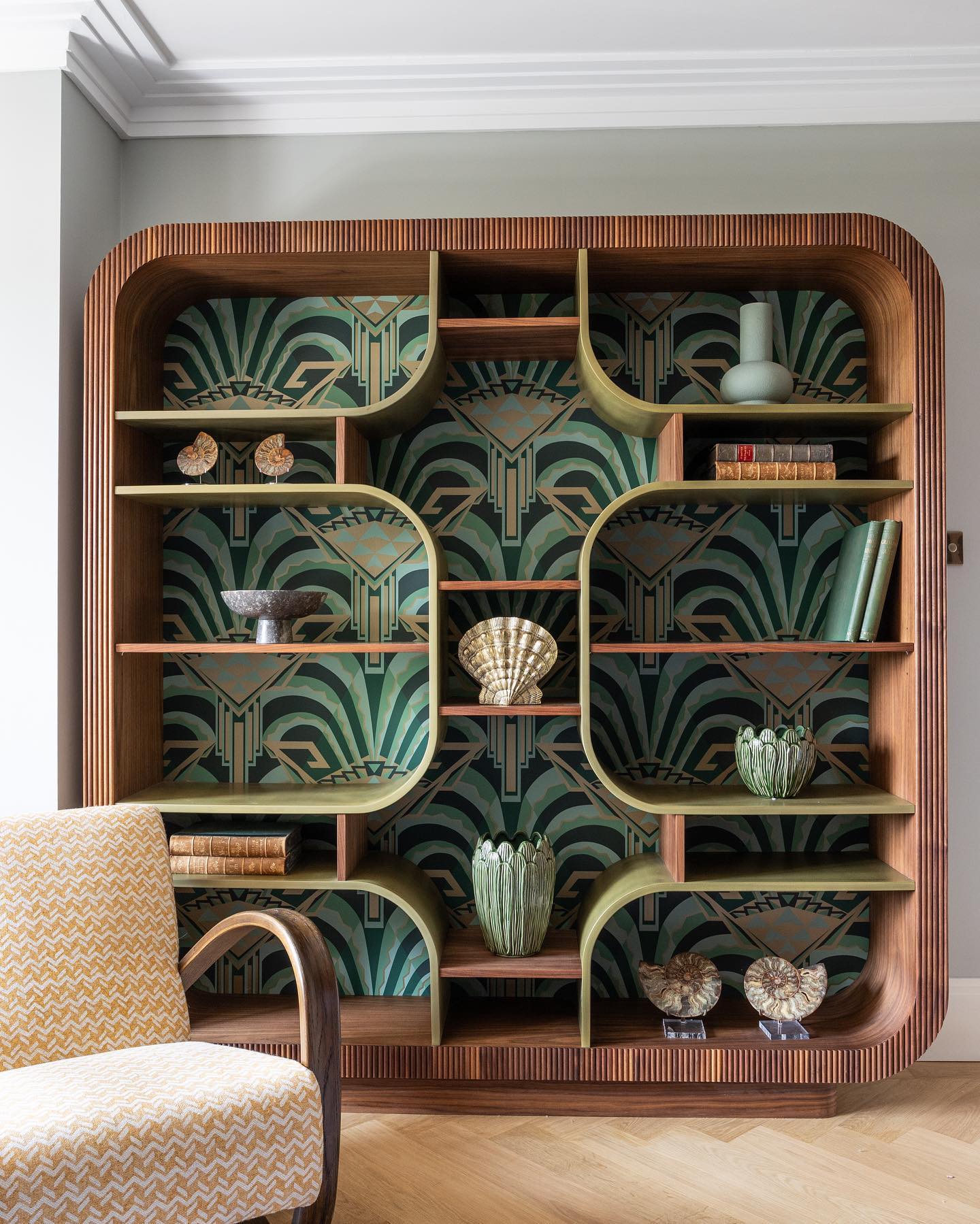
This shelving unit combines several clear Art Deco cues: a rounded frame, repeating curves, slim metallic edges, and a fan patterned backdrop. Because the storage itself is decorative, the objects can stay simple.
A few books, sculptural vessels, and shell forms leave plenty of wallpaper visible between the shelves.
Try the same principle with a smaller bookcase by lining its back with one geometric pattern and choosing accessories in colors already present in it.
Here, green ceramics connect to the wallpaper, while brown books echo the warm surrounding wood. The chair’s curved arm repeats the cabinet’s outline without matching it exactly.
Keep the neighboring wall quiet so the shelving reads as a deliberate feature rather than one more busy surface.
7. Add a Light, Reflective Vintage Table
Credits: Instagram
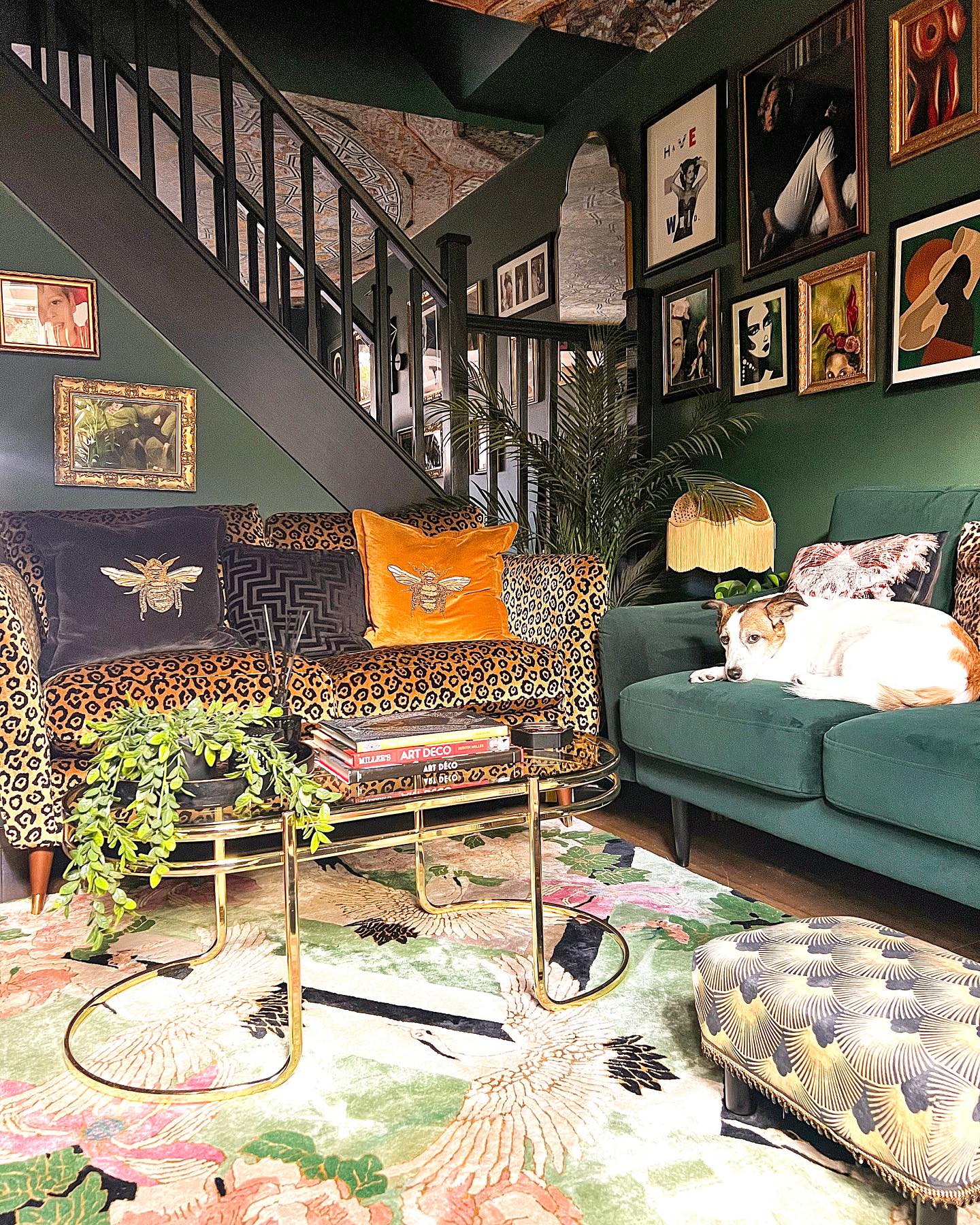
A slender glass coffee table can bring Art Deco glamour into a room that already has plenty of pattern. Here, its gold toned tubular frame traces long curves across a colorful rug, adding shine without covering the design underneath.
The green sofa provides a calm patch beside leopard upholstery, geometric pillows, and a fan patterned footstool.
To make this kind of mix work, repeat one deep color on a large seat and the walls, then let smaller pieces introduce contrast. Choose a table with an open base so the center of the room stays visually light.
The warm metallic finish also connects to the picture frames and fringed lamp, giving the varied collection a few clear points of connection throughout.
8. Frame the Fireplace With Oversized Oval Mirrors
Credits: Instagram
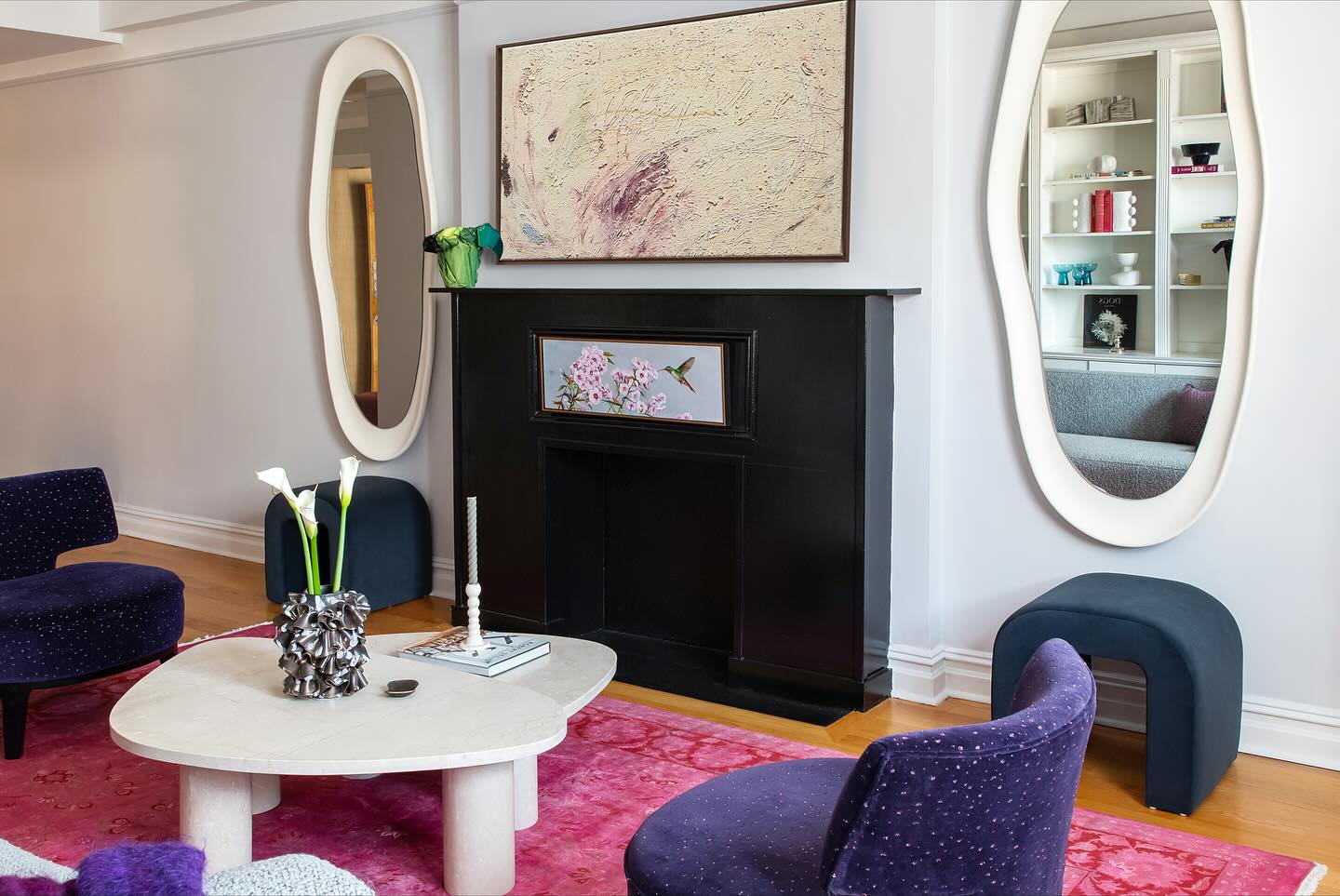
Tall oval mirrors give this living room a strong rhythm while softening its black rectangular fireplace. Matching blue stools below them repeat the curved outline at a smaller scale.
Purple chairs and a pink rug bring rich color into the seating area, while the pale coffee table keeps the center bright.
You can use this idea around a fireplace, console, or another existing focal point: choose two substantial mirrors and leave enough wall space around each for their shape to register.
Keep the frames simple when the room already includes colorful upholstery. Here, the mirrors also reflect shelving and seating, adding depth to the arrangement.
Small accessories on the table allow the larger curves and color blocks to remain dominant.
9. Choose a Sofa With a Continuous Curved Back
Credits: Instagram
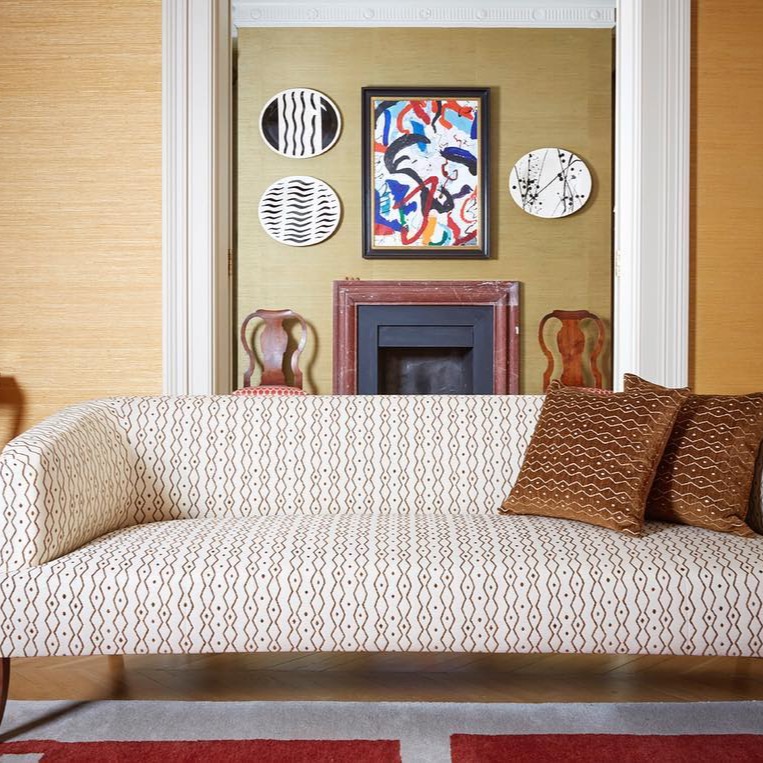
The sofa’s continuous back and low curved arms give this room a quiet Art Deco foundation. Its small repeating geometric pattern adds movement without turning the upholstery into a loud statement.
Brown pillows pick up the darker lines in the fabric, while the golden wall color makes the cream background feel warmer.
To borrow the look, start with a sofa whose silhouette remains clear from across the room, then choose a restrained pattern that suits its curves.
Keep pillows limited so the back and arms remain visible. The rug’s large red blocks provide a useful change of scale beneath the finer upholstery.
Round decorative plates and a rectangular artwork bring more geometry to the wall without repeating the same motif.
10. Use a Folding Screen to Define a Corner
Credits: Instagram
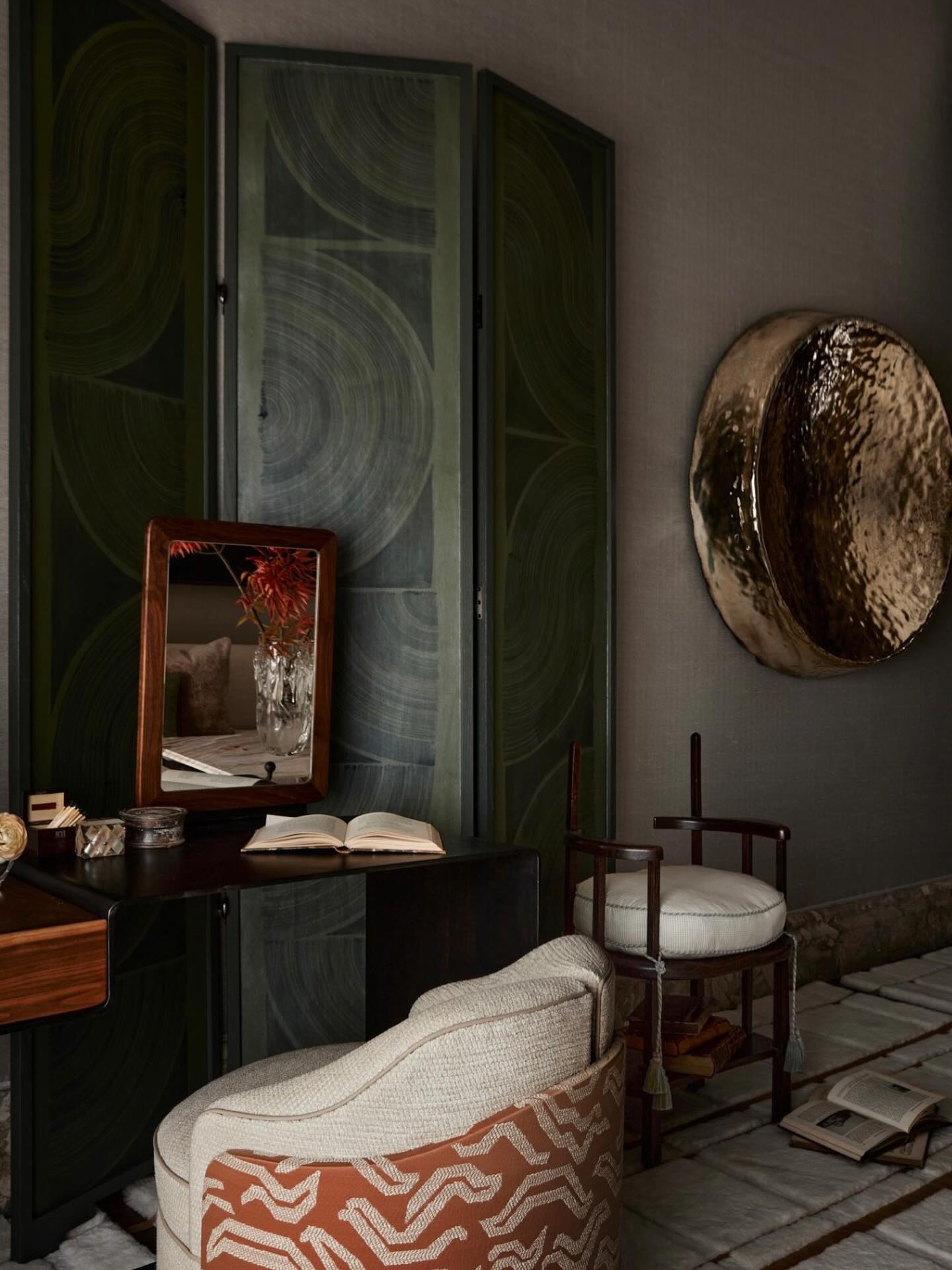
A folding screen gives this intimate sitting area height, pattern, and a sense of enclosure. Its sweeping circular lines feel distinctly Deco, especially beside the dark glossy console and large reflective wall disc.
Pale seating keeps the corner from becoming too heavy, while one rust patterned pillow adds warmth. Try placing a decorative screen behind a low console or chair when a blank wall needs more presence.
Choose a pattern with generous curves so it remains readable behind smaller objects. Here, the leaning mirror, open book, and flowers create a useful tabletop grouping without filling every inch.
Keep the surrounding furniture low enough to reveal the screen’s shape. A restrained palette lets its layered lines become the room’s main decoration.
11. Pair Pastel Seating With a Red Cabinet
Credits: Instagram
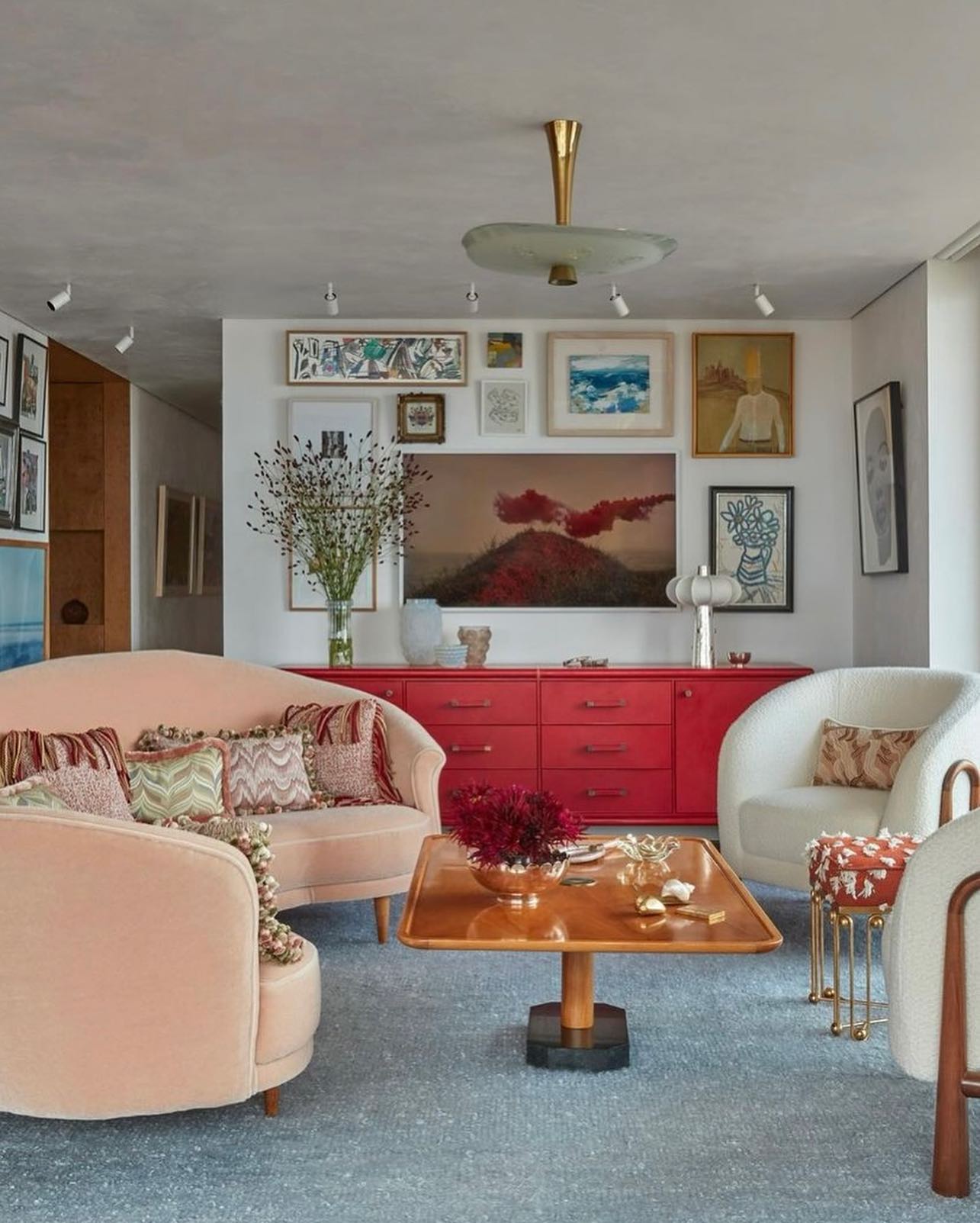
Soft colors can give Art Deco curves a relaxed, everyday feel. In this room, pale pink seating and rounded white chairs gather around a warm orange table, while a red cabinet adds one confident band of color behind them.
The blue floor keeps the palette from becoming too sugary. Try choosing two gentle upholstery colors, then introduce a stronger shade through a single storage piece.
Repeat that accent in a flower arrangement or pillow so it connects to the seating. Here, the glossy tabletop and small metallic details provide shine at a manageable scale.
A generous, varied gallery wall makes the room personal, while the furniture’s rounded backs keep the closely arranged pieces from looking too rigid or crowded together.
12. Layer Shell Shapes Into a Traditional Room
Credits: Instagram
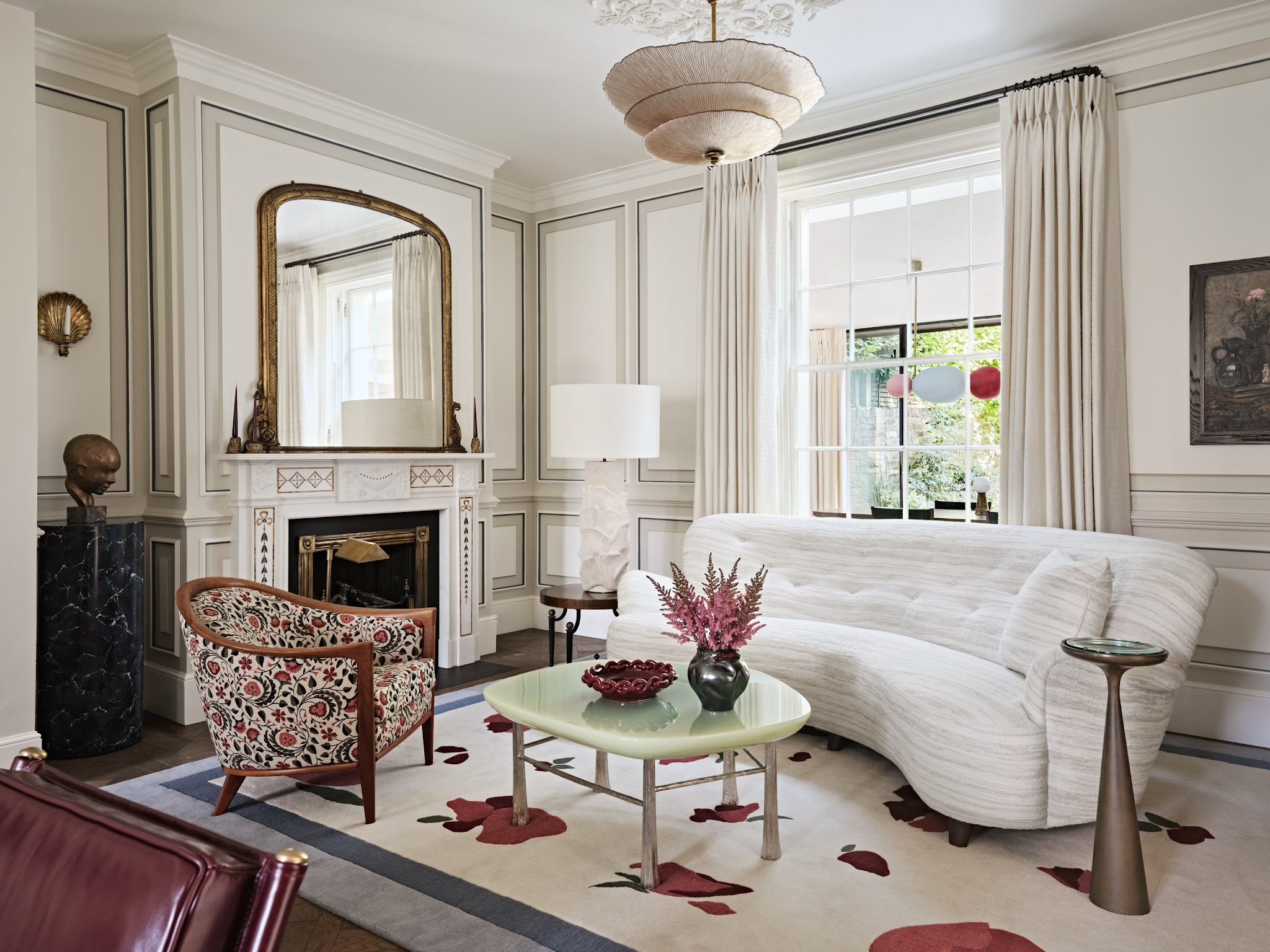
A few shell shapes can introduce Deco character without taking over a traditional room. Here, a tiered pendant, scalloped wall light, and sculptural table lamp bring repeated curves to the paneled walls.
The white sofa continues that soft outline, while a pale green coffee table adds a smooth, reflective surface. You can borrow the approach by choosing one decorative light, then repeating its shape in a smaller accessory or lamp.
Keep the surrounding colors gentle so those details remain easy to notice. The dark lines around the wall panels and mirror supply a crisp framework.
A large floral rug and patterned chair add warmth, showing how geometric structure and softer decoration can sit comfortably together in the same living space.
13. Repeat Rounded Panels Across a Feature Wall
Credits: Instagram
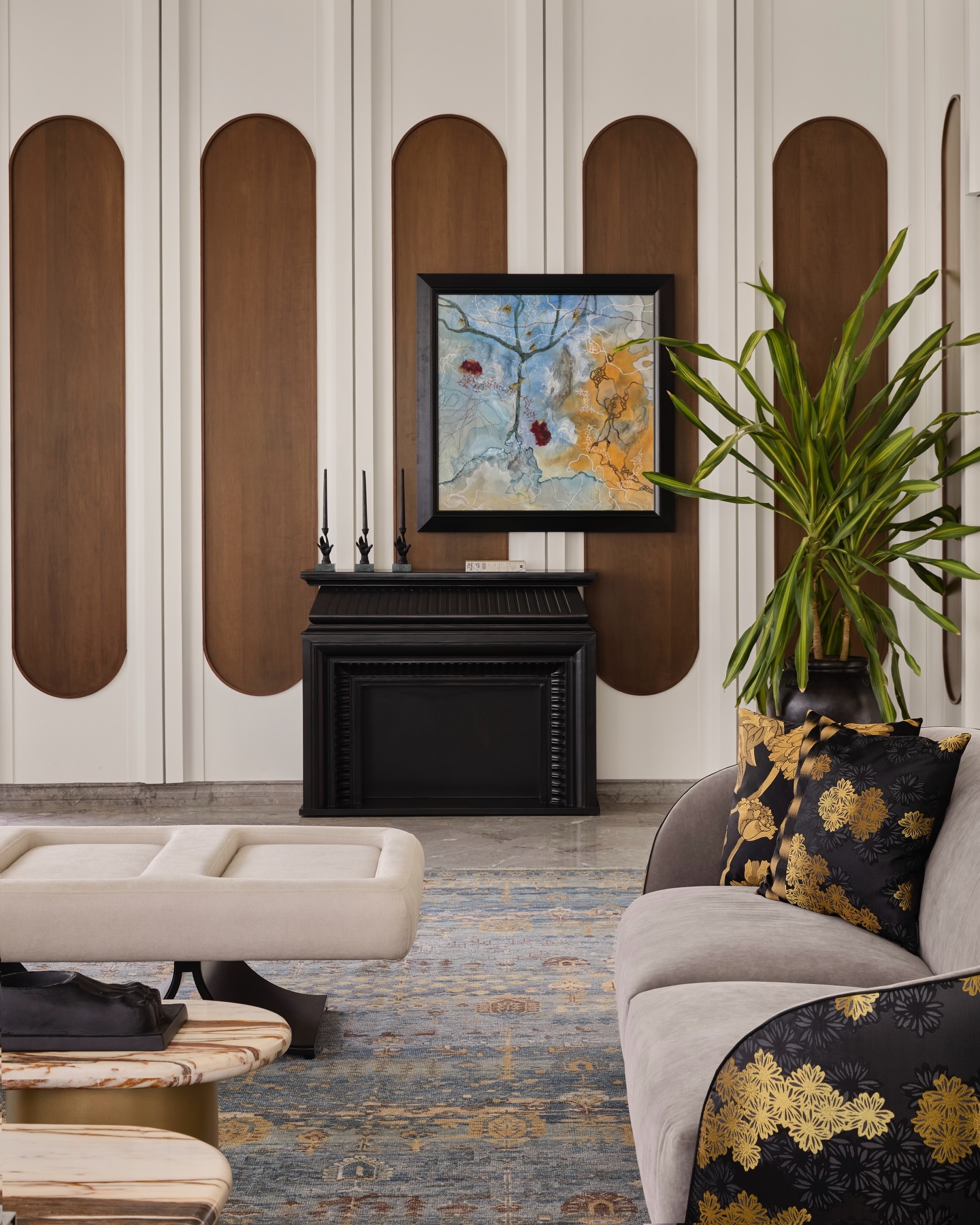
Long rounded panels give this fireplace wall its rhythm. Their warm brown centers contrast with the pale vertical strips around them, creating decoration through shape instead of a busy wallpaper.
The curved sofa, rounded bench corners, and clustered tables extend that softer geometry into the room. To adapt the idea, choose a single repeated shape and carry it across one wall at even intervals.
A restrained palette helps the repetition feel architectural. Here, the black fireplace and artwork frame interrupt the pale background just enough to establish a focal point.
Small gold and yellow details in the cushions and table bases add warmth. Keep nearby furniture relatively low so the full height of the wall pattern stays visible above it.
14. Repeat Small Pendants for a Glittering Canopy
Credits: Instagram
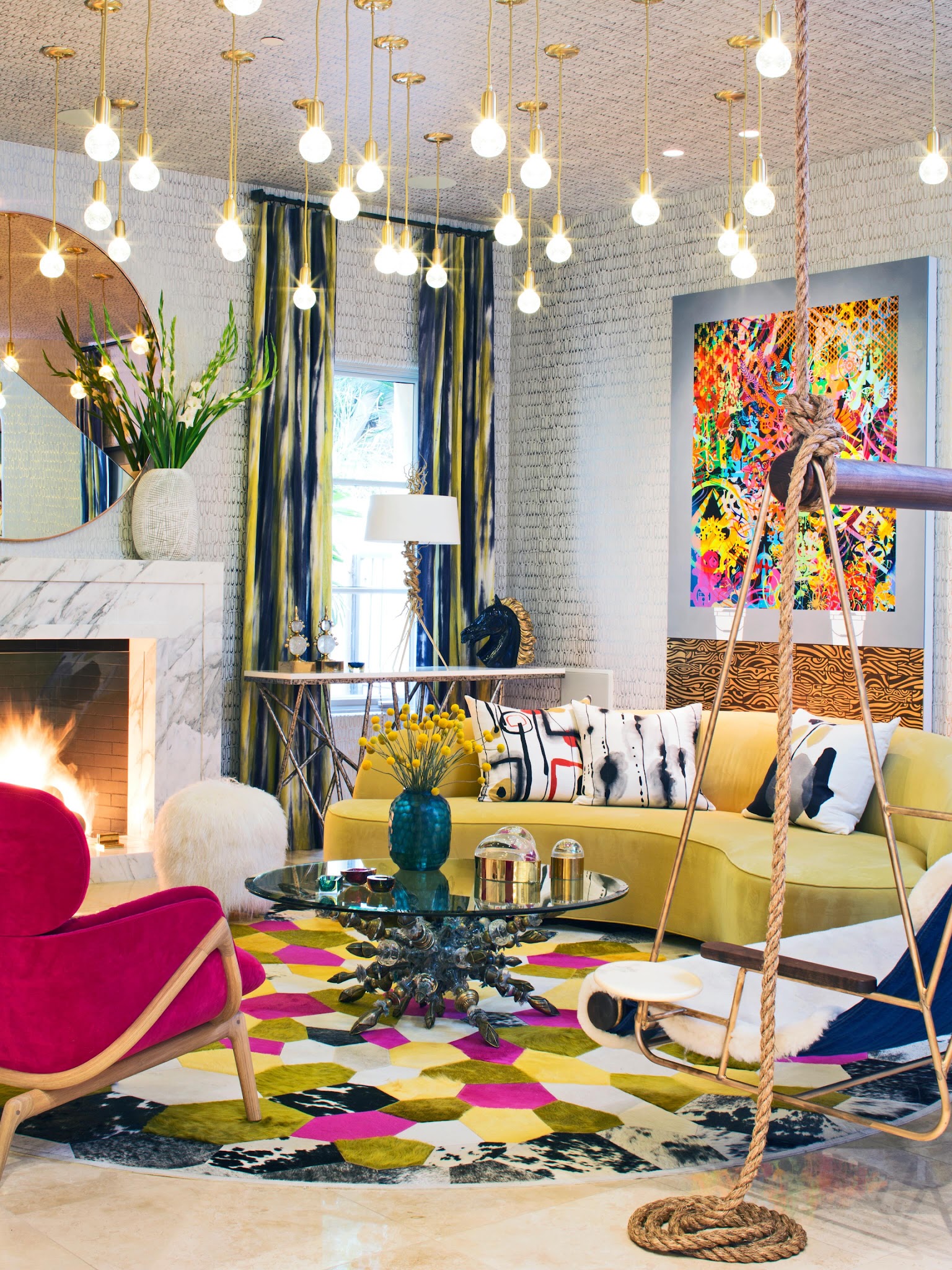
Many small pendant lights give this colorful room a glittering ceiling without one oversized chandelier. Their slim gold toned stems repeat above a yellow sofa, pink chair, and bright geometric rug, linking the different parts of the seating area.
A round mirror catches more of the light, while the glass coffee table preserves the view of the pattern below. You can translate the idea with a smaller cluster over a defined conversation area.
Keep the fixtures consistent in shape so their repetition feels intentional. Let a few colors from the rug reappear in upholstery or flowers.
Here, a pale fireplace and light walls give the bold pieces a calmer background, keeping the room lively while leaving its geometry clearly visible.
15. Connect Seating Areas With a Graphic Pattern
Credits: Instagram
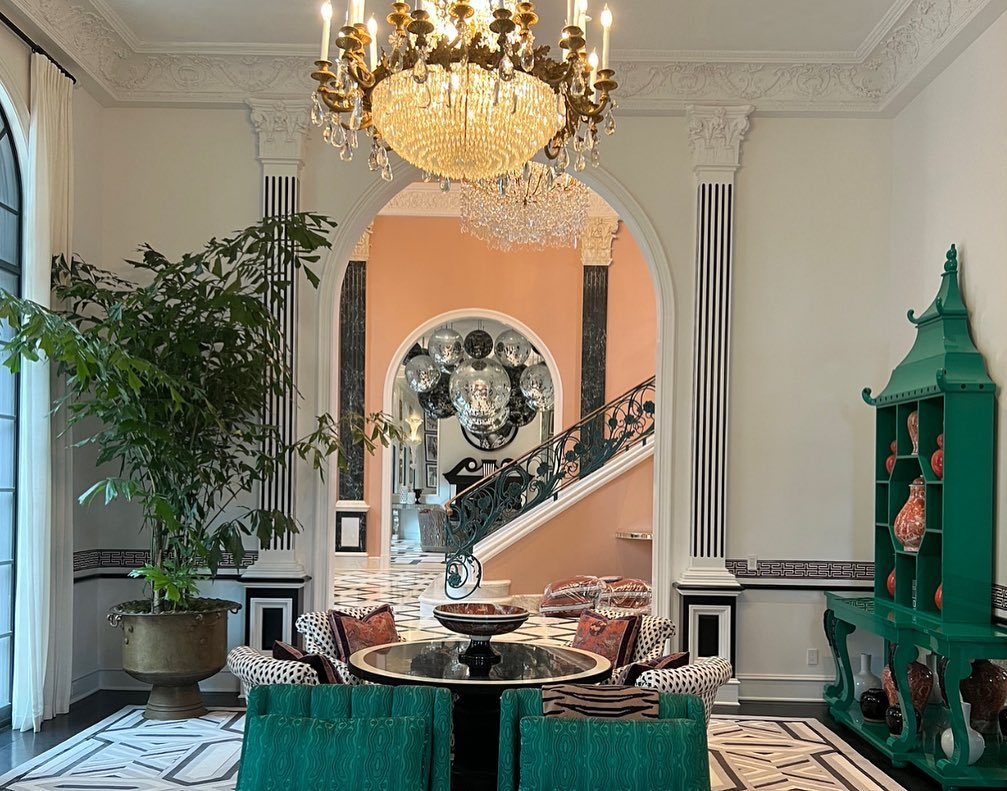
A bold geometric pattern can connect several seating areas within one living room. Here, its black and white pattern continues beneath a round table and green chairs, tying the corner to the larger space beyond.
The green cabinet repeats the upholstery color, while a glossy tabletop and chandelier add reflection. Try using one consistent pattern to connect a conversation group with a smaller spot for games or coffee.
Keep the furniture shapes distinct: a circular table makes a useful contrast to an angular floor pattern. Repeating black in window frames, trim, and furniture details helps the composition feel deliberate.
Pale walls give the stronger colors room to stand out, and warm accents in the adjoining space soften the crisp contrast.
16. Add Depth With Reflective Shelf Backings
Credits: Instagram
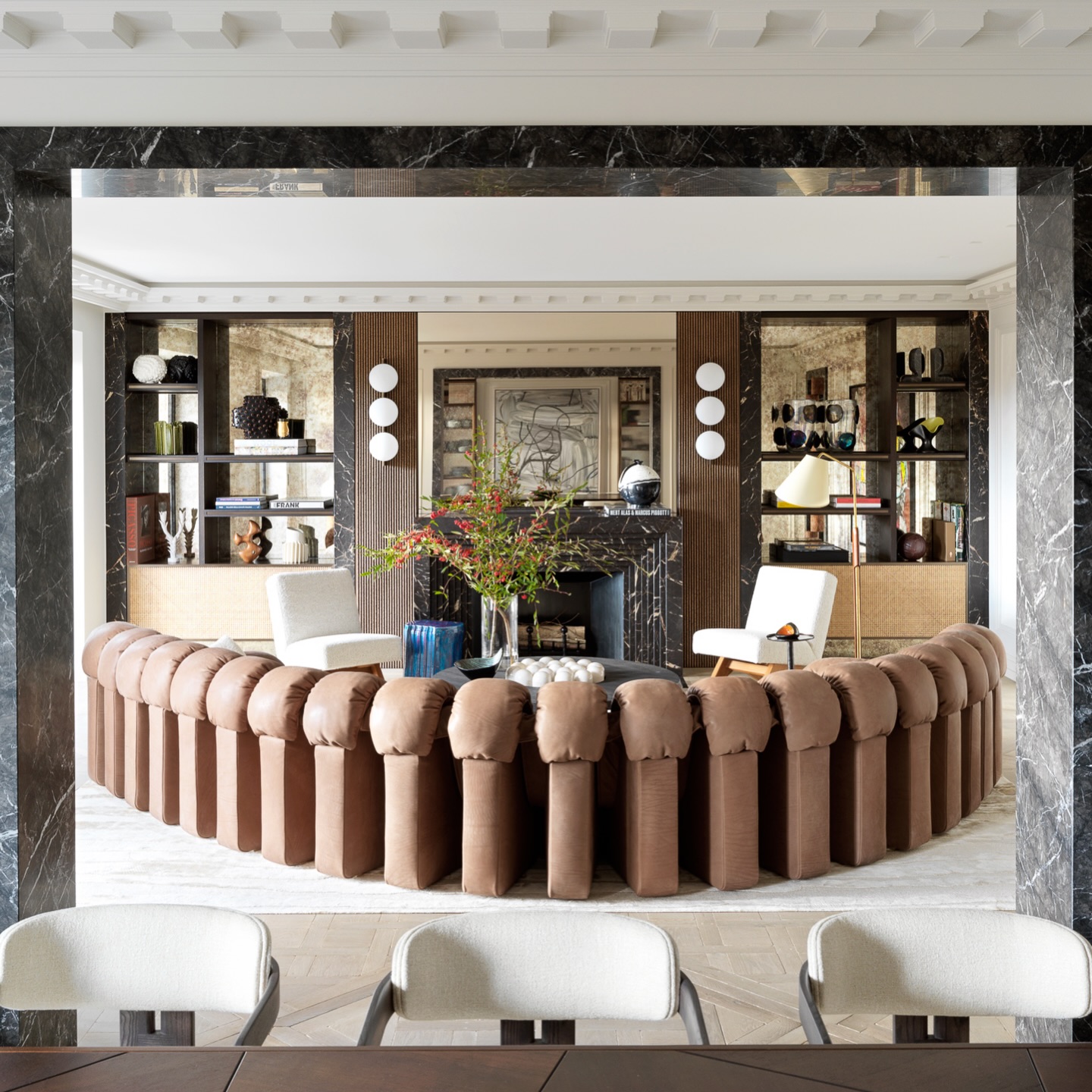
Reflective panels behind open shelves add depth to this living room while making a collection of objects feel more prominent. Dark outlines divide the display, and narrow vertical detailing beside the fireplace supplies another layer of rhythm.
The curved sofa softens this architectural backdrop, gathering the seating around a round table. To use the idea at home, add reflection to one cabinet or shelving recess instead of covering every wall.
Keep the shelf contents spaced so their silhouettes remain readable against the changing reflections. Here, pale chairs and a light floor balance the darker fireplace surround.
Repeating round lights on both sides of the mantel helps establish order, while the brown upholstery brings warmth to the room’s polished, geometric framework.
17. Arrange Rounded Chairs Around a Low Table
Credits: Instagram
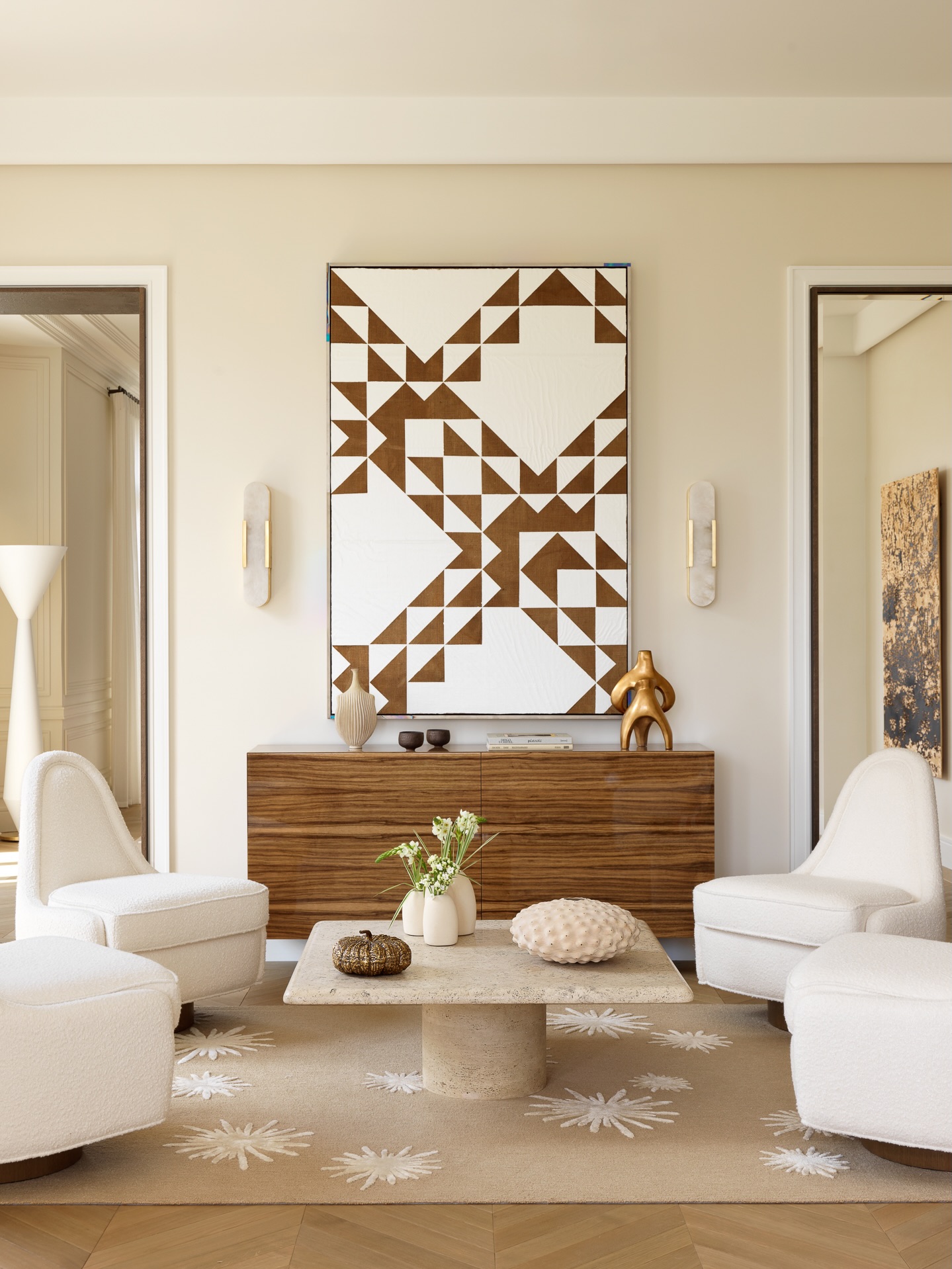
Four rounded chairs turn this pale room into a compact conversation area. Their curved backs and low bases contrast with the sharp triangles in the large artwork, giving the arrangement a clear balance of soft and angular forms.
A broad pedestal table keeps the center simple, while small metallic accents add a little warmth.
Try this layout when conversation matters more than facing a television: bring individual seats around one reachable table and leave an easy path behind them.
Keep upholstery colors close together if the artwork already has a strong pattern. The wooden cabinet adds a darker horizontal line beneath the picture.
Matching wall lights reinforce the room’s symmetry without distracting from the generous shapes of the seating group.
18. Keep a Dark Lounge Low and Geometric
Credits: Instagram
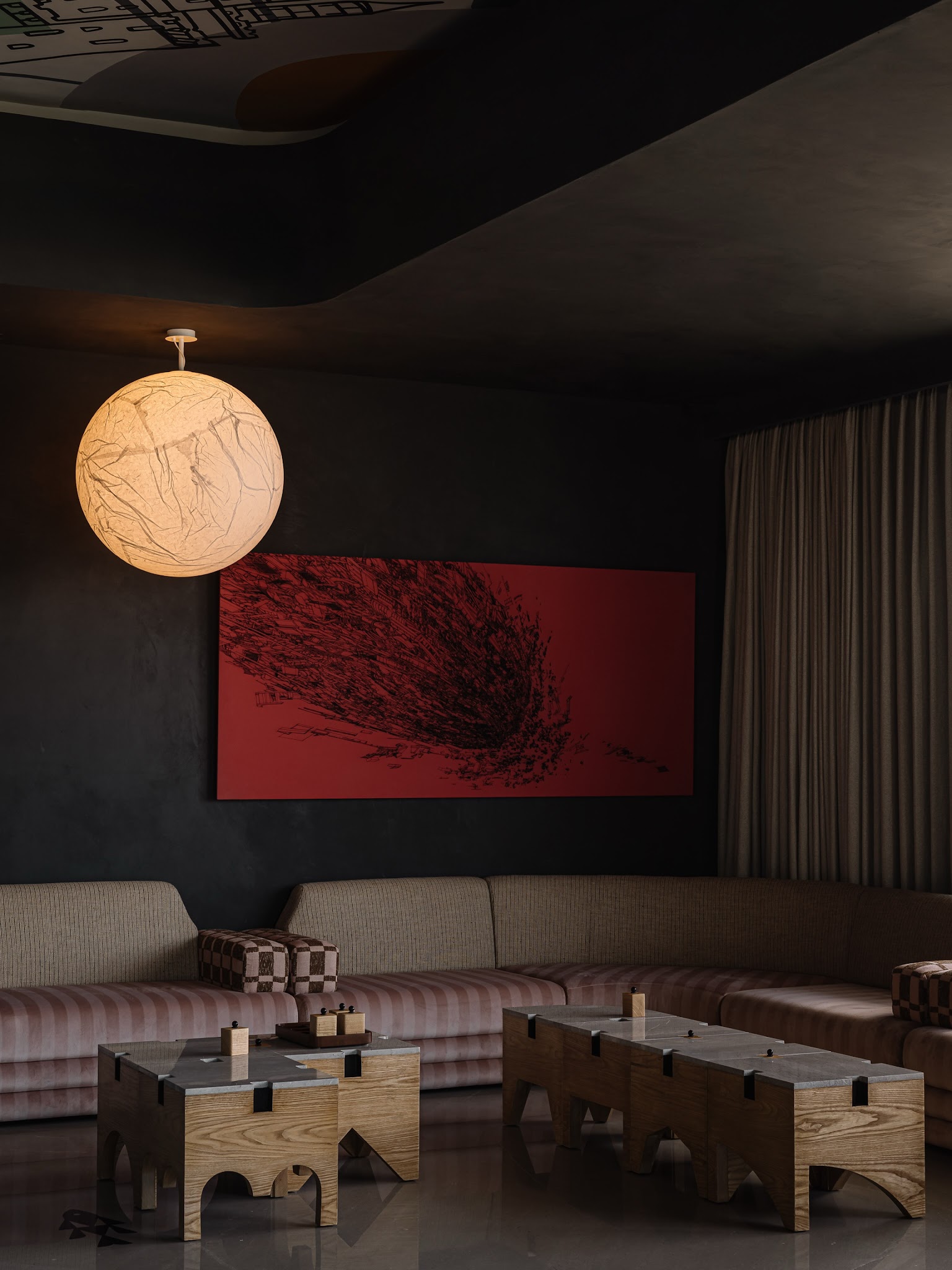
Low seating lets the bold shapes in this dark lounge stand out. Pink stripes run across the sofa cushions, while checkerboard arm cushions and cutout table bases introduce smaller geometric details.
A large globe pendant provides a soft counterpoint to the angular tables. To try the approach, keep your main furniture below the strongest artwork and use just a few contrasting patterns.
Repeat similar colors through those patterns so the room feels connected. Here, deep gray walls and curtains make the pale pink seating especially noticeable, and the red artwork gives the arrangement one concentrated burst of color.
Leave the tabletops lightly styled so their unusual outlines remain visible. The result feels intimate, structured, and comfortable enough for everyday lounging.
19. Contrast a Glossy Waterfall Table With Dark Storage
Credits: Instagram
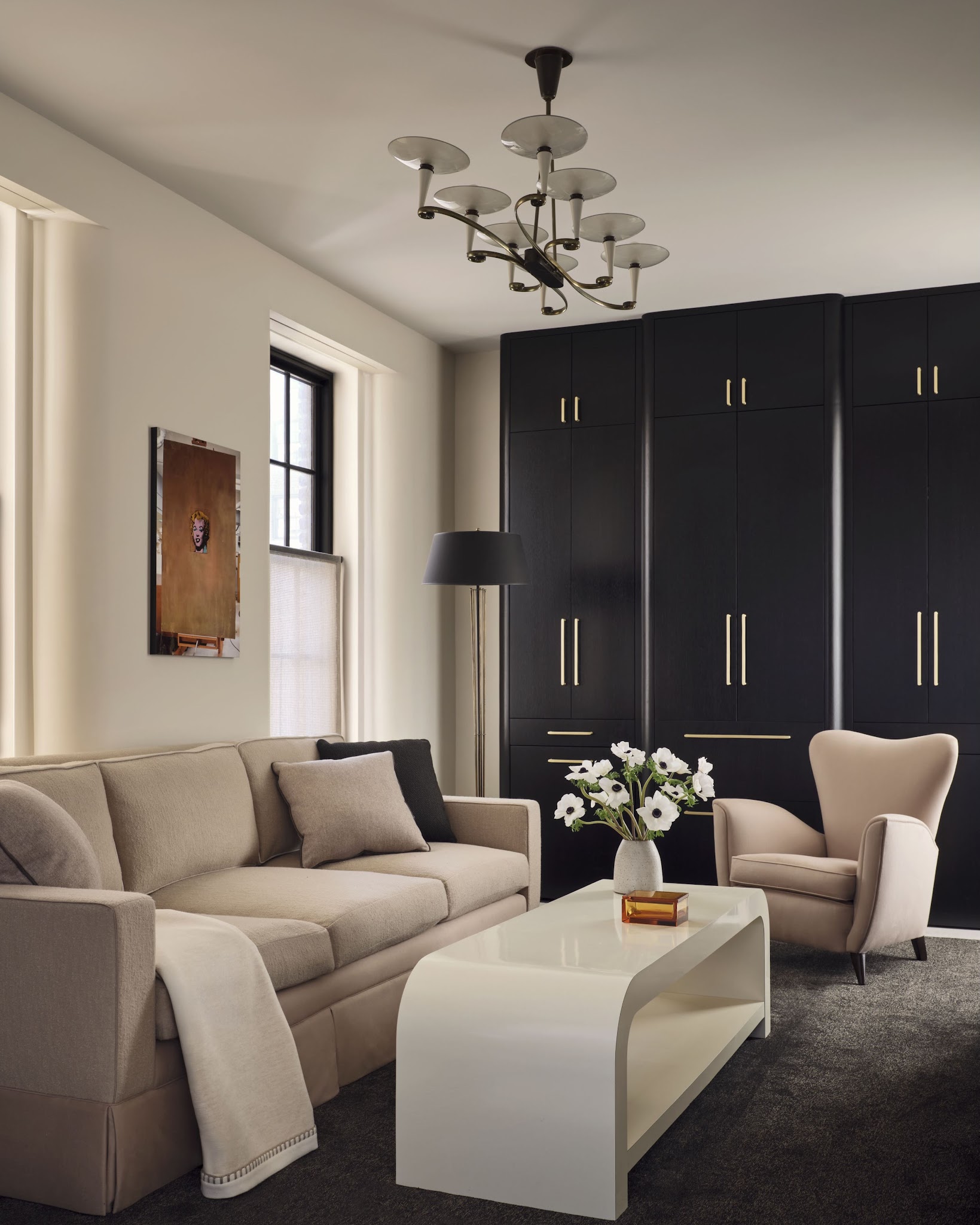
A smooth waterfall table brings a streamlined note to this small sitting room. Its curved edges and glossy pale finish contrast with the tall black cabinets behind it, while slender metallic handles add a measured touch of shine.
The soft sofa and winged chair keep the arrangement inviting. You can use the same idea when your room needs storage as well as style: let built-ins form a quiet backdrop, then choose one table with a distinctive silhouette.
Repeat the darker color in a lamp or pillow to connect the furniture to the cabinets. Here, the open shelf beneath the tabletop adds practical space without interrupting its continuous shape.
A sculptural ceiling fixture gives the restrained palette one more decorative accent.
20. Choose a Lamp With a Sculptural Silhouette
Credits: Instagram
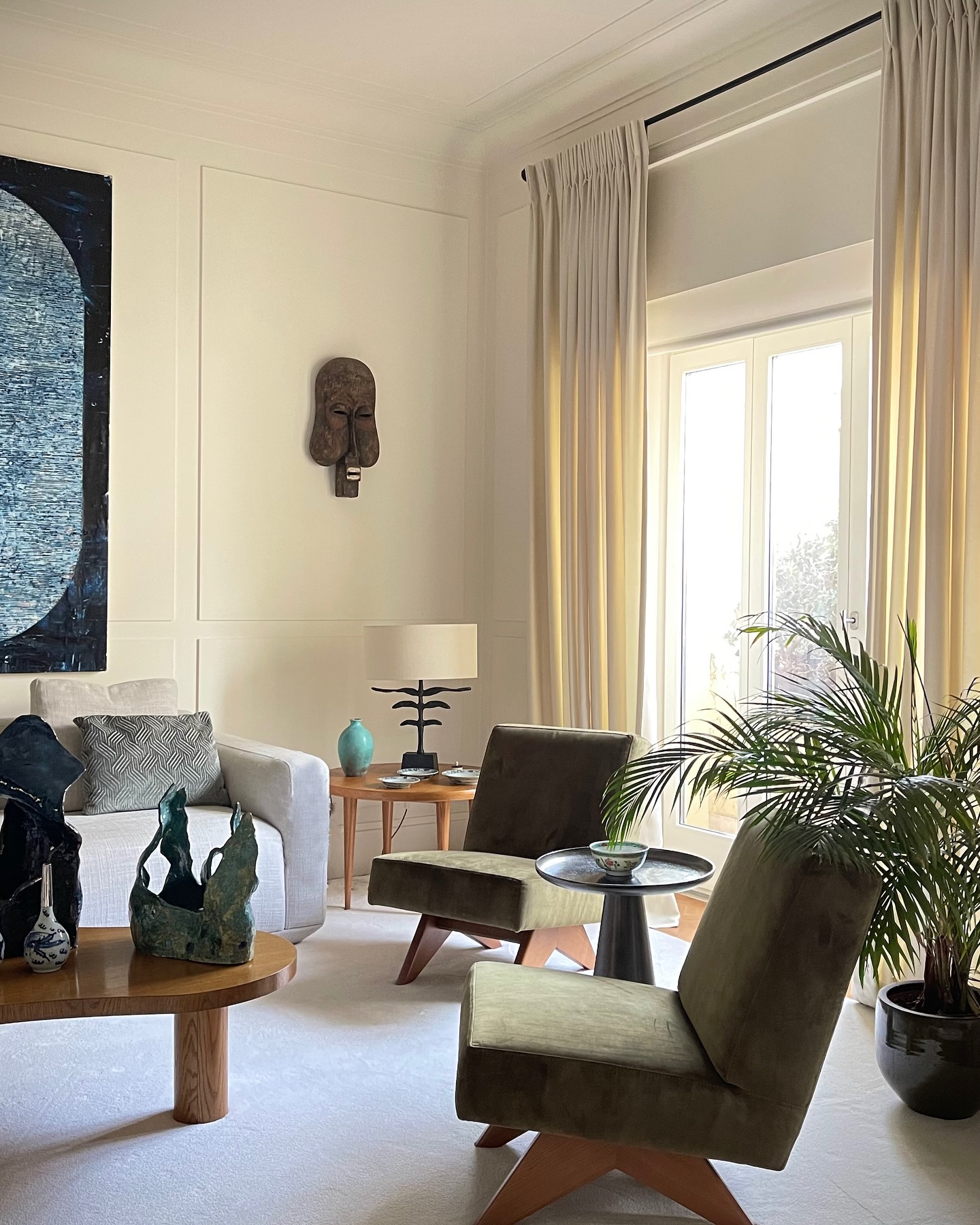
A sculptural lamp can bring a subtle Deco note to a room that mixes several design periods. This black lamp’s branching silhouette stands out against pale walls, while the nearby round tables and geometric pillow supply contrasting shapes.
Olive chairs introduce a deeper color without overwhelming the light sofa and curtains. To borrow the idea, choose a lamp that looks interesting even when switched off, then give it enough clear wall space to show its outline.
Keep the shade simple so the base remains the focus. The small reflective side table adds a cool glint beside the warm wood.
A few sculptural objects and generous greenery complete the arrangement without requiring every piece in the room to share one style.