
A primitive room feels collected, not crowded, when sturdy furnishings and simple patterns have space to breathe.
Primitive Living Room Ideas can help you balance that lived-in character with everyday comfort, whether you’re arranging checked seating around a central table or giving crocks a place beside the hearth.
The examples also show how rough beams, brick, and painted mantels can shape a room without needing elaborate decoration.
From a wing-chair reading spot to a basket-filled cupboard, the focus is on practical pieces, warm materials, and thoughtful displays that still leave the room easy to use.
1. Build a Conversation Group with Checked Seating
Credits: Instagram
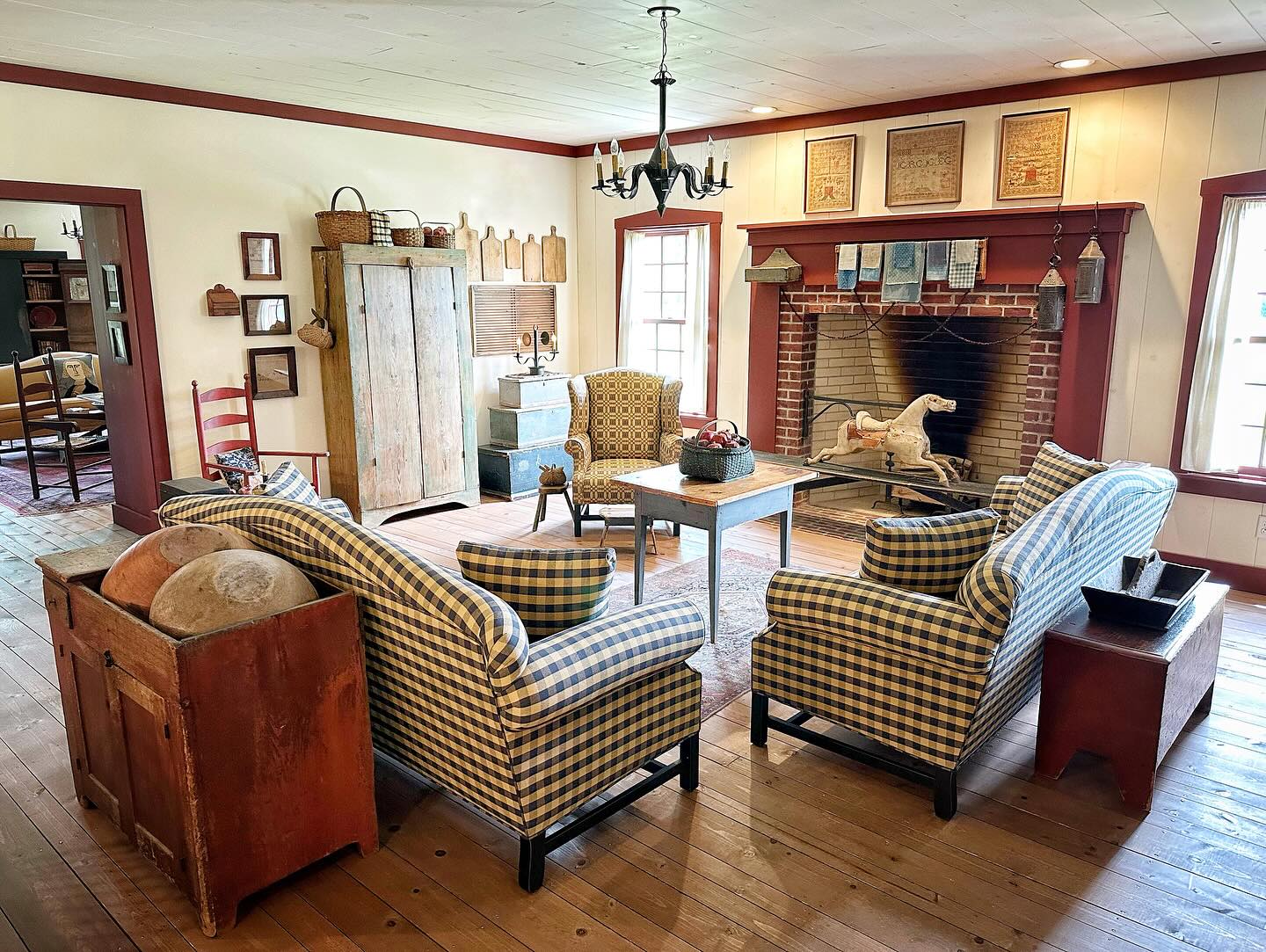
A trio of armchairs gives this primitive living room a sense of rhythm. Their small patterns stay within a muted palette, allowing the wood furniture, brick hearth, and painted trim to hold their own.
A central table gathers the seats into a comfortable conversation group, while a tall weathered cupboard adds useful vertical weight along the wall.
Try repeating one modest textile pattern across several pieces when you want a collected room to feel connected. Then vary the furniture shapes and wood tones so the arrangement retains character.
A simple rug defines the sitting area without concealing the surrounding floor. Leave breathing room between the seats and nearby storage, making the room easy to walk through and use every day.
2. Give Everyday Crocks a Place Beside the Hearth
Credits: Instagram
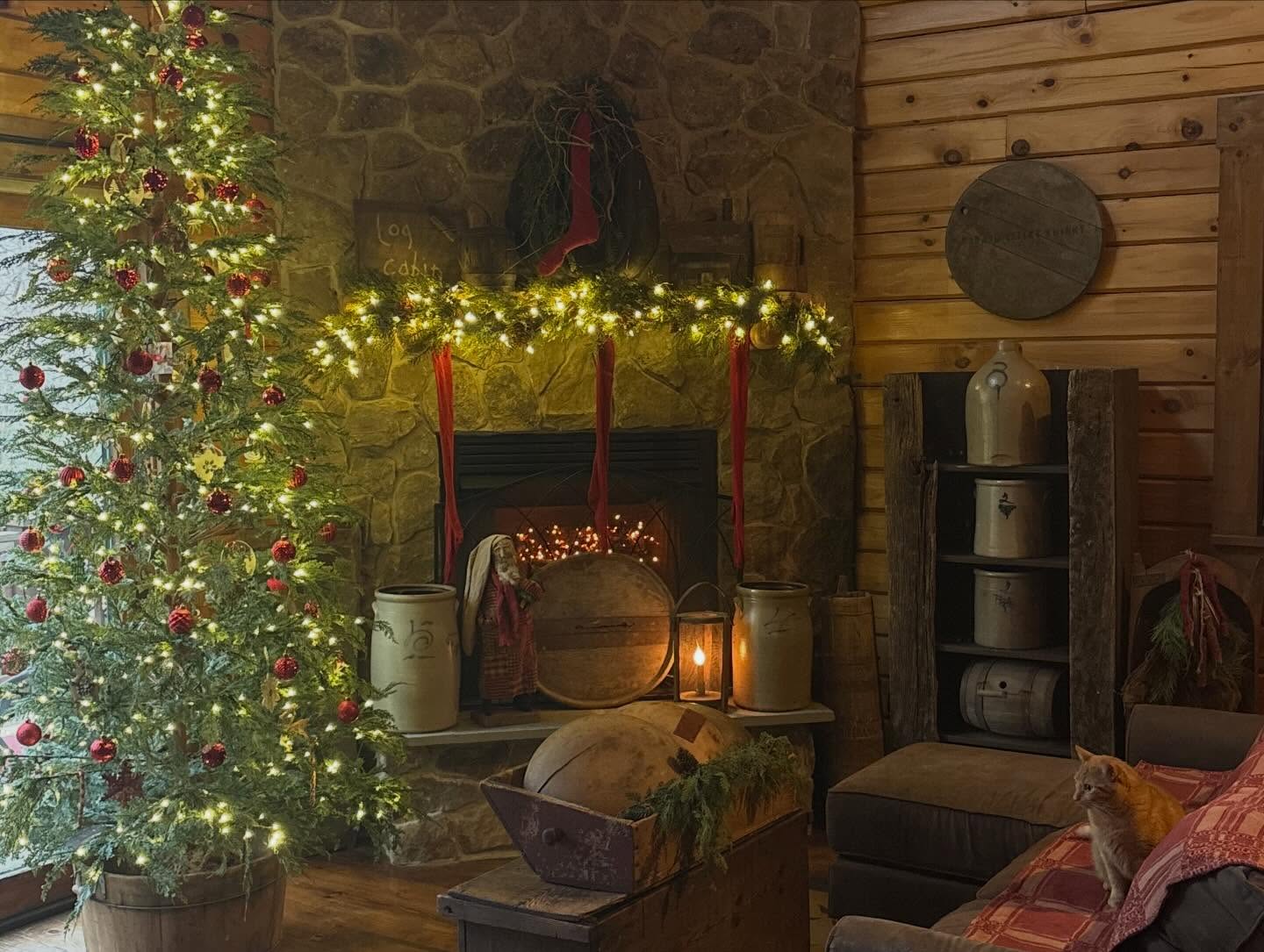
Tall crocks and a narrow, weathered shelf give this cabin living room its collected character. The vessels repeat familiar rounded shapes, while the shelf's dark uprights stand apart from the horizontal wood walls.
A worn chest in front of the sofa provides another substantial surface, topped with a large bowl and greenery.
Use this arrangement as inspiration for displaying practical antiques together, especially when their colors stay close to tan, brown, cream, and charcoal. Leave enough breathing room around each piece to make its outline visible.
A patterned throw softens the seating without hiding the furniture beneath it. Although the photograph includes Christmas greenery, the underlying combination of wood, pottery, stone, and simple textiles works through every season at home.
3. Layer Checkerboards Along a Painted Mantel
Credits: Instagram
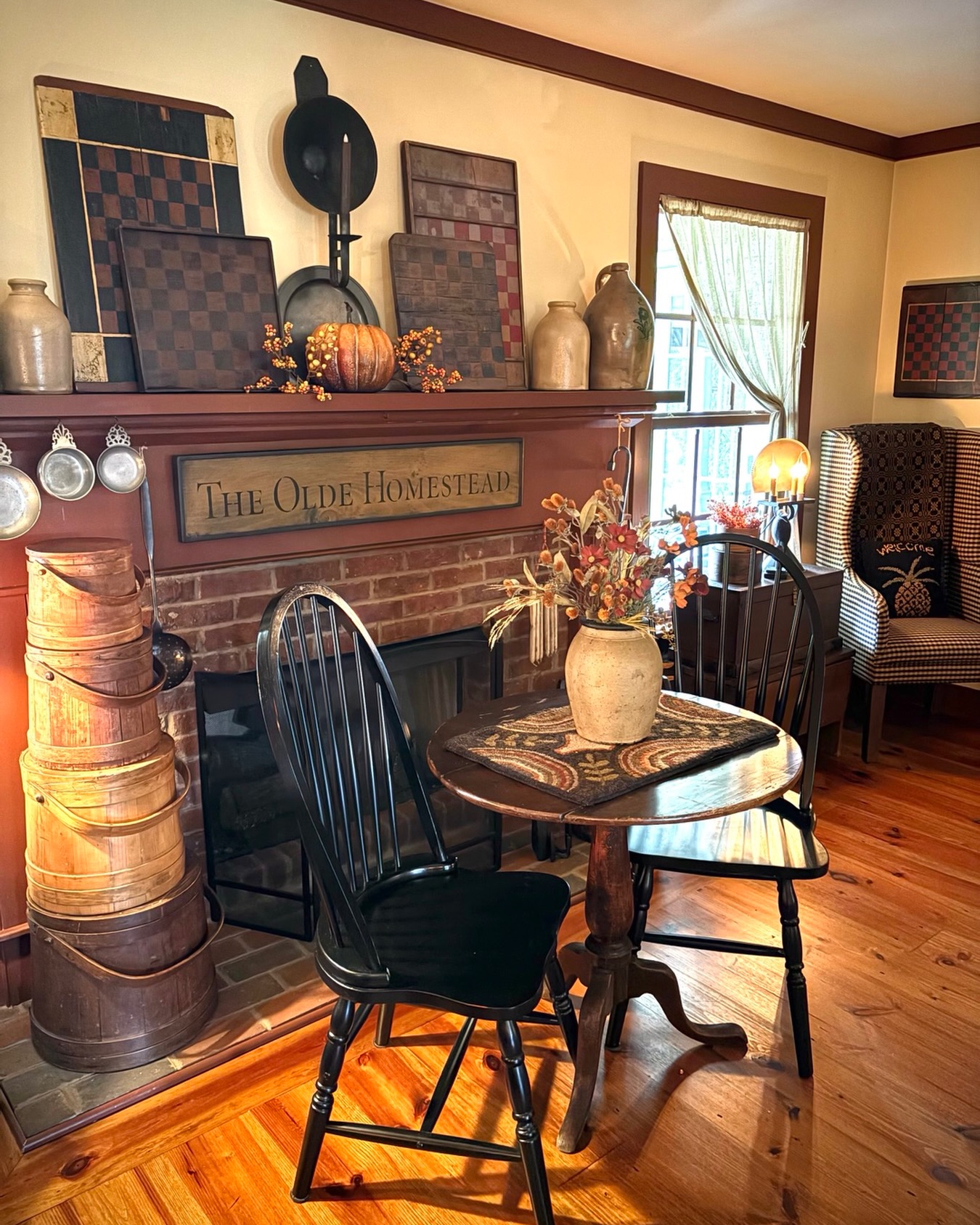
Weathered checkerboards bring bold, simple pattern to this hearth without requiring patterned wallpaper. Their faded red, brown, and black squares connect with the dark chairs, red mantel, and warm floor.
Several boards overlap, giving the display a rhythm rather than rigid symmetry. You can borrow the approach with a small collection of game boards or similarly graphic wooden pieces.
Vary their heights and keep nearby accessories rounded, as the jugs and stacked buckets are here.
A little pedestal table turns the space beside the fireplace into a spot for conversation, while the checked wing chair adds a softer seat nearby.
Choose a compact arrangement that leaves comfortable walking space and keeps the strongest shapes easy to appreciate across the room.
4. Let Rough Beams Set the Room's Character
Credits: Instagram
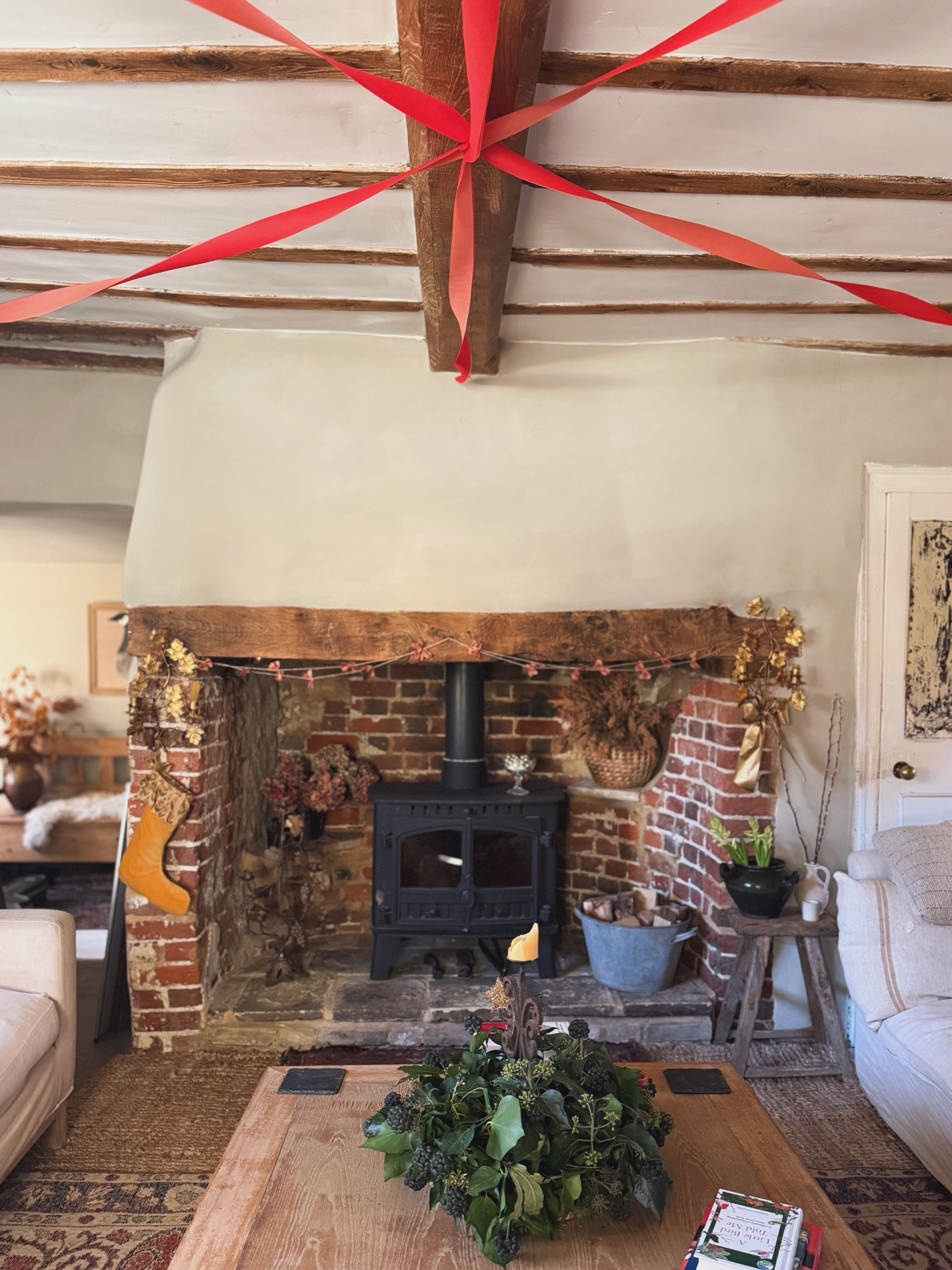
Exposed beams and an uneven brick fireplace give this sitting room a rustic foundation. Light walls and pale sofas keep those textured surfaces from making the space feel heavy.
Notice how the small wooden stool beside the hearth provides a useful resting place without adding another bulky cabinet. The coffee table repeats the warm wood tones, and the patterned rug brings softness beneath it.
To adapt this balance, choose simple upholstery and let visible texture do much of the decorating. A basket, a plain pitcher, and a restrained arrangement of greenery can be enough.
The red ribbons are seasonal touches; the lasting idea is the contrast between rough architectural surfaces and comfortable furnishings arranged for conversation around a clear center.
5. Build a Reading Spot Around a Wing Chair
Credits: Instagram
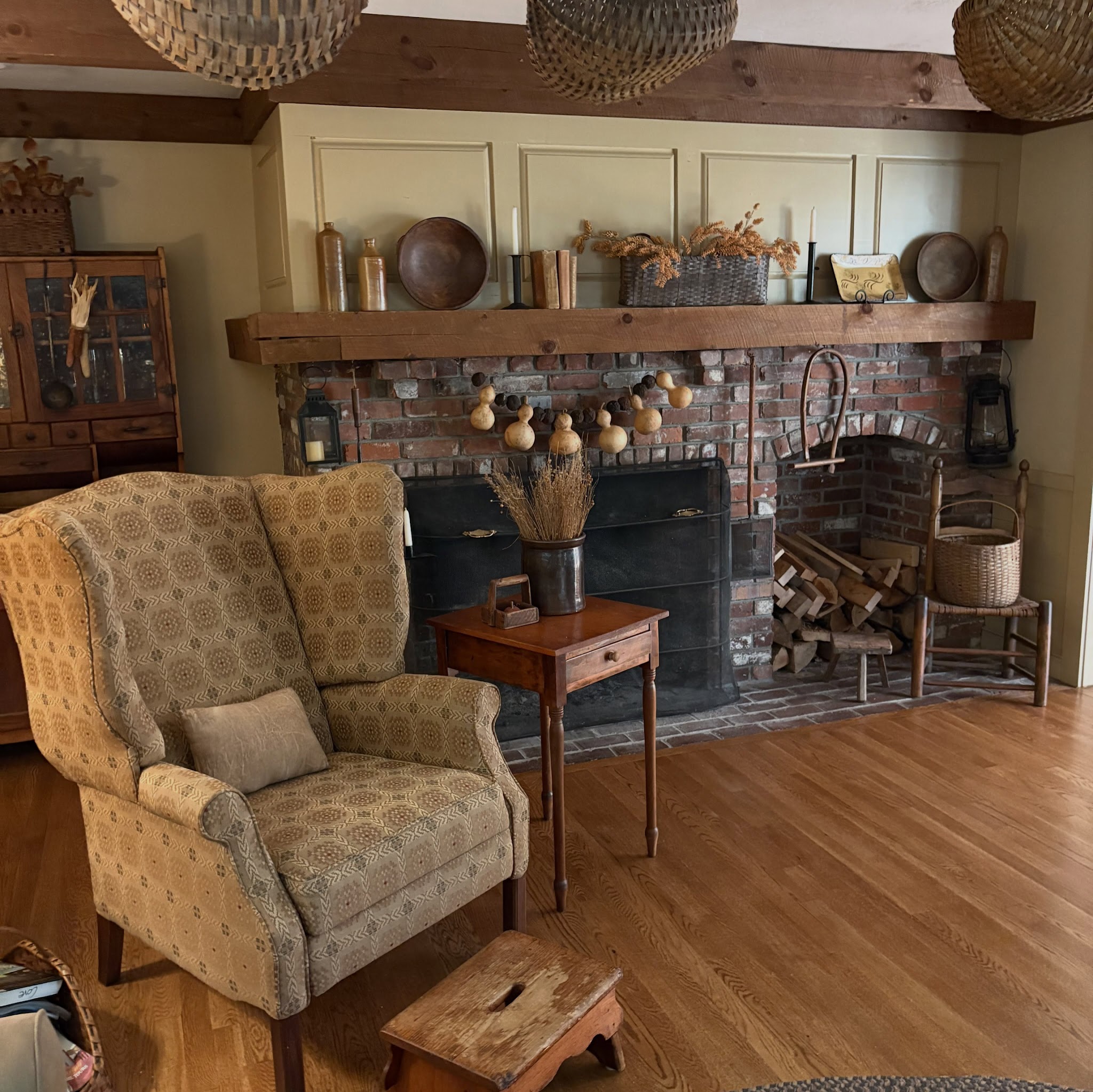
A patterned wing chair, a small drawer table, and a worn footstool make this hearthside corner feel ready for everyday use. Their scale allows the broad brick fireplace to remain the dominant feature.
Above it, a thick wooden shelf supports bowls, bottles, books, and a basket in an easy sequence of low and tall shapes. Suspended baskets echo that collected feeling overhead.
When creating a similar corner, start with a chair and a table that can hold a drink or book. Add a small stool only if the walking route remains clear.
Muted patterns help the chair belong among the wood and brick. Keeping a few open areas around the furniture prevents a substantial collection from crowding the whole room.
6. Use a Basket Cupboard Behind Simple Seating
Credits: Instagram
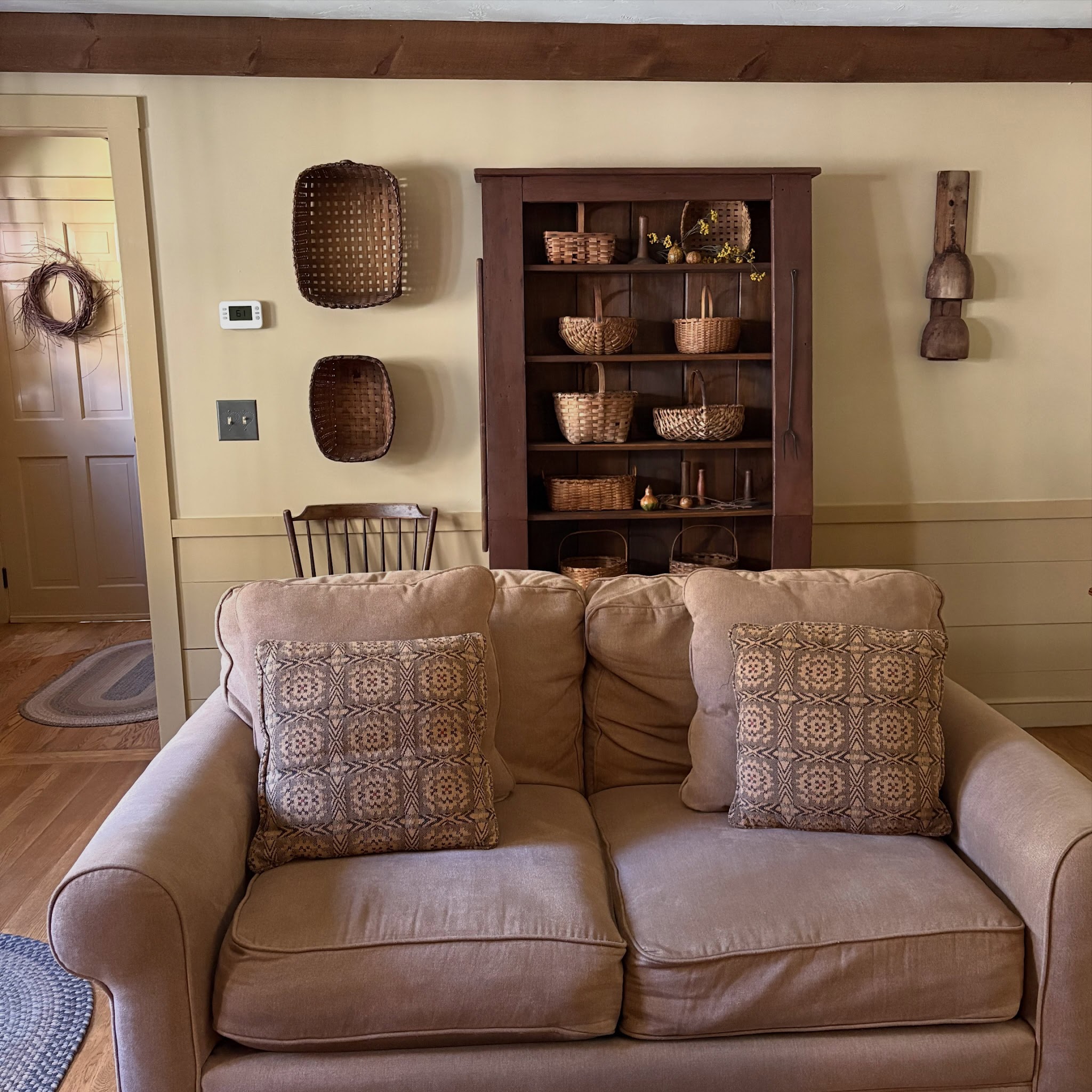
An open wooden cupboard becomes a backdrop for this plain, comfortable loveseat. Baskets of different sizes fill the shelves, while two flatter examples continue the collection onto the wall.
The repeated woven shapes create interest without a busy mix of colors. A pair of patterned pillows brings the same restrained feeling forward onto the seating.
Consider grouping one useful collection this way instead of scattering it around every surface. Leave some visible shelf space so the cupboard's shape remains clear.
The pale wall and horizontal paneling keep the darker furniture from feeling too heavy, and the ceiling beam repeats its brown tone overhead. This arrangement works especially well when you want the storage furniture to provide most of the decoration.
7. Turn a Worn Buggy into Seasonal Display Space
Credits: Instagram
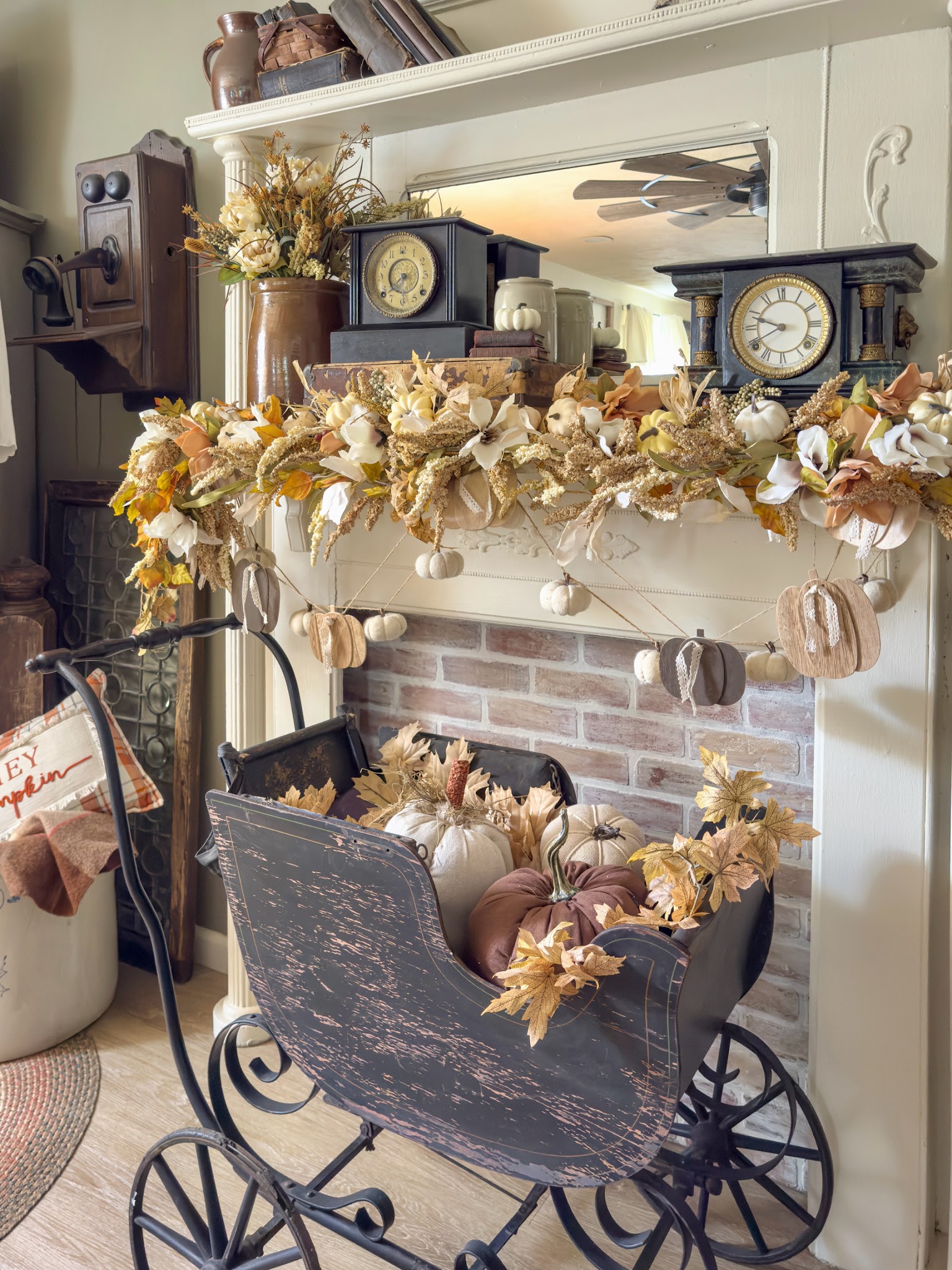
A small antique buggy gives this living room a place for seasonal decorations. Its scuffed finish and spoked wheels add more character than a standard basket, while cloth pumpkins and muted leaves soften the dark outline.
The nearby mantel continues the collection with clocks, books, and pottery, keeping the colors close to cream, brown, and faded gold.
If you own an unusual practical antique, try treating it as a display container where its shape can still be appreciated. Keep the contents low enough to reveal distinctive handles, edges, or hardware.
A quieter wall color helps a layered arrangement remain readable. Place the display outside the main walking route, and repeat one or two colors in nearby accessories for visual continuity.
8. Create a Tavern Corner with Painted Woodwork
Credits: Instagram
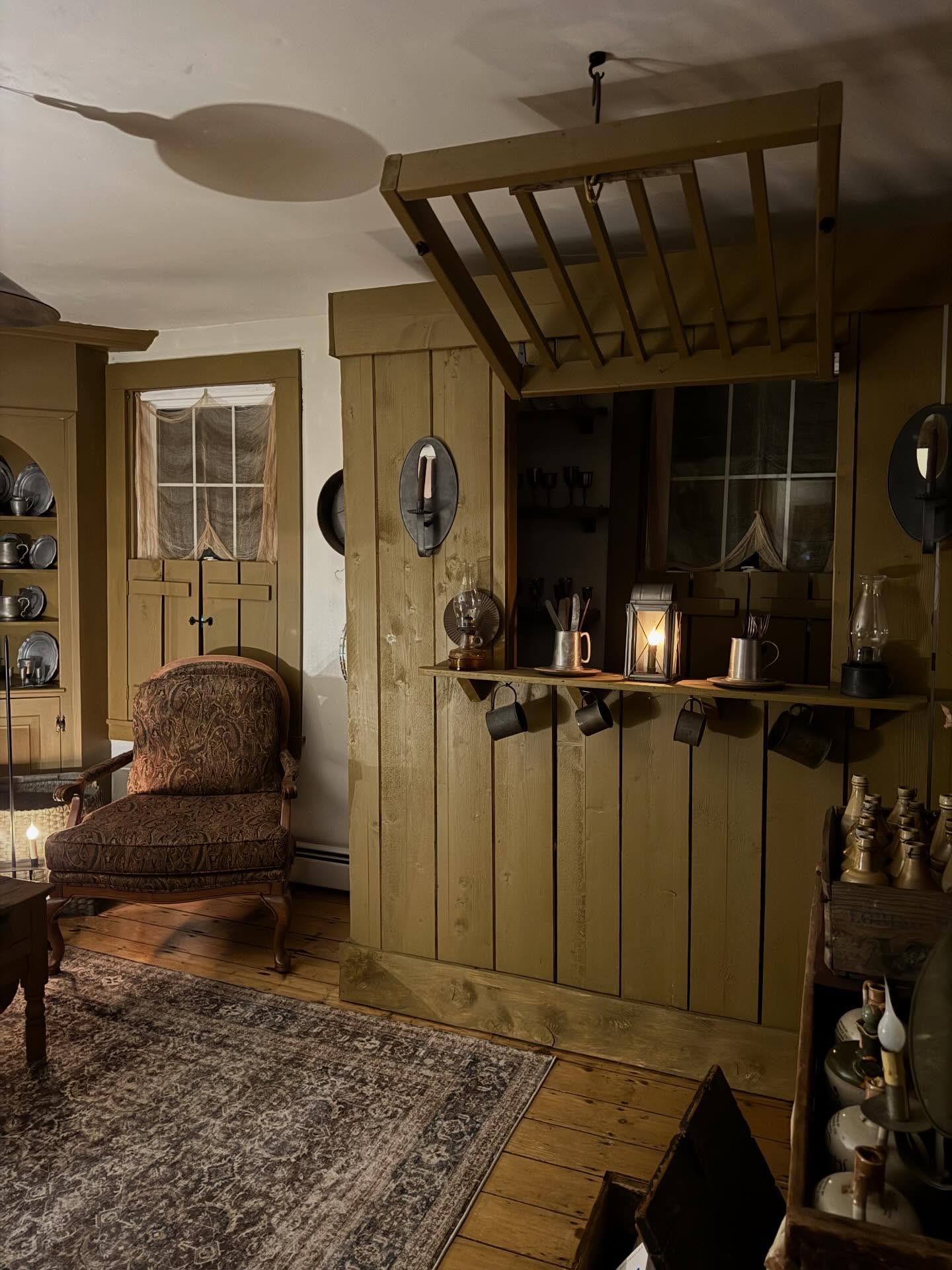
Muted olive woodwork gives this sitting corner an early country character. The wide plank wall, small serving shelf, and raised shutter create depth, while simple vessels and a lantern make the ledge feel useful.
An upholstered wooden armchair offers a comfortable place to pause beside the display. For a similar effect, consider painted paneling or a freestanding cupboard in an earthy color, then choose a few everyday objects with uncomplicated shapes.
Repeat the paint on nearby trim to make the arrangement feel connected to the room. Patterned upholstery and a rug add softness beneath the strong wooden lines.
Keep any lighting modest in scale so the shelves, vessels, and worn surfaces remain the main features of your primitive living space.
9. Pair High Baskets with Textile Storage
Credits: Instagram
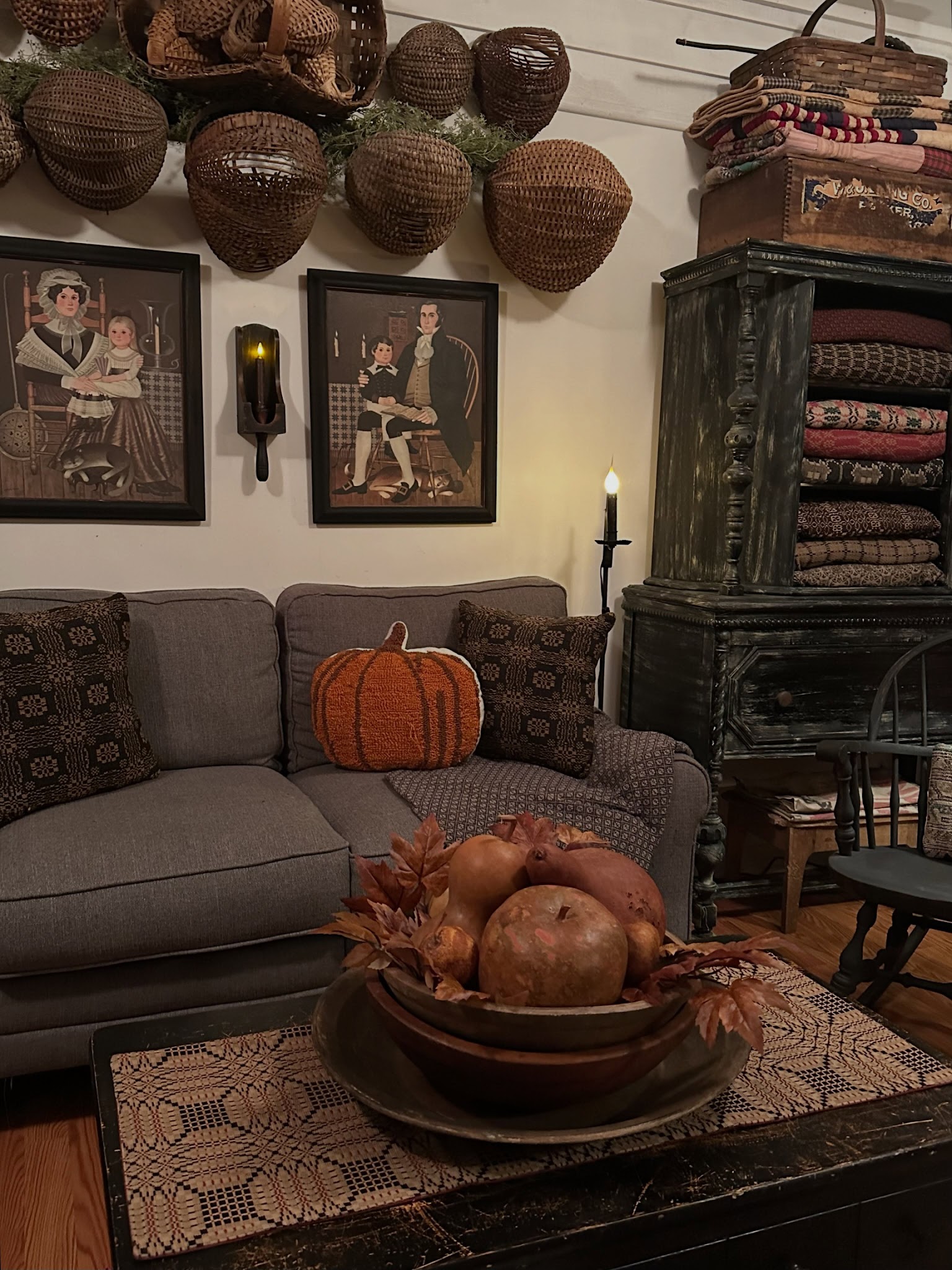
A cluster of baskets makes the upper wall part of this primitive sitting room's decorating scheme. Below, a tall cupboard holds stacked textiles, adding color and softness beside the sofa.
Framed portraits create another layer along the wall, and a bowl of pumpkins keeps the central table connected to the season. The idea to borrow is the relationship between practical storage and display.
Group baskets where their different shapes are easy to see, then keep heavier furniture beneath them to anchor the arrangement. A simple sofa gives the eye a resting place among the collections.
Choose a few subdued textile colors that repeat elsewhere in the room, and let visible folds add texture without requiring more small accessories or ornaments.
10. Warm a Sitting Corner with Ocher and Black
Credits: Instagram
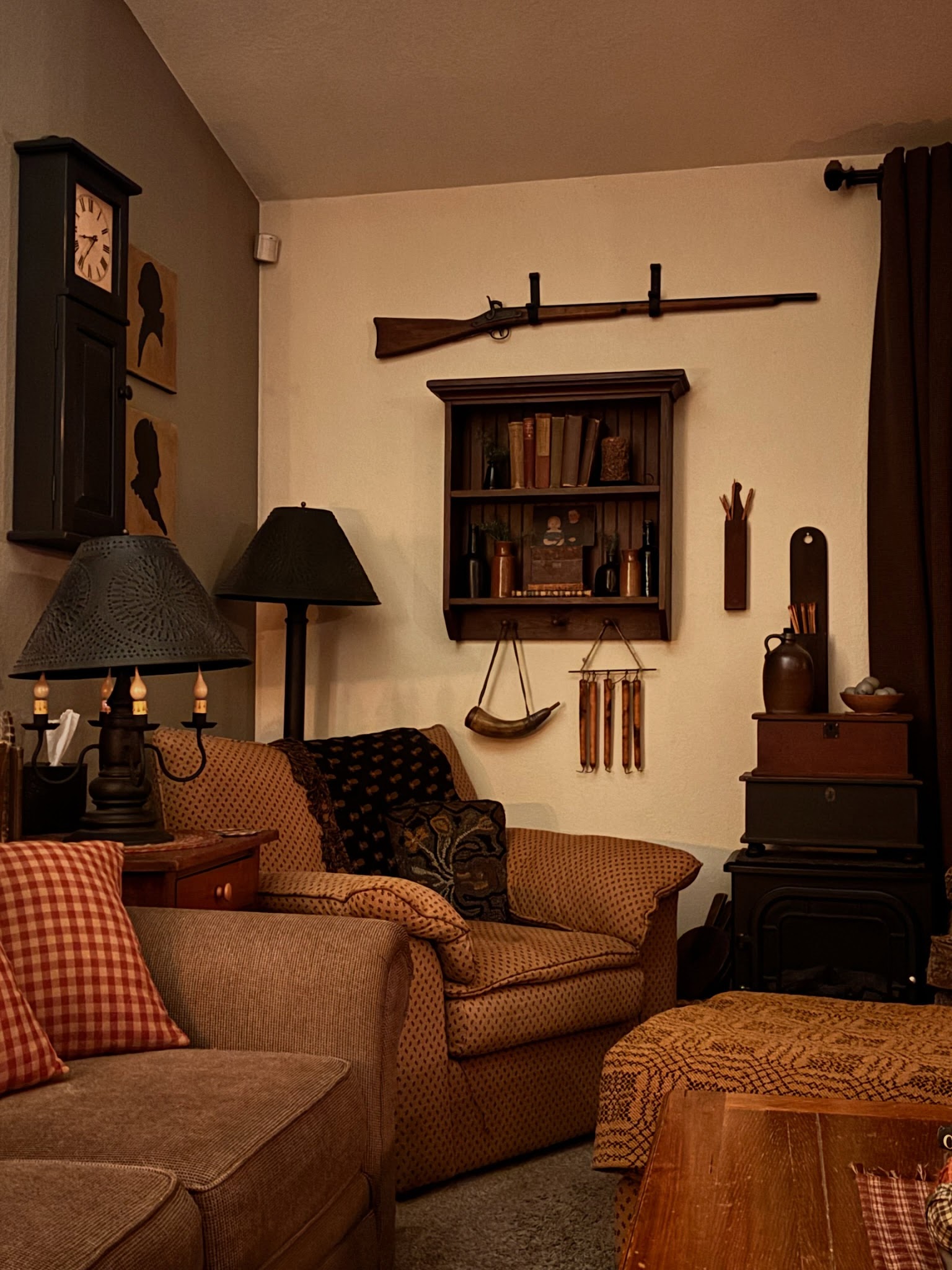
Ocher colored seating and dark lamps give this quiet corner a grounded appearance. A small wall cupboard draws attention upward, while simple objects arranged below it keep the display connected to the seating.
The upholstered footstool adds another soft surface without competing with the chairs. Use a restrained palette of ocher, brown, black, and cream when you want primitive furnishings to feel comfortable together.
Let worn wood and modest textile patterns provide variation within that palette. Two lamps at similar heights create an inviting pool of light and help balance the room's darker details.
Keep wall arrangements compact enough that each object remains visible, and leave useful space beside the seating for a drink, a book, or an everyday project.
11. Ground a Dark Cabin with a Faded Red Rug
Credits: Instagram
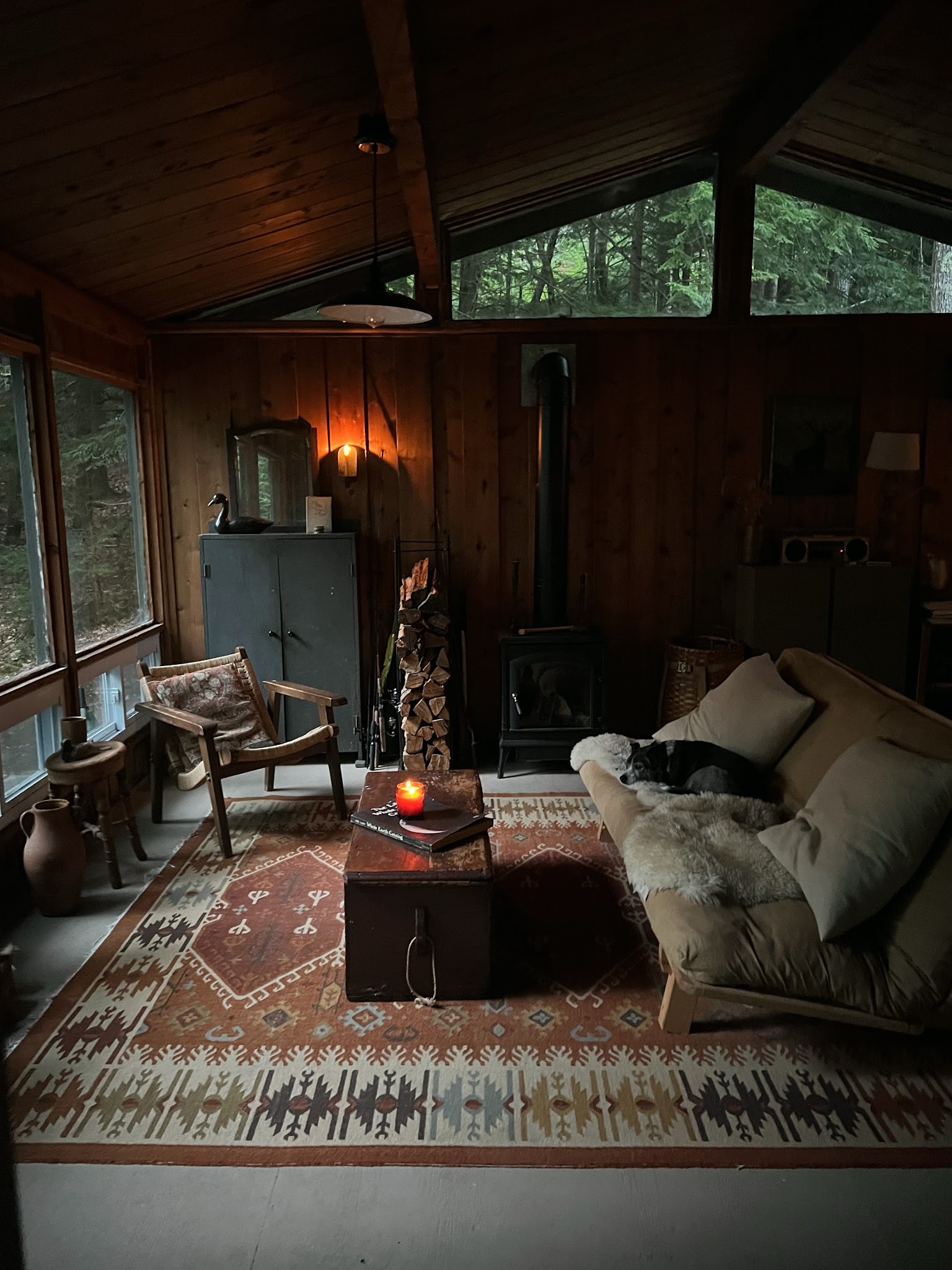
A faded red rug gives this timber cabin a center, bringing pattern and warmth beneath simple seating. The worn chest functions as a coffee table, while a wooden armchair, small stool, and plain cupboard keep the furniture modest in scale.
A pale throw and cushions make the darker sofa corner easier to read. You can borrow this balance even without wood walls: pair a substantial patterned rug with furniture that has straightforward shapes and visible wear.
Keep the central table low enough to allow conversation across it. A few useful vessels and a basket add texture without filling every surface.
The limited palette makes the collected pieces feel connected, while the generous windows provide a welcome contrast to dark wood.
12. Make a Window Nook with a Writing-Arm Chair
Credits: Instagram
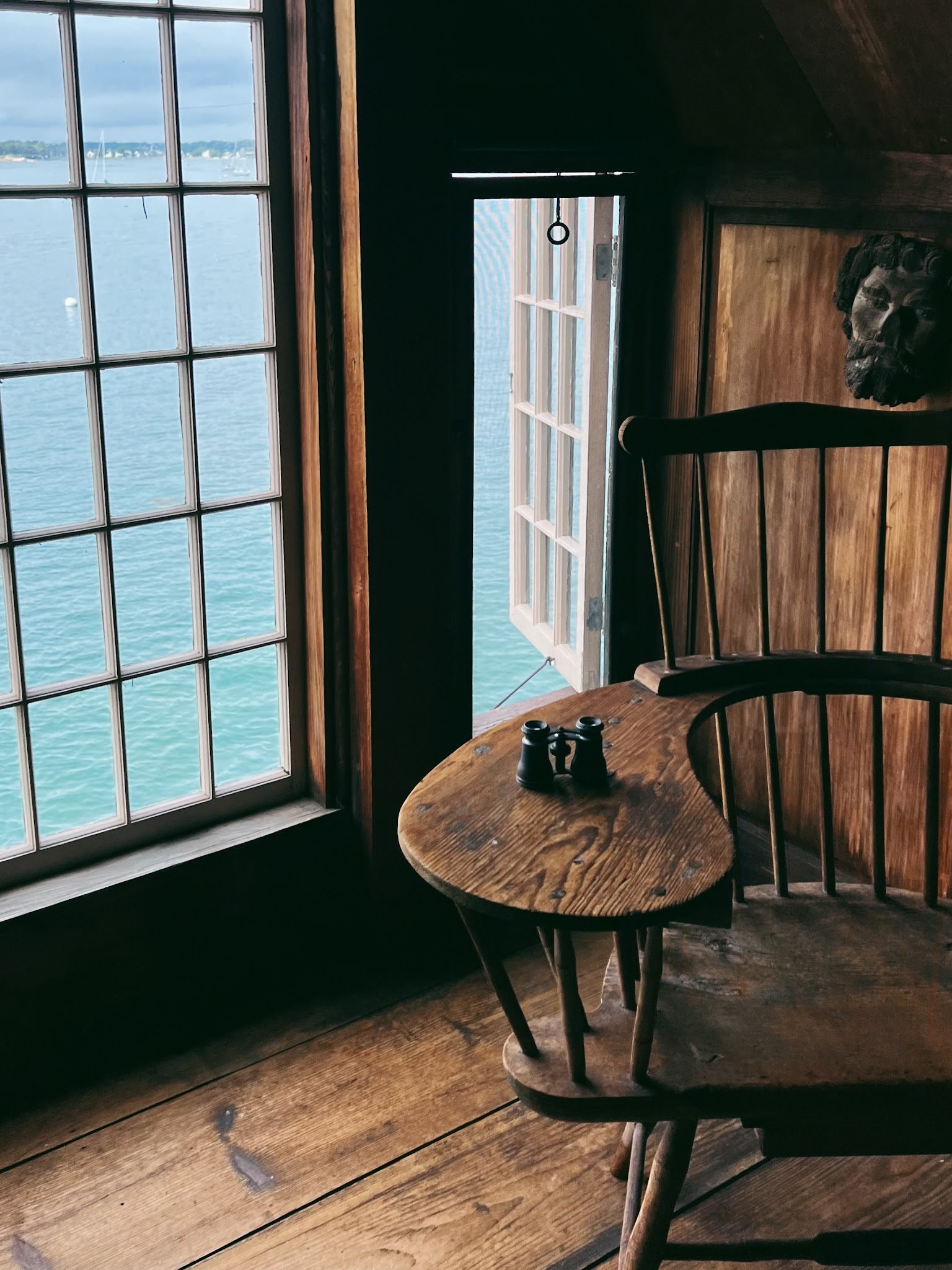
This window corner at Beauport shows how much character a wooden chair can bring to a room. Its broad writing arm supplies a small surface without requiring a separate side table.
Worn wood grain, narrow spindles, and the surrounding paneling create a quiet composition against the bright water view. The practical lesson is to give an interesting chair enough space to be appreciated.
Position a similar piece near natural light, and keep nearby accessories restrained. A small cushion can add comfort without covering its distinctive shape.
Repeating the wood tone in a frame or floor helps the corner belong to the larger living room. Simple furnishings let the window remain the main attraction while providing somewhere comfortable to sit quietly.
13. Mix Muted Green with a Rust Settee
Credits: Instagram
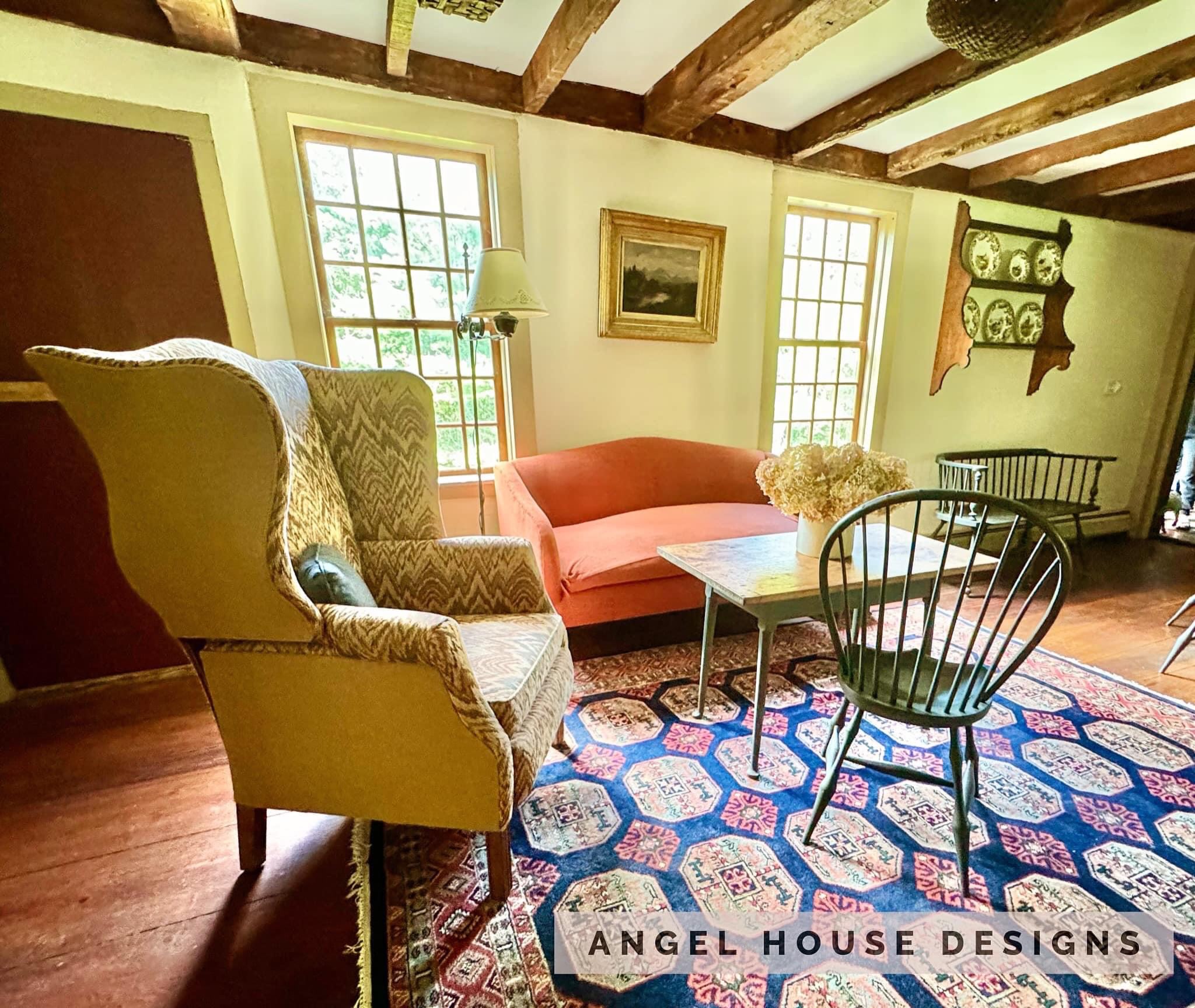
Muted green chairs and a rust colored settee bring contrast to this room's exposed beams and warm floor. A small wooden table gathers the seats together, and a patterned rug supplies the strongest detail beneath them.
The pale walls leave room for a landscape painting and a simple plate rack without competing with the furniture. To borrow the palette, choose one warm upholstery color and one cooler, earthy shade, then repeat both sparingly.
Keep the largest wooden surfaces natural in appearance so the colors feel grounded. Mixing a wing chair with a spindle chair also changes the visual weight around the table.
The result feels collected and comfortable, with enough variation to keep a traditional seating group from looking matched.
14. Lighten a Country Room with a Painted Chest
Credits: Instagram
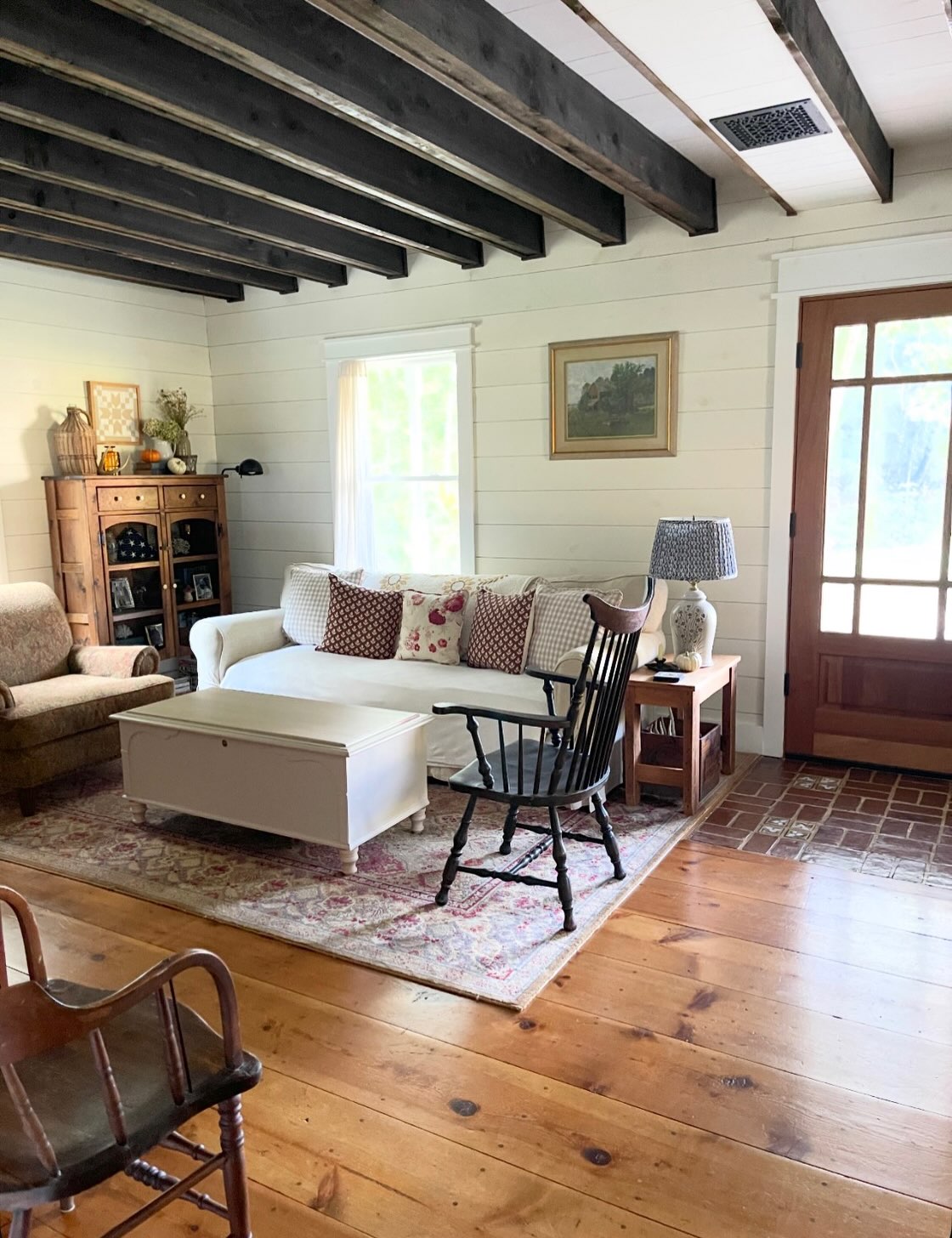
A pale storage chest makes a useful coffee table in this country sitting room. Its simple shape sits comfortably between a white sofa and a dark spindle chair, while the surrounding wooden floor adds warmth.
Dark ceiling beams give the room definition overhead, so the lighter furnishings help maintain balance below. Consider a painted chest when you need both a central surface and concealed storage.
Check its height against the seating, and leave enough space around it for feet and passage. Small patterned pillows can connect the light sofa with the room's older furniture.
A glass front cupboard adds another layer of practical display, letting everyday collections contribute character while the main seating area remains easy to use and enjoy.
15. Soften Checked Upholstery with a Chunky Throw
Credits: Instagram
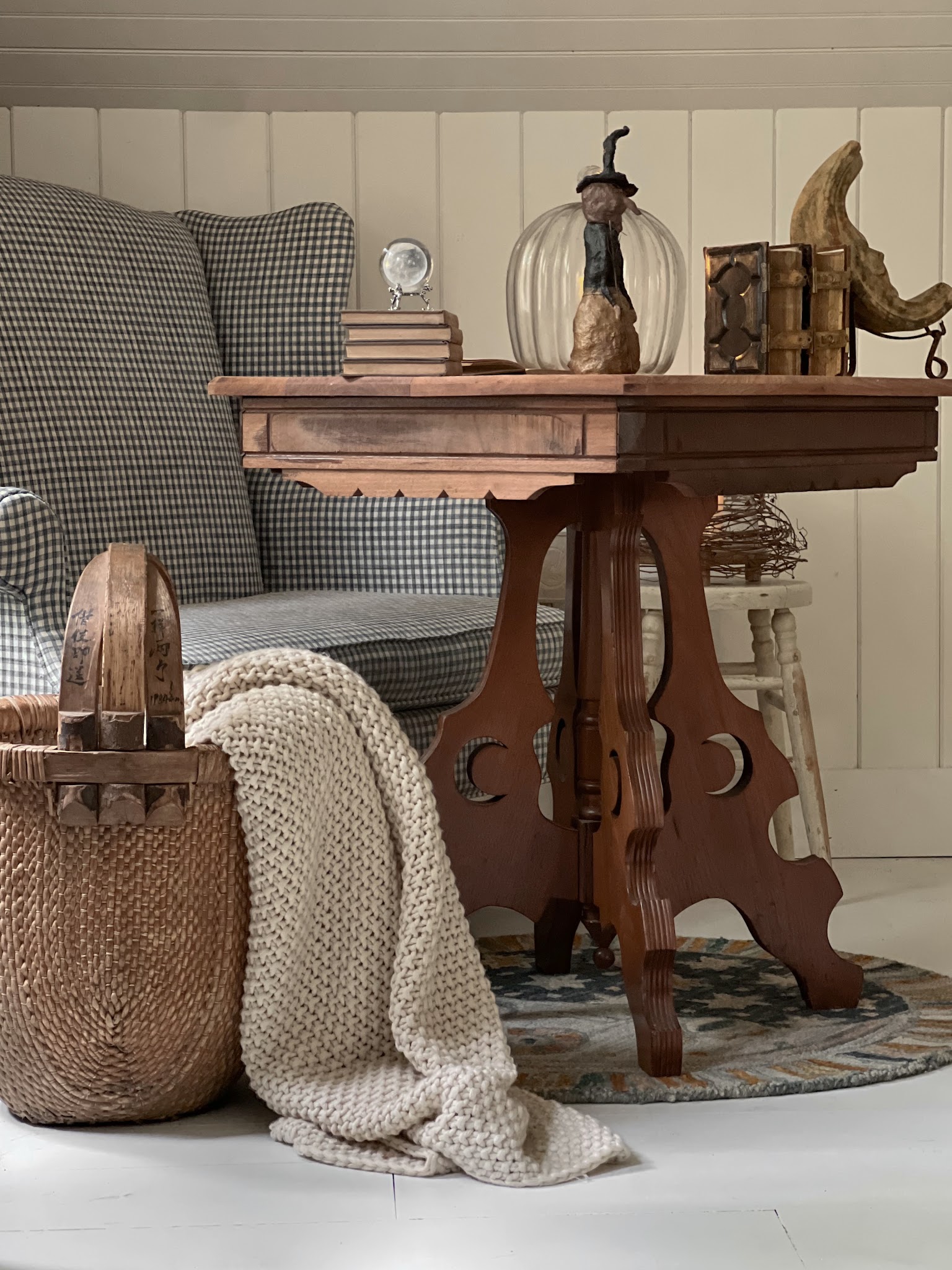
Small checks give this wing chair a familiar country feel, while a chunky pale throw adds a softer texture beside it.
The wooden table brings shape and warmth to the corner, and a woven basket provides a practical place to keep a blanket within reach. White paneling and a pale floor keep the arrangement from feeling heavy.
Try combining a tightly patterned chair with one loosely textured textile, keeping their colors close enough to work together. The contrast in texture will supply interest even when the palette is restrained.
A few books or meaningful objects can complete the nearby table. Leave part of its top clear so the corner remains useful for reading, stitching, or settling in with a drink.
16. Place a Weathered Basket Beside Floral Chairs
Credits: Instagram
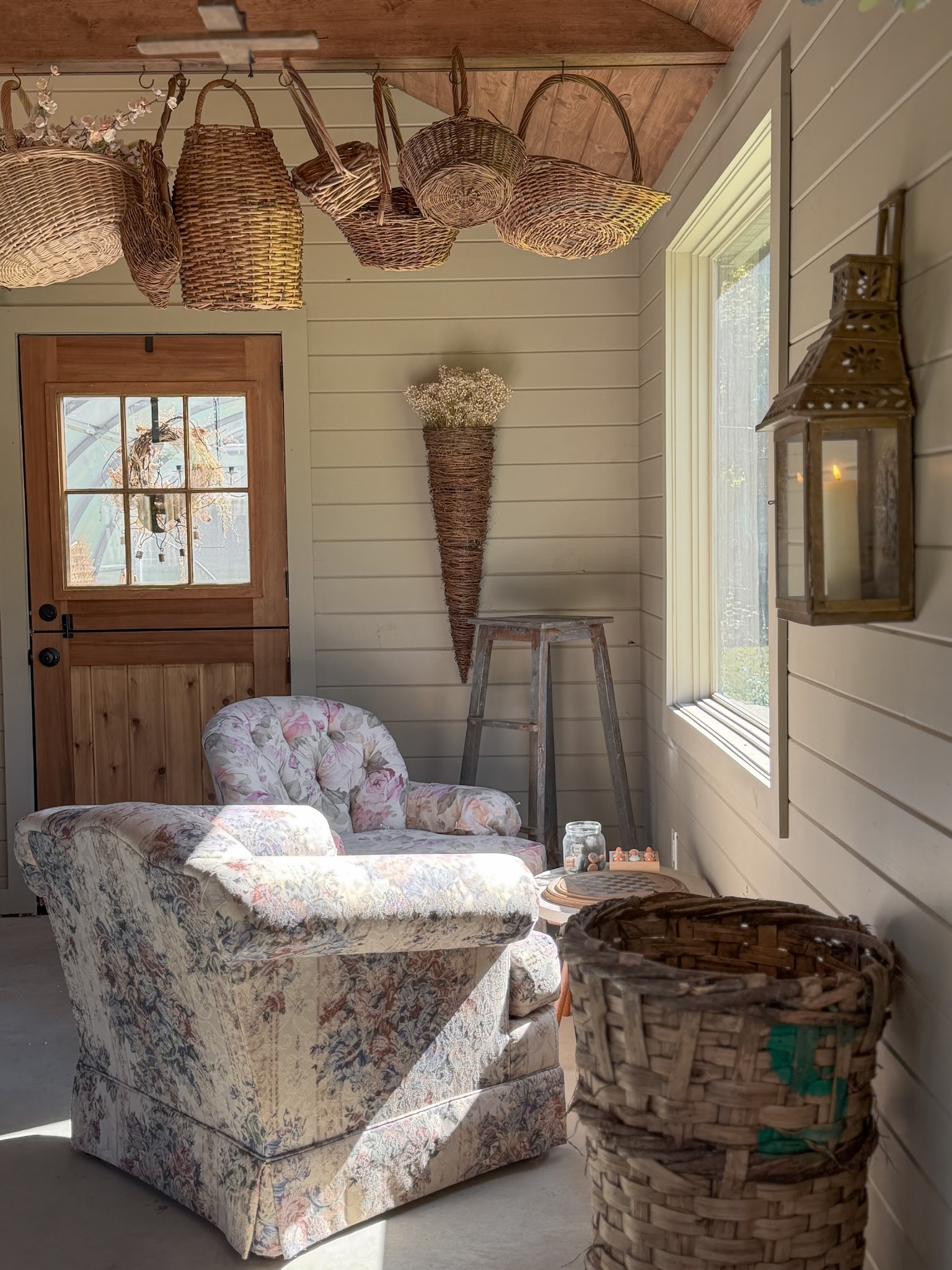
A large weathered basket gives these floral chairs a sturdy counterpart. Its rough weave connects with the hanging baskets, wooden door, and exposed timber overhead, helping the seating belong to the surrounding country room.
The small table between the chairs keeps the arrangement useful, while a wall lantern adds another shape beside the window. When mixing primitive objects with floral upholstery, favor subdued patterns and repeat the natural brown tones in several places.
One substantial basket can provide more presence than a cluster of tiny accessories. Keep a comfortable route around the chairs and choose a basket that fits the available floor space.
Let the window bring light across the woven surfaces so their texture becomes part of the decoration.
17. Set Deep Blue Against White Hearth Paneling
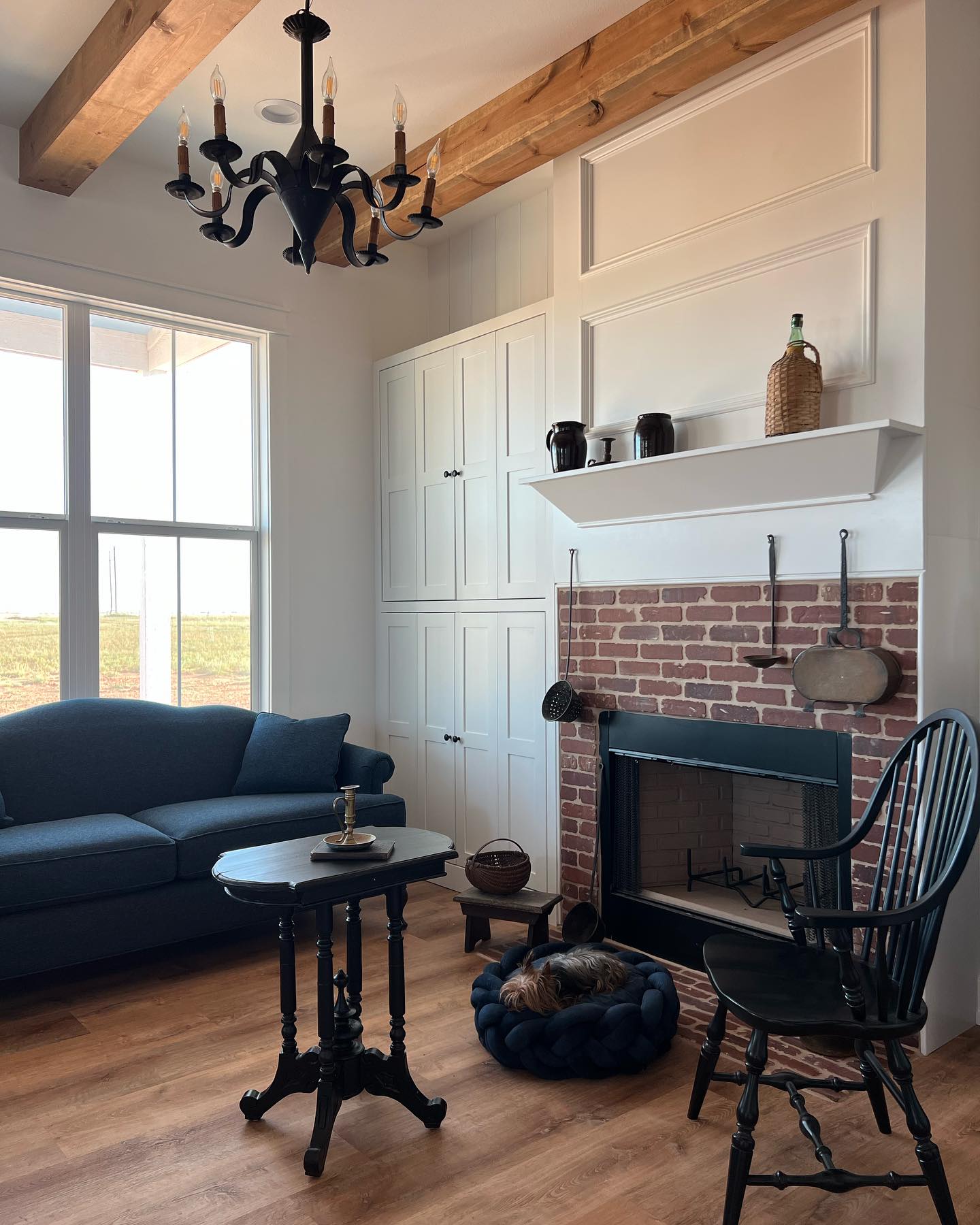
Credits: Instagram
A deep blue settee provides an anchor beside the white paneling and brick fireplace in this keeping room. A black chair and small table repeat the darker notes without filling the space with heavy furniture.
Overhead, exposed beams add warmth and connect with the floor. The restrained arrangement suggests a simple approach to primitive style: choose a few pieces with distinct silhouettes, then give them breathing room.
A curved sofa back works especially well beside straight wall panels and a rectangular hearth. Keep mantel accessories modest in number so the brick and woodwork remain visible.
Small bowls, plain vessels, and candleholders can add character while leaving the seating area comfortable for conversation, reading, or spending a quiet evening at home.
18. Layer a Weathered Table against Burgundy Paneling
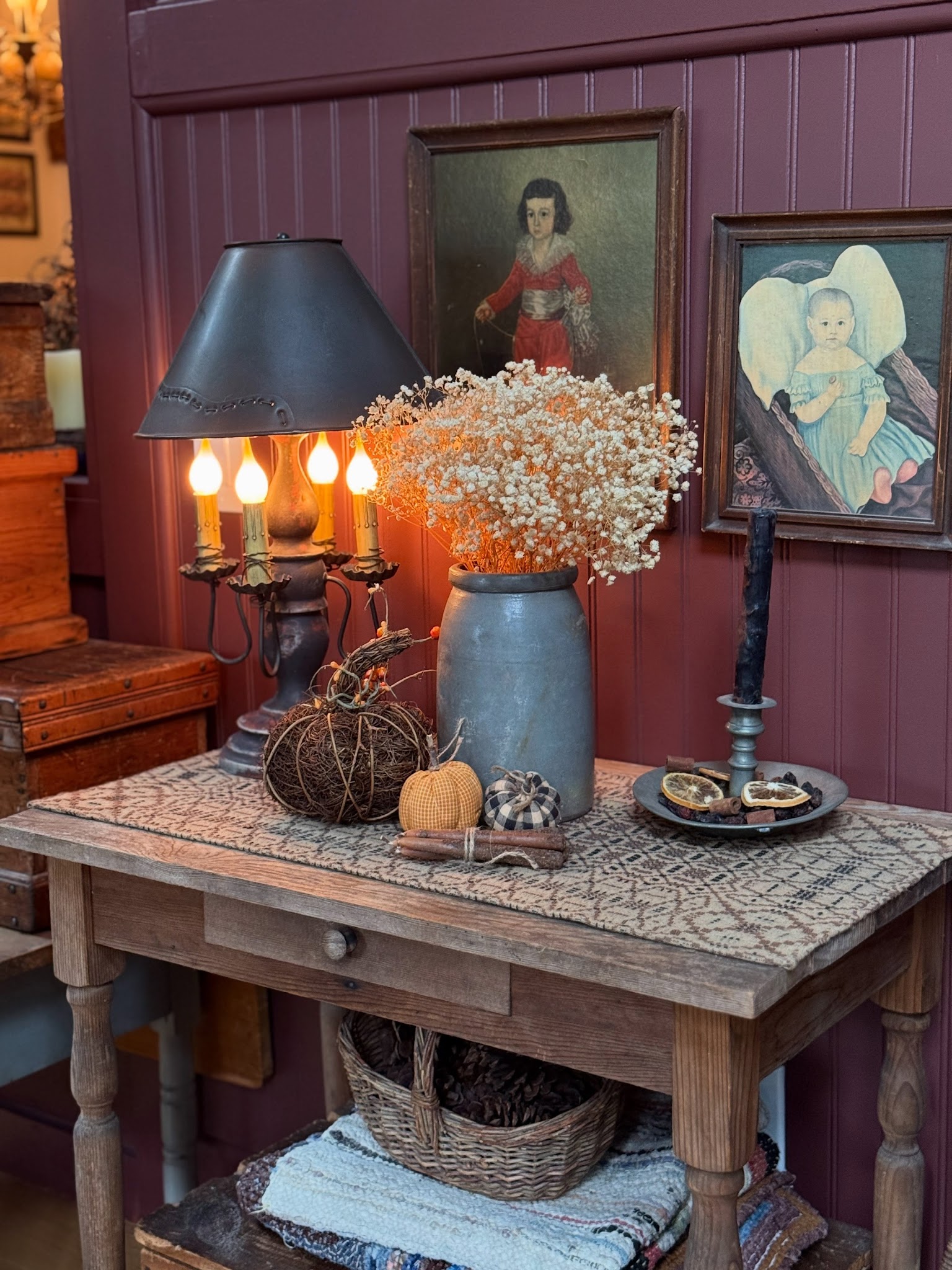
Credits: Instagram
Burgundy paneling gives this weathered table a rich backdrop, making its pale wood and simple turned legs stand out. Two portraits add height, while a dark shaded lamp brings a warm glow to the arrangement.
The tall crock, patterned table covering, and small fabric pumpkins introduce varied textures without changing the earthy palette. Beneath the tabletop, folded textiles and a woven basket continue the display vertically.
Try a similar composition along an open living room wall. Choose one useful table, add lighting, and build around a few objects with different heights.
Repeat a color from the artwork in a textile or accessory. Keep enough of the table visible to appreciate its worn finish, and leave space for simple everyday use.
19. Pair a Spindle Chair with a Handmade Chandelier
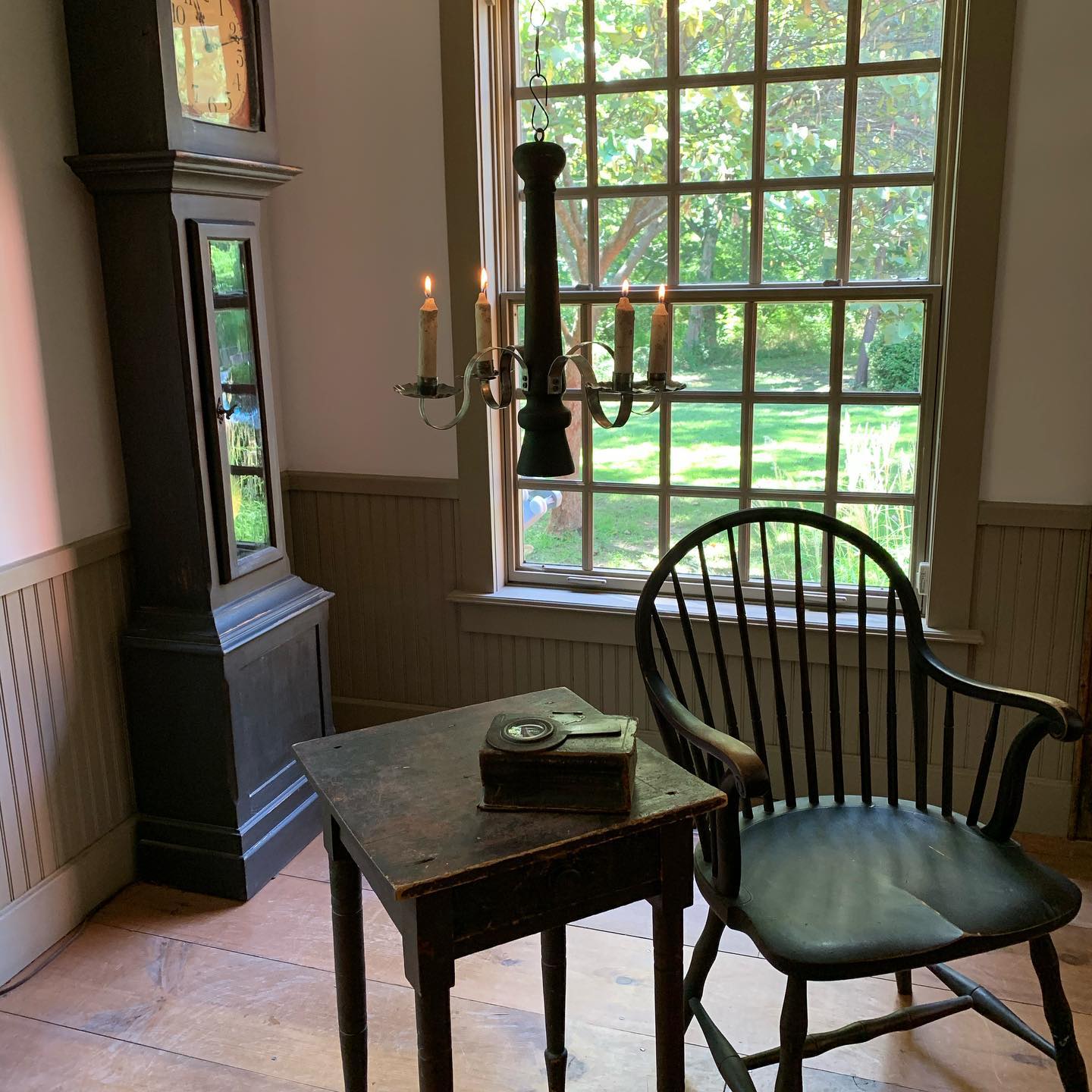
Credits: Instagram
A black spindle chair and small worn table make a quiet place to sit beside this tall window. The handmade chandelier adds a graceful shape overhead, while the dark clock gives the corner height without a crowded display.
Gray trim and lower wall paneling tie the arrangement together, allowing the wood floor and green view to provide warmth. This is a useful approach when a living room has an underused window corner.
Start with a comfortable wooden chair and a table large enough for a book or cup. Choose one substantial vertical piece, such as a clock or narrow cupboard, instead of several little decorations.
Leave the window visually open so daylight can reveal the furniture's shapes and worn surfaces.
20. Build a Hearth Display around a Portrait
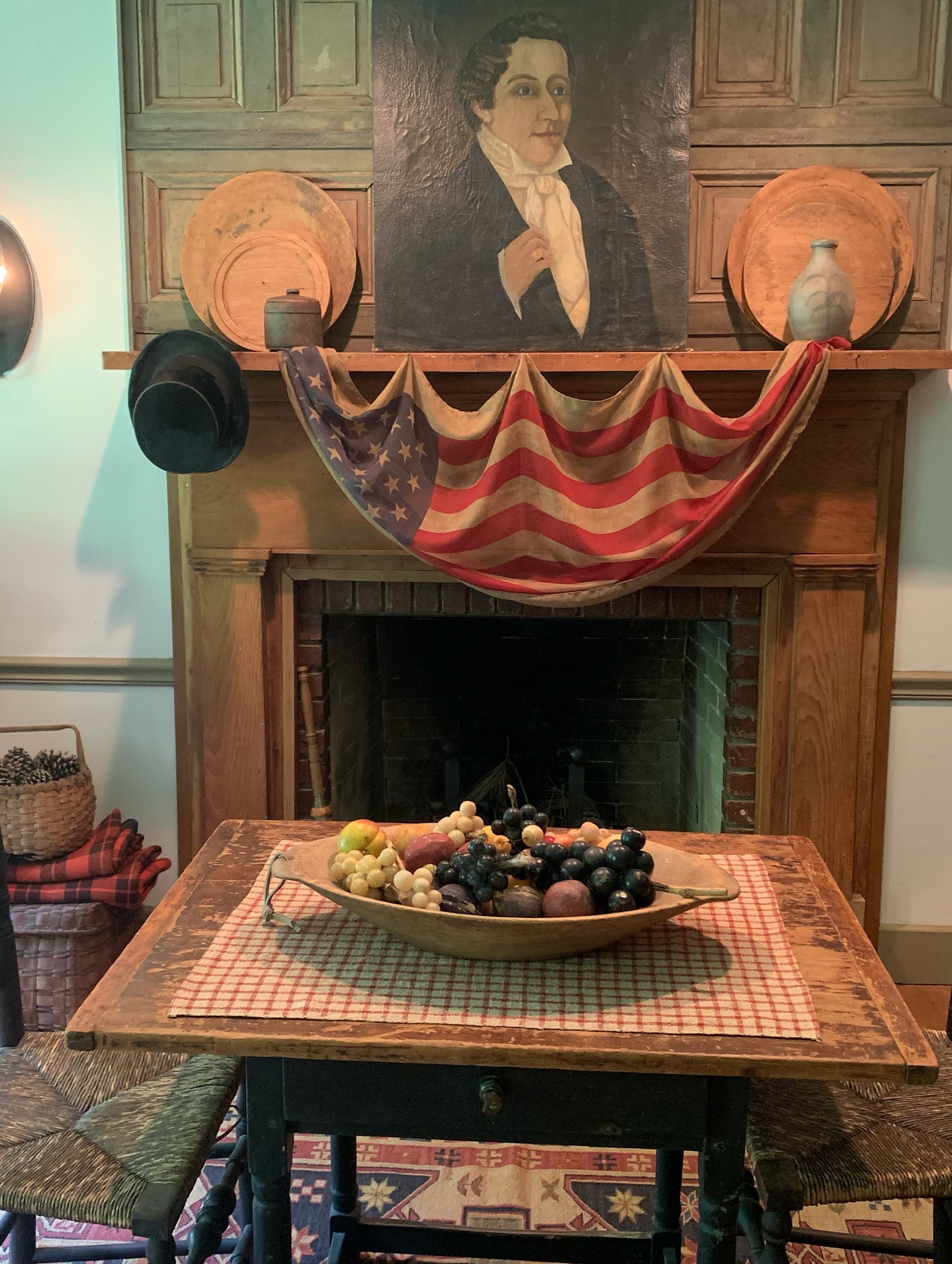
Credits: Instagram
A portrait anchors this paneled hearth, with wooden bowls arranged on either side to create a balanced composition. Their warm tones echo the mantel and the worn table below.
A checked cloth, woven chair seats, and baskets add smaller textures, while draped flag introduces soft folds and faded color. The useful idea is to organize a collection around one clear focal point.
Start with a picture that suits your room, then choose a few broad, simple objects that complement its scale. Vary their heights without hiding the woodwork.
Repeating a restrained range of browns, muted reds, and dark accents helps the display feel connected. Leave some surfaces exposed so the grain, wear, and shapes of the pieces can remain visible.