
Long rooms can feel like a parade of straight lines, while compact seating areas may need character without extra furniture.
The Best Modern Contemporary Living Room Ideas here show how shape, color, and texture can change the balance of a space.
Try rounded pieces to soften a long layout, a curved sofa against paneled walls, or an arched botanical feature behind plain seating.
Other ideas pair a neutral sofa with oversized art or anchor pale upholstery with a bold geometric rug, offering clear ways to make a living room feel considered without crowding it.
1. Soften a Long Living Room With Rounded Pieces
Credits: Instagram
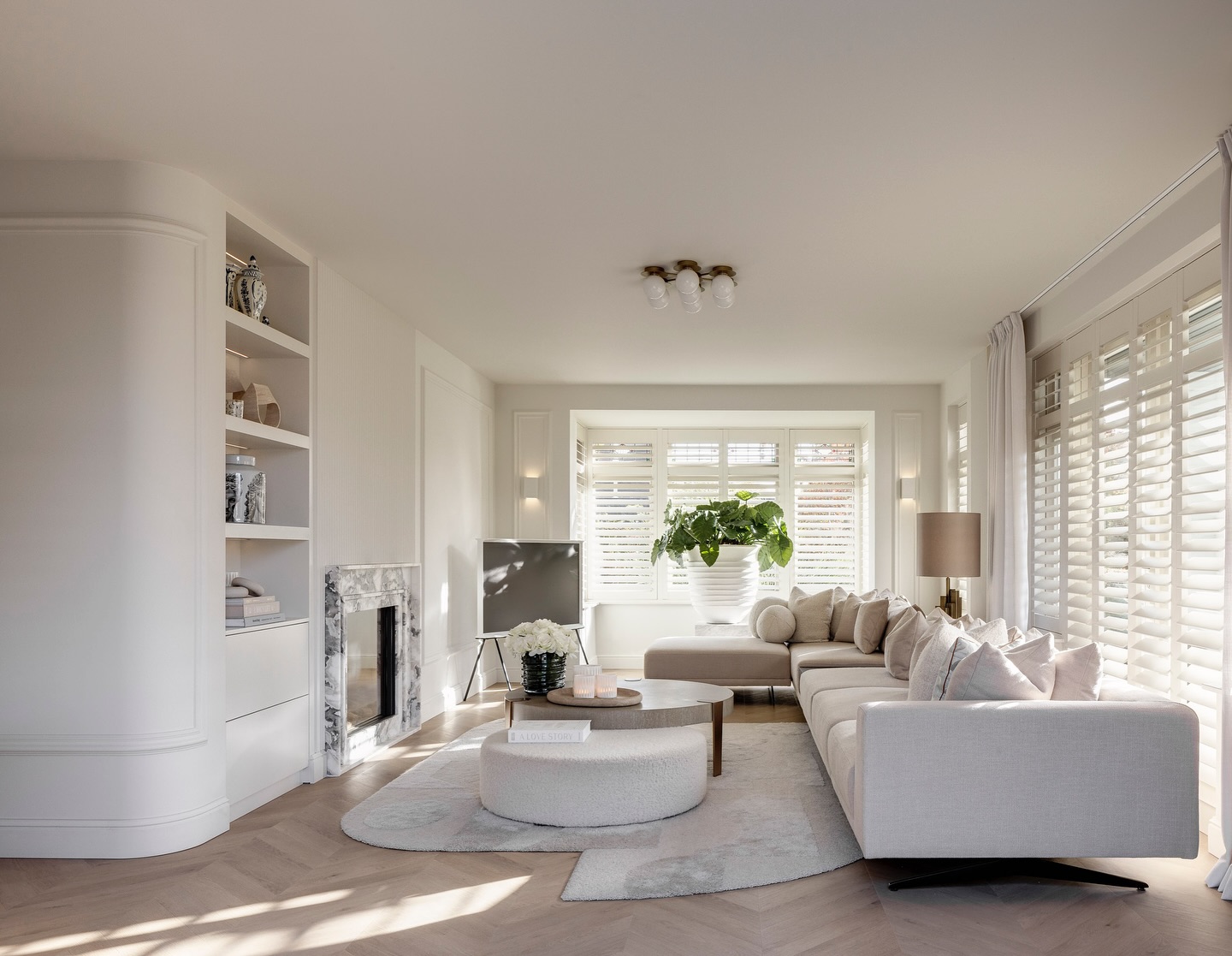
A pale sectional follows the window wall in this living room, while rounded furniture breaks up its long outline. The curved cabinet, circular ottoman, and gently shaped rug repeat that softer geometry without adding more colors.
Borrow the balance when a rectangular room feels dominated by straight edges. Keep your main sofa aligned with the room, then introduce a rounded table or footstool where people move between seats.
Draw the arrangement to scale before shopping so the softer shapes still leave a clear route through the space. Matching the storage to the walls helps a large cabinet sit quietly in the background.
Finish with a few contrasting objects on open shelves, leaving enough empty space to appreciate each curved detail.
2. Balance Paneled Walls With a Curved Sofa
Credits: Instagram
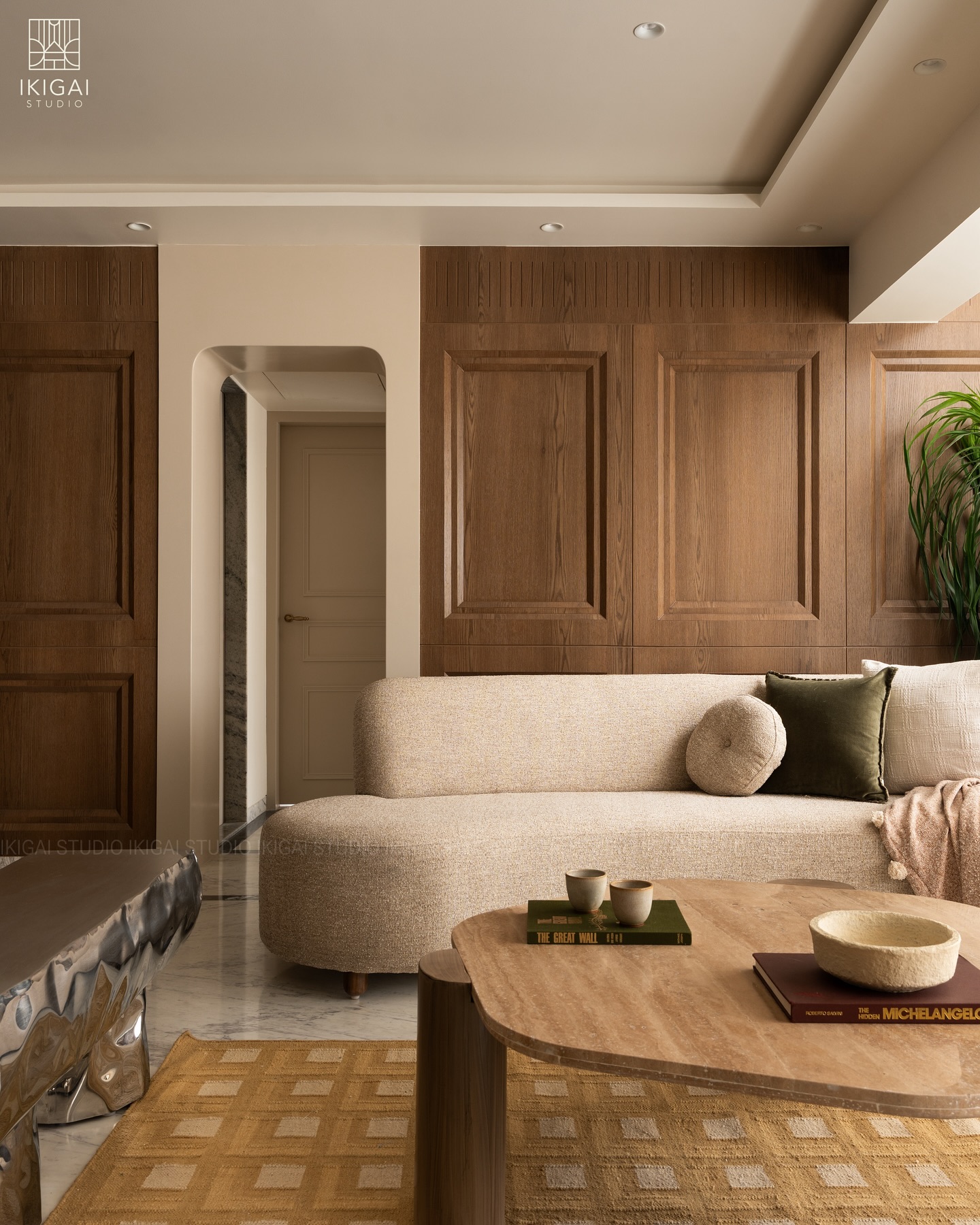
Rich wood paneling gives this room a strong architectural rhythm. Against those rectangular sections, a cream sofa with rounded ends feels relaxed, while an olive cushion connects the upholstery to the greenery.
This is a useful pairing when existing woodwork makes your living room feel formal. Choose seating with a continuous curved outline and simple upholstery so the wall remains visible behind it.
A low back is especially helpful if the panel details are worth showing. Repeat the wood's warm undertone in a rug, then introduce a slightly different table finish to avoid matching everything.
Before ordering a curved sofa, check its usable seat width as well as its overall dimensions. Rounded arms can take up more space than expected.
3. Choose Accent Chairs That Look Good From Behind
Credits: Instagram
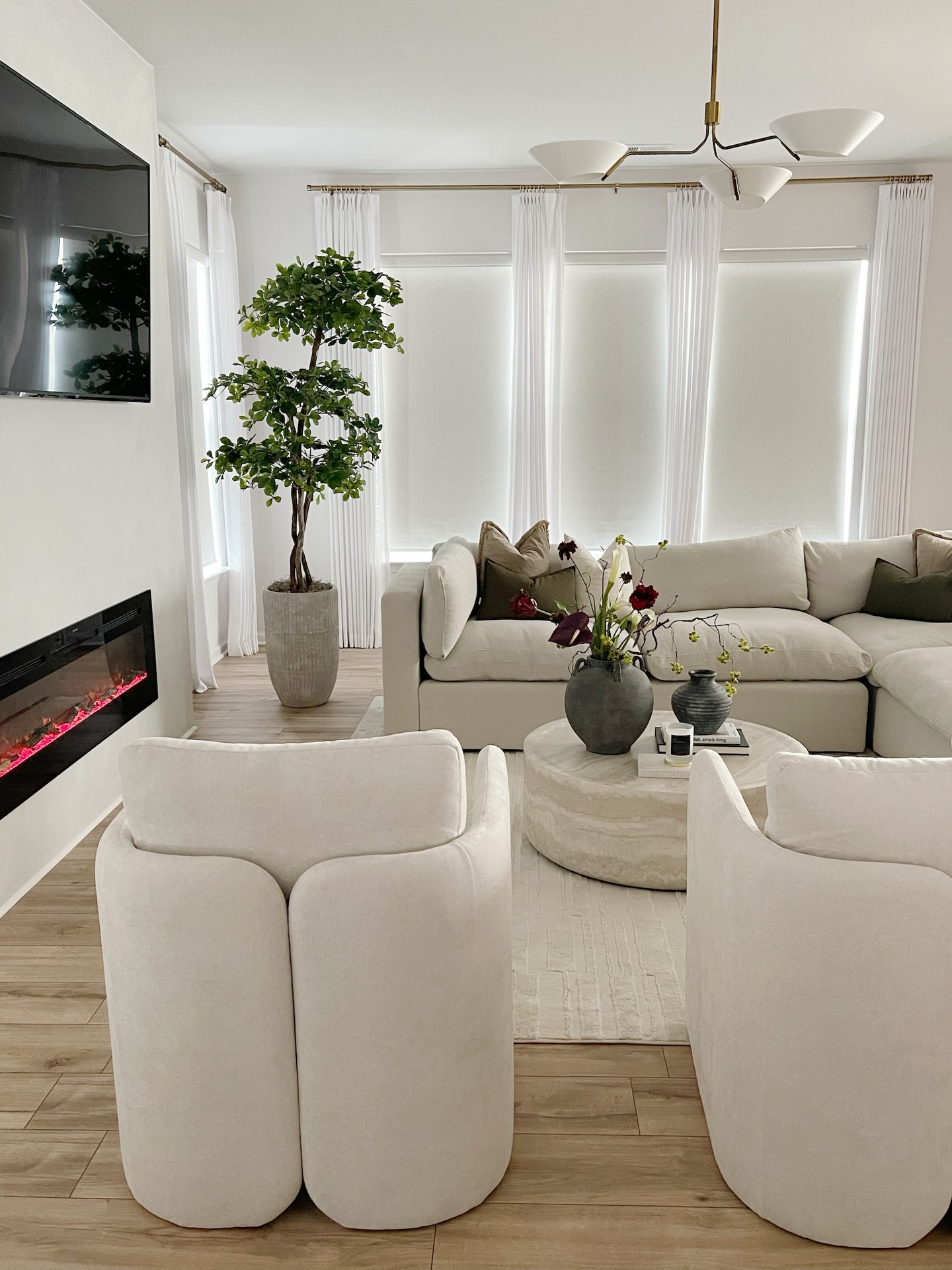
Two rounded cream chairs face the sofa across a low circular table, making their sculptural backs a major part of this living room. Their pale upholstery joins the seating, while dark green cushions and pottery supply contrast.
Consider this arrangement when the entrance opens onto the back of your furniture. Look for chairs with finished upholstery on every side and an interesting silhouette from several angles.
Position them to support conversation, then walk around the group to check access before settling the layout. A round table helps connect the opposing seats without adding another long edge.
Keep tall tabletop arrangements movable so people can see one another. Repeat one deeper color in cushions and ceramics to give light upholstery definition.
4. Frame Botanical Pattern Inside an Arch
Credits: Instagram
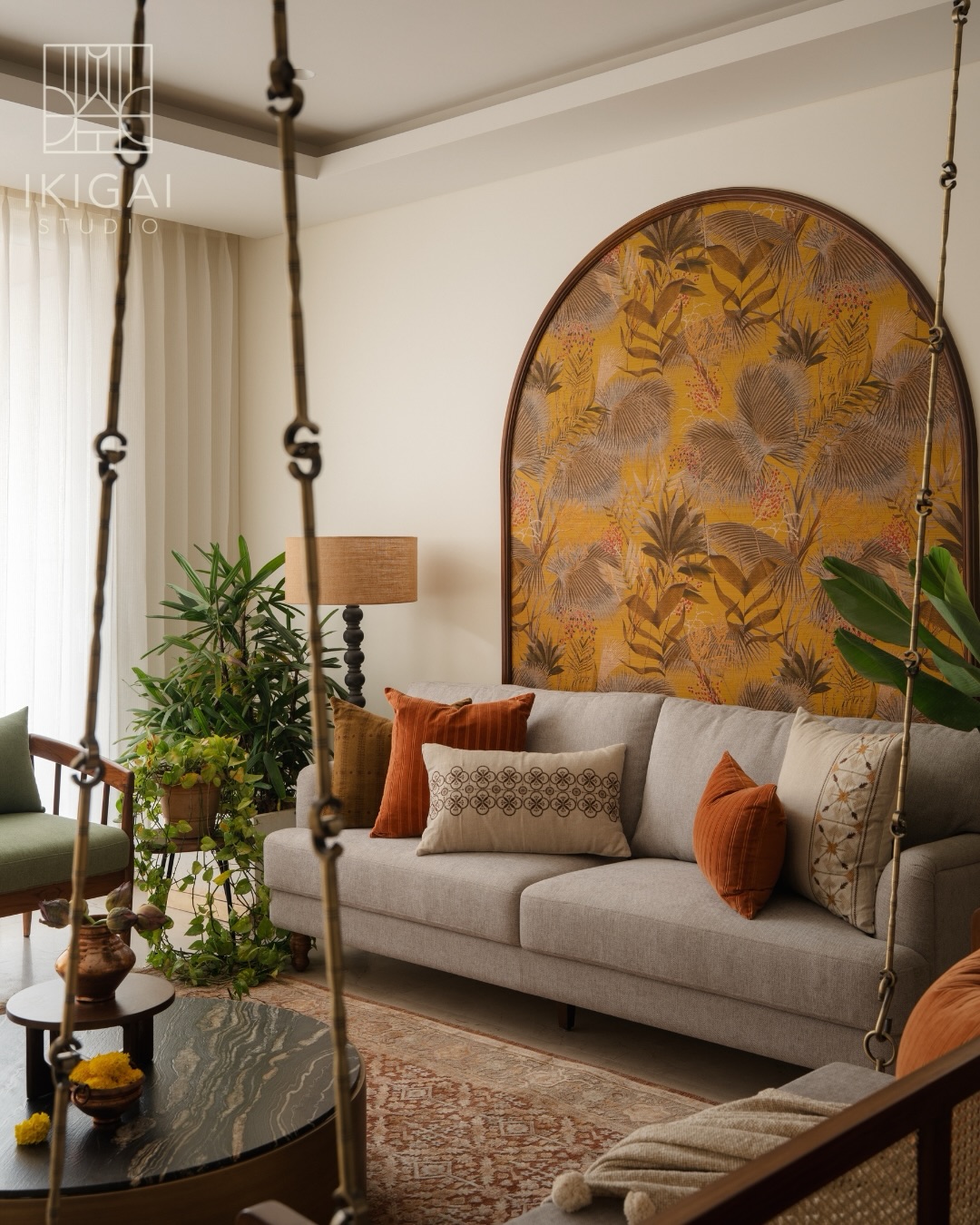
A mustard botanical panel rises behind the gray sofa, its arched outline giving the seating area a clear focal point. Rust cushions pick up the warmth of the background, and leafy plants extend the motif into the room.
Use this approach when you want a substantial pattern in a mostly plain living room. Contain wallpaper or a decorative mural within a defined shape rather than covering every surrounding surface.
Test the outline with paper first, making sure the arch relates to the sofa's width and height. A slim border can make the panel look intentional.
Choose cushions from the quieter colors within the pattern, and keep nearby upholstery simple. This leaves space for the illustrated foliage to carry the room.
5. Mix Sculptural Color With Everyday Furniture
Credits: Instagram
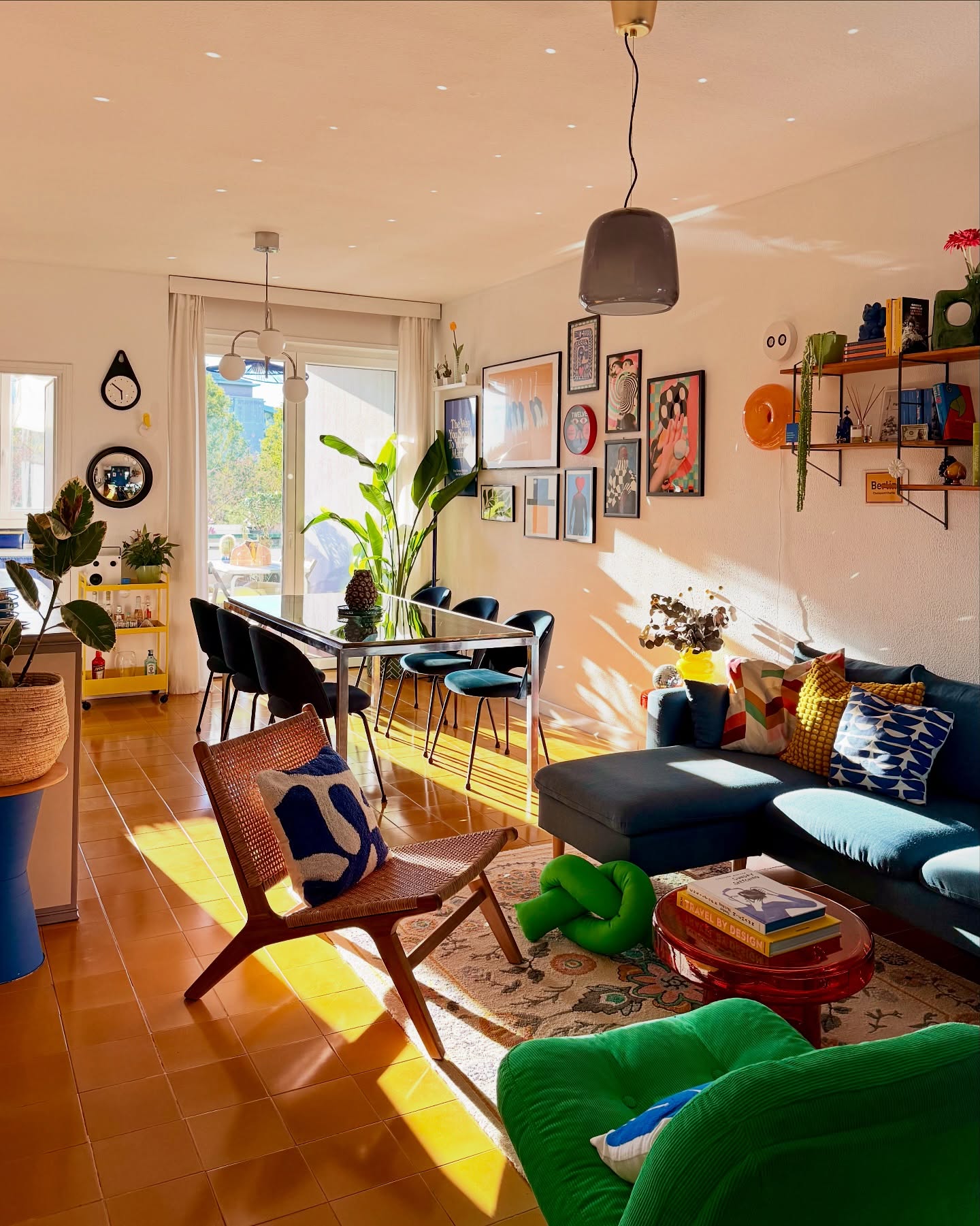
A bright green lounge chair and glossy red coffee table bring playful shapes to this open living space. The dark blue sofa provides a larger, quieter block of color, while framed prints repeat vivid accents above the adjoining dining area.
Try the combination by choosing one adventurous chair or table to sit beside furniture you already own. Give that piece enough visible floor around it for its outline to register.
Repeat its color in a small artwork or cushion rather than buying an entire matching set. Here, a woven chair and patterned rug add familiar textures among the saturated colors.
Keep the route between dining and lounging clear, especially when a chair has a wide base or an unusual profile.
6. Give a Neutral Sofa One Oversized Artwork
Credits: Instagram
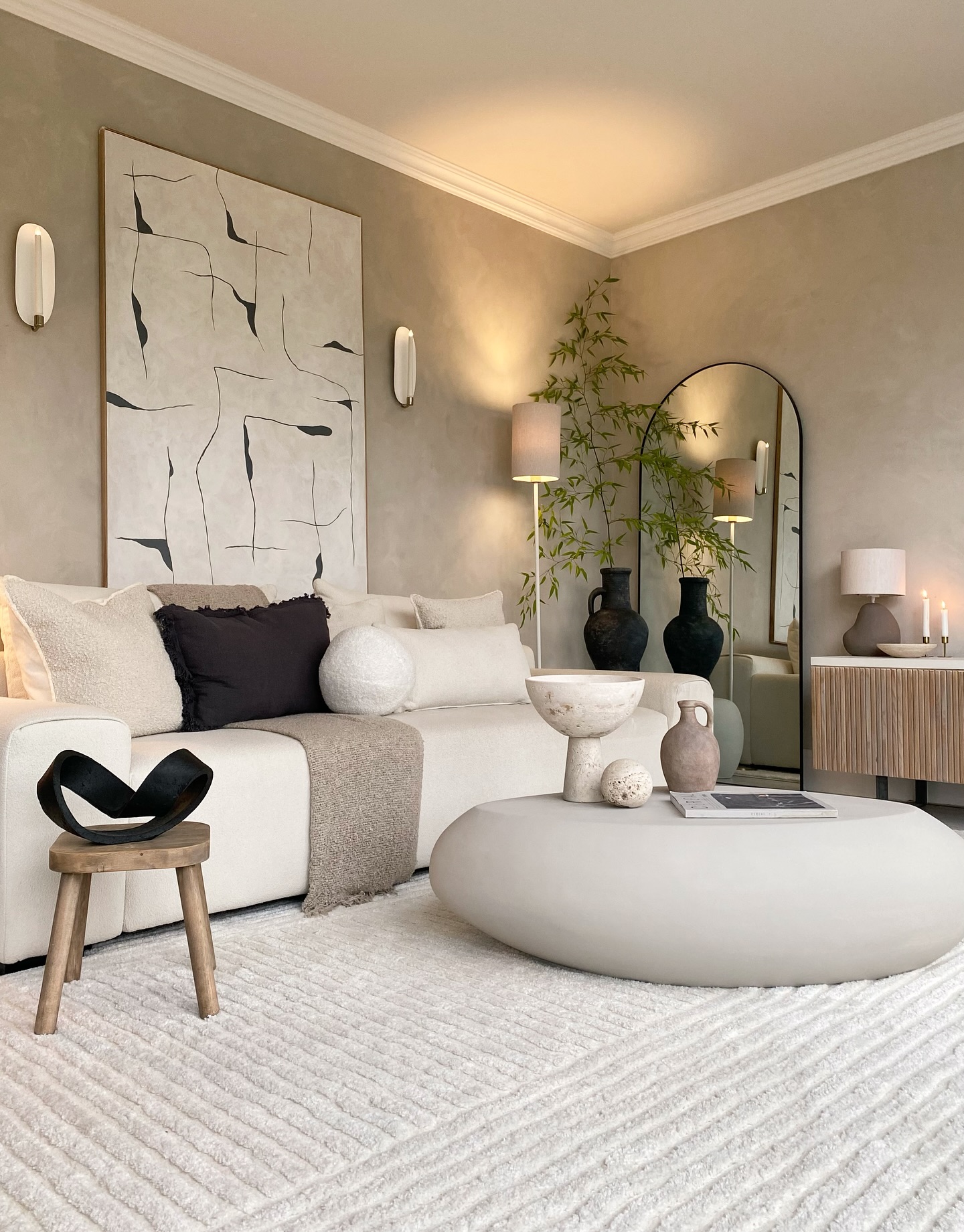
One tall abstract canvas gives the cream sofa a strong backdrop without filling the wall with separate frames. Fine charcoal marks echo the dark cushion, mirror edge, and nearby sculptural objects.
The homeowner describes painting the canvas with a textured background and softer charcoal details, a useful reminder that artwork can be personal.
To try the idea, tape out a large rectangle above your sofa and judge its scale from the doorway. Keep the composition simple enough to read across the room.
Pick up one mark or color in a smaller accessory, then let the rest of the seating stay quiet. If you make your own canvas, test the composition on paper before working large and use suitable wall fixings.
7. Use Sculptural Lighting Around a Compact Sofa
Credits: Instagram
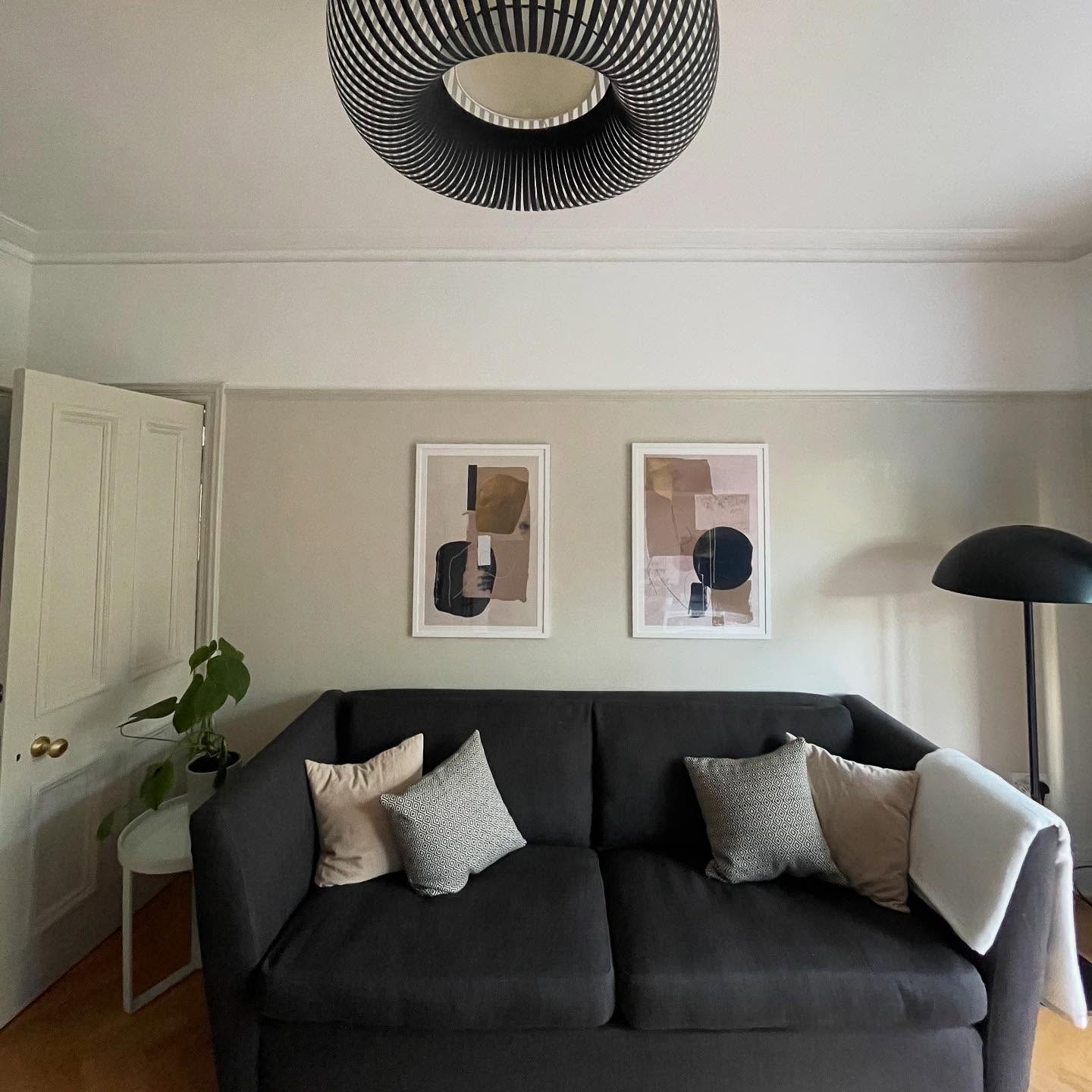
A black dome floor lamp and an open ribbed ceiling shade give this small seating area its contemporary character.
Their curved forms soften the charcoal sofa's straight arms, while two pale abstract prints carry the same dark accents onto the wall. Lighting offers a practical way to change a compact room without replacing its largest piece of furniture.
Choose a floor lamp whose base fits comfortably beside the sofa, and check that its shade clears your head when you stand. An open ceiling shade can add shape without creating a solid visual block overhead.
Keep its scale related to the room and confirm the fitting is suitable. Pale cushions and white frames help distribute lighter tones around the dark upholstery.
8. Anchor Pale Seating With a Bold Geometric Rug
Credits: Instagram
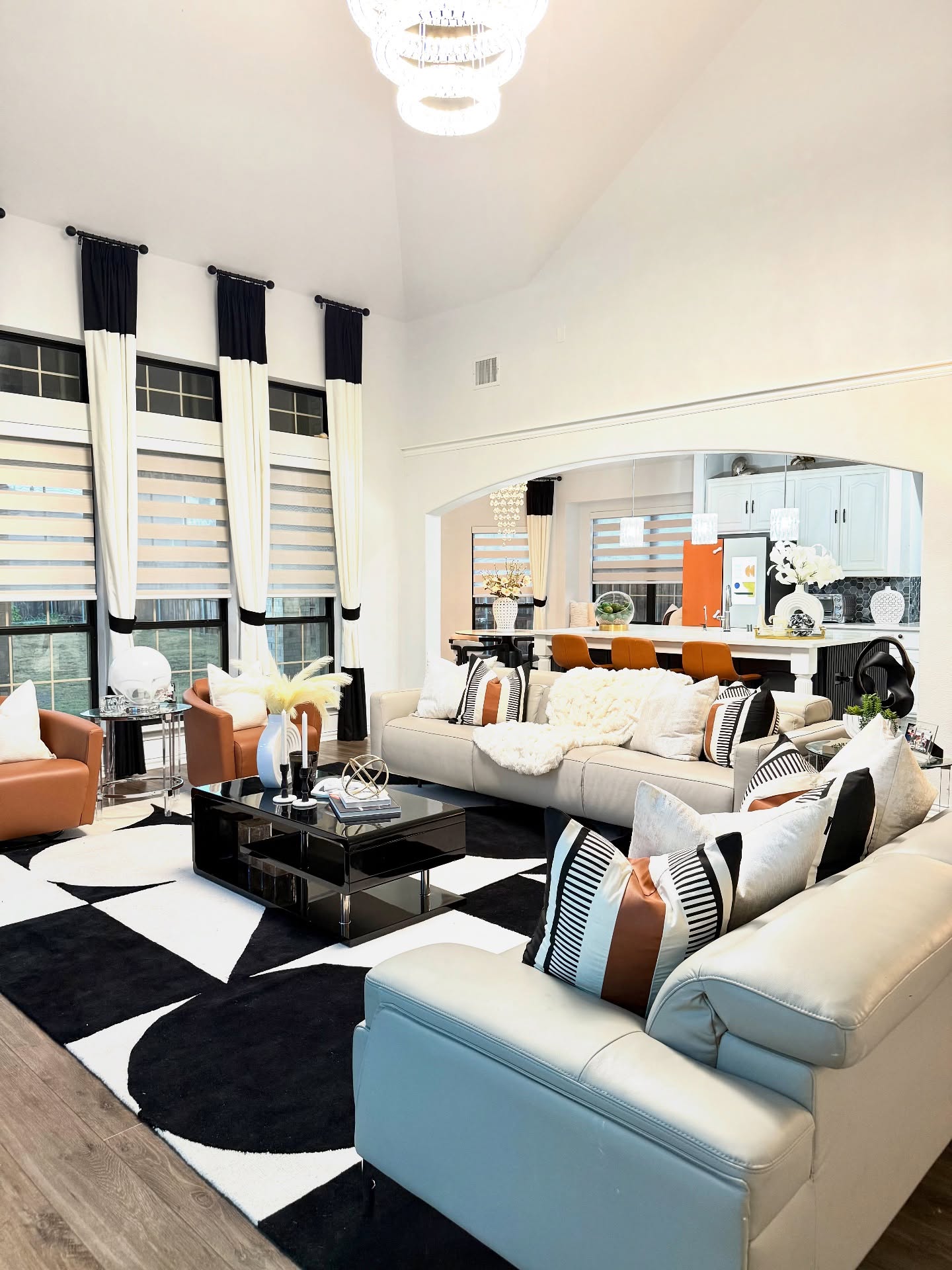
Large black and white shapes give this spacious living room a clear center beneath the pale sofas. The dark coffee table reinforces the rug, and warm brown chairs introduce a softer color beside the tall windows.
Start with a graphic rug when neutral furniture needs stronger definition. Choose a pattern large enough to remain legible once the table and seating are in place.
Mark the proposed rug size on the floor, then make sure its key shapes will not disappear entirely under furniture.
Repeat black sparingly in curtain details, cushions, or a small table to connect the floor with the rest of the room. Plain upholstery gives the pattern space, while one warm accent keeps the monochrome scheme feeling welcoming.
9. Build a Reading Corner With Contrasting Textures
Credits: Instagram
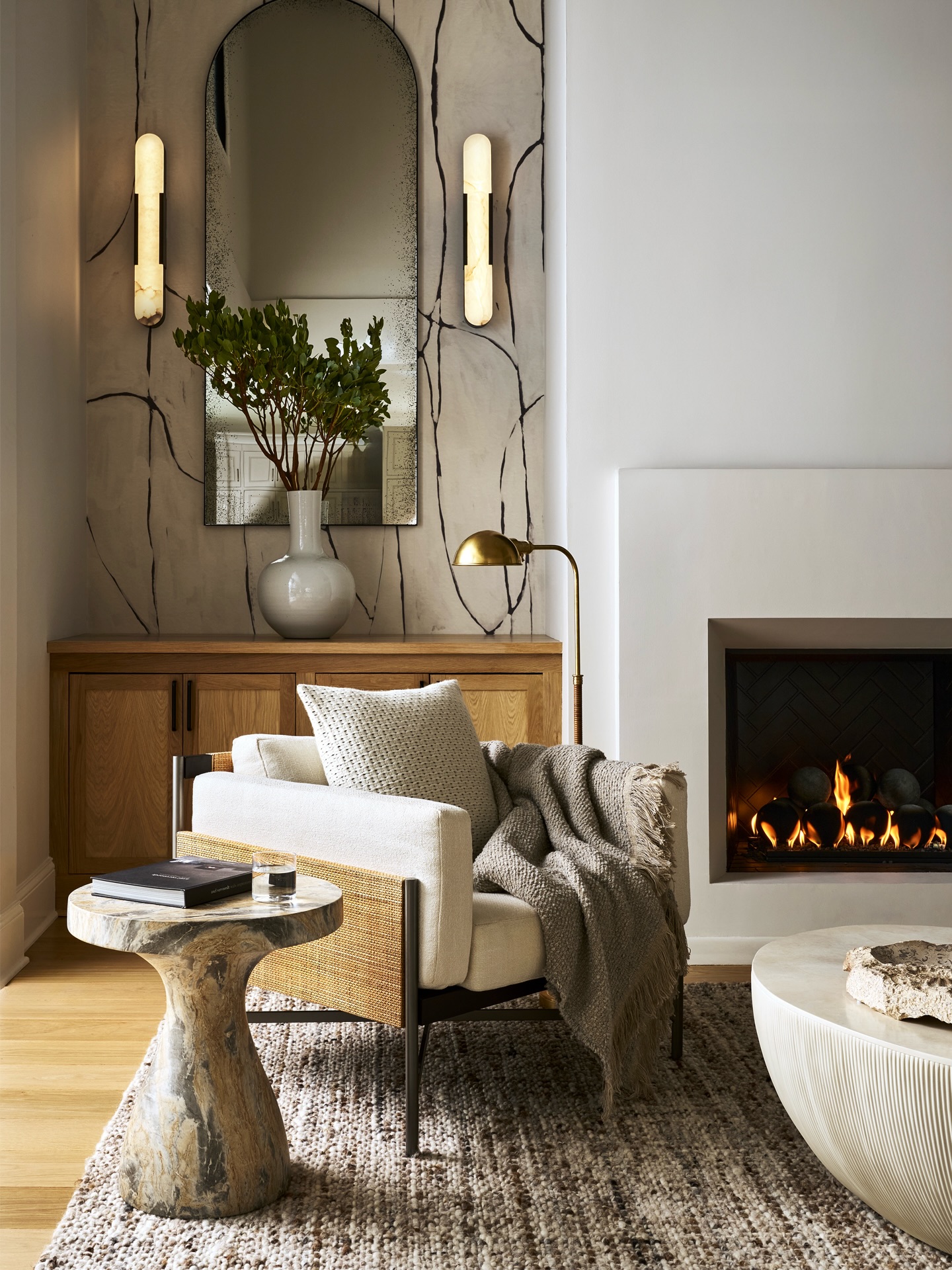
A cream armchair, shaped side table, and slim brass reading lamp create an inviting corner beside the fireplace. Woven chair panels, a chunky throw, and the textured rug make the restrained colors feel varied.
Borrow this idea by giving one comfortable seat everything it needs within easy reach. Check the table height against the chair arm so setting down a drink feels natural.
Place an adjustable lamp where it can light a book without shining directly into your eyes. A pillow and throw can provide softness without hiding the chair's structure.
Keep furniture and textiles safely clear of a working fireplace, following its required clearances. Behind the chair, a tall mirror and narrow sconces draw attention upward above the cabinet.
10. Soften Strong Architecture With Full Height Curtains
Credits: Instagram
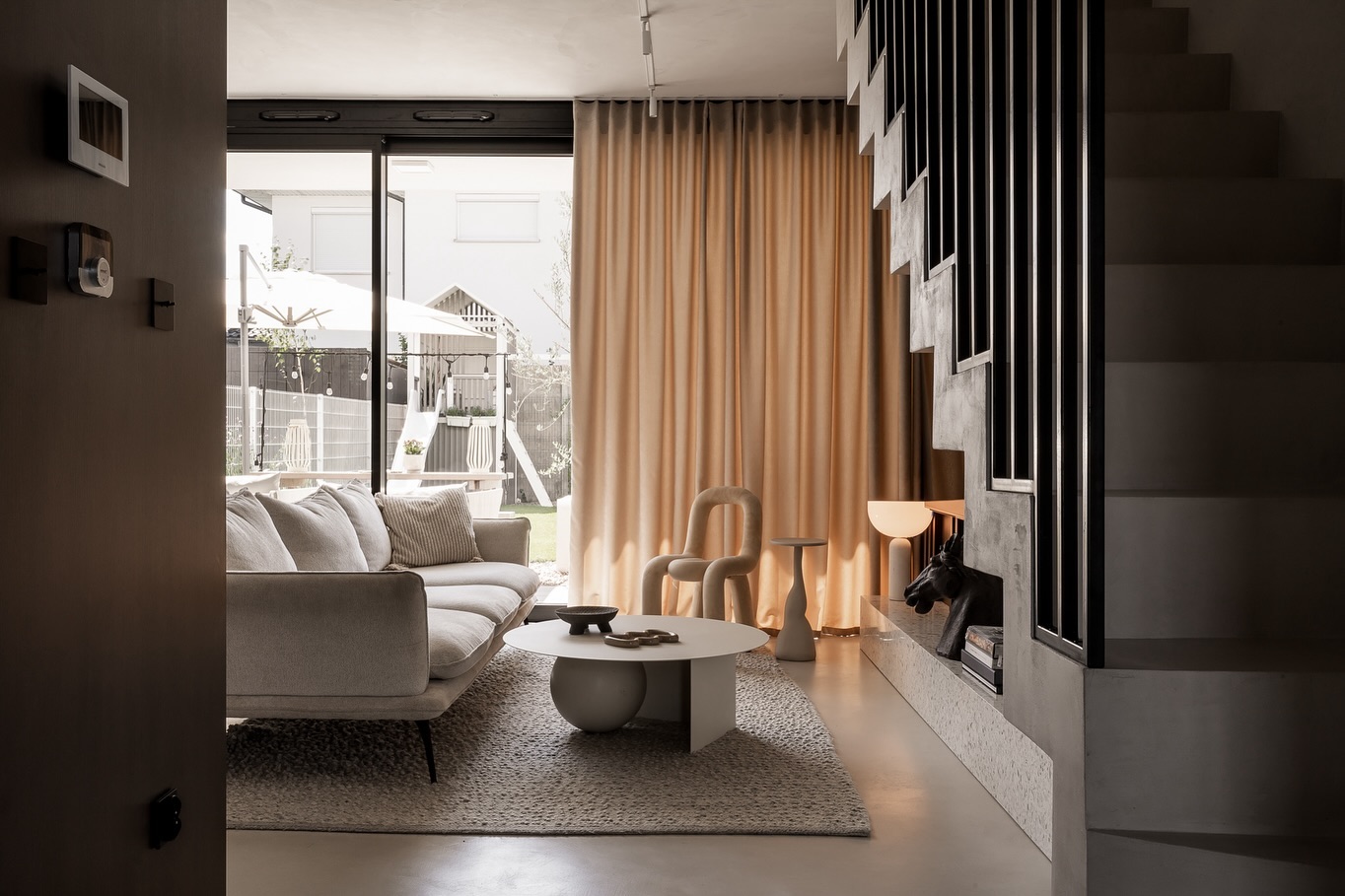
Warm curtains stretch from the ceiling to the floor behind this pale seating group. Their vertical folds soften the dark window frame and the angular stair structure, while a sculptural chair and rounded table bring smaller curves into the foreground.
Consider generous curtains when a room has several hard architectural edges. Hang the track high and plan enough width for the fabric to gather neatly when open.
Check that the stacked panels will not obstruct doors, handles, or the main view. Choose a fabric whose color works with the sofa in both daylight and evening light.
The large, softly patterned rug repeats the curtains' warmth underfoot. Leave some surrounding floor exposed so the seating area keeps a clear, comfortable boundary.
11. Refresh Traditional Chairs With Vivid Upholstery
Credits: Instagram
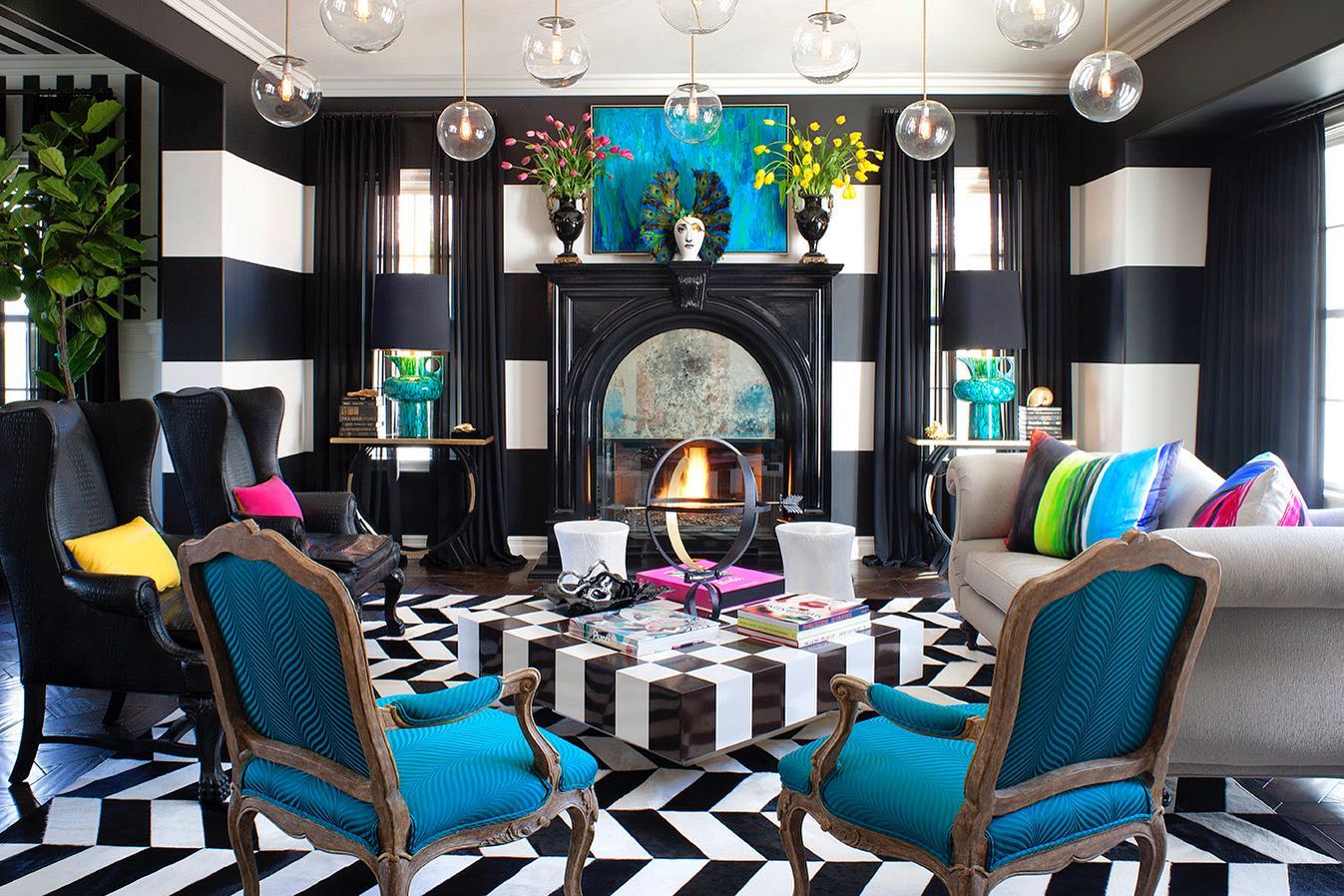
Turquoise upholstery gives these carved wooden chairs a lively place among striped walls and a graphic coffee table. Their traditional frames remain visible, while bright cushions connect the surrounding black chairs and pale sofa to the colorful artwork.
Consider a similar fabric update if you have a chair with a shape you love. A saturated plain or subtle pattern can make decorative woodwork feel relevant in a contemporary room.
Get the frame and padding checked before committing to new upholstery, and ask for a fabric sample large enough to see its pattern. Repeat the new color somewhere small across the room.
Keep your strongest patterned surfaces within a limited palette so the refreshed chair still has a clear visual role.
12. Leave Open Space Along Long Display Shelves
Credits: Instagram
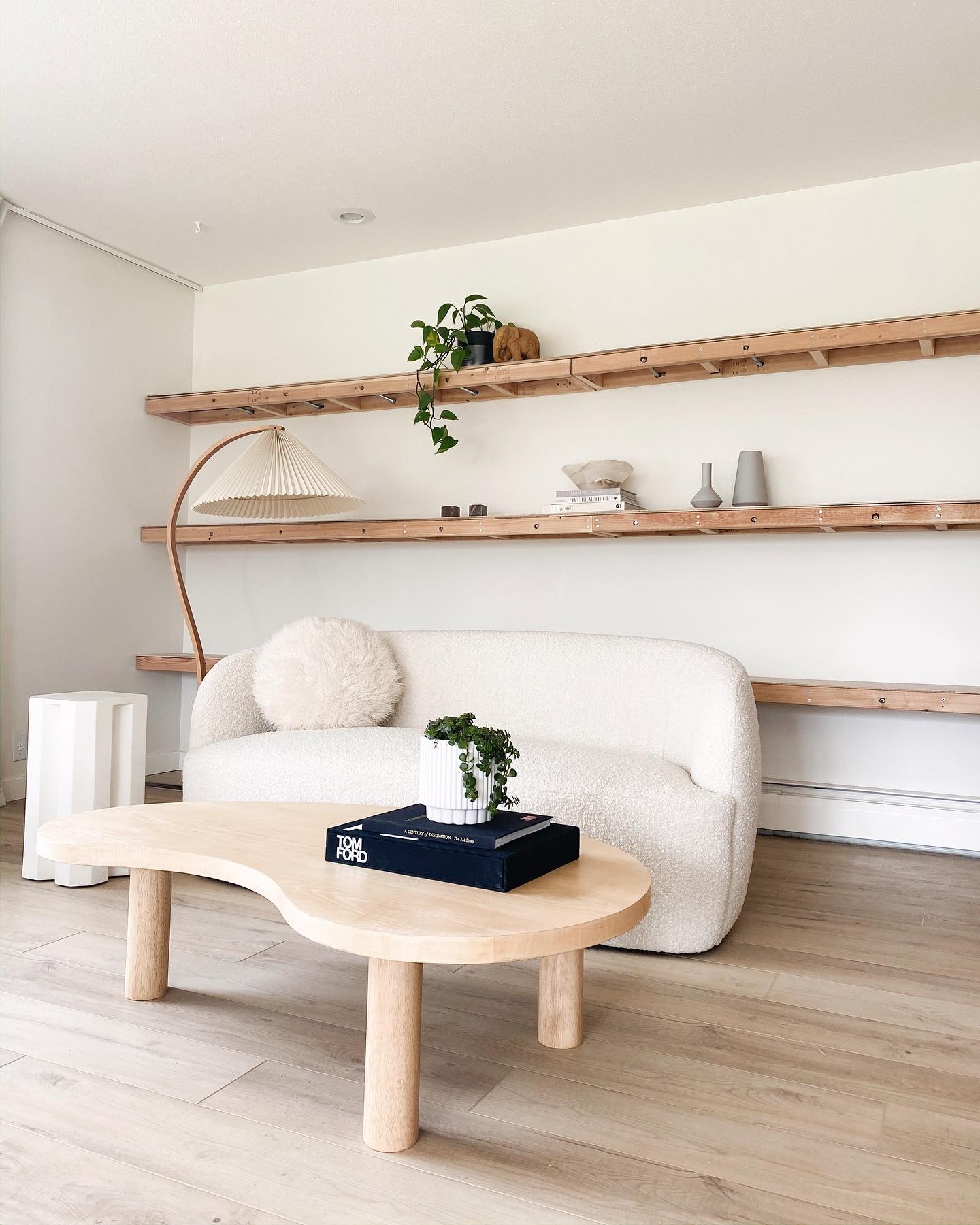
Long timber shelf lines stretch across the wall above a cream sofa, with just a few plants, books, and vessels breaking their length.
The homeowner photographed this shelving project before it was finished, but the sparse arrangement already offers a useful styling lesson. Group a small number of objects together and leave substantial gaps between them.
Vary their height so the display does not become a continuous row. A trailing plant can soften a straight shelf edge, provided you can reach it for watering and protect the surface underneath.
Before installing shelves above seating, confirm suitable fixings and load limits for your wall. Plan lower shelves around seated headroom, then keep frequently handled objects within comfortable reach for everyday use.
13. Lighten a Dark Sofa With Warm Wood
Credits: Instagram
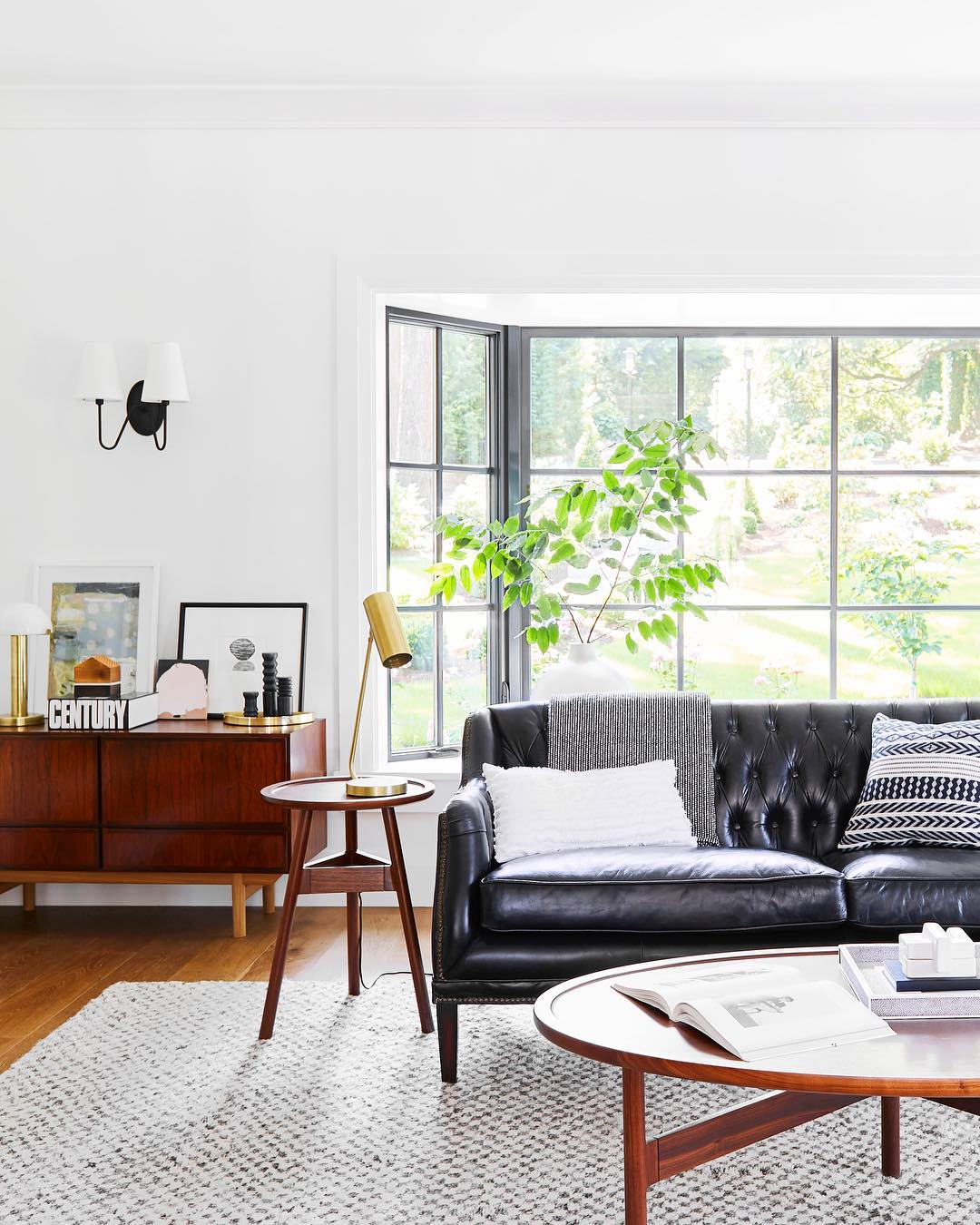
The dark tufted sofa feels balanced by white walls, a pale textured rug, and slim wooden tables. A warm wood cabinet repeats the tables' color, while small brass accents catch the light near the broad window.
Use this mix if you want to keep an existing dark sofa but make the surrounding room feel lighter. Start with the largest nearby surfaces, particularly the rug and walls, rather than adding lots of tiny white accessories.
Furniture on slender legs reveals more floor and gives the sofa breathing room. Choose wood tones that relate without needing to match exactly.
A pale throw and one patterned cushion can break up dark upholstery, leaving enough of its original texture visible to retain its character.
14. Place One Deep Blue Chair Beside Pale Seating
Credits: Instagram
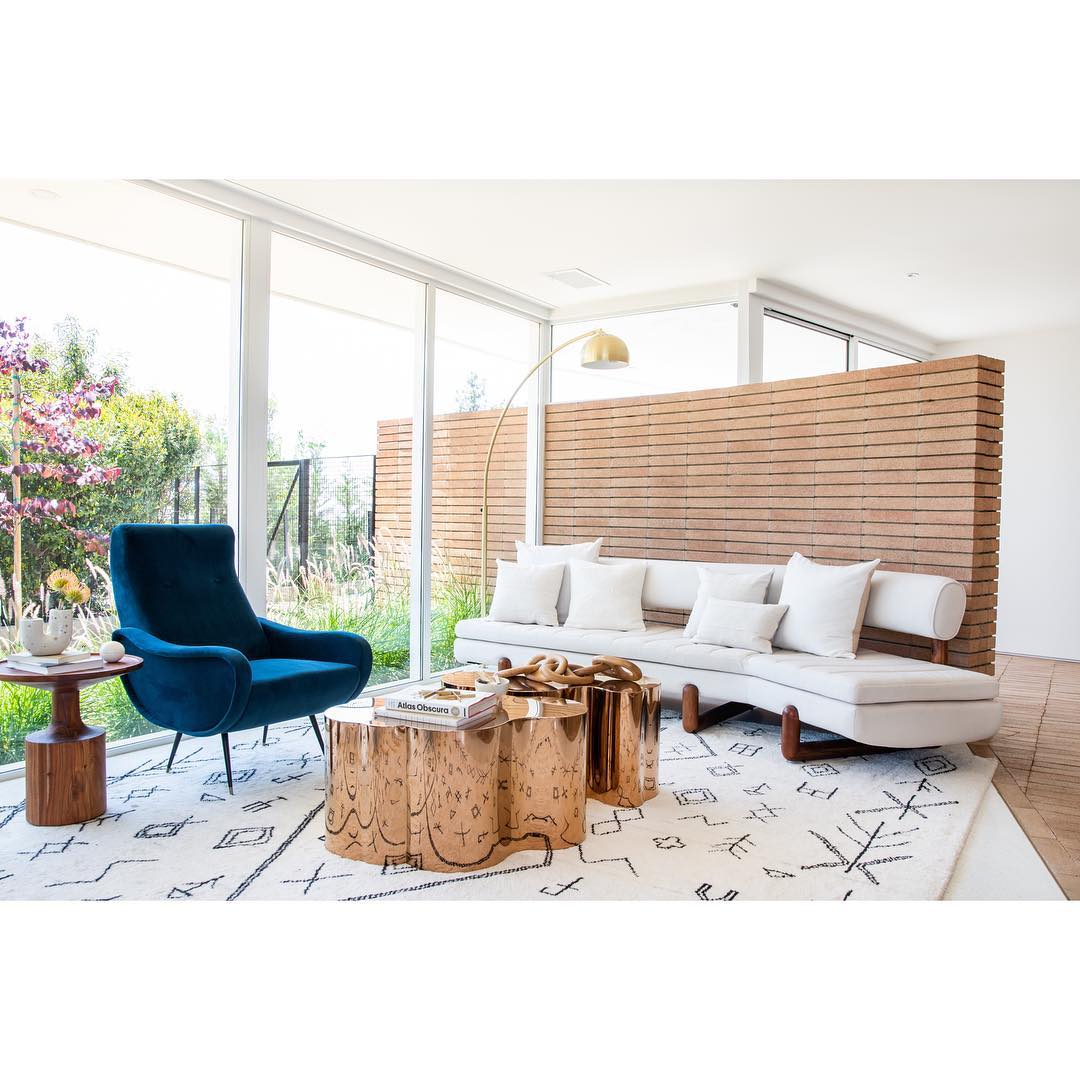
A deep blue armchair stands out beside the long white sofa in this bright living area. The pale rug and broad glazing keep the setting open, while reflective rounded tables add warmth near the center.
Try a single saturated chair when you want color in a largely neutral room. Position it where its outline can be seen from the main entrance rather than squeezed behind the sofa.
Compare upholstery samples with the daylight in that spot, since a rich blue may look different in shade. Keep the sofa and largest floor covering quiet so the chair remains the obvious accent.
A small wooden side table gives the seat a practical landing place without introducing another competing block of strong color.
15. Give Storage a Sculptural Front
Credits: Instagram
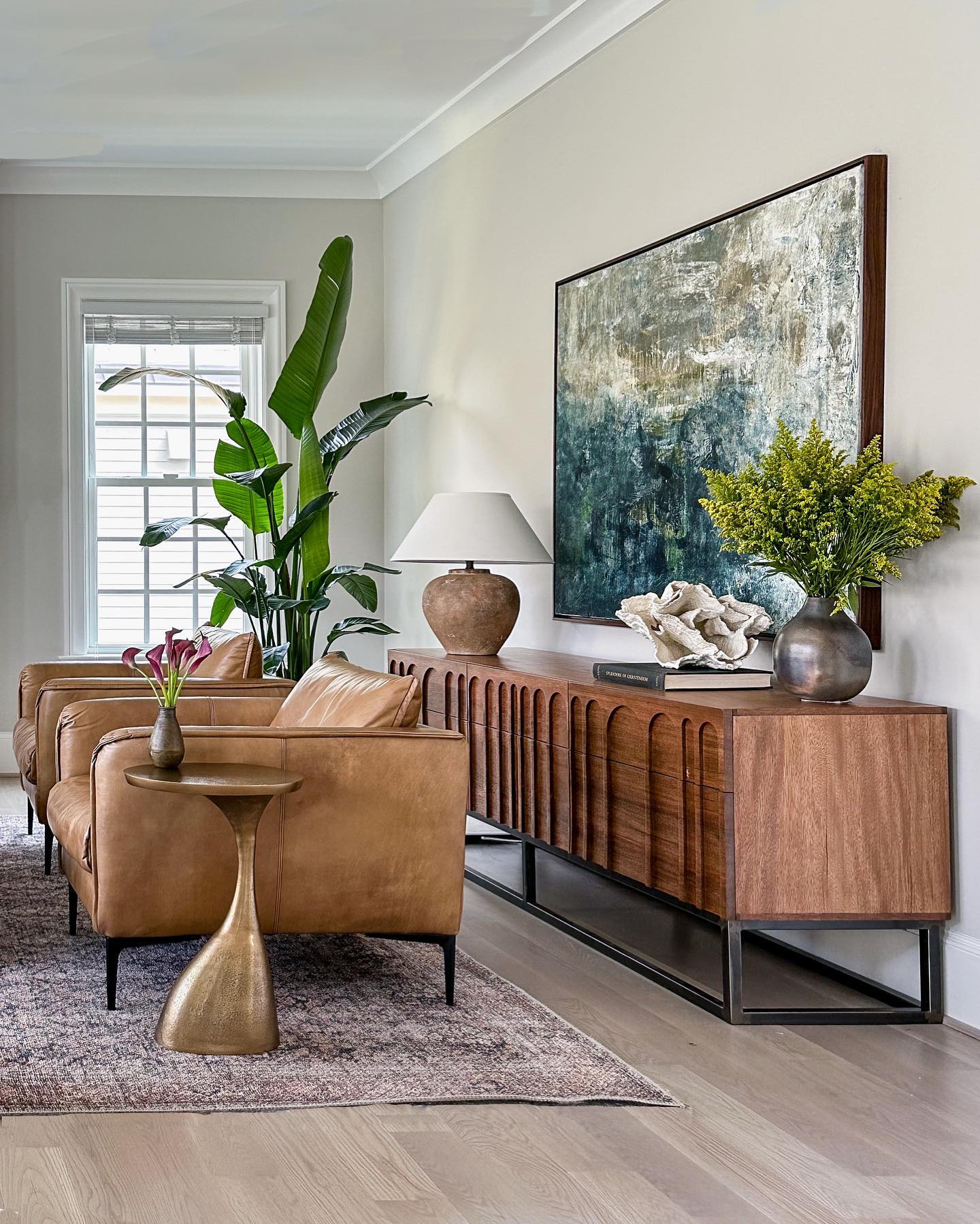
Deep vertical grooves turn this wooden sideboard into a feature behind the seating. Its slim black base repeats the legs of the tan leather chairs, linking storage and upholstery without making them match.
Borrow the idea when you need a large cabinet but want its front to contribute more than a plain surface. Choose a repeated carved or fluted detail, then keep nearby pieces simpler so the pattern remains clear.
Check door swings and drawer access before placing chairs in front. A broad artwork above can balance the cabinet's length, while a single lamp adds useful light at one end.
Leave some tabletop space free for everyday items, and compare the wood finish with your existing floor in natural daylight.
16. Pair Decorative Architecture With Simple Modern Furniture
Credits: Instagram
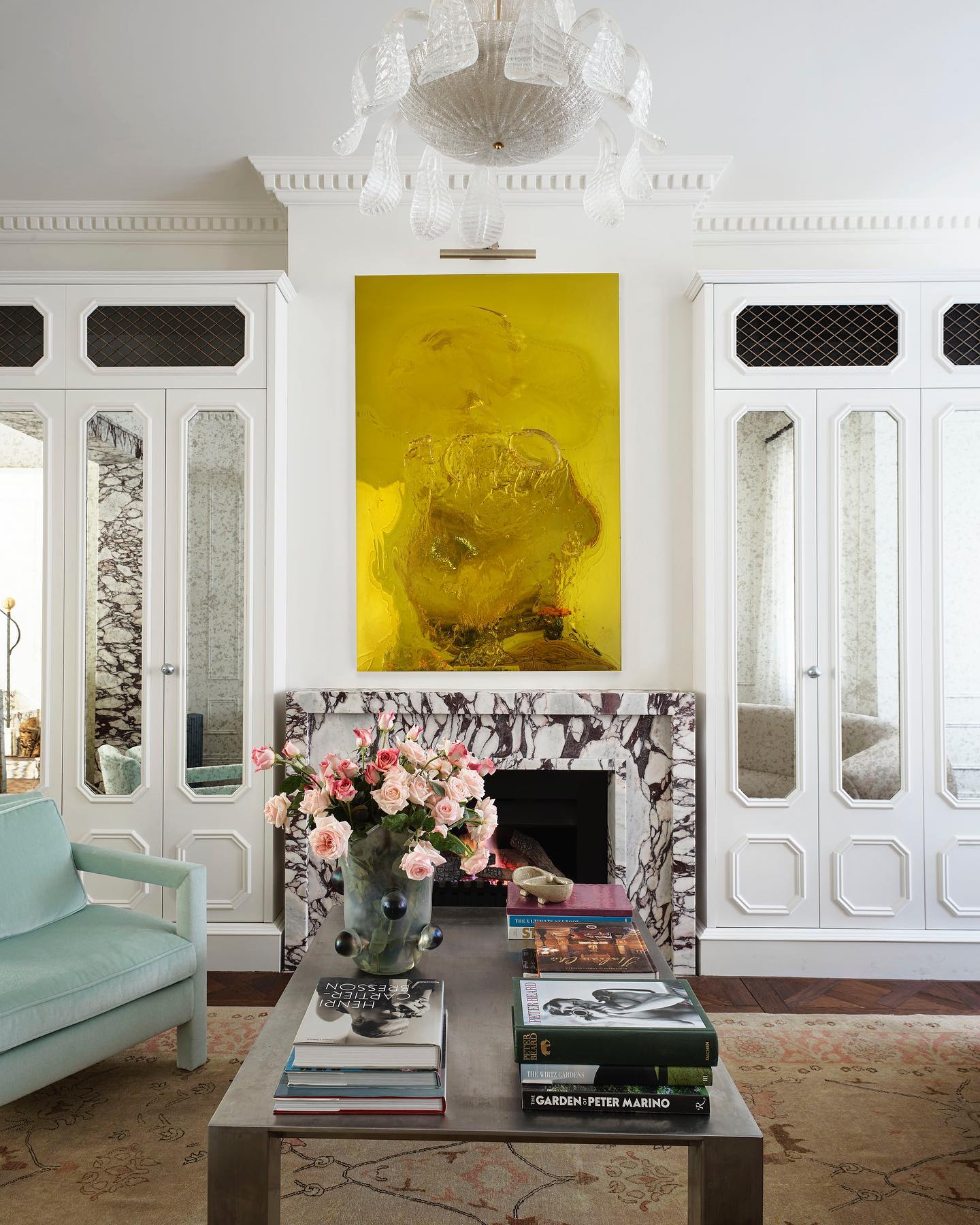
A yellow abstract painting and plain rectangular coffee table sit comfortably among ornate cabinetry, a veined fireplace, and an elaborate glass ceiling light. The mint chair adds a quiet color without repeating every detail of the room's architecture.
If your living room already has decorative moldings or an intricate mantel, choose some furniture with clear, uncomplicated outlines. A simple table can hold books and flowers while allowing the surrounding craftsmanship to stay visible.
Select artwork with a strong overall color or shape that reads clearly from across the room. Avoid crowding the mantel with additional ornaments when a large picture already fills the wall.
Leaving pockets of bare surface makes the mixture of detailed and restrained pieces easier to appreciate.
17. Make a Soft Ottoman the Center of the Room
Credits: Instagram
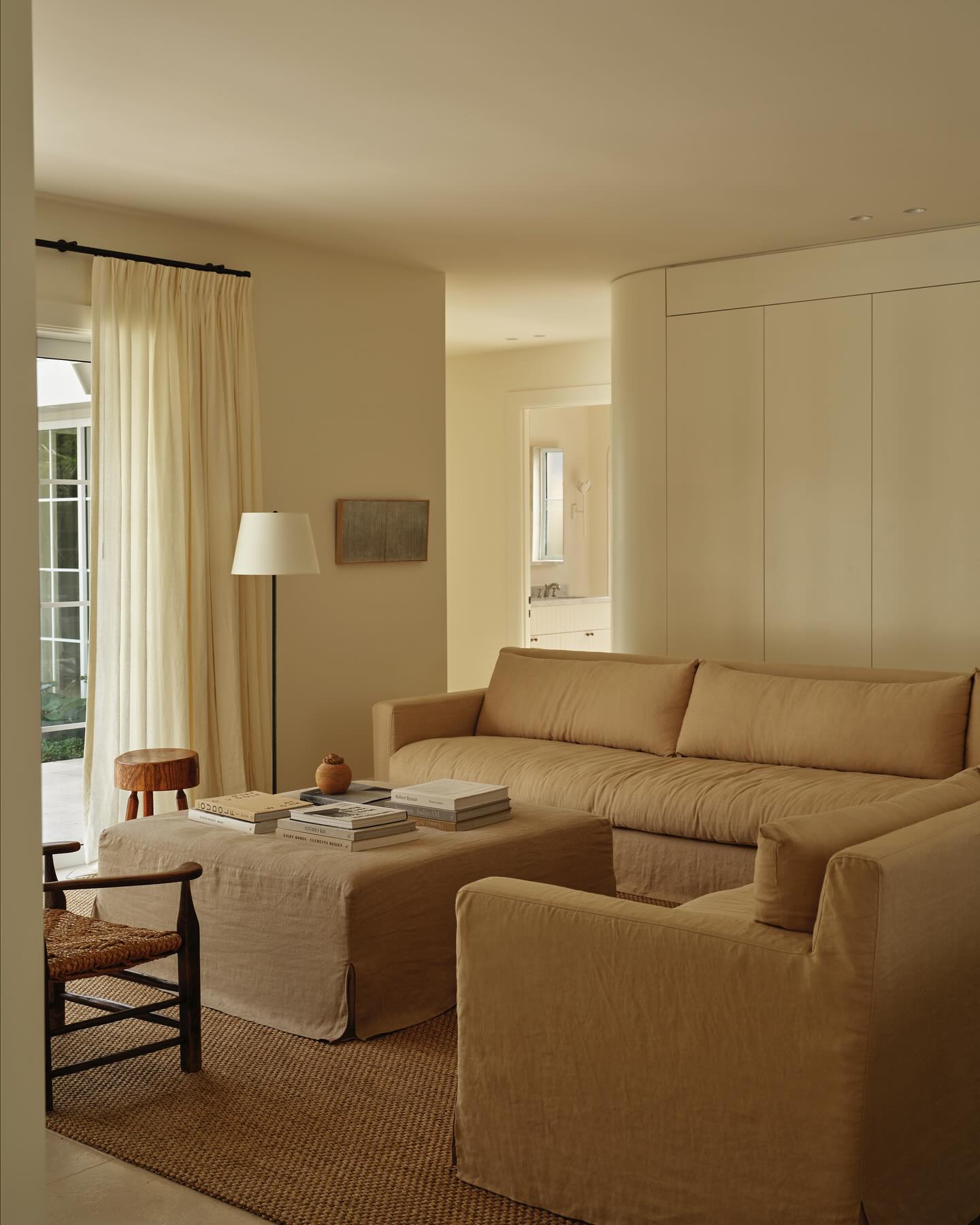
An oversized upholstered ottoman takes the central position between a sand colored sofa and armchair. Its fabric continues the seating palette, while a woven chair and rug add firmer textures nearby.
Try an ottoman when your living room is used for relaxed lounging and you prefer a softer centerpiece. Match its height to the surrounding seats so putting your feet up feels comfortable.
Measure the walking space around it, especially between facing chairs and the sofa. A firm tray can provide a stable surface for drinks when needed, while books are easy to move aside.
Check whether the cover is removable and follow its care instructions. Choosing a similar fabric across larger pieces helps this practical arrangement look deliberately coordinated.
18. Define a Separate Lounge Spot With a Round Rug
Credits: Instagram
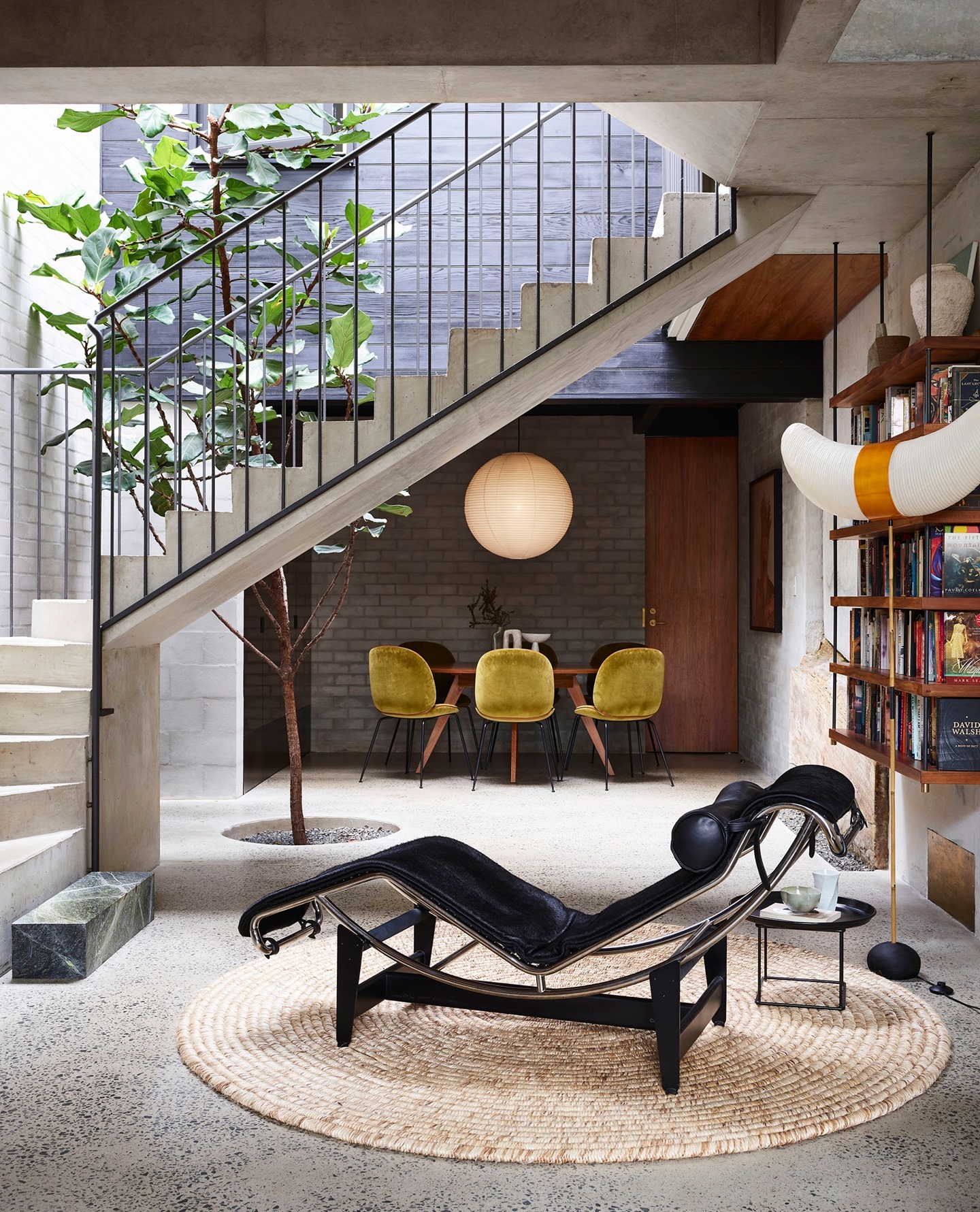
A black chaise sits on a circular woven rug beneath the open staircase, creating a distinct resting spot within a larger living and dining space.
The small side table and nearby bookshelves make the arrangement useful without adding another sofa. Borrow this idea for an awkward corner that still has comfortable headroom and a clear approach.
Choose a rug large enough to contain the chaise and its table, then test how easily you can sit down and stand up. A reclining piece needs space beyond its seat, so check its full footprint.
Keep the route to stairs and adjoining rooms unobstructed. The rounded rug gives this small zone its own outline while leaving the surrounding architecture easy to see clearly.
19. Warm Plum Seating With Amber Accents
Credits: Instagram
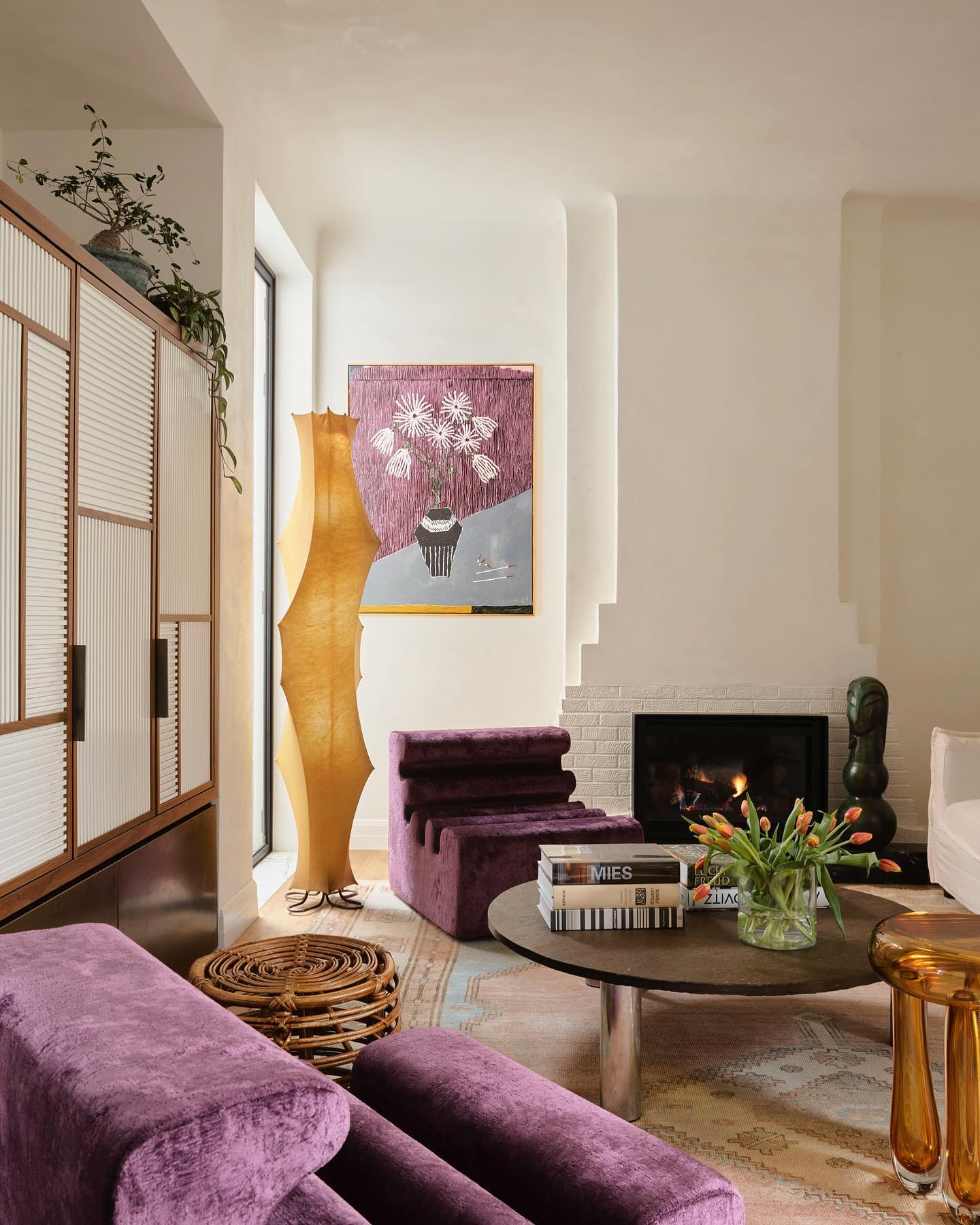
Plum upholstered seating brings rich color to this room, with an amber side table and glowing sculptural floor lamp adding warmth around it. A round coffee table and pale fireplace keep the arrangement from feeling too dense.
Try this pairing when you want deeper upholstery colors without covering the walls in a dark shade. Start with one plum chair and introduce amber through a lamp, vase, or small table.
Compare the colors under your evening lighting, when warm accents can become more noticeable. Keep nearby wood and metal finishes restrained so the pairing remains easy to read.
Artwork containing related purple tones can connect the seating to the wall, while a softly patterned rug adds another layer beneath the furniture.
20. Keep Seating Low to Preserve a Garden View
Credits: Instagram
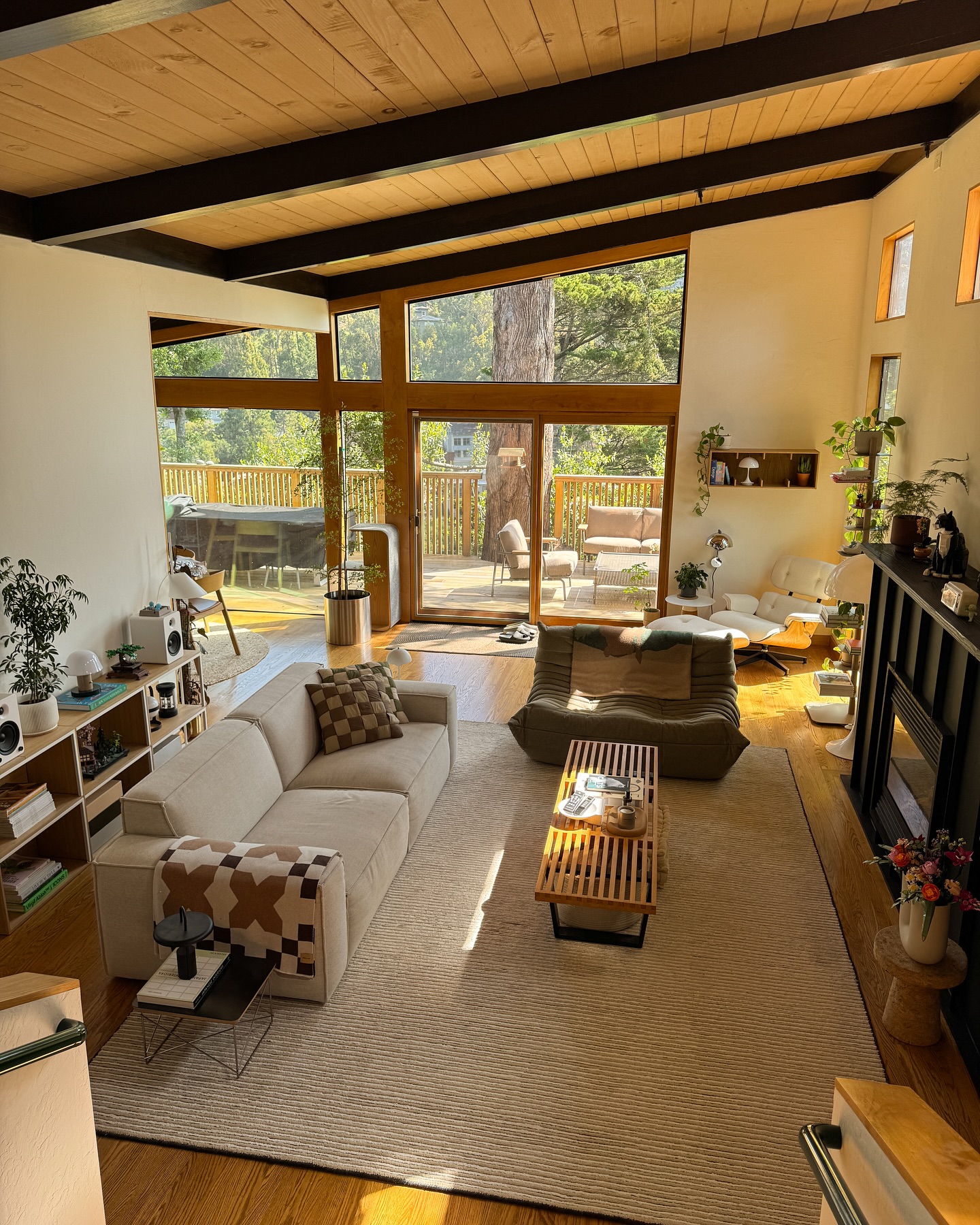
Low seating leaves the tall glazing and trees clearly visible in this living room. A pale sofa, relaxed olive seat, and narrow slatted coffee table form the main group beneath the wooden ceiling, with another chair tucked nearer the windows.
Borrow the layout when the view is one of your room's strongest features. Check sightlines from the entrance and from seated eye level before choosing furniture heights.
Place taller storage against a solid wall, keeping the glass and door route clear. A long, narrow table provides a surface without filling the center of the rug.
Repeat the outdoor greens in a cushion or plant, and let the existing wood frame the view rather than adding more competing decorative focal points.