
A room can feel farmhouse-inspired without filling it with heavy wood or rustic accessories.
The Best Modern Farmhouse Living Room Ideas show how to balance natural textures with clean, comfortable furnishings, whether you’re arranging a sectional to define an open entry or adding a wooden console behind a floating sofa.
You’ll also find ways to bring in color with blue accents, let exposed beams guide a quiet palette, and make a reading corner with a chair and ottoman.
Small choices in layout, pattern, and contrast can help the room feel inviting without crowding it.
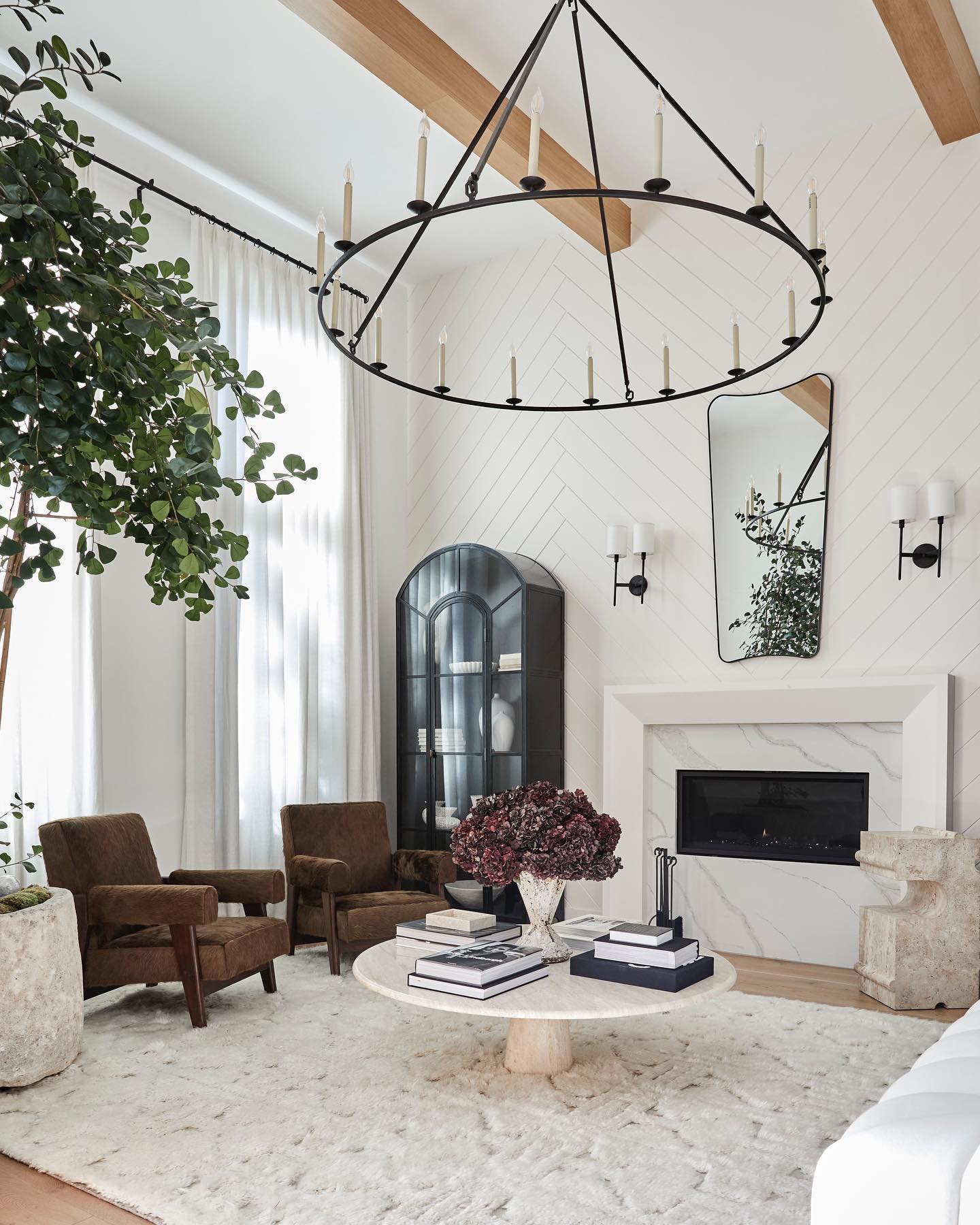
Pair a Wheel Chandelier with Slender Black Accents
Credits: Instagram
An oversized wheel chandelier gives this tall living room a clear center without hiding the beams above. Its open frame keeps the ceiling visible, while black sconces, curtain rods, and an arched cabinet repeat the dark outline around the room.
Borrow that balance by choosing one substantial fixture and quieter supporting accents. Check its diameter against the seating group and confirm the appropriate hanging height before installation.
Brown armchairs and a pale round coffee table soften the sharper metal lines. The white paneled wall adds another layer of detail, so additional wall decorations can stay restrained.
When several architectural features compete overhead, use simple upholstery below to give the chandelier room to stand out without making the arrangement feel formal.
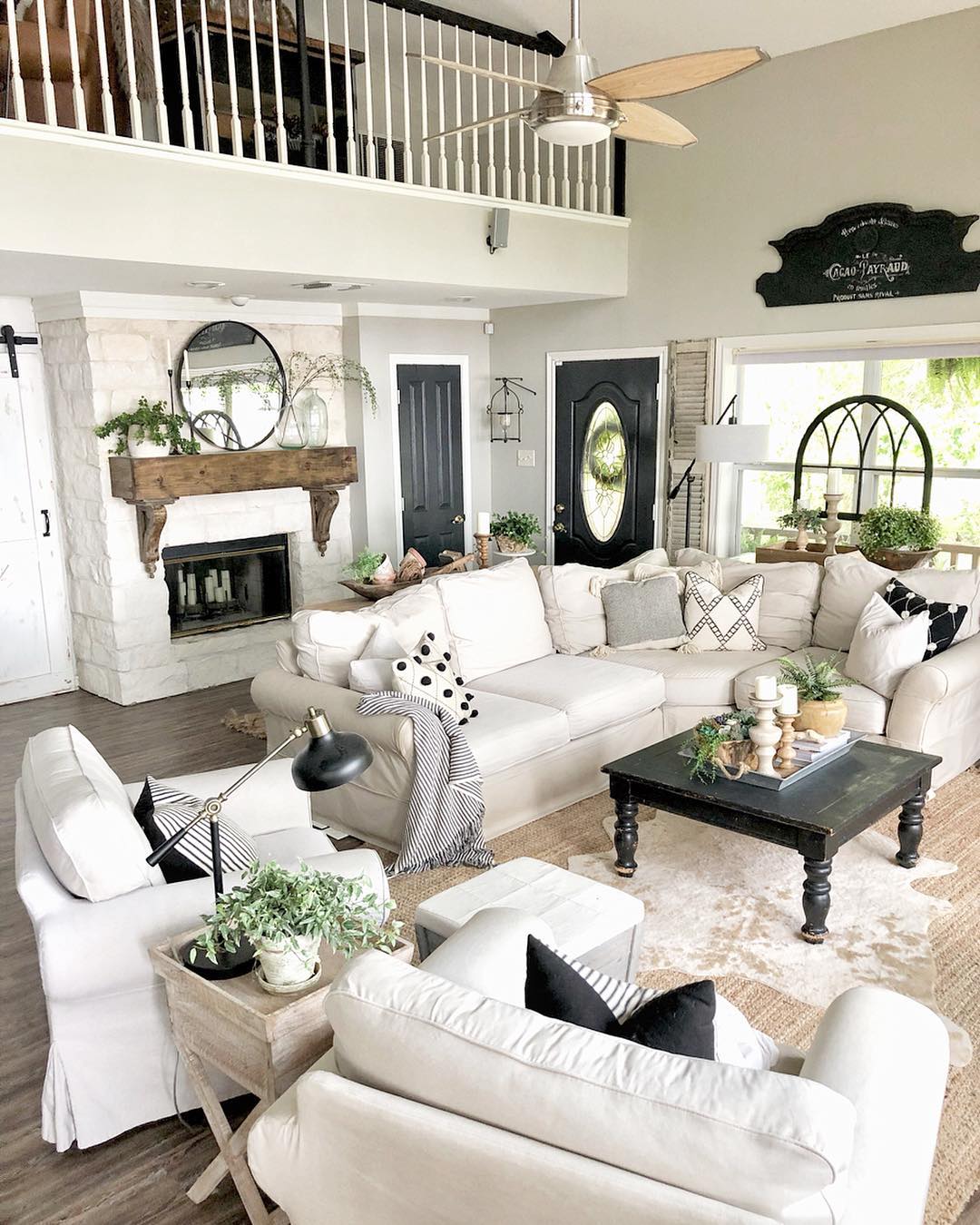
Use a Sectional to Define an Open Entry
Credits: Instagram
A sectional can establish the living room boundary when the front door opens into a shared space. Here, the pale sofa gathers the seats around a dark coffee table while leaving the entrance visible beyond its back.
Plan that relationship before choosing upholstery or cushions: trace the route from the door through the room, then position the sectional outside it. Additional chairs should face the seating group without narrowing the main walkway.
A broad rug helps connect the separate pieces, and contrasting pillows echo the black doors and table. Keep accessories behind the sofa low enough to preserve sightlines.
This arrangement gives an open plan a recognizable conversation area while retaining an easy connection to the rest of the home.
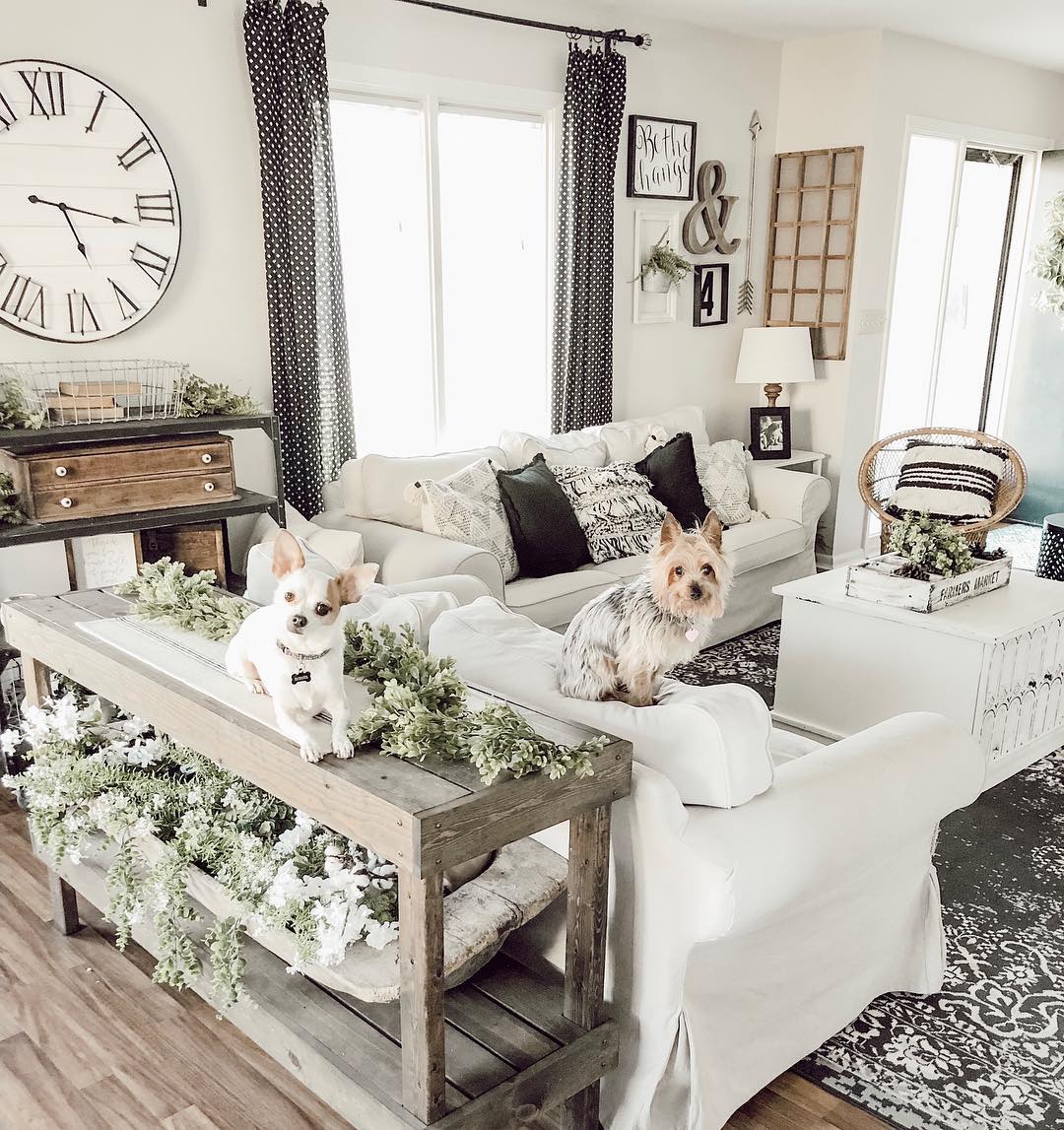
Give a Floating Sofa a Useful Wooden Console
Credits: Instagram
Behind this white sofa, a long wooden console turns an exposed furniture back into a finished edge.
Its open lower shelf offers room for baskets or folded throws, while the top can hold objects that would otherwise crowd the coffee table.
Choose a console that sits at or slightly below the sofa back, and check that its depth leaves comfortable passage behind it. The weathered surface adds warmth beside pale upholstery and a patterned dark rug.
Keep everyday items in one tray and leave part of the tabletop clear for setting down a book. If pets climb onto the furniture, avoid unstable vases or trailing arrangements within reach.
A practical console should improve the layout as well as its appearance.
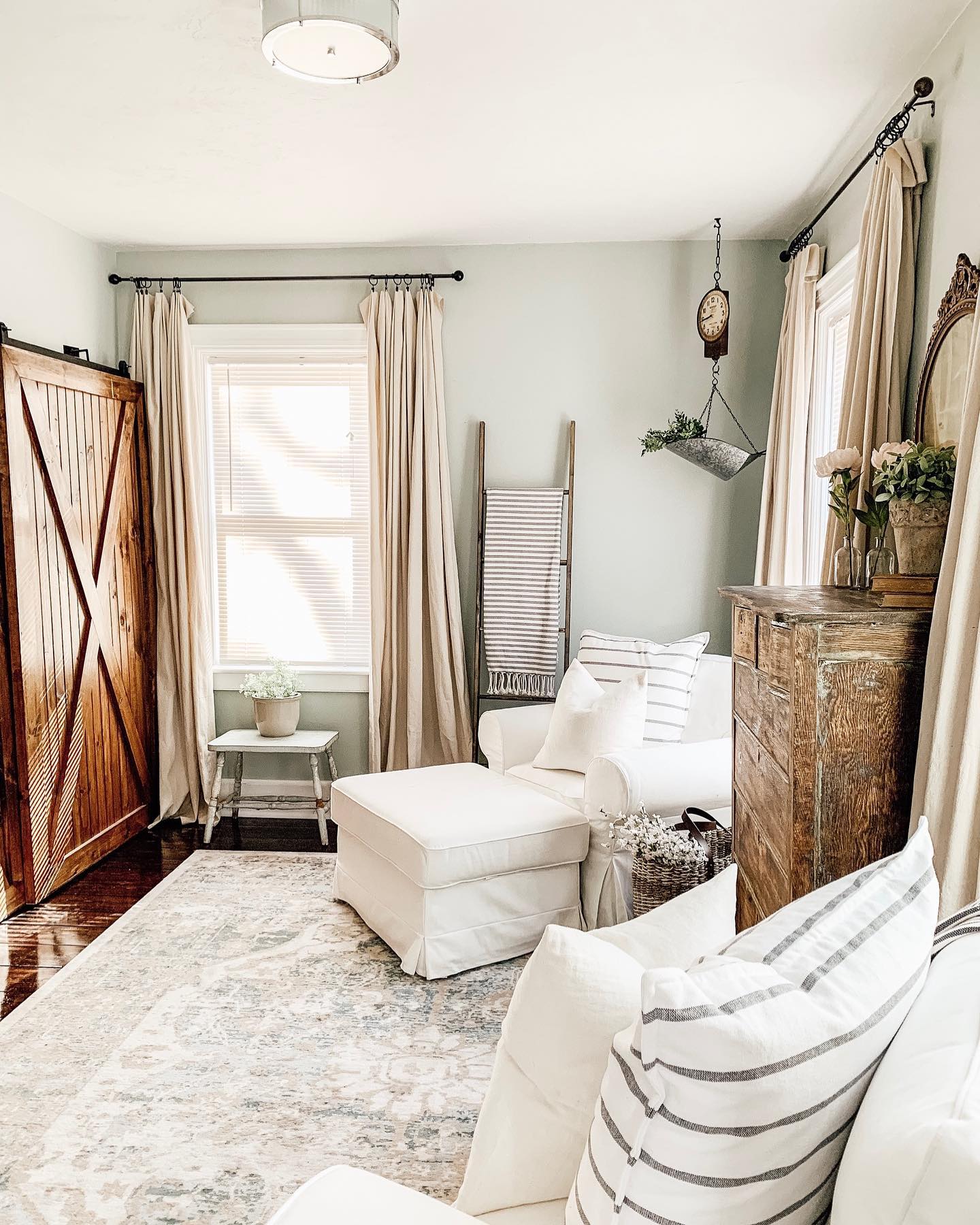
Make a Reading Corner with a Chair and Ottoman
Credits: Instagram
Tuck a comfortable chair beside a window to make a quiet corner feel intentional. This arrangement pairs white upholstery with a matching ottoman, giving you somewhere to stretch out comfortably without adding another large sofa.
A small stool nearby can hold a book or drink once its decorative planter is moved. Measure the combined chair and ottoman footprint, then leave a clear route around both.
Soft curtains frame the windows, while a wooden cabinet and sliding barn door bring contrasting texture. Repeat one simple stripe in a cushion or throw to connect the corner with the main seating.
For evening reading, add a lamp within reach and position its shade to light the page without shining directly into your eyes.
Balance a Weathered Coffee Table with Blue Accents
Credits: Instagram
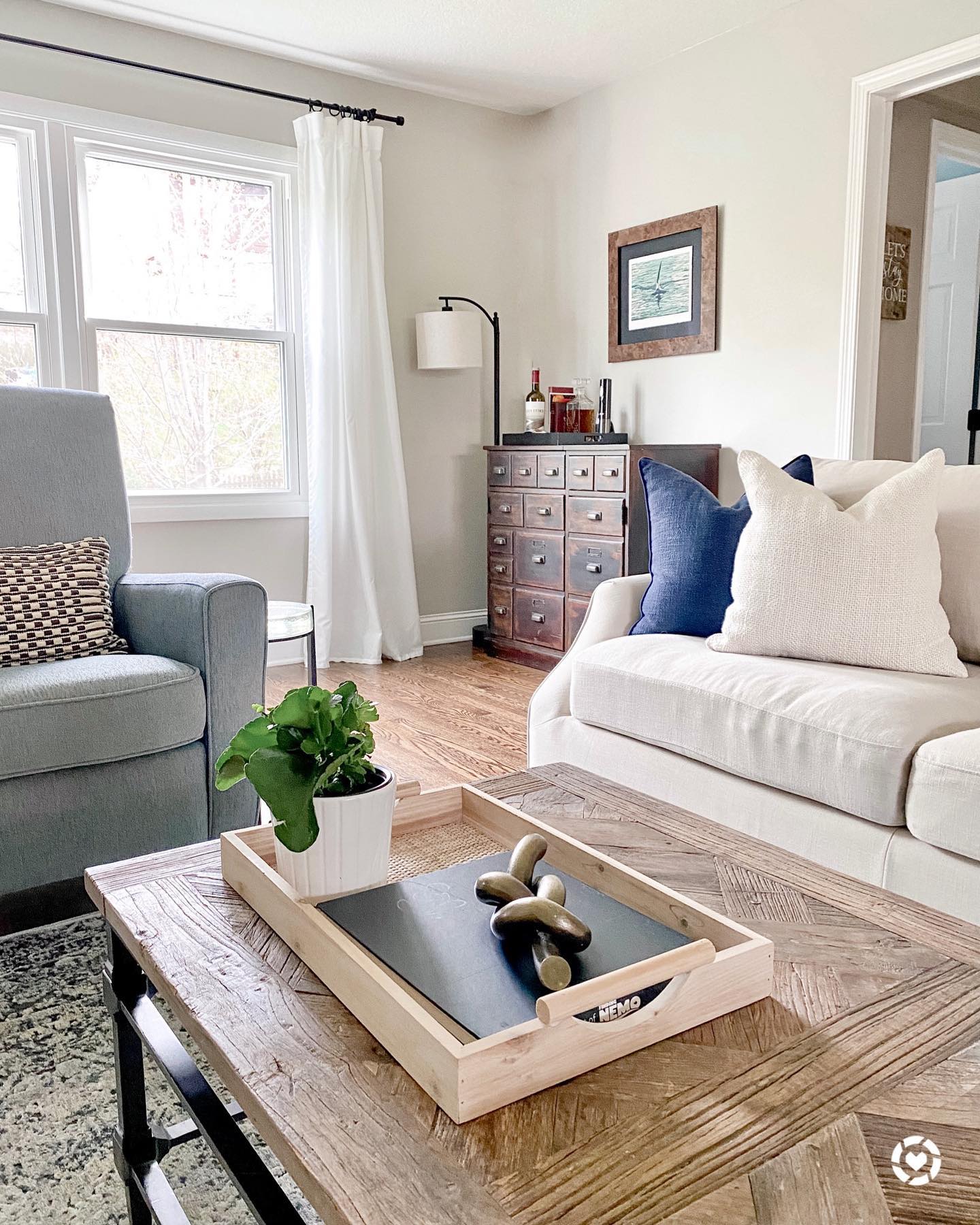
Let one textured table carry the rustic character of a compact seating area. The broad wooden top in this room shows a geometric board pattern and visible grain, balanced by a plain white sofa and a blue armchair.
A dark blue cushion repeats the cooler color without requiring matching furniture. When choosing a similar table, compare its height with the seat cushions and allow enough space to move around the corners.
A shallow tray makes small objects easier to lift away when the surface is needed. Keep the surrounding pieces simple so the table's pattern remains noticeable.
The dark drawer cabinet adds useful contrast, while pale curtains and walls prevent the mixed wood finishes from making the corner feel heavy.
Let Exposed Beams Set a Quiet Natural Palette
Credits: Instagram
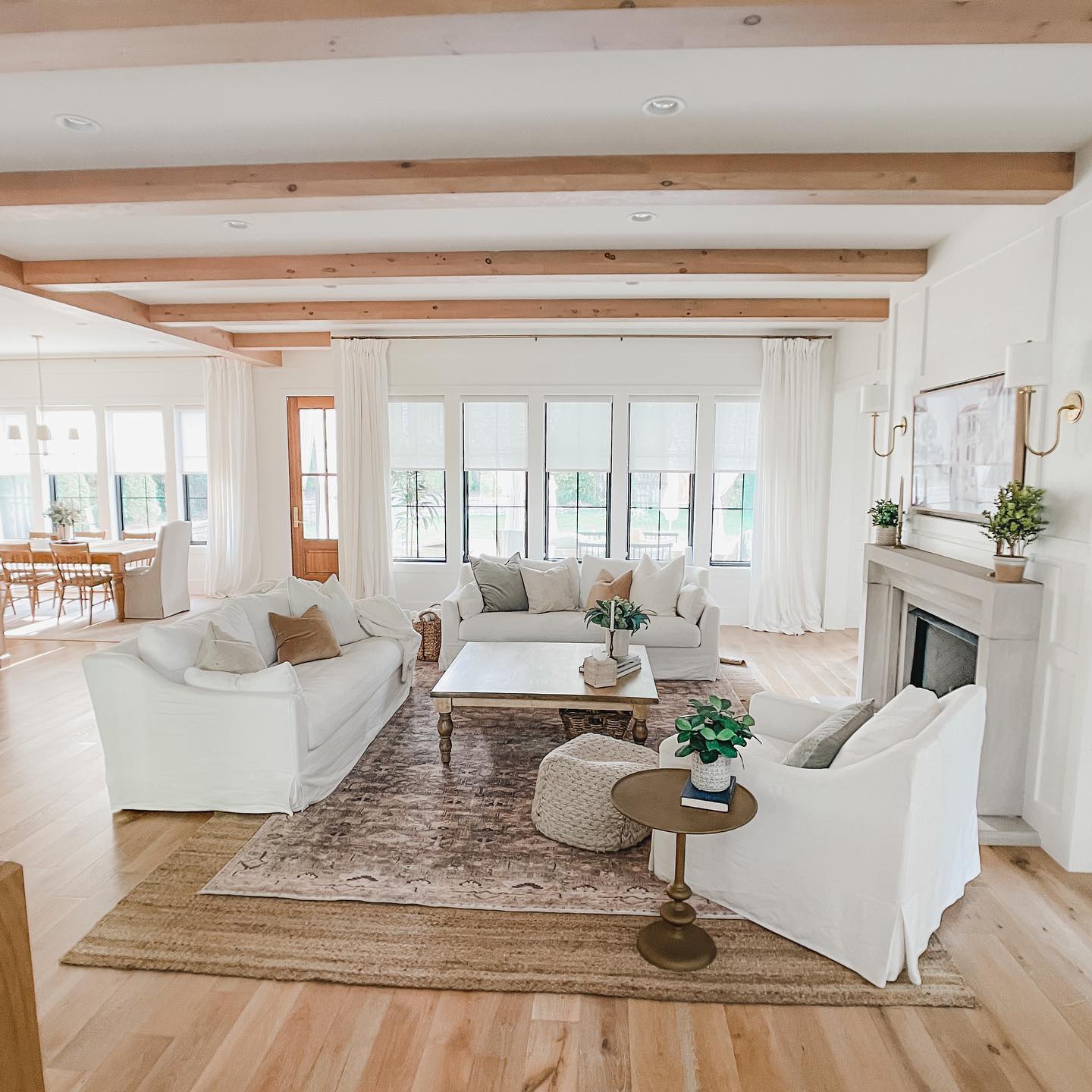
Warm ceiling beams already give this airy room a strong farmhouse feature. White paint between them makes their spacing easy to appreciate, and the pale floor carries a related wood tone down into the living area.
Rather than adding more heavy furniture, the room uses white seating, simple curtains, and a light coffee table. Take a cue from that restraint when decorating beneath visible beams.
Pull one warm shade into cushions or a rug, then leave larger surfaces calm. Recessed lighting allows the ceiling pattern to stay uninterrupted by a large pendant.
Before adding decorative beams to another room, check ceiling height and installation requirements. Existing architecture can guide the furniture palette without needing every wooden piece to match it.
Mix Checks and Stripes Across a Gray Sofa
Credits: Instagram
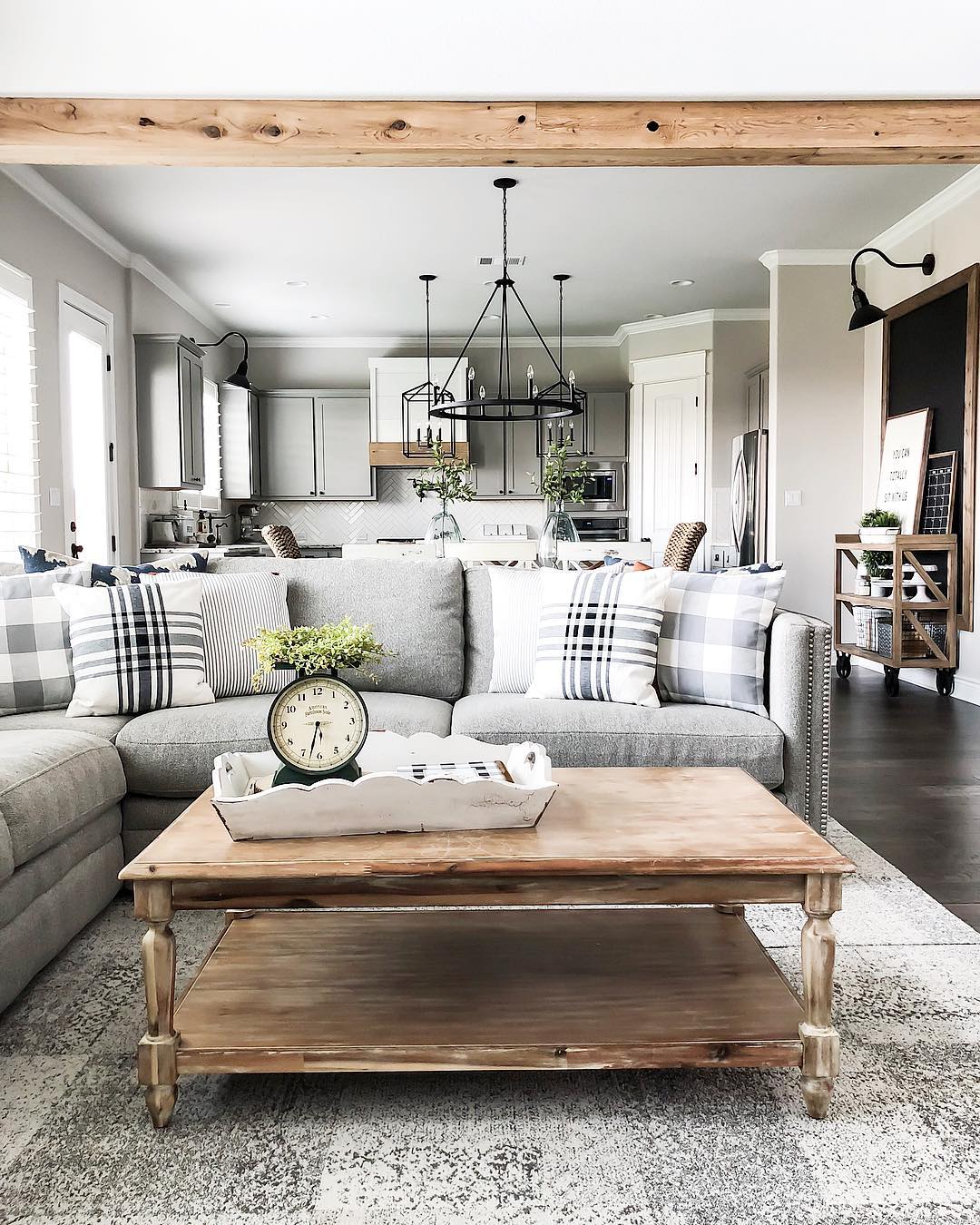
Checks, narrow stripes, and crossing dark bands bring movement to this gray sectional while staying within a limited palette. Their different scales keep the cushions distinguishable: broad checks read clearly beside the finer lines.
To try the combination, start with the sofa color and choose patterns that share at least one shade. Add covers, testing them from across the room rather than judging each fabric alone.
Leave some plain upholstery visible so the arrangement does not become a wall of cushions. Here, a wooden coffee table and pale patterned rug temper the graphic textiles with softer variation.
Use cushion sizes that support sitting comfortably, and keep a nearby basket available for the extras when people settle in for the evening.
Give Farmhouse Seating a Richer Color Palette
Credits: Instagram
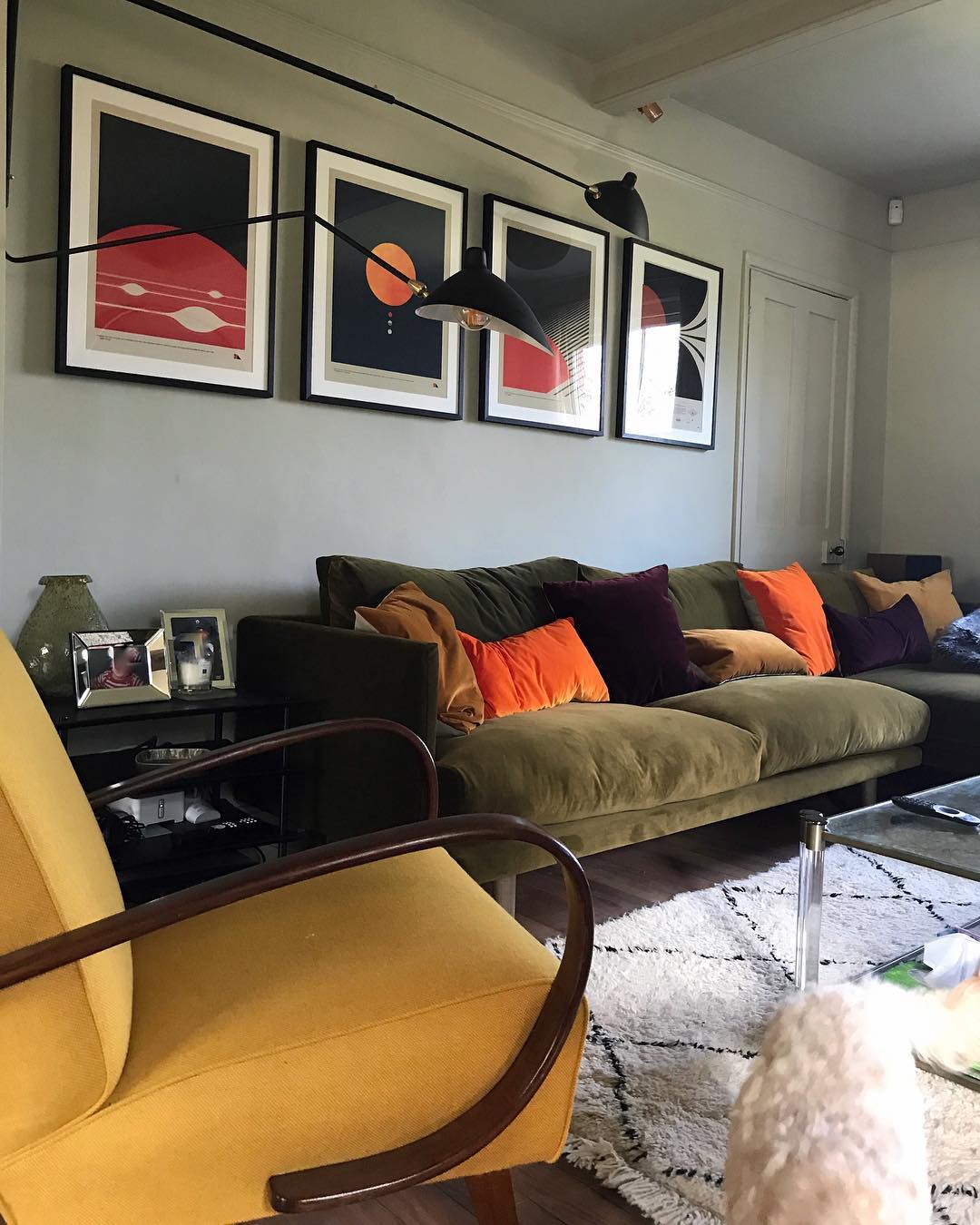
Deep olive upholstery makes a confident starting point for this colorful farmhouse seating area. Orange, plum, and ochre cushions add concentrated contrast, while a mustard chair introduces another warm surface beside the sofa.
The framed prints repeat several accent colors above, helping the mixture feel connected. Build a similar palette around one main upholstery color, then test smaller fabric samples before committing to additional furniture.
Pale walls and a light rug give the stronger shades room to breathe. Keep the furniture shapes straightforward when the color scheme is already expressive.
Black picture frames and articulated lights supply consistent outlines across the wall. For a smaller change, introduce two richly colored cushion covers and assess them in daylight and evening lamplight.
Hang a Quiet Landscape Above the Sofa
Credits: Instagram
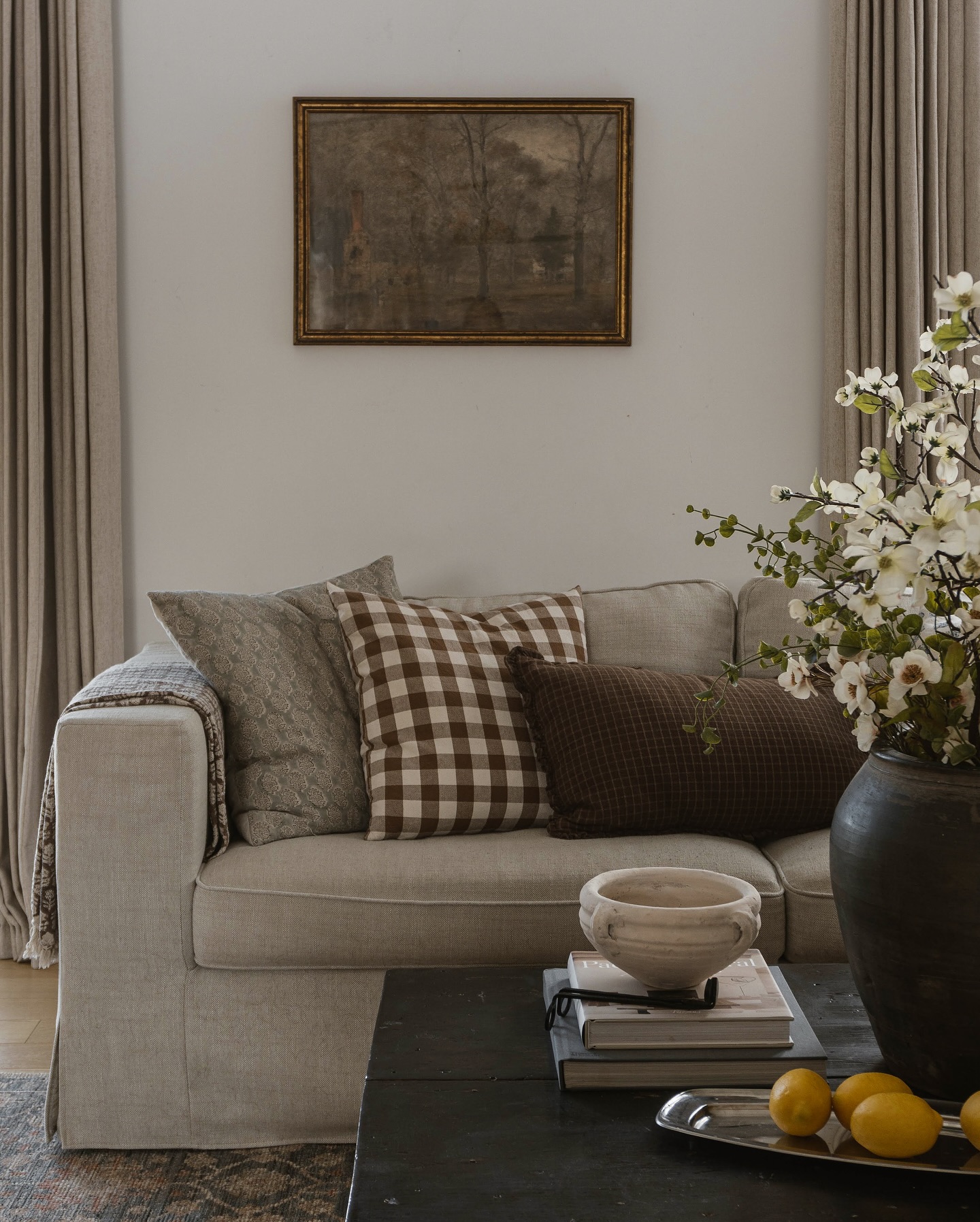
One landscape can bring atmosphere to a neutral living room without filling the wall with pieces. Here, a dark woodland scene in a warm frame sits between tall curtains, echoing the brown tones in the seating below.
Look for artwork whose colors relate to the room without repeating them exactly. Before hanging, use a paper template to test the frame's size and position from the opposite seat.
Leave enough surrounding wall visible for the picture to read as a focal point. A scene with subdued contrast works especially well beside patterned textiles and a large floral arrangement.
Choose the image because you enjoy looking at it; its subject can add farmhouse character without relying on signs or literal rustic motifs.
Keep a Stone Fireplace Mantel Spare
Credits: Instagram
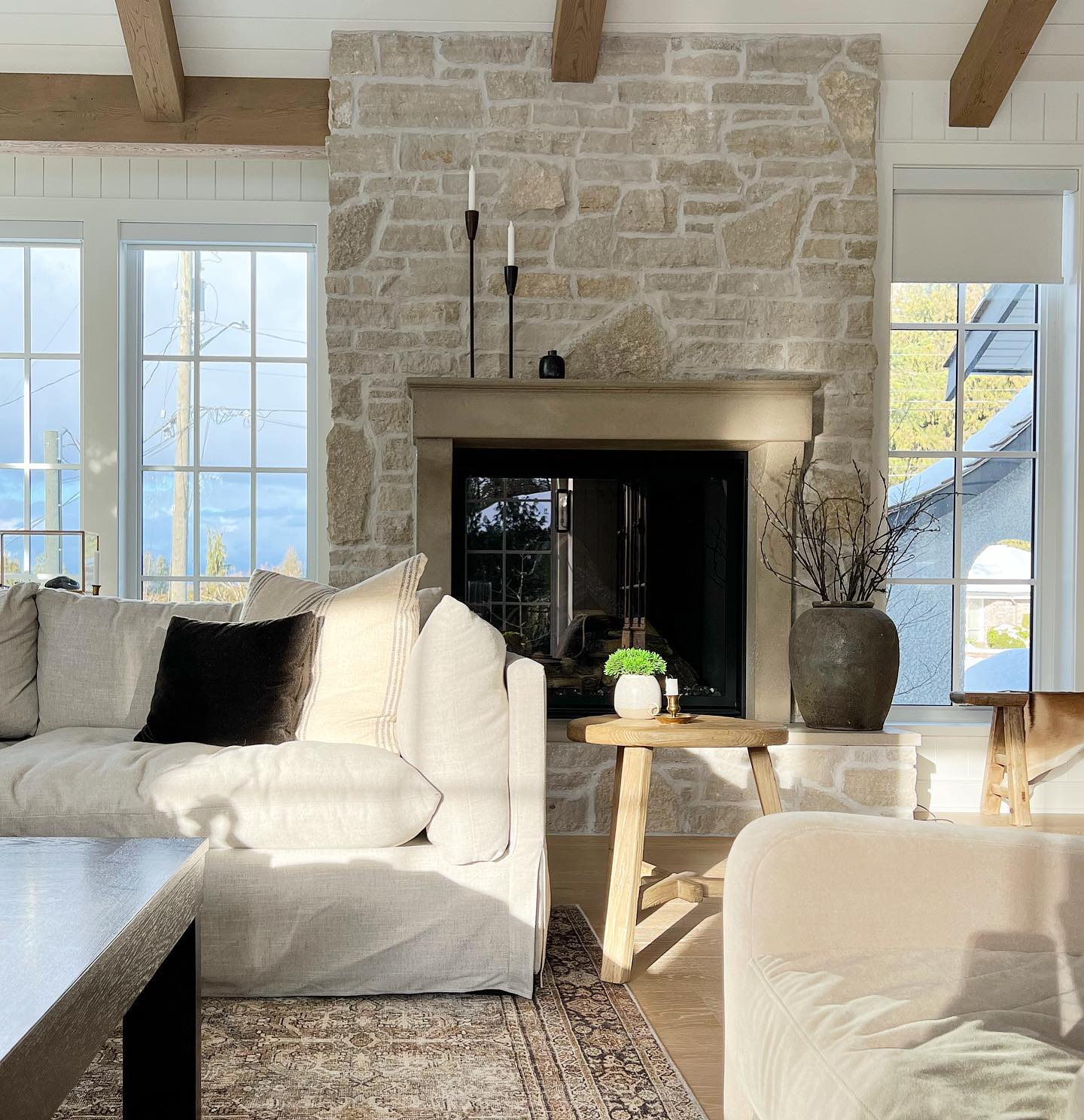
The irregular stone around this fireplace supplies plenty of texture on its own. Two slender candlesticks and one small dark vessel give the mantel definition while leaving the masonry visible.
That limited arrangement is worth borrowing when a surround already has strong color variation or a pronounced surface. Start with fewer objects, vary their heights, and view the composition from the sofa before adding anything else.
Nearby pale upholstery allows the fireplace to hold attention without making the room feel busy. If the fireplace is used, follow its specified clearances and keep combustible decorations away from heat.
Choose accessories that stand securely on the mantel, and leave room for cleaning so a restrained display remains practical throughout the changing seasons.
Choose Round Nesting Tables for Flexible Seating
Credits: Instagram
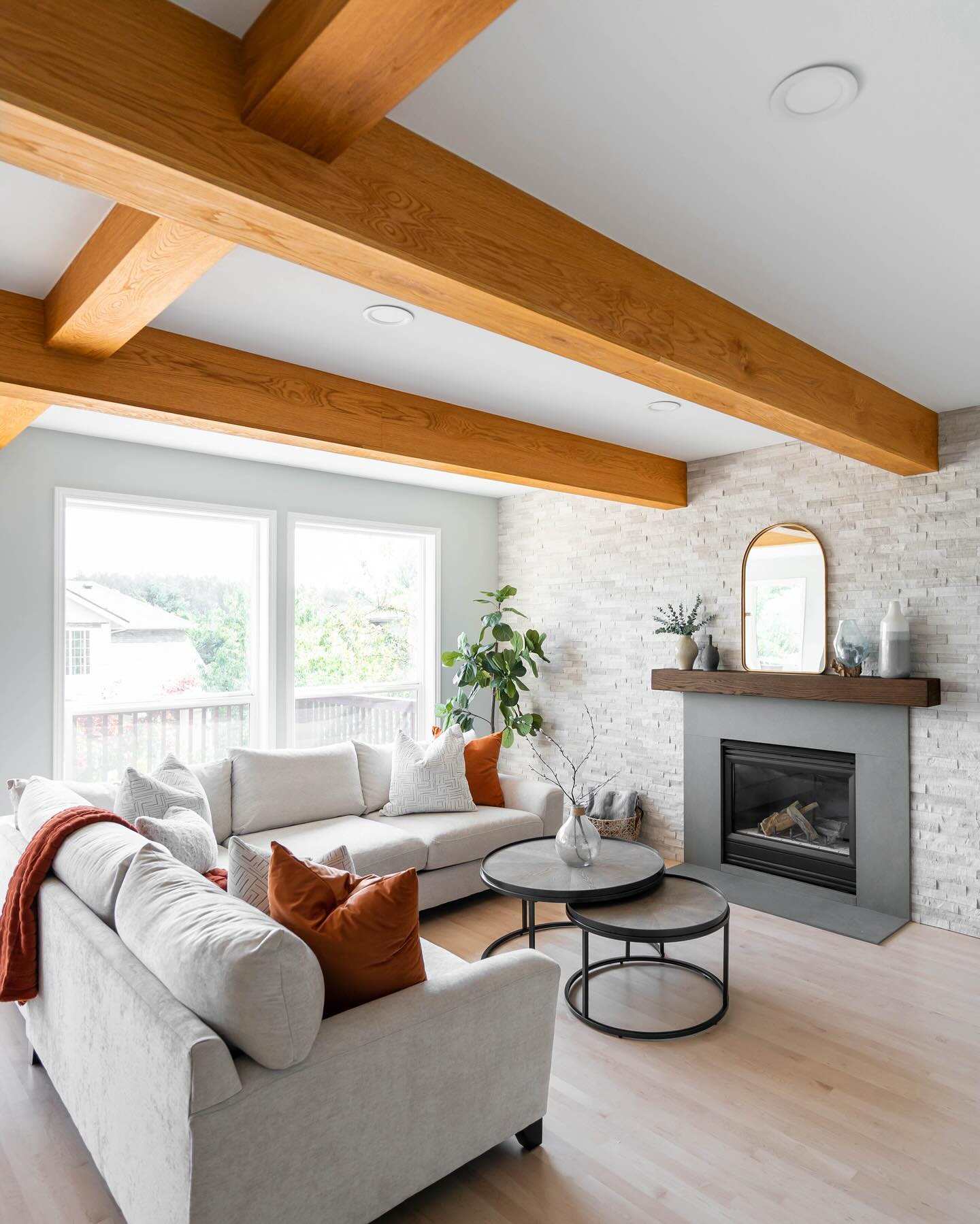
Round nesting tables fit neatly inside the bend of this pale sectional, adding useful surfaces without filling the open floor. Their dark circular frames stand out against light upholstery and repeat the fireplace's stronger outline.
Try a nesting pair when one large coffee table would leave awkward gaps or make movement difficult. Measure the tables both overlapped and separated, since the smaller piece needs room to become useful.
Position the main surface within comfortable reach of the sofa, then pull the second toward another seat when needed. Keep decorative objects concentrated on one table so the other stays available for drinks or books.
Rounded shapes can soften a compact arrangement, but clear walking space remains the most important layout test.
Use Pale Vertical Paneling in a Small Living Area
Credits: Instagram
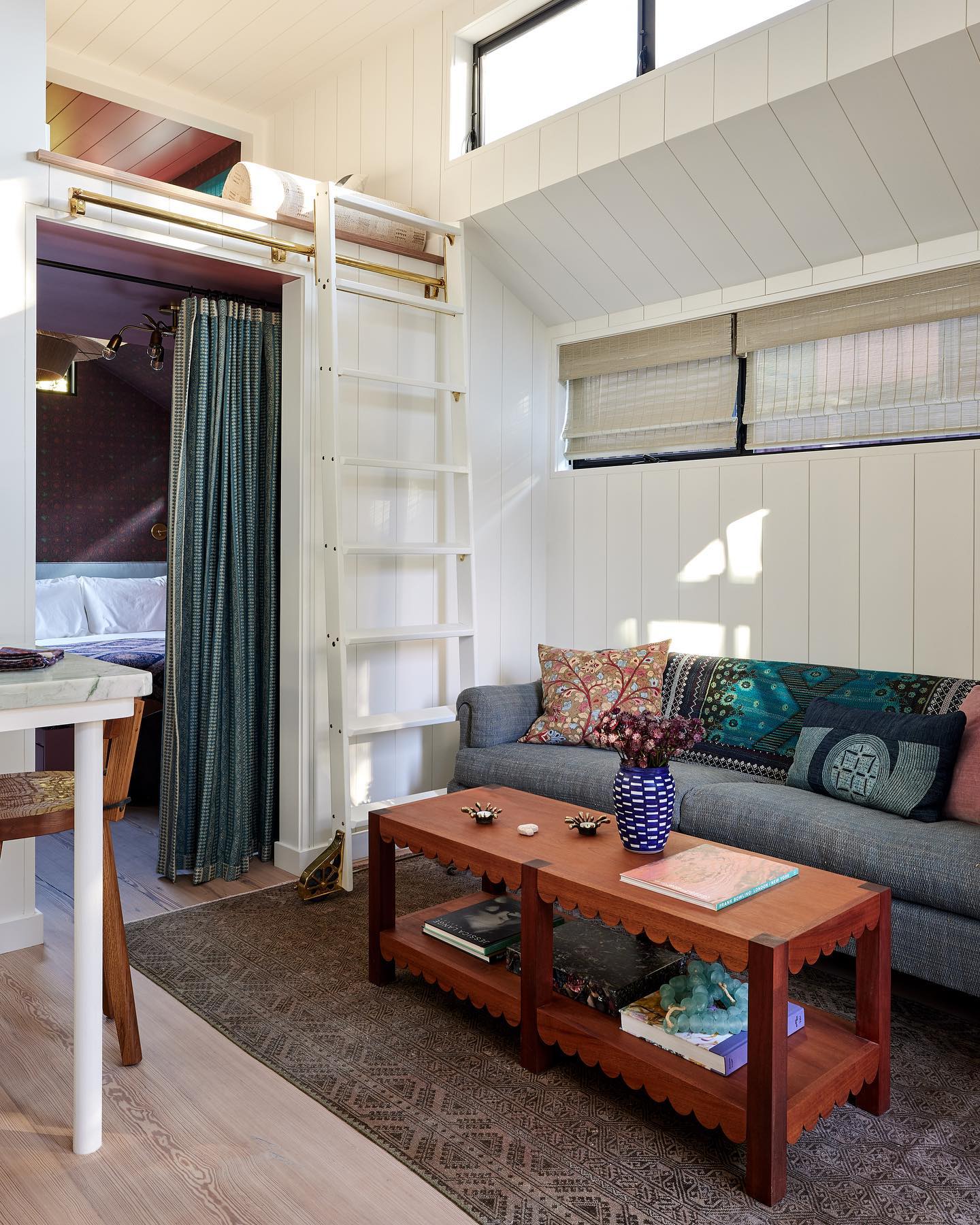
Pale vertical paneling gives this compact living area texture while keeping its many architectural edges visually connected.
The same quiet finish continues around the high windows and sloping ceiling, allowing a small gray sofa and warm wooden tables to define the seating zone.
Use a restrained wall color when a room includes several openings or changes in height. Furniture with open space underneath can help the floor remain visible, while shelves below the coffee tables provide storage without another cabinet.
Choose a rug that gathers the seating rather than covering every available inch. A few patterned textiles add personality against the simple background.
Keep daily routes clear and check furniture dimensions; small rooms benefit from useful pieces with deliberate proportions.
Anchor Mixed Furniture with a Substantial Wooden Bookcase
Credits: Instagram
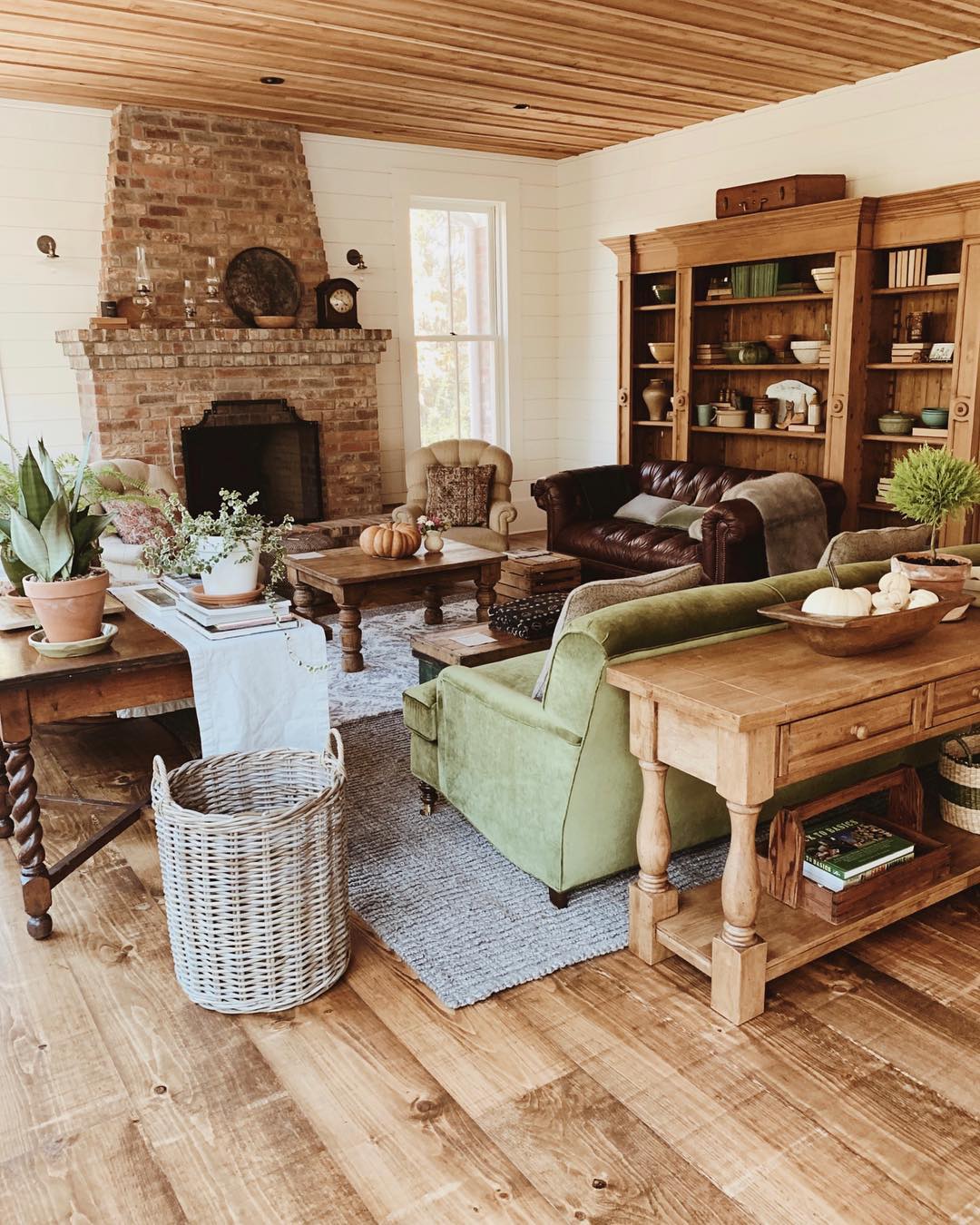
A generous wooden bookcase gives this room a strong backdrop for furniture in different colors and finishes. Open shelves hold books, bowls, and other objects with enough gaps to show the wood behind them.
The dark brown sofa, green seating, and pale chairs can therefore feel collected rather than coordinated as a set. When using a substantial storage piece, measure its height and depth against the room before buying.
Arrange heavier items lower down and secure tall furniture as appropriate. Group books and useful objects, leaving space for things to change over time.
Carry a related wood tone into one table if it helps connect the room, but allow other finishes to vary so the bookcase keeps its own identity.
Add Upholstered Stools Beside a Patterned Armchair
Credits: Instagram
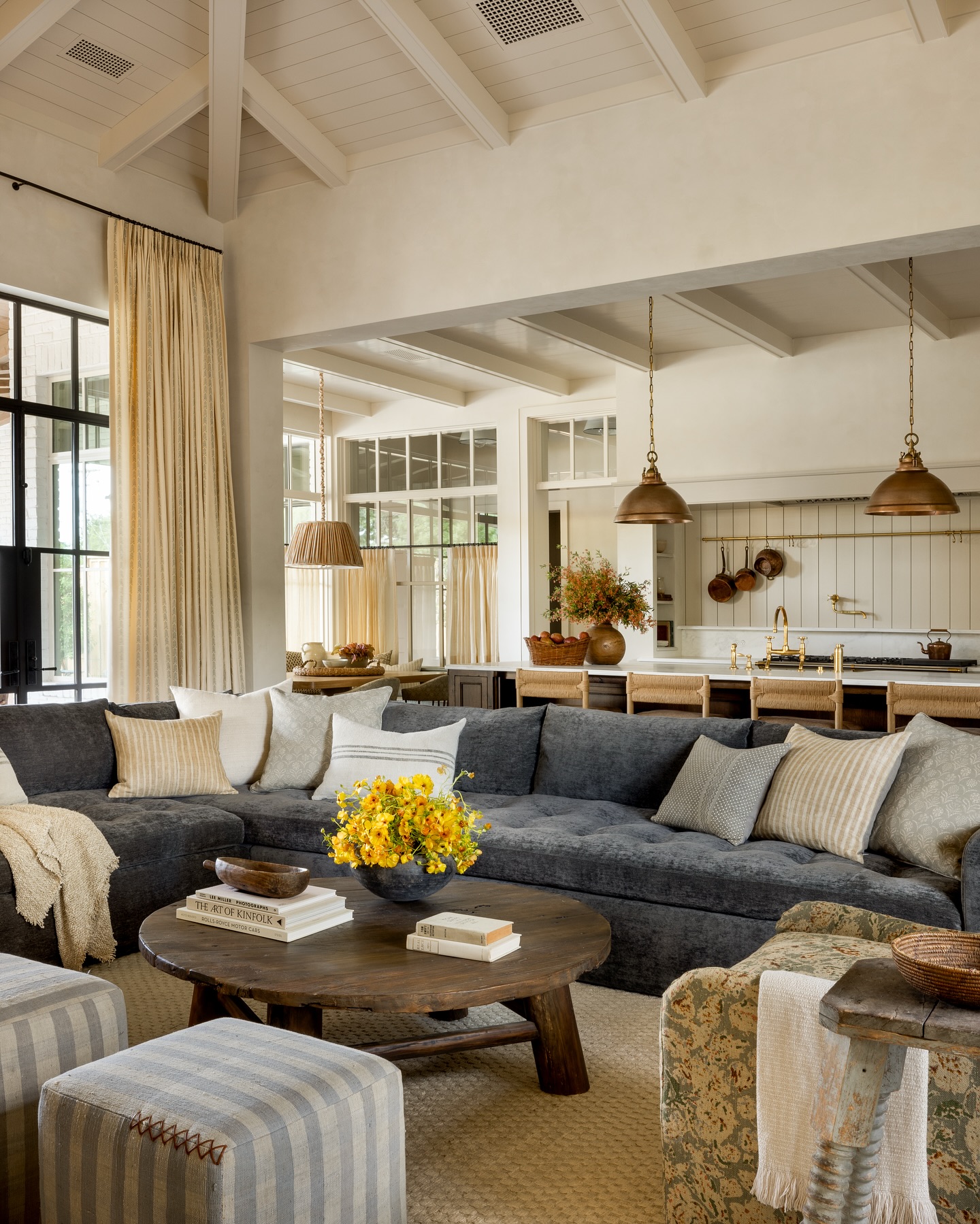
A floral armchair and striped upholstered stools give this seating group more flexibility around its sectional. Their smaller footprints keep the front of the room open while introducing pattern away from the sofa.
Consider movable stools when guests sometimes need an extra place to sit but permanent armchairs would crowd the layout. Check that the pieces are designed for seating and feel stable at their intended height.
Their fabric can pick up a muted shade from a nearby chair without matching its print. A round wooden coffee table helps the varied shapes gather into one conversation area.
Keep a clear place to move the stools when they are not needed, and avoid leaving them where people naturally cross the room.
Face Two Sofas Across a Light Glass Table
Credits: Instagram
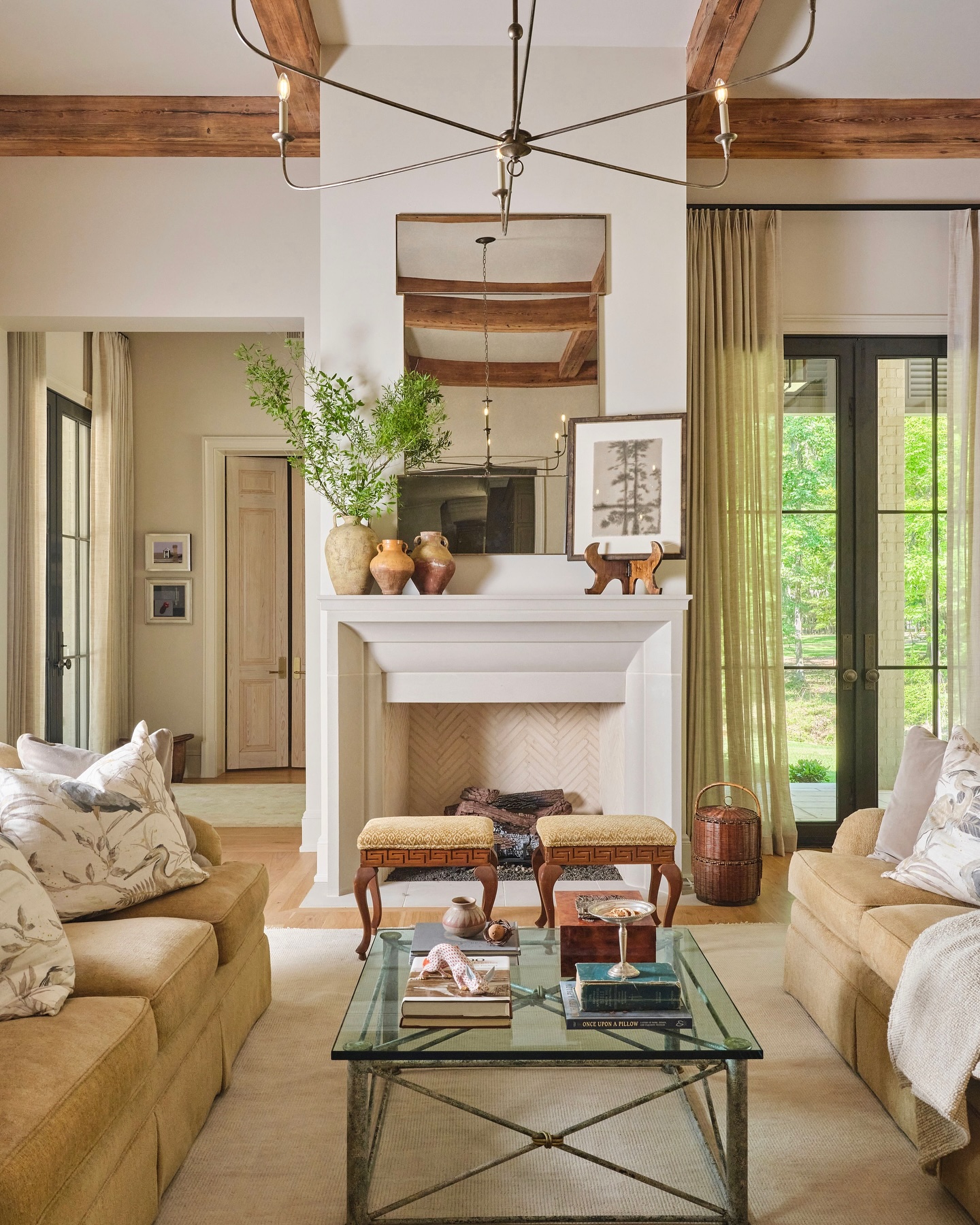
Facing sofas create a conversation arrangement in this room, with the fireplace marking one end and garden doors bringing light alongside it. A glass coffee table leaves the pale rug visible, reducing the visual weight between the substantial seats.
Try this layout where the room is wide enough for both sofas and comfortable passage around the table. Similar sofa heights help the pairing feel balanced, even if the upholstery differs.
Keep taller decorations toward the edges so people can see across to one another. Choose glass furniture suited to the household and pay attention to its corners and stability.
A restrained rug and a few shared textile colors can connect the seating without requiring every cushion or accessory to match.
Combine Closed Cabinets with a Low Display Shelf
Credits: Instagram
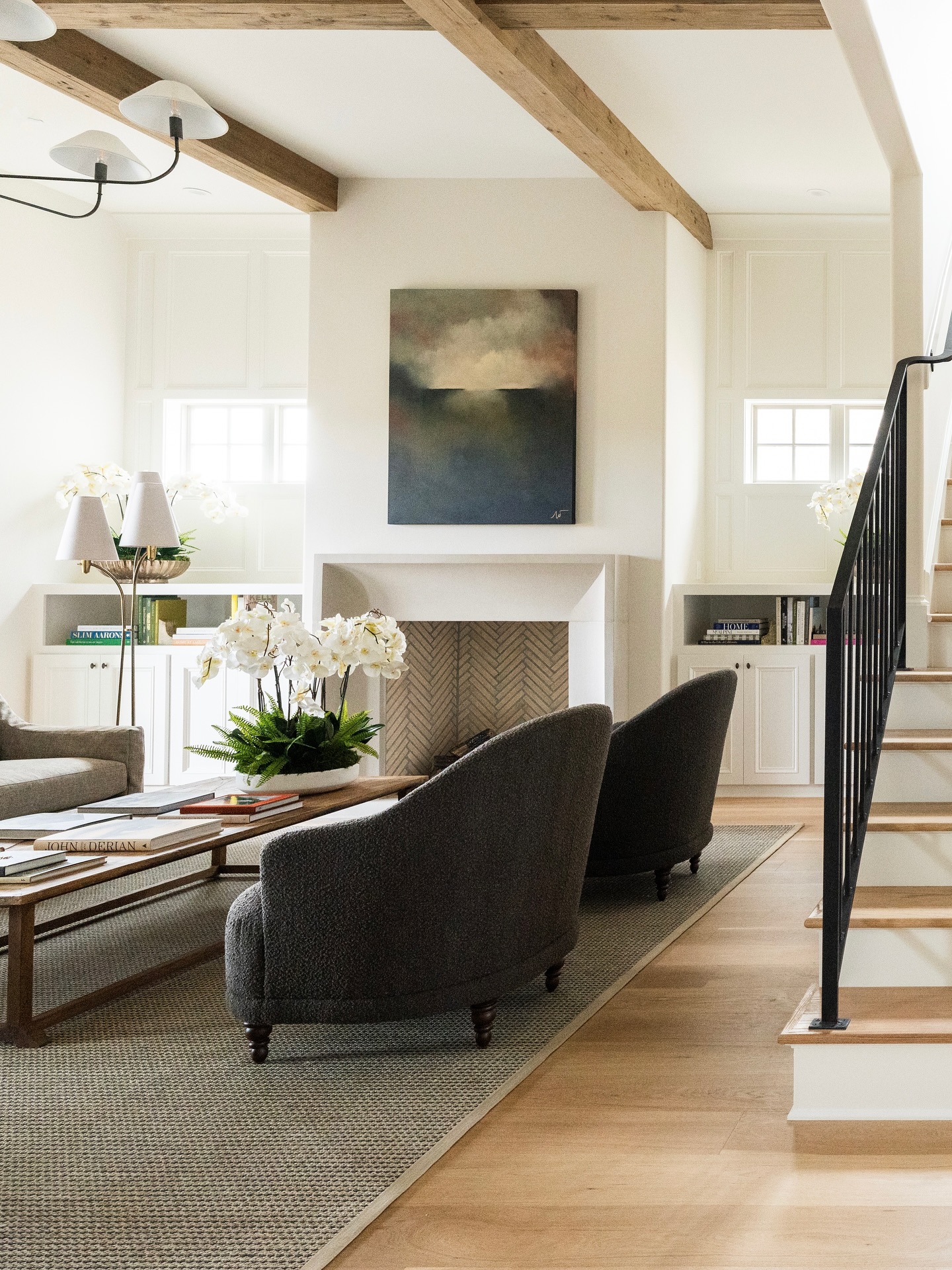
Low cabinets on either side of this fireplace keep storage close to the seating without taking over the wall. Their closed doors conceal everyday supplies, while the open shelf above gives books an accessible place.
The pale finish connects the units with the surrounding paneling, allowing dark chairs and artwork to provide contrast. For a similar arrangement, list what needs storing before deciding shelf heights or cabinet depth.
Reserve open space for objects that are used or enjoyed regularly, and put visual clutter behind doors. Measure door swings against nearby furniture so everything remains easy to reach.
Keep the cabinet tops useful rather than filling them completely; a lamp or plant can add interest while preserving room for everyday essentials.
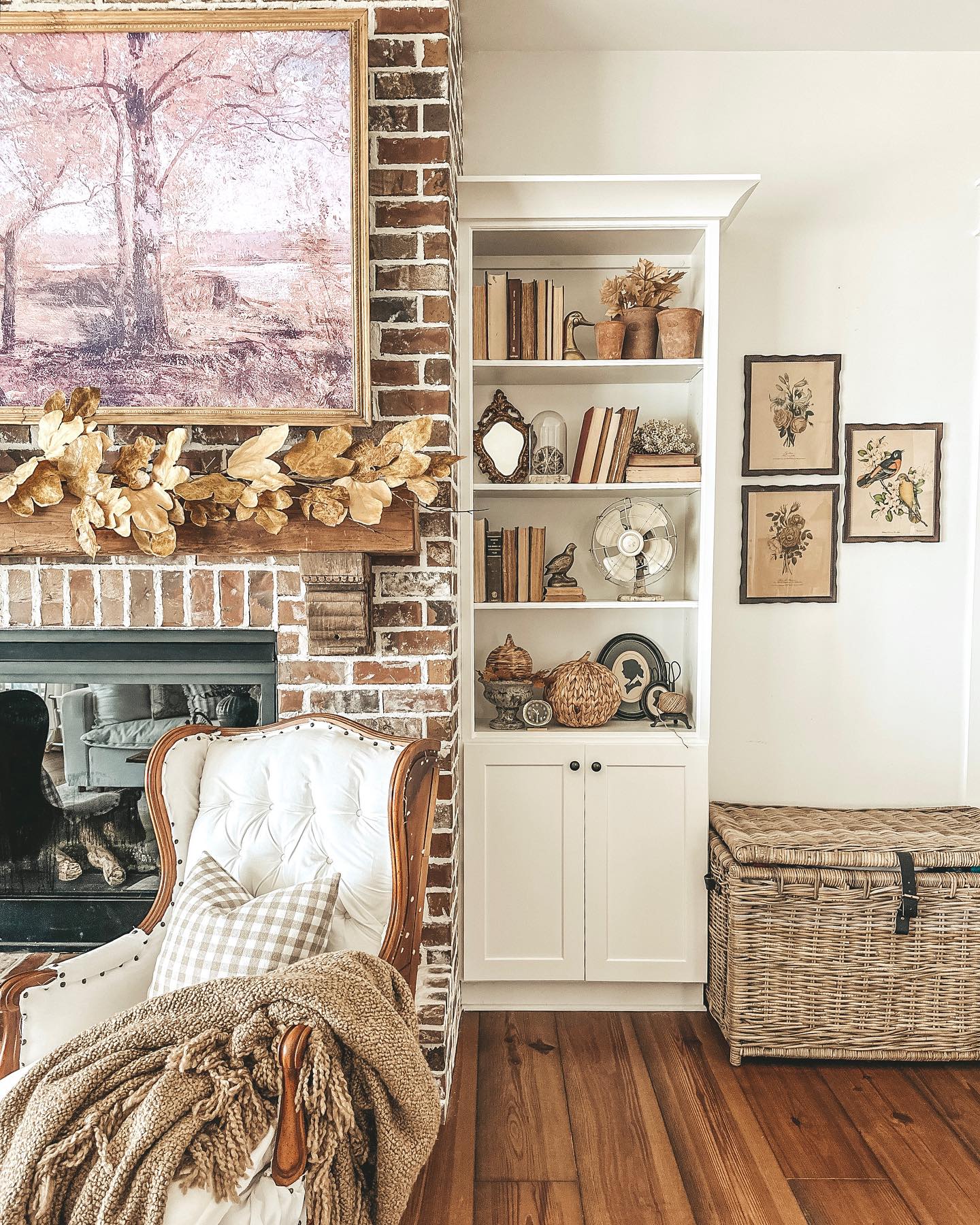
Store Blankets in a Woven Trunk
Credits: Instagram
A woven trunk introduces useful texture beside the smooth white cabinetry in this living room. Its broad lid and enclosed shape make it a practical option for spare throws that would otherwise collect across chairs.
Measure the contents before choosing a size, and check that the lid can open fully in its intended position. A fabric liner can help protect blankets from rough strands.
The warm weave relates to the wood floor and chair frame without requiring another matching furniture piece. To keep a modern farmhouse room calm, let the trunk provide character while nearby surfaces remain clear.
Avoid treating its top as permanent display space if you need frequent access, and check the lid mechanism before storing everyday items.
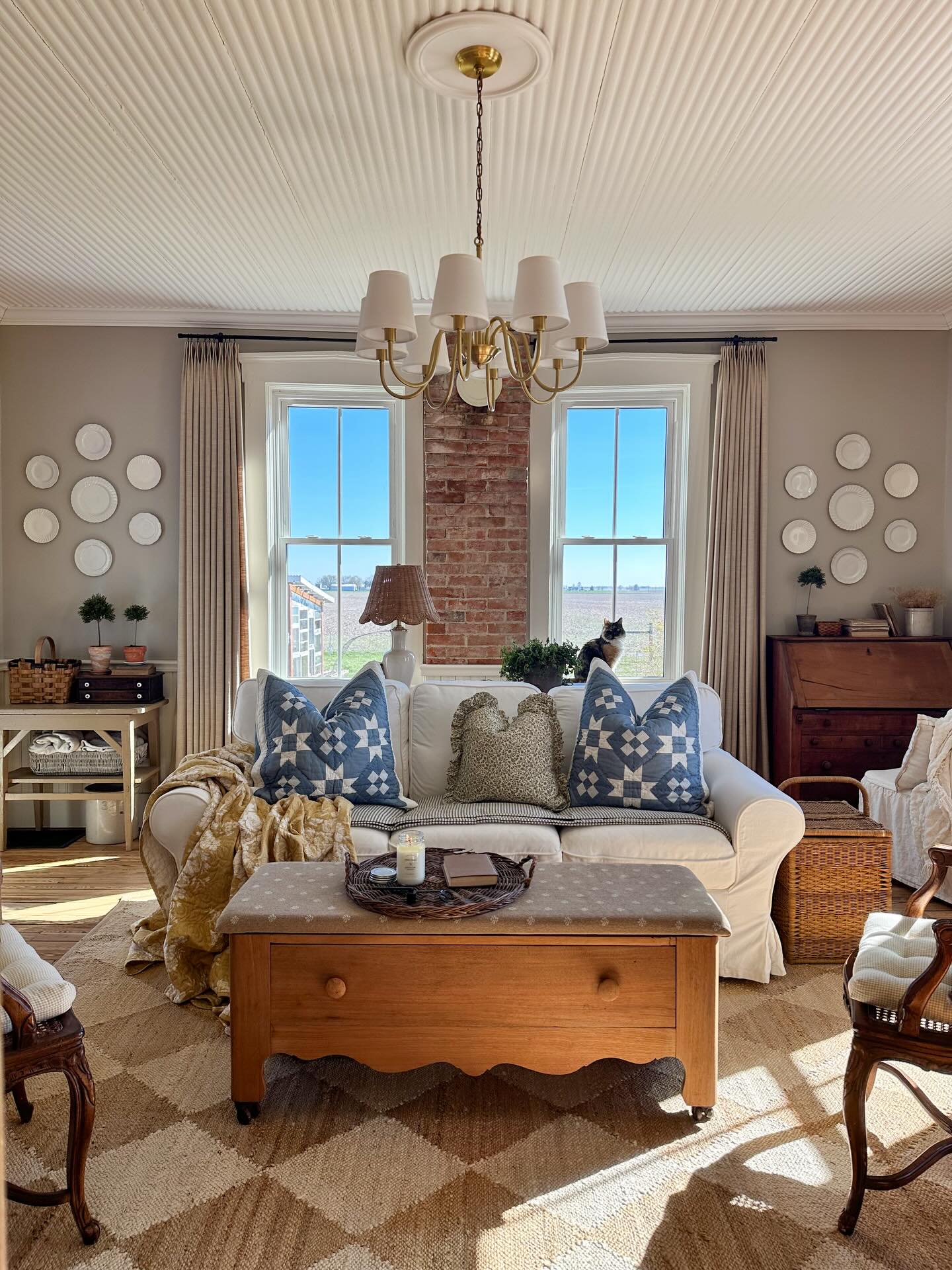
Arrange Simple White Plates as Quiet Wall Art
Credits: Instagram
White plates bring subtle shape to the walls beside this room's tall windows. Their limited color keeps the arrangement quiet, while varied rims and sizes reward a closer look.
This is a useful way to introduce farmhouse character beside straightforward upholstery and plain curtains. Lay out the plates on a table first, then use paper templates to judge spacing on the wall.
Choose secure hangers suited to each plate's weight and size. A compact grouping usually needs fewer pieces than expected; leave visible wall around it so the collection feels intentional.
Repeat the white elsewhere in a lampshade or sofa, and let nearby wood furniture supply warmth. Special plates deserve room to be noticed without competing with additional wall decorations.
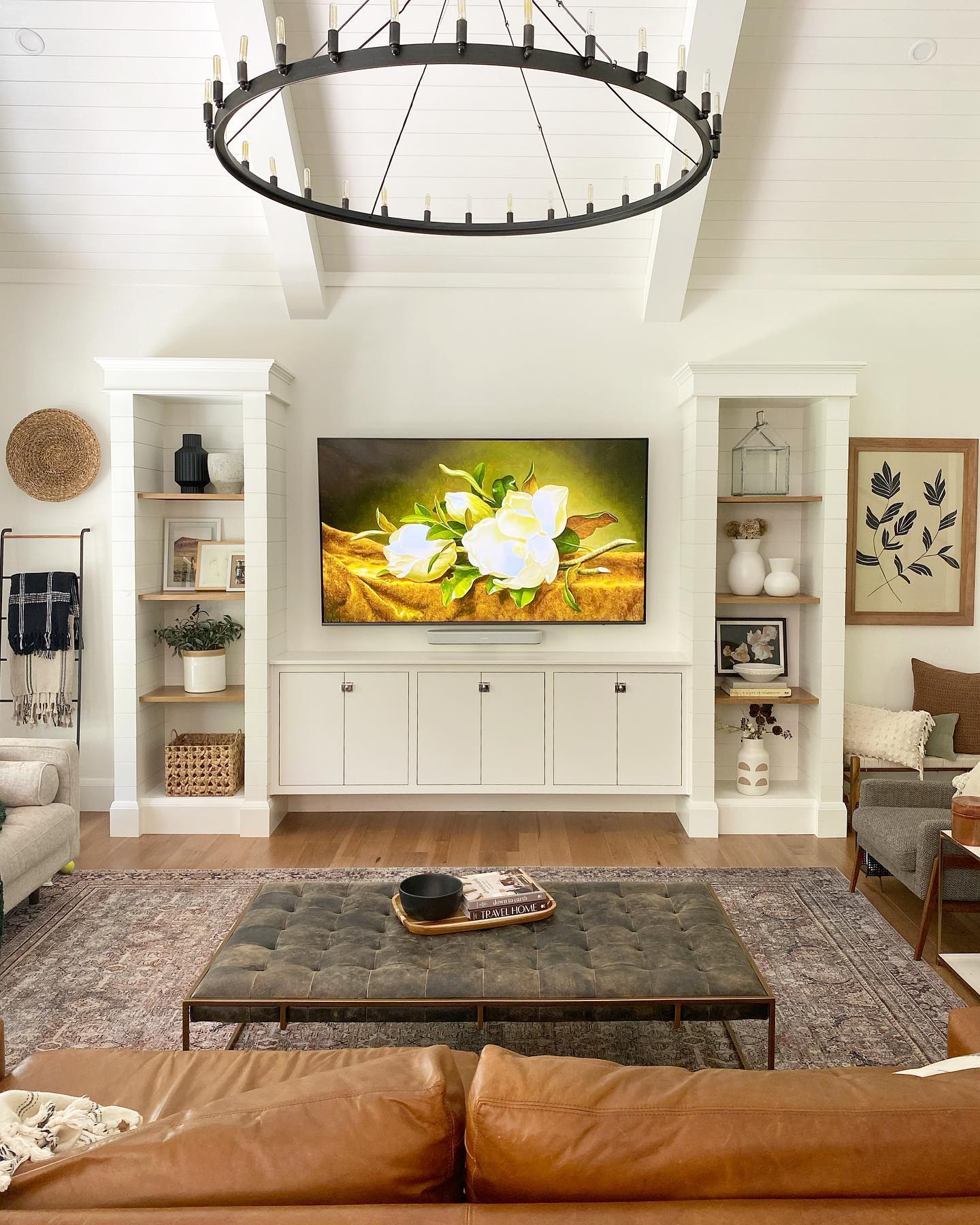
Make the Television Part of a Calm Media Wall
Credits: Instagram
A television can sit comfortably within a farmhouse room when its surroundings feel considered. Here, pale cabinetry and narrow shelving frame the screen, while a displayed floral image relates to the nearby botanical artwork.
Start with a viewing height that works from the sofa, then plan storage and cable routes around the equipment. Leave the ventilation space the manufacturer requires and keep controls easy to reach.
If the television supports displaying art, choose an image that suits the room and adjust brightness to avoid an overly luminous rectangle. Simple shelf arrangements help the screen remain part of one composition.
Wood shelves, woven accents, and softly textured seating add warmth around the technology without covering it or making use more complicated.
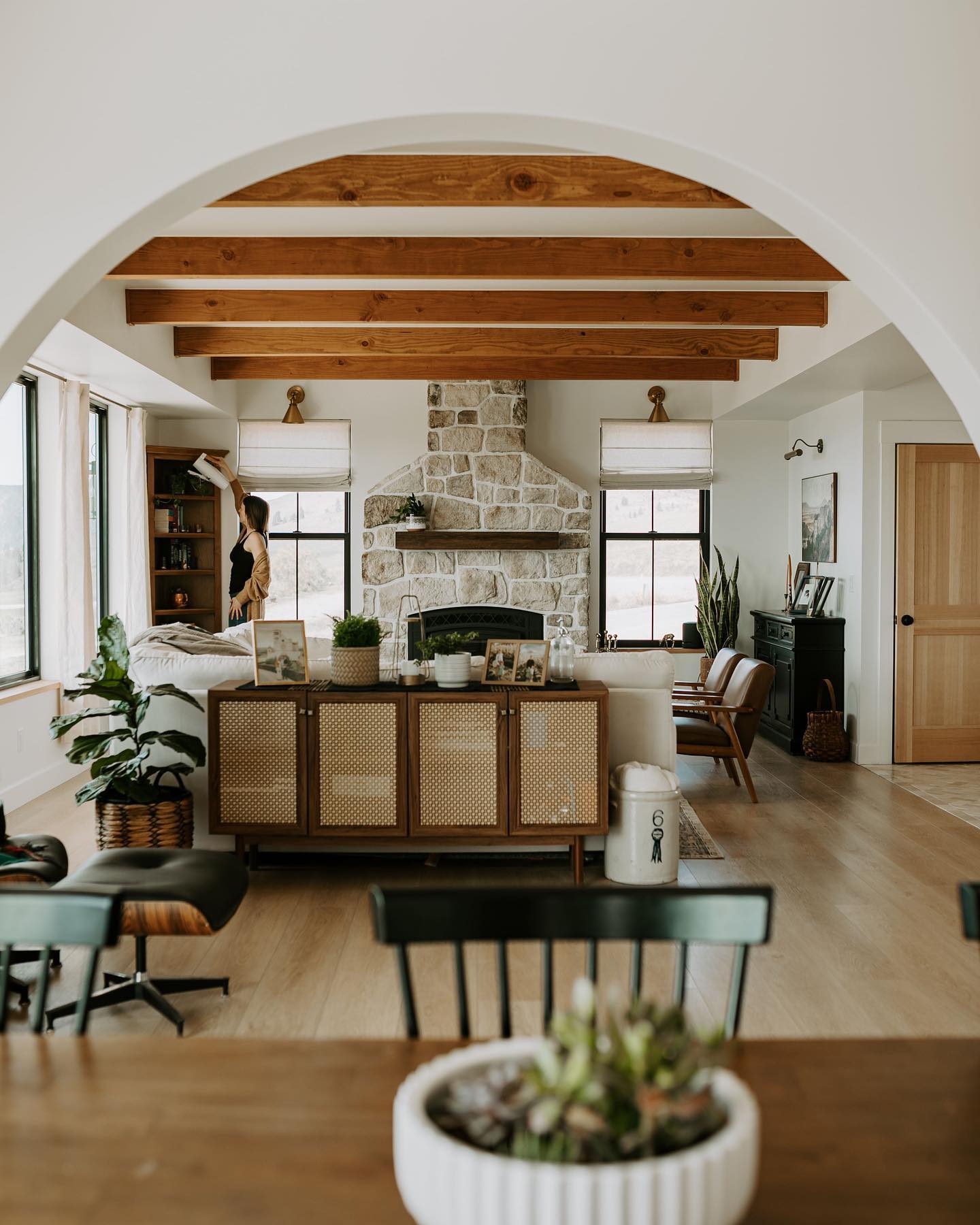
Bring Greenery into the Lightest Parts of the Room
Credits: Instagram
Green plants soften the wooden furniture and stone fireplace in this living room, connecting the seating area with its generous windows. A larger floor plant and smaller pots create variation without needing identical containers.
Choose plants for the actual light available, then group those with similar care needs where watering remains easy. Use protective saucers or waterproof liners beneath pots on wooden surfaces.
A woven basket can conceal a nursery pot while keeping the natural texture visible. For a modern farmhouse balance, combine a few leafy shapes with clean furniture lines and leave some tabletops empty.
Avoid filling every corner simply because it receives daylight. One healthy plant in a well-chosen position contributes more than several squeezed between everyday objects.