
A coastal bedroom can feel fresh without leaning on seashells or filling every surface with blue. Modern Coastal Bedroom Ideas make room for quieter cues, such as woven texture, pale walls, crisp white bedding, and a few deeper blue accents.
The right mix can also help a compact room feel open or give a plain bed wall a gentle focal point.
Consider pairing pale blue with warm wood, layering bedding patterns in different scales, or using a rope sconce to free up nightstand space. These ideas keep the look relaxed while giving each choice a clear purpose.
1. Let a Woven Bed Supply the Sandy Texture
Credits: Sarah Stewart / Life On Virginia Street
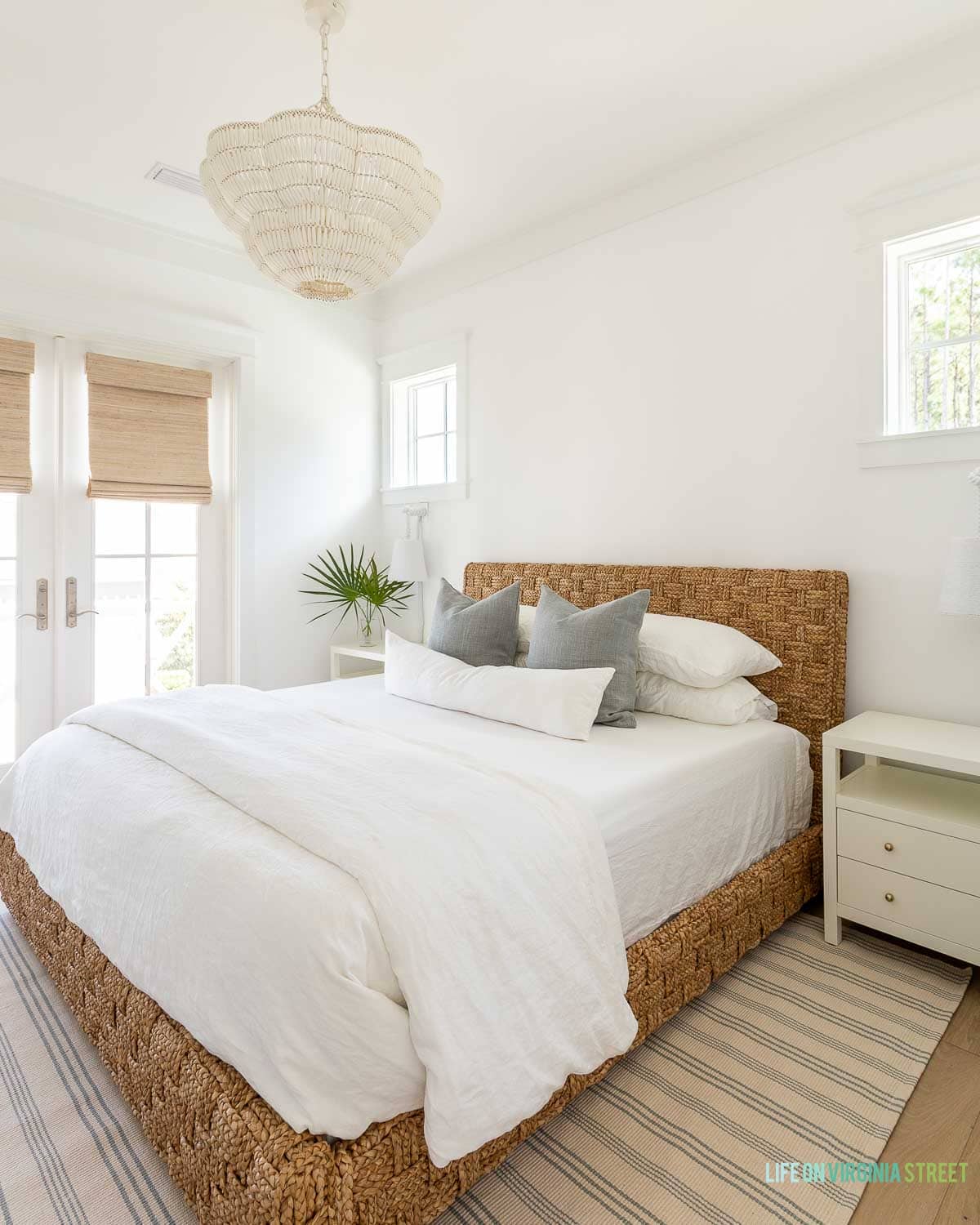
A substantial seagrass bed gives this white bedroom its sandy color and most of its texture. The headboard and low frame read as one continuous piece, while white linen keeps the center light.
Two blue gray pillows quietly introduce the water side of the palette. This combination feels contemporary because the surrounding furniture is simple and the walls remain open.
Start with the largest natural material in your own room, then decide how little else it needs. Smooth white drawers can balance an especially chunky weave.
A slender striped rug adds direction beneath the bed without another large motif. Keep bedding loose enough to soften the frame, but avoid covering every edge of the material that makes the arrangement distinctive.
2. Give Pale Blue Walls a Crisp White Center
Credits: Chelsea / Making Home Base
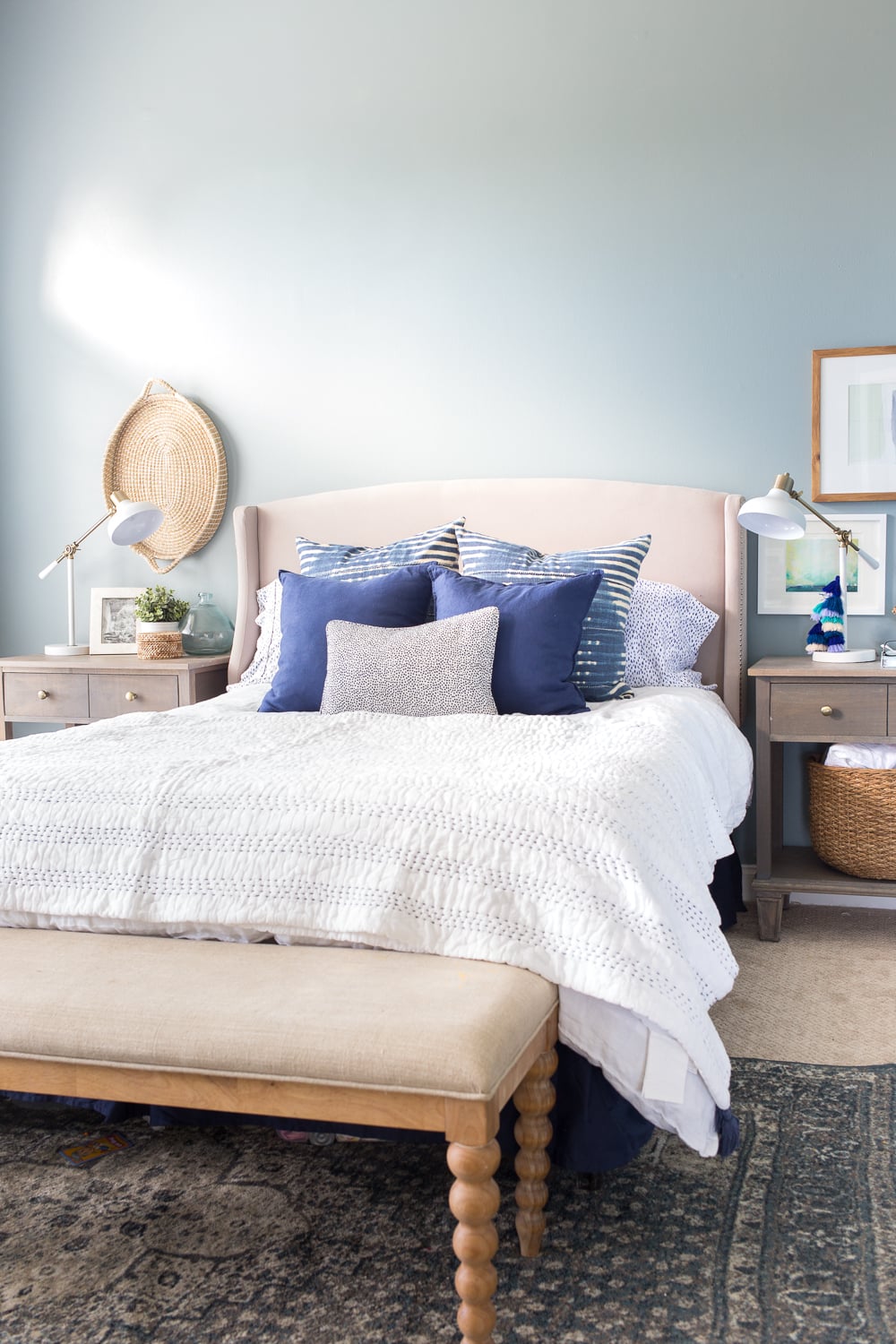
White bedding creates a clear center against the misty blue walls in this bedroom. A pale upholstered headboard keeps the contrast gentle, while darker blue pillows add enough depth to define the sleeping area.
The wooden bench and woven baskets contribute warm tones that prevent the cool colors from dominating. A modern coastal version can use this same distribution even with different furniture shapes.
Choose the wall color first, then compare it with the largest white fabric in daylight. A quilt with visible stitching gives the bed texture without introducing another print.
Keep darker blues concentrated in smaller pieces so they remain accents. One warm wood finish repeated near the bed can connect the bench, nightstands, and other practical storage.
3. Build a Coastal Room Around Soft Gray
Credits: Casey Finn / The DIY Playbook
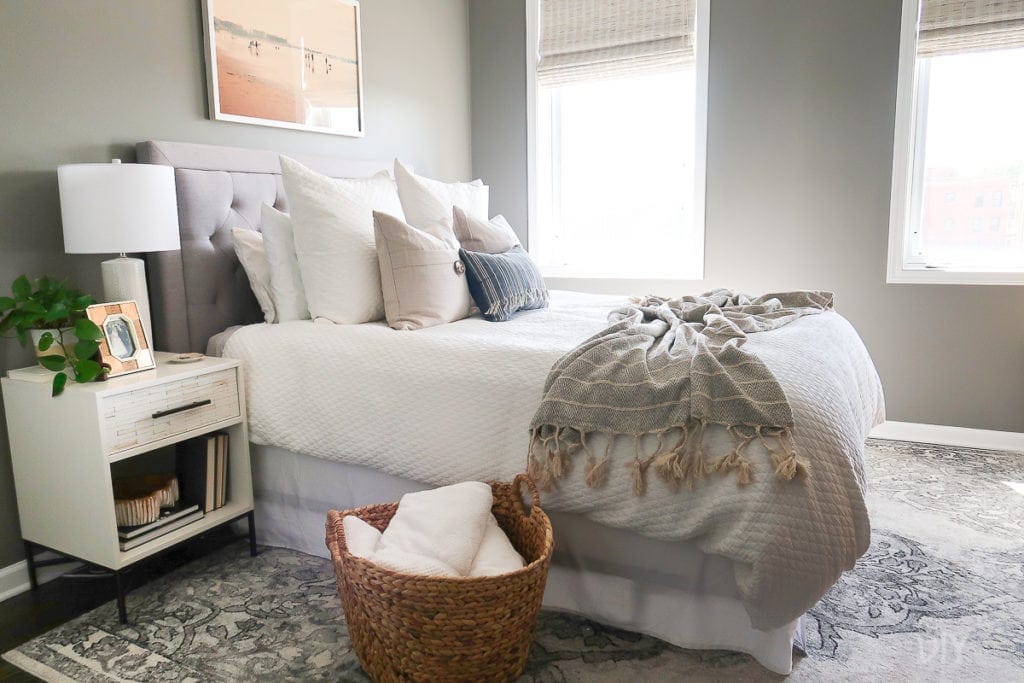
Gray walls can support a coastal bedroom when the lighter layers make the seaside reference clear. Here, white bedding, woven shades, a sandy beach photograph, and one blue pillow soften the darker backdrop.
The furniture stays compact, leaving room for daylight around the bed. Rather than replacing every gray item you own, introduce a few warm natural textures and a pale textile foundation.
A basket can hold extra bedding while contributing the color of dried grasses. Keep artwork simple enough to read across the room; a broad shoreline works especially well above a quiet headboard.
The result depends on balance, so check whether your gray feels cool or warm before choosing nearby fabrics. Small samples are useful beside existing paint.
4. Create a Blue Reading Corner With Woven Texture
Credits: Stefani / Home With Stefani
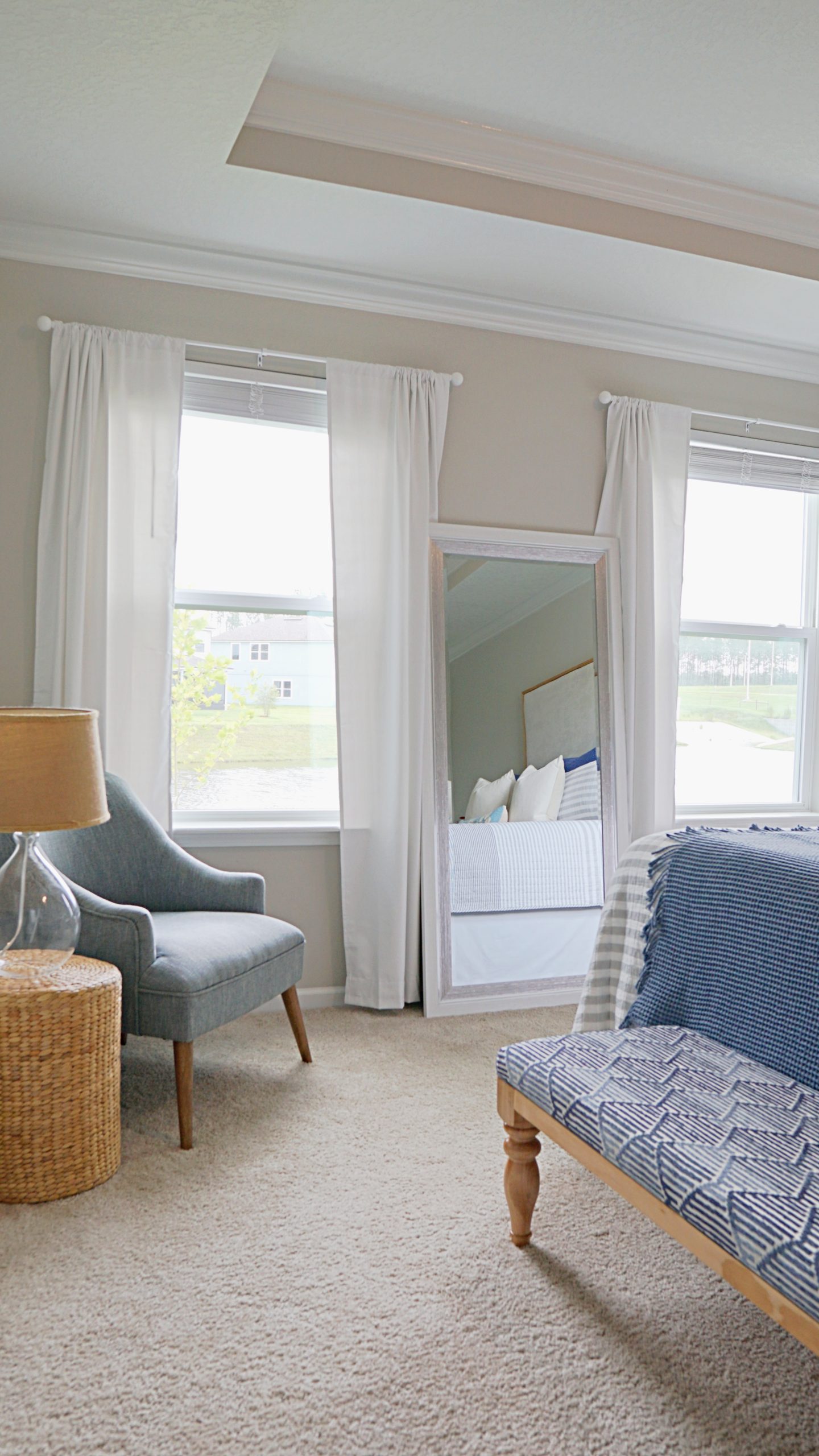
A blue chair beside the window extends this bedroom's color scheme beyond the bed. The woven cylindrical table brings warmth to the corner, and a glass lamp keeps its upper half visually light.
Long white curtains create a soft backdrop without introducing more pattern. When arranging a similar spot, begin with a chair you can actually sit in comfortably and allow space for your feet.
The table only needs enough surface for a book and a drink. Repeat one color from the bedding so the corner feels connected to the rest of the room.
A lamp with a plain shade will usually sit quietly among these textures. Leave the route to the window clear before deciding where the chair belongs.
5. Choose a Rope Sconce for a Clear Nightstand

Credits: Sarah Stewart / Life On Virginia Street
A white rope sconce brings a nautical material into this bedroom with a simple, contemporary shape. Its tapered shade hangs beside the woven headboard, leaving the small white nightstand available below.
Fan shaped leaves supply a green accent against the otherwise pale corner. This is a useful arrangement when a table lamp would consume too much of the bedside surface.
Choose the fixture for its light output and reach as well as its texture. Mount it where the shade will not interfere with sitting upright or leaning toward the table.
A matching white finish helps the cord and support blend into the wall. Keep other rope accessories limited so this single detail can establish the coastal reference on its own.
6. Vary the Scale of Blue Bedding Patterns
Credits: Chelsea / Making Home Base
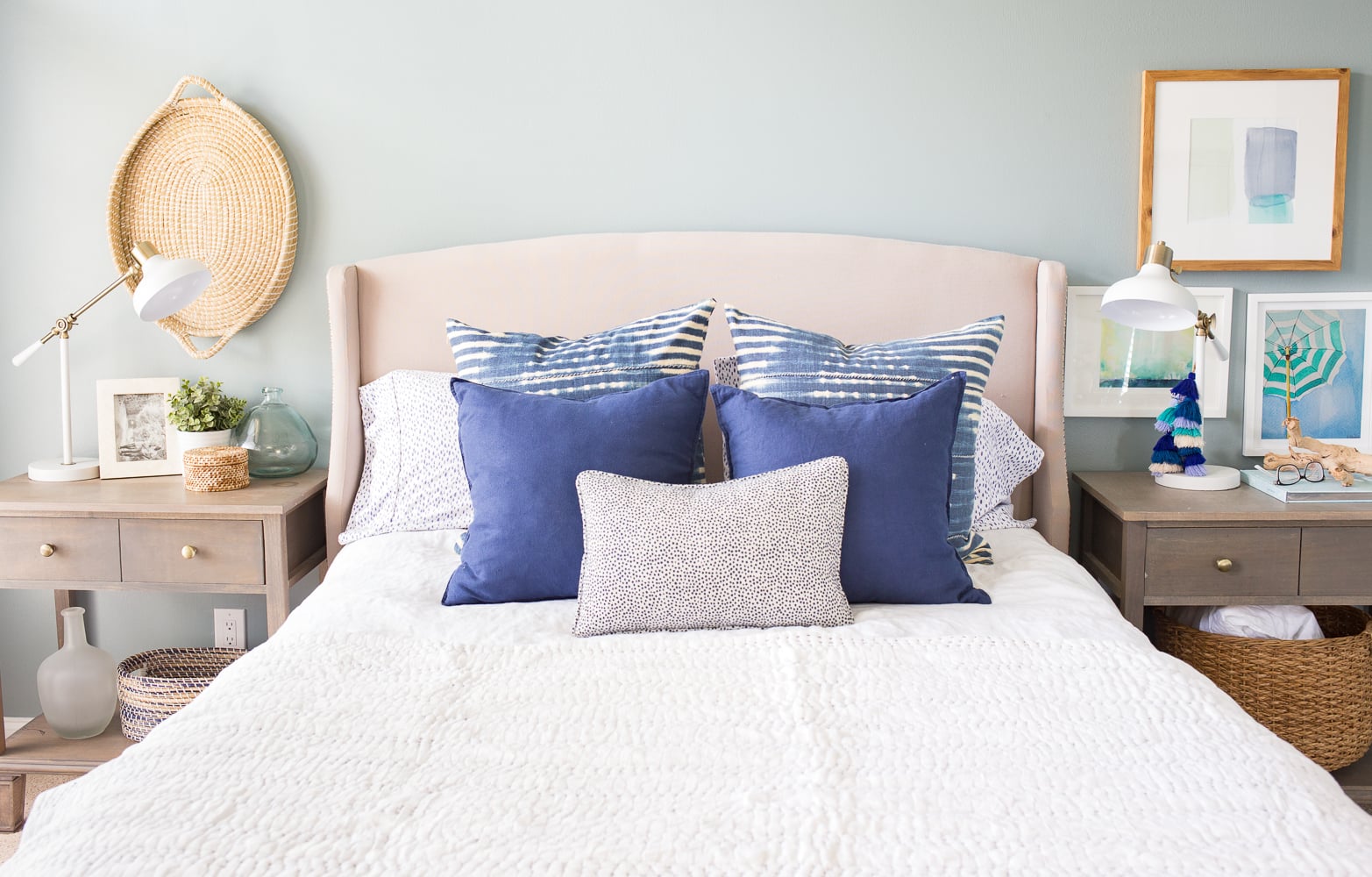
Broad blue stripes sit behind solid navy cushions and a smaller dotted pillow in this layered bed. The patterns share a limited palette, so their different scales supply variety without pulling the room in several directions.
White quilting provides a quiet foreground, and the pale headboard gives every pillow a clear outline. For your own mix, choose one larger pattern, one smaller pattern, and one solid before adding anything else.
Arrange the strongest color near the center if you want a more compact focal point. The woven tray on the wall and weathered wood nightstands add coastal warmth outside the bedding.
Keep those surrounding materials uncomplicated, allowing the fabric combinations to remain the room's most detailed feature from the doorway.
7. Paint a Soft Ocean Horizon Behind the Bed
Credits: Clare Bolger / No Space Like Home
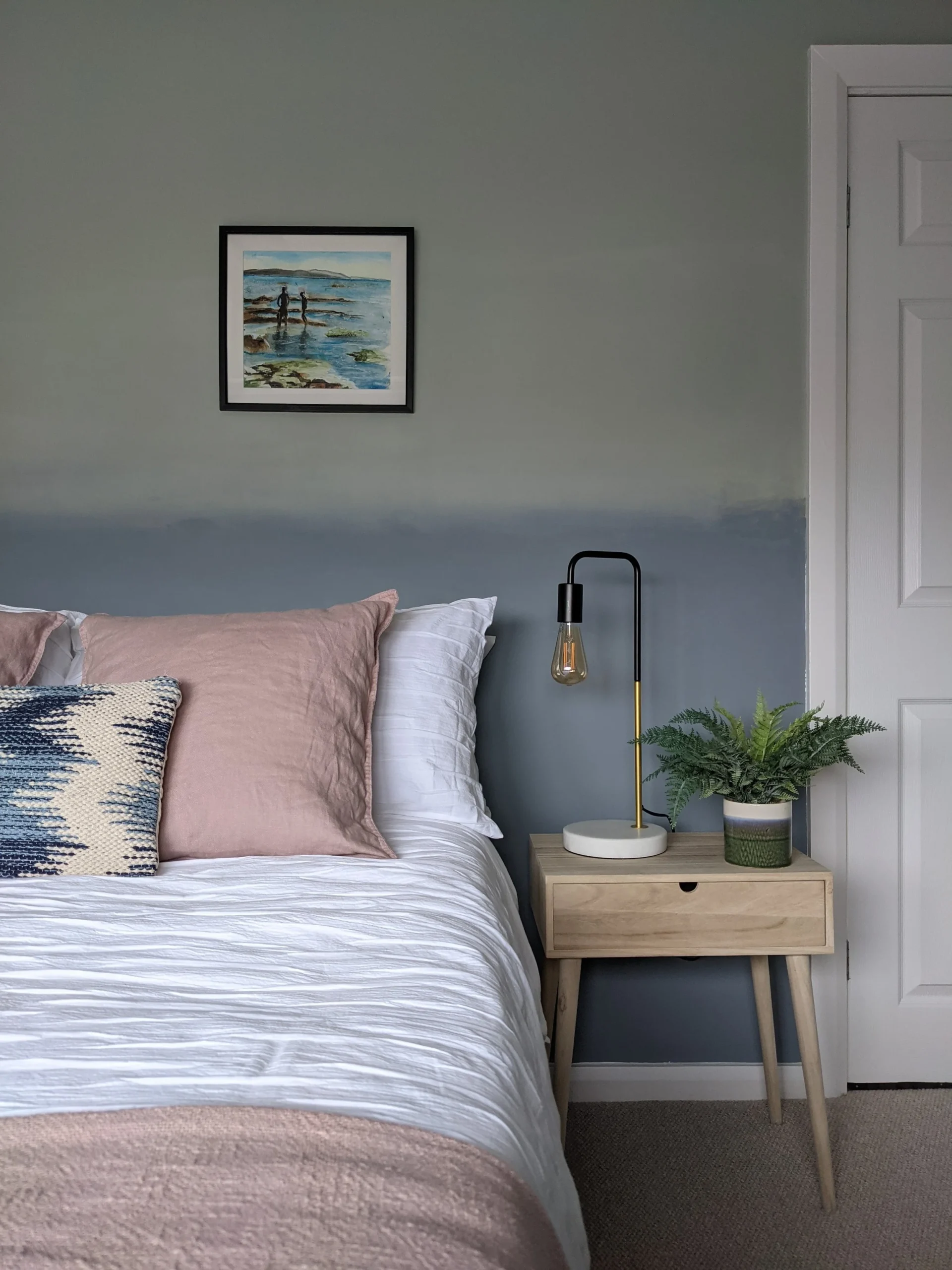
An irregular boundary between blue and pale green gives this wall the softness of a distant ocean horizon. A shoreline painting repeats the idea above the pillows, while the light wood nightstand keeps the bedside corner simple.
White linens brighten the lower half, and dusty pink cushions add a restrained warm note. To try this effect, practice the transition on a large board before committing to the bedroom wall.
A gentle overlap will feel different from a sharply divided stripe. Keep the paint colors close enough in intensity that neither overwhelms the bed.
A slim lamp and a single plant leave the wall visible. This approach can bring coastal atmosphere into a room without adding a collection of themed objects.
8. Make a Striped Lumbar Pillow the Blue Accent

Credits: Casey Finn / The DIY Playbook
One blue striped pillow can give a pale bed a clear coastal direction. This close view shows how the woven stripes and loose fringe add texture against smoother cream cushions.
The larger pillows' wood toned buttons introduce a warm detail without another colored fabric. Because the blue is concentrated in a small area, the arrangement stays easy to adapt when the room changes.
Try a rectangular accent in front of two plain pillows rather than stacking several competing designs. Let its width relate to the bed so it does not disappear among the larger layers.
Inspect the fabric texture up close before choosing it. A simple striped cover can provide enough pattern when the surrounding bedding already has visible stitching.
9. Keep a Coastal Guest Room Open With a Luggage Rack
Credits: Sarah Stewart / Life On Virginia Street
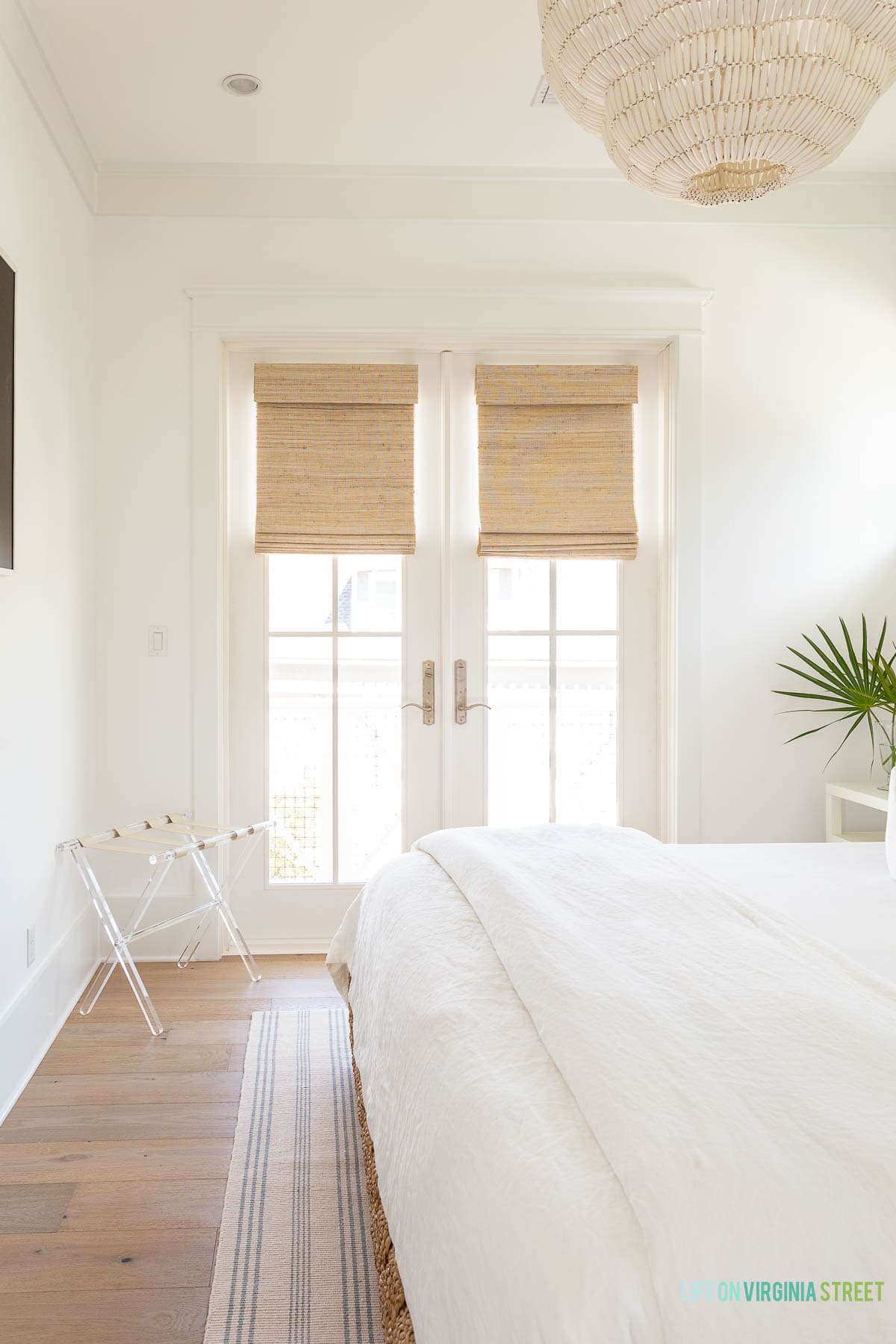
A clear folding luggage rack supplies a useful landing place without adding another heavy cabinet to this bright guest bedroom.
Its light straps relate to the white bedding, while the nearby woven shades and pale wood floor establish the coastal palette. The open wall around it helps the compact room feel orderly.
If visitors need somewhere for a suitcase, measure that space before adding decorative furniture. A rack can be stored away between stays, provided the chosen model folds and has an appropriate weight rating.
Keep it away from the door swing and walking route. The photograph also shows how simple window coverings let warm texture enter at eye level, so the practical corner remains part of the room's design.
10. Arrange Small Coastal Art Beside the Headboard
Credits: Chelsea / Making Home Base
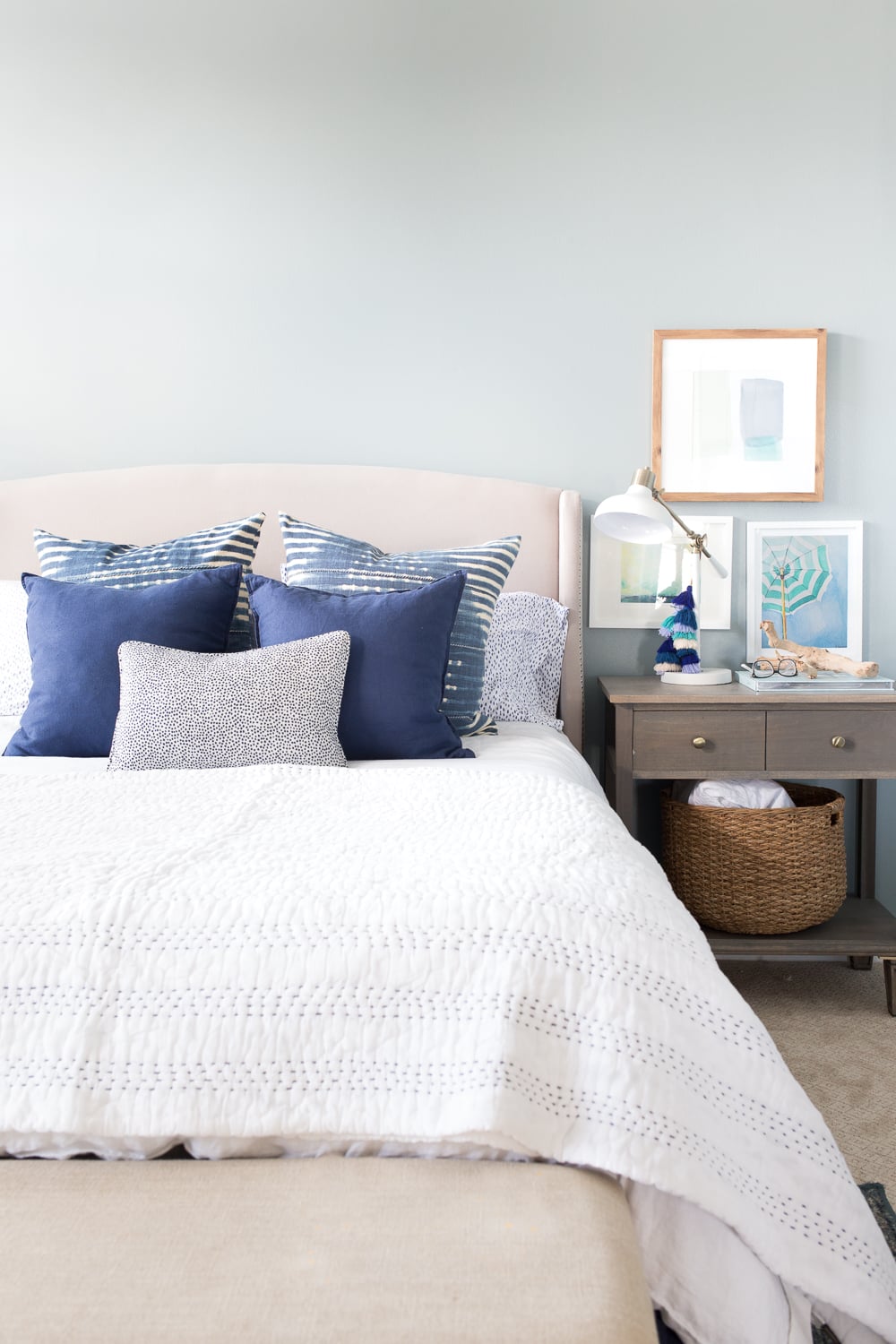
Three small pictures gather above the right nightstand instead of stretching across the bed wall. Their blue and green tones connect with the pillows, while white mats and a wood frame give each image room to breathe.
The off center grouping keeps this otherwise balanced bedroom from feeling overly formal. To use the idea, outline a compact arrangement on the floor before making holes.
Let the nightstand and headboard establish its boundaries rather than spreading frames into every available gap. A beach umbrella image can sit beside an abstract wash when their colors relate.
Keep the tabletop objects lower than the main artwork so the two arrangements remain readable. The generous blank wall above the bed is doing useful work.
11 Relax Crisp Timber Furniture With Blue Linen
Credits: Instagram
Instagram photograph | Selected slide 1
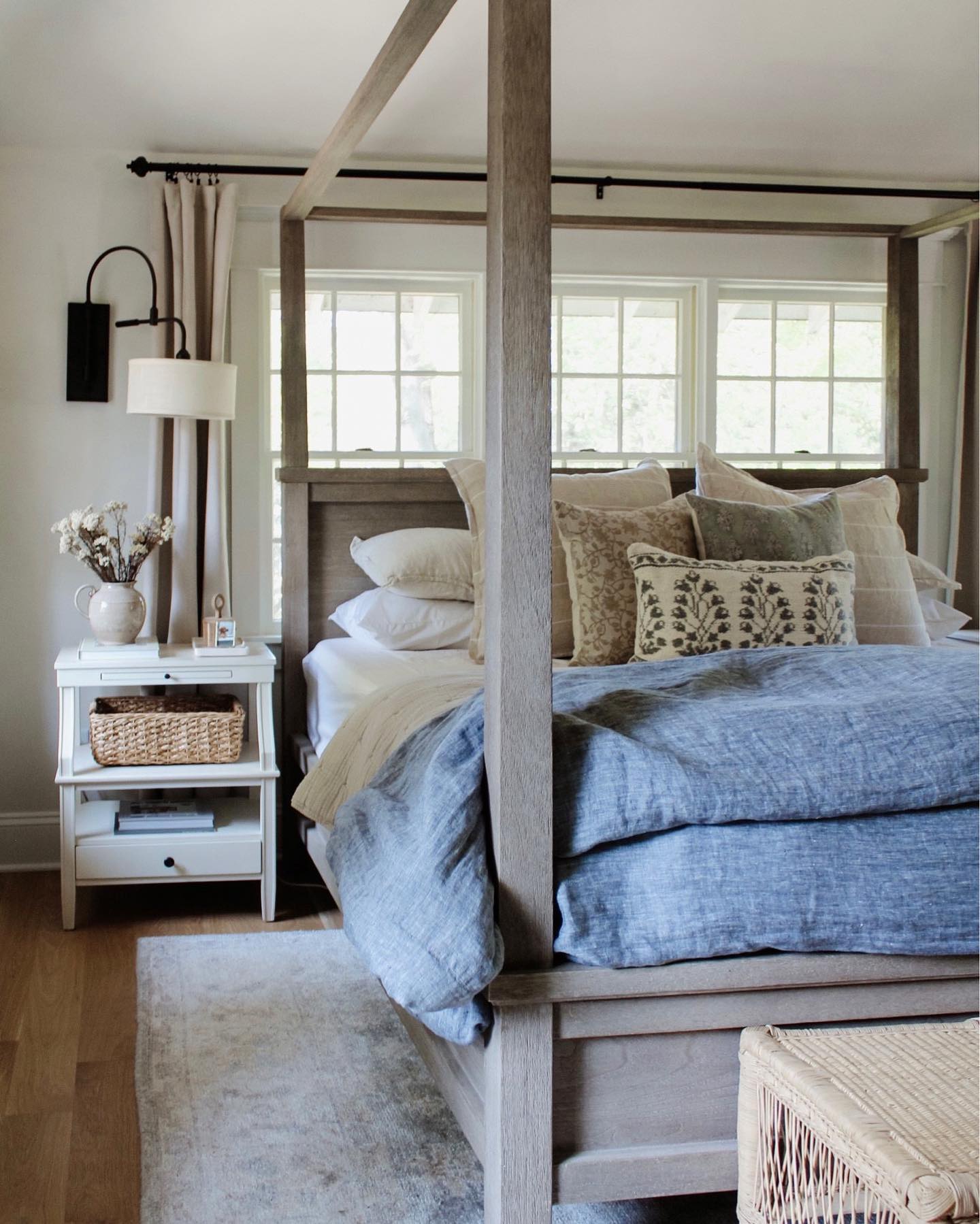
Rumpled blue linen loosens the straight lines of the timber bed in this layered coastal bedroom. White sheets and pale pillows keep the blue from feeling heavy, while the small floral cushion adds detail at a different scale.
The bedside shelving, curtain panels, and woven bench stay within a quiet neutral range. Rather than chasing perfectly flat bedding, this approach lets the fabric's folds contribute to the room's relaxed appearance.
Choose one substantial blue layer, then vary the lighter pieces around it so the bed does not read as a solid block. If your furniture is already visually strong, limit additional patterns.
A restrained mix of stripes and one smaller motif can provide interest without competing with the wood frame.
12. Use a Warm Beach Photograph as the Main Artwork
Credits: Casey Finn / The DIY Playbook
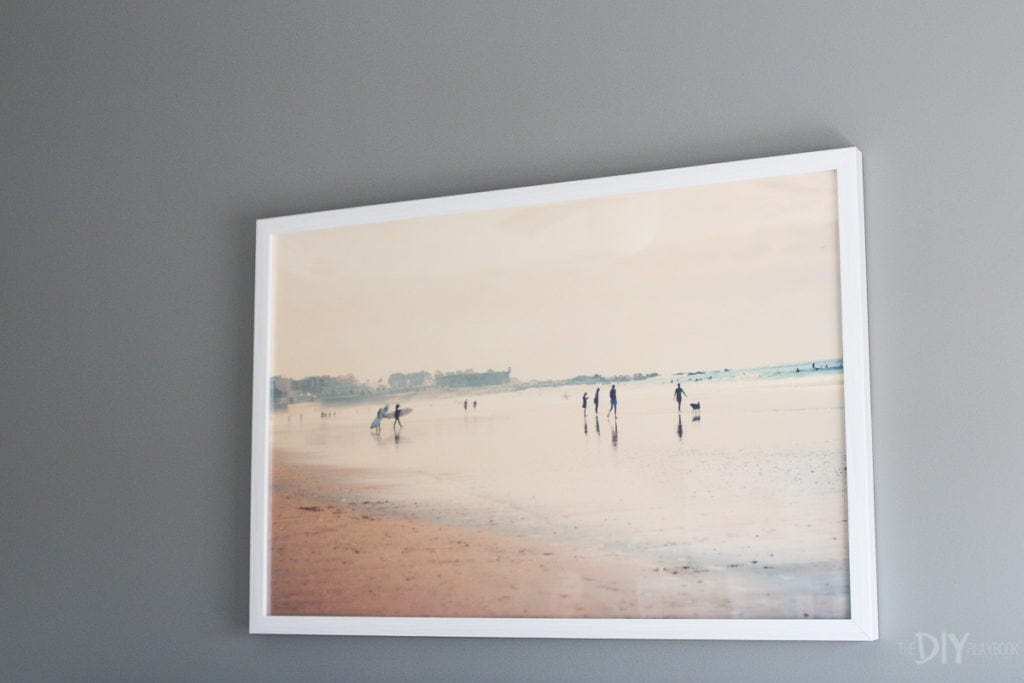
Soft peach sand and a hazy horizon make this beach photograph a warm focal point against the gray wall. Its horizontal format offers a calm counterpoint to the vertical figures scattered along the shoreline.
A slim white frame keeps the presentation clean and links naturally with pale bedding elsewhere in the room. For a modern coastal bedroom, consider the picture's overall colors before choosing a subject solely because it includes water.
A quiet image can establish the theme without additional shells or nautical ornaments. Check its size against the bed from the opposite wall.
Leave enough surrounding space that the horizon remains easy to notice. Secure the frame appropriately, especially when it will hang above a sleeping area or headboard.
13. Anchor a Pale Blue Room With a Navy Dresser
Credits: Chelsea / Making Home Base
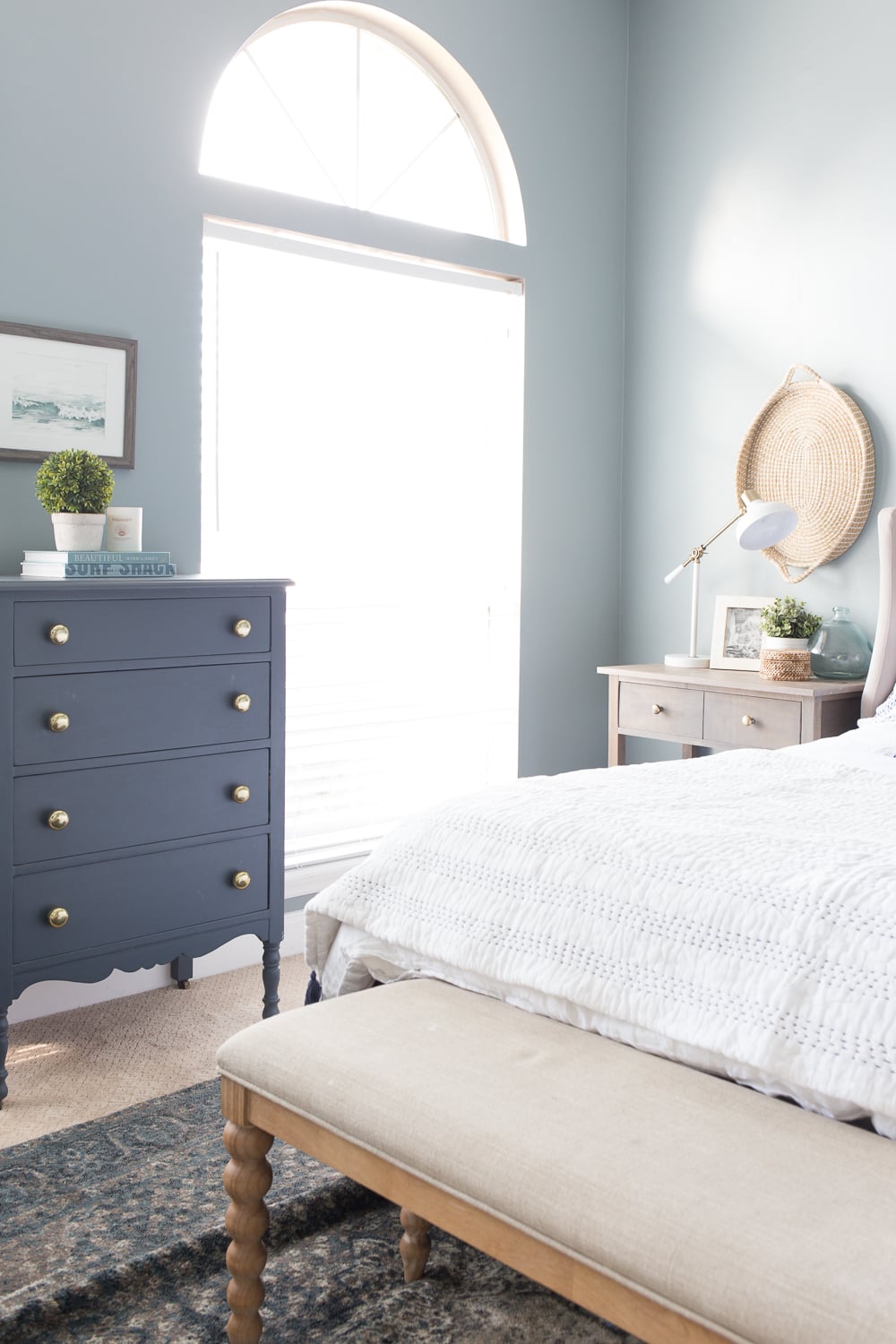
The dark navy dresser gives this pale bedroom a grounded edge without changing its airy character. Brass colored knobs punctuate the flat drawer fronts, and the white bedding nearby keeps the darker furniture from taking over.
A seascape above the dresser reinforces the coastal setting. This is a practical option if you already own a storage piece that needs to work with lighter surroundings.
Let one dark element lead, then repeat its color more softly in a rug or cushion. The natural wood bench supplies warmth between the blues.
Before repainting furniture, test the shade beside your wall color and existing hardware. Leave the dresser top mostly open so its strong silhouette remains clear rather than becoming another display shelf.
14. Keep the Space Beneath a High Window Simple
Credits: Sarah Stewart / Life On Virginia Street
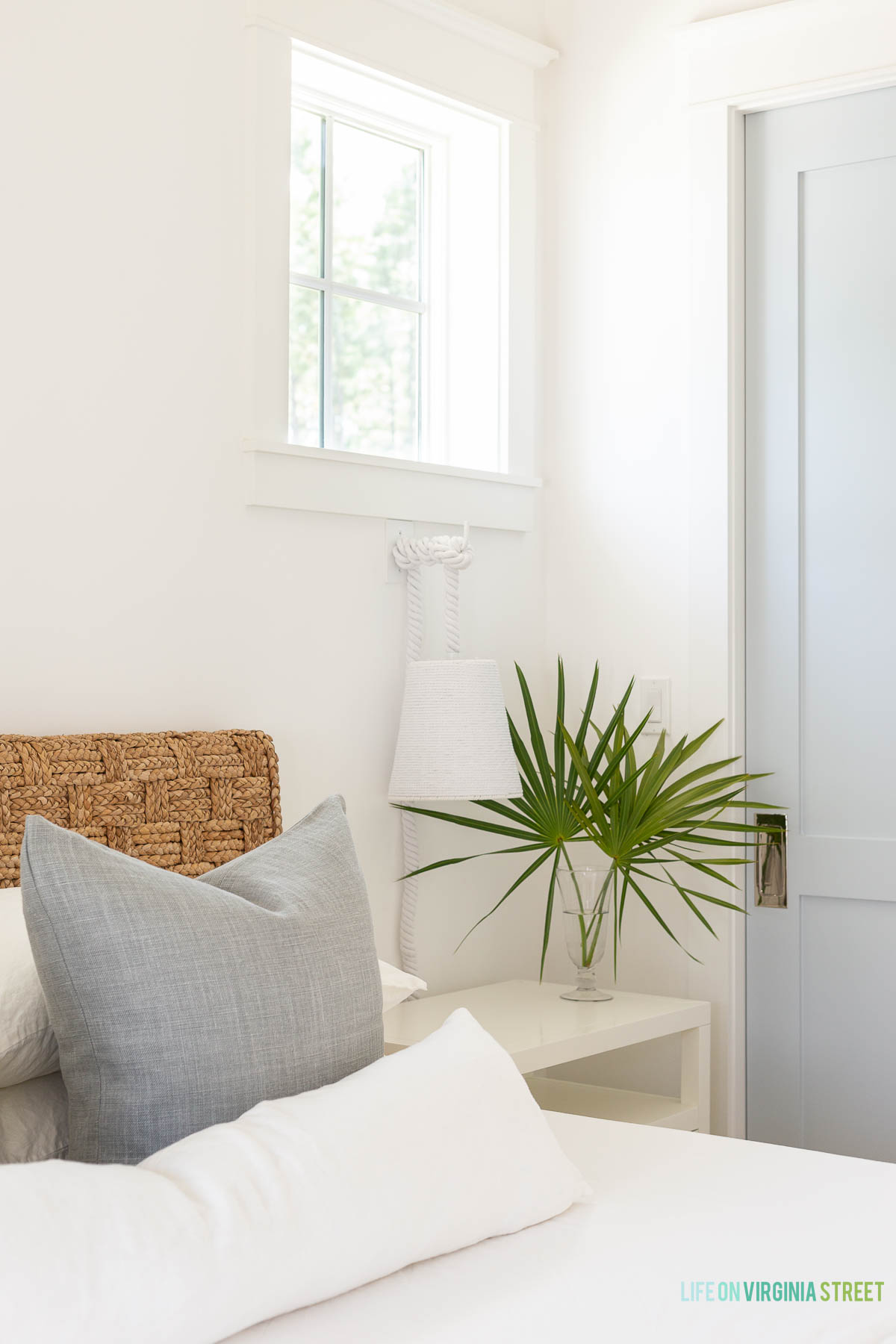
A high square window leaves a strip of wall for a compact bedside light in this coastal bedroom. Below it, white furniture blends into the wall while the woven headboard supplies a strong natural texture.
The adjacent pale blue door repeats the cool note in the pillows. This corner demonstrates how a small number of materials can connect several architectural features.
When working with existing windows, place furniture around their actual dimensions instead of trying to force perfect symmetry. Consider privacy and morning light separately before choosing coverings.
A small vase of broad leaves can add movement without filling the entire sill or table. Keep the area around the light open enough for its shade and control to remain accessible.
15 Finish Navy Paneling With a Picture Ledge
Credits: Instagram
Instagram photograph | Selected slide 1
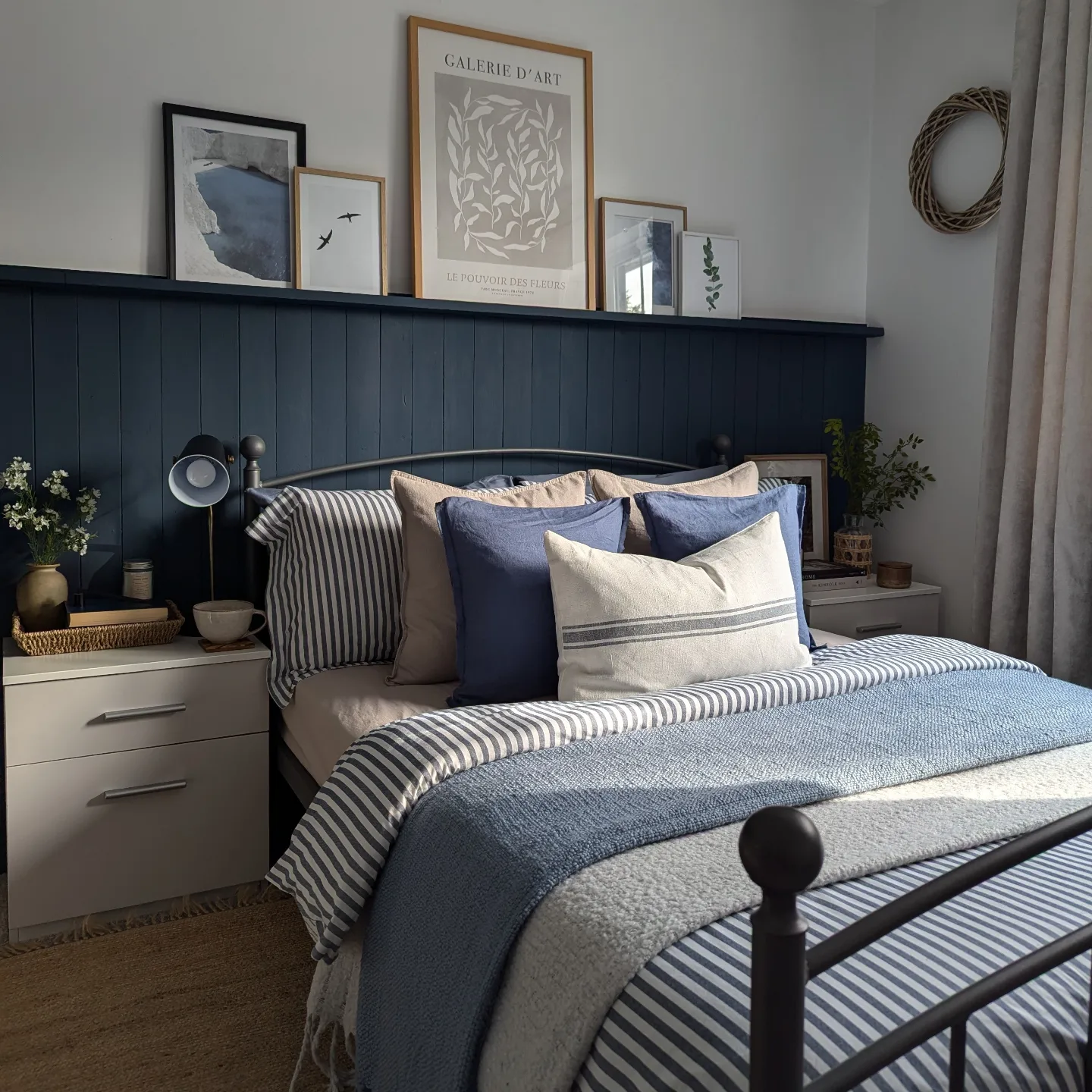
Several framed prints rest along one continuous ledge above the navy wall paneling. Their shared baseline keeps the collection organized even though the frames vary in size and finish.
Pale upper walls prevent the dark blue from filling the room, while striped bedding repeats its color in a lighter rhythm.
This is a practical way to connect artwork with an architectural feature rather than scattering frames across unused wall space. Start with a small selection whose colors relate to the bedding, then adjust the spacing before adding more.
Make sure the ledge and any leaning pieces are secured appropriately, particularly above the bed. The photograph's mix of shoreline, birds, and botanical imagery feels coastal without requiring every print to match.
16. Reflect Blue Bedding in a Tall Pale Mirror
Credits: Stefani / Home With Stefani
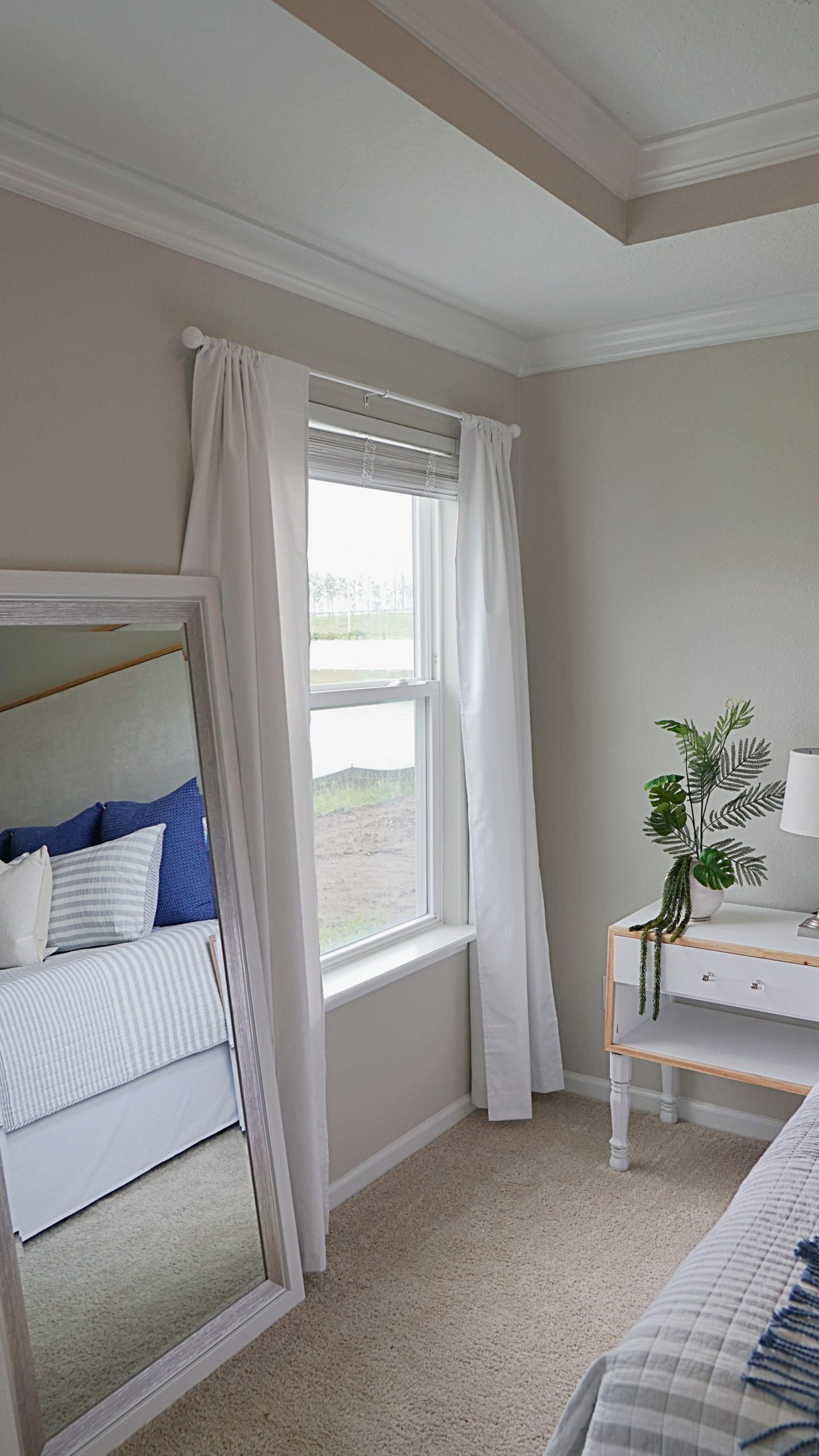
A tall mirror repeats the striped bedding and blue pillows from the opposite side of this room. Its pale frame sits comfortably beside white curtains, creating a lighter transition between the window and the bed.
The reflection brings the coastal colors into a corner that otherwise contains neutral surfaces. Before positioning a mirror, check what it will show from the doorway and from where you usually sit.
A calm view of bedding or a window is easier to live with than an exposed storage area. Choose the frame in relation to nearby furniture rather than as a separate decorative statement.
If using a leaning style, secure it as the manufacturer directs. Keep enough floor space around it for comfortable movement.
17. Mix a Modern Task Lamp With Beach Art
Credits: Chelsea / Making Home Base
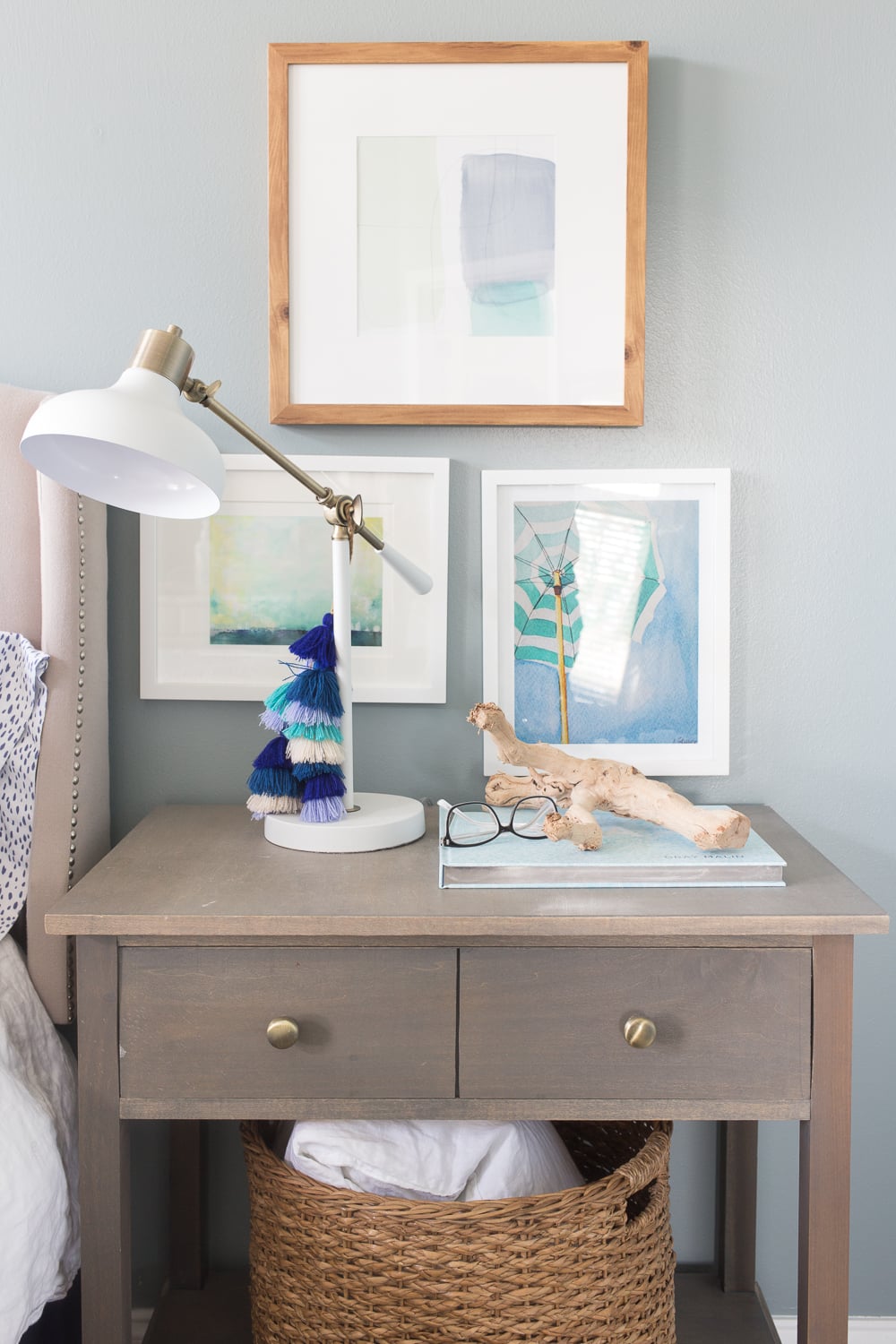
An adjustable white lamp gives this bedside arrangement a crisp outline among softer coastal colors. Its slender metal arm crosses a grouping of blue and green artwork, while the driftwood shaped accent introduces a natural form below.
The pale wood nightstand and woven basket keep the materials warm. This combination works because the light does not need to look nautical to belong in the room.
Choose a lamp that directs light where you read, then connect it to the palette through its finish. Keep decorative pieces away from the area you use for a glass or phone.
A limited art grouping can provide the seaside reference. Check that the shade clears nearby frames when you adjust its position each evening.
18. Lighten Bedside Storage With Slender Dark Legs
Credits: Casey Finn / The DIY Playbook
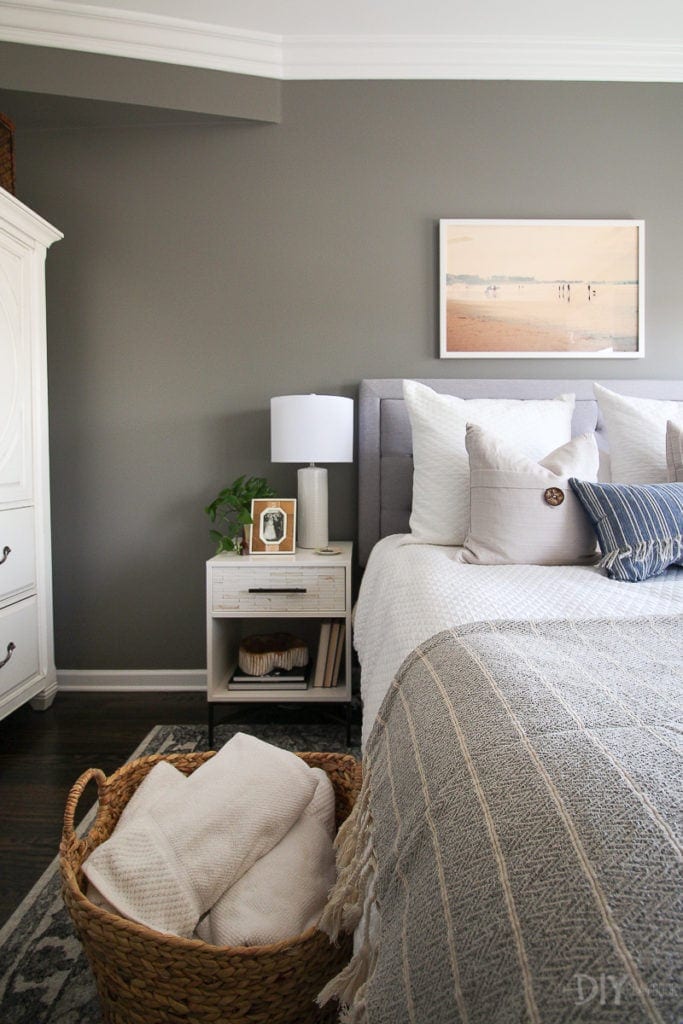
The pale nightstand rises on a dark frame, giving the storage corner a lighter outline than a solid cabinet would. Its open lower shelf keeps books visible, while the drawer offers a place for smaller items.
White bedding and a sandy shoreline picture soften the gray wall behind it. In a contemporary coastal room, a little dark metal can define furniture without interrupting the pale palette.
Repeat that dark note sparingly, perhaps in one frame or handle. Check the table height against the mattress so objects remain within easy reach.
A woven basket nearby introduces a different kind of storage and a warmer texture. Leave the shelf partly open if you want the legs and simple structure to remain noticeable.
19. Build a Small Coastal Display Around a Seascape
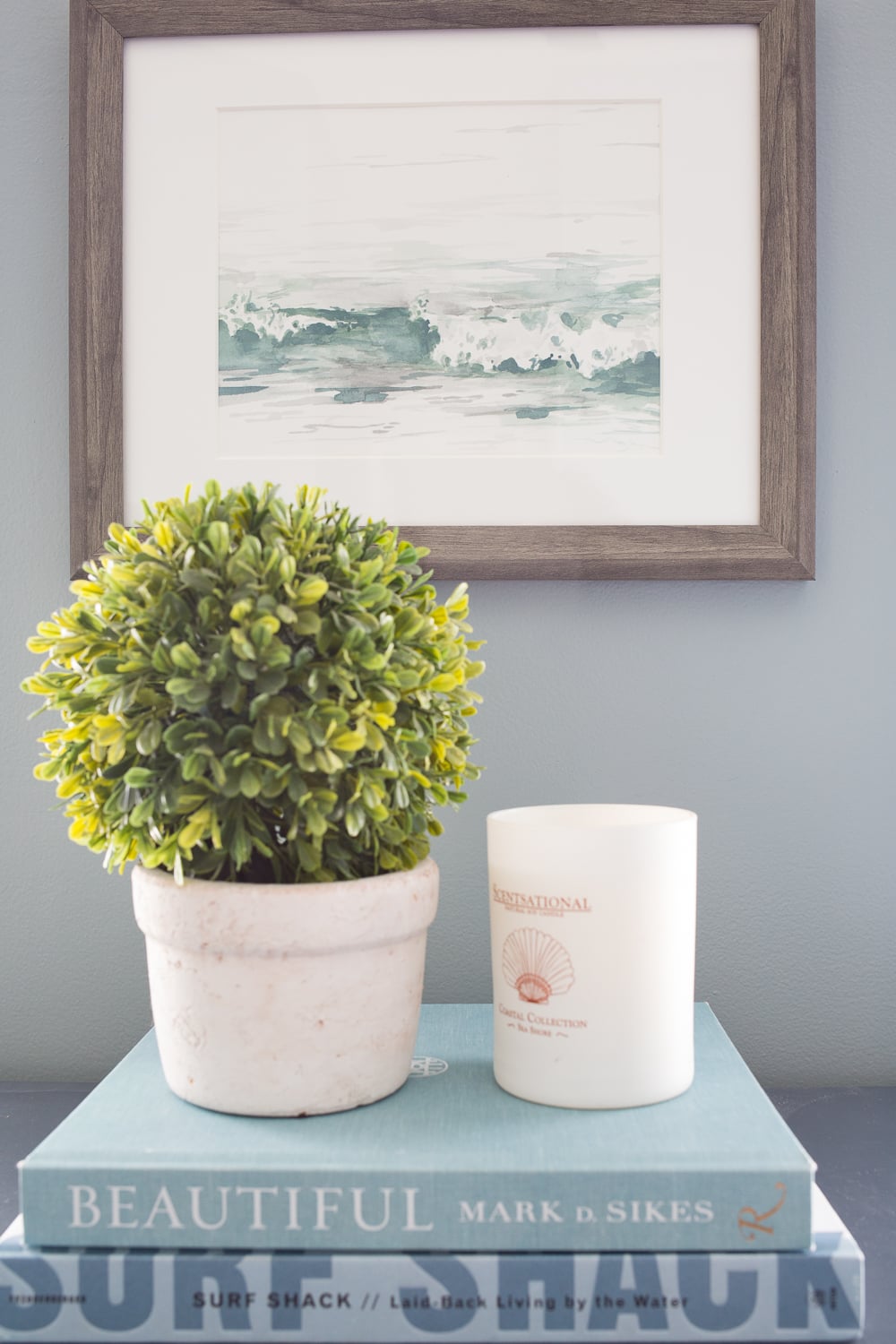
Credits: Chelsea / Making Home Base
A painted wave provides the main coastal cue above this dresser display. Below it, a rounded plant, a candle vessel, and two blue books form a group with different heights.
The weathered frame and light pot keep the textures relaxed, while the limited colors help the arrangement stay clear. You can use this structure on a dresser or small bedroom console without covering the surface.
Begin with one picture, then choose only a few objects that relate to its colors. Give the taller object some breathing room rather than lining everything up evenly.
If a candle is used, follow its safety instructions and move it away from plants or books before lighting. Decorative placement alone does not establish safe use.
20. Repeat Fine Blue Stripes Beneath White Bedding
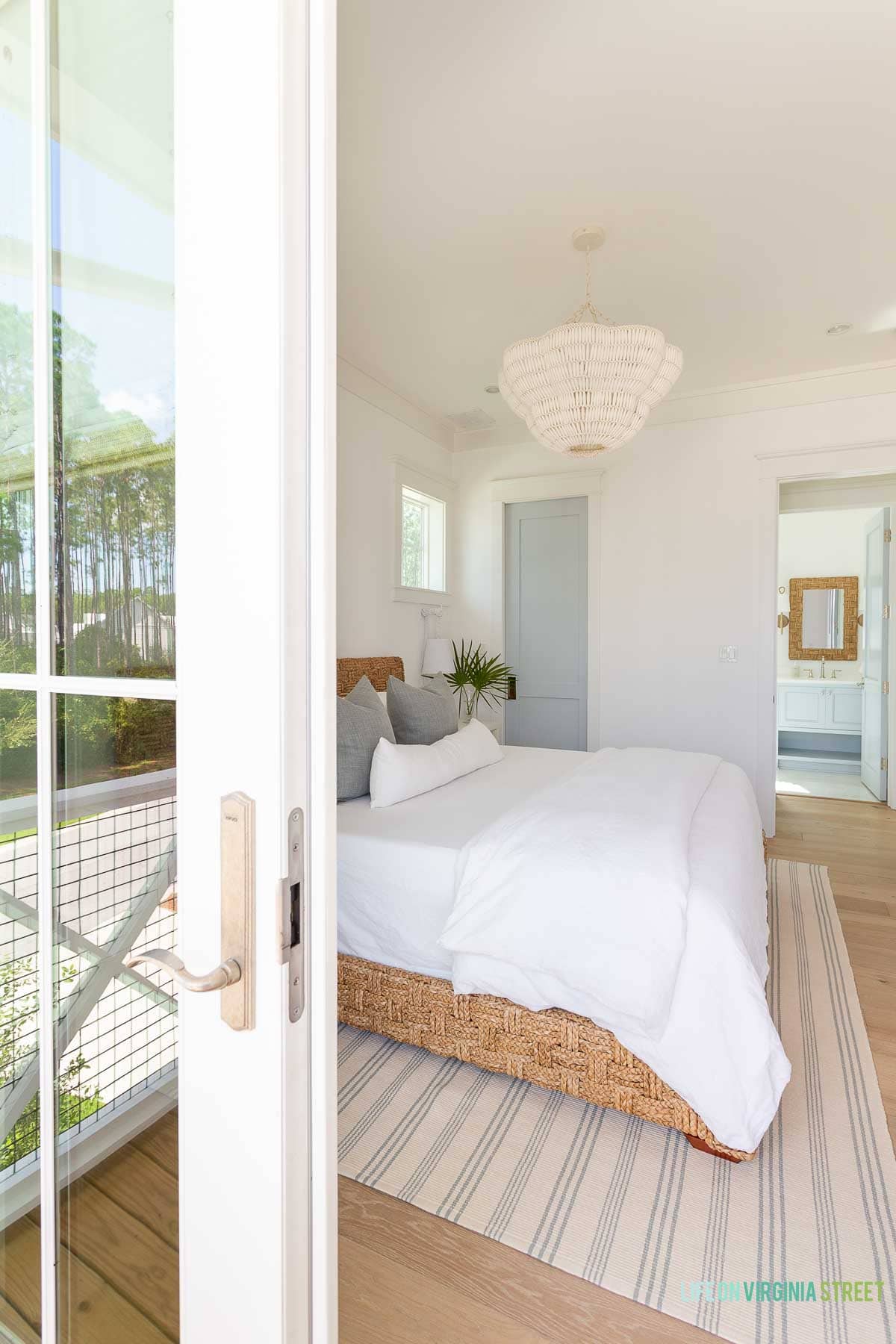
Credits: Sarah Stewart / Life On Virginia Street
A rug with narrow blue stripes gives this bedroom a gentle pattern below the plain white bedding. The lines remain visible along the foot and side, outlining the woven bed without competing with its texture.
Pale wood flooring continues the warm tone beyond the rug, while a white beaded chandelier adds detail overhead. This is a useful way to keep a coastal room patterned without putting every motif on the pillows.
Measure the exposed rug area rather than judging by the bed size alone. Enough visible border helps the stripes contribute to the room.
Keep nearby textiles quieter if the weave and light fixture already have strong texture. The effect comes from repeating pale colors across surfaces of different materials.