
A bedroom can feel balanced with just a few well-placed touches of each color, rather than matching every surface.
Sage Green And Blush Bedroom Ideas show how to pair a muted green backdrop with blush bedding, painted closet doors, or bedside furniture.
Patterns can help tie the palette together, too: floral rugs, gingham, and botanical pillows bring both shades into the room without making them feel overly coordinated.
For a lighter touch, repeat pink in a small wall light or a few framed prints, leaving the sage visible as a calming anchor.
1. Keep Sage Below a Wooden Ledge and Blush on the Bed
Credits: Hey Maca
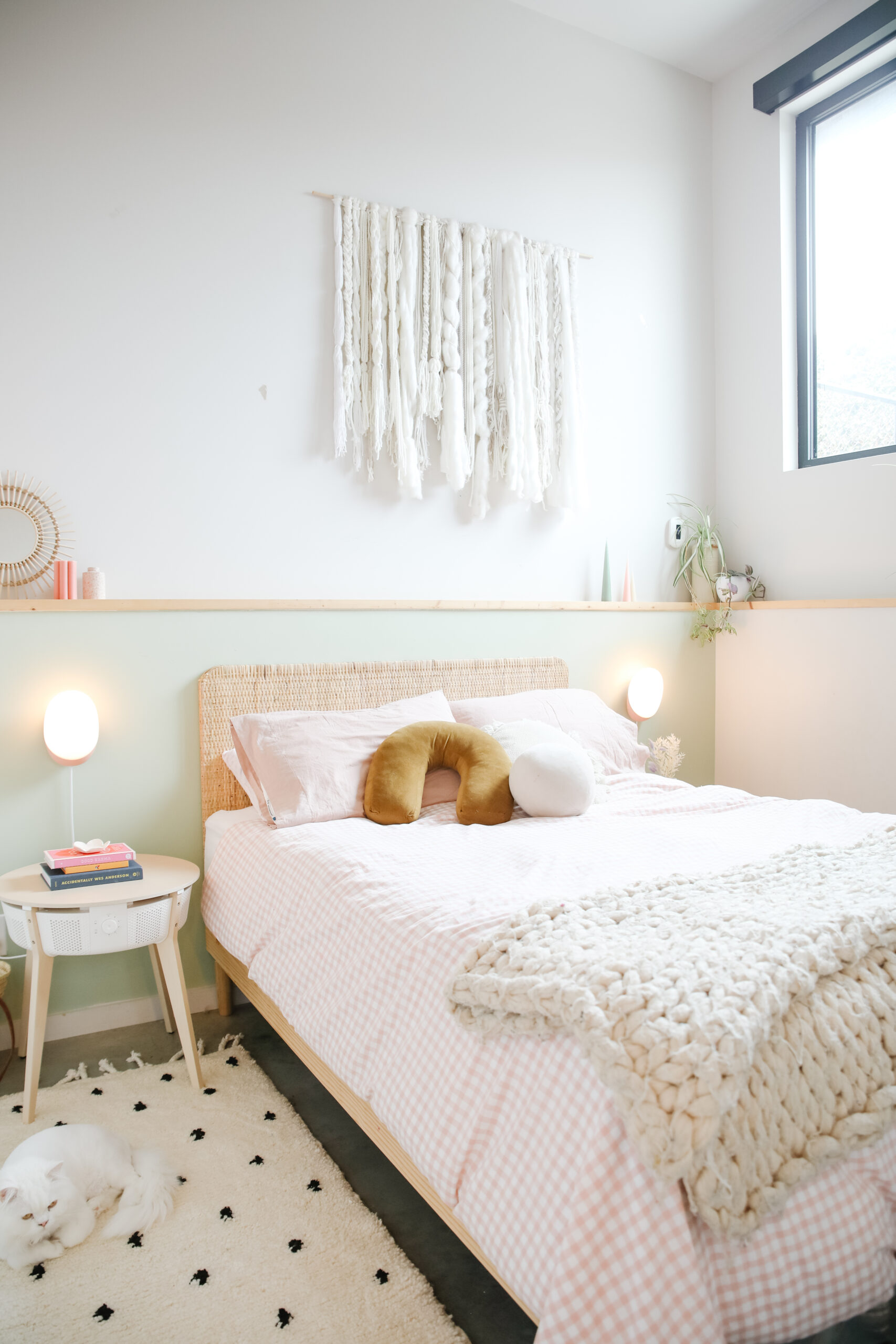
A broad band of pale sage gives the bed a gentle backdrop without filling the whole wall with color.
Blush gingham bedding sits below a simple wooden ledge, while white paint and a cream fiber hanging keep the upper area light. The two pastels meet through warm natural materials rather than a matching furniture set.
To adapt this arrangement, choose the wall division after checking your headboard height and the pillows you use every night. A narrow ledge can mark the transition, but the painted boundary also works alone.
Let a little green remain visible above and beside the bed. That exposed border makes the relationship with the pink bedding clear, even when a thick throw covers part of it.
2. Contrast a Sage Cloud Headboard With Plush Blush Checks
Credits: Making Manzanita
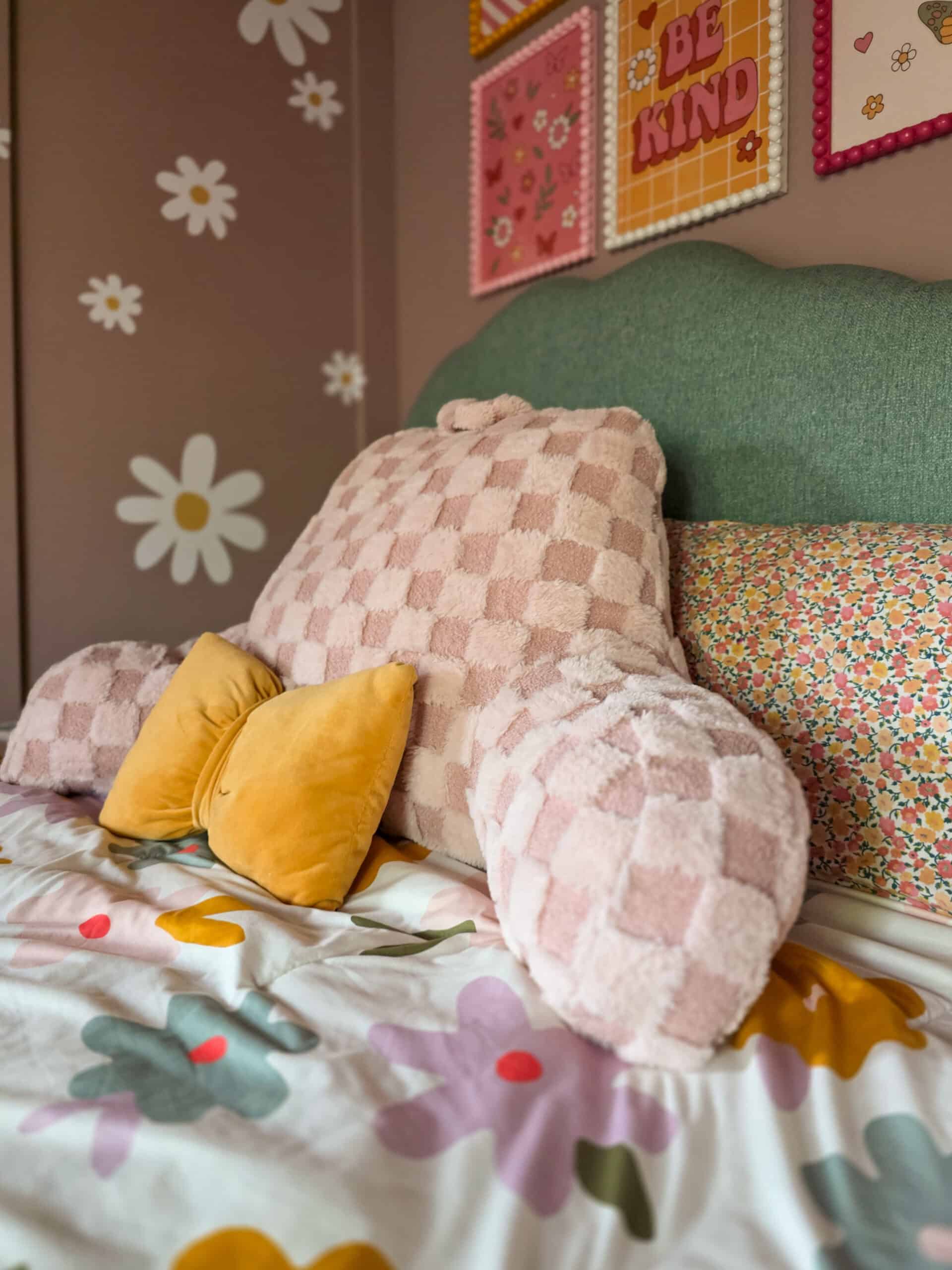
The cloud shaped green headboard provides a plain, softly curved background for a large blush reading pillow. Its checkerboard texture introduces a different pattern from the floral bedding without adding another dominant color.
A small yellow bow cushion brings a brighter note, but the sage and pink remain easy to identify. This is a useful combination when the bed doubles as a place to read or relax before sleep.
Check the support and size of a reading cushion rather than choosing it only for its appearance. Keep enough of the headboard uncovered to show its outline.
You can simplify the surrounding prints and still retain the appealing contrast between the smooth green upholstery and fuzzy pink squares at the center.
3. Paint Closet Doors Blush Against Muted Green Wallpaper
Credits: Nesting With Grace
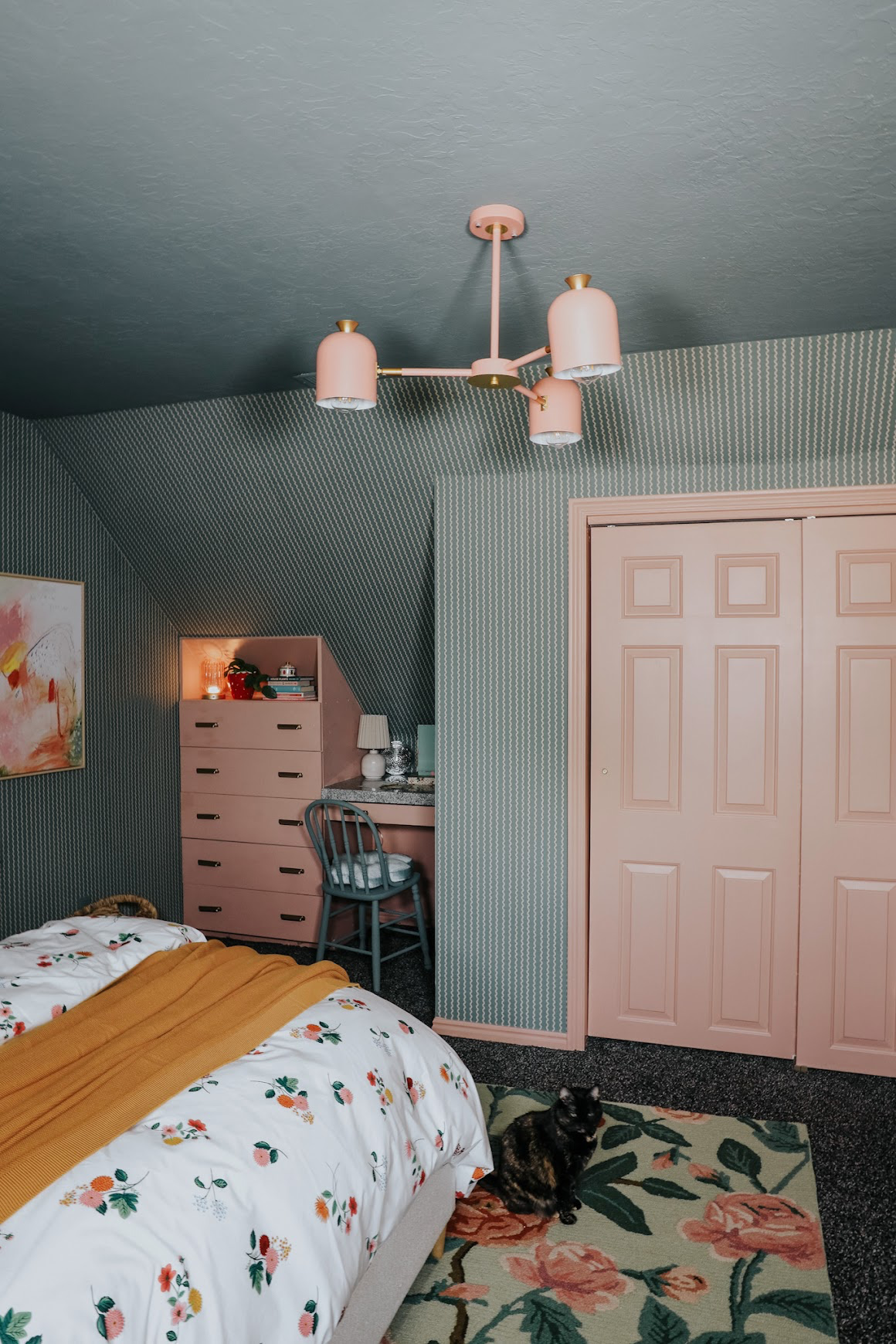
Blush closet doors turn a practical surface into a major part of this bedroom's palette.
Their solid panels stand out against the fine wavy stripes of the muted green wallpaper, with matching pink trim connecting the opening to the rest of the room.
The built in desk repeats the warmer shade beneath the slope, so the closet does not feel like an isolated accent. Consider this approach when you want more pink without adding another textile to an already layered bed.
Test paint beside a wallpaper sample and check both under evening light. Choose a finish suitable for frequently handled doors.
Small, simple knobs leave the painted panels visible and avoid competing with the narrow pattern that surrounds the opening.
4. Set Sage Locker Cabinets Against Blush Walls
Credits: Instagram
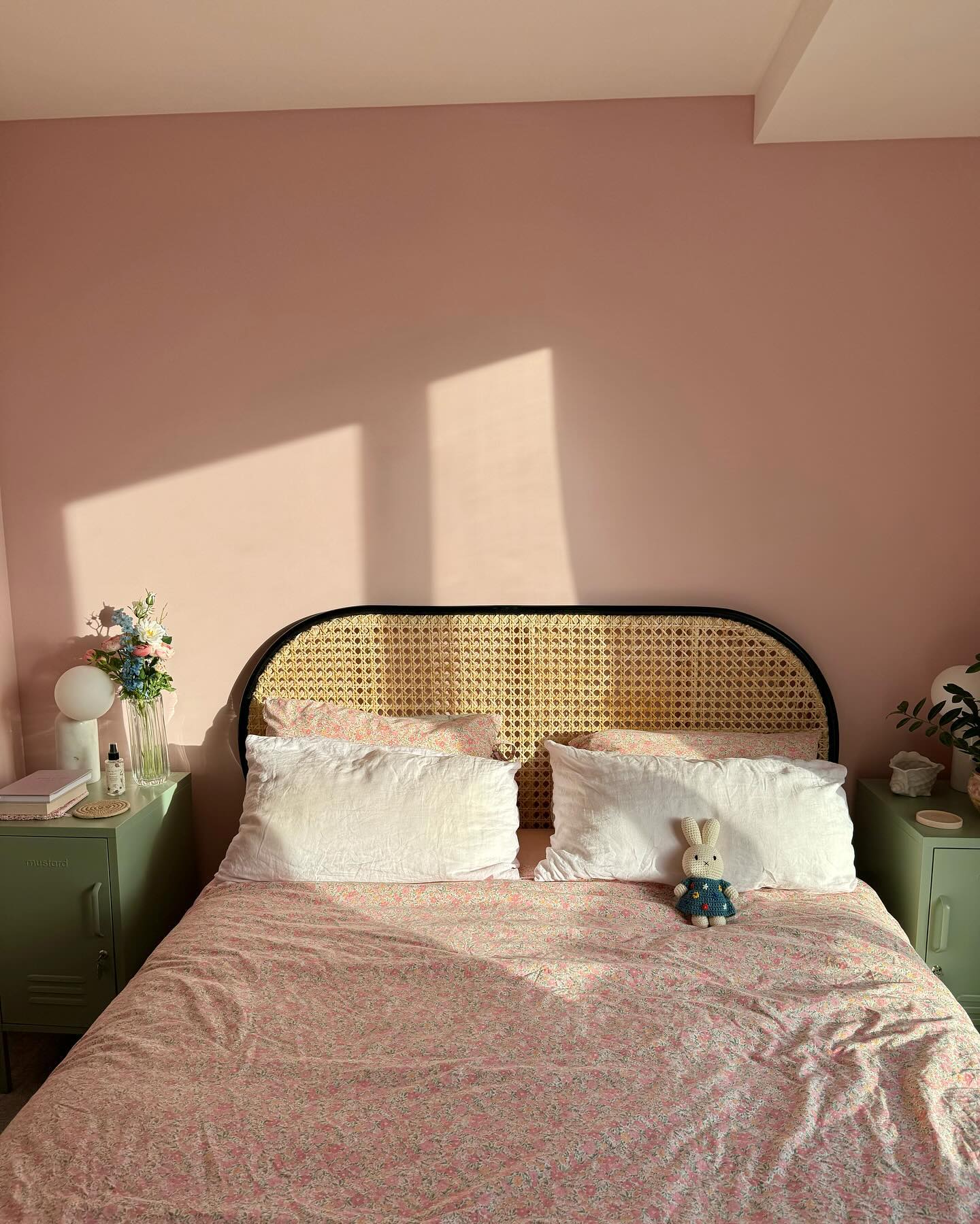
At either side of Steph's bed, muted green cabinets stand out against a blush wall. Their simple locker fronts contrast with the curved woven headboard and delicate floral bedspread.
This gives green a useful role in a room that already has plenty of pink. A matching pair also establishes a steady outline around the bed without requiring identical objects on top.
Measure the available width and compare cabinet height with the mattress before choosing bedside furniture. Allow room for each door to open, and check the actual interior rather than assuming its storage arrangement.
Pale lamps and decorative pieces can leave the cabinet color visible. Existing pink bedding can stay, making this a focused furniture change instead of a redecoration.
5. Hang a Cheerful Frame Grid Above a Sage Headboard
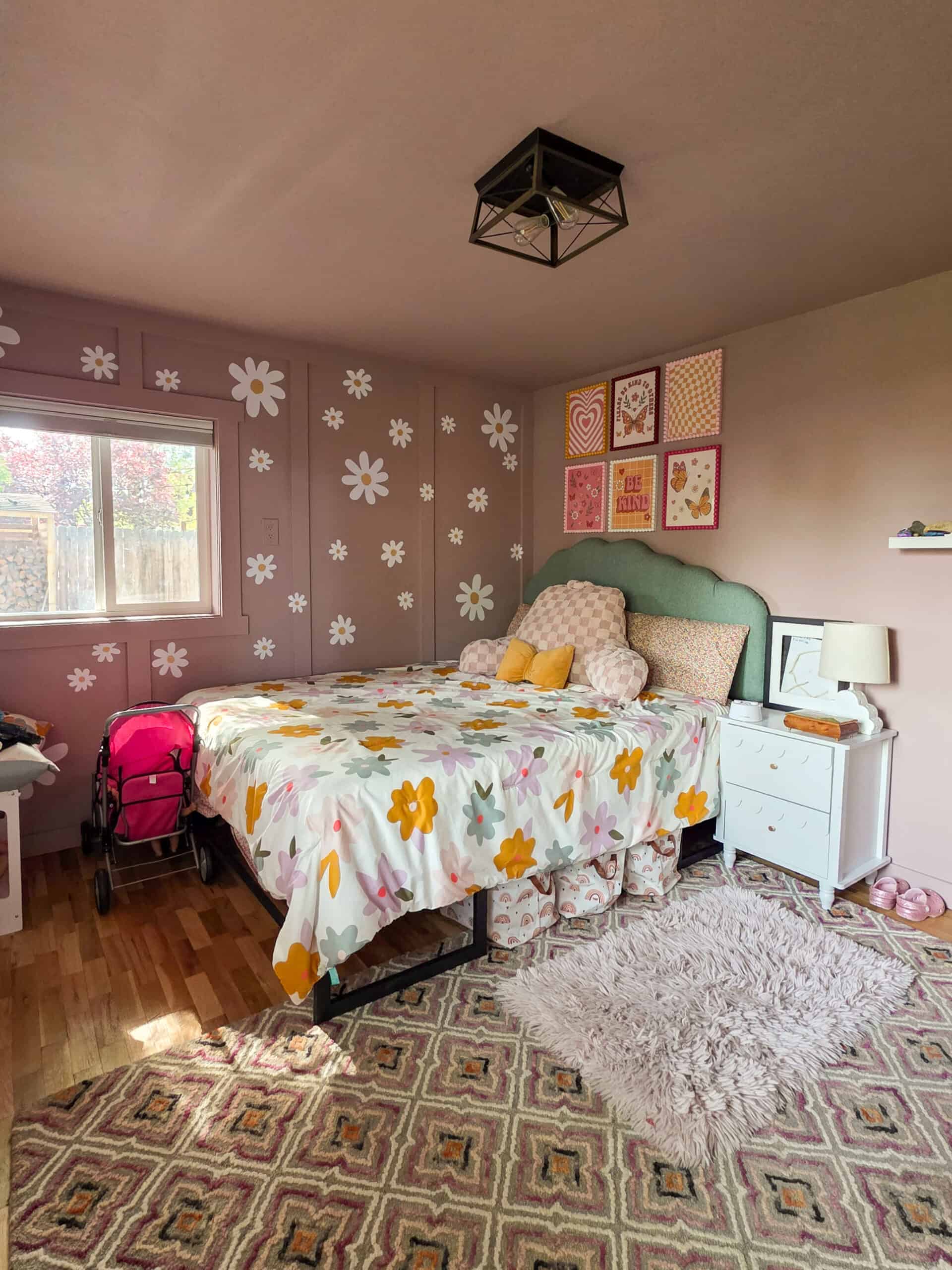
Credits: Making Manzanita
Six small prints form an orderly rectangle above the green upholstered headboard, bringing stronger pink and yellow notes into a room with dusty blush walls.
The consistent arrangement matters because the frames themselves vary in color. Their playful edges also relate to the headboard's rounded silhouette.
A compact grid is worth considering when several favorite pictures need to share a wall without spreading around the entire room. Arrange the frames on the floor first, comparing their combined width with the bed beneath them.
Leave visible wall between the lower frames and the headboard so their outlines remain separate. Repeat a few colors from your bedding, while allowing each picture to retain its own subject and personality within the finished group.
6. Connect Sage and Blush With an Oversized Floral Rug
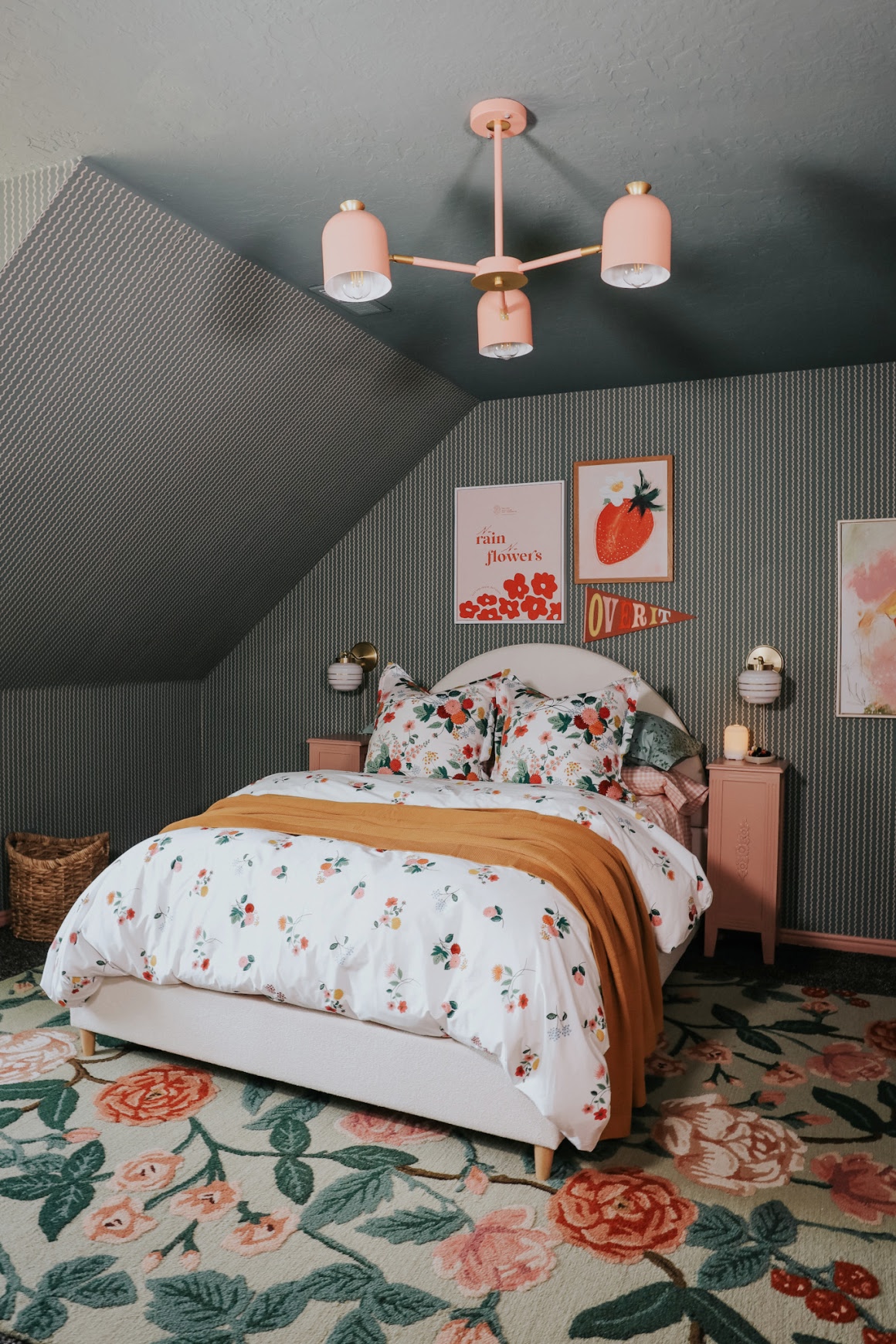
Credits: Nesting With Grace
Large pink blossoms and muted green leaves carry the bedroom palette across the floor beneath this white bed. Their generous scale differs from the smaller flowers on the duvet and the narrow wallpaper stripes, helping each pattern remain recognizable.
The rug also connects the blush bedside cabinets to the deeper green surfaces above. When borrowing this idea, view a rug sample beside your bedding instead of trying to coordinate from separate screen images.
Decide how much pattern should show beyond the bed before choosing a size. A plain bed frame can provide a helpful pause between several printed surfaces.
Keep the rug's edges out of door paths and use an appropriate pad for your floor, especially along regularly used routes.
7. Repeat Blush in a Small Wall Light Beside Sage Paint
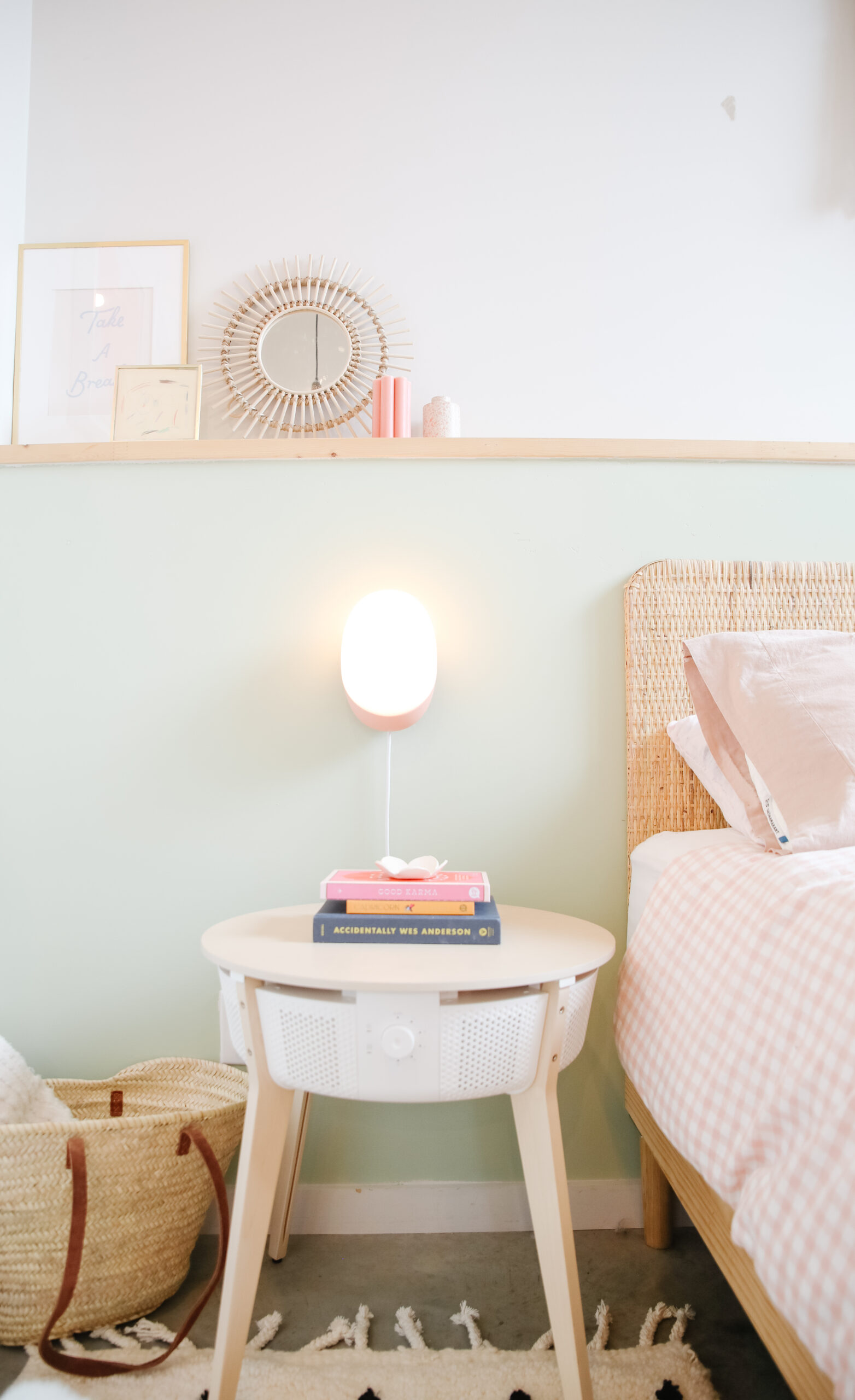
Credits: Hey Maca
A small pink rim around the glowing wall light echoes the checked bedding without taking over the pale sage backdrop. The fixture lifts illumination away from the round bedside surface, leaving room for books and a little dish.
Nearby woven materials make the pastel combination feel warm rather than glossy. This arrangement is especially useful when your nightstand cannot comfortably hold a large table lamp.
Before installing a similar light, check its reach from the bed and the route of any visible cord. Look at the fixture while seated against your pillows to judge glare.
The photograph's clear wall space is part of its appeal, so resist filling every nearby spot with another decoration simply because the surface is available.
8. Layer Blush Prints on a Timber Picture Ledge
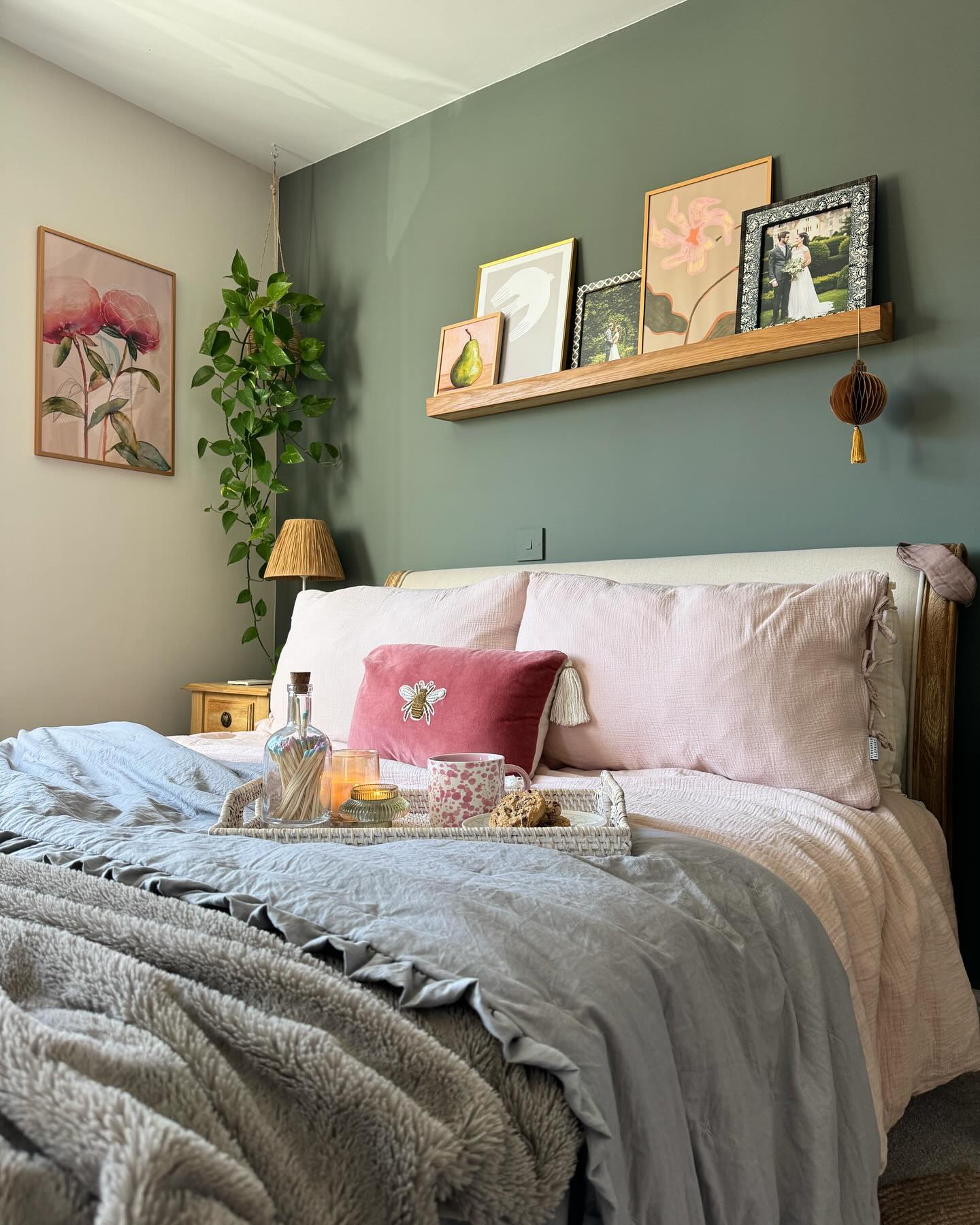
Credits: Instagram
Several framed pictures share one timber ledge above Tamzin's bed, making a varied display feel collected rather than scattered. Pink appears in the prints and larger cushions below, while the muted sage wall connects the arrangement to the room.
Different frame sizes create overlap and depth, with some of the wooden ledge still visible. This suits someone who likes changing artwork without planning an entirely new wall layout each time.
Arrange the frames on a surface first and check that smaller pieces do not hide the parts you most enjoy. Use a ledge appropriate for the frames and follow its mounting requirements.
Keep the grouping visually lighter at its edges so it has a clear relationship to the bed beneath.
9. Let Blush Gingham Show Beneath Green Botanical Pillows
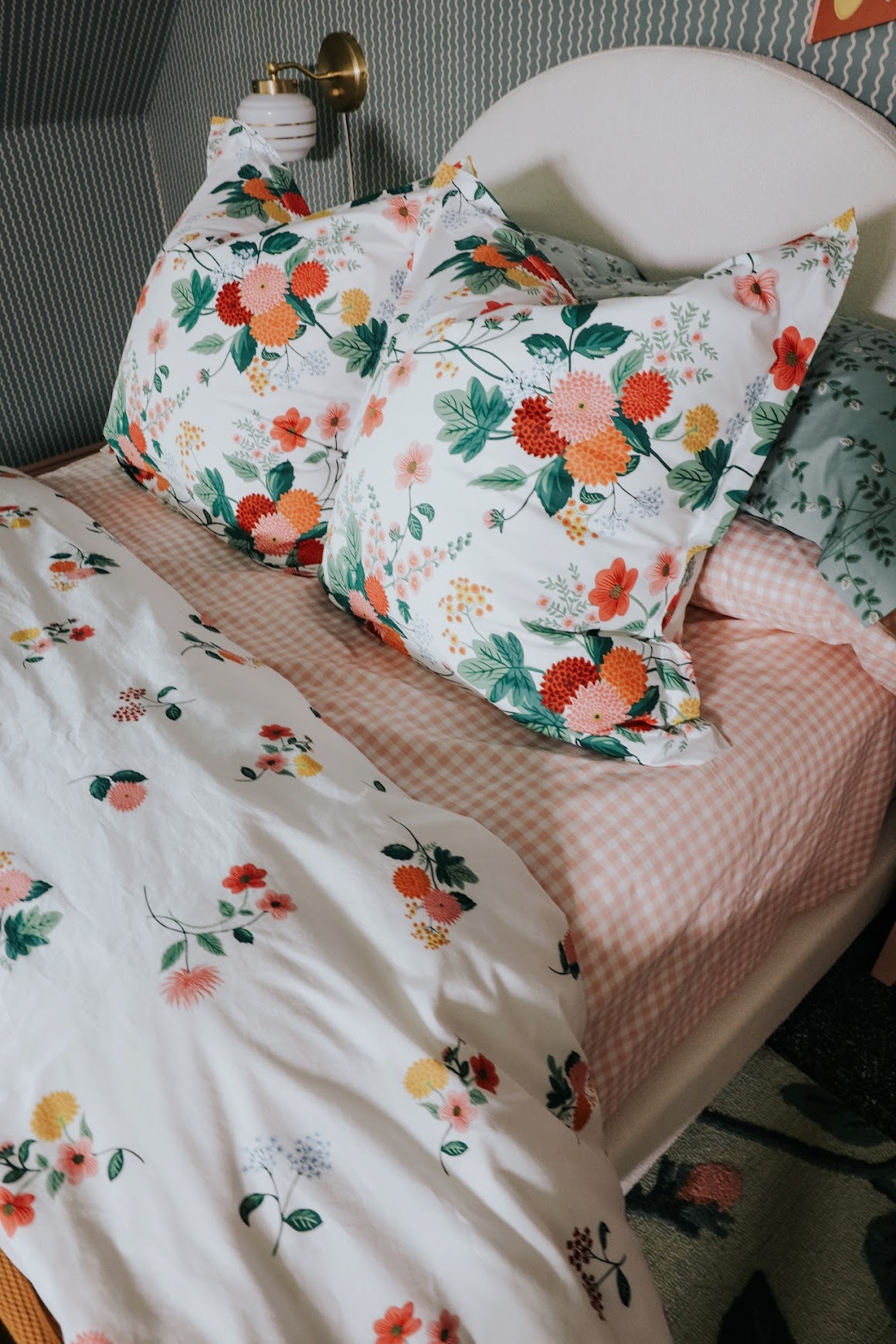
Credits: Nesting With Grace
A visible band of blush gingham separates the floral duvet from the pillows in this richly layered bed. Sage botanical pillowcases sit behind larger flowers, creating a quieter green connection to the patterned wall.
The checks provide structure while the leaves and blossoms offer looser shapes. Instead of purchasing a complete matching set, start with two fabrics that share a muted pink or green and compare their pattern sizes.
Fold the duvet low enough to reveal the sheet, as shown here, so the smallest print does not disappear. A plain curved headboard gives the mixed textiles a clean outline.
Keep decorative pillows manageable for daily use, with an easy place to put them when it is time to settle down.
10. Scatter White Daisies Over Blush Paneling Beside Sage
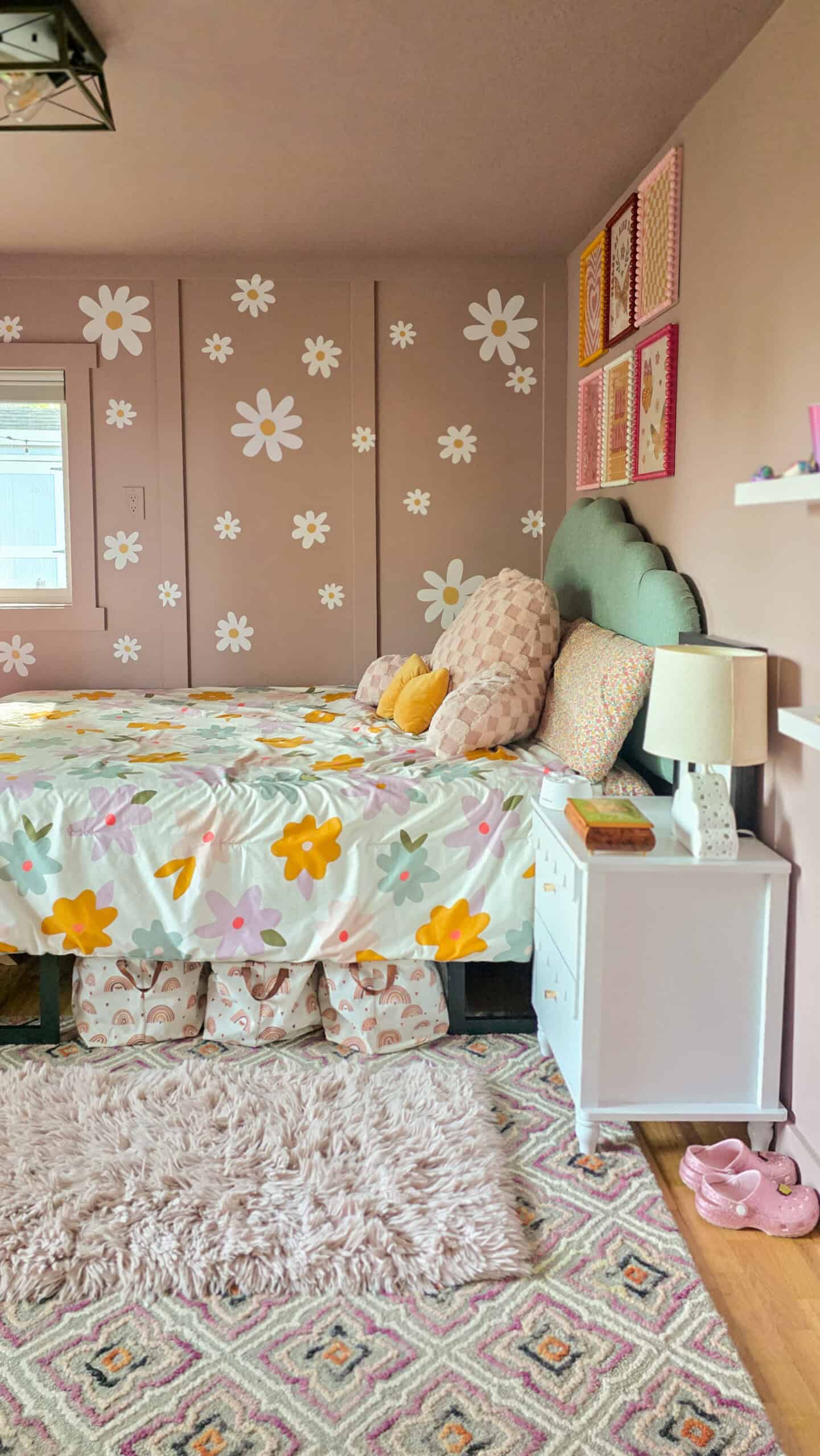
Credits: Making Manzanita
Simple white daisies make the blush paneled wall feel playful while the sage headboard keeps the bed grounded in a quieter color. The flowers vary in size and placement, so the existing battens remain visible between them.
Similar shapes appear on the bedding, linking the wall treatment to the sleeping area without requiring identical prints. If you want to try this idea, plan the arrangement around windows and trim before applying anything permanently.
Paper cutouts can help you judge spacing from across the room. Choose a removable product compatible with your wall finish if flexibility matters.
Keeping the floral shapes white allows the pink paint to remain the background, while green upholstery supplies the strongest solid accent near the pillows.
11. Keep a Pink Wire Nightstand Light Against Sage Walls
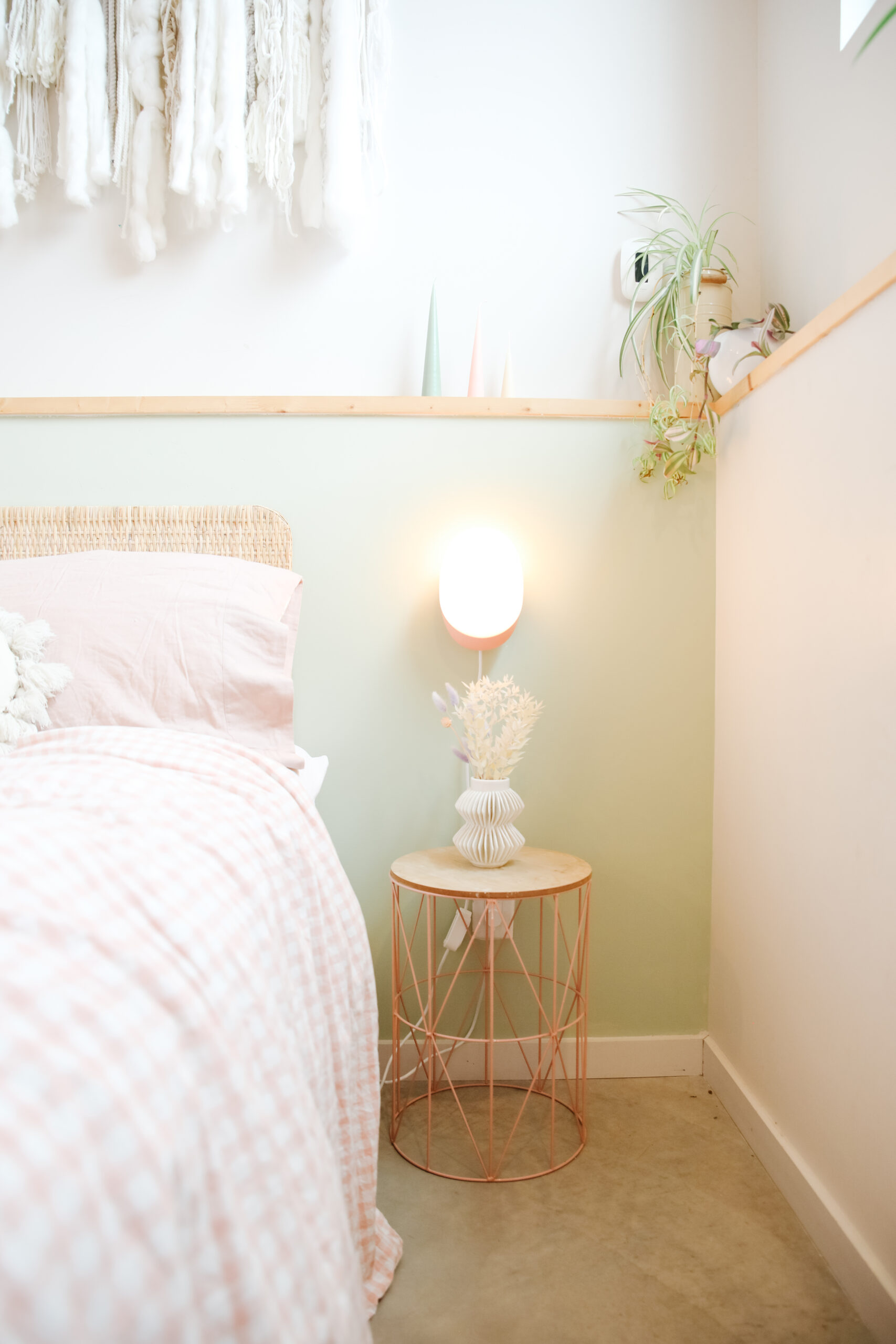
Credits: Hey Maca
The open pink framework of this little nightstand lets the sage wall remain visible through it. Its round wooden top relates to the woven headboard, while blush checks and a plain pink pillow extend the warmer color onto the bed.
The effect is particularly helpful in a narrow bedside gap, where a solid cabinet might feel heavier. Measure the available space with your bedding hanging naturally before choosing a table.
Leave enough room to move past it and reach any outlet behind it. Open furniture offers little concealed storage, so consider where practical items will live.
One small vase keeps the surface calm here, allowing the table's delicate lines and the two pastel colors to do most of the decorating.
12. Repeat Blush With Pink Tulips
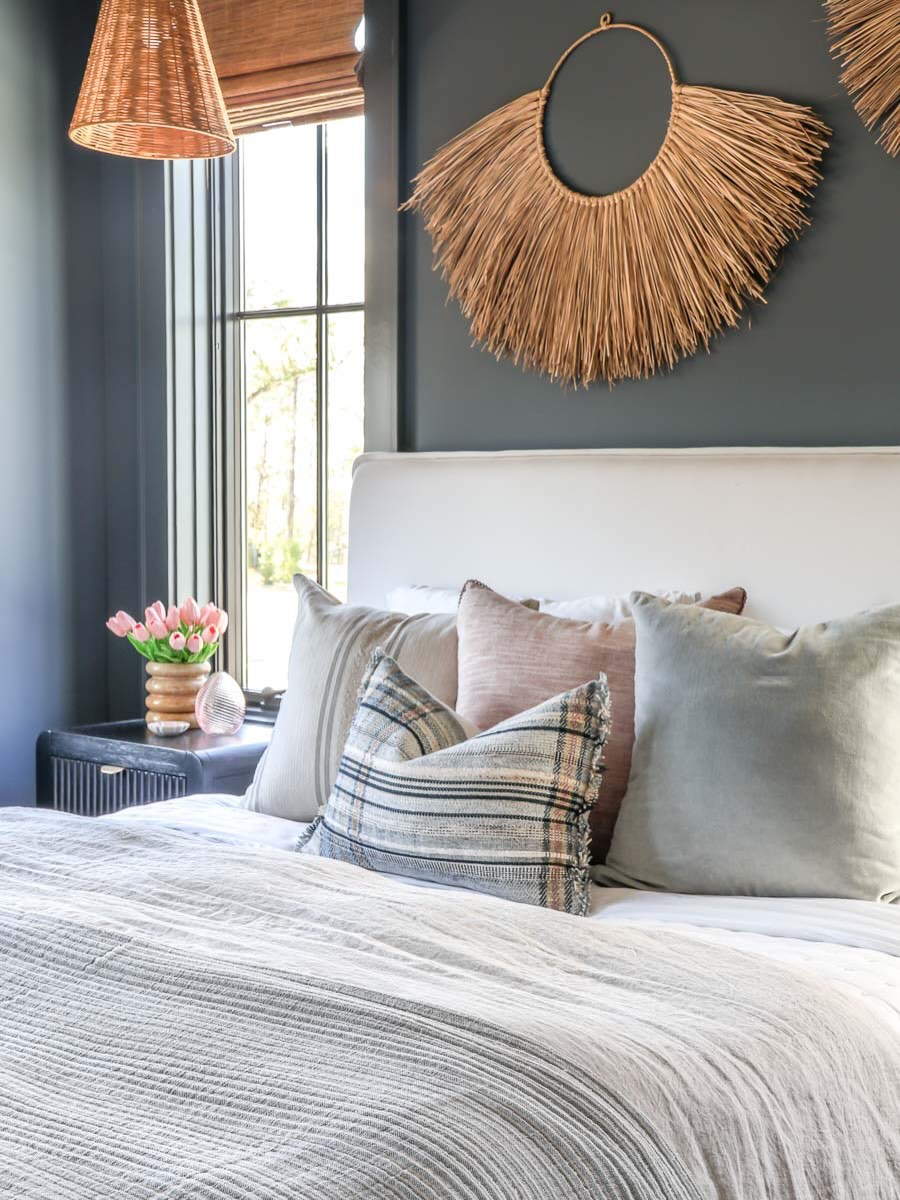
Credits: Instagram
Pink tulips introduce another form of blush in Kristen's guest bedroom, carrying the accent beyond its place among the cushions. Pale sage square pillows keep green close to the bed, while the darker wall gives the lighter arrangement definition.
Flowers offer a flexible way to repeat a color without buying another furnishing or changing the bedding. Choose a modest arrangement whose scale suits the room, and leave enough useful surface space wherever you place it.
Fresh stems bring seasonal variation, while artificial flowers can be reused whenever you want the accent. Choose whichever option best suits your usual decorating routine.
Let the flowers relate to one existing pink textile rather than trying to make every decorative object the same shade.
13. Connect Blush Curtains With a Sage Reading Chair
Credits: Instagram
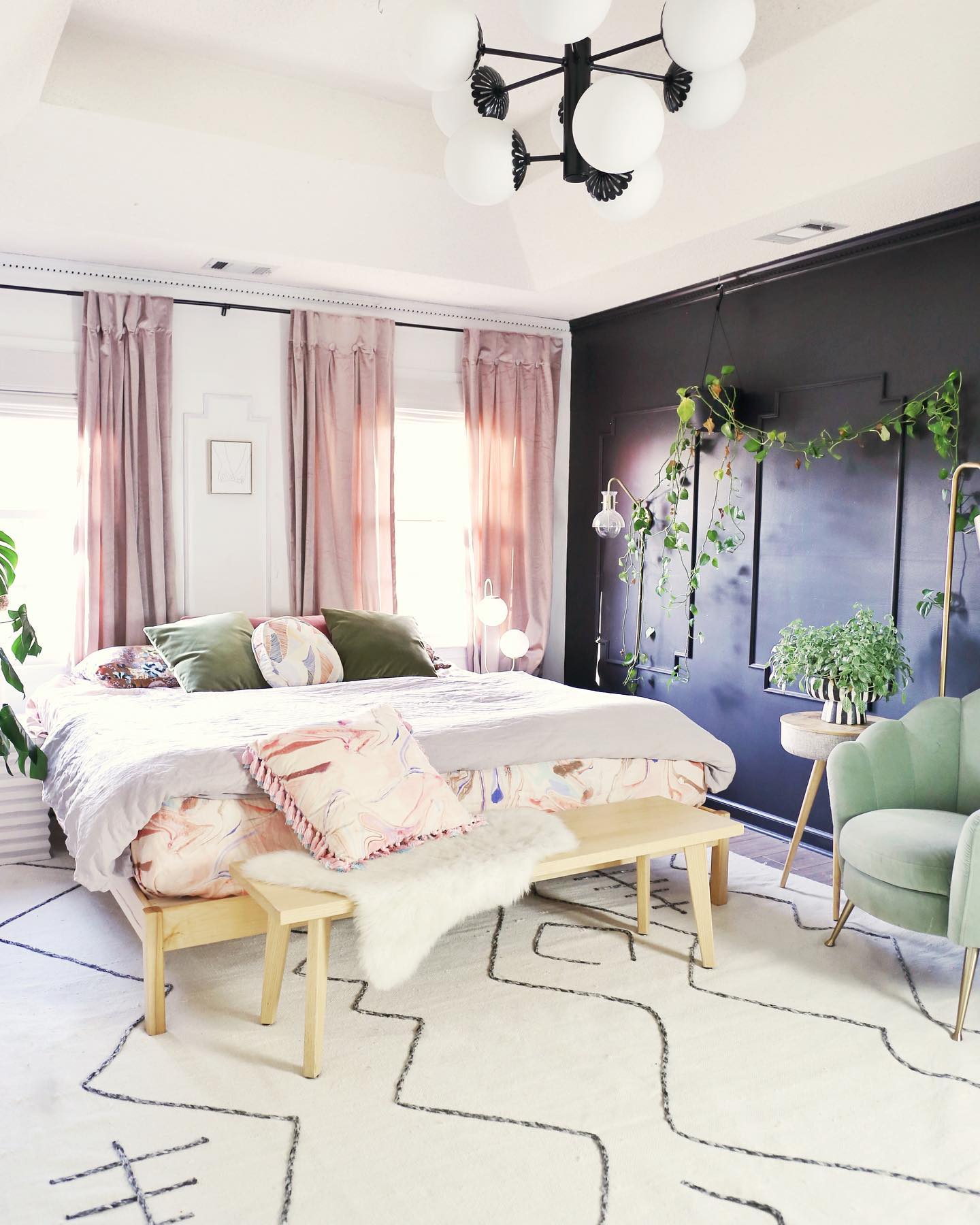
Full-length pink curtains and a sage upholstered reading chair bring the palette into the window area of Jodi's bedroom. The chair's rounded, scalloped outline softens the corner, while green cushions and pink floral bedding connect it back to the bed.
This spreads color through the room instead of concentrating every accent on the pillows. If you already have a neutral bed, consider whether the window and a seat could do more of the decorative work.
Measure curtain clearance and the route beside the chair before choosing either piece. A chair should still be comfortable to approach when the curtains are closed.
The darker wall provides contrast here, but the relationship between the two soft colors can also suit lighter surroundings.
14. Bring Blush Overhead With a Pink Ceiling Fixture
Credits: Nesting With Grace
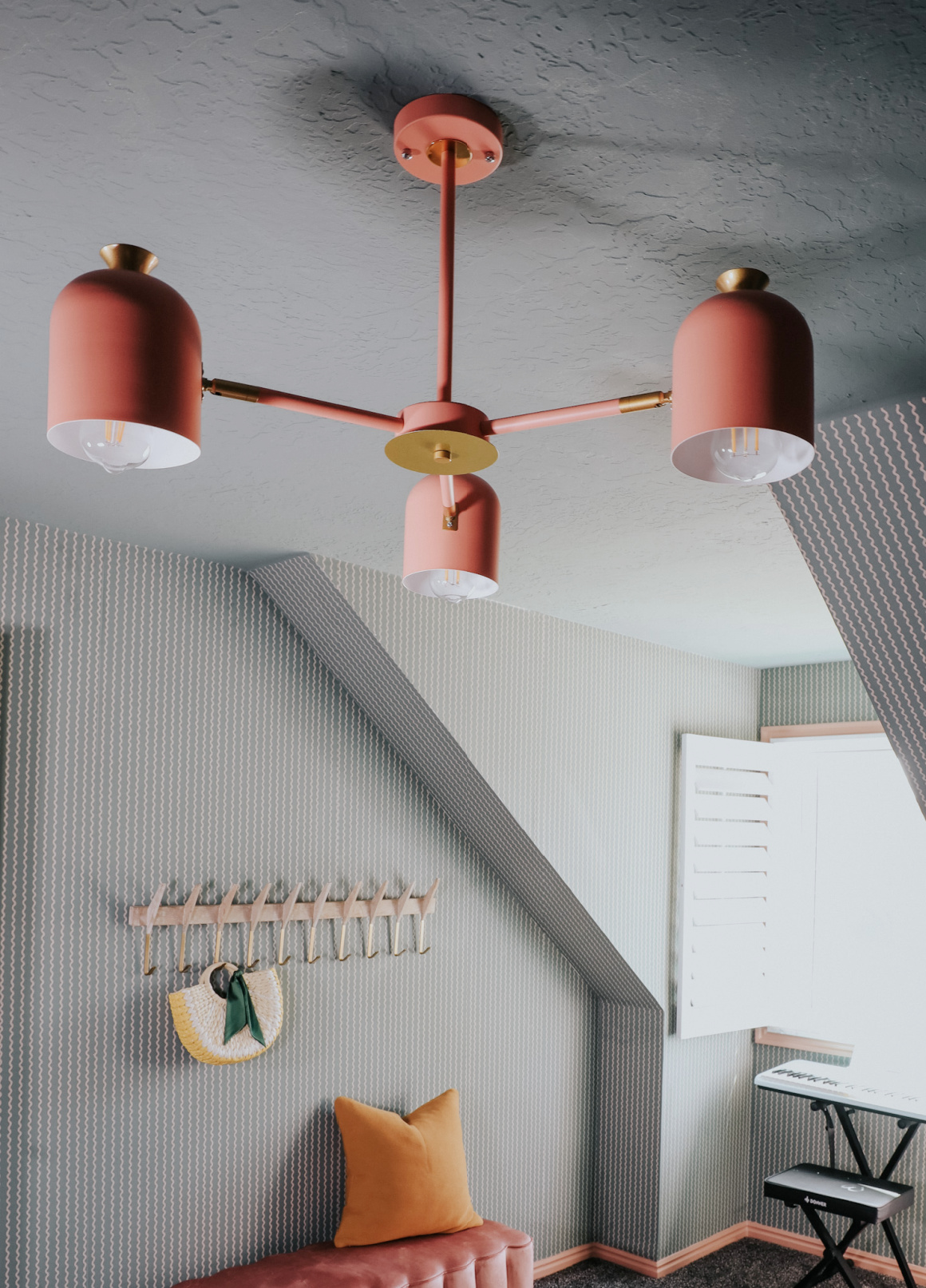
Pink metal shades give this ceiling fixture a clear outline against the muted green ceiling. The same warm color appears in the baseboard and upholstered bench below, making the overhead accent part of the bedroom rather than an unrelated decoration.
Fine wavy wallpaper softens the sloped walls without hiding their shape. Consider a colored fixture when your larger surfaces are already green and you want blush to appear at another height.
Check the room's ceiling clearance and the fixture's proportions before selecting a similar design. Bulb brightness and shade openings will affect how it feels from the bed.
Keep installation appropriate to the fitting, and let the existing architecture guide placement instead of centering it only within one photograph's view.
15. Refresh a Vintage Nightstand With Dusty Blush Paint
Credits: Nesting With Grace
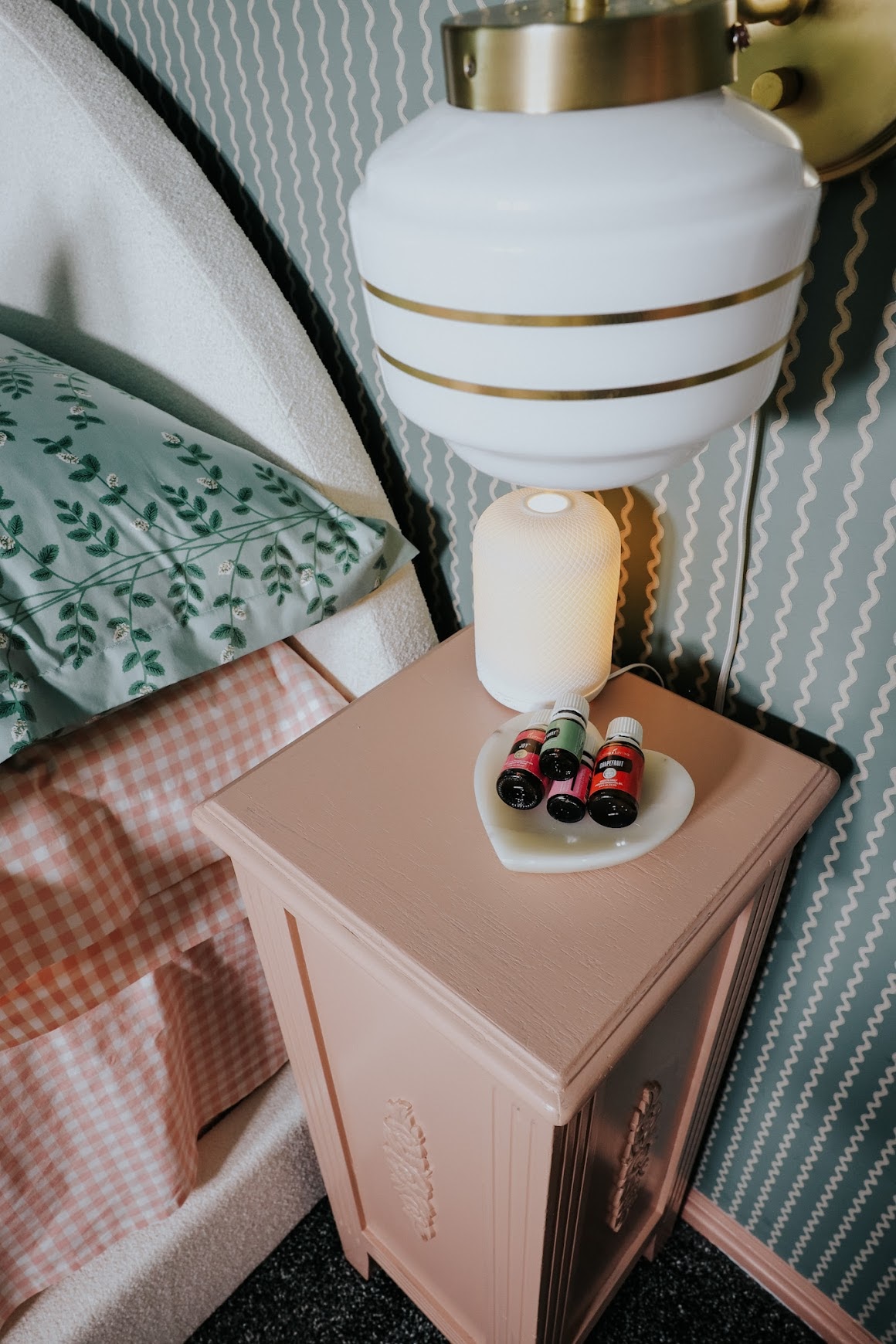
Dusty blush paint draws attention to the raised floral detail on this narrow vintage nightstand. Behind it, muted sage wallpaper and a green botanical pillow make the warm furniture color especially clear.
The white wall light and pale headboard provide small breaks between the patterned surfaces. This is a focused way to refresh an existing piece while keeping its original character visible.
Inspect the cabinet's condition and choose preparation and paint appropriate for its material before starting. Check that doors and drawers will still move freely after refinishing.
A restrained arrangement on top leaves the painted surface easy to see. You can borrow the color relationship without copying every accessory, adapting the nightstand to the essentials you actually use daily.
16. Soften the Sage and Blush Bedside Corner With Leaves
Credits: Hey Maca
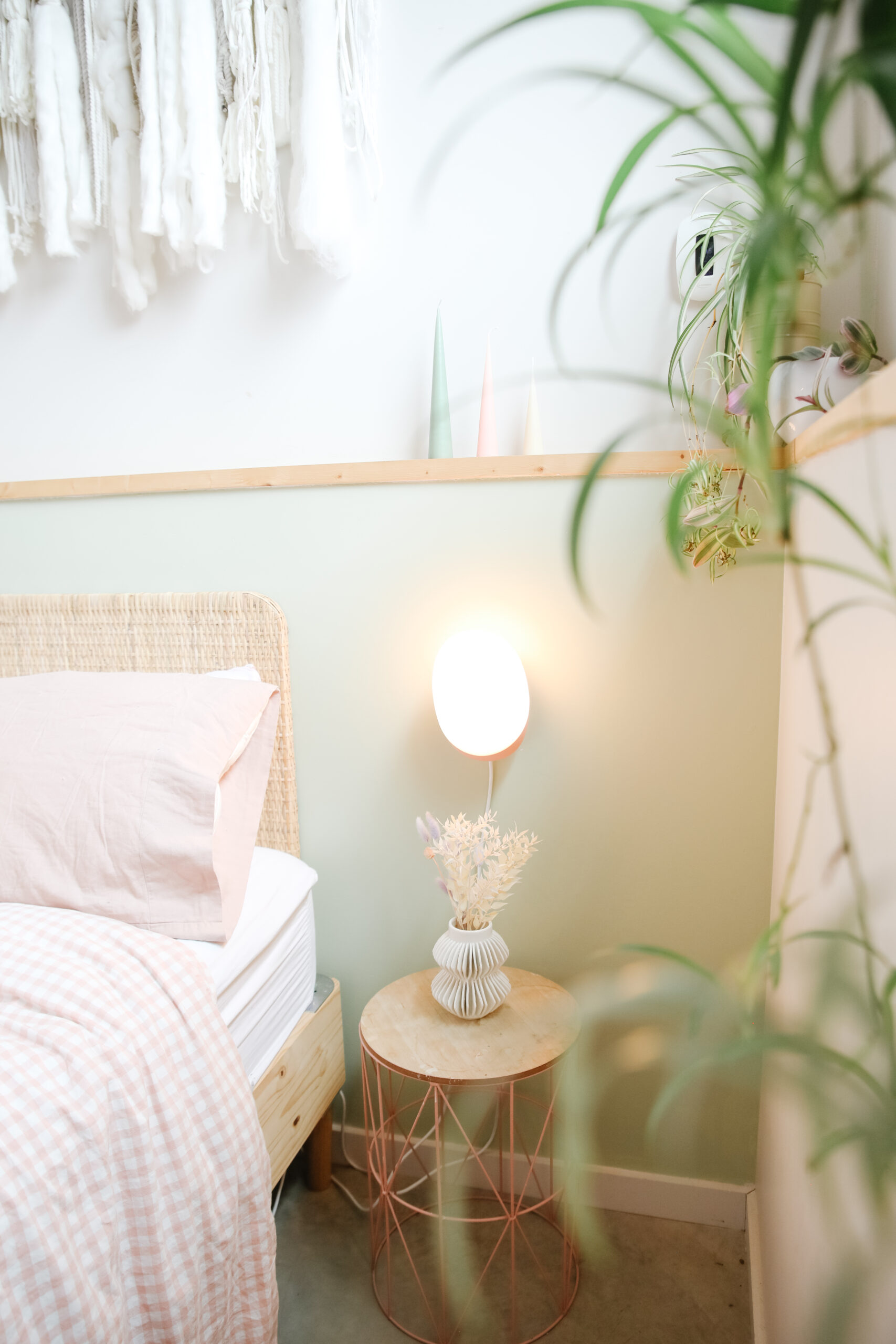
Trailing leaves interrupt the straight wooden ledge above this colored bedside corner. Pale sage paint, blush bedding, and a pink light remain the main surfaces, while the greenery adds irregular shapes around them.
The small vase below repeats the lightness of the wall without creating another strong color block. This approach works best when plants have enough space to grow without brushing the bedding or obscuring useful controls.
Choose a plant for the actual light in your room and use a stable container that protects the surface beneath it. Keep watering access straightforward.
A few stems can be enough; leaving portions of the ledge and painted wall uncovered preserves the quiet relationship between the green backdrop and the pink linens.
17. Add a White Nightstand Between Sage Upholstery and Blush
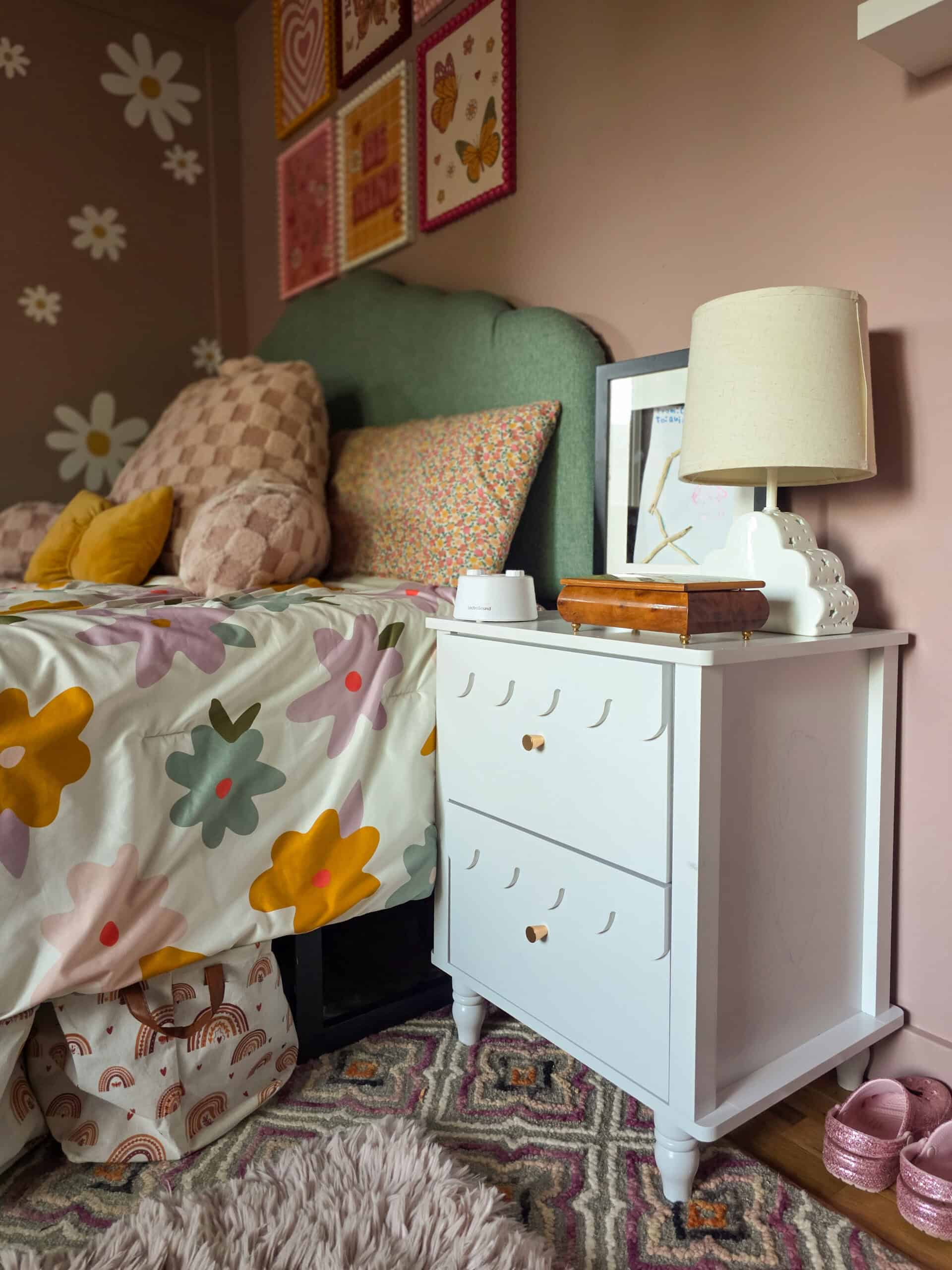
Credits: Making Manzanita
A white two drawer nightstand creates a clear pause between the sage headboard and dusty pink wall. Small scalloped details on its drawer fronts echo the rounded bed shape, so the neutral piece still feels connected to the room.
A pale lamp adds another light surface beside the colorful bedding. This is worth considering when both main colors already appear strongly and another pink or green cabinet would feel excessive.
Look for a bedside height that works with your mattress and drawer access that remains comfortable once the bed is made. The photograph's wood box offers a warmer accent without changing the palette.
Keep the tabletop useful by choosing only a few objects that support your evening and morning routines.
18. Carry Blush From the Walls Into Full Length Curtains
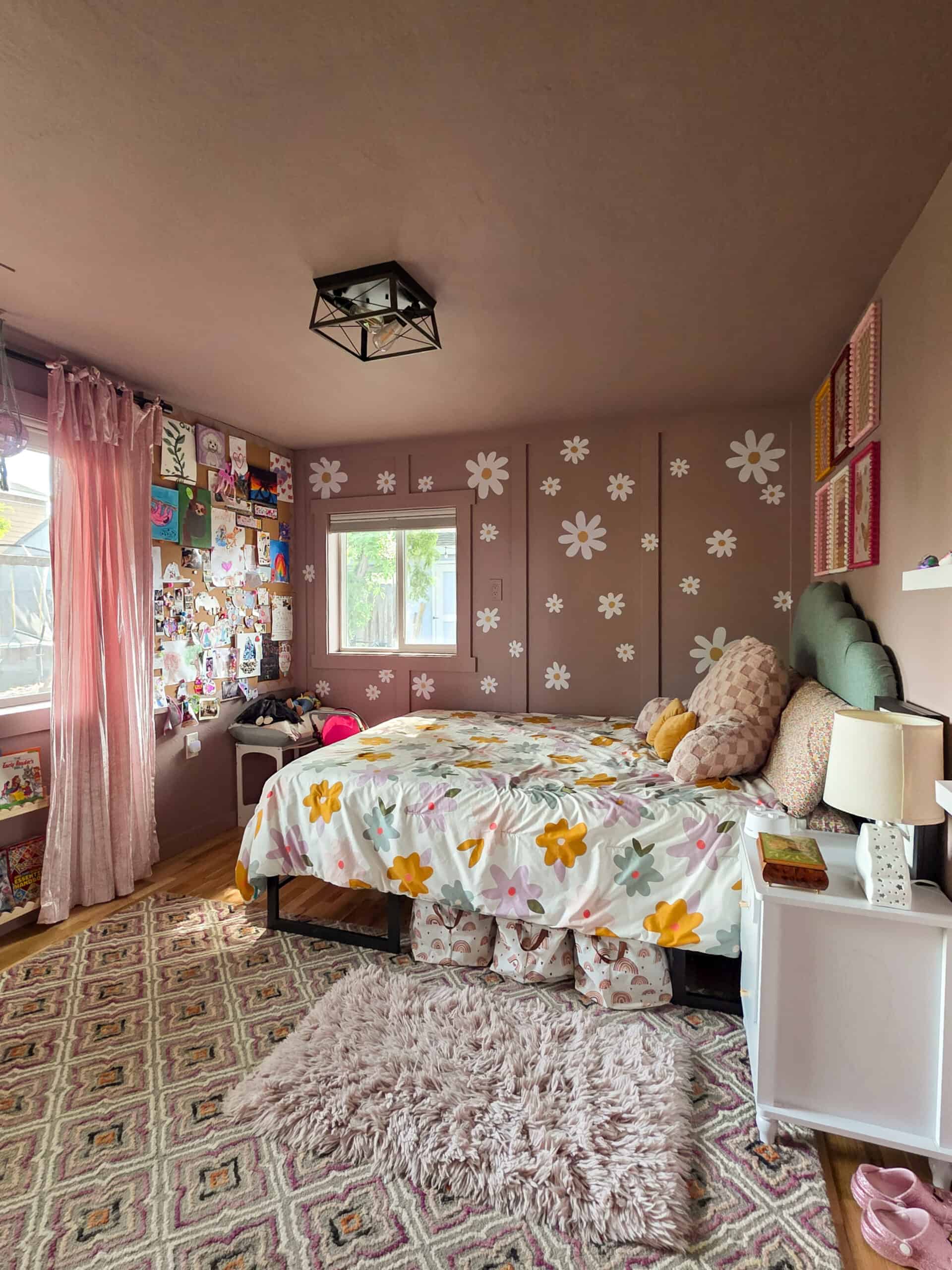
Credits: Making Manzanita
Long pink curtains extend the wall color around the window, creating a soft frame opposite the sage headboard. Their fabric catches daylight differently from the paint, adding depth without introducing another large hue.
The green upholstery and scattered green flowers on the bed prevent the room from becoming entirely pink. For a similar effect, compare a curtain swatch with your wall sample in both sunlight and lamplight.
They can belong to the same color family without matching exactly. Check that the panels open fully enough for everyday access to the window.
The curtains shown have decorative ties along the top, a small detail that suits the room's relaxed character. Keep nearby furnishings clear of the fabric as it moves naturally.
19. Make a Blush Curtained Sage Reading Nook
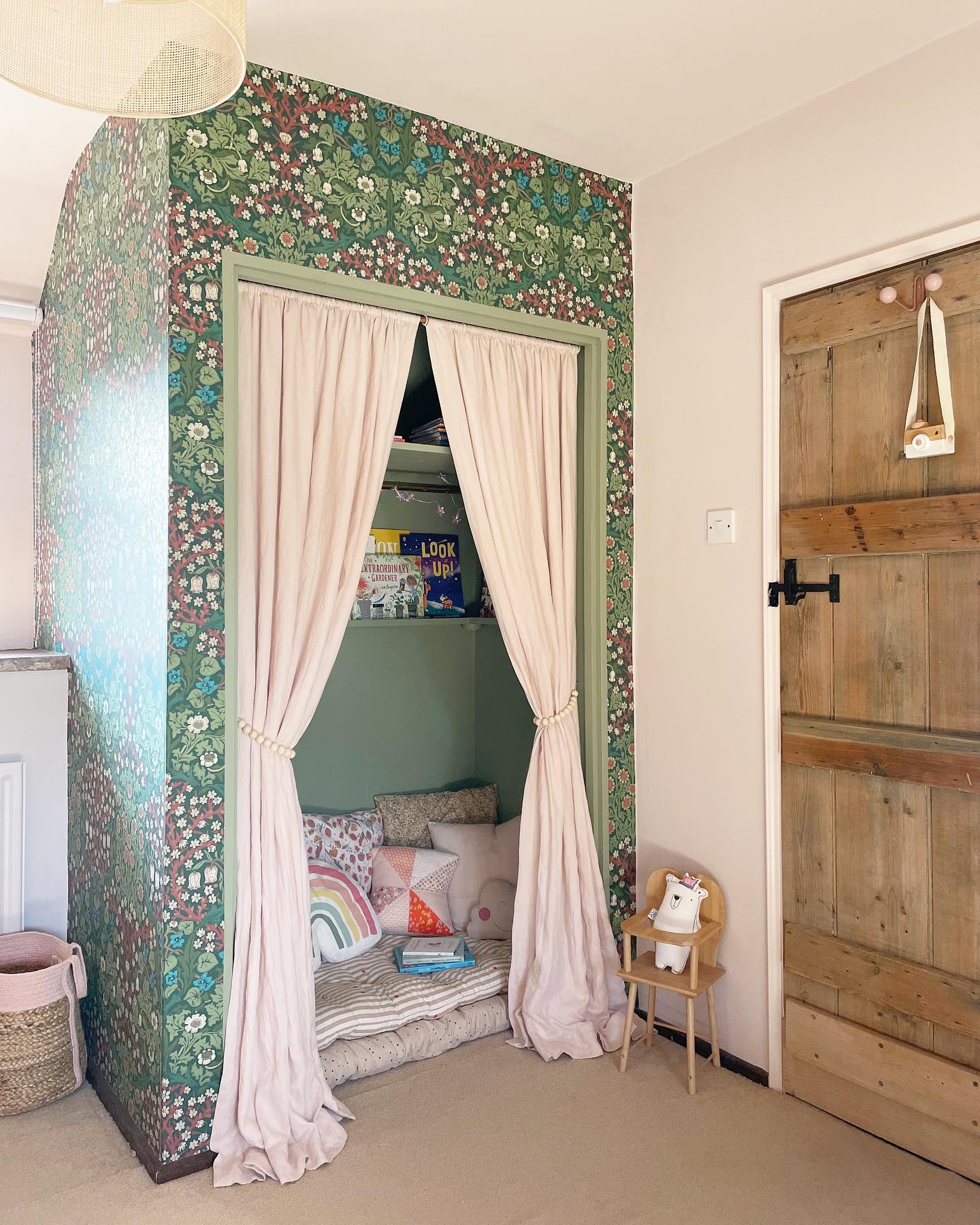
Credits: Instagram
Inside this former wardrobe, a muted green interior creates a sheltered reading corner framed by pale pink curtains. The floral surround is deeper green, so the lighter sage surface remains distinct within it.
Floor cushions make the compact space feel inviting, while the curtains give the opening a soft edge. The creator's own renovation account identifies the nook as part of a shared bedroom.
Use the photograph to consider whether an unused recess could support a quiet activity, rather than assuming every wardrobe is suitable for conversion. Assess access, ventilation, lighting, and any required alterations with appropriate help.
Pink curtains can provide the decorative link to the bedroom even when the surrounding walls use a stronger pattern or darker green.
20. Ground Pale Sage and Blush With a Dotted Cream Rug
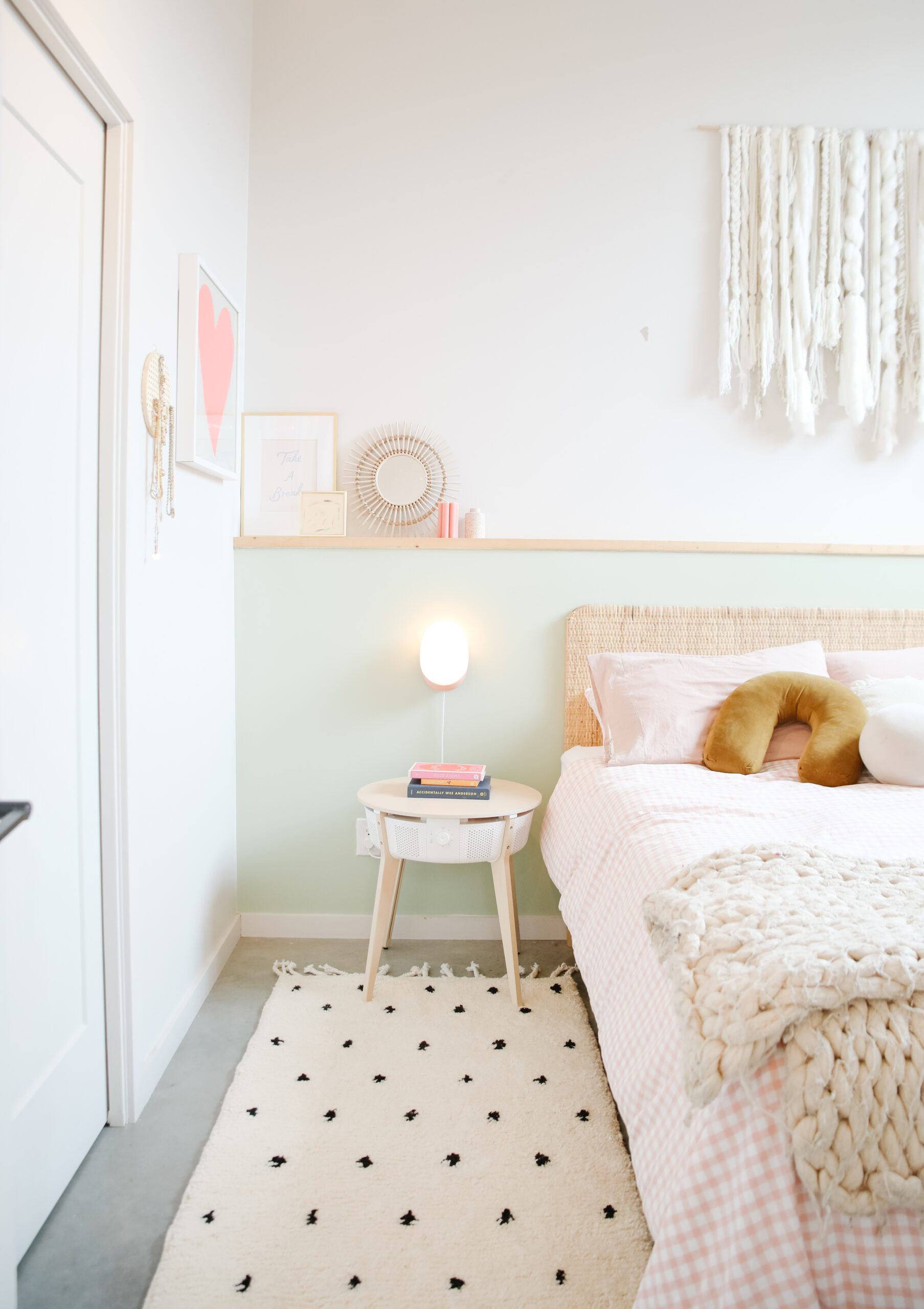
Credits: Hey Maca
Small dark dots give the cream rug definition beneath the pale sage wall and blush checked bedding. Because the marks stay widely spaced, they add contrast without making the bedroom feel busy.
A chunky cream throw repeats the rug's softness on the bed, while the simple wood frame supplies a warm outline. This combination is useful when two delicate colors look slightly washed out together and need a modest grounding detail.
Choose a rug with enough plain background to keep the effect light. Check its placement beside the bed and doorway before settling on dimensions.
Repeating cream in one other textile can connect the floor to the bedding, leaving sage and blush as the colors that shape the room's mood.