
A bedroom feels more personal when its layout supports what you actually do there, not just where you sleep.
These Bedroom Ideas For Men balance practical choices with materials and colors that add character, from leather and olive linen in a dark room to pale wood furniture that can adapt over time.
You’ll also find ways to make better use of tight spots, such as built-in bedside shelves, storage beneath the bed, and a low dresser under a window.
A reading nook or listening corner can give the room a useful place to unwind.
1. Warm a Dark Bedroom With Leather and Olive Linen
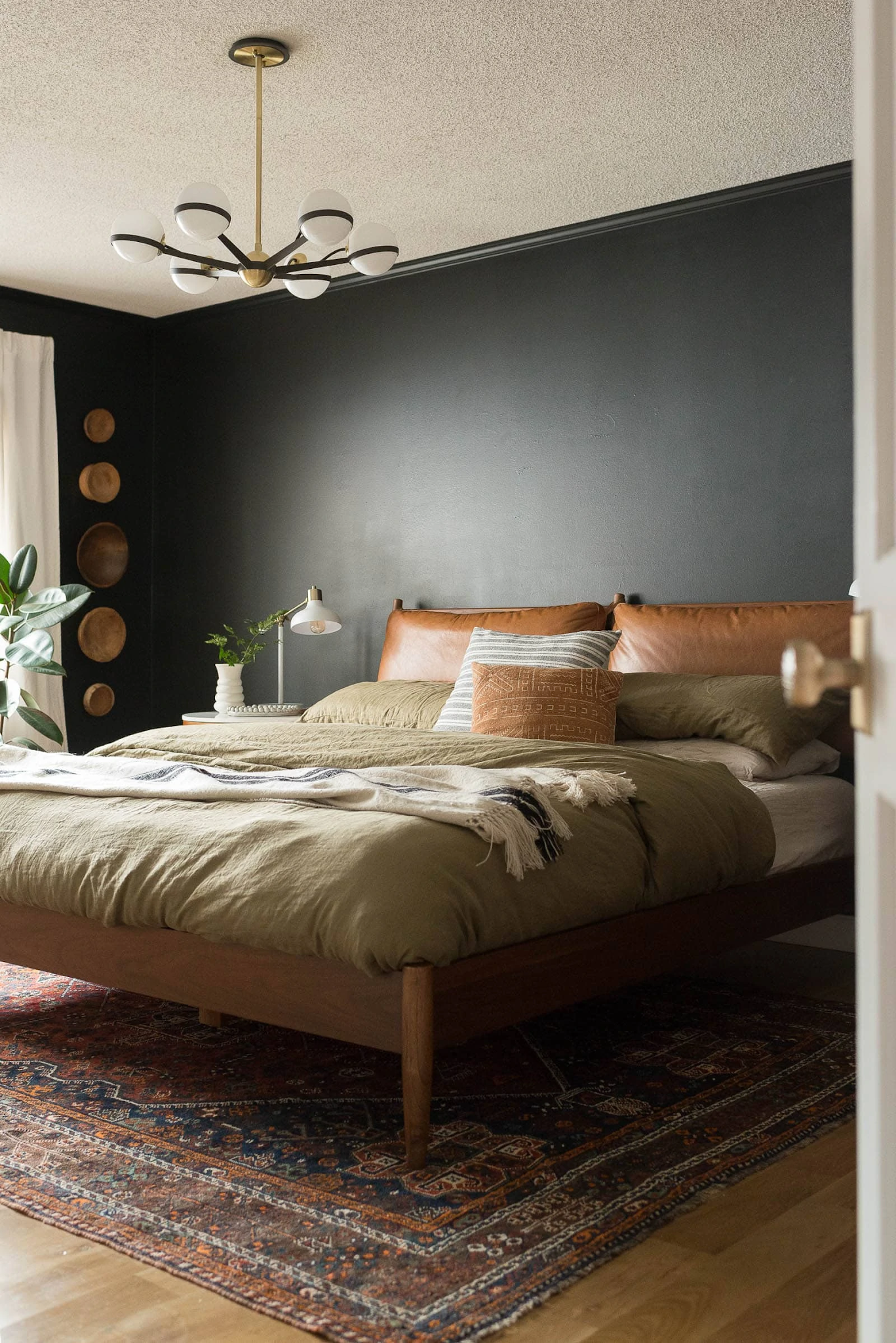
Credits: Ashley Mayes / Bigger Than the Three of Us
Olive bedding and caramel leather give this black bedroom a comfortable, grounded character.
Their different surfaces matter as much as their colors: the loosely rumpled linen softens the smooth headboard cushions, while the wooden frame keeps the bed looking light underneath.
A patterned rug brings additional warmth without requiring more objects on the walls. If a dark palette appeals to you, choose the textiles alongside the paint samples so the room feels connected from the start.
Keep a few brighter elements nearby, such as the pale bedside lamp and curtains shown here. The largely empty wall above the bed is useful breathing room.
You can develop a personal scheme through materials and proportions before deciding whether additional artwork belongs there.
2. Choose a Platform Bed With Built In Bedside Shelves
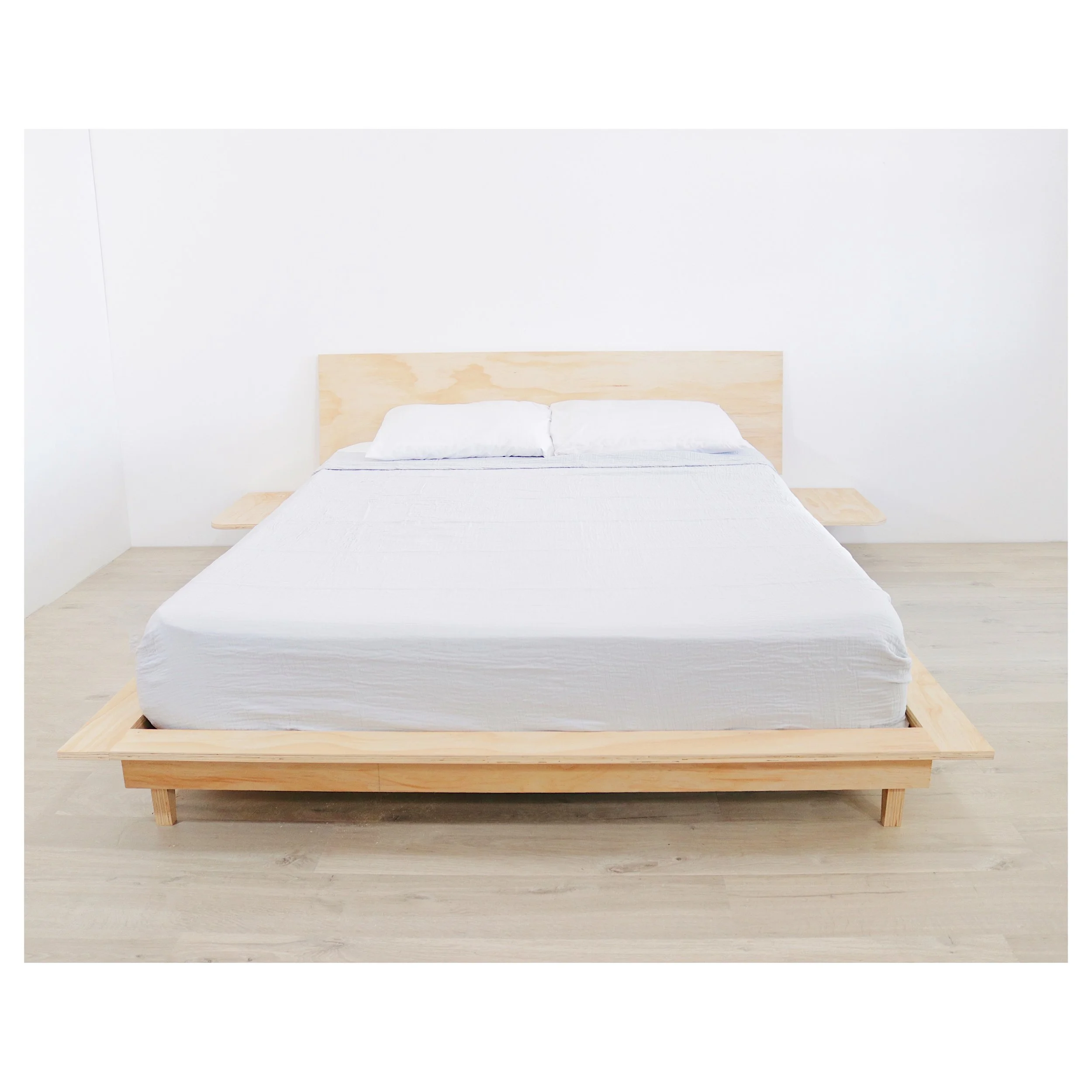
Credits: Mike Montgomery / Modern Builds
This plywood frame combines a low bed, broad headboard, and two small bedside shelves in one straightforward shape. Its pale grain provides enough variation to keep an otherwise white room from feeling blank.
The exposed border around the mattress also emphasizes the bed's proportions, so measure the complete frame rather than relying on mattress dimensions alone.
Integrated shelves can suit a compact room when you only need a book, glasses, or a small light within reach. Check their height against the mattress and consider how you will route charging cables.
A simple bed like this leaves plenty of freedom for future bedding changes. Keep surrounding furniture equally deliberate so the quiet outline remains the main feature of the sleeping area.
3. Give a Black Accent Wall Direction With Herringbone Boards
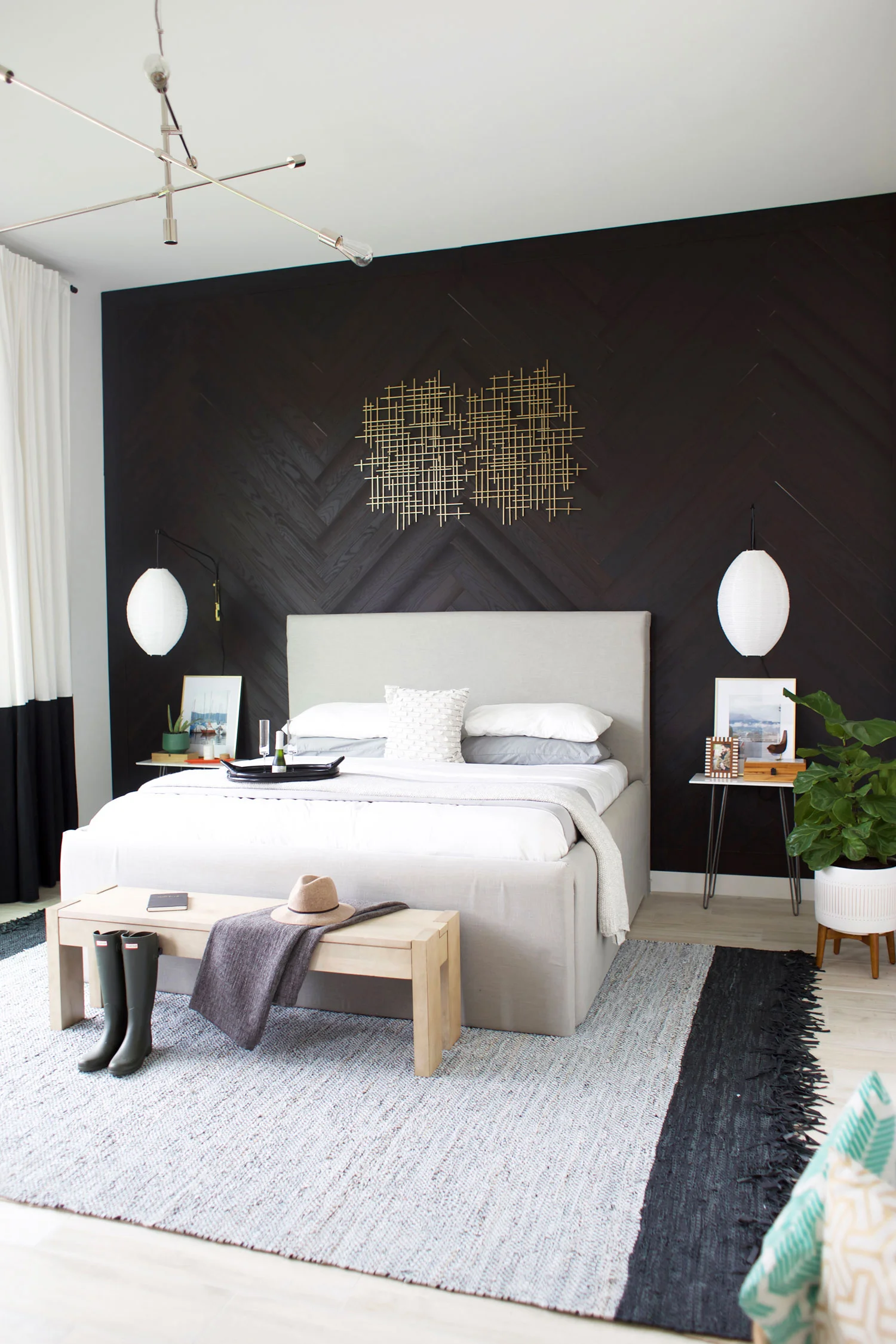
Credits: Kristi Murphy
Dark herringbone boards add movement behind this pale upholstered bed without introducing a bright new color. Daylight catches the changing direction of the grain, making the wall interesting even where its finish is almost black.
The white bedding and lantern shaped lights create a clear foreground against that detailed surface. For a similar result, concentrate the pattern on one wall and let neighboring finishes stay simpler.
Lay out the board arrangement before installation so the central meeting points relate comfortably to the bed. A wooden bench extends the material story at floor level.
There is no need to match every wood tone exactly; the light bench and dark wall work together because each has a distinct place in the room.
4. Use Pale Wood as a Flexible Furniture Foundation
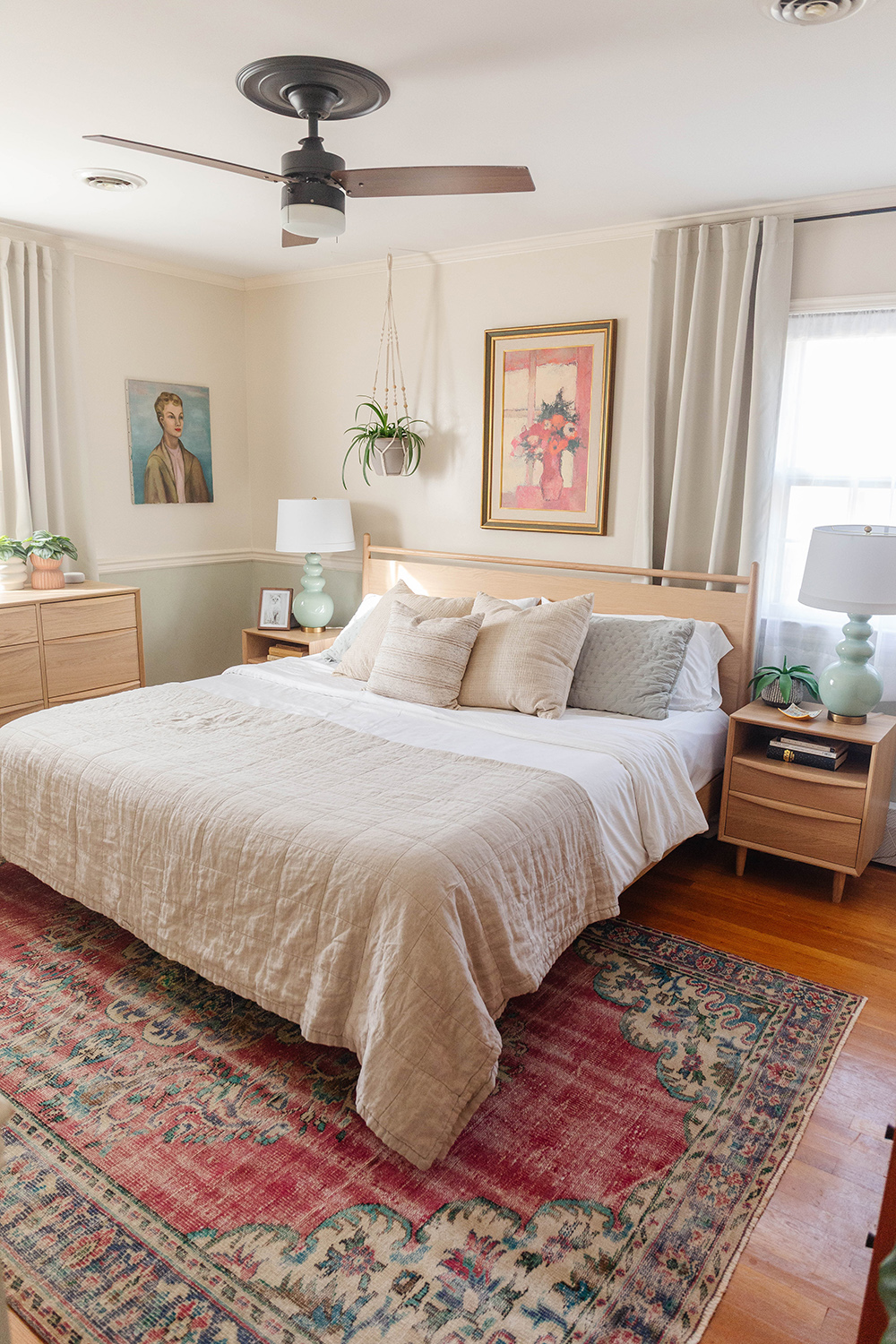
Credits: Carrie Waller / Dream Green DIY
A light wooden bed and matching nightstands create a calm starting point for this layered room. The narrow upper headboard rail remains visible above the pillows, adding a small structural detail without towering over the mattress.
Books fit into open bedside cubbies, while drawers keep less decorative necessities out of sight. This arrangement can adapt to many interests because the furniture does not dictate a strict theme.
Here, a faded patterned rug, collected paintings, and mint colored lamps add personality around the neutral foundation. When choosing similar pieces, compare the height of each nightstand with the finished bed.
Leave enough space to use the drawers and walk around the frame comfortably. Good everyday proportions will outlast any particular pillow arrangement.
5. Make a Low Dresser Work Beneath a Window
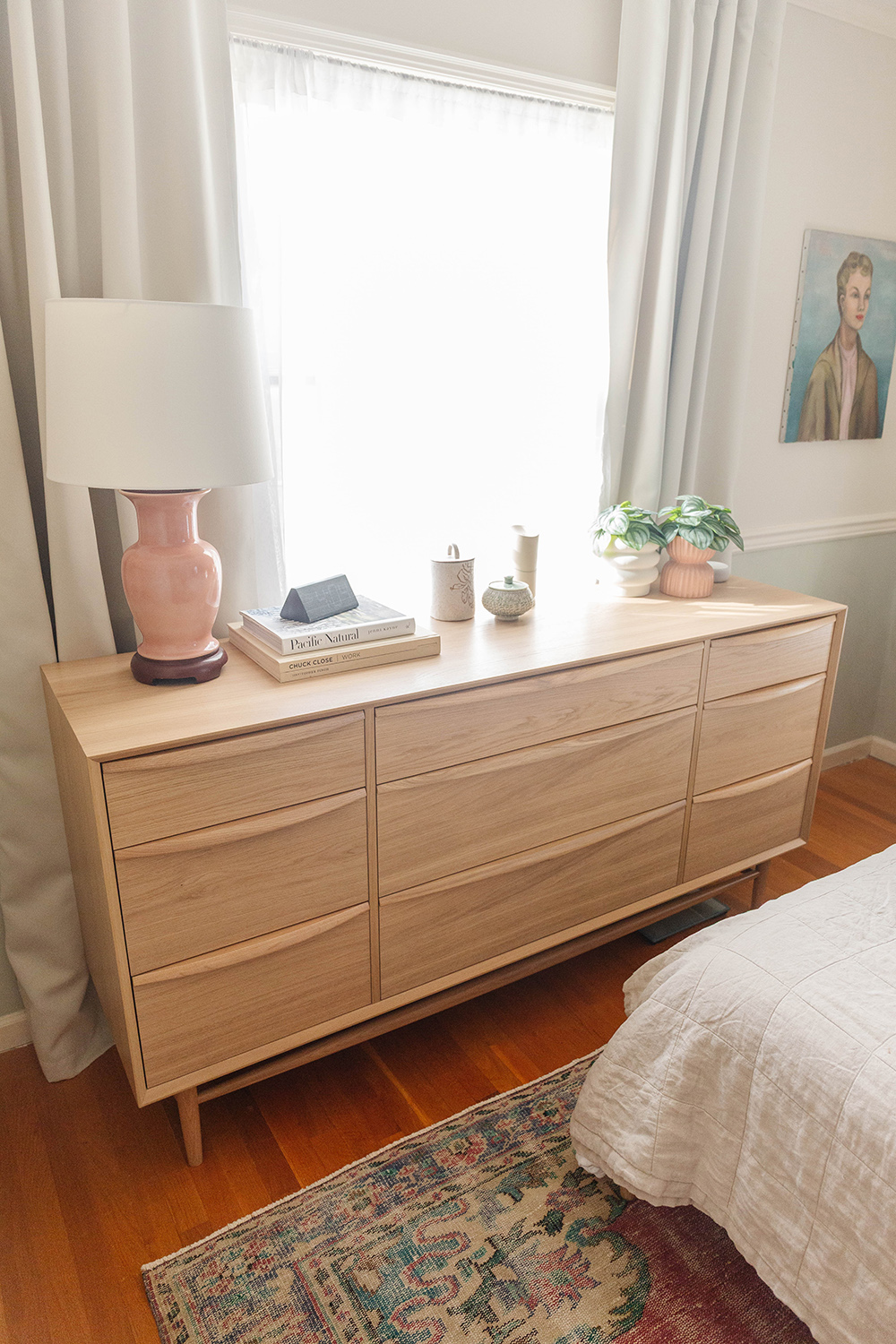
Credits: Carrie Waller / Dream Green DIY
The long dresser in this bedroom uses the wall below a window while leaving the upper part of the room open. Its broad drawers and recessed edges create a clean front, with natural grain providing the decoration.
A lamp, books, and a few small objects sit in separate groups across the top rather than covering every available inch. Before placing storage under a window, check the sill height, curtain movement, nearby vents, and any required exit access.
Leave space in front for drawers to open fully. The low shape is especially useful when a tall cabinet would feel heavy beside the bed.
A consistent wood finish can connect the storage to other furniture without requiring an entire matching bedroom set.
6. Turn a Window Bay Into a Reading Retreat
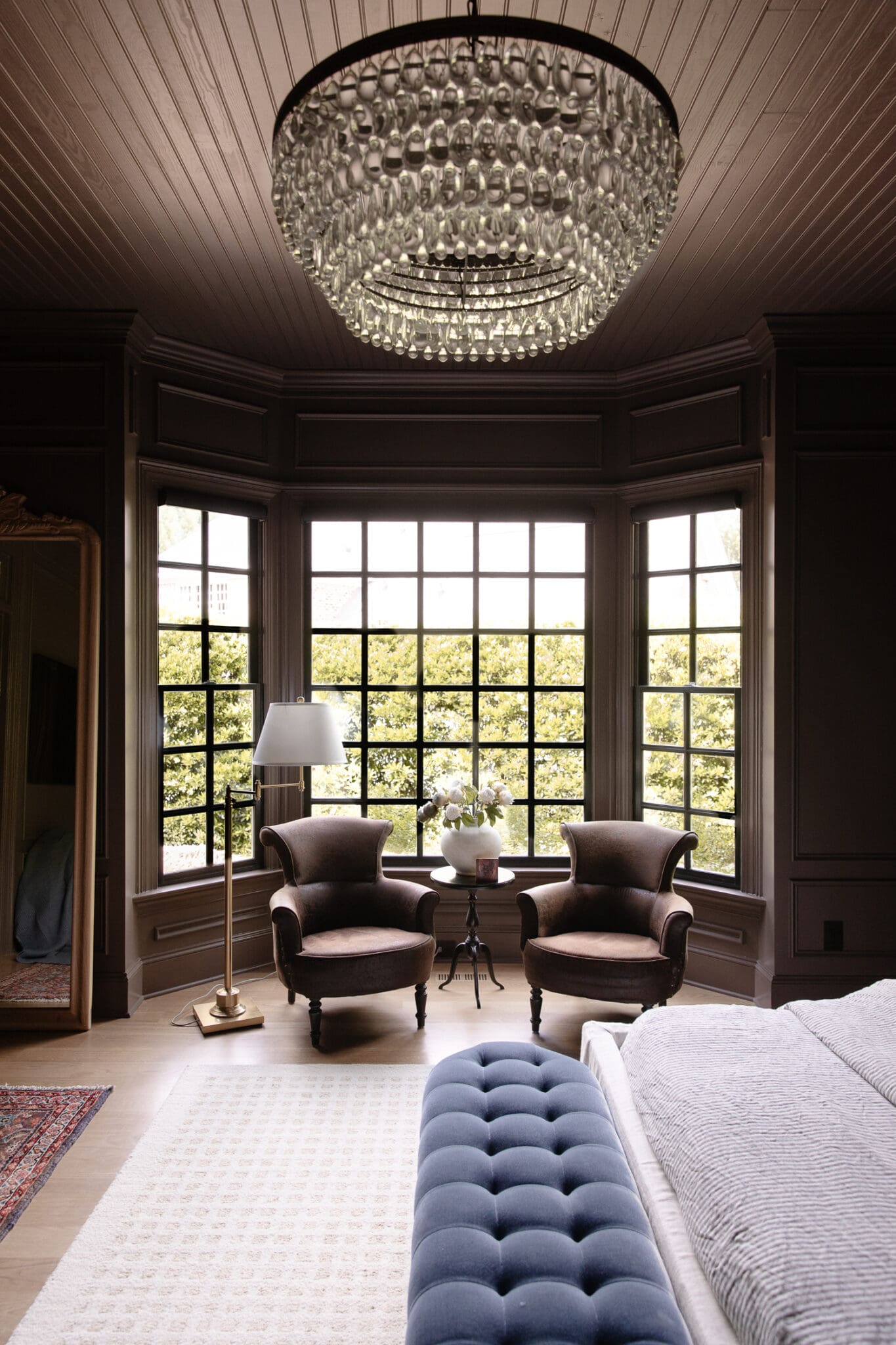
Credits: Chris Loves Julia
Two upholstered chairs turn this bedroom's window bay into a place to pause before the day begins or after it ends. Brown paint continues across the molding and ceiling, making the seating area feel enclosed despite the generous daylight.
A small central table provides a shared landing spot, while a floor lamp supports reading when the windows no longer supply enough light. You can borrow the arrangement with a single chair if your room is smaller.
Start with a seat that feels comfortable for the way you actually read, then add only the surface and lighting you need. Keep the route to the windows clear.
The aim is a useful retreat within the bedroom, with furniture that earns its footprint.
7. Reserve a Clear Surface for Study or Creative Work
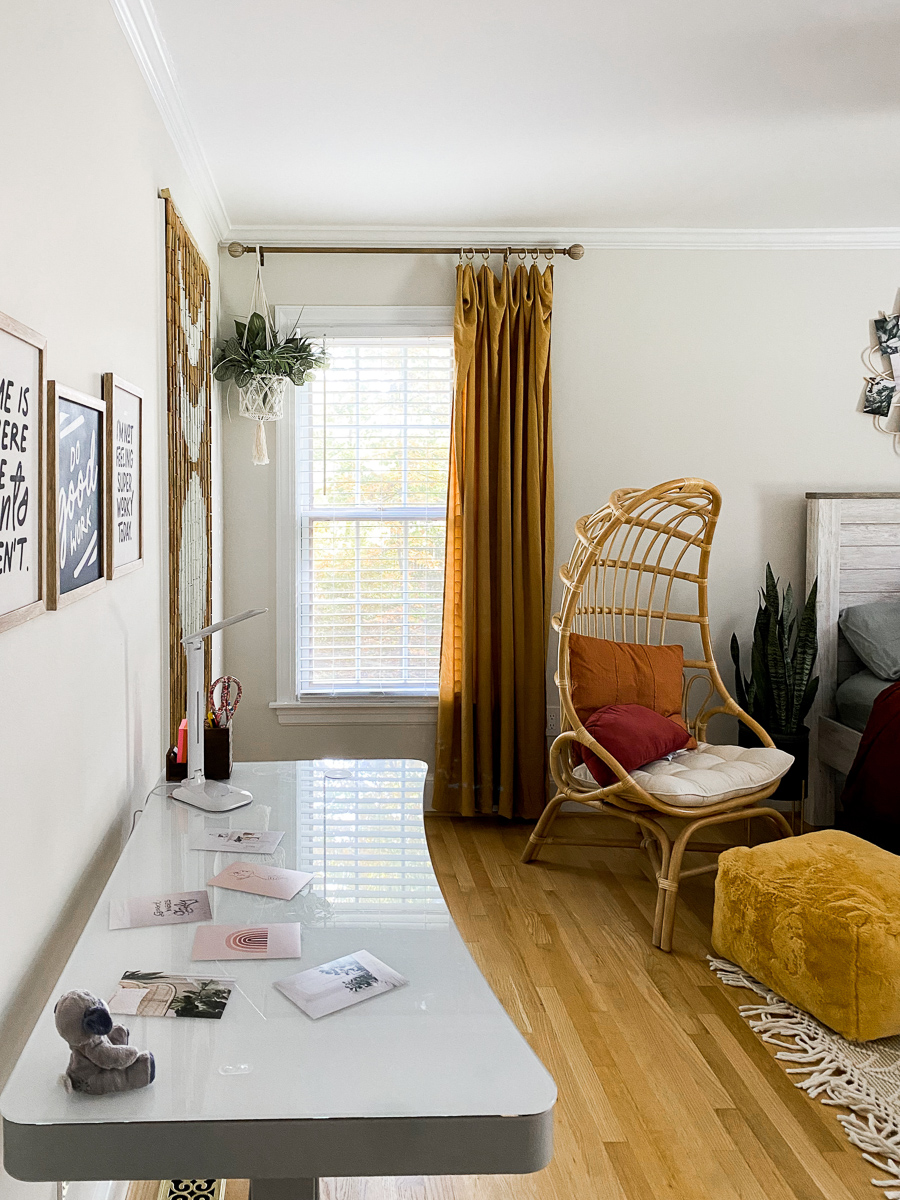
Credits: Aniko / Place of My Taste
A slim white desk gives this bedroom a separate place for writing, studying, or working on a small project. Its light finish blends with the wall, while the nearby rattan chair and mustard curtain bring warmth to the corner.
A compact task lamp leaves most of the desktop available for the activity itself. If your bedroom must serve several purposes, establish a clear boundary between the work surface and the bed.
Choose a supportive chair suited to the hours you will spend there, even when a decorative lounge chair sits nearby. Plan a place for supplies and cables before they accumulate.
Keeping the center of the desk open makes it easier to switch activities and put work away each evening.
8. Build a Listening Corner Around Favorite Records
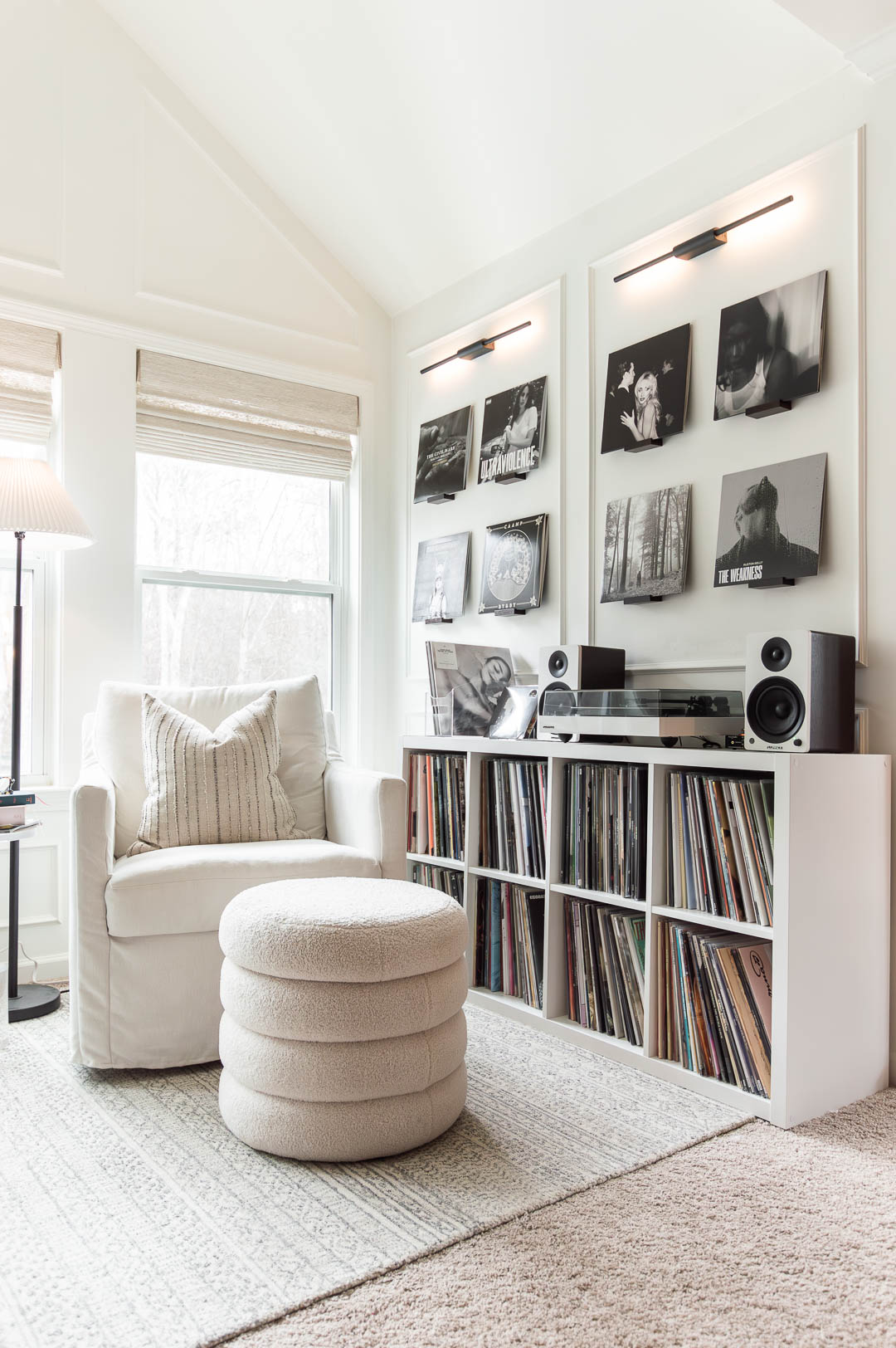
Credits: Kelley Nan
A record collection becomes part of the room's personality in this bright listening corner. Square cubbies keep albums upright below the turntable, and individual wall ledges display a changing selection of covers above it.
The comfortable chair and rounded ottoman make the arrangement useful for more than storage. Start with the equipment and collection you actually own, then measure the space needed to handle records without bumping neighboring objects.
A stable surface and sensible speaker placement matter more than filling every shelf. Keep sleeves away from direct sun, heat, and damp conditions.
The pale furniture allows the album art to stand out, showing how a personal interest can shape a bedroom without taking over its whole color scheme or layout.
9. Put Spare Bedding in Drawers Beneath the Mattress
Credits: Shara / Woodshop Diaries
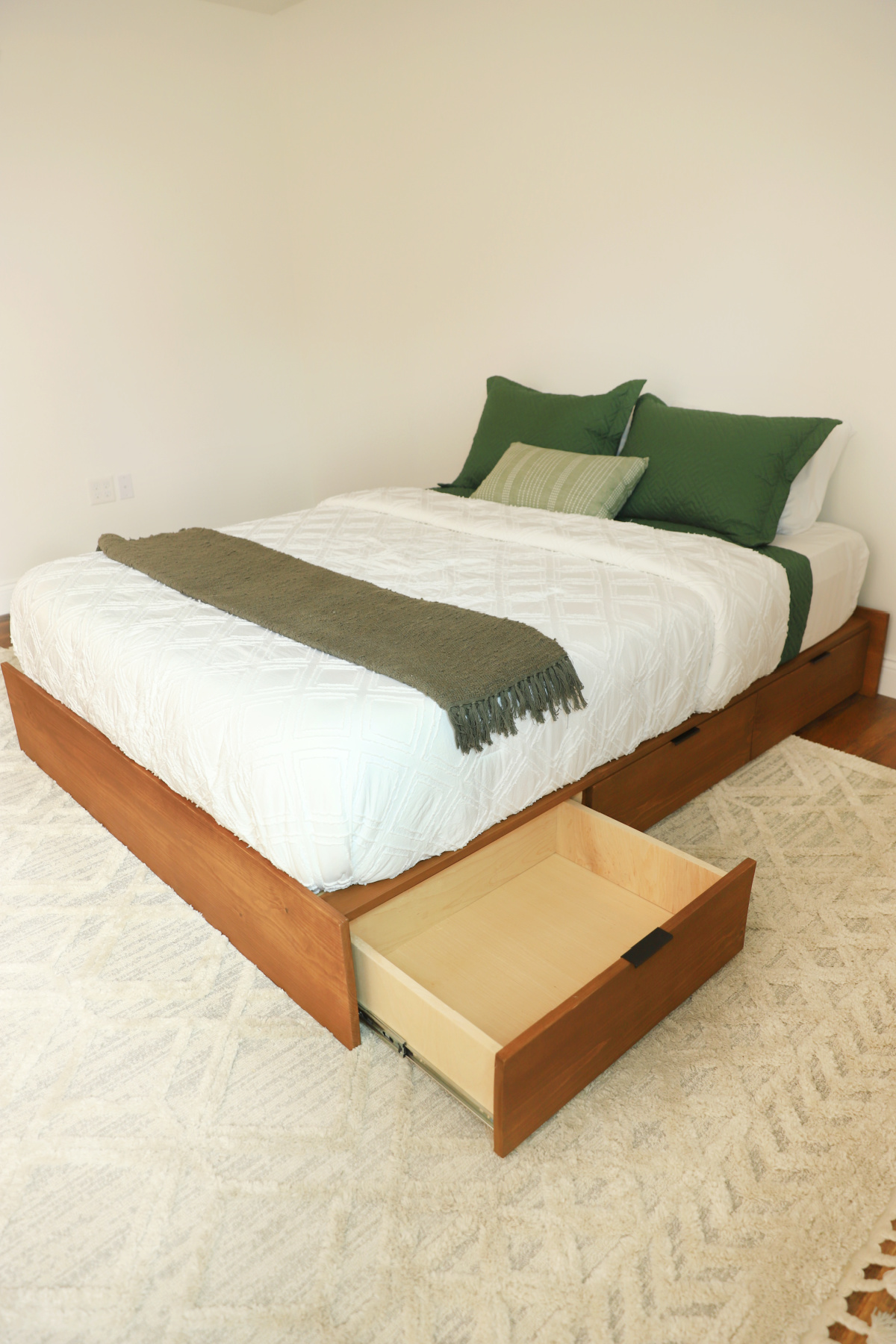
The open drawer in this wooden platform shows how much useful storage can fit beneath a bed. A simple dark pull makes it easy to access, while the closed drawer fronts blend into the frame.
This can be a practical alternative to adding another chest when floor space is limited. Measure the room with the drawers fully extended, including any rug thickness that could affect their movement.
Organize the contents by use so spare sheets, blankets, and seasonal clothing do not become one mixed pile. White bedding and green pillows keep the substantial wooden base from feeling visually heavy.
Choose a storage arrangement that suits your routine, and remember that the area beside the bed must remain accessible every day.
10. Let Open Wooden Shelves Frame a Small Plant Collection
Credits: Jules Acree
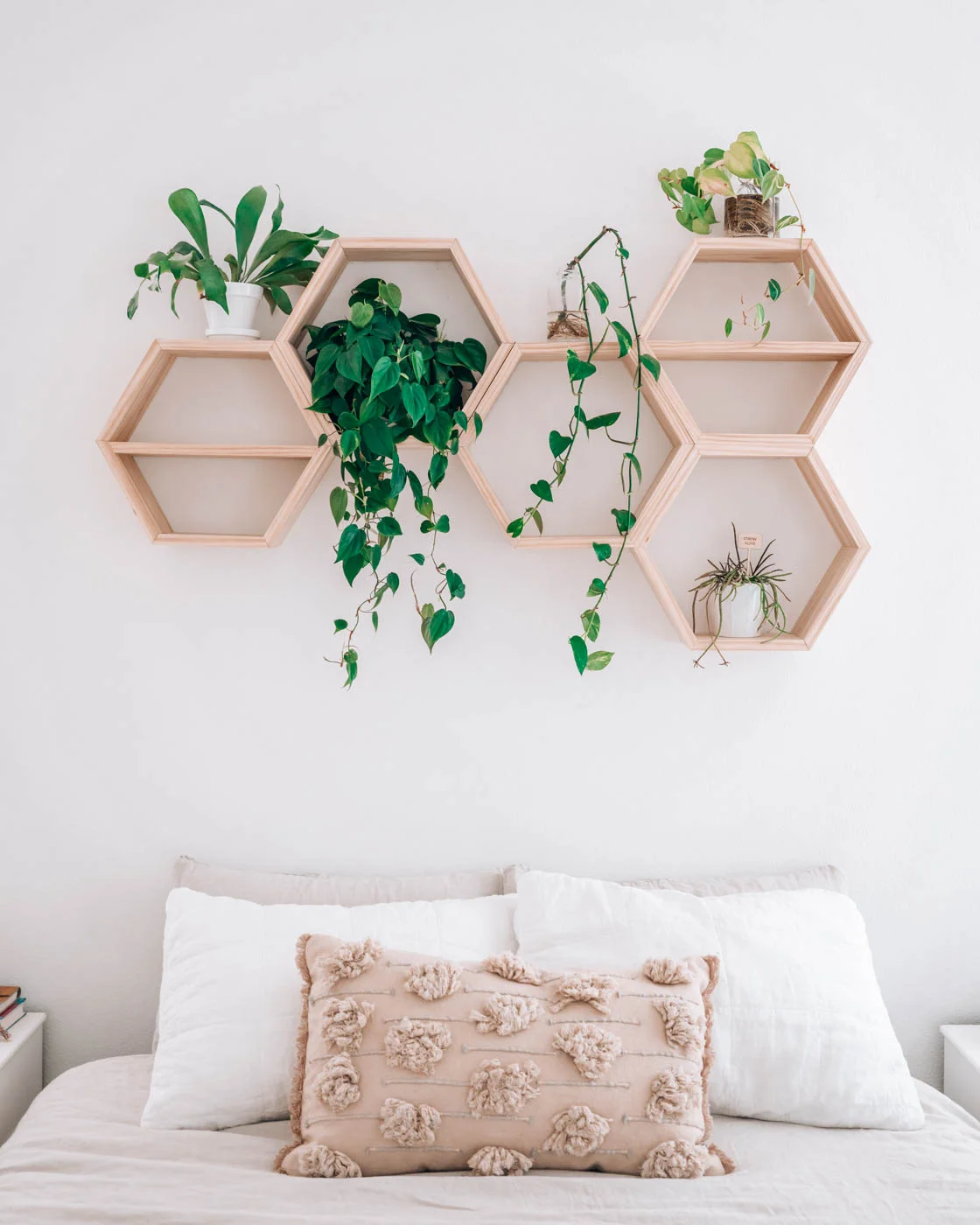
Hexagonal shelves turn a few plants into a defined wall arrangement above this light bedroom. Some compartments remain empty, allowing the connected wooden outlines to read clearly instead of becoming a solid mass of objects.
Trailing leaves soften the geometry, while pale bedding keeps the lower part of the scene quiet. The same idea can organize a small collection of lightweight objects, provided the shelves are suitable for their weight.
Plan the arrangement on paper before making holes, and use fixings appropriate for the wall and load. Avoid placing heavy or unsecured items above a sleeping area.
Plants also need accessible watering positions and adequate light. A thoughtful display should be easy to maintain rather than becoming another crowded surface.
11. Use Sculptural Sconces to Free the Nightstand
Credits: Sara Ligorria-Tramp / Emily Henderson
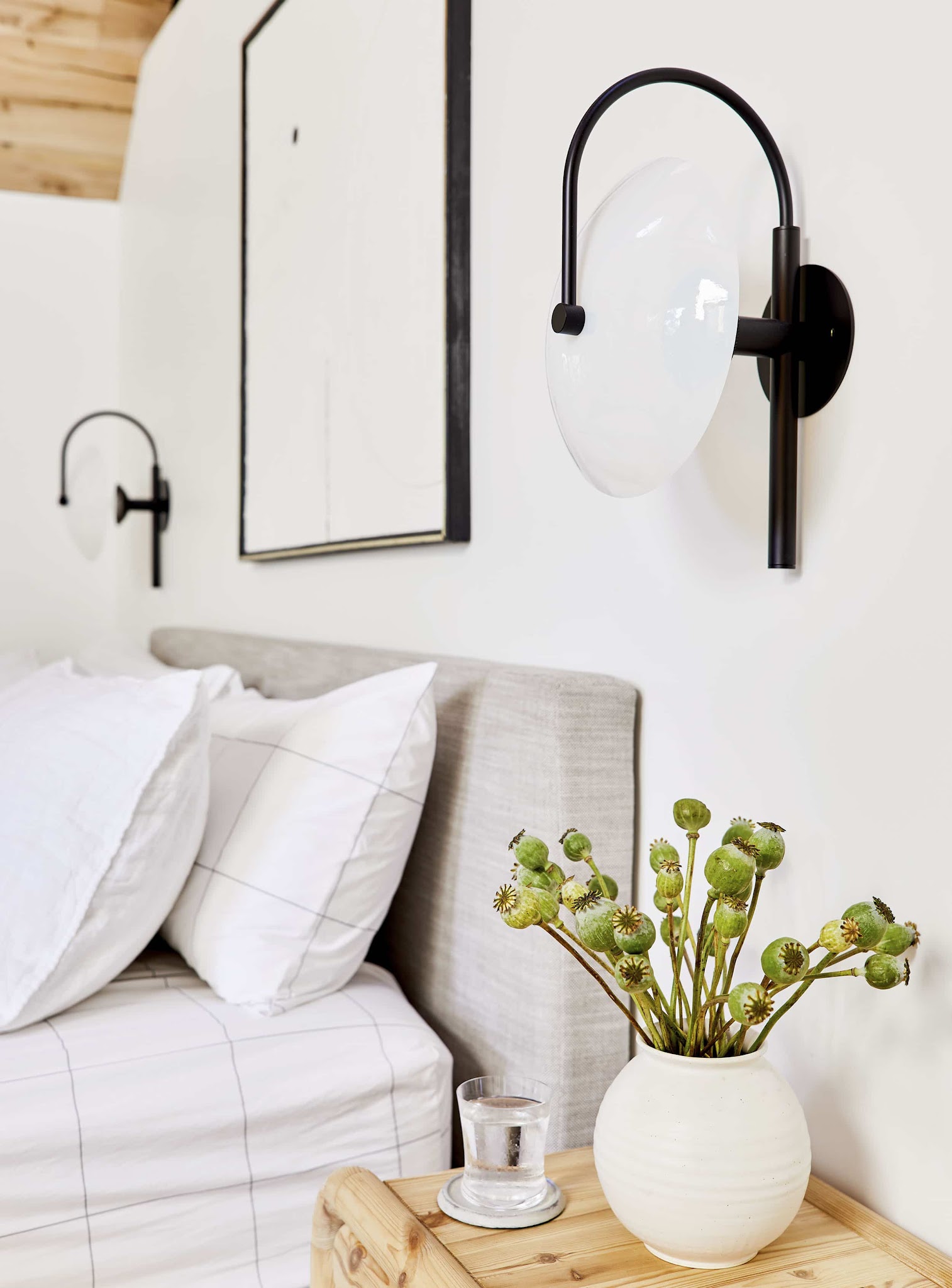
The curved black sconces in this bedroom provide a strong outline against pale walls without occupying the bedside surface. Their white circular shades repeat the soft tones of the upholstered headboard, pillows, and vase below.
Moving a lamp onto the wall can leave more room for water, glasses, or a book, especially beside a narrow bed frame. Decide on placement while sitting on the actual mattress so the fixture and controls remain comfortable to use.
Consider whether the light is intended for reading, general atmosphere, or both before selecting its shade and brightness. The wooden nightstand adds warmth to the restrained palette.
With a distinctive fixture doing some decorative work, the rest of the bedside arrangement can remain pleasantly simple.
12. Pair Deep Green Walls With Useful Light Colored Storage
Credits: Jordan Jean
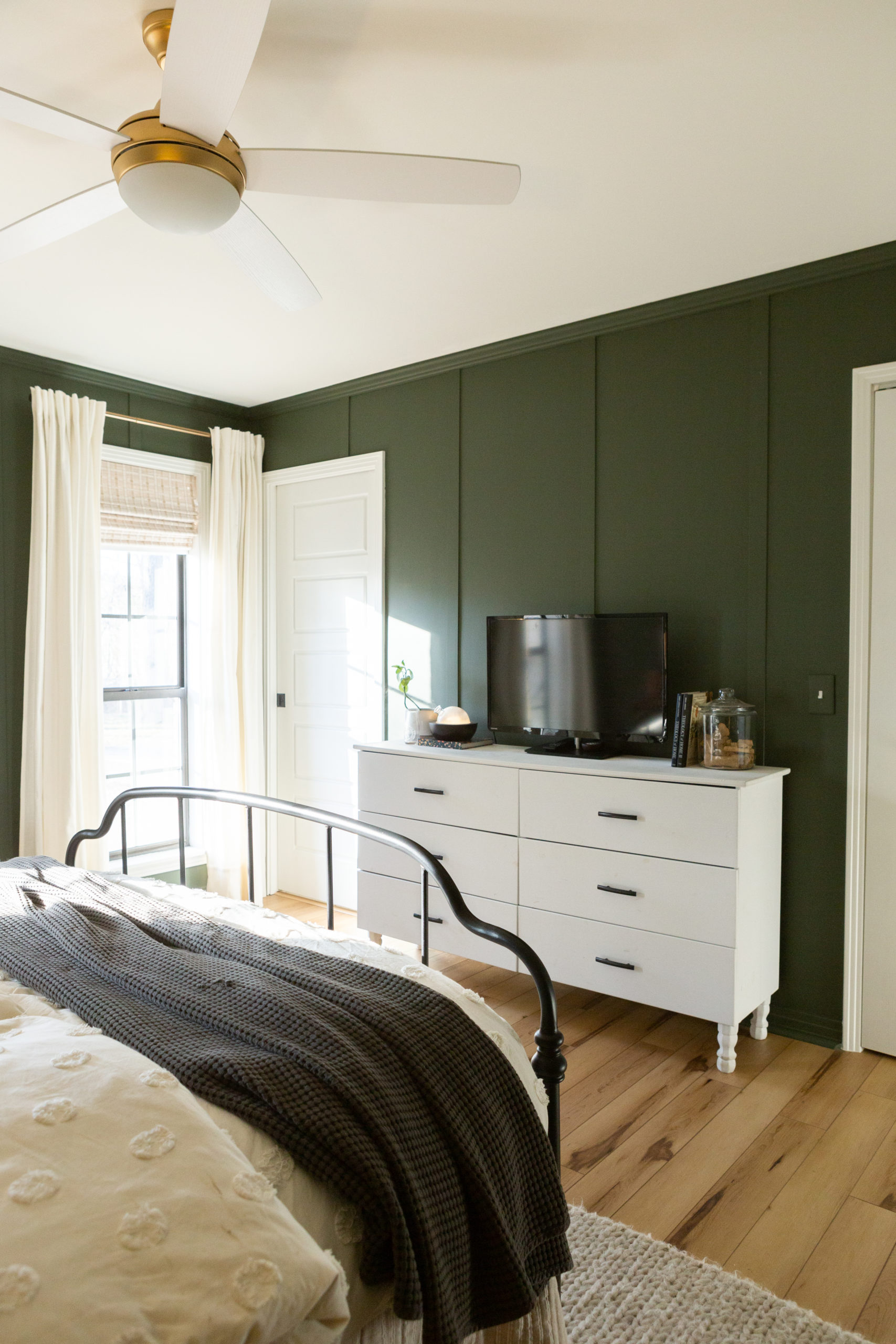
A pale dresser stands out clearly against the deep green paneling in this bedroom. The contrast makes the drawers easy to distinguish while allowing the dark television above to recede into the background.
Simple black handles connect the storage to the metal bed frame, creating a small repeated detail across the room. This is a useful combination when you want saturated walls but prefer furniture that feels lighter.
Choose storage according to what needs to fit inside, then assess its proportions beside doors and windows. Keep electronics and decorative objects from consuming the whole top surface.
White curtains and trim maintain a bright edge around the room, while warm floorboards prevent the green and black elements from feeling too severe.
13. Anchor an All White Room With a Fine Geometric Rug
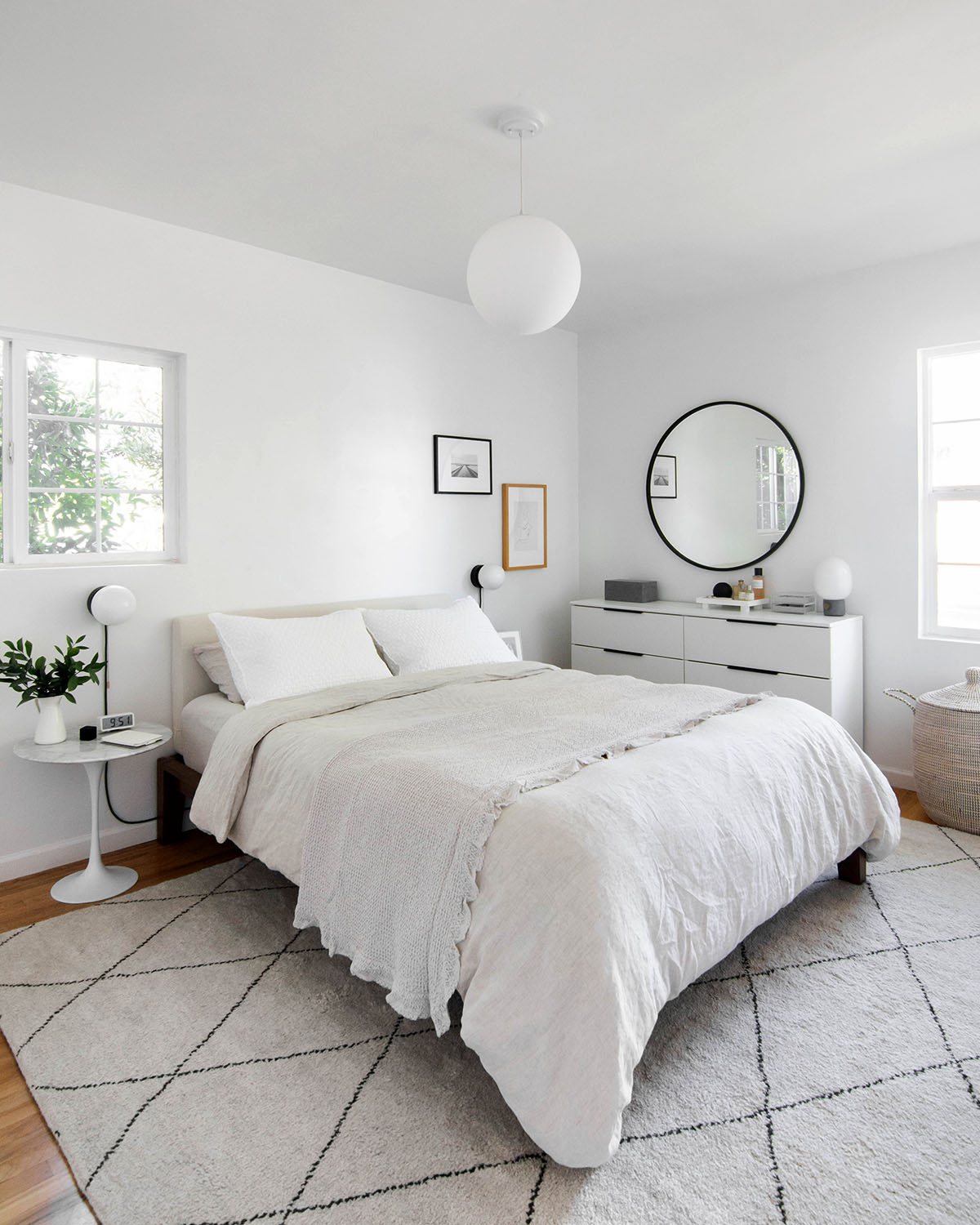
Credits: Amy / Homey Oh My
Thin dark lines across this pale rug give the bedroom structure without disrupting its light appearance. They connect visually with the round mirror, small frames, and narrow details in the wall lights.
The larger pieces stay white or softly neutral, so texture becomes important in the bedding and woven basket. If you prefer a quiet room, a restrained rug pattern can supply definition more gently than several contrasting furniture pieces.
Check how much rug will remain visible once the bed is in place, along the sides where you step down each morning. Repeat the dark accent sparingly elsewhere to make the choice feel intentional.
Leaving some walls empty helps the shapes and materials you have selected remain easy to appreciate.
14. Reclaim Floor Space by Moving a Dresser Into the Closet
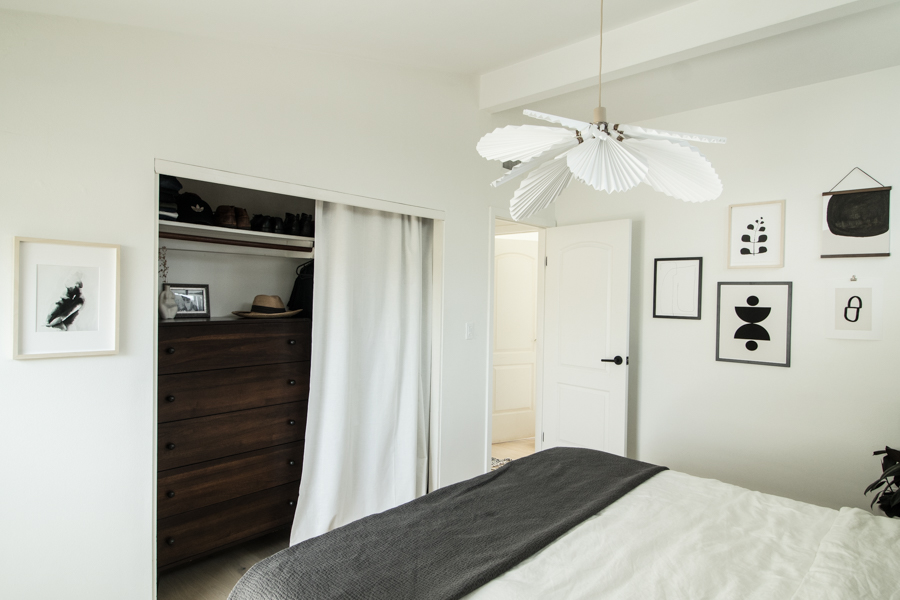
Credits: Jennie Sullins / Jennifer J Sullins
A dark wooden chest fits inside this bedroom closet, freeing the surrounding room for movement. The curtain can conceal the storage when desired, while the open portion reveals shelves above the drawers.
This approach works best when the closet layout suits the mix of hanging and folded clothes you own. Measure depth carefully, account for handles, and confirm that every drawer can open without catching the curtain or neighboring storage.
Secure the furniture according to its instructions rather than relying on the closet walls to stabilize it. The room outside stays simple, with pale walls and a small group of graphic prints.
Consolidating clothing storage can make an existing bedroom feel better organized without requiring additional furniture or major renovation.
15. Create Warmth Through Oatmeal Textiles and Painted Brick
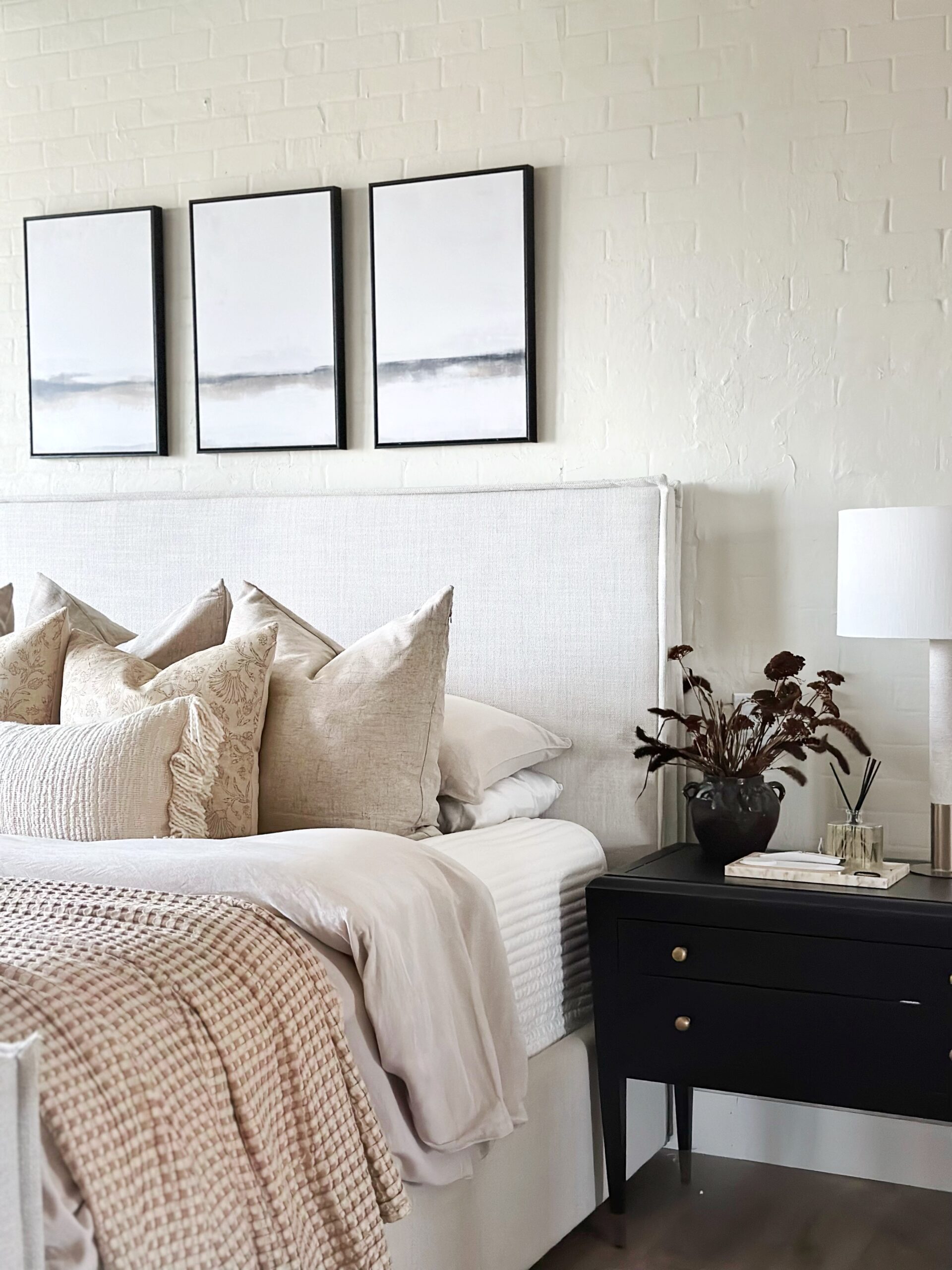
Credits: Jordyn / Our PNW Home
Painted brick provides an uneven backdrop for the oatmeal and cream textiles on this bed. The raised weave of the throw, softer pillow fabrics, and smooth upholstered headboard create variety within a narrow range of colors.
A black nightstand and three slim picture frames add enough contrast to keep the arrangement defined. This is an approachable direction if you like a light room but find completely flat white surfaces uninviting.
Work with texture at several scales, from the larger wall pattern to the smaller details in the bedding. You can borrow the textile combination even without a brick wall.
Keep the number of accent colors limited so the materials remain the feature, and choose fabrics that suit your laundering routine.
16. Let One Colorful Artwork Lead a Quiet Bedside Palette
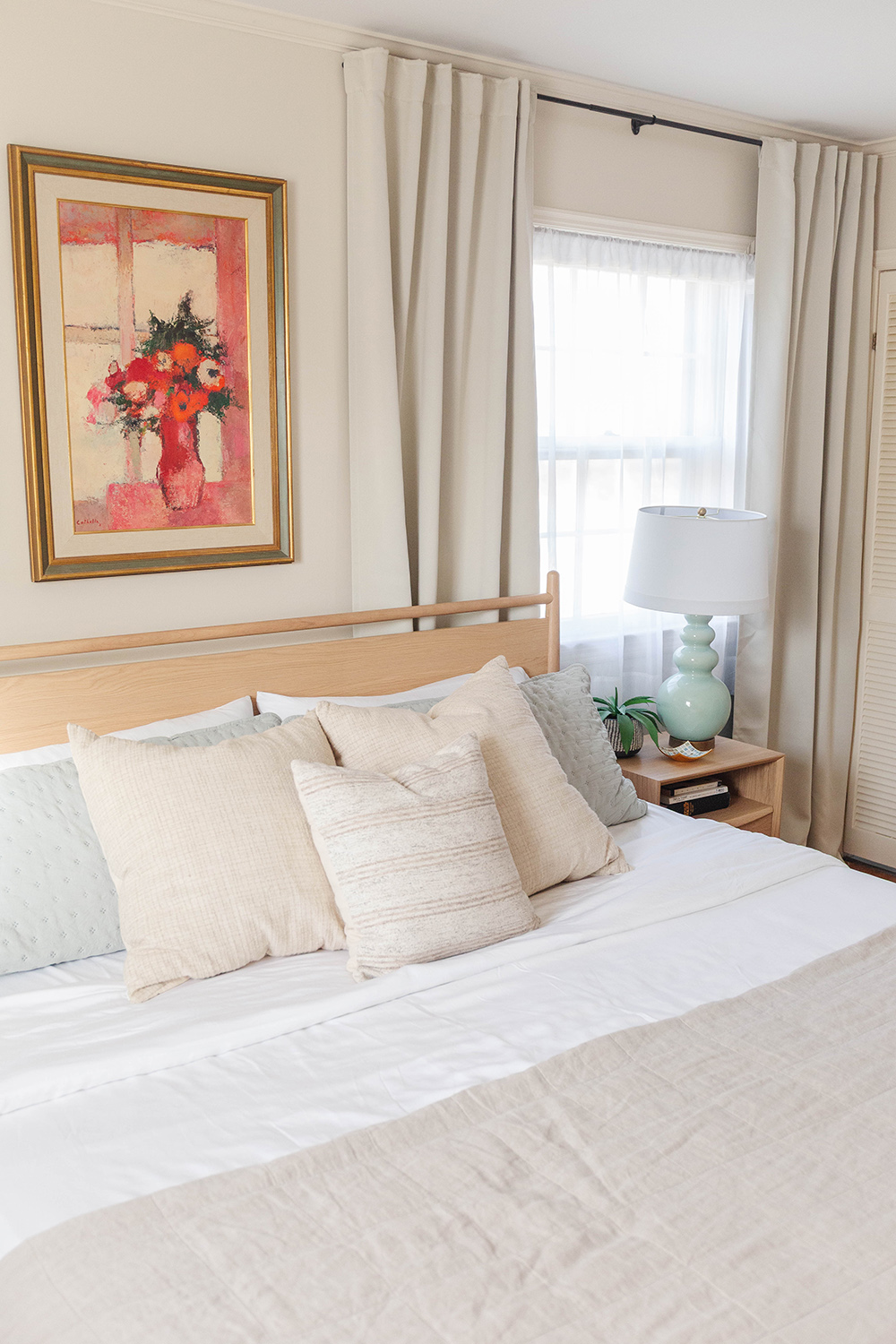
Credits: Carrie Waller / Dream Green DIY
A floral painting introduces concentrated color above this otherwise pale bed. Its pink and orange tones stand apart from the light wood and cream textiles, while the mint lamp adds a second gentle point of interest.
Choosing one artwork you enjoy can be an easier starting place than selecting every bedroom accessory separately. Give it enough clear wall space to be appreciated, and avoid surrounding it with pieces that compete for attention.
The long curtains create a soft vertical frame beside the headboard. A small bedside shelf keeps books close without filling the tabletop.
Your chosen picture can be abstract, photographic, or botanical; the useful principle is letting a meaningful piece guide the room at a scale that feels comfortable.
17. Use a Round Mirror to Echo a Green Bedroom Corner
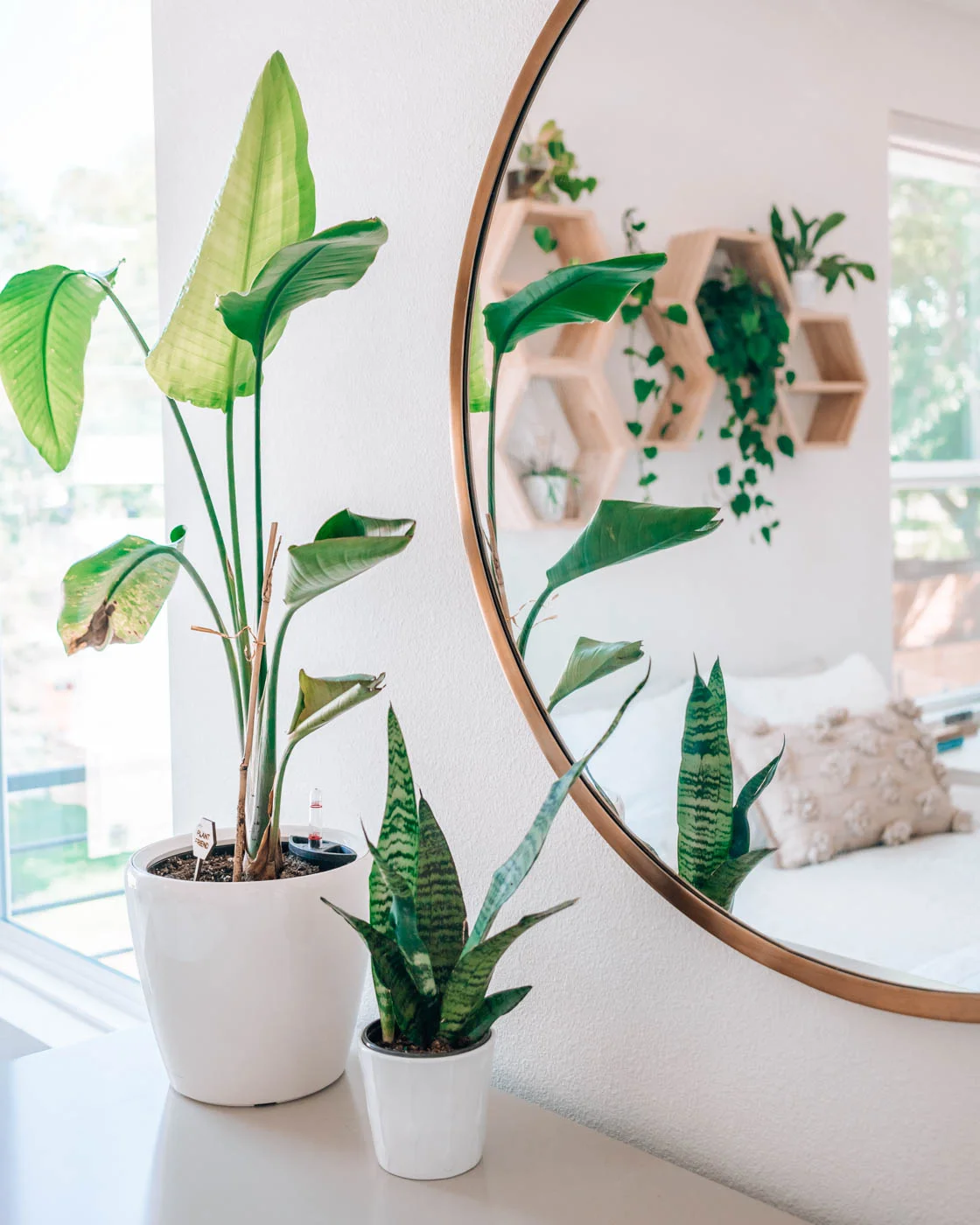
Credits: Jules Acree
The round mirror above this dresser reflects the bedroom's wooden shelves and trailing plants, linking separate parts of the space. In front, two white pots create a simple grouping with different leaf shapes and heights.
The arrangement shows how greenery can feel intentional without requiring a large collection. Choose plants for the light you can provide and the care you are willing to give, then protect the furniture beneath their pots from moisture.
A mirror can repeat an attractive view, but check its reflection from the bed before deciding where to mount it. Secure it with appropriate hardware.
The narrow warm frame supplies a little contrast against the wall while leaving the plants and their reflected shapes as the focus.
18. Add a Compact Bench for Everyday Dressing
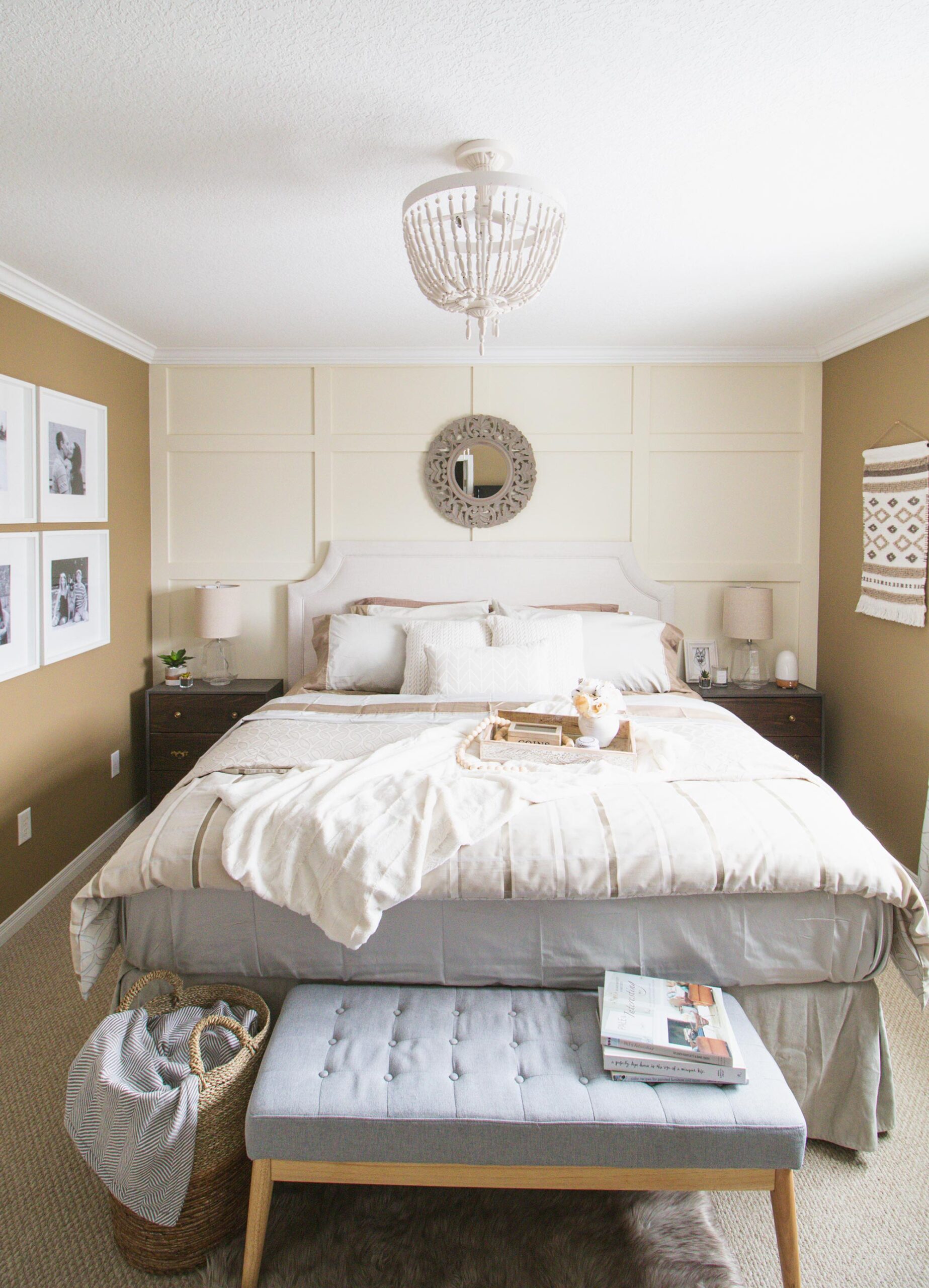
Credits: Brittany Stager
A small upholstered bench gives this bedroom a useful place to sit while putting on shoes or setting down tomorrow's clothes. Its gray fabric and pale wooden legs relate to the soft bedding without matching the darker bedside cabinets.
The bench occupies only part of the bed's width, leaving the arrangement visually open.
Measure the remaining walkway before adding a seat at the foot of any bed, and choose a size that will not interrupt access to storage or doors.
Keep its purpose clear so it does not become permanent clothing storage. A nearby basket can hold an extra blanket instead.
The room's balanced lamps and quiet paneling show how one practical addition can fit naturally into a restful layout.
19. Give an Antique Seat a Place Against Rich Teal Walls
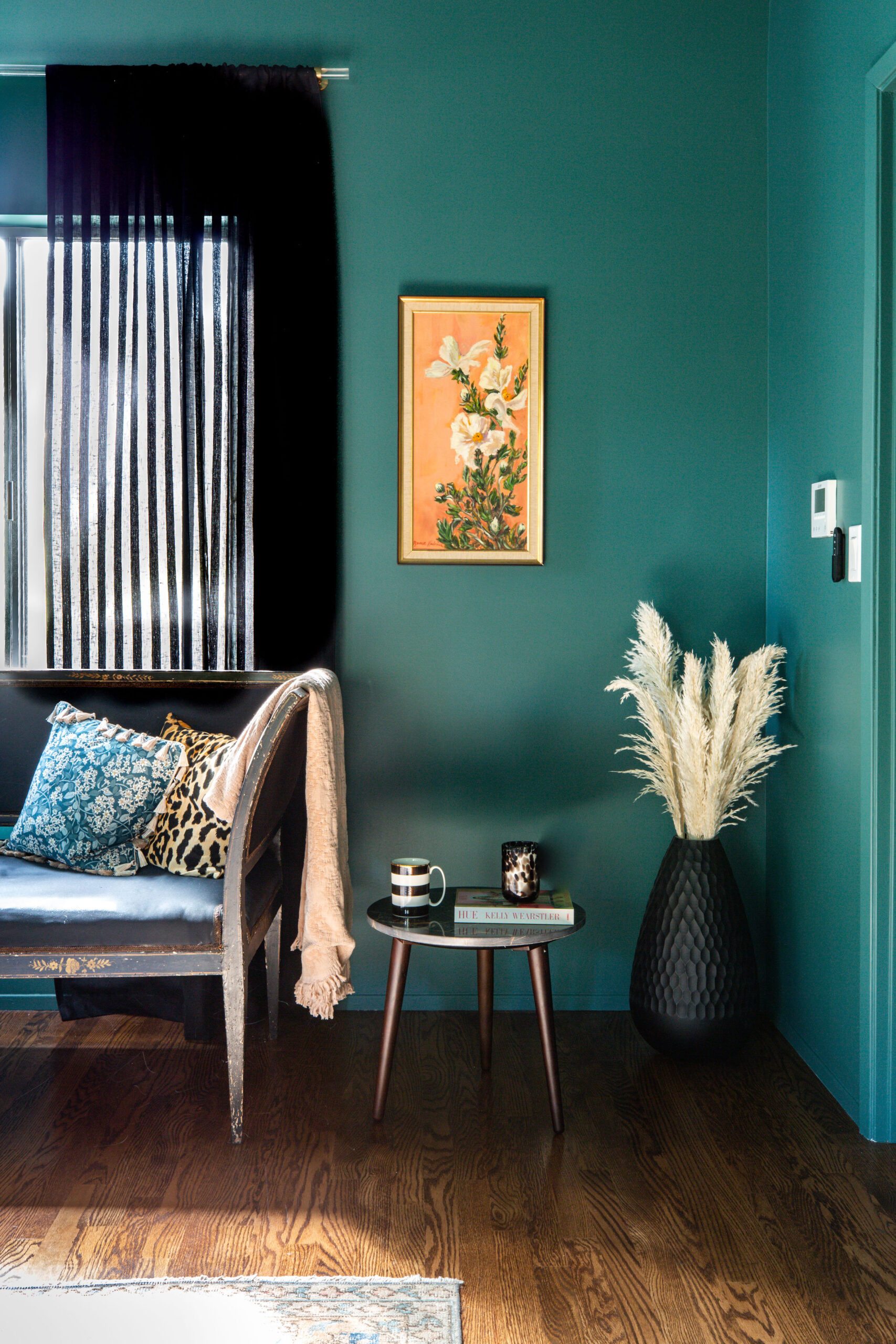
Credits: Annette / A Vintage Splendor
A timeworn wooden settee brings a different character to this teal bedroom corner. Its dark upholstery and curved frame sit comfortably beside a round table, while mixed cushions make the seat feel relaxed rather than formal.
The warm artwork and pale dried stems add contrast without covering the saturated wall. If you own an older chair or bench, consider whether the bedroom has a useful place for it before buying another matching piece.
Check the seat's condition and comfort, then give it a practical nearby surface for a book or drink. A collected item can make the room feel personal without requiring a historical theme.
Leave enough space around it to appreciate its shape and use it without awkward maneuvering.
20. Choose a Nature Print for a Crisp Two Tone Wall
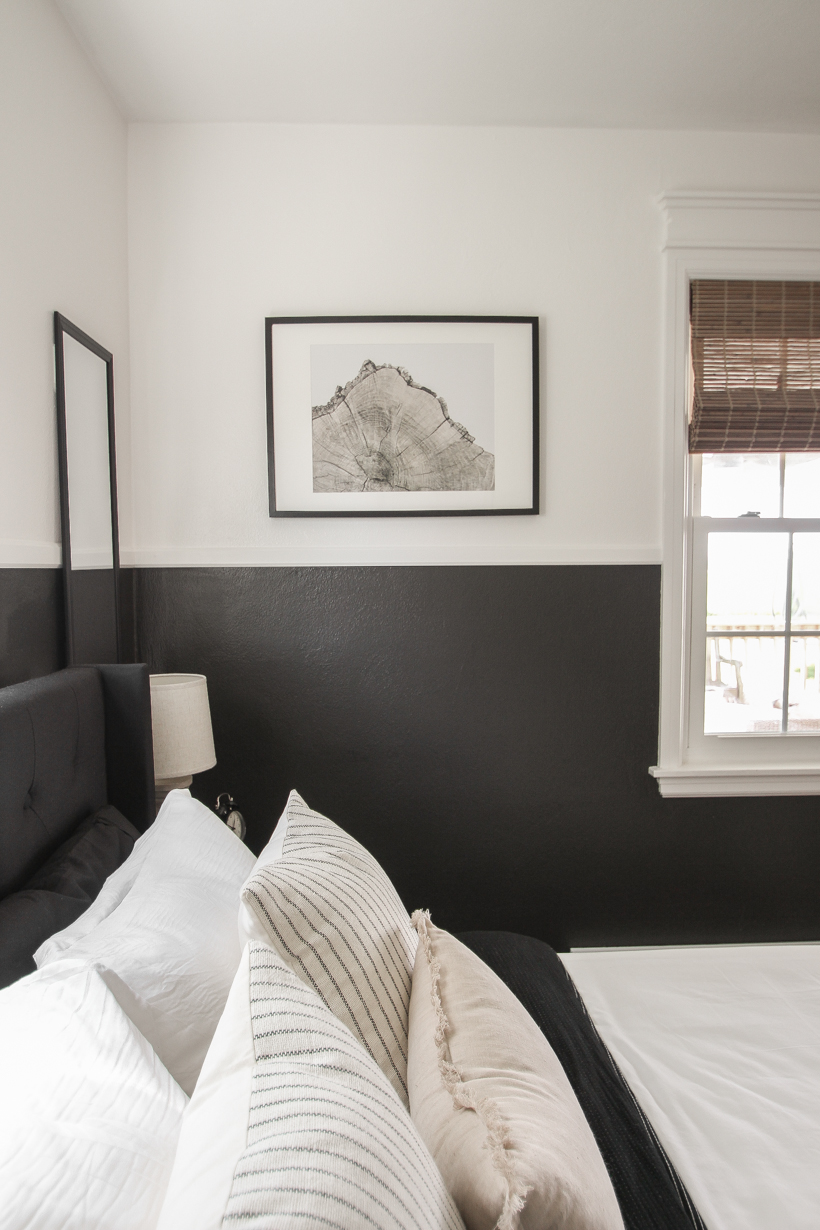
Credits: Liz Fourez / Love Grows Wild
A framed tree ring print adds a natural detail above the dark lower half of this bedroom wall.
Its fine lines are easy to appreciate against the pale upper section, while the black frame relates to the bed and neighboring mirror.
The arrangement offers a restrained way to bring an outdoor interest into a room without filling it with themed objects. Choose a photograph, drawing, or print that holds your attention, then give it a simple frame and enough surrounding space.
The woven window shade adds another natural texture beside the artwork. White bedding and a striped pillow keep the contrast crisp.
A small, considered reference to something you enjoy can be more satisfying than a roomful of generic decoration.