
A bedroom can feel personal without filling every surface with decorative objects. Bedroom Ideas For Women can start with one useful or memorable detail, then build a comfortable scheme around it.
The ideas here include hanging a globe light to free up nightstand space, balancing deep green walls with light, textured bedding, and adding a seat at the foot of the bed.
Other approaches use color on the ceiling, a bold circle behind the headboard, or extra storage beneath the bed. Together, they offer practical ways to shape a room around your routines and favorite finishes.
1. Give Your Plant Collection a Geometric Display
Credits: Jules Acree
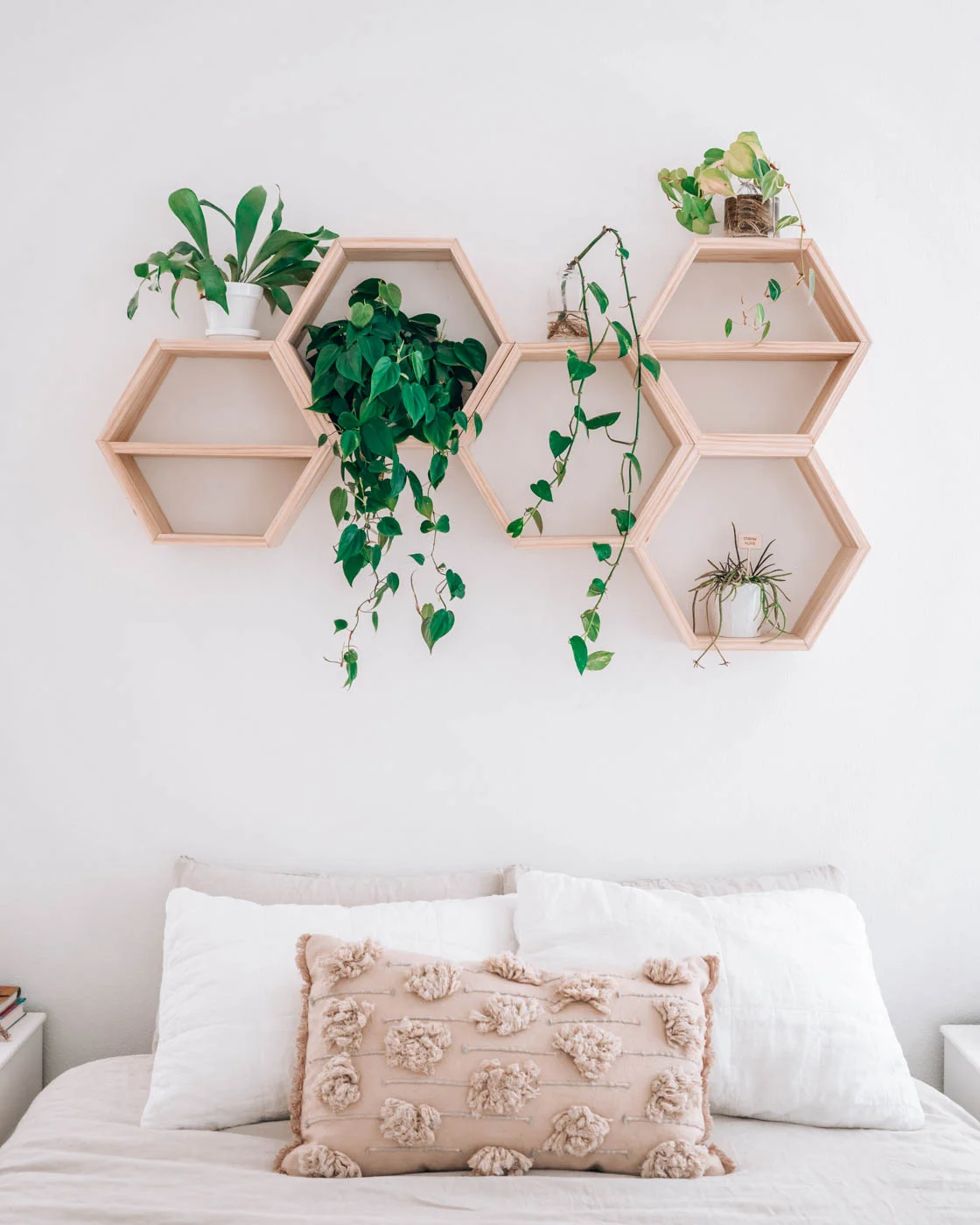
Your favorite hobby can become the starting point for a bedroom that feels personal. In this room, a collection of trailing plants fills a connected arrangement of pale wooden hexagons.
Several open compartments keep the greenery from hiding the shapes completely. The white wall and bedding give the display a quiet setting, while a textured cushion introduces detail closer to the pillows.
Think about the plants you can realistically maintain before selecting shelf sizes. Each pot needs appropriate light, watering access, and protection against leaks.
Use suitable fixings for the complete weight, and place heavy containers beside the bed rather than directly above sleepers. A smaller version could hold just two plants while still creating a distinctive, considered focal point.
2. Free the Nightstand With a Hanging Globe
Credits: Cass / Cass Makes Home
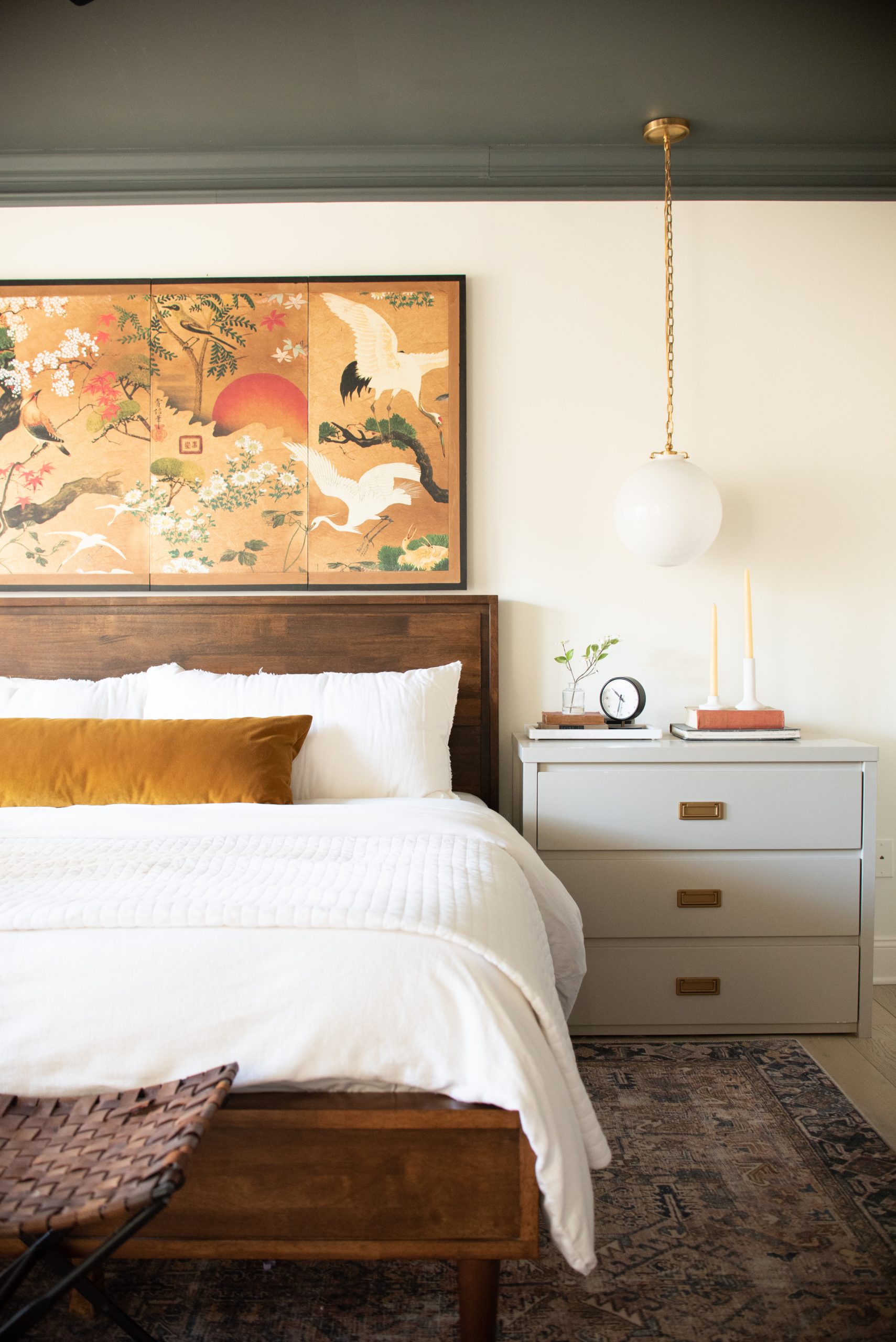
A frosted globe hangs over this bedside chest, leaving its broad surface available for a clock, books, and everyday essentials. The brass chain repeats the warm drawer hardware without requiring every finish in the room to match.
Behind it, golden artwork and a wooden headboard make the simple white light feel connected to the larger scheme. This approach is useful when a table lamp would take up space you need for practical storage.
Decide where the chest and mattress will sit before arranging electrical work. Check the pendant height from bed and while standing beside it.
Choose accessible controls and suitable installation for the fixture. Keep the tabletop lightly arranged so the extra space remains useful during your evening routine.
3. Build a Blue Palette Around Vintage Lamps
Credits: Instagram
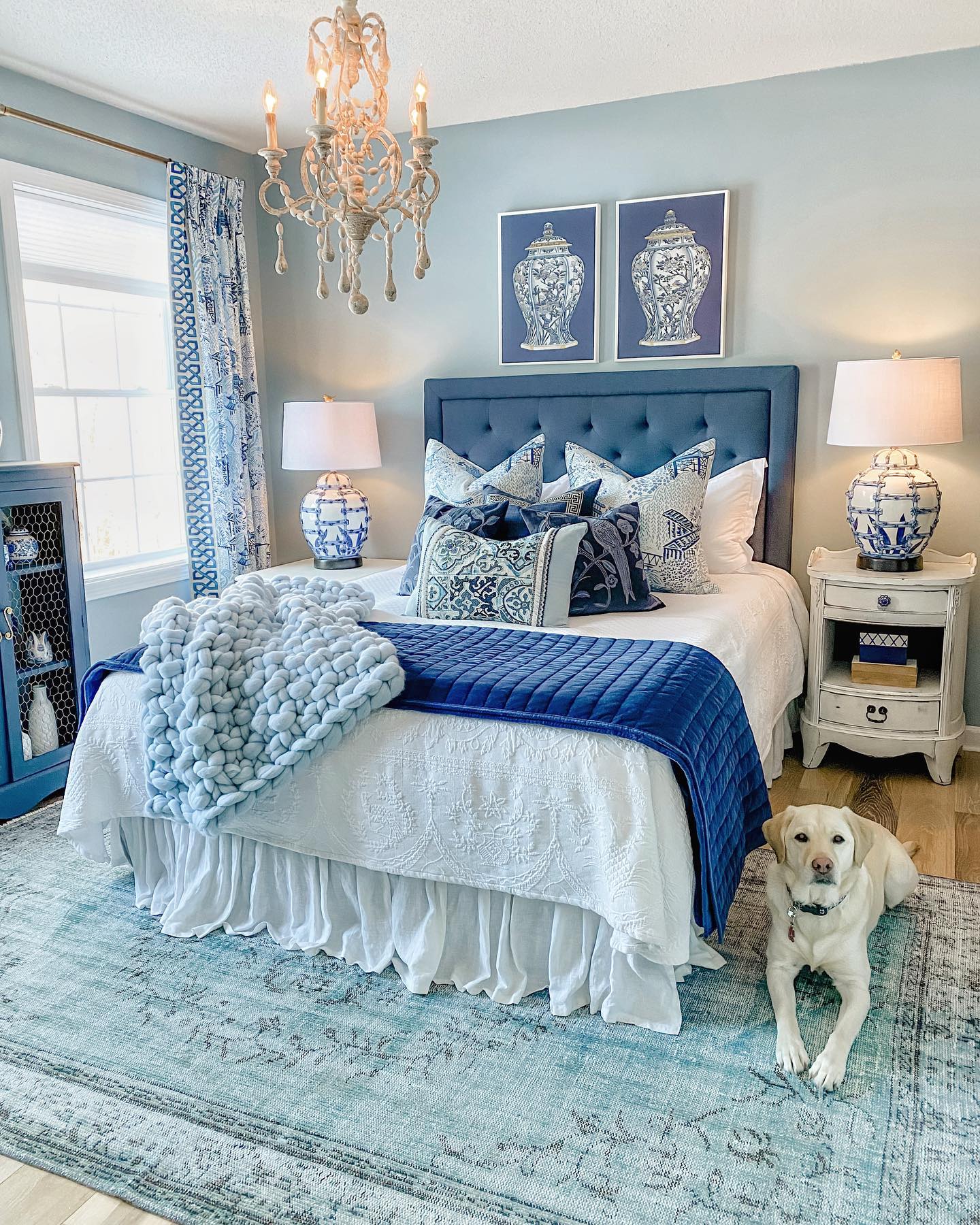
Matching lamps can give collected furniture a deliberate rhythm. In this guest bedroom, blue patterned lamp bases echo the framed jar illustrations, upholstered headboard, and layered pillows.
White shades provide a quiet interval between all those motifs. The creator found the lamps secondhand, a reminder that a bedroom need not arrive as a complete furniture set.
Start with a pair you love and borrow two or three colors from them for the rest of the room. Vary pattern size so tiny details do not compete across every surface.
Plain white bedding offers a useful foundation beneath decorative cushions and a blue throw. Before buying vintage lighting, have its electrical condition checked and confirm the bases fit your available bedside space.
4. Balance Deep Green With Light Textured Bedding
Credits: Lizzie Ravn / Emmerson and Fifteenth
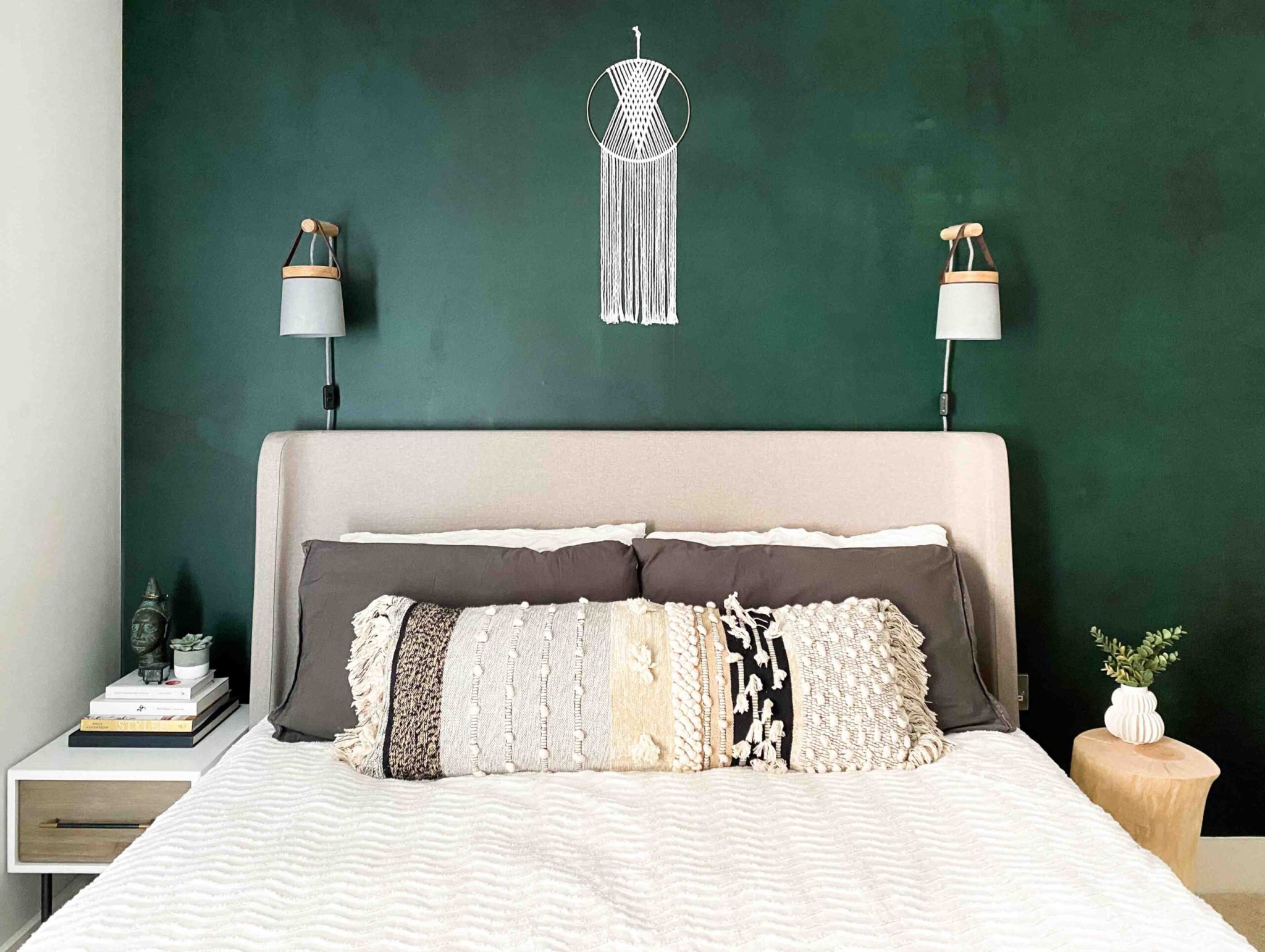
A deep green wall gives this bedroom a strong backdrop without needing a crowded collection of artwork. Light upholstery and a long textured pillow stand out clearly against it.
The two bedside pieces differ in shape and finish, yet matching wall lights create enough repetition to make them feel related. You can use that balance when keeping furniture you already own.
Try one darker surface, then compare pale fabrics with woven or tufted details in front of your paint sample. A little wood adds warmth without introducing another bold hue.
Keep decorative objects low near the bed so the lamps remain the clearer vertical features. The resulting arrangement leaves room for individual choices while maintaining a restful sense of order.
5. Make a Neutral Bedroom Rich in Small Textures
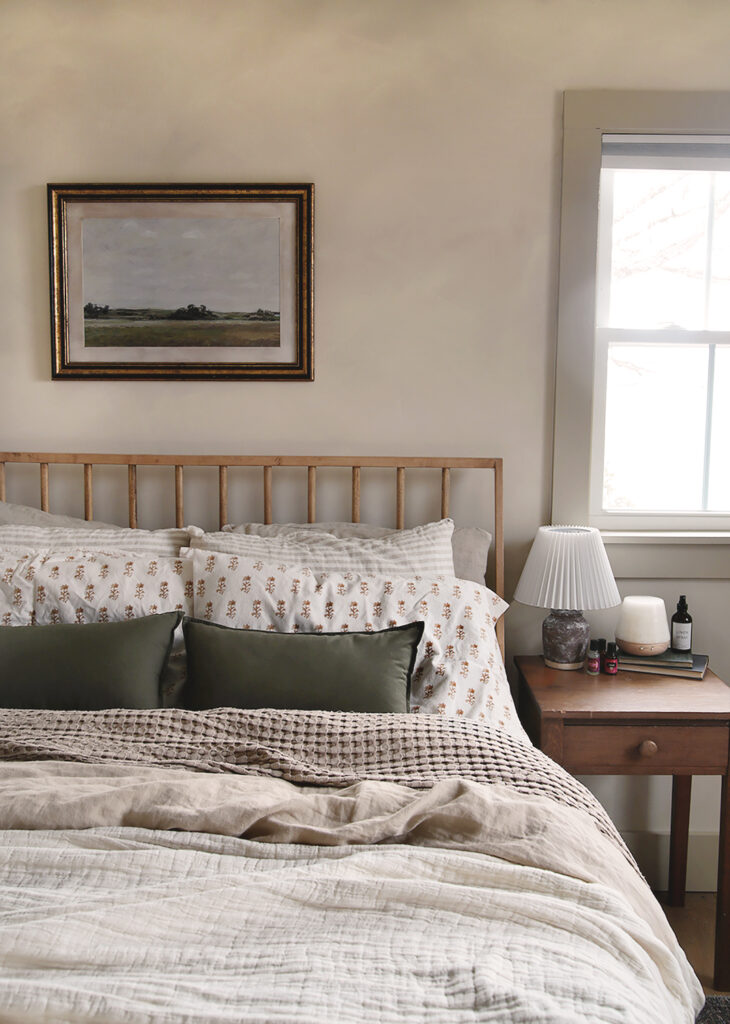
Credits: Manda / The Merrythought
Quiet color can still offer plenty to notice. This bedroom combines a wooden spindle headboard, tiny floral pillowcases, olive cushions, and several softly rumpled bedding layers.
The warm wall has gentle variations that catch daylight rather than demanding attention through a strong pattern. A small landscape above the bed continues the earthy palette.
To build a similar room, choose textiles for how they feel as well as how they photograph. Mix a smooth pillow with a waffle blanket or loosely woven cover instead of collecting several nearly identical fabrics.
Keep the bedside lamp proportionate to the table and leave a useful surface beside it. This restrained approach works well when you want your bedroom to feel comfortable through changing seasons.
6. Add a Useful Seat at the Foot of the Bed
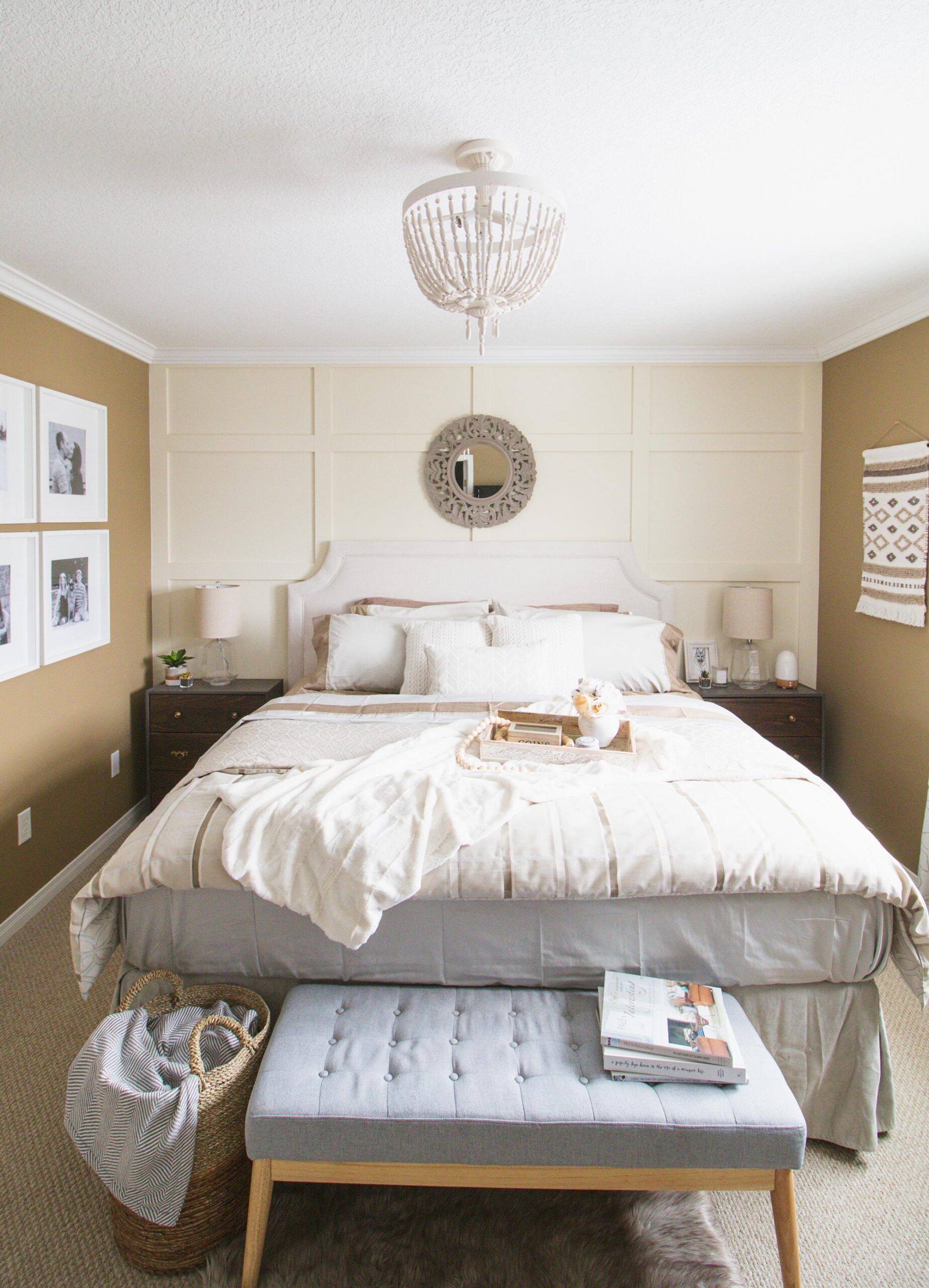
Credits: Brittany Stager
The gray tufted bench gives this pale bedroom a clear place to sit without making the room feel crowded. Its wooden legs relate to the warmer wall color, while the upholstered top echoes the softness of the bed.
A basket beside it offers somewhere to place the throw when the seat is needed. Consider the everyday reason for adding a bench before choosing its shape.
You might use it while dressing, setting down tomorrow's clothing, or arranging a bag. Measure the remaining walking space and check that nearby drawers still open.
A seat narrower than the mattress usually leaves the bed visually dominant. Keep most of the cushion clear so the furniture provides practical comfort rather than another display surface.
7. Carry a Favorite Bold Color Across the Ceiling
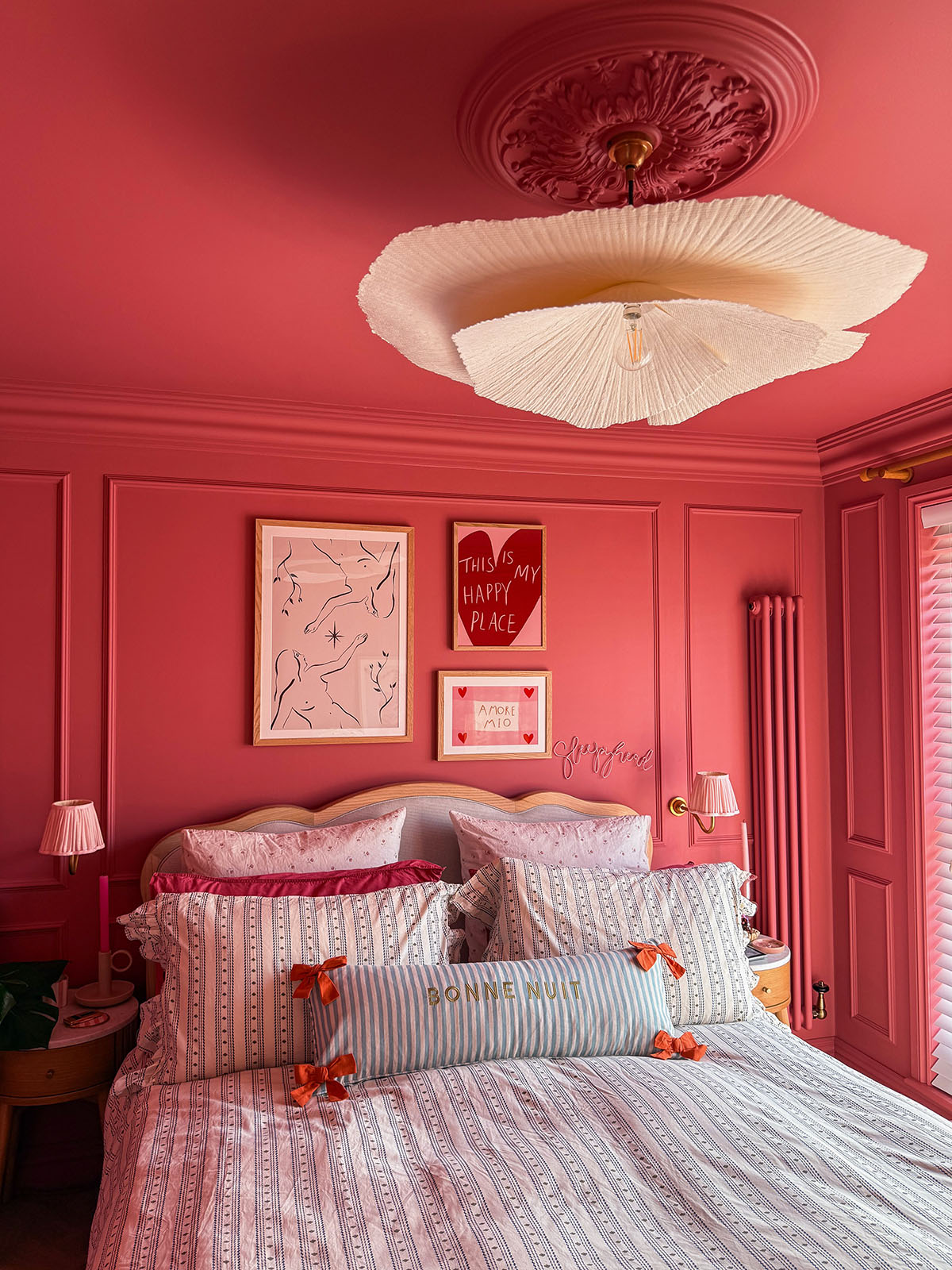
Credits: Gemma Louise
Berry colored walls continue onto the ceiling in this expressive bedroom, making the architectural details part of the color story. A pale sculptural pendant stands out against the rich background, while striped bedding introduces a finer rhythm below.
The artwork feels collected because the frames vary in size while sharing warm tones. If a room appeals to you, test the wall and ceiling color together before painting everything.
Daylight and evening bulbs can change how strongly red undertones appear. You can keep the bedding lighter to create a distinct resting area within the surrounding color.
Repeat one accent in a small cushion or lampshade, then stop before every accessory matches. The most convincing palette is one you enjoy seeing daily.
8. Paint One Oversized Circle Behind the Headboard
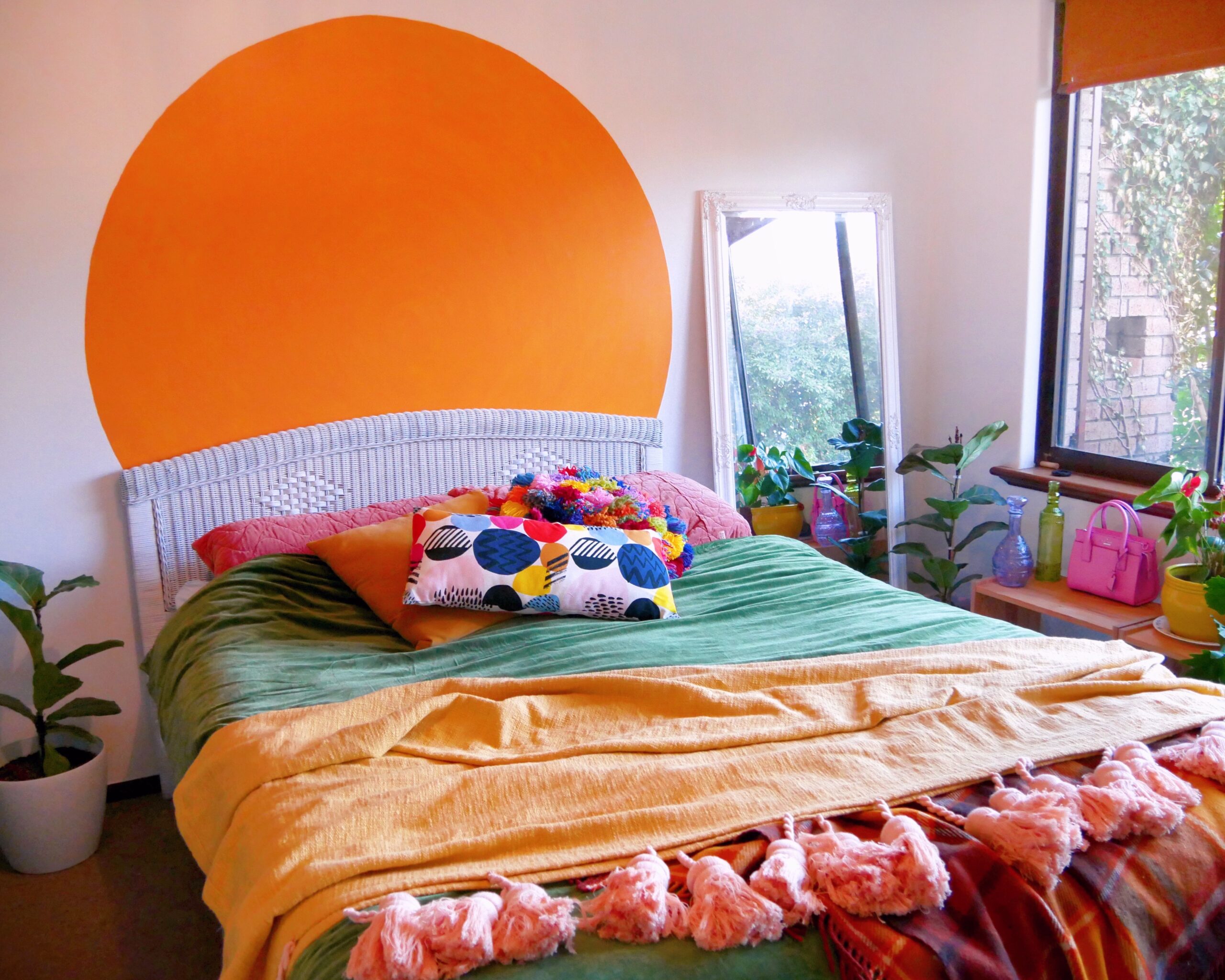
Credits: Kate Hannah / An Artful Life
A bright orange circle gives this bedroom an immediate focal point using a single painted shape. The white woven headboard crosses its lower edge, keeping the bed connected to the wall design.
Green bedding, pink details, and a few patterned cushions extend the playful color choices without repeating the circle everywhere. Before painting, mark the bed position and check the planned outline from the doorway.
A paper template can help you compare sizes without committing to the first idea. Choose one color that you like, then let nearby textiles supply smaller supporting notes.
Keep the surrounding wall relatively open so the curve remains readable. This treatment can refresh familiar furniture while leaving plenty of freedom to change accessories over time.
9. Turn a Vintage Settee Into a Reading Retreat
Credits: Annette / A Vintage Splendor
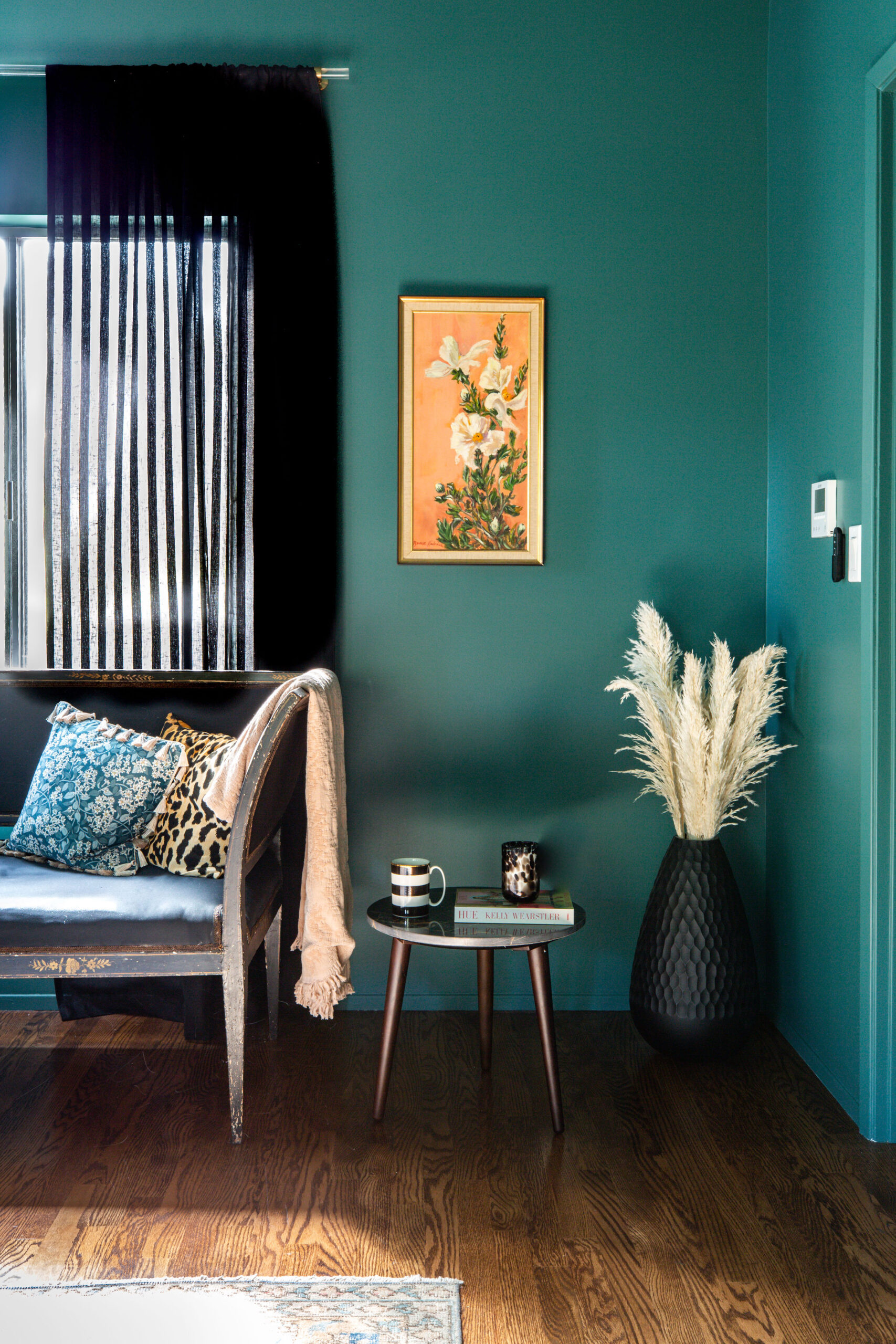
A small antique settee gives this bedroom corner a purpose beyond storing extra cushions. Teal walls surround the seat, while floral and animal patterned pillows make its dark frame feel relaxed.
The round side table has enough room for a book and a mug without competing with the furniture. This is a useful example of arranging a bedroom around activities you enjoy.
Start with seating that feels comfortable for leisurely sessions of reading. Add a reachable surface and suitable reading light, then check the route around the bed.
A favorite picture can make the corner feel personal without requiring a larger gallery. The mix of old wood, soft fabric, and strong wall color creates a distinct spot for unwinding quietly.
10. Let the Bed Base Handle Extra Storage
Credits: Shara / Woodshop Diaries
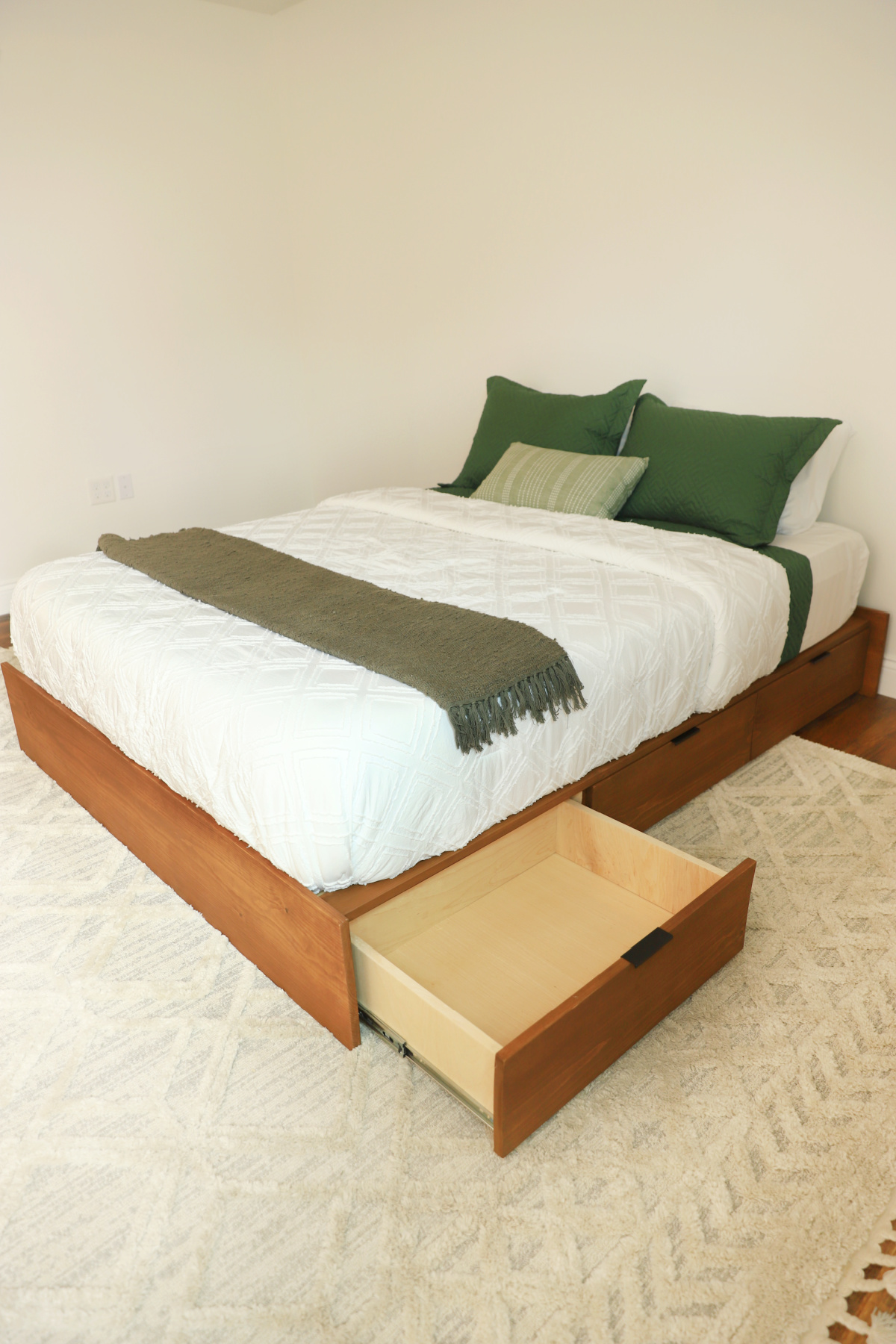
The open drawer reveals how much useful space can fit beneath a simple wooden platform bed. When closed, the drawer fronts become part of the frame rather than another object on the floor.
White bedding keeps the room bright, and green pillows add color without hiding the straightforward construction. This idea is worth considering when spare linens or seasonal clothes have no convenient home.
Measure the full drawer extension as carefully as the bed itself, particularly beside a rug or nightstand. Organize the contents by category so you can find them without emptying everything.
Choose a mattress height that remains comfortable with the platform. A storage bed works best when its access fits your daily routine and the room's layout.
11. Build a Soft Palette Around a Botanical Wall
Credits: Ashley Wilson / At Home with Ashley
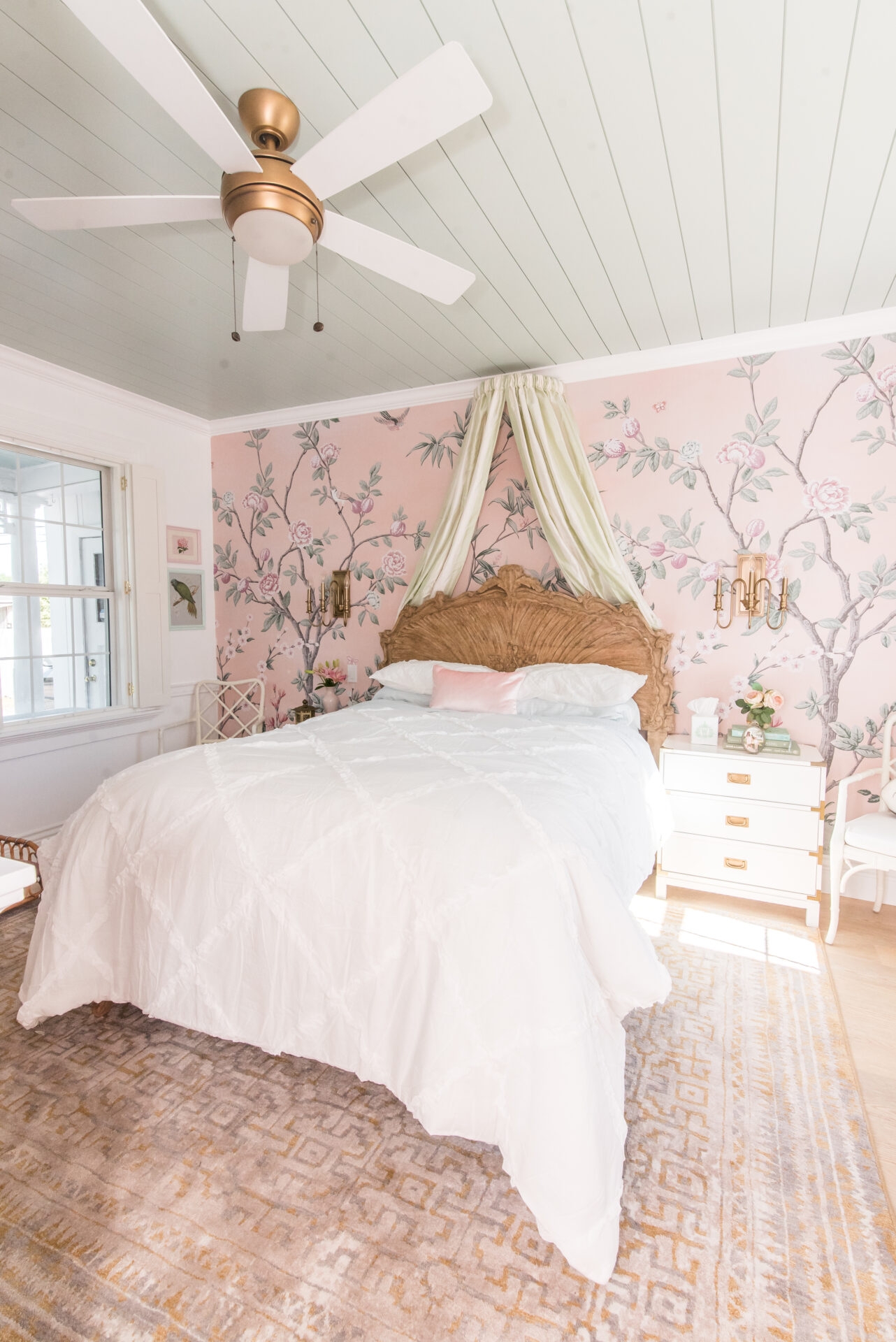
Branches and blossoms spread across the pink wall behind this carved wooden headboard. The pattern supplies the room's detail, leaving the white bedding and bedside drawers pleasantly simple.
Pale green on the ceiling picks up the leaves without copying every color in the mural. If you enjoy decorative walls, begin with a sample that clearly shows the scale of the branches.
Compare it with your existing bed before committing to a full installation. A carved or vintage piece can work well when its warm finish remains distinct from the print.
Keep neighboring surfaces quieter and choose lighting that does not obscure the strongest motifs. The result can feel layered and personal while still giving the sleeping area visual breathing room.
12. Refresh a Simple Bed With Blush Upholstery
Credits: Laura Gummerman / A Beautiful Mess
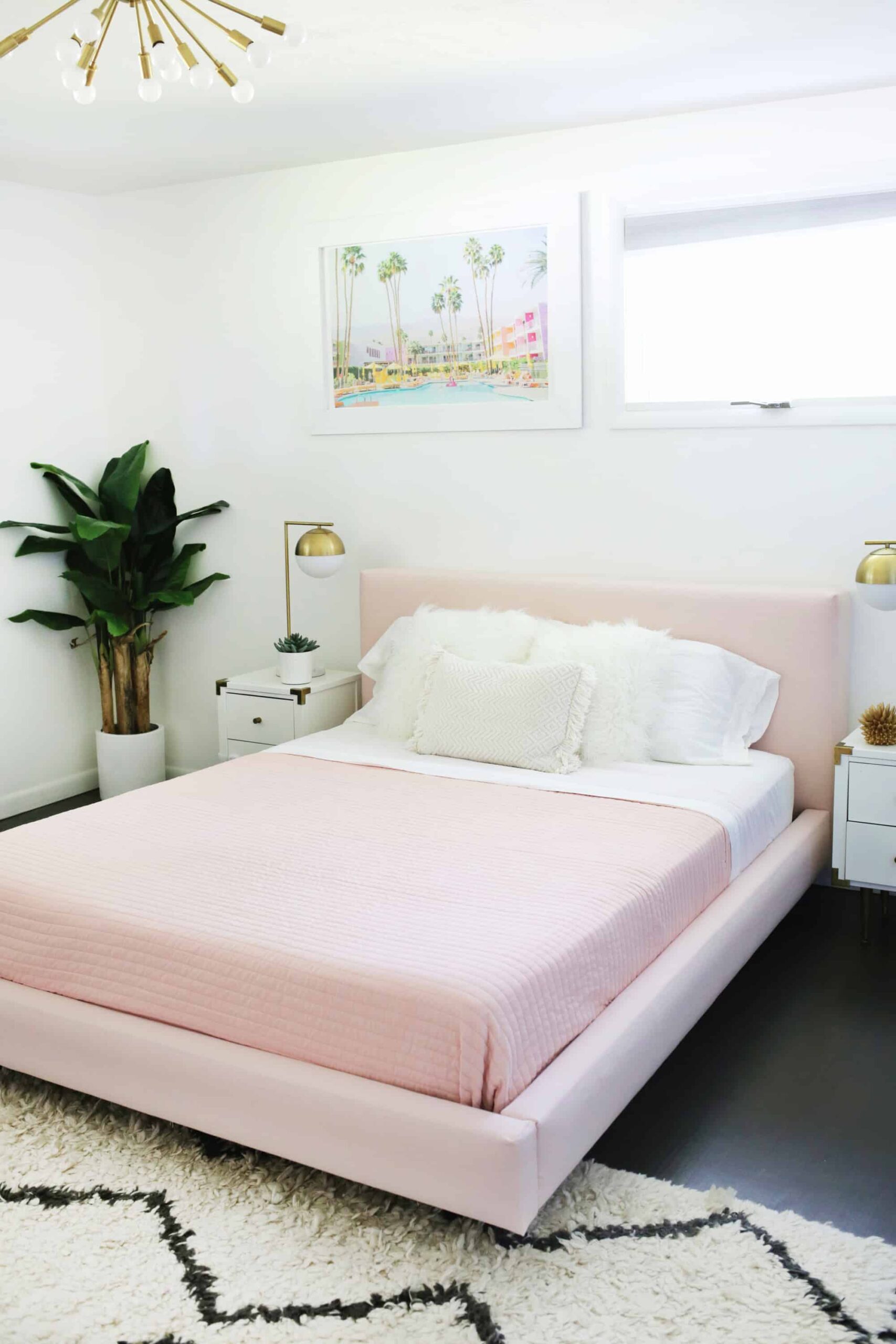
The low pink bed brings a gentle color into this otherwise white room. Its straight edges and uncomplicated headboard keep the upholstery from feeling overly decorative.
A matching coverlet continues the color across the mattress, while white pillows create a lighter area around the headboard. The original creator refreshed an existing frame, making this a useful reference for changing a room without replacing every piece.
Before choosing fabric, check the bed's construction and how its parts can be safely removed and reassembled. Look for material suited to contact and your cleaning routine.
Test a swatch beside the rug and wall in natural light. Brass lighting and a green plant provide enough contrast to keep the pale palette from looking flat.
13. Layer Window Treatments Around Your Daily Routine
Credits: Jordan Jean
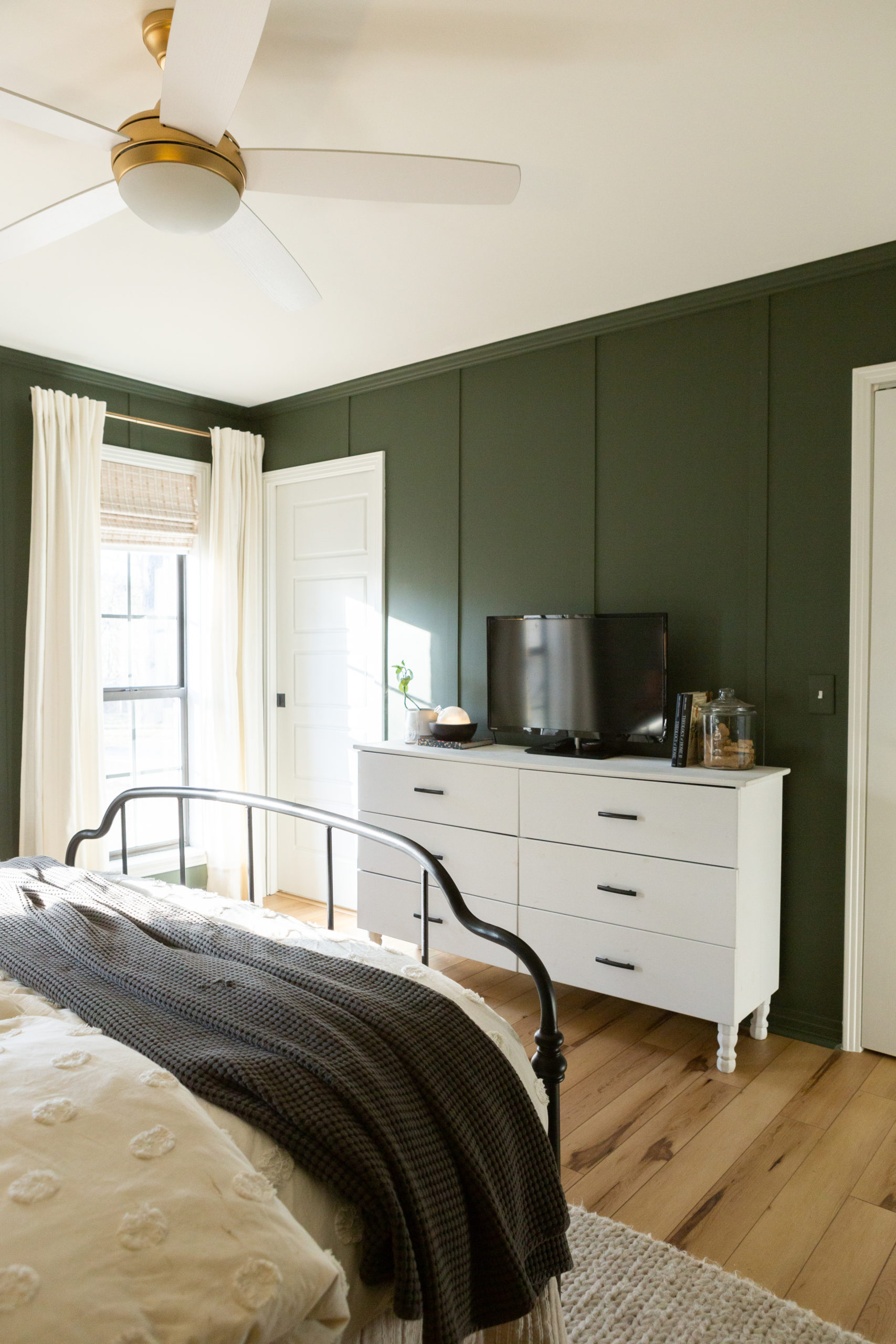
A woven shade sits inside the window while long cream curtains frame the opening from above. Against dark green paneling, those pale vertical folds make the room feel brighter without changing the wall color.
The arrangement also shows how a window treatment can sit comfortably beside a dresser and a bedroom door. Choose each layer for a specific job, such as daytime privacy, filtered light, or greater darkness at night.
Check the fabric and lining rather than assuming decorative panels will block light. Leave room for the curtains to open and for the shade to operate easily.
Repeating a light tone in the nearby furniture helps the window feel integrated. The best combination supports the way you use the room.
14. Make Space for Music and a Comfortable Chair
Credits: Kelley Nan
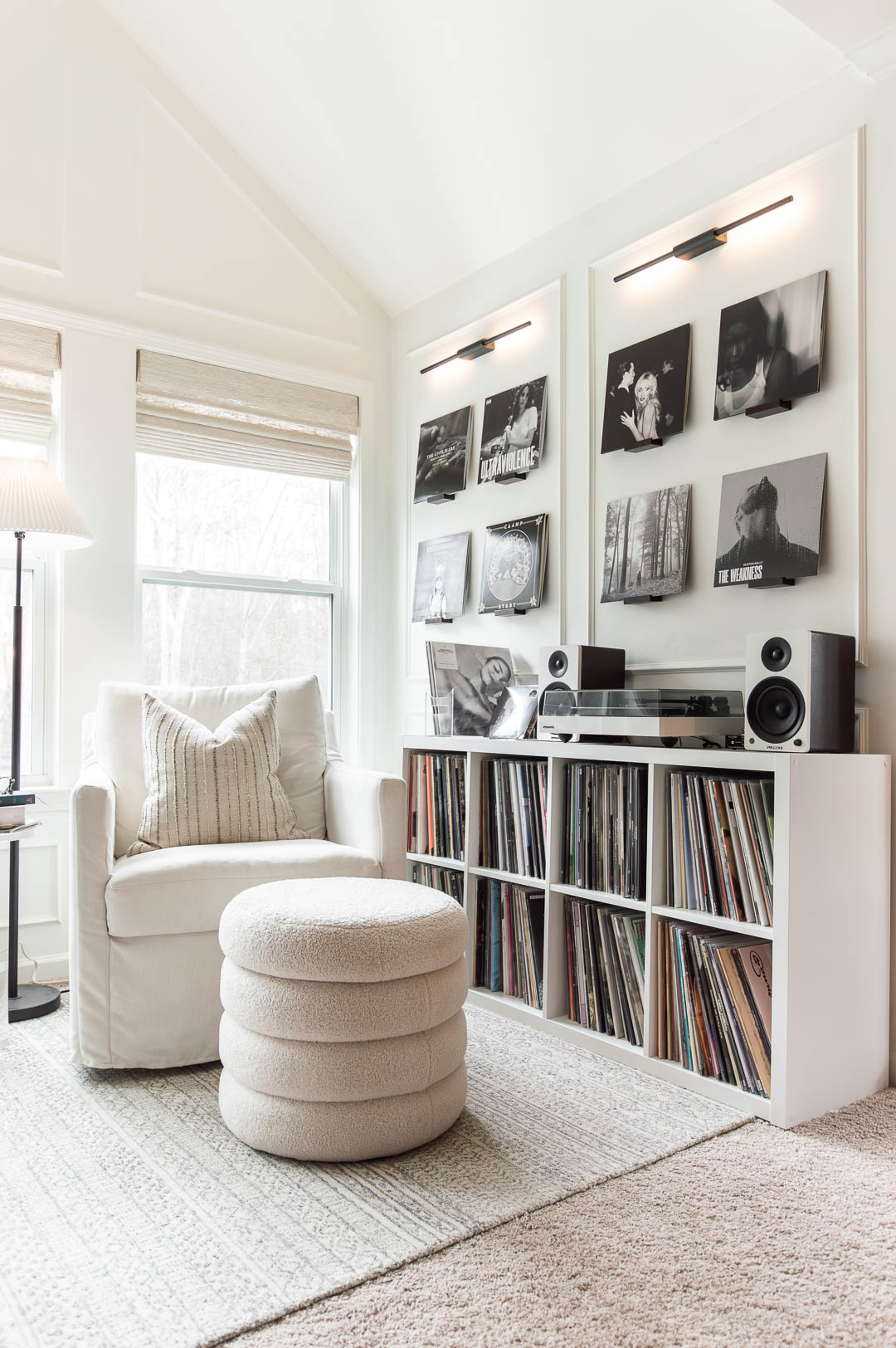
Favorite records become both a collection and decoration in this bedroom listening corner. Album sleeves sit on small wall supports above a record player, while open cubbies keep the music close at hand.
A white chair and rounded ottoman provide a comfortable destination beside the window. The restrained furniture lets the collection supply the personality.
You could adapt the idea for records, books, or another interest that deserves more than hidden storage. Check the weight capacity of shelving and leave ventilation around electronic equipment.
Keep frequently used items within easy reach of the seat. A floor lamp makes the corner useful after daylight fades.
Planning for an enjoyable activity can make a bedroom feel more personal than adding unrelated ornaments.
15. Move a Dresser Into an Existing Closet
Credits: Jennie Sullins / Jennifer J Sullins
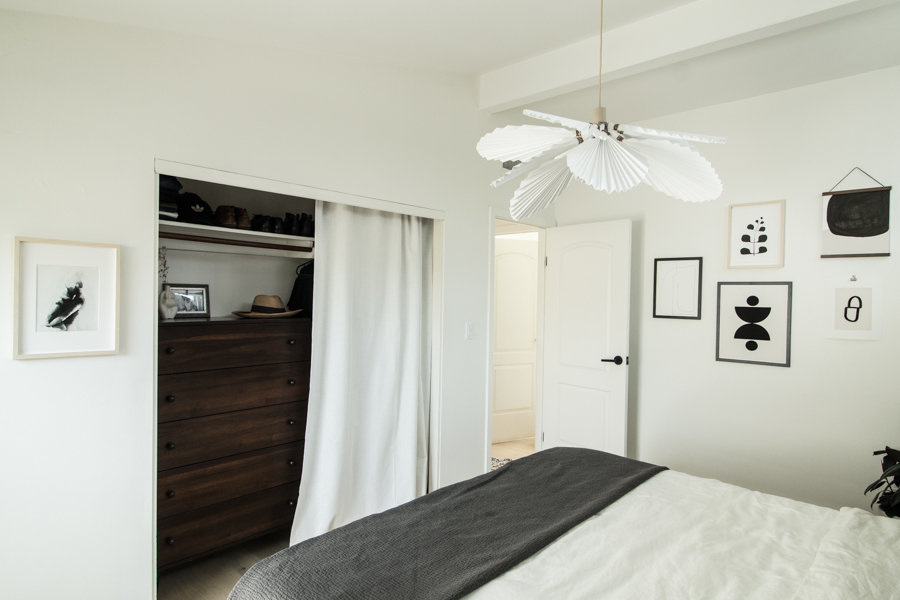
Putting a tall dresser inside the closet opens the main room around this bed. A plain curtain can cover the remaining storage, while the dresser's dark wood adds warmth when the opening is visible.
The creator used this arrangement to reduce the number of furniture pieces taking up bedroom floor space. Check your closet dimensions before attempting something similar, including the drawer extension and the space needed for hanging clothes.
Make sure the dresser can be secured appropriately and that the curtain does not catch in the drawers. Use the upper shelf for lighter items that are easy to retrieve.
This practical change may create room for a chair, a clearer walkway, or simply a less crowded view from bed.
16. Give a Small Cabinet a Dressing Station Role
Credits: Melanie Lissack Interiors
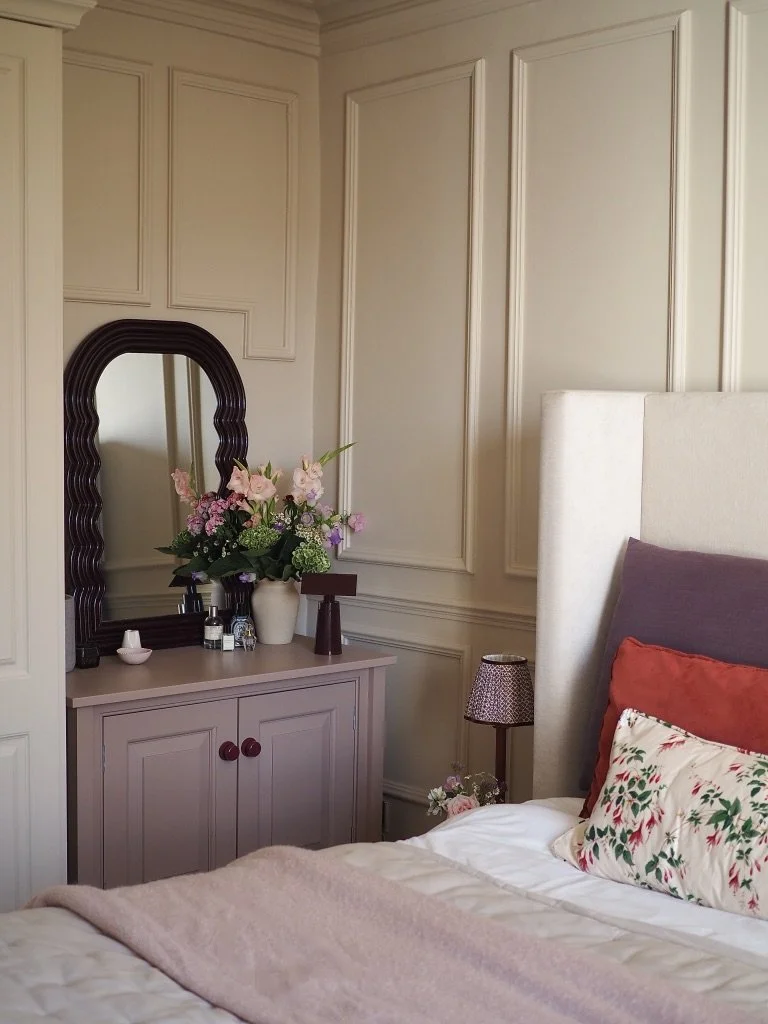
A muted pink cabinet and dark wavy mirror create a compact dressing area beside this upholstered bed. The cabinet doors conceal storage, while a few bottles and a small dish stay accessible on top.
Warm neutral wall molding gives the arrangement structure without overpowering the furniture. This approach suits a room where a full vanity would take up too much space.
Choose a cabinet height that works for the tasks you plan to do while standing. Secure the mirror and test its reflection before settling on the position.
Leave enough tabletop clear for daily use rather than filling it with flowers. Repeating the cabinet's color in one bedding layer connects this useful corner to the rest of the bedroom naturally.
17. Let an Open Canopy Frame a Neutral Room
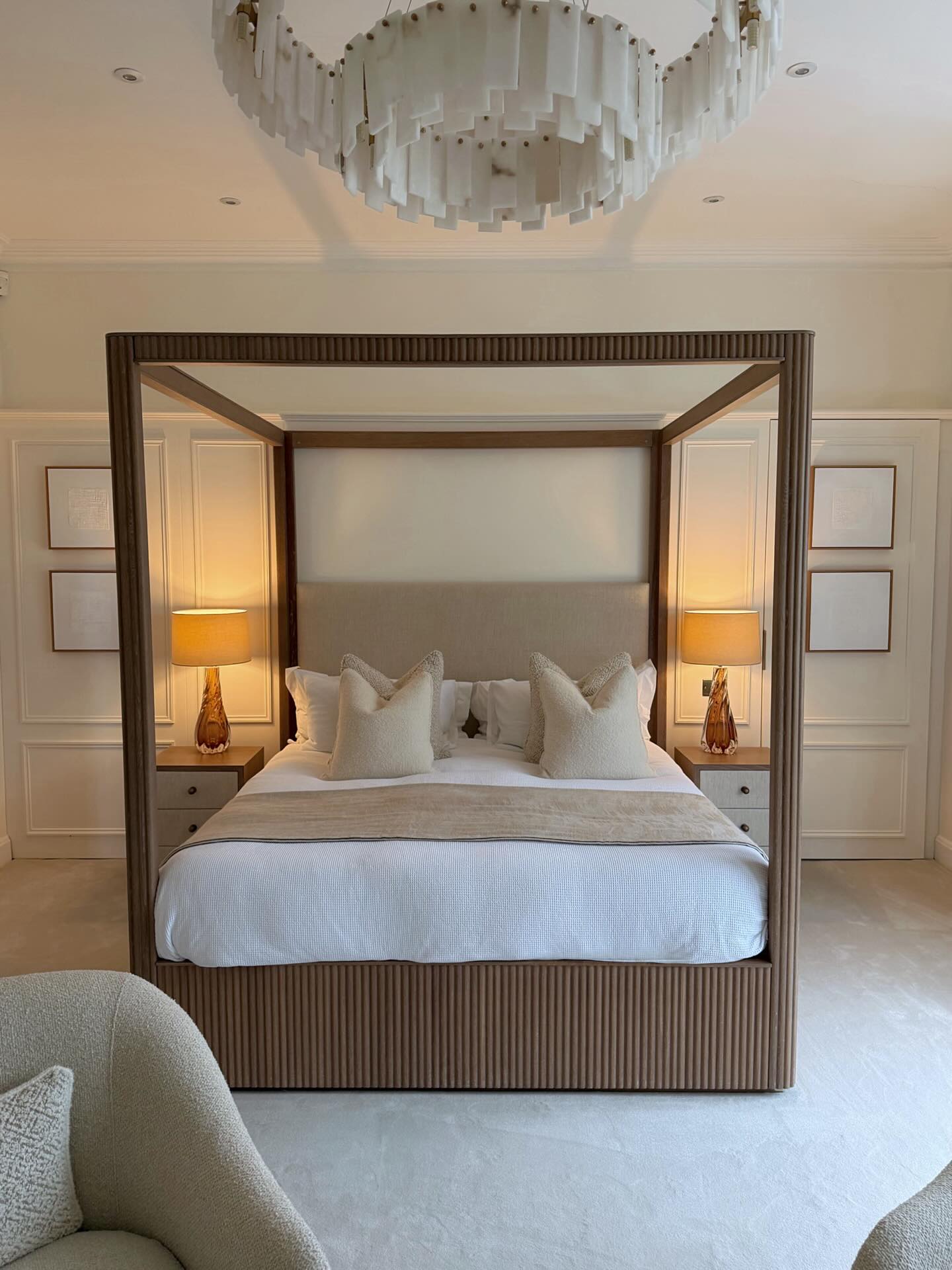
Credits: Instagram
Open four-poster beds supply structure even when the surrounding palette stays quiet. In this bedroom, the fluted frame creates a defined outline around soft cream bedding and an upholstered headboard.
Matching lamps and framed pictures reinforce the symmetry without filling the upper space. The result feels substantial but still airy.
Before choosing a canopy bed, compare its height and footprint with your ceiling, lighting, and walking routes. A frame should not compete awkwardly with a low pendant or interfere with curtains.
Keep bedding uncomplicated when the furniture has strong architectural lines. You can borrow the same sense of order with paired bedside pieces if a canopy is impractical.
Warm pools of lamplight then prevent the neutral scheme from feeling stark.
18. Fit a Flexible Desk Into a Window Corner
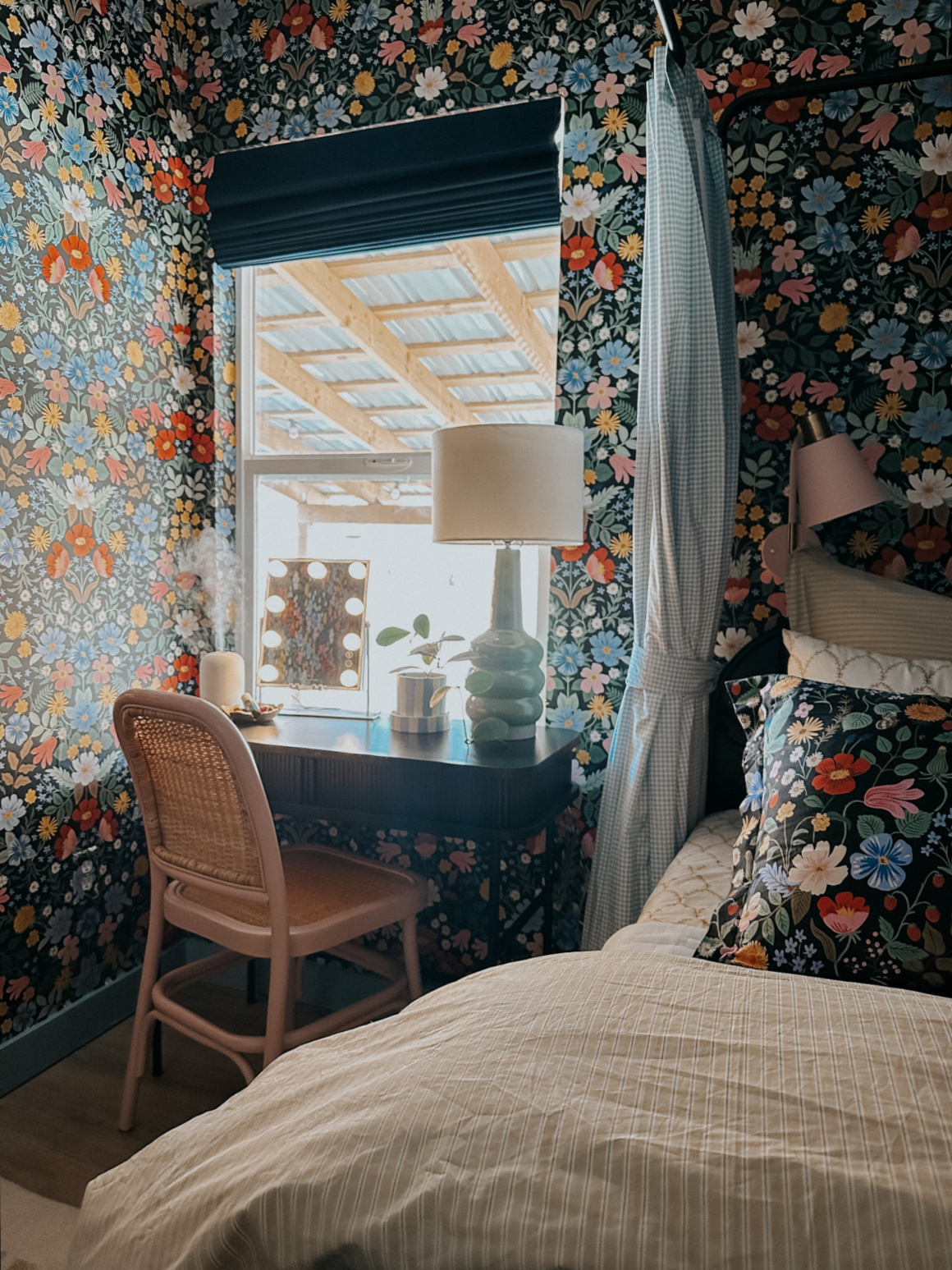
Credits: Brooke Christen / Nesting With Grace
This small desk occupies the space between a window and the bed, creating a useful surface within a compact layout. A cane backed chair adds texture, while the green lamp and pink upholstery borrow colors from the floral wallpaper.
The tabletop mirror suggests a dressing function, but the same position could support journaling or occasional study. Decide which activity matters most before choosing the furniture.
For longer work sessions, prioritize suitable chair support, legroom, and a surface height that feels comfortable. Keep accessories movable so the desk can change roles.
A nearby window offers daylight, although a lamp is helpful after dark. The key is giving a small practical area the same thoughtful attention as the rest of the room.
19. Pair a Vintage Dresser With a Round Mirror
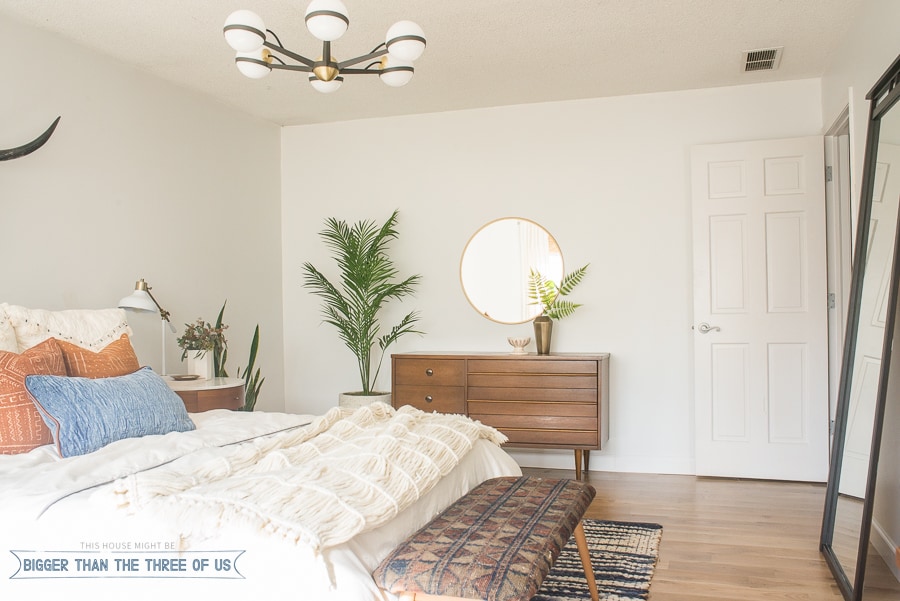
Credits: Ashley Mayes / Bigger Than the Three of Us
A round mirror brings a softer shape above the low wooden dresser in this bright bedroom. The narrow frame leaves the wood grain visible, while a tall plant introduces height at one side.
Across the foreground, blue and rust pillows add color without competing with the furniture. This combination works well when you want useful storage to feel like part of the decoration.
Look at the dresser's proportions before selecting a mirror, and leave some open wall around both pieces. Check the reflection from the bed so it shows a view you enjoy.
Keep everyday accessories in a shallow tray or drawer. A few well chosen pieces can give the room character while preserving plenty of usable surface and space.
20. Let a Colorful Coverlet Guide the Whole Room
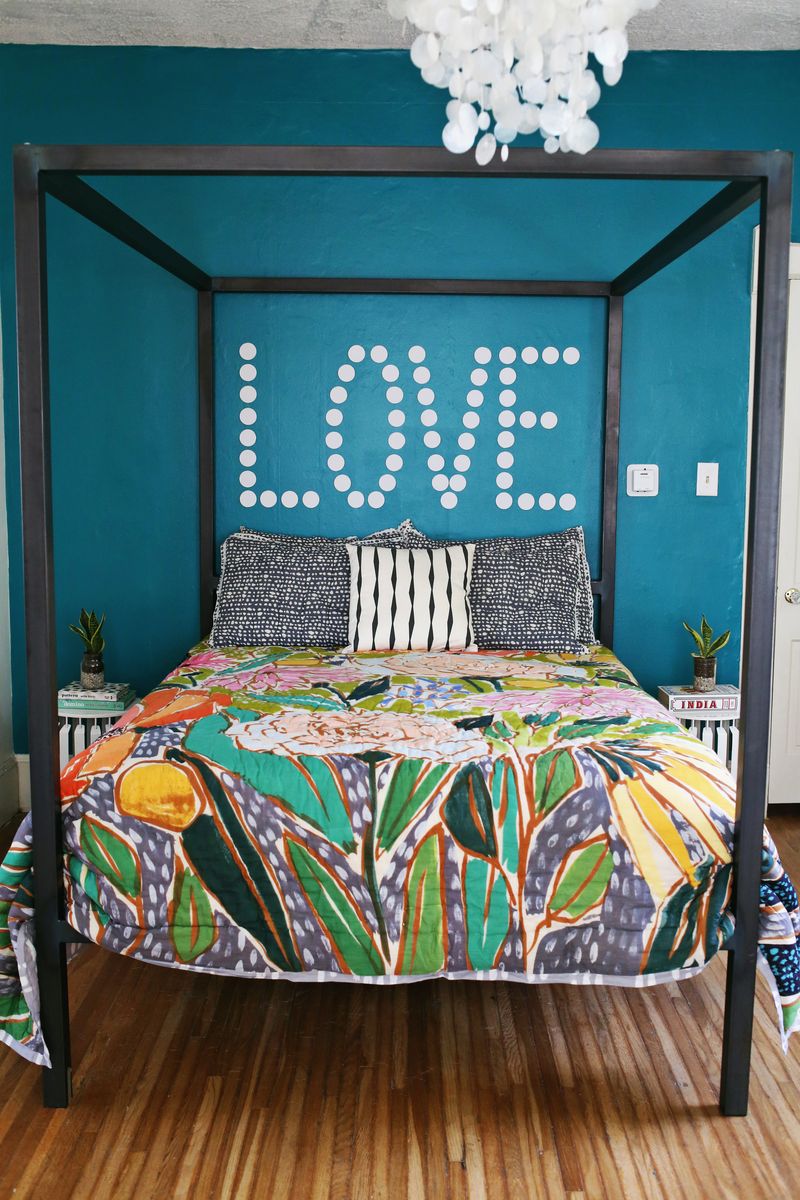
Credits: Elsie Larson / A Beautiful Mess
The large floral coverlet brings green, orange, pink, and yellow into this bedroom in one layer. Teal walls pick up its cooler notes, while a dark canopy gives the bed a clear outline.
Smaller black and white pillow patterns provide a different scale without adding more colors. Start with a textile that feels exciting to you, then pull one or two shades into the surrounding room.
You do not need to match every hue in the print. Plain furniture can help the composition stay organized when the bedding is expressive.
Check the canopy's height against your ceiling light before choosing a similar frame. Let the coverlet remain the decorative statement and adjust smaller accents as your taste changes over time.