
A sage bedroom can feel soothing without becoming washed out when warm wood, crisp white, or a small dose of contrast gives the color definition.
These Sage Green Bedroom Ideas show how to build that balance with details that are easy to adapt, from pairing sage walls with natural wood grain to using black picture ledges against a pale green backdrop.
You’ll also find softer touches, including a cream rug with dark dots and deeper green pillows layered against sage walls. Together, these choices offer practical ways to add texture, contrast, and personality while keeping the room calm.
1. Warm Sage Walls With a Wood Look Vaulted Ceiling
Credits: Christin Cieslarski / My Homier Home
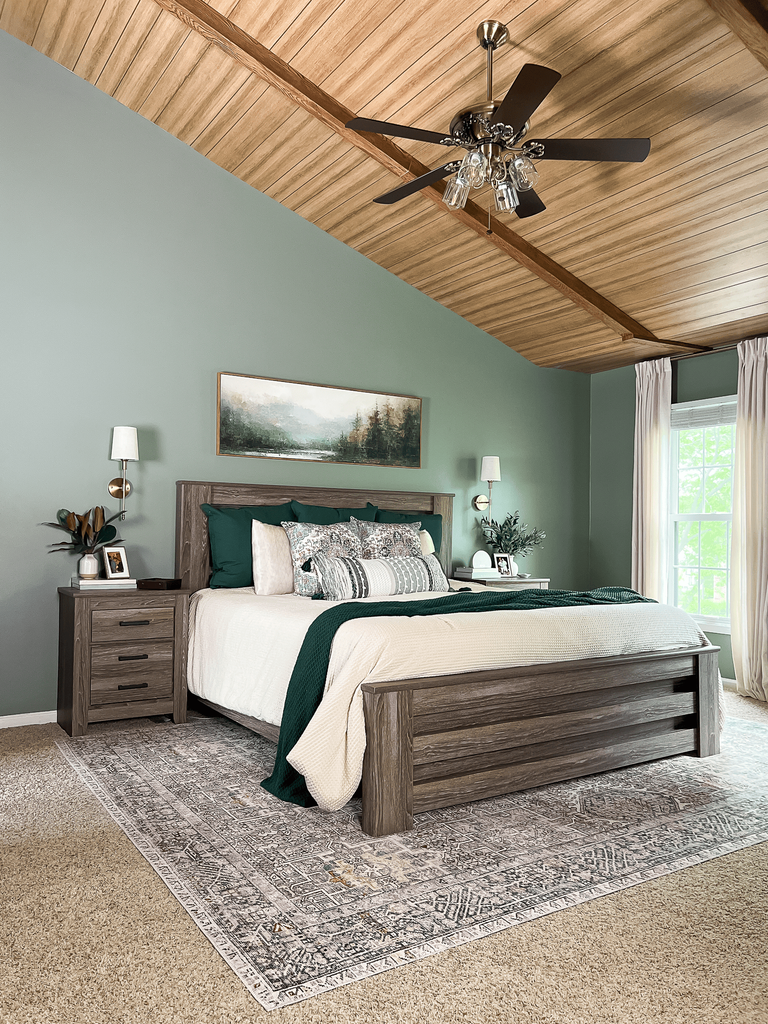
A broad sage wall gives this tall bedroom color, while wood look panels and beams make the vaulted ceiling feel warmer. The two surfaces balance each other: the walls stay quiet, and the ceiling contributes grain and direction.
Cream bedding keeps the center of the room bright beneath that substantial overhead treatment. If your bedroom already has a vaulted ceiling, consider how the panel lines will follow its slopes before choosing materials.
Keep beam proportions appropriate to the room, and plan around existing lights and fans. A landscape over the headboard repeats the muted green without adding another bold color.
The darker wooden bed establishes a grounded base, allowing the ceiling to feel intentional rather than disconnected from everything below.
2. Let Natural Wood Grain Stand Out Against Sage
Credits: Wendy Duffy / At Lane and High
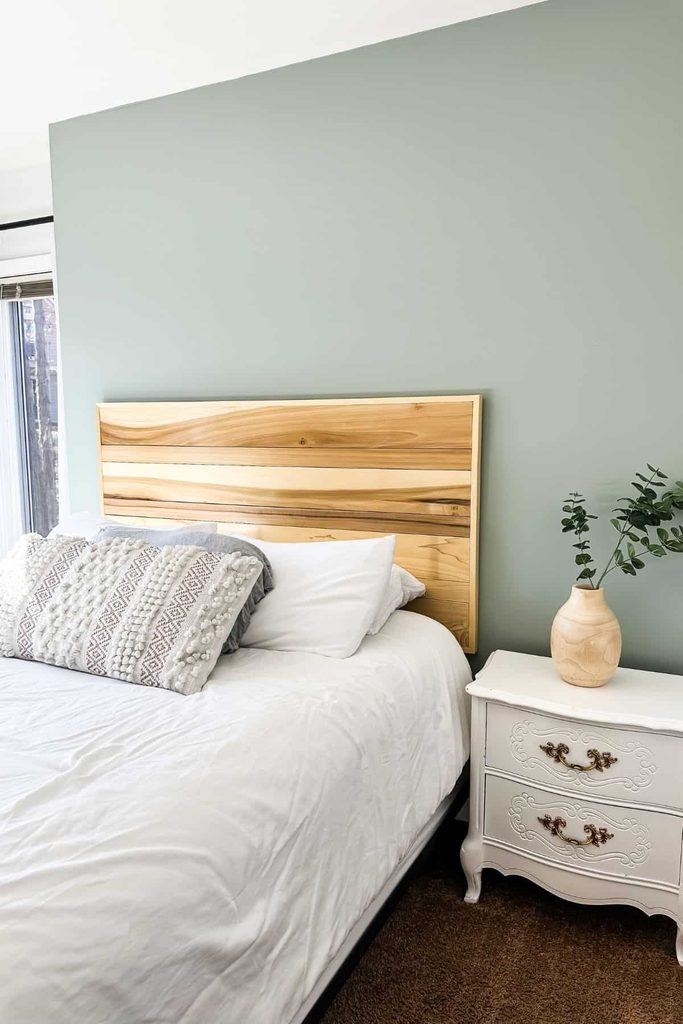
Golden wood grain brings movement to this otherwise simple sage bedroom. Wide horizontal boards form a rectangular headboard, and their changing color becomes the main decoration against the smooth painted wall.
White linens leave that combination easy to see. This works especially well when you prefer natural variation to a busy wallpaper or a large collection of prints.
Look at several boards together before building or buying a headboard, since their tones may vary considerably. Choose a finish that suits the existing flooring rather than trying to match every wooden object.
The small vase echoes the headboard’s warmth on the nightstand. Keeping the wall above the bed open lets the grain and the muted green share attention without extra ornament.
3. Keep Sage Below a Slim Wooden Wall Ledge
Credits: Hey Maca
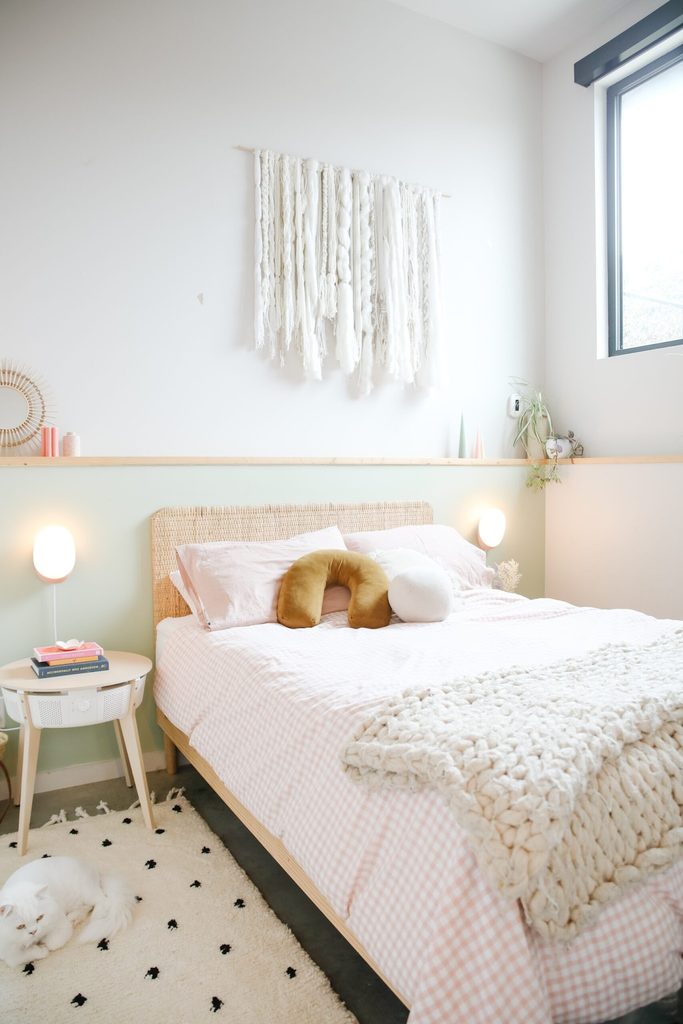
A pale sage lower wall gives this bedroom a gentle band of color while the large white area above preserves its airy feeling.
A slim wooden ledge marks the division, linking the paint to the woven headboard and light bed frame. Rather than choosing the split by habit, test its height against your pillows, headboard, and nearby window.
Here, the line clears the bed comfortably and continues around the corner. The broad cream fiber hanging fills part of the upper wall with texture instead of stronger color.
A similar arrangement can work with a lightweight textile piece you already own. Keep objects on the ledge spaced apart so its long horizontal edge remains visible and the sage still feels generous.
4. Use Black Picture Ledges to Sharpen Pale Sage
Credits: Instagram
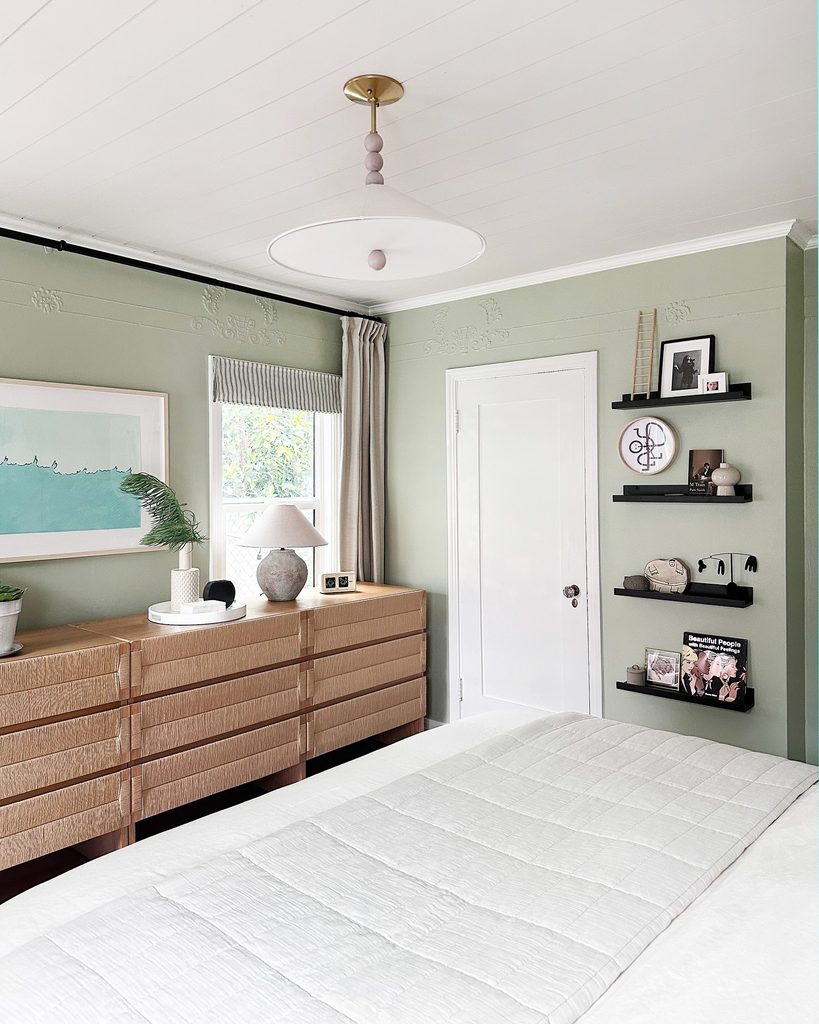
Four narrow black shelves turn a relatively small wall beside the door into a personal display without taking up floor space.
Their dark edges stand out against the pale sage paint, echoing the curtain rod and the black details in the framed photographs.
The long wooden dresser brings a warmer tone into the room and keeps the collection from feeling overly graphic.
Try this on an otherwise unused stretch of bedroom wall, choosing shallow ledges that will not interrupt your route around the bed. Vary the height of the objects while leaving some empty space on every individual display shelf.
Keep heavier pieces lower, secure the shelves appropriately, and let the surrounding wall color remain visible between each small arrangement.
5. Add a Cream Rug With Small Dark Dots
Credits: Hey Maca
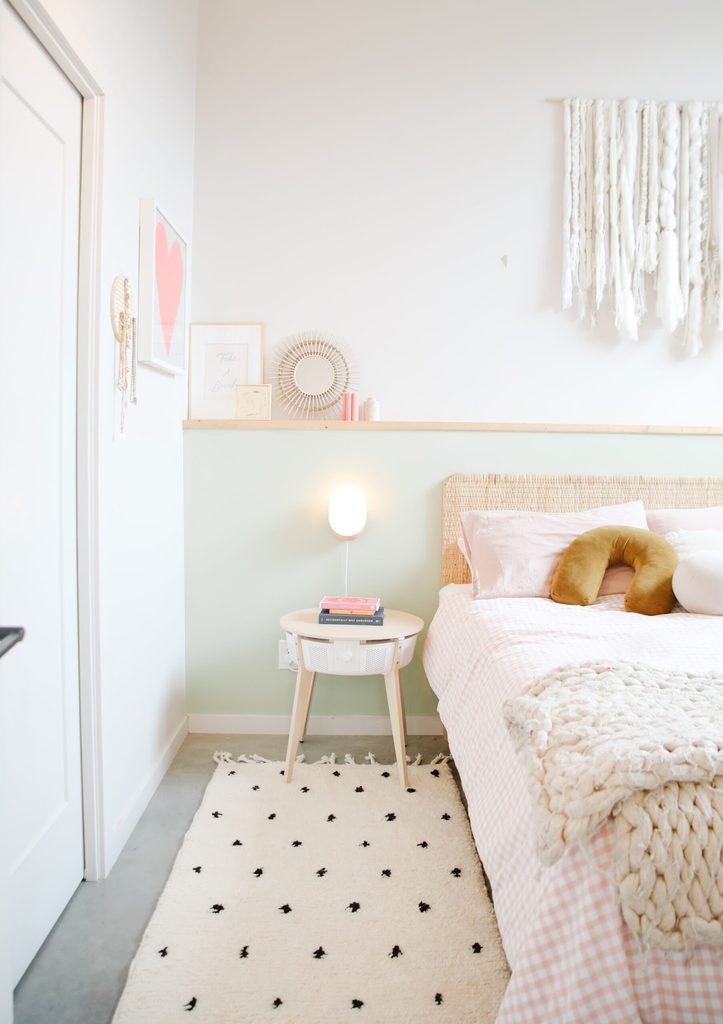
Tiny dark dots give this pale rug a playful rhythm without competing with the sage wall. Its cream ground connects to the chunky throw and wall hanging, while the small marks provide contrast near the floor.
That balance is useful in a bedroom with several soft pastel surfaces that need a little definition. Choose a rug with an understated pattern if your bedding already has checks or stripes.
Position it where your feet will land when getting out of bed, checking that nearby doors can still move freely. The loose fringe and basket introduce additional texture around the smooth painted wall.
Because the dark details stay small and scattered, the room keeps its lightness while avoiding an entirely flat palette.
6. Layer Deep Green Pillows in Front of Sage Walls
Credits: Christin Cieslarski / My Homier Home
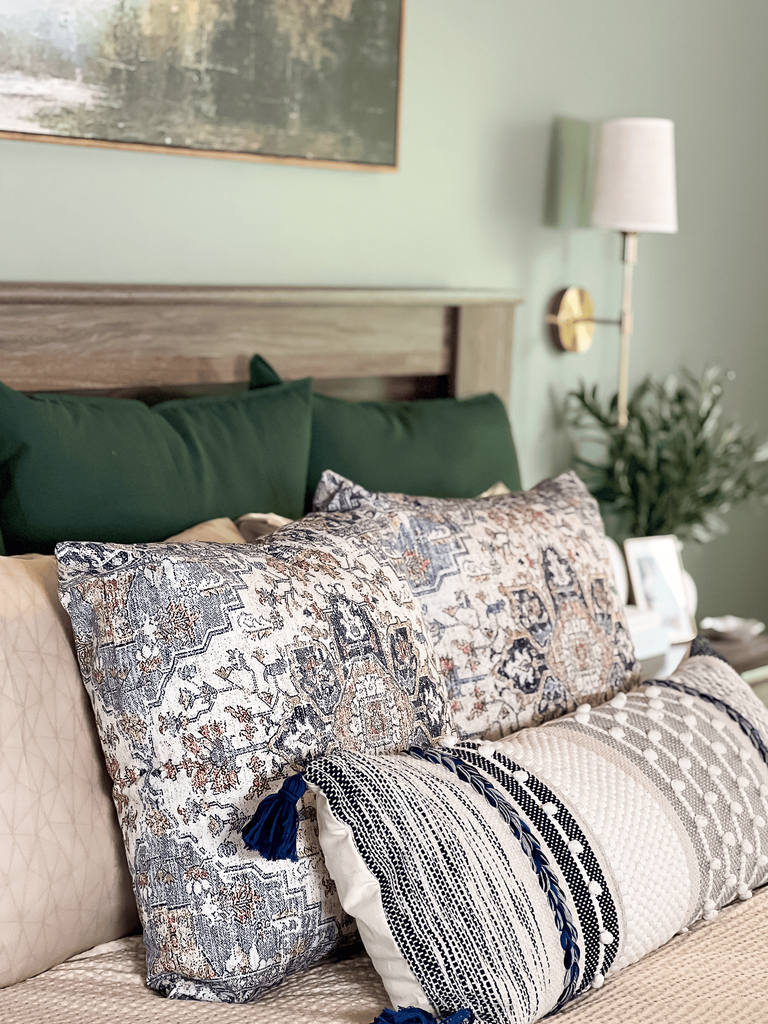
Deep green pillows make the wall’s lighter sage shade feel more deliberate. They sit behind patterned cushions, providing a dark, solid background that separates the smaller designs from the wooden headboard.
Cream layers soften the transition toward the mattress. You can use this arrangement to introduce depth without repainting or replacing large furniture.
Start with two green pillows, then compare any patterned covers against them in the room’s natural light. Keep at least one shared color between the different fabrics, but vary the size of the motifs.
The narrow textured lumbar pillow adds another scale across the front. Stop adding cushions while there is still a comfortable place to sit and a practical home for them overnight beside the bed.
7. Try an Open Coral Bedside Table
Credits: Hey Maca
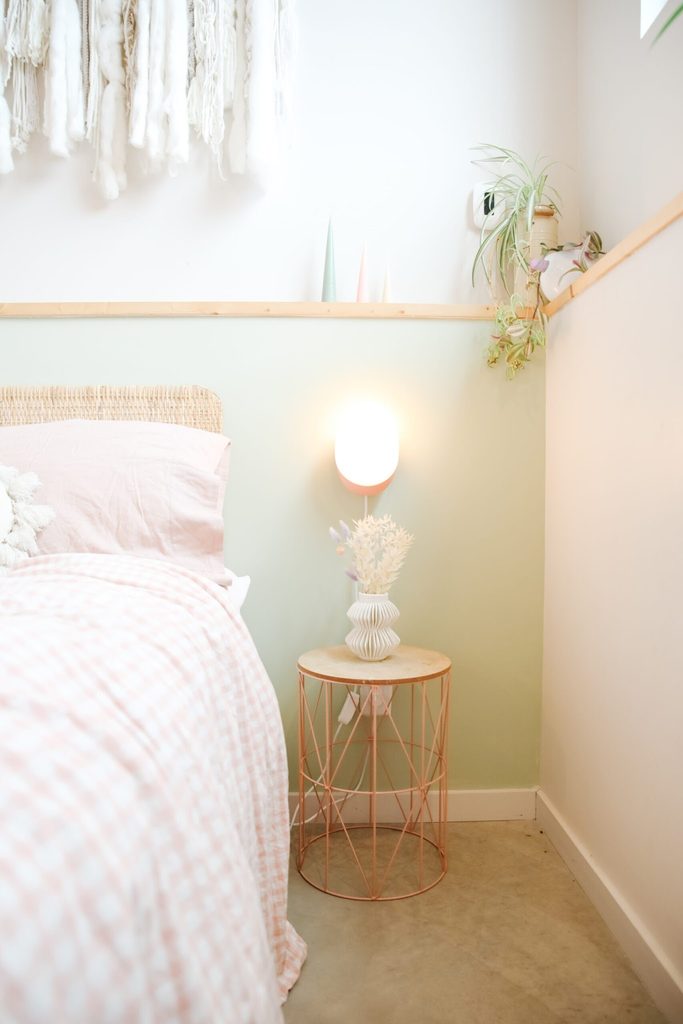
An open coral base makes this little bedside table feel weightless against pale sage paint. Its warm color relates to the pink bedding and wall light, while the round wooden top ties into the headboard and ledge.
This is an appealing option for a narrow gap where a solid cabinet would look crowded. Check the height against your mattress and choose a stable base wide enough for everyday use.
Open tables offer little hidden storage, so decide where books, chargers, and other essentials will go before swapping one in. A single pale vase keeps the top simple in this photograph.
The visible floor and wall behind the wire framework preserve the sense of space around the side of the bed.
8. Place an Arched Mirror Between Tall Windows
Credits: Christin Cieslarski / My Homier Home
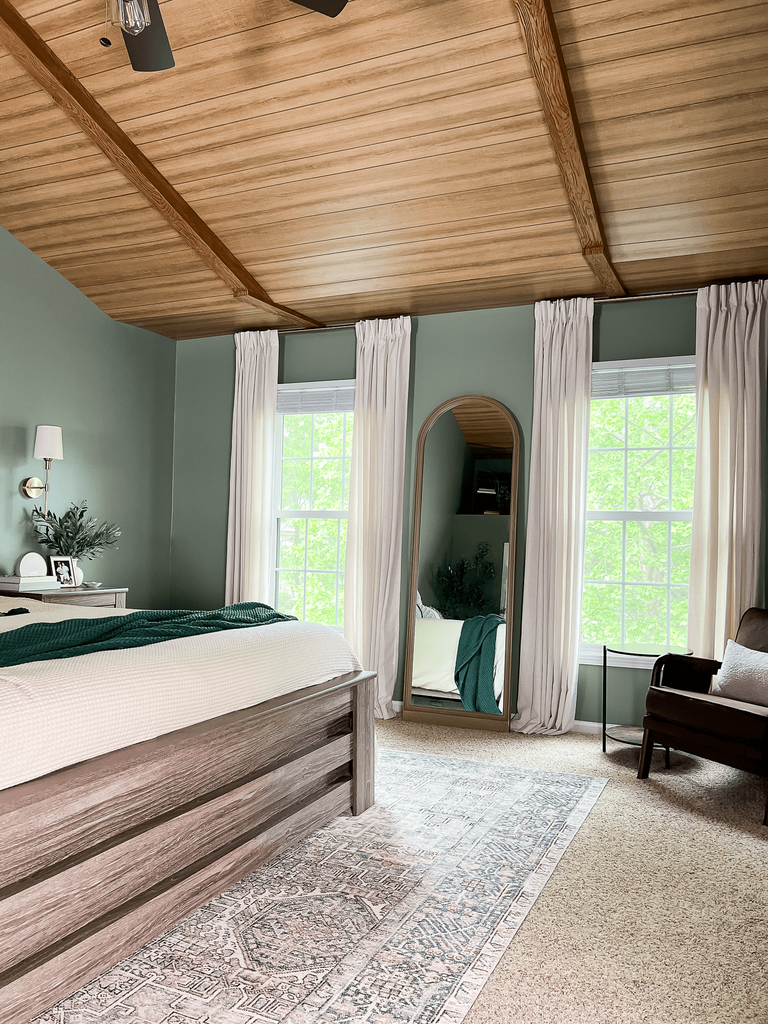
An arched mirror adds a rounded silhouette between two tall windows in this sage bedroom. Its warm frame echoes the ceiling and bed, while the reflection brings the bedding into the window wall.
Long pale curtains emphasize height without introducing another strong color. Before placing a floor mirror, check what it reflects from the doorway and from your position in bed.
A calm view will be more pleasant than a bright bulb or cluttered surface. Secure a leaning mirror using the manufacturer’s recommended hardware, particularly where children or pets might reach it.
Leave enough clearance for curtains to move and for the window hardware to work. The rounded top offers a gentle contrast to the room’s many straight timber lines.
9. Lift Bedside Lighting Onto the Sage Wall
Credits: Christin Cieslarski / My Homier Home
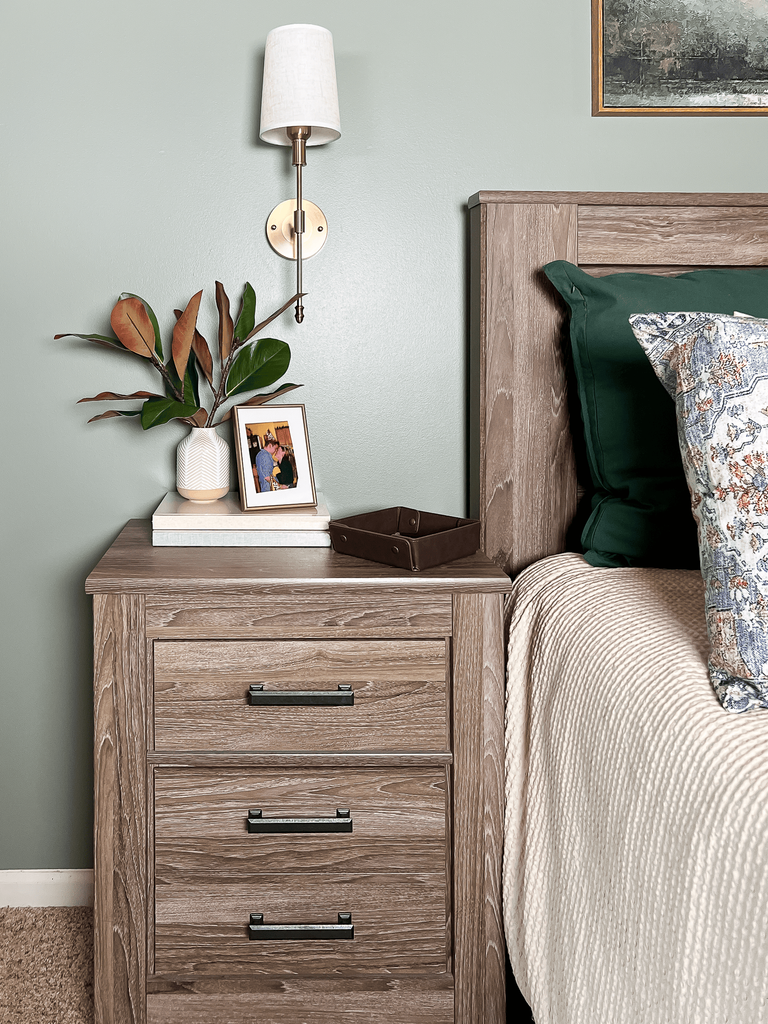
A slim brass wall light keeps this nightstand available for a tray, photograph, and a few books. Against the sage paint, its pale shade and warm metal provide definition without the bulk of a table lamp.
The surrounding wall remains mostly clear, so the fixture reads as a useful detail rather than another decoration competing with the bed.
Plan the mounting position while sitting against your pillows, checking that the light will be comfortable for reading and within easy reach. Follow the fixture’s installation requirements and use a qualified electrician when needed.
Keep cords safely routed for plug in designs. A small tray below can collect everyday items, helping the nightstand remain practical even when it includes a little styling.
10. Gather Small Artwork Along the Sage Paint Boundary
Credits: Hey Maca
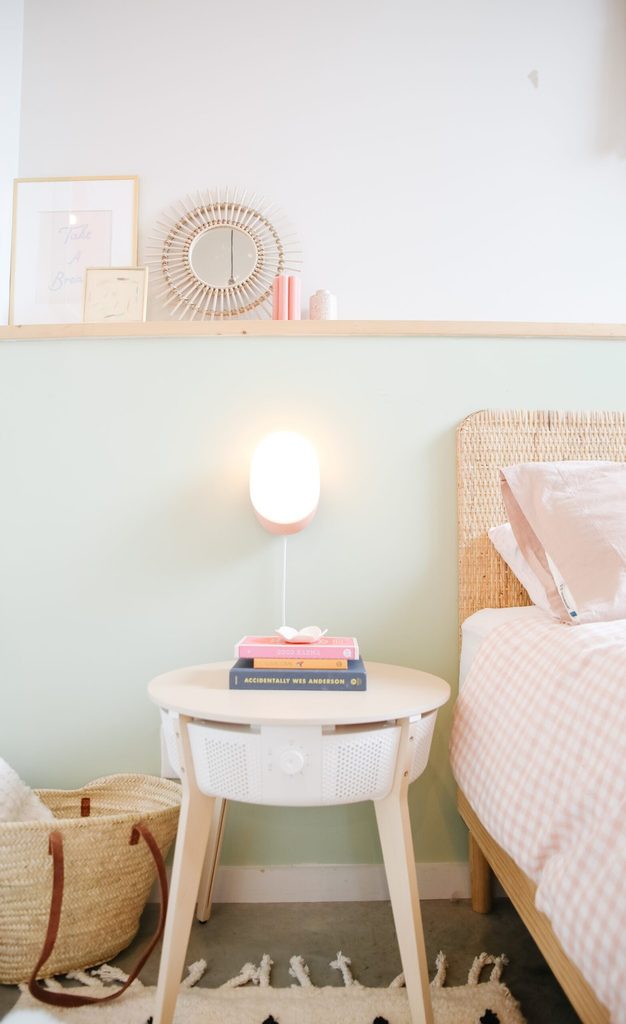
A grouping of framed pieces and a woven mirror gives this long ledge a personal touch. The arrangement sits above the sage paint, so the green below remains an uninterrupted backdrop for the bed and light.
Pale frames blend with the upper wall, while pink accessories connect to the bedding. Try assembling your objects on a table before placing them on a narrow ledge.
Vary their height and shape, leaving generous empty stretches on either side of the group. Secure anything that could tip toward the sleeping area and avoid heavy pieces overhead.
The mirror supplies a circular outline among the rectangular prints. You can change individual objects later without disturbing the basic relationship between the painted wall and wood.
11. Give an Ornate White Nightstand a Quiet Green Backdrop
Credits: Wendy Duffy / At Lane and High
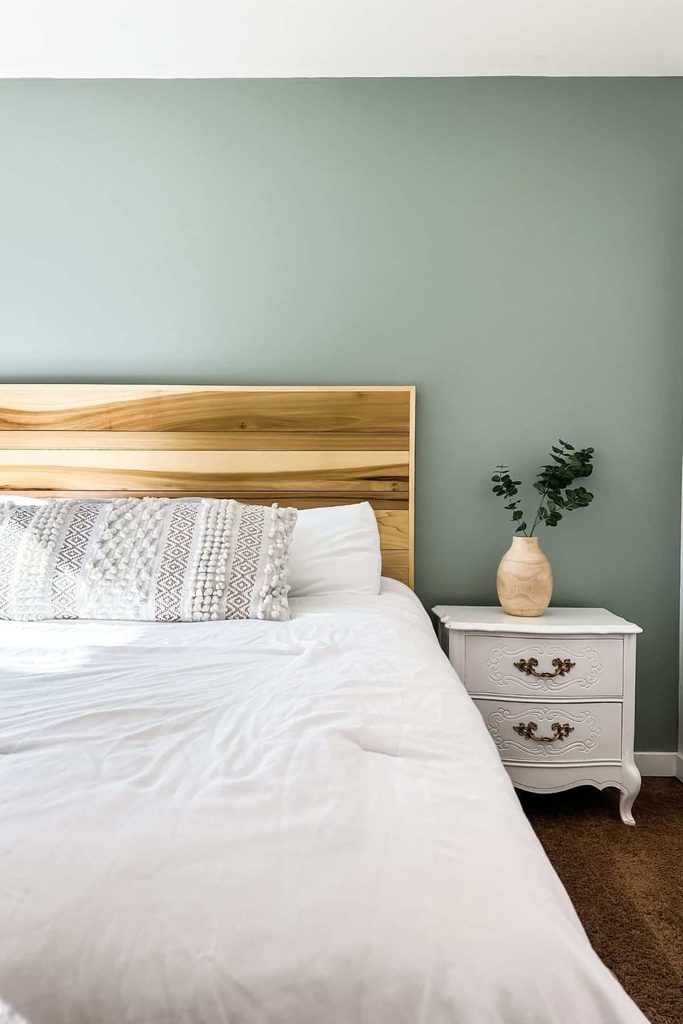
Curved drawer fronts and decorative handles become easier to appreciate against a plain sage wall. This small white nightstand has plenty of character, yet it does not overwhelm the bed because the surrounding colors stay restrained.
A wooden vase relates to the headboard, connecting an ornate piece with a simpler contemporary shape. If you have inherited or thrifted a detailed cabinet, consider giving it room to stand alone rather than surrounding it with decorative accessories.
Check that drawers open fully beside the bedding and that the top is a comfortable height to reach. White linens repeat the cabinet color across the bed.
A single leafy branch supplies a softer outline, leaving the furniture’s curves and the green background clearly visible.
12. Try Sage Bedside Cabinets Against Blush Walls
Credits: Instagram
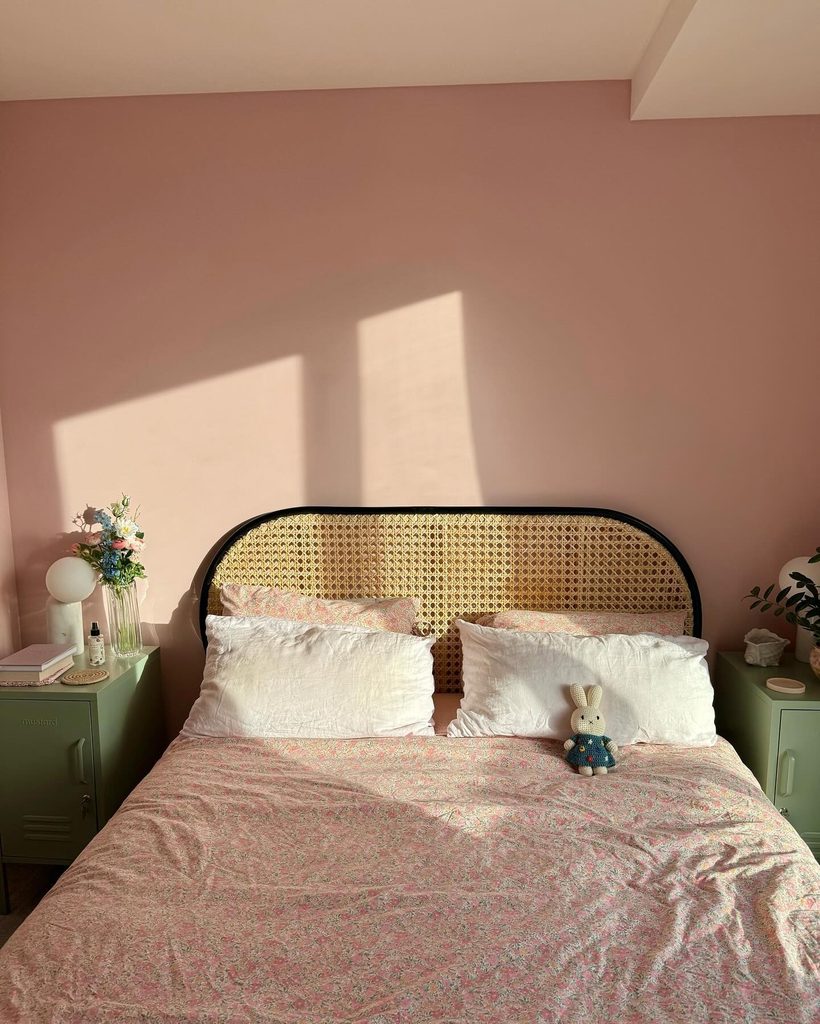
Two green bedside cabinets introduce sage at a useful scale in a bedroom that is otherwise mostly pink.
Their simple fronts contrast with the woven headboard and tiny floral bedding, so the color feels fresh without asking the whole room to change direction.
Matching cabinets also create a tidy outline on either side of the curved bed. Consider this approach if you already love your wall color but want a cooler accent with practical storage.
Compare cabinet heights with the top of your mattress before buying, and leave enough space for doors to open fully. Pale lamps and a small clear vase keep the tops visually light.
Repeating green in the bedding is optional; the paired furniture already establishes it.
13. Soften a Sage Bedroom Corner With Trailing Leaves
Credits: Hey Maca
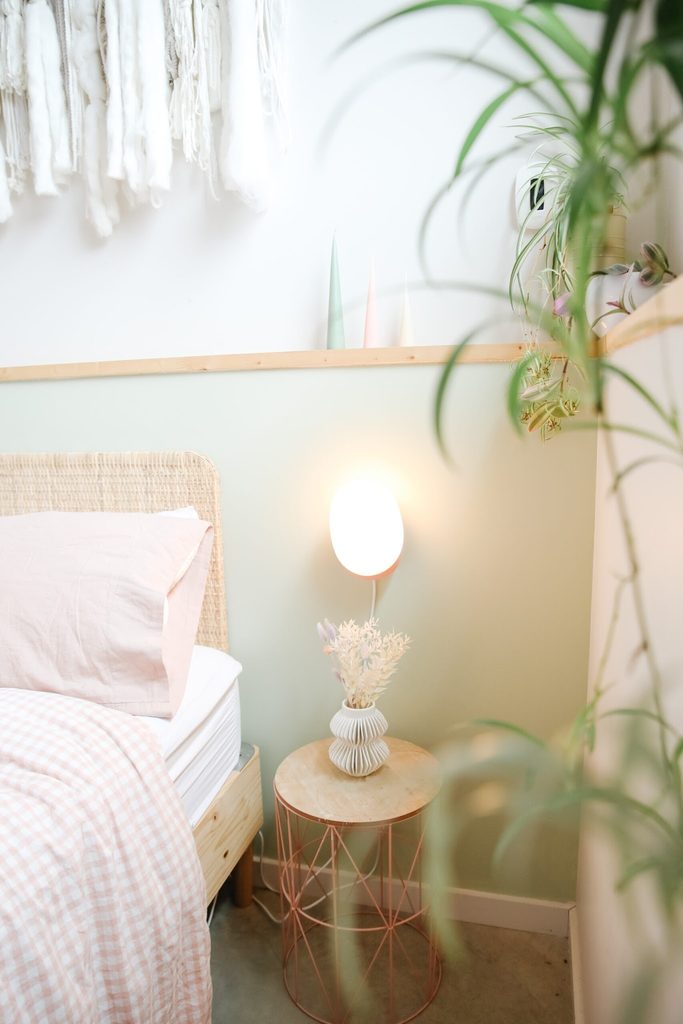
Trailing leaves soften the point where the wooden ledge turns into this bedroom corner. Their greener color adds variation beside the muted sage paint, while the pale pots stay close to the surrounding wall and bedding.
Keeping the plants above the bedside table leaves its small surface available. Choose plants for the actual light in your room, and use containers that will not leak onto the wall, furniture, or electrical fixtures below.
Make watering manageable rather than placing a heavy pot beyond comfortable reach. A few loose stems can be more effective than filling the whole ledge.
Here, the foliage frames the wall light and headboard without covering the painted boundary, adding a relaxed detail to an tidy bedside arrangement.
14. Use White Doors to Break Up Full Sage Walls
Credits: Christin Cieslarski / My Homier Home
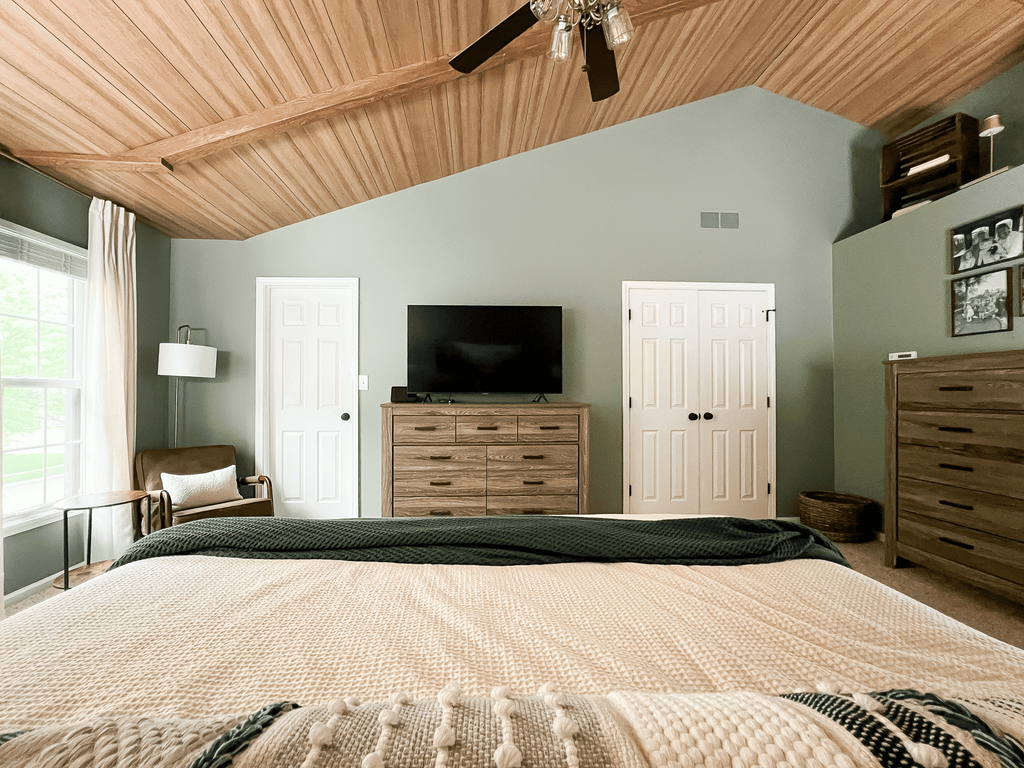
White doors provide bright pauses within the sage walls of this bedroom. Their paneled shapes remain crisp beneath the warm ceiling, balancing the darker television and wooden dressers.
This is worth considering before you decide to paint every door the same color as the walls. Existing white trim may already provide the contrast the room needs.
Test your chosen sage beside the door finish, because a very cool white can make some greens appear grayer. Keep larger storage pieces related in tone so the wall does not become a collection of unrelated rectangles.
The bed’s green throw carries the palette toward the foreground. A small chair by the window adds a useful perch while keeping access to both doorways clear.
15. Style a High Sage Ledge With Wooden Crates
Credits: Christin Cieslarski / My Homier Home
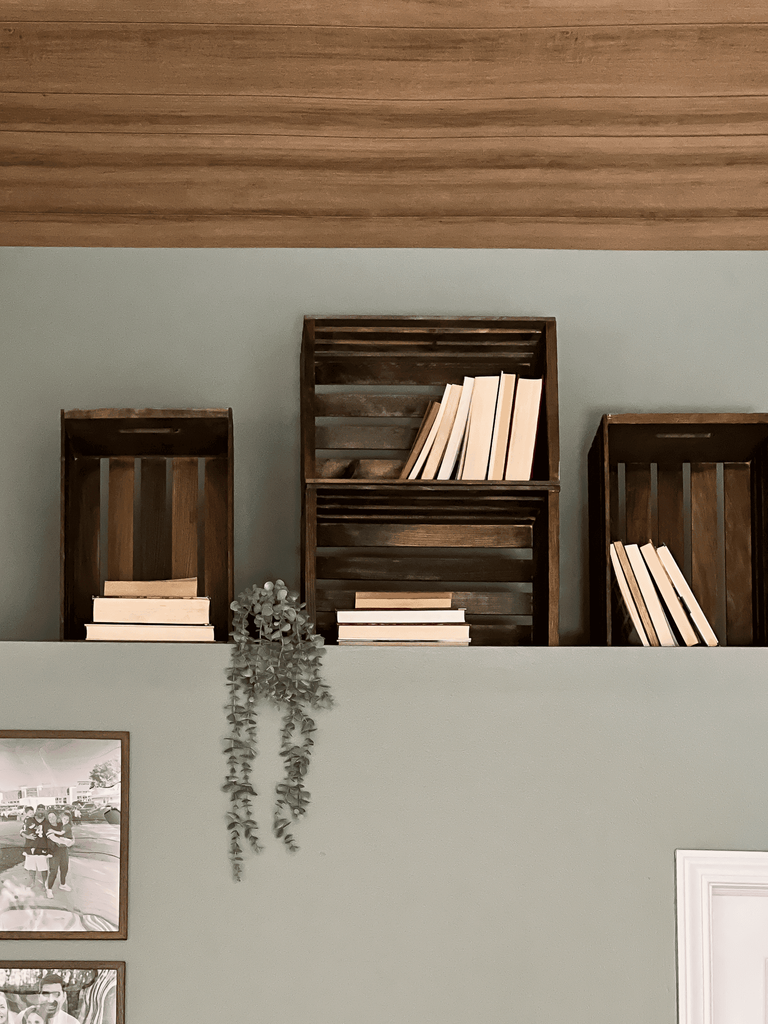
Wooden crates turn a high bedroom ledge into a series of open display compartments. Their dark slats stand out against sage paint, and the light book pages create smaller areas of contrast inside each box.
A trailing plant interrupts the repeated rectangles. This idea suits an existing architectural ledge that looks empty but does not need daily access.
Use lightweight objects and secure the crates appropriately, checking the ledge’s depth and support before adding anything. Keep books you regularly read somewhere easier to reach.
Varying the crate orientation can create interest without adding more colors. Leave visible wall between the groups so the arrangement stays readable from bed.
The result uses height while preserving floor space for furniture and movement.
16. Keep Sage on the Headboard Wall in a Compact Room
Credits: Wendy Duffy / At Lane and High
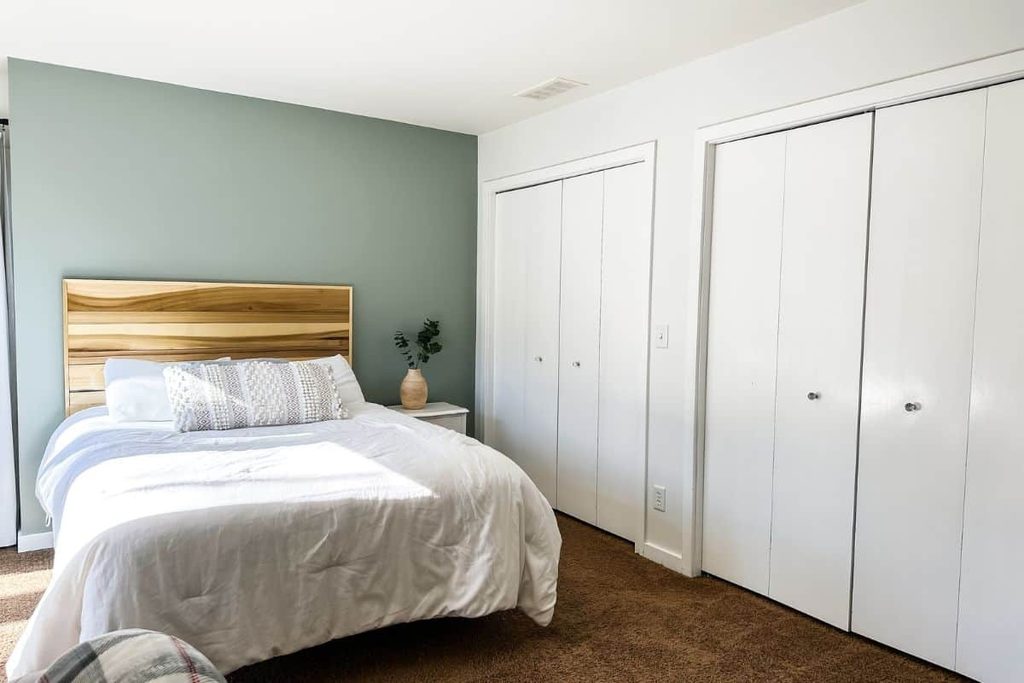
One sage wall gives this compact bedroom a focal point while the surrounding white surfaces keep its boundaries simple. The color sits behind the bed rather than covering the run of closet doors.
That choice allows the storage wall to recede and leaves the wooden headboard as the warmest feature. When testing an accent color, look at the room from its entrance and consider which wall naturally holds your attention.
Carry the paint neatly into the corners without adding a second decorative border. White bedding connects with the closet fronts, reducing the number of competing surfaces.
A restrained palette can be useful when existing carpet must stay, letting a modest painting project refresh the room around the furnishings already there.
17. Arrange a Small Photo Grid Above a Bedroom Dresser
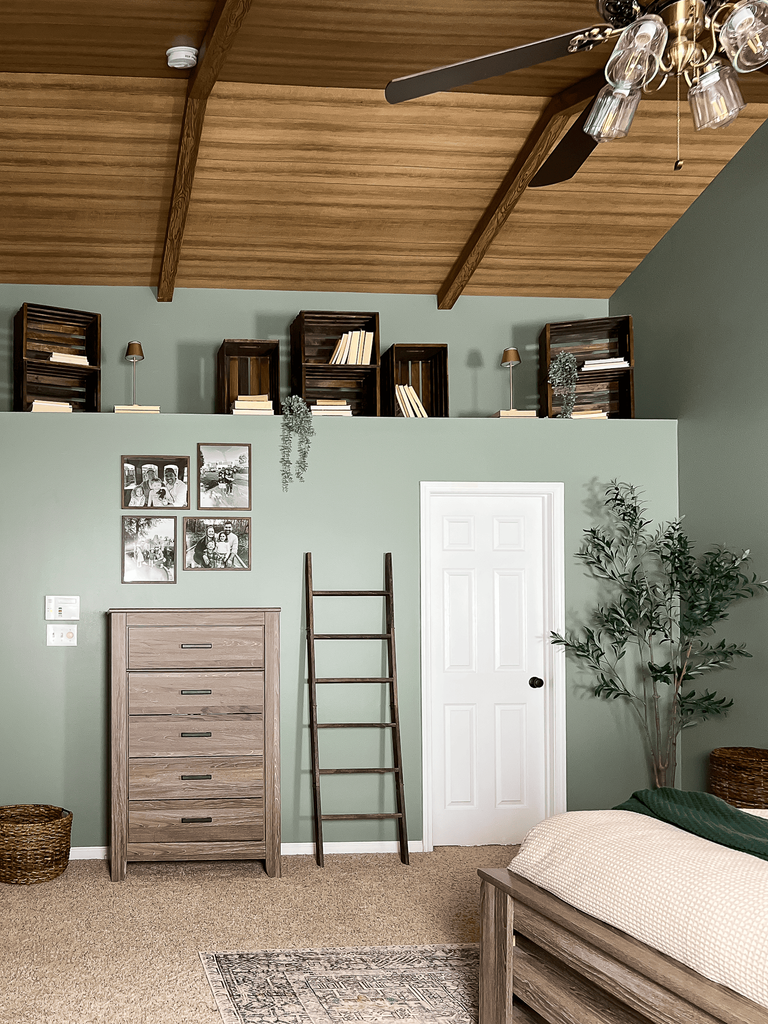
Credits: Christin Cieslarski / My Homier Home
Four photographs form a compact grid above the narrow dresser, giving this sage wall a personal focal point at eye level. Their similar frames provide order without filling the entire stretch between furniture and ceiling.
The darker ladder nearby repeats the vertical direction, while the high ledge carries a separate display above. If your room has a tall wall, resist treating every empty area as something that must be filled.
Begin with a group sized to the dresser below and check it from the bed. Consistent gaps can make different photographs feel related.
Keep the lower grouping distinct from any overhead objects, allowing a band of visible green between them. That breathing room helps the arrangement feel deliberate and scaled.
18. Show Sage Paneling Through a Wooden Spindle Headboard
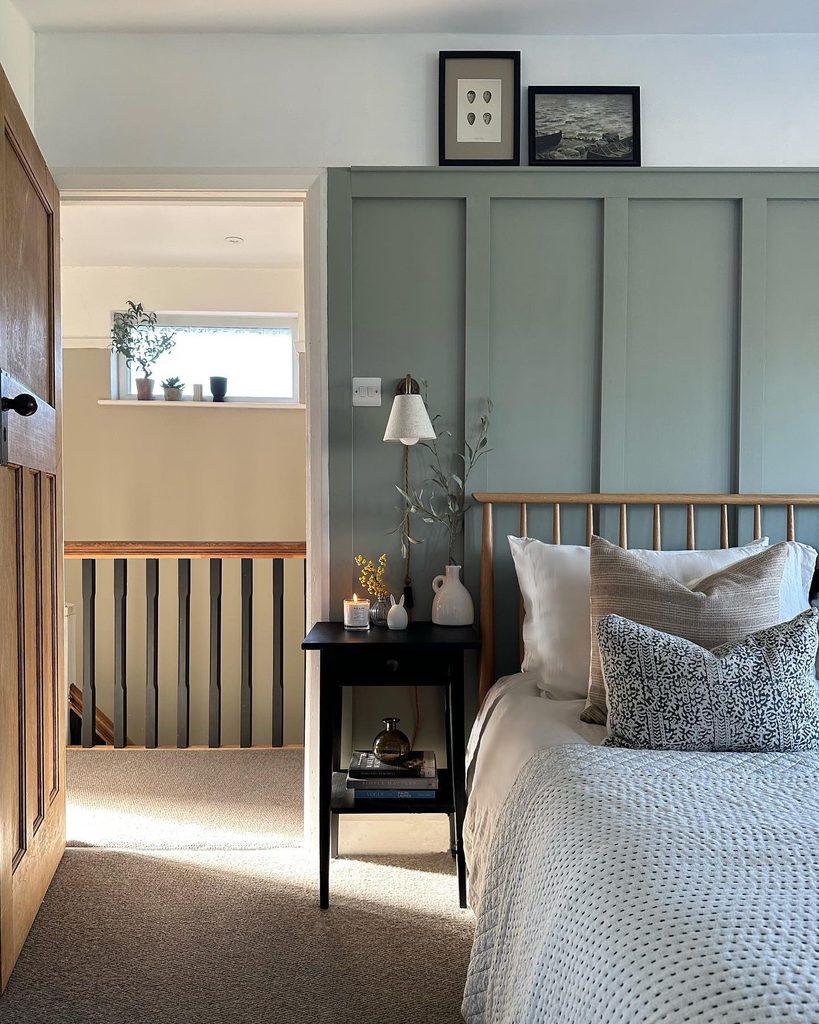
Credits: Instagram
Open spindles let the painted wall remain part of the bed’s silhouette, which is especially useful when you have invested time in paneling. Here, warm wood softens the cool green and repeats the timber visible in the doorway.
The black nightstand gives the otherwise pale arrangement a firm edge without hiding much wall. When choosing a bed for an existing sage feature, consider how much of that color an upholstered headboard would cover.
A lighter, open frame can make the wall treatment feel more generous. Keep most of the bedding neutral so the lines remain visible, and use a compact wall light to free the bedside surface.
The two pictures above the paneling add height without making a crowded gallery.
19. Choose a Bedside Table That Combines Two Functions
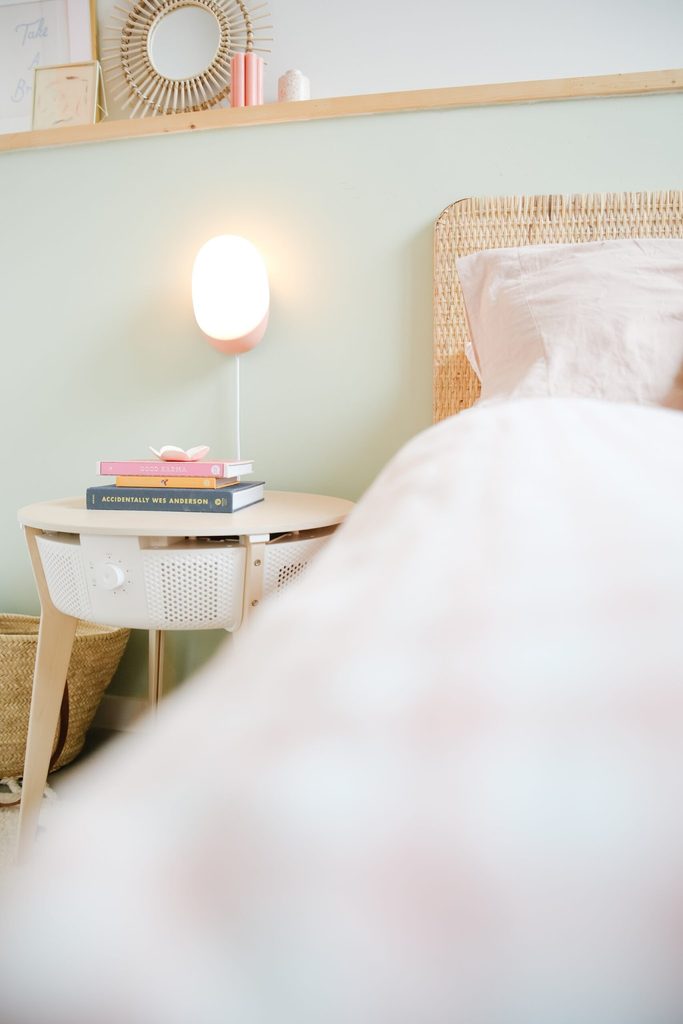
Credits: Hey Maca
A round side table incorporates an air purifier beneath its wooden top, combining two objects in a compact sage bedroom. The pale perforated housing is less visually heavy than a separate appliance beside another piece of furniture.
Its light timber legs connect to the headboard and the ledge above. When considering multifunctional furniture, check both jobs carefully: the surface should be useful at mattress height, and any appliance needs its specified ventilation and service access.
Keep bedding and stored objects clear of vents, following the manufacturer’s guidance. The wall light leaves the tabletop free for a stack of books.
Choosing a piece with a quiet shape and finish can help necessary equipment sit comfortably within a simple, colored bedroom scheme.
20. Tuck a Woven Hamper Into a Sage Corner
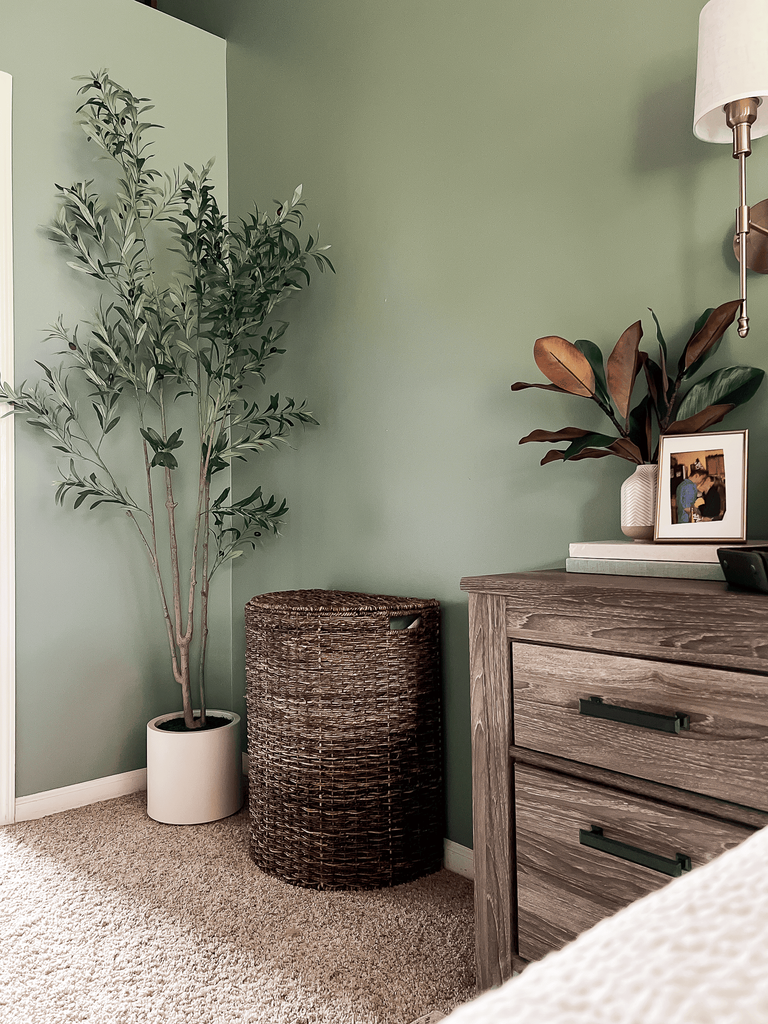
Credits: Christin Cieslarski / My Homier Home
A dark woven hamper turns an storage need into another layer of texture in this sage bedroom. Its rounded sides contrast with the straight nightstand, and its brown tone relates to the wood without matching it exactly.
The nearby potted tree adds height while leaving much of the green wall exposed. This arrangement can help a bedroom corner feel useful without adding more decorative furniture.
Measure the hamper with its lid open, and leave enough room to remove the liner or carry laundry out easily. Choose a finish that can tolerate your household’s routine and keep it away from damp plant pots.
A closed container can make the room look calmer while keeping clothing within reach of the dressing area.