
Weathered wood can feel warm and grounded without making a bedroom look dark or crowded.
Rustic Bedroom Ideas show how to balance its visible grain with softer, simpler layers, from pale linens beside a weathered headboard to blue-and-white bedding against painted shiplap.
Small choices can bring in the same character, too: a worn bed tray, plaid textiles, or a shared vintage nightstand between twin beds.
The key is to let one or two rustic elements stand out while calmer fabrics and useful furniture keep the room comfortable and easy to live in.
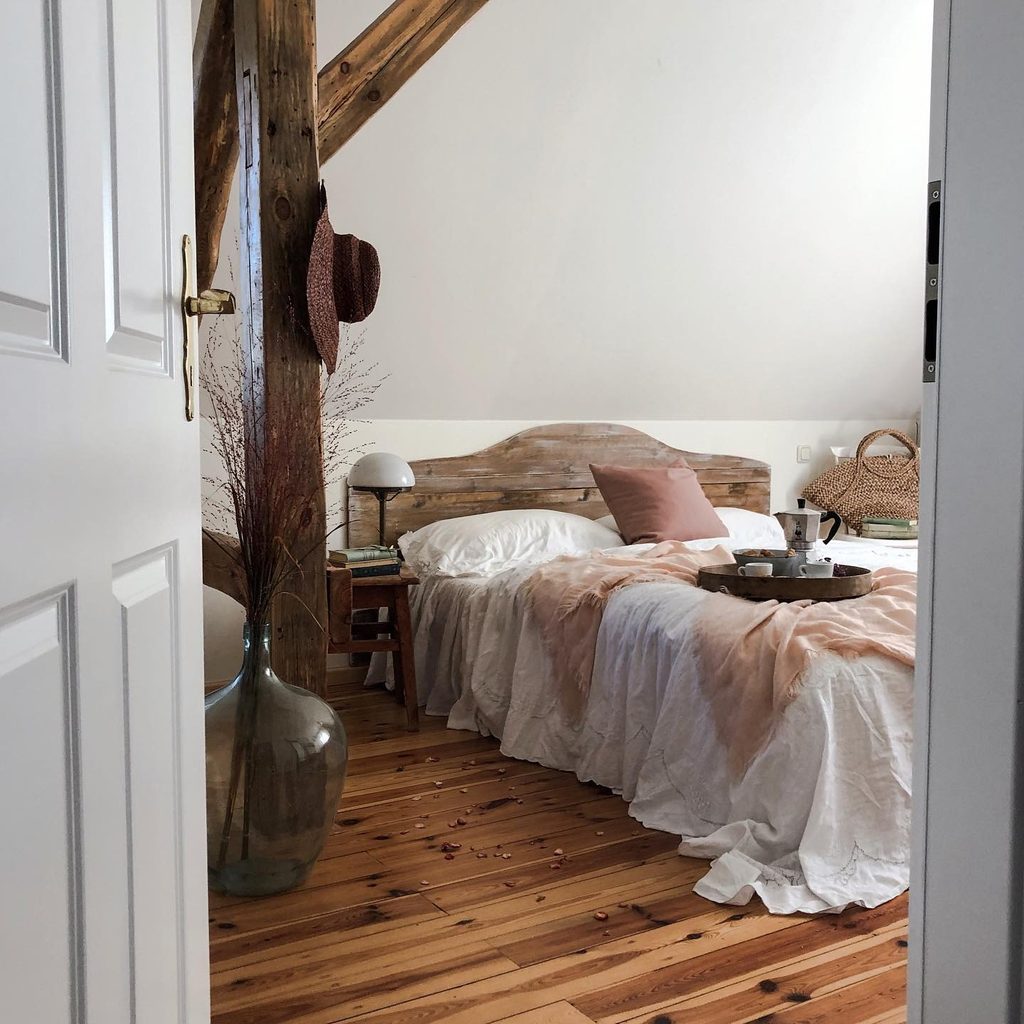
Weathered Arched Headboard With Blush Linen
Credits: Instagram
An uneven timber finish can make a simple bed feel connected to the building around it. Here, the curved headboard echoes the exposed post and brace beside it, while white bedding keeps those substantial shapes from becoming heavy.
A blush throw adds softness without disguising the wood. Borrow the balance by choosing one weathered focal piece and leaving nearby furniture uncomplicated.
An existing structural beam needs no decorative imitation beside it. Let its grain and proportions remain visible instead.
Before buying an older headboard, check the joints, edges, and attachment points carefully. Any rough areas near pillows should be smooth enough for use.
Pale linens provide a useful contrast, making the outline readable even when the room receives limited daylight.
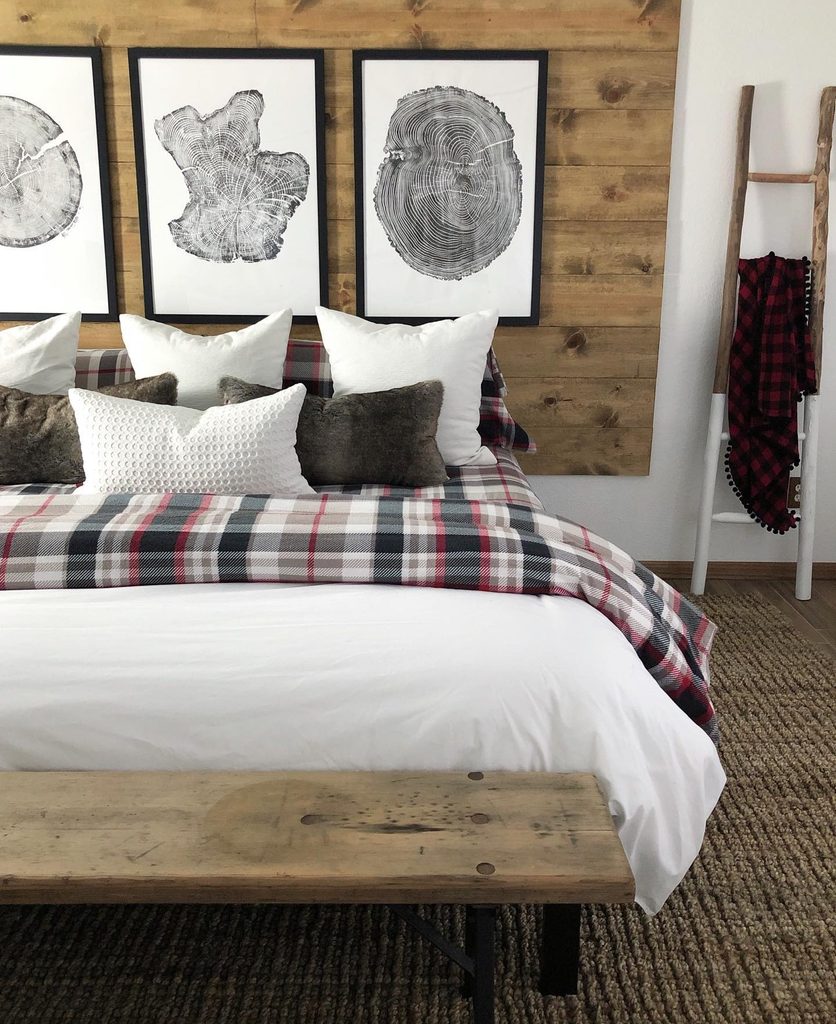
2. Plaid Bedding Beneath Tree Ring Artwork
Credits: Instagram
Tree rings offer a quieter woodland reference than a room full of cabin signs. Three framed prints repeat the tones of the plank wall in Kate’s guest bedroom, with plaid bedding giving the arrangement a seasonal feel.
The white duvet separates the busier patterns and leaves the timber visible. You could use a smaller collection of nature prints if your wall is narrower; their relationship to the bed matters more than matching this exact number.
Lay the frames out before hanging and compare their width with the headboard. Keep the bedding colors connected to the artwork rather than introducing unrelated accents.
A folded plaid layer can be changed easily when winter ends, while the wall display remains useful year round.
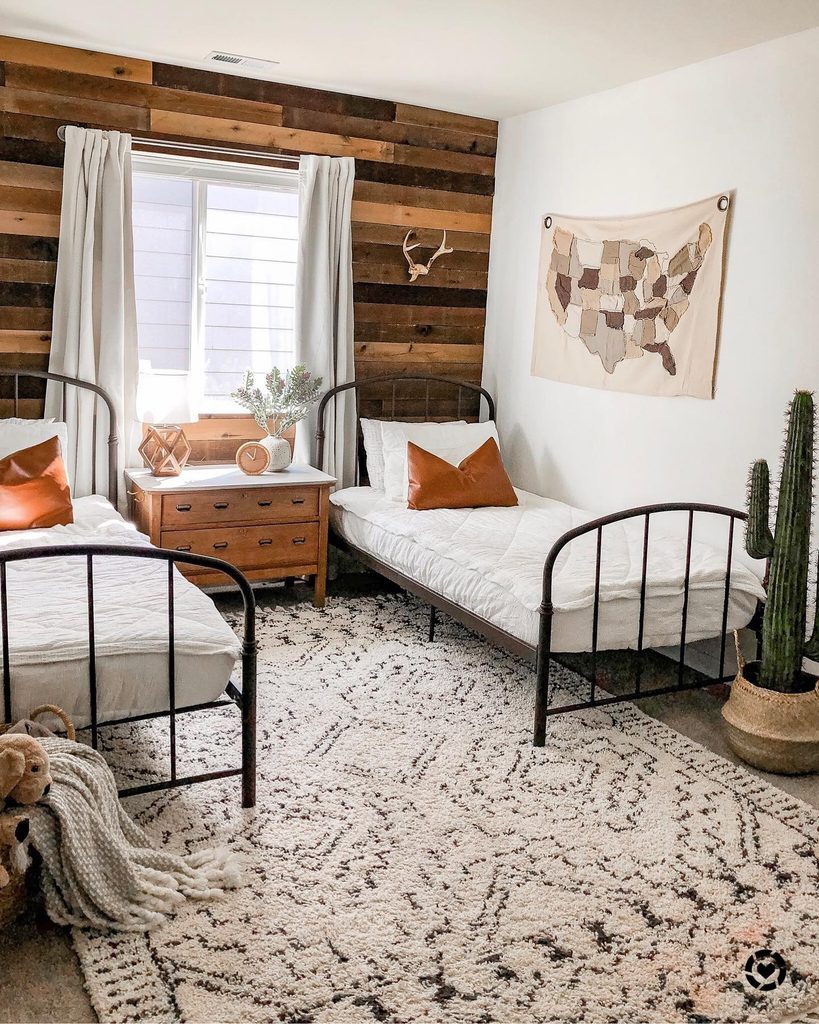
3. Shared Vintage Nightstand Between Iron Twin Beds
Credits: Instagram
Sharing a nightstand makes this twin bedroom feel arranged rather than squeezed together. A wooden chest sits beneath the window between black metal beds, providing a common center against the varied plank wall.
White linens make the dark outlines clear, and caramel cushions echo the warmer boards. This layout works best when both sleepers can reach the chest comfortably.
Check its height against the mattresses and leave room to open drawers without catching bedding. Separate reading lights would help each person use the room independently.
Avoid filling the entire surface with decorative objects; water, glasses, and charging space matter in a shared bedroom. Different wood tones can sit together naturally when the larger textile surfaces stay relatively calm and consistent.
4. A Weathered Bed Tray for a Small Rustic Accent

Credits: Instagram
One portable piece can introduce rustic character when the main bedroom furniture already works. This raised wooden tray has visible grain, worn lettering, and a simple raised rectangular outline against soft white bedding.
The contrast lets the aged surface stand out without requiring another large cabinet or wall treatment. Choose a tray with a stable base, smooth edges, and enough clearance for comfortable use.
Keep its everyday contents light and easy to move rather than reproducing a heavy decorative arrangement. A book or cup can be sufficient when the tray is in use.
Decide where it will stand overnight so it does not become something you repeatedly step around. Natural wood brings the texture; the bed can remain quietly dressed.
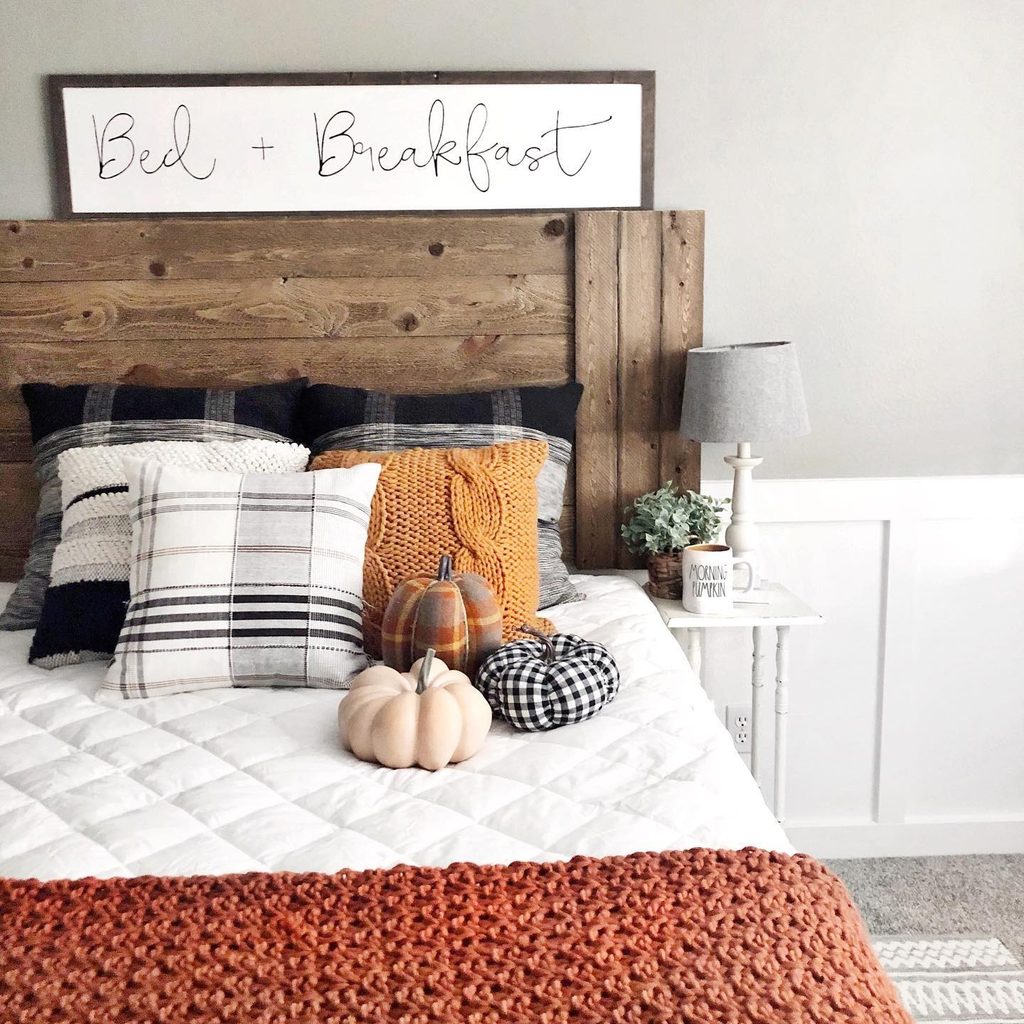
5. Chunky Autumn Knits Against Weathered Wood
Credits: Instagram
Orange knitwork gives the pale room an autumn note, but the timber headboard keeps it grounded. Its broad, knotty surface contrasts with the softer throw and mustard cushion, making texture more important than a collection of seasonal ornaments.
Use this combination when you want a rustic bedroom that can change with the weather. Keep your everyday sheets and main cover neutral, then choose one substantial blanket in a warmer shade.
Check the care label before buying a chunky knit; loose loops can catch on jewelry, pet claws, or furniture edges. Fold it where it is easy to remove at bedtime.
A small checked cushion can connect the warm accents without requiring every textile to share the same pattern or color.
6. Blue and White Bedding Against Painted Shiplap
Credits: Instagram
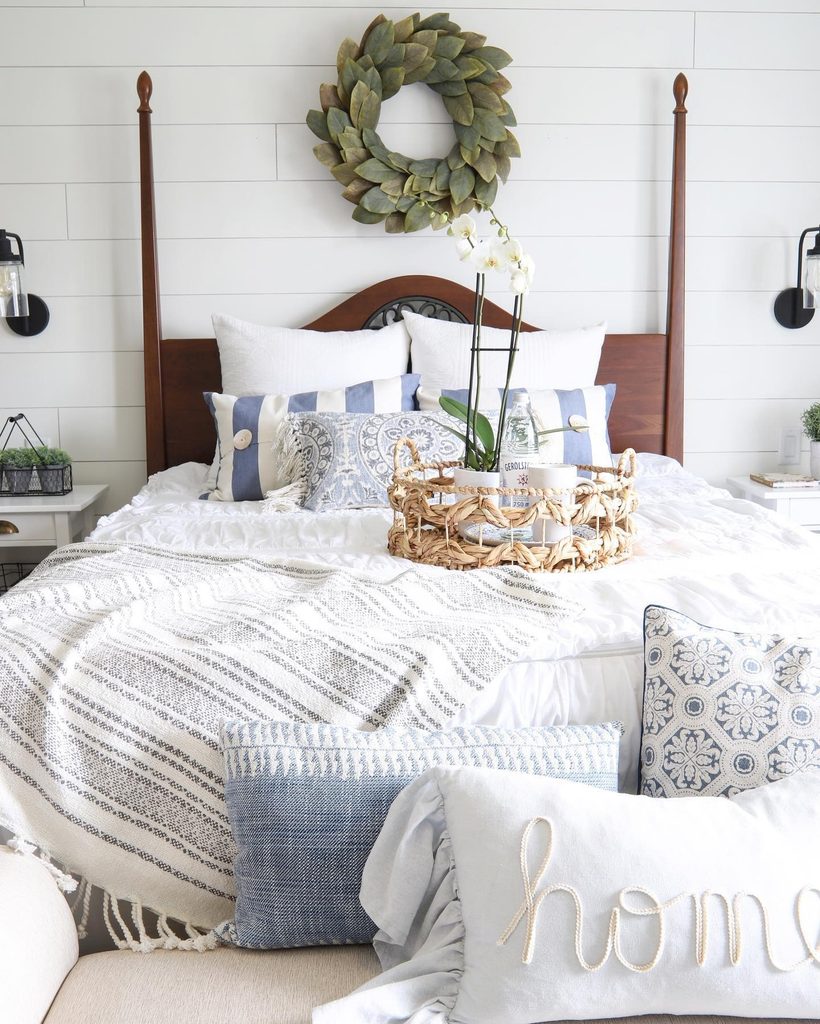
White horizontal boards give this bedroom a farmhouse backdrop without darkening the bed area. A traditional wooden headboard brings warmth between the wall and layered blue textiles, while a simple wreath supplies a softer circular shape above.
The useful balance is between an orderly surface and smaller patterns. Choose one blue print for the pillows and a different scale for a folded blanket, leaving plenty of white linen visible.
Matching every motif is unnecessary when the colors already connect them. If adding wall boards, plan their finish and spacing around existing sockets and furniture before installation.
Keep extra wall decorations limited so the long lines remain readable. The wood bed can provide the rustic character while the fabrics stay fresh.
7. Weathered Boards Across a Curved Bedroom Ceiling
Credits: Instagram
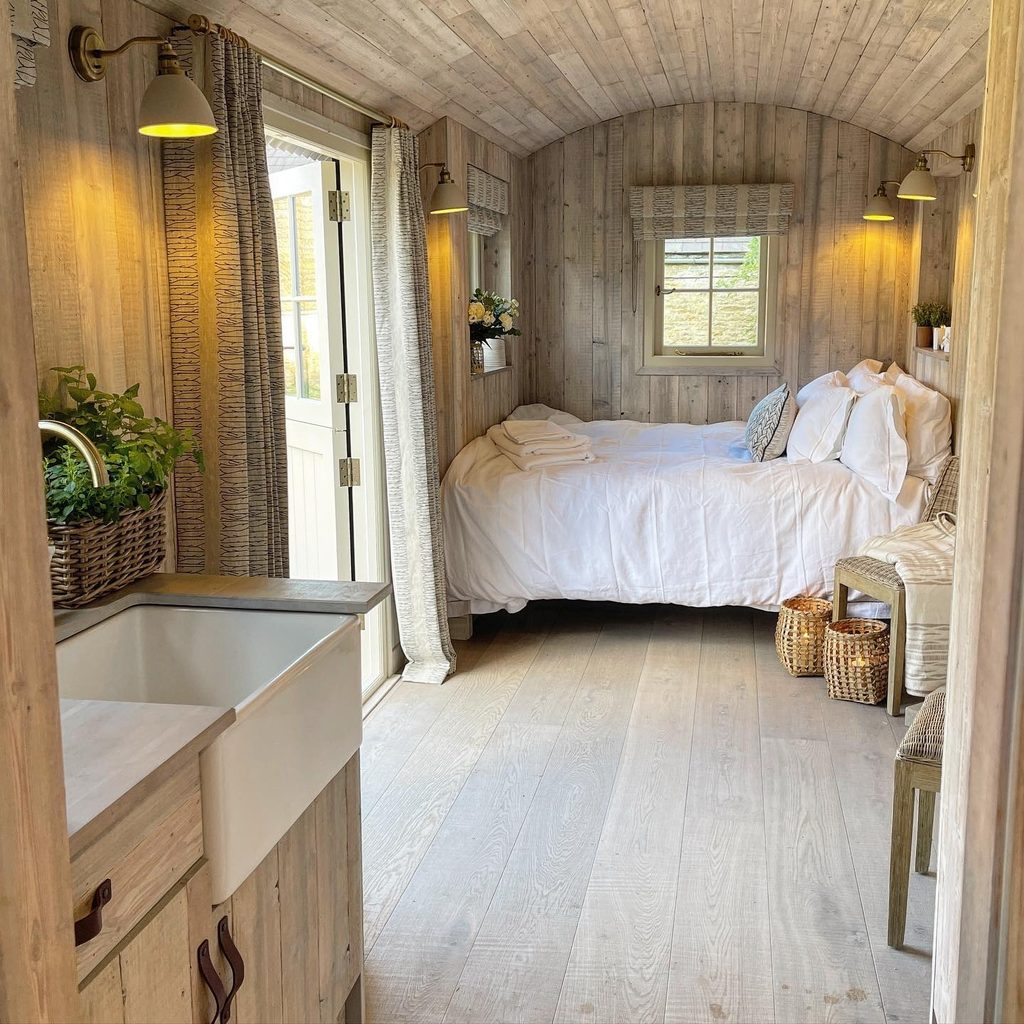
Timber continues from the walls onto the curved ceiling in this compact sleeping space, creating an enveloping cabin character. The pale weathered finish keeps the grain visible without making the room uniformly dark.
White bedding provides a calm break at the far end, and woven baskets repeat the natural texture near the floor. This approach is strongest when the room’s shape guides the boards rather than fighting their direction.
Consider a limited ceiling treatment first if surrounding every wall would feel too enclosed. Check materials and installation with an appropriate professional, especially around wiring and ventilation.
Simple window coverings allow daylight to soften the boards. Avoid crowding the narrow passage with furniture that would conceal the timber or obstruct access.
8. A Painted Armoire Beside Natural Wood Flooring
Credits: Instagram
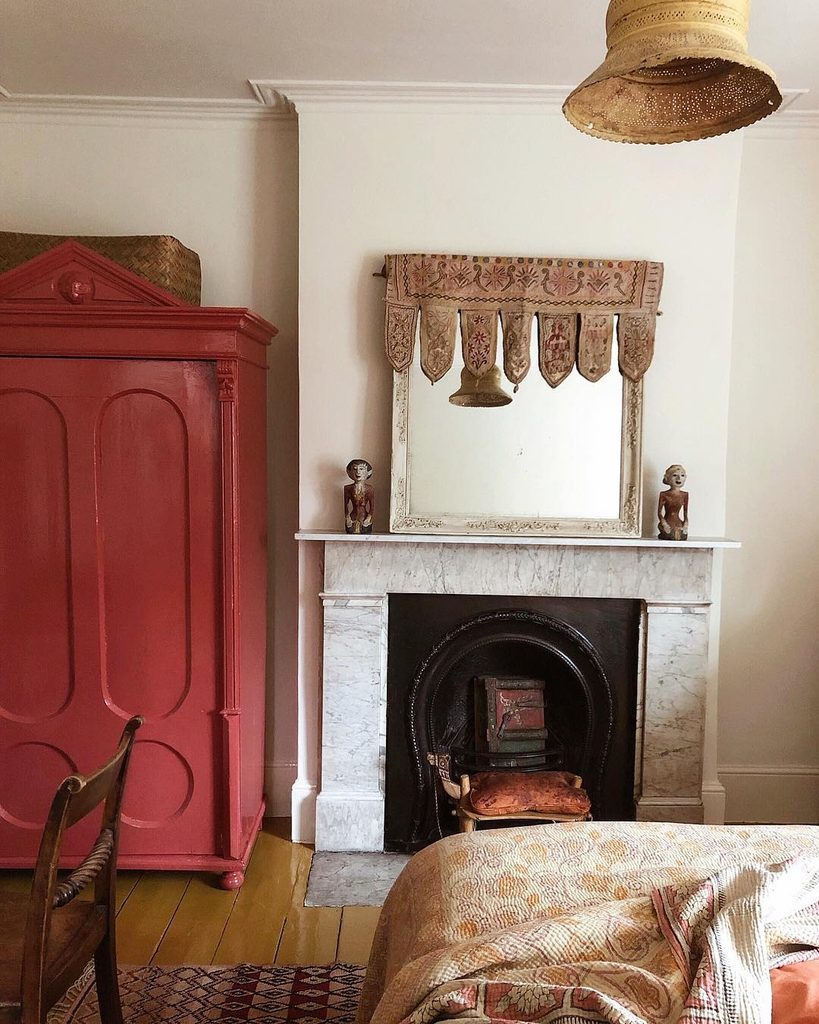
A substantial storage piece can bring color into a rustic bedroom while keeping its traditional shape visible. The red armoire here stands beside warm floorboards and plain pale walls, so its arched doors and projecting top become a clear feature.
A woven pendant contributes another natural texture overhead. Choose a wardrobe for the storage you need, then consider whether its finish should blend in or stand apart.
Measure the doorway and delivery route as well as its intended position. Allow enough space for the doors to open comfortably beside the bed.
When repainting existing furniture, identify its finish and prepare it appropriately. Keeping surrounding textiles quieter gives the cabinet room to contribute character without demanding a matching suite of furniture.
9. Arched Sleeping Alcoves With Wood Drawer Bases
Credits: Instagram
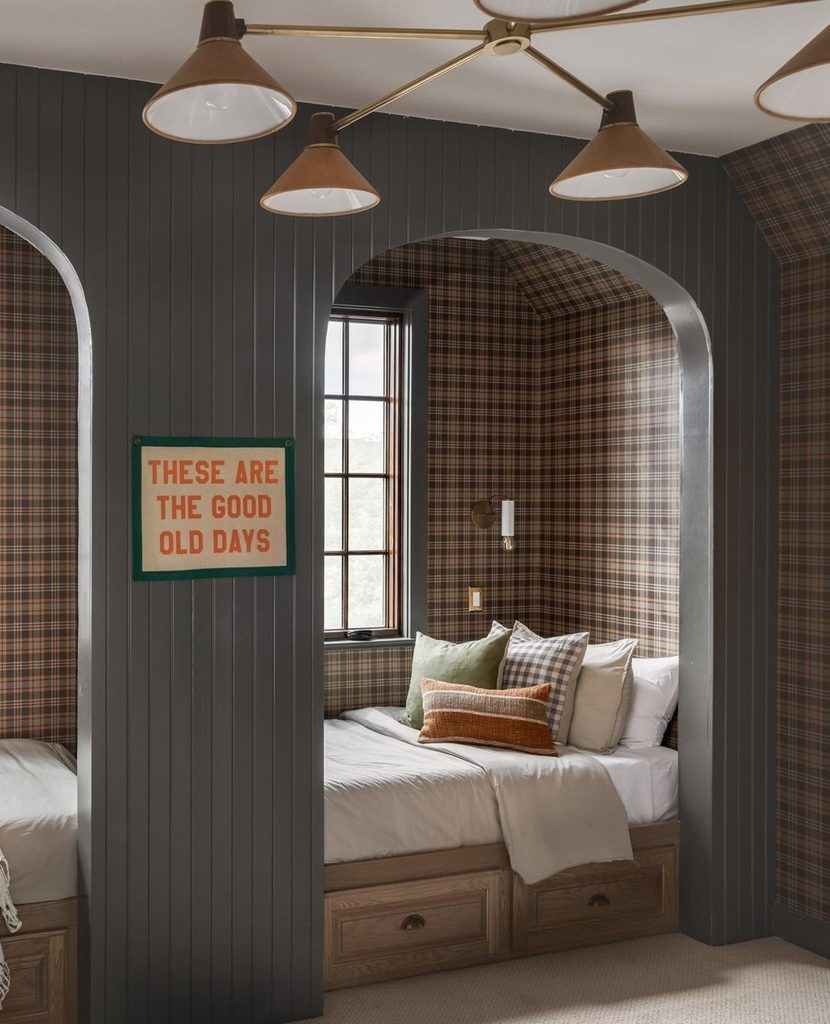
An arched opening makes each bed feel like a small retreat within this shared room. Dark vertical paneling defines the outside, while plaid walls and natural wood drawers give the sleeping alcoves a warm cabin mood.
The curves prevent the repeated boards from feeling rigid. If planning a similar arrangement, begin with mattress dimensions, headroom, ventilation, and an easy route in and out.
The drawers need their own opening space beyond the bed. Reading lights should remain reachable without requiring freestanding tables inside the recess.
Keep bedding relatively plain so the enclosure’s pattern stays legible. This is a joinery project rather than a decorative headboard trick; professional planning can help the attractive outline support comfortable nightly sleeping and everyday maintenance.
10. A Weathered Ladder for Blankets Beside the Bed
Credits: Instagram
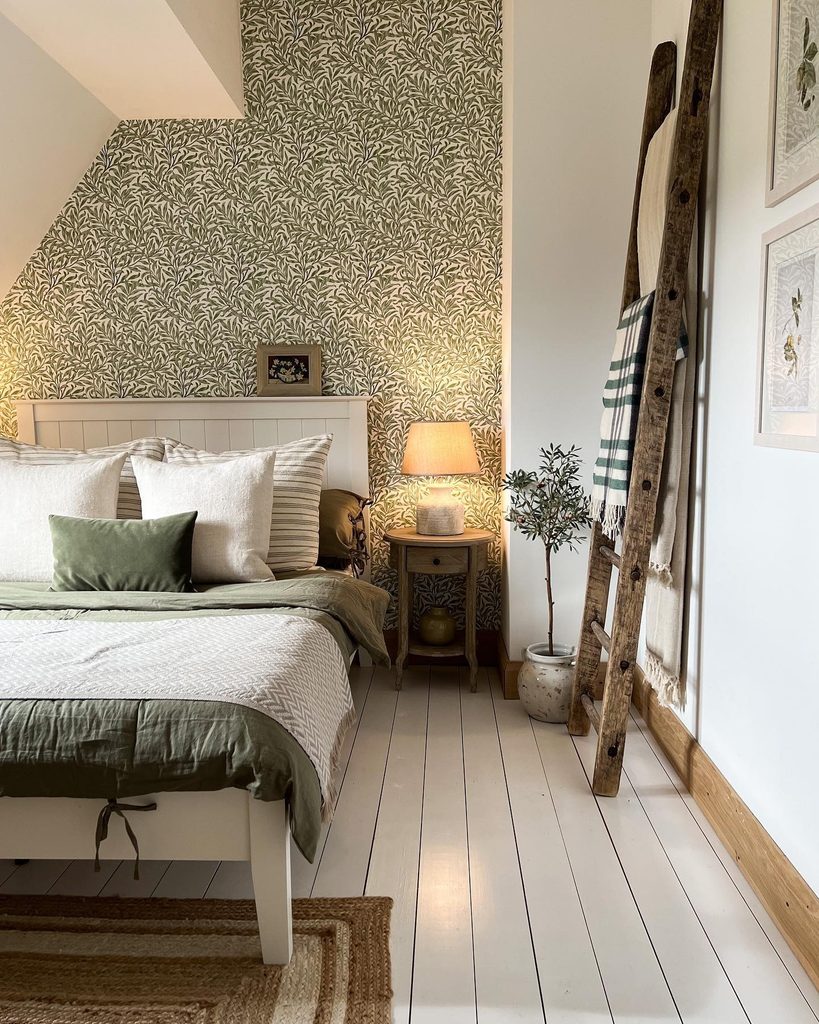
Leaning timber introduces height without filling the wall with another solid cabinet. In this bedroom, a weathered ladder holds folded blankets beside botanical wallpaper and a pale bed, letting the open spaces between its rungs keep the corner light.
The worn wood provides contrast against smoother painted surfaces. Choose a ladder intended for decorative storage and secure it against slipping or tipping.
Avoid rough edges that could catch fabric, and keep the lower ends outside the walking route. One or two blankets are enough to make the purpose clear without concealing the ladder’s shape.
Place heavier extras in a separate basket if needed. The arrangement brings useful rustic texture to a room while leaving the bedside table free for essentials.
11. A Woven Pendant Above an Open Timber Canopy
Credits: Instagram
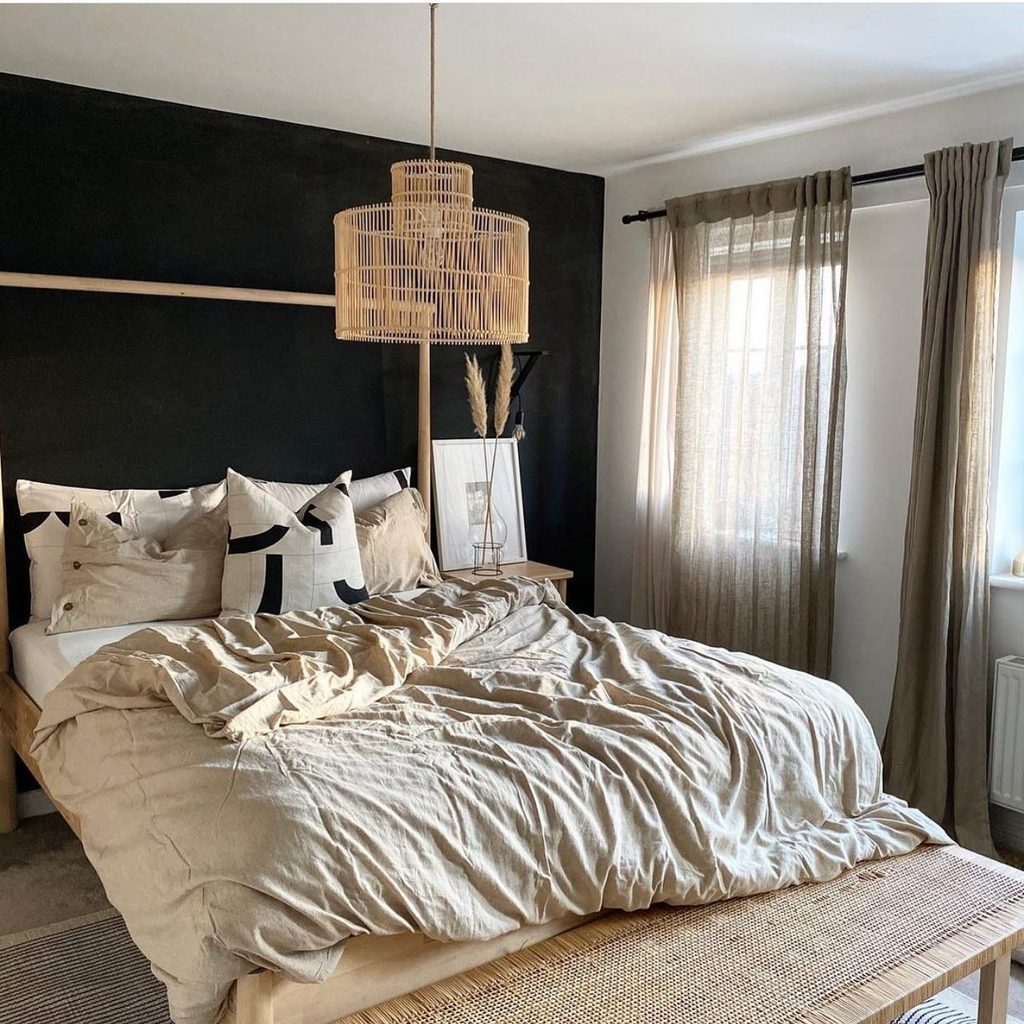
A pale woven shade stands out against the dark wall in this bedroom, bringing texture above the simple open timber canopy frame.
Loose neutral bedding and sheer curtains keep the surrounding surfaces soft, while the open bed structure preserves a view through the room. This is a restrained rustic direction that relies on materials rather than distressed finishes everywhere.
Check the shade’s dimensions against the canopy and ceiling before choosing its hanging height. Leave comfortable clearance when entering or making the bed, and follow the fixture’s installation requirements.
Separate reading lights can provide useful task illumination if the woven shade casts a decorative pattern. Repeat its natural tone in one other piece, such as a bench, without matching every accessory.
12. Exposed Brick Behind a Simply Dressed Bed
Credits: Instagram
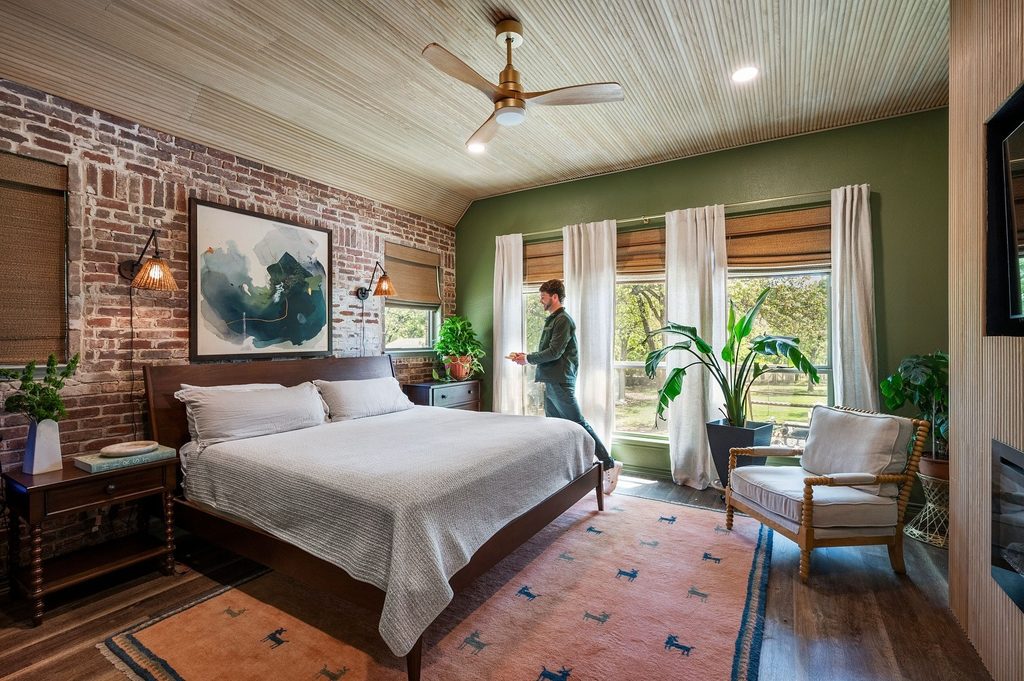
Uneven brickwork gives the wall behind this bed enough detail to stand largely on its own. A dark wooden frame sits against its warm colors, while white bedding and pale curtains keep the room from feeling overly heavy.
Green paint on the adjoining wall offers a quieter surface beside the masonry. If your bedroom already has exposed brick, assess its condition before deciding how to clean or finish it.
Appropriate treatment depends on the material and building, so seek advice before applying an unfamiliar coating. Keep furniture outlines simple where the wall is busy.
A single large picture can work better than numerous small decorations. The contrast between rough masonry and comfortable textiles supplies the rustic character without additional imitation.
13. A Cane Headboard With Soft Earthy Layers
Credits: Instagram
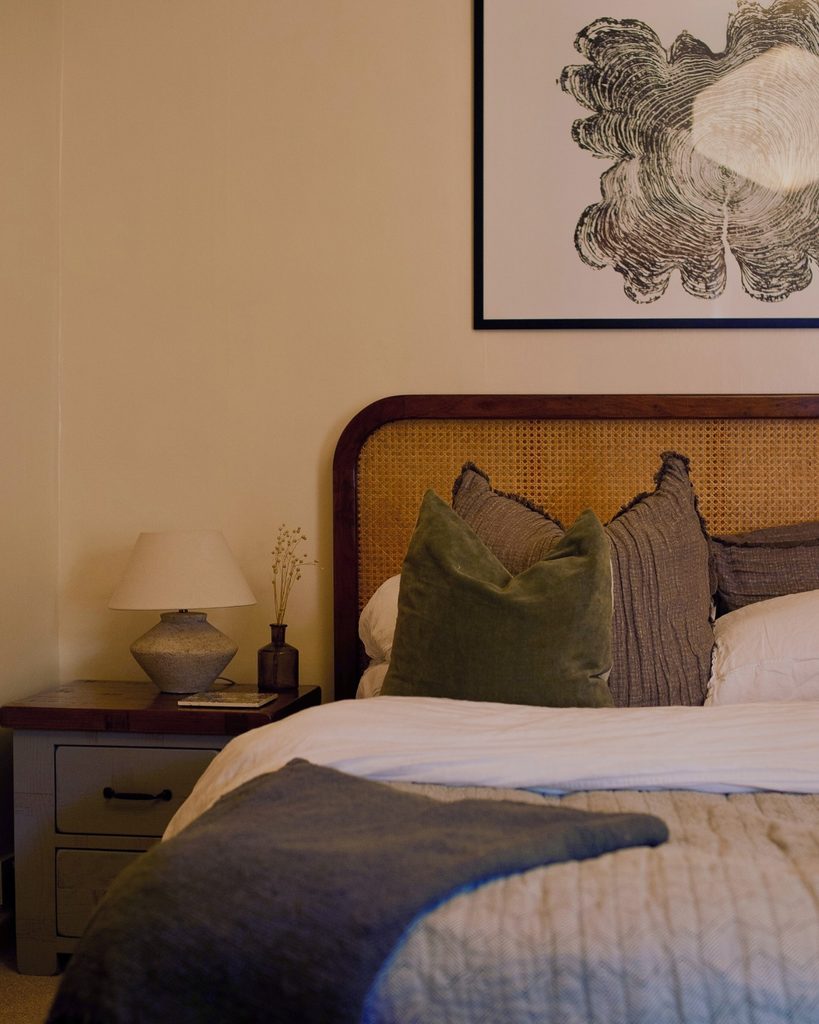
Fine woven cane gives this headboard texture without the weight of a solid timber panel. Its dark curved outline keeps the pattern distinct from pale walls, while olive cushions and muted blue bedding create a gentle earthy palette.
The bedside lamp and simple furniture leave the material easy to appreciate. Try this approach when you want a rustic bedroom that still feels light and uncluttered.
Compare the cane’s warm tone with existing wood finishes before adding more pieces. Check the frame and woven surface for condition and support, especially when buying secondhand.
Softer pillows can balance the open pattern without hiding it completely. One tactile feature is often enough; surrounding furniture need not repeat the same weave throughout the room.
14. A Patchwork Accent Among Cottage Bedroom Patterns
Credits: Instagram
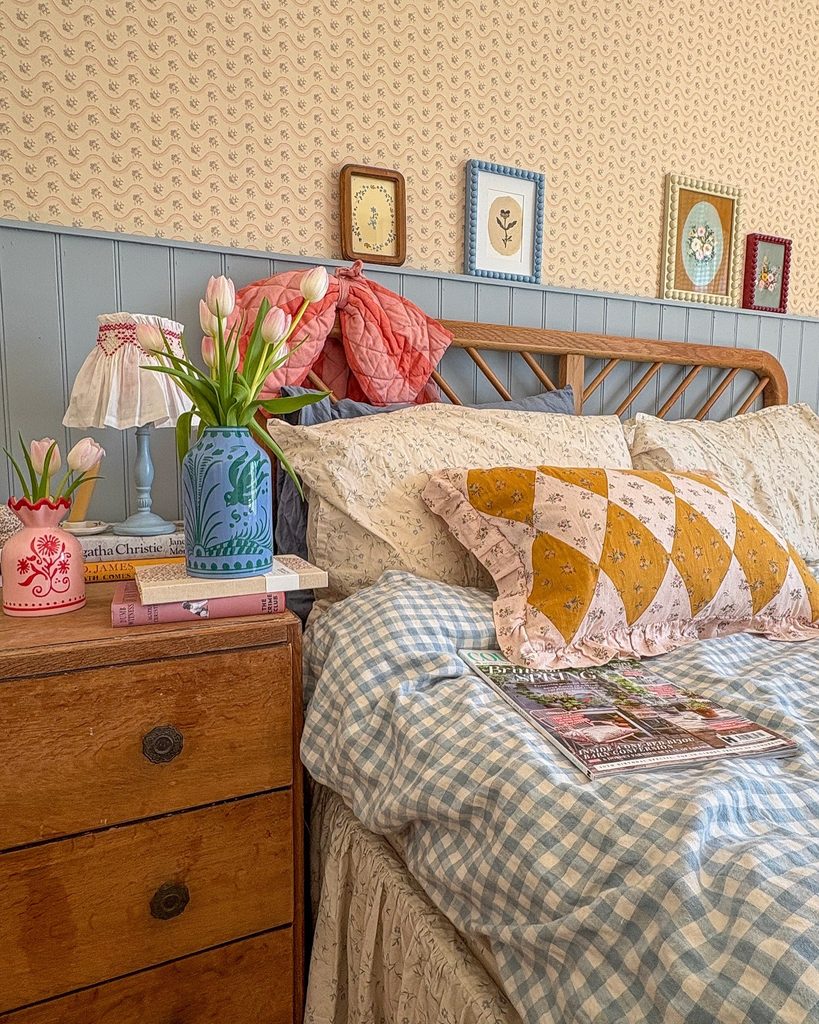
A triangular patchwork pattern gives the cushion on this bed a distinct role among smaller gingham checks and flowers.
Warm yellow and blush pieces connect with nearby accessories, while a wooden chest and woven headboard keep the setting grounded in natural materials. This is a useful way to introduce handmade character without changing the entire bedding collection.
Begin with a cushion or quilt you enjoy and repeat one of its colors sparingly elsewhere. Let nearby patterns differ in scale so their edges remain readable together.
A plain sheet can create a pause between busier layers. Check a treasured textile’s condition and care requirements before everyday use.
The room can feel collected over time without requiring every item to match exactly.
15. Keep Warm Wood Around Bedroom Doors and Windows
Credits: Instagram
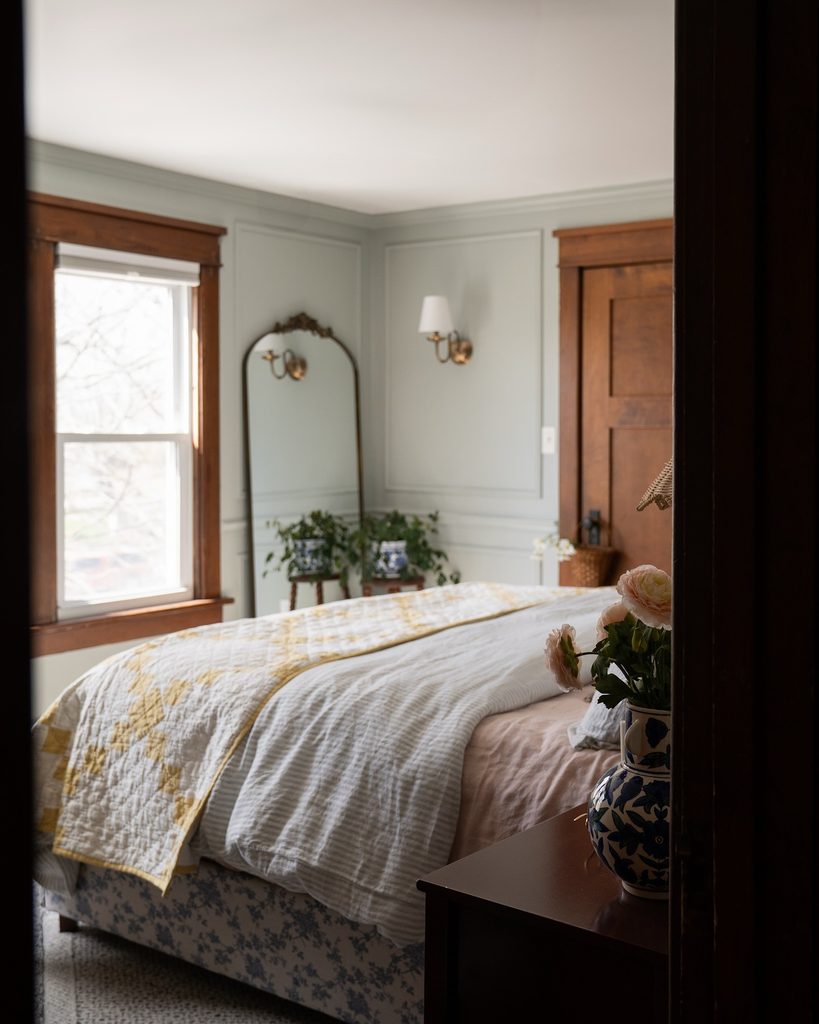
Window and door surrounds can supply the strongest rustic note when they retain a warm wood finish. In this bedroom, the timber frames contrast with softly painted walls and pale bedding, giving familiar architectural edges more presence.
An ornate mirror adds a different outline without covering the window trim. Before repainting existing woodwork, consider whether its color could connect the furniture and floor instead.
Inspect the finish and condition before cleaning or restoration, choosing methods suited to the material. Keep nearby textiles gentle enough that the grain remains visible.
A small amount of yellow in the bed linen repeats the warmth without duplicating the wood color. The effect comes from appreciating existing details rather than adding decorative beams or panels.
16. Weathered Chevron Pattern Behind Dark Furniture
Credits: Instagram
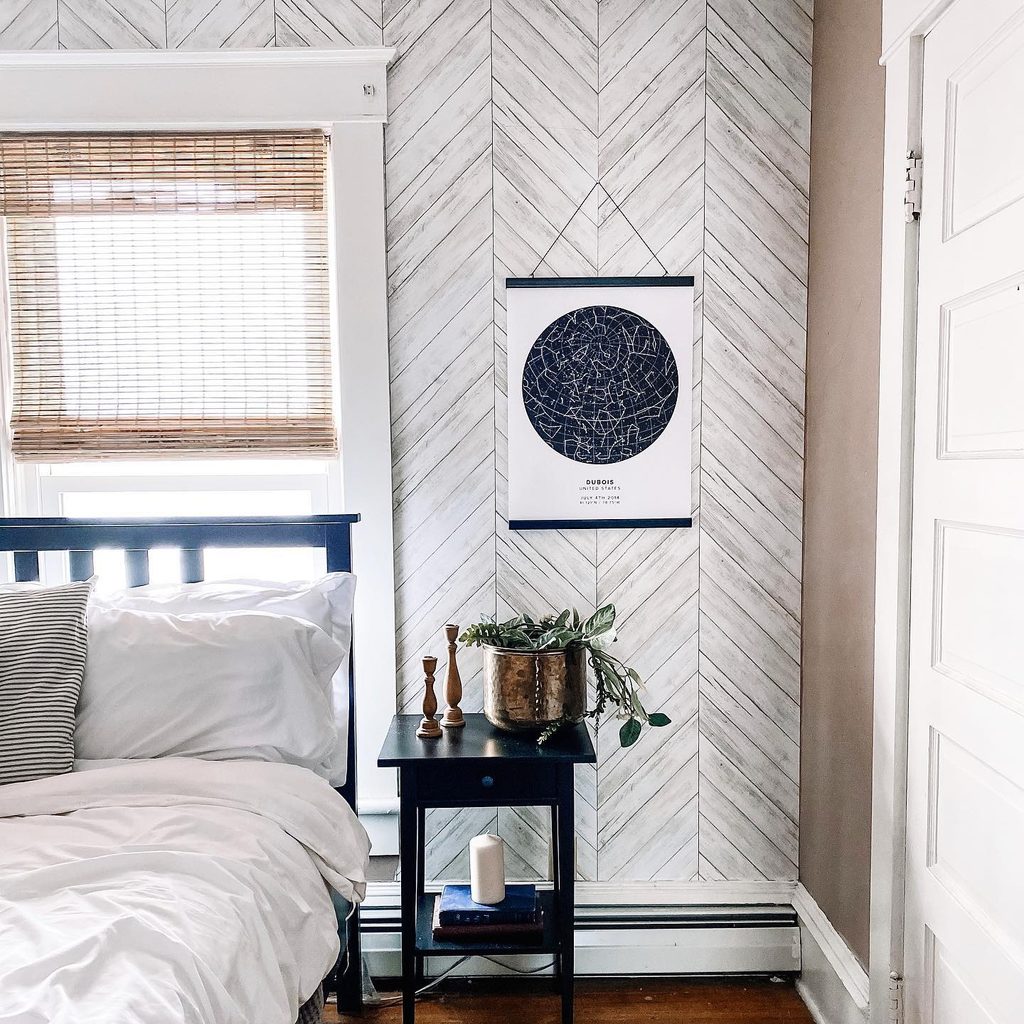
Diagonal lines introduce movement where a plain painted wall might feel flat. The pale chevron pattern behind this bed suggests weathered timber, contrasting with darker furniture and a woven window shade.
To borrow the effect without installing individual boards, consider a wood effect wallpaper suited to your walls. Check a full pattern repeat before ordering so you understand how the design will meet at corners and around outlets.
A small sample may not reveal an obvious repeated knot or printed mark. Prepare the surface according to the product guidance and confirm whether removal suits your existing finish.
Keep nearby textiles simple enough for the diagonals to remain readable. The useful idea is the weathered pattern, rather than matching every accessory.
17. Weathered Shutters Above a Bedroom Dresser
Credits: Instagram
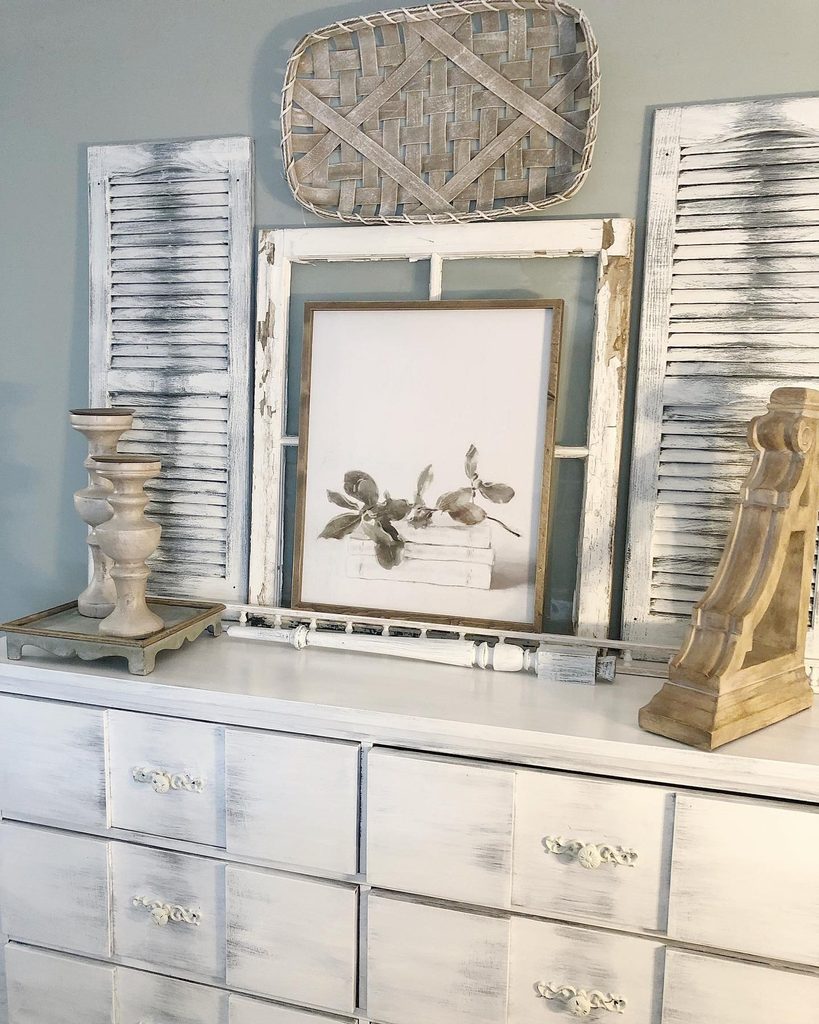
Old architectural pieces can form a rustic display away from the bed. Above this distressed dresser, tall shutters flank a worn window frame, with botanical artwork placed in front to connect the shapes.
The layered arrangement gives a plain wall depth without filling the dresser with objects. Start with one piece and test the surrounding proportions before adding more.
Any leaning frame needs to be stable and secured appropriately, especially where children, pets, or opening drawers could disturb it. Inspect old painted surfaces and glass rather than treating age as proof of safety.
Leave usable space for the dresser’s purpose. The most convincing version feels like a few carefully chosen finds, not a surface crowded with every vintage object available.
18. Natural Wood Chest Beside a Painted Bed
Credits: Instagram
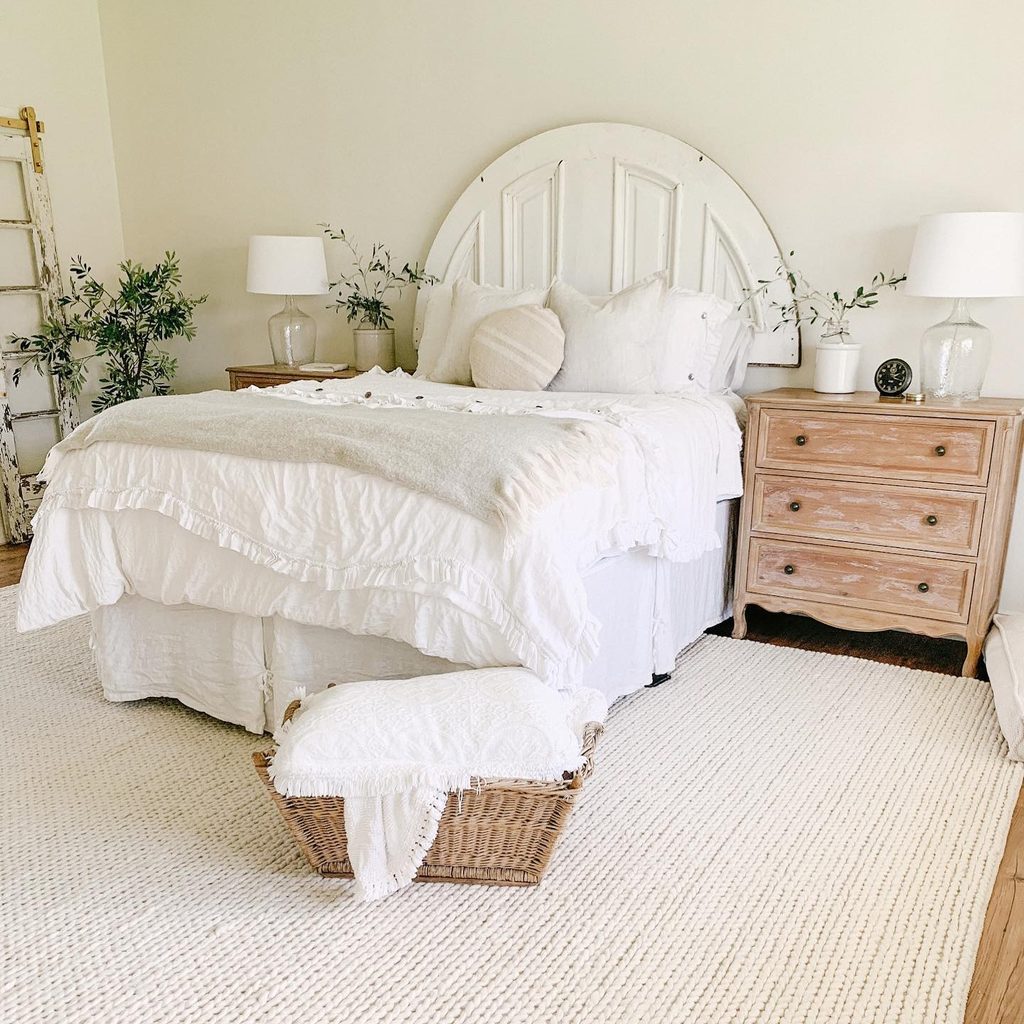
Mixing finishes can make bedroom furniture feel acquired over time. A natural wood chest sits beside the painted bed here, its warmer color standing out against white linens and pale paint.
The broad rug adds texture without requiring another strong furniture finish. If you own pieces that do not match, look for a shared proportion or detail before deciding they cannot work together.
Similar bedside heights can be more useful than identical paint colors. Keep lamps and smaller accessories restrained while the pieces establish their relationship.
A freshly painted headboard should cure before pillows or bedding rest against it. Repeating the wood tone once elsewhere is enough to connect the chest to the room without purchasing a matching furniture set.
19. An Open Woven Nightstand Beside a Traditional Bed
Credits: Instagram
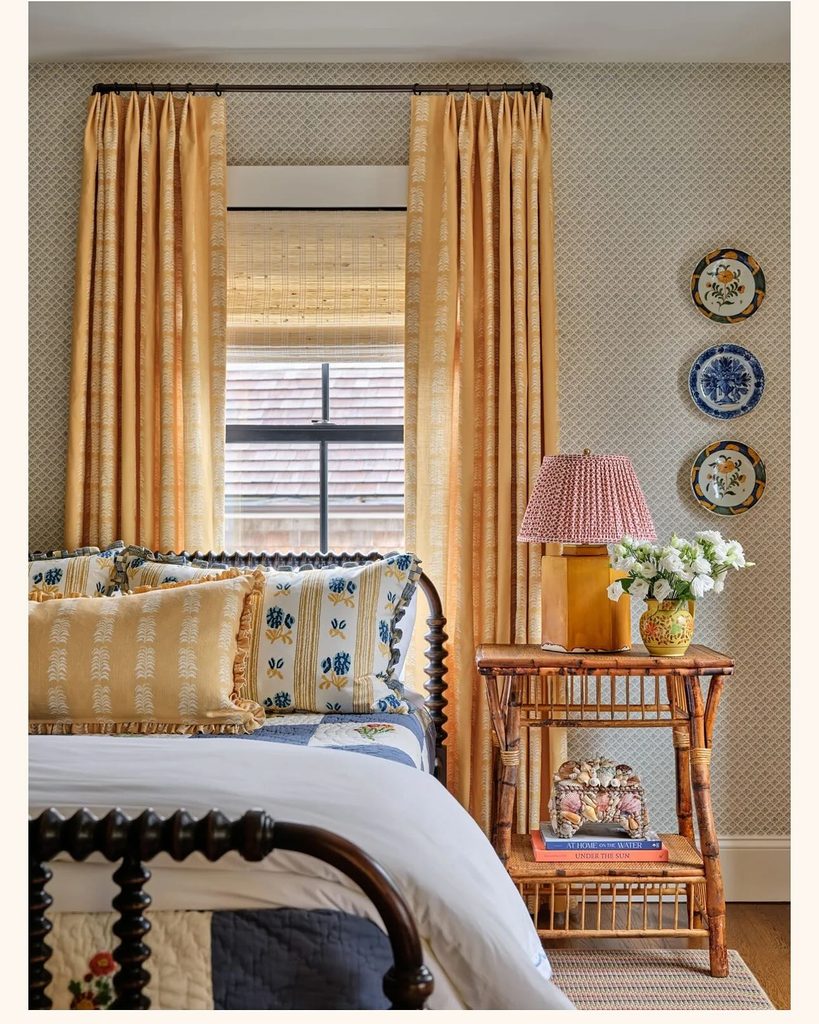
A woven nightstand brings an airy counterpoint to the darker bed frame in this room. Its open sides reveal books beneath the tabletop, while a patterned pink lampshade adds a softer note above.
The natural finish relates to the warm curtains without making every object identical. This suits a rustic bedroom where a solid chest would feel bulky beside the mattress.
Check the table’s height, stability, and top dimensions before choosing it, allowing enough room for a lamp and everyday essentials. Keep lower shelves lightly arranged so the open construction stays useful and easy to clean.
A tray can organize smaller objects if the surface needs protection. Different textures can provide character while a restrained arrangement preserves comfortable bedside access.
20. Paneled Wardrobes Beneath Dark Ceiling Beams
Credits: Instagram
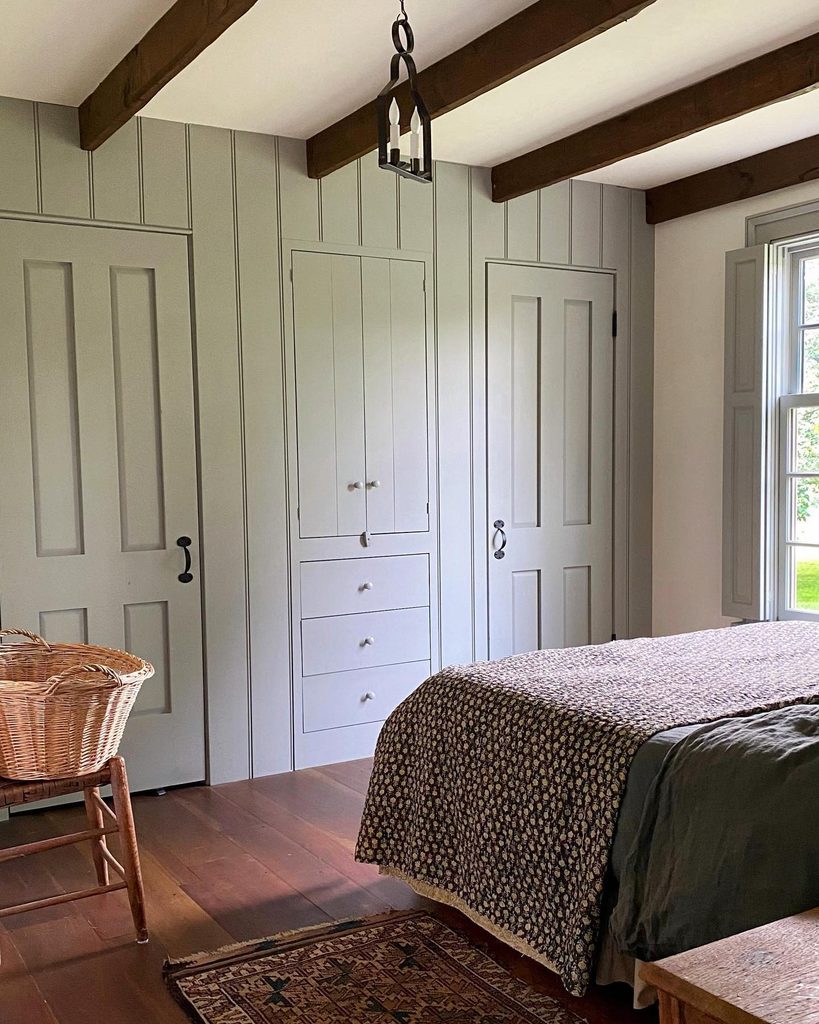
Storage becomes part of the architecture when wardrobe doors repeat the room’s vertical paneling. This bedroom pairs pale fitted cupboards with dark ceiling beams and warm wooden flooring, letting each surface contribute a different tone.
Small knobs keep the long storage wall from becoming busy. Consider this approach when a rustic room needs practical clothing space without another freestanding armoire.
Measure the available depth, door swings, and route around the bed before planning cabinets. A paint sample should be checked beside both the floor and exposed timber, since those existing finishes influence its appearance.
Keep the upper boundary simple where cupboards meet the ceiling. The beams can remain the main structural feature while the quieter doors provide organized everyday storage.