
A bed pushed against a blank wall can feel unfinished, but a tall headboard isn’t the only way to give the space a clear focal point.
The Best No Headboard Bedroom Ideas use what’s around the bed—from a knotted textile or vintage map above the pillows to plants that bring height beside a corner bed.
Other options add structure without a bulky frame, such as a low platform with open storage or removable tape outlining a skyline. These approaches help make the sleeping area feel personal while keeping the wall and floor space more open.
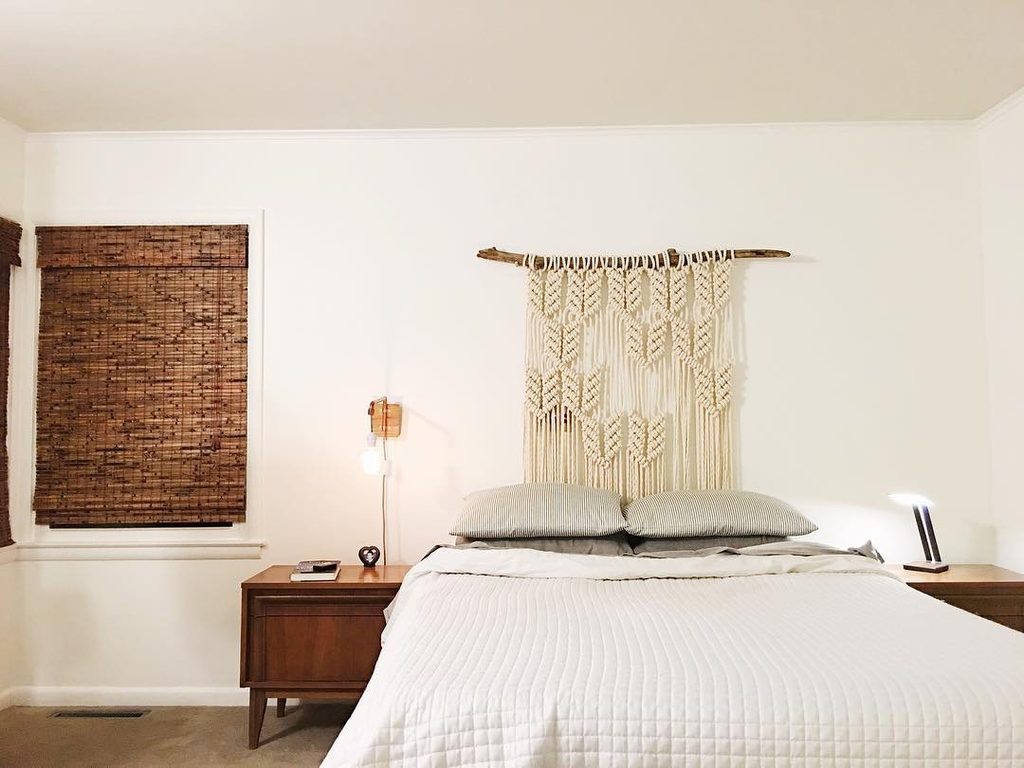
Hang a Knotted Textile Above the Pillows
Credits: Instagram
A soft wall hanging gives this white bedroom a focal point without adding another piece of furniture. The knotted textile hangs from a branch, while striped pillows and a quilt keep the bed relaxed.
Its open pattern allows the white wall to remain part of the composition. To try something similar, compare the hanging’s width with the mattress before choosing it.
A narrow piece can feel disconnected above a wide bed, while an oversized one may compete with nearby lamps. Position the lower fringe beyond the pillows so it stays visible after making the bed.
Keep surrounding artwork minimal, and choose secure wall hardware suited to the hanging’s weight. Different bedside lamps can still work when their proportions feel balanced.
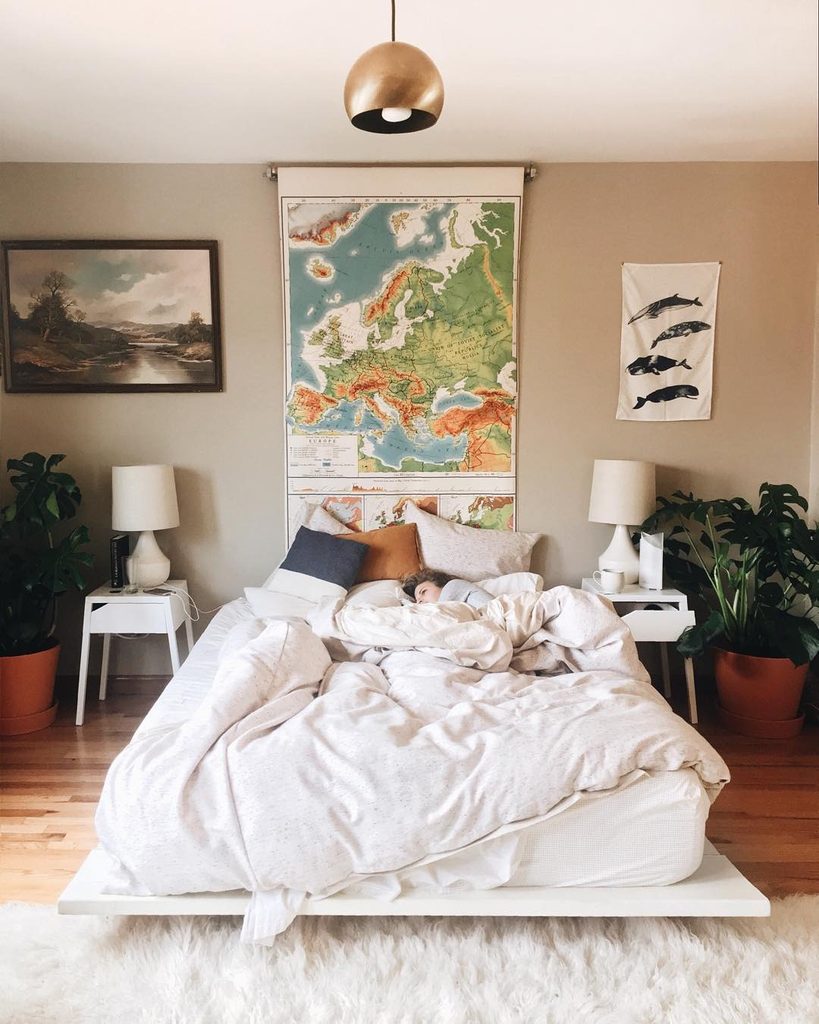
Display a Vintage Map Behind a Low Platform
Credits: Instagram
An old map can give a sleeping area a sense of place and personal history. Here, a large Europe map fills the wall above a low white platform, with leafy plants softening the edges.
The pillows rest against the wall, leaving the illustrated surface as the room’s main vertical feature. Look for a map whose colors relate to your bedding or nearby wood tones.
Measure its full hanging length, including any rods, before deciding where it belongs. Keep the bottom clear of pillows and reading lights.
This approach suits a guest room or a bedroom shared by travel enthusiasts. A simple frame or hanging system keeps the paper flat while making the display easier to change than permanent wall decoration.
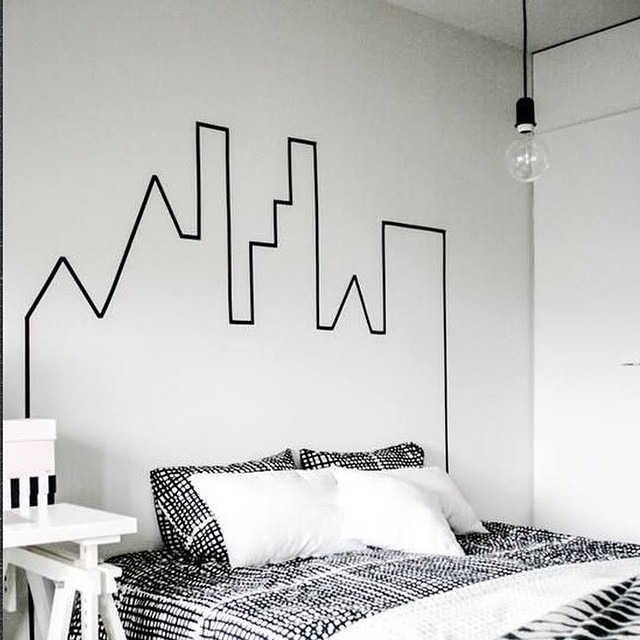
Outline a Skyline With Removable Tape
Credits: Instagram
Black lines turn a plain wall into a playful city outline in this compact bedroom. The skyline spans the space above the pillows, echoing the monochrome bedding without adding bulk behind the mattress.
Removable decorative tape offers a way to test an idea before committing to a painted mural. Sketch the arrangement on paper first, then check the highest and lowest points against the made bed.
Keep the outline simple enough to read from the doorway. Test your chosen tape on an inconspicuous patch, since removability depends on the wall finish and product.
A restrained bedside setup helps the graphic remain clear. Repeating black in a lamp cord or pillow provides a connection without requiring every accessory to match exactly.
Arrange Vintage Sporting Pieces on a Plank Wall

Credits: Instagram
Collected objects can make a bedroom feel rooted in a particular landscape. In this room, vintage snowshoes hang across a horizontal plank wall above striped bedding and red plaid pillows.
Their open frames add shape while letting the wood remain visible. Choose objects that mean something to you, then consider their weight and attachment points before arranging them over a bed.
Paper templates help establish spacing without making unnecessary holes. Keep the lowest edges above normal pillow height, and avoid fragile pieces where they could be knocked during everyday use.
The room’s striped and checked textiles work because their colors relate. For a quieter version, keep the bedding solid and let the wall collection supply all of the visual interest.
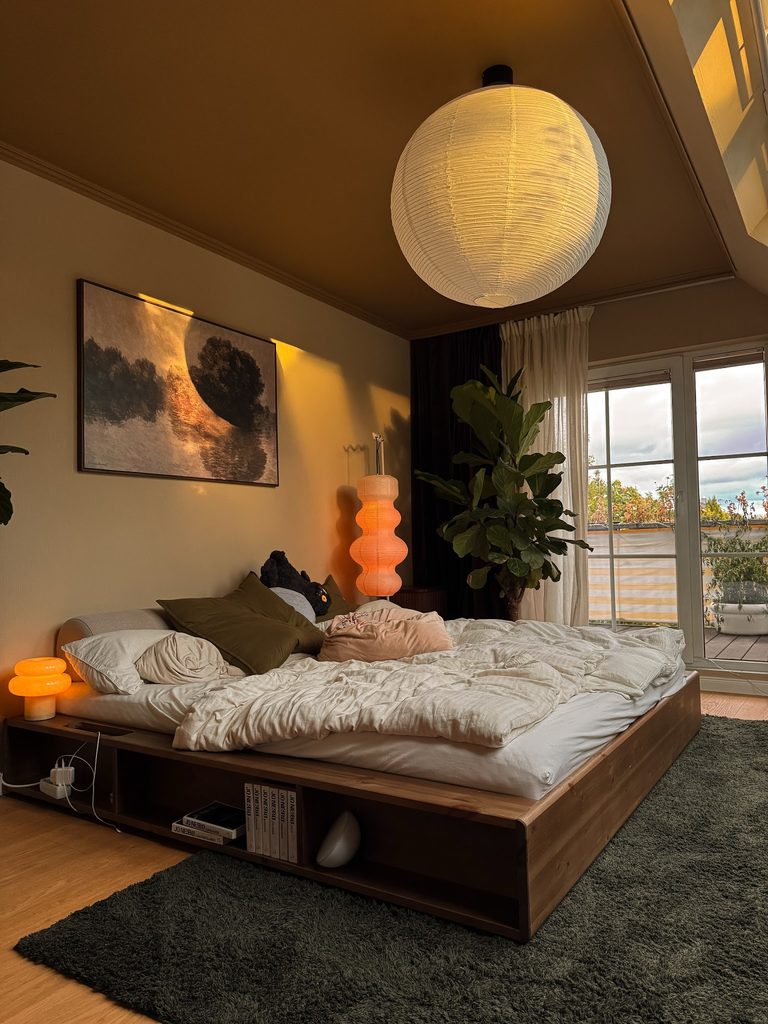
Choose a Low Platform With Open Storage
Credits: Instagram
Books and small essentials have a place to land around this low wooden bed. Open compartments built into the platform create storage at mattress level, while the wall behind the pillows stays free of a tall board.
The warm ceiling and large pendant make the sleeping area feel complete. When considering this layout, compare the platform’s outer dimensions with your available floor space; its edges extend beyond the mattress.
Check that you can reach the compartments and walk around the corners. Reserve visible cubbies for a limited selection of books or baskets so the base remains visually calm.
A low bedside light will suit the bed better than a towering lamp. Leave room to make the bed from both sides.
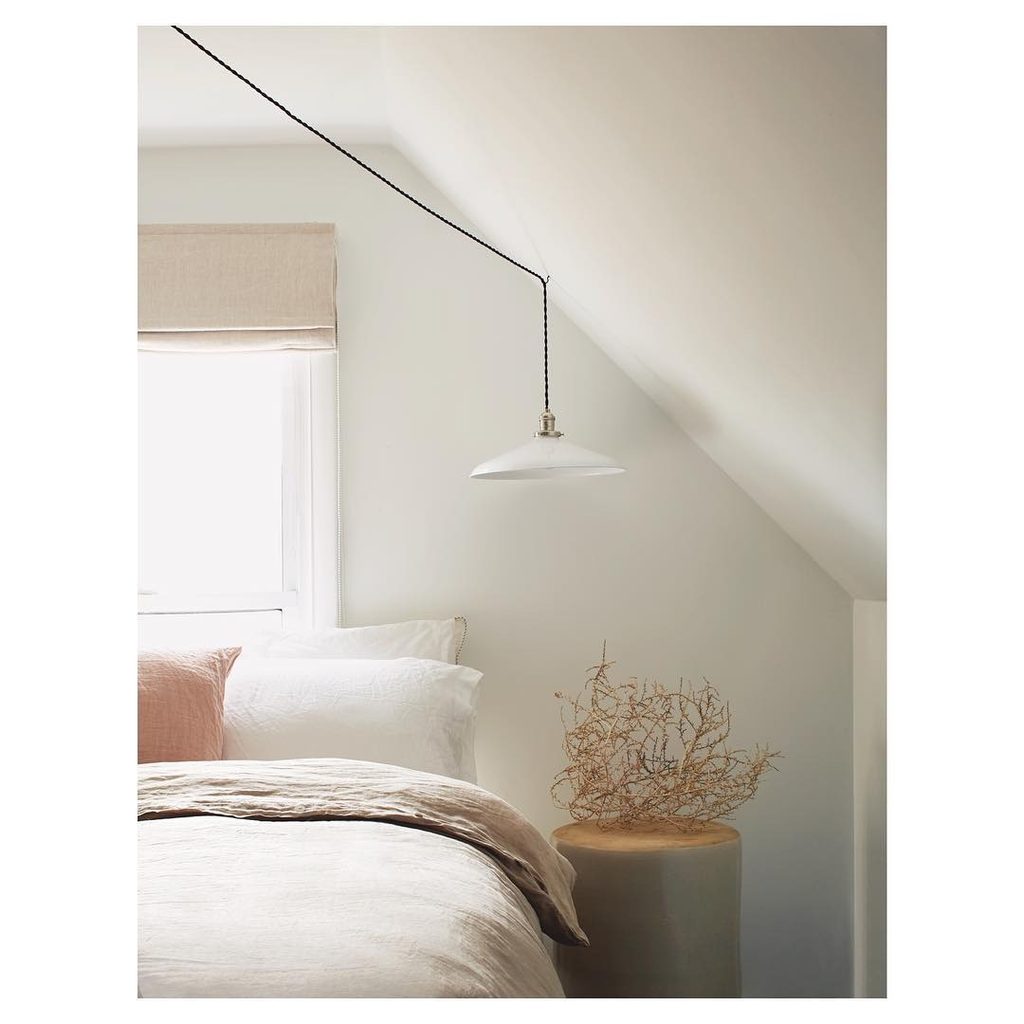
Let a Window Frame the Bed Beneath the Eaves
Credits: Instagram
The roofline becomes easier to read when furniture stays below it. This attic bedroom places white pillows beneath a window, with a Roman shade supplying a soft backdrop and a suspended light beside the bed.
The open wall around the mattress keeps the space from feeling crowded. If you have a similar slope, check seated headroom before choosing the bed’s position.
Make sure the shade can operate freely and the window remains accessible. A compact stool provides a useful surface without extending far into the walking route.
Neutral bedding lets daylight and the changing roof angles become the decoration. Position the bedside light where you can reach it comfortably, and keep its cord clear of pillows and moving window hardware.
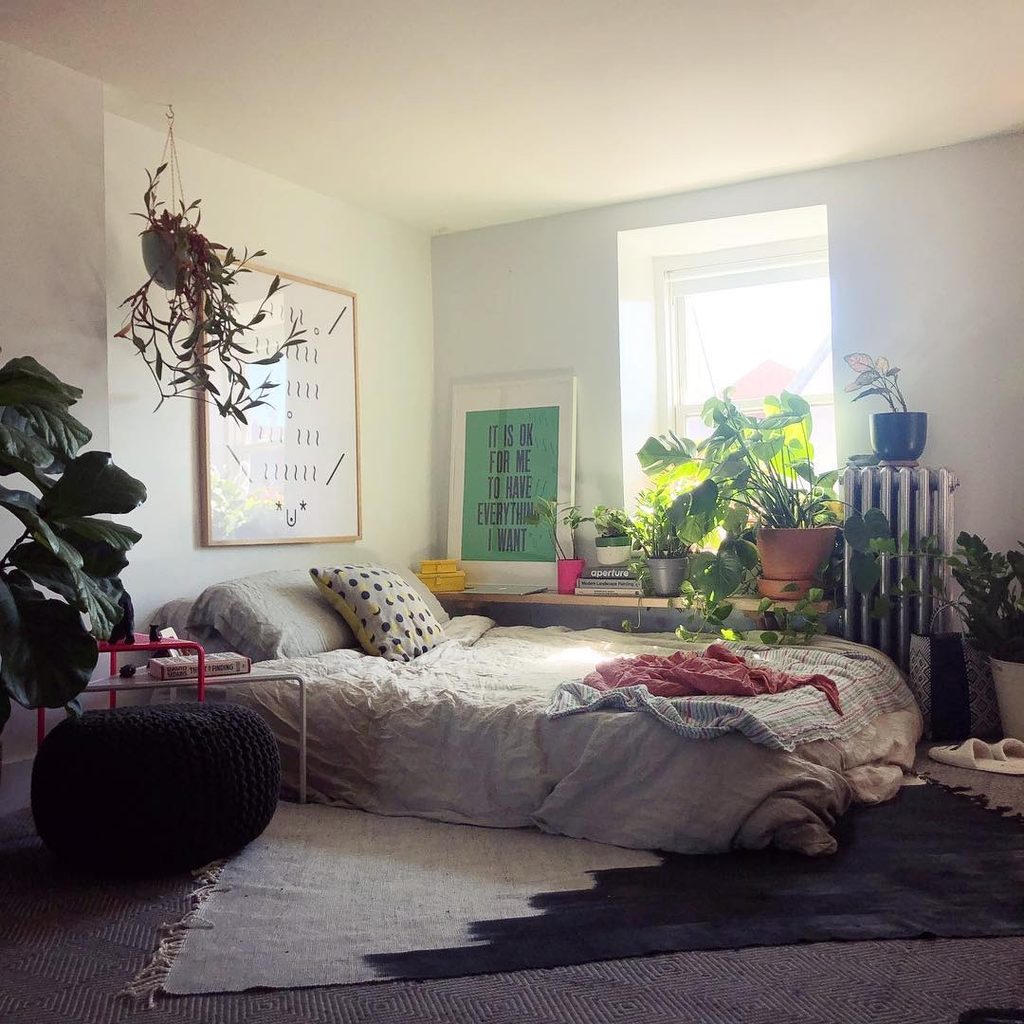
Bring Height With Plants Beside a Corner Bed
Credits: Instagram
Leafy silhouettes give this corner bed a frame without filling the wall behind it. Plants rise beside the mattress and gather near the window, while artwork adds smaller points of interest on both adjoining walls.
The effect depends on varied heights rather than a matching pair of bulky nightstands. Start with the room’s actual light conditions, then choose plants that will thrive there.
Leave enough room to water and rotate them without climbing across bedding. Protective saucers keep moisture away from floors and furniture.
If the corner feels crowded, remove a smaller accessory before adding another plant. A simple quilt gives the foliage space to stand out.
Keep one reachable bedside surface clear for the things you use every night.
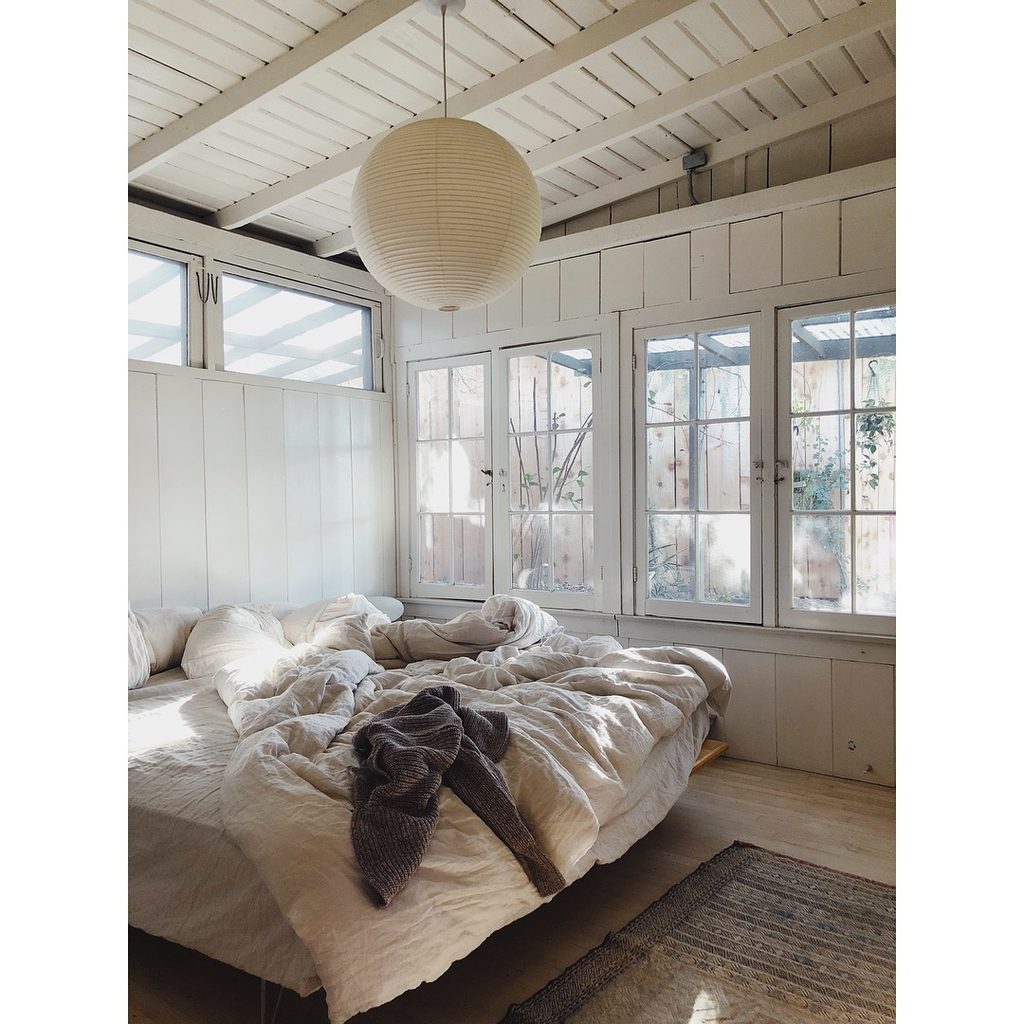
Keep Original Wall and Ceiling Boards in View
Credits: Instagram
Existing architecture can provide all the detail a bed needs. White boards cover the walls and ceiling of this airy room, and high windows bring light above the pillows.
The low sleeping area leaves those lines visible instead of interrupting them with another structure. If your bedroom already has paneling, exposed framing, or unusual windows, start by choosing a bed height that reveals those features.
Keep pillows low and use simple bedding so the background remains legible. A rounded paper pendant softens the straight lines overhead.
You can repeat that contrast with a curved lamp or small stool. Before placing furniture beneath windows, check access for opening and cleaning them. Let the proportions guide the arrangement rather than forcing symmetry.
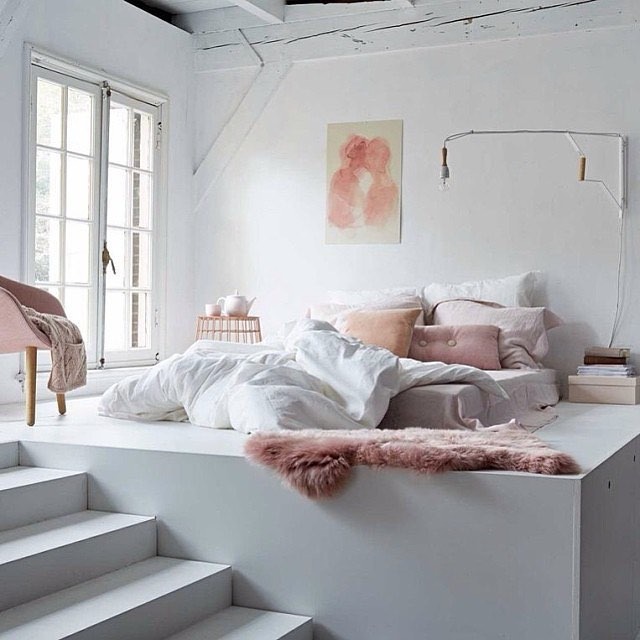
Define the Sleeping Zone With a Raised Platform
Credits: Instagram
A change in floor level gives this sleeping space its own boundary. The mattress sits on a raised white platform, with steps at one side and a small stool nearby.
Plain walls and pale bedding keep attention on the architecture. This is a substantial layout decision, so treat it as part of a renovation rather than a quick styling trick.
Consider comfortable access, ceiling clearance, step visibility, and how the mattress will be moved or replaced. Keep the platform’s edge easy to see after dark, especially in a guest room.
A wall light frees the limited bedside surface for essentials. Artwork supplies color above the pillows, while the platform creates definition without needing a large vertical frame behind the bed.
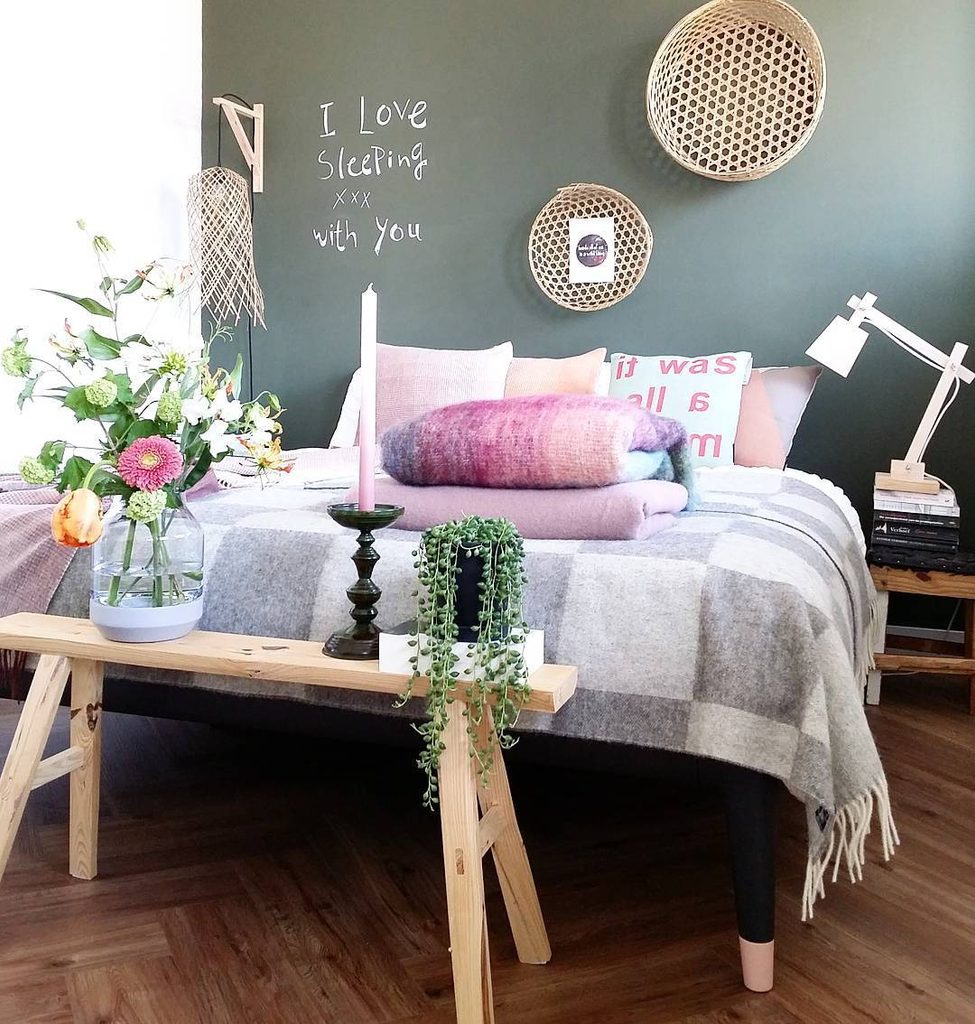
Personalize a Dark Wall With Chalk Lettering
Credits: Instagram
A handwritten message makes the dark green wall feel personal and changeable. Pink pillows rest directly below it, while round woven pieces and a white reading lamp add contrasting shapes.
The bed’s simple outline leaves plenty of room for the wall treatment to speak. If you want a writable surface, choose a finish intended for that purpose and follow its preparation and cleaning directions.
Plan the lettering around the height of your pillows so the words remain visible. Keep the message short enough to read from across the room.
Dust and smudging matter near bedding, so test your writing materials before decorating the entire area. Repeat one warmer accent in a throw or bench cushion to soften the dark background.
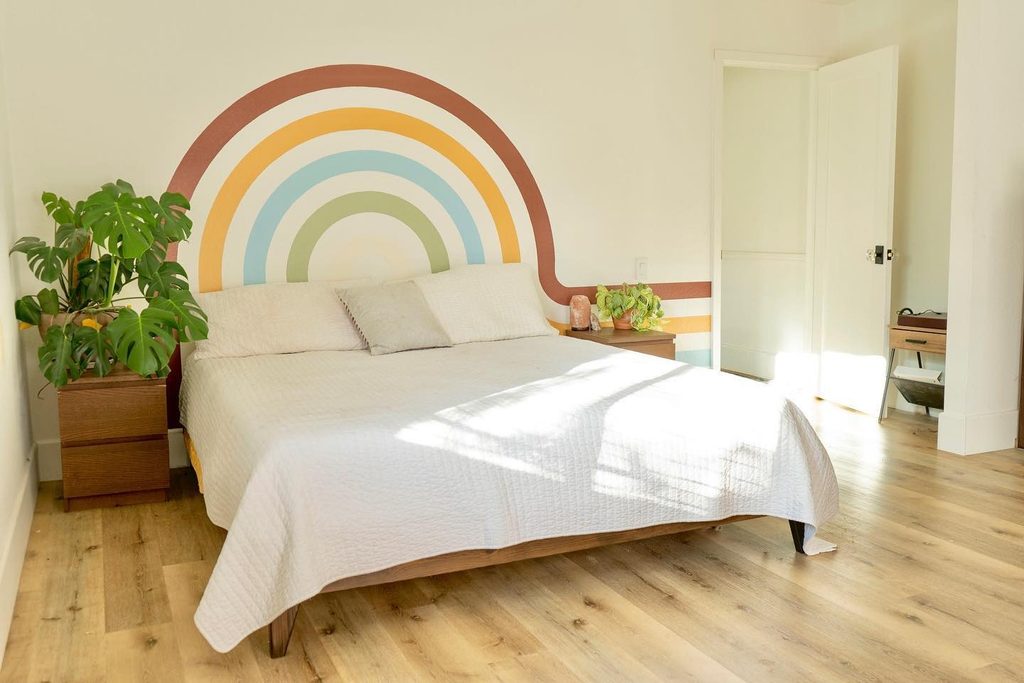
Paint a Rainbow That Extends Past the Bed
Credits: Instagram
Color travels beyond the mattress in this painted bedroom. Rainbow bands curve above the pillows, then continue sideways across the wall, connecting the sleeping area with the space beside it.
The plain bedding keeps that movement easy to follow. Before painting, mark the bed’s position and the outer edges of nearby furniture so the mural relates to the whole wall.
Try paper or digital color samples first, including a view with your bedding. Wider bands usually remain clearer from a distance than numerous thin stripes.
Keep outlets, switches, and lighting in mind when planning the curve. You can borrow the idea with fewer colors if a full rainbow feels too busy. Leave some plain wall around the composition for balance.
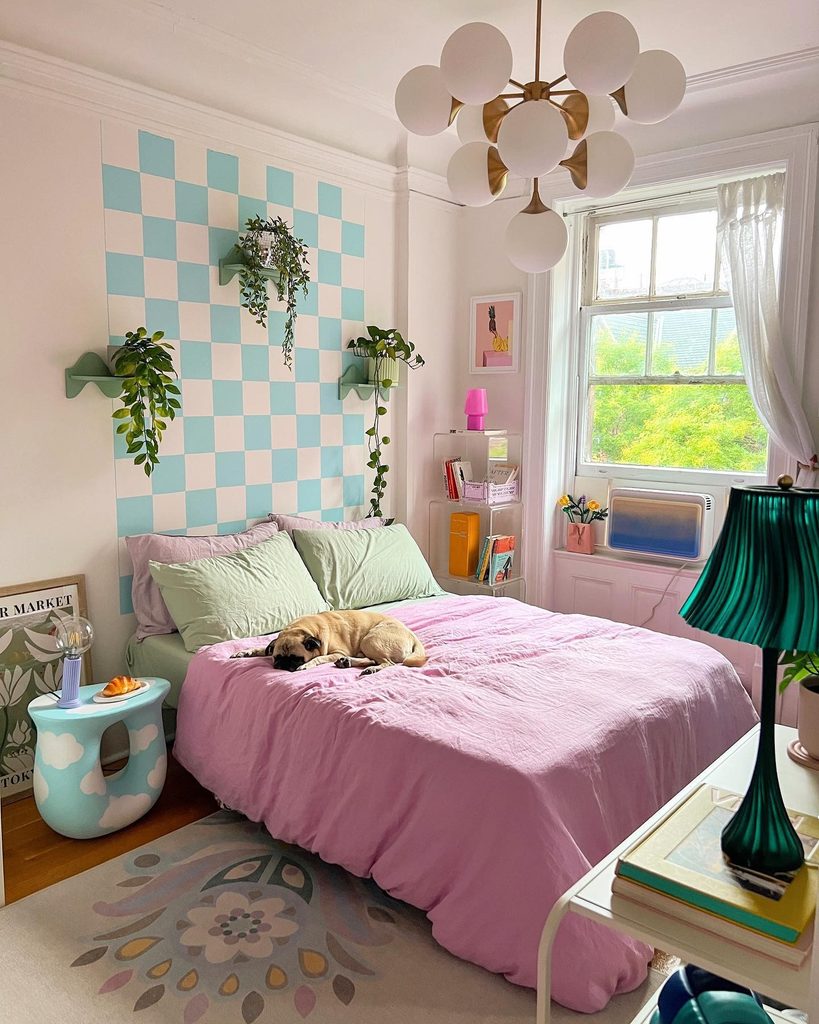
Run a Checkerboard Panel Up to the Ceiling
Credits: Instagram
A vertical strip of checks makes the wall feel taller and gives this pink bed a clear center. The turquoise and white pattern reaches toward the ceiling, while small wall planters introduce rounded shapes beside it.
Because the treatment occupies a defined area, the wall stays quiet. Measure the mattress width and compare several panel widths before choosing one.
The panel can extend beyond the bed, but it should still relate to the furniture below. Whether you choose paint or a suitable wallcovering, align the pattern around edges and trim.
Keep bedding mostly solid to avoid competing grids. Smaller accessories can repeat either color.
Place plant containers where watering will be manageable and moisture cannot drip onto pillows or linens.
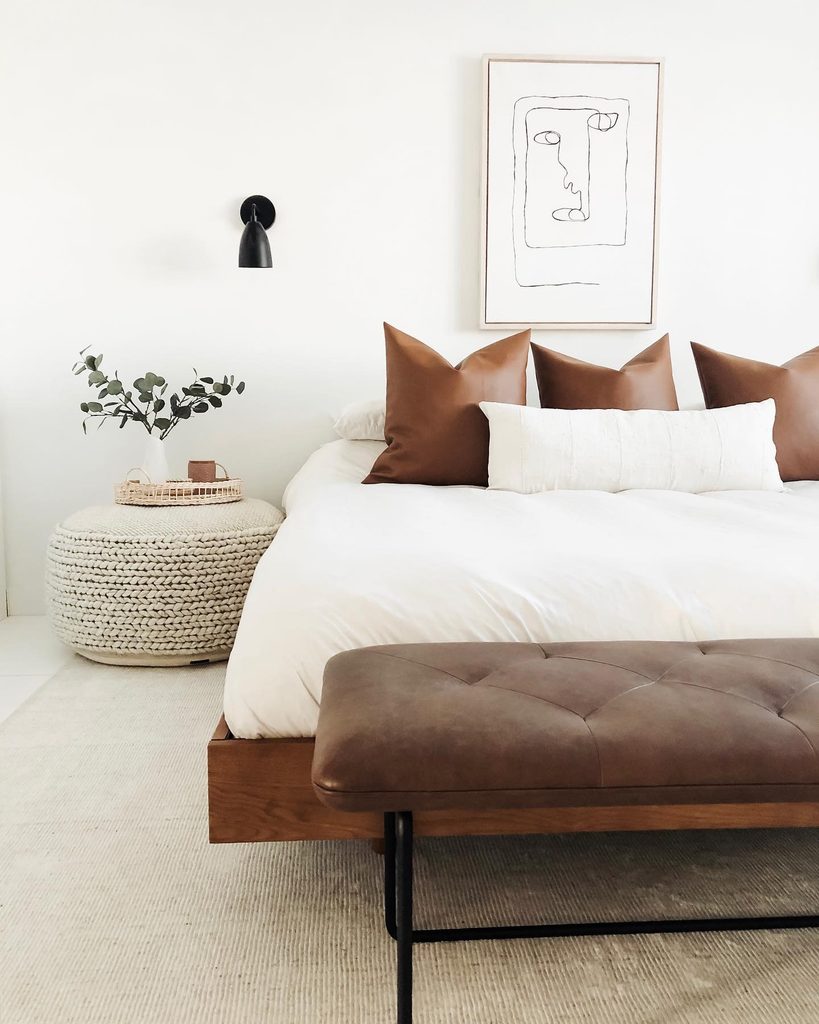
Use Oversized Pillows as the Soft Backdrop
Credits: Instagram
Cushions create a comfortable visual stop against this otherwise plain wall. Brown square pillows and a long white lumbar pillow sit above a wooden platform, with a small framed drawing and black wall light nearby.
The arrangement offers softness without introducing another large furniture surface. Choose pillow sizes that suit the mattress width and your daily routine.
Too many layers can become a storage problem every night, especially in a small bedroom. Removable covers make cleaning easier where pillows touch the wall.
A long lumbar cushion can connect separate square pillows without requiring an identical set. Keep the bedspread quiet so the different shapes remain noticeable.
A compact side surface completes the arrangement while leaving the frame’s clean edges visible.
Move Bedside Lighting Onto the Wall
Credits: Instagram
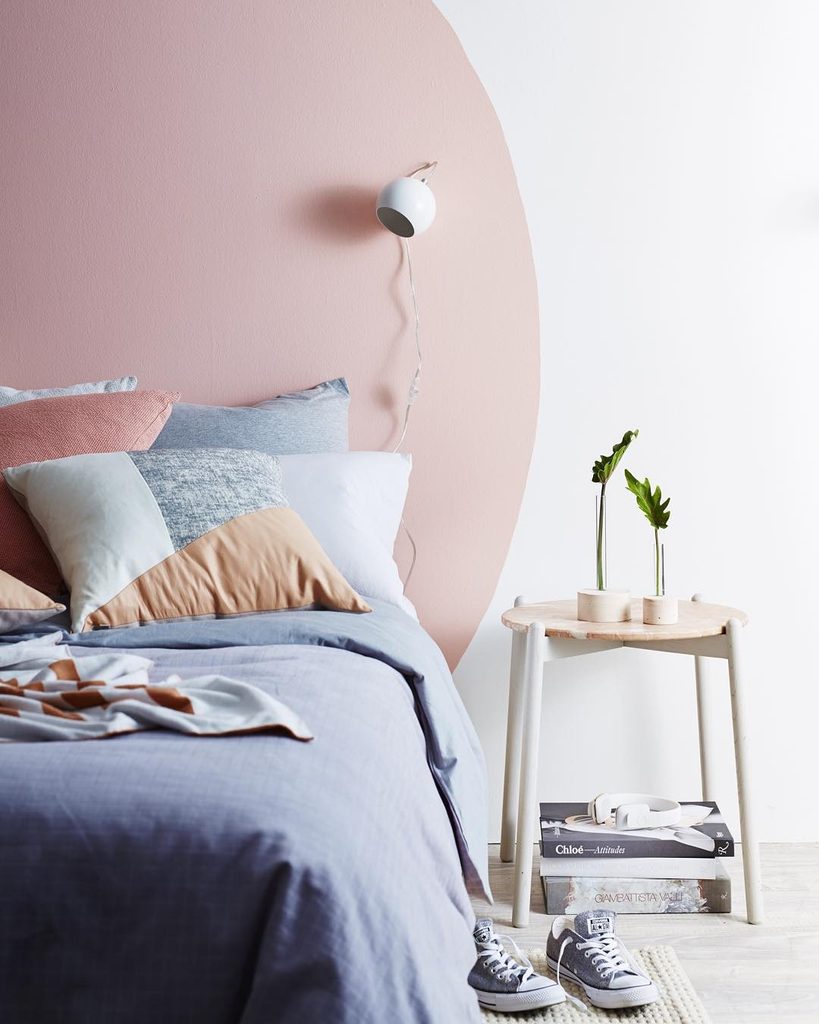
A reading lamp becomes part of the wall composition in this blue bedroom. Its white circular shade and loose cord sit against a large peach circle, leaving a small wooden stool available for other essentials.
With no board rising behind the pillows, the light has room to stand out. Plan its position from the mattress rather than from the floor alone.
Sit where you normally read and check reach, glare, and clearance before installing anything. A plug-in wall light can work where permanent wiring is impractical, provided the cord can be routed neatly.
Keep cable loops away from bedding and walking paths. The painted shape is optional; a distinctive lamp can also supply enough interest against a single wall color.
Make Room for a Floor Seating Nook
Credits: Instagram
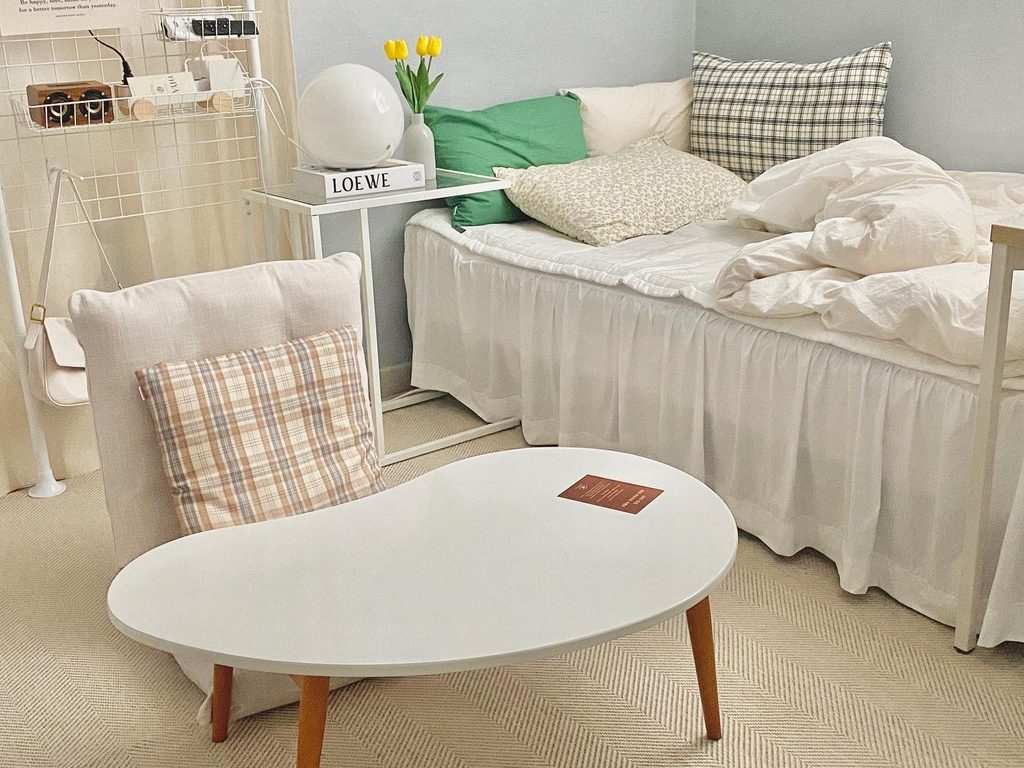
Removing visual bulk around a bed can help a small room support another activity. Here, a skirted bed rests against the wall, while a low rounded table and floor chair create a place to sit.
The pale furniture and rug connect the two areas without making them identical. Before trying a floor seating arrangement, check that the sitting height feels comfortable for everyone who will use it.
Leave a direct route to the bed and avoid crowding the table against its edge. A gathered bed skirt softens the visible base and keeps the sleeping zone tidy.
Keep the table light enough to reposition when cleaning. One checked pillow in the seating area echoes the bedding without requiring a matched set.
Fit a Desk Alongside a Simple Bed
Credits: Instagram
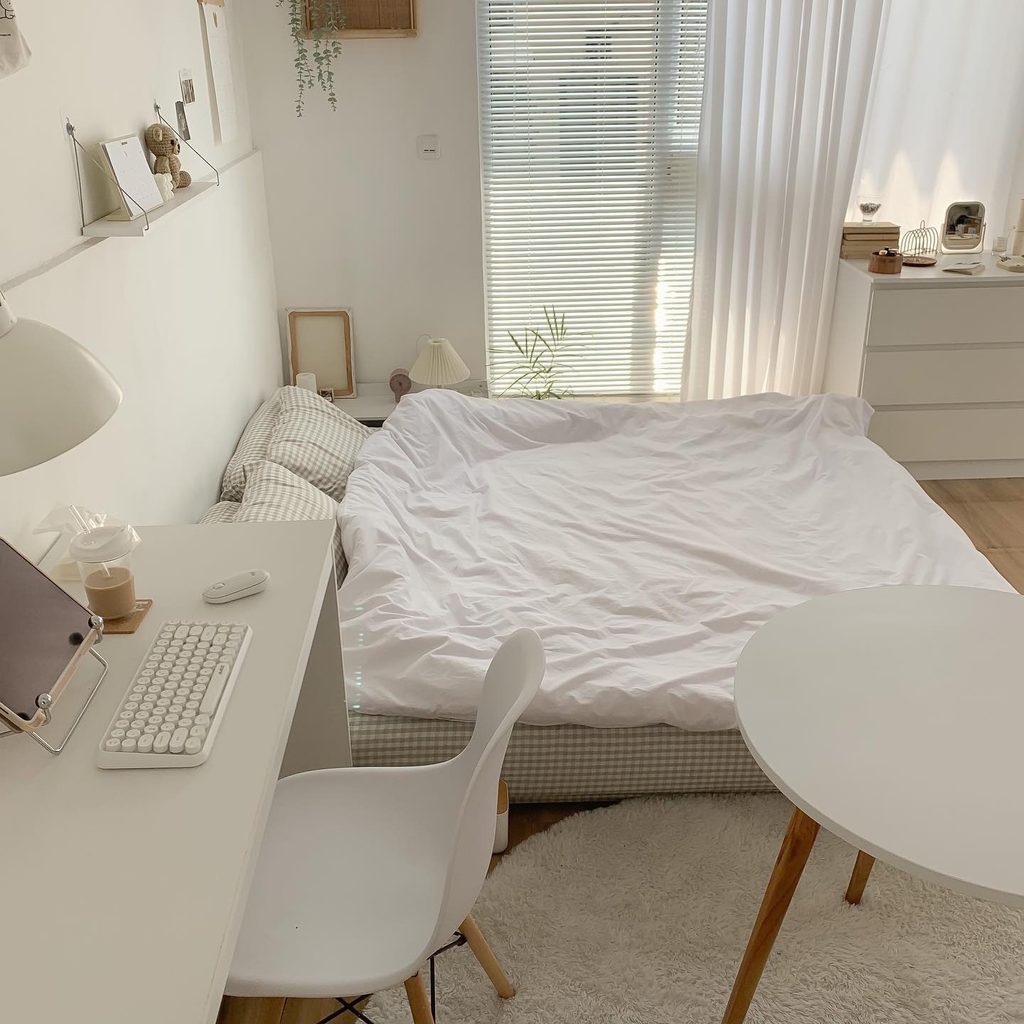
A compact workspace shares the wall with a low bed in this bright room. The white desk sits beside the mattress, while a small ledge higher on the wall displays a few objects.
Pale finishes help the furniture read as one calm arrangement. Measure chair clearance before choosing a desk for this position; being able to pull it out matters more than fitting a wider desktop.
Keep daily work supplies within the desk area so they do not migrate onto the bed. A focused task light can reduce the need for bright room lighting late at night.
Simple bedding helps separate rest from visual clutter. If the desk also serves as a nightstand, leave one corner clear for bedtime essentials.
Wrap the Room in Upholstered Walls
Credits: Instagram
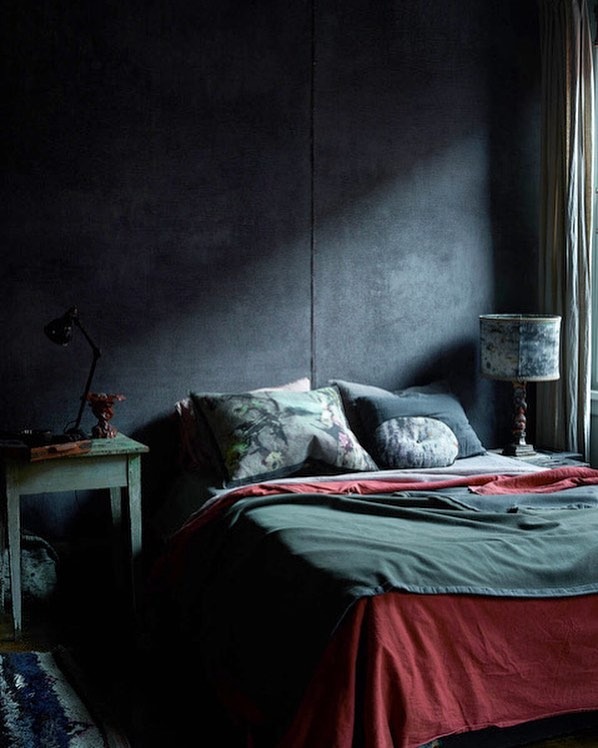
Deep color surrounds this bed through the walls themselves. Plum jacquard upholstery stretches upward behind the pillows, with blue-green bedding and a muted red cover adding further depth.
The continuous surface creates an enveloping background without adding a separate headboard. A room-wide textile treatment deserves careful planning, particularly around outlets, corners, windows, and cleaning.
Ask an experienced installer about suitable materials and attachment methods for your wall conditions. Sample the fabric in daylight and under your evening lamps before committing, since its texture will change with the light.
Keep bedding shapes simple enough to reveal the wall’s surface. A lighter version of this idea could use a softly colored textile while preserving the same uninterrupted background and sense of enclosure.
Let Patterned Bedding Lead the Room
Credits: Instagram
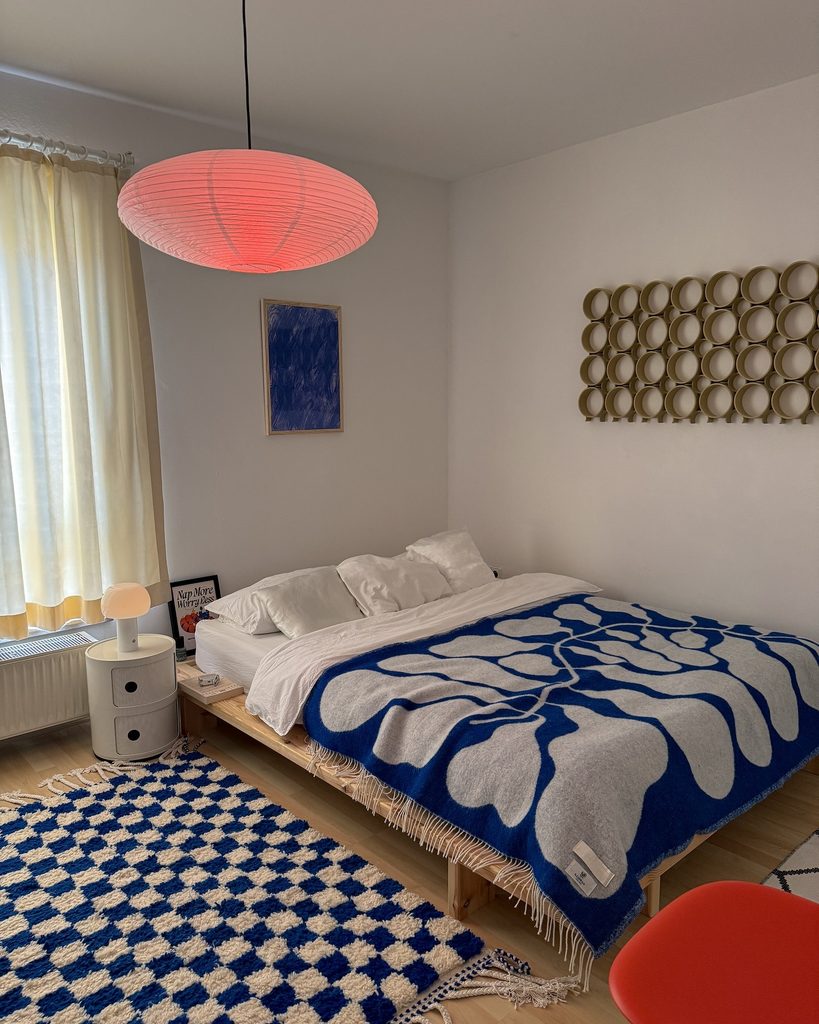
The strongest pattern in this room sits on the bed itself. A blue and cream floral throw spreads across a low wooden platform, paired with a checked rug and quiet walls.
White pillows keep the head of the bed light, while small artwork supplies enough height. Choose one textile as the starting point, then repeat a limited number of its colors elsewhere.
Mixing patterns is easier when their scales differ, as the larger flowers do here against the smaller checks. Spread the throw before buying accessories so you can judge how much decoration the room still needs.
Leave some plain bedding visible near the pillows. That pause helps the pattern feel intentional and keeps the sleeping area from becoming crowded.
Frame the Bed With Low Bedside Surfaces
Credits: Instagram
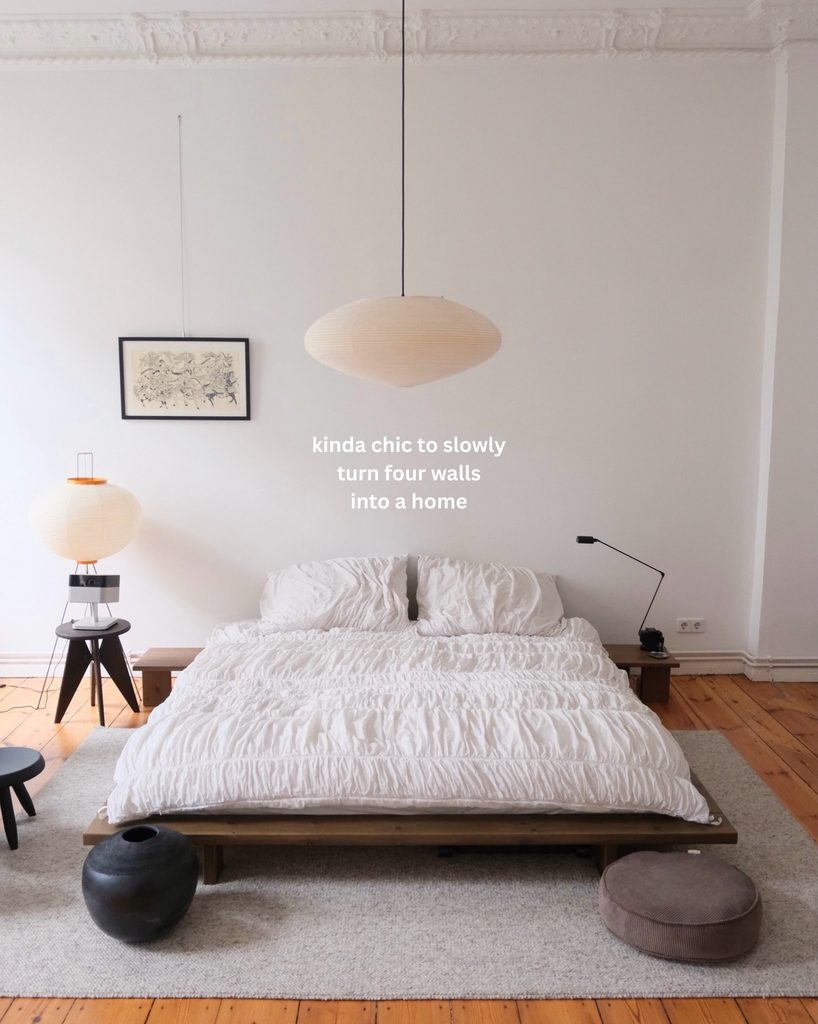
Two low surfaces give this open bed a clear place within a tall room. The wooden platform sits between modest bedside pieces, while different lamps add personality without raising a solid barrier behind the pillows.
White textured bedding and a pale rug keep the arrangement quiet. When pairing nightstands, compare their height with the top of your mattress and check that both are easy to reach.
They do not need identical lamps or accessories to feel balanced. Similar visual weight matters more than matching every detail.
Keep taller objects toward the outer edges, leaving the pillow area open. This approach is useful when you want to appreciate ceiling details or generous wall height without filling that space with oversized furniture.
Stand a Tall Mirror Beside a Low Bed
Credits: Instagram
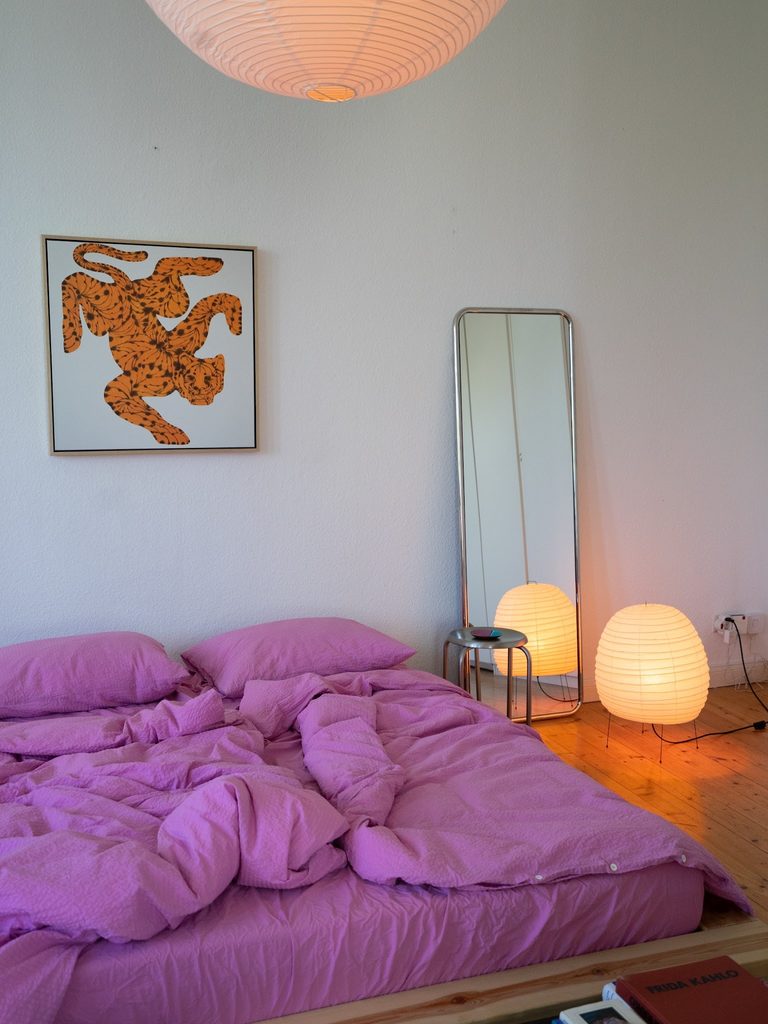
Height can come from beside the mattress instead of directly behind it. A narrow standing mirror rises next to this low pink bed, reflecting the glow of a paper floor lamp.
The open frame and simple wall leave room for those slender shapes to register. Position a mirror where its reflection adds something useful, such as daylight or a favorite corner, rather than a cluttered surface.
Check the view while lying down as well as standing at the doorway. Secure a tall mirror according to its mounting instructions, even when a leaned arrangement is the intended look.
Keep the floor lamp’s cord outside the walking route. One surface is enough when the mirror already supplies the bedside area’s vertical emphasis.