
Messy mornings often begin with one small problem: a closet that no longer works for your child’s daily routine.
Smart kids closet organization ideas can make clothing, shoes, toys, school items, and seasonal outfits easier to find without constant cleanup.
The right setup also helps children build independence by giving every item a simple, reachable place.
From adjustable shelves and labeled bins to drawer dividers, hanging organizers, and space-saving storage solutions, a well-planned closet can support both neatness and real family life.
Parents looking for practical, budget-friendly, and easy-to-maintain systems will find that small changes can make a big difference.
This guide shares useful ideas to turn cluttered kids closets into organized, functional spaces that stay manageable.
Symmetrical Kids Closet with Center Display Tower
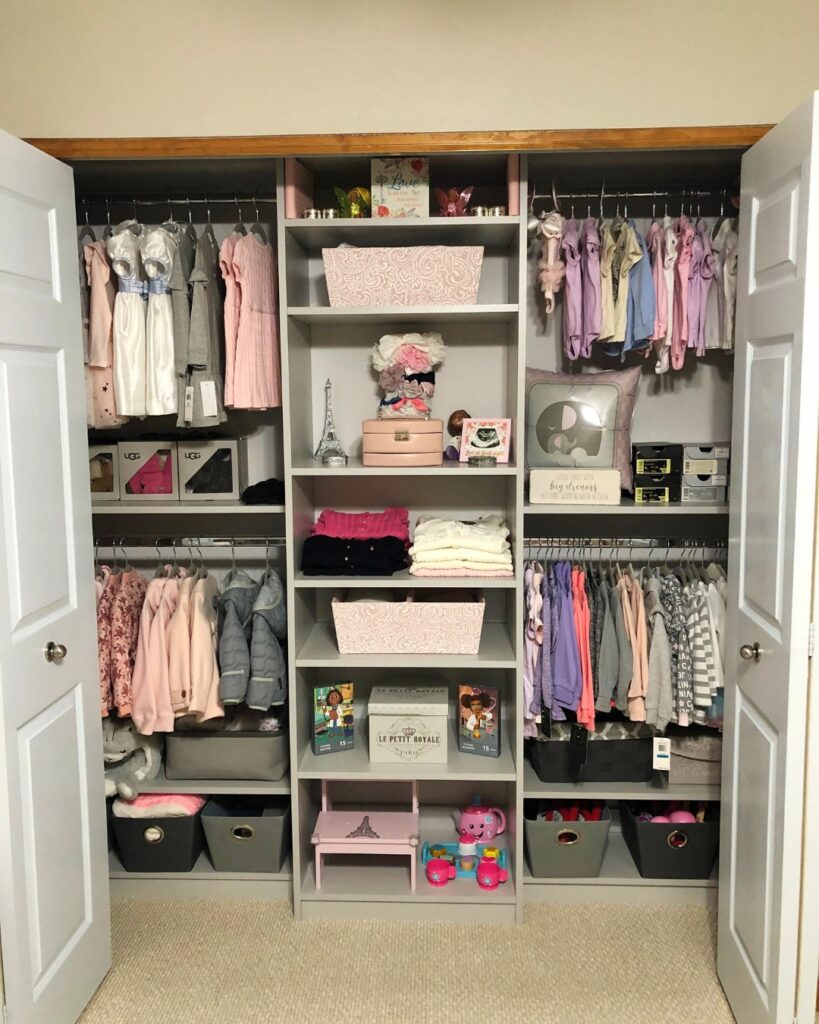
Matching rails on both sides give a child’s closet instant order, while a center display tower turns everyday storage into a simple visual system.
Use the upper shelves for folded sweaters, keepsake boxes, or seasonal outfits, then reserve eye-level cubbies for shoes, favorite accessories, and ready-to-wear pieces.
This layout works well for shared kids rooms because each side can be assigned to one child without confusion. Lower hanging rods make jackets, school uniforms, and play clothes easy to reach, supporting independence during busy mornings.
To keep the closet organized long term, group clothing by type, add small labels, and rotate outgrown items monthly. The balanced design also keeps the space looking neat, polished, and practical without wasting valuable daily storage.
Tiered Wire Shelf Kids Closet with Woven Bins
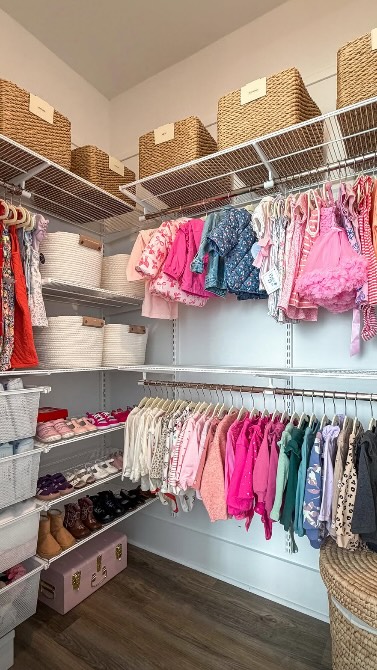
Layered wire shelving creates flexible storage for kids’ clothing, toys, shoes, and small daily essentials without making the closet feel heavy.
Woven bins soften the look while hiding socks, pajamas, diapers, art supplies, or off-season pieces that can quickly clutter open shelves.
Keep the most-used items on the lower tiers so children can grab what they need safely, and place backup bedding or seasonal clothing higher up.
This setup is especially useful for narrow closets because wire shelves maintain airflow and visibility.
Choose matching baskets for a cleaner finish, then label each bin by category to reduce guesswork. The result is a practical kids closet organization idea that feels warm, tidy, and easy to maintain for busy, growing families daily.
Center Tower Kids Closet with Clear Shoe Cubes
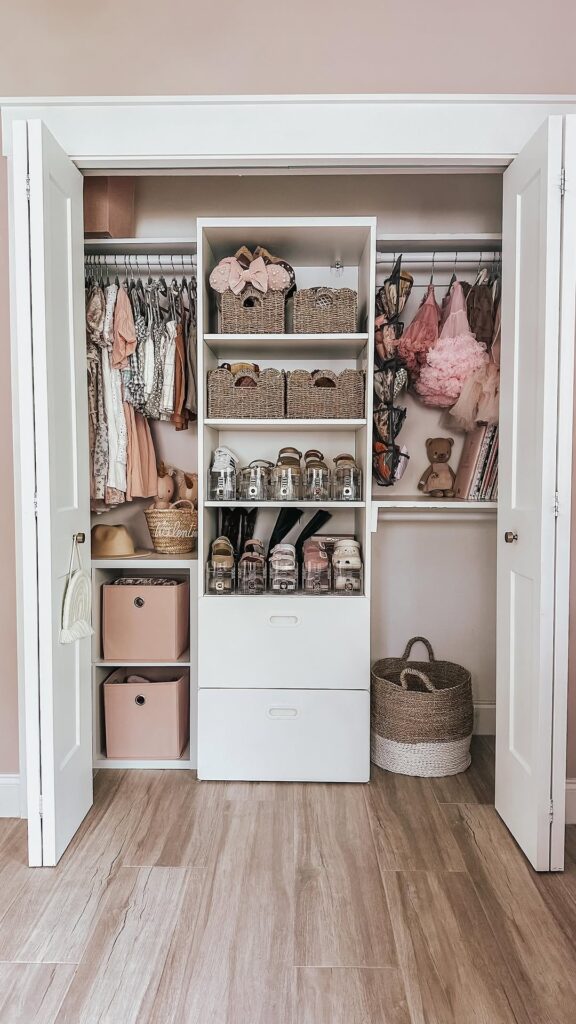
Built-in center storage gives shoes, folded clothes, and accessories a defined home, making the entire kids closet easier to manage.
Clear shoe cubes are especially helpful because children and parents can see every pair at a glance, reducing lost sandals, mismatched sneakers, and messy floor piles.
Use the tower’s lower compartments for daily footwear, middle shelves for folded tees or shorts, and upper cubbies for seasonal items. Hanging rods on each side can separate school outfits from casual clothes, creating a smooth morning routine.
For a cleaner system, sort shoes by size or use, then wipe cubes regularly to keep them fresh. This closet idea blends visibility, structure, and child-friendly access in one polished, space-saving layout that supports everyday routines.
Labeled Soft-Bin Baby Closet with Dual Rails
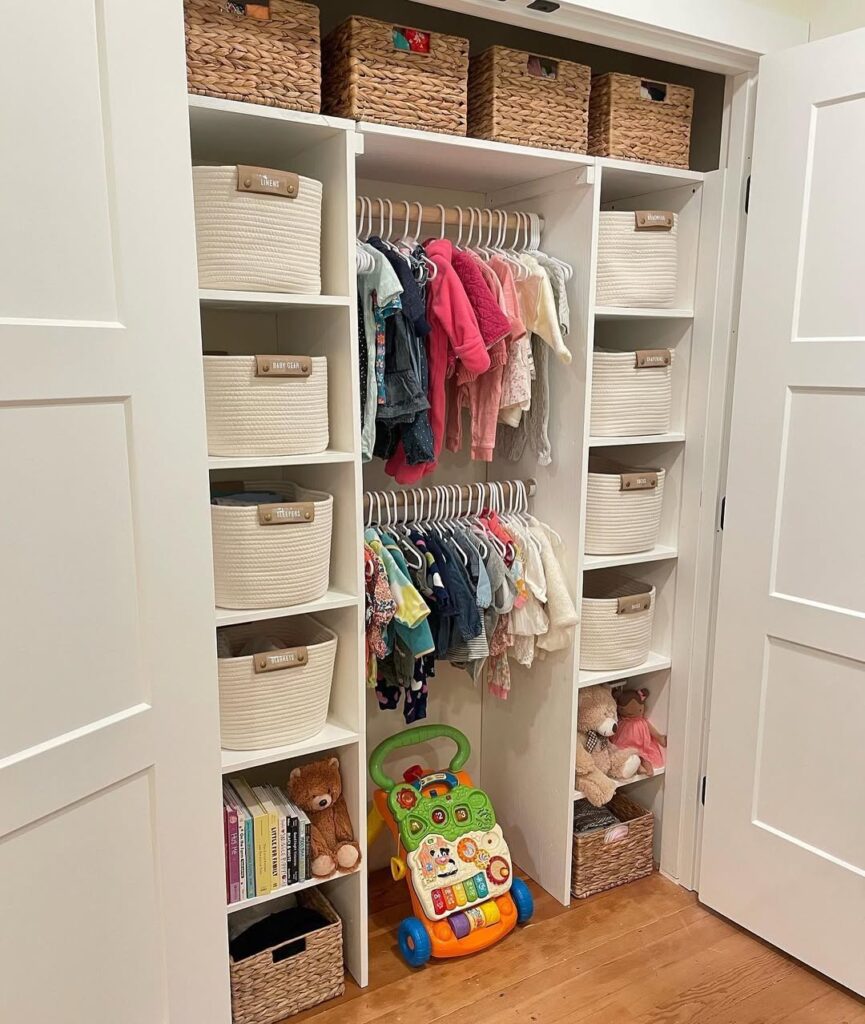
Tiny clothes can become messy fast, so labeled soft bins bring calm structure to a baby closet without sharp edges or bulky storage.
Dual rails double the hanging space for onesies, rompers, sleep sacks, and special outfits, while bins below can hold diapers, swaddles, bibs, socks, and blankets.
Use clear, simple labels such as newborn, 0–3 months, pajamas, and extras so caregivers can find items quickly. This system also makes size rotation easier as the baby grows, preventing outgrown clothing from crowding the rails.
Soft fabric bins are lightweight, nursery-friendly, and easy to move during laundry days. With thoughtful zones, the closet stays practical, gentle, and ready for every feeding, nap, change, laundry cycle, and quick daily nursery reset.
Boutique-Style Kids Closet with Display Cubbies
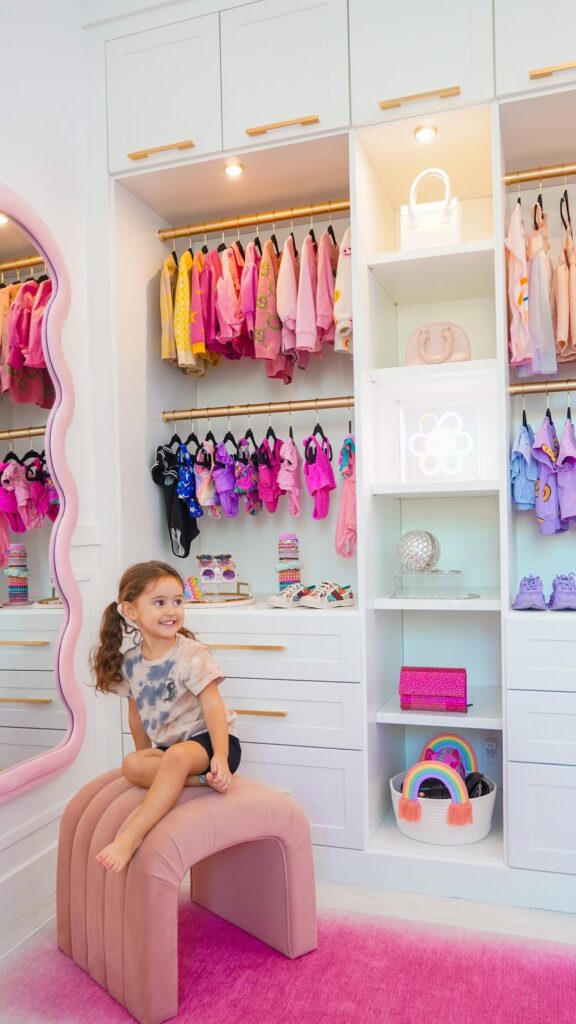
Store-style cubbies make a child’s closet feel curated while keeping outfits, shoes, bags, and accessories easy to see.
Display shelves work best when they hold a limited number of neatly folded pieces, favorite shoes, or special occasion items, preventing the space from becoming overcrowded.
Pair cubbies with lower hanging rods so children can choose daily outfits independently, then use upper shelves for seasonal storage or memory boxes. This design is ideal for families who want a polished closet that still functions for real life.
To maintain the boutique look, organize by color, clothing type, or activity, and reset the cubbies weekly. The finished closet feels stylish, accessible, and practical without becoming too precious, cluttered, fussy, or difficult to maintain daily.
Drawer-Divided Kids Wardrobe with Fold Zones
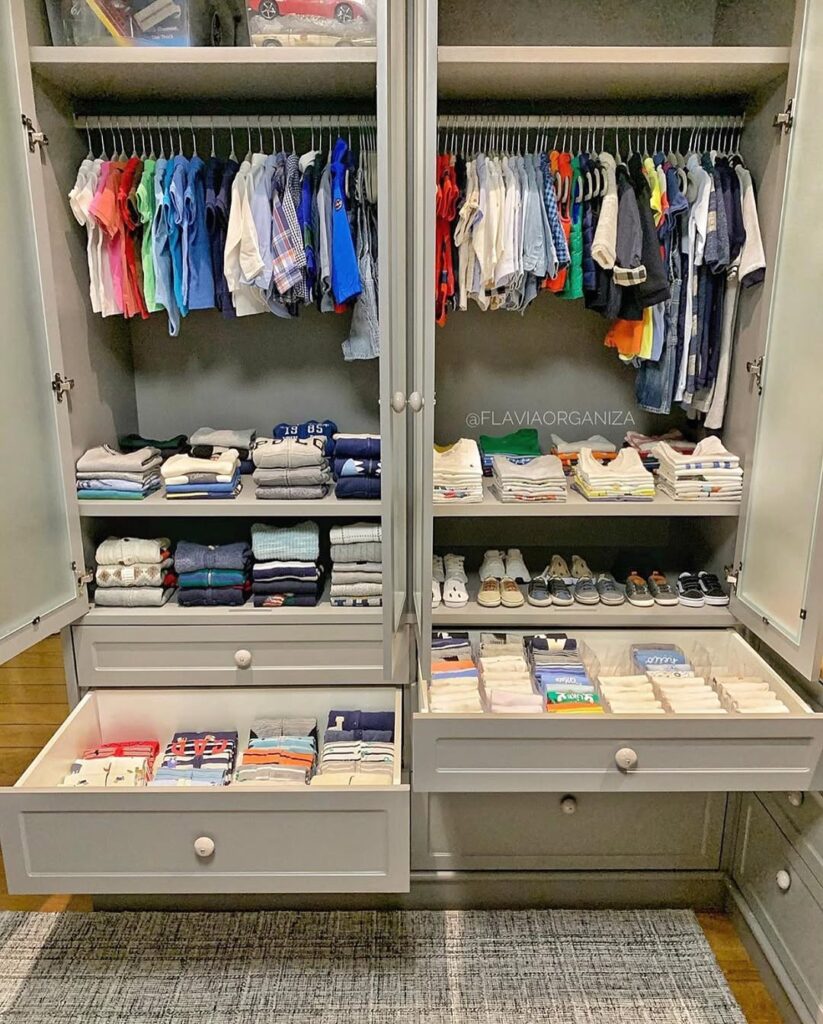
Neatly separated drawers can make a kids wardrobe feel easier to use, especially when every fold zone has a clear purpose.
Use dividers for shirts, leggings, pajamas, socks, and school basics so small items do not collapse into one messy pile.
File folding works well because children can see each piece without digging through stacks. Keep daily clothing in the middle drawers, occasional outfits higher, and backup basics lower for quick refills.
This system also helps parents spot what needs washing, replacing, or donating.
For better kids closet organization, add simple labels or color-coded sections inside each drawer. The wardrobe stays tidy, child-friendly, and practical, while morning dressing becomes faster, calmer, and less dependent on constant adult help quickly today.
Pegboard Accessory Wall with Pull-Out Shoe Trays
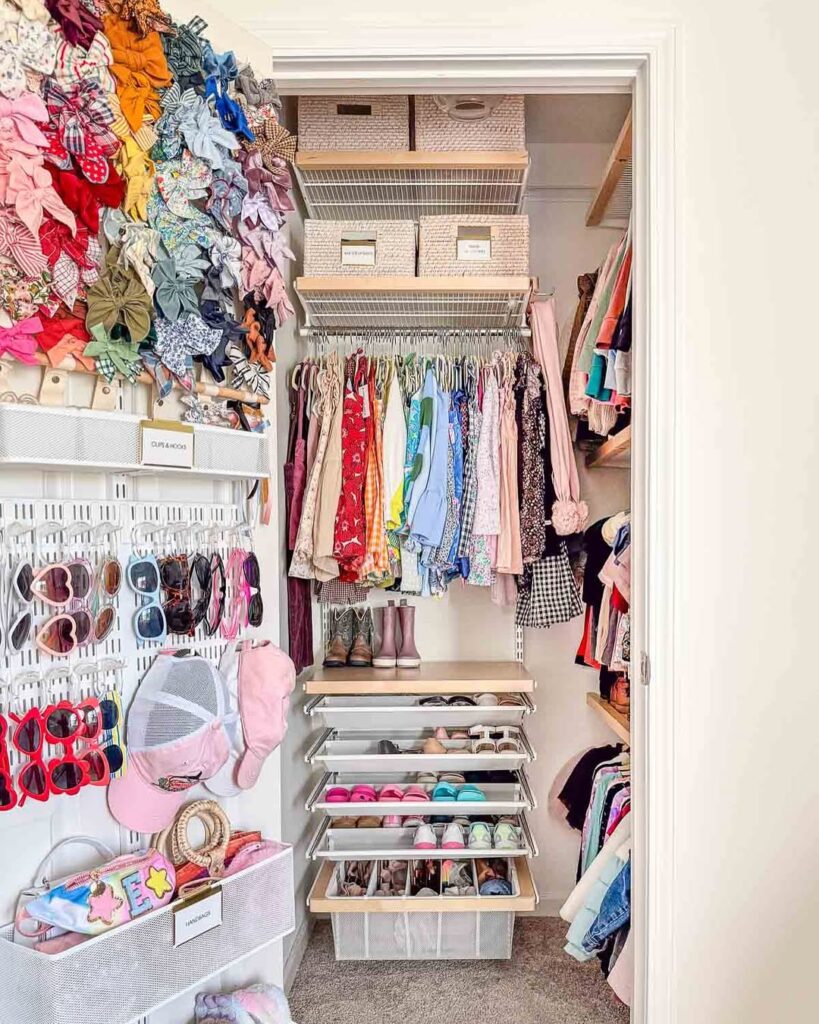
Wall space behind a closet door or beside hanging clothes can become a smart accessory station with a simple pegboard layout.
Hooks, small baskets, and clip holders keep hats, hair bows, belts, backpacks, and dress-up pieces visible instead of buried in drawers.
Pull-out shoe trays below add another layer of convenience because sneakers, sandals, and school shoes slide forward without creating floor clutter. This idea works especially well in compact kids closets where every inch matters.
Arrange accessories by height so younger children can reach daily items safely, then place special pieces higher. For a cleaner routine, reset the trays weekly and remove outgrown footwear.
The closet becomes more organized, accessible, and visually easy for children to manage independently daily.
Label-Driven Kids Closet with Book Shelf Tower
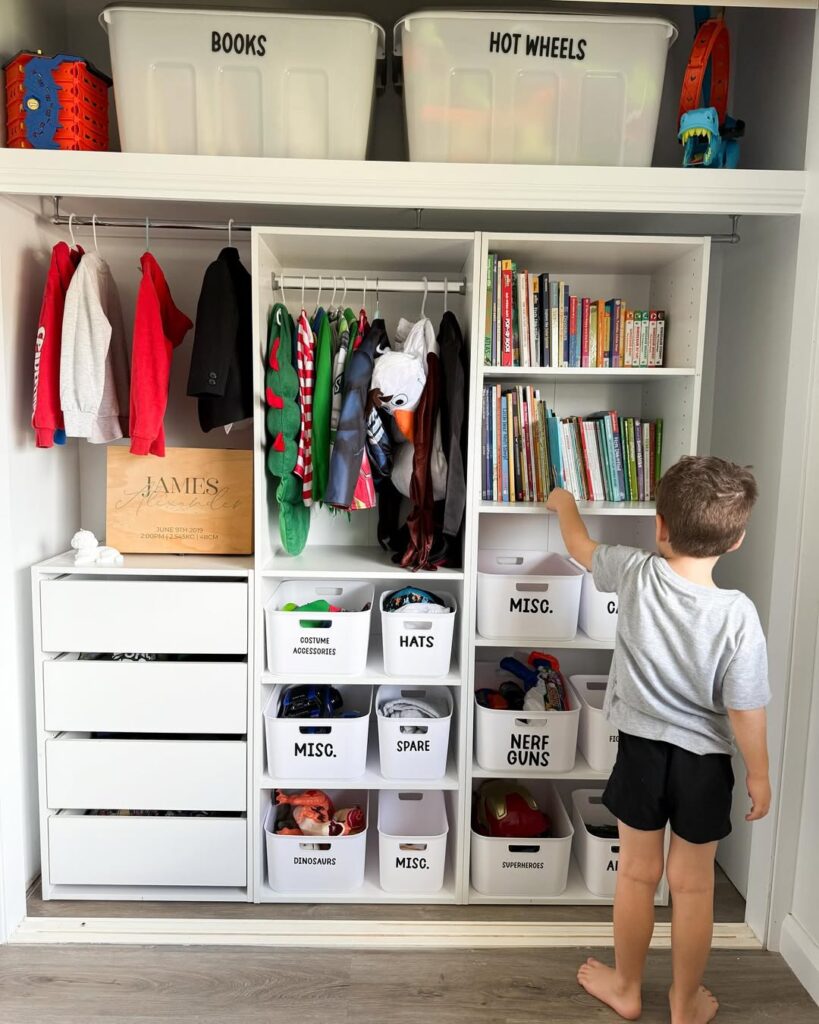
Clear labels turn a busy kids closet into a simple storage map that children can follow with confidence.
Pair labeled bins, baskets, and hanging sections with a narrow book shelf tower to store folded clothes, bedtime books, small toys, shoes, or school accessories in one vertical zone.
Picture labels work well for younger kids, while text labels suit older children learning responsibility. Keep books and calm-time items at reachable height, then reserve upper shelves for seasonal clothing or extra bedding.
This setup supports both closet organization and room tidiness because belongings have obvious homes. Review labels as routines change, especially after growth spurts or school transitions.
The result is a practical, teachable system that keeps cleanup fast and consistent daily.
Cubbie Bin Grid Closet with Top Storage Totes
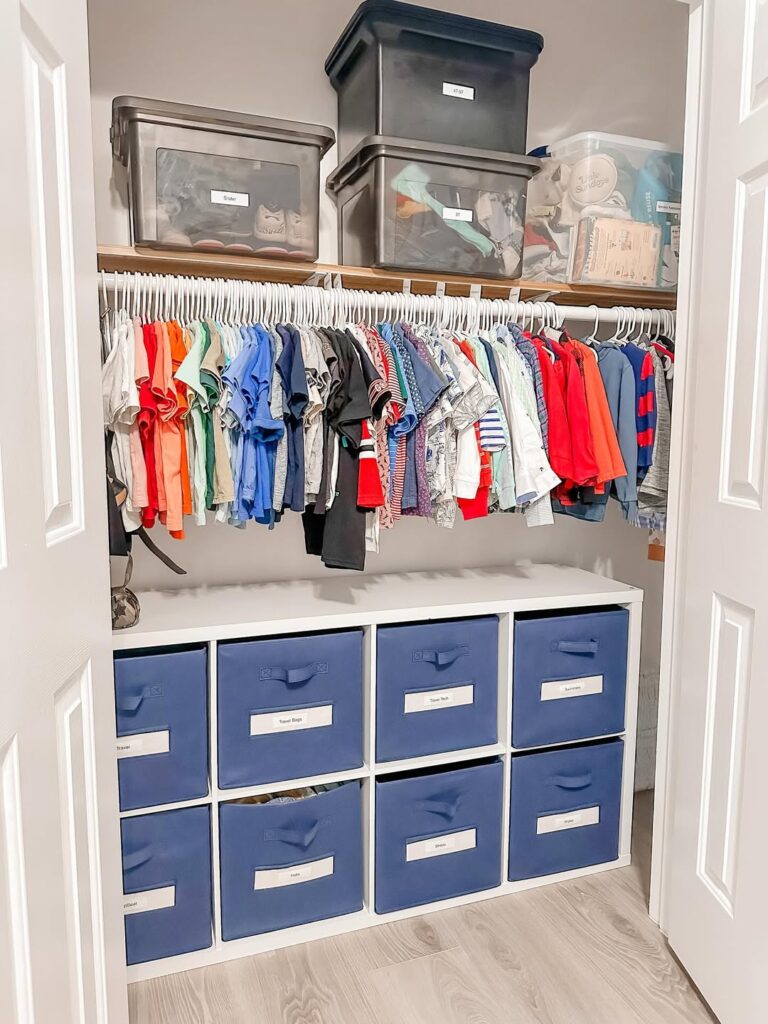
Structured cubbie grids give kids closet storage a clean framework, making it easier to separate clothes, shoes, toys, blankets, and accessories by category.
Fabric or woven bins can hide smaller items while open cubbies display folded outfits or favorite shoes for quick selection.
Top storage totes are best for seasonal clothes, hand-me-downs, costumes, or keepsakes that do not need daily access. To avoid clutter, assign one purpose to each cubbie and keep labels consistent across the system.
Lower bins should hold items children use often, while heavier or rarely used pieces stay out of reach.
This closet organization idea is simple to scale as kids grow, offering flexible storage that stays neat, practical, and family-friendly over time in busy homes.
Weekly Outfit Hanging Organizer Closet System
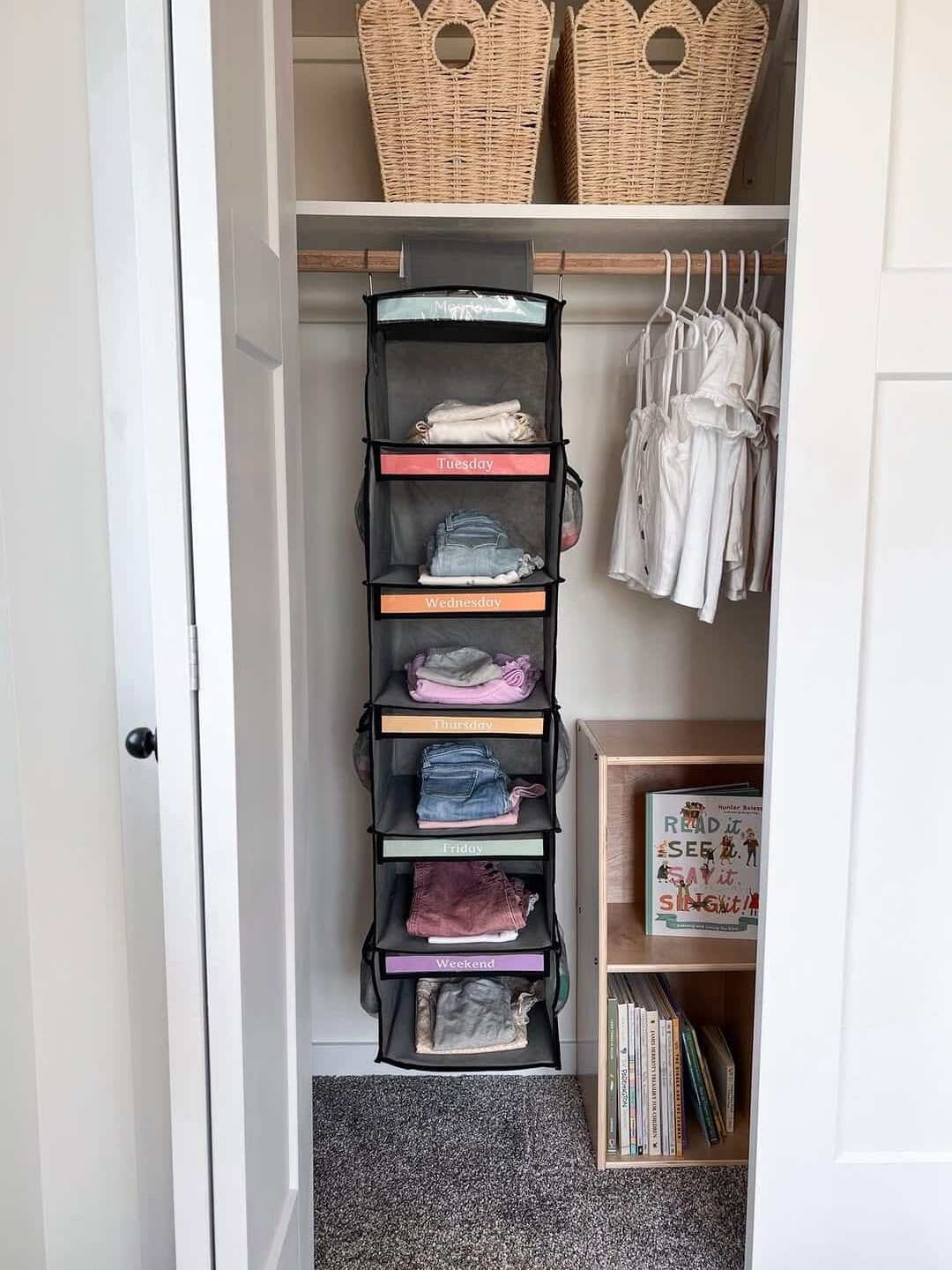
Planning outfits by weekday can remove much of the morning stress that comes with dressing children for school, daycare, or activities.
A hanging organizer with labeled sections for Monday through Friday keeps shirts, pants, socks, uniforms, and accessories grouped together before the week begins.
Parents can prepare looks after laundry day, while older children can help choose outfits and build independence. Use the side pockets for hair ties, belts, masks, or notes about sports practice and special events.
This closet system also prevents last-minute searching for matching pieces. Keep one extra section for weather changes or backup clothes.
With a weekly rhythm, kids closet organization becomes easier, faster, and more predictable for the whole household every day with less fuss.
Dual Closet Storybook Display & Dress-Up Wardrobe
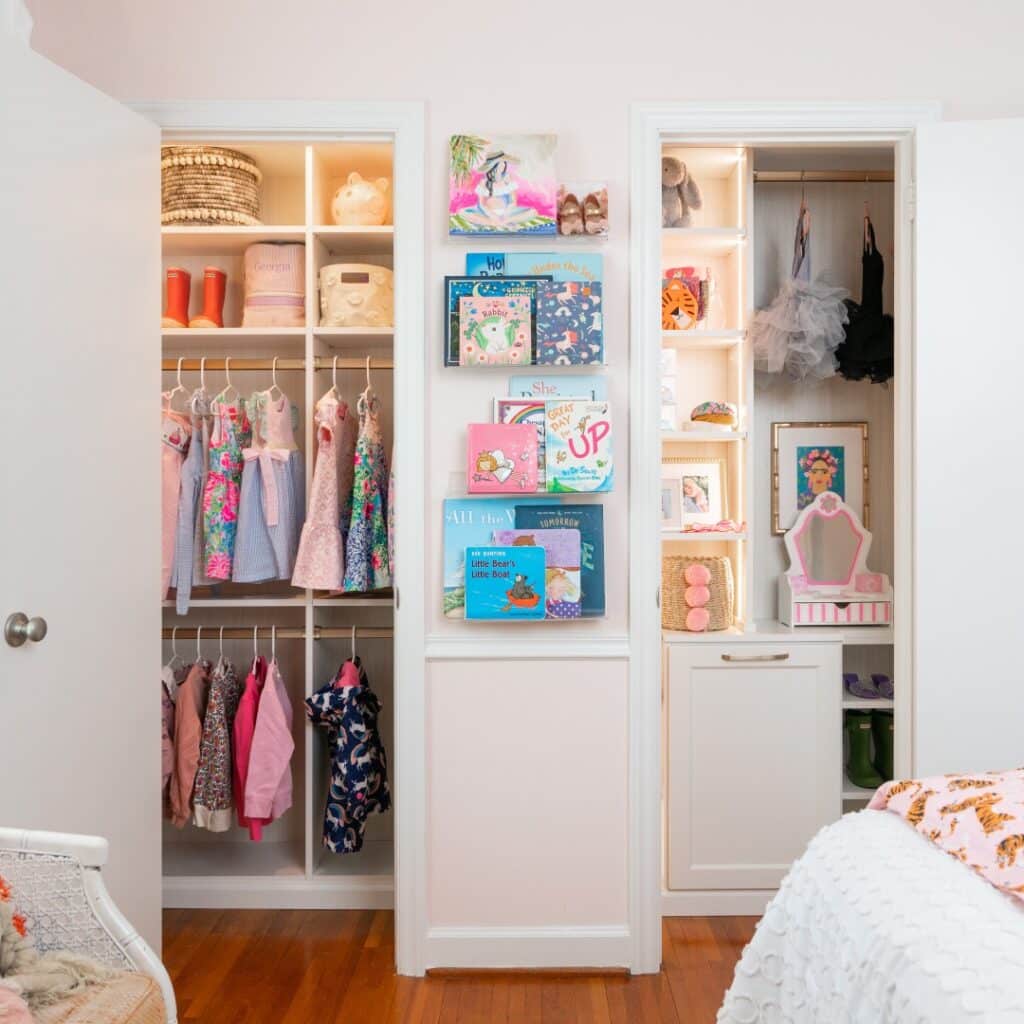
Storytime favorites and pretend-play outfits can share one organized closet when the layout gives each activity its own zone.
Place slim front-facing book ledges or low shelves on one side, then use the opposite rail for costumes, jackets, tutus, capes, and themed accessories.
This keeps books visible for bedtime while dress-up pieces stay easy to grab without spilling across the room. Add labeled bins underneath for props, shoes, hats, or soft toys, and reserve higher shelves for keepsakes or seasonal clothing.
For better kids closet organization, keep the most-used items at child height and rotate selections monthly. The setup encourages reading, imagination, and independent cleanup while keeping the wardrobe neat, playful, and practical for everyday family routines at home daily.
Minimalist Baby Wardrobe with Basketed Essentials Station
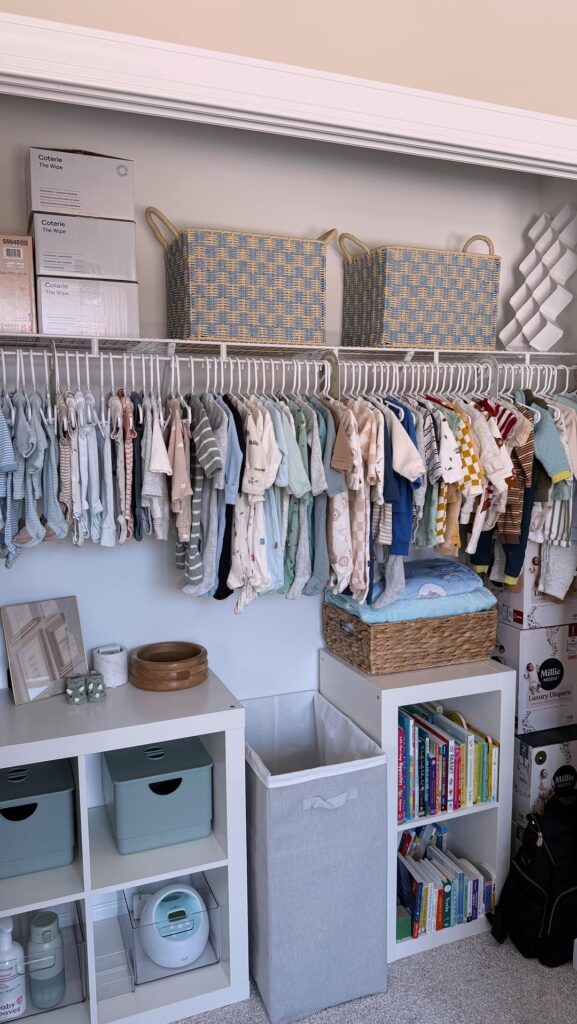
Calm nursery storage starts with fewer visible items and smarter zones for everyday care.
A minimalist baby wardrobe works best with one hanging rail for current sizes, a small stack of folded sleepers, and baskets for diapers, wipes, burp cloths, bibs, socks, and swaddles.
Keep essentials near the changing area so late-night routines feel smoother and less cluttered. Use soft neutral baskets or clear labels to separate newborn, 0–3 months, laundry, and extras. Higher shelves can hold backup packs, blankets, or future-size clothing.
This baby closet organization idea prevents overcrowding while making supplies easy for parents, grandparents, or caregivers to find. The result feels clean, gentle, and practical without sacrificing storage capacity or daily convenience for busy family households daily.
Tiered Shoe Display with Drawer Organizer Inserts
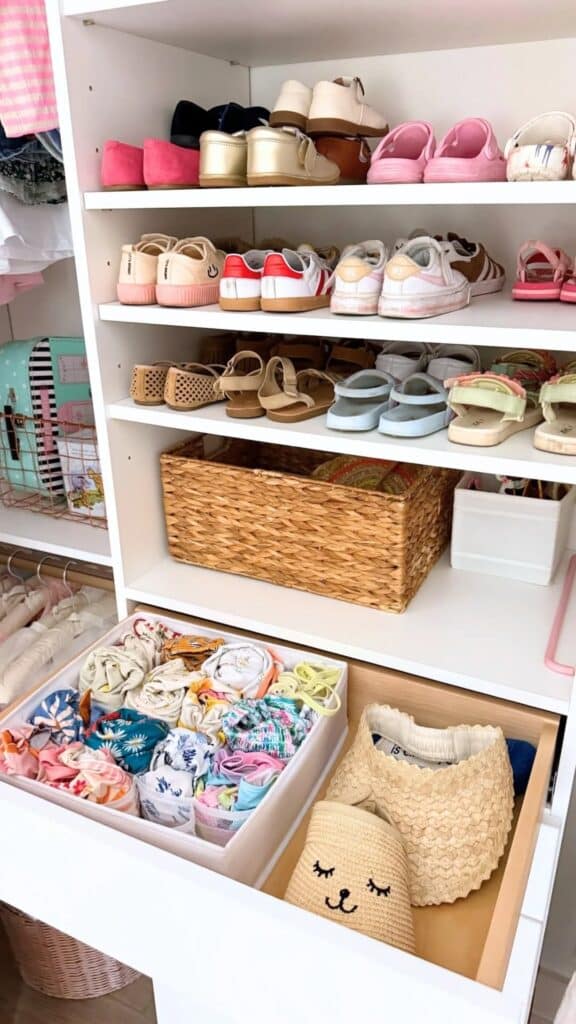
Shoes stay easier to manage when every pair has a visible place and small clothing items are divided nearby.
A tiered shoe display works well on the closet floor or inside a lower cabinet, keeping sneakers, sandals, boots, and dress shoes off the ground and sorted by use.
Drawer organizer inserts above or beside the display can separate socks, tights, hair accessories, belts, and uniform extras. This pairing saves time because footwear and finishing details are stored in the same dressing zone.
Keep everyday shoes on the lowest tier and special pairs higher to protect them. For reliable kids closet organization, check sizes regularly and remove outgrown pairs quickly. The system stays neat, accessible, and simple for young children daily.
Color-Coordinated Kid Wardrobe with Basket Cubes
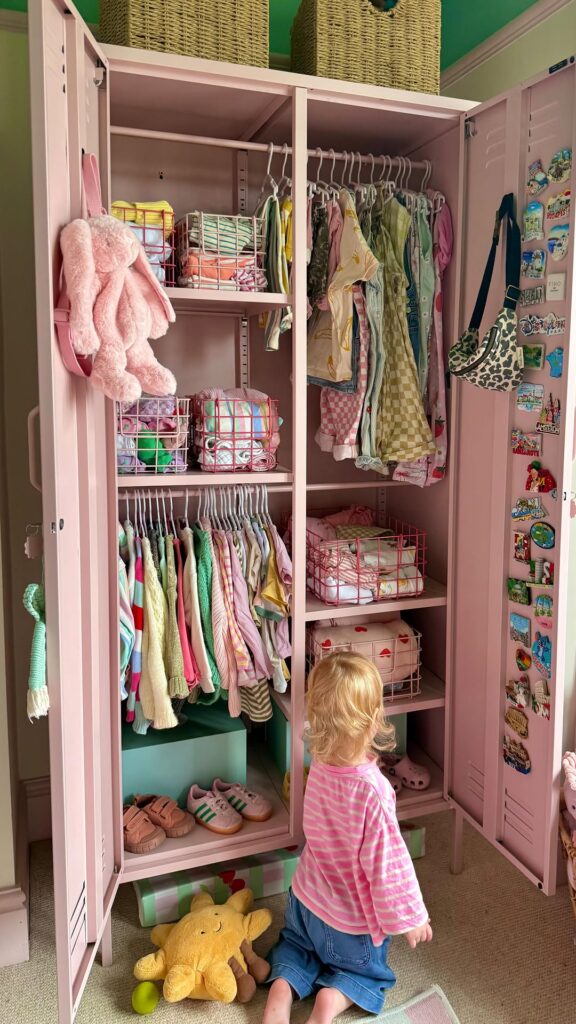
Color grouping can make a child’s wardrobe easier to scan while giving the closet a polished, cheerful look. Arrange hanging clothes from light to dark, or group by color families such as whites, pastels, brights, and neutrals.
Basket cubes below can hold pajamas, sportswear, socks, shoes, or seasonal layers without making the space feel crowded.
This method is especially helpful when children are learning to choose outfits because they can quickly recognize categories and favorite shades. Add simple labels to each cube so cleanup stays consistent after laundry day.
To avoid visual overload, keep patterns and occasional pieces in separate bins. The closet becomes organized, attractive, and practical, making everyday dressing smoother for kids and parents alike every morning. too
Over-the-Door Mesh Pocket Outfit Organizer
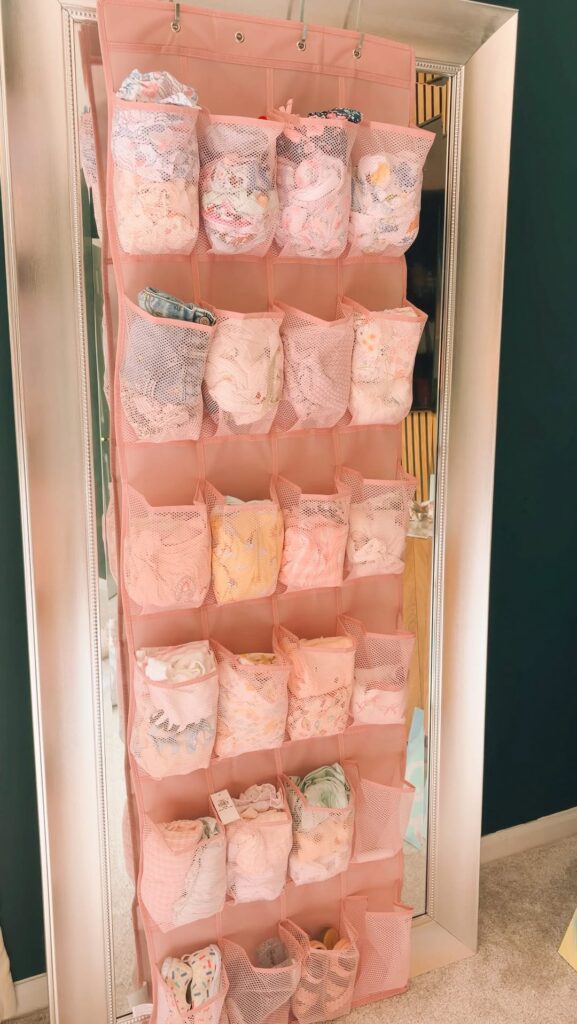
Back-of-door storage can solve small closet problems without requiring shelves, drawers, or permanent changes. An over-the-door mesh pocket organizer keeps weekday outfits, socks, underwear, hair accessories, masks, small toys, or activity gear visible in separate compartments.
Mesh pockets are useful because parents can see what is inside, and children can reach daily items without pulling everything apart. Assign pockets by day, clothing type, or routine, depending on how your child gets ready.
Keep heavier items in lower pockets and lightweight accessories higher to protect the organizer from sagging.
This kids closet organization idea works well for rentals, shared rooms, and tight wardrobes. It adds instant storage while keeping mornings faster, cleaner, and less stressful for everyone involved each busy day.
Rainbow Accent Closet with Color-Coded Basket Storage
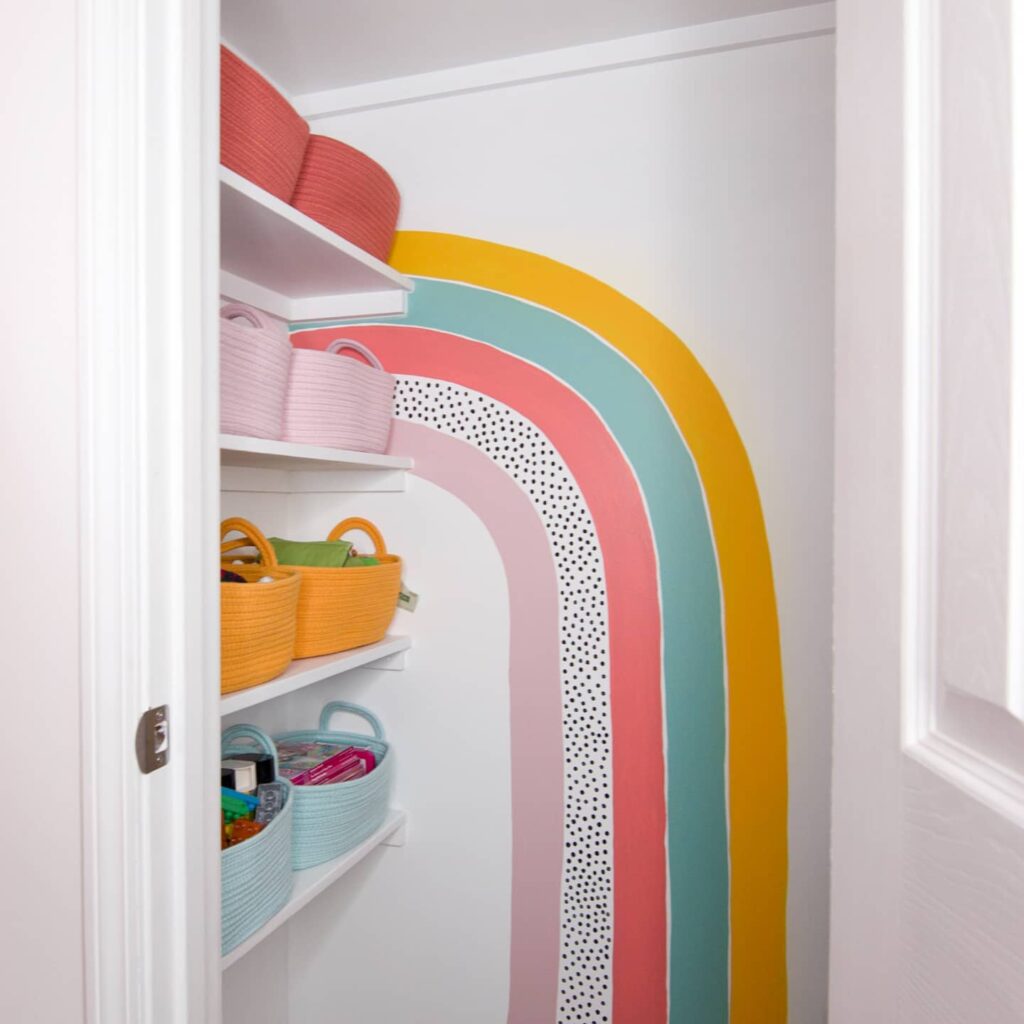
Bright color zones can make kids closet organization feel fun while still keeping the space highly practical. Use rainbow accents through baskets, labels, drawer pulls, or shelf dividers rather than overwhelming the entire closet with color.
Assign each shade to a category, such as red for pajamas, yellow for play clothes, green for school outfits, and blue for accessories. This simple visual system helps children remember where items belong, even before they read fluently.
Keep daily clothing at kid height and place seasonal pieces on upper shelves.
Matching basket storage hides clutter while keeping the closet cheerful, tidy, and easy to reset after laundry day. The result is a playful wardrobe that supports independence and cleaner routines every single morning.
Glass-Front Drawer Closet with Outfit Visibility System
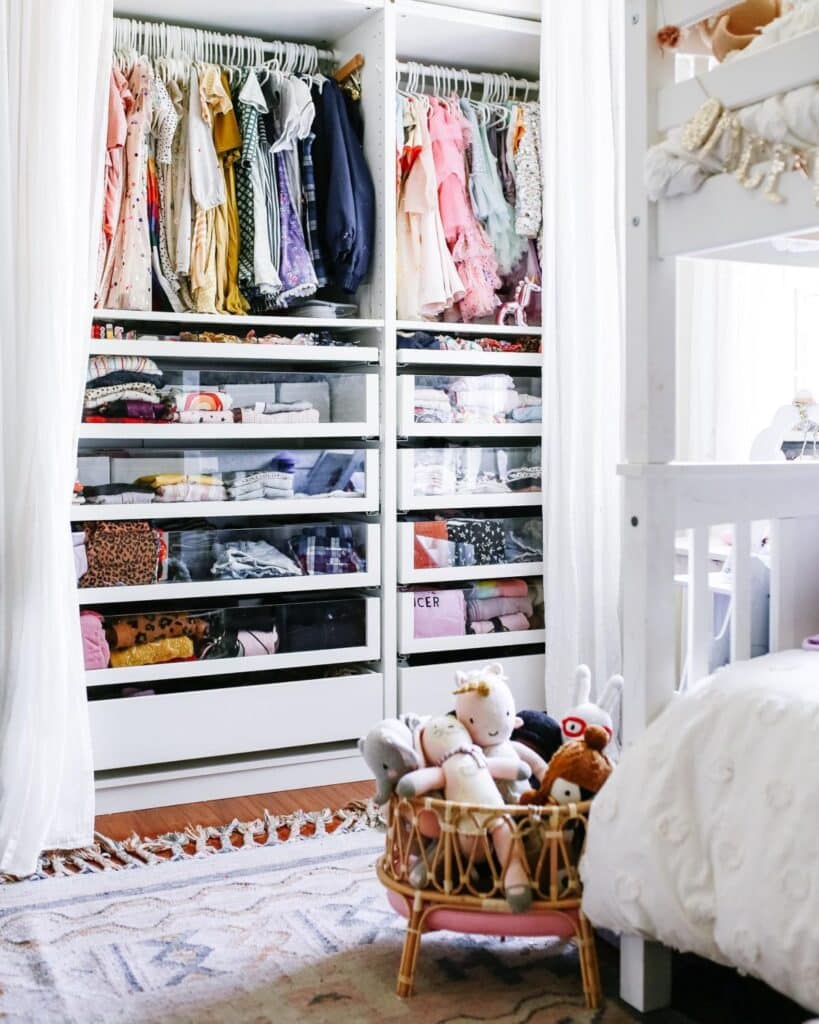
See-through drawer fronts give parents and children a clear view of folded clothes without opening every compartment. This outfit visibility system works especially well for school uniforms, playwear, pajamas, socks, and seasonal layers that often get lost in deep drawers.
Use drawer dividers to separate categories, then fold clothing upright so each piece remains visible from the front. Hanging space above can hold dresses, jackets, or special occasion outfits, while the drawers manage daily basics.
For better kids closet organization, label each drawer lightly and review contents during laundry cycles. The glass-front look also encourages tidiness because clutter is easier to notice.
It creates a clean, modern wardrobe that saves time and reduces morning outfit confusion.
Door-Mounted Bow Wall with Color-Coded Accessory Grid
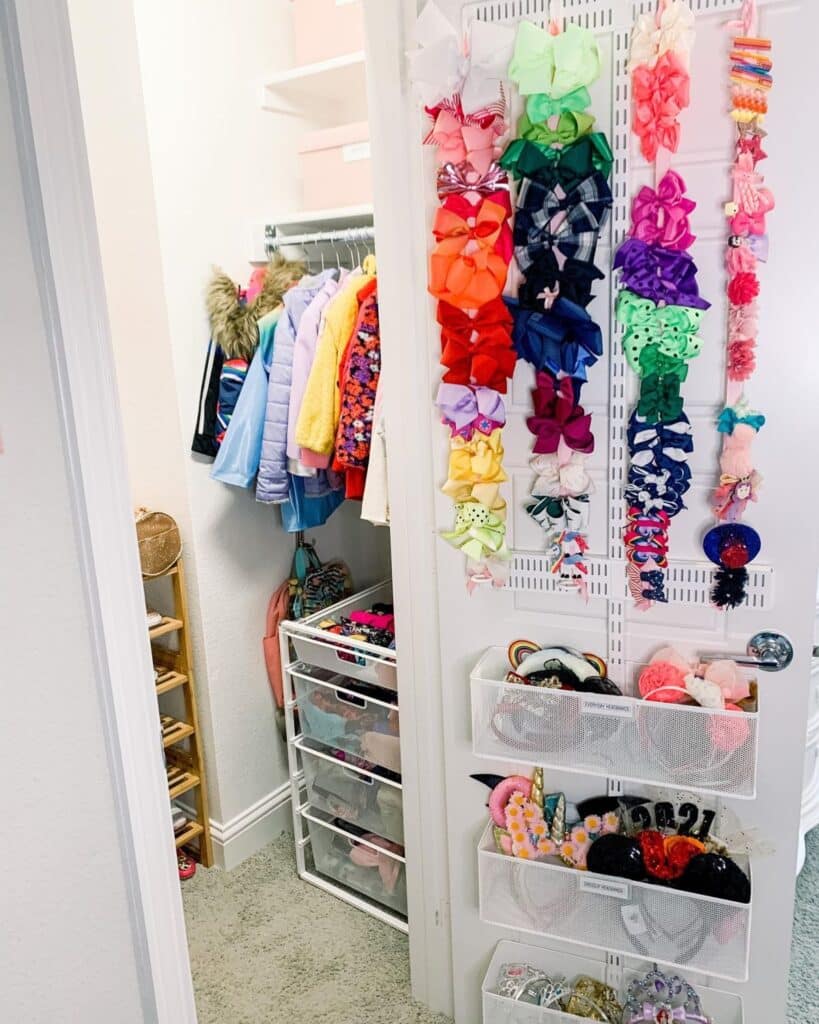
Hair bows, clips, headbands, and small accessories stay easier to manage when they are displayed instead of buried in a drawer. A door-mounted bow wall uses vertical space efficiently, making it ideal for small kids closets or shared bedrooms.
Arrange accessories by color, size, or occasion so children can quickly match them with school outfits, party dresses, or weekend clothes. Use soft straps, clip bars, or mini hooks to keep delicate pieces secure and visible.
Add a small basket near the bottom for loose elastics or everyday brushes.
This color-coded accessory grid reduces clutter, protects favorite items, and turns the closet door into a practical styling station that keeps morning routines smoother, faster, and more organized daily.
Kid-Height Double Rail Closet with Grab-and-Go Wall Hooks
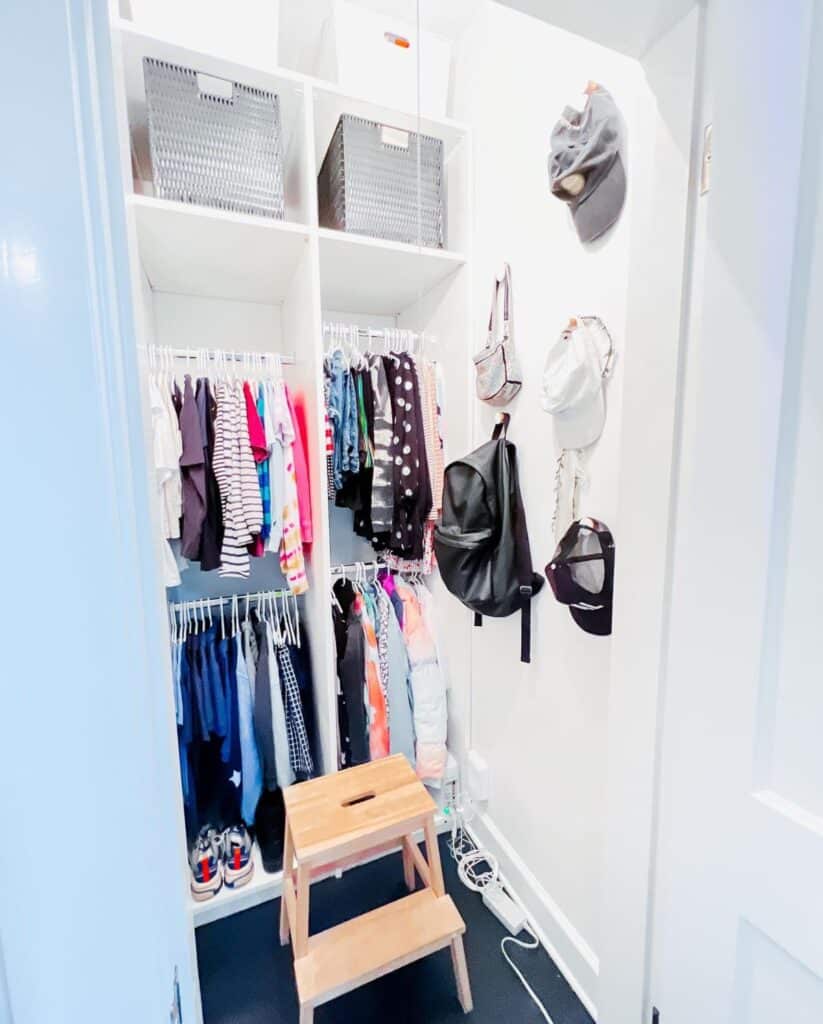
Lower rails can completely change how children use their closet because clothes become easy to reach without adult help. A kid-height double rail system doubles hanging space while separating tops, bottoms, uniforms, jackets, or dress-up pieces into clear zones.
Add grab-and-go wall hooks beside the rails for backpacks, hats, robes, sports bags, or tomorrow’s outfit. This layout supports independence and keeps frequently used items off the floor.
Place less-used clothing on the upper rail and everyday outfits on the lower rail for safer access.
Simple labels or picture tags can guide younger children during cleanup. With practical zones and reachable storage, this kids closet organization idea makes dressing, tidying, and school preparation feel more manageable every day.